"Beshalach — Part II — Detour, Sea, and the Birth of Trust"

Mitzvah Minute Logo Icon

2.6 — Application for Today: Learning to Trust the Long Way

Pillars of fire and cloud at twilight
Part II of Beshalach reveals that trust is not a reaction to miracles, but a capacity formed over time. Through detour, Sea, song, embodied joy, and constant Divine presence, the Torah teaches that faith matures when clarity is delayed and the journey lengthens. This application essay shows how trust grows by accepting the longer road, moving forward without certainty, preserving insight through song, and relying on presence rather than spectacle. Beshalach reframes faith as a discipline learned while walking—not a feeling sparked by rescue.

"Beshalach — Part II — Detour, Sea, and the Birth of Trust"

2.6 — Application for Today: Learning to Trust the Long Way

From Events to Formation

Arc II of Beshalach traces a deliberate spiritual progression: detour, Sea, song, embodied joy, and continuous presence. Together, these episodes teach that trust is not a reaction to salvation, but a capacity formed over time. The Torah is not interested in producing a people who believe because they were rescued once. It seeks to shape a people who can live with Hashem even when clarity fades and the journey lengthens.

The application of this arc is therefore not about reliving miracles. It is about learning how trust is cultivated when miracles recede.

When the Longer Road Is the Kinder One

Modern instinct equates blessing with efficiency. Detours feel like failure. Yet Beshalach insists otherwise. The longer road is chosen precisely because it protects the soul from collapse.

In lived experience, this means recognizing that delay, confusion, or rerouting is not evidence of abandonment. Often, it is evidence of Divine calibration—a refusal to place a person or community into a trial they are not yet ready to carry.

Trust begins when we stop demanding the shortest path and start asking what kind of people we are becoming along the way.

Faith Without Immediate Resolution

At the Sea, fear peaks not because redemption failed, but because it no longer looked dramatic. No plagues. No signs. Just water and command.

This is the most transferable moment of Beshalach. Faith today is rarely tested by spectacle. It is tested when:

  • Danger reappears after progress
  • The path forward requires movement before clarity
  • Guidance is present but outcomes remain hidden

Trust, the Torah teaches, is not waiting for certainty. It is stepping forward because Hashem is present, even when the future is not yet visible.

Singing Without the Sea in Front of You

Shirah follows recognition, not adrenaline. Miriam’s embodied joy teaches that faith must be practiced even when no miracle is actively unfolding. Joy that depends on spectacle does not last; joy rooted in recognition does.

Applied today, this means cultivating expressions of faith—gratitude, rhythm, communal celebration—not only in moments of rescue, but in ordinary continuity. Song preserves what crisis teaches.

Without this, insight fades into memory instead of becoming identity.

Trust Built on Presence, Not Intensity

The pillars of cloud and fire offer perhaps the most radical application for a modern religious life. Hashem’s presence is not occasional. It is reliable.

This challenges a culture that equates meaning with intensity. Beshalach teaches that trust grows through constancy:

  • Guidance that remains day and night
  • Presence that adapts without withdrawing
  • Protection that appears quietly when needed

Faith is not sustained by peaks. It is sustained by what does not disappear.

Living With an Unseen Pillar

We no longer see cloud or fire. But the Torah insists the pattern remains. The application is not to seek new spectacle, but to learn how to walk with trust when guidance is subtle.

This means moving forward responsibly, singing even when outcomes are unfinished, and accepting that the journey itself is formative—not merely the destination.

Conclusion: Trust as a Skill, Not a Feeling

Arc II of Beshalach teaches that trust is trained. It is built through detours accepted, seas crossed without certainty, songs sung without spectacle, and presence relied upon without proof.

For our time, this may be the most necessary application of all: faith is not a reaction to being saved. It is a discipline learned while walking—sometimes slowly, sometimes uncertainly—but never alone.

📖 Sources

  • Full sources available on the Mitzvah Minute Parshas Beshalach page under insights and commentaries.

Organized by:
Boaz Solowitch
January 28, 2026
Mitzvah Minute Logo Icon

Connections

Mitzvah Minute Logo Icon

Mitzvah Links

Mitzvah 1

To know there is a G‑d
A Siddur
Learn this Mitzvah

Mitzvah 1

1
To know there is a G‑d

Mitzvah 11

To emulate His ways
A Siddur
Learn this Mitzvah

Mitzvah 11

11
To emulate His ways

Mitzvah 77

To serve the Almighty with prayer daily
A Siddur
Learn this Mitzvah

Mitzvah 77

77
To serve the Almighty with prayer daily

Mitzvah 9

To listen to the prophet speaking in His Name
A Siddur
Learn this Mitzvah

Mitzvah 9

9
To listen to the prophet speaking in His Name

Mitzvah 121

To afflict and cry out before G‑d in times of catastrophe
A Siddur
Learn this Mitzvah

Mitzvah 121

121
To afflict and cry out before G‑d in times of catastrophe
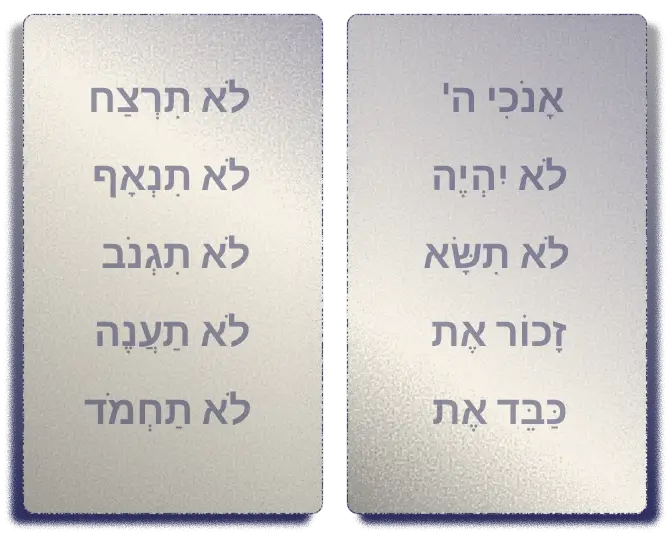
The Luchos - Ten Commandments
View Mitzvah Notes

Mitzvah Reference Notes

"x" close page navigation button

Mitzvah Reference Notes

“Application for Today: Learning to Trust the Long Way”

Mitzvah #1 — To Know That There Is a G-d (Shemos 20:2)

אָנֹכִי ה׳ אֱלֹקֶיךָ

Arc II forms the experiential groundwork for knowing Hashem. Through ordered providence, sustained presence, and moral coherence, trust becomes knowledge rather than emotion. Recognition is built gradually—through journey, not spectacle.

Mitzvah #11 — To Emulate His Ways (Devarim 28:9)

וְהָלַכְתָּ בִּדְרָכָיו

Hashem leads patiently, calibrating challenge to capacity. Emulating His ways means accepting formation over speed, offering steady presence to others, and guiding growth rather than demanding immediate strength.

Mitzvah #77 — To Serve the Almighty with Prayer Daily (Shemos 23:25)

וַעֲבַדְתֶּם אֵת ה׳ אֱלֹקֵיכֶם

Daily avodah mirrors the constancy of the pillars. Prayer is not reserved for crisis; it sustains relationship over time. Beshalach teaches that faith matures through regular turning toward Hashem, not emergency appeal alone.

Mitzvah #9 — To Listen to the Prophet Speaking in His Name (Devarim 18:15)

אֵלָיו תִּשְׁמָעוּן

Trusting the longer road requires obedience to guidance even when the destination is unclear. Arc II shows that listening precedes understanding, and alignment precedes resolution.

Mitzvah #121 — To Afflict and Cry Out Before G-d in Times of Catastrophe (Bamidbar 10:9)

Crisis initiates trust, but does not complete it. Arc II teaches that crying out must lead into sustained relationship, song, and movement. Affliction opens the heart; constancy builds endurance.

Parsha Links

בְּשַׁלַּח – Beshalach

Haftarah: Judges 4:4 - 5:31
A Siddur
Learn this Parsha

בְּשַׁלַּח – Beshalach

בְּשַׁלַּח – Beshalach
The Luchos - Ten Commandments
View Parsha Notes
"x" close page navigation button

Parsha Reference Notes

“Application for Today: Learning to Trust the Long Way”

Parshas Beshalach (Shemos 13:17–15:21; 13:21–22; 14:19–20)

Beshalach presents a unified formation process rather than isolated miracles. The initial detour—[פֶּן־יִנָּחֵם הָעָם בִּרְאֹתָם מִלְחָמָה — “lest the people reconsider when they see war”]—reveals Hashem’s pedagogical compassion, delaying confrontation until trust can be sustained. The encounter at the Sea then demands movement before certainty, reframing fear as a test of orientation rather than belief alone.

Following salvation, Shirat HaYam and Miriam’s song preserve recognition beyond the moment of rescue. Ramban and Ralbag explain that song transforms insight into enduring consciousness, ensuring that faith is not dependent on spectacle. Finally, the pillars of cloud and fire—[וַה׳ הֹלֵךְ לִפְנֵיהֶם יוֹמָם… וְלַיְלָה — “Hashem went before them by day… and by night”]—anchor trust in continuous presence rather than dramatic intervention. Beshalach thus teaches that redemption is secured not by intensity, but by constancy.

Mitzvah Minute
Mitzvah Minute Logo

Learn more.

Dive into mitzvos, tefillah, and Torah study—each section curated to help you learn, reflect, and live with intention. New insights are added regularly, creating an evolving space for spiritual growth.

Luchos
Live a commandment-driven life

Mitzvah

Explore the 613 mitzvos and uncover the meaning behind each one. Discover practical ways to integrate them into your daily life with insights, sources, and guided reflection.

Learn more

Mitzvah #

1

To know there is a G‑d
The Luchos - Ten Commandments
Learn this Mitzvah

Mitzvah Highlight

Siddur
Connection through Davening

Tefillah

Learn the structure, depth, and spiritual intent behind Jewish prayer. Dive into morning blessings, Shema, Amidah, and more—with tools to enrich your daily connection.

Learn more

Tefillah

COMING SOON.
A Siddur
Learn this Tefillah

Tefillah Focus

A Sefer Torah
Study the weekly Torah portion

Parsha

Each week’s parsha offers timeless wisdom and modern relevance. Explore summaries, key themes, and mitzvah connections to deepen your understanding of the Torah cycle.

Learn more

יִתְרוֹ - Yisro

Haftarah: Isaiah 6:1-13
A Sefer Torah
Learn this Parsha

Weekly Parsha