"Chassidus on Da’as, Avodah, and Desire — Part III"

Mitzvah Minute Logo Icon

Shemos — Kedushas Levi: Names as the Sanctification of Desire

A Rebbe learning intently at candlelight. Chassidus on Da’as, Avodah, and Desire
Chassidus does not seek to erase human desire, but to redeem it. Drawing on the Kedushas Levi, this essay reveals why Parshas Shemos repeatedly emphasizes names: to teach that desire itself can be sanctified. Exile confuses the direction of longing, not its essence. When awareness is restored and avodah purified, desire becomes holy energy rather than bondage. This final essay completes the inner journey from da’as to avodah to desire, showing that geulah does not escape the human—it refines it and brings it home.

"Chassidus on Da’as, Avodah, and Desire — Part III"

Shemos — Kedushas Levi: Names as the Sanctification of Desire

Introduction — Redemption Does Not Erase the Human

Chassidus insists on a counterintuitive truth: redemption is not escape from the human condition, but its refinement.

After diagnosing galus ha-da’as (exiled awareness) and warning against avodah that becomes self, the Chassidic tradition does not conclude with negation or withdrawal. It turns, instead, to sanctification.

The Kedushas Levi teaches that the final work of redemption is not silencing desire, but naming it.

Parshas Shemos, when read carefully, provides a quiet but profound signal: the Torah lingers over names — of tribes, of individuals, of places — as if to declare that nothing genuinely human is excluded from geulah.

Names as Revelation, Not Labels

In Chassidic thought, a name (shem) is not an external label. It is a revelation of inner essence.

The Torah opens Shemos by listing the names of the shevatim once again:

“וְאֵלֶּה שְׁמוֹת בְּנֵי יִשְׂרָאֵל”
[“And these are the names of the children of Israel.”]

The Kedushas Levi asks: why repeat names already given?

His answer is radical and hopeful. Names signify direction of desire — the unique way each soul channels life-force toward meaning. By repeating the names in Egypt, the Torah teaches that even in exile, desire itself remains intact and redeemable.

Exile does not destroy essence. It confuses its aim.

Desire Is Not the Enemy

Much religious language treats desire with suspicion. Chassidus does not.

The Kedushas Levi teaches that desire (ta’avah) is the raw energy of the soul. It becomes destructive only when disconnected from awareness and truth. When guided by da’as and refined through avodah, desire becomes the engine of holiness.

This is why the Torah does not erase names in Egypt. It preserves them.

Geulah does not demand that a person become less human — only more aligned.

From Galus ha-Da’as to Kedushas ha-Ta’avah

Seen together, the trilogy now reveals its structure:

  • Galus of Da’as collapses awareness
  • Distorted Avodah turns service inward
  • Unrefined Desire seeks fulfillment without truth

The Kedushas Levi offers the resolution: desire itself must be sanctified, not suppressed.

Names represent this sanctification. They declare that every human drive — ambition, longing, creativity, attachment — can be elevated when consciously directed toward Hashem.

This is not asceticism. It is transformation.

Egypt as Misaligned Desire

Chassidus reads Egypt as a culture that enslaves desire by severing it from meaning.

Labor without purpose exhausts the soul. Pleasure without sanctity degrades it. Survival without naming reduces humanity to function.

The Torah’s insistence on names resists this reduction.

By naming, Israel refuses to become anonymous. Desire remains personal, oriented, and capable of elevation.

Moshe and the Power of Naming

Moshe Rabbeinu’s role deepens here.

Moshe is commanded to speak, to name, to articulate redemption — even when the people cannot yet hear.

Speech gives form to desire. Naming restores orientation.

This is why Hashem reveals His own Name:

“אֶהְיֶה אֲשֶׁר אֶהְיֶה”
[“I will be what I will be.”]

The Divine Name signals becoming, relationship, and presence — not abstraction.

Desire is sanctified when it knows toward Whom it moves.

The Completion of Inner Geulah

With the Kedushas Levi, "Chassidus on Da’as, Avodah, and Desire" completes its redemptive arc.

Geulah does not culminate in silence or negation, but in aligned vitality — a life where awareness is awake, service is humble, and desire is directed toward truth.

Names remain. Desire remains. Humanity remains.

What changes is orientation.

Application — Naming Our Desires

The Kedushas Levi invites a subtle but transformative practice:

Ask not what do I want?
Ask what is this desire trying to serve?

When desire is named honestly and oriented consciously, it ceases to enslave. It becomes holy energy.

Redemption begins not by erasing longing, but by giving it a true name.

Closing — Desire Comes Home

Parshas Shemos teaches that exile fragments the self, but redemption reunites it.

Chassidus shows that when da’as is restored, avodah purified, and desire sanctified, the human soul does not disappear — it comes home.

The Kedushas Levi reminds us that geulah is not the loss of desire, but its return to purpose.

And when desire knows its name,
redemption is no longer distant.

📖 Sources

  • Full sources available on the Mitzvah Minute Parshas Shemos page under insights and commentaries.

Organized by:
Boaz Solowitch
January 2, 2026
Mitzvah Minute Logo Icon

Connections

Mitzvah Minute Logo Icon

Mitzvah Links

No items found.
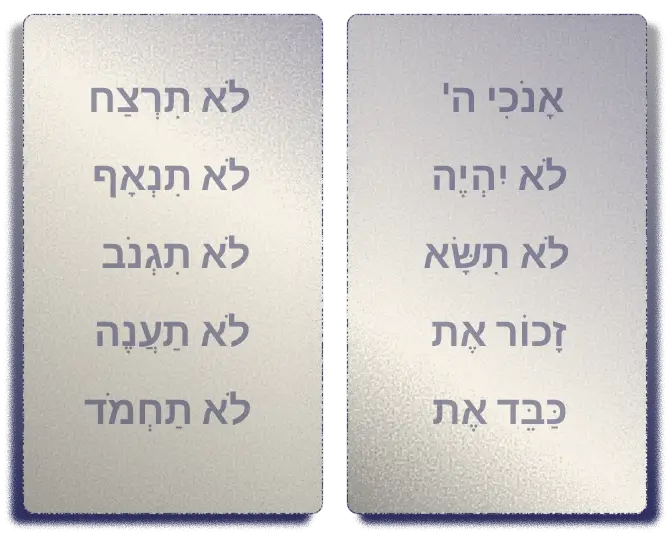
The Luchos - Ten Commandments
View Mitzvah Notes

Mitzvah Reference Notes

"x" close page navigation button

Mitzvah Reference Notes

“Chassidus on Da’as, Avodah, and Desire — Part III
Shemos — Kedushas Levi: Names as the Sanctification of Desire”

Mitzvah #1 — To know there is a G-d (Exodus 20:2)

אָנֹכִי ה׳ אֱלֹקֶיךָ

The Kedushas Levi understands this mitzvah as lived orientation rather than abstract belief. To “know” Hashem is to perceive reality as directed toward Him, such that human desire itself seeks Divine meaning. Parshas Shemos opens by reaffirming names in exile, teaching that inner essence and longing remain intact even under oppression. Knowledge of Hashem is restored when desire is reoriented — not erased — allowing awareness to penetrate the drives that animate human life. Redemption deepens this mitzvah by aligning desire with recognition of Divine presence.

Mitzvah #11 — To emulate His ways (Deuteronomy 28:9)

וְהָלַכְתָּ בִדְרָכָיו

Hashem relates to the world not by negating creation, but by indwelling within it. The Kedushas Levi teaches that emulating His ways means refining human vitality so it reflects Divine purpose. Naming, speech, and direction sanctify desire rather than suppress it, mirroring Hashem’s presence within the “lower world.” Parshas Shemos thus frames redemption as constructive: walking in Hashem’s ways by elevating the human rather than fleeing from it.

Mitzvah #12 — To cleave to those who know Him (Deuteronomy 10:20)

וּבוֹ תִדְבָּקוּן

Chassidus explains deveikut here as learned orientation — attachment cultivated through proximity to those whose lives are aligned with Divine truth. The Kedushas Levi’s emphasis on names highlights that desire requires guidance to be sanctified. In exile, desire becomes misdirected; in redemption, it is refined through relationship with authentic bearers of da’as. Parshas Shemos teaches that cleaving to those who know Hashem restores direction to longing, ensuring that desire matures into holiness rather than fragmentation.

Parsha Links

שְׁמוֹת – Shemos

Haftarah: Isaiah 27:6 - 28:13; Isaiah 29:22-23
A Siddur
Learn this Parsha

שְׁמוֹת – Shemos

שְׁמוֹת – Shemos
The Luchos - Ten Commandments
View Parsha Notes
"x" close page navigation button

Parsha Reference Notes

“Chassidus on Da’as, Avodah, and Desire — Part III
Shemos — Kedushas Levi: Names as the Sanctification of Desire”

Parshas Shemos (Exodus 1:1–6:1)

Parshas Shemos opens with a deliberate return to names — “וְאֵלֶּה שְׁמוֹת בְּנֵי יִשְׂרָאֵל” — despite their prior appearance in the Torah. Chassidus, following the Kedushas Levi, understands this repetition as a declaration that exile does not erase inner essence or human vitality. A name reveals direction and purpose; it expresses how desire seeks meaning. Even in Egypt, where labor degrades and anonymity threatens, the Torah preserves names to affirm that desire itself remains intact and redeemable. Exile confuses orientation, not essence. Redemption therefore does not negate longing but sanctifies it by restoring awareness and alignment. Through naming, speech, and Divine self-revelation — “אֶהְיֶה אֲשֶׁר אֶהְיֶה” — Shemos teaches that geulah is completed when human desire is reclaimed, directed, and brought back into relationship with Hashem.

Mitzvah Minute
Mitzvah Minute Logo

Learn more.

Dive into mitzvos, tefillah, and Torah study—each section curated to help you learn, reflect, and live with intention. New insights are added regularly, creating an evolving space for spiritual growth.

Luchos
Live a commandment-driven life

Mitzvah

Explore the 613 mitzvos and uncover the meaning behind each one. Discover practical ways to integrate them into your daily life with insights, sources, and guided reflection.

Learn more

Mitzvah #

5

To fear Him
The Luchos - Ten Commandments
Learn this Mitzvah

Mitzvah Highlight

Siddur
Connection through Davening

Tefillah

Learn the structure, depth, and spiritual intent behind Jewish prayer. Dive into morning blessings, Shema, Amidah, and more—with tools to enrich your daily connection.

Learn more

Tefillah

COMING SOON.
A Siddur
Learn this Tefillah

Tefillah Focus

A Sefer Torah
Study the weekly Torah portion

Parsha

Each week’s parsha offers timeless wisdom and modern relevance. Explore summaries, key themes, and mitzvah connections to deepen your understanding of the Torah cycle.

Learn more

וָאֵרָא – Va’eira

Haftarah: Ezekiel 28:25 - 29:21
A Sefer Torah
Learn this Parsha

Weekly Parsha