www.Mitzvah-Minute.com
🕯️ Shabbos HaGadol, Da’as, and the Beginning of Geulah
The Burning Question
Why does the Torah introduce the foundation of all mitzvos with the words:
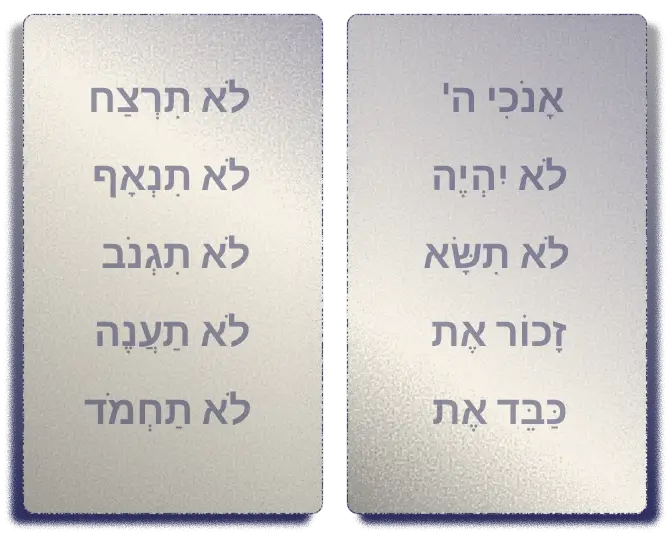
אנכי ה׳ אלקיך אשר הוצאתיך מארץ מצרים — “I am Hashem your G-d who took you out of the land of Egypt”
and not:
“I am Hashem your G-d who created heaven and earth”?
Creation is more universal, more absolute — it establishes Hashem as the Creator of all existence. And yet, the mitzvah of אנכי ה׳ does not begin there, but in the lived experience of redemption.
And perhaps even more striking — why is the gateway into Pesach specifically Shabbos HaGadol — the Great Shabbos? What is the relationship between Shabbos and Geulah?
To understand this, we must first redefine what Geulah actually is.
I. What is Geulah?
The Zohar teaches that Geulah — גאולה, redemption — is not merely a change in circumstance, but a state of התגלות — revelation, a התגלות האור שהיה נסתר — the revealing of a light that was previously hidden.
Exile — גלות — is not only physical displacement; it is a state in which truth exists, but is concealed. Geulah, then, is when that hidden truth becomes revealed and recognizable.
This idea is expressed with striking clarity by the Mishneh Torah, who describes the end of days:
ומלאה הארץ דעה את ה׳ כמים לים מכסים — “The earth will be filled with knowledge of Hashem as the waters cover the sea”
Geulah is not defined by political freedom alone, but by דעה — knowledge, a deep and pervasive awareness of Hashem.
We can now state a foundational principle:
Geulah is when hidden reality becomes known reality.
II. Mitzrayim as the Birth of Da’as
This understanding allows us to revisit Yetziyas Mitzrayim — יציאת מצרים, the Exodus — through a deeper lens.
The Arizal explains that Mitzrayim was not merely a place of exile, but a מקום ריכוז הניצוצות — a concentration point of holy sparks. The redemption from Egypt was a process of בירור הניצוצות — extraction and clarification of these sparks, forming the spiritual structure of Klal Yisrael.
Through this process, Klal Yisrael became a כלי — a vessel — capable of receiving Torah.
But more than that:
Yetziyas Mitzrayim created a people who did not merely believe in Hashem — but knew Him.
This is why the Torah begins with:
אנכי ה׳ אלקיך אשר הוצאתיך מארץ מצרים
and not with creation. Because Torah is not founded on abstract belief, but on ידיעה — experiential knowledge.
Yetziyas Mitzrayim did not simply free a nation; it formed a nation of Da’as.
III. Shabbos HaGadol — The Gateway to Geulah
With this, we can begin to understand the unique role of Shabbos HaGadol.
The Sfas Emes teaches that on this Shabbos:
מתאספין כל נ׳ שבתות השנה — all fifty Shabbosos of the year converge
This moment is described as:
שער החירות — the gateway of freedom
True חירות — freedom — is not merely the absence of constraint, but the ability to perceive truth clearly.
Shabbos itself is מעין עולם הבא — a taste of the World to Come. But Shabbos HaGadol is not merely another Shabbos; it is the convergence point, the moment in which the full spiritual potential of Shabbos is present.
The Sfas Emes further explains that the beginning of redemption was not external, but internal:
משכו ידיכם מע״ז — “withdraw your hands from idolatry”
Geulah begins when falsehood is removed, when illusion falls away, and truth can be known.
Thus:
Shabbos HaGadol is not only preparation for Geulah — it is the opening of Geulah.
IV. The Great Shabbos of History
Chazal teach in the Gemara Sanhedrin 97a:
שית אלפי שני הוי עלמא וחד חרוב — the world exists for six thousand years, and one thousand is Shabbos
This is further developed in the Zohar and by the Arizal:
The six days of creation correspond to six thousand years, and the seventh millennium is שבת — the great Shabbos of history, the era of Geulah.
Thus, Geulah itself is a form of Shabbos — a state in which the deeper truth of reality is revealed.
V. A Remez — The Light That Begins Early
There is a striking remez — a symbolic allusion — that reflects this idea.
We know that Shabbos can be accepted early through תוספת שבת — the addition to Shabbos, and Shabbos is always initiated by lighting the נר — candle.
The word נר — candle — carries the idea of illumination, of light beginning to spread even before its full time.
And its first letter, נ — Nun, hints to:
- נ׳ שבתות — the fifty Shabbosos
- שער הנ׳ — the fiftieth gate, the level of freedom
This is not a calculation, but a remez:
Just as one can bring in Shabbos early through תוספת שבת — adding from the weekday into Shabbos — so too the אור of the great Shabbos of history is not bound strictly to its סוף הזמן — its final moment — but can begin to illuminate earlier, when the world becomes ready to receive it.
VI. The Mechanism — Zecher Yetziyas Mitzrayim
We can now return to Pesach with a new understanding.
Pesach is not merely a remembrance — זכר — of the past.
It is a re-entry into the state of Da’as — knowledge — through which התגלות — revelation becomes possible.
Through:
- זכר יציאת מצרים — remembering the Exodus
we are not recalling history, but reawakening knowledge.
Thus:
Shabbos HaGadol opens the gate, Pesach activates the experience, and Zecher Yetziyah restores Da’as.
And therefore:
Geulah is not something we merely wait for — it is something that begins when Da’as Hashem becomes real.
Each year, we are given a moment:
- Shabbos HaGadol — the opening
- Pesach — the opportunity
And the question is not only:
Do we remember?
But:
Do we know?
Because when:
אנכי ה׳ אלקיך — “I am Hashem your G-d”
becomes real —
then the light of Shabbos begins to shine, restoring אמת — truth to the world, and allowing Geulah not only to be awaited, but to be revealed, and in that revelation, drawing the world into בימות המשיח — the era of Mashiach.