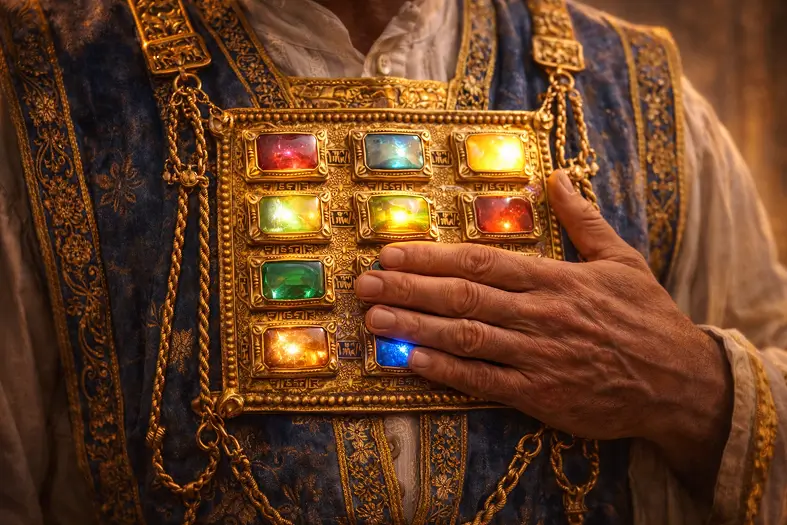
5.2 — Names in Birth Order: Covenant Memory Has Order
When the Torah commands the engraving of the tribal names on the stones of the ephod, it adds a small but striking phrase:
שמות כ״ח:ט׳–י׳
“וְלָקַחְתָּ אֶת־שְׁתֵּי אַבְנֵי־שֹׁהַם… וּפִתַּחְתָּ עֲלֵיהֶם שְׁמוֹת בְּנֵי־יִשְׂרָאֵל… כְּתוֹלְדֹתָם.”
“You shall take the two onyx stones… and engrave upon them the names of the children of Israel… according to their birth order.”
The Torah could have simply said: engrave the names of the tribes. But it insists on something more precise: כְּתוֹלְדֹתָם—in their order of birth.
This is not a decorative detail. It is a covenantal principle.
Memory in the Torah is not random. It is ordered.
Rashi explains that the names of the tribes must be engraved in the order of their births. Reuven first, then Shimon, then Levi, and so on. The order is not based on political prominence, personal greatness, or spiritual rank.
It follows the sequence of origin.
The Torah preserves the historical unfolding of the nation. It remembers how the tribes came into being, one after the other, in the rhythm of their births.
The covenant does not erase the past. It carries it in order.
Human memory is often emotional and selective. We remember what moves us, what flatters us, what fits our narrative. We forget what is uncomfortable or inconvenient.
But covenantal memory is different. It is disciplined. It is structured. It preserves the sequence of events as they occurred.
This is why the Torah is filled with genealogies, journeys, counts, and sequences. It does not treat history as a blur. It treats it as a chain.
Each link matters.
Each moment has its place.
Each name stands in its order.
The stones of the ephod become a physical embodiment of that ordered memory.
The two onyx stones are placed on the shoulders of the High Priest:
שמות כ״ח:י״ב
“וְנָשָׂא אַהֲרֹן אֶת־שְׁמוֹתָם לִפְנֵי ה׳ עַל־שְׁתֵּי כְתֵפָיו.”
“Aharon shall carry their names before Hashem on his two shoulders.”
He does not carry them in a random arrangement. He carries them in order.
The shoulders bear the weight of history. The High Priest becomes a living archive of the nation’s memory, arranged exactly as it unfolded.
Leadership is not only about the present. It is about carrying the past with accuracy and discipline.
The phrase כְּתוֹלְדֹתָם suggests more than birth order. It points to the unfolding of generations, the sequence of covenantal history.
The covenant is not a single moment. It is a chain of commitments, each one linked to the one before it.
Avraham receives a promise.
Yitzchak inherits it.
Yaakov expands it.
The tribes carry it into Egypt.
The nation emerges from slavery.
The covenant is renewed at Sinai.
This is not a collection of isolated stories. It is an ordered progression.
The stones on the ephod reflect that same structure.
When memory loses order, it becomes sentiment. We remember the moments that inspire us and ignore the ones that challenge us. We rearrange history to suit our preferences.
But covenantal life cannot be built on selective memory.
If Reuven is forgotten, the order collapses.
If Shimon is moved ahead of Levi, the structure is broken.
If the sequence is ignored, the story becomes distorted.
Holiness, in the Torah, includes accuracy. It includes order. It includes fidelity to the sequence.
The engraving of the stones teaches that order itself is sacred. The covenant is not sustained by emotion alone. It is sustained by disciplined continuity.
The names must appear:
This is memory as avodah. Remembering correctly becomes an act of service.
The birth order of the tribes reflects another deeper truth: commitments are also sequential.
A person does not build a life of holiness in one dramatic moment. It unfolds step by step.
One habit leads to another.
One mitzvah opens the door to the next.
One day’s discipline becomes the next day’s foundation.
The covenant grows through ordered continuity.
Modern life often disrupts order. Schedules change constantly. Commitments are rearranged. Spiritual practices are performed when convenient and skipped when difficult.
The result is a life that feels scattered.
The ephod teaches a different path. The names are engraved in order. The sequence is preserved. The covenant is carried through disciplined continuity.
There is something sacred about doing things in their proper place and time.
Morning prayer before the day begins.
Torah learning in its fixed slot.
Shabbos arriving at its appointed hour.
Kindness woven into the daily rhythm.
These are not just habits. They are sequences. And sequence creates stability.
When a person honors the order of their commitments, their life begins to feel structured. The days connect to one another. The weeks form patterns. The years build a coherent story.
Covenantal life is not built from occasional bursts of inspiration. It is built from ordered faithfulness.
One act placed after another.
One commitment kept in its time.
One day following the next in sacred sequence.
Like the stones on the ephod, the holiness emerges not only from the names themselves—but from the order in which they are carried.
📖 Sources


5.2 — Names in Birth Order: Covenant Memory Has Order
When the Torah commands the engraving of the tribal names on the stones of the ephod, it adds a small but striking phrase:
שמות כ״ח:ט׳–י׳
“וְלָקַחְתָּ אֶת־שְׁתֵּי אַבְנֵי־שֹׁהַם… וּפִתַּחְתָּ עֲלֵיהֶם שְׁמוֹת בְּנֵי־יִשְׂרָאֵל… כְּתוֹלְדֹתָם.”
“You shall take the two onyx stones… and engrave upon them the names of the children of Israel… according to their birth order.”
The Torah could have simply said: engrave the names of the tribes. But it insists on something more precise: כְּתוֹלְדֹתָם—in their order of birth.
This is not a decorative detail. It is a covenantal principle.
Memory in the Torah is not random. It is ordered.
Rashi explains that the names of the tribes must be engraved in the order of their births. Reuven first, then Shimon, then Levi, and so on. The order is not based on political prominence, personal greatness, or spiritual rank.
It follows the sequence of origin.
The Torah preserves the historical unfolding of the nation. It remembers how the tribes came into being, one after the other, in the rhythm of their births.
The covenant does not erase the past. It carries it in order.
Human memory is often emotional and selective. We remember what moves us, what flatters us, what fits our narrative. We forget what is uncomfortable or inconvenient.
But covenantal memory is different. It is disciplined. It is structured. It preserves the sequence of events as they occurred.
This is why the Torah is filled with genealogies, journeys, counts, and sequences. It does not treat history as a blur. It treats it as a chain.
Each link matters.
Each moment has its place.
Each name stands in its order.
The stones of the ephod become a physical embodiment of that ordered memory.
The two onyx stones are placed on the shoulders of the High Priest:
שמות כ״ח:י״ב
“וְנָשָׂא אַהֲרֹן אֶת־שְׁמוֹתָם לִפְנֵי ה׳ עַל־שְׁתֵּי כְתֵפָיו.”
“Aharon shall carry their names before Hashem on his two shoulders.”
He does not carry them in a random arrangement. He carries them in order.
The shoulders bear the weight of history. The High Priest becomes a living archive of the nation’s memory, arranged exactly as it unfolded.
Leadership is not only about the present. It is about carrying the past with accuracy and discipline.
The phrase כְּתוֹלְדֹתָם suggests more than birth order. It points to the unfolding of generations, the sequence of covenantal history.
The covenant is not a single moment. It is a chain of commitments, each one linked to the one before it.
Avraham receives a promise.
Yitzchak inherits it.
Yaakov expands it.
The tribes carry it into Egypt.
The nation emerges from slavery.
The covenant is renewed at Sinai.
This is not a collection of isolated stories. It is an ordered progression.
The stones on the ephod reflect that same structure.
When memory loses order, it becomes sentiment. We remember the moments that inspire us and ignore the ones that challenge us. We rearrange history to suit our preferences.
But covenantal life cannot be built on selective memory.
If Reuven is forgotten, the order collapses.
If Shimon is moved ahead of Levi, the structure is broken.
If the sequence is ignored, the story becomes distorted.
Holiness, in the Torah, includes accuracy. It includes order. It includes fidelity to the sequence.
The engraving of the stones teaches that order itself is sacred. The covenant is not sustained by emotion alone. It is sustained by disciplined continuity.
The names must appear:
This is memory as avodah. Remembering correctly becomes an act of service.
The birth order of the tribes reflects another deeper truth: commitments are also sequential.
A person does not build a life of holiness in one dramatic moment. It unfolds step by step.
One habit leads to another.
One mitzvah opens the door to the next.
One day’s discipline becomes the next day’s foundation.
The covenant grows through ordered continuity.
Modern life often disrupts order. Schedules change constantly. Commitments are rearranged. Spiritual practices are performed when convenient and skipped when difficult.
The result is a life that feels scattered.
The ephod teaches a different path. The names are engraved in order. The sequence is preserved. The covenant is carried through disciplined continuity.
There is something sacred about doing things in their proper place and time.
Morning prayer before the day begins.
Torah learning in its fixed slot.
Shabbos arriving at its appointed hour.
Kindness woven into the daily rhythm.
These are not just habits. They are sequences. And sequence creates stability.
When a person honors the order of their commitments, their life begins to feel structured. The days connect to one another. The weeks form patterns. The years build a coherent story.
Covenantal life is not built from occasional bursts of inspiration. It is built from ordered faithfulness.
One act placed after another.
One commitment kept in its time.
One day following the next in sacred sequence.
Like the stones on the ephod, the holiness emerges not only from the names themselves—but from the order in which they are carried.
📖 Sources


“5.2 — Names in Birth Order: Covenant Memory Has Order”
בִגְדֵי־קֹדֶשׁ… וְנָשָׂא אַהֲרֹן אֶת־שְׁמוֹתָם
The High Priest must wear the ephod with the engraved stones during avodah, physically carrying the ordered memory of the tribes before Hashem. The mitzvah embodies covenantal continuity through structured remembrance.
וְלֹא־יִזַּח הַחֹשֶׁן מֵעַל הָאֵפוֹד
The breastplate must remain firmly attached to the ephod, preserving the ordered arrangement of the tribes. This mitzvah reflects the Torah’s insistence that covenantal unity and memory remain structured and intact.
וְקִדַּשְׁתּוֹ
The kohen is honored because he bears the ordered memory of the entire nation, carrying their names before Hashem in disciplined sequence.


“5.2 — Names in Birth Order: Covenant Memory Has Order”
The names of the tribes are engraved on the shoulder stones of the ephod “כְּתוֹלְדֹתָם,” in birth order. Rashi explains that this sequence must be preserved exactly, teaching that covenantal memory is structured and disciplined, not selective or sentimental.

Dive into mitzvos, tefillah, and Torah study—each section curated to help you learn, reflect, and live with intention. New insights are added regularly, creating an evolving space for spiritual growth.

Explore the 613 mitzvos and uncover the meaning behind each one. Discover practical ways to integrate them into your daily life with insights, sources, and guided reflection.

Learn the structure, depth, and spiritual intent behind Jewish prayer. Dive into morning blessings, Shema, Amidah, and more—with tools to enrich your daily connection.

Each week’s parsha offers timeless wisdom and modern relevance. Explore summaries, key themes, and mitzvah connections to deepen your understanding of the Torah cycle.