"Yisro — Part VII — From Revelation to Restraint: Altar Laws and the Ethics of Worship"

Mitzvah Minute Logo Icon

7.1 — “כִּי חַרְבְּךָ הֵנַפְתָּ עָלֶיהָ”: Why Iron Profanes the Altar

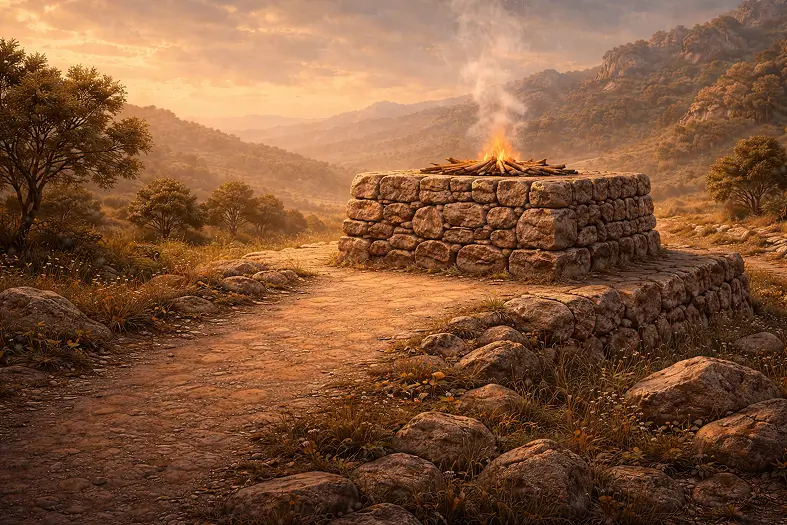
Ancient altar at dawn in nature
Why may iron not touch the altar? Because worship must reject the symbolism of violence. Iron shortens life; the altar exists to restore it. Rashi, Ramban, and Abarbanel show that holiness cannot borrow the tools of force or ego. True avodah restrains power, builds gently, and teaches that closeness to G-d must be life-giving—not coercive.

"Yisro — Part VII — From Revelation to Restraint: Altar Laws and the Ethics of Worship"

7.1 — “כִּי חַרְבְּךָ הֵנַפְתָּ עָלֶיהָ”: Why Iron Profanes the Altar

From Thunder to Stone

Parshas Yisro ends quietly. After thunder, fire, shofar, and speech, the Torah turns to architecture: how to build an altar. The transition is deliberate. Revelation without restraint is dangerous. Worship, the Torah insists, must be shaped by ethics.

The altar is not permitted to be touched by iron:
[כִּי חַרְבְּךָ הֵנַפְתָּ עָלֶיהָ — “for you have lifted your sword upon it”].

Iron is effective. Iron is powerful. Iron builds empires. And iron has no place at the altar.

What Iron Represents

Chazal identify iron with the sword—with violence, coercion, and the shortening of life. The altar, by contrast, exists to prolong life, create reconciliation, and restore relationship. Even when sacrifices involve death, their purpose is repair, not domination.

The Torah does not reject power; it rejects violent symbolism at the site of holiness.

Worship may demand discipline, but it must never glorify force.

Rashi: Holiness Cannot Borrow the Tools of Death

Rashi explains simply: iron shortens life, the altar lengthens it. The contradiction is irreconcilable. Even symbolic contact would blur the altar’s message.

This teaches a radical principle: how something is built matters as much as what it is used for. Ends do not justify means at the place of worship.

Ramban: The Altar as Moral Educator

Ramban deepens the idea. The altar is a teacher. It trains the people how to approach Hashem. By banning iron, the Torah engraves a moral lesson into stone: closeness to G-d must never be achieved through aggression.

Holiness that relies on violence has misunderstood its own source.

Abarbanel: Religion as a Check on Power

Abarbanel situates the law politically. Human societies often weaponize religion to sanctify conquest and control. The Torah preempts this abuse at Sinai itself. The altar may not resemble a fortress or a weapon.

True worship restrains power rather than amplifying it.

Smooth Stones, Not Carved Brilliance

The Torah prefers uncut stones. Not because artistry is wrong, but because ego intrudes. The altar is not a monument to human skill. It is a site of submission.

Iron tools symbolize mastery. The altar demands humility.

Chassidic Insight: Force Silences the Soul

Chassidic masters explain that violence—even symbolic—coarsens the inner life. Avodah requires softness, receptivity, and openness. Iron hardens. Holiness requires permeability.

The altar must feel different from the battlefield.

Why This Law Appears Immediately After Sinai

The Torah anticipates danger. After revelation, people crave intensity. Without restraint, spiritual passion becomes fanaticism. The altar laws say: stop. Slow down. Build carefully.

Not every force that moves people is holy. Not every passion that burns is Divine.

Application for Today

Religion still struggles with this lesson. When worship borrows the language of violence—verbal, ideological, or physical—it betrays its mission. Sacred spaces must be places of life, not intimidation.

The Torah ends revelation by teaching restraint. Holiness that cannot refuse the sword has not understood Sinai.

📖 Sources

  • Full sources available on the Mitzvah Minute Parshas Yisro page under insights and commentaries.

Organized by:
Boaz Solowitch
February 3, 2026
Mitzvah Minute Logo Icon

Connections

Mitzvah Minute Logo Icon

Mitzvah Links

Mitzvah 302

Not to build the altar with stones hewn by metal
A Siddur
Learn this Mitzvah

Mitzvah 302

302
Not to build the altar with stones hewn by metal

Mitzvah 303

Not to climb steps to the altar
A Siddur
Learn this Mitzvah

Mitzvah 303

303
Not to climb steps to the altar

Mitzvah 50

Not to erect a column in a public place of worship
A Siddur
Learn this Mitzvah

Mitzvah 50

50
Not to erect a column in a public place of worship

Mitzvah 52

Not to plant a tree in the Temple courtyard
A Siddur
Learn this Mitzvah

Mitzvah 52

52
Not to plant a tree in the Temple courtyard

Mitzvah 6

To sanctify His Name
A Siddur
Learn this Mitzvah

Mitzvah 6

6
To sanctify His Name
The Luchos - Ten Commandments
View Mitzvah Notes

Mitzvah Reference Notes

"x" close page navigation button

Mitzvah Reference Notes

“Why Iron Profanes the Altar”

Mitzvah #302 — Not to build the altar with stones hewn by metal

כִּי חַרְבְּךָ הֵנַפְתָּ עָלֶיהָ

This mitzvah lies at the heart of the Torah’s ethics of worship. Iron, identified by Chazal as the material of the sword, symbolizes violence and the shortening of life. The altar, whose purpose is reconciliation and restoration, may not absorb even the symbolic presence of coercive force. Holiness must reject the language, tools, and imagery of domination.

Mitzvah #303 — Not to climb steps to the altar

וְלֹא תַעֲלֶה בְמַעֲלֹת עַל מִזְבְּחִי

The Torah forbids architectural elevation that creates exposure, spectacle, or triumphal ascent. Worship is not performance, and closeness to Hashem is not achieved through display or power. This mitzvah reinforces the same ethic as the iron prohibition: restraint, humility, and dignity must govern sacred space.

Mitzvah #50 — Not to erect a pillar in a place of worship

This mitzvah prohibits monumental religious structures associated with pagan power-symbolism. The Torah resists fixed, dominating forms of worship that center human presence rather than Divine command. Sacred space must educate submission, not permanence or conquest.

Mitzvah #52 — Not to plant a tree in the Temple courtyard

This prohibition prevents the importation of fertility symbolism and aesthetic religious elements unrelated to Torah command. Worship may not borrow external cultural imagery, even when it appears beautiful or meaningful. Holiness must be defined internally, not aesthetically enhanced.

Mitzvah #6 — To sanctify His Name

Holiness is sanctified when worship elevates life and dignity. Violence—even symbolic—undermines true sanctification.

Parsha Links

יִתְרוֹ - Yisro

Haftarah: Isaiah 6:1-13
A Siddur
Learn this Parsha

יִתְרוֹ - Yisro

יִתְרוֹ - Yisro
The Luchos - Ten Commandments
View Parsha Notes
"x" close page navigation button

Parsha Reference Notes

“Why Iron Profanes the Altar”

Parshas Yisro (Shemos 18:1–20:23)

Immediately following revelation, the Torah introduces altar laws that restrain religious expression. By prohibiting iron, the Torah ensures that worship remains ethical, humble, and life-affirming.

Mitzvah Minute
Mitzvah Minute Logo

Learn more.

Dive into mitzvos, tefillah, and Torah study—each section curated to help you learn, reflect, and live with intention. New insights are added regularly, creating an evolving space for spiritual growth.

Luchos
Live a commandment-driven life

Mitzvah

Explore the 613 mitzvos and uncover the meaning behind each one. Discover practical ways to integrate them into your daily life with insights, sources, and guided reflection.

Learn more

Mitzvah #

1

To know there is a G‑d
The Luchos - Ten Commandments
Learn this Mitzvah

Mitzvah Highlight

Siddur
Connection through Davening

Tefillah

Learn the structure, depth, and spiritual intent behind Jewish prayer. Dive into morning blessings, Shema, Amidah, and more—with tools to enrich your daily connection.

Learn more

Tefillah

COMING SOON.
A Siddur
Learn this Tefillah

Tefillah Focus

A Sefer Torah
Study the weekly Torah portion

Parsha

Each week’s parsha offers timeless wisdom and modern relevance. Explore summaries, key themes, and mitzvah connections to deepen your understanding of the Torah cycle.

Learn more

יִתְרוֹ - Yisro

Haftarah: Isaiah 6:1-13
A Sefer Torah
Learn this Parsha

Weekly Parsha