"Beshalach — Part I — Crisis, Crying Out, and Covenant"

Mitzvah Minute Logo Icon

1.4 — Moshe’s Hands: Orientation, Not Magic

To afflict and cry out before G‑d in times of catastrophe
Parshas Beshalach rejects magical thinking by revealing the true meaning of Moshe’s raised hands during the war with Amalek. Drawing on Abarbanel and Chazal, this essay shows that Moshe’s hands do not cause victory but orient the nation’s heart toward Hashem. Emunah is portrayed not as momentary inspiration, but as sustained alignment under strain—requiring endurance, visibility, and support from others. Faith does not manipulate outcomes; it directs consciousness, allowing the people to prevail together through shared orientation and trust.

"Beshalach — Part I — Crisis, Crying Out, and Covenant"

1.4 — Moshe’s Hands: Orientation, Not Magic

When Symbols Are Mistaken for Power

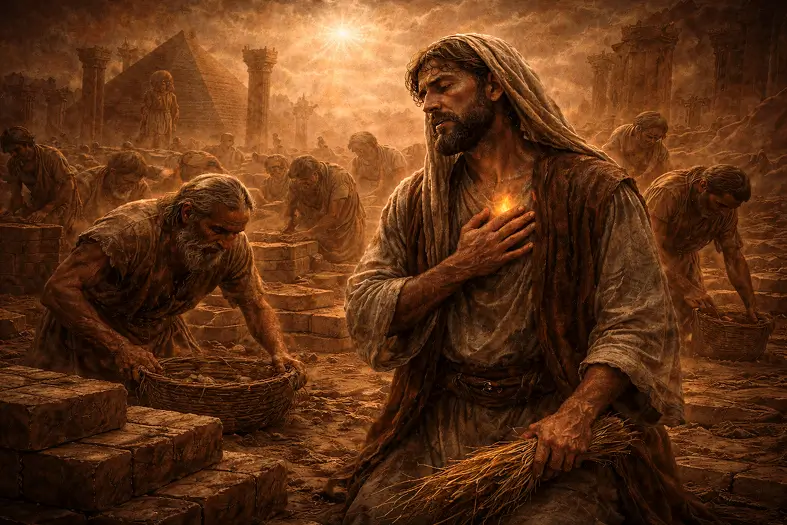
Parshas Beshalach reaches a dramatic moment during the war with Amalek. As the battle rages below, Moshe ascends a hill overlooking the field, raising his hands heavenward. The Torah records a striking correlation: when Moshe’s hands are raised, Yisrael prevails; when they fall, Amalek advances.

At first glance, the image invites misunderstanding. Do Moshe’s hands cause victory? Is this a form of spiritual mechanism or ritualized magic? The Torah anticipates this confusion—and rejects it.

Abarbanel’s Rejection of Magical Thinking

Abarbanel is emphatic: Moshe’s hands possess no independent power. They are not conduits of supernatural force, nor are they symbolic talismans. Rather, they function as orientation—a visible act that directs the nation’s consciousness upward.

The verse states:

[וַיְהִי יָדָיו אֱמוּנָה עַד בֹּא הַשָּׁמֶשׁ — “And his hands were steadfast until the sun set”]

Abarbanel explains that the Torah does not describe raised hands, but steadfast hands. The emphasis is endurance, not gesture. Moshe’s posture teaches that faith is not momentary inspiration—it is sustained alignment under strain.

The Mishnah’s Clarification: Orientation, Not Causation

Chazal crystallize this idea with piercing clarity. The Mishnah teaches that it was not Moshe’s hands that defeated Amalek; rather, when Yisrael looked upward and subordinated their hearts to Hashem, they prevailed. When that orientation weakened, so did their resolve.

This teaching dismantles superstition entirely. The hands do not act upon heaven; they educate the people. They remind the nation where victory truly originates.

From this we learn:

  • Symbols do not replace faith
  • Gestures do not override responsibility
  • Orientation shapes outcome only when internalized

Why Physical Orientation Matters

If Moshe’s hands are not magical, why are they necessary at all?

Because faith is not only intellectual—it is embodied. In moments of fear, ideas alone falter. Physical posture reinforces spiritual truth.

Moshe’s raised hands accomplish several things simultaneously:

  • They fix the nation’s attention beyond the battlefield
  • They counter panic with visible steadiness
  • They translate belief into sustained focus

Abarbanel emphasizes that leadership must teach faith in real time, under pressure, not only in moments of calm.

Endurance as the Measure of Emunah

The Torah highlights that Moshe’s hands grow heavy. Faith is exhausting. Orientation requires effort.

This detail is essential. Had Moshe’s hands remained effortlessly raised, the lesson would be hollow. Instead, the Torah insists on strain—on the reality that sustaining trust over time is difficult.

Enduring faith demands:

  • Perseverance when outcomes remain uncertain
  • Support when strength alone is insufficient
  • Visibility so that others may draw courage

Supported Hands, Shared Responsibility

When Moshe’s strength wanes, the Torah records:

[וְאַהֲרֹן וְחוּר תָּמְכוּ בְיָדָיו — “Aharon and Chur supported his hands”]

This moment completes the teaching. Orientation is not sustained by individuals alone. Even Moshe requires support. Leadership, faith, and victory are communal achievements.

From this we learn:

  • Faith is upheld collectively, not privately
  • Leaders must allow themselves to be supported
  • Responsibility flows in all directions

Abarbanel stresses that this shared posture prevents faith from collapsing into spectacle or hierarchy. No one stands alone before Hashem.

The War Below Mirrors the Posture Above

As Moshe’s hands remain steadfast, Yisrael prevails below. This is not causation but correspondence. The physical battle mirrors the spiritual orientation of the nation.

The Torah teaches that:

  • When hearts align upward, hands fight with clarity
  • When orientation falters, strength dissolves into fear
  • Victory reflects consciousness before it reflects power

Amalek’s threat is not merely military—it is spiritual disorientation. Moshe’s posture counters that threat at its root.

Conclusion: Faith That Directs, Not Manipulates

Parshas Beshalach rejects magical religion outright. Moshe’s hands do not bend heaven; they aim the people. Orientation, not manipulation, is the Torah’s path.

Abarbanel’s teaching reframes faith as disciplined alignment—sustained, visible, and shared. In moments of crisis, the Torah does not ask for rituals that replace responsibility. It demands posture that shapes consciousness and endurance that carries the nation through.

Moshe’s hands teach that true emunah is not about controlling outcomes, but about standing oriented toward Hashem until the struggle passes—together.

📖 Sources

  • Full sources available on the Mitzvah Minute Parshas Beshalach page under insights and commentaries.

Organized by:
Boaz Solowitch
January 28, 2026
Mitzvah Minute Logo Icon

Connections

Mitzvah Minute Logo Icon

Mitzvah Links

Mitzvah 11

To emulate His ways
A Siddur
Learn this Mitzvah

Mitzvah 11

11
To emulate His ways

Mitzvah 121

To afflict and cry out before G‑d in times of catastrophe
A Siddur
Learn this Mitzvah

Mitzvah 121

121
To afflict and cry out before G‑d in times of catastrophe

Mitzvah 489

Not to stand idly by if someone's life is in danger
A Siddur
Learn this Mitzvah

Mitzvah 489

489
Not to stand idly by if someone's life is in danger

Mitzvah 610

Not to panic and retreat during battle
A Siddur
Learn this Mitzvah

Mitzvah 610

610
Not to panic and retreat during battle

Mitzvah 607

Appoint a priest to speak with the soldiers during the war
A Siddur
Learn this Mitzvah

Mitzvah 607

607
Appoint a priest to speak with the soldiers during the war
The Luchos - Ten Commandments
View Mitzvah Notes

Mitzvah Reference Notes

"x" close page navigation button

Mitzvah Reference Notes

“Moshe’s Hands: Orientation, Not Magic”

Mitzvah #11 — To Emulate His Ways (Devarim 28:9)

וְהָלַכְתָּ בִּדְרָכָיו

Abarbanel explains that Moshe’s posture during the war with Amalek models Divine conduct. Hashem guides rather than coerces, educates rather than manipulates. By holding his hands in sustained orientation toward Heaven, Moshe imitates Hashem’s way of leading—shaping consciousness and responsibility rather than bypassing human effort. Emulating Hashem here means guiding hearts, not wielding power.

Mitzvah #121 — To Afflict and Cry Out Before G-d in Times of Catastrophe (Bamidbar 10:9)

וְכִי־תָבֹאוּ מִלְחָמָה… וְנִזְכַּרְתֶּם לִפְנֵי ה׳ אֱלֹקֵיכֶם

Moshe’s raised hands give physical form to communal outcry. Abarbanel teaches that this mitzvah is not fulfilled through sound alone, but through visible, sustained orientation toward Hashem during danger. The hands do not summon victory; they express dependence and alignment. Crying out becomes covenantal only when it reshapes awareness and behavior throughout the community.

Mitzvah #489 — Not to Stand Idly By When Another’s Life Is in Danger (Vayikra 19:16)

לֹא תַעֲמֹד עַל־דַּם רֵעֶךָ

The episode with Amalek demonstrates that spiritual leadership itself must not “stand idly by.” Moshe does not retreat into private prayer or symbolic ritual. He places himself visibly within the struggle, teaching that orientation toward Hashem intensifies—rather than replaces—human responsibility. Faith that disengages from action violates this mitzvah.

Mitzvah #610 — Not to Panic and Retreat During Battle (Devarim 20:3)

אַל־יֵרַךְ לְבַבְכֶם אַל־תִּירְאוּ

Moshe’s endurance—hands growing heavy yet remaining raised—embodies this mitzvah at its core. Fear is natural, but collapse under pressure is not permitted. Abarbanel highlights that steadiness under strain educates the nation, preventing panic from overtaking resolve. Courage here is not bravado; it is disciplined faith maintained over time.

Mitzvah #607 — To Appoint a Priest to Speak to the Soldiers During War (Devarim 20:2)

וְנִגַּשׁ הַכֹּהֵן וְדִבֶּר אֶל־הָעָם

Moshe’s raised hands function as the earliest model of this mitzvah. Before words are spoken, posture speaks. Abarbanel frames Moshe’s act as silent instruction—strengthening morale by directing the people’s hearts upward. Leadership in battle begins with orientation, ensuring that courage flows from trust rather than from fear or impulse.

Parsha Links

בְּשַׁלַּח – Beshalach

Haftarah: Judges 4:4 - 5:31
A Siddur
Learn this Parsha

בְּשַׁלַּח – Beshalach

בְּשַׁלַּח – Beshalach
The Luchos - Ten Commandments
View Parsha Notes
"x" close page navigation button

Parsha Reference Notes

“Moshe’s Hands: Orientation, Not Magic”

Parshas Beshalach (Shemos 17:8–13)

The Torah’s account of the war with Amalek deliberately links Moshe’s physical posture to the outcome of battle: [וְהָיָה כַּאֲשֶׁר יָרִים מֹשֶׁה יָדוֹ וְגָבַר יִשְׂרָאֵל — “And it was when Moshe raised his hand that Israel prevailed”]. Abarbanel insists that this relationship is not causal or magical. Moshe’s hands do not generate victory; they orient the people’s consciousness toward Hashem. The Torah emphasizes endurance—[וַיְהִי יָדָיו אֱמוּנָה עַד בֹּא הַשָּׁמֶשׁ — “his hands were steadfast until sunset”]—teaching that faith is sustained alignment under strain, not momentary inspiration.

Chazal reinforce this reading by clarifying that Israel prevailed only when their hearts were directed heavenward. Moshe’s posture functions as public instruction: a visible reminder that success in war depends on spiritual focus rather than technique alone. When Moshe’s strength falters, Aharon and Chur support his hands, completing the lesson that orientation toward Hashem is a communal responsibility. Beshalach thus reframes symbols as educational, not operative—rejecting superstition and establishing emunah as disciplined, shared consciousness that shapes action and endurance during crisis.

Mitzvah Minute
Mitzvah Minute Logo

Learn more.

Dive into mitzvos, tefillah, and Torah study—each section curated to help you learn, reflect, and live with intention. New insights are added regularly, creating an evolving space for spiritual growth.

Luchos
Live a commandment-driven life

Mitzvah

Explore the 613 mitzvos and uncover the meaning behind each one. Discover practical ways to integrate them into your daily life with insights, sources, and guided reflection.

Learn more

Mitzvah #

1

To know there is a G‑d
The Luchos - Ten Commandments
Learn this Mitzvah

Mitzvah Highlight

Siddur
Connection through Davening

Tefillah

Learn the structure, depth, and spiritual intent behind Jewish prayer. Dive into morning blessings, Shema, Amidah, and more—with tools to enrich your daily connection.

Learn more

Tefillah

COMING SOON.
A Siddur
Learn this Tefillah

Tefillah Focus

A Sefer Torah
Study the weekly Torah portion

Parsha

Each week’s parsha offers timeless wisdom and modern relevance. Explore summaries, key themes, and mitzvah connections to deepen your understanding of the Torah cycle.

Learn more

יִתְרוֹ - Yisro

Haftarah: Isaiah 6:1-13
A Sefer Torah
Learn this Parsha

Weekly Parsha