"Beshalach — Part VI — Philosophical Architecture of Redemption"

Mitzvah Minute Logo Icon

6.4 — Part VI Application: Thinking Clearly About Redemption

Krias Yam Suf: A journey through the waters' edge
The application of Part VI insists that redemption demands intellectual maturity. Drawing on Ramban, Ralbag, and Abarbanel, this essay rejects both superstition and reductionism, arguing that miracles orient but do not sustain covenantal life. True faith emerges when responsibility replaces expectation and clarity replaces fantasy. Parshas Beshalach teaches that redemption endures only when a people learns to think clearly, act responsibly, and live deliberately within Divine order—even when miracles fade.

"Beshalach — Part VI — Philosophical Architecture of Redemption"

6.4 — Part VI Application: Thinking Clearly About Redemption

When Faith Must Grow Up

Part VI culminates in a demanding application: redemption requires intellectual maturity. Parshas Beshalach does not invite the Jew to live on wonder alone. It insists that faith must survive when spectacle fades and responsibility remains.

Ramban, Ralbag, and Abarbanel together expose a dangerous mistake—confusing Divine intervention with exemption from thought, effort, and accountability. Redemption that is not understood becomes fragile. Redemption that is not integrated becomes illusion.

Rejecting Two Extremes

Thinking clearly about redemption requires rejecting two opposing errors:

On one side lies superstition—the belief that Hashem’s involvement means constant intervention, relieving human beings of responsibility. On the other lies reductionism—the belief that since the world operates through order, Divine meaning is absent.

The Torah rejects both. Hashem governs continuously, yet He governs through structure. Redemption reveals meaning so that human beings may act wisely within it.

Miracles as Orientation, Not Lifestyle

The application is subtle but critical: miracles are meant to orient, not to sustain. They reset perception, clarify values, and expose truth—but they do not replace the work of living faithfully afterward.

A person who expects redemption to remove struggle misunderstands its purpose. Struggle is not evidence of Divine absence; it is the arena in which covenant is practiced.

Responsibility Is the Proof of Faith

In Part VI, responsibility becomes the measure of belief. A person who truly understands redemption does not wait passively for Hashem to act again. They ask instead:

What does Hashem expect of me now?

This shift—from expectation to obligation—is the intellectual achievement of redemption. It transforms faith from reaction into commitment.

Living Within Divine Order

Ramban teaches that creation is ongoing. Ralbag teaches that providence operates through order. Abarbanel teaches that freedom demands accountability. Together, they form a unified demand: live deliberately within Divine reality.

This means planning responsibly, choosing ethically, and thinking clearly even when outcomes are uncertain. Faith expressed this way is not diminished—it is refined.

Redemption Without Fantasy

Part VI insists that faith cannot survive on fantasy. A people trained only to look backward toward miracles will falter when facing the future. A people trained to understand meaning, structure, and responsibility will endure.

This is why the Torah transitions so quickly from revelation to law, from miracle to mitzvah. Redemption that does not become disciplined living collapses into memory.

Conclusion: Clarity Is the Final Gift

The final application of Part VI is clear and demanding: clarity itself is a Divine gift. Miracles awaken. Understanding stabilizes. Responsibility sustains.

Parshas Beshalach teaches that the highest form of redemption is not the suspension of reality, but the ability to live faithfully within it—aware of Hashem’s presence, committed to obligation, and capable of thought.

This is redemption that does not fade.
It is redemption that lasts.

📖 Sources

  • Full sources available on the Mitzvah Minute Parshas Beshalach page under insights and commentaries.

Organized by:
Boaz Solowitch
January 28, 2026
Mitzvah Minute Logo Icon

Connections

Mitzvah Minute Logo Icon

Mitzvah Links

Mitzvah 1

To know there is a G‑d
A Siddur
Learn this Mitzvah

Mitzvah 1

1
To know there is a G‑d

Mitzvah 11

To emulate His ways
A Siddur
Learn this Mitzvah

Mitzvah 11

11
To emulate His ways

Mitzvah 25

Not to follow the whims of your heart or what your eyes see
A Siddur
Learn this Mitzvah

Mitzvah 25

25
Not to follow the whims of your heart or what your eyes see

Mitzvah 77

To serve the Almighty with prayer daily
A Siddur
Learn this Mitzvah

Mitzvah 77

77
To serve the Almighty with prayer daily

Mitzvah 87

To rest on the seventh day
A Siddur
Learn this Mitzvah

Mitzvah 87

87
To rest on the seventh day
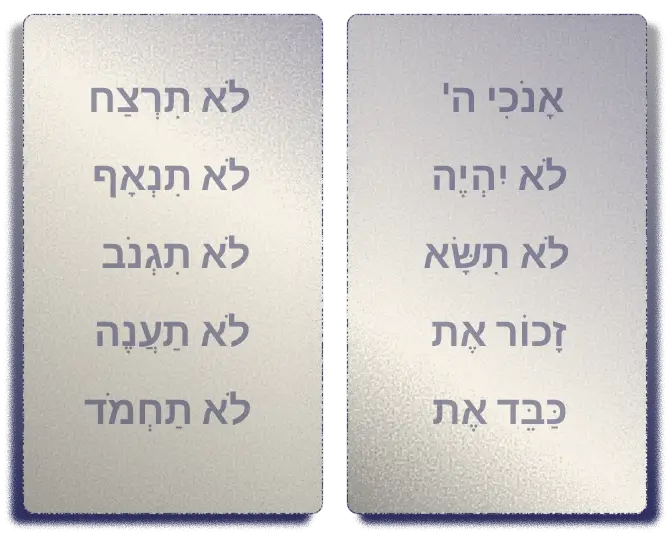
The Luchos - Ten Commandments
View Mitzvah Notes

Mitzvah Reference Notes

"x" close page navigation button

Mitzvah Reference Notes

Thinking Clearly About Redemption

Mitzvah #1 — To Know That There Is a G-d

(Shemos 20:2)

Thinking clearly about redemption fulfills this mitzvah by transforming belief into understanding. Knowing Hashem means recognizing His ongoing involvement while accepting the responsibility He entrusts to human beings.

Mitzvah #11 — To Walk in His Ways

(Devarim 28:9)

Hashem governs the world with order and restraint. Emulating His ways requires measured action and thoughtful decision-making rather than dependence on intervention. Redemption matures when life is shaped accordingly.

Mitzvah #25 — Not to Follow After One’s Heart and Eyes

(Bamidbar 15:39)

Fantasy-driven faith follows impulse and expectation. This mitzvah anchors judgment in reflection, ensuring that redemption does not collapse into emotional reaction when miracles recede.

Mitzvah #77 — To Serve Hashem with Prayer

(Shemos 23:25)

Prayer aligns human action with Divine purpose without suspending responsibility. In the application of Part VI, tefillah becomes orientation rather than escape—clarity rather than avoidance.

Mitzvah #87 — To Rest on the Seventh Day

(Shemos 23:12)

Shabbos embodies redemption lived responsibly. It affirms trust in ongoing creation while demanding disciplined structure, integrating freedom with obligation.

Parsha Links

בְּשַׁלַּח – Beshalach

Haftarah: Judges 4:4 - 5:31
A Siddur
Learn this Parsha

בְּשַׁלַּח – Beshalach

בְּשַׁלַּח – Beshalach
The Luchos - Ten Commandments
View Parsha Notes
"x" close page navigation button

Parsha Reference Notes

Thinking Clearly About Redemption

Parshas Beshalach — Shemos 13:17–17:16

The arc of Parshas Beshalach deliberately moves from dramatic revelation to structured obligation. The splitting of the Sea reveals Hashem’s mastery over history, yet immediately afterward Israel must walk forward without spectacle. The manna teaches daily dependence within discipline, while Shabbos introduces structured restraint. Finally, the war with Amalek removes miracles almost entirely, forcing leadership, judgment, and responsibility to emerge.

Ramban’s teaching that creation is ongoing explains why redemption cannot eliminate effort. Ralbag’s framework of ordered providence clarifies why miracles recede once their lesson is delivered. Abarbanel’s critique of passive redemption exposes the danger of expecting rescue without growth. Together, these insights reveal that Beshalach is not about living inside miracles, but about learning to live faithfully after them—with clarity, obligation, and moral seriousness.

Mitzvah Minute
Mitzvah Minute Logo

Learn more.

Dive into mitzvos, tefillah, and Torah study—each section curated to help you learn, reflect, and live with intention. New insights are added regularly, creating an evolving space for spiritual growth.

Luchos
Live a commandment-driven life

Mitzvah

Explore the 613 mitzvos and uncover the meaning behind each one. Discover practical ways to integrate them into your daily life with insights, sources, and guided reflection.

Learn more

Mitzvah #

1

To know there is a G‑d
The Luchos - Ten Commandments
Learn this Mitzvah

Mitzvah Highlight

Siddur
Connection through Davening

Tefillah

Learn the structure, depth, and spiritual intent behind Jewish prayer. Dive into morning blessings, Shema, Amidah, and more—with tools to enrich your daily connection.

Learn more

Tefillah

COMING SOON.
A Siddur
Learn this Tefillah

Tefillah Focus

A Sefer Torah
Study the weekly Torah portion

Parsha

Each week’s parsha offers timeless wisdom and modern relevance. Explore summaries, key themes, and mitzvah connections to deepen your understanding of the Torah cycle.

Learn more

יִתְרוֹ - Yisro

Haftarah: Isaiah 6:1-13
A Sefer Torah
Learn this Parsha

Weekly Parsha