www.Mitzvah-Minute.com
"Ki Sisa — Part VI — Second Luchos: The Birth of Historical Holiness"
6.3 — The Light Hidden in Failure
The Paradox of the Golden Calf
The sin of the Golden Calf stands as one of the greatest spiritual failures in the history of Klal Yisrael. Occurring so soon after the revelation at Sinai, it appears at first glance as a collapse without redeeming meaning. Yet the Torah devotes extraordinary attention not only to the sin itself but to the process of recovery that follows.
Across שמות לב–לד, the narrative traces a descent followed by renewal: the breaking of the Luchos, Moshe’s intercession, the revelation of the Thirteen Middos, and the giving of the second Tablets.
This structure suggests that the crisis revealed something hidden within the covenant itself.
The Golden Calf exposed a dimension of spiritual growth that could emerge only through struggle.
Failure became the gateway to deeper holiness.
Rav Kook: Descent for the Sake of Ascent
Rav Kook understood spiritual development as a process that often includes descent before ascent. Periods of decline can uncover hidden strengths that remain dormant during times of effortless growth.
Before the Golden Calf, the holiness of Israel came through revelation. The nation stood at Sinai in a state of extraordinary elevation, lifted by Divine presence and miracles.
Yet such holiness remained largely untested.
The crisis of the Golden Calf forced the nation to confront weakness and rebuild from within. Holiness would no longer rest solely on inspiration from above but would grow through human effort.
Rav Kook described this pattern as a fundamental law of spiritual development. A deeper level of holiness emerges when the soul struggles to return after falling.
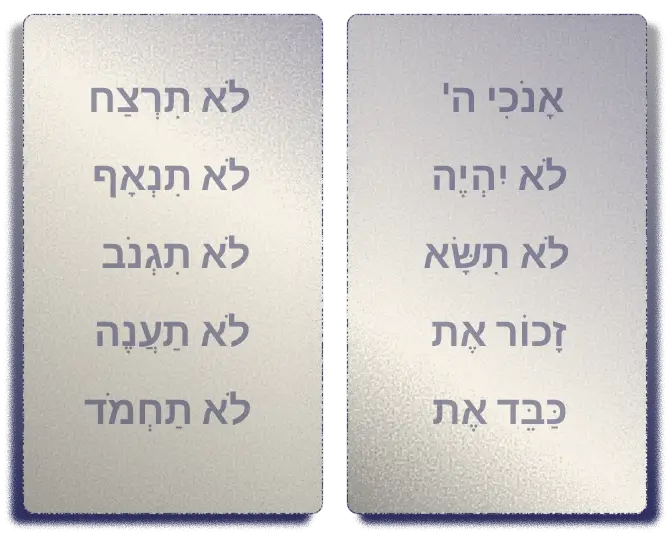
The second Luchos embody this new level.
Holiness achieved through struggle becomes stronger and more enduring than holiness received without effort.
Sfas Emes: The Deeper Covenant
The Sfas Emes taught that the covenant revealed after the Golden Calf contained a depth that had not been visible before.
The first Luchos represented a covenant given in purity. The second Luchos emerged from a world that had known sin and repentance.
This difference created a deeper bond between Hashem and Israel.
The Sfas Emes explained that teshuvah reveals the inner connection between Hashem and the Jewish people. Even when the external relationship appears broken, the inner bond remains intact.
The return after failure reveals that bond.
The covenant becomes deeper because it has passed through separation and reunion.
The Golden Calf thus revealed a level of connection that could not be seen at Sinai alone.
Rav Miller: Strength Through Effort
Rav Avigdor Miller emphasized that genuine spiritual growth requires effort. Achievements gained easily may inspire, but achievements earned through struggle endure.
The Golden Calf forced the nation to rebuild its relationship with Hashem step by step.
Moshe’s intercession, the people’s repentance, and the renewal of the covenant all required effort and commitment.
Rav Miller taught that such effort produces stronger character and deeper understanding.
The covenant after the Golden Calf rests on experience rather than innocence.
The nation learns not only what holiness is but what it costs.
This knowledge strengthens commitment.
The Hidden Light
The Torah does not present the Golden Calf as a positive event. The sin remains a tragedy and a warning.
Yet the aftermath reveals that failure can uncover hidden potential.
Through the crisis:
- The Thirteen Middos of Mercy are revealed.
- The second Luchos are given.
- Prayer becomes central to covenant life.
- Teshuvah becomes a permanent path.
These developments shape the covenant for all future generations.
They emerge only after the crisis.
The light remains hidden until the darkness appears.
Holiness That Grows
The transition after the Golden Calf reveals a new understanding of holiness.
Before the crisis, holiness appears as perfection descending from above.
After the crisis, holiness appears as growth from within.
This change transforms the covenant.
Holiness becomes dynamic rather than static.
Growth replaces innocence as the defining feature of covenant life.
The covenant becomes capable of surviving history because it includes the possibility of renewal.
Rav Miller: Learning from Failure
Rav Miller often emphasized that failure can become a teacher when it leads to reflection and change.
The Golden Calf became such a teacher for the generation of the desert. The nation learned the seriousness of covenant life through the consequences of its actions.
Rav Miller stressed that growth requires honesty about mistakes. When failure leads to deeper commitment, it becomes a source of strength.
The covenant becomes stronger because it incorporates the lessons of experience.
Failure becomes the beginning of wisdom.
Application for Today — Growth Through Struggle
Spiritual growth rarely follows a straight path. Moments of difficulty and failure can feel discouraging, yet Ki Sisa teaches that struggle often reveals deeper strength. The covenant after the Golden Calf became stronger because it passed through crisis and renewal.
Effort deepens commitment. When a person works to rebuild after setbacks, the relationship with Hashem becomes more deliberate and more enduring. Growth achieved through struggle often becomes more stable than growth that comes easily.
Challenges also create opportunities for deeper understanding. Experiences that test faith can lead to clearer awareness of what truly matters and stronger attachment to Torah and mitzvos.
Ki Sisa teaches that failure need not define a person’s future. When struggle leads to renewed commitment, hidden spiritual potential emerges. The light discovered through effort becomes a lasting source of strength within covenant life.
📖 Sources
- Full sources available on the Mitzvah Minute Parshas Ki Sisa page under insights and commentaries