Each Parsha page on Mitzvah Minute is designed as a guided, three-level journey through the weekly Torah reading—integrating the narrative, the mitzvos, and the classical commentaries into one unified experience.
Begin with the foundations of the Parsha:
This level gives you the storyline, the key mitzvos, and the essential connections between them.
A complete journey through the parsha—moving from clarity and depth to inner connection and real-world meaning, culminating in a way to live its ideas in everyday life.
These sections show how the Parsha speaks to the mind, the heart, and the real world — offering wisdom rooted in enduring Torah.
A complete, structured commentary on the parsha—presented pasuk by pasuk, with chapter and overall summaries for clarity and flow.
This level reveals the structural depth of the Parsha and the classical underpinnings of each theme.
Together, these layers create a complete Parsha journey —
narrative, mitzvah, and commentary — all flowing toward deeper understanding, spiritual insight, and meaningful growth.
Tap the Page Navigation tab on the right side of your screen anytime to access quick-links to the entire Parsha page.
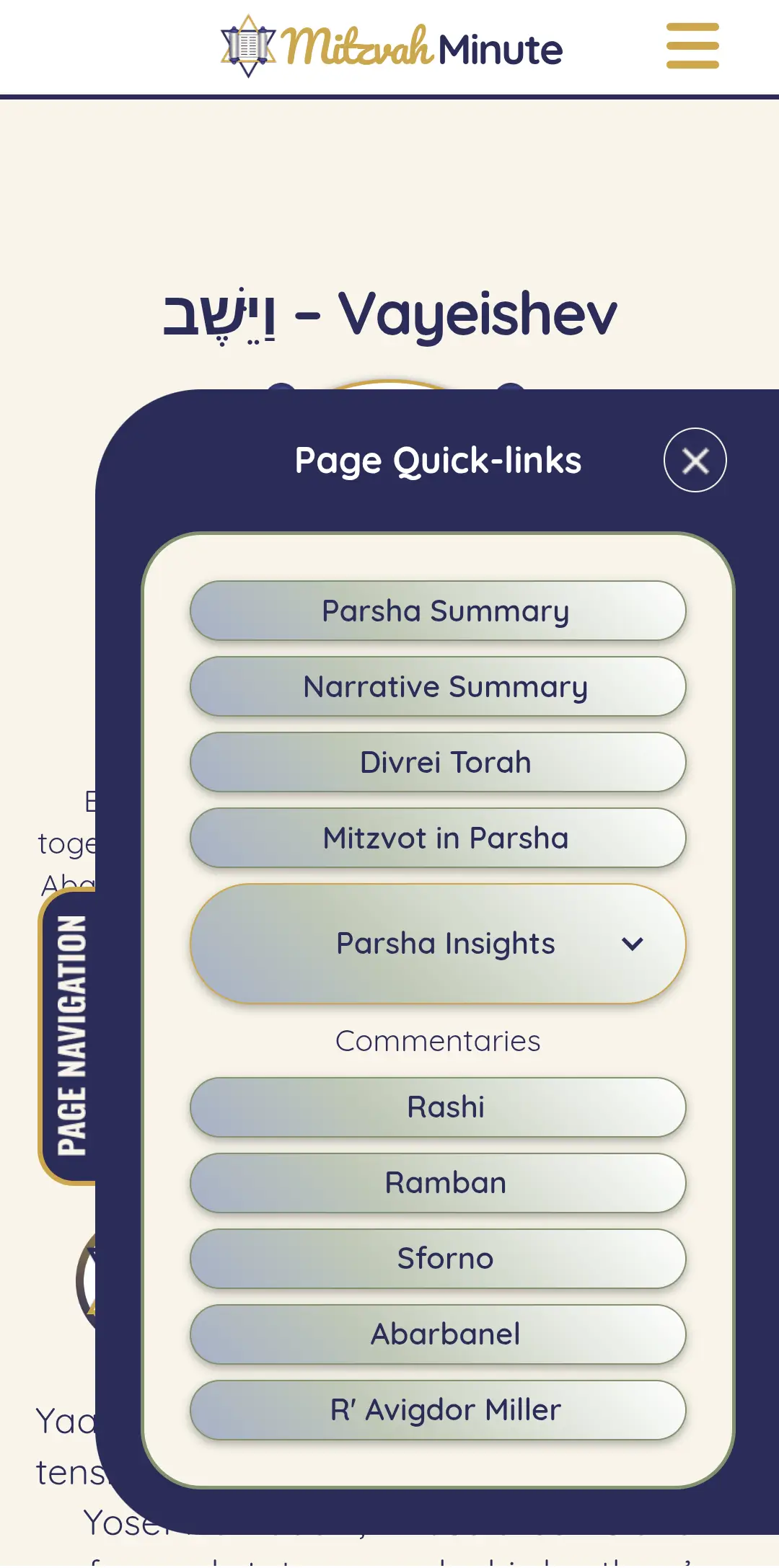
The quick-link panel gives instant access to every section — Parsha Summary, Mitzvos, Divrei Torah, Insights, and Commentaries.
“Every word of Torah and every mitzvah lifts us higher — may your learning bring you closer to Hashem.”

Parshas Ki Sisa traces the dramatic arc from covenant to crisis and from crisis to renewal. The parsha begins with the mitzvah of מַחֲצִית הַשֶּׁקֶל, the purification of the Kohanim through the כיור, and the preparation of the שֶׁמֶן מִשְׁחַת קֹדֶשׁ and קְטֹרֶת, before introducing Betzalel and the command of Shabbos as the eternal sign between Hashem and Yisroel. At the very moment Moshe receives the לֻחֹת, the people fall into the sin of the עֵגֶל הַזָּהָב, leading to the breaking of the tablets and a national crisis. Through Moshe’s self-sacrificing tefillah the nation is spared destruction, the י״ג מִדּוֹת הָרַחֲמִים are revealed, and the covenant is renewed with the second tablets. The parsha concludes with Moshe descending from Sinai, his face radiant with holiness, symbolizing the restored bond between Hashem and Yisroel.

"Covenant After Crisis — Failure, Forgiveness, and Renewal"
אָנֹכִי ה׳ אֱלֹקֶיךָ
Parshas Ki Sisa reveals that knowledge of Hashem must be internalized rather than dependent on visible intermediaries. The sin of the Golden Calf arose when the people sought a tangible replacement for Moshe instead of trusting in the unseen Divine Presence. True knowledge of Hashem is not based on miracles or leadership alone but on enduring awareness of His sovereignty even in times of uncertainty.
לֹא יִהְיֶה לְךָ אֱלֹקִים אֲחֵרִים עַל פָּנָי
The Golden Calf demonstrates how idolatry begins not with denial of Hashem but with distorted imagination. Ki Sisa teaches that allowing the mind to seek substitutes for Divine guidance leads to spiritual collapse. Guarding one's thoughts from foreign conceptions of Divinity preserves the integrity of faith.
שְׁמַע יִשְׂרָאֵל ה׳ אֱלֹקֵינוּ ה׳ אֶחָד
Ki Sisa teaches that the unity of Hashem excludes the need for intermediaries. The people’s attempt to create a visible representation reflected a failure to grasp Divine unity. The covenant is restored when Israel returns to recognition that Hashem alone governs and sustains existence.
וְאָהַבְתָּ אֵת ה׳ אֱלֹקֶיךָ
Moshe’s self-sacrificial plea — “מחני נא מספרך” — demonstrates love of Hashem expressed through devotion to His people and covenant. Love of Hashem is revealed not only in spiritual inspiration but in loyalty during times of failure and rebuilding.
אֶת ה׳ אֱלֹקֶיךָ תִּירָא
The destruction of the Tablets and the punishments following the Golden Calf reveal the awe required in approaching Hashem. Ki Sisa teaches that Divine service demands reverence and careful obedience, particularly in matters of sacred worship.
וְנִקְדַּשְׁתִּי בְּתוֹךְ בְּנֵי יִשְׂרָאֵל
Moshe’s defense of Israel before Hashem expresses concern for the sanctification of the Divine Name among the nations. The covenant must endure so that Hashem’s greatness becomes known through the survival and conduct of His people.
זֶה יִתְּנוּ כָּל הָעֹבֵר עַל הַפְּקֻדִים
The half-shekel establishes that Israel is counted through contribution rather than numbers. Ki Sisa teaches that covenant strength lies in shared responsibility and equal participation in sacred service.
פָּתֹחַ תִּפְתַּח אֶת יָדְךָ לְאָחִיךָ
Parshas Ki Sisa teaches that covenant life is sustained through shared responsibility. The mitzvah of the half-shekel established that every member of Israel contributes equally toward the service of Hashem, expressing the principle that holiness is built through communal giving. The mitzvah of tzedakah extends this idea into daily life, teaching that responsibility for others is a permanent obligation. Ki Sisa shows that the covenant is preserved not only through faith and repentance but through acts of giving that bind the Jewish people together.
וְרָחֲצוּ אַהֲרֹן וּבָנָיו מִמֶּנּוּ אֶת יְדֵיהֶם וְאֶת רַגְלֵיהֶם
Parshas Ki Sisa teaches that approaching holiness requires preparation. The Kohanim washed their hands and feet before entering the Mishkan, emphasizing that Divine service demands discipline and reverence. The repeated warning "וְלֹא יָמֻתוּ" shows that sacred service cannot be approached casually. The כיור represents ordered avodah that stands in contrast to the disorder of the Golden Calf, teaching that closeness to Hashem depends on readiness and obedience.
וְעָשִׂיתָ אֹתוֹ שֶׁמֶן מִשְׁחַת קֹדֶשׁ
The Shemen HaMishchah established the sanctity of the Mishkan and those chosen for Divine service. Parshas Ki Sisa emphasizes that holiness is created through precise boundaries and sacred designation. The anointing oil was prepared according to exact proportions and reserved for Hashem’s service alone. After the disorder of the Golden Calf, these laws teach that Divine service depends on structure and discipline.
וְהַקְּטֹרֶת אֲשֶׁר תַּעֲשֶׂה בְּמַתְכֻּנְתָּהּ לֹא תַעֲשׂוּ לָכֶם
The Ketores was prepared according to a precise formula and designated exclusively for the service of Hashem. Parshas Ki Sisa teaches that sacred practices must remain distinct and may not be used for personal benefit. The prohibition against reproducing the incense mixture emphasizes the boundaries that define holiness. The parsha contrasts the misuse of physical objects in the Golden Calf with their disciplined use in the Mishkan.
וְהָלַכְתָּ בִּדְרָכָיו
The revelation of the Thirteen Attributes teaches that knowledge of Hashem is achieved by imitating His qualities of mercy and compassion. Ki Sisa presents ethical imitation as the path to renewed closeness with Hashem after sin.
וְאָהַבְתָּ לְרֵעֲךָ כָּמוֹךָ
Moshe’s willingness to sacrifice himself for Klal Yisrael expresses the deepest form of Jewish unity. Ki Sisa teaches that the covenant binds all Jewish souls together and that spiritual responsibility extends beyond the individual.
הוֹכֵחַ תּוֹכִיחַ אֶת עֲמִיתֶךָ
Moshe’s confrontation with the nation after the Golden Calf demonstrates the obligation to correct wrongdoing. True leadership requires moral clarity and the courage to confront sin in order to restore the covenant.
וְשִׁנַּנְתָּם לְבָנֶיךָ
After the sin, Moshe established a tent of meeting outside the camp where those who sought Hashem came to learn. Ki Sisa shows that Torah study becomes the foundation for rebuilding the relationship between Hashem and Israel.
וְלֹא תָתוּרוּ אַחֲרֵי לְבַבְכֶם וְאַחֲרֵי עֵינֵיכֶם
The Golden Calf illustrates the danger of religious impulse guided by emotion rather than truth. Ki Sisa teaches that spiritual life must be governed by discipline rather than imagination.
לֹא תָעָבְדֵם
The worship of the Golden Calf represents the central violation described in the parsha. Ki Sisa teaches that even when motivated by confusion rather than rebellion, idolatrous worship destroys the covenant.
לֹא תִשְׁתַּחֲוֶה לָהֶם
The physical acts of idolatrous worship performed before the Golden Calf demonstrate that bodily actions shape spiritual reality. Ki Sisa teaches that devotion must be directed only toward Hashem.
לֹא תַעֲשֶׂה לְךָ פֶסֶל
The making of the Golden Calf embodies this prohibition in its clearest form. Ki Sisa demonstrates how attempts to represent the Divine physically lead to spiritual corruption.
אַבֵּד תְּאַבְּדוּן אֶת כָּל הַמְּקֹמוֹת
Moshe’s burning and grinding of the Golden Calf into powder expresses the obligation to eradicate idolatry completely. The destruction of the Calf symbolizes the rejection of false worship and the restoration of the covenant.
וְהִתְוַדּוּ אֶת חַטָּאתָם
Ki Sisa presents the Torah’s classic model of teshuvah. Mourning, confession, prayer, and covenant renewal demonstrate that repentance rebuilds the relationship between Hashem and Israel.
וַעֲבַדְתֶּם אֵת ה׳ אֱלֹקֵיכֶם
Moshe’s repeated prayers show that prayer transforms the spiritual condition of those who seek forgiveness. Ki Sisa teaches that Divine closeness is restored through sincere avodah.
שֵׁשֶׁת יָמִים תַּעֲבֹד וּבַיּוֹם הַשְּׁבִיעִי תִּשְׁבֹּת
Shabbos in Ki Sisa serves as the sign of the covenant between Hashem and Israel. Even the construction of the Mishkan yields to Shabbos, demonstrating that sacred time defines the relationship between Hashem and His people.
זָכוֹר אֶת יוֹם הַשַּׁבָּת לְקַדְּשׁוֹ
Shabbos expresses knowledge that Hashem sanctifies Israel. Ki Sisa presents Shabbos as the enduring testimony to the covenant that survives even after sin.

Rashi’s commentary on Parshas Ki Sisa presents the parsha as a movement from ordered holiness to catastrophic failure and finally to covenantal restoration. Through Midrash, linguistic precision, and halachic interpretation, Rashi explains how sacred service must be governed by exact boundaries and how spiritual confusion leads to idolatry. He also shows how Moshe’s leadership restores the relationship between Hashem and Yisrael. This section synthesizes the themes that emerge from the full Rashi commentary.
Rashi explains that the census by means of the half-shekel establishes both the dignity and vulnerability of Klal Yisrael.
Israel may not be counted directly because counting individuals exposes them to the danger of the evil eye and plague, as occurred in the days of David (שמואל ב כ״ד). Instead, each person gives a מחצית השקל and the coins are counted.
The half-shekel also expresses deeper spiritual ideas:
Rashi distinguishes three separate terumos:
Through these contributions, Israel becomes counted not as individuals but as participants in sacred service.
Rashi emphasizes that avodah demands physical and spiritual preparation.
The כיור served as the means through which the Kohanim sanctified themselves before avodah. They washed hands and feet simultaneously, placing each hand on the corresponding foot. Failure to wash brought the penalty of death.
The obligation applied to:
The repeated warning "ולא ימתו" teaches that sacred service without preparation endangers life.
Holiness therefore requires discipline and exact obedience.
Rashi repeatedly stresses that sacred objects require exact proportions and clear boundaries.
The Shemen HaMishchah and Ketores must be prepared with precise ingredients and measurements. The Torah prohibits duplicating them for personal use.
Key principles emerge:
Even language receives careful analysis:
Rashi shows that kedushah is defined through careful distinctions and limits.
Rashi explains that Betzalel’s appointment reveals the nature of sacred leadership.
Betzalel was endowed with three levels of wisdom:
Sacred craftsmanship required both technical skill and Divine inspiration.
Additional artisans also participated, demonstrating that the Mishkan was the work of the entire nation guided by Divine wisdom.
Rashi explains that Shabbos stands above even the construction of the Mishkan.
The word אך limits the command of building the Mishkan and excludes Shabbos labor. Even sacred work must cease.
Shabbos serves as:
Violations of Shabbos carry severe consequences:
Shabbos expresses the covenant relationship itself.
One of Rashi’s central interpretive principles in Ki Sisa is אין מוקדם ומאוחר בתורה.
Rashi explains that:
The Mishkan therefore represents restoration after sin rather than the original plan.
This chronological framework shapes the entire parsha.
Rashi explains the Golden Calf as the result of miscalculation and deception.
The people miscounted Moshe’s forty days and believed he had died. The Satan reinforced their error:
Believing themselves abandoned, the people sought a replacement leader.
The ערב רב played a decisive role:
Aharon attempted to delay the people:
He hoped Moshe would return before the sin was completed.
The sin expanded into three major crimes:
Hur was killed during the rebellion.
Rashi portrays Moshe as the decisive defender of Klal Yisrael.
Hashem’s words "הניחה לי" hinted that Moshe should intercede. Moshe understood that prayer could prevent destruction.
Moshe’s arguments included:
Moshe even declared:
"מחני נא מספרך"
He was willing to be erased from the Torah if Israel were destroyed.
Moshe also defended Israel by arguing that their wealth contributed to the sin, comparing them to a prince tempted by excessive riches (ברכות ל״ב א).
Rashi explains Moshe’s decision to break the לוחות as a logical halachic conclusion.
If an apostate may not eat the Korban Pesach — a single mitzvah — then a nation guilty of idolatry cannot receive the entire Torah.
Therefore Moshe shattered the Tablets at the foot of the mountain.
The Tablets themselves were miraculous:
Their destruction represents the collapse of the covenant.
Rashi carefully distinguishes the punishments following the Golden Calf.
Three categories existed:
The tribe of Levi remained faithful and was rewarded with consecration for Divine service.
Yet the sin was never fully erased:
"There is no punishment that comes upon Israel that does not include a portion of the Golden Calf." (סנהדרין ק״ב א)
After the sin, the relationship between Hashem and Israel changed.
Hashem proposed sending an angel rather than dwelling among Israel, because their stubbornness could lead to destruction if the Shechinah remained close.
Moshe responded by:
Visiting Moshe’s tent was considered seeking the Divine Presence itself.
Israel removed the crowns they had received at נעשה ונשמע, symbolizing the loss of their original spiritual height.
Rashi explains that Moshe’s prayers achieved a restoration of the covenant.
Moshe demanded that Hashem Himself accompany Israel:
"אם אין פניך הולכים אל תעלנו מזה"
Hashem agreed:
"פני ילכו"
The Divine Presence would remain with Israel rather than being replaced by an angel.
The parsha therefore ends with reconciliation and renewed closeness.
Rashi presents Ki Sisa as the story of covenantal rupture and repair.
Key themes include:
Through Midrash, halachah, and peshat, Rashi shows that despite the catastrophe of the Golden Calf, the bond between Hashem and Yisrael ultimately endures.
📖 Source
Ramban’s commentary on Parshas Ki Sisa presents the parsha as a unified theology of holiness, crisis, and restoration. He interprets the commandments of the Mishkan as expressions of cosmic order and sees the sin of the Golden Calf as a mistaken attempt to preserve Divine connection rather than a rejection of Hashem. Ramban combines halachic analysis, linguistic precision, historical reconstruction, and derech ha-emes to reveal how sacred service reflects the deeper structure of creation and covenant.
Ramban explains that the command of the half-shekel establishes both the method of census and a permanent communal institution.
Moshe conducted the census by counting coins rather than individuals:
This command was formulated generally — "כִּי תִשָּׂא" — in order to establish a permanent rule that Israel must always be counted through shekalim.
Ramban explains that the obligation continued in future generations:
As shown by:
The census of David demonstrates the permanence of the rule, since counting without shekalim caused a plague (שמואל ב כ"ד).
Ramban explains that Moshe established a standardized currency called the shekel, a perfect and complete measure of silver used for sacred obligations. This is why Scripture calls it:
"שֶׁקֶל הַקֹּדֶשׁ".
The shekel served as the standard for:
Ramban compares this to Lashon HaKodesh.
Hebrew is holy because:
Ramban strongly rejects Rambam’s view (Moreh Nevuchim ג:ח) that Hebrew is holy merely because it uses modest language. He argues that holiness is intrinsic, not merely linguistic refinement.
Ramban interprets the verse:
"הֶעָשִׁיר לֹא יַרְבֶּה וְהַדַּל לֹא יַמְעִיט"
as a prohibition requiring absolute equality.
Both cases constitute violations of a prohibition.
This equality reflects the collective nature of Israel’s atonement.
Temple officials might compensate for deficiencies or surpluses through communal funds (כתובות ק"ח), but the individual obligation remained fixed.
Ramban explains that washing hands and feet expresses royal honor toward Hashem.
Just as servants wash before approaching a king’s table, the Kohanim purified themselves before avodah.
The washing itself constitutes the mitzvah; the kiyor exists only to provide water:
Chazal derived from this practice the institution of washing hands before prayer.
This prepares a person spiritually to stand before Hashem.
According to the mystical interpretation, the washing of hands and feet reflects the structure of creation.
The extremities of the human body correspond to the Ten Sefiros:
As taught in Sefer Yetzirah:
"כָּרַת לוֹ בְּרִית בֵּין עֶשֶׂר אֶצְבְּעוֹת יָדָיו וּבֵין עֶשֶׂר אֶצְבְּעוֹת רַגְלָיו" (ספר יצירה פרק ו).
The Kohanim sanctified these extremities as servants of the Divine Presence.
Ramban devotes extended discussion to identifying the ingredients of the Shemen HaMishchah and the Ketores.
He identifies mor as myrrh rather than musk:
He similarly identifies:
These identifications draw on Midrash, Targumim, and linguistic parallels across languages.
Ramban explains that Shemen HaMishchah was prepared through heating spices and oil together according to the art of perfumers (כריתות ה׳; שקלים פ"ו ה"א).
The Torah abbreviated the instructions because the techniques were widely known.
Ramban explains that the Shemen HaMishchah belongs to Hashem:
"שֶׁמֶן מִשְׁחַת קֹדֶשׁ יִהְיֶה זֶה לִי".
The oil was designated for:
Both categories are called:
"מְשִׁיחֵי ה׳" (תהלים פ"ט:כ"א).
Ramban rejects Ibn Ezra’s view that kings could not be anointed with this oil.
The phrase:
"לִי לְדֹרֹתֵיכֶם"
indicates a permanent institution belonging to Hashem.
The oil could not be used for personal enjoyment:
As derived from:
"עַל בְּשַׂר אָדָם לֹא יִיסָךְ" (כריתות ז.).
Ramban explains that the Ketores contained primary ingredients and additional aromatics.
Four essential ingredients produced the characteristic smoke:
Additional spices enhanced fragrance and smoke.
Chazal concluded that the mixture contained eleven ingredients.
Ramban suggests that Moshe may have received the full formula orally at Sinai.
The incense was burned according to the practice of presenting perfume before kings, emphasizing Divine royalty.
Salt was added to the incense:
The ingredients had to be:
Ramban describes Betzalel’s appointment as miraculous.
Israel had been enslaved in Egypt and had never learned skilled crafts such as:
Betzalel possessed mastery in all of them.
His wisdom included understanding the symbolic meaning of the Mishkan.
Chazal taught:
The Mishkan corresponds to the structure of creation itself.
Ramban explains that:
"בִּגְדֵי הַשְּׂרָד"
refers to garments of distinction.
These are the garments worn by the Kohen Gadol:
The word שׂרד relates to:
"שָׂרִיד"
meaning one singled out or remaining.
Thus the garments belong to the one unique leader serving in holiness.
Ramban presents Ki Sisa as the transformation of crisis into covenant renewal.
Major themes include:
Through halachah, symbolism, and derech ha-emes, Ramban shows that the Mishkan and the covenant together form a structure through which the Divine Presence dwells among Israel.
📖 Source
Parshas Ki Sisa presents one of the Torah’s most profound explorations of human failure, repentance, leadership, and the nature of Divine service. Although the Rambam does not comment directly on the parsha, its themes correspond closely to his teachings in Moreh Nevuchim, Mishneh Torah, Hilchos Teshuvah, and Hilchos De’os. Through Rambam’s philosophical framework, Ki Sisa becomes a study in the dangers of distorted religious imagination, the discipline required for true avodas Hashem, and the possibility of intellectual and moral restoration after sin.
The episode of the Golden Calf represents, in Rambam’s thought, a paradigmatic case of corrupted religious reasoning. The people did not necessarily intend to reject Hashem; rather, they sought a physical intermediary to replace Moshe:
"וַיֹּאמְרוּ קוּם עֲשֵׂה לָנוּ אֱלֹקִים אֲשֶׁר יֵלְכוּ לְפָנֵינוּ" (שמות ל״ב:א׳)
Rambam explains in Moreh Nevuchim that idolatry historically arose when people attempted to approach Hashem through physical representations and intermediaries. What began as a misguided attempt to honor the Divine eventually became outright avodah zarah.
The Golden Calf illustrates several Rambam principles:
For Rambam, the central failure at the Calf was not merely disobedience but philosophical confusion — the attempt to reduce the Infinite to something visible and tangible.
This explains why the Torah emphasizes Moshe’s absence as the catalyst for the sin: the people relied on a physical leader rather than internalized knowledge of Hashem.
Moshe’s role in Ki Sisa reflects Rambam’s understanding of the ideal leader as a teacher of truth rather than a figure of personal authority.
In Hilchos Yesodei HaTorah and Hilchos Teshuvah, Rambam describes Moshe as the greatest prophet precisely because his prophecy was clear and intellectual rather than imaginative or symbolic.
When Moshe descends and shatters the לֻחֹת:
"וַיְשַׁלֵּךְ מִיָּדָו אֶת הַלֻּחֹת וַיְשַׁבֵּר אֹתָם" (שמות ל״ב:י״ט)
the act reflects a philosophical truth:
Moshe’s destruction of the Calf and punishment of the sinners demonstrates Rambam’s principle that a leader must remove falsehood before establishing truth.
Leadership is therefore educational rather than charismatic.
The long process following the sin — Moshe’s prayers, the removal of ornaments, and the second לֻחֹת — reflects Rambam’s structured conception of teshuvah.
Hilchos Teshuvah teaches that repentance requires:
Ki Sisa illustrates these stages:
For Rambam, teshuvah is not merely emotional regret but a reconstruction of the intellect and character.
The replacement of the broken לֻחֹת with new tablets symbolizes that human perfection is achieved not through innocence but through correction after failure.
When Hashem reveals the י״ג מידות הרחמים:
"ה׳ ה׳ אֵ-ל רַחוּם וְחַנּוּן..." (שמות ל״ד:ו׳–ז׳)
Rambam explains that these attributes do not describe Hashem’s essence but His actions as perceived by human beings.
In Moreh Nevuchim, Rambam teaches that we cannot know Hashem’s essence; we can only understand His ways as manifested in the world.
The revelation of the attributes therefore teaches:
This aligns with Rambam’s teaching:
"וְהָלַכְתָּ בִּדְרָכָיו"
To know Hashem is to imitate His ethical qualities.
Ki Sisa therefore transforms the crisis of sin into a deeper form of knowledge.
The commands concerning the מחצית השקל, the כיור, the שמן המשחה, and the קטורת emphasize precise ritual structure.
For Rambam, mitzvos function as disciplined practices that refine the intellect and character.
The Mishkan service teaches:
In Moreh Nevuchim, Rambam explains that korbanos and ritual practices were given to redirect existing religious instincts toward proper worship of Hashem.
The Mishkan laws in Ki Sisa therefore represent the constructive response to the Calf:
The same human impulses are redirected rather than destroyed.
Moshe’s request:
"הַרְאֵנִי נָא אֶת כְּבֹדֶךָ" (שמות ל״ג:י״ח)
and Hashem’s response:
"וְרָאִיתָ אֶת אֲחֹרָי וּפָנַי לֹא יֵרָאוּ" (שמות ל״ג:כ״ג)
express a central Rambam doctrine: the limits of human knowledge of Hashem.
Rambam teaches:
Moshe’s experience represents the highest possible human comprehension — knowledge of Hashem’s actions without comprehension of His essence.
This moment defines Rambam’s ideal of intellectual humility.
After receiving the second לֻחֹת:
"וּמֹשֶׁה לֹא יָדַע כִּי קָרַן עוֹר פָּנָיו" (שמות ל״ד:כ״ט)
Rambam interprets prophetic perfection as intellectual illumination.
Moshe’s radiance symbolizes:
The need for a veil demonstrates that the perfected individual exists on a higher intellectual level than ordinary society can easily approach.
The parsha thus concludes with Rambam’s vision of human perfection: a person transformed through knowledge of Hashem and disciplined obedience to Torah.
Through Rambam’s lens, Parshas Ki Sisa presents a complete philosophical progression:
Ki Sisa teaches that the path to perfection is neither automatic nor effortless. Human beings fall into error when emotion replaces understanding, but through Torah and teshuvah they can rebuild themselves into vessels of Divine wisdom.
This progression reflects Rambam’s fundamental teaching that the purpose of Torah is the perfection of the human being — intellectually, morally, and spiritually.
📖 Sources
Ralbag’s commentary on Parshas Ki Sisa presents a structured philosophical reading of the parsha, focusing on the purposes (תועלות) of the mitzvos and narratives. His analysis emphasizes rational explanation, the nature of prophecy, Divine providence, moral strategy, and the intellectual perfection of Moshe Rabbeinu.
Ralbag explains that the mitzvah of the מחצית השקל serves practical and communal purposes. The census by means of half-shekels prevents harm that might come from direct counting of the people and provides a stable source of funding for the service of the Mishkan.
The mitzvah establishes several fundamental principles:
These laws ensure that the עבודת אהל מועד is supported by the entire nation and that the service of each year is funded by the contributions of that year.
The mitzvah of washing hands and feet from the כיור reflects the order and discipline required in Divine service. Ralbag explains that the washing must be performed while standing, since all Temple service is conducted in this manner.
Several principles govern this mitzvah:
The mitzvah teaches that avodah requires physical and procedural precision, reflecting the structured nature of Divine service.
Ralbag addresses the major philosophical difficulty of the Golden Calf: how Aharon could have participated in its construction without incurring punishment.
He resolves several fundamental questions:
Ralbag explains that Aharon acted strategically in order to delay the people and prevent greater destruction.
His strategy included:
Only a small number of people ultimately followed the idolatry, as shown by the limited number punished.
Ralbag explains that people who saw the calf being fashioned would recognize that a human-made object could not possess divine power, and this limited the extent of the error.
Nevertheless, Aharon bore some responsibility because he allowed the process to proceed. Ideally, a leader should risk his life rather than appear to support idolatry, even if his intentions are good.
Ralbag explains that the miracles described in the parsha serve to strengthen belief in the Divine origin of the Torah.
Among these miracles:
These events demonstrated the Divine origin of the Torah and strengthened Israel’s certainty in revelation.
Ralbag explains that Israel’s continued existence after the sin of the Calf was not due to their own merit but to the merit of the Avos.
Moshe appeals to Hashem:
"זְכֹר לְאַבְרָהָם לְיִצְחָק וּלְיִשְׂרָאֵל" (שמות ל״ב:י״ג)
From this Ralbag derives the principle that Divine providence may extend to descendants because of the righteousness of their ancestors.
This inherited providence explains why Israel remained under Divine protection despite their unworthiness.
Ralbag explains that prayer does not cause change in Hashem, who is unchanging. Instead, prayer transforms the recipient so that he becomes worthy of the Divine influence he seeks.
Thus:
Moshe’s prayers succeeded because they helped bring about conditions under which Israel could be forgiven.
Ralbag explains that the threat:
"כִּי לֹא אֶעֱלֶה בְּקִרְבֶּךָ" (שמות ל״ג:ג׳)
represents the loss of special Divine providence.
The people understood this as a great evil because:
Moshe therefore sought the restoration of this providence, which ultimately came through the renewed covenant.
Moshe’s request:
"הוֹדִעֵנִי נָא אֶת דְּרָכֶךָ" (שמות ל״ג:י״ג)
expresses the philosophical principle that knowledge of Hashem is achieved through understanding His actions in the world.
From this Ralbag derives:
Moshe’s request therefore represents the highest philosophical aspiration.
Ralbag interprets the י״ג מידות as descriptions of the structure of Divine providence.
They teach that Hashem:
These attributes explain both:
Through them Ralbag resolves questions such as why the righteous may suffer and the wicked prosper.
Ralbag explains that the repeated mitzvos in the covenant renewal serve a corrective purpose.
The mitzvos emphasized after the Calf include:
These mitzvos strengthen belief in Hashem and distance Israel from idolatry.
They reinforce:
The Torah therefore repeats these mitzvos specifically after the Calf in order to prevent future spiritual failure.
Ralbag emphasizes the extraordinary prophetic level of Moshe.
Moshe’s prophecy was unique:
Moshe’s radiance reflects intellectual illumination rather than physical light.
The “veil” represents Moshe’s effort to moderate his intellectual concentration so that he could interact with ordinary people.
Moshe’s perfection represents the highest level attainable by a human being.
Ralbag’s analysis presents Ki Sisa as a philosophical progression:
Through these themes, the parsha demonstrates that the ultimate goal of Torah is the perfection of human intellect and character and the attainment of Divine providence.
📖 Source
(Baal Shem Tov · Kedushas Levi · Sfas Emes)
Parshas Ki Sisa reveals the inner drama of the Jewish soul — the hidden fire of avodah, the struggle between concealment and revelation, the sanctity of Shabbos, and the unity of Klal Yisrael. Through the teachings of the Baal Shem Tov, Kedushas Levi, and Sfas Emes, the parsha becomes not merely the story of a national fall and recovery, but a guide to the inner life of a Jew. Even failure and concealment contain sparks of holiness waiting to be uncovered, and even after spiritual collapse the path back to Hashem remains open.
On the mitzvah of the half-shekel — “זֶה יִתְּנוּ” — Chazal teach that Hashem showed Moshe a coin of fire. The Baal Shem Tov explains this through a mashal of a goldsmith who taught his apprentice every detail of the craft but omitted one instruction: lighting the coals. The master assumed this step was obvious, yet without it the student could not succeed.
The lesson is that the essential element of avodas Hashem is the inner flame. A Jew may learn the structure of mitzvos and the details of halachah, yet without the spark of inner longing and warmth, the service remains incomplete. The Torah’s service must be animated by a living fire — the inner ניצוץ that awakens the heart and gives life to every mitzvah.
The Kedushas Levi teaches that the mitzvah of the half-shekel expresses a deep spiritual truth about the human condition. The Torah states:
כי תשא את ראש בני ישראל לפקודיהם ונתנו איש כופר נפשו לה׳
The root פקד means both counting and lack. True spiritual elevation begins when a person recognizes what is missing. A Jew who imagines that he has already attained spiritual completeness has not yet begun the journey of avodas Hashem. Real growth begins with humility — with the honest awareness that there is still far to travel.
The half-shekel therefore symbolizes that every individual is only part of a greater whole. Completion comes through connection — to Hashem and to Klal Yisrael. All true elevation is directed "לה׳," toward proclaiming Hashem as King.
The Kedushas Levi explains that all existence lives through the Divine light, as the verse states:
ואתה מחיה את כולם (נחמיה ט:ו)
This Divine vitality shines especially within Klal Yisrael, the people chosen to walk "באור ה׳" (ישעיה ב:ה). When the Jewish people suffer, the Divine Presence shares their pain — a reflection of the deep unity between Hashem and His people.
The census that follows the sin of the Golden Calf becomes not merely a counting of individuals but a spiritual elevation. The half-shekel teaches that redemption comes when prayer is directed toward the honor of Hashem Himself. True tefillah seeks the revelation of the Divine presence, not only personal relief. Through this orientation, even suffering becomes a path toward closeness with Hashem.
The Baal Shem Tov reveals a profound inner dimension in the ketores. The eleven spices correspond to the structure of spiritual light: ten inner sparks that sustain creation and one surrounding light that remains transcendent and pure. The inner light enters the world in limited form and can become concealed within the kelipos, while the surrounding light remains untouched in its purity.
The ketores therefore represents the unity of hidden and revealed holiness. Even in places of concealment, Divine life persists, sustained by sparks of inner light and surrounded by a higher light that never becomes corrupted.
The prohibition against making ketores for personal fragrance expresses another fundamental principle. Spirituality pursued for reputation or honor becomes spiritually destructive. True holiness exists only when a person seeks to unite קודשא בריך הוא ושכינתיה rather than to build a name for himself.
The Sfas Emes teaches that Shabbos is the hidden root of all creation. Even during the six days of labor, a concealed spark of Shabbos exists within the world. Weekday work often hides the inner light, yet through the holiness of the Mishkan and the discipline of mitzvos that hidden point can be rediscovered.
Before the sin of the Golden Calf, Bnei Yisrael lived in a state of spiritual freedom resembling Olam HaBa. After the sin, the Mishkan became the means of recovering the inner holiness concealed within the world. But on Shabbos the inner light shines openly. Moshe returns the crowns of נעשה ונשמע, and the concealments of ordinary existence fall away. Shabbos becomes a living taste of the World to Come.
The Torah describes Shabbos as a sign:
לדעת כי אני ה׳ מקדישכם
The Sfas Emes explains that this דעת is not merely intellectual knowledge but living attachment. Through Shabbos a Jew experiences connection to the source of life itself. Wisdom means acting while remaining connected to that source; foolishness is the illusion of independence from it. Shabbos reveals that every action contains Divine life and that every aspect of existence ultimately flows from Hashem.
The Baal Shem Tov adds that the awareness that the extra soul will depart after Shabbos deepens attachment to the day itself. The word וינפש hints to the coming loss of the נשמה יתירה. By remembering this while Shabbos is still present, a person clings more strongly to its holiness and draws its light into the days that follow.
The Baal Shem Tov teaches that sadness and heaviness block the joy of the soul. Physical tension and spiritual melancholy prevent a person from serving Hashem fully. Shabbos therefore includes both physical and spiritual delight. When the body is granted rest and calm, the soul is able to rejoice in Hashem.
"שבת לה׳" means that both dimensions — physical tranquility and spiritual joy — become part of Divine service. Through this harmony the soul rises freely toward its source.
One of the deepest Chassidic teachings in the parsha concerns Moshe’s plea:
מחני נא מספרך אשר כתבת
The Baal Shem Tov explains that Moshe’s humility did not stem from ignorance of his greatness. Moshe knew that his soul contained the roots of all Jewish souls, as expressed in the teaching that he encompassed the six hundred thousand souls of Israel (זוהר בראשית דכ״ה ע״א).
Because all Jewish souls share a single root, spiritual awakenings affect every Jew. A movement toward holiness spreads across the nation, influencing each person according to his level. Likewise, when sin appears, it reflects a shared struggle. Moshe therefore saw the sin of the Golden Calf as partly his own responsibility.
This is the deepest form of humility — to see the spiritual fate of others as bound together with one’s own. It is this awareness that led Moshe to say "מחני נא," accepting responsibility for the entire people of Israel.
The Sfas Emes teaches that Shabbos remained untouched even by the sin of the Golden Calf. Shabbos is hidden in Hashem’s treasury — מתנה טובה יש לי בבית גנזי — and its sanctity cannot be damaged by human failure. Because of this hidden holiness, the crowns of נעשה ונשמע are restored every Shabbos, and the Jewish people reconnect to their original spiritual state.
Ki Sisa therefore becomes a parsha not only of failure but of enduring hope. Beneath the broken luchos and the ashes of the Golden Calf burns an eternal flame. The hidden light of Shabbos, the unity of Jewish souls, and the spark within the heart ensure that the covenant between Hashem and His people can never be extinguished.
📖 Sources
Parshas Ki Sisa marks one of the great turning points in the history of the covenant. Until this moment, the relationship between G-d and Israel had been shaped primarily by revelation from above: the miracles of the Exodus, the splitting of the sea, and the overwhelming encounter at Sinai. With the sin of the Golden Calf, however, the covenant enters a new and more complex stage. Israel fails, Moshe intercedes, and G-d forgives. Out of this crisis emerges a deeper and more enduring relationship — one no longer based solely on Divine initiative but on the partnership between heaven and earth.
Rabbi Jonathan Sacks sees Ki Sisa as the birth of mature covenantal faith. The first Tablets, entirely the work of G-d, are shattered; the second Tablets, carved by Moshe and inscribed by G-d, endure. The covenant survives not because Israel is perfect but because it is capable of repentance, responsibility, and renewal. The Golden Calf becomes not only a tragedy but a moment of transformation, teaching that freedom without discipline leads to chaos, while freedom joined to covenant creates moral greatness.
Several central tensions shape Rabbi Sacks’ reading of the parsha:
Through these tensions Ki Sisa explores the question at the heart of covenantal existence: How can an imperfect people sustain a relationship with a perfect G-d? The answer lies in the dynamic process of forgiveness and renewal that transforms sin into growth and crisis into deeper commitment.
In Rabbi Sacks’ interpretation, Ki Sisa teaches that the covenant is not sustained by numbers, power, or historical circumstance, but by spiritual resilience — the willingness to contribute, to remain faithful in times of concealment, and to rebuild after failure. The Jewish people survive not because they are strong in conventional terms, but because they are committed to a mission larger than themselves.
The parsha also reveals a fundamental principle of Judaism: the most enduring religious achievements are those shaped by human participation. Divine intervention may inspire, but lasting transformation comes when human beings take responsibility for holiness. The second Tablets, the Mishkan, and the Oral Torah all embody this partnership between G-d and Israel.
Ki Sisa thus becomes a study in covenantal resilience — the ability of a people and a faith to endure crisis and emerge stronger. It teaches that true freedom is not the absence of restraint but the capacity to live within a moral framework sustained by forgiveness and responsibility. Through Moshe’s leadership and Israel’s repentance, the parsha reveals a covenant that survives failure and becomes deeper because of it.
The essays of Rabbi Jonathan Sacks trace this unfolding drama: the strength of a small people, the partnership between G-d and humanity, the challenges of leadership, the balance between justice and compassion, and the vision of a redeemed society symbolized by Shabbos. Taken together, they present Ki Sisa as the moment when the covenant becomes not merely a revelation from heaven but a living relationship sustained across history — a covenant renewed whenever human beings choose responsibility over despair and faithfulness over surrender.
Rabbi Sacks begins his interpretation of Parshas Ki Sisa by confronting a paradox at the heart of Jewish history: the Jewish people are among the smallest of nations, yet their impact on the world has been vast. The opening mitzvah of the parsha — the half-shekel census — introduces a profound teaching about the nature of Jewish strength. The Torah warns that counting the people directly is dangerous and requires each individual to give an atonement offering when counted (שמות ל:י״ב). This unusual command signals that the Jewish people cannot be measured by ordinary standards.
Nations normally conduct censuses to assess military power, economic resources, or demographic strength. The underlying assumption is that power lies in numbers. For Israel, however, such thinking is spiritually dangerous. Measured by population alone, the Jewish people would appear insignificant. Moshe himself reminds the nation that G-d chose them not because they were numerous but because they were “the fewest of all peoples” (דברים ז:ז׳). The danger of counting Jews is therefore psychological as much as theological: if Jews were to believe that strength lies in numbers, they would lose hope and abandon their mission.
The Torah offers an alternative way to measure a people: not by how many they are, but by what they give. Instead of counting individuals, the census counts contributions. The half-shekel offering transforms a potentially dangerous act into a spiritual statement. The strength of Israel lies in generosity, creativity, and moral vision. A small nation can achieve greatness when it dedicates itself to a purpose larger than itself.
Rabbi Sacks illustrates this idea historically. Despite their small numbers, Jews have made extraordinary contributions to science, philosophy, literature, economics, law, and above all to the spiritual foundations of civilization. More important than any individual achievement, however, is the sustained creativity of Jewish life across centuries of exile and persecution. Again and again, moments of crisis produced new forms of Torah creativity:
Jewish survival is therefore not accidental. It reflects a unique national orientation toward contribution rather than power.
This idea is expressed symbolically in the story of Gideon (שופטים ו–ז). Facing a powerful enemy, Gideon assembled an army of thirty-two thousand men. G-d instructed him to reduce the number repeatedly until only three hundred remained, declaring, “You have too many men for Me to deliver Midian into their hands” (שופטים ז:ב׳). With this tiny force Gideon achieved victory. The episode teaches that spiritual victories depend not on numbers but on dedication, courage, and faith.
The same paradox appears in Moshe’s description of Israel as a “stiff-necked people” (שמות ל״ד:ט׳). At first glance this quality seems entirely negative. G-d Himself cites Israel’s stubbornness as a reason for threatening their destruction after the sin of the Golden Calf (שמות ל״ב:ט׳). Yet Moshe later invokes the same trait as a reason for G-d to remain among them: “May my Lord go among us, because it is a stiff-necked people” (שמות ל״ד:ט׳).
Rabbi Sacks explains this paradox by distinguishing between the short-term and long-term implications of national character. Stubbornness can lead to rebellion, as it did at the Golden Calf. Over time, however, the same quality becomes the foundation of Jewish endurance. The stubbornness that once led Israel to resist G-d would later lead them to resist assimilation and conversion. Nations would pressure Jews to abandon their faith, but they would remain loyal to the covenant even at the cost of suffering and death.
Jewish history provides many examples of this defiant loyalty. Jews demonstrated extraordinary courage in the face of persecution, choosing faith over safety and covenant over comfort. Their willingness to endure hardship rather than abandon their identity became one of the defining features of Jewish history. The same stiff-necked character that caused failure in the wilderness ultimately became the source of survival in exile.
Faithfulness under conditions of Divine concealment represents the ultimate test of covenant loyalty. At Sinai the people experienced overwhelming revelation and had little choice but to accept the covenant. In later generations, however, G-d’s presence was hidden. That Jews remained faithful even in times of darkness demonstrated the depth of their commitment. What began as stubborn disobedience was transformed into stubborn faith.
Parshas Ki Sisa therefore begins Rabbi Sacks’ exploration of covenantal resilience with a fundamental teaching: the strength of Israel lies neither in numbers nor in power, but in dedication to a mission. A small people can change the course of history when it remains faithful to its calling. Jewish endurance is the result of contribution, loyalty, and the refusal to surrender the covenant even in the face of overwhelming odds.
This is the first lesson of Ki Sisa: covenant survival depends not on size or strength, but on the moral and spiritual persistence of a people committed to serving G-d across the generations.
At the heart of Parshas Ki Sisa lies a transformation in the nature of the relationship between G-d and Israel. Before the sin of the Golden Calf, the covenant had been shaped primarily by revelation from above: the Exodus, the miracles in the wilderness, and the overwhelming encounter at Har Sinai. After the sin and its forgiveness, the covenant assumes a deeper and more enduring form — one built on partnership between G-d and humanity. This shift is symbolized most powerfully by the contrast between the first and second Tablets.
The first Tablets were entirely the work of G-d: “The Tablets were the work of G-d, and the writing was the writing of G-d” (שמות ל״ב:ט״ז). Yet these Tablets were shattered when Moshe descended the mountain and saw the people worshipping the Golden Calf. The second Tablets, by contrast, were different. G-d commanded Moshe, “Carve for yourself two Tablets of stone like the first, and I will write upon the Tablets the words that were on the first Tablets that you broke” (שמות ל״ד:א׳). Unlike the first Tablets, the second required human participation — Moshe carved the stone before G-d inscribed the words.
Rabbi Sacks explains that this difference reflects two distinct forms of religious experience that the Jewish tradition calls:
An awakening from above is initiated by G-d. It is dramatic and overwhelming, breaking through the normal order of nature. The revelation at Sinai and the splitting of the sea were such events. They transformed the external world but did not permanently transform the people themselves. After the miracle of the sea, the Israelites soon returned to complaint and fear. Experiences that happen to us may inspire us briefly, but they do not necessarily change our character.
An awakening from below is initiated by human beings. It may lack grandeur, but it produces lasting change because people themselves participate in it. When individuals struggle, act, and build, they become different people. The achievements they help create leave a permanent mark on their identity.
This distinction explains a series of contrasts in the Torah narrative.
The splitting of the sea was entirely the work of G-d. The people were commanded to remain silent while G-d fought for them (שמות י״ד:י״ג–י״ד). By contrast, in the battle against Amalek the Israelites themselves had to fight under Yehoshua’s leadership (שמות י״ז:ט׳). The miracle at the sea produced only temporary inspiration, but the battle against Amalek produced lasting strength because the people themselves were involved.
The same pattern appears in the contrast between Sinai and the Mishkan. The revelation at Sinai was initiated by G-d and overwhelmed the people to the point that they begged Moshe to stand between them and the Divine Presence (שמות כ׳:ט״ז). The Mishkan, by contrast, was built through the labor and generosity of the people. The holiness of Sinai was temporary, but the holiness of the Mishkan endured. After Sinai the people made a Golden Calf; after building the Mishkan they did not repeat that sin in the wilderness. Human participation created lasting sanctity.
The difference between the first and second Tablets therefore reflects a fundamental principle of Judaism: what G-d does for us changes the world, but what we do in response to G-d changes us. The second Tablets endured precisely because they were the result of partnership.
This partnership finds further expression in the distinction between the Written Torah and the Oral Torah. According to tradition, the first Tablets corresponded to the Written Torah alone, the direct word of G-d. With the second Tablets came the Oral Torah — the ongoing process of interpretation through which human understanding becomes part of revelation. The covenant rests not only on Divine speech but on human engagement with that speech.
The Sages expressed this idea in striking terms. Even prophecy cannot override the authority of Torah interpretation by the Sages, because “It is not in heaven” (דברים ל׳:י״ב). Revelation and interpretation together form the living covenant between G-d and Israel.
Moshe himself was transformed through this partnership. When he descended with the second Tablets, “the skin of his face shone” (שמות ל״ד:כ״ט). When he received the first Tablets he had been passive; when he received the second he had taken part in their creation. The radiance of his face reflected the inner transformation produced by human participation in holiness.
The theme of partnership reaches its boldest expression in Moshe’s prayers after the sin of the Golden Calf. The Sages interpret the words וַיְחַל מֹשֶׁה (שמות ל״ב:י״א) not only as Moshe pleading with G-d but as Moshe annulling a Divine vow. According to this interpretation, Moshe invoked the legal power given to scholars to release a person from an oath and applied it to G-d Himself, allowing compassion to override strict justice.
This interpretation reveals the extraordinary intimacy of the covenant. G-d invites human participation even in the process of forgiveness. The first Yom Kippur — when Moshe descended with the second Tablets on the tenth of Tishrei — became the enduring symbol of this partnership. Forgiveness is not imposed from above but emerges through dialogue between G-d and Israel.
Rabbi Sacks emphasizes that this transformation produces a deeper form of freedom. Freedom without structure led to the chaos of the Golden Calf. Freedom within covenant creates moral responsibility. After Ki Sisa, Israel becomes not merely the recipient of revelation but an active partner in sustaining it.
The lesson of Ki Sisa is therefore that the covenant endures not because G-d acts alone but because G-d and humanity act together. The first Tablets represented Divine perfection but did not survive. The second Tablets, shaped by both heaven and earth, became the lasting foundation of Jewish life.
True religious life is not built on miracles alone. It is built on the sustained effort of human beings who respond to G-d’s call and thereby transform themselves.
Parshas Ki Sisa contains some of the Torah’s most searching reflections on leadership. Through the contrasting figures of Moshe and Aharon, Rabbi Jonathan Sacks explores the moral demands placed on leaders and the ways in which leadership can succeed or fail. The episode of the Golden Calf reveals that leadership is tested not only by external challenges but also by the internal pressures created by fear, uncertainty, and the will of the crowd.
Rabbi Sacks distinguishes between two kinds of leadership failure.
The first is failure caused by external circumstances. A leader may face unfavorable conditions, bad timing, or forces beyond his control. Even great leaders sometimes fail because events move in directions they cannot control. History includes many such examples, where leaders struggled heroically yet were overcome by circumstances.
The second kind of failure is internal. A leader may fail because he lacks the courage to lead. Leadership often requires resisting popular pressure and standing against the majority. A leader must sometimes say no when everyone else is saying yes. When leaders lack this courage, they become followers rather than guides.
The Torah’s classic example of this failure is King Shaul. Commanded to destroy Amalek completely, Shaul instead spared King Agag and preserved livestock intended for sacrifice (שמואל א ט״ו). When confronted by Shmuel, Shaul attempted to shift responsibility onto the people and justify his actions. Only when pressed did he admit wrongdoing, and by then it was too late. Shaul’s failure lay not only in disobedience but in his inability to accept responsibility.
Rabbi Sacks finds a similar pattern in the actions of Aharon during the crisis of the Golden Calf. When Moshe delayed in descending from the mountain, the people demanded a visible leader: “Make us a god who will go before us” (שמות ל״ב:א׳). Faced with a restless and fearful crowd, Aharon did not resist. Instead, he instructed them to bring gold and proceeded to fashion the molten calf (שמות ל״ב:ב–ד׳).
When Moshe confronted him afterward, Aharon deflected responsibility:
This evasion resembles the pattern already seen in the story of Adam and Chavah, where each participant blamed another. In any individual such behavior reflects moral weakness; in a leader it represents a serious failure of responsibility.
Leadership requires the courage to stand against the crowd when necessary. Rabbi Sacks cites the image of a dog running ahead of its owner while constantly looking back to see which direction the owner is going. The dog may appear to be leading, but in truth it is following. Leaders who merely reflect popular opinion are not truly leaders.
Yet Parshas Ki Sisa also shows that failure does not necessarily end leadership. Moshe himself demonstrated the opposite model: a leader who accepts responsibility and seeks repair. After the sin of the Golden Calf, Moshe interceded repeatedly for the people, refusing to abandon them even when G-d threatened destruction. Leadership is ultimately measured not by perfection but by the ability to restore what has been broken.
One of the most complex aspects of leadership explored in the parsha is the role of anger. Moshe’s breaking of the Tablets represents one of the most dramatic expressions of anger in the Torah: “He threw down the Tablets and broke them” (שמות ל״ב:י״ט). Remarkably, this act was later understood by the Sages as justified and even praiseworthy. It became one of the great acts of Moshe’s leadership.
Yet another episode presents the opposite judgment. When the people later complained about the lack of water, Moshe struck the rock in anger and was punished with the decree that he would not enter the land (במדבר כ׳:י״ב). The same leader who was praised for one act of anger was condemned for another.
Rabbi Sacks explains this contrast through the teaching of the Rambam in Hilchos De’os. In general, a person should follow the middle path in emotional life. However, Rambam identifies two traits that should be avoided entirely:
Anger is spiritually dangerous because it overwhelms judgment and places a person under the control of emotion. The Sages taught that one who yields to anger loses wisdom and clarity. A life governed by anger cannot be a life of spiritual stability.
Despite this, Rambam makes a critical distinction. Although one should not feel anger, there are times when a leader must display anger. A parent, teacher, or communal leader may need to appear angry in order to correct wrongdoing. The outward display of anger can serve as a moral shock that brings people back to the right path, provided the leader remains inwardly calm.
This distinction explains Moshe’s actions. When the people were dancing around the Golden Calf, their behavior represented a fundamental breach of the covenant. A dramatic display of anger was necessary to halt the descent into idolatry. Breaking the Tablets was a moral intervention designed to awaken the people to the seriousness of their sin.
The episode of the rock was different. There the people were not rebelling against G-d but crying out in genuine distress for water. Although their complaints were expressed improperly, their need was real. Anger in that context was not a corrective instrument but a failure of sensitivity.
Leadership therefore demands a delicate balance:
Ki Sisa portrays leadership as a moral challenge requiring wisdom as well as strength. The greatest leaders are not those who never fail, but those who take responsibility for failure and transform it into growth.
Through Moshe’s example, Rabbi Sacks shows that covenantal leadership requires both moral courage and moral restraint — the strength to confront wrongdoing and the humility to guide a flawed people toward renewal.
One of the deepest themes Rabbi Jonathan Sacks finds in Parshas Ki Sisa is the necessity of sustaining moral balance. Covenant life cannot be built on a single absolute value. Justice without compassion becomes destructive; compassion without justice becomes chaotic. Truth without peace divides; peace without truth deceives. The drama of the Golden Calf reveals that the covenant survives only through the careful holding of these tensions.
The crisis of the Golden Calf begins with the strict demands of justice. The people have violated the covenant only weeks after accepting it at Sinai. G-d declares His intention to destroy the nation and begin again with Moshe (שמות ל״ב:ט–י׳). From the standpoint of justice, the punishment is deserved. Idolatry represents a fundamental betrayal of the covenant and threatens the entire purpose of Israel’s mission.
Yet Moshe refuses to accept a purely judicial outcome. He repeatedly pleads for mercy, invoking the promises made to the Avos and the consequences that Israel’s destruction would have for G-d’s name among the nations. His prayers demonstrate that covenantal justice must be tempered by compassion. Without forgiveness, the covenant could not endure.
Rabbi Sacks emphasizes that the Sages expressed this idea in bold theological language. Interpreting the verse וַיְחַל מֹשֶׁה (שמות ל״ב:י״א), they suggested that Moshe “annulled” a Divine vow. When G-d declared that idolaters must be punished, Moshe invoked the legal principle that a sage may release a person from an oath. According to this interpretation, Moshe released G-d from His vow and secured forgiveness for the people.
The Midrash goes even further by suggesting that G-d desired this outcome. Strict justice would have destroyed the nation and with it the Divine purpose in history. Forgiveness allowed Israel to survive and continue its mission. G-d “wins” when justice prevails, but He “gains” when mercy allows humanity to endure.
This balance between justice and compassion became the foundation of Yom Kippur. The day commemorates Moshe’s descent from Sinai with the second Tablets on the tenth of Tishrei, the moment when Israel learned that forgiveness was possible even after grave sin. The covenant rests on the knowledge that the past need not determine the future.
Rabbi Sacks connects this idea to the enduring power of Kol Nidre, the declaration recited at the beginning of Yom Kippur. Although Kol Nidre appears to be a technical legal formula for the annulment of vows, its deeper meaning lies in the memory of Moshe’s prayers after the Golden Calf. Just as Moshe annulled the vow of punishment, Kol Nidre expresses the hope that the chains of past failures can be released through forgiveness.
The covenant requires not only the balance of justice and compassion but also the balance of truth and peace. Truth demands honesty and moral clarity. Peace requires accommodation and reconciliation. Either value pursued alone can become destructive. A society governed only by truth may become harsh and unforgiving; a society governed only by peace may lose its moral direction.
Rabbi Sacks emphasizes that Judaism does not resolve this tension by choosing one value over the other. Instead, it calls for careful judgment in applying each principle. Moshe embodies this balance. He breaks the Tablets in defense of truth, demonstrating that idolatry cannot be tolerated. At the same time, he pleads for forgiveness, demonstrating that the covenant must allow the possibility of reconciliation.
The covenantal community must therefore learn to live with moral complexity. Decisions cannot always be made by rigid rules alone. Wisdom requires understanding when justice must be emphasized and when compassion must prevail, when truth must be spoken and when peace must be preserved.
Ki Sisa teaches that moral life is not sustained by simplicity. It requires the discipline of holding opposing values in tension. Only through this balance can a people remain faithful to the covenant while continuing to grow and endure.
The message of the parsha is that covenantal faith does not eliminate moral tension. Instead, it transforms tension into a source of strength, enabling a society to pursue justice without losing compassion and to seek peace without abandoning truth.
Parshas Ki Sisa concludes Rabbi Jonathan Sacks’ thematic exploration with a vision of sacred time and sacred society centered on Shabbos. In the Torah’s account of the Mishkan, the command of Shabbos appears in deliberate juxtaposition to the construction of the Sanctuary (שמות ל״א:י״ב–י״ז; ל״ה:א–ב׳). This connection establishes both halachic and philosophical principles that define the structure of Jewish life.
At the halachic level, the juxtaposition teaches that Shabbos overrides even the sacred labor of building the Mishkan. The activities prohibited on Shabbos are defined by the thirty-nine categories of labor involved in constructing the Sanctuary. Even the holiest human work must cease on the seventh day. Sacred time takes precedence over sacred space.
At a deeper level, the Mishkan mirrors creation itself. Just as G-d created the universe in six days and rested on the seventh, so human beings build the Sanctuary during the six days of work and cease on Shabbos. The Mishkan represents a human counterpart to Divine creation — a carefully ordered structure that reflects the harmony of the universe.
Yet the Torah presents the relationship between Shabbos and the Mishkan in two different ways. When G-d instructs Moshe about the construction of the Mishkan, the command of Shabbos appears at the end of the instructions (שמות כ״ה–ל״א). When Moshe later conveys these instructions to the people, Shabbos appears at the beginning (שמות ל״ה:א–ב׳). This difference reveals a profound perspective on the meaning of Shabbos.
From G-d’s perspective, Shabbos comes last. In the account of creation, the seventh day follows the six days of labor. Shabbos represents the culmination of creation.
From the human perspective, however, Shabbos comes first. The Talmud discusses the case of a traveler lost in the wilderness who no longer knows which day is Shabbos (שבת ס״ט ע״ב). One opinion holds that the traveler should count six days and then observe Shabbos, following the pattern of creation. Another opinion holds that the traveler should observe Shabbos immediately and then count six days, following the experience of Adam, who encountered Shabbos on his first full day of existence.
This distinction expresses a fundamental principle. G-d knows the end from the beginning, but human beings often do not. Human creativity unfolds through uncertainty. Writers, artists, and leaders cannot always foresee the outcome of their work. Human history itself is shaped by unintended consequences and unpredictable developments.
Judaism responds to this uncertainty in a unique way. Rather than abandoning hope or attempting to control history completely, the Torah reveals the destination at the beginning. Shabbos offers a glimpse of the perfected world toward which history moves.
Shabbos represents an anticipation of the world to come:
On Shabbos human beings cease striving and instead celebrate creation as the work of G-d. Social hierarchies are suspended, and every person shares equally in the sanctity of the day.
Rabbi Sacks emphasizes that this weekly experience gives Judaism a unique relationship to the future. Utopian visions often fail because they exist only in theory. Shabbos differs because it is lived in practice. Each week the Jewish people rehearse the ideal society that has not yet been realized but remains the goal of history.
The Mishkan symbolizes this same vision in physical form. Built with exact measurements and careful design, it represents a miniature universe structured according to Divine order. Just as the universe is finely balanced to sustain life, the Mishkan expresses a harmony that human society is meant to emulate.
The building of the Mishkan in the wilderness therefore becomes a symbolic act. Long before entering the land and building a permanent society, Israel constructs a model of the world as it ought to be — a community shaped by Divine law and dedicated to the presence of G-d.
By placing Shabbos at the beginning of Moshe’s instructions, the Torah teaches that the destination must be known before the journey begins. A people that loses sight of its goal cannot reach it. Shabbos reveals the ultimate purpose of covenant life: a world redeemed from conflict and ordered according to Divine wisdom.
Ki Sisa thus concludes with a vision of covenantal society grounded in sacred time. Shabbos is not merely a pause from labor but a declaration of hope — the promise that history moves toward a future of harmony and peace.
Through the experience of Shabbos, Israel learns that the covenant is directed toward a destination. Only a people that remembers where it is going can endure the long journey through the wilderness of time.
Rabbi Jonathan Sacks’ interpretation of Parshas Ki Sisa presents the parsha as the moment when the covenant between G-d and Israel passes from its initial stage of revelation into a mature and enduring relationship. The drama of the Golden Calf reveals both the fragility and the resilience of covenantal life. Israel fails at the very moment of its greatest spiritual elevation, yet the covenant survives. Through Moshe’s leadership and the possibility of forgiveness, failure becomes the foundation of renewal rather than the end of the relationship.
Ki Sisa teaches that covenantal existence depends on spiritual qualities that cannot be measured by conventional standards. Jewish strength lies not in numbers but in contribution, dedication, and loyalty. The same stubbornness that once led Israel into sin became the force that sustained Jewish identity across centuries of exile and persecution. The survival of the Jewish people reflects a commitment to a mission that transcends political power and historical circumstance.
The parsha also reveals that lasting holiness emerges through partnership between G-d and humanity. The first Tablets, wholly the work of G-d, were broken. The second Tablets, shaped by both Moshe and G-d, endured. Revelation alone is not enough to sustain the covenant; human participation is required. Through Torah study, repentance, and moral responsibility, Israel becomes an active partner in preserving the Divine presence in the world.
Leadership plays a central role in this process. Ki Sisa shows both the dangers and the demands of leadership. Leaders must possess the courage to resist popular pressure, accept responsibility for their actions, and exercise discipline in their emotions. Moshe’s example demonstrates that leadership is defined not by perfection but by the ability to repair what has been broken and guide a people toward renewal.
The covenant is sustained through moral balance. Justice must be tempered by compassion, and truth must be pursued together with peace. The forgiveness granted after the Golden Calf established the principle that even grave sin does not sever the relationship between G-d and Israel. The possibility of teshuvah allows the covenant to endure across generations despite human imperfection.
Finally, Ki Sisa reveals the direction toward which covenantal life moves. Shabbos offers a vision of a redeemed society characterized by harmony, dignity, and Divine presence. The Mishkan represents a miniature model of such a world, a place where human action and Divine purpose meet. By experiencing Shabbos and building sacred institutions, Israel learns to live toward a future that has not yet been realized but remains the goal of history.
Taken together, Rabbi Sacks’ essays portray Ki Sisa as the birth of a covenant capable of surviving history. The relationship between G-d and Israel is no longer based solely on miraculous revelation but on the ongoing effort of a people committed to holiness. The covenant endures because it allows for repentance, growth, and renewal.
Ki Sisa thus teaches that true freedom is not the absence of obligation but the ability to live faithfully within a moral framework sustained by responsibility and forgiveness. A covenant built on these foundations can withstand failure and emerge stronger, transforming moments of crisis into opportunities for deeper faith and greater moral vision.
The enduring message of Parshas Ki Sisa is that a people dedicated to the service of G-d can rebuild after even the gravest failure. Through contribution rather than power, partnership rather than passivity, responsibility rather than despair, and hope rather than resignation, the covenant continues — renewed in every generation that chooses faithfulness and renewal.
📖 Source
In Rav Kook’s understanding, Parshas Ki Sisa reveals one of the deepest spiritual turning points in the history of Israel. The sin of the Golden Calf appears outwardly as a catastrophic fall immediately after the revelation at Sinai. Yet beneath the surface, this descent marks the beginning of a more enduring stage in the covenant — a stage in which Divine light becomes integrated into the natural life of the Jewish people. Ki Sisa thus describes not only failure, but the transformation of holiness from a purely Divine gift into a permanent spiritual possession.
Before the sin of the Golden Calf, Israel stood at an extraordinarily elevated level. Their souls were so completely aligned with the ratzon of Hashem that obedience to the Torah flowed naturally from their inner spiritual state. At Sinai they were almost beyond the ordinary conditions of human freedom, as if the will of G-d had become part of their very nature. This unique state corresponded to the first Luchot, which were entirely the handiwork of G-d and whose letters were engraved within the stone itself, symbolizing a holiness that was intrinsic and inseparable from the soul of Israel.
The Golden Calf marked the loss of this supernal level. Influenced in part by the Erev Rav, the people sought a form of Divine service rooted in tangible experience and natural human feeling. When they abandoned their elevated spiritual state, the covenant of the first Luchot could no longer endure. The breaking of the Tablets was therefore not merely an act of anger but the necessary end of a spiritual condition that could not yet be sustained in human history.
Out of this crisis emerged a new form of covenant symbolized by the second Luchot. Unlike the first Tablets, the second were prepared through a partnership between heaven and earth. Moshe carved the stone, and G-d inscribed the words. This new covenant reflected a level of Divine service closer to human nature — less exalted than the original state at Sinai, yet more stable and enduring.
Despite the fall from the level of Sinai, Rav Kook emphasizes that the inner holiness of Israel was never lost. The spiritual inheritance of the Avot and the essential unity of the Jewish people continue to sustain the nation even in times of exile and concealment. Beneath all historical change there remains a hidden bond linking every Jew to the Divine source of the nation’s soul.
Ki Sisa therefore becomes a study in the unfolding development of holiness within history. Divine truth must descend into human reality — into intellect and emotion, into leadership and national life, and even into the material structures of society. Through this process the light of Torah becomes not merely a revelation from above but a living force within the world.
Rav Kook’s essays on Ki Sisa trace this movement from supernal illumination to developed holiness:
Taken together, these teachings present Ki Sisa as the beginning of a long historical process. The first Luchot represent a world illuminated entirely by Divine light. The second Luchot represent a world in which that light must be rediscovered and rebuilt through human effort.
The message of Ki Sisa in Rav Kook’s thought is therefore profoundly hopeful. Even spiritual descent is part of the Divine plan, preparing the way for a deeper and more permanent redemption. The covenant endures because the inner light of Israel can never be extinguished; it can only be concealed until the time comes for it to shine again with renewed strength.
One of Rav Kook’s central teachings on Parshas Ki Sisa is that the Jewish people possess a profound inner unity that transcends time, geography, and individual difference. This unity is not merely a practical necessity for national survival; it is a spiritual reality rooted in the very source of the Jewish soul. The mitzvah of the half-shekel census reveals that the Divine Presence rests upon Israel only when the nation lives in harmony and collective holiness.
The Torah commands that each person give a half-shekel when the people are counted (שמות ל:י״ב–י״ג). Rav Kook explains that this unusual method of counting expresses the unique nature of Jewish unity. Other nations unite primarily for practical purposes — to raise armies, collect taxes, or achieve political objectives. In such societies the individual remains the ultimate focus, and collective action serves private interests. For Israel, however, unity is an end in itself. The highest aspiration of the Jewish people is closeness to G-d, and the Divine Presence dwells among Israel only when they are united in peace and harmony. As Chazal taught:
“When is My Name called upon Israel? When they are united” (ספרי וזאת הברכה שמ״ו).
Rav Kook distinguishes between two forms of unity:
All nations require unity in deed to achieve material success. For Israel, however, the essential form of unity is unity of heart. Practical cooperation serves as a means to strengthen this deeper unity. The purpose of Jewish national life is therefore spiritual rather than political, and its highest goal is the collective elevation of the nation.
The half-shekel donation expresses both forms of unity. By contributing to the communal offerings and public needs of the nation, each individual participates in a shared national service. The funds supported:
Through this shared contribution, the service of each individual became part of the spiritual achievement of the entire nation. Even in the absence of a Beis HaMikdash, the unity of Israel continues to protect and sustain the Jewish people. The annual reading of Parshas Shekalim preserves this national bond in every generation.
The Torah prohibits counting the people directly because a direct census emphasizes individual identity rather than national unity. For Israel, the purpose of gathering together is not to strengthen the individual but to elevate the collective soul of the nation. Counting through half-shekel donations redirects attention from the individual to the community.
Rav Kook explains that the half-shekel itself reflects two complementary aspects of unity. The coin that was actually given represented unity in action — the visible cooperation of the nation. The missing half represented unity in thought — the inner love and spiritual connection among the people. Moshe initially struggled to understand why only a half-shekel was required, until G-d showed him a coin of fire from beneath the Throne of Glory (במדבר רבה י״ב:ג׳). This fiery coin symbolized the hidden half — the burning spiritual unity rooted in the source of Israel’s souls.
This unity persists even in exile. Rav Kook explains that Haman believed the Jewish people had lost their national identity because they were “scattered and dispersed among the nations” (אסתר ג:ח׳). Viewing them as isolated individuals rather than a unified people, he concluded that Divine protection no longer applied. His payment of silver shekels was intended to destroy not a nation but a collection of disconnected individuals.
The mitzvah of shekalim demonstrates that this assumption was false. The unity of Israel exists even when the people are physically separated. By preceding Haman’s shekels with the shekels of Israel, G-d revealed that the collective holiness of the Jewish people cannot be destroyed.
This inner unity is rooted in the spiritual inheritance of the Avot. Avraham, Yitzchok, and Yaakov each embodied a particular spiritual quality that became permanently imprinted upon the Jewish people:
Because these traits were deeply embedded in the souls of the Avot, they became an eternal inheritance for all generations. Even when the Jewish people stray from the path of righteousness, the imprint of these qualities remains and allows for eventual restoration.
This idea appears in the Talmudic metaphor of the Jewish people as a chair supported by three legs (ברכות ל״ב ע״א). The three legs represent the Avot, whose distinct spiritual qualities provide a stable foundation for the nation. When G-d proposed replacing Israel with Moshe’s descendants after the Golden Calf, Moshe rejected the idea, arguing that a chair supported by three legs could endure where a chair supported by only one leg could not.
Moshe himself embodied a harmonious combination of these qualities. Yet because they were blended within a single personality, they lacked the enduring strength of traits that were separately perfected by the Avot. The spiritual inheritance transmitted through the Avot therefore provides a more secure foundation for future generations than even Moshe’s personal greatness.
The sin of the Golden Calf represented a profound violation of these inherited qualities. The episode involved:
These transgressions threatened the spiritual structure established by the Avot. Yet the enduring power of their legacy ensured that the nation could ultimately recover.
Part I therefore establishes Rav Kook’s fundamental teaching on Ki Sisa: the Jewish people possess a collective soul that transcends individual lives and historical circumstances. This inner unity forms the vessel through which Divine light continues to flow into the world.
Even after spiritual decline, the national soul of Israel remains intact, preserving the possibility of renewal and redemption.
A central theme in Rav Kook’s interpretation of Parshas Ki Sisa is that the Torah reveals a form of freedom that transcends the ordinary laws of nature. The covenant of Sinai introduced a new dimension into human existence — the possibility of living in alignment with the Divine will rather than being bound entirely by natural forces. The symbolism of the Luchot expresses this higher freedom and the spiritual transformation made possible through Torah.
The Torah describes the first Luchot as uniquely sacred: “The Tablets were the work of G-d, and the writing was the writing of G-d, engraved on the Tablets” (שמות ל״ב:ט״ז). The letters were carved completely through the stone, so that the writing could be read from both sides. Chazal noted a remarkable miracle connected with these Tablets: the interior sections of the letters ם and ס remained suspended in place even though the stone surrounding them had been cut away (שבת ק״ד ע״א).
Rav Kook explains that this miracle was not incidental but expressed the spiritual message of the Luchot. A miracle demonstrates that reality is not governed exclusively by cause and effect. Behind the natural order stands the sustaining will of G-d, the source of both physical and spiritual existence. The miraculous letters of the Luchot revealed that the universe is ultimately upheld by Divine will rather than mechanical necessity.
This idea is directly connected to human freedom. If the universe were governed entirely by deterministic laws, human beings would have no true choice. Torah teaches the opposite: that people are capable of moral freedom because reality itself is sustained by the free will of G-d. Human freedom reflects this deeper Divine freedom that lies at the root of creation.
Chazal expressed this connection by interpreting the word חָרוּת (“engraved”) as חֵרוּת (“freedom”):
“The only free person is one who engages in Torah study” (אבות ו:ב).
The Luchot thus proclaimed that just as their letters stood miraculously in place, independent of the normal laws of physics, so too human beings possess the freedom to shape their lives through Torah. The covenant at Sinai revealed that existence itself is sustained by Divine will and therefore open to spiritual transformation.
The specific letters ם and ס express two complementary aspects of this teaching.
The final Mem (ם) alludes to מים, the primordial waters over which “the spirit of G-d hovered” (בראשית א:ב׳). Water represents the original substance of creation, sustained directly by Divine spirit. The closed form of the final Mem symbolizes the hidden spiritual source underlying the visible world.
The letter Samekh relates to the word סומך, meaning “to support.” Just as the inner sections of the Samekh remained suspended in the stone Tablets, so too the entire universe is supported by the sustaining will and infinite goodness of G-d. The world is not confined within a closed system of causality but rests continually upon Divine support.
The miracles associated with the Luchot therefore express a universal message. They demonstrate that Divine freedom operates within reality at every moment — in the past, the present, and the future — and that the Torah reveals this freedom to the world.
This theme of Divine illumination appears again in Rav Kook’s interpretation of the two sets of Luchot. The first Tablets represented a level of holiness that transcended natural morality. Ethical behavior can arise from human character and natural compassion, and such behavior is worthy and beneficial. Yet the Torah calls Israel to a higher level — a life guided not merely by natural ethics but by the ratzon of Hashem.
Acts of kindness performed out of natural compassion resemble the light of a candle in the brightness of midday when compared with the Divine light revealed through Torah. The Jewish people are called to serve G-d not because moral behavior corresponds to human feeling but because the soul identifies with the Divine will expressed in Torah.
This idea is reflected in the statement in Mishlei:
“צְדָקָה תְרוֹמֵם גּוֹי וְחֶסֶד לְאֻמִּים חַטָּאת” (משלי י״ד:ל״ד).
Chazal interpreted this verse to mean that natural acts of kindness are appropriate for other nations but represent a lower spiritual level for Israel (שבת קמ״ו ע״א). For the Jewish people, moral action must ultimately be rooted in the illumination of Torah rather than in natural feeling alone.
Before the sin of the Golden Calf, Israel had attained precisely such a state. Their souls were so attuned to the ratzon of Hashem that their desire to do good arose from the Divine light within them rather than from ordinary moral inclination. This spiritual condition corresponded to the first Luchot, which were entirely Divine in origin and whose letters were engraved within the stone itself.
After the sin, this exalted level could no longer be sustained. The second Luchot represented a form of Divine service closer to human nature. They combined human effort with Divine revelation: Moshe carved the stone while G-d inscribed the words. The covenant thus entered a new stage in which holiness would develop gradually through human participation.
Despite this descent, the higher level was not entirely lost. Rav Kook explains that remnants of the original holiness remained within the Jewish people, preserving the possibility of returning to that elevated state in the future. The mitzvah of the half-shekel expresses this continuing connection to the spiritual height of Sinai, raising the people toward their original level of holiness.
Part II therefore presents Rav Kook’s vision of Torah as the source of true freedom. Through the illumination of Divine will, human beings rise above the limitations of nature and participate in a higher order of existence.
Even when that illumination becomes partially concealed, the inner light of Torah continues to guide Israel toward its ultimate spiritual perfection.
A further dimension of Rav Kook’s interpretation of Parshas Ki Sisa concerns the nature of human knowledge of G-d. The parsha contains some of the Torah’s most profound passages on the limits of human understanding, particularly in Moshe’s request: “If I have found favor in Your eyes… let me know Your ways” (שמות ל״ג:י״ג). These passages reveal both the possibility and the limitations of human knowledge of the Divine.
Moshe’s request included a desire to understand one of the deepest mysteries of existence: why righteous individuals sometimes suffer while the wicked prosper. Chazal explain that Moshe asked:
Rav Kook explains that the Sages offered two approaches to this question. According to one view, Moshe’s request was granted and a partial explanation of Divine justice was revealed. According to another view, the request was not granted because the full workings of Divine justice lie beyond human comprehension.
According to the first approach, apparent irregularities in reward and punishment result from two major factors.
The first factor is ancestral merit. A righteous person whose parents were wicked may suffer in this world, while a wicked person descended from righteous parents may enjoy prosperity. Spiritual inheritance influences the conditions in which individuals live.
The Sages, however, found this explanation incomplete. A righteous individual who overcame the influence of wicked parents should seemingly deserve even greater reward. They therefore proposed a second factor: the incompleteness of human righteousness or wickedness. A person who appears righteous may still possess minor faults that require correction, while a person who appears wicked may retain some merit that deserves reward.
Suffering may therefore function as a form of spiritual refinement. A righteous individual may endure hardship in order to atone for small deficiencies and thereby attain a more complete reward in the world to come. Similarly, the prosperity of a wicked person may represent payment for the limited good he has done.
Chazal also speak of ייסורים של אהבה, “afflictions of love,” through which even a completely righteous individual may be elevated to a higher spiritual level.
Rav Kook explains that these factors are closely connected. Human behavior arises from two sources:
Many actions are shaped less by deliberate decision than by the environment in which a person was raised. A righteous individual raised in a righteous environment performs good deeds naturally and therefore requires less refinement. A righteous individual raised in a corrupt environment must struggle to overcome negative influences and may require suffering to perfect character traits.
Similarly:
This approach attempts to explain the complexity of Divine justice in a morally coherent way.
Yet Rav Kook emphasizes that even these explanations do not fully resolve the mystery. According to Rabbi Meir, Moshe’s request to understand Divine justice was not granted. The precise calculation of how free will interacts with environment, inheritance, and Divine providence belongs to G-d alone. Even Moshe, the greatest of prophets, could not fully grasp these matters.
This limitation is reflected in another episode described in the parsha. Moshe asked to see the Divine glory: “Show me Your glory” (שמות ל״ג:י״ח). G-d responded that no human being can see His “face,” but Moshe would be allowed to see His “back” (שמות ל״ג:כ׳–כ״ג).
Rav Kook explains that these anthropomorphic terms express two distinct levels of knowledge.
True knowledge corresponds to the Divine “face”:
Limited knowledge corresponds to the Divine “back”:
The Torah is based on this second form of knowledge. Human beings receive a perception of G-d that is suited to their intellectual limitations and capable of guiding moral life.
This idea is expressed symbolically in the teaching of Chazal that Moshe was shown the knot of G-d’s tefillin (ברכות ז׳ ע״א). The tefillin contain passages declaring the unity of G-d and the nature of the Divine. These truths represent knowledge of G-d’s ultimate reality.
The knot of the tefillin binds the tefillah shel rosh to the head. Rav Kook explains that this knot symbolizes the adaptation of Divine truth to the limits of human intellect. Infinite truth becomes accessible only when it is connected to human understanding.
The imagery of “face” and “back” corresponds to this distinction:
Moshe was granted only this second level — a form of knowledge that is indirect yet meaningful and capable of guiding life.
Part III therefore reveals a central element of Rav Kook’s thought: knowledge of G-d is both real and limited. The Torah provides genuine insight into Divine reality, yet the full depth of that reality remains beyond human comprehension.
Ki Sisa teaches that faith requires both understanding and humility — the pursuit of Divine knowledge together with the recognition that the ultimate wisdom belongs to G-d alone.
Rav Kook teaches that Parshas Ki Sisa reveals the enduring spiritual character of the Jewish people. Even in the aftermath of the Golden Calf, when Israel fell from the exalted level attained at Sinai, the essential holiness of the nation remained intact. Beneath the surface of historical decline there persists a permanent spiritual inheritance rooted in the Avot and sustained by the collective soul of Israel.
The sin of the Golden Calf represented not merely an isolated act of disobedience but a profound spiritual rupture. The generation that had stood at Sinai and heard the Divine voice turned toward a visible and tangible form of worship. Rav Kook explains that this fall reflected a desire for a religious experience grounded in natural human perception rather than in the transcendent revelation of Sinai. The influence of the Erev Rav encouraged a form of spirituality that relied on sensory experience instead of pure faith in the unseen Divine.
This descent threatened the spiritual qualities inherited from the Avot. The legacy of Avraham, Yitzchok, and Yaakov had established a moral and spiritual structure within the Jewish people:
These qualities formed the ethical and spiritual foundation of Israel’s national character. The Golden Calf appeared to undermine this foundation, as the episode involved behaviors directly opposed to these traits.
Chazal described the sin as including three central transgressions:
Each of these contradicted the spiritual inheritance of the Avot:
The sin therefore appeared to threaten the very structure of Israel’s spiritual identity.
Despite this fall, Rav Kook emphasizes that the essential holiness of Israel could not be destroyed. The spiritual traits established by the Avot are permanently embedded within the Jewish soul. Even when obscured by sin, these traits continue to exert influence and eventually reassert themselves.
This persistence explains why the covenant could survive the Golden Calf. Although Israel fell from the level of the first Luchot, the inner bond between the nation and G-d remained unbroken. The second Luchot restored the covenant on a level that could endure through historical change.
The mitzvah of the half-shekel expresses this enduring connection. By contributing equally to the communal offerings, each individual affirms membership in the collective soul of Israel. The half-shekel restores the unity that was threatened by the sin of the Golden Calf and reconnects the nation to the spiritual height revealed at Sinai.
Rav Kook explains that even when the Jewish people are scattered among the nations, this inner unity continues to sustain them. Physical dispersion does not destroy the spiritual bond linking all Jews to the Divine source of their national life. The covenant endures because it is rooted in the essential character of Israel rather than in temporary historical conditions.
This idea is closely related to the transition from the first Luchot to the second. The first Tablets corresponded to a level of holiness that was intrinsic and immediate, requiring little effort to sustain. The second Tablets represented a holiness that develops through struggle and growth. Although this level is less exalted, it is better suited to the realities of human life and therefore capable of enduring across generations.
The history of Israel thus reflects a continuous movement between concealment and revelation. Periods of spiritual decline do not erase the inner holiness of the nation; they merely conceal it until conditions allow it to emerge again. Each stage of descent prepares the way for a higher stage of renewal.
Part IV therefore presents Rav Kook’s vision of Jewish history as a process guided by an indestructible spiritual inheritance. The inner holiness implanted by the Avot ensures that Israel can recover even after profound spiritual failure.
Ki Sisa teaches that covenantal identity does not depend solely on present behavior but on the enduring sanctity of the Jewish soul. Even in times of decline, the inner light of Israel remains alive, preserving the possibility of return and redemption.
Rav Kook teaches that Parshas Ki Sisa reveals a profound principle of Torah: holiness is not meant to remain confined to the realm of pure spirit but must ultimately illuminate the physical world. The Mishkan and its vessels demonstrate that material reality itself can become a vessel for Divine presence when guided by Torah. The physical and the spiritual are not opposites; rather, the physical world is destined to be elevated through Divine service.
One expression of this idea appears in the commandment of the copper washstand (כיור), from which the Kohanim washed their hands and feet before performing the avodah (שמות ל:י״ז–כ״א). Rav Kook explains that the washing of hands and feet symbolizes the preparation of both thought and action for sacred service.
The Kohen’s hands represent human action, while the feet represent movement and practical engagement with the world. Before entering the Sanctuary or approaching the altar, these faculties must be purified so that physical activity becomes aligned with Divine purpose.
Rav Kook notes that the Kohanim were required to wash both before entering the Mishkan and before approaching the altar, but the Torah presents these requirements in different ways. This distinction reflects two complementary aspects of Divine service:
Both intellectual and practical dimensions of life must be elevated through holiness.
A second example of the sanctification of the physical world appears in Rav Kook’s discussion of Moshe’s wealth. Chazal taught that Moshe became wealthy from the sapphire quarry that remained after he carved the second Luchot (נדרים ל״ח ע״א). This wealth was not incidental but served a spiritual purpose.
Material prosperity can strengthen the influence of Torah leaders and enable them to guide society effectively. Rav Kook points out that several great Torah sages possessed both wisdom and wealth:
Their material resources allowed them to exercise leadership with independence and dignity, enhancing the honor of Torah in the eyes of the community.
Wealth therefore becomes not merely a personal benefit but a tool for spiritual elevation. When guided by Torah values, material resources support the development of a society shaped by holiness.
A third expression of this principle appears in the mitzvah of the Ketores (שמות ל:ל״ד–ל״ח). Rav Kook explains that the incense represents the unity underlying the diversity of creation. The various ingredients of the Ketores, each with its own distinct fragrance, combine into a single harmonious offering.
This unity reflects the deeper structure of reality. The physical world appears fragmented into countless separate elements, yet all existence ultimately derives from a single Divine source. The Ketores symbolizes the transformation of multiplicity into unity through Divine service.
The offering of the Ketores also sanctifies time and space. The incense was brought at fixed times and in a designated place, demonstrating that holiness can permeate the ordinary structure of daily life. Through such acts, the material world becomes integrated into the service of G-d.
Rav Kook emphasizes that this sanctification of the physical world corresponds to the transition from the first Luchot to the second. The first Tablets represented a purely spiritual revelation, a holiness that descended directly from heaven. The second Tablets, prepared through human effort, symbolize the integration of Divine truth into the material conditions of human existence.
Through this process the physical world itself becomes a vehicle for holiness. Human labor, material resources, and physical actions all contribute to the unfolding of Divine purpose in history.
Part V therefore presents Rav Kook’s vision of a redeemed world in which the physical and the spiritual are united. Holiness is not achieved by withdrawing from the material world but by transforming it into a vessel for Divine light.
Ki Sisa teaches that even the most ordinary elements of life — work, wealth, and physical action — can become instruments of redemption when guided by Torah and directed toward the service of G-d.
Rav Kook sees Parshas Ki Sisa as revealing the nature of redemptive leadership — leadership that bridges the gap between Divine revelation and human reality. Moshe’s role after the sin of the Golden Calf demonstrates that a true leader must draw spiritual light down into the life of the nation, guiding the people from their present condition toward a higher state of holiness. Leadership is therefore not merely authority or influence; it is the ability to unite heaven and earth within the life of Israel.
One of Rav Kook’s key teachings is that a leader must be connected to the spiritual level of the people. After the sin of the Golden Calf, Moshe descended from the spiritual height of Sinai in order to restore the nation. This descent was not a failure but a necessary stage in the development of the covenant. A leader cannot remain isolated in spiritual perfection but must engage with the actual condition of the community.
Leadership therefore involves a dynamic relationship between elevation and descent:
Through this process Divine light becomes accessible within human life.
Moshe’s prayer after the Golden Calf represents one of the highest expressions of redemptive leadership. Faced with the possibility of national destruction, Moshe pleaded repeatedly on behalf of the people. His prayer did not arise from personal interest but from a deep identification with the collective soul of Israel.
Rav Kook describes this prayer as an expression of inner spiritual fire. The prophet Yirmiyahu speaks of Divine truth as “a burning fire shut up in my bones” (ירמיהו כ׳:ט׳), a force that cannot be contained. In a similar way, Moshe’s prayer expressed the inner vitality of the nation’s soul — a spiritual power that could not be extinguished even by sin.
Through this prayer Moshe awakened the hidden holiness of Israel and restored the covenant. Forgiveness was not merely granted from above but emerged through the spiritual effort of the leader who represented the deepest aspirations of the people.
Rav Kook also emphasizes that effective leadership requires a combination of qualities. Chazal taught that the Shechinah rests only upon a person who possesses wisdom, strength, and wealth (נדרים ל״ח ע״א). These traits enable a leader to guide the community with both spiritual insight and practical authority.
Moshe embodied this ideal combination, allowing him to guide the nation through one of the most difficult crises in its history.
Leadership also requires the ability to inspire collective effort. The second Luchot symbolize a covenant based on partnership between G-d and Israel. Just as Moshe carved the stone before G-d inscribed the words, so too the nation must participate actively in the process of spiritual growth. The leader awakens the people to their own inner potential and directs their efforts toward holiness.
Rav Kook explains that redemption unfolds through precisely this process. Divine light enters history through the combined efforts of leaders and people working together. Spiritual development occurs gradually as holiness becomes integrated into the life of the nation.
Moshe’s leadership therefore represents a model for all generations. The leader must remain connected both to the highest spiritual ideals and to the practical realities of the community. Only through this dual connection can the Divine presence be revealed within human history.
Part VI thus completes Rav Kook’s interpretation of Ki Sisa by presenting leadership as a redemptive force. Through prayer, wisdom, and devoted service, leaders draw Divine light into the world and guide the nation toward spiritual renewal.
Ki Sisa teaches that redemption does not occur through miracles alone but through the sustained effort of leaders and people working together to transform the world into a dwelling place for the Divine presence.
Rav Kook’s teachings on Parshas Ki Sisa present the parsha as a turning point in the spiritual development of Israel and of humanity. The events surrounding the Golden Calf and the breaking and renewal of the Luchot reveal the movement from an initial stage of pure Divine illumination toward a more enduring covenant rooted in human participation. Ki Sisa thus describes not only a historical crisis but the unfolding process through which Divine light becomes integrated into the life of the world.
The first Luchot represented a level of holiness that descended directly from heaven. At Sinai the souls of Israel were united with the ratzon of Hashem in a manner that transcended ordinary human nature. This state expressed a perfect alignment between Divine will and human desire, symbolized by the Tablets that were entirely the work of G-d and whose letters were engraved within the stone itself.
Yet this level could not be permanently sustained. The sin of the Golden Calf revealed that humanity had not yet fully internalized the Divine revelation. The breaking of the first Luchot marked the end of a stage in which holiness existed primarily as a gift from above. The covenant required a new foundation that would allow Divine truth to endure within the conditions of human life.
The second Luchot introduced precisely this new stage. Prepared through the combined action of Moshe and G-d, they represented a partnership between heaven and earth. Holiness would now develop through human effort — through Torah study, moral refinement, communal unity, and faithful leadership. Although this level was less exalted than the state attained at Sinai, it was more stable and capable of enduring throughout history.
Throughout this process the inner holiness of Israel remains constant. The collective soul of the nation, rooted in the spiritual inheritance of the Avot, continues to sustain the covenant even in times of decline. The unity expressed through the half-shekel and the enduring bond among the Jewish people demonstrate that Divine presence rests upon Israel as a whole, transcending the spiritual condition of any single generation.
Ki Sisa also reveals that Divine light must illuminate every dimension of existence. Torah brings freedom by lifting human beings above the limitations of natural causality. Knowledge of G-d guides moral life even while remaining partially concealed. The material world itself becomes sanctified through acts of service, from the washing of the Kohanim to the offering of the Ketores. Leadership and prayer draw holiness into the life of the nation and direct the movement of redemption.
In Rav Kook’s vision, spiritual descent is never meaningless. Each stage of concealment prepares the way for a deeper revelation. The fall from the level of Sinai makes possible a more mature covenant in which Divine truth becomes integrated into intellect, character, and national life. The movement from the first Luchot to the second thus reflects the broader movement of history toward redemption.
Ki Sisa ultimately teaches that redemption unfolds through a gradual transformation of the world. Divine light descends into human reality and is absorbed into the life of the nation until holiness becomes fully revealed within history. The covenant endures because the inner light of Israel continues to develop even through periods of struggle and concealment.
The message of Parshas Ki Sisa in Rav Kook’s thought is therefore one of profound hope. The inner holiness of Israel can never be destroyed; it can only be refined and elevated through the unfolding process of redemption. From the broken Tablets emerges a covenant strong enough to endure history, guiding humanity toward the ultimate revelation of Divine unity in the world.
📖 Sources
Modern life counts everything: followers, salary bands, productivity streaks, “net worth,” even religious identity reduced to labels and tribes. Ki Sisa opens with a warning: counting can become spiritually dangerous unless it is reframed as contribution and covenant. The half-shekel makes every person equal, not because we are identical, but because no one is the whole. We are each a “half” looking for wholeness through belonging — to Hashem, to Torah, and to Klal Yisrael. That is why the Torah measures the nation not by bodies or bragging rights, but by what each person gives toward a shared avodah.
In real life, this is one of the hardest shifts: to stop asking, “Where do I rank?” and start asking, “What do I contribute?” A person can be quietly drowning in insecurity while appearing successful, because the scoreboard never stops moving. The half-shekel mindset breaks that spell. Your worth is not a statistic; your place is in a covenant. When we measure ourselves by giving — time, attention, compassion, integrity, tefillah — we stop competing for significance and start building something that can hold a Shechinah.
Ki Sisa insists that sacred service requires preparation: washing hands and feet before avodah, with the repeated warning “ולא ימתו.” The point is not only the Temple. It is a Torah psychology: holiness cannot be done “on the fly.”
That hits painfully close to modern reality. We try to do everything while half-present: davening with one hand on a phone, learning while mentally scrolling, parenting while multitasking. Ki Sisa calls that what it is — entering the holy space of an action without the inner readiness that makes it safe and real. The avodah of today is learning how to arrive.
Preparation can be small and still life-changing: a quiet minute before Shacharis, Mincha, and Maariv, washing netilas yadayim slowly like it matters, closing tabs before opening a sefer, taking one deep breath before answering a spouse or child. The kiyor teaches that spiritual depth is less about intensity and more about entry — how you step into a moment.
One of the most unsettling teachings in the parsha is that the Golden Calf grew out of confusion and miscalculation. The people felt abandoned, and the emptiness demanded a substitute.
That is not ancient history. We do this constantly. When we feel uncertain, lonely, or afraid, we reach for something visible and controllable — a screen, a purchase, a person’s approval, a political identity, a compulsive routine — not always because we reject Hashem, but because we cannot tolerate the silence of waiting. The Calf is what happens when the human need for a “tangible guarantee” replaces emunah.
Ki Sisa doesn’t only condemn the sin; it diagnoses the mechanism: when the inner bond weakens, the imagination fills the vacuum. The modern era supercharges that danger because our entire environment is built to convert discomfort into distraction instantly. The avodah is to resist “instant intermediaries” and rebuild inner knowledge of Hashem that does not collapse when Moshe is “late,” when clarity is delayed, or when life feels unscripted.
Rabbi Jonathan Sacks’ commentary here is piercing: leadership fails when it becomes a reflection of the crowd instead of a force that guides the crowd. Aharon’s crisis is the pressure of people demanding something now, and leadership being pulled into the panic.
But Ki Sisa is also honest about the emotional cost of leadership — especially anger. Rabbi Sacks brings the Rambam’s distinction: anger is spiritually dangerous, yet there are moments when a leader must display firmness as a moral shock, while remaining inwardly disciplined. Moshe’s breaking of the Luchos becomes a kind of courageous interruption — stopping a collapse mid-flight — while later anger at the rock becomes failure because it is no longer corrective, only reactive.
This is intensely contemporary. Our homes, workplaces, and communities are filled with leadership moments: a parent setting boundaries, a manager refusing unethical shortcuts, a friend speaking up when the room is mocking someone. The parsha asks: are you leading — or trying to be liked? And when you must be strong, can you do it without losing yourself to fury?
The first Luchos were purely Divine. The second Luchos require human carving and Divine writing — partnership. That is not a downgrade; it is the beginning of an enduring covenant, one that can survive real human life.
This may be the deepest “Application for Today” in all of Ki Sisa: the life you dreamed of — perfectly inspired, perfectly clean, perfectly consistent — is the first Luchos life. Most of us do not live there. We live in the second Luchos world: imperfect, interrupted, carrying failure, still carving stone again. Ki Sisa teaches that Hashem does not abandon the covenant when it breaks. He invites you into the rebuilding.
Teshuvah here is not merely regret. It is reconstruction — character rebuilt, habits rebuilt, relationships repaired, emunah clarified. And paradoxically, that rebuilt life can be more stable than the initial inspiration, because it is yours. It has your fingerprints in the stone.
Rabbi Sacks frames Shabbos as the Torah’s way of revealing the destination at the beginning — a glimpse of a world where struggle gives way to harmony, power to dignity, inequality to equality before Hashem. Shabbos comes “first” from the human perspective because it tells us what we are building toward even when the week feels chaotic.
In the modern era, Shabbos is not only a mitzvah; it is resistance. It is the refusal to let the marketplace define reality. It is the weekly declaration that you are not a machine, your children are not projects, your marriage is not an efficiency problem, and your soul is not a device to be optimized. Shabbos is the sanctuary of time that reminds you what human life is supposed to feel like.
And that is why Ki Sisa places Shabbos beside Mishkan: even sacred building must stop. Sacred space is not enough. Without sacred time, even holy work can become another addiction.
Chassidus teachings on Ki Sisa returns to one image: the coin of fire shown to Moshe on “זֶה יִתְּנוּ.” You can learn every detail and still forget to light the coals. The essential element is the inner flame — the longing, the warmth, the living desire that animates mitzvos from within.
This is the quiet crisis of many sincere people today. We are informed, capable, observant — and spiritually tired. Ki Sisa doesn’t shame that. It teaches a path back: do not abandon the mitzvos; put fire back into them. Choose one place to become real again: one piece of Torah learning with focus, one brachah said slowly with kavannah, one paragraph of Tehillim with actual heart, one act of chessed done anonymously, one honest conversation with Hashem in your own words.
The fire does not come from dramatic changes. It comes from sincerity returning to a small place — and then spreading.
Rav Kook’s insights are profoundly hopeful: even after descent, the inner holiness of Israel is not lost — it can be concealed, but not extinguished. The covenant becomes more permanent when Divine light is integrated into the natural life of the nation.
This matters now, because the modern Jewish world is fragmented: communities, ideologies, levels of observance, politics, pain, disappointment. Ki Sisa insists that beneath all of it is a shared root. That does not erase differences; it demands responsibility. If we truly believe we are bound together, then we stop treating other Jews as enemies and start treating them as family members who are struggling in different ways.
Moshe’s willingness to say “מחני נא מספרך” becomes the emotional model: real Jewish leadership is the refusal to be saved alone.
Ki Sisa does not ask you to be flawless. It asks you to be loyal when things are unclear, disciplined when emotions surge, and brave enough to carve again after the first tablets shattered. And it promises something enormous: that covenant life is not destroyed by failure — it is deepened by return.
Rashi’s commentary on Parshas Ki Sisa reveals the parsha as a turning point in the relationship between Hashem and Israel. Through careful attention to language, chronology, and Midrashic tradition, Rashi traces the movement from covenantal order to crisis and finally to restoration. The parsha opens with commandments establishing the Mishkan’s service and sanctity, proceeds through the tragedy of the Golden Calf and Moshe’s intercession, and concludes with the renewal of the covenant and the revelation of the Thirteen Attributes of Mercy. Throughout, Rashi emphasizes the dangers of spiritual error, the power of repentance, and the enduring bond between Hashem and His people.
“When you take the sum of the Children of Israel…”
Rashi explains that the phrase כי תשא means “when you obtain the total,” following the translation of the Targum as תקבל rather than the literal meaning of “lift up.” The verse teaches that when Moshe wishes to determine the number of Bnei Yisrael, he must not count individuals directly. Instead, each person must give a half-shekel, and the shekels are counted to determine the population.
On the phrase ולא יהיה בהם נגף, Rashi explains that counting people directly exposes them to the danger of the evil eye. Because numbered individuals are subject to ayin hara, pestilence may come upon them, as occurred in the census conducted in the days of David (שמואל ב כ״ד).
“This shall they give — everyone who passes among those counted…”
On the words זה יתנו, Rashi cites the Midrash that Hashem showed Moshe a fiery coin weighing half a shekel and said: כזה יתנו — “Like this shall they give” (תנחומא כי תשא ט; ירושלמי שקלים א).
On העבר על הפקדים, Rashi explains that those being counted pass before the counter one by one. This is the normal method of counting living beings. He compares this expression to:
These examples show that animals are counted by passing before the counter.
On מחצית השקל בשקל הקדש, Rashi explains that the half-shekel must follow the standard sacred shekel weight established by Hashem, such as the shekels used for valuations and consecrated fields described in ויקרא כ״ז.
On עשרים גרה השקל, Rashi explains that the Torah specifies the exact value of the shekel after mentioning that it must be a sacred shekel.
On גרה, Rashi explains that the term refers to a small coin equivalent to a מעה. He supports this interpretation from שמואל א ב:ל״ו, where אגורת כסף refers to a small coin rendered in the Targum as למעה דכסף.
Rashi further explains that a full shekel equals four zuz. Originally, each zuz equaled five meah coins, totaling twenty gerah per shekel. Later, the zuz was increased by one sixth to six meah. The half-shekel contribution refers to the original shekel standard. This half-shekel is given as a terumah to Hashem (בכורות ה׳).
“From twenty years old and above…”
Rashi explains that the Torah teaches here that only males twenty years old and older are counted among the “men” and eligible for military service. Anyone younger than twenty is excluded from the census.
“To make atonement for your souls…”
Rashi gives two explanations:
First explanation:
The half-shekel serves as protection from plague that might result from the census.
Second explanation:
The phrase לכפר על נפשתיכם refers to actual atonement for sins. Rashi explains that the Torah hints here to three different terumos, since the expression תרומת ה׳ appears three times:
• First terumah
The half-shekel collected at the beginning of the Mishkan donations produced one hundred talents of silver (שמות ל״ח:כ״ה). These were used to make the sockets of the Mishkan (שמות ל״ח:כ״ז).
• Second terumah
Another half-shekel census occurred after the Mishkan was erected, as described in במדבר א:א. These funds were used to purchase the communal offerings each year. Rich and poor contributed equally. It is regarding this offering that the Torah says לכפר על נפשתיכם because the korbanos provide atonement.
• Third terumah
The voluntary donations for building the Mishkan described in שמות ל״ה:כ״ד. These contributions were unequal, each person giving according to what his heart prompted (ירושלמי שקלים א:א; רש״י שמות כ״ה:א).
“And you shall give it for the service of the Tent of Meeting…”
Rashi explains that the census mentioned here took place at the beginning of the Mishkan contributions after the sin of the Golden Calf, when a plague had struck the people (שמות ל״ב:ל״ה).
He illustrates this with a parable from Midrash Tanchuma:
A shepherd’s flock suffered a plague. When the plague ended, the owner asked the shepherd to count the sheep to determine how many remained. This demonstrated the owner’s affection for the flock.
Rashi proves that this census cannot be the same as the census described in במדבר א:א:
The sockets of the Mishkan were made from the silver of the earlier census (שמות ל״ח:כ״ז). Therefore there were two separate censuses:
• First census
After Yom Kippur in the first year when the Mishkan was first commanded.
• Second census
In Iyar of the second year after the Mishkan was erected.
Rashi addresses the question of how both censuses produced the identical number — 603,550 men (שמות ל״ח:כ״ו; במדבר א׳:מ״ו):
Although they are counted as occurring in two different years from the perspective of the Exodus (which is reckoned from Nisan; ראש השנה ב׳), the ages of individuals are counted from Tishrei, the beginning of the year for human age calculations.
Thus:
Because both occurred within the same age-year cycle, those who were nineteen at the first census had not yet reached twenty by the second census.
On על עבדת אהל מועד, Rashi explains that the silver was used to make the sockets of the Mishkan.
“You shall make a copper laver…”
On כיור, Rashi explains that the kiyor was like a large pot fitted with spouts from which water flowed.
On וכנו, Rashi explains that the base refers to a stand specially constructed to hold the kiyor (תרגום: בסיסיה).
On לרחצה, Rashi explains that the phrase refers specifically to the laver and not to its base.
On ובין המזבח, Rashi explains that the reference is to the מזבח העולה, which stood before the entrance of the Mishkan (שמות מ׳:ו׳).
The kiyor did not stand directly between the altar and the Mishkan. Instead:
This placement is taught in זבחים נ״ט א.
“Aharon and his sons shall wash from it…”
Rashi explains that the Kohanim washed their hands and feet simultaneously.
The procedure was:
This method is taught in זבחים י״ט ב.
“When they come into the Tent of Meeting…”
Rashi explains that the phrase בבאם אל אהל מועד refers to entering the Sanctuary in order to perform interior services, such as:
All of these avodos took place inside the Mishkan (זבחים י״ט ב).
On ולא ימתו, Rashi explains that the negative expression implies the positive: if the Kohanim do not wash, they will die. The Torah sometimes teaches laws by implication, so from the statement “that they die not” we infer the penalty of death for neglecting the washing.
On אל המזבח, Rashi explains that this refers to the outer altar (מזבח החיצון), where the avodah takes place in the courtyard and does not involve entering the Tent of Meeting.
“They shall wash their hands and their feet…”
Rashi explains that the repetition of ולא ימתו teaches an additional law:
The death penalty also applies to a Kohen who performs service at the outer altar without washing hands and feet.
From the previous verse we would only know that the penalty applies to entering the Sanctuary without washing. This verse extends the liability to avodah at the outer altar.
“Principal spices…”
On בשמים ראש, Rashi explains that this refers to spices of superior quality.
On וקנמן בשם, Rashi explains that cinnamon is the bark of a tree. Some varieties have fragrance and taste, while others are like ordinary wood. Therefore the Torah specifies קינמן בשם — cinnamon of good quality.
On מחציתו חמשים ומאתים, Rashi explains:
The Torah expresses the amount in halves by special decree. The spices were weighed in halves in order to allow two slight additions of weight, since spices were not weighed with perfect precision. This is taught in כריתות ה׳ א.
On וקנה בשם, Rashi explains that this refers to aromatic cane. Since there exist canes without fragrance, the Torah specifies that it must be sweet-smelling cane.
On חמשים ומאתים, Rashi explains that 250 shekels was the entire weight of this spice.
“And cassia five hundred shekels…”
On וקדה, Rashi explains that קדה is the root of a certain herb. In the language of the Sages it is called קציעה.
On הין, Rashi explains that a hin equals twelve lug.
The Sages disagree regarding how the oil was prepared:
This is discussed in הוריות י״א ב and כריתות ה׳ א.
“A compound compounded…”
Rashi explains that רקח is a noun, as indicated by its accent. Similar noun forms appear in:
It is not a participle like:
The word מרקחת refers to a mixture in which one ingredient becomes fully infused with another in taste or fragrance.
Thus רקח מרקחת means a compound produced through skilled blending.
On מעשה רקח, Rashi explains that רוקח is the name of the craftsman skilled in preparing such mixtures.
“You shall anoint with it…”
Rashi explains that all anointings described in the Torah were performed in the shape of the Greek letter chi (Χ).
The exception was the anointing of kings, which was performed in a circular shape like a crown (כריתות ה׳ ב).
“You shall sanctify them…”
Rashi explains that the anointing sanctified the vessels so that they became קדש קדשים.
Their holiness means that anything suitable for a sacred vessel becomes intrinsically sanctified when placed inside it. This sanctity has practical consequences:
However, items not suitable for sacred vessels do not become sanctified (זבחים פ״ז א).
Rashi compares this to the sanctifying power of the altar (שמות כ״ט:ל״ז). The verse might imply that anything touching the altar becomes holy whether suitable or not, but the following verse — “כבשים” — shows that only items suitable for the altar become sanctified (זבחים פ״ג ב).
Rashi explains that when the Torah uses the term משח with regard to the Mishkan, Kohanim, or kings, the Targum translates it as elevation to greatness. The purpose of anointing in these cases is to designate honor and status, like an installation into office.
In other contexts — such as:
The Targum uses the literal meaning of anointing, since in those cases anointing is the end itself rather than a symbol of elevation.
“Throughout your generations…”
Rashi explains that the Sages derived from this verse that the original oil of anointing prepared by Moshe was miraculously preserved intact for future generations, including the Messianic era (הוריות י״א ב).
On זה, Rashi explains that the numerical value of the word equals twelve, corresponding to the twelve lug measure of the oil.
“It shall not be poured upon human flesh…”
Rashi explains that the form לא ייסך (with two י’s) indicates a verb meaning “it shall not be done,” similar to ייטב (דברים ו׳:י״ח).
On על בשר אדם לא ייסך, Rashi explains that the prohibition applies specifically to the original oil prepared by Moshe.
On ובמתכנתו לא תעשו כמהו, Rashi explains that one may not produce oil in the exact proportions of spices specified relative to one hin of oil.
However:
Rashi explains that מתכנתו means “its measure or quantity,” similar to:
“Whoever places any of it upon a stranger…”
Rashi explains that the phrase ממנו refers specifically to the oil prepared by Moshe.
On על זר, Rashi explains that this refers to anyone not being anointed for the purposes of Kehunah or kingship (כריתות ה׳ ב).
“Take for yourself spices — balsam, onycha, and galbanum; spices and pure frankincense…”
On נטף, Rashi explains that this refers to balsam (צֳרִי), a resin that drips from the balsam tree. Because it is sap that drips from the wood, it is called נטף — “dripping” (כריתות ו׳ א).
On ושחלת, Rashi explains that this is a fragrant root that is smooth and transparent like a fingernail. In the language of the Mishnah it is called ציפורן (“fingernail”), which corresponds to the Targum rendering וטופרא.
On וחלבנה, Rashi explains that this is a spice with an unpleasant odor called galbanum. Its inclusion among the ingredients of the ketores teaches that sinners must be included together with the community in fasts and prayers and not separated from the congregation (כריתות ו׳ ב).
On סמים, Rashi explains that this refers to additional spices beyond those explicitly listed.
On ולבנה זכה, Rashi explains that the Sages derived from this verse that eleven spices were taught to Moshe at Sinai as the ingredients of the ketores.
The derivation proceeds as follows:
The eleven spices are:
Rashi notes that בורית כרשינה (lye made from vetch), mentioned in כריתות ו׳ א, was not burned as incense. Instead it was used to clean and whiten the onycha so it would appear more pleasing.
On בד בבד יהיה, Rashi explains that the four spices mentioned explicitly in this verse must be equal in weight — each weighing seventy maneh (כריתות ו׳ א).
He explains that the word בד means “single” or “one,” indicating equality — one equal to another.
“A compound compounded by the work of a perfumer, blended, pure, and holy.”
On ממלח, Rashi explains that it means thoroughly mixed (מעורב), with the powdered spices carefully blended together.
He compares the term to:
These refer to sailors who stir the waters with their oars. Similarly, ingredients must be stirred and mixed thoroughly like beaten eggs being mixed into water.
On ממלח טהור קדש, Rashi explains that the ketores must possess three qualities:
“You shall place some of it before the Testimony…”
Rashi explains that this refers to the incense offered daily on the inner altar inside the Tent of Meeting.
On אשר אועד לך שמה, Rashi explains that all Divine communications to Moshe were designated to occur at that place.
“The incense which you shall make according to its proportion…”
On במתכנתה, Rashi explains that this refers to the specific quantities of spices used by Moshe.
On קדש תהיה לך לה׳, Rashi explains that the ketores must be prepared only for the sake of Hashem’s Name and not for personal use.
“Any person who makes anything like it to smell it…”
Rashi explains that the prohibition applies specifically to making incense for personal fragrance.
However, one may prepare incense in the same proportions from personal ingredients in order to sell it to the community (כריתות ה׳ א).
Rashi explains that Chapter 30 establishes the foundations of sacred service through the census, the kiyor, the anointing oil, and the incense. The half-shekel census teaches that Israel must be counted through offerings rather than directly, protecting them from the evil eye while providing atonement and funding communal service. The kiyor teaches the Kohanim’s obligation to sanctify themselves before performing the avodah, with failure bringing severe consequences. The preparation of the anointing oil and ketores demonstrates the precision and sanctity required in sacred matters, including strict prohibitions against duplicating these formulations for personal use. Rashi shows that these commandments define holiness through careful boundaries, preparation, and dedication to Hashem.
“See, I have called by name Betzalel…”
On קראתי בשם, Rashi explains that Hashem called Betzalel specifically by name in order to perform His work — the construction of the Mishkan.
“I have filled him with the spirit of Elokim…”
Rashi explains the three qualities granted to Betzalel:
“To devise artistic designs…”
Rashi explains that this refers to the weaving known as מעשה חושב — artistic patterned weaving.
“And in the workmanship of stone…”
On ובחרשת, Rashi explains that the term denotes craftsmanship or artisanship, similar to חרש חכם (ישעיהו מ׳).
Onkelos distinguishes the crafts:
A stone artisan is called אמן, while a woodworker is called נגר.
On למלאת, Rashi explains that this means setting a stone into its socket by shaping the setting precisely to match the stone’s size and thickness.
“And in the hearts of all the wise-hearted…”
Rashi explains that besides Betzalel and Oholiav, there were additional wise-hearted artisans among the people. All those whom Hashem endowed with wisdom would participate in making everything commanded.
“And the Ark for the Testimony…”
Rashi explains that the Ark was made for the purpose of holding the Tablets of the Testimony (לוחות העדות). The letter ל indicates “for the use of.”
“And the pure Menorah…”
Rashi explains that the Menorah is called טהרה because it is made of pure gold (זהב טהור), not because of any contrast with impurity.
“And the garments of service…”
Rashi explains that בגדי השרד cannot refer to the priestly garments because the verse later separately mentions:
Instead, בגדי השרד refers to the coverings made from:
These coverings are described in במדבר ד׳ and were used when transporting the Mishkan vessels:
Rashi supports this interpretation from שמות ל״ט:א׳, where בגדי שרד are described as made from these materials without mention of linen. Since priestly garments always include linen, בגדי שרד must refer to something else.
Some interpret שרד as meaning service (as the Targum לבושי שמושא), but Rashi rejects this as lacking parallels in Scripture.
Instead, Rashi suggests that שרד is an Aramaic term meaning netting or meshwork, like:
These garments were needle-woven with many openings — like net or meshwork.
“And the incense of spices for the Sanctuary…”
Rashi explains that this refers to the incense burned inside the Heichal, which is called the קדש.
“And you, speak to the Children of Israel…”
Rashi explains that although Moshe had been commanded to instruct the people concerning the Mishkan, he must not think that the work of the Mishkan overrides Shabbos.
On אך את שבתתי תשמרו, Rashi explains:
Even though the people will be eager to complete the Mishkan quickly, Shabbos must not be set aside.
The word אך always limits the scope of a command. Here it excludes Shabbos from the work of the Mishkan (ראש השנה י״ז ב).
On כי אות הוא ביני וביניכם, Rashi explains that Shabbos is a distinguishing sign between Hashem and Yisrael, showing that Hashem chose them by giving them His day of rest.
On לדעת, Rashi explains that the sign of Shabbos allows the nations of the world to know that Hashem sanctifies Israel.
“You shall keep the Shabbos…”
On מות יומת, Rashi explains that this refers to execution by the court when there are witnesses and proper warning.
On ונכרתה, Rashi explains that this refers to kareis — death at the hands of Heaven — when no warning was given (מכילתא).
On מחלליה, Rashi explains that this refers to treating Shabbos as ordinary (חול) in disregard of its sanctity.
“A Shabbos of complete rest…”
Rashi explains that שבת שבתון refers to true repose — not merely temporary or casual rest.
On קדש לה׳, Rashi explains that Shabbos must be observed in holiness for the sake of Hashem’s Name and by His command.
“And He was refreshed…”
Rashi explains that וינפש means “He rested,” as rendered by the Targum.
The term relates to נפש — the soul — because a person’s soul is restored when he rests after labor.
Although Hashem does not become weary (ישעיהו מ׳:כ״ח) and accomplishes everything by speech alone, the Torah uses human language to make the concept understandable.
“And He gave to Moshe…”
Rashi explains that the Torah is not always presented in chronological order (אין מוקדם ומאוחר בתורה).
The sin of the Golden Calf occurred long before the command to build the Mishkan:
Thus the Golden Calf preceded the Mishkan commands by many days (תנחומא כי תשא ל״א).
On ככלתו, Rashi notes that the word is written defectively (without ו), allowing association with כלה — bride.
Two interpretations:
First interpretation:
The Torah was given to Moshe as a complete gift, like a bride given fully prepared to a groom. In such a short time Moshe could not have learned everything without this Divine gift.
Second interpretation:
Just as a bride adorns herself with twenty-four ornaments (ישעיהו ג׳), so a Torah scholar must be expert in the twenty-four books of Tanach.
On לדבר אתו, Rashi gives two explanations:
First explanation:
Hashem spoke to Moshe the statutes and judgments beginning with ואלה המשפטים (שמות כ״א).
Second explanation:
The word אתו teaches that Moshe first heard the halachos from Hashem and then they repeated them together (שמות רבה מ״א:ה׳).
On לחת, Rashi notes that the word is written defectively, indicating that the two Tablets were identical in every respect (שמות רבה מ״א:ו׳).
Rashi explains that Chapter 31 describes the Divine appointment of Betzalel and the wise-hearted artisans to construct the Mishkan, demonstrating that sacred craftsmanship requires both learned wisdom and Divine inspiration. The chapter concludes with the commandment of Shabbos, emphasizing that even the holy work of the Mishkan does not override the sanctity of the day of rest. Rashi clarifies the chronology of events, explaining that the Tablets were given before the sin of the Golden Calf and that the Torah does not always follow chronological order. The chapter thus presents both the ideal structure of Divine service and the covenantal sign of Shabbos that binds Hashem and Israel.
“When the people saw that Moshe delayed…”
On כי בשש משה, Rashi explains that בשש means delay or lateness. When Moshe ascended Har Sinai on the seventh of Sivan, he told the people he would return after forty days during the first six hours of the day. The people mistakenly counted the day of his ascent as part of the forty days, whereas Moshe intended forty complete days and nights. Thus the true fortieth day fell on the seventeenth of Tammuz, not the sixteenth as they believed.
On the sixteenth of Tammuz, the Satan confused the world with darkness and disorder, claiming that Moshe had died. He even showed the people an image resembling Moshe being carried through the heavens as if dead. This deception convinced them that Moshe would not return.
On אשר ילכו לפנינו, Rashi explains that the people sought multiple gods, as indicated by the plural verb ילכו.
On כי זה משה האיש, Rashi explains that the Satan showed them a likeness of Moshe being carried in the air, reinforcing their belief that he had died.
On אשר העלנו מארץ מצרים, Rashi explains that Moshe had guided them along the path from Egypt, and now that they believed he was gone they sought a replacement to lead them.
“Break off the golden earrings…”
On באזני נשיכם, Rashi explains that Aharon intended to delay the people by requesting the jewelry of the women and children, assuming they would hesitate to part with their ornaments. During the delay, Moshe might return.
However, the men did not wait for the women’s consent and removed the ornaments themselves.
On פרקו, Rashi explains that this is an imperative plural form derived from the singular root פרק, similar to ברכו derived from ברך.
“All the people broke off…”
On ויתפרקו, Rashi explains that the root פרק means unloading a burden. When they removed the earrings, they “unloaded themselves” from their ornaments, making the reflexive form appropriate.
On את נזמי, Rashi explains that את here has the meaning of מן (“from”), meaning “from their earrings,” similar to:
“He formed it with a graving tool…”
Rashi gives two explanations:
ויצר means “to bind,” and חרט refers to a cloth or wrapping. Thus Aharon bound the gold into bundles.
ויצר means “to shape,” and חרט refers to a craftsman’s engraving tool used to carve designs in metal, similar to a stylus used for writing (ישעיהו ח׳:א׳). This is the interpretation of Onkelos.
On עגל מסכה, Rashi explains that after the gold was thrown into the fire, sorcerers among the ערב רב used magic to produce the calf.
Another tradition states that Michah cast into the furnace a plate bearing the inscription “עלה שור” — originally used by Moshe to raise Yosef’s coffin from the Nile — and the calf emerged from the fire.
On מסכה, Rashi explains that the word refers to molten metal (מתכת).
Another explanation:
The calf was made from 125 talents of gold, corresponding to the numerical value of מסכה.
On אלה אלהיך, Rashi notes that the verse says “these are your gods” rather than “our gods,” indicating that the ערב רב initiated the idolatry and later led Israel astray.
“When Aharon saw…”
Rashi explains that Aharon saw that the calf appeared to have life within it, as hinted by:
"תבנית שור אוכל עשב" (תהלים ק״ו:כ׳)
He realized that the deception had succeeded and that he could no longer stop them outright.
On ויבן מזבח, Rashi explains that Aharon built the altar in order to delay the people.
On ויקרא חג לה׳ מחר, Rashi explains that Aharon deliberately declared the festival for the next day rather than the same day, hoping that Moshe would return first.
Midrashic explanations add that Aharon saw:
On חג לה׳, Rashi explains that Aharon intended the celebration for Hashem, trusting that Moshe would return and redirect the people to proper worship.
“They rose early the next day…”
On וישכימו, Rashi explains that the Satan encouraged them to rise early so that they would sin before Moshe returned later that morning.
On לצחק (“to revel”), Rashi explains that this term implies more than mere celebration. It includes:
Rashi notes that Hur was killed during these events.
“And Hashem spoke to Moshe…”
On וידבר, Rashi explains that when the verb דבר appears without אמר it implies harsh or censorious speech, as in:
On לך רד, Rashi explains that Hashem told Moshe to descend from his greatness:
Moshe’s elevated status existed only for the sake of Israel. When they sinned, his greatness was diminished.
Rashi adds that at this moment Moshe was placed under a decree of excommunication by the heavenly court.
On שחת עמך, Rashi explains why the verse says “your people” rather than “the people.”
This refers to the ערב רב — the mixed multitude whom Moshe accepted without consulting Hashem. They corrupted themselves and then corrupted Israel.
“A stiff-necked people…”
Rashi explains that stiff-necked means:
They turn their necks away from those who rebuke them and refuse to listen to reproof.
“Leave Me alone…”
Rashi explains that Hashem’s words imply an invitation for Moshe to pray.
Although Moshe had not yet begun to intercede, Hashem said “Leave Me alone,” opening a door and hinting that if Moshe prayed for them, they would not be destroyed.
“Why, Hashem, should Your anger burn…”
Rashi explains Moshe’s argument:
Jealousy normally exists only between equals — a wise man with a wise man or a strong man with a strong man.
Israel’s worship of idols is therefore not a meaningful rival to Hashem.
“Relent from the evil…”
On והנחם, Rashi explains that Moshe asks Hashem to adopt another course of action — one that will benefit Israel.
On על הרעה, Rashi explains that this refers to the punishment Hashem had planned.
“Remember Avraham, Yitzchak, and Yisrael…”
Rashi explains Moshe’s appeal to the merit of the Patriarchs:
If Israel violated the Ten Commandments, Avraham endured ten trials and has not yet received his reward. The merit of those ten trials should offset the violation of the ten commandments.
Moshe invokes each Patriarch according to the possible punishment:
Moshe argues that if the merit of the three Patriarchs cannot save Israel, then Moshe himself certainly cannot replace them as the foundation of a new nation.
On אשר נשבעת להם בך, Rashi explains that Hashem swore by Himself rather than by any created thing:
Since Hashem is eternal, His oath is eternal.
“On both their sides…”
Rashi explains that the letters on the Tablets could be read from both sides — a miraculous feature.
“They were the work of Elokim…”
Rashi explains literally:
Hashem Himself made the Tablets.
Another interpretation:
Just as a person is described by his occupation, Hashem’s delight is in the Torah alone.
On חרות, Rashi explains that חרות and חרט both mean engraving.
“In the camp…”
Rashi explains that this refers to the sound of joyful shouting and revelry.
“It is not the sound of victory…”
Rashi explains that the noise did not resemble:
Instead, it was the sound of blasphemy and mockery — speech that pains the soul of the listener.
“He cast [the Tablets] from his hands…”
Rashi explains Moshe’s reasoning:
If the Torah forbids an apostate from eating the Korban Pesach — a single mitzvah — then how could the entire Torah be given to a people who had become apostates?
Therefore Moshe broke the Tablets.
On תחת ההר, Rashi explains that this means at the foot of the mountain.
“He scattered it upon the water…”
On ויזר, Rashi explains that the word means scattering, as in:
On וישק את בני ישראל, Rashi explains that Moshe made Israel drink the water in order to test them like a סוטה (suspected adulteress).
Three punishments occurred:
“What did this people do to you?”
Rashi explains that Moshe’s question implies astonishment. He asks Aharon what suffering the people must have inflicted upon him that he allowed them to commit such a grave sin.
“For they are set on evil…”
Rashi explains that Aharon’s words mean that the people habitually follow an evil path and constantly face temptations before Hashem.
“And I said to them… and I cast it into the fire…”
Rashi explains that Aharon claimed he made only a simple request — “Who has gold?” — and the people hurried to remove their ornaments and bring them to him.
On ואשלכהו באש, Aharon states that he cast the gold into the fire without intending to produce the calf, yet the calf emerged.
“For it was exposed…”
Rashi explains that פרע means “uncovered.” The disgrace and shame of the people became exposed, similar to:
“ופרע את ראש האשה” (Numbers 5:18)
On לשמצה בקמיהם, Rashi explains that this event would become a disgrace spoken of by their enemies.
“Whoever is for Hashem — to me!”
Rashi explains that Moshe called out for those loyal to Hashem to come to him.
On כל בני לוי, Rashi notes that all the members of the tribe of Levi gathered, demonstrating that the entire tribe remained righteous (יומא ס״ו ב).
“Thus says Hashem…”
Rashi asks: Where did Hashem command this?
He answers that the source is the earlier verse:
“זֹבֵחַ לָאֱלֹהִים יָחֳרָם” (Exodus 22:19)
One who sacrifices to idols must be destroyed (מכילתא).
On אחיו, Rashi explains that “his brother” refers to a maternal brother who was not a Levite — meaning an ordinary Israelite (יומא ס״ו ב).
“Consecrate yourselves today…”
Rashi explains that through this act — executing the idolaters even when they were relatives — the Levites consecrated themselves for Divine service and became worthy of Kehunah.
On כי איש בבנו ובאחיו, Rashi explains that each man among them consecrated himself through the death of his son or brother at his own hand.
“I shall seek atonement for your sin…”
Rashi explains that Moshe promised to place a covering, wiping away, and barrier before their sin — separating Israel from its consequences.
“Gods of gold…”
Rashi explains that Moshe emphasized the word זהב as a partial defense of Israel.
Hashem had given them abundant gold and wealth, and this abundance contributed to their sin.
Rashi illustrates with a parable:
A king feeds and clothes his son lavishly, hangs a purse of money around his neck, and places him at the entrance of a house of ill repute — what else can the son do but sin? (ברכות ל״ב א).
“And now, if You will forgive their sin…”
Rashi explains that the verse is elliptical:
Moshe means:
“If You forgive them — good. But if not, blot me out.”
On מספרך, Rashi explains that Moshe refers to the entire Torah, asking that his name be erased so that people will not say he was unworthy to intercede successfully for Israel.
“To the place of which I spoke to you…”
Rashi explains that לך is used here in place of אליך — “to you.” Similar usage appears in:
“לדבר לו על אדניהו” (I Kings 2:19).
On הנה מלאכי, Rashi explains that Hashem says an angel will lead Israel rather than Hashem Himself.
On וביום פקדי, Rashi explains that Hashem agreed not to destroy Israel at once.
However, whenever punishment comes upon Israel in future generations, part of the punishment will include a portion of the debt from the sin of the Golden Calf.
Thus:
There is no punishment that comes upon Israel that does not include some element of retribution for the sin of the Golden Calf (סנהדרין ק״ב א).
“And Hashem plagued the people…”
Rashi explains that this plague was a death inflicted by Heaven upon those whose sin had witnesses but lacked formal warning — and therefore could not be punished by the court.
Rashi explains that Chapter 32 recounts the sin of the Golden Calf, tracing the error to the people’s mistaken calculation of Moshe’s return and the deceptive influence of the Satan and the ערב רב. Aharon attempted to delay the people, but the sin nevertheless unfolded into idolatry, immorality, and bloodshed. Moshe interceded for Israel using powerful arguments based on Divine honor and the merit of the Patriarchs, yet still shattered the Tablets when he saw the nation’s corruption. Rashi details the punishments that followed and explains that the consequences of the Golden Calf extend into future generations. The chapter reveals both the severity of Israel’s failure and the beginning of their restoration through Moshe’s prayers.
“Go, ascend from here…”
Rashi explains that the expression עלה (“ascend”) is used because Eretz Yisrael is geographically higher than surrounding lands.
Another explanation:
Previously, during Hashem’s anger, Moshe was told “לך רד” — “Go down” (32:7). Now, in a time of reconciliation, Hashem says “לך עלה” — “Go up.”
On אתה והעם, Rashi notes that here Hashem says “you and the people” rather than “your people.” This indicates that the ערב רב are no longer singled out as Moshe’s responsibility.
“I will drive out the Canaanite…”
Rashi explains that only six nations are listed here, although elsewhere seven nations are mentioned.
The seventh nation, the Girgashites, departed voluntarily before Israel arrived and therefore did not need to be driven out (ירושלמי שביעית ו׳).
“For I will not go up among you…”
Rashi explains that because Hashem would not go among Israel, He would instead send an angel before them.
On כי עם קשה ערף אתה, Rashi explains:
If the Shechinah dwelled among them and they rebelled, Hashem’s anger might flare and destroy them along the way.
On אכלך, Rashi explains that the word means “to destroy” (לשון כליון).
“This evil thing…”
Rashi explains that the “evil thing” refers to the withdrawal of the Shechinah from Israel’s midst.
On איש עדיו, Rashi explains that the ornaments removed by the people were the crowns they had received at Har Chorev when they declared:
“נעשה ונשמע” (Shabbat 88a).
“If I were to go among you for one moment, I would consume you…”
Rashi explains that the phrase רגע אחד refers to the duration of Divine anger — a brief moment — as described:
“חבי כמעט רגע עד יעבור זעם” (Isaiah 26:20).
Even a moment of Divine wrath could destroy Israel, and therefore it is safer that an angel lead them.
On ועתה, Rashi explains that an immediate punishment was imposed:
Israel must remove their ornaments.
On ואדעה מה אעשה לך, Rashi explains that Hashem reserved judgment for the remaining punishment connected to the sin of the Golden Calf.
“The Children of Israel stripped themselves…”
Rashi explains that they removed the ornaments that had been given to them at Har Chorev.
“And Moshe would take the tent…”
Rashi explains that the verb יקח indicates continuous action:
From the time of the sin onward, Moshe repeatedly took his tent and pitched it outside the camp.
Moshe reasoned:
If the Master (Hashem) has distanced Himself from Israel, the disciple must also distance himself.
On הרחק, Rashi explains that the tent stood about two thousand cubits from the camp, similar to the distance described in Joshua 3:4.
On וקרא לו אהל מועד, Rashi explains that Moshe regularly referred to it as the Tent of Meeting because it served as a gathering place for those seeking Torah instruction.
On כל מבקש ה׳, Rashi explains that visiting Moshe is described as seeking Hashem, teaching that one who visits a Torah scholar is regarded as if he has greeted the Divine Presence.
Another interpretation:
Even ministering angels went out to Moshe’s tent when they sought the place of the Shechinah.
“And it would be when Moshe went out…”
Rashi explains that והיה expresses repeated action.
Whenever Moshe went from the camp to the tent:
On והביטו אחרי משה, Rashi explains that they looked after Moshe not in ridicule but in admiration, saying:
“Fortunate is the one born of woman who is assured that the Shechinah will follow him into his tent.”
“And He spoke with Moshe…”
Rashi explains that ודבר here means the same as ומדבר — continuous action.
The Targum translates it as:
ומתמלל עם משה — the Divine Presence speaking in Moshe’s presence as an expression of reverence.
Rashi compares this to:
“וישמע את הקול מדבר אליו” (Numbers 7:89).
When the text reads מדבר, the voice speaks by itself and is overheard. When it reads מדבר, it implies direct conversation.
“They bowed down…”
Rashi explains that the people bowed to the Shechinah.
“Hashem spoke to Moshe face to face…”
Rashi explains that even though the Torah states פנים אל פנים, the Targum still translates it as ומתמלל עם משה — respectful Divine speech in Moshe’s presence.
On ושב אל המחנה, Rashi explains that after speaking with Hashem, Moshe would return to the camp and teach the elders what he had learned.
This pattern continued from Yom Kippur — when forgiveness was granted — until the Mishkan was erected. After the Mishkan was completed, Divine communication came from the Tent of Meeting.
Rashi outlines the chronology:
A Midrashic explanation adds:
Hashem told Moshe to return to the camp because if both Hashem and Moshe remained angry, no one would bring Israel back to Hashem.
“See, You say to me…”
On ראה, Rashi explains that Moshe is asking Hashem to consider His own words carefully — to reflect on what He has already promised.
On ואתה לא הודעתני, Rashi explains that Moshe is dissatisfied with the promise that an angel will accompany Israel. The statement “I will send an angel before you” is not sufficient assurance for Moshe.
On ידעתיך בשם, Rashi explains that Hashem had distinguished Moshe from all other people with special recognition and honor. This is demonstrated by the promise:
“I will come to you in a thick cloud… and they will believe in you forever.” (Exodus 19)
Moshe therefore appeals to this unique relationship.
“Let me know Your way…”
Rashi explains that Moshe asks to understand the reward granted to those who find favor in Hashem’s eyes.
On ואדעך למען אמצא חן בעיניך, Rashi explains that Moshe wishes to understand the meaning and magnitude of the favor he has received — the nature of Divine reward and grace.
On וראה כי עמך הגוי הזה, Rashi explains Moshe’s argument:
Moshe asks Hashem not to abandon Israel in favor of making a new nation from Moshe himself. Israel is Hashem’s people from the beginning, and Moshe does not rely on a future nation descending from him.
Rashi notes that the Rabbis give a Midrashic explanation in Berakhot 7a, but his purpose here is to interpret the verses according to their straightforward meaning.
“My Presence will go…”
Rashi explains, following the Targum, that this means:
Hashem Himself — the Shechinah — will go with Israel rather than sending an angel.
פנים here means “Self” or personal presence, as in:
“You yourself shall go into battle.” (II Samuel 17:11)
“If Your Presence does not go…”
Rashi explains that Moshe expresses satisfaction with Hashem’s promise.
If Hashem’s Presence will not go with them, Moshe prefers that they not leave at all.
“How shall it be known…”
Rashi explains that Divine Presence among Israel is the proof that they have found favor in Hashem’s eyes.
Moshe makes an additional request:
That the Shechinah should no longer rest upon other nations.
On ונפלינו, Rashi explains that Israel will be distinguished from all other peoples through the unique presence of the Shechinah.
The word ונפלינו relates to the root:
והפלה — “separation,” as in:
“Hashem shall make a distinction between the cattle of Israel…” (Exodus 9:4)
“This thing also…”
Rashi explains that Hashem agreed to Moshe’s request that the Shechinah not rest upon the nations.
He notes that Bilaam’s prophecy did not come through the resting of the Shechinah, but through an indirect prophetic experience — a message conveyed through an intermediary, similar to:
“A word was stealthily brought to me” (Job 4:12).
“Show me Your glory…”
Rashi explains that Moshe saw that the moment was favorable and his prayers were being accepted.
Therefore he made an additional request — to see a manifestation of Divine glory.
“I will make all My goodness pass before you…”
Rashi explains that Hashem intended to teach Moshe a fixed form of prayer.
Moshe had relied on the merit of the Patriarchs when praying for Israel and assumed that if that merit were exhausted there would be no hope.
Hashem therefore revealed the Thirteen Attributes of Mercy, teaching Moshe that prayer can succeed even without ancestral merit.
On וקראתי בשם ה׳ לפניך, Rashi explains that Hashem would appear — figuratively — wrapped in a tallis and proclaim the Thirteen Attributes.
Moshe was to teach Israel to invoke these attributes in prayer.
Through invoking:
and the other attributes, Israel’s prayers would be answered because Divine mercy never ceases (Rosh Hashanah 17b).
On וחנתי את אשר אחון ורחמתי, Rashi explains:
Hashem promises that mercy will be granted at times of His choosing.
Initially this was conditional — sometimes prayer would be answered and sometimes not.
Later Hashem made a covenant that invocation of the Thirteen Attributes would never be ineffective (Exodus 34:10).
“You cannot see My face…”
Rashi explains that even when Hashem’s goodness passes before Moshe, Moshe will still not be permitted to see Hashem’s “face.”
“There is a place with Me…”
Rashi explains the plain meaning:
There was a prepared place on the mountain where Moshe could stand safely while witnessing the Divine revelation.
Midrashic interpretation:
Hashem says “The place is with Me,” not “I am in the place,” teaching that Hashem is the place of the universe — but the universe is not His place.
“In a cleft of the rock…”
Rashi explains that נקרה means something hollowed or carved out, like:
Thus:
נקרת הצור means a place carved out of the rock.
On ושכתי כפי, Rashi explains:
The phrase indicates Divine protection.
The Targum translates:
“I will protect you with My word,”
a respectful expression rather than a literal covering with a hand.
Rashi notes that this implies that destructive forces exist and require Divine protection.
“You shall see My back…”
Rashi explains that this means Moshe saw the knot of the tefillin placed at the back of the head (Berakhot 7a).
On והסרתי את כפי, Rashi explains that this refers to the removal of the manifestation of Divine glory from Moshe’s sight.
Rashi explains that Chapter 33 describes the aftermath of the Golden Calf and the gradual restoration of Israel’s relationship with Hashem. The removal of the Shechinah from Israel’s midst is presented as the “evil thing” mourned by the people, while Moshe establishes the Tent of Meeting outside the camp as a place for those seeking Hashem. Through Moshe’s prayers, Hashem agrees that His Presence will accompany Israel rather than an angel alone, and Moshe requests deeper understanding of Divine ways. Rashi explains that Hashem revealed the principles of mercy and allowed Moshe a partial vision of Divine glory, teaching that Israel’s distinction among the nations depends on the unique presence of the Shechinah.
“Hew for yourself…”
פסל לך — Rashi explains: Hashem showed Moshe a quarry of sapphire within his tent and said: “the chips (פסולת) shall be yours.” From this Moshe became very wealthy (Tanchuma).
פסל לך — another explanation: Since Moshe broke the first Tablets, Moshe must carve the second. Rashi gives a parable:
A king traveled overseas and left his betrothed with maidservants. The maidservants’ corruption caused a bad name to spread about the bride. The bridesman tore up the marriage contract and said: “If the king seeks to kill her, I will say: she is not yet your wife.” The king investigated and found the corruption was from the maidservants, reconciled with the bride, and the bridesman asked for a new contract. The king answered: “You tore it; you provide the new parchment, and I will write it in my own hand.”
So too:
“Be ready…”
נכון — Rashi: it means prepared / ready (mezuman).
“And no man shall go up with you…”
Rashi explains: The first Tablets were given with noise, sounds, and large gatherings, and because of that the evil eye had power over them (and they did not endure). From here: there is nothing more beautiful than tzniyus (modesty / unostentatiousness).
“And he called in the Name of Hashem…”
Rashi notes the Targum’s reading: it is rendered as “and he (Moshe) called in the Name of Hashem.”
Rashi explains each phrase that appears in the text here:
ה׳ ה׳ — both are Midat HaRachamim (attribute of mercy):
אֵ־ל — this too is an attribute of mercy, not strict הדין. Rashi supports this from the verse “אֵ־לִי אֵ־לִי לָמָה עֲזַבְתָּנִי”—one would not speak that way to the attribute of דין; Rashi cites having found this in the Mechilta.
אֶרֶךְ אַפַּיִם — Hashem lengthens His anger and does not rush to punish, perhaps the sinner will repent.
וְרַב־חֶסֶד — abundant kindness to those who need chesed, because they do not have enough merits on their own.
וֶאֱמֶת — Hashem pays good reward faithfully to those who do His will.
נֹצֵר חֶסֶד — Hashem guards/stores the kindness a person does before Him.
לָאֲלָפִים — to two thousand generations (since “thousands” implies at least two).
עָוֹן וָפֶשַׁע —
וְנַקֵּה לֹא יְנַקֶּה —
פֹּקֵד עֲוֹן אָבוֹת עַל בָּנִים — only when the children hold onto / continue the deeds of their fathers; as clarified elsewhere by the phrase “לְשֹׂנְאָי” (Exodus 20).
(And the “fourth generation” note appears later in the larger file; it’s not included in this 34:1–10 batch file.)
“Moshe hastened…”
Rashi explains: When Moshe saw the Shechinah passing and heard the proclamation, he immediately bowed/prostrated.
“Let my Lord go among us…”
Rashi explains Moshe’s request:
“Let my Lord go among us” — as You promised, since You forgive iniquity. And even if they are stiff-necked and rebel, and You said “lest I consume you on the way,” still: forgive our iniquity… Rashi notes that כי can sometimes mean if (im).
וּנְחַלְתָּנוּ — “Take us as Your inheritance,” meaning: make us a special inheritance, the same request as “ונפלינו אני ועמך”—that the Shechinah not rest upon the nations.
“Behold, I make a covenant…”
כרת ברית — Rashi: “I make a covenant about this.”
אעשה נפלאת — Rashi ties it to ונפלינו: it means Israel will be distinct from all other nations, in that the Shechinah will not rest upon them.
“The Amorite…”
Rashi explains that only six nations are mentioned here because the seventh nation, the Girgashites, arose and departed voluntarily before Israel arrived.
“His Asherim…”
Rashi explains:
An אשרה is a tree that was worshipped as an idol.
“Jealous is His Name…”
Rashi explains:
Hashem is zealous to exact punishment and does not overlook idolatry.
This is the meaning of the root קנא when applied to Hashem:
Thus:
קנא שמו — His characteristic is Divine zeal against idolatry.
“And you will eat from his sacrifice…”
Rashi explains:
One might think there is no punishment for eating from idolatrous offerings.
However:
Hashem considers this as if one consents to idolatry, because participation in their meals leads to:
Rashi states:
Through this you will eventually take their daughters for your sons.
“The month of Aviv…”
Rashi explains:
Aviv means the time of early ripening, when grain begins to mature.
“Every first opening of the womb is Mine…”
Rashi explains:
Among humans:
The firstborn son belongs to Hashem.
Among animals:
The phrase וכל מקנך means:
The male animal that first opens the womb of the mother is sanctified.
פטר
Rashi explains:
The word פטר means opening, as in:
פוטר מים (Proverbs 17)
The prefix ת in תזכר is feminine and refers to the mother animal giving birth.
“The firstborn of a donkey…”
ופטר חמור
Rashi explains:
Only the donkey among non-kosher animals requires redemption.
תפדה בשה
One gives a lamb to the kohen, and the lamb becomes ordinary property of the kohen.
The donkey then becomes permitted for the owner’s use.
וערפתו
If not redeemed:
The donkey’s neck is broken with a hatchet.
Reason:
Because the owner caused loss to the kohen, he suffers financial loss.
כל בכור בניך תפדה
The redemption price of a firstborn son is:
Five sela’im, as taught in Numbers 18:16.
ולא יראו פני ריקם
Rashi explains:
According to the plain meaning this is a separate commandment, not connected to the firstborn.
When appearing before Hashem on the festivals:
One must bring an offering and not appear empty-handed.
Rabbinic interpretation:
The verse is extra and serves for a gezerah shavah with:
“לא תשלחנו ריקם” (Deut. 15)
From this we learn:
A freed Hebrew slave receives five sela’im worth of gifts from each category:
Parallel to the redemption of the firstborn.
“In plowing and harvesting you shall rest…”
Rashi asks:
Why are plowing and harvesting mentioned specifically when all work is forbidden?
He gives two interpretations.
Some Rabbis explain:
This teaches:
One must add from the ordinary onto the sacred.
Thus even permitted labor may be forbidden near sacred time.
Others explain:
The verse refers to Shabbos itself.
Plowing is mentioned because it is optional labor.
Therefore:
Harvesting is forbidden only when it is optional.
Excluded:
Harvesting the Omer, which is a mitzvah and therefore overrides Shabbos.
בכורי קציר חטים — “The first of the wheat harvest”
Rashi explains that Shavuos is called בכורי קציר חטים because on this festival the Two Loaves are brought from wheat (Leviticus 23:17).
בכורי
It is called “first” because this offering is the first meal-offering brought from the new wheat crop, whereas the Omer offering brought on Pesach is from barley (Menachot 84a).
וחג האסיף — “Festival of Ingathering”
This refers to the time when produce is gathered from the fields into the house or storehouses.
אסיף here means bringing into the house, as in:
"וַאֲסַפְתּוֹ אֶל תּוֹךְ בֵּיתֶךָ" (Deut. 22).
תקופת השנה — “The turning of the year”
This refers to the festival occurring at the return or circuit of the year, meaning the beginning of the coming year.
תקופת means a circuit or turning.
“All your males…”
Rashi explains that this means all the males among you.
Many mitzvos in the Torah are repeated two, three, or even four times.
This section parallels Exodus 23:12–19 and is repeated in order to establish liability and punishment for each positive and negative commandment included.
“I will drive out…”
Rashi explains that אוריש means to drive out or expel, as in:
The Targum translates: אתריך — I will expel.
והרחבתי את גבולך — “I will enlarge your borders”
Since Israel may be far from the Beis HaMikdash, and therefore unable to appear constantly, Hashem established the three pilgrimage festivals for appearing before Him.
“You shall not slaughter…”
This means:
One may not slaughter the Korban Pesach while chametz remains in one’s possession.
This prohibition applies to:
(Pesachim 63a).
ולא ילין
Rashi explains according to the Targum:
The fats of the Korban Pesach must not remain off the altar overnight.
If they were placed on the altar during the night, the korban remains valid even if not fully burned by morning.
The prohibition applies only if the fats were not placed on the altar before dawn (Zevachim 87a).
זבח חג הפסח
This refers specifically to the fats of the Korban Pesach.
From here is derived the general rule governing the burning of fats and limbs of sacrifices.
“The first of the first-fruits…”
Rashi explains that Bikurim are brought only from the seven species praised in connection with Eretz Yisrael (Deuteronomy 8:8):
The “honey” mentioned refers specifically to date honey (Mishnah Bikkurim 1:3).
לֹא תְבַשֵּׁל גְּדִי
This is the prohibition of meat cooked with milk.
It appears three times in the Torah:
(Chullin 115b).
גדי
Rashi explains that גדי includes any young animal, not only goats:
From verses specifying גדי עזים, we learn that plain גדי includes all suckling animals (Chullin 113a).
בחלב אמו
Fowl is excluded from the Torah prohibition because it produces no milk.
The prohibition of poultry with milk is rabbinic (Chullin 113a).
“Write for yourself…”
Rashi explains:
“These words” — these words may be written.
But Torah Shebe'al Peh may not be written (Gittin 60b).
“When Moshe descended…”
This occurred when Moshe brought the second Tablets on Yom Kippur.
כִּי קָרַן עוֹר פָּנָיו
The word קרן relates to horns, meaning rays projecting outward like horns.
The radiance shone from Moshe’s face like beams of light.
Rashi cites Chazal:
Moshe merited the rays of glory from the cave, when Hashem placed His hand over Moshe’s face:
"וְשַׂכֹּתִי כַפִּי" (Exodus 33:22).
“They feared to approach him”
Rashi comments on the power of sin:
Before the sin of the Golden Calf:
"וּמַרְאֵה כְּבוֹד ה׳ כְּאֵשׁ אֹכֶלֶת" (Exodus 24:17)
Israel saw Divine fire and did not tremble.
After the sin:
They trembled even before Moshe’s rays of glory (Sifrei).
“The princes of the congregation”
This is equivalent to the usual phrase:
נשיאי העדה — princes of the congregation.
וידבר משה אליהם
Moshe spoke the message of Hashem.
The verbs in this section describe repeated action:
“Afterward they approached…”
After teaching the elders, Moshe would then teach the people.
Rashi describes the teaching order (Eruvin 54b):
Result:
“He placed a veil on his face”
מסוה means a covering for the face, as translated by the Targum.
It is an Aramaic term.
It refers to a cloth placed over the face and eyes.
Moshe wore it out of respect for the rays of glory, so that people would not gaze constantly at them.
He removed the veil:
“And he spoke to the Children of Israel…”
While Moshe spoke to Israel they saw the rays of glory on his face.
“Moshe returned the veil…”
Moshe replaced the veil on his face until he entered again to speak with Hashem.
When he entered to speak with Hashem, he removed the veil.
Rashi explains that Chapter 34 describes the renewal of the covenant after the sin of the Golden Calf. Moshe carves the second Tablets and ascends Sinai in solitude, teaching that modesty preserves what public display cannot. Hashem reveals the Thirteen Attributes of Mercy, establishing a covenant that prayer and repentance will always remain effective. The chapter repeats key mitzvos governing idolatry, festivals, and sacred obligations, reinforcing the conditions of the covenant. The parsha concludes with Moshe’s radiant face after receiving the second Tablets, symbolizing the restored relationship between Hashem and Israel and the enduring holiness of the Torah.
Rashi’s commentary on Parshas Ki Sisa presents a complete cycle of covenantal life: commandment, failure, intercession, and renewal. Beginning with the structures of sacred service and ending with the radiance of Moshe’s face after receiving the second Tablets, Rashi shows how the relationship between Hashem and Israel endures even through profound spiritual crisis. The sin of the Golden Calf introduces lasting consequences, yet Rashi emphasizes that Divine mercy remains permanently available through repentance and prayer, especially through the revelation of the Thirteen Attributes. The second Tablets, given in modesty and permanence, represent a restored covenant founded on forgiveness and renewed commitment. Through precise explanation of language and tradition, Rashi reveals Parshas Ki Sisa as the Torah’s model for how a broken covenant can be repaired and transformed into a deeper bond with Hashem.
📖 Source
Ramban’s commentary on Parshas Ki Sisa presents one of his most profound theological explorations, weaving together halachic precision, philosophical interpretation, and deep mystical insight. He explains the commandments of the half-shekel, the Mishkan service, and the sacred preparations of oil and incense with careful attention to linguistic and historical detail, while also revealing their symbolic meaning in the structure of holiness. His extended treatment of the sin of the Golden Calf clarifies that Israel did not intend outright idolatry but sought a visible intermediary in Moshe’s absence, a mistake rooted in confusion rather than denial of Hashem. Ramban further explores the sanctity of Shabbos, the Divine wisdom granted to Betzalel, and the revelation of Hashem’s attributes to Moshe, presenting the parsha as a turning point in which Israel moves from the crisis of the Calf to the renewal of the covenant. Throughout the commentary, Ramban demonstrates that the Mishkan, the commandments, and the forgiveness after the sin all reflect the deeper structure of creation and the ongoing relationship between Hashem and Israel.
כִּי תִשָּׂא אֶת־רֹאשׁ בְּנֵי־יִשְׂרָאֵל לִפְקֻדֵיהֶם וְנָתְנוּ אִישׁ כֹּפֶר נַפְשׁוֹ לַה׳ בִּפְקֹד אֹתָם וְלֹא־יִהְיֶה בָהֶם נֶגֶף בִּפְקֹד אֹתָם
When Hashem commanded Moshe that during a census each person should give a ransom of the soul — a half-shekel — He further instructed him:
"וְלָקַחְתָּ אֶת כֶּסֶף הַכִּפֻּרִים… וְנָתַתָּ אֹתוֹ עַל עֲבֹדַת אֹהֶל מוֹעֵד" (שמות ל:ט"ז).
From this Moshe understood that he was to conduct a census immediately, and indeed he did so, as the Torah later records:
"וְכֶסֶף פְּקוּדֵי הָעֵדָה מְאַת כִּכָּר" (שמות ל"ח:כ"ה).
The Torah did not need to state explicitly that Moshe should now count the people and dedicate the silver to the Mishkan, since this is self-evident. Instead, the Torah formulated the command generally — “when you take their census” — to establish a permanent rule: whenever Israel is counted, the census must be conducted through shekalim.
Ramban explains that during this census Moshe did not go from tent to tent counting individuals as occurred later in Sefer Bamidbar. Rather, he followed the method described by Chazal (שקלים פ״א ה״א):
This explains why the Torah states only:
"וְנָתַתָּ אֶת כֶּסֶף הַכִּפֻּרִים"
meaning that Moshe was to receive the atonement money and designate it for the service of the Mishkan.
For this reason Aaron and the tribal leaders were not required to be present, unlike the census described in Bamidbar.
The phrase:
"כֹּל הָעֹבֵר עַל הַפְּקוּדִים" (שמות ל:י"ג–י"ד)
does not mean that Moshe literally passed the people before him to count them. Rather, it refers to those who were eligible to be counted.
Since the Torah here does not explicitly state whether the requirement of shekalim applies permanently or only in the wilderness, King David erred by counting Israel without shekalim:
"וַיֹּאמֶר דָּוִד אֶל ה׳ חָטָאתִי מְאֹד" (שמואל ב כ"ד).
Because of this mistake, a plague struck Israel.
Chazal (מגילה כט:) derive from the repeated expressions in the verses that there were three separate offerings:
Ramban supports this interpretation from the verse:
"מַשַּׂאת מֹשֶׁה עֶבֶד ה׳… לְאֹהֶל הָעֵדוּת" (דברי הימים ב כ"ד:ו)
This indicates that the “tax of Moshe” was an obligation for future generations even when no census was taken.
This is further supported by the ordinance of Ezra and Nechemiah:
"וְהֶעֱמַדְנוּ עָלֵינוּ מִצְוֹת לָתֵת עָלֵינוּ שְׁלִישִׁית הַשֶּׁקֶל בַּשָּׁנָה לַעֲבֹדַת בֵּית אֱלֹקֵינוּ" (נחמיה י:ל״ג–ל״ד)
This shows that shekalim were brought every year for:
Thus the obligation became permanent.
The Torah prescribes a half-shekel, yet in the time of Ezra the obligation was:
"שְׁלִישִׁית הַשֶּׁקֶל".
This was because the value of the shekel had increased so that the third-shekel equaled the earlier half-shekel of ten gerah.
The Mishnah (שקלים פ"ב ה"ג) records that after the return from exile the coinage changed several times:
Denars were rejected because although the community may increase the contribution beyond a half-sela provided everyone pays equally, no one may reduce the amount below the minimum:
"זֶה יִתְּנוּ" (שמות ל:י"ג).
The Yerushalmi explains that the phrase “third of a shekel” teaches:
Rashi explains that there were two censuses conducted with half-shekels:
Both censuses yielded the identical number:
603,550.
Rashi explains that although they occurred in different years when counted from the Exodus (which is reckoned from Nissan), they occurred in the same year regarding ages (reckoned from Tishrei).
Ramban strongly questions this explanation.
It is implausible that in a population of this size no one died during seven months. Yet the Torah records:
"וַיְהִי אֲנָשִׁים אֲשֶׁר הָיוּ טְמֵאִים לְנֶפֶשׁ אָדָם" (במדבר ט:ח).
This indicates that deaths did occur during that period.
Ramban also rejects the assumption that ages were counted from Tishrei.
The Torah states:
"מִבֶּן עֶשְׂרִים שָׁנָה וָמַעְלָה"
meaning a full twenty years of age.
Ages in the Torah are always calculated from the date of birth, as taught in ערכין י"ח:.
Examples include:
This principle is reinforced by the analogy in בבא בתרא קכ״א:
"וָמַעְלָה וָמַעְלָה".
Thus many individuals must have turned twenty between the censuses, increasing the total.
A simpler explanation is that:
Ramban’s preferred explanation is that the two totals are not identical in composition.
In the first census:
In the second census:
"אך את מטה לוי לא תפקד" (במדבר א:מ"ט)
The Levites were excluded.
Approximately twenty thousand Levites would offset the number who turned twenty between censuses.
The need to exclude Levi explicitly demonstrates that previously they were counted together with the other tribes.
The tribe of Levi was later chosen to become:
"לגיון למלך"
the legion of the King.
At the Exodus the Torah states:
"כְּשֵׁשׁ מֵאוֹת אֶלֶף רַגְלִי" (שמות י"ב:ל"ז)
This indicates approximately six hundred thousand men, not exactly six hundred thousand.
Between the Exodus and the census:
The term:
"הַגְּבָרִים"
may include all males from thirteen years old and upward, excluding only women and children:
"לְבַד מִטָּף".
Ramban concludes by disputing Rashi’s interpretation of the three offerings.
The shekalim for public sacrifices cannot be identified with the census of Bamidbar because:
Furthermore:
Instead Ramban explains:
"הֶעָשִׁיר לֹא יַרְבֶּה וְהַדַּל לֹא יַמְעִיט… לְכַפֵּר עַל נַפְשֹׁתֵיכֶם" (שמות ל:ט"ו).
Thus:
מַחֲצִית הַשֶּׁקֶל בְּשֶׁקֶל הַקֹּדֶשׁ
Ramban explains that Moshe Rabbeinu established a standardized silver coin among Israel. Since Moshe functioned as a great king, he instituted a fixed currency and called it a “shekel,” meaning a complete and perfect weight. The coin contained no deficiency and no impure alloy of silver.
Because this coin served as the standard measure for holy obligations, Scripture calls it:
"שֶׁקֶל הַקֹּדֶשׁ".
This coin was used for:
For this reason the Torah refers to it as the sacred shekel.
Ramban explains that this concept parallels the designation of Hebrew as:
"לשון הקודש".
The language of the Torah is called holy because all sacred communication took place in that language:
It is the language in which Hashem spoke with His prophets and with Israel, including:
Hashem’s holy Names appear in this language:
It is also the language in which Hashem created the world, as taught in בראשית רבה י"ח:ו.
In this language Hashem named:
Ramban cites Rambam (Moreh Nevuchim ג:ח), who explains that Hebrew is called the holy language because it contains no explicit words for bodily functions or sexual organs, referring to such matters only indirectly.
Rambam argues:
Ramban rejects this explanation entirely.
He argues that Hebrew is intrinsically holy for the reasons stated above and does not need this justification.
He further demonstrates that Rambam’s explanation is incorrect:
"לֶאֱכֹל אֶת חוֹרֵיהֶם" (מלכים ב י"ח:כ"ז)
was altered to a euphemistic reading because the original wording is indecent.
If Rambam’s explanation were correct, Hebrew would be called:
"לשון נקייה"
rather than Lashon HaKodesh.
Chazal themselves speak of refined language:
These are examples of modest expression, not holiness.
The Torah explains that a shekel equals:
עֶשְׂרִים גֵּרָה
Onkelos translates:
"גֵּרָה" → "מָעִין"
meaning the Aramaic coin called a מעה.
Similarly Yonasan ben Uziel translates:
"לַאֲגוֹרַת כֶּסֶף" (שמואל א ב:ל"ו)
as
"לְמָעָה דִּכְסַף".
Onkelos translates:
"שֶׁקֶל הַקֹּדֶשׁ" → "סִלְעָא",
the Aramaic name of the coin.
Its measure is known from the Talmud (קידושין י"א).
Rashi writes (שמות כ"א:ל"ב) that a shekel weighs four gold coins and equals half an ounce according to the proper Cologne standard.
Ramban explains that Rashi derived this from the Gemara (בבא מציעא ל"ד:):
Rashi also notes (בבא קמא ל"ו):
Ramban agrees with the principle but disagrees with the measurement.
Rashi based his estimate on contemporary coins, but the kings had reduced the weight of coins.
Earlier authorities such as:
identify the Talmudic dinar as the Arabic gold dinar.
Based on their measurements:
Ramban distinguishes between two meanings of the term shekel.
The shekel of the Torah:
However the shekel mentioned by Chazal often refers to:
This appears in Mishnah שבועות מ"ג:
"שֶׁקֶל הִלְוִיתַנִי… סֶלַע הָיָה שָׁוֶה"
The reason for this terminology is that people called the half-sela coins used annually for the Temple tax “shekels.”
This terminology became standard in the Mishnah.
Thus when a person said:
"שֶׁקֶל הִלְוִיתַנִי"
he meant the common half-sela coin used for the yearly shekalim.
Ramban suggests that during the Second Beis HaMikdash:
The original Torah shekel was then called:
סֶלַע
as Onkelos translates.
Some explain that the difference between Torah coins and later coins comes from the statement:
"מָנֶה שֶׁל קֹדֶשׁ כָּפוּל הָיָה" (בכורות ה.)
that sacred measures were double.
Ramban rejects this explanation because:
are not sacred payments connected with the Mikdash.
הֶעָשִׁיר לֹא יַרְבֶּה וְהַדַּל לֹא יַמְעִיט מִמַּחֲצִית הַשֶּׁקֶל לָתֵת אֶת־תְּרוּמַת ה׳ לְכַפֵּר עַל־נַפְשֹׁתֵיכֶם
Ramban explains that the meaning of:
"הֶעָשִׁיר לֹא יַרְבֶּה וְהַדַּל לֹא יַמְעִיט"
is that everyone must contribute the identical amount — the prescribed half-shekel — with complete equality.
From the wording of the verse Ramban understands that this is a prohibition. If a poor person gives less than the half-shekel, he violates a negative commandment, since the verse functions as a restriction and not merely as descriptive language.
Even if one might interpret:
"הֶעָשִׁיר לֹא יַרְבֶּה"
as merely stating that the half-shekel is sufficient for the rich person, such an interpretation cannot apply to:
"וְהַדַּל לֹא יַמְעִיט".
Therefore both clauses must be prohibitions.
Thus:
Ramban suggests that the Temple administrators may have addressed this issue through the practice described in כתובות ק"ח:
However Ramban notes that neither:
counted this verse as a separate negative commandment.
וְרָחֲצוּ אַהֲרֹן וּבָנָיו מִמֶּנּוּ אֶת־יְדֵיהֶם וְאֶת־רַגְלֵיהֶם
Ramban explains that the washing of the hands and feet of the Kohanim is an expression of honor toward the One Above.
Anyone who approaches the table of a king to serve him or to touch his food and wine washes his hands first, because hands are constantly engaged and easily become unclean.
The washing of the feet was additionally required because:
According to the deeper interpretation (דרך האמת), the washing of hands and feet reflects the structure of the human form.
The extremities of the human body are:
These correspond symbolically to the Ten Sefiros, with the rest of the body between them.
As taught in ספר יצירה פרק ו:
"כָּרַת לוֹ בְּרִית בֵּין עֶשֶׂר אֶצְבְּעוֹת יָדָיו וּבֵין עֶשֶׂר אֶצְבְּעוֹת רַגְלָיו בְּמִילַת הַלָּשׁוֹן וּבְמִילַת הַמָּעוֹר"
Therefore the servants of the One Above were commanded to wash their hands and feet.
Onkelos translates this washing as:
"לְקִדּוּשׁ"
indicating that the washing constitutes an act of sanctification.
From this concept Chazal instituted the washing of hands before prayer.
This washing is meant to focus a person’s intention on sanctification before standing before Hashem, similar to the idea behind נשיאות כפיים.
Ramban explains that the essence of the mitzvah is the washing itself.
The kiyor was commanded only in order to prepare water for use.
Therefore:
For example:
However we learn from the kiyor that:
מָר דְּרוֹר חֲמֵשׁ מֵאוֹת
Ramban begins by discussing the identity of מור (myrrh) used in the Shemen HaMishchah.
Many commentators, including Rambam (הל׳ כלי המקדש א:ב), identify מור as musk, an aromatic substance derived from an animal. Ibn Ezra objects to this view because musk is not a plant-based spice, even though it has a pleasant fragrance. Ramban presents the discussion before offering his own conclusion.
Ibn Ezra’s objections include:
Ramban suggests that even if musk is animal-derived, these verses could still be understood:
Some objected that musk cannot be used in sacred incense or anointing oil if it comes from a non-kosher animal.
Ramban answers:
Some explain the term:
"דְּרוֹר"
based on:
"וּקְרָאתֶם דְּרוֹר" (ויקרא כ"ה:י),
meaning freedom or purity.
Thus:
Ramban also suggests another meaning:
Despite the above explanations Ramban concludes that mor is not musk, based on the words of Chazal.
Evidence includes:
Thus musk is a different substance.
Additional support:
Targum Yonasan translates:
"מֹר וַאֲהָלוֹת קְצִיעוֹת" (תהלים מ"ה:ט)
as plant-based aromatics, further supporting this interpretation.
Ramban concludes that mor is the substance called myrrh, known in Arabic and other languages.
This substance:
The agreement among languages supports this identification.
When Chazal describe mor as the "chief of spices," this may mean:
The term:
"מָר דְּרוֹר"
indicates pure myrrh free from adulteration.
Myrrh was commonly falsified by mixing in gum resembling it.
Chazal refer to such adulteration in ספרא:
Therefore the Torah specifies:
"מָר דְּרוֹר"
meaning clean and unadulterated myrrh.
Ramban notes that the word dror consistently implies purity or freedom:
The verse:
"וְיָדַי נָטְפוּ מוֹר" (שיר השירים ה:ה)
may refer not to raw myrrh but to oil infused with myrrh, commonly used to soften and beautify the skin.
This parallels:
"שִׁשָּׁה חֳדָשִׁים בְּשֶׁמֶן הַמֹּר" (אסתר ב:י"ב)
which Chazal interpret as olive oil used for cosmetic treatment.
The oil was prepared with myrrh and therefore called:
"שֶׁמֶן הַמֹּר".
Ramban identifies this with the substance called אינמרנון in Midrash.
It is also possible that oil was extracted directly from myrrh, similar to oils derived from resinous substances.
Rashi explains that cinnamon is the bark of a tree and exists in different qualities:
Therefore the Torah specifies:
"קִנָּמוֹן בֶּשֶׂם"
meaning the high-quality aromatic form.
Ramban rejects this explanation.
Midrash states that kinmon grew in Eretz Yisrael and was eaten by:
This indicates a plant resembling grass rather than tree bark.
Ramban therefore identifies kinmon as an aromatic grass:
Rif similarly describes:
as substances resembling straw.
Ramban explains that:
"קִדָּה"
is the spice known in Aramaic as:
"קְצִיעָה" (cassia).
This identification is also found in Arabic terminology.
וְעָשִׂיתָ אֹתוֹ שֶׁמֶן מִשְׁחַת קֹדֶשׁ רֹקַח מִרְקַחַת מַעֲשֵׂה רֹקֵחַ
According to the plain meaning of the verse, Ramban explains that the preparation of the Shemen HaMishchah followed the method described by Rabbi Yehudah (כריתות ה.).
The spices were first treated with water so that they would not absorb the oil.
This process did not consist of soaking alone. Rather the perfuming process was performed through careful heating.
The method was as follows:
This is the normal method used by perfumers to prepare aromatic oils.
For this reason Scripture abbreviated the instructions and simply stated:
"רֹקַח מִרְקַחַת מַעֲשֵׂה רֹקֵחַ"
since the techniques of perfumers were well known.
This interpretation is supported by the Yerushalmi (שקלים פ"ו ה"א):
עַל זָר אֲשֶׁר יִתֵּן מִמֶּנּוּ עַל זָר
Rashi explains that the term זר refers to a person who does not require anointing for priesthood or kingship.
Ibn Ezra disagrees and explains that זר means:
This interpretation parallels other verses:
According to Ibn Ezra, the anointing of Shlomo (מלכים א א:ל"ט) using oil taken from the Tent must therefore have been a special prophetic authorization.
Ramban rejects this interpretation and follows the opinion of Chazal.
The Torah states:
"שֶׁמֶן מִשְׁחַת קֹדֶשׁ יִהְיֶה זֶה לִי לְדֹרֹתֵיכֶם"
If the oil were intended exclusively for Aharon and his descendants the Torah should have stated:
Instead Scripture states:
"לִי לְדֹרֹתֵיכֶם"
indicating that the oil belongs to Hashem for use upon His chosen anointed servants.
The Torah first commands the anointing of:
It then establishes a continuing principle:
Thus:
Both categories are called:
"מְשִׁיחֵי ה׳".
As it is written:
"מָצָאתִי דָּוִד עַבְדִּי בְּשֶׁמֶן קָדְשִׁי מְשַׁחְתִּיו" (תהלים פ"ט:כ"א)
meaning with the sacred anointing oil belonging to Hashem.
The verse states:
"עַל בְּשַׂר אָדָם לֹא יִיסָךְ"
This is a prohibition applying to all people.
The Torah does not say:
"עַל בְּשַׂר זָר"
but rather:
"עַל בְּשַׂר אָדָם"
Therefore even Kohanim who had already been anointed were forbidden to use the oil for ordinary personal application.
The oil was to be used only for the act of anointing.
It was forbidden:
This corresponds to ordinary anointing practices described in Scripture:
This is the plain meaning of the verse.
Chazal teach (כריתות ז.):
This is derived from:
"עַל בְּשַׂר אָדָם לֹא יִיסָךְ".
קַח לְךָ סַמִּים נָטָף וּשְׁחֵלֶת וְחֶלְבְּנָה סַמִּים וּלְבוֹנָה זַכָּה
Ibn Ezra explains according to the plain meaning that the verse means:
“Take unto you spices — namely nataph, shecheles, and chelbenah — and pure frankincense with them.”
Ramban rejects this interpretation because Scripture does not normally repeat a word like סַמִּים within a short verse without purpose. Therefore the second occurrence must refer to additional spices beyond those explicitly mentioned.
Chazal taught that the repeated word סַמִּים indicates additional ingredients.
Rashi explains the derivation:
Ramban questions this interpretation:
Ramban suggests that Scripture may only insist on the four primary ingredients:
These ingredients produced the characteristic rising cloud of incense.
Additional spices were included:
Because the Torah did not insist on specific ingredients beyond the four:
The only requirement may have been:
Ramban explains that this structure parallels the preparation of the anointing oil.
In the Shemen HaMishchah:
Similarly for the incense:
The incense was then placed before the Aron so that its smoke would rise in pillars, following the custom of burning perfume before kings.
The Gemara explains (כריתות ו.):
קְטֹרֶת — דָּבָר שֶׁקּוֹטֵר וְעוֹלֶה
Meaning:
Therefore the Torah commanded the use of substances that produce rising smoke in accordance with the practice of perfumers.
Ramban suggests that Moshe may have received additional details orally at Sinai:
This would parallel the Shemen HaMishchah, whose preparation was also transmitted orally though only briefly described in the Torah.
Alternatively, the Torah may have insisted only on the explicitly mentioned ingredients while leaving the rest to the art of perfumers.
Chazal concluded that the incense contained exactly eleven ingredients.
The Sages investigated and determined that only these eleven were suitable for incense.
Ramban suggests that סַמִּים and בְּשָׂמִים are essentially the same term.
The three substances named explicitly:
are not typical spices:
Thus the verse may mean:
The spices mentioned earlier in connection with the Shemen HaMishchah were also included:
Ramban suggests that:
The additional spices mentioned by the Sages include:
Ramban suggests that Scripture may insist primarily on nine main ingredients, while the additional spices implied by the repetition of סַמִּים only need to provide fragrance.
For this reason:
Ramban suggests that the Sages selected these spices because they appear together in Shir HaShirim (ד:י"ד):
The verse also lists:
The phrase:
"עִם כָּל רָאשֵׁי בְשָׂמִים"
includes:
Thus all the ingredients of the incense appear in Shir HaShirim.
The earlier phrase:
"כְּפָרִים עִם נְרָדִים"
includes:
These are adhesive resins, as implied by:
"וְכָפַרְתָּ אֹתָהּ" (בראשית ו:י"ד).
Targum Yerushalmi translates:
"וַאֲהָלוֹת"
as a specific aromatic tree:
Onkelos, however, translates the term more generally as aromatic spices without specifying a particular species.
Ramban explains that nataph is tzori, the balsam resin.
Rashi writes that balsam is called triga, but Ramban questions this identification.
Theriac is a compound substance:
Such substances could never be included in incense because the Torah forbids offering:
Therefore nataph must instead be the pure balsam resin that drips from the balsam tree.
Chazal taught:
The name may derive from breaking branches during the heat of summer, which causes resin to flow.
This balsam oil is the precious fragrant oil described in the Gemara.
Onkelos translates:
Yonasan translates:
This term refers to anointing oil in Talmudic usage.
From this it appears that:
Rambam includes in the incense the bark of the balsam tree called in Arabic:
עוּד בַּלְסָאן
According to Ramban this implies that Rambam understood Rabban Shimon ben Gamliel to mean:
Because tzori is a resin, Rambam may have held that resin itself was not part of the incense mixture.
מְמֻלָּח טָהוֹר קֹדֶשׁ
Ramban explains that מְמֻלָּח means that the incense must be seasoned with Sodomite salt, as stated by Chazal (כריתות ו.):
Onkelos translates מְמֻלָּח as מְעָרַב — mixed together.
According to Ramban, Onkelos understands the word to mean that the ingredients must be:
This meaning parallels Scriptural uses of the root מלח indicating dissolution or disappearance:
In all these cases the idea is:
Rashi explains that מְמֻלָּח means the spices must be thoroughly mixed during grinding.
Rashi supports this interpretation from:
"מַלָּחַיִךְ וְחֹבְלָיִךְ" (יחזקאל כ"ז:כ"ז),
interpreting מַלָּחַיִךְ as sailors who churn the water with oars like someone stirring beaten eggs to mix them thoroughly.
Ramban disagrees with Rashi’s interpretation of מַלָּחִים.
Ramban explains that sailors are called מַלָּחִים not because they stir water but because they understand the "taste" of the sea.
They know:
Thus:
Scripture distinguishes between:
as seen in Yechezkel’s description of Tyre.
Similarly:
"אֶרֶץ פְּרִי לִמְלֵחָה"
means a land turned into a salt waste where nothing grows.
This parallels descriptions of Sodom:
Salt represents sterility and destruction.
Ramban suggests that in the verse:
"כִּי שָׁמַיִם כֶּעָשָׁן נִמְלָחוּ"
the letter ל may be redundant, and the meaning is:
This parallels expressions such as:
וְנָתַתָּ מִמֶּנָּה לִפְנֵי הָעֵדוּת בְּאֹהֶל מוֹעֵד אֲשֶׁר אִוָּעֵד לְךָ שָׁמָּה
Ramban explains that this verse summarizes the laws of the incense.
The Torah refers to two distinct applications:
The phrase:
"אֲשֶׁר אִוָּעֵד לְךָ שָׁמָּה"
refers back to:
Alternatively the verse may refer specifically to the incense placed on the inner altar, which stands before the Aron HaEidus, as described later in Parshas Vayakhel.
In Chapter 30 Ramban explains the mitzvos that prepare Israel for sacred service, beginning with the half-shekel census that established both a method of counting Israel and a permanent obligation for communal offerings. He clarifies the nature of the sacred shekel, discusses the holiness of Lashon HaKodesh, and examines the precise measurements and coinage used for mitzvos. Ramban interprets the washing of the Kohanim’s hands and feet as both an expression of royal dignity and a reflection of deeper spiritual structure, and he analyzes in detail the preparation of the Shemen HaMishchah and the Ketores, identifying their ingredients and explaining their symbolic and practical functions. Through these discussions Ramban presents the Mishkan service as a carefully ordered system in which physical actions express spiritual realities and sanctify those who serve before Hashem.
רְאֵה קָרָאתִי בְשֵׁם בְּצַלְאֵל בֶּן אוּרִי בֶן חוּר
Ramban explains that Hashem said to Moshe:
"רְאֵה קָרָאתִי בְשֵׁם"
and Moshe later told Israel:
"רְאוּ קָרָא ה׳ בְּשֵׁם" (שמות ל"ה:ל').
The expression emphasizes the extraordinary nature of Betzalel’s appointment.
Israel in Egypt had been enslaved in labor involving:
They had not learned the crafts required for the Mishkan:
They had never even seen such craftsmanship.
It was therefore a wonder that such a master craftsman existed among them:
Even among trained artisans it is rare to find someone expert in all crafts.
Those accustomed to heavy labor:
Betzalel’s greatness extended beyond craftsmanship.
He possessed:
He understood:
Hashem therefore told Moshe to recognize this wonder and understand that Betzalel had been filled with:
"רוּחַ אֱלֹקִים"
in order to build the Mishkan.
Hashem desired that the Mishkan be built in the wilderness and therefore created Betzalel for this purpose, as it says:
"קֹרֵא הַדּוֹרוֹת מֵרֹאשׁ" (ישעיה מ"א:ד).
This parallels:
"בְּטֶרֶם אֶצָּרְךָ בַבֶּטֶן יְדַעְתִּיךָ" (ירמיה א:ה),
meaning that Betzalel was prepared for his mission from the beginning.
A similar expression appears regarding Shabbos:
"רְאוּ כִּי ה׳ נָתַן לָכֶם הַשַּׁבָּת" (שמות ט"ז:כ"ט).
Chazal taught (שמות רבה מ:ב):
This corresponds to the phrase:
"רְאֵה קָרָאתִי בְשֵׁם בְּצַלְאֵל".
Chazal further taught (ברכות נ"ה):
Ramban explains the meaning:
וְאֵת בִּגְדֵי הַשְּׂרָד
Ramban questions why the Torah did not command the making of these garments earlier, as it did with:
It would have been appropriate for the Torah to specify:
Instead the command appears only in summary form when addressing the craftsmen.
Ramban suggests that perhaps no strict requirements were given.
The craftsmen may have been allowed to choose how to make the garments.
They made them from:
They avoided linen because:
Later Hashem designated:
Therefore a brief command was sufficient.
Rashi explains that the garments contained many openings.
Ramban rejects this explanation:
Ramban explains that the word שְׂרָד derives from:
"שָׂרִיד"
meaning:
Examples include:
From Chazal (יומא ע"ב) Ramban concludes that בִּגְדֵי הַשְּׂרָד are actually the priestly garments themselves.
Thus they are:
Only one person may wear them in each generation:
Scripture consistently refers to Aharon’s garments in honorable language:
Therefore they are called:
בִּגְדֵי הַשְּׂרָד
meaning:
The Torah states:
"וְאֵת בִּגְדֵי הַשְּׂרָד וְאֶת בִּגְדֵי הַקֹּדֶשׁ לְאַהֲרֹן"
This indicates two distinct qualities:
These garments are worn:
The verse:
"וּמִן הַתְּכֵלֶת וְהָאַרְגָּמָן וְתוֹלַעַת הַשָּׁנִי עָשׂוּ בִּגְדֵי שְׂרָד" (שמות ל"ט:א)
appears in the accounting of the Mishkan materials.
Scripture first lists:
Then it records that the dyed materials were used for:
Linen is not mentioned because:
אַךְ אֶת שַׁבְּתֹתַי תִּשְׁמֹרוּ
Rashi explains:
Ramban disagrees with this explanation.
According to Ramban, the interpretive rule of Chazal is that words like אַךְ and רַק limit the scope of the commandment they modify.
Since the commandment here concerns Shabbos, the limitation would imply that:
Thus the limitation refers instead to cases such as:
As stated in the Yerushalmi (יומא פ"ח ה"ה):
The reason that the work of the Mishkan does not override Shabbos is not because of the word אַךְ, but because the Torah explicitly warned about Shabbos immediately in the context of the Mishkan.
According to the plain meaning of the verse, the Torah states:
Thus the Mishkan does not override Shabbos.
This principle is also taught in Toras Kohanim:
"אֶת שַׁבְּתֹתַי תִּשְׁמֹרוּ וּמִקְדָּשִׁי תִּירָאוּ"
This teaches:
The Torah uses the plural:
"שַׁבְּתֹתַי"
because:
According to the deeper interpretation (דרך האמת), the plural שַׁבְּתֹתַי alludes to the two dimensions of Shabbos:
Ramban had already hinted to this secret in his commentary to the Aseres HaDibros.
Although the Torah speaks in the plural, it says:
"כִּי אוֹת הִיא"
in the singular, because Shabbos is:
The Torah states:
"וְשָׁמַרְתֶּם אֶת הַשַּׁבָּת"
and declares that one who desecrates Shabbos is liable to kareis.
This is because:
"הָרוּחַ תָּשׁוּב אֶל הָאֱלֹקִים אֲשֶׁר נְתָנָהּ"
but the soul of the one who desecrates Shabbos is cut off from that source.
The Torah calls Shabbos:
"שַׁבַּת שַׁבָּתוֹן קֹדֶשׁ לַה׳"
because Shabbos is:
Shabbos is also described as:
"בְּרִית עוֹלָם"
and again as:
"אוֹת הִיא בֵּינִי וּבֵין בְּנֵי יִשְׂרָאֵל"
Meaning:
The phrase:
"וַיִּשְׁבֹּת וַיִּנָּפַשׁ"
alludes to:
This additional spiritual dimension comes from the Foundation of the world, as it is written:
"אֲשֶׁר בְּיָדוֹ נֶפֶשׁ כָּל חָי".
Ramban concludes that the entire section has now been explained and that he has already hinted to these ideas in his commentary to the Aseres HaDibros.
"The wise will understand."
וַיִּתֵּן אֶל מֹשֶׁה
Ramban explains that the phrase should be read as:
"וַיִּתֵּן אֱלֹקִים אֶל מֹשֶׁה"
The word אֱלֹקִים at the end of the verse connects grammatically to the beginning:
This parallels other passages:
Just as:
So too:
In Chapter 31 Ramban describes the Divine appointment of Betzalel as a miracle demonstrating that Hashem prepared the necessary wisdom for the construction of the Mishkan even among a people recently enslaved in Egypt. Betzalel’s craftsmanship reflected not only technical skill but knowledge of the spiritual structure of creation, enabling him to build the Mishkan as a counterpart to the universe itself. Ramban explains the meaning of the priestly garments called בִּגְדֵי הַשְּׂרָד as garments of distinction worn by the outstanding servant of Hashem, and he interprets the commandments of Shabbos as affirming the eternal covenant between Hashem and Israel. The chapter concludes with the giving of the Tablets, emphasizing that the revelation at Sinai came directly from Elokim and established the foundation of Israel’s covenant with Hashem.
אֱלֹהִים אֲשֶׁר יֵלְכוּ לְפָנֵינוּ
Rashi explains that the people requested:
Ramban rejects Rashi’s interpretation.
According to Ramban, this verse is the key to understanding the sin of the Golden Calf and the intention of those who made it.
Israel never believed that Moshe himself was a deity:
They said instead:
meaning:
They wanted:
This explains why they said:
"כִּי זֶה מֹשֶׁה הָאִישׁ אֲשֶׁר הֶעֱלָנוּ"
They referred to:
Their intention was:
Therefore they said:
This explains Aharon’s response to Moshe:
When Moshe asked:
"מֶה עָשָׂה לְךָ הָעָם הַזֶּה כִּי הֵבֵאתָ עָלָיו חֲטָאָה גְדֹלָה"
Aharon replied:
"וַיֹּאמְרוּ לִי קוּם עֲשֵׂה לָנוּ אֱלֹהִים"
If they had requested idolatry:
But Aharon’s explanation was:
This was indeed what happened.
When Moshe returned:
Moshe:
No one objected.
If they had considered the calf a god:
A nation does not permit its deity to be burned before its eyes.
The people did not specify what form to make:
They only asked for a visible guide.
Thus Chazal said:
"They desired many gods"
Meaning:
Aharon himself selected the form of the calf.
His reasoning was:
"מִצָּפוֹן תִּפָּתַח הָרָעָה" (ירמיה א:י"ד)
This refers not only to Babylon but to:
In Yechezkel’s vision of the Divine Chariot:
"פְּנֵי שׁוֹר מֵהַשְּׂמֹאל"
The ox corresponds to:
Aharon intended:
This explains his proclamation:
"חַג לַה׳ מָחָר"
The festival was:
Chazal revealed the deeper meaning:
Hashem said to Moshe:
"You see one vision and I see two."
Moshe saw:
Hashem saw:
They would take:
The Midrash describes the Merkabah as:
Chazal also taught:
Aharon intended to build the altar:
As it says:
"חַג לַה׳ מָחָר"
Not:
Ibn Ezra explains:
"אֱלֹהִים"
means:
He connects this to:
Ramban rejects this explanation.
The calf was not constructed:
Rather:
Aharon did not intend:
Instead he intended:
"The wise will understand."
פָּרְקוּ נִזְמֵי הַזָּהָב
Ramban explains that Aharon chose gold rather than silver for the making of the calf because gold symbolizes the attribute of judgment.
Chazal taught that if these sacred objects were made of silver they would resemble:
Therefore:
אֵלֶּה אֱלֹהֶיךָ יִשְׂרָאֵל אֲשֶׁר הֶעֱלוּךָ
This verse demonstrates that Israel did not believe the physical gold itself brought them out of Egypt.
Scripture never states regarding the calf:
because they acknowledged Hashem as the One Who brought them out of Egypt:
Instead they said:
meaning that they regarded the calf as representing the power through which redemption was accomplished — like the "great hand" that split the sea:
Thus Scripture says:
And:
They forgot His command and thereby violated:
as Ramban explained earlier.
וַיַּרְא אַהֲרֹן
Ramban explains that Aharon saw that the people were intent on evil and determined to make the calf.
He therefore:
His intention was:
Aharon may have declared:
"מָחָר"
in order to delay them:
Scripture states:
"וַיַּעֲלוּ עֹלֹת וַיַּגִּשׁוּ שְׁלָמִים"
but does not say:
This indicates that:
Those who sacrificed to the calf were the true sinners, as Hashem said:
"וַיִּשְׁתַּחֲווּ לוֹ וַיִּזְבְּחוּ לוֹ".
Even if Aharon himself performed the sacrifices:
Thus:
וַיֵּשֶׁב הָעָם לֶאֱכֹל וְשָׁתוֹ
Ramban explains:
This resembled the behavior of festival gatherings.
Afterward:
Scripture records this in order to explain Moshe’s later words:
"קֹל עַנּוֹת אָנֹכִי שֹׁמֵעַ"
Moshe found them rejoicing before the calf.
His heart was strengthened in the ways of Hashem to:
Scripture first completes the description of the events and only afterward reports Hashem’s words:
"לֶךְ רֵד"
In reality:
When Moshe descended:
This supports Ramban’s earlier explanation:
כִּי שִׁחֵת עַמְּךָ
Ramban explains that Hashem told Moshe the people committed two evils:
The first sin:
The second sin:
Most of the people participated in the sin:
Otherwise:
Nevertheless:
This was because:
The phrase:
"אֲשֶׁר הֶעֱלֵיתָ"
may be understood:
Or:
"כִּי זֶה מֹשֶׁה הָאִישׁ אֲשֶׁר הֶעֱלָנוּ"
Similarly in Devarim:
"אֲשֶׁר הוֹצֵאתָ מִמִּצְרַיִם"
meaning:
Moshe in his prayer corrected this expression:
Meaning:
As it says:
And:
Ramban refers to the deeper meaning of the Divine זרוע (Arm) as explained earlier.
הַנִּיחָה לִּי וְיִחַר אַפִּי בָהֶם וַאֲכַלֵּם
Ramban explains that the phrase "הַנִּיחָה לִּי" cannot mean:
because if Hashem’s anger had not yet been aroused:
Rather, according to the plain meaning:
similar to:
According to the deeper interpretation (דרך האמת):
The attribute of justice has no power when mercy stands before Hashem.
This explains the verse:
"וַיְחַל מֹשֶׁה אֶת פְּנֵי ה׳ אֱלֹקָיו"
which parallels:
"אֶת פְּנֵי הָאָדֹן ה׳ אֱלֹקֵי יִשְׂרָאֵל".
Moshe’s prayer invoked the Divine Name associated with mercy together with the Name associated with judgment.
Similarly Moshe prayed in Devarim:
"אֲדֹנָי ה׳"
where the Divine Name with Aleph–Dalet precedes the Name with Yod–Heh.
It is possible that:
"וַיְחַל"
derives from:
"תְּחִלָּה"
meaning:
"The wise will understand."
לָמָה ה׳ יֶחֱרֶה אַפֶּךָ בְּעַמֶּךָ
Given the gravity of the sin, Ramban explains that Moshe might have been expected to pray through:
As Moshe later said:
"אָנָּא חָטָא הָעָם הַזֶּה חֲטָאָה גְדֹלָה" (שמות ל"ב:ל"א).
Similarly Ezra prayed with confession for the sins of the returned exiles.
Therefore it seems unusual that Moshe said:
"לָמָה ה׳".
Chazal offered homiletical explanations minimizing the sin.
According to the deeper interpretation:
"לָמָה ה׳"
means:
Hashem brought Israel out of Egypt:
Moshe therefore prayed that mercy continue to govern Israel.
Ramban explains that Moshe offered two separate prayers.
This prayer:
is the same prayer mentioned in Devarim:
"וָאֶתְפַּלֵּל אֶל ה׳ וָאֹמַר ה׳ אֱלֹקִים אַל תַּשְׁחֵת עַמֶּךָ"
Although:
The content of the prayer is the same.
Ibn Ezra explains:
According to Ibn Ezra:
Ramban rejects Ibn Ezra’s explanation.
The prayer after Moshe returned to the mountain is described as:
"אָנָּא חָטָא הָעָם הַזֶּה"
If both references described the same prayer:
Therefore:
When Hashem said:
"הַנִּיחָה לִּי"
Moshe immediately prayed.
He did not delay at all.
Moshe feared:
Therefore he immediately said:
"לָמָה ה׳ יֶחֱרֶה אַפֶּךָ".
Midrash states:
Moshe said:
Therefore:
Hashem then relented from total destruction:
But this did not yet mean full forgiveness.
After Hashem delayed the destruction:
Afterward Moshe said:
"אֶעֱלֶה אֶל ה׳ אוּלַי אֲכַפְּרָה"
meaning:
In Sefer Devarim Moshe recounts the events differently.
There he lists:
Then Moshe returns to describe his prayers.
He describes:
The second prayer is not described in full:
Even here:
In Devarim Moshe says:
"וּבְאַהֲרֹן הִתְאַנַּף ה׳"
and that he prayed for Aharon.
This is not mentioned here:
Moshe did not wish to reveal during Aharon’s lifetime:
Only after Aharon’s death was this revealed.
This is the correct order of the sections.
וְהַלֻּחֹת מַעֲשֵׂה אֱלֹקִים הֵמָּה
It would have been appropriate for Scripture to describe the Tablets earlier when it said:
"וַיִּתֵּן אֶל מֹשֶׁה"
including the fact that they were:
Instead this description appears here to emphasize their greatness.
Despite this greatness:
Chazal explain:
Thus:
קוֹל עַנּוֹת אָנֹכִי שֹׁמֵעַ
Ramban explains that Moshe’s words do not mean that he already knew exactly what was happening.
Rather:
Chazal state in an Aggadah:
Despite this, Moshe in his humility:
וַיִּזֶר עַל פְּנֵי הַמַּיִם וַיַּשְׁקְ אֶת בְּנֵי יִשְׂרָאֵל
After grinding the calf into fine powder:
Ramban suggests several possibilities for how this occurred:
Moshe intended to disgrace the calf and its worship:
This fulfilled the idea expressed in Scripture:
"תִּזְרֵם כְּמוֹ דָוָה צֵא תֹּאמַר לוֹ" (ישעיה ל׳:כ"ב).
According to Chazal (עבודה זרה מ״ד):
Those guilty of worship would suffer:
Ramban concludes:
מֶה עָשָׂה לְךָ הָעָם הַזֶּה כִּי הֵבֵאתָ עָלָיו חֲטָאָה גְדֹלָה
Rashi explains:
Ramban rejects Rashi’s interpretation.
Idolatry is a sin for which:
Therefore:
Perhaps Moshe spoke this way only:
Ramban explains that Moshe’s words resemble:
"מֶה עָשִׂיתִי מֶה עֲוֹנִי וּמֶה חַטָּאתִי" (שמואל א׳ כ׳:א׳)
Meaning:
Aharon served as:
He should have:
Moshe’s words therefore imply:
Moshe might have first accused Aharon:
Then afterward:
Instead Moshe did the opposite:
This was because:
Nevertheless:
The people stumbled through him.
אַתָּה יָדַעְתָּ אֶת הָעָם כִּי בְרָע הוּא
Aharon explained:
They:
Their intention was:
Aharon spoke briefly because:
Therefore he summarized:
"וַיֵּצֵא הָעֵגֶל הַזֶּה"
Meaning:
וַיַּרְא מֹשֶׁה אֶת הָעָם כִּי פָרֻעַ הוּא
Although Aharon defended himself and claimed he was not at fault, Ramban explains that Moshe understood in his heart that the people were פָרֻעַ — broken loose and without restraint.
This means:
They believed:
In reality:
Some intended:
Others intended:
Moshe declared that the people would become a source of disgrace among their enemies.
Even those whose intentions were not evil:
Moshe spoke this particularly in reference to Aharon, meaning:
This follows the interpretation of Onkelos:
meaning:
Ramban explains that Moshe foresaw:
They might say:
This indeed occurred in the days of Yeravam:
"הִנֵּה אֱלֹהֶיךָ יִשְׂרָאֵל"
Thus Moshe saw that the calf would remain:
According to Onkelos:
This usage appears frequently in Rabbinic language:
Ramban connects this usage with:
"וַתִּקַּח אָזְנִי שֵׁמֶץ מֶנְהוּ" (איוב ד:י״ב)
meaning:
According to the plain meaning:
Thus:
Similar expressions include:
וַיַּעֲמֹד מֹשֶׁה בְּשַׁעַר הַמַּחֲנֶה
This verse continues the previous idea.
Because Moshe saw that:
He stood at the entrance of the camp and proclaimed:
"מִי לַה׳ אֵלָי"
The Levites then:
This ensured:
כֹּה אָמַר ה׳ אֱלֹהֵי יִשְׂרָאֵל
Ramban explains that this expression is used because:
Nevertheless:
Additionally:
Because of this merit the Levites were later told:
"כִּי הִבְדִּיל אֱלֹקֵי יִשְׂרָאֵל אֶתְכֶם"
They were separated:
Because there were many idol worshippers:
Therefore Moshe commanded:
This followed the principle:
This was:
There had been:
However:
According to another opinion:
Those convicted:
The Levites themselves:
Ramban prefers the explanation taught in Yoma:
This entire episode was:
The Levites were commanded:
This command was not based on:
"זֹבֵחַ לָאֱלֹהִים יָחֳרָם"
because the worshippers were not strictly liable to death according to normal law.
Rather:
Hashem had said in effect:
This parallels:
"קַח אֶת כָּל רָאשֵׁי הָעָם"
and similar temporary commands.
It is also similar to:
"זֶה הַדָּבָר אֲשֶׁר צִוָּה ה׳"
regarding the manna.
וְעַתָּה אִם תִּשָּׂא חַטָּאתָם
Rashi explains:
According to Rashi:
Ramban challenges this interpretation:
One might interpret:
But Ramban rejects this explanation.
Ibn Ezra explains:
as in:
According to Ibn Ezra:
Thus:
This corresponds to:
"וַיִּגֹּף ה׳ אֶת הָעָם".
Ramban rejects Ibn Ezra’s interpretation.
Therefore:
Ramban explains that Moshe meant:
Moshe was saying:
This parallels:
"וְהוּא מְחֹלָל מִפְּשָׁעֵנוּ" (ישעיה נ״ג:ה׳).
Hashem replied:
וְעַתָּה לֵךְ נְחֵה אֶת הָעָם
Hashem said:
However:
This wording reflects anger:
Hashem therefore said:
"בְּיוֹם פָּקְדִי וּפָקַדְתִּי"
Meaning:
This hints to:
Or as Chazal say:
וַיִּגֹּף ה׳ אֶת הָעָם
Scripture does not record:
This differs from:
Possible explanations:
As it says:
"כִּי אִם ה׳ יִגָּפֶנּוּ אוֹ יוֹמוֹ יָבֹא".
Another possibility:
Similarly:
where only a general plague is mentioned.
The Torah did record the number killed by the Levites:
This shows:
"עַל אֲשֶׁר עָשׂוּ אֶת הָעֵגֶל"
This refers to:
They were punished:
Therefore Scripture clarifies:
"אֲשֶׁר עָשָׂה אַהֲרֹן"
Meaning:
Onkelos translates:
Meaning:
These include:
Onkelos does not translate:
Similarly:
"כָּל אֲשֶׁר עֹשִׂים שָׁם הוּא הָיָה עֹשֶׂה"
is translated:
The plague occurred:
Because Moshe offered himself for Israel:
Hashem then:
But first:
Therefore:
Another possibility:
Because of the plague:
Hashem then:
Israel would inherit:
Hashem hinted:
Israel received two punishments:
The angelic guidance applied:
This is implied by:
"בַּדָּרֶךְ".
"וַיִּשְׁמַע הָעָם אֶת הַדָּבָר הָרָע"
The people mourned:
Hashem then spoke with mercy:
This showed renewed affection.
Hashem said:
Otherwise:
Israel did well:
They should continue:
Hashem would judge them:
For:
"וְאֵדְעָה מָה אֶעֱשֶׂה לָּךְ"
According to the deeper interpretation:
Similar to:
"וְאִם לֹא אֵדָעָה" (בראשית י״ח:כ״א).
In Chapter 32 Ramban provides an extensive interpretation of the sin of the Golden Calf, explaining that Israel did not seek a new deity but a visible leader to replace Moshe during his absence. The people intended the calf to serve as a symbolic intermediary through which they would direct their service to Hashem, while Aharon attempted to delay them and ensure that any worship would remain directed toward Hashem alone. Ramban analyzes the symbolism of the calf and the choice of gold, the nature of the offerings that were brought, and the behavior of the people during the celebration. Although their intentions were not pure idolatry, their actions constituted a grave sin because they sought an unauthorized intermediary and thereby violated the commandment against other powers. Ramban presents the episode as a tragic error that revealed both the spiritual vulnerability of Israel and the severity of departing from the commandments of Hashem.
וַיִּתְנַצְּלוּ בְּנֵי יִשְׂרָאֵל אֶת עֶדְיָם
Ramban explains that when Israel heard Hashem’s declaration:
This represented a deeper stage of mourning and repentance.
Onkelos translates עֶדְיָם as:
This interpretation follows the Midrash (בראשית רבה):
These were:
This corresponds to the teaching:
"חָרוּת עַל הַלֻּחוֹת"
which Chazal interpret as:
These protections were associated with:
By removing these ornaments:
This act demonstrated:
וּמֹשֶׁה יִקַּח אֶת הָאֹהֶל
Rashi explains that Moshe practiced this custom:
After the Mishkan was erected:
Ibn Ezra agrees:
Ramban rejects this interpretation.
Midrashim explain that Moshe did this:
They taught:
Moshe said in effect:
If this event occurred after Yom Kippur:
Therefore:
Ramban explains the sequence of events as follows:
On the 17th of Tammuz:
On the following day:
"אָנָּא חָטָא הָעָם הַזֶּה"
Hashem answered:
"מִי אֲשֶׁר חָטָא לִי"
Hashem then commanded:
"וְעַתָּה לֵךְ נְחֵה אֶת הָעָם"
The plague began.
Then Hashem said:
"לֵךְ עֲלֵה מִזֶּה אַתָּה וְהָעָם".
Moshe conveyed this message to Israel:
Moshe then realized:
Therefore:
This allowed:
Because:
"וְהָיָה כָּל מְבַקֵּשׁ ה׳"
This means:
Scripture continues afterward to describe:
Pirkei d’Rabbi Eliezer describes:
Afterward:
He then remained in the camp:
He:
On Rosh Chodesh Elul:
A shofar was sounded in the camp:
Scripture alludes to this:
"עָלָה אֱלֹקִים בִּתְרוּעָה ה׳ בְּקוֹל שׁוֹפָר"
From this practice Chazal established:
Ramban notes difficulties with this chronology:
This refers to:
These forty days cannot be:
Because:
וּמְשָׁרְתוֹ יְהוֹשֻׁעַ בִּן נוּן נַעַר
Ibn Ezra notes that Yehoshua lived 110 years, and Chazal taught:
Thus at this time Yehoshua would have been about fifty-six years old. Therefore Ibn Ezra explains that the phrase "נַעַר" refers not to his age but to:
Ramban disagrees with Ibn Ezra’s interpretation.
According to Ramban:
Examples include:
Even though:
Similarly:
because they served as agents of the people.
Likewise:
refers to:
Thus the verse means:
The form בִּן נוּן appears with a chirik instead of the usual segol.
Similar forms include:
These represent variations in vowelization.
Ramban raises a question:
He suggests that the form בִּן נוּן may be:
It may mean:
Because:
Alternatively:
This parallels the expression:
"לִפְנֵי שֶׁמֶשׁ יִנּוֹן שְׁמוֹ" (תהלים ע"ב:י"ז).
רְאֵה אַתָּה אֹמֵר אֵלַי הַעַל אֶת הָעָם הַזֶּה
Ramban explains that this conversation occurred:
Scripture does not need to say:
because as long as the Divine Presence rested on Sinai:
Similarly:
mean that Moshe returned to the place where he had stood before Hashem.
"וְאַתָּה לֹא הוֹדַעְתַּנִי אֵת אֲשֶׁר תִּשְׁלַח עִמִּי"
Rashi explains:
Ramban rejects Rashi’s interpretation.
Moshe had remained silent earlier when the angel was promised.
Therefore:
Instead Ramban explains:
Specifically:
Ibn Ezra explains that the angel Moshe desired was Michael.
Ramban acknowledges Ibn Ezra’s insight but states:
פָּנַי יֵלֵכוּ
All commentators agree that this means:
A parallel expression appears:
"וּפָנֶיךָ הֹלְכִים בַּקְּרָב"
meaning:
אִם אֵין פָּנֶיךָ הֹלְכִים אַל תַּעֲלֵנוּ מִזֶּה
Rashi explains:
Ramban rejects this interpretation.
Moshe would not say this:
Ibn Ezra explains:
Moshe therefore answered:
Ramban rejects this interpretation as well.
According to the deeper interpretation:
Moshe requested two things that Hashem had promised:
Moshe therefore prayed:
Moshe added:
Meaning:
Onkelos expresses this idea:
Meaning:
Hashem answered:
Meaning:
This is the angel:
Hashem promised:
Meaning:
As in:
"וְהָיָה בְּהָנִיחַ ה׳ אֱלֹקֶיךָ לְךָ"
and:
"וְכָלָה אַפִּי וַהֲנִחוֹתִי חֲמָתִי".
Moshe responded:
Then Israel should not depart.
Moshe requested that Hashem lead Israel:
Just as He had redeemed them from Egypt.
וְטַעַם וְנִפְלִינוּ אֲנִי וְעַמְּךָ
Ramban explains that Moshe requested:
גַּם אֶת הַדָּבָר הַזֶּה אֲשֶׁר דִּבַּרְתָּ אֶעֱשֶׂה
Ramban suggests that this expression of Divine favor may have occurred:
At that time:
"פְּסָל לְךָ שְׁנֵי לֻחֹת אֲבָנִים כָּרִאשֹׁנִים".
הַרְאֵנִי נָא אֶת כְּבֹדֶךָ
Moshe requested:
Ramban explains that "כְּבֹדֶךָ" may refer to:
Hashem answered:
Meaning:
However:
וְקָרָאתִי בְשֵׁם ה׳ לְפָנֶיךָ
This means:
"וְחַנֹּתִי אֶת אֲשֶׁר אָחֹן
וְרִחַמְתִּי אֶת אֲשֶׁר אֲרַחֵם"
Through this proclamation Moshe would learn:
This is the meaning of the verse:
"בְּכָל בֵּיתִי נֶאֱמָן הוּא"
For:
כִּי לֹא יִרְאַנִי הָאָדָם וָחָי
Ramban explains that this does not mean:
Rather:
Even prophetic visions of angels cause overwhelming effects, as it says:
"בַּמַּרְאָה נֶהֶפְכוּ צִירַי עָלַי".
הִנֵּה מָקוֹם אִתִּי
This refers to:
"וְנִצַּבְתָּ עַל הַצּוּר"
This rock is:
"הִנְנִי עֹמֵד לְפָנֶיךָ שָּׁם עַל הַצּוּר בְּחֹרֵב".
וּפָנַי לֹא יֵרָאוּ
Ramban explains that:
Moshe could not see:
"אֲחֹרָי"
may be interpreted similarly to:
"אָחוֹר וָקֶדֶם צַרְתָּנִי" (תהלים קל"ט:ה׳)
According to Chazal:
In Chapter 33 Ramban explains Moshe’s intercession after the sin of the Golden Calf and the gradual restoration of the relationship between Hashem and Israel. Moshe’s request to know Hashem’s ways and to behold His glory reflects a desire to understand the Divine governance of the world and the nature of Israel’s special relationship with Hashem. Ramban interprets the revelation granted to Moshe — the vision of Hashem’s “back” but not His “face” — as a profound teaching about the limits of human understanding and the possibility of perceiving Hashem’s actions without fully grasping His essence. The chapter thus marks a transition from judgment to reconciliation as Moshe secures Divine forgiveness and prepares the way for the renewal of the covenant.
וְאִישׁ לֹא יַעֲלֶה עִמָּךְ
Ramban explains that no one at all was permitted to accompany Moshe:
Additionally:
The Torah further commands:
During the first Tablets:
At that time:
However:
Ramban explains the reason for these stricter rules:
This occurred:
Therefore:
וַיִּתְיַצֵּב עִמּוֹ שָׁם ה׳
This means:
"וַיָּבֹא ה׳ וַיִּתְיַצֵּב" (שמואל א ג׳:י׳).
Moshe:
"וַיָּבֹא מֹשֶׁה בְּתוֹךְ הֶעָנָן" (שמות כ"ד:י"ח).
וַיַּעֲבֹר ה׳ עַל פָּנָיו
Ramban explains that this fulfilled the earlier promise:
"אֲנִי אַעֲבִיר כָּל טוּבִי עַל פָּנֶיךָ".
Hashem now fulfilled His word to Moshe.
וַיִּקְרָא ה׳ ה׳ אֵל
Ramban explains that these three expressions are sacred Names:
Chazal refer to them as מידות, although they are actually:
The remaining attributes such as:
are:
Thus:
These attributes are also considered Divine Names:
Because:
Therefore Scripture says:
rather than:
Meaning:
רַב חֶסֶד וֶאֱמֶת נֹצֵר חֶסֶד לָאֲלָפִים
These expressions represent the attribute of mercy:
"נֹצֵר חֶסֶד לָאֲלָפִים" means:
As it says:
"זָכַר חַסְדּוֹ וֶאֱמוּנָתוֹ לְבֵית יִשְׂרָאֵל".
Alternatively:
as in:
"וְנֵצֶר מִשָּׁרָשָׁיו יִפְרֶה".
In His goodness Hashem:
This parallels:
"אֲנִי עָשִׂיתִי וַאֲנִי אֶשָּׂא".
"וְנַקֵּה לֹא יְנַקֶּה"
This phrase explains:
Hashem may cleanse a sinner:
Therefore:
Forgiveness differs between:
Each has:
Moshe bowed before Hashem and prayed:
Moshe did not request forgiveness for transgression (פשעים):
Moshe requested:
Hashem responded:
This relates to the Divine Names written:
Therefore:
כִּי עַם קְשֵׁה עֹרֶף הוּא
Ramban explains this phrase literally:
Moshe requested that Hashem go among Israel because they are stiff-necked.
Because:
Israel are:
Earlier Hashem said:
"פֶּן אֲכֶלְךָ".
Now that Hashem is reconciled:
Because they are stiff-necked:
Hashem promised:
"נֶגֶד כָּל עַמְּךָ אֶעֱשֶׂה נִפְלָאוֹת"
This does not mean:
No later miracles exceeded those.
Rather:
This fulfills:
"וְנִפְלִינוּ אֲנִי וְעַמְּךָ".
שְׁמָר לְךָ אֵת אֲשֶׁר אָנֹכִי מְצַוְּךָ הַיּוֹם
Unlike earlier commandments:
Therefore the meaning is:
Hashem:
This parallels the earlier section:
"הִנֵּה אָנֹכִי שֹׁלֵחַ מַלְאָךְ לְפָנֶיךָ".
Thus:
The Torah adds:
"אֱלֹהֵי מַסֵּכָה לֹא תַעֲשֶׂה לָּךְ"
Meaning:
Even if intended:
The Torah repeats the command:
This follows:
Ramban explains this connection earlier:
Rashi explains:
Ramban explains differently.
According to Chazal:
No other verse explicitly teaches this prohibition.
The passage forms one continuous warning:
All these warnings derive from the initial prohibition:
"פֶּן תִּכְרֹת בְּרִית".
בֶּחָרִישׁ וּבַקָּצִיר תִּשְׁבֹּת
Ramban explains according to the plain meaning:
The Torah places the commandment of Shabbat among the festivals:
Because all of these mitzvot are:
The Exodus itself is:
Additionally:
"וְזָכַרְתָּ כִּי עֶבֶד הָיִיתָ בְּאֶרֶץ מִצְרַיִם"
Therefore:
וְלֹא יָלִין לַבֹּקֶר זֶבַח חַג הַפָּסַח
According to the plain meaning:
The warning applies to the entire Korban Pesach:
Onkelos interprets the verse differently:
This follows the parallel verse:
"וְלֹא יָלִין חֵלֶב חַגִּי עַד בֹּקֶר"
Because:
Rashi explains:
From here:
Ramban notes:
According to Rava:
Therefore:
However:
רֵאשִׁית בִּכּוּרֵי אַדְמָתְךָ
Ramban explains why the Torah connects:
"לֹא תְבַשֵּׁל גְּדִי בַּחֲלֵב אִמּוֹ"
At the season of first fruits:
At that time:
Therefore:
Festival pilgrims would:
Therefore the Torah warns:
In Sefer Devarim:
This placement is appropriate because:
Contrary to those who mistakenly think it prohibits only cooking.
כְּתָב לְךָ אֶת הַדְּבָרִים הָאֵלֶּה
Hashem commanded Moshe:
As they had done previously.
This repeated:
Scripture does not state explicitly:
Because:
Ramban explains the deeper meaning:
Moshe was commanded:
This explains the verse:
"כִּי עַל פִּי הַדְּבָרִים הָאֵלֶּה כָּרַתִּי אִתְּךָ בְּרִית וְאֶת יִשְׂרָאֵל"
The phrase "אִתְּךָ" means:
Israel themselves:
Instead:
Moshe wrote:
וַיְהִי שָׁם עִם ה׳ אַרְבָּעִים יוֹם וְאַרְבָּעִים לַיְלָה
According to the plain meaning:
According to the Sages:
Another forty days occurred earlier:
As it says:
"וָאֶתְנַפַּל לִפְנֵי ה׳ אַרְבָּעִים יוֹם"
Scripture omits the details:
The Torah emphasizes:
This teaches:
One might have thought:
But it was not.
"וַיִּכְתֹּב עַל הַלֻּחֹת"
Ramban explains:
As Hashem said:
"וְכָתַבְתִּי עַל הַלֻּחֹת"
And similarly in Devarim:
"וַיִּכְתֹּב עַל הַלֻּחֹת כַּמִּכְתָּב הָרִאשׁוֹן"
Since it says:
"כַּמִּכְתָּב הָרִאשׁוֹן"
It follows:
Thus:
"וְכָתַבְתִּי"
means:
וַיְדַבֵּר מֹשֶׁה אֲלֵיהֶם
Rashi explains:
Ramban rejects this interpretation.
Ramban explains the sequence as a single historical event:
They may have thought:
Moshe called to them:
Moshe spoke to them:
Afterwards:
Moshe then commanded them:
Including:
"שְׁמָר לְךָ אֵת אֲשֶׁר אָנֹכִי מְצַוְּךָ הַיּוֹם"
Through:
"לֹא תְבַשֵּׁל גְּדִי"
Because:
Scripture summarizes:
After finishing:
Because:
The Torah first describes:
Then describes:
In Chapter 34 Ramban describes the renewal of the covenant through the second Tablets and the revelation of the Thirteen Attributes of Mercy, which establish the enduring possibility of Divine forgiveness. Ramban explains the commandments repeated in this chapter as a reaffirmation of Israel’s obligation to remain separate from idolatry and faithful to the covenant. The shining of Moshe’s face after speaking with Hashem demonstrates the transformative power of Divine revelation and the elevated spiritual state attained through closeness to Hashem. The chapter concludes with Moshe teaching the commandments to Israel, completing the process by which the nation moves from sin and destruction to forgiveness and renewed covenant.
Ramban’s commentary on Parshas Ki Sisa traces the movement of Israel from covenant to crisis and from crisis to renewal, revealing the enduring bond between Hashem and His people even after profound failure. He shows that the commandments of the Mishkan and its sacred service establish the proper order of holiness, while the sin of the Golden Calf demonstrates the danger of seeking closeness to Hashem through unauthorized means. Ramban emphasizes that Moshe’s prayers and self-sacrifice secured Israel’s survival and brought about the revelation of the Divine attributes of mercy, which became the foundation of Israel’s continued existence. The second Tablets and the renewed covenant teach that forgiveness does not erase sin but transforms it into an opportunity for deeper attachment to Hashem. Through his interpretation of the parsha, Ramban presents the Mishkan, the covenant, and the Divine Presence as the ultimate expression of Israel’s unique relationship with Hashem, a relationship sustained by repentance, mercy, and faithful observance of the commandments.
📖 Source
Sforno’s commentary on Parshas Ki Sisa presents the parsha as a profound study of the relationship between Divine Presence and human spiritual responsibility. He emphasizes that the Mishkan, the anointing oil, Shabbos, and the covenant all exist to elevate Israel toward their intended spiritual perfection. The sin of the Golden Calf represents a turning point in this process, transforming what might have been a direct and universal revelation of holiness into a more limited and mediated relationship with Hashem. Throughout the parsha, Sforno explores themes of Divine knowledge, human free will, repentance, and the conditions necessary for the Shechinah to dwell among Israel. His commentary reveals Ki Sisa as a transition from the ideal spiritual state envisioned at Sinai to the historical reality in which Israel must strive toward holiness through discipline, covenantal observance, and Divine mercy.
“And each man shall give a ransom for his soul to Hashem when you count them.”
Sforno explains that the necessity of counting people arises because human beings undergo continual change through coming into existence and passing away. This condition results from sin, as Chazal teach:
אין מיתה בלא חטא (שבת נה.)
Originally mankind was intended to live indefinitely, and a census would not have reflected change. Since death entered the world through sin, however, a census serves as a reminder of human guilt.
Because counting implicitly recalls sin, it is appropriate that each person provide a ransom for his soul in honor of Hashem, Who is merciful and forgives iniquity, as implied by the phrase:
"לכפר על נפשותיכם"
The equal contribution of rich and poor expresses that atonement is not measured by wealth:
“And you shall make a copper laver.”
Sforno explains that the kiyor was not mentioned earlier together with the other vessels because it served a different purpose.
Unlike the other vessels of the Mishkan, the kiyor was not intended to bring the Shechinah into the Sanctuary. Rather, its function was preparatory:
Thus the kiyor belongs to the category of preparation for avodah rather than to the instruments that establish the Divine Presence.
“And a hin of olive oil.”
Sforno explains that the quantity of olive oil mentioned could not possibly have sufficed to anoint all the vessels and the Mishkan unless the oil was used in a diluted form.
This could have been achieved in one of two ways:
This issue is the subject of disagreement among Chazal (הוריות יא:).
Through this process, a small quantity of oil could accomplish the required anointing in the manner practiced by perfumers.
“A blended compound.”
Sforno explains that the phrase indicates a compound created from a double mixture.
The oil was:
The final product was therefore a mixture produced from successive processes of blending.
“This shall remain for Me throughout your generations.”
Sforno explains that the anointing oil was intended to endure permanently.
The phrase indicates:
“Take for yourself spices.”
Sforno explains that the spices mentioned include both those listed earlier in connection with the anointing oil and the additional ingredients named here:
In addition, there were supplementary spices used to perfect the mixture, as is customary among perfumers.
Chazal identify these improving ingredients as:
(כריתות ו.)
The addition of לבונה זכה completes the number:
“A compound prepared by the perfumer.”
Sforno explains that the ketores mixture required careful preparation so that all the ingredients would combine into a unified compound.
רֹקַח
מַעֲשֵׂה רוֹקֵחַ
מְמֻלָּח
טָהוֹר
By contrast:
Sforno explains the mitzvos of Chapter 30 as preparations that enable proper approach to Divine service. The half-shekel census teaches that human mortality reflects the consequences of sin and that atonement depends on Divine mercy rather than wealth. The kiyor represents the need for spiritual readiness before entering sacred service, while the anointing oil and ketores illustrate the precision and permanence required for holiness. Through these commandments, Sforno portrays the Mishkan not merely as a structure but as a system that prepares human beings to approach the Shechinah with proper intention and purification.
“See, I have called by name Betzalel.”
Sforno explains that Betzalel’s appointment was not arbitrary. The construction of the Mishkan required a person who was spiritually elevated and capable of directing his intentions toward the true purpose of the mitzvah.
The artisan of the Mishkan had to be:
Only a person combining spiritual intention with craftsmanship could achieve the true purpose of the Mishkan’s construction.
“However, My Sabbaths you shall observe.”
Sforno explains that even though Hashem commanded the construction of the Mishkan as a dwelling place for the Shechinah, the mitzvah of building the Mishkan does not override Shabbos.
The reason is that Shabbos is:
If the sign of the covenant were violated by building the Mishkan on Shabbos, the Mishkan itself would lose its purpose, since Hashem would not dwell there.
“And you shall observe the Sabbath.”
Sforno explains an additional reason why Shabbos cannot be overridden by the construction of the Mishkan.
Shabbos possesses a double sanctity:
Since deliberate violation is punishable by death, it is not fitting that the positive commandment of building the Mishkan should override a mitzvah that contains both a positive and negative commandment together with the penalty of death.
Another reason is the severity of the punishment of kareis:
The phrase:
מקרב עמיה
indicates removal from the spiritual level of the nation whose souls endure eternally.
“Six days work shall be done.”
Sforno explains that the six weekdays provide sufficient time for the construction of the Mishkan, and therefore Shabbos should not be set aside for its completion.
A mitzvah overrides Shabbos only when:
Examples include:
But when a mitzvah can be performed on another day, it never overrides Shabbos.
שַׁבַּת שַׁבָּתוֹן
Sforno explains that this phrase teaches that even activities not technically classified as melachah are restricted when they interfere with the sanctity of the day.
As the Torah states:
"וּבַיּוֹם הַשְּׁבִיעִי תִּשְׁבֹּת" (שמות כג:יב)
The purpose is that the day should be:
קדש לה׳
This means:
כָּל הָעוֹשֶׂה מְלָאכָה יוּמָת
One who performs melachah abandons the essential purpose of Shabbos and therefore deserves the death penalty.
“And the children of Israel shall keep the Sabbath.”
Sforno explains that Shabbos is guarded in this world in order to prepare for the ultimate Shabbos:
Shabbos in this world is therefore preparation for eternal rest.
“And on the seventh day He rested and was refreshed.”
Sforno explains that rest follows completion:
וַיִּנָּפַשׁ
Sforno explains that Shabbos is associated with the נפש, the spiritual dimension of man.
This is expressed through the additional soul granted on Shabbos:
"נַעֲשֶׂה אָדָם בְּצַלְמֵנוּ כִּדְמוּתֵנוּ" (בראשית א:כו)
The extra soul helps man live according to the spiritual ideal for which he was created.
“And He gave to Moshe when He finished speaking with him.”
Sforno explains that after describing the spiritual achievements that should have resulted from Moshe’s forty days on Har Sinai, the Torah now explains why those goals were not realized.
Hashem’s original intention had been:
Instead, the Mishkan became necessary because Yisroel misused their free will.
Originally:
But the people:
This decline is reflected in:
"ויתנצלו בני ישראל את עדים מהר חורב" (שמות לג:ו)
שְׁנֵי לֻחֹת הָעֵדוּת
These were the Tablets promised earlier:
"וְאֶתְּנָה לְךָ אֶת לֻחֹת הָאֶבֶן" (שמות כד:יב)
However, before the Torah could be fully given, the people began the sin of the Golden Calf, and Hashem therefore told Moshe:
"לך רד כי שחת עמך" (שמות לב:ז)
Thus the Mishkan represents a secondary path to the spiritual goal that could have been achieved directly through the giving of the Torah.
Sforno presents Chapter 31 as a description of the spiritual conditions required for the Shechinah to dwell among Israel. Betzalel’s appointment demonstrates that the Mishkan must be constructed by individuals whose intentions are directed toward Divine service. Shabbos is emphasized as the covenantal sign that makes the Mishkan meaningful, and therefore its sanctity cannot be overridden even for sacred construction. The chapter concludes by explaining that the Mishkan itself became necessary only because Israel failed to achieve the universal spiritual elevation intended at Sinai. The Tablets represented the original plan for a nation of priestly holiness, while the Mishkan reflects the secondary path made necessary by human failure.
“These are your gods, O Israel.”
Sforno explains that the people intended the Eigel to function as objects of prayer and service. They would direct their needs toward these intermediaries and serve them in order to obtain their desires.
“A festival to Hashem tomorrow.”
Sforno explains that Aharon’s declaration of a festival to Hashem was intended to prevent the people from blending the celebration of Hashem with the worship of another power.
“They have turned aside quickly.”
Sforno explains that the people strayed before Hashem had even completed giving the Torah.
“Behold, it is a stiff-necked people.”
Sforno explains that Yisroel’s stubbornness made repentance unlikely.
“Why should Your anger burn against Your people?”
Sforno explains that Moshe rejected the implication that the entire nation had sinned.
These remained Hashem’s people rather than Moshe’s people.
“And all this land.”
Sforno explains that Moshe referred to the promise that the land would be inherited in the fourth generation.
Moshe argued that the promise could not now be fulfilled only through his own descendants.
“And the two Tablets of the testimony were in his hand.”
Sforno explains Moshe’s plan upon descending the mountain.
“And he saw the calf and the dancing.”
Sforno explains that Moshe’s anger arose when he saw the people rejoicing in their corruption.
This corresponds to:
"כִּי רָעָתֵכִי אָז תַּעֲלֹזִי" (ירמיהו יא:טו)
At that point Moshe despaired that repentance would occur before punishment.
“You have brought upon them a great sin.”
Sforno explains that Moshe criticized Aharon primarily for instituting the festival that led to rejoicing around the Eigel.
The rejoicing was worse than the making of the calf itself.
Because of this Moshe sought additional mercy from Hashem.
This idea appears repeatedly:
Moshe understood that Aharon had been pressured into making the Eigel, but he could not understand why Aharon proclaimed a festival.
“For they are inclined to evil.”
Sforno explains that the people had already been deeply influenced by Egyptian idolatry.
“And I said to them: Whoever has gold.”
Sforno explains Aharon’s attempt to delay the sin.
When he threw the gold into the fire:
The calf emerged without his intentional craftsmanship.
This is similar to:
"וְסָמַךְ אֶת יָדוֹ וְשָׁחַט" (ויקרא ג:ח)
where the actions refer to different individuals.
Thus:
"אשר עשו את העגל אשר עשה אהרן"
means:
“For the people were unrestrained.”
Sforno explains that the people’s sin was public and shameless.
כִּי פְרָעֹה אַהֲרֹן
Aharon’s involvement revealed the absence of righteous protest.
לְשִׁמְצָה בְּקָמֵיהֶם
The sin brought disgrace before their enemies.
Even though only a minority pressured Aharon:
“Pass and return from gate to gate.”
Sforno explains that the executions served as atonement even for those who had not actively sinned.
By not protesting the executions:
“Consecrate yourselves today to Hashem.”
Sforno explains that Moshe told the Leviim that through their actions they had acquired spiritual perfection and had become fit for future service in the Mikdash.
כִּי אִישׁ בִּבְנוֹ וּבְאָחִיו
Each member of Shevet Levi had already demonstrated dedication to Hashem:
Moshe recognized this loyalty as placing devotion to Hashem above natural family ties, as later expressed in the blessing of Levi:
"כִּי שָׁמְרוּ אִמְרָתֶךָ וּבְרִיתְךָ יִנְצֹרוּ"
"יֹרוּ מִשְׁפָּטֶיךָ לְיַעֲקֹב"
"בָּרֵךְ ה׳ חֵילוֹ וּפֹעַל יָדָיו תִּרְצֶה"
(דברים לג:ט–יא)
וְלָתֵת עֲלֵיכֶם הַיּוֹם בְּרָכָה
Moshe instructed them to complete their preparation with proper intention so that Hashem would grant them blessing:
“You have committed a great sin.”
Sforno explains that Moshe urged the people to recognize the full gravity of their sin, because awareness itself leads to repentance.
True teshuvah begins with recognition:
This principle appears in:
"כִּי פְשָׁעַי אֲנִי אֵדָע" (תהלים נא:ה)
and:
"אַךְ דְּעִי עֲוֹנֵךְ" (ירמיהו ג:יג)
Understanding the seriousness of wrongdoing naturally leads a person to teshuvah.
“If You will forgive their sin — but if not, erase me from Your book.”
Sforno explains that Moshe offered to transfer his own merits to the people.
Moshe hoped that by transferring his merits they might merit forgiveness.
“Whoever has sinned against Me I will erase from My book.”
Sforno explains that Hashem rejected Moshe’s proposal because it contradicts the Divine system of justice.
The Divine system of reward and punishment operates according to strict individual accountability:
Hashem does not recognize a system where:
Therefore Moshe’s proposal could not be accepted.
“To the place of which I spoke to you.”
Sforno explains that Hashem reaffirmed the original promise:
"אַעֲלֶה אֶתְכֶם מֵעֳנִי מִצְרַיִם אֶל אֶרֶץ טוֹבָה" (שמות ג:יז)
וּבְיוֹם פָּקְדִי
Sforno explains that punishment for the Eigel would be deferred but not canceled.
וּפָקַדְתִּי עֲלֵיהֶם חַטָּאתָם
Hashem would not continue indefinitely to overlook this sin.
This is comparable to:
"וְאִם רָעָה תִּמָּצֵא בוֹ וָמֵת" (מלכים א א:נב)
Repeated sin establishes a pattern of guilt:
As Chazal say:
"כֵּיוָן שֶׁעָבַר אָדָם עֲבֵרָה וְשָׁנָה בָּהּ הוּתְּרָה לוֹ" (יומא פו:)
“Because they made the calf which Aharon made.”
Sforno explains that Aharon’s participation transformed a potential sin into an actual sin.
Thus the calf is described as:
"אֲשֶׁר עָשָׂה אַהֲרֹן"
because his participation enabled the act to occur.
This corresponds to Aharon’s own description:
"וַיֵּצֵא הָעֵגֶל הַזֶּה" (32:24)
Sforno interprets Chapter 32 as a detailed account of the spiritual failure that prevented Israel from reaching the level intended at Sinai. The Golden Calf was meant to function as an intermediary object of prayer, reflecting the lingering influence of Egyptian idolatry. The sin became especially severe when it was celebrated publicly, demonstrating moral collapse and lack of protest among the people. Moshe’s intercession emphasized both the partial innocence of many Israelites and the enduring validity of the covenantal promises. The punishment and the actions of the Leviim served as atonement and prepared the nation for eventual restoration, while the episode established the principle that each individual is accountable for his own sins.
“And I will send an angel before you.”
Sforno explains that the angel referred to here is the same one later identified as:
שַׂר צְבָא ה׳ (יהושע ה:יד)
This angel serves as the commander of Hashem’s forces and would lead Yisroel in their conquest of the land.
“To a land flowing with milk and honey.”
Sforno explains that the promise of a fertile land implied a contrast with the present situation.
כִּי לֹא אֶעֱלֶה בְּקִרְבְּךָ
Hashem therefore instructed them to depart immediately:
פֶּן אֲכֶלְךָ בַּדָּרֶךְ
This withdrawal was actually an act of mercy:
“In a single moment I would go up among you and destroy you.”
Sforno explains that the people mourned Hashem’s absence without realizing that it was for their benefit.
וְעַתָּה הוֹרֵד עֶדְיְךָ מֵעָלֶיךָ
The ornaments represented the spiritual preparation gained at Har Sinai.
וְאֵדְעָה מָה אֶעֱשֶׂה לָּךְ
Through this act:
“And he called it the Tent of Meeting.”
Sforno explains that Moshe placed the tent outside the camp so that the people would understand:
“Face to face.”
Sforno explains that Moshe’s prophecy differed fundamentally from that of other prophets.
פָּנִים אֶל פָּנִים
כַּאֲשֶׁר יְדַבֵּר אִישׁ אֶל רֵעֵהוּ
לֹא יָמִישׁ מִתּוֹךְ הָאֹהֶל
Yehoshua remained in the tent in order to prevent entry by others.
This resembles:
"אַל תִּקְרַב הֲלֹם" (שמות ג:ה)
which was said to Moshe when he was not yet prepared for such revelation.
“See, You say to me: Bring up this people.”
Moshe pleaded that Hashem should not withdraw His guidance.
רְאֵה
וְאַתָּה לֹא הוֹדַעְתַּנִי אֵת אֲשֶׁר תִּשְׁלַח עִמִּי
Moshe explained that the promise of an angel referred only to the conquest of the land.
Moshe therefore asked:
וְאַתָּה אָמַרְתָּ יְדַעְתִּיךָ בְשֵׁם
Moshe argued that Hashem’s favor toward him implied continued guidance.
“Show me now Your ways.”
Sforno explains that Moshe requested knowledge of two profound Divine principles.
Moshe sought to understand:
וְאֵדָעֲךָ
Knowledge of Hashem’s actions leads to knowledge of His nature.
לְמַעַן אֶמְצָא חֵן בְּעֵינֶיךָ
This idea appears in:
"כִּי אִם בְּזֹאת יִתְהַלֵּל הַמִּתְהַלֵּל הַשְׂכֵּל וְיָדֹעַ אוֹתִי" (ירמיהו ט:כג)
וּרְאֵה כִּי עַמְּךָ הַגּוֹי הַזֶּה
Moshe concluded by arguing that Hashem’s name is known primarily through Israel.
Even in flawed generations:
“My Presence will go.”
Sforno explains that Hashem promised a modified form of Divine guidance.
וַהֲנִיחֹתִי לָךְ
“If Your Presence does not go.”
Sforno explains that Moshe insisted that Divine Presence must accompany the people even before entering the land.
Moshe argued:
Moshe therefore said:
אַל תַּעֲלֵנוּ מִזֶּה
“How will it be known?”
Sforno explains that conquest alone would not demonstrate Divine favor.
Only Divine Presence would reveal the unique status of Israel.
הֲלֹא בְּלֶכְתְּךָ עִמָּנוּ וְנִפְלִינוּ
As stated in the Song at the Sea:
"נָחִיתָ בְחַסְדְּךָ עַם זוּ גָּאָלְתָ" (שמות טו:יג)
And as Rahav testified:
"כִּי שָׁמַעְנוּ אֵת אֲשֶׁר הוֹבִישׁ ה׳ אֶת מֵי יַם סוּף" (יהושע ב:י–יא)
“Show me Your glory.”
Sforno explains that Moshe sought understanding of how all existence flows from Hashem despite the apparent distance between Creator and creation.
Moshe wished to understand:
This corresponds to:
"מְלֹא כָל הָאָרֶץ כְּבוֹדוֹ" (ישעיהו ו:ג)
“I will pass all My goodness before you.”
Sforno explains that Hashem did not refuse Moshe’s request out of unwillingness to reveal Himself.
Hashem promised:
וְקָרָאתִי בְשֵׁם ה׳ לְפָנֶיךָ
If Moshe’s intellect had been capable:
וְחַנֹּתִי אֶת אֲשֶׁר אָחֹן
וְרִחַמְתִּי אֶת אֲשֶׁר אֲרַחֵם
This protection is expressed in:
"וְשַׂכֹּתִי כַפִּי עָלֶיךָ" (33:22)
“You cannot see My face.”
Sforno explains that the limitation comes from human capacity rather than Divine withholding.
A human being would die before comprehending such a vision.
“Behold, there is a place with Me.”
Sforno explains that there exists a special place prepared for Divine visions.
“You shall see My back.”
Sforno explains that Moshe would perceive only indirect manifestations of Divine action.
וּפָנַי לֹא יֵרָאוּ
Sforno explains Chapter 33 as a turning point in the restoration of the relationship between Hashem and Israel after the sin of the Eigel. The initial proposal that an angel would lead the nation represented a withdrawal of the direct Divine Presence, a measure that was actually intended to protect the people from harsher judgment. Moshe’s prayers sought the return of the Shechinah and a deeper understanding of Divine governance, including the relationship between Divine knowledge and human free will. Through Moshe’s intercession, a modified form of Divine guidance was restored, reaffirming that Israel’s unique status depends not on military success but on the presence of Hashem among them.
“And he stood with Him there.”
Sforno explains that Moshe stood together with Hashem in the place designated for the revelation, as previously commanded:
"וְנִצַּבְתָּ לִי שָׁם"
וַיִּקְרָא בְּשֵׁם ה׳
Sforno explains that the subject of the verse is Hashem.
Calling in the Name of Hashem signifies the revelation of Divine activity in the world.
“Hashem, Hashem, G-d, merciful and gracious.”
Sforno explains each of the Divine attributes proclaimed here.
ה׳ ה׳
אֵל
רַחוּם
וְחַנּוּן
אֶרֶךְ אַפַּיִם
וְרַב חֶסֶד
וֶאֱמֶת
34:7 — “נֹצֵר חֶסֶד לָאֲלָפִים”
“Preserving kindness for thousands.”
Sforno explains the continuation of the Divine attributes.
נֹצֵר חֶסֶד לָאֲלָפִים
נֹשֵׂא עָוֹן
וָפֶשַׁע
וְחַטָּאָה
וְנַקֵּה
לֹא יְנַקֶּה
פּוֹקֵד עֲוֹן אָבוֹת עַל בָּנִים
עַל שִׁלֵּשִׁים
וְעַל רִבֵּעִים
“Moshe hastened.”
Sforno explains that Moshe’s rapid prostration expressed profound humility.
Chazal describe this manner of prayer:
“For it is a stiff-necked people.”
Sforno explains that Moshe acknowledged Israel’s tendency to sin even if Hashem would dwell among them.
Nevertheless Moshe argued:
וְסָלַחְתָּ לַעֲוֹנֵנוּ
Moshe preferred Divine Presence over angelic guidance:
“Behold, I make a covenant.”
Sforno explains that this covenant refers to Hashem’s promise that the Divine Presence would remain among Israel even in exile.
נֶגֶד כָּל עַמְּךָ אֶעֱשֶׂה נִפְלָאוֹת
וְרָאָה כָּל הָעָם אֲשֶׁר אַתָּה בְקִרְבּוֹ
אֲשֶׁר אֲנִי עֹשֶׂה עִמָּךְ
"כִּי מָצָאתָ חֵן בְּעֵינַי וָאֵדָעֲךָ בְּשֵׁם" (שמות לג:יז)
“Observe what I command you today.”
Sforno explains that Moshe was warned not only against idolatry personally but also against allowing others to practice it in the Land.
“For you shall not bow to another god.”
Sforno explains that idolatry must be actively opposed.
כִּי ה׳ קַנָּא שְׁמוֹ
Sforno explains that Hashem’s Name reflects His unique existence.
אֵל קַנָּא
“Lest you make a covenant.”
Sforno explains the danger of alliances with the inhabitants of the land.
Such alliances lead to idolatry in two ways:
“Molten gods.”
Sforno explains that this includes talismanic images associated with astrology.
Such practices are forbidden even if:
Hashem forbids seeking assistance from any power other than Him.
As expressed in prayer:
"וַאֲנַחְנוּ לֹא נֵדַע מַה נַּעֲשֶׂה כִּי עָלֶיךָ עֵינֵינוּ"
(דברי הימים ב כ:יב)
“You shall observe the Festival of Matzot.”
Sforno explains that after prohibiting false means of achieving prosperity, the Torah lists mitzvos that bring genuine blessing.
These mitzvos are presented in historical order:
After these:
"יֵרָאֶה כָל זְכוּרְךָ"
Then follow festival-specific mitzvos:
These mitzvos ensure blessing in agriculture and livelihood.
“All that opens the womb is Mine.”
Sforno explains that the mitzvah of the firstborn applies to several categories, each with its own law.
The laws differ according to category:
“The firstborn donkey you shall redeem with a lamb.”
Sforno explains that redemption also applies to human firstborns.
“Six days you shall work.”
Sforno explains that success during the workweek depends on observance of Shabbos.
בֶּחָרִישׁ וּבַקָּצִיר תִּשְׁבֹּת
Shabbos must be observed even during the busiest agricultural seasons.
The same principle applies to Shemittah:
“The Presence of the Master.”
Sforno explains the dual meaning of Hashem’s titles.
אֲדוֹן
אֱלֹהֵי יִשְׂרָאֵל
Even beings called אלוהים:
All remain subordinate to Hashem:
Pilgrimage expresses gratitude for both:
“The first fruits of your land you shall bring.”
Sforno explains that bringing bikkurim brings agricultural blessing.
As stated:
"וְרֵאשִׁית כָּל בִּכּוּרֵי כֹל תִּתְּנוּ לַכֹּהֵן לְהָנִיחַ בְּרָכָה אֶל בֵּיתֶךָ" (יחזקאל מד:ל)
לֹא תְבַשֵּׁל גְּדִי
“Write these words for yourself.”
Sforno explains that the sin of the Eigel changed the process of receiving the Torah.
Before the sin:
After the sin:
“And he was there with Hashem.”
Sforno explains that this was Moshe’s third period of forty days on Har Sinai.
“He commanded them all that Hashem had spoken.”
Sforno explains that Moshe transmitted the commands received on Sinai.
These included:
“When Moshe finished speaking with them.”
Sforno explains that Moshe spoke to the people without a veil while teaching them.
This corresponds to:
"וְהָיוּ עֵינֶיךָ רֹאוֹת אֶת מוֹרֶיךָ" (ישעיהו ל:כ)
Chazal similarly state:
Sforno presents Chapter 34 as the renewal of the covenant following the sin of the Golden Calf. The revelation of the Divine attributes teaches that Hashem sustains all existence with mercy while maintaining justice and individual accountability. The covenant promises that the Divine Presence will accompany Israel even in exile, while the mitzvos that follow establish the proper means of obtaining blessing through obedience rather than through idolatrous practices. The chapter concludes with Moshe’s renewed reception of the Torah, reflecting a transformed process in which human preparation now plays a role alongside Divine revelation.
Sforno’s interpretation of Parshas Ki Sisa portrays the parsha as a movement from ideal revelation to restored covenant. The events surrounding the Golden Calf explain why the Mishkan became necessary and why Israel’s relationship with Hashem would henceforth depend on disciplined observance rather than immediate spiritual elevation. Throughout the commentary, Sforno emphasizes that the Shechinah rests among Israel only when the covenant is preserved through Shabbos, mitzvos, and spiritual preparation. At the same time, the revelation of the Divine attributes and the renewal of the covenant demonstrate that Divine mercy accompanies Israel even after failure. Ki Sisa thus emerges in Sforno’s reading as a foundational lesson in repentance, covenantal responsibility, and the enduring possibility of renewed closeness to Hashem.
📖 Source
*My completed notes on Abarbanel’s commentary on Parshas Ki Sisa totaled 263 pages and were causing the Ki Sisa parsha page to crash due to their volume. Until I implement a dedicated system for hosting full mefarshim commentaries, I will temporarily present only summarized notes of Abarbanel’s commentary.
In his commentary on Parshas Ki Sisa, Abarbanel presents one of his most extensive and methodically structured analyses, examining the parsha through a series of carefully formulated questions that guide the reader toward a unified understanding of the text. Beginning with the census and half-shekel, he develops a broad interpretive framework that explains the arrangement of the Mishkan commandments, the role of Betzalel and the craftsmen, the meaning of Shabbos as a covenantal sign, and the theological crisis of the Golden Calf. Throughout the parsha Abarbanel combines textual analysis, philosophical reasoning, and historical insight to explain the nature of Divine providence, prophecy, repentance, and covenant renewal. The long discussions of the anointing oil, the incense, the sin of the Golden Calf, Moshe’s intercession, the Thirteen Attributes of mercy, and the radiance of Moshe’s face form a continuous interpretive arc showing how Israel fell into sin, was restored through forgiveness, and renewed its covenant with Hashem. By resolving the many questions raised throughout these chapters, Abarbanel demonstrates that the events of Ki Sisa reveal both the fragility of human faith and the enduring mercy through which the covenant between Hashem and Israel is preserved.
In Chapter 30 Abarbanel develops a broad and carefully structured explanation of the Mishkan-related commandments beginning with the census and half-shekel and continuing through the laver, the anointing oil, and the incense. He argues that the census originated from Moshe’s intention to prepare the nation for future war and that the half-shekel was not a permanent method of counting but a charitable ransom that protected the people from the danger of the evil eye while also supplying the silver required for the Mishkan. He explains the placement of the laver as preparation for the kohanim’s entry into sacred service, emphasizing that washing signified reverence before the Divine King rather than mere physical cleanliness. His lengthy discussion of the anointing oil establishes that it was prepared only once by Moshe and served to connect all future kohanim and kings to Moshe’s original leadership, while the incense represents the elevation of Divine service and prophetic influence. Throughout the chapter Abarbanel shows that these commandments form a unified system supporting the construction and sanctification of the Mishkan and establishing the enduring institutions of Israel’s sacred service.
In Chapter 31 Abarbanel explains the appointment of Betzalel and Oholiav as Divinely chosen artisans whose wisdom and skill demonstrate that the construction of the Mishkan was guided by prophetic inspiration rather than human craftsmanship alone. He interprets Betzalel’s wisdom as a reflection of Moshe’s prophetic illumination, with the artisans serving as instruments through whom the Divine plan of the Mishkan was realized. The commandment of Shabbos is then presented as the covenantal sign that safeguards Israel’s spiritual life even while engaged in sacred labor, teaching that the holiness of time stands above the holiness of place. Abarbanel concludes the chapter with a discussion of the Tablets of the Covenant, emphasizing that they were written directly by Hashem and therefore testify to the absolute Divine origin and eternal authority of the Torah. The chapter thus forms a transition between the revelation at Sinai and the crisis of the Golden Calf, contrasting the perfection of the covenant embodied in the Tablets with the violation that immediately follows.
In Chapter 32 Abarbanel presents a detailed and systematic explanation of the sin of the Golden Calf, analyzing both the intentions of the people and the unfolding of the crisis. He argues that the Israelites did not seek to deny Hashem but desired a visible intermediary after concluding that Moshe would not return from the mountain, mistakenly believing that a physical representation could serve as a guide in place of their absent leader. Abarbanel carefully distinguishes between the roles of the people and of Aharon, explaining that Aharon acted in an attempt to delay the sin and prevent a more destructive rebellion. He interprets Hashem’s words to Moshe concerning the destruction of Israel as a means of prompting Moshe’s intercession, and he describes Moshe’s prayer as a carefully reasoned appeal based on the honor of Hashem, the promises to the Patriarchs, and the covenant with Israel. The breaking of the Tablets is understood as a deliberate act demonstrating that the covenant had been violated, while the punishment of the sinners and the plague that followed served to purify the nation. Throughout the chapter Abarbanel shows that the episode reveals both the danger of misguided religious zeal and the power of prophetic leadership and repentance to preserve the covenant between Hashem and Israel.
In Chapter 33 Abarbanel explains the process through which the relationship between Hashem and Israel was gradually restored after the sin of the Golden Calf. He interprets the command that an angel would lead the nation as a temporary withdrawal of direct Divine providence, reflecting the diminished spiritual state of the people after their sin. Moshe’s removal of the Tent of Meeting from the camp is understood as a symbolic demonstration that the Divine Presence could no longer dwell among Israel without repentance, while the people’s mourning and removal of their ornaments expressed their recognition of the seriousness of their transgression. Abarbanel presents Moshe’s prayers as a carefully structured appeal for the restoration of direct Divine guidance, culminating in Moshe’s request to know the ways of Hashem and to behold His glory. He explains the revelation at the cleft of the rock as a prophetic vision that granted Moshe intellectual understanding of Divine providence while preserving the principle that the Divine essence cannot be perceived. The chapter thus portrays the gradual renewal of the covenantal relationship, showing how Moshe’s intercession restored the Divine Presence among Israel and prepared the way for the revelation of the Thirteen Attributes of mercy in the following chapter.
In Chapter 34 Abarbanel explains the renewal of the covenant following the sin of the Golden Calf, beginning with the command to prepare the second Tablets and culminating in Moshe’s descent from Sinai with his radiant face. He emphasizes the parallels between the first and second Tablets, showing that the covenant was not replaced but restored, and he interprets Moshe’s forty days without food or water as a miraculous state demonstrating the Divine origin of the revelation. Abarbanel gives a detailed explanation of the revelation of the Thirteen Attributes of Mercy, presenting them as the foundation of Divine forgiveness and the assurance of Israel’s continued existence despite sin. He explains that the repetition of commandments in the covenantal section serves as proof that Hashem forgave Israel and reaffirmed the original covenant rather than establishing new obligations. The chapter concludes with Abarbanel’s extensive analysis of the radiance of Moshe’s face, which he interprets as a literal and permanent miracle demonstrating Moshe’s prophetic perfection and confirming the truth of the revelation at Sinai. Thus the chapter presents the completion of the process that began with the sin of the Golden Calf, showing how Israel was restored through repentance and Divine mercy and how the covenant between Hashem and Israel was renewed in lasting form.
In his commentary on Parshas Ki Sisa, Abarbanel presents a comprehensive and integrated interpretation of one of the Torah’s most dramatic narratives, tracing the movement from covenantal order through crisis and finally to restoration. Beginning with the institutions that supported the Mishkan and the sanctification of Israel’s worship, he explains how the nation was prepared for a stable covenantal life centered on Divine service. The sin of the Golden Calf then reveals the instability of human faith and the danger of seeking physical intermediaries in place of prophetic leadership, while Moshe’s intercession demonstrates the power of prayer and repentance to preserve the covenant. Abarbanel’s lengthy discussions of the Thirteen Attributes of Mercy and the renewal of the covenant show that Divine forgiveness restores Israel not through a new system of commandments but through the reaffirmation of the original relationship established at Sinai. The parsha concludes with the miracle of Moshe’s radiant face, which Abarbanel interprets as a visible sign of prophetic perfection and Divine favor, marking the completion of the covenant’s renewal. Through his systematic questions and detailed resolutions, Abarbanel demonstrates that Parshas Ki Sisa forms a unified narrative in which sin, repentance, and mercy reveal the enduring bond between Hashem and Israel.
📖 Source
Parshas Ki Sisa serves, in Rav Avigdor Miller’s teachings, as a profound study of the foundations of authentic Torah life: how a Jew must think, what he must love, how he must react to failure, and how the nation of Yisroel grows through both greatness and collapse. The episode of the עֵגֶל הַזָּהָב is not presented merely as a tragic historical event but as an eternal lesson designed by Hashem to teach future generations how to live with true דעת ה׳. The sin of the Golden Calf becomes the central laboratory in which the principles of Torah thinking, emotional discipline, אהבת ה׳, rebuke, national character, and spiritual growth are revealed.
Rav Miller emphasizes that the generation that sinned with the eigel was not a primitive or ignorant people but the greatest generation in history — a nation that lived among prophets and rose to unprecedented heights at Mattan Torah. Many among them attained prophecy, and even the simplest individuals experienced revelation on a level never equaled before or since. Precisely because of their greatness, their failure demands explanation, and understanding that failure becomes the key to understanding the mission of Am Yisroel.
At the heart of Rav Miller’s interpretation lies the principle that authentic קבלת התורה means more than accepting commandments; it means submitting one’s mind and emotions to the Torah and reshaping one’s entire outlook according to Hashem’s wisdom. The Golden Calf demonstrates the danger of religious feeling that is not governed by Torah understanding, while Moshe Rabbeinu’s response demonstrates the necessity of courage, rebuke, and uncompromising devotion to Hashem’s honor.
Throughout these teachings, Rav Miller returns repeatedly to one central theme: the purpose of life is to acquire awareness of Hashem. Every event in Ki Sisa — the eigel, the breaking of the לֻחוֹת, the י״ג מידות, Moshe’s prayers, and even the stubbornness of the Jewish nation — becomes part of a Divine program for developing דעת ה׳. The Jew is expected to train his intellect to think with Torah clarity, to direct his emotions toward Hashem, to recognize the constant kindness that fills creation, and to shape his actions accordingly.
Seen through Rav Miller’s lens, Ki Sisa becomes a parsha not only of sin and forgiveness but of education — the lifelong education of the Jewish people. The דור המדבר serves as the model of both spiritual greatness and human vulnerability, and the lessons learned from their experience guide every generation in the task of building a life devoted to Torah, emunah, and constant awareness of Hashem.
(Ki Sisa 5779 – Thinking By Torah)
Rav Avigdor Miller presents the episode of the עֵגֶל הַזָּהָב as one of the most misunderstood events in Jewish history. The Torah records the sin not merely as a historical failure but as an eternal lesson intended to teach future generations how to live according to Torah understanding. Yet these lessons can only be learned when the event is properly understood, and Rav Miller emphasizes that the widespread confusion about what took place prevents people from grasping its true significance.
The central puzzle of the Golden Calf begins with recognizing the extraordinary greatness of the generation that stood at Har Sinai. This was not a primitive or spiritually weak nation but a people molded by direct contact with the greatest leaders in history.
They lived in the presence of:
The influence of these towering figures shaped the character of the nation. Their lives were permeated with humility, kindliness, and awareness of Hashem. Both men and women strove for spiritual greatness, and many attained the level of prophecy even before the giving of the Torah, as described in the Kuzari (1:103).
At Mattan Torah they reached heights never again equaled in history:
The Rambam teaches that even the simplest individuals attained prophetic clarity, and the least among the women reached levels comparable to Yechezkel HaNavi. This was the generation chosen to bear eternal witness to the truth of the Torah.
It is precisely this greatness that makes the sin of the eigel so difficult to understand. How could a nation that heard the commandment:
לא תעשה לך פסל וכל תמונה
“Do not make for yourself a graven image” (שמות כ׳:ד׳)
soon afterward bring offerings and celebrate before a golden calf:
ויעלו עולות ויגישו שלמים… ויקומו לצחק
“They brought offerings…and arose to revel” (שמות ל״ב:ו׳)
Understanding this contradiction is essential to understanding the purpose of Ki Sisa.
Rav Miller explains that קבלת התורה is often misunderstood. It does not mean merely agreeing to observe mitzvos or signing a covenant in principle. True acceptance of the Torah means submitting one’s entire way of thinking to the wisdom of Hashem.
Kabolas HaTorah requires:
A person must bring his thoughts into agreement with the Torah and accept its ideals not reluctantly but wholeheartedly. Acceptance means that one’s intellectual and emotional life becomes shaped by Torah truth.
For the generation of the Exodus this was not easy. Their difficulty did not come from spiritual weakness but from spiritual strength. Unlike other nations who readily accepted false ideas, the Bnei Yisroel had been trained for generations to think independently and to rely on their own understanding.
Rav Miller explains that the ancestors of the Jewish people developed a tradition of moral reasoning based on seichel. This tradition was rooted in a fundamental principle articulated by Rabbeinu Nissim Gaon.
Rabbeinu Nissim explains that any obligation that can be understood through reason is binding upon mankind from the beginning of creation:
כל המצוות שהן תלויין בסברא ובאובנתא דליבא כבר הכל מתחייבים בהן מן היום אשר ברא אלוקים אדם על הארץ
Any moral truth that a person can deduce by logic obligates him even without explicit command. A person who violates such principles is accountable before Hashem even if he was never formally instructed.
This principle explains how people in Sefer Bereishis were punished for sins despite having no formal Torah:
They were responsible because the human mind itself testifies to certain truths.
This reliance on seichel shaped the lives of the Avos. Avraham Avinu is described as one who observed a vast body of commandments before the Torah was given:
וישמר משמרתי מצותי חקותי ותורתי
“Avraham kept My charge, My commandments, My statutes and My Torahs” (בראשית כ״ו:ה׳)
Avraham developed an extensive system of mitzvos through understanding and reflection. His service of Hashem was guided by intellectual recognition of truth rather than external command.
This heritage produced a nation accustomed to thinking independently and judging truth through reason.
Because of this tradition, accepting the Torah was not a simple act. The Jewish people were being asked to do something unprecedented: to subordinate their independent thinking to the wisdom of Hashem.
True Torah life requires:
The failure of the Golden Calf demonstrates what happens when religious intention is not guided by Torah thinking. The generation remained devoted to Hashem, yet their attempt to serve Him was shaped by their own understanding rather than by Divine command.
For Rav Miller, the primary lesson of Ki Sisa is therefore intellectual and foundational: a Jew must learn to live by Torah seichel. Only when the mind is guided by Torah can enthusiasm, devotion, and religious aspiration lead to true avodas Hashem.
(Ki Sisa 5780 – Excited Over Him)
In Rav Avigdor Miller’s interpretation, the episode of the Golden Calf teaches not only the necessity of Torah thinking but also the proper direction of human emotion. The Torah describes Moshe Rabbeinu and Yehoshua descending from Har Sinai and hearing the tumultuous sounds coming from the camp:
קוֹל עַנּוֹת אָנֹכִי שֹׁמֵעַ
“It is a sound of shouting that I hear” (שמות ל״ב:י״ח).
Moshe explained that the noise was neither a cry of victory nor a cry of distress before Hashem. Instead, it was merely an uproar of excitement without true spiritual purpose. This observation reveals a fundamental lesson about the role of enthusiasm in a Jew’s life.
Rav Miller explains that the people were not engaged in crude idolatry. Rather, they had become caught up in excitement that lacked true connection to Hashem. Their celebration around the eigel represented misplaced emotional energy — enthusiasm that was not governed by Torah purpose.
Moshe Rabbeinu recognized that the sounds coming from the camp represented:
This misplaced enthusiasm was itself a grave spiritual failure. A Jew’s emotional powers are intended for avodas Hashem, and when excitement is directed toward trivial or misguided pursuits, it becomes a distortion of the purpose of life.
The eigel therefore demonstrated a profound error: the nation had not yet learned what deserves excitement in this world. Rav Miller explains that a person’s success in life depends largely on what he becomes enthusiastic about.
This principle is expressed in the concept of הלל. Rav Miller explains that the word הלל does not merely mean praise; it implies intense enthusiasm and emotional expression.
The word itself reflects excitement and wild enthusiasm, as in:
אמרתי להוללים אל תהולו
“I said to the wild ones: Do not be wild” (תהלים ע״ה:ה׳).
True hallel means directing that emotional intensity toward Hashem alone. The Jew is meant to become enthusiastic — even “wild” — but only in matters of avodas Hashem.
הללו־יה
“Be enthusiastic for Hashem.”
The soul is commanded:
הללי נפשי את ה׳
“My soul shall go wild for Hashem.”
Enthusiasm that is directed toward worldly amusements or trivial pleasures is described as meaningless excitement. Koheles declares:
לשחוק אמרתי מהולל ולשמחה מה זה עושה
“Of laughter I said: it is wildness; and of rejoicing: what does it accomplish?” (קהלת ב׳:ב׳).
Chazal explain that this refers to happiness that is not connected to mitzvos (שבת ל׳ ב). Genuine simcha is simcha shel mitzvah — joy connected to serving Hashem.
Rav Miller teaches that emotional intensity is not a weakness but a powerful spiritual tool when properly directed. The ability to feel excitement was given to man so that he could serve Hashem with vitality and passion.
Proper enthusiasm includes:
A Jew is expected to bring enthusiasm into all areas of avodas Hashem, not only during special occasions.
Rav Miller describes how genuine enthusiasm was expressed in earlier generations, such as the powerful and emotionally charged responses during tefillah in the yeshivos of Europe. Even ordinary parts of davening, such as answering ברכו, were recited with intense excitement and heartfelt feeling.
Through the story of the Golden Calf, Rav Miller identifies a fundamental spiritual principle:
Human enthusiasm must be disciplined by Torah and directed toward Hashem.
Emotion without Torah guidance leads to distortion, while emotion guided by Torah becomes a source of spiritual growth. The eigel demonstrates how even a lofty nation can fall when emotional energy is misdirected.
The Jew must therefore train himself to become excited about what truly matters — Torah, mitzvos, and the recognition of Hashem’s presence in the world. When enthusiasm is directed properly, it becomes one of the greatest forces for spiritual elevation; when misdirected, it leads to confusion and spiritual decline.
(Ki Sisa 5781 – Two Forms of Kindliness)
Rav Avigdor Miller teaches that one of the central revelations of Parshas Ki Sisa is the disclosure of Hashem’s ways to Moshe Rabbeinu after the sin of the Golden Calf. When Moshe pleaded for forgiveness and asked to understand the Divine conduct in the world — הוֹדִיעֵנִי נָא אֶת דְּרָכֶךָ — “Make known to me Your ways” (שמות ל״ג:י״ג) — Hashem revealed the י״ג מידות הרחמים, the Thirteen Attributes of Mercy. These attributes are not merely a prayer formula but a profound revelation of the principles by which Hashem governs creation.
The י״ג מידות are commonly recited in times of danger and repentance, such as during selichos or when a person is critically ill. Chazal teach that Hashem demonstrated to Moshe the method of prayer through these attributes, symbolized by the image of Hashem wrapping Himself in a tallis like a שליח ציבור (ראש השנה י״ז ב).
Many people treat the recitation of the י״ג מידות as a mechanical formula, repeating the words without understanding their meaning. Rav Miller stresses that this approach misses the essence of the revelation. The Thirteen Attributes contain immense depths of wisdom — entire volumes of understanding about the ways of Hashem in the world.
Each attribute represents:
Even a small measure of understanding these attributes constitutes a significant spiritual achievement.
Rav Miller focuses particularly on the first attribute, the Name of Hashem represented by the letters י־ק־ו־ק. This Name reflects the fundamental truth of existence itself.
The root of the Name is connected with:
This teaches that Hashem is the source of all existence. Everything that exists does so only because Hashem wills it to exist. Past, present, and future are all sustained by His continuous will.
Hashem not only created the world but constantly maintains it:
This awareness forms the foundation of true דעת ה׳.
Rav Miller explains that the Name of Hashem also represents His attribute of חסד. The continued existence of the world is itself an expression of Divine kindness.
Everything in creation reflects this kindness:
The verse states:
חֶסֶד ה׳ מָלְאָה הָאָרֶץ
“The earth is filled with the kindness of Hashem” (תהלים ל״ג:ה׳).
Recognizing this kindness requires training oneself to observe the world properly. Even something as ordinary as walking on soil can become an exercise in awareness of Hashem’s goodness. The earth itself is a gift that provides sustenance and happiness for mankind.
Understanding the ways of Hashem is one of the highest forms of avodas Hashem. Rav Miller explains that studying the י״ג מידות is not merely an intellectual exercise but a means of transforming one’s perception of reality.
Through studying the ways of Hashem a person learns:
Such awareness prepares a person to endure life’s challenges and strengthens his trust in Hashem.
Even a small amount of reflection on the darkei Hashem is precious. If merely reciting the Thirteen Attributes can bring salvation, then studying and understanding them can elevate a person even more.
Rav Miller’s analysis reveals that Divine kindliness operates on two levels.
One form of kindness is obvious:
The second form of kindness is deeper:
The forgiveness after the Golden Calf and the revelation of the י״ג מידות demonstrate that even failure can become an expression of Divine kindness when it leads to greater understanding of Hashem.
Through the revelation to Moshe Rabbeinu, the Jewish people were given not only forgiveness but a lifelong method for learning how Hashem governs the world. This knowledge forms one of the central foundations of Torah life and one of the most enduring lessons of Parshas Ki Sisa.
(Ki Sisa 5782 – Speaking Up)
Parshas Ki Sisa teaches that authentic אהבת ה׳ requires not only proper thought and emotion but also courageous action. Rav Avigdor Miller explains that one of the central lessons of the episode of the Golden Calf is the obligation to stand openly for the honor of Hashem, even when doing so is difficult or dangerous. The events that followed Moshe Rabbeinu’s descent from Har Sinai demonstrate that love of Hashem must express itself in decisive action and moral courage.
Rav Miller emphasizes that the sin of the eigel is often misunderstood. The participants did not intend to abandon Hashem or replace Him with a new deity. When they proclaimed:
אֵלֶּה אֱלֹקֶיךָ יִשְׂרָאֵל אֲשֶׁר הֶעֱלוּךָ מֵאֶרֶץ מִצְרָיִם
“This is your G-d, O Israel, who brought you up from Egypt” (שמות ל״ב:ד׳),
they did not believe that a golden calf had redeemed them. They understood that Hashem had taken them out of Mitzrayim. Their error lay in attempting to create a physical representation through which the Shechinah could be perceived, a substitute for Moshe Rabbeinu whom they believed had not returned from the mountain.
Their intention was misguided service rather than outright idolatry. They sought a tangible focus for their devotion but violated Hashem’s explicit command that no image should be made. Even sincere religious feeling cannot justify disobedience to the Torah, and their actions constituted a grave offense despite their intentions.
When Moshe descended from the mountain, his first public action was to stand at the entrance to the camp and proclaim:
מִי לַה׳ אֵלָי
“Whoever is for Hashem — come to me” (שמות ל״ב:כ״ו).
This proclamation demanded more than verbal agreement. Many in the nation surely remained loyal to Hashem, yet they hesitated to act. To step forward meant accepting uncertain and possibly dangerous responsibilities, and therefore the majority remained passive.
The moment required individuals who were willing to act for the sake of Hashem’s honor regardless of personal cost.
Only one group responded decisively:
וַיֵּאָסְפוּ אֵלָיו כָּל בְּנֵי לֵוִי
“All the sons of Levi gathered to him” (שמות ל״ב:כ״ו).
The Leviim demonstrated extraordinary devotion. At Moshe Rabbeinu’s command they undertook the painful task of identifying and punishing those involved in the sin. Courts were established immediately, and those found guilty were executed.
This task required immense sacrifice because the Leviim were judging:
Despite these personal ties, they acted in obedience to Hashem. The Torah later praises them:
הָאֹמֵר לְאָבִיו וּלְאִמּוֹ לֹא רְאִיתִיו
“He said of his father and mother: ‘I did not see him’ ” (דברים ל״ג:ט׳).
Their willingness to place the honor of Hashem above personal relationships earned them a unique status among the tribes. At that time Hashem set aside Shevet Levi for special service:
בָּעֵת הַהִוא הִבְדִּיל ה׳ אֶת שֵׁבֶט הַלֵּוִי
“At that time Hashem separated the tribe of Levi” (דברים י׳:ח׳).
Rav Miller teaches that true קנאות does not arise from anger or personal motives but from אהבת ה׳. A person who genuinely loves Hashem cannot remain silent when he sees actions that oppose the Divine will.
Speaking up in defense of the Torah is therefore an expression of love rather than hostility. The Mesillas Yesharim identifies zeal for Hashem’s honor as one of the principal branches of אהבת ה׳. When a person defends the Torah, he demonstrates that his devotion to Hashem is real and not merely theoretical.
True zealotry differs fundamentally from personal aggression:
Only such zealotry is worthy of praise.
Rav Miller illustrates this principle by describing the conduct of great Torah leaders who spoke openly when they believed Torah values were threatened. True gedolim were not silent when the honor of the Torah was at stake; their willingness to speak firmly demonstrated the depth of their אהבת ה׳.
This tradition reflects the lesson of Moshe Rabbeinu’s call. Torah life requires individuals who are willing to stand publicly for what is right.
Through the episode of the eigel, Rav Miller identifies a crucial principle of avodas Hashem:
Love of Hashem must express itself in action.
It is not enough to think correctly or feel devotion internally. A Jew must be prepared to act decisively when the honor of Hashem is at stake. The courage of Shevet Levi demonstrates that true devotion requires readiness to sacrifice comfort and personal ties in order to uphold the will of Hashem.
Parshas Ki Sisa therefore teaches that the highest form of אהבת ה׳ is not only contemplation or emotion but the willingness to stand openly and firmly for Hashem’s honor.
(Ki Sisa 5783 – Reproof, The Way of Life)
Rav Avigdor Miller teaches that one of the most powerful lessons of Parshas Ki Sisa is the role of rebuke in the spiritual growth of the Jewish people. The breaking of the לֻחוֹת by Moshe Rabbeinu represents not merely a reaction to sin but a deliberate act of leadership designed to transform the nation. What appears at first glance to be harshness is revealed as the deepest form of אהבת ישראל, a love that seeks not comfort but growth and permanence.
Moshe Rabbeinu descended from Har Sinai carrying the לֻחוֹת, which Rav Miller describes as a unique gift from Hashem to the Jewish people. The tablets represented far more than commandments; they symbolized the eternal covenant between Hashem and His nation.
The לֻחוֹת were comparable to a wedding ring given by a chosson to his kallah. Through them Hashem was declaring His bond with Yisroel — a permanent relationship that would endure for all generations.
The entire nation awaited Moshe’s return with anticipation, expecting the moment when the covenant would be publicly established. The לֻחוֹת represented the culmination of the Exodus and the revelation at Sinai.
When Moshe Rabbeinu saw the people celebrating around the eigel, he shattered the לֻחוֹת. Rav Miller explains that this act was the strongest possible rebuke that Moshe could deliver.
By breaking the tablets Moshe was effectively declaring that the covenant could not proceed under the existing conditions. It was as if the wedding had been canceled because the nation was not yet prepared for the responsibility of the Torah.
This act shocked the people profoundly. No verbal rebuke could have matched the impact of the destruction of the tablets engraved by the Finger of Hashem. The emotional force of the event impressed upon the nation the seriousness of their failure.
Rav Miller stresses that Moshe Rabbeinu’s harshness cannot be understood without recognizing the depth of his love for the Jewish people. From the beginning of his life Moshe demonstrated extraordinary concern for his brethren:
וַיֵּצֵא אֶל אֶחָיו וַיַּרְא בְּסִבְלֹתָם
“He went out to his brothers and saw their suffering” (שמות ב׳:י״א).
Moshe shared their burdens and risked his life to defend them. His entire career was founded on devotion to the welfare of Yisroel.
This love reached its greatest expression after the sin of the Golden Calf. When Hashem proposed destroying the nation and rebuilding from Moshe’s descendants, Moshe refused. Instead he prayed persistently for their forgiveness.
Moshe’s intercession was extraordinary:
Chazal describe Hashem saying:
הֶרֶף מִמֶּנִּי
“Let Me go” (ברכות ל״ב ב).
This expression suggests that Moshe held fast in prayer, refusing to release his plea until the nation was spared.
Rav Miller addresses the apparent contradiction between Moshe’s love for the nation and his severe criticism. Moshe Rabbeinu, the greatest lover of Yisroel, is also the one who rebuked them most strongly.
This paradox reveals a fundamental principle:
True love seeks improvement rather than comfort.
A leader who truly cares about his people will not withhold necessary rebuke. Praise and gentle encouragement may produce temporary emotion, but lasting change often requires stronger measures.
Had Moshe delivered only mild criticism, the people might have wept and repented briefly, but the impression would have faded. The dramatic destruction of the לֻחוֹת ensured that the lesson would remain permanently engraved in the memory of the nation.
Rav Miller explains that rebuke which causes genuine discomfort penetrates deeply into the soul. When a person experiences the pain of correction, the lesson endures long after emotional reactions fade.
The breaking of the לֻחוֹת therefore became one of the most beneficial events in Jewish history. The shock and embarrassment it produced created a lasting awareness of the seriousness of sin and the importance of loyalty to Hashem.
Parshas Ki Sisa teaches that rebuke is not opposed to love but is one of its highest expressions. Genuine אהבת ישראל seeks the long-term spiritual success of the Jewish people even when the process requires painful correction.
Moshe Rabbeinu demonstrated that leadership guided by Torah must be prepared to deliver truth without compromise. When rebuke is motivated by love of Hashem and love of Yisroel, it becomes a force that strengthens the covenant between Hashem and His people.
Through Moshe’s actions the sin of the Golden Calf became not only a failure but a turning point that deepened the nation’s commitment to Torah and ensured the endurance of the covenant for generations to come.
(Ki Sisa 5784 – The Stiff-Necked Nation)
One of the most surprising teachings of Parshas Ki Sisa is Moshe Rabbeinu’s defense of the Jewish people after the sin of the Golden Calf. When Moshe pleaded for forgiveness, he declared:
יֵלֶךְ נָא ה׳ בְּקִרְבֵּנוּ כִּי עַם קְשֵׁה־עֹרֶף הוּא
“Let Hashem go among us, for this is a stiff-necked people” (שמות ל״ד:ט׳).
Rav Avigdor Miller explains that this statement appears puzzling at first glance. Stubbornness seems to be a fault, not a merit, and yet Moshe Rabbeinu presented it as the strongest argument in favor of the Jewish nation. The fact that Moshe chose this trait as a defense demonstrates that stiff-neckedness is one of the fundamental characteristics that make the Jewish people uniquely suited for their mission.
Some commentators explain Moshe’s words as meaning “forgive them even though they are stiff-necked,” but Rav Miller emphasizes that the simple meaning — “because they are stiff-necked” — is itself part of Moshe’s argument.
Stiff-neckedness refers not to physical strength but to strength of character — determination, boldness, and persistence. This quality is described in the Gemara:
ג׳ עַזִּין הֵם
“There are three who are strong:
יִשְׂרָאֵל בָּאֻמּוֹת — Israel among the nations,
כֶּלֶב בַּחַיּוֹת — the dog among animals,
וְתַרְנְגוֹל בָּעוֹפוֹת — the rooster among birds”
(ביצה כ״ה ב).
The term עַז does not mean physical power but boldness and firmness of character. The Jewish people possess an unusual capacity for persistence and loyalty.
Rav Miller explains that stubborn loyalty is one of the most valuable character traits. He illustrates this idea through the example of a dog’s loyalty to its master. Although other animals may provide more tangible benefits, the dog’s unwavering devotion makes it uniquely cherished.
The Jewish people possess a similar form of loyalty toward Hashem. Once attached to Hashem and His Torah, they remain faithful despite hardship and persecution. This enduring attachment is the defining strength of the nation.
Throughout history the Jewish people have endured:
Even during periods of הסתר פנים, when Hashem’s presence was hidden and open miracles ceased, the Jewish people continued to preserve the Torah. The Torah observed in later generations remains the same Torah accepted at Har Sinai.
Rav Miller contrasts the steadfastness of Judaism with the instability of other belief systems. Religious movements among the nations undergo continual change, adapting to cultural pressures and evolving doctrines. The Jewish people, however, have preserved their tradition without fundamental alteration.
This persistence is not accidental but arises from the innate stubbornness of the nation. The same trait that can lead to resistance and error also enables unwavering loyalty to Hashem.
Moshe Rabbeinu’s argument before Hashem becomes clear in this light. A nation that possesses such determination is uniquely capable of maintaining the covenant through all circumstances.
The Jewish people may err, but their stubborn nature ensures that they will ultimately remain faithful. This trait makes them worthy of continued Divine presence:
וְנַחַלְתָּנוּ
“And take us as Your inheritance” (שמות ל״ד:ט׳).
The covenant between Hashem and Yisroel depends on a people capable of enduring without surrendering their identity.
Rav Miller teaches that the description עם קשה עורף is not merely a historical observation but a defining characteristic of Jewish identity. The Jew is expected to cultivate firmness and determination in his service of Hashem.
Properly directed stubbornness produces:
Parshas Ki Sisa therefore reveals that even the traits that appear negative may become sources of greatness when directed toward serving Hashem. The same stubbornness that contributed to the sin of the Golden Calf also ensured the survival of the Jewish people and the permanence of the Torah.
Through Moshe Rabbeinu’s defense we learn that the enduring strength of Am Yisroel lies in its unwavering loyalty to Hashem — a loyalty rooted in the unique and unbreakable character of the stiff-necked nation.
(Purim 5785 – Questions and Answers)
Rav Avigdor Miller teaches that the ultimate lesson emerging from Parshas Ki Sisa is the lifelong task of acquiring דעת ה׳ — a constant awareness of Hashem’s presence and governance. The experiences of the Dor HaMidbar and the events that followed the sin of the Golden Calf demonstrate that the purpose of Torah life is not merely observance but the development of a mind and heart filled with awareness of Hashem. This awareness forms the foundation of true emunah and the goal toward which all avodas Hashem is directed.
Rav Miller emphasizes that the goal of a Jew’s life is to acquire דעת — an awareness of Hashem. Spiritual growth consists not of losing awareness through emotional excess but of deepening understanding and perception of Hashem’s role in the world.
Even practices that involve joy and enthusiasm must serve this purpose. Discussing the mitzvah of drinking on Purim, Rav Miller explains that intoxication is not an end in itself. Excessive drunkenness diminishes a person’s awareness and therefore contradicts the purpose of Torah life.
The proper approach is measured enthusiasm that enhances awareness:
The ideal fulfillment of the mitzvah is described as drinking:
עַד דְּלָא יָדַע — until one approaches the loss of awareness but stops before actually losing it.
The goal is always to preserve clarity of mind and awareness of Hashem.
Rav Miller explains that every Jew possesses a deep inner love for Hashem and for Torah. Often this devotion remains hidden because of social restraint or personal reserve. Under appropriate conditions, however, this inner loyalty emerges.
Wine can sometimes serve as a catalyst that allows the hidden devotion of the soul to become visible. The expression:
נכנס יין יצא סוד
teaches that when wine enters, the inner secret of the Jew emerges. This secret is the natural love of Hashem that resides within the Jewish soul.
Properly directed joy therefore becomes a revelation of the Jew’s true inner character.
Purim provides a unique opportunity to strengthen awareness of Hashem’s presence in history. The downfall of Haman demonstrates the principle:
נוֹדַע ה׳ מִשְׁפָּט עָשָׂה
“Hashem becomes known through the justice He performs” (תהלים ט׳:י״ז).
When the wicked fall into the traps they prepared for others:
בּוֹר כָּרָה וַיַּחְפְּרֵהוּ וַיִּפֹּל בְּשַׁחַת יִפְעָל
“He dug a pit and fell into it himself” (תהלים ז׳:ט״ז),
people gain clearer recognition of Hashem’s guidance of the world.
Purim therefore serves as a time for strengthening emunah and publicizing the miracles through which Hashem protects His people.
Rav Miller emphasizes the principle taught in Mesillas Yesharim:
הַחִיצוֹנִיּוֹת מְעוֹרֶרֶת אֶת הַפְּנִימִיּוֹת
External actions awaken inner thoughts.
Physical expressions of joy and devotion strengthen internal awareness of Hashem. Actions such as:
impress emunah upon the soul when performed with proper intention.
Even small physical acts performed לשם שמים can leave lasting spiritual impressions.
Rav Miller’s teachings culminate in the recognition that all the events of Ki Sisa ultimately lead toward deeper awareness of Hashem.
The parsha teaches:
All of these elements together form the path toward דעת ה׳.
The ultimate achievement of Torah life is to live with constant awareness that Hashem guides the world and that every event reflects His wisdom and kindness. Through this awareness the Jew fulfills the purpose for which the Torah was given and the purpose for which the events of Ki Sisa were recorded for all generations.
Rav Avigdor Miller’s teachings on Parshas Ki Sisa present the parsha as a comprehensive guide to the development of a Torah personality. The events surrounding the sin of the עֵגֶל הַזָּהָב are revealed not merely as a historical failure but as a carefully designed Divine lesson demonstrating how a Jew must think, feel, act, and grow in his service of Hashem. The דור המדבר, despite reaching unprecedented spiritual heights, stumbled when enthusiasm and religious aspiration were not fully guided by Torah understanding. Their experience became the foundation for an enduring education in authentic avodas Hashem.
Rav Miller shows that the parsha unfolds as a process of spiritual formation. The acceptance of the Torah requires the submission of human thinking to Torah truth, training the mind to perceive the world according to the wisdom of Hashem. Emotional powers must likewise be disciplined and directed toward the service of Hashem, for enthusiasm that is detached from Torah purpose leads to distortion rather than elevation. Through the revelation of the י״ג מידות, the Jewish people were given a lifelong method for recognizing Hashem’s kindness and understanding His conduct in the world.
The leadership of Moshe Rabbeinu demonstrates that genuine love of the Jewish people requires courage and honesty. The breaking of the לֻחוֹת and the rebuke that followed the sin of the eigel established a permanent awareness of the seriousness of disobedience, while Moshe’s prayers revealed the depth of his devotion to the nation. The willingness of Shevet Levi to stand openly for the honor of Hashem showed that true אהבת ה׳ must express itself in decisive action.
At the national level, Moshe Rabbeinu’s defense of the Jewish people as עַם קְשֵׁה־עֹרֶף reveals that the enduring strength of Am Yisroel lies in its unwavering loyalty to Hashem. The same stubbornness that can lead to error also enables the Jewish people to preserve the Torah through centuries of exile and concealment. This firmness of character makes the nation uniquely capable of maintaining the covenant across generations.
The teachings culminate in Rav Miller’s central theme: the purpose of Torah life is the attainment of דעת ה׳ — a constant awareness of Hashem’s presence and guidance. Every aspect of Ki Sisa contributes to this goal, from intellectual submission to Torah wisdom, to disciplined emotion, to recognition of Divine kindness, to courageous devotion, and to the steady loyalty that preserves the covenant. Through these lessons, Parshas Ki Sisa becomes not only a record of sin and forgiveness but a lifelong program for developing a mind and heart devoted to Hashem.
📖 Sources

Dive into mitzvos, tefillah, and Torah study—each section curated to help you learn, reflect, and live with intention. New insights are added regularly, creating an evolving space for spiritual growth.
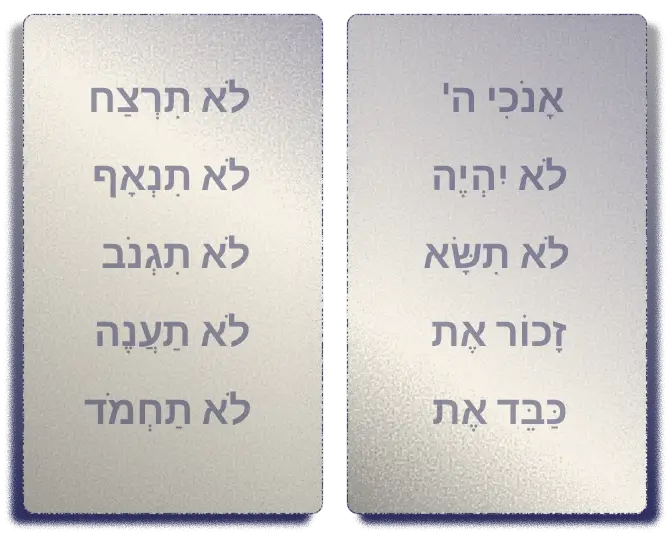
Explore the 613 mitzvos and uncover the meaning behind each one. Discover practical ways to integrate them into your daily life with insights, sources, and guided reflection.
Learn the structure, depth, and spiritual intent behind Jewish prayer. Dive into morning blessings, Shema, Amidah, and more—with tools to enrich your daily connection.
Each week’s parsha offers timeless wisdom and modern relevance. Explore summaries, key themes, and mitzvah connections to deepen your understanding of the Torah cycle.