4.1 — The Bride Who Stays Awake — Tikkun Leil Shavuos and the Night of Yearning
The night of Shavuos is unlike any other night of the year.
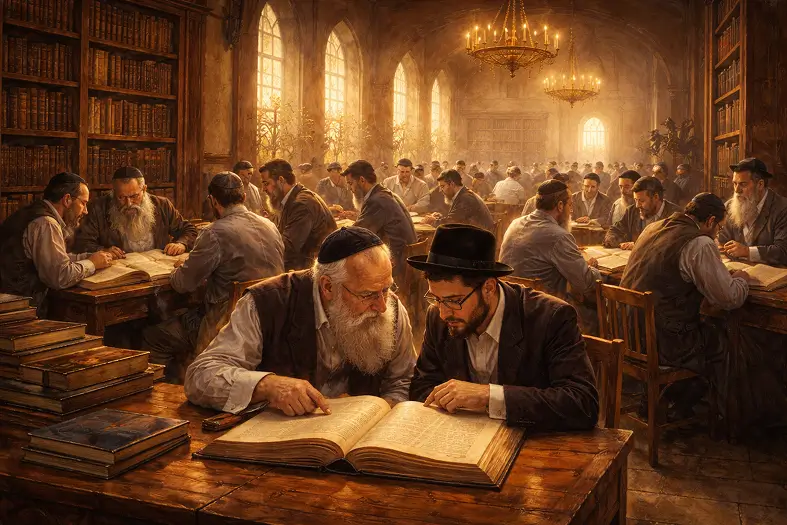
Long after the world becomes quiet, batei midrash remain filled with light. Pages continue turning. Voices continue learning. Jews remain awake deep into the night surrounded by Torah.
On the surface, the custom is often explained as a תיקון — a repair for Klal Yisroel oversleeping before Matan Torah. The Magen Avraham brings the words of the Zohar that earlier generations remained awake throughout the night learning Torah in preparation for receiving the Torah again on Shavuos.
But the Zohar reveals something deeper.
The night of Shavuos is not only correction.
It is longing.
The Zohar describes Knesses Yisroel as a bride preparing herself for union with the King. The Torah learned throughout the night becomes adornment and jewelry for the kallah. Every pasuk, every sugya, every word of Torah becomes another ornament prepared for the covenant renewed at dawn.
Suddenly, staying awake no longer feels like obligation.
It feels like yearning.
A bride does not sleep peacefully through the night before her wedding. Her heart is too full of anticipation. The closeness she has waited for is almost here.
So too, Klal Yisroel remains awake on the night of Shavuos because the soul is filled with joy before returning once again to Har Sinai.
Torah is no longer only wisdom to study or law to obey. Torah becomes closeness itself. Every moment spent learning becomes another step toward Hashem. The Jew sitting awake in the quiet hours of the night is not merely fulfilling an obligation. He is preparing himself to stand once again beneath the chuppah of Har Sinai.
Perhaps this is also why acts of affection naturally surround mitzvos.
A Jew kisses the tefillin. He kisses the tzitzis. He presses holy words close to the body and heart. Love naturally expresses itself through closeness. The covenant of Sinai was never meant to remain a distant belief. It was meant to become attachment.
This is why the night of Shavuos carries such unique sweetness.
Throughout the year, Torah can sometimes become buried beneath routine. The rhythm of mitzvos can become familiar.
Then Shavuos arrives.
And suddenly the Jew remembers why he longs for Torah in the first place.
He remains awake not because sleep itself is forbidden, but because closeness to Hashem becomes more precious than rest.
The night itself begins to feel different. The world grows still. The distractions of daily life begin to fade. The noise of ordinary existence weakens, and the words of Torah quietly fill the darkness instead.
In those hours, a Jew remembers that Torah was given מתוך אהבה — from love, through covenant, beneath the chuppah of Har Sinai.
And as dawn approaches, Klal Yisroel waits once more like a bride preparing to receive the King.

4.1 — The Bride Who Stays Awake — Tikkun Leil Shavuos and the Night of Yearning
The night of Shavuos is unlike any other night of the year.
Long after the world becomes quiet, batei midrash remain filled with light. Pages continue turning. Voices continue learning. Jews remain awake deep into the night surrounded by Torah.
On the surface, the custom is often explained as a תיקון — a repair for Klal Yisroel oversleeping before Matan Torah. The Magen Avraham brings the words of the Zohar that earlier generations remained awake throughout the night learning Torah in preparation for receiving the Torah again on Shavuos.
But the Zohar reveals something deeper.
The night of Shavuos is not only correction.
It is longing.
The Zohar describes Knesses Yisroel as a bride preparing herself for union with the King. The Torah learned throughout the night becomes adornment and jewelry for the kallah. Every pasuk, every sugya, every word of Torah becomes another ornament prepared for the covenant renewed at dawn.
Suddenly, staying awake no longer feels like obligation.
It feels like yearning.
A bride does not sleep peacefully through the night before her wedding. Her heart is too full of anticipation. The closeness she has waited for is almost here.
So too, Klal Yisroel remains awake on the night of Shavuos because the soul is filled with joy before returning once again to Har Sinai.
Torah is no longer only wisdom to study or law to obey. Torah becomes closeness itself. Every moment spent learning becomes another step toward Hashem. The Jew sitting awake in the quiet hours of the night is not merely fulfilling an obligation. He is preparing himself to stand once again beneath the chuppah of Har Sinai.
Perhaps this is also why acts of affection naturally surround mitzvos.
A Jew kisses the tefillin. He kisses the tzitzis. He presses holy words close to the body and heart. Love naturally expresses itself through closeness. The covenant of Sinai was never meant to remain a distant belief. It was meant to become attachment.
This is why the night of Shavuos carries such unique sweetness.
Throughout the year, Torah can sometimes become buried beneath routine. The rhythm of mitzvos can become familiar.
Then Shavuos arrives.
And suddenly the Jew remembers why he longs for Torah in the first place.
He remains awake not because sleep itself is forbidden, but because closeness to Hashem becomes more precious than rest.
The night itself begins to feel different. The world grows still. The distractions of daily life begin to fade. The noise of ordinary existence weakens, and the words of Torah quietly fill the darkness instead.
In those hours, a Jew remembers that Torah was given מתוך אהבה — from love, through covenant, beneath the chuppah of Har Sinai.
And as dawn approaches, Klal Yisroel waits once more like a bride preparing to receive the King.


“The Bride Who Stays Awake — Tikkun Leil Shavuos and the Night of Yearning”
וְשִׁנַּנְתָּם לְבָנֶיךָ
The night of Shavuos expresses the deep attachment between Klal Yisroel and Torah. Through learning Torah throughout the night, a Jew demonstrates that Torah is not merely obligation or intellectual pursuit, but closeness to Hashem itself. Every pasuk, sugya, and word of Torah studied during Tikkun Leil Shavuos becomes preparation to stand once again beneath the chuppah of Har Sinai.
וְאָהַבְתָּ אֵת ה׳ אֱלֹקֶיךָ
The longing that fills the night of Shavuos reflects the mitzvah to love Hashem. Klal Yisroel remains awake not simply to repair the past, but because the soul yearns for closeness to Torah and to the One who gave it. The bride preparing herself through Torah learning on the night before receiving the covenant expresses devotion, anticipation, and love for Hashem.
וּקְרָאתֶם בְּעֶצֶם הַיּוֹם הַזֶּה מִקְרָא־קֹדֶשׁ יִהְיֶה לָכֶם כׇּל־מְלֶאכֶת עֲבֹדָה לֹא תַעֲשׂוּ
The kedushah of Shavuos transforms the night itself into preparation for renewed covenant with Hashem. By stepping away from ordinary labor and filling the hours with Torah, Klal Yisroel relives the anticipation of Matan Torah and prepares spiritually to receive the Torah again. The holiness of Shavuos allows the nation to approach dawn once more like a bride awaiting the King beneath the chuppah of Har Sinai.


“The Bride Who Stays Awake — Tikkun Leil Shavuos and the Night of Yearning”
Part IV explores the minhag of remaining awake throughout the night of Shavuos learning Torah. The Magen Avraham cites the Zohar that earlier generations stayed awake preparing to receive the Torah once again on Shavuos, while also repairing Klal Yisroel’s sleep before Matan Torah. The Zohar describes Knesses Yisroel as a bride adorning herself for union with the King through Torah learned during the night. Tikkun Leil Shavuos therefore becomes not merely correction, but yearning, anticipation, and renewed closeness beneath the chuppah of Har Sinai.

Dive into mitzvos, tefillah, and Torah study—each section curated to help you learn, reflect, and live with intention. New insights are added regularly, creating an evolving space for spiritual growth.

Explore the 613 mitzvos and uncover the meaning behind each one. Discover practical ways to integrate them into your daily life with insights, sources, and guided reflection.

Learn the structure, depth, and spiritual intent behind Jewish prayer. Dive into morning blessings, Shema, Amidah, and more—with tools to enrich your daily connection.

Each week’s parsha offers timeless wisdom and modern relevance. Explore summaries, key themes, and mitzvah connections to deepen your understanding of the Torah cycle.