Each Parsha page on Mitzvah Minute is designed as a guided, three-level journey through the weekly Torah reading—integrating the narrative, the mitzvos, and the classical commentaries into one unified experience.
Begin with the foundations of the Parsha:
This level gives you the storyline, the key mitzvos, and the essential connections between them.
A complete journey through the parsha—moving from clarity and depth to inner connection and real-world meaning, culminating in a way to live its ideas in everyday life.
These sections show how the Parsha speaks to the mind, the heart, and the real world — offering wisdom rooted in enduring Torah.
A complete, structured commentary on the parsha—presented pasuk by pasuk, with chapter and overall summaries for clarity and flow.
This level reveals the structural depth of the Parsha and the classical underpinnings of each theme.
Together, these layers create a complete Parsha journey —
narrative, mitzvah, and commentary — all flowing toward deeper understanding, spiritual insight, and meaningful growth.
Tap the Page Navigation tab on the right side of your screen anytime to access quick-links to the entire Parsha page.
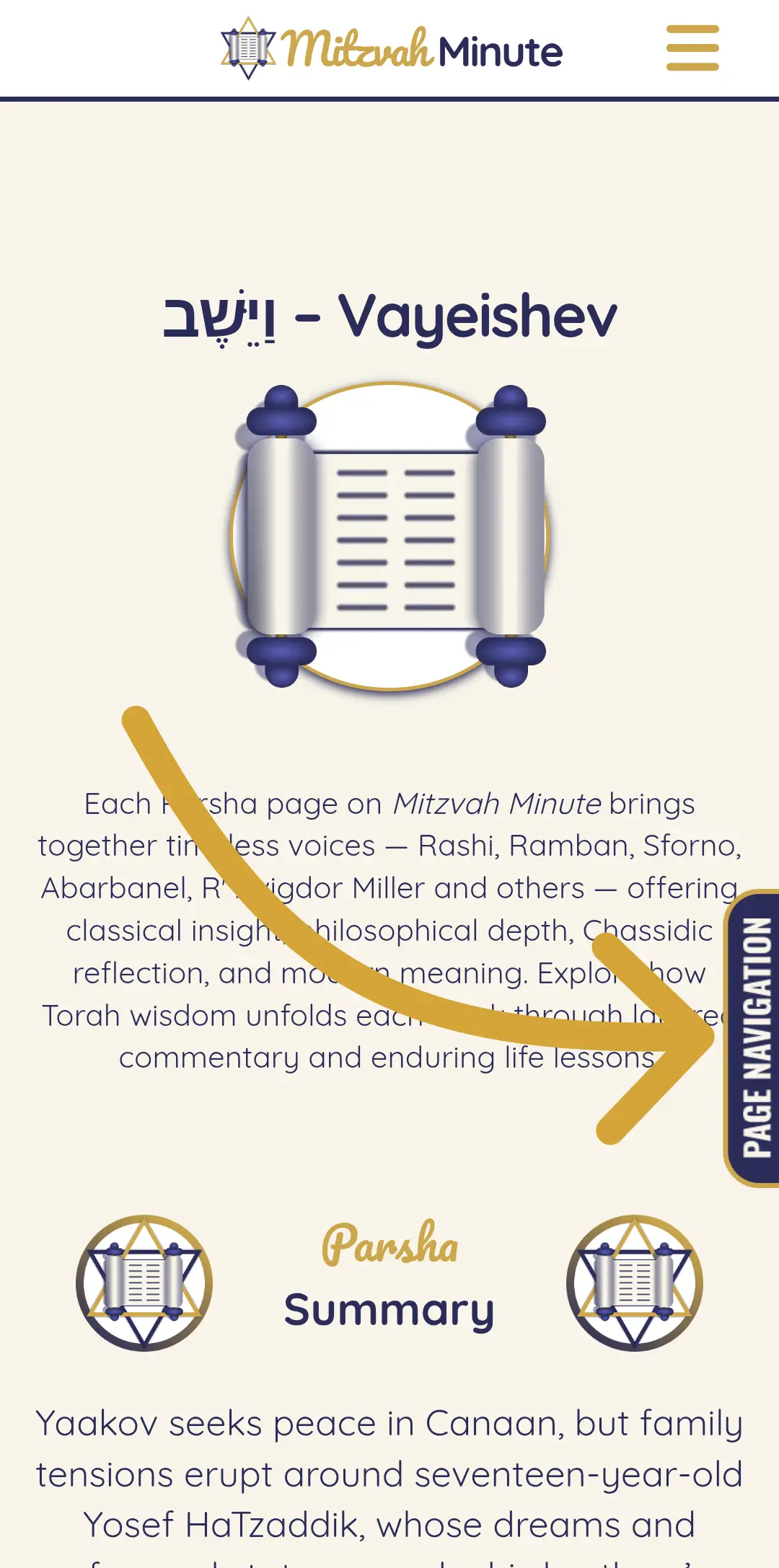
The quick-link panel gives instant access to every section — Parsha Summary, Mitzvos, Divrei Torah, Insights, and Commentaries.
“Every word of Torah and every mitzvah lifts us higher — may your learning bring you closer to Hashem.”

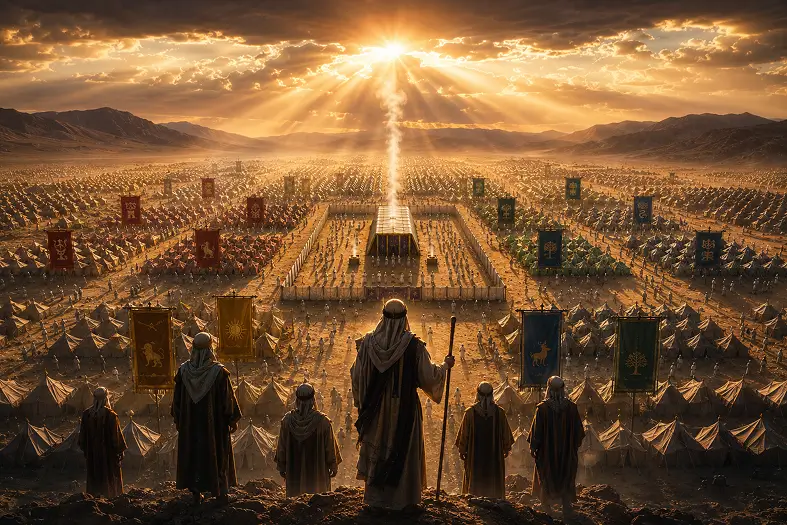
Parshas Bamidbar begins with Hashem counting Bnei Yisrael in the מדבר — wilderness, preparing the nation for its journey toward Eretz Yisrael. Each shevet — tribe is counted by family and ancestral house, revealing that Klal Yisrael is not a random gathering of people, but a structured nation in which every individual has a place and purpose. The camp is arranged סביב המשכן — around the Mishkan, with each tribe positioned beneath its דגל — banner, while the Levi’im guard and transport the holy dwelling of Hashem at the center of the nation. The parsha develops the themes of order, responsibility, and kedushah — holiness. The Levi’im are separated for sacred service, replacing the בכורות — firstborn, and each Levitical family receives its own task in carrying and protecting the Mishkan. Bamidbar transforms the wilderness from a place of emptiness into a place of Divine structure, teaching that the strength of Klal Yisrael comes not only from numbers, but from living with purpose, unity, and the awareness that Hashem dwells among them.


"Counted Around the Presence of Hashem"
אָנֹכִי ה׳ אֱלֹקֶיךָ
Parshas Bamidbar begins with counting, banners, families, and sacred order, but all of it surrounds one center: the Mishkan — dwelling place of Hashem. The census teaches that Klal Yisrael is not merely a nation organized around survival or politics. It is a people arranged around awareness of Hashem’s Presence. Every shevet — tribe, every family, and every individual receives a place because existence itself is oriented toward Divine purpose. Bamidbar transforms emunah — faith from abstract belief into lived structure. To know there is a G-d means to build life around Him as the center.
אֶת־ה׳ אֱלֹקֶיךָ תִּירָא
The service of Bnei Kehas reveals that holiness requires awe. They carried the holiest vessels of the Mishkan, yet they could neither touch them uncovered nor gaze upon them directly. Bamidbar teaches that יראה — awe of Hashem is not fear of punishment alone. It is the recognition that closeness to holiness demands boundaries, restraint, and reverence. The closer one comes to kedushah — holiness, the more carefully one must walk before it.
וּבוֹ תִדְבָּק
Rashi explains that the camps surrounding Moshe Rabbeinu benefited spiritually through proximity, while those near Korach were harmed by his rebellion. Bamidbar teaches that environment shapes the soul. דבקות — cleaving to Hashem is achieved through closeness to people who live with Torah, humility, and holiness. A person rises through the influence of those whose lives revolve around avodas Hashem — service of Hashem.
וְשִׁנַּנְתָּם לְבָנֶיךָ
The arrangement of the camp around the Mishkan teaches that Torah must stand at the center of national life. Bamidbar presents Klal Yisrael not as a loose collection of tribes, but as a structured Torah nation whose movement, leadership, and identity flow from Divine command. Rabbi Jonathan Sacks notes that the wilderness became the place where a former nation of slaves became a nation of students. Torah learning is therefore not secondary to Jewish survival. It is the force that gives the nation its shape and continuity.
וְהָדַרְתָּ פְּנֵי זָקֵן
The census of Bamidbar is conducted through Moshe Rabbeinu, Aharon HaKohen, and the נשיאים — tribal leaders. Torah leadership stands at the center of the nation’s structure because wisdom must guide the camp. Bamidbar teaches that honor for Torah scholars is not personal glorification. It is honor for the Torah they carry. A people that respects spiritual leadership preserves the ability to organize life around eternal truth rather than passing impulse.
וְעָשׂוּ לִי מִקְדָּשׁ
Although the Mishkan was constructed earlier, Bamidbar reveals what the Mishkan creates. The entire nation arranges itself around it. The Mishkan becomes the heart of the camp, the point from which holiness spreads outward into tribal life, travel, leadership, and service. The mitzvah to build a Mikdash — Sanctuary is therefore not only about constructing a sacred building. It is about creating a world in which Hashem’s Presence stands at the center of communal life.
וּמִקְדָּשִׁי תִּירָאוּ
The coverings of the Mishkan vessels express more than practical protection. Ramban explains that concealment itself reflects kavod — honor and awe before holiness. Bamidbar teaches that sacred things are not treated casually. Reverence for the Mikdash means recognizing that holiness changes how a person speaks, walks, enters, and behaves. Kedushah — holiness exists where reverence guards familiarity from becoming disrespect.
וְשָׁמְרוּ אֶת־מִשְׁמַרְתְּךָ
The Levi’im encamp around the Mishkan as guardians of sacred space. Ramban explains that this guarding is not ordinary security work. It is royal honor, like servants standing watch around a king. Bamidbar teaches that holiness must be protected visibly and actively. Guarding the Mikdash expresses the truth that the Presence of Hashem stands at the center of Klal Yisrael and must never be treated casually or abandoned to neglect.
וּשְׁמַרְתֶּם אֶת־מִשְׁמֶרֶת הַקֹּדֶשׁ
Bamidbar repeatedly emphasizes watchfulness around the Mishkan. The Levi’im stand as a boundary between the holiness of the Sanctuary and improper approach. This mitzvah teaches that sacred responsibility cannot be passive. Spiritual life weakens when holiness is left exposed, neglected, or undefined. Guarding the Mikdash reflects the broader Torah principle that what is holy must be preserved intentionally.
בַּכָּתֵף יִשָּׂאוּ
The service of Bnei Kehas reveals that the Aron — Ark is not transported like ordinary property. It is carried upon the shoulders of Levi’im appointed for sacred responsibility. Bamidbar teaches that holy things cannot be approached according to convenience or human instinct. Even devotion must submit to commanded form. The shoulder-carrying of the Aron reflects the dignity, caution, and obedience required when bearing the Presence of Hashem through the world.
וְעָבַד הַלֵּוִי הוּא
The Levi’im are counted separately because they possess a distinct avodah — sacred service within Klal Yisrael. Gershon, Kehas, and Merari each receive different responsibilities, and the Torah carefully defines their tasks. Bamidbar teaches that holiness grows through accepting one’s assigned mission rather than pursuing spiritual greatness without boundary. Every sacred role has dignity when fulfilled as Hashem commanded.
וְלֹא־יָמֻתוּ גַּם־הֵם גַּם־אַתֶּם
Bamidbar sharply separates the responsibilities of Kohanim and Levi’im. Even within Levi itself, each family possesses defined tasks and limits. The Torah teaches that unity does not erase distinction. Holiness depends upon respecting the boundaries Hashem creates. Spiritual confusion begins when people abandon the responsibilities given to them in pursuit of roles that are not theirs.
וְקִדַּשְׁתּוֹ
The camp of Bamidbar places Aharon and his sons at the center of the avodah — sacred service of the Mishkan. Their role is not personal status but consecrated responsibility. The Kohen represents service before Hashem on behalf of the nation. Bamidbar teaches that leadership in holiness begins not with power, but with sanctification, discipline, and faithful service within the boundaries Hashem established.
וְהַזָּר הַקָּרֵב יוּמָת
Rashi explains that a זר — unauthorized person may not enter the sacred service assigned to the Levi’im and Kohanim. Bamidbar teaches that sincerity alone does not create legitimacy in avodas Hashem — service of Hashem. Holiness requires appointment, preparation, and obedience to Torah structure. The Mishkan becomes a place of life only when its boundaries are protected faithfully.
פָּדוֹת תִּפְדֶּה אֵת בְּכוֹר הָאָדָם
Bamidbar describes the transfer of sacred service from the בכורות — firstborns to the Levi’im after the sin of the Golden Calf. Yet the firstborn still retain a trace of original sanctity, requiring פדיון הבן — redemption of the firstborn son. Ramban explains that this redemption emerges from the earlier consecration of the firstborn at Yetzi’as Mitzrayim — the Exodus from Egypt. The mitzvah teaches that Jewish identity carries memory. Even after roles shift, holiness leaves a permanent mark upon the nation.
Rashi opens Bamidbar with חיבה — Hashem’s affection. The census is not a cold national count. Hashem counts Klal Yisrael because they are precious to Him. He counted them when they left Mitzrayim, counted them after the חטא העגל — sin of the golden calf, and counted them again when His שכינה — Divine Presence came to rest among them through the Mishkan.
This shows one of Rashi’s deepest themes in the parsha. Love does not erase order. Hashem’s affection appears through careful counting, family identity, tribal structure, and exact placement. Every person belongs somewhere, and that belonging is part of the holiness of the nation.
Rashi explains that the count followed families, fathers’ houses, and shevatim — tribes. A person’s shevet follows his father, and each person had to establish his lineage through ספרי יוחסין — records of lineage. The census therefore becomes a בירור יוחסין — clarification of lineage, not only a number.
Klal Yisrael is not presented as a crowd. It is a nation of rooted families, each with its own inherited identity. The נשיאים — princes stand with Moshe and Aharon during the count, because each shevet is counted with dignity through its own leadership.
Rashi’s Bamidbar is arranged around the Mishkan. The Leviim are counted separately because they are the ליגיון של מלך — the King’s legion. Their service belongs to the royal household of Hashem, and their place around the Mishkan protects the nation from improper approach.
This protection is halachically precise. A זר — outsider may not enter the service assigned to the Leviim, and one who does so is liable בידי שמים — by the hand of Heaven, not through בית דין — the court. Rashi’s point is clear: closeness to holiness is a privilege, but it must pass through appointment, boundary, and command.
The דגלים — banners give each shevet a visible place around the Mishkan. Rashi explains that every banner had its own color, matching the shevet’s stone in the חושן — breastplate of the Kohen Gadol. He also connects the camp order to the signs Yaakov Avinu gave his sons when they carried him from Mitzrayim.
The camp’s movement preserves the same structure as its rest. When the ענן — cloud lifts, Yehudah travels first, the Leviim and Mishkan remain in the center, and each banner keeps its place. Rashi shows that Torah order is not only for quiet moments. The nation travels with the same kedushah — holiness that shapes its encampment.
Rashi explains that the Leviim are given to Aharon and his sons as helpers in guarding and serving the Mishkan. Their role does not replace Kehunah — priesthood. The Kohanim retain the avodos — services of Kehunah, including קבלת דמים — receiving the blood, זריקה — blood application, and הקטרה — burning on the mizbeach.
At the same time, the Leviim replace the בכורות — firstborn, because the original avodah — sacred service belonged to the firstborn until the חטא העגל. Since the Leviim did not join that sin, Hashem chose them instead. Even their infants are counted from one month old, because belonging to Shevet Levi begins from the earliest stage of life.
Rashi gives powerful meaning to the camp’s geography. Nearness to Korach damaged the neighboring camp of Reuven, leading to the principle אוי לרשע אוי לשכנו — woe to the wicked, woe to his neighbor. Nearness to Moshe elevated Yehudah, Yissachar, and Zevulun, leading to טוב לצדיק טוב לשכנו — good for the righteous, good for his neighbor.
Place is not neutral. In Rashi’s reading, where a person stands shapes what he absorbs. The camp teaches that spiritual environment can pull a person upward or downward.
The service of Bnei Kehas is the sharpest example of closeness with limits. They carry the כלי הקודש — sacred vessels, but they may not touch them or even watch while they are being covered. Aharon and his sons must first cover the vessels, and only then may Bnei Kehas carry them.
Rashi shows that the holiest service requires the greatest caution. The people closest to the sacred objects are also the people most protected by boundaries. Bamidbar teaches that holiness rests among Klal Yisrael when love, identity, service, and reverence are all held together under Hashem’s command.
📖 Source
Ramban reads the opening מִנְיָן — census as much more than a count. It is an act of כָּבוֹד — honor, זִכָּרוֹן — remembrance, and הַשְׁגָּחָה — Divine supervision. Each person passes before Moshe Rabbeinu and Aharon HaKohen by name, entering the written identity of Klal Yisrael and gaining a share in the זְכוּת הָרַבִּים — merit of the community.
For Ramban, פְּקִידָה — counting means more than numbering. It means attention, care, and supervision, as in וַה׳ פָּקַד אֶת שָׂרָה — Hashem remembered Sarah. That is why the count must be done through the מַחֲצִית הַשֶּׁקֶל — half-shekel, a כֹּפֶר נֶפֶשׁ — soul-ransom, rather than a casual direct count. A count of Yisrael must have purpose, reverence, and protection.
Ramban uses David HaMelech’s census to clarify the danger of counting without need. Even if the people were counted through coins, the problem remained if the count was only to satisfy royal pride. A census is permitted when it serves a Torah purpose, such as arranging the דְּגָלִים — tribal formations, preparing for war, or dividing Eretz Yisrael.
This is why the opening count fits the moment. Bnei Yisrael were preparing to enter the land, organize for battle, and receive their places as tribes. Ramban stresses that the Torah does not rely on unnecessary miracles. Even a holy nation must prepare responsibly.
Ramban explains that וַיִּתְיַלְדוּ — they declared their lineage does not require formal documents and witnesses. Rather, each person stated his name, father, family, and shevet — tribe before Moshe and the נשיאים — tribal leaders. The count formed the nation through known families and fathers’ houses.
This also explains why Ephraim appears before Menasheh in the first census. Ephraim held the firstborn status through Yaakov Avinu’s berachah — blessing, and at that time Ephraim was more numerous. Later, in the second census, Menasheh is placed first because Menasheh had become larger and would receive inheritance first. Ramban notices these shifts because, for him, Torah order reflects real spiritual and historical meaning.
Ramban presents the camp as a holy structure built around the Mishkan. The Ohel Moed stands in the center, the Levi’im surround it, and the rest of Klal Yisrael encamps around them. This is not only practical arrangement. It is a visible form of kedushah — holiness.
The דְּגָלִים — banners mirror heavenly order. Ramban connects the four camps to the four directions, the חַיּוֹת — living creatures seen by Yechezkel, and the כִּסֵּא הַכָּבוֹד — Throne of Glory. Yehudah stands in the east with leadership and Torah; Reuven stands in the south with teshuvah — repentance; Ephraim, Menasheh, and Binyamin stand in the west, where the Shechinah — Divine Presence rests; and Dan gathers the northern side. The camp of Yisrael becomes a lower reflection of the heavenly camp.
Ramban explains that Moshe first understood not to count the Levi’im with the rest of the nation because no נשיא — tribal prince had been appointed for Levi in the general census. Only afterward did Hashem clarify that Levi required its own separate count, because its role was different.
The Levi’im guard the Mishkan and later the Beis HaMikdash as a מִצְוָה לְדוֹרוֹת — commandment for all generations. Ramban cites the structure of the מִשְׁמָרוֹת — priestly and Levitic watches, where Kohanim guard inside and Levi’im guard outside. Their guarding is not security work alone. It is royal honor, like guards standing around the king.
Ramban explains the transfer from the בְּכוֹרִים — firstborns to the Levi’im with halachic care. The firstborns had been sanctified from the time of קַדֶּשׁ לִי כָל בְּכוֹר — sanctify to Me every firstborn. Until now, their redemption had not yet been fully defined, because the Kohanim and the system of priestly gifts were only now being established.
The Levi’im become the פִּדְיוֹן — redemption of the firstborns. Those firstborns who remain beyond the number of Levi’im require five shekalim, given to Aharon and his sons. Ramban sees this as the root of פִּדְיוֹן הַבֵּן — redemption of the firstborn son for all generations.
The final movement of Ramban’s Bamidbar is the service of Bnei Kehas. They carry the holiest vessels, but only after Aharon and his sons cover them. The Aron receives a special covering of תְּכֵלֶת — blue wool, reflecting its higher sanctity. The coverings are not only practical. They express honor, concealment, and awe.
Ramban explains כְּבַלַּע אֶת הַקֹּדֶשׁ — when the holy is covered, as a deep image of hidden Divine glory. The Levi’im may carry holiness, but they may not gaze upon it uncovered. The closer one comes to kedushah — holiness, the more exact the boundaries become.
Ramban’s Parshas Bamidbar is a vision of national alignment. The people are counted with honor, arranged by tribe, placed under banners, surrounded around the Mishkan, and protected by the guarding of Levi and Kehunah — priesthood. Before Bnei Yisrael can travel toward Eretz Yisrael, they must first become a people whose center is the כְּבוֹד ה׳ — Divine Glory.
Bamidbar begins with order because holiness needs a vessel. For Ramban, the parsha teaches that Klal Yisrael carries the Presence of Hashem through structure, reverence, responsibility, and faithful boundaries.
📖 Source
Parshas Bamidbar opens with counting, arrangement, flags, families, and camp structure. Through the Rambam’s worldview, this is not administrative detail alone. Torah forms a people by giving each person a defined place within a larger sacred order. Avodas Hashem — service of Hashem is not built on emotion alone. It requires clarity, discipline, and a life shaped by mitzvos — commandments.
This fits the Rambam’s broader view in Mishneh Torah. A person becomes complete through ordered conduct, steady habits, and a mind directed toward truth. The camp of Yisrael is therefore not a crowd of inspired individuals. It is a nation arranged around the Mishkan — Sanctuary, where each shevet — tribe, each family, and each role serves the presence of Hashem in the center.
The counting of Bnei Yisrael gives each person importance without turning the nation into a collection of separate egos. Each man is counted as part of his family, his shevet — tribe, and the larger machaneh — camp. In Rambam’s language, human dignity is tied to responsibility. A person matters because he is capable of daas — moral and spiritual understanding, choice, and obligation.
This creates a balanced Torah view of individuality. The individual is not lost inside the nation, but he also does not stand apart from it. He is counted so he can serve. His identity becomes meaningful when it is connected to duty, purpose, and the shared mission of Klal Yisrael — the Jewish people.
The structure of the camp places the Mishkan — Sanctuary at the center. For the Rambam, sacred places and sacred actions train the human being to direct his mind and behavior toward Hashem. The Mishkan is not only a location of korbanos — offerings. It is the heart of national order, teaching that holiness must shape the entire camp.
This is a major Rambam principle. Torah does not leave holiness as a private feeling. It gives holiness form: places, times, actions, leaders, boundaries, and laws. In Bamidbar, the physical arrangement of the camp teaches that a Torah society must be built around the service of Hashem, not around power, wealth, or personal ambition.
The Levi’im — Levites are separated for the avodah — sacred service of the Mishkan. Their role shows that closeness to holiness requires boundaries. The Rambam often stresses that service of Hashem must be governed by halachah — Torah law, not by personal impulse. Even holy desire needs form and restraint.
This is especially clear in the duties of the Levi’im. They carry, guard, and serve, but each family has its assigned task. No one simply enters the holy work on his own terms. Bamidbar teaches that kedushah — holiness is not reached by breaking order, but by accepting the exact responsibility Hashem assigns.
The arrangement of the camp also shapes a Torah view of leadership. Leaders are not owners of the people. They are servants of a Divine mission. Rambam’s laws of kingship and leadership emphasize responsibility, restraint, and the duty to guide the people toward Torah. Authority is legitimate only when it serves Hashem’s purpose.
In Bamidbar, leadership begins with counting and arranging, not with display or conquest. Moshe and Aharon organize the people according to Hashem’s command. This presents leadership as obedience before authority. The leader first listens to the word of Hashem, and only then guides others.
Bamidbar takes place after Yetzi’as Mitzrayim — the Exodus from Egypt, but freedom is not yet complete. The people must learn how to live as Hashem’s nation. For Rambam, true freedom is not the absence of duty. It is the ability to live by truth, wisdom, and mitzvos — commandments.
The camp teaches this clearly. Every person has a place. Every shevet — tribe has a direction. Every sacred object has rules. This does not weaken freedom. It gives freedom shape. A person becomes free when his life is ordered by purpose instead of impulse.
Through a Rambam lens, Bamidbar shows that a Torah nation needs structure because human beings need structure. Without order, even good intentions can become confused. With Torah order, the nation becomes a living form of avodas Hashem — service of Hashem.
The parsha therefore presents a deep philosophical model. Holiness lives at the center. The people stand around it with dignity and discipline. Leadership serves command. Freedom becomes obligation. Each person is counted, not for pride, but for purpose. This is the Rambam’s world applied to Bamidbar: the human being and the nation become complete when life is organized around Hashem’s truth.
📖 Sources
Ralbag opens by asking why Parshas Bamidbar contains so much apparent אריכות והכפל — length and repetition. The parsha repeats details about the counting of Bnei Yisrael and the עבודת הלויים — service of the Levi’im, especially the work of Bnei Kehas and Bnei Merari. For Ralbag, this is not extra wording. It teaches how to read the Torah itself. When the Torah is brief in one place, that brevity is not accidental or merely stylistic, because the Torah also chooses to speak at length in other places.
This creates a disciplined method of learning. A short passage demands deeper study because the Torah has shown that it can explain things openly when it chooses. If it does not, the reader must search for עומק הדברים — the depth of the matters. The Torah’s silence or brevity becomes a doorway into deeper חקירה — investigation. Bamidbar therefore trains the learner not to pass quickly over brief pesukim, but to ask what hidden depth the Torah is asking him to uncover.
Ralbag’s first answer gives a major philosophical principle: repetition in Torah is not weakness of style. It is intentional guidance. The Torah’s long treatment of clear matters teaches that when it speaks briefly elsewhere, the brevity points to depth. Length and brevity work together as part of the Torah’s educational method.
This is especially important in Bamidbar. The counting, arrangement, and service of the Levi’im might seem technical. Yet Ralbag sees the very structure of the parsha as a lesson in how Torah communicates. The Torah sometimes teaches through open explanation, and sometimes through compression. Both forms require careful thought. Both are part of Divine wisdom.
Ralbag then explains the second reason for the parsha’s structure. The Torah first arranges the families of Levi according to תולדותם — their birth order. For that reason, it mentions Bnei Gershon before Bnei Kehas, and then Bnei Merari after them. This order reflects their natural family sequence.
This shows that Torah order can begin from natural structure. Family, lineage, and birth order matter. They give the first frame through which the nation is organized. Bamidbar does not present holiness as detached from ordinary human order. It begins with families, generations, and inherited place.
After arranging the Levi’im by birth, the Torah returns and arranges them by מעלתם — their level or spiritual rank. Here Bnei Kehas come first because their avodah — sacred service is higher. They carry the holiest vessels of the Mishkan — Sanctuary. Ralbag explains that the Torah mentions their service first in this later section to show the strong הבדלה — distinction between the service of Bnei Kehas and the service of Bnei Gershon.
This is one of Ralbag’s central insights into Bamidbar. Torah recognizes more than one kind of order. There is the order of birth, and there is the order of spiritual importance. Both are true, but they serve different purposes. Birth order shows family structure. Spiritual order shows the level of the avodah — sacred service itself.
Ralbag adds that the Torah places a פרשה — textual break between the service of Bnei Kehas and the service of Bnei Gershon. This break strengthens the distinction between their roles. It prevents the reader from flattening all Levi’im into one general group. Each family has its own defined responsibility, and each responsibility must be understood on its own terms.
This gives Bamidbar a precise philosophical message. Sacred order depends on clear boundaries. The Levi’im are united in serving the Mishkan — Sanctuary, but unity does not erase difference. Each family’s avodah — sacred service has its own place, limits, and dignity. The Torah’s structure protects those differences so that holiness can function properly.
Ralbag’s reading turns the structure of Bamidbar into a guide for Torah learning and for communal life. The parsha teaches that details matter, repetition matters, order matters, and even textual breaks matter. Nothing is random. The Torah’s length directs the learner toward its method, and the arrangement of the Levi’im shows how a holy nation must preserve both natural order and spiritual rank.
Through Ralbag’s lens, Bamidbar is not only about counting people and assigning tasks. It is about learning how Divine wisdom organizes reality. The Torah teaches through what it says at length, through what it says briefly, through the order of families, through the order of spiritual importance, and through the separations that protect each role. This is the philosophical application of Bamidbar: a Torah nation is built when every detail is read carefully, every role is defined clearly, and every level of holiness is given its proper place.
📖 Source
(Baal Shem Tov · Kedushas Levi · Sfas Emes)
Parshas Bamidbar begins in the מדבר — wilderness, the place that has no settled identity of its own. Chassidus sees this not as a detail of geography, but as the inner condition needed for Torah. A person becomes a מדבר — wilderness when he stops treating himself as the center. He becomes open, quiet, and ready to be led by Hashem.
The Midrash teaches that Torah was given in the wilderness because דברי תורה — words of Torah are free to all. Yet the Sfas Emes explains that there is a deeper level. Torah can be learned by anyone, but to acquire Torah, to make it live inside one’s heart and blood, a person must become הפקר כמדבר — ownerless like the wilderness. This does not mean emptiness. It means becoming available to Hashem’s will.
The Baal Shem Tov deepens this through the teaching of הצנע לכת — walking modestly with Hashem. Before the Mishkan was built, Hashem spoke to Moshe in many places. Once the אהל מועד — Tent of Meeting stood, Hashem chose the hidden, modest place. Real עבודת Hashem — service of Hashem must be the same in public and in private. פיו ולבו שוין — one’s mouth and heart must be aligned. A person who is bold before mockers but quiet before Hashem has found the balance of true inner strength.
The tribe of Levi reveals the courage of inner clarity. Many Jews may not have sinned with the עגל — Golden Calf, but when Moshe called, מי לה׳ אלי — “Who is for Hashem, to me,” Levi stepped forward. The Sfas Emes teaches that the difference was not only innocence. It was strength. Levi had the חיזוק — inner firmness to say, “I belong to Hashem.”
That courage awakens a response from Above. כפי התחזקות אמונת האדם כן נעשה עמו — according to the strength of a person’s emunah, so Hashem deals with him. When a person believes that Hashem’s מלכות — kingship reaches every detail, great and small, he begins to see the אור הגנוז — hidden light inside the world. When a person forgets Hashem and lives for his own כבוד — honor, that light becomes more hidden.
This is why the Midrash says that one who increases כבוד שמים — the honor of Heaven and reduces his own honor, increases both. The Sfas Emes explains that a person’s honor is not meant to stop with himself. It is meant to become a vessel for Hashem’s honor. When he uses his life to show that “I am only like a גרזן ביד החוצב — an axe in the hand of the woodchopper,” Hashem’s presence becomes visible through him.
The counting of Bnei Yisrael is not a cold number. It is נשיאת ראש — lifting the head. The Kedushas Levi teaches that each Jew is an אות בתורה — letter in the Torah. When Moshe counted Bnei Yisrael, he was, in a hidden way, revealing Torah. Every Jew carries a distinct light, a distinct דעת — understanding, and a distinct place in Hashem’s world.
The Sfas Emes explains the deep paradox: Bnei Yisrael are counted, yet they are also אין מספר — beyond number. They are counted because each person has a defined mission in עולם, שנה, נפש — space, time, and soul. Every person has a place, a moment, and an inner task that reaches all the way to Hashem. Yet their root is beyond measurement, because their life-force comes from Torah and from the נשמה — soul rooted Above.
This is the meaning of ויתילדו — they were born anew. Kedushas Levi explains that after receiving the Torah and building the Mishkan, Bnei Yisrael gained a new identity, connected לבית אבותם — the house of their fathers. The Sfas Emes adds that this does not mean pretending to equal Avraham, Yitzchak, and Yaakov. It means that a person’s actions should have נגיעה — contact and attachment to the deeds of the Avos. Each generation is different, but every generation can touch the root.
The Levi’im were counted separately, but their closeness did not erase the greatness of the rest of Bnei Yisrael. The Sfas Emes notes that there may have been Jews among the other tribes greater than some individual Levi’im. Still, Hashem chose Levi for this avodah — service. The greatness of Bnei Yisrael was that they moved back and made space.
That movement itself was avodah. They accepted that closeness to Hashem is not built by ego, comparison, or spiritual competition. A person’s effort matters deeply, but it cannot override בחירת Hashem — Hashem’s choice. By making space for Levi, Bnei Yisrael helped Levi come close. Levi was chosen מתוך בני ישראל — from within Bnei Yisrael, with the support and ביטול — self-nullification of the whole nation.
This is one of Bamidbar’s deepest lessons. The camp becomes holy when each person stands in his place and rejoices that another Jew has his place too.
The דגלים — flags express a longing to know one’s place before Hashem. Bnei Yisrael saw the מלאכי השרת — ministering angels, each with its own banner and mission, and desired that same clarity. A מלאך — angel knows its task. A human being must search, grow, fall, rise, and become whole step by step. Yet Hashem gave Bnei Yisrael דגלים — flags as a gift, because their longing itself was precious.
The Sfas Emes connects דגל — flag with דילוג — spiritual leaping. A person may not be fully worthy of a high level, but deep רצון — holy desire can allow him to leap upward. This is the power of a בעל תשובה — one who returns to Hashem with force and longing. The camp had both מחנה — ordered place and דגל — upward leap. There is steady avodah, and there is the sudden opening of the heart.
Shabbos carries the same secret. It is יום מנוחה — a day of rest, not because nothing happens, but because everything rises back to its root. The oneg — delight of Shabbos is not self-enjoyment alone. It is joy that Hashem’s will is revealed. When a person’s deepest rest is קדושה — holiness, then Shabbos gives him משאלות לבו — the desires of his heart, because his heart has learned to desire what Hashem desires.
The Baal Shem Tov teaches that there are two complete tzaddikim. One is like an ארז — cedar: strong, tall, and attached to Hashem, but mainly for himself. The other is like a תמר — date palm: he bears fruit. He raises others. He draws out the precious from what seems low. He brings more goodness into the world.
This is why the second tzaddik is connected to בעלי תשובה — those who return. He is not only a person who has done teshuvah — repentance. He is a בעל תשובה — master of return, because he creates return in others. His reward is far greater, because his kedushah does not remain private. It becomes fruit.
The Sfas Emes adds that the צדיק — righteous person has תאוה — desire, but not the shallow desire of the wicked. The desire of the wicked is external and temporary. It fades into regret. The desire of the tzaddik is עצם הנפש — the essence of the soul, a lasting longing for Hashem. Like the date palm that naturally reaches for its source, the Jewish soul naturally longs for דבקות — cleaving to Hashem. The work is to uncover that longing and bring it from potential into life.
Kedushas Levi explains that Torah and mitzvos are lights. The Mishkan is the place where those spiritual lights are drawn into a form that the world can receive. Bnei Yisrael are also lights, because each Jew is a letter of Torah. The Levi’im represent an even higher movement: not only the light itself, but the flow of שפע — divine flow from the highest source into the world.
This is why Levi is not counted together with the other tribes. The tribes reflect the revealed lights of Torah in the world. Levi reflects the channel through which higher life enters those lights. The shaving of the Levi’im hints to removing שערות — hair, the outer covering. Levi’s avodah is to stand with fewer barriers, more open to the flow from Above.
The Sfas Emes brings this into daily life. Hashem places His words in our mouths through Torah, surrounds us through טלית — tallis and ציצית — fringes, gives us דעת — holy awareness through תפילין — tefillin, guards us through מזוזה — doorpost mitzvah, and renews the world through קריאת שמע — declaration of Hashem’s unity and תפילה — prayer. These are not separate rituals. They are the daily forms of יסובבנהו, יבוננהו, יצרנהו — Hashem surrounds, teaches, and protects His people.
The Sfas Emes repeatedly returns to the pattern of סתים וגליא — hidden and revealed. Hashem is hidden and revealed. Torah is hidden and revealed. Bnei Yisrael are hidden and revealed. The revealed Jew may struggle, fall, and live inside the limits of this world. But the hidden root of the נשמה — soul remains attached Above, beyond the touch of sin.
The flags reveal this hidden root in visible form. Each shevet — tribe has its color, place, direction, and mission. The Avos are the higher root; the shevatim — tribes bring that root into the world’s many directions. This is how the one becomes many, and how the many return to one.
That is also why Bnei Yisrael are compared to stars. A star belongs to the order of nature, yet it carries a power from beyond nature. So too each Jewish soul lives in the world, but carries a point from beyond the world. The mission is not to escape the world. It is רצוא ושוב — running upward and returning downward: longing for the source while believing that this very place is where Hashem put one’s תיקון — spiritual repair.
Bnei Yisrael’s joy is not only that they were saved. Their deeper joy is that they were saved by Hashem. נרננה בישועתך — “we will sing in Your salvation” means that the greatest simchah is the recognition of Hashem through the salvation itself.
The Sfas Emes explains that this was the meaning of יציאת מצרים — the Exodus from Egypt. Through the hardship and the redemption, Bnei Yisrael came to know Hashem in a way that nature alone could never reveal. Even when Hashem leads His people through wilderness, exile, or hiddenness, their praise is that they are being led by Him. לכתך אחרי במדבר — following Hashem into the wilderness becomes the praise of Klal Yisrael.
This also explains why Bamidbar is called חומש הפקודים — the Book of Countings. It is not merely a book of numbers. It is the praise of Bnei Yisrael, who follow Hashem’s word through the desert and become צבאות ה׳ — Hashem’s legions. Their order, movement, flags, counting, and longing all become one testimony: Hashem has a people in this world who reveal His presence inside time, place, body, and action.
Parshas Bamidbar teaches that holiness begins when a person becomes quiet enough to be counted by Hashem. The wilderness is not empty. It is cleared of false ownership. The count is not smallness. It is mission. The flags are not decoration. They are longing made visible. Levi is not separation. It is closeness that depends on the humility of the whole camp.
The Baal Shem Tov gives the heart of the avodah: be true before Hashem, whether seen or unseen. Stand strong even when the world laughs, and walk with confidence because נוכח ה׳ דרכו — one’s path is before Hashem. Kedushas Levi reveals the soul of the count: every Jew is a letter, a light, and part of the living Torah. The Sfas Emes gathers it all into one burning point: every person has a root Above, a place below, and a task to join them.
Bamidbar becomes the parsha of holy placement. Every Jew stands under a flag, near a family, within a camp, around the Mishkan, facing a mission. The desert becomes a home because Hashem is there. The number becomes infinite because each soul is rooted beyond number. And the quiet heart becomes a Mishkan when it learns to say, with strength and humility, “I am here for Hashem.”
📖 Sources
Parshas Bamidbar opens not with dramatic miracles or national triumph, but with a wilderness. The Jewish people stand between Egypt and Eretz Yisrael, between slavery and settlement, between revelation and responsibility. It is precisely there, in the מדבר — wilderness, that Rabbi Jonathan Sacks finds one of the deepest truths of Judaism: before a nation can build a holy society, it must first learn how to hear.
The desert strips away distraction. There are no monuments, no empires, no cultivated fields, and no illusion of human permanence. In that silence, the Jewish people encounter the דבר — word of G-d. Rabbi Sacks explains that Judaism became the great civilization of the ear rather than the eye. Ancient cultures searched for gods in nature, power, and visible grandeur. Torah taught something radically different: G-d cannot be reduced to an image or object. He is encountered through speech, covenant, listening, memory, and response. Revelation emerges not from spectacle alone, but from the willingness to hear.
That wilderness experience also transforms the meaning of nationhood itself. Bamidbar begins with a census, yet the Torah’s counting is not meant to reduce people into statistics. The Torah speaks of שאו את ראש — “lift the head.” Every individual possesses dignity, purpose, and a unique voice within the covenant. Rabbi Sacks repeatedly returns to this principle: Judaism builds societies that honor the person, not merely the mass. Each Jew is not simply part of a crowd, but a necessary letter in the scroll of Torah.
Again and again, Rabbi Sacks shows that the deepest structures of Jewish life emerge in the wilderness. Torah is given outside the land so that it can travel with the Jewish people into exile. Leadership is tested not in moments of stability, but during uncertain journeys toward an unseen future. Love becomes covenant when it takes the form of obligation, loyalty, and law. Even revelation itself requires humility — a heart open like the desert itself.
Bamidbar therefore becomes more than the story of a generation wandering through barren land. It is the story of how a people learns to build a civilization rooted in listening, responsibility, compassion, education, memory, and hope. The wilderness is not empty. It is where the Jewish people become the people of the Word.
The wilderness occupies a central place in the spiritual imagination of Judaism. Rabbi Jonathan Sacks explains that this is not accidental. The Torah could have been given in a city, in fertile land, or at the center of a powerful civilization. Instead, it was given in a barren מדבר — wilderness, a place without ownership, status, permanence, or noise. The desert becomes the setting in which a nation learns not merely to survive, but to listen.
Rabbi Sacks notes that the Hebrew word מדבר — wilderness shares its root with דבר — word and מדבר — speaking. The connection is foundational. Judaism differs from the ancient religions of the world because it does not locate G-d within visible nature. Other civilizations searched for divinity in the sun, stars, rivers, fertility, military power, or monumental architecture. Their cultures became civilizations of the eye. Judaism became a civilization of the ear. The Jewish encounter with G-d takes place through listening, hearing, interpreting, remembering, and responding to words.
This shift transformed human spirituality. If G-d cannot be seen as an object within nature, then revelation becomes a question: how does an infinite G-d become known to finite human beings? Judaism answered that question through covenantal speech. G-d speaks, and humanity responds. Revelation is not the worship of power but the formation of relationship.
The wilderness creates the conditions for that encounter. In cities and empires, the eye is overwhelmed by human achievement and material structure. In the desert, those distractions disappear. Silence itself becomes spiritually creative. Rabbi Sacks cites the insight that only in the stillness of the wilderness can the “sound beneath sound” be heard. Torah enters not into noise, but into attentive silence.
That silence requires humility. The Midrash teaches that one who does not make himself ownerless like the wilderness cannot acquire Torah. The desert belongs to no one. It stands exposed, open, without barriers or claims of possession. So too, Torah can only be received by a person willing to become spiritually open rather than self-enclosed. Wisdom enters the soul that has learned restraint, patience, and the ability to hear something beyond itself.
Rabbi Sacks develops this further through the writings of thinkers such as Edmond Jabès and Eric Voegelin. The desert is not merely a geographic place. It becomes a spiritual condition. The Jewish people are shaped through movement, uncertainty, and longing. The wilderness represents a place between worlds — no longer Egypt, not yet Eretz Yisrael. In that fragile in-between space, the nation discovers that freedom alone is insufficient. A free society requires covenant, direction, moral structure, and shared responsibility.
The prophets later transformed the wilderness into the language of intimacy between G-d and Israel. Hoshea describes the desert as the place where G-d will once again “speak tenderly” to His people. Yirmiyahu recalls the devotion of the nation that followed G-d “in a land not sown.” The wilderness becomes the setting of first love, where dependence strips away illusion and creates closeness.
Rabbi Sacks also explains that the giving of the Torah outside Eretz Yisrael carried enormous historical significance. Had the Torah been tied exclusively to one land, exile might have ended the covenant. Instead, the revelation took place in a place belonging to no empire and owned by no civilization. The G-d of Israel is not a local deity bound to geography. He is encountered everywhere. That is why the Jewish people could survive dispersion while carrying Torah into every land.
The silence of the wilderness also protects individuality. Bamidbar begins with counting, but the Torah’s census is not a reduction of people into statistics or military assets. The Torah uses the phrase שאו את ראש — “lift the head.” Rabbi Sacks explains that the biblical census affirms the infinite dignity of each individual. Every Jew becomes like a letter in the Torah scroll. If one letter is missing, the scroll is incomplete. Revelation therefore speaks not only to a nation collectively, but to each individual uniquely.
The desert strips away false identities. In Egypt, human beings were measured by utility, labor, and power. In the wilderness, people recover their humanity before G-d. They become more than numbers, more than masses, more than instruments of empire. The wilderness creates a society in which each person stands directly before Heaven with a distinct mission and contribution.
Bamidbar therefore opens with a profound paradox. The place that appears empty becomes the birthplace of meaning. The landscape that seems silent becomes the place where the Divine voice is heard most clearly. The wilderness is where the Jewish people learn that holiness begins not with power, possession, or visibility, but with the ability to listen.
Parshas Bamidbar begins with counting. At first glance, the opening census appears administrative and political, part of the practical organization of a nation preparing for life in the desert and eventual entry into the land. Yet Rabbi Jonathan Sacks argues that the Torah transforms the very meaning of counting. In most civilizations, censuses reduce people into numbers. In Torah, counting becomes an act of dignity.
The Torah does not use the ordinary Hebrew verbs for counting. Instead, it says: שאו את ראש כל עדת בני ישראל — “Lift the head of the entire congregation of the children of Israel.” Rabbi Sacks explains that this phrase changes the entire moral structure of the census. The goal is not to measure collective power alone. It is to affirm the worth of every individual within the covenant.
Throughout history, governments counted populations for purposes of taxation, conscription, labor, or political control. Human beings became units within a system. Empires viewed people through the lens of utility and strength. The larger the population, the greater the empire’s military and economic power. In such systems, the individual disappears into the mass.
Rabbi Sacks contrasts this with the Torah’s revolutionary view of personhood. Judaism is a sustained protest against the reduction of human beings into statistics. Every person carries the image of G-d. Every life possesses irreducible value. The Mishnah teaches that one life is like an entire universe. A census in Torah therefore becomes not an erasure of individuality, but its recognition.
This idea emerges through a striking rabbinic tradition. The Jewish people are compared to letters in a Sefer Torah — Torah scroll. If even one letter is missing, the scroll becomes invalid. Every letter matters because each contributes something irreplaceable to the whole. Rabbi Sacks uses this image to explain the deeper meaning of Jewish nationhood. Unity in Judaism does not mean sameness. The nation becomes whole precisely because different individuals bring different strengths, perspectives, and missions into the covenant.
The Maharsha develops this idea further by teaching that there were 600,000 souls at Sinai because there are 600,000 pathways of interpretation within Torah. Revelation itself contains multiplicity. Each Jew hears something different within the Divine word. Torah is not flattened into a single human perspective. Instead, its fullness emerges through the voices of many individuals standing together before G-d.
Rabbi Sacks connects this to the philosophy of Emmanuel Levinas, who argued that truth itself requires plurality. No single individual can contain the totality of revelation. Each person contributes a unique dimension that would otherwise remain absent from the world. Human uniqueness is therefore not an obstacle to holiness, but part of its design.
This understanding changes the meaning of community. Societies often struggle between two extremes: radical individualism or collective conformity. Radical individualism weakens shared responsibility, while collectivism crushes individuality. Torah charts a different path. It creates covenantal community, where individuals remain distinct yet bound together through shared purpose and responsibility.
Rabbi Sacks repeatedly warns against systems that value masses over persons. One of the most dehumanizing acts of the twentieth century was the reduction of human beings into numbers within concentration camps. Names were replaced with numerical identity. The Torah’s census moves in the opposite direction. Counting becomes an act of recognition, not erasure. G-d counts because every person matters.
This idea also shapes leadership. A Jewish leader cannot govern by seeing crowds alone. True leadership requires lifting the head of each individual, recognizing hidden dignity and unique contribution. Moshe Rabbeinu repeatedly faces the challenge of leading not an abstract nation, but real human beings with fears, strengths, failures, and distinct personalities. Covenantal leadership sees the person before it sees the system.
Rabbi Sacks explains that this principle emerges most powerfully in the wilderness itself. In Egypt, people were measured by productivity and labor. In the desert, removed from empire and economy, human beings rediscover intrinsic worth. The wilderness becomes the birthplace of a society where value is not determined by status, wealth, or political usefulness, but by covenantal identity.
This transforms the meaning of nationhood. A nation can become a machine of power, conquest, and control. Israel was called to become something different: a society of equal dignity under the sovereignty of G-d. The census at the opening of Bamidbar is therefore not merely demographic. It is spiritual. G-d counts the people not because they are many, but because each one is irreplaceable.
In the wilderness, the Jewish people learn one of the Torah’s deepest truths: holiness begins when human beings are no longer treated as numbers, but as souls.
Rabbi Jonathan Sacks sees one of the great revolutions of Judaism in the way Torah transformed access to knowledge. In the ancient world, education, literacy, and law were usually controlled by elites. Priests guarded sacred knowledge. Kings and ruling classes preserved power by limiting learning to a privileged few. Revelation belonged to temples, courts, and intellectual aristocracies. At Sinai, something entirely different entered history.
The Midrash asks why the Torah was given through three elements: fire, water, and wilderness. Fire recalls Har Sinai burning with heavenly flame. Water recalls the tradition that the heavens poured rain during revelation. The wilderness recalls the setting of Bamidbar itself. Yet the Midrash focuses not on their symbolism, but on a shared quality: all three are free and accessible to everyone. Fire, water, and wilderness belong to no single owner. So too, Torah belongs to the entire people.
Rabbi Sacks explains that this idea reshaped Jewish civilization. Torah is not the possession of a priestly caste or intellectual elite. It is מורשה קהלת יעקב — “the inheritance of the congregation of Yaakov.” Revelation at Sinai was unique because G-d spoke not only to a prophet, but to an entire nation. Every Jew stood at the mountain. Every Jew entered the covenant. Holiness was democratized.
This principle continued throughout Jewish history. Moshe commands the mitzvah of הקהל — national gathering, where men, women, children, and strangers assemble to hear the Torah publicly read. The covenant was never meant to remain confined to scholars alone. The ideal Jewish society is one in which every person has access to learning, memory, and spiritual inheritance.
Rabbi Sacks argues that this became one of Judaism’s most enduring strengths. Long before universal education became common in the modern world, Jewish communities built systems centered on teaching children to read, study, and engage with sacred texts. Literacy became a religious obligation. Education was not a privilege of the wealthy, but a duty owed to every child.
This transformed the structure of Jewish society. Other civilizations concentrated power through centralized institutions. Judaism distributed dignity through learning. Torah became portable homeland, allowing the Jewish people to survive exile and dispersion. A nation scattered across continents could remain united because it carried a shared language of covenant, memory, and study.
The wilderness itself carries symbolic meaning here. Rabbi Sacks notes that deserts are places without hierarchy or ownership. In the wilderness, human status becomes fragile. Wealth and empire lose their illusion of permanence. Standing equally exposed beneath the heavens, people rediscover dependence on G-d. Torah emerges precisely there because revelation must belong equally to all.
The desert also teaches spiritual humility. One who seeks Torah must become open like the wilderness itself. Pride closes the soul. Humility creates space for wisdom. Rabbi Sacks repeatedly returns to the idea that revelation requires listening more than speaking. Torah cannot be imposed upon a self already filled with noise, ego, and certainty.
This democratic vision of Torah differs sharply from modern egalitarianism built solely around political theory. Judaism does not erase distinctions, roles, or responsibilities. The camp of Israel remains carefully structured. There are tribes, leaders, Kohanim, Leviim, and differing forms of service. Equality in Torah does not mean sameness. Instead, it means equal dignity before G-d and equal access to covenantal meaning.
Rabbi Sacks explains that this balance preserved Jewish civilization through centuries of exile. Societies based purely on hierarchy often collapse when institutions fail. Societies built entirely on radical individualism struggle to sustain collective responsibility. Judaism joined individuality with covenant. Every Jew matters, and every Jew is responsible for transmitting Torah to the next generation.
This is why Shavuos and Bamidbar stand beside one another on the calendar. Before receiving Torah, the nation must stand in the wilderness — stripped of illusion, status, and dependence on earthly power. Revelation cannot emerge from arrogance or empire. It begins when people recognize that wisdom is greater than themselves and yet belongs to all who are willing to receive it.
Rabbi Sacks sees in this one of the Torah’s greatest gifts to humanity: the belief that education belongs to everyone, that truth is not the property of elites, and that societies become holy when knowledge is shared rather than hoarded. The covenant at Sinai created not merely a religion, but a civilization built around the dignity of learning.
In the wilderness, a former nation of slaves became a nation of students.
Rabbi Jonathan Sacks approaches the Torah’s distinctions between men and women with unusual care and depth. Rather than reducing the discussion to questions of hierarchy or power, he frames it through a broader vision of civilization itself. Judaism, he argues, distinguishes between two domains: the political and the personal. Public institutions, leadership, warfare, and social structure belong to one sphere. Relationships, identity, emotional formation, and covenantal continuity belong to another. The greatness of Judaism lies in the dignity it gives to the personal realm.
Bamidbar opens with a census of men eligible for military service. The Torah counts those able to bear arms because war historically belongs to the male sphere. Status within tribal structure also follows paternal lines. A king succeeds through dynastic inheritance. Kehunah — priesthood and Leviyah — Levitical status pass through fathers. Public structure and institutional continuity are organized through men.
Yet Jewish identity itself follows the mother. From the earliest moments of covenantal history, maternity becomes decisive. Yitzchok, not Yishmael, continues the covenant through Sarah. The child of a Jewish mother is Jewish. Rabbi Sacks sees profound significance in this distinction. Public status belongs primarily to the political domain. Identity belongs to the personal one.
He draws attention to a linguistic insight cited by Rav Baruch Halevi Epstein. The word בן — son relates to בונה — builder, while בת — daughter connects to בית — home. Men traditionally build structures and institutions; women build homes and relationships. Rabbi Sacks emphasizes that Judaism does not treat the home as secondary to society. To the contrary, the home becomes the foundation upon which civilization itself rests.
Modern culture often places highest value on public achievement: political influence, economic success, military strength, or social prestige. Judaism consistently redirects attention toward relationships, family, education, and moral formation. A society may possess immense political power while collapsing internally through loneliness, distrust, and breakdown of the family. The Torah measures civilization differently.
Rabbi Sacks draws support from contemporary research into differences between male and female patterns of thought and behavior. Studies suggest that men tend more naturally toward system-building, abstraction, and structures of power, while women often excel in empathy, relational intelligence, and emotional sensitivity. Though generalizations always contain exceptions, Rabbi Sacks argues that the Torah recognized these distinctions long before modern psychology began describing them.
This insight appears repeatedly throughout Tanach. Sarah and Rivkah perceive truths about covenantal succession that Avraham and Yitzchok initially do not. Women repeatedly become guardians of moral courage and spiritual clarity. Rabbi Sacks points to figures such as Yocheved, Miriam, Shifrah, Puah, Rus, Devorah, Chuldah, and Esther. Their strength does not emerge primarily through political authority, but through emotional intelligence, moral instinct, and covenantal loyalty.
He highlights a striking contrast within Tanach itself. Malachi speaks of תורת אמת — Torah of truth, associated with the Kohen and the public role of teaching law. Mishlei describes the אשת חיל — woman of valor, as possessing תורת חסד — Torah of lovingkindness. Rabbi Sacks sees here two complementary dimensions of covenantal life: truth and kindness, justice and compassion, structure and relationship.
Modern societies often struggle to balance these forces. Politics naturally gravitates toward power, competition, hierarchy, and public influence. The personal sphere protects vulnerability, trust, loyalty, and care. Rabbi Sacks warns that when societies neglect the personal realm, they may become technologically advanced yet spiritually hollow. Institutions alone cannot sustain moral life. Families and relationships shape the human soul more deeply than governments ever can.
This explains why Judaism places extraordinary emphasis on home life. Shabbos, education, memory, and covenant are transmitted primarily through the family. The Jewish future depends not only on armies or political structures, but on parents teaching children, homes preserving holiness, and relationships grounded in responsibility and love.
Rabbi Sacks calls this the primacy of the personal over the political. Political systems are necessary, but they cannot replace covenantal bonds. A society survives not merely through laws and institutions, but through trust, compassion, and moral commitment formed in homes and families.
Bamidbar therefore becomes more than a census or organizational structure. Beneath the camp’s public order stands an entire hidden architecture of covenantal life. The wilderness generation will only succeed if it learns that true strength does not come from numbers or military organization alone. The deepest foundations of Jewish continuity are built quietly — through relationships, moral courage, memory, and the sacred work of building a home for the Divine presence.
Rabbi Jonathan Sacks sees the connection between Parshas Bamidbar and the haftorah of Hoshea as one of the Torah’s deepest meditations on covenant. Bamidbar is read before Shavuos, the זמן מתן תורתנו — time of the giving of the Torah, and the prophets frame that moment not merely as legislation or revelation, but as marriage. Sinai becomes the place where G-d and the Jewish people enter into a bond of love expressed through covenantal law.
Hoshea’s life itself becomes part of the prophetic message. The prophet marries Gomer, a woman who proves repeatedly unfaithful. She abandons loyalty, pursues other relationships, and eventually descends into humiliation and loss. Yet Hoshea cannot extinguish his love for her. Through that painful personal experience, he comes to understand the relationship between G-d and Israel. The Jewish people betrayed the covenant through idolatry and spiritual infidelity, yet G-d refuses to abandon them.
Rabbi Sacks explains that the prophets never spoke מתוך שנאה — from hatred or condemnation. They rebuked מתוך אהבה — from love. Their criticism emerged from covenantal longing, from the pain of seeing a people called to greatness drift away from its mission. The Talmud’s portrayal of Hoshea makes this especially clear. When G-d tells Hoshea that the people have sinned, the prophet initially responds harshly, suggesting that G-d replace them with another nation. G-d then commands Hoshea to experience the agony of loving someone who betrays him, teaching the prophet that covenantal love cannot simply be exchanged or discarded.
This becomes the foundation of Rabbi Sacks’s understanding of Torah itself. Sinai was not an act of domination. G-d did not impose Torah merely as sovereign power. The covenant was an act of love seeking permanence through commitment. Law becomes the structure that protects relationship from instability and betrayal.
Hoshea expresses this through the contrast between two Hebrew terms for husband: בעל and איש. בעל refers not only to husband, but also to ownership, mastery, and the Canaanite deity associated with fertility and power. It represents relationships rooted in control and dominance. איש, by contrast, recalls the language of Bereishis, where Adam encounters Chavah as “bone of my bones and flesh of my flesh.” This relationship is not ownership but covenantal partnership rooted in mutual recognition and fidelity.
Rabbi Sacks argues that the Torah’s vision of covenant belongs to the second category. G-d does not seek submission alone. He seeks relationship. The commandments are therefore not cold regulations detached from emotion. They are the structure through which love survives time, difficulty, disappointment, and change.
Modern culture often opposes love and law, seeing them as contradictory forces. Love appears spontaneous and emotional, while law appears restrictive and formal. Rabbi Sacks insists that lasting relationships require both. Love without structure eventually weakens under pressure. Law without love becomes mechanical and lifeless. Covenant joins the two together: love becomes faithful through obligation, and obligation becomes meaningful through love.
This understanding transforms the meaning of Torah observance. Mitzvos are not merely commands issued by a distant ruler. They are acts that sustain relationship between the Jewish people and G-d. Just as marriage is maintained through daily acts of loyalty, attention, and commitment, covenantal life is sustained through the rhythms of Torah and mitzvos.
Rabbi Sacks notes that this metaphor shapes Jewish ritual itself. The verses from Hoshea — “וארשתיך לי לעולם” — “I will betroth you to Me forever” — are recited while wrapping tefillin around the finger like a wedding ring. Every weekday morning, the Jew reenacts the covenant of Sinai as a living relationship rather than a distant historical memory.
The wilderness setting of Bamidbar deepens this idea further. The desert represents the place of first love between G-d and Israel. Hoshea and Yirmiyahu both describe the wilderness as a time of closeness, when the people followed G-d with trust and dependence. Removed from empire, comfort, and stability, the relationship stood exposed and direct.
Rabbi Sacks repeatedly returns to the idea that covenant differs fundamentally from power. Political systems often depend upon coercion, force, or self-interest. Covenantal relationships depend upon loyalty, memory, and mutual responsibility. The Torah therefore creates not merely a state or legal system, but a moral community bound together through love disciplined by law.
This also defines authentic Jewish leadership. A leader must love the people before rebuking them. Criticism without love becomes cruelty or self-righteousness. The prophets carried unbearable burdens because they loved the nation while witnessing its failures. Their words emerged from heartbreak, not superiority.
Bamidbar thus stands before Shavuos as a reminder that revelation is not simply the transmission of commandments. Sinai is the moment where the Jewish people become bound to G-d through enduring covenant. The Torah is therefore both law and love at once: law infused with compassion, and love given permanence through faithfulness.
Rabbi Jonathan Sacks sees a profound difference between the journeys described in Sefer Shemos and those of Sefer Bamidbar. Both books tell the story of movement, struggle, rebellion, and transformation. Yet they represent two fundamentally different kinds of journeys. Shemos is about leaving. Bamidbar is about arriving.
In Shemos, the Jewish people flee slavery. They escape Egypt, survive persecution, cross the sea, and break free from oppression. The emotional energy of the nation is directed backward, toward the danger they are escaping. Bamidbar begins after those miracles have already taken place. The Mishkan — Tabernacle has been built, the Torah has been received, and the nation prepares to travel toward Eretz Yisrael. The people are no longer running from Egypt. They are meant to be moving toward destiny.
Yet Rabbi Sacks notes a striking paradox. One might expect the second journey to be easier. The greatest dangers appear to have passed. Pharaoh has been defeated. The sea has split. Amalek has been overcome. The people have witnessed revelation at Sinai itself. Instead, Bamidbar feels darker and more unstable than Shemos. Complaints intensify. Rebellions deepen. Leadership becomes strained. The episode of the spies leads an entire generation toward tragedy.
The Torah reveals something psychologically and spiritually profound: it is easier to escape the past than to build the future.
A journey away from suffering often awakens hidden reserves of strength. Human beings are biologically and emotionally prepared to react to danger. Fear sharpens attention. Crisis creates urgency. When survival is at stake, people discover courage they did not know they possessed.
But building a future requires something different entirely. It demands imagination, patience, discipline, faith, and responsibility. It means entering unfamiliar territory where the destination has not yet fully taken shape. Freedom from oppression does not automatically produce moral or spiritual maturity. A slave can be released from chains and still remain internally trapped by fear, dependency, and uncertainty.
Rabbi Sacks sees this pattern not only in the wilderness generation, but throughout history. Revolutions often succeed in overthrowing tyranny yet fail to create stable societies afterward. Destroying old structures is easier than building new ones. Political freedom alone cannot sustain civilization without shared vision, moral responsibility, and covenantal purpose.
He applies the same insight to individual life. Many people know what they wish to escape: weakness, ignorance, destructive habits, fear, failure, or pain. But fewer people know clearly what they are moving toward. Without destination, movement becomes wandering.
This distinction appears already in the contrast between Avraham and his father Terach. Terach leaves Ur Kasdim, beginning the journey away from one world, but he settles permanently in Charan before reaching the land of Canaan. Avraham alone completes the journey toward covenantal destiny. Leaving is difficult, but arriving requires even greater spiritual strength.
Rabbi Sacks repeatedly emphasizes the importance of vision. Jewish life is built around memory of the future as much as memory of the past. The covenant calls people not merely to preserve what once was, but to build what could be. The Jewish people survive because they continue traveling toward a destination greater than present comfort or immediate fear.
This explains the failures of the wilderness generation. Again and again, the people focus on present discomfort rather than future calling. Hunger, thirst, fear, uncertainty, and nostalgia overwhelm their imagination. Egypt begins to appear attractive in memory because slavery at least offered predictability. The unknown future demands courage that many cannot sustain.
The episode of the spies becomes the ultimate expression of this crisis. The land appears frightening because entering it means taking responsibility for history. In the wilderness, G-d visibly provides food, water, and protection. In the land, the nation must build society, agriculture, law, economy, and political structure. Freedom becomes frightening when it requires maturity.
Rabbi Sacks often warned against passive living. Many people plan vacations more carefully than they plan their lives. Without a clear sense of mission, human beings drift according to circumstance and pressure. He quotes the idea that “in dreams begin responsibilities.” Dreams create destinations. They shape the direction of the journey.
The covenant therefore demands more than liberation. It requires purpose. Torah is not only about leaving Egypt, but about creating a society of justice, compassion, holiness, and responsibility in Eretz Yisrael. Redemption is incomplete until a people learns how to arrive.
Rabbi Sacks also frames this personally. Every human life contains both journeys: the movement away from limitation and the movement toward calling. Spiritual growth requires not only rejecting what is destructive, but also building what is meaningful. One must know not only what to resist, but what to become.
Bamidbar becomes the story of that difficult transition. The wilderness stands between slavery and maturity. The generation that left Egypt discovers that miracles alone cannot create a covenantal society. A people must learn vision, responsibility, patience, and hope.
The tragedy of the wilderness generation is not that they failed to leave Egypt. It is that many never fully learned how to arrive.
Rabbi Jonathan Sacks understands the wilderness not merely as geography, but as a liminal space — a threshold between worlds. The Jewish people stand between slavery and sovereignty, between dependency and responsibility, between revelation and settlement. The desert is neither Egypt nor Eretz Yisrael. It is the in-between place where transformation becomes possible.
Human beings are often shaped most deeply during transitional moments. Stable societies create routines, structures, and identities that feel permanent. In liminal moments, those familiar certainties fall away. The wilderness strips the nation of the social structures that once defined it. Former slaves, tribal families, future leaders, and ordinary individuals all stand exposed beneath the same heavens, dependent upon the same Divine presence.
Rabbi Sacks notes that the desert equalizes people in a way ordinary society rarely does. Wealth, property, political influence, and social prestige lose much of their power in the wilderness. Survival depends not on accumulated status, but on shared dependence upon G-d. The people receive the same manna, drink from the same water, and encamp around the same Mishkan — Tabernacle. In the desert, the nation experiences what Rabbi Sacks describes as a rare form of covenantal equality.
Yet the Torah does not leave the wilderness as chaos. Bamidbar carefully organizes the camp. The tribes receive distinct places and banners. The Mishkan stands at the center. The Leviim surround the sanctuary. The nation becomes structured around holiness rather than around political domination or economic hierarchy.
Rabbi Sacks sees this arrangement as profoundly significant. Ancient empires organized society around palaces, military power, and kingship. Israel organizes itself around the Divine presence. The center of the camp is not a ruler seated on a throne, but the Mishkan where Heaven and earth meet. This structure reorients the meaning of society itself.
The wilderness therefore becomes a school for covenantal life. In Egypt, the Israelites lived under systems imposed by power and coercion. In the desert, they begin learning responsibility, restraint, and shared moral order. Freedom without structure collapses into chaos. Structure without covenant collapses into oppression. The camp in Bamidbar seeks to balance individuality, equality, and sacred order.
Rabbi Sacks repeatedly emphasizes that equality in Judaism never means uniformity. Each tribe possesses its own identity, mission, and place within the nation. Diversity remains essential. The camp does not erase distinctions. Instead, it arranges them harmoniously around a shared spiritual center.
This differs sharply from both collectivism and radical individualism. Collectivist societies crush distinction beneath the needs of the mass. Radical individualism weakens shared identity and responsibility. Torah creates covenantal plurality: many tribes, many individuals, one people centered around holiness.
The desert also becomes the setting where dependency itself is transformed. In Egypt, dependency meant subjugation to Pharaoh. In the wilderness, dependence upon G-d becomes the foundation of freedom. The nation learns that autonomy alone cannot sustain human dignity. Human beings require moral direction, spiritual purpose, and covenantal belonging.
Rabbi Sacks connects this to the broader rhythm of Jewish history. Again and again, the Jewish people have lived in liminal spaces — between lands, between political systems, between destruction and rebuilding. Exile itself became a kind of wilderness experience. Yet those transitional moments repeatedly forced the nation to rediscover what truly sustained it: Torah, covenant, memory, and community.
He also sees liminal space as spiritually necessary for growth. People often encounter G-d most deeply not in comfort and stability, but in moments of uncertainty. Familiar identities weaken. Old assumptions collapse. The future remains unclear. In those vulnerable spaces, human beings become more open to transformation.
The wilderness generation experiences this repeatedly. Complaints, rebellions, fears, and failures emerge because liminal space is uncomfortable. The desert exposes insecurity and spiritual immaturity. Yet without that process, the people could never become capable of building a covenantal society in the land.
Rabbi Sacks understands Bamidbar as the Torah’s great meditation on transition itself. Before entering history as a sovereign nation, Israel must spend time in a place outside ordinary history. Before inheriting land, the people must learn that holiness does not depend upon land alone. Before building institutions, they must discover the spiritual center around which institutions must revolve.
The wilderness therefore becomes more than temporary passage. It is the crucible in which a nation is formed. In that vast and uncertain space, the Jewish people learn that true freedom is not the absence of structure, but life organized around the presence of G-d.
The desert stands between what was and what will be. It is there, in that fragile threshold, that covenantal identity is born.
Rabbi Jonathan Sacks sees Sefer Bamidbar as more than the record of one generation wandering through the desert. It becomes the recurring pattern of Jewish history itself. Again and again, the Jewish people leave places of oppression, organize themselves around covenant, struggle with fear and failure, lose direction, recover hope, and continue the journey forward. Bamidbar is not only history. It is the spiritual map of the Jewish experience across generations.
This repeated pattern explains why the Torah devotes so much attention to what appears, at times, to be frustration and collapse. The wilderness generation repeatedly stumbles. Complaints erupt over food and water. Fear overwhelms courage. Rebellion challenges leadership. The spies transform opportunity into despair. Yet the Torah preserves these failures because nation-building is never linear. Human growth moves through cycles of advance and retreat, faith and doubt, vision and fear.
Rabbi Sacks emphasizes that the Torah refuses to romanticize human beings. The Jewish people are not portrayed as naturally heroic or spiritually perfect. They are ordinary human beings called to extraordinary responsibility. Their greatness lies not in flawlessness, but in their ability to continue the covenantal journey despite failure.
This realism becomes one of the Torah’s enduring strengths. Many ancient cultures told idealized stories about rulers, heroes, and empires. The Torah tells the truth about human weakness. Moshe experiences exhaustion and despair. Aharon participates in the episode of the golden calf. Miriam speaks critically of her brother. The people repeatedly lose trust. Yet covenant survives because G-d remains committed to the relationship even when the nation falters.
Rabbi Sacks understands this as one of Judaism’s deepest sources of hope. Failure is never final unless people surrender to it. The wilderness generation suffers consequences, but the covenant continues. The next generation rises. The journey resumes.
This pattern extends throughout Jewish history. The Jewish people repeatedly lived between destruction and renewal. After the destruction of the First Beis HaMikdash — Temple, the nation rebuilt. After exile, Torah life reemerged in new lands. After persecution and dispersion, Jewish communities recreated learning, prayer, and covenantal society again and again. Jewish continuity rests not on uninterrupted success, but on the refusal to abandon hope.
Rabbi Sacks often returned to the idea that Judaism is built around memory directed toward the future. Other civilizations anchored identity in land, empire, or political power. Judaism anchored identity in story, covenant, and teaching. That is why the Jewish people could survive even when stripped of sovereignty or territory. They carried with them a narrative larger than any single moment of defeat.
Bamidbar reflects this structure clearly. The wilderness generation stands between Egypt and Eretz Yisrael, but the deeper transition is between dependency and responsibility. The people repeatedly struggle because freedom requires moral maturity. Slavery removes responsibility for destiny. Covenant demands it.
The repeated crises of Bamidbar therefore reveal the difficulty of building a free and holy society. It is easier to unite people against an enemy than to unite them around shared purpose. Fear often feels more immediate than vision. Complaining about the present can become easier than building the future.
Rabbi Sacks warns that societies frequently lose direction when they forget the ideals that created them. The Israelites repeatedly become overwhelmed by immediate concerns while forgetting the destination toward which they are traveling. The challenge of leadership is therefore not only solving practical problems, but preserving collective memory and moral vision.
The structure of the wilderness camp itself reflects this tension. The people are organized carefully around the Mishkan, yet inwardly they remain spiritually unsettled. External order does not automatically create inner stability. Covenant requires constant renewal through listening, learning, responsibility, and faith.
Rabbi Sacks also sees in Bamidbar a profound lesson about education and storytelling. A nation survives when it transmits its memories, values, and hopes to the next generation. The wilderness generation fails in certain ways, but it also prepares the future. Moshe spends the final years of his life teaching, warning, encouraging, and shaping those who will eventually enter the land.
This gives Jewish history its unusual rhythm. The story never truly ends. Every generation inherits unfinished work. Every generation stands again in a kind of wilderness, facing uncertainty while carrying covenant forward. The challenges change, but the structure remains familiar: fear against faith, despair against hope, assimilation against identity, comfort against calling.
Rabbi Sacks therefore understands Bamidbar as the ever-repeated story of becoming. The Jewish people are never fully static or complete. Covenant continually calls them toward growth, responsibility, and moral courage.
The wilderness is not merely where the nation wandered. It is where the Jewish people learned how to continue walking even when the destination still lay beyond the horizon.
Rabbi Jonathan Sacks presents Parshas Bamidbar as one of the Torah’s great meditations on what it means to build a covenantal civilization. The wilderness is not empty space between Egypt and Eretz Yisrael. It is the place where a people is transformed. Removed from empire, power, and material security, the Jewish nation learns how to hear the voice of G-d and how to shape society around that encounter.
In the desert, revelation becomes possible because silence returns to the human soul. Judaism emerges as a civilization built not around images, monuments, or visible power, but around words, listening, memory, and covenant. The people discover that holiness begins when human beings become capable of hearing something greater than themselves.
That revelation reshapes the meaning of nationhood itself. The census at the beginning of Bamidbar teaches that individuals must never be reduced into numbers or masses. Every person carries unique dignity and purpose. A holy society is one that “lifts the head” of each individual while binding the nation together through shared responsibility.
Rabbi Sacks also reveals that Torah creates a radically different political vision. Knowledge belongs to the entire people, not merely to elites. Education becomes covenantal inheritance. Leadership requires love before criticism. Law itself becomes an expression of relationship. The covenant at Sinai is not only legislation, but marriage — love sustained through faithfulness, obligation, and trust.
The wilderness generation struggles repeatedly because freedom is difficult. Escaping oppression is easier than building a future. The people must learn courage, patience, discipline, and hope. Again and again, Bamidbar returns to the tension between fear and destiny, comfort and calling, present anxiety and future vision.
Yet the wilderness also becomes the birthplace of Jewish endurance. Torah is given outside the land so that it can travel with the Jewish people into exile and dispersion. The covenant survives because it is carried not only through territory or political power, but through homes, families, memory, education, and sacred words passed from generation to generation.
Rabbi Sacks ultimately portrays Bamidbar as the story of a nation learning how to live toward something greater than itself. The desert strips away illusion so that the people can rediscover what truly sustains human dignity: covenant, responsibility, compassion, listening, and faith.
The Jewish people become the people of the Word because they first learned how to stand in the wilderness and hear.
📖 Source
Parshas Bamidbar describes a nation arranged with extraordinary precision. Every shevet — tribe has its place. Every banner carries meaning. The Mishkan — Tabernacle stands at the center, surrounded by ordered encampments extending in every direction across the wilderness. To Rav Kook, this arrangement reveals far more than practical organization. It uncovers the spiritual structure of Klal Yisrael itself.
The desert generation lived within an unusual atmosphere of holiness. Bread descended from Heaven, water emerged from stone, and the Divine Presence rested openly among the people. The wilderness became a world shaped by revelation. Yet Rav Kook explains that this holiness was not meant merely to inspire awe. It was meant to teach the Jewish people how unity and individuality can exist together without contradiction.
At the center stood one Torah, one Mishkan, and one covenant. Yet surrounding that center stood many tribes, many banners, many personalities, and many paths of avodah — Divine service. The camp of Israel did not erase difference. Each tribe preserved its own character, soul-root, and spiritual tendency. Yehudah possessed one inner quality, Yissachar another, Zevulun another. Diversity was not a weakness within the nation. It was part of its Divine design.
Rav Kook explains that this structure reflects the deeper nature of the human soul. Angels serve G-d through a single fixed mission. Each malach — angel carries its own spiritual function and therefore its own banner. Human beings are greater and more complex. A person contains many spiritual capacities and is not confined to one narrow form of service. Yet every soul still possesses natural inclinations, inner strengths, and unique pathways through which holiness emerges most powerfully.
The banners of Bamidbar therefore express something deeply personal. They reveal the beauty of individual spiritual expression within the larger unity of Torah. One person is drawn toward chesed — kindness, another toward courage, another toward wisdom, another toward purity of thought. The Torah itself remains one and indivisible, but souls approach that Torah through different emotional and spiritual gates.
This balance between unity and plurality also explains why Rav Kook places such emphasis on Yaakov Avinu. Before his passing, Yaakov arranged his sons around his aron — coffin according to their distinct spiritual identities. That formation later became the arrangement of the tribes around the Mishkan. The national camp was therefore rooted in the recognition that every shevet possesses its own inner mission while still belonging completely to the collective soul of Israel.
Bamidbar also reveals another tension that stands at the heart of Jewish life: the relationship between temporary holiness and eternal holiness. The generation of the wilderness experienced moments of extraordinary revelation that could not remain permanently in the world. The holiness of Sinai, the miraculous encampment, the prophetic clarity of Moshe Rabbeinu, and the banners reflecting angelic service all belonged to a unique spiritual height Rav Kook calls קדושת שעה — temporary holiness.
Yet alongside that elevated moment, the Torah established enduring foundations for all generations. Aharon’s priesthood continued permanently. The mitzvos became eternal. The Mishkan would eventually give way to the enduring holiness of the Beis HaMikdash — Temple and the eternal covenant of Torah life. Temporary illumination prepared the nation for lasting holiness.
Rav Kook’s vision of Bamidbar is therefore both deeply personal and profoundly national. The Jewish people become holy not by erasing individuality, but by sanctifying it. Every soul carries its own color, strength, and mission. Yet all banners ultimately face one center. The Mishkan stands at the heart of the camp because all paths of holiness must remain bound to one Torah and one Divine Presence.
The wilderness generation teaches that unity is not sameness. Holiness emerges when many distinct souls gather around one eternal truth.
One of the most striking features of Parshas Bamidbar is the arrangement of the tribes around their banners. The Torah commands: “אִישׁ עַל דִּגְלוֹ בְאֹתֹת לְבֵית אֲבֹתָם” — “Each person shall encamp by his banner according to the insignias of his father’s house.” Rav Kook explains that these banners were not merely practical markers for organization within the camp. They revealed a deep spiritual truth about the nature of Divine service and the uniqueness of every soul within Klal Yisrael.
The Midrash teaches that the Jewish people first desired banners after witnessing the angels at Har Sinai. Twenty-two thousand angelic chariots descended at Matan Torah, each adorned with its own banner and spiritual designation. Seeing this majestic order awakened longing within the nation. The Jewish people desired to serve G-d with the same clarity, joy, and spiritual identity that they saw among the angels.
Rav Kook explains that the banners reflect an essential characteristic of angels themselves. A מלאך — angel is fundamentally a messenger, created for a singular purpose. Every angel possesses one distinct mission and cannot depart from it. One angel embodies kindness, another judgment, another strength, another praise. Each operates within a clearly defined spiritual role. The angel’s banner therefore proclaims its specific task and identity.
Human beings differ profoundly from angels. A person is not confined to one narrow spiritual function. The human soul contains many dimensions because it was created בצלם אלקים — in the Divine image. A human being can learn Torah, perform acts of chesed — kindness, pray, sacrifice, create, lead, repent, and transform. Unlike angels, people possess moral freedom and spiritual breadth.
For this reason, Rav Kook explains, banners are not naturally suited to humanity in the same absolute sense that they are suited to angels. A fixed spiritual identity could become limiting if it reduces the fullness of the human soul. Yet the Jewish people still longed for banners because they recognized another truth: every soul possesses natural inclinations, inner strengths, and pathways through which holiness flows most naturally.
One person feels drawn toward compassion and generosity. Another toward courage and mesirus nefesh — self-sacrifice. Another toward contemplation and wisdom. Another toward discipline and purity. Though every Jew remains obligated in the entirety of Torah, each soul approaches avodas Hashem — service of G-d through its own inner gate.
The banners therefore express individuality within holiness. They allow each tribe and each person to recognize the unique spiritual color placed within them by G-d. Rav Kook emphasizes that this individuality is not rebellion against unity. To the contrary, it strengthens the collective holiness of the nation. The beauty of the camp emerges precisely because many different forms of spiritual strength gather around one Mishkan.
This explains the Midrash’s connection between the banners and the pasuk in Shir HaShirim: “וְדִגְלוֹ עָלַי אַהֲבָה” — “His banner over me is love.” Rav Kook explains that the banners reveal love because they allow every individual to serve G-d through the deepest qualities of his own soul. True avodah is not mechanical imitation. It emerges when a person uncovers the inner light placed within him and directs it toward holiness.
The Midrash also compares Sinai to a בית היין — house of wine. Rav Kook explains that wine reveals what already exists beneath the surface. “נכנס יין יצא סוד” — “Wine enters, secrets emerge” (עירובין סה.). Wine removes barriers and exposes the hidden nature of a person. So too, Sinai revealed the hidden spiritual inclinations within the Jewish people. Encountering the holiness of the angels awakened awareness of the nation’s own inner spiritual diversity.
Yet Rav Kook draws an important boundary. The banners relate to the emotional and personal dimensions of avodah, not to Torah itself. The Torah remains one for all Jews equally. At the center of the camp stood the Ohel Moed — Tent of Meeting, containing the luchos — tablets of the covenant. No banners stood above the Torah itself because Torah transcends all divisions and belongs equally to every soul.
This balance becomes essential to Rav Kook’s vision of Jewish life. Diversity is holy when it surrounds a shared center. Individuality becomes dangerous only when detached from Torah’s unifying truth. The tribes may differ in character, emotional tendency, and spiritual expression, but all face the same Mishkan and serve the same covenant.
The desert camp therefore reveals an ideal spiritual society. Every person is encouraged to uncover his own soul-root and unique strengths, while remaining fully connected to the collective holiness of Klal Yisrael. The banners do not divide the nation. They harmonize it.
Rav Kook sees in the banners of Bamidbar a vision of redeemed individuality — many souls, many colors, many paths of service, all gathered beneath one Divine Presence.
Rav Kook explains that the tribal arrangement in the wilderness did not begin in the desert itself. Its roots reach back generations earlier, to the final moments of Yaakov Avinu’s life. Before his passing in Egypt, Yaakov instructed his sons where each one should stand around his aron — coffin as they carried him to burial in Eretz Yisrael. The Midrash teaches that this sacred procession later became the model for the arrangement of the shevatim — tribes around the Mishkan in the wilderness.
This connection reveals something fundamental about the structure of Klal Yisrael. The camp in Bamidbar was not arbitrary organization or military order. It emerged from the inner spiritual identities of the tribes themselves. Each shevet possessed a distinct soul-root, a unique inner quality inherited from Yaakov Avinu.
At first glance, this raises a difficult question. Would it not have been better for the tribes to blend together completely? Would greater unity not emerge from removing distinctions between them? Rav Kook answers that true unity does not erase individuality. Holiness does not demand sameness. The unity of Israel emerges precisely through the harmony of many different spiritual paths gathered around one Torah.
To explain this idea, Rav Kook develops the distinction between Yaakov and Moshe Rabbeinu. The Torah itself connects both figures to the covenant of Torah: “תּוֹרָה צִוָּה לָנוּ מֹשֶׁה מוֹרָשָׁה קְהִלַּת יַעֲקֹב” — “Moshe commanded us the Torah, an inheritance of the congregation of Yaakov.” Yet their relationship to Torah differs profoundly.
Moshe represents the Torah itself. He embodies the inner essence of revelation. The Torah is called “תורת משה” — the Torah of Moshe because he became completely united with the Divine wisdom transmitted at Sinai. Rav Kook describes this as an inner connection, “from within.” Moshe stands at the center of the camp because Torah itself is singular, indivisible, and absolute.
Yaakov represents something different. He transmits to his descendants an inherited readiness for Torah. Through his holiness, he implanted within the Jewish soul a natural receptiveness to Divine truth. Rav Kook compares this to a handle attached to a vessel, allowing a person to grasp something more easily. Yaakov gave the Jewish people the inner spiritual disposition that allows Torah to be received and internalized.
This inheritance, however, manifests differently within different souls. One person approaches Torah emotionally, another intellectually, another through discipline, another through compassion, another through courage, another through longing and yearning. The Torah itself remains one, but the emotional and spiritual pathways leading toward it become many.
This explains why the tribes required separate encampments and banners. Diversity exists not within Torah itself, but within the souls receiving it. The Ohel Moed — Tent of Meeting stood at the center because the Torah remains unified. Surrounding it stood twelve tribes expressing twelve distinct modes of spiritual receptivity.
Rav Kook emphasizes that these differences are not superficial personality traits alone. They emerge from the deepest roots of the soul. Yaakov recognized these distinctions within each of his sons and arranged them accordingly around his aron. That same arrangement later surrounded the Mishkan because the spiritual structure of the nation had already been formed within the house of Yaakov.
This balance between unity and plurality becomes one of Rav Kook’s defining themes. Human beings often assume that unity requires uniformity. Torah teaches otherwise. The nation becomes most complete precisely when every shevet fulfills its unique role while remaining bound to the collective center.
The tribes therefore reflect many forms of holiness existing within one covenant. Yehudah expresses leadership and kingship. Yissachar embodies Torah scholarship. Zevulun sanctifies worldly engagement through supporting Torah. Levi serves holiness directly within the Mishkan. Each contributes something essential that another tribe cannot replace.
Rav Kook sees this as reflecting the structure of creation itself. Divine truth unfolds through multiplicity within unity. Different spiritual forces appear distinct externally while sharing one hidden source. The Jewish people become a living expression of this harmony.
The wilderness camp thus reveals more than organization. It becomes a vision of redeemed society. Every soul stands in its rightful place, faithful to its unique mission, while all remain turned toward one center — the Mishkan, the Torah, and the Divine Presence dwelling among them.
Yaakov’s signs continue to guide the nation because holiness does not destroy individuality. It sanctifies it.
Rav Kook explains that Sefer Bamidbar is filled with a unique form of holiness that existed only during the wilderness generation. The Jewish people lived within an extraordinary spiritual reality unlike any other moment in history. Manna descended daily from Heaven. Water emerged miraculously from stone. Clouds of Glory surrounded the camp. Prophecy rested openly upon the nation. The Mishkan stood in the center of the encampment as the visible dwelling place of the Divine Presence.
This elevated spiritual condition reflects what Rav Kook calls קדושת שעה — temporary holiness. Certain moments in history carry an intense revelation of Divine light that cannot remain permanently within ordinary human life. The holiness of the wilderness was one of those moments.
Rav Kook notes that Sefer Bamidbar itself repeatedly emphasizes this reality through two recurring expressions: “במדבר סיני” — the Sinai Desert, and “אוהל מועד” — the Tent of Meeting. Both point toward a generation living within direct encounter with revelation. The desert itself became sanctified through proximity to Sinai and through the constant nearness of the Shechinah — Divine Presence.
Yet this holiness differed fundamentally from the permanent holiness later established in Jewish life. Har Sinai itself possessed holiness only during the period of Matan Torah — the giving of the Torah. Once revelation concluded, the mountain returned to ordinary status. Likewise, the Mishkan was temporary and portable, unlike the enduring structure of the Beis HaMikdash — Temple in Yerushalayim. Even many mitzvos unique to the desert generation — the arrangement of the encampments, the movement of the camp, the signal blasts, and the transportation of the Mishkan — applied only during that singular historical moment.
At first glance, temporary holiness might appear spiritually inferior to eternal holiness. Rav Kook rejects this completely. Temporary holiness is not lesser because it lacks value. To the contrary, it is often too elevated to remain permanently within the world. The limitation lies not in the holiness itself, but in human beings who cannot sustain such intensity continuously.
Moments of overwhelming spiritual illumination cannot endure forever within ordinary life. Human beings require stability, structure, and permanence. The great lights of revelation must eventually become integrated into enduring forms capable of guiding future generations.
The tribal banners themselves belong to this category of temporary holiness. Rav Kook explains that the desire for banners emerged from the people’s encounter with angels at Sinai. The angels, each carrying its own spiritual mission and identity, revealed a level of holiness beyond ordinary human existence. The Jewish people longed to imitate that angelic order through their own banners and encampments.
Yet these banners reflected a spiritual state unique to the wilderness generation. They expressed a heightened awareness of distinct soul-roots and elevated spiritual identities awakened by the extraordinary revelation at Sinai. Such openness to angelic holiness could not remain constantly manifest throughout ordinary historical existence.
Rav Kook identifies the same duality within the leadership of Moshe and Aharon. Moshe Rabbeinu embodied the towering revelation of Sinai itself. During the dedication of the Mishkan, Moshe functioned as the kohen — priest for a brief period. His priesthood represented קדושת שעה — a temporary holiness rooted in singular prophetic elevation.
Aharon HaKohen represented something different entirely. His holiness extended into permanence. From Aharon emerged the eternal lineage of kohanim serving throughout generations. Even today, kohanim describe themselves as sanctified “בקדושתו של אהרן” — through the holiness of Aharon. His kedushah became woven permanently into the structure of Jewish life.
The founding of the Jewish people required both dimensions. The nation needed moments of extraordinary revelation capable of transforming history, but it also needed enduring structures that could preserve holiness across generations. Without temporary illumination, the people would never rise beyond ordinary existence. Without permanent holiness, revelation would vanish once the moment passed.
This balance shapes the entire movement of Bamidbar. The wilderness generation experiences miracles and prophetic clarity beyond later generations, yet its ultimate task is to establish foundations that will endure after those miracles disappear. The Torah and mitzvos become eternal vessels capable of carrying holiness into ordinary historical life.
Rav Kook therefore sees Sefer Bamidbar as the meeting point between Heaven and history. The generation of the desert lives within an atmosphere of revelation almost too elevated for permanence. Yet from within that temporary holiness emerges the eternal covenant that will sustain Klal Yisrael forever.
The lights of Sinai could not remain fully revealed in the world. But their holiness became planted within Torah, mitzvos, and the soul of the Jewish people for all generations.
Rav Kook reveals Parshas Bamidbar as a vision of harmony between individuality and unity, temporary illumination and eternal covenant, earthly life and heavenly holiness. The wilderness camp becomes far more than an arrangement of tribes in the desert. It reflects the spiritual architecture of Klal Yisrael itself.
At the center stands the Mishkan, containing one Torah and one Divine Presence. Surrounding that center stand many tribes, banners, personalities, and spiritual paths. Rav Kook teaches that holiness does not erase distinction. Every soul carries its own inner root, emotional tendency, and unique mode of avodas Hashem — service of G-d. Just as the tribes encamped beneath different banners, so too every Jew possesses a distinct spiritual color within the collective soul of Israel.
Yet this diversity never fragments the nation because all banners face the same center. The Torah itself remains indivisible. Differences emerge only in the ways souls approach and express that eternal truth. Unity in Judaism therefore does not mean sameness. It means many distinct souls gathered around one covenant.
Rav Kook also frames Bamidbar as the meeting point between two forms of holiness. The wilderness generation lived through moments of extraordinary revelation: Sinai, prophecy, manna, the Clouds of Glory, and the visible nearness of the Shechinah — Divine Presence. These experiences reflected קדושת שעה — temporary holiness, spiritual lights too elevated to remain permanently revealed within ordinary life.
Alongside those fleeting revelations, however, the Torah established enduring foundations for all generations. Aharon’s priesthood became eternal. Torah and mitzvos entered history permanently. The temporary lights of Sinai became implanted within the lasting covenant of Israel.
The tribal banners themselves capture this balance beautifully. They reflect angelic holiness and the uniqueness of every soul, yet they surround the Ohel Moed — Tent of Meeting where no banner flies above the Torah itself. Human individuality reaches its highest fulfillment not through separation from the collective, but through joining one eternal Divine mission.
Rav Kook’s vision of Bamidbar ultimately describes a redeemed society. Every tribe stands in its proper place. Every soul contributes its own strength. No individuality is lost, and no unity is broken. The camp becomes a living harmony of many forms of holiness gathered around one Divine Presence.
The wilderness generation teaches that the deepest unity emerges not when differences disappear, but when every soul turns its unique light toward the same eternal Torah.
📖 Source
Modern life is full of counting. Followers, views, grades, salaries, productivity, notifications, and social status can make a person feel measured all day long. Parshas Bamidbar teaches a deeper kind of counting. Hashem counts because each person matters. The count is not meant to shrink a person into data. It is נשיאת ראש — lifting the head.
A Jew is not valuable because he is impressive, visible, popular, or useful. He is valuable because Hashem gives him a place in the camp. This changes how a person sees himself. Identity begins not with comparison, but with mission. A person can live with quiet strength when he knows that his life has a place before Hashem, even if the world does not always notice it.
The camp of Yisrael was not arranged around comfort, wealth, or personal preference. It was arranged around the Mishkan — the dwelling place of Hashem. That is a powerful model for daily life. A healthy Jewish life needs a center strong enough to hold everything else together.
In today’s world, life can become scattered very quickly. Work pulls one way, family another, technology another, and emotion another. Bamidbar teaches that holiness grows when life has structure. Times for tefillah — prayer, Torah learning, Shabbos, family, chessed — kindness, and quiet reflection are not extra pieces. They are the camp formation of the soul.
A person does not need to feel inspired every day to live with purpose. The דגלים — banners teach that each shevet had its place even while traveling. Real avodas Hashem — service of Hashem is built through consistency, not only through moods. Order protects holiness whether emotion rises or emotion fades.
Bamidbar gives every shevet a place, every family a place, and every Levi a task. This speaks strongly to a culture that often teaches people to be everywhere, do everything, and become whatever earns the most attention. The Torah gives a calmer and stronger path. Greatness begins when a person accepts the place Hashem gives him and serves from there.
This does not mean smallness. It means clarity. Some people serve through leadership. Some through learning. Some through quiet reliability. Some through raising children, building homes, supporting others, giving dignity, or keeping Torah alive in private places. The camp only becomes whole when each person stands in his place without needing to take someone else’s.
The holiest vessels were carried with the strictest boundaries. Bnei Kehas came close to the כלי הקודש — sacred vessels, but they could not touch or gaze at them uncovered. The message is deeply relevant. Closeness to holiness is not created by removing all limits. Often, the boundary is what makes closeness safe and lasting.
Modern culture often treats limits as rejection. Torah sees them as protection. Boundaries around speech, technology, relationships, time, tznius — modesty, money, and sacred spaces are not meant to make life smaller. They keep the inner life from becoming exposed, cheapened, or confused. The things that matter most need covering, care, and reverence.
The מדבר — wilderness is not only a place on a map. It is also the feeling of being between stages, unsure of direction, not yet settled, not yet arrived. Many people live parts of life in a kind of wilderness: career uncertainty, family pressure, loneliness, spiritual dryness, inner confusion, or the quiet fear of not knowing what comes next.
Bamidbar teaches that the wilderness can become a place where Hashem speaks. The desert is empty of noise, but not empty of meaning. A person who feels unsettled is not necessarily lost. Sometimes Hashem is forming the next stage of his life precisely in the place where old labels no longer work.
The challenge is not to escape the wilderness too quickly. The challenge is to listen there. The quiet place can become the place where a person hears what really matters.
Rashi’s teaching about neighbors is painfully real today. People absorb the tone of the places they live in, the conversations they join, the media they consume, and the communities they admire. No one is above influence. Closeness to people who live with Torah, humility, joy, and seriousness pulls the soul upward. Constant exposure to cynicism, anger, mockery, and emptiness pulls it downward.
Bamidbar does not present environment as a side issue. It is part of the camp. Where a person stands shapes what he becomes. A home, shul, school, friend group, workplace, and digital feed can either surround the Mishkan or push it to the edge.
The Levi’im were chosen for a special closeness, and the rest of Klal Yisrael made space for that role. This is one of the most needed lessons in communal life. Not every honor belongs to every person. Not every role is mine. Another person’s calling does not diminish my own.
In families, shuls, schools, teams, and communities, much pain comes from comparison. Bamidbar teaches a holier model. The camp becomes beautiful when one person can rejoice in another person’s place. A community becomes strong when people stop competing for the same banner and begin honoring the different tasks Hashem gives different souls.
The great message of Bamidbar is that Hashem rests where life is arranged for Him. The parsha does not begin with dramatic inspiration. It begins with names, families, places, tasks, flags, and guarded boundaries. That is where holiness enters.
This gives dignity to ordinary life. A schedule can become holy. A dining room table can become holy. A commute can become holy. A phone can be guarded. A workplace can be honest. A home can be filled with Torah, warmth, and restraint. The Mishkan stands at the center whenever daily life is organized around Hashem.
Bamidbar speaks to the modern person who feels scattered, measured, pressured, distracted, or unsure. Hashem counts him with love. Hashem gives him a place. Hashem asks for a center. The wilderness can become a home when the heart learns to stand with humility and strength around the Presence of Hashem.
Rashi presents Parshas Bamidbar as the creation of a holy nation arranged around the Divine Presence. The opening census is not merely administrative. It is an expression of חיבה — Hashem’s affection for Klal Yisrael, counting them repeatedly because they are precious to Him. From there, Rashi explains how every shevet — tribe receives its place, banner, leader, and responsibility within the camp. The Mishkan — Tabernacle stands at the center, surrounded by layers of holiness, structure, and guarded service. The דגלים — banners preserve identity and inherited order, while Shevet Levi — the tribe of Levi is separated for sacred responsibility in place of the בכורות — firstborn. Throughout the parsha, Rashi repeatedly shows that closeness to holiness demands preparation, boundaries, reverence, and exact obedience. Bamidbar becomes the formation of a nation whose movement, service, encampment, and spiritual life are all organized around the presence of Hashem.
Rashi opens Sefer Bamidbar by showing that the census is not a dry count. It is an act of חיבה — affection. Hashem counts Klal Yisrael because they are precious to Him. From there, Rashi explains how the nation is counted, organized, assigned by family and tribe, and separated into its proper camps. The count creates order, but also holiness: each person has a place, each shevet — tribe has a role, and Shevet Levi — the tribe of Levi stands apart as the king’s own legion.
Hashem spoke to Moshe in the Wilderness of Sinai, in the Ohel Moed, on the first day of the second month, in the second year after they left the land of Egypt, saying.
Rashi explains that Hashem counts Klal Yisrael repeatedly because of חיבה — affection. A beloved thing is counted again and again, not because its owner forgot the number, but because counting expresses love and attention.
When they left Mitzrayim — Egypt, Hashem counted them, as it says they were about six hundred thousand men (שמות י״ב:ל״ז). After the חטא העגל — sin of the golden calf, He counted them again to know how many remained, as Rashi connects to the count through the half-shekel in שמות ל׳:ט״ז. Now, when Hashem is about to rest His שכינה — Divine Presence among them through the Mishkan — Tabernacle, He counts them again. The Mishkan was erected on the first of Nisan, as stated in שמות מ׳:ב׳, and on the first of Iyar He counted them.
Take a census of the entire congregation of Bnei Yisrael, according to their families, according to their fathers’ houses, by the number of names, every male, by their heads.
Rashi explains that “according to their families” means the count was arranged in order to know the number of each shevet — tribe. The census was not only a national total. It also clarified the identity and size of every individual tribal family within Klal Yisrael.
Rashi teaches that tribal identity follows the father. If a person’s father was from one shevet — tribe and his mother was from another shevet, he stood with the shevet of his father. Rashi cites בבא בתרא ק״ט, where this principle is established.
Rashi explains that “by their heads” means they were counted through שקלים — shekels. Each person gave a בקע לגולגולת — half-shekel per head, as described earlier in שמות ל״ח:כ״ו. The count was therefore not done by directly counting bodies, but through the collected shekalim.
From twenty years old and upward, everyone who goes out to the army in Yisrael, you and Aharon shall count them according to their hosts.
Rashi explains that the phrase “everyone who goes out to the army” teaches that a person below twenty years old does not go out to the צבא — army. The census is therefore focused on those who have reached the age of military service, from twenty years old and upward.
With you shall be one man from each tribe, each one the head of his fathers’ house.
Rashi explains that when Moshe and Aharon count the nation, the נשיא — prince of each shevet — tribe must be with them. The census is not conducted apart from tribal leadership. Each shevet is counted with its own נשיא present, showing that the count preserves the structure and dignity of every tribe.
These were the called ones of the congregation, the princes of the tribes of their fathers; they were the heads of the thousands of Yisrael.
Rashi explains that these leaders were called for every important matter of the עדה — congregation. They were not merely names listed for the census. They were the recognized leaders brought forward whenever the community needed guidance, representation, or leadership in matters of weight.
Moshe and Aharon took these men who had been designated by name.
Rashi explains that “these men” refers to the twelve נשיאים — princes listed above. Moshe and Aharon took the appointed tribal leaders who would stand with them during the count.
Rashi explains that “who were designated” means that these men were mentioned to Moshe here בשמות — by name. Their appointment was specific, not general. Each leader was identified by his own name for his own shevet — tribe.
They gathered the entire congregation on the first day of the second month, and they declared their lineage according to their families, according to their fathers’ houses, by the number of names, from twenty years old and upward, by their heads.
Rashi explains that the people brought ספרי יוחסין — records of lineage, together with witnesses who confirmed the established presumption of their birth. Each person needed to establish his tribal identity so he could be counted with the correct shevet — tribe. Rashi cites ילקוט שמעוני תרפ״ד.
This shows that the census was also a בירור יוחסין — clarification of lineage. Klal Yisrael was not counted as a shapeless mass. Each person stood within family, father’s house, and shevet, with identity rooted in verified descent.
Only the tribe of Levi you shall not count, and you shall not take their census among Bnei Yisrael.
Rashi gives two explanations for why Shevet Levi — the tribe of Levi was not included in the main census. First, the ליגיון של מלך — legion of the King deserves to be counted separately. Since the Leviim — Levites serve in the Mishkan — Tabernacle and belong to the royal service of Hashem, they are not counted together with the rest of the nation. Rashi cites תנחומא, במדבר ט״ו.
Rashi then gives another explanation. Hashem foresaw that a decree would later be placed upon everyone counted from twenty years old and upward: they would die in the מדבר — wilderness, as stated in במדבר י״ד:כ״ט. Therefore, Hashem said that the Leviim should not be included in that count. They are His, because they did not go astray in the חטא העגל — sin of the golden calf. Rashi cites במדבר רבה ג׳:ז׳ and בבא בתרא קכ״א.
You shall appoint the Leviim over the Mishkan of Testimony, over all its vessels, and over everything that belongs to it. They shall carry the Mishkan and all its vessels; they shall serve it, and they shall camp around the Mishkan.
Rashi explains that הפקד should be understood like the Targum: מני — appoint. It means מינוי שררה — an appointment of authority over something placed under a person’s responsibility. The Leviim are not merely assigned tasks; they are appointed over the Mishkan — Tabernacle and its vessels.
Rashi brings a parallel from אסתר ב׳:ג׳, “ויפקד המלך פקידים” — “let the king appoint officers.” Just as that phrase means placing officers in charge, here too Moshe is commanded to appoint the Leviim as responsible overseers of the Mishkan service.
When the Mishkan travels, the Leviim shall take it down; when the Mishkan camps, the Leviim shall set it up; and the outsider who comes near shall be put to death.
Rashi explains that יורידו means, as the Targum says, יפרקון — they shall take it apart. When Bnei Yisrael traveled in the wilderness from one מסע — journey-station to another, the Leviim dismantled the Mishkan from its standing structure.
They then carried it until they reached the place where the ענן — cloud would rest. Once the cloud settled, the people encamped there, and the Leviim erected the Mishkan again. Rashi connects this movement to the pattern described in שמות מ׳:ל״ח.
Rashi explains that “the outsider who comes near” means one who approaches לעבודתם זו — this service of theirs. The service of dismantling, carrying, guarding, and setting up the Mishkan belongs specifically to the Leviim. A זר — outsider, meaning someone not authorized for this service, may not enter it.
Rashi explains that “shall be put to death” means בידי שמים — by the hand of Heaven, not through a court-imposed death penalty. The severity is real, but the punishment is not carried out by בית דין — the court. Rashi cites סנהדרין פ״ד ע״א.
Bnei Yisrael shall camp, each man by his camp and each man by his banner, according to their hosts.
Rashi explains that each person camped by his דגל — banner, following the arrangement later described in Sefer Bamidbar. Each דגל contained three shevatim — tribes. The nation’s camp was therefore not random. It was arranged by banners, with three tribes assigned to each banner.
The Leviim shall camp around the Mishkan of Testimony, so that there should not be anger upon the congregation of Bnei Yisrael; and the Leviim shall guard the charge of the Mishkan of Testimony.
Rashi explains that if Bnei Yisrael follow Hashem’s command, there will be no קצף — anger. But if they do not follow it, and outsiders enter the service assigned to the Leviim, then there will be קצף.
Rashi proves this from the episode of Korach, where the Torah says, “כי יצא הקצף” — “for the anger has gone forth” (במדבר י״ז:י״א). The Leviim’s placement around the Mishkan is therefore protective. Their guarding preserves the sanctity of the Mishkan and protects the congregation from danger.
Rashi presents the opening of Bamidbar as the formation of a holy camp. The census begins with חיבה — Hashem’s affection for Klal Yisrael, but that love is expressed through order: family, father’s house, shevet, leader, banner, and camp. At the center stands the Mishkan, guarded by Shevet Levi, the king’s own legion. Rashi’s through-line is clear: holiness requires structure. Every person has a place, every tribe has a banner, and the sacred service must remain in the hands of those appointed to guard it.
Rashi reads the camp formations as a system of holy order. The דגלים — banners are not only markers of location. They preserve identity, memory, color, direction, and inherited family structure. Each shevet — tribe knows its place around the Mishkan — Tabernacle, and even the journey follows the same order as the encampment. The nation moves as it camps: centered around the Mishkan, guided by the ענן — cloud, and arranged with precision.
Bnei Yisrael shall camp, each man by his banner, with signs according to their fathers’ houses; they shall camp at a distance around the Ohel Moed.
Rashi explains that each דגל — banner had its own אות — sign. This was a colored cloth hanging from the banner, and the color of one banner was not like the color of another. Each shevet — tribe had a color matching its stone in the חושן — breastplate of the Kohen Gadol. Through this, every person could recognize his own דגל and know where he belonged.
Rashi then gives another explanation. “With signs according to their fathers’ houses” refers to the signs that Yaakov Avinu gave his sons when they carried him from Mitzrayim — Egypt. The Torah says, “וַיַּעֲשׂוּ בָנָיו לוֹ כֵּן כַּאֲשֶׁר צִוָּם” — “his sons did for him exactly as he commanded them” (בראשית נ׳:י״ב). Yaakov had instructed that Yehudah, Yissachar, and Zevulun should carry him on the east side; Reuven, Shimon, and Gad on the south side; and so on. Rashi cites תנחומא, במדבר י״ב, and connects this also to Rashi on בראשית נ׳:י״ב.
Rashi explains that מנגד — at a distance means they camped one מיל — mile away, meaning two thousand אמה — cubits. He brings the proof from Yehoshua, where the people are told to keep a distance from the Aron — Ark: “אַךְ רָחוֹק יִהְיֶה בֵּינֵיכֶם וּבֵינָיו כְּאַלְפַּיִם אַמָּה” — “there shall be a distance between you and it of about two thousand cubits” (יהושע ג׳:ד׳).
This distance was the measure of a תחום שבת — Shabbos boundary, so that the people could come close to the Mishkan on Shabbos to learn. Moshe, Aharon, his sons, and the Leviim — Levites camped closer to the Mishkan itself. Rashi cites במדבר רבה ב׳:ט׳ and also relates the idea to שמות ל״ג:ז׳.
Those who camp on the east, toward the sunrise, shall be the banner of the camp of Yehudah according to their hosts; and the prince of the children of Yehudah was Nachshon ben Aminadav.
Rashi explains that קדמה means לפנים — in front, which is called קדם — the front side. This refers to the eastern direction, מזרח — east. Since east is called the front, west is called אחור — the back side of the world. Rashi connects this directional language to his explanation on שמות כ״ז:י״ג.
All those counted for the camp of Yehudah were one hundred eighty-six thousand four hundred, according to their hosts; they shall journey first.
Rashi explains that when Bnei Yisrael saw the ענן — cloud depart, the Kohanim — priests blew the חצוצרות — trumpets, and the camp of Yehudah traveled first. Yet when they traveled, they traveled in the same arrangement as they camped.
The Leviim — Levites and the wagons were in the center, as stated later in 2:17. The דגל — banner of Yehudah remained on the east, Reuven’s on the south, Ephraim’s on the west, and Dan’s on the north. Their movement did not erase their camp structure. The journey itself preserved the form of the camp.
Then the Ohel Moed shall journey, the camp of the Leviim, in the middle of the camps; as they camp, so shall they journey, each man in his place, by their banners.
Rashi explains that the Ohel Moed traveled after these two דגלים — banner divisions: Yehudah and Reuven. This is shown by where the Torah places this statement in the narrative. First the camp of Yehudah travels, then the camp of Reuven, and only afterward the Ohel Moed, carried by the Leviim, travels in the middle.
Rashi explains that “as they camp, so shall they journey” means, as he already explained on 2:9, that their traveling arrangement matched their camping arrangement. Each דגל — banner division traveled on its assigned side. The structure around the Mishkan stayed constant, whether the nation was resting or moving.
Rashi explains that על ידו means על מקומו — in his place. Still, the word יד — hand does not lose its plain meaning. The area at a person’s side is called על ידו because it is near his hand, close enough for him to reach. Rashi gives the Old French phrase אינשו״ן איש״א, meaning “at his ease” or “within his reach,” to explain this sense of nearness.
Next to him was the tribe of Menasheh; and the prince of the children of Menasheh was Gamliel ben Pedatzur.
Rashi explains ועליו according to the Targum: וְדִסְמִיכִין עֲלוֹהִי — those who were close to him. Here it means that Shevet Menasheh — the tribe of Menasheh camped close to Ephraim, within that western banner division.
Rashi shows that the דגלים — banners gave Klal Yisrael more than camp positions. They gave each shevet — tribe a recognizable identity, rooted in color, family, and the signs passed down from Yaakov Avinu. The camp remained centered around the Mishkan, near enough for learning and far enough to preserve sacred order. When the ענן — cloud lifted, the same order continued on the road. For Rashi, Bamidbar’s camp is a picture of holy movement: every shevet has its place, every side has meaning, and the nation travels with the Mishkan at its center.
Rashi’s commentary here shifts from the general arrangement of Klal Yisrael to the special role of Aharon’s family and Shevet Levi — the tribe of Levi. The Leviim — Levites are not counted like the other shevatim — tribes, because they are set apart for the service of the Mishkan — Tabernacle. Rashi explains how Torah teaching creates spiritual parenthood, how the Leviim assist the Kohanim — priests, how their service replaces the original role of the firstborn, and how even the youngest Levi is counted in the holy charge.
These are the offspring of Aharon and Moshe on the day Hashem spoke to Moshe at Har Sinai.
Rashi points out that although the pasuk says “the offspring of Aharon and Moshe,” it later mentions only the sons of Aharon. They are still called the תולדות — offspring of Moshe because Moshe taught them Torah.
This teaches that anyone who teaches Torah to the son of another person is considered by the Torah as though he gave birth to him. Torah transmission creates a real spiritual bond, strong enough that the student can be called the teacher’s child. Rashi cites סנהדרין י״ט ע״ב.
Rashi explains that “on the day Hashem spoke to Moshe” is the moment when Aharon’s sons became Moshe’s תולדות — offspring. Once Moshe taught them what he had learned מפי הגבורה — from the mouth of Divine might, meaning directly from Hashem, they became connected to him as his spiritual children.
The phrase does not merely give a date. It explains the cause. The day of Divine speech became the day of spiritual birth, because Moshe passed on the Torah he received.
Nadav and Avihu died before Hashem when they brought foreign fire before Hashem in the Wilderness of Sinai, and they had no children; Elazar and Isamar served as Kohanim during the lifetime of Aharon their father.
Rashi explains that “before the face of Aharon” means בחייו — during his lifetime. Elazar and Isamar served as Kohanim — priests while Aharon was still alive. Rashi compares this usage to his explanation on בראשית י״א:כ״ח.
Bring the tribe of Levi near and stand it before Aharon the Kohen, and they shall serve him.
Rashi asks: What is this service? The pasuk says that the Leviim — Levites will serve Aharon, but this phrase needs definition. Their service is not yet explained by the words themselves, so Rashi prepares the reader for the next pasuk, where the Torah describes the nature of that assistance.
Rashi explains that the service of the Leviim is to keep Aharon’s משמרת — charge. The guarding of the Mikdash — Sanctuary was placed upon Aharon, so that no זר — outsider should come near. As the Torah later says, “אַתָּה וּבָנֶיךָ וּבֵית אָבִיךָ אִתָּךְ תִּשְׂאוּ אֶת עֲוֹן הַמִּקְדָּשׁ” — “You, your sons, and your father’s house with you shall bear the iniquity of the Sanctuary” (במדבר י״ח:א׳).
The Leviim assist the Kohanim — priests in this responsibility. That assistance is the “service” mentioned in the pasuk. They help guard the holiness of the Mikdash by preventing improper approach and by supporting the Kohanim in the charge placed upon them.
They shall keep his charge and the charge of the entire congregation before the Ohel Moed, to perform the service of the Mishkan.
Rashi explains the word משמרת — charge as a general term for any appointed duty placed upon a person. Any position to which a person is appointed, and whose duties he must carry out, is called משמרת in Tanach and in the language of the Mishnah.
Rashi gives examples. In the story of Bigsan and Seresh, one says to the other, “Surely my משמרתי — official duty is not the same as your משמרתך — official duty,” as cited in מגילה י״ג ע״ב. The same usage appears in the phrase משמרות כהונה ולויה — the duty divisions of Kehunah — priesthood and Levi’ah — Levitical service. Here too, משמרת means a real office and responsibility assigned to the Leviim.
They shall guard all the vessels of the Ohel Moed and the charge of Bnei Yisrael, to perform the service of the Mishkan.
Rashi explains why the Torah calls this “the charge of Bnei Yisrael.” In truth, all of Bnei Yisrael were responsible for the needs of the Mikdash — Sanctuary. However, the Leviim came in their place, as their representatives and agents, to perform that service.
For this reason, the Leviim receive מעשרות — tithes from Bnei Yisrael as their payment. The Torah says, “כִּי שָׂכָר הוּא לָכֶם חֵלֶף עֲבֹדַתְכֶם” — “for it is your payment in exchange for your service” (במדבר י״ח:ל״א). Their work is the nation’s work, performed on behalf of the nation.
You shall give the Leviim to Aharon and to his sons; they are fully given to him from Bnei Yisrael.
Rashi explains that the Leviim are given to Aharon לעזרה — as help. Their role is to assist Aharon and his sons in the service and guarding of the Mishkan — Tabernacle.
Rashi explains that מאת בני ישראל means מתוך בני ישראל — from among Bnei Yisrael. The Leviim were separated from the rest of the עדה — congregation for this purpose by the decree of Hashem, called here גזירת המקום — the decree of the Omnipresent.
It is Hashem who gave them to Aharon. Rashi brings the later pasuk, “וָאֶתְּנָה אֶת הַלְוִיִּם נְתֻנִים” — “I have given the Leviim as given ones” (במדבר ח׳:י״ט). The Leviim are not self-appointed and not merely selected by the people. They are separated by Hashem and given to serve.
You shall appoint Aharon and his sons, and they shall guard their Kehunah; and the outsider who comes near shall be put to death.
Rashi explains that תפקד here means פקידות — appointment, not מנין — counting. Although this same root can mean counting, here it means that Moshe is to charge or appoint Aharon and his sons to their role. Rashi connects this to his explanation on במדבר א׳:נ׳.
Rashi explains that “they shall guard their Kehunah — priestly office” refers to the avodos — services specifically entrusted to the Kohanim — priests. These include קבלת דמים — receiving the blood, זריקה — sprinkling the blood, הקטרה — burning the fats on the mizbeach, and the other avodos given only to the Kohanim.
Their Kehunah is a guarded office. It is not open to anyone else, even among the Leviim. The pasuk therefore ends by warning that a זר — outsider who comes near will be put to death.
And I, behold, I have taken the Leviim from among Bnei Yisrael in place of every firstborn, the opener of the womb, from Bnei Yisrael; and the Leviim shall be Mine.
Rashi explains the phrase as Hashem saying: From where do I have a claim to the Leviim from among Bnei Yisrael, so that the Israelites should hire them for My service? The answer is through the בכורות — firstborn. Since Hashem had a claim to the firstborn, He now takes the Leviim in their place.
Originally, the avodah — service belonged to the בכורות. But when Bnei Yisrael sinned with the עגל — golden calf, the בכורות became disqualified. The Leviim, who did not worship the idol, were chosen in their place. Rashi cites זבחים קי״ב ע״ב.
Count the sons of Levi according to their fathers’ house, according to their families; every male from one month old and upward you shall count them.
Rashi explains that once a Levi reaches one month old, he is no longer considered within the concern of נפל — non-viable infancy, and he can be counted as a שומר משמרת הקודש — keeper of the holy charge. Even though he is still a baby, his belonging to Shevet Levi already places him within the sacred identity of the tribe.
Rav Yehudah son of Rav Shalom says that this shevet — tribe is accustomed to being counted from birth. He proves this from Yocheved, about whom the Torah says, “אֲשֶׁר יָלְדָה אֹתָהּ לְלֵוִי בְּמִצְרָיִם” — “whom she bore to Levi in Egypt” (במדבר כ״ו:נ״ט). Chazal explain that Yocheved was born as they entered the gate of Mitzrayim — Egypt, and yet she completed the count of seventy souls who came down with Yaakov. When the names in בראשית מ״ו:ח׳–כ״ז are counted, they add up to one less than seventy, and Yocheved completes the number. Rashi cites תנחומא, במדבר ט״ז.
Moshe counted them according to the word of Hashem, as he was commanded.
Rashi explains how Moshe counted the Leviim from one month old. Moshe said before Hashem: How can I enter their tents to know the number of their nursing infants? Hashem answered him: You do your part, and I will do Mine.
Moshe went and stood at the entrance of each tent. The שכינה — Divine Presence came before him, and a בת קול — Heavenly voice came out from the tent, saying how many babies were in that tent. Therefore the pasuk says Moshe counted them על פי ה׳ — according to the word, literally “by the mouth,” of Hashem. Rashi cites במדבר רבה ג׳:ט׳.
To Gershon belonged the family of the Livni and the family of the Shimi; these are the families of the Gershuni.
Rashi explains the structure of the phrase. It means that the counted families belonging to Gershon were the family of the Livni and the family of the Shimi. The section then concludes in the next pasuk with their total number: “those counted of them were so-and-so many.”
Rashi is clarifying that the Torah first names the family branches, and afterward gives the number counted from those branches.
The charge of the sons of Gershon in the Ohel Moed was the Mishkan, the tent, its covering, and the screen at the entrance of the Ohel Moed.
Rashi explains that המשכן — the Dwelling refers to the יריעות התחתונות — lower curtains, the curtains spread directly over the boards of the Mishkan — Tabernacle.
Rashi explains that והאהל — the Tent refers here to the יריעות עזים — goat-hair curtains, which were made as a roof covering over the lower curtains. In this context, the word אהל does not carry only its usual simple meaning of “tent,” as Rashi also explains regarding שמות כ״ו:ז׳–י״ב.
Rashi explains that מכסהו — its covering refers to the coverings made from עורות אילים — ram skins and תחשים — tachash skins. These were the upper coverings of the Mishkan, as Rashi also explains on שמות ל״ה:י״א.
Rashi explains that the מסך פתח — entrance screen is the וילון — curtain at the entrance. This was the hanging screen placed at the entrance of the Ohel Moed, as Rashi also explains on שמות ל״ה:י״ב.
And the hangings of the courtyard, and the screen for the entrance of the courtyard that is around the Mishkan and around the mizbeach, and its cords for all its service.
Rashi explains that “its cords” refers to the cords of the Mishkan — Tabernacle and the Ohel — Tent, meaning the lower curtains and upper covering. It does not refer here to the cords of the חצר — courtyard, even though some of those courtyard cords are later stated in במדבר ד׳:כ״ו to be under the charge of the Bnei Gershon.
The families of the sons of Kehas shall camp on the side of the Mishkan, to the south.
Rashi notes that the families of Bnei Kehas camped to the south of the Mishkan, and next to them was the דגל — banner division of Reuven, which also camped in the south, as stated in במדבר ב׳:י׳. From this nearness, Rashi brings the principle: אוי לרשע אוי לשכנו — woe to the wicked, woe to his neighbor.
Because of their proximity to Korach and his group from Kehas, people from Reuven were drawn into the machlokes — dispute. Dasan and Aviram, together with two hundred and fifty men, were punished with Korach and his congregation because they were pulled into their quarrel. Rashi cites תנחומא.
Their charge was the Aron, the Shulchan, the Menorah, the mizbechos, the sacred vessels with which they served, the screen, and all its service.
Rashi explains that המסך — the screen here refers to the פרוכת — partition veil. This veil is also called a מסך, as the Torah says, “פָּרֹכֶת הַמָּסָךְ” — “the partition veil of the screen” (שמות מ׳:כ״א). It is not the outer entrance curtain, but the inner veil that separated the קודש — Holy from the קודש הקדשים — Holy of Holies.
The prince over the princes of the Leviim was Elazar son of Aharon the Kohen, with oversight of those who guard the charge of the holy.
Rashi explains that Elazar was ממונה על כולם — appointed over all of them. He was the prince over the princes of the Leviim, meaning he held authority over the entire system of Levitic responsibility.
Rashi then asks: Over what did his נשיאות — leadership extend? The pasuk answers with the next phrase.
Rashi explains that פקדת שמרי משמרת means that through Elazar came the appointment of all those who guarded the holy charge. The responsibility and assignment of the Leviim were under his hand. He oversaw the officers and the servants of the Mishkan’s holy responsibilities.
Those who camped before the Mishkan, to the east before the Ohel Moed, were Moshe, Aharon, and his sons, guarding the charge of the Mikdash as a charge for Bnei Yisrael; and the outsider who comes near shall be put to death.
Rashi notes that Moshe, Aharon, and his sons camped on the east side of the Mishkan. Near them was the דגל — banner division of Yehudah, and with Yehudah were Yissachar and Zevulun. From this, Rashi brings the opposite principle: טוב לצדיק טוב לשכנו — good for the righteous, good for his neighbor.
Because Yehudah, Yissachar, and Zevulun were neighbors of Moshe, who was עוסק בתורה — occupied in Torah, they became great in Torah. Rashi supports this with pesukim: “יְהוּדָה מְחֹקְקִי” — “Yehudah is My lawgiver” (תהלים ס׳:ט׳); “וּמִבְּנֵי יִשָּׂשכָר יוֹדְעֵי בִינָה” — “from the children of Yissachar, men who understood the times” (דברי הימים א׳ י״ב:ל״ב), meaning two hundred heads of Sanhedrin; and “וּמִזְּבוּלֻן מֹשְׁכִים בְּשֵׁבֶט סֹפֵר” — “from Zevulun came those who draw with the staff of a scribe” (שופטים ה׳:י״ד). Rashi cites תנחומא.
All those counted of the Leviim, whom Moshe and Aharon counted according to the word of Hashem, by their families, every male from one month old and upward, were twenty-two thousand.
Rashi explains that there are נקודות — dots over the word ואהרן — and Aharon. These dots teach that Aharon was not included in the count of the Leviim. Rashi cites בכורות ד׳ ע״א and ספרי במדבר ס״ט:ב׳.
Rashi notes a difficulty in the numbers. The Torah gives the total number of Leviim as twenty-two thousand, but the individual family counts add up to twenty-two thousand three hundred: Bnei Gershon were 7,500, Bnei Kehas were 8,600, and Bnei Merari were 6,200. Together, these make 22,300.
Rashi asks why the Torah did not include those extra three hundred in the total, so that they could redeem the בכורות — firstborn of Yisrael. If all 22,300 Leviim counted for redemption, then the extra 273 firstborn who exceeded the number of Leviim would not need פדיון — redemption. The answer of Chazal in בכורות ה׳ ע״א is that those three hundred Leviim were themselves בכורות. It was enough for them to redeem themselves from the need for פדיון; they could not also redeem other firstborn.
Hashem said to Moshe: Count every firstborn male of Bnei Yisrael from one month old and upward, and take the number of their names.
Rashi explains that the בכור — firstborn is counted from one month old and upward because by then he has passed the concern of ספק נפלים — possible non-viability. This is the same basic reason Rashi gave earlier regarding the Leviim in 3:15. Rashi cites במדבר רבה ד׳:ג׳.
Take the Leviim in place of every firstborn among Bnei Yisrael, and the animals of the Leviim in place of their animals; and the Leviim shall be Mine; I am Hashem.
Rashi explains that the animals of the Leviim did not redeem the בכורי בהמה טהורה — firstborn kosher animals of Bnei Yisrael. They redeemed only the פטרי חמורים — firstborn donkeys. This is because the Torah requires a שה — lamb to redeem a פטר חמור, as stated in שמות י״ג:י״ג.
Rashi adds that one lamb of a Levi could redeem several firstborn donkeys of Yisrael. The proof is that the Torah counts the excess firstborn people who needed פדיון — redemption, but it does not count any excess firstborn animals over the animals of the Leviim. This shows that animal redemption worked differently, and one Levi animal could cover several פטרי חמורים. Rashi cites בכורות ד׳ ע״א–ע״ב.
As for the redeemed ones of the two hundred seventy-three who were extra beyond the Leviim, from the firstborn of Bnei Yisrael.
Rashi explains that this refers to the בכורות — firstborn who still needed to be redeemed: the 273 firstborn of Yisrael who were more than the 22,000 Leviim. From each of these, Moshe was to take חמשת שקלים לגלגלת — five shekels per head.
Rashi connects this amount to the sale of Yosef. Yosef was Rachel’s firstborn, and he was sold for עשרים כסף — twenty pieces of silver. Five shekels equal twenty silver pieces, and this becomes the redemption amount. Rashi cites ירושלמי שקלים ב׳:ד׳ and בראשית רבה פ״ד:י״ח.
Moshe took the redemption money from those who were extra beyond those redeemed by the Leviim.
Rashi explains that “those who were extra beyond those redeemed by the Leviim” means those who exceeded the number of firstborn whom the Leviim redeemed בגופן — through their own persons. Each Levi personally redeemed one firstborn from Bnei Yisrael, and the remaining extra firstborn required payment.
From the firstborn of Bnei Yisrael he took the money: one thousand three hundred sixty-five, according to the shekel of the Sanctuary.
Rashi explains the exact total. The 273 extra בכורות — firstborn each paid five shekels. Two hundred firstborn gave one thousand shekels; seventy firstborn gave three hundred fifty shekels; and three firstborn gave fifteen shekels. Together, this made 1,365 shekels.
Rashi then explains how Moshe fairly determined which firstborn would pay. Moshe said: How shall I do this? If I tell any one firstborn, “Give five shekels,” he will answer, “I am among those redeemed by the Leviim.” Therefore Moshe made a גורל — lottery. He brought 22,000 slips and wrote “בן לוי” — “son of Levi” on them, and he brought 273 slips and wrote “חמשת שקלים” — “five shekels” on them. He mixed them together and placed them in a קלפי — urn. Then he said to the firstborn: Come and take your slips according to the lottery. Rashi cites סנהדרין י״ז ע״א.
Rashi presents Shevet Levi as a tribe separated for holy responsibility. Their service helps Aharon and the Kohanim guard the Mishkan, their appointment comes from Hashem, and their role replaces the original avodah of the בכורות — firstborn. Even their infants are counted, because the identity of Levi begins from the earliest stage of life. At the same time, Rashi preserves practical detail: who serves, who guards, who is counted, and which parts of the Mishkan belong to Gershon’s charge. The result is a picture of sacred order built through teaching, appointment, lineage, and faithful service.
Rashi shows that the Leviim’s arrangement around the Mishkan carries both practical and spiritual meaning. Gershon, Kehas, and Merari each have defined responsibilities, and their placement shapes the neighbors around them. Nearness to Korach harms Reuven, while nearness to Moshe raises Yehudah, Yissachar, and Zevulun in Torah. Rashi then turns to the precise redemption of the בכורות — firstborn, explaining why the Levi total is 22,000, why 273 firstborn needed payment, how the animals were redeemed, and how Moshe used a fair lottery. The entire section reveals a Torah order where place, service, influence, and number all matter.
Rashi now explains the work of Bnei Kehas — the sons of Kehas, whose task was to carry the most sacred vessels of the Mishkan — Tabernacle. Their service demanded strength, order, and great caution. Aharon and his sons first covered each כלי קודש — sacred vessel, and only then could Bnei Kehas carry it. Rashi shows that closeness to holiness is not casual. It requires preparation, boundaries, assigned roles, and careful protection from danger.
Take a census of the sons of Kehas from among the sons of Levi, according to their families, according to their fathers’ houses.
Rashi explains that this count includes those fit for עבודת משא — the service of carrying. This means men from thirty years old until fifty years old. A person younger than thirty has not yet reached full strength, and from here Chazal said, “בן שלשים לכח” — at thirty a person reaches strength (אבות ה׳:כ״א). A person older than fifty begins to have his strength weaken from that point onward.
This is the service of the sons of Kehas in the Ohel Moed: the most holy things.
Rashi explains that קודש הקדשים — the most holy things refers to the most sanctified objects of the Mishkan. These include the Aron — Ark, the Shulchan — Table, the Menorah — Candelabrum, the mizbechos — altars, the Paroches — Partition Veil, and the כלי שרת — service vessels.
Aharon and his sons shall come when the camp sets forward, and they shall take down the Paroches of the screen and cover the Aron of Testimony with it.
Rashi explains that Aharon and his sons placed each vessel into the specific covering prescribed for it in this parsha. This way, Bnei Kehas did not need to handle the exposed vessels. Their only role was to carry them after the Kohanim — priests had covered them.
Rashi explains that “when the camp sets forward” means when the ענן — cloud departed. Once the cloud lifted, Bnei Yisrael knew they were to travel. Rashi connects this to his earlier explanation on במדבר א׳:נ״א.
Upon the Shulchan of the Presence they shall spread a techeiles cloth, and they shall place upon it the bowls, the spoons, the supports, and the covering tubes; and the continual bread shall remain upon it.
Rashi says that he already explained these vessels in the section dealing with the מלאכת המשכן — work of the Mishkan, in שמות כ״ה. These are the vessels and parts connected to the Shulchan — Table and the לחם הפנים — showbread.
Rashi explains that הנסך means הכיסוי — the covering. It is related to the word מסך — screen or covering, as the Torah says, “אֲשֶׁר יֻסַּךְ בָּהֵן” — “with which they shall be covered” (שמות כ״ה:כ״ט). Here too, the word refers to a covering function.
They shall take a techeiles cloth and cover the Menorah of illumination, its lamps, its tongs, its firepans, and all its oil vessels with which they serve it.
Rashi explains that מלקחיה — its tongs were like a צבת — gripping tool. With them, the Kohen could pull the wick in any direction he wished.
Rashi explains that מחתתיה — its small pans were shaped like a small ladle. Their bottoms were flat and not rounded. They had no wall in front, only walls on the sides. With them, the Kohen would collect the דשן — ash of the lamps when he cleaned them.
Rashi explains that נרתיה — its lamps means the receptacles that held the שמן — oil and the פתילות — wicks. He gives the Old French word לוצי״ש, meaning lamps or light-holders. Here the word does not mean “lights” themselves, but the containers used for the Menorah’s oil and wicks.
They shall place it and all its vessels into a covering of tachash skin, and they shall place it on the carrying pole.
Rashi explains that the covering of עור תחש — tachash skin was like a מרצוף — packing bag. The Menorah and its utensils were placed into this protective covering for travel.
They shall take all the service vessels with which they serve in the holy place, place them into a techeiles cloth, cover them with a covering of tachash skin, and place them on the carrying pole.
Rashi explains that “the holy place” means inside the Mishkan, which is called קודש — holy. These כלי שרת — service vessels are the vessels used for the קטורת — incense, with which the Kohanim served at the מזבח הפנימי — Inner Altar.
They shall remove the ashes from the mizbeach and spread a purple cloth over it.
Rashi explains that this mizbeach is the מזבח הנחושת — Copper Altar, the outer mizbeach used for korbanos — offerings.
Rashi explains that ודשנו means they shall remove the דשן — ash from upon it. The word refers to clearing away the ashes from the mizbeach.
Rashi explains that the heavenly fire which descended upon the mizbeach remained beneath the cloth during the journeys. It lay there in the form of an ארי — lion, yet it did not burn the cloth.
The reason it did not burn the cloth was that they inverted a פסכתר של נחושת — large copper vessel over the fire. This protected the covering while the fire remained present during travel. Rashi cites יומא כ״א ע״ב.
They shall place upon it all its vessels with which they serve upon it: the firepans, the forks, the shovels, and the basins, all the vessels of the mizbeach; they shall spread upon it a covering of tachash skin, and they shall place its poles.
Rashi explains that מחתות — firepans were used to rake coals for תרומת הדשן — removing a portion of ashes from the Copper Altar. They were shaped like a pan with only three walls and no wall in front, so the front could draw in the coals.
Rashi explains that מזלגות — forks were copper hooks. The Kohanim would strike them into the limbs on the mizbeach in order to turn the limbs over, so they would be consumed fully and quickly by the fire.
Rashi explains that יעים are מגרפות — shovels. He gives the Old French word וודי״ל. They were made of copper, and with them the Kohanim cleared the דשן — ash from the mizbeach.
When Aharon and his sons finish covering the holy things and all the sacred vessels, when the camp sets forward, afterward the sons of Kehas shall come to carry; they shall not touch the holy things, lest they die. These are the burdens of the sons of Kehas in the Ohel Moed.
Rashi explains that “covering the holy” refers to the Aron — Ark and the mizbeach — altar.
Rashi explains that “all the sacred vessels” refers to the Menorah — Candelabrum and the כלי שרת — service vessels.
Rashi explains that if Bnei Kehas touch the holy objects, they are liable to מיתה בידי שמים — death by the hand of Heaven. Their role is to carry only after the Kohanim have covered the vessels. Direct contact with the sacred objects is forbidden to them.
The charge of Elazar son of Aharon the Kohen was the oil for illumination, the aromatic incense, the continual meal-offering, and the anointing oil; the charge of the entire Mishkan and everything within it, the holy and its vessels.
Rashi explains that Elazar was appointed over the carrying of the שמן המאור — oil for illumination, the קטורת — incense, and the שמן המשחה — anointing oil. Regarding the מנחת התמיד — continual meal-offering, his role was to command and urge that it be offered at the time of encampment. Rashi cites תלמוד ירושלמי שבת פ״י.
Rashi explains that Elazar also had authority over the burden of Bnei Kehas. He had to command each person regarding his assigned עבודה — service and משא — burden. This included the Mishkan and everything inside it, meaning all the sacred items listed above in this section.
However, the burdens of Bnei Gershon and Bnei Merari were not from קודש הקדשים — the most holy things. Those were handled under the direction of Isamar, as explained later in Parshas Naso, במדבר ד׳:כ״א–ל״ד.
Do not cut off the tribe of the families of Kehas from among the Leviim.
Rashi explains that this means: Do not cause them to die. The Kohanim must cover the sacred vessels properly and assign the service carefully, so that Bnei Kehas are not placed in danger through improper exposure to the holy objects.
They shall not come in to see when the holy things are wrapped, lest they die.
Rashi explains that Bnei Kehas may not enter to see the holy objects while they are being placed into their coverings. Each vessel had its own נרתק — wrapping, as Rashi explained earlier in this section: one garment was spread over it, and then another covering was placed over it.
The phrase כבלע את הקדש — when the holy things are wrapped means the same as covering them. Their “swallowing” or enclosure is their being hidden inside their assigned coverings. Bnei Kehas may carry only after the process is complete; they may not watch the sacred vessels being covered.
Rashi presents the service of Bnei Kehas as the most sensitive form of Levitic labor. They carry the holiest vessels, but they may not touch them or even see them during the covering process. The Kohanim prepare and conceal the vessels first, while Elazar oversees the sacred items and assigns the work. Rashi’s details show the balance of closeness and distance: Bnei Kehas are trusted with the holiest burden, yet their safety depends on exact boundaries. In the Mishkan, holiness is carried only through order, reverence, and careful obedience.
Rashi’s commentary on Parshas Bamidbar reveals a unified vision of קדושה — holiness built through order. Klal Yisrael is counted with love, arranged by family and lineage, grouped beneath distinct banners, and encamped around the Mishkan with exact structure. Every person belongs to a shevet, every shevet has a place, and every role carries responsibility. The Leviim guard and transport the Mishkan, the Kohanim oversee the sacred service, and even the holiest vessels are approached only through proper coverings and appointed boundaries. Rashi also shows how spiritual influence spreads through proximity: closeness to Moshe elevates tribes toward Torah greatness, while closeness to Korach draws others into destruction. Across the census, the camp formations, the redemption of the בכורות — firstborn, and the carrying of the כלי הקודש — sacred vessels, Rashi teaches that the Divine Presence rests among Klal Yisrael when holiness is protected through discipline, humility, identity, and faithful service.
📖 Source
Ramban presents Parshas Bamidbar as the transformation of Bnei Yisrael from a redeemed people into a holy national camp organized around the שְׁכִינָה — Divine Presence. The census is not merely administrative. It is an act of כָּבוֹד — honor, זִכָּרוֹן — remembrance, and הַשְׁגָּחָה — Divine supervision, where every individual becomes known by name before Moshe Rabbeinu and Aharon HaKohen. The דְּגָלִים — tribal banners reveal that the camp of Yisrael mirrors heavenly order, surrounding the Mishkan like the מַחֲנוֹת הַמַּלְאָכִים — camps of angels around the כִּסֵּא הַכָּבוֹד — Throne of Glory. At the center stands the Mishkan, the place where the כָּבוֹד ה׳ — Divine Glory dwells among the nation. Ramban repeatedly shows that every detail — the census, the banners, the service of the Levi’im, and even the coverings of the holy vessels — expresses a deeper truth: holiness requires structure, boundaries, reverence, and order. The wilderness generation was being shaped into a nation capable of carrying the Presence of Hashem through history.
Hashem spoke to Moshe in the wilderness of Sinai, in the Ohel Moed, on the first day of the second month, in the second year after they left the land of Egypt, saying.
Ramban explains why the Torah repeats here that this דיבור — Divine communication took place בְּמִדְבַּר סִינַי — in the wilderness of Sinai, and specifically בְּאֹהֶל מוֹעֵד — in the Tent of Meeting. At the end of Sefer Vayikra, the Torah had interrupted the flow with the mitzvos of שְׁמִטָּה — the Sabbatical year and יוֹבֵל — the Jubilee year, which were said at Har Sinai. Because of that interruption, the Torah now returns and clarifies that this new command was spoken from the Ohel Moed, like the mitzvos given from the beginning of Sefer Vayikra onward.
Ramban’s point is that once the מִשְׁכָּן — Tabernacle was established and Hashem called to Moshe from the Ohel Moed, the regular place of Divine speech changed. From that point forward, Hashem spoke to Moshe from there. The mention of בְּמִדְבַּר סִינַי — in the wilderness of Sinai is not meant to identify the place of speech alone, because the actual דיבור — Divine communication was from the Ohel Moed. Rather, it teaches that Bnei Yisrael had not yet traveled from Sinai when this first census took place.
This also explains the contrast with the later census. The first מִנְיָן — census was counted while they were still in the wilderness of Sinai, while the second מִנְיָן — census was later in עַרְבוֹת מוֹאָב — the plains of Moav. Here, however, the דיבור — Divine communication itself was in the Ohel Moed.
From twenty years old and upward, everyone who goes out to the army in Yisrael, you shall count them according to their hosts, you and Aharon.
Ramban first brings Rashi’s explanation that כָּל יוֹצֵא צָבָא — everyone who goes out to the army teaches that no one under twenty years old goes out to military service. Rashi also explains the phrase שְׂאוּ אֶת רֹאשׁ — lift the head / count the head as similar to the language one says to an executioner: “Take the head of this person.”
Ramban suggests that the reason for the age of twenty may be practical. A person younger than twenty is not yet strong enough for war. This fits the teaching of Chazal: בֶּן עֶשְׂרִים לִרְדּוֹף — at twenty, one is fit to pursue, meaning to chase and engage in the demands of action and struggle (אבות ה׳:כ״א).
Yet Ramban offers another possible reading. כָּל יוֹצֵא צָבָא — everyone who goes out to the host may not refer only to soldiers. It may mean everyone who goes out to gather with the עֵדָה — congregation. Young men were not included in the formal public assembly of the nation, and any major gathering of the people can be called צָבָא — a host or organized assembly.
Ramban supports this by showing that צָבָא — host can mean an organized group, not only a military force. The Levi’im are described as coming לִצְבֹא צָבָא — to join the host in the service of the Ohel Moed (במדבר ח׳:כ״ד), and then returning מִצְּבָא הָעֲבֹדָה — from the host of the service (במדבר ח׳:כ״ה). The women who brought mirrors are called הַצֹּבְאֹת אֲשֶׁר צָבְאוּ — those who assembled (שמות ל״ח:ח׳). The same root appears by צְבָא הַשָּׁמַיִם — the host of heaven (מלכים א׳ כ״ב:י״ט), and וְכָל צְבָאָם צִוֵּיתִי — all their hosts I commanded (ישעיהו מ״ה:י״ב).
Because the word צָבָא — host can mean a gathering, the Torah adds clearer language when it specifically means warriors, such as מִצְּבָא הַמִּלְחָמָה — from the host of war (במדבר ל״א:י״ד), or בַּצָּבָא בַּמִּלְחָמָה — in the host for war (דברי הימים א׳ ז׳:מ׳). Here, כָּל יוֹצֵא צָבָא may therefore resemble כָּל יֹצְאֵי שַׁעַר עִירוֹ — all who went out of the gate of his city (בראשית ל״ד:כ״ד), meaning those who belong to the public body. The phrase לְצִבְאֹתָם — according to their hosts is plural because each shevet — tribe was itself a large צָבָא — host.
Ramban then questions Rashi’s wording that שְׂאוּ אֶת רֹאשׁ — lift the head / take the head sounds like language of execution. Ramban says it is not clear why Chazal would read this phrase in a negative way. Perhaps one might say it hints that this generation would die in the wilderness, while by Shevet Levi the Torah says פְּקֹד — count (במדבר ג׳:ט״ו), because Levi was not included in the decree. But Ramban rejects that explanation, because the second census, taken for those entering Eretz Yisrael, also uses the same phrase: שְׂאוּ אֶת רֹאשׁ כָּל עֲדַת בְּנֵי יִשְׂרָאֵל — lift the head of the whole congregation of Bnei Yisrael (במדבר כ״ו:ב׳).
Instead, Ramban brings the Agadah of Vayikra Rabbah, which reads שְׂאוּ — lift as praise and greatness. The term שְׂאוּ — lift means גְּדֻלָּה — greatness, as in Pharaoh lifting the head of the wine steward and restoring him to his position: יִשָּׂא פַרְעֹה אֶת רֹאשֶׁךָ וַהֲשִׁיבְךָ עַל כַּנֶּךָ (בראשית מ׳:י״ג). Hashem says to Yisrael that He gave them תִּלּוּי רֹאשׁ — elevation of the head, and compared them, in a certain way, to Himself: just as Hashem is raised above all the world, לְךָ ה׳ הַמַּמְלָכָה וְהַמִּתְנַשֵּׂא לְכֹל לְרֹאשׁ (דברי הימים א׳ כ״ט:י״א), so He gave Yisrael elevation, as it says שְׂאוּ אֶת רֹאשׁ כָּל עֲדַת בְּנֵי יִשְׂרָאֵל. This fulfills וַיָּרֶם קֶרֶן לְעַמּוֹ — He lifted the horn of His people (תהלים קמ״ח:י״ד), and וּנְתָנְךָ ה׳ אֱלֹקֶיךָ עֶלְיוֹן עַל כָּל גּוֹיֵי הָאָרֶץ — Hashem your G-d will place you high above all the nations of the earth (דברים כ״ח:א׳).
Ramban then adds that he found in Bamidbar Sinai Rabbah a fuller form of the teaching. Rabbi Pinchas said in the name of Rabbi Idi that the Torah does not say רוֹמְמוּ אֶת רֹאשׁ — raise the head, or גַּדְּלוּ אֶת רֹאשׁ — make the head great, but שְׂאוּ אֶת רֹאשׁ — lift/take the head, like a person speaking to an executioner. This wording gave Moshe a hint: if Yisrael would be worthy, they would rise to greatness, like Pharaoh lifting the head of the wine steward and restoring him; but if they would not be worthy, they would all die, like Pharaoh lifting the head of the baker from upon him and hanging him on a tree (בראשית מ׳:י״ט).
Ramban concludes that the phrase depends on the intention behind it. The same language can be read positively for those who are worthy. Since שְׂאוּ — lift is also a language of גְּדֻלָּה — greatness, and since it was used in the first census, the Torah also used it in the second census.
Ramban explains that פְּקִידָה — counting / remembering / attending means זִכָּרוֹן וְהַשְׁגָּחָה — remembrance and supervision over a matter. This is the meaning in the pasuk וַה׳ פָּקַד אֶת שָׂרָה כַּאֲשֶׁר אָמָר — Hashem remembered Sarah as He had said (בראשית כ״א:א׳). Ramban says this is the meaning of the root everywhere, without exception. Even פִּקָּדוֹן — a deposit comes from this idea, because the one holding it must guard it and supervise it.
Therefore, when Hashem commands Moshe to count Yisrael, the Torah says תִּפְקְדוּ אֹתָם — you shall count/attend to them, hinting that Moshe should not count the people directly. Rather, each person should give כֹּפֶר נַפְשָׁם — a ransom for his soul, through the מַחֲצִית הַשֶּׁקֶל — half-shekel, and through those coins Moshe would supervise and know the number of the people.
Ramban applies this to David HaMelech’s census. The pasuk says מִסְפַּר מִפְקַד הָעָם — the number of the counting of the people (שמואל ב׳ כ״ד:ט׳). Ramban understands that David knew their number through a counting connected to כֹּפֶר — ransom, because Ramban finds it difficult to believe David would ignore the Torah’s warning: וְלֹא יִהְיֶה בָהֶם נֶגֶף בִּפְקֹד אֹתָם — there should not be a plague among them when they are counted (שמות ל׳:י״ב).
Ramban strengthens the question from Yoav. Even if David had erred, why did Yoav not use shekalim — coins to avoid sin? Yoav was troubled by the king’s command and said, לָמָּה יְבַקֵּשׁ זֹאת אֲדֹנִי לָמָּה יִהְיֶה לְאַשְׁמָה לְיִשְׂרָאֵל — why does my master seek this, why should it become guilt for Yisrael? (דברי הימים א׳ כ״א:ג׳). If the problem was only the method, Yoav could have counted through shekalim and avoided the issue.
Ramban therefore explains that the קֶצֶף — Divine anger against David was because the count had no need. David was not going out to war and was not using the count for any necessary national purpose. He wanted only to gladden his heart that he ruled over a large people. This is why Yoav objected by saying that Hashem should add to the people a hundred times more, and that the king’s eyes should see it, but why should the king desire this thing? (שמואל ב׳ כ״ד:ג׳).
Ramban brings Bamidbar Sinai Rabbah to support this. Rabbi Eliezer said in the name of Rabbi Yosei ben Zimra: whenever Yisrael were counted for a purpose, they did not lose numbers; when they were counted without a purpose, they lost numbers. They were counted for a purpose in the days of Moshe, by the דְּגָלִים — camp flags / tribal formations, and for the division of the land. They were counted without purpose in the days of David (במדבר רבה ב׳:י״ז).
Ramban then offers a second possible explanation. David may have commanded that every אִישׁ — man in Yisrael be counted, meaning from age thirteen and up, because at thirteen a male is called an אִישׁ — man. The Torah, however, only permitted counting from age twenty and up through shekalim. Since the Torah does not state this point explicitly in every place, David may have erred and thought that the danger of plague was removed as long as shekalim were used as כֹּפֶר — ransom. Yoav, however, paid closer attention and was concerned.
Ramban says the pesukim themselves stirred him toward this interpretation. Divrei HaYamim says David did not count those from twenty years old and under, because Hashem had promised to multiply Yisrael like the stars of heaven. It also says that Yoav began to count but did not finish, and there was wrath upon Yisrael because of this (דברי הימים א׳ כ״ז:כ״ג–כ״ד). This implies that Yoav’s count had included those below twenty, and that this was the cause of the wrath. Hashem does not want all Yisrael placed inside the boundary of a count, because He promised to multiply them like the stars, as He told Avraham: אִם תּוּכַל לִסְפֹּר אֹתָם — if you are able to count them (בראשית ט״ו:ה׳).
When Divrei HaYamim says that all Yisrael were “men who drew the sword” (דברי הימים א׳ כ״א:ה׳), Ramban says this does not mean they were all actually eligible for military service. Rather, it means they were healthy and strong enough for war. Yoav did not count the sick, weak, and elderly, because the king’s command was troubling to him. Ramban calls this explanation very fitting.
Finally, Ramban notes that according to the Midrash Agadah in Berachos 62, which understands that David’s census was an actual direct count of people, then everyone involved erred. This explains the wording לֵךְ מְנֵה אֶת יִשְׂרָאֵל — go count Yisrael (שמואל ב׳ כ״ד:א׳), and אַחֲרֵי כֵן סָפַר אֶת הָעָם — after he counted the people (שמואל ב׳ כ״ד:י׳). In the Torah’s proper form of counting, however, the Torah does not use plain סְפִירָה — direct numbering of people. Rather, בְּמִסְפַּר שֵׁמוֹת — by the number of names means that each person gives his name while being counted through his כֹּפֶר — ransom.
They assembled the whole congregation on the first day of the second month, and they declared their lineage according to their families, according to their fathers’ houses, by the number of names, from twenty years old and upward, according to their heads.
Ramban explains that the Torah repeats the date here to show the זְרִיזוּת — eagerness and alacrity of Moshe Rabbeinu in fulfilling the command of Hashem. On the very day that Hashem commanded the מִנְיָן — census, Moshe immediately took the נְשִׂיאִים — tribal leaders, gathered the whole עֵדָה — congregation, and began to count them.
However, Ramban clarifies that the census was not completed in one day. That is why the Torah later says again, וַיִּפְקְדֵם בְּמִדְבַּר סִינָי — he counted them in the wilderness of Sinai (במדבר א׳:י״ט). That later phrase teaches that the entire count took place in that location, not that it was all finished on that same day.
Ramban first brings Rashi’s explanation of וַיִּתְיַלְדוּ — they declared their lineage. Rashi explains that Bnei Yisrael brought סִפְרֵי יִחוּסִין — genealogical records, and עֵדִים — witnesses, to establish the birth and tribal identity of each person.
Ramban disagrees. He says it does not seem correct that they needed to bring formal documents and witnesses to prove their shevet — tribe. Rather, וַיִּתְיַלְדוּ means that they were counted according to their תּוֹלְדוֹת — generations, their מִשְׁפָּחוֹת — families, and their בֵּית אָבוֹת — fathers’ houses.
According to Ramban, the Torah is describing the process of the count. Once Moshe commanded them by the word of Hashem, the entire congregation gathered at the entrance of the Ohel Moed. The עֵרֶב רַב — mixed multitude was not included, because they were not from Bnei Yisrael and had been recognizable since the day they left Mitzrayim.
Each person brought his שֶׁקֶל — half-shekel contribution, and declared before Moshe and the נְשִׂיאִים — tribal leaders: “I am so-and-so, born to so-and-so, from such-and-such family, belonging to Shevet Reuven,” or whichever shevet he belonged to. Moshe then placed the shekalim — coins of each tribe in a separate place, so he could know both the number of each individual tribe and the total number of the whole nation.
Ramban brings proof from the second census. There, although the Torah mentions the families, it does not say וַיִּתְיַלְדוּ — they declared their lineage, and it does not mention בְּמִסְפַּר שֵׁמוֹת לְגֻלְגְּלֹתָם — by the number of names, according to their heads. By then, once the tribes had camped under their דְּגָלִים — tribal flags / formations, the tribes were already separated from each other. Everyone knew which family belonged to which shevet.
Therefore, in the second census, they only needed to know how many families existed within each shevet, and each family counted its men לְגֻלְגְּלֹתָם — according to their heads. They did not need a new count בְּמִסְפַּר שֵׁמוֹת — by the number of names. For this reason, the נְשִׂיאִים — tribal leaders did not need to be present in the same way at the second census.
Ramban then brings the explanation of Rabbi Avraham Ibn Ezra. Ibn Ezra says וַיִּתְיַלְדוּ means that they were asked when they were born, in order to know whether they had reached the required age of twenty years old.
Of the children of Yosef, of the children of Ephraim: their descendants according to their families, according to their fathers’ houses, by the number of names, from twenty years old and upward, everyone who goes out to the army.
Ramban explains why the Torah places Ephraim before Menasheh here and connects Yosef’s name specifically to Ephraim. The same order appears later by the דְּגָלִים — tribal flags / formations, where Ephraim becomes the main tribe of that camp, and Menasheh is placed second to him.
This follows Yaakov’s berachah — blessing, where Ephraim was given the status of the firstborn ahead of Menasheh (בראשית מ״ח:כ׳). Ramban also adds a practical reason: at this point, Bnei Ephraim were more numerous than Bnei Menasheh.
In the second census in עַרְבוֹת מוֹאָב — the plains of Moav, the Torah places Menasheh before Ephraim, because by then Bnei Menasheh were more numerous. Menasheh also received its inheritance first. Similarly, when the Torah lists the נְשִׂיאֵי הָאָרֶץ — leaders appointed for dividing the land, Menasheh is mentioned first, and Yosef’s name is connected to Menasheh (במדבר ל״ד:כ״ג).
By the מְרַגְּלִים — spies, however, Ephraim is mentioned first, but Yosef’s name is connected to Menasheh: לְמַטֵּה יוֹסֵף לְמַטֵּה מְנַשֶּׁה — for the tribe of Yosef, for the tribe of Menasheh (במדבר י״ג:י״א). Ramban explains this עַל דֶּרֶךְ אַגָּדָה — by way of homiletic teaching. Since Yosef once brought a דִּבָּה — negative report about his brothers (בראשית ל״ז:ב׳), the Torah connects Yosef’s name to the spy from Menasheh, who was among those who brought the דִּבָּה — negative report about Eretz Yisrael.
Ramban then gives another possibility. The Torah may have divided honor between both tribes. Ephraim already had enough honor through its נָשִׂיא — prince, Yehoshua bin Nun, who was Moshe’s attendant and who did not join the negative report. Therefore, the Torah gave Yosef’s name to Menasheh in that context.
All those counted of Bnei Yisrael, according to their fathers’ houses, from twenty years old and upward, everyone who goes out to the army in Yisrael.
Ramban explains why the Torah gives the total number after already listing the separate numbers of each shevet. Moshe and Aharon were commanded to know both the full מִפְקַד הָעָם — count of the people and the number of each shevet, because this is the way of kings when they count their nation.
Yet Ramban says that he does not fully understand the reason for this command. He understands why Bnei Yisrael needed to identify themselves by shevet, because the דְּגָלִים — tribal flags / formations required each shevet to know its place. But why did Hashem command them to know the actual number?
Ramban offers several explanations. First, perhaps the census was meant to show Hashem’s kindness to them. Their fathers went down to Mitzrayim with only seventy souls, and now they had become like the sand of the sea, with so many men above twenty years old. After every דֶּבֶר — pestilence and מַגֵּפָה — plague, Hashem counted them again to show that He is the One who increases nations, wounds, and heals. This is the meaning of Chazal’s teaching that because of His great love for Yisrael, He counts them often.
Second, Ramban explains that the act of being counted before Moshe and Aharon itself brought merit. A person who came before אֲב הַנְּבִיאִים — the father of the prophets, Moshe, and before Aharon, קְדוֹשׁ ה׳ — the holy one of Hashem, and became known to them by name, gained זְכוּת וְחַיִּים — merit and life. He entered into סוֹד הָעָם — the council of the nation, and into the כְּתָב בְּנֵי יִשְׂרָאֵל — written register of Bnei Yisrael. Through this, he gained a share in the זְכוּת הָרַבִּים — merit of the community.
This was true for every person counted. Moshe and Aharon would set their eyes upon them for good and ask for רַחֲמִים — mercy for them. Ramban frames their blessing through the pasuk: ה׳ אֱלֹקֵי אֲבוֹתֵיכֶם יֹסֵף עֲלֵיכֶם כָּכֶם אֶלֶף פְּעָמִים — Hashem, the G-d of your fathers, should add to you a thousand times as many as you are (דברים א׳:י״א). They would ask that the people’s number not decrease, and that the shekalim — half-shekel coins serve as כֹּפֶר — atonement / ransom for their souls.
Ramban then cites Bamidbar Sinai Rabbah on בְּמִסְפַּר שֵׁמוֹת לְגֻלְגְּלֹתָם — by the number of names, according to their heads. Hashem told Moshe to count each person with כָּבוֹד — honor and גְּדֻלָּה — greatness. Moshe was not to ask the head of each family, “How many are in your family?” or “How many sons do you have?” Rather, each person was to pass before Moshe with אֵימָה — awe and כָּבוֹד — honor, and Moshe would count him personally. This is why the Torah says בְּמִסְפַּר שֵׁמוֹת מִבֶּן עֶשְׂרִים שָׁנָה וָמַעְלָה לְגֻלְגְּלֹתָם — by the number of names, from twenty years old and upward, according to their heads (במדבר א׳:י״ח).
Ramban then gives another explanation. The census may have followed the way a kingdom prepares before war. At this moment, Bnei Yisrael were ready to enter Eretz Yisrael and fight the kings of the Emori on the eastern side of the Yarden, along with the other nations. Moshe himself later says, נֹסְעִים אֲנַחְנוּ אֶל הַמָּקוֹם אֲשֶׁר אָמַר ה׳ — we are traveling to the place about which Hashem said (במדבר י׳:כ״ט).
Therefore, Moshe and the נְשִׂיאִים — tribal leaders needed to know the number of חֲלוּצֵי צְבָא הַמִּלְחָמָה — armed men fit for war, and also the number of each shevet. This would allow them to know what responsibility to assign to each tribe later in עַרְבוֹת מוֹאָב — the plains of Moav, when arranging the battle formations. Ramban adds an important principle: the Torah does not rely on a miracle that one person will chase a thousand.
This explains the phrase כָּל יֹצֵא צָבָא בְּיִשְׂרָאֵל — everyone who goes out to the army in Yisrael. The census was connected to the needs of war. It was also needed for the division of the land, so Moshe would know how many portions would fall to them from the conquered land. If not for the sin of the מְרַגְּלִים — spies, they would have entered the land immediately.
But the Levi’im, according to the tribe of their fathers, were not counted among them.
Ramban explains that at first Moshe understood on his own that the Levi’im should not be counted together with the rest of Bnei Yisrael. Hashem had told him, וְאִתְּכֶם יִהְיוּ אִישׁ אִישׁ לַמַּטֶּה — with you shall be one man from each tribe (במדבר א׳:ד׳). Ramban reads this to mean that every tribe included in the census would have its own נָשִׂיא — prince / tribal leader present. Since Hashem did not appoint a נָשִׂיא — prince for Shevet Levi in that command, Moshe did not count them with the other tribes.
Still, Moshe was unsure what to do with the Levi’im. After he completed the census of the rest of the nation and the Levi’im remained alone, Hashem explained that they should not be counted among Bnei Yisrael. Instead, they would be counted separately, because their role was different: they would be appointed over the מִשְׁכַּן הָעֵדוּת — Tabernacle of Testimony.
Ramban then explains the wording later in the parsha: פְּקֹד אֶת בְּנֵי לֵוִי — count the sons of Levi (במדבר ג׳:י״ד). Since פְּקֹד — count is written in singular form, it means Moshe was to count them by himself, without the נְשִׂיאִים — princes of the other tribes. Moshe himself called Aharon to join him, because Aharon was the נָשִׂיא — prince / leader of that shevet. Just as the princes of the other tribes stood with their own tribes, the prince of the Levi’im stood with them.
Ramban suggests that this may be the reason for the נִקּוּד — dotted marking over the word וְאַהֲרֹן — and Aharon in the later verse, which says Moshe and Aharon counted the Levi’im (במדבר ג׳:ל״ט). The dots may hint that Aharon’s participation was not commanded explicitly by Hashem. Rather, Moshe understood that it was proper to include him.
Later, when the Levi’im were counted for their specific עֲבוֹדָה — service and מַשָּׂא — carrying duties, Moshe called the נְשִׂיאֵי הָעֵדָה — leaders of the congregation to join him. The Torah says: אֲשֶׁר פָּקַד מֹשֶׁה וְאַהֲרֹן וּנְשִׂיאֵי יִשְׂרָאֵל אֶת הַלְוִיִּם — whom Moshe, Aharon, and the leaders of Yisrael counted among the Levi’im (במדבר ד׳:מ״ו). Ramban explains that it was fitting for all of them to agree to and observe the arrangement of the מִשְׁמָרוֹת — service watches / assigned duties.
Ramban then notes that in another place the Torah says, אֲשֶׁר פָּקַד מֹשֶׁה וְאַהֲרֹן עַל פִּי ה׳ בְּיַד מֹשֶׁה — whom Moshe and Aharon counted according to the word of Hashem through Moshe (במדבר ד׳:ל״ז, מ״ה). Since the dots had already hinted that Aharon belonged with Moshe in this counting, Ramban understands that Aharon’s presence was a חוֹבָה — obligation that Moshe saw as necessary. The princes of the congregation, however, were רְשׁוּת — optional; Moshe called them to honor them and to give them a role in seeing the order of the Levi’im.
Ramban adds the teaching from Maseches Bechoros that the dot over אַהֲרֹן — Aharon hints to something else as well: Aharon himself was not counted in the census of the Levi’im at all (בכורות ד׳).
The Levi’im shall camp around the Mishkan of Testimony, so there will not be wrath upon the congregation of Bnei Yisrael, and the Levi’im shall guard the charge of the Mishkan of Testimony.
Ramban explains that although this command was stated about the מִשְׁכָּן — Tabernacle while it stood among the דְּגָלִים — tribal formations in the midbar, it is also a מִצְוָה לְדוֹרוֹת — commandment for all generations. It applies in the Beis HaMikdash as well. From here came the institution of the מִשְׁמָרוֹת — priestly and Levitic watches / divisions.
The phrase וְשָׁמְרוּ הַלְוִיִּם אֶת מִשְׁמֶרֶת מִשְׁכַּן הָעֵדוּת — the Levi’im shall guard the charge of the Mishkan of Testimony means that the Levi’im must guard the Mishkan at night and walk around it. Ramban cites Sifrei Korach: the Kohanim guard from the inside, and the Levi’im guard from the outside (ספרי קרח קט״ז). Together, they are like guards for the king’s head, protecting the honor of the royal presence.
Ramban then cites the Baraisa of the Thirty-Two Middos, which gives an example of a matter that is not explained fully in its own place but is explained elsewhere. The Torah tells where the families of Levi camped: the families of Kehos camped on the south side of the Mishkan (במדבר ג׳:כ״ט), the families of Gershon camped on the west side (במדבר ג׳:כ״ג), and the families of Merari camped on the north side (במדבר ג׳:ל״ה). Yet from those pesukim alone, we still do not know that Hashem commanded Aharon to divide his sons into twenty-four מִשְׁמָרוֹת — service divisions.
Where is that command revealed? Ramban brings the pasuk in Divrei HaYamim: אֵלֶּה פְקֻדָּתָם לַעֲבוֹדָתָם לָבֹא לְבֵית ה׳ כְּמִשְׁפָּטָם בְּיַד אַהֲרֹן אֲבִיהֶם כַּאֲשֶׁר צִוָּהוּ ה׳ אֱלֹקֵי יִשְׂרָאֵל — these were their appointed duties for their service, to come to the House of Hashem according to their law, through Aharon their father, as Hashem, G-d of Yisrael, commanded him (דברי הימים א׳ כ״ד:י״ט). From this, Ramban says, we learn that this mitzvah was already given through Moshe and Aharon.
Ramban also cites Maseches Tamid, which teaches that the Kohanim guarded in three places in the Beis HaMikdash (תמיד פ״א מ״א). The Gemara asks for the source and brings Abaye’s teaching from the pasuk: וְהַחֹנִים לִפְנֵי הַמִּשְׁכָּן קֵדְמָה לִפְנֵי אֹהֶל מוֹעֵד מִזְרָחָה מֹשֶׁה וְאַהֲרֹן וּבָנָיו שֹׁמְרִים מִשְׁמֶרֶת הַמִּקְדָּשׁ — those who camped before the Mishkan to the east, before the Ohel Moed eastward, were Moshe, Aharon, and his sons, guarding the charge of the Mikdash (במדבר ג׳:ל״ח). From this, the Gemara learns that Aharon guarded in one place, and his sons guarded in two other places (תמיד כ״ו).
Ramban concludes that these are mitzvos for all generations, not only for the Mishkan in the wilderness. The pesukim in Divrei HaYamim explain the full matter of the מִשְׁמָרוֹת — service divisions and their proper arrangement.
Ramban presents the opening census of Sefer Bamidbar as far more than a numerical count. The מִנְיָן — census expresses Hashem’s love for Yisrael, the dignity of every individual, and the transformation of the nation into an ordered holy camp preparing to enter Eretz Yisrael. Ramban explains that counting through the מַחֲצִית הַשֶּׁקֶל — half-shekel preserves the sanctity of the people while connecting each individual to the merit of the community. He develops the meaning of פְּקִידָה — counting as remembrance, supervision, and Divine attention, where each person becomes known before Moshe and Aharon. The chapter also establishes the separation of Shevet Levi from the rest of the nation. While the other tribes are counted for the needs of the camp and future מלחמה — war, the Levi’im are designated for guarding and serving the Mishkan. Ramban frames the entire census as an act of holiness, order, and preparation for the national mission of Yisrael.
Each man by his own banner, with signs according to their fathers’ houses, shall Bnei Yisrael camp; opposite, around the Ohel Moed, they shall camp.
Ramban first brings Rashi’s explanation that each דֶּגֶל — banner had its own colored cloth hanging from it. No banner had the same color as another. Each tribe’s color matched its stone in the חֹשֶׁן — breastplate of the Kohen Gadol, and through this each person could recognize his own דֶּגֶל — banner.
Ramban then brings Rabbi Avraham Ibn Ezra, who explains that each דֶּגֶל — banner also had signs upon it. The קדמונים — earlier sages taught that the banner of Reuven had the צורת אדם — form of a man, together with דּוּדָאִים — mandrakes. The banner of Yehudah had the צורת אריה — form of a lion, because Yaakov compared Yehudah to a lion: גּוּר אַרְיֵה יְהוּדָה (בראשית מ״ט:ט׳). The banner of Ephraim had the צורת שור — form of an ox, based on the phrase בְּכוֹר שׁוֹרוֹ — the firstborn of his ox (דברים ל״ג:י״ז). The banner of Dan had the צורת נשר — form of an eagle. These four signs resembled the כְּרוּבִים — heavenly beings seen by Yechezkel HaNavi.
Ramban explains the structure of the camp. The Ohel Moed stood in the exact center. Around it was the camp of the Levi’im, and around them were the camps of the rest of Bnei Yisrael. Ramban connects this to the idea mentioned in Sefer Yetzirah: הֵיכַל קֹדֶשׁ מְכֻוָּן בָּאֶמְצַע — the holy chamber is aligned in the center. The camp was therefore not random. It was built around a sacred center.
Ramban then explains the order of the directions. The sides begin with the מִזְרָח — east, like the path of the sun. After east comes דָּרוֹם — south, then מַעֲרָב — west, and then צָפוֹן — north. Yehudah was placed in the east because he traveled first and held leadership, as Hashem commanded: יְהוּדָה יַעֲלֶה בַּתְּחִלָּה — Yehudah shall go up first (שופטים א׳:ב׳; כ׳:י״ח). Reuven was placed in the south to honor his status as בְּכוֹר — firstborn.
Ramban notes the family structure behind the arrangement. The two neighboring banners of Yehudah and Reuven belonged to Leah’s children, together with Gad, the firstborn of Leah’s maidservant, who was born upon her knees. One banner in the west belonged to Rachel’s children: Ephraim, Menasheh, and Binyamin. The final banner in the north belonged to the children of the maidservants: Dan, Asher, and Naftali.
Ramban then cites Bamidbar Rabbah, which presents the דְּגָלִים — banners as corresponding to the four directions of creation and to the four חַיּוֹת — living creatures around the כִּסֵּא הַכָּבוֹד — Throne of Glory. Just as Hashem created four directions in the world, He surrounded His Throne with four living creatures, with the Throne of Glory above them. Correspondingly, Hashem arranged the banners through Moshe.
The east is the place from which light goes out to the world. Therefore Yehudah, the tribe of מַלְכוּת — kingship, camped there. With Yehudah were Yissachar, the tribe of Torah, and Zevulun, the tribe of wealth, as Yaakov said, זְבוּלֻן לְחוֹף יַמִּים יִשְׁכֹּן — Zevulun shall dwell by the seashore (בראשית מ״ט:י״ג), and Moshe said, כִּי שֶׁפַע יַמִּים יִינָקוּ — they will draw from the abundance of the seas (דברים ל״ג:י״ט). This camp traveled first, as it says, וַיַּעֲבֹר מַלְכָּם לִפְנֵיהֶם וַה׳ בְּרֹאשָׁם — their king passed before them, and Hashem was at their head (מיכה ב׳:י״ג).
The south is the place from which טַלֵּי בְרָכָה — dews of blessing and גִּשְׁמֵי בְרָכָה — rains of blessing come to the world. Therefore Reuven camped there, because he is the בַּעַל תְּשׁוּבָה — master of repentance. תְּשׁוּבָה — repentance is a good middah, and Hashem’s mercy comes into the world when people do teshuvah. With Reuven was Gad, the tribe of גְּבוּרָה — strength, and Shimon stood in the middle to receive כַּפָּרָה — atonement. This camp traveled second, because teshuvah is second to Torah.
The west contains the storehouses of snow, hail, cold, and heat. Corresponding to that side were Ephraim, Menasheh, and Binyamin. The Shechinah — Divine Presence is always in the west, in the border of Binyamin, as it says, לְבִנְיָמִן אָמַר יְדִיד ה׳ יִשְׁכֹּן לָבֶטַח עָלָיו — of Binyamin he said: the beloved of Hashem shall dwell securely by Him (דברים ל״ג:י״ב). This camp traveled third, because גְּבוּרָה — strength is fitting for Torah and teshuvah, so a person can strengthen himself in Torah and overcome his יֵצֶר — inclination.
The north is the side from which חֹשֶׁךְ — darkness goes out to the world. Therefore Dan camped there, because Dan later darkened the world through the עֲבוֹדָה זָרָה — idol worship that Yeravam placed there, as it says, וְאֶת הָאֶחָד נָתַן בְּדָן — he placed one in Dan (מלכים א׳ י״ב:כ״ט). With Dan was Asher, who could illuminate the darkness, as it says, וְטֹבֵל בַּשֶּׁמֶן רַגְלוֹ — he dips his foot in oil (דברים ל״ג:כ״ד). With them was Naftali, who is a בַּעַל בְּרָכָה — master of blessing. This camp traveled last, because one who serves avodah zarah moves backward and not forward.
Ramban adds that the Midrash there also explains the four camps as corresponding to the four camps of מלאכים — angels. The whole arrangement was done with חָכְמָה — wisdom, כָּבוֹד — honor, and גְּדֻלָּה — greatness for Yisrael. For that reason, the Torah records the arrangement in full detail.
His army and those counted of them were seventy-four thousand six hundred.
Ramban explains that the phrases וּצְבָאוֹ וּפְקֻדֵיהֶם — his army and those counted of them, and כָּל הַפְּקֻדִים לְמַחֲנֵה יְהוּדָה — all those counted for the camp of Yehudah, are not describing a new census. They are part of Hashem’s words to Moshe, continuing from the opening of the chapter: וַיְדַבֵּר ה׳ אֶל מֹשֶׁה וְאֶל אַהֲרֹן — Hashem spoke to Moshe and Aharon (במדבר ב׳:א׳). The people were not counted a second time now.
Ramban says the same applies to the later summary, אֵלֶּה פְּקוּדֵי בְנֵי יִשְׂרָאֵל — these are the counted ones of Bnei Yisrael (במדבר ב׳:ל״ב), because the pasuk there says כָּל פְּקוּדֵי הַמַּחֲנֹת לְצִבְאֹתָם — all the counted ones of the camps according to their armies. The Torah is referring back to the earlier census, not reporting a new count.
Why does the Torah repeat the numbers here? Ramban explains that from the day of the census until the camps were arranged under their דְּגָלִים — banners and began traveling in that order, not one man was missing. This period lasted twenty days, from the first of Iyar until the twentieth of Iyar. Ramban calls this a מַעֲשֵׂה נֵס — miraculous event, because among such a great nation, not even one person died during those twenty days.
Ramban then explains the change in the name of the father of the נָשִׂיא — prince of Bnei Gad. Earlier he is called דְּעוּאֵל — Deuel (במדבר א׳:י״ד), while later he is called רְעוּאֵל — Reuel. Ramban says this follows the normal style of לְשׁוֹן הַקֹּדֶשׁ — the holy language, which sometimes changes names that share the same meaning. He compares this to זֶרַח — Zerach (במדבר כ״ו:י״ג) and צוֹחַר — Tzochar (בראשית מ״ו:י׳), both connected to brightness, like the phrase כְּצֶמֶר צָחַר — like bright white wool (יחזקאל כ״ז:י״ח).
The name דְּעוּאֵל — Deuel means that he knew Hashem, from דֵּעָה — knowledge. The name רְעוּאֵל — Reuel means that he placed the thought of his heart toward Hashem, from רַעְיוֹן — thought. Ramban supports this from Tehillim: וְלִי מַה יָּקְרוּ רֵעֶיךָ אֵל — how precious are Your thoughts to me, O G-d (תהלים קל״ט:י״ז), and בַּנְתָּה לְרֵעִי מֵרָחוֹק — You understand my thought from afar (תהלים קל״ט:ב׳). Since that man was called by both names, the Torah mentions both.
Ramban explains the arrangement of the דְּגָלִים — tribal banners as a reflection of cosmic and spiritual order. The camp of Yisrael was organized around the Mishkan with precision, mirroring the structure of the heavenly realm and the מַחֲנוֹת הַמַּלְאָכִים — camps of angels surrounding the כִּסֵּא הַכָּבוֹד — Throne of Glory. Each tribe’s position carried symbolic meaning connected to leadership, repentance, blessing, strength, and spiritual mission. The banners themselves reflected identity and holiness, bearing colors and symbols tied to the tribes and the חֹשֶׁן — breastplate of the Kohen Gadol. Ramban emphasizes that the Mishkan stood at the exact center of the nation, teaching that all of Klal Yisrael must be oriented around the presence of Hashem. Even the repeated census numbers reveal Divine protection, since not one member of the nation died during the twenty days between the count and the formation of the camps. The chapter portrays the wilderness camp as a living structure of holiness, wisdom, and Divine harmony.
These are the generations of Aharon and Moshe on the day Hashem spoke with Moshe at Har Sinai.
Ramban first brings Rashi’s explanation. The pasuk says תּוֹלְדֹת אַהֲרֹן וּמֹשֶׁה — the generations of Aharon and Moshe, yet the Torah immediately lists only the sons of Aharon. Rashi explains that they are called Moshe’s תּוֹלְדוֹת — offspring because Moshe taught them Torah. From here Chazal teach that anyone who teaches Torah to another person is considered as if he gave birth to him. The phrase בְּיוֹם דִּבֶּר ה׳ אֶת מֹשֶׁה — on the day Hashem spoke to Moshe means that when Moshe taught them what he received from Hashem, they became his spiritual children.
Ramban explains the pasuk differently on the level of פשט — plain meaning. The phrase בְּיוֹם דִּבֶּר ה׳ אֶת מֹשֶׁה בְּהַר סִינָי — on the day Hashem spoke with Moshe at Har Sinai means that these were Aharon’s sons at that earlier time. Nadav, Avihu, Elazar, and Isamar were all present then. The Torah then explains that Nadav and Avihu died, and now only Elazar and Isamar remained as Aharon’s living sons.
Ramban adds that this mention of Har Sinai teaches an important distinction. Aharon’s sons were chosen and anointed for כְּהֻנָּה — priesthood already at Har Sinai, when Hashem commanded the building of the Mishkan. Their anointing gave them כְּהֻנַּת עוֹלָם — eternal priesthood. The rest of Shevet Levi, however, had not yet been chosen for their service. Their selection begins only here.
Ramban then explains why the Torah brings תּוֹלְדֹת אַהֲרֹן וּמֹשֶׁה — the generations of Aharon and Moshe specifically in this place. After the Torah completed the count of all Yisrael according to their תּוֹלְדוֹת — generations and בֵּית אָבוֹת — fathers’ houses, it now turns to the תּוֹלְדוֹת — generations of Shevet Levi. Therefore, it begins with the heads of that shevet.
On the plain meaning, תּוֹלְדֹת אַהֲרֹן וּמֹשֶׁה means that Aharon’s sons were separated as כֹּהֲנִים מְשׁוּחִים — anointed priests, set apart from the rest of the shevet to become קֹדֶשׁ קָדָשִׁים — most holy. Moshe’s generations are the family of the Amramites, mentioned later, because among the Amramites, Moshe’s sons were counted among the Levi’im. Ramban compares this to Divrei HaYamim: בְּנֵי עַמְרָם אַהֲרֹן וּמֹשֶׁה וַיִּבָּדֵל אַהֲרֹן לְהַקְדִּישׁוֹ קֹדֶשׁ קָדָשִׁים — the sons of Amram were Aharon and Moshe; Aharon was separated to sanctify him as most holy, while Moshe, the man of G-d, had his sons counted among Shevet Levi (דברי הימים א׳ כ״ג:י״ג–י״ד).
Ramban then returns to the דרש — homiletic teaching. Chazal based Rashi’s teaching on the fact that the Torah does not separately say, “These are the names of the sons of Moshe,” as it does for Aharon. This alludes to the truth that Aharon’s sons were also considered Moshe’s תּוֹלְדוֹת — offspring because Moshe taught them Torah. Ramban concludes with a principle: the Torah both explains openly and hints deeply.
Nadav and Avihu died before Hashem when they brought foreign fire before Hashem in the wilderness of Sinai, and they had no children; Elazar and Isamar served as Kohanim in the presence of Aharon their father.
Ramban brings Rashi’s explanation that עַל פְּנֵי אַהֲרֹן אֲבִיהֶם — in the presence of Aharon their father means בְּחַיָּיו — during his lifetime. Ramban clarifies that Rashi cannot simply mean that Elazar and Isamar served while Aharon was alive, because every Kohen from the family of Aharon may serve during his father’s lifetime. That would not be unique.
Rather, since the Torah called them הַכֹּהֲנִים הַמְּשׁוּחִים — the anointed Kohanim, Rashi’s meaning is that they, too, were anointed during Aharon’s lifetime, almost like Kohanim Gedolim, just as Aharon himself was anointed. This was a special event in that generation and was not the practice for later generations.
Ramban then gives what he sees as the correct explanation. The phrase עַל פְּנֵי — before / in the presence of refers back to the earlier part of the pasuk: Nadav and Avihu died לִפְנֵי ה׳ — before Hashem, עַל פְּנֵי אַהֲרֹן אֲבִיהֶם — in the presence of Aharon their father, when they offered אֵשׁ זָרָה — foreign fire. This is exactly how Divrei HaYamim states it: וַיָּמָת נָדָב וַאֲבִיהוּא לִפְנֵי אֲבִיהֶם וּבָנִים לֹא הָיוּ לָהֶם וַיְכַהֲנוּ אֶלְעָזָר וְאִיתָמָר — Nadav and Avihu died before their father, they had no children, and Elazar and Isamar served as Kohanim (דברי הימים א׳ כ״ד:ב׳).
Ramban also explains לִפְנֵי ה׳ — before Hashem. It means they died through a miraculous death that came directly from Hashem. The same kind of phrase appears by the מְרַגְּלִים — spies, where the Torah says they died בַּמַּגֵּפָה לִפְנֵי ה׳ — by the plague before Hashem (במדבר י״ד:ל״ז).
Hashem spoke to Moshe in the wilderness of Sinai, saying.
Ramban explains why the Torah says here again that Hashem spoke to Moshe בְּמִדְבַּר סִינַי — in the wilderness of Sinai. Earlier, the Torah mentioned בְּיוֹם דִּבֶּר ה׳ אֶת מֹשֶׁה בְּהַר סִינָי — on the day Hashem spoke to Moshe at Har Sinai. One might think the command to count and choose the Levi’im was also given at Har Sinai. Therefore, the Torah clarifies that this command was not given at Har Sinai.
Only the selection of Aharon’s sons for כְּהֻנָּה — priesthood took place at Har Sinai, on the day Hashem commanded the making of the Mishkan. The Levi’im, however, were not yet chosen then. Their selection came later, in the wilderness of Sinai, in the Ohel Moed, just like the command to count Bnei Yisrael.
Ramban then raises a major question. Shevet Levi was not like the other shevatim. Even though they were counted from one month old and upward, they numbered only twenty-two thousand (במדבר ג׳:ל״ט). From thirty years old and upward, they numbered only 8,580 (במדבר ד׳:מ״ח). This means that from twenty years old and up, they did not even reach half the number of the smallest tribe in Yisrael. This is shocking, because the Levi’im had not yet carried the Aron, so one cannot say the holiness of the Aron had reduced their number. Why were Hashem’s servants and חסידים — pious ones not blessed with growth like the rest of the nation?
Ramban answers that this supports the teaching of Chazal that Shevet Levi was not enslaved in the hard labor of Mitzrayim. The Egyptians made life bitter for Bnei Yisrael with backbreaking work in order to reduce their numbers. In response, Hashem increased them against the Egyptian decree, as it says, וְכַאֲשֶׁר יְעַנּוּ אֹתוֹ כֵּן יִרְבֶּה וְכֵן יִפְרֹץ — as they afflicted them, so they multiplied and so they spread (שמות א׳:י״ב).
The same pattern appears with Pharaoh’s decree against the baby boys. After the decree of אִם בֵּן הוּא וַהֲמִתֶּן אֹתוֹ — if it is a son, you shall kill him, the Torah says וַיִּרֶב הָעָם וַיַּעַצְמוּ מְאֹד — the people multiplied and became very strong (שמות א׳:כ׳). Hashem was, as it were, showing: whose word will stand, Mine or theirs? Since Levi was not under that same oppression, they grew in the natural way of the world and did not rise to the miraculous numbers of the other tribes.
Ramban adds one more possibility. Perhaps Levi’s smaller number was also connected to Yaakov Avinu’s anger toward Shimon and Levi. Shimon had a large population now, but by the time Bnei Yisrael entered the land, Shimon was reduced to twenty-two thousand. Levi, although called the shevet of Hashem’s חסידים — pious ones, was not reduced by the plague, yet still remained small in number. This suggests that Yaakov’s rebuke had a lasting effect on both Shimon and Levi.
The families of the Gershonites shall camp behind the Mishkan, westward.
Ramban explains why the Torah does not begin the Levi’im’s camp arrangement from the east, as it did by the דְּגָלִים — banners of the tribes. The reason is that the Levi’im did not have a משמרת — charge / guard post on the east side. The east belonged to Aharon and his sons, the Kohanim, and to Moshe, whom Ramban calls כֹּהֵן הַכֹּהֲנִים — the Kohen of the Kohanim.
Therefore, the Torah begins with the west, which stands opposite the east. Gershon was placed in the west because he was Levi’s firstborn, and his family was given charge of the Mishkan and the Ohel.
The south, however, is more honored than the west, so the Torah placed there Bnei Kehos, the most honored family among the Levi’im. They were given the Aron and the קֹדֶשׁ — holy vessels.
The north is the last of the directions, so Bnei Merari were placed there. Their task was the תַּשְׁמִישֵׁי הַמִּקְדָּשׁ — structural service items of the Mishkan, meaning the boards, bars, pillars, sockets, and related components.
Take the Levi’im in place of every firstborn among Bnei Yisrael, and the animals of the Levi’im in place of their animals; the Levi’im shall be Mine. I am Hashem.
Ramban explains that the בְּכוֹרִים — firstborn sons had already become sanctified to Hashem from the time Hashem commanded, קַדֶּשׁ לִי כָל בְּכוֹר בִּבְנֵי יִשְׂרָאֵל בָּאָדָם — sanctify to Me every firstborn among Bnei Yisrael, among man (שמות י״ג:ב׳). Many firstborns in Yisrael had therefore remained in a state of קדושה — sanctity until this point.
They had not yet been redeemed, because the Torah had not yet said to whom the פדיון — redemption money should be given. The Kohanim had only now become sanctified, and Bnei Yisrael had not yet been commanded in the full system of מַתְּנוֹת כְּהֻנָּה — priestly gifts. Until now, the firstborns stood in their sanctity without a defined redemption process. Ramban adds that it is possible they performed the עֲבוֹדַת הַקָּרְבָּנוֹת — sacrificial service, as Chazal teach (זבחים קי״ב).
Ramban then clarifies that these firstborns were not all born in the wilderness during one year. The nation did not grow that quickly. Rather, all firstborns alive among Bnei Yisrael were counted, even those born earlier, because they had all become sanctified through the command of קַדֶּשׁ לִי כָל בְּכוֹר — sanctify to Me every firstborn, as Ramban explained in Shemos.
Now Hashem exchanged the firstborns for the Levi’im. The Levi’im became their פִּדְיוֹן — redemption. Those firstborns who remained beyond the number of Levi’im needed to be redeemed with five shekalim. That redemption money was given to Aharon and his sons, just as the mitzvah of פִּדְיוֹן הַבֵּן — redemption of the firstborn son applies for all generations.
Ramban presents Chapter 3 as the formal sanctification of Shevet Levi and the establishment of the Levi’im and Kohanim as guardians of the Mishkan. He explains that Aharon’s sons achieved eternal כְּהֻנָּה — priesthood already at Har Sinai, while the Levi’im were only now separated for their unique service. Ramban explores the spiritual meaning of Moshe teaching Torah to Aharon’s sons, the tragedy of Nadav and Avihu’s death before Hashem, and the holiness surrounding the Mishkan’s structure and guard system. He explains why the Levi’im were far fewer in number than the other tribes, connecting it to their exemption from Egyptian slavery and possibly to Yaakov Avinu’s rebuke of Levi. The exchange of the Levi’im for the בְּכוֹרִים — firstborns marks a turning point in the spiritual structure of the nation, transferring sacred service from the firstborn to the tribe chosen for the Mishkan. Throughout the chapter, Ramban portrays the Levi’im as protectors of holiness who stand between the Mishkan and the rest of the camp, preserving the sanctity of the Divine Presence dwelling among Yisrael.
They shall place upon it a covering of tachash skin, spread over it a cloth entirely of techeiles from above, and set its staves.
Ramban explains that because of the special מַעֲלָה — elevated status of the Aron, the outermost visible covering was not עוֹר תַּחַשׁ — tachash skin. First, the Kohanim covered the Aron with the פָּרֹכֶת — curtain that served as its screen. Then they placed over both the Aron and the Paroches a covering of עוֹר תַּחַשׁ — tachash skin to protect it from rain. Over everything, they spread a בֶּגֶד כְּלִיל תְּכֵלֶת — cloth entirely of techeiles, so the visible covering would be a distinguished garment, like עֶצֶם הַשָּׁמַיִם לָטֹהַר — the very clarity of the heavens, as taught in Bamidbar Rabbah (במדבר רבה ד׳:י״ג).
This made the Aron different from the other keilim — vessels. The Shulchan, Menorah, and Mizbechos were covered in a way that left the outer covering of עוֹר תַּחַשׁ — tachash skin visible from above. Only the Aron had the בֶּגֶד תְּכֵלֶת — blue cloth visible on top, because its honor required a more elevated appearance.
Ramban then records another opinion. Some explain that the phrase וּפָרְשׂוּ בֶגֶד כְּלִיל תְּכֵלֶת מִלְמָעְלָה — they shall spread a cloth entirely of techeiles over it refers back to the פָּרֹכֶת הַמָּסָךְ — screening curtain mentioned earlier. According to this reading, the pasuk means that they spread the techeiles cloth over the Paroches, and then placed the tachash covering over both the Aron and the Paroches.
Ramban explains that וְשָׂמוּ בַּדָּיו — they shall set its staves does not mean they inserted the staves for the first time, because the staves of the Aron were not to be removed. Rather, the word means they adjusted the staves so they would extend properly for carrying.
Some explain that וְשָׂמוּ בַּדָּיו means they placed the staves on the shoulders of the Kohanim. Ramban rejects that as the main reading. The correct meaning is that they arranged the staves to protrude outward so the Aron could be carried with them. The rings were wide, allowing the staves to be lengthened as needed, as long as they were never removed from the Aron.
Upon the Shulchan of the Presence they shall spread a cloth of techeiles, and place upon it the dishes, spoons, tubes, and supports for the libation; and the continual bread shall remain upon it.
Ramban explains the order of the Shulchan’s coverings. The לֶחֶם הַתָּמִיד — continual bread remained directly upon the Shulchan itself. Over the bread they spread a בֶּגֶד תְּכֵלֶת — techeiles cloth. On top of that cloth they placed all the vessels of the Shulchan. Afterward, they spread over the vessels and the Shulchan a בֶּגֶד תּוֹלַעַת שָׁנִי — scarlet cloth.
This arrangement honored the bread, because the bread remained arranged properly on the Shulchan. The techeiles cloth created a separation between the Shulchan and its bread below, and the vessels above. The upper covering was scarlet because the Shulchan symbolizes כֶּתֶר מַלְכוּת — the crown of kingship, which is connected with מִדַּת הַדִּין — the attribute of judgment.
Ramban then explains the symbolic meaning of the different colors used for the keilim — vessels. The Aron and the Mizbeach HaZahav — golden altar were covered on top with a בֶּגֶד תְּכֵלֶת — techeiles cloth, alluding to a מִדָּה — Divine attribute that is כְּלוּלָה מִן הַכֹּל — included of all. The Mizbeach HaOlah — altar of the burnt-offering was covered with a בֶּגֶד אַרְגָּמָן — purple cloth, which is redder than the scarlet cloth of the Shulchan, because on that altar the blood of the offerings was sprinkled as כֹּפֶר נַפְשָׁם — atonement / ransom for their souls.
The charge of Elazar son of Aharon the Kohen shall be the oil for the light, the incense of spices, the continual meal-offering, and the anointing oil; the charge of the whole Mishkan and everything in it, in the sanctuary and its vessels.
Ramban explains that the pasuk means Elazar was appointed over all these items. The phrase פְּקֻדַּת כָּל הַמִּשְׁכָּן — the charge of the whole Mishkan means that he had responsibility for the Mishkan and everything within it that belonged to the קֹדֶשׁ — sanctuary and its holy vessels.
Ramban brings Rabbi Avraham Ibn Ezra’s explanation and rejects it. Ibn Ezra says Elazar shared general oversight of the Mishkan and its vessels with his brother Isamar, but because of Elazar’s greater status, he alone was appointed over the oil and the ketores. Ramban says this is not correct, because the Torah later says that the service of Gershon and Merari was בְּיַד אִיתָמָר — under the hand of Isamar. Here, the Torah specifies that Elazar’s role was בְּקֹדֶשׁ וּבְכֵלָיו — in the sanctuary and its vessels.
Ramban connects this to the earlier pasuk: וּנְשִׂיא נְשִׂיאֵי הַלֵּוִי אֶלְעָזָר בֶּן אַהֲרֹן הַכֹּהֵן פְּקֻדַּת שֹׁמְרֵי מִשְׁמֶרֶת הַקֹּדֶשׁ — Elazar son of Aharon the Kohen was prince over the princes of Levi, over those who guarded the charge of the holy (במדבר ג׳:ל״ב). This means Elazar was the supervising prince over the משמרת הקודש — charge of the holy, which was given to Bnei Kehos.
Therefore, Ramban explains the pasuk as follows: the oil for the light, the ketores — incense, the minchah — meal-offering, the shemen hamishchah — anointing oil, and all the holy vessels mentioned earlier, when the Torah says Aharon and his sons finished covering the קֹדֶשׁ — holy and כְּלֵי הַקֹּדֶשׁ — holy vessels, were all under Elazar’s authority.
Elazar was therefore an אֲמַרְכָּל — chief officer over the three princes of Levi, and also the גִּזְבָּר — treasurer / overseer for the charge of Bnei Kehos. Isamar, by contrast, was the גִּזְבָּר — overseer for Gershon and Merari.
Ramban notes that the Torah does not say וְנָשָׂא — and he shall carry regarding Elazar, as it says regarding the Levi’im. This implies that Elazar did not personally carry these items. Rather, he was appointed over them. He would give them from his hand to the Bnei Kehos whom he chose for their זְרִיזוּת — zeal and חֲסִידוּת — piety. They would carry the items and return them to his hand when the Mishkan was set up again.
This is also the meaning of פְּקֻדַּת שֹׁמְרֵי מִשְׁמֶרֶת הַקֹּדֶשׁ — the charge of those who guard the holy service, and of the later command, וּבְשֵׁמוֹת תִּפְקְדוּ אֶת כְּלֵי מִשְׁמֶרֶת מַשָּׂאָם — by name you shall appoint the vessels of the charge of their burden (במדבר ד׳:ל״ב). The overseer assigned each vessel and responsibility by name.
Ramban then discusses the opinion of the Yerushalmi, brought in Rashi’s commentary to Shabbos, that Elazar himself carried these items. If so, Ramban says, the load was enormous. The ketores contained 365 maneh, and Moshe Rabbeinu would not have prepared only half the required amount. The shemen hama’or — oil for the light for a full year was also very large: 183 lugin. As for the minchas hatamid — continual meal-offering, we do not even know how many days’ supply he carried.
According to that opinion, Elazar must have been exceptionally strong and mighty, like Yaakov Avinu. So too Moshe Rabbeinu and Aharon his brother possessed unusual strength. Ramban closes with the pasuk: וְקוֹיֵי ה׳ יַחֲלִיפוּ כֹחַ — those who hope to Hashem renew their strength.
They shall not come in to see when the holy is being covered, lest they die.
Ramban first brings Rashi’s explanation, which follows Onkelos. כְּבַלַּע אֶת הַקֹּדֶשׁ — when the holy is being covered means when the Kohanim place each vessel into its covering, as described earlier: they spread one cloth over it and cover it with another covering. The word בְּלִיעָה — swallowing here means covering, because the vessel is “swallowed” into its protective wrapping.
Ramban then brings the teaching of Chazal in Maseches Sanhedrin. They explain this pasuk as a warning against stealing a כְּלִי שָׁרֵת — service vessel of the Mikdash. One who steals such a vessel is liable to death at the hand of Heaven, and קַנָּאִים פּוֹגְעִין בּוֹ — zealots may strike him. This reading works because theft and robbery are sometimes described as בְּלִיעָה — swallowing, as in חַיִל בָּלַע וַיְקִיאֶנּוּ — he swallowed wealth and will vomit it out (איוב כ׳:ט״ו), and וְהוֹצֵאתִי אֶת בִּלְעוֹ מִפִּיו — I will bring out what he swallowed from his mouth (ירמיהו נ״א:מ״ד).
Ramban then brings Rabbi Avraham Ibn Ezra’s plain reading. The Levi’im may not enter to watch when the Paroches is removed and the Aron becomes exposed. Only after the Aron is covered may they enter to carry it. According to this, כְּבַלַּע אֶת הַקֹּדֶשׁ means when the structure is removed from over the Aron, which is called הַקֹּדֶשׁ — the holy. The word בְּלִיעָה — swallowing can mean destruction or dismantling, as in בִּלַּע ה׳ וְלֹא חָמַל — Hashem swallowed and did not have pity (איכה ב׳:ב׳), and יַחַד סָבִיב וַתְּבַלְּעֵנִי — together around me You destroyed me (איוב י׳:ח׳).
Ramban accepts Ibn Ezra’s explanation as good פשט — plain meaning. The Levi’im were already warned not to touch the Aron, lest they die. They could carry it only by its בַּדִּים — staves. Here, they receive another warning: not to enter at all to see the dismantling while Aharon removes the Paroches. This is similar to the people of Beis Shemesh, who were punished כִּי רָאוּ בַאֲרוֹן ה׳ — because they looked at the Aron of Hashem (שמואל א׳ ו׳:י״ט).
Ramban then adds the deeper explanation עַל דֶּרֶךְ הָאֱמֶת — according to the inner truth. Since the כָּבוֹד — Divine Glory rests there, יֹשֵׁב הַכְּרוּבִים — enthroned upon the Keruvim, the Levi’im were warned not to break through לִרְאוֹת אֶת ה׳ — to see Hashem, until the Kohanim lowered the Paroches. At that moment, the כָּבוֹד — Divine Glory is seen בְּחֶבְיוֹן עֻזּוֹ — in the hiddenness of His strength, and returns to its original place in the קֹדֶשׁ הַקֳּדָשִׁים — Holy of Holies. In this way, Ramban says, כְּבַלַּע אֶת הַקֹּדֶשׁ is understood literally, and הַמַּשְׂכִּיל יָבִין — the discerning student will understand.
Ramban explains Chapter 4 as the revelation of the profound holiness, reverence, and danger surrounding the sacred vessels of the Mishkan. The coverings of the Aron, Shulchan, Menorah, and Mizbechos are not merely practical protections, but expressions of spiritual symbolism, honor, and hidden Divine realities. Ramban especially emphasizes the unique status of the Aron, whose visible covering reflected heavenly purity and elevated holiness. The chapter also defines the roles of the Levi’im in carrying the Mishkan and establishes Elazar’s authority over the sacred vessels and materials connected to the Mishkan service. Ramban repeatedly stresses that closeness to holiness requires strict boundaries. The Levi’im may carry the holy vessels, but they may neither touch nor gaze improperly upon them. The warning against entering to see the holy while it is uncovered teaches that the כָּבוֹד ה׳ — Divine Glory rests within hiddenness and awe. Chapter 4 therefore completes the structure established throughout the parsha: a nation organized around holiness, protected through reverence, order, and obedience to the Divine boundaries surrounding the Mishkan.
Ramban closes the parsha with the awe and hidden sanctity surrounding the Mishkan and its vessels. The Levi’im are entrusted with carrying the holy, yet they are warned not to gaze carelessly upon it, teaching that closeness to holiness demands both love and trembling. Throughout the parsha, Ramban develops a unified vision: the nation camps with precision around the Mishkan, the Levi’im guard its sanctity, the Kohanim preserve its holiness, and every tribe receives its place within the larger structure of Klal Yisrael. The camp itself becomes a reflection of heavenly order, with the Aron and the כְּבוֹד ה׳ — Divine Glory at its center. Bamidbar therefore begins not with travel, but with alignment. Before Bnei Yisrael can journey toward Eretz Yisrael, they must first learn how to become a people organized around Torah, holiness, responsibility, and the revealed Presence of Hashem.
📖 Source
Sforno reads Parshas Bamidbar as the construction of a holy national order centered completely around the שכינה — Divine Presence. The census, the arrangement of the camps, the separation of Shevet Levi — the tribe of Levi, and the transport of the Mishkan — Tabernacle are all part of one unified vision. Klal Yisrael is being shaped into a nation where every person has a defined place, every tribe moves with purpose, and holiness stands at the center of national life. Throughout the parsha, Sforno emphasizes that kedushah — holiness depends on structure, responsibility, and obedience to Hashem’s command. The Mishkan is not only a place of worship. It becomes the organizing center of the camp, the journey, and the spiritual identity of the nation. Even the failures and dangers described in the parsha emerge when people approach holiness without proper boundaries or order. Sforno therefore presents Bamidbar as a vision of an ideal Torah society: disciplined, elevated, and entirely arranged around closeness to Hashem.
Sforno reads the opening census of Bamidbar as preparation for an ideal entry into Eretz Yisrael. The count is not only military or administrative. It reveals the original plan: Klal Yisrael was meant to enter immediately, ordered by tribes and banners, with each person known by name and spiritual stature. Only later, through the sin of the מרגלים — spies, did this peaceful vision turn into war, delay, and destruction.
Count the heads of the entire assembly of Bnei Yisrael, by their families, by their fathers’ houses, according to the number of names, every male by their headcount.
Sforno explains that this counting was meant to organize Klal Yisrael so they could enter Eretz Yisrael immediately. Each person would know his place, his דגל — tribal banner, and his proper order among the people.
At this stage, Sforno says, war was not yet the expected plan. The nations of Canaan were supposed to leave before Bnei Yisrael arrived, without a direct battle. This is supported by the pasuk in Yeshayah, which describes abandoned places left “because of Bnei Yisrael” (ישעיהו יז:ט). Sforno suggests that this may refer to families from the Girgashi, about whom Chazal say that they arose and left on their own.
Only after the sin of the מרגלים — spies did the plan change. During the forty added years in the wilderness, the seven nations continued to worsen their deeds. Therefore, when Bnei Yisrael finally entered the land, it became necessary not only to remove them, but to destroy them.
Sforno explains that the phrase “by the number of names” shows the greatness of that generation. Each person’s name expressed his personal form and individual spiritual quality. They were counted as distinct people, not merely as numbers.
This resembles what Hashem told Moshe: “וָאֶדָּעֲךָ בְשֵׁם” — “I have known you by name” (שמות לג:יז). A name here means recognized individuality and personal worth.
Sforno contrasts this with the later census of the generation entering the land. There, in Bamidbar 26:2, the Torah does not say “by the number of names.” It records family heads and total numbers, but not the same name-by-name distinction. The first census assumed that these very people would live and inherit the land, with no one missing, unless sin would interfere with that elevated plan.
And with you shall be one man from each tribe, each one the head of his fathers’ house.
Sforno explains that the tribal leaders had to be present because each one was the recognized head of his fathers’ house. Since they knew the ייחוס — family lineage of each person, no one’s tribal identity could be hidden or challenged.
Their presence gave the census authority. Each family head could testify to the identity, age, and family status of the people being counted. This protected the count from uncertainty or dispute.
They gathered the entire assembly on the first day of the second month, and they established their lineage by their families, by their fathers’ houses, according to the number of names, from twenty years old and upward, by their headcount.
Sforno explains that this census prepared men for צבא המלחמה — the army of war. Because they were being counted for possible military service, their ייחוס — lineage had to be guarded carefully.
Their family purity was not only a legal detail. Sforno says that זכות אבות — ancestral merit would assist them in the dangers of war. A soldier entering battle needed the spiritual protection that comes from belonging to a pure and established family line.
Sforno supports this from Kiddushin 76, where Chazal say that one does not investigate the lineage of a person already written in the king’s military register. He also connects this to the teaching that the שכינה — Divine Presence rests only upon מיוחסות שבישראל — families of clear lineage within Yisrael (קידושין עו).
The descendants of Reuven, the firstborn of Yisrael, their offspring by their families, by their fathers’ houses, according to the number of names, by their headcount, every male from twenty years old and upward, everyone who goes out to the army.
Sforno explains that Reuven is still called the firstborn of Yisrael because he did not lose his heavenly status through his sin. His תשובה — repentance restored his standing in דיני שמים — heavenly judgment.
Sforno connects this to the pasuk after Reuven’s sin, where the Torah says, “וַיִּהְיוּ בְנֵי יַעֲקֹב שְׁנֵים עָשָׂר” — “the sons of Yaakov were twelve,” and then calls Reuven “בְּכוֹר יַעֲקֹב” — “the firstborn of Yaakov” (בראשית לה:כב–כג). This shows that his place was not erased Above.
Still, in דיני אדם — human legal standing, Reuven did lose certain privileges of the firstborn, which were given to Yosef. Sforno therefore distinguishes between earthly consequence and heavenly restoration.
These are the counted ones whom Moshe and Aharon counted, together with the leaders of Yisrael, twelve men, one man for each fathers’ house.
Sforno explains that every individual included in this census was counted directly through Moshe, Aharon, and the appointed leaders. The Torah emphasizes that this was not a distant or general estimate. Each person was personally included in the national count.
All the counted ones of Bnei Yisrael, by their fathers’ houses, from twenty years old and upward, everyone who goes out to the army in Yisrael.
Sforno explains that “everyone who goes out to the army” means men fit for war, but not those above sixty. A person older than sixty was no longer included among those who went out to battle.
Sforno cites Bava Basra 121, which discusses Yair ben Menashe and others, to show that the military count did not include people above sixty. This also explains the decree after the sin of the spies. The decree applied specifically to those between twenty and sixty, the military-age generation. Those younger than twenty or older than sixty at the time were not included in that punishment.
But the Levi’im, according to their fathers’ tribe, were not counted among them.
Sforno explains that the Levi’im were neither counted by the appointed census officers nor did they present themselves to be counted. They had not prepared themselves like the rest of the nation to gather and establish their lineage.
This took place before Hashem told Moshe, “אַךְ אֶת מַטֵּה לֵוִי לֹא תִפְקֹד” — “Only the tribe of Levi you shall not count” (במדבר א:מט). The Levi’im were waiting to see what Hashem would command concerning them.
They had reason to wait because Shevet Levi — the tribe of Levi had not been mentioned earlier with the other tribes when the Torah said, “וְאִתְּכֶם יִהְיוּ אִישׁ אִישׁ לַמַּטֶּה” — “with you shall be one man from each tribe” (במדבר א:ד). Their omission signaled that their status would be different.
Only the tribe of Levi you shall not count, and their headcount you shall not take among Bnei Yisrael.
Sforno explains that although Hashem had said, “Count the heads of the entire assembly of Bnei Yisrael” (במדבר א:ב), and the Levi’im were part of Bnei Yisrael, they were separated from the rest of the nation in the matter of counting.
Their separation began with the census itself. Their individual number and their total would not be counted together with the other tribes.
Sforno explains that “you shall not count” means the Levi’im would not be counted from age twenty and upward like the rest of the people. Their census followed different criteria because their role was different from the army of the other tribes.
Sforno explains that when Moshe would calculate the total number of the counted tribes, the number of Shevet Levi — the tribe of Levi would not be included. They were not merely counted separately in practice; they remained outside the national army total.
And you shall appoint the Levi’im over the Mishkan of Testimony, over all its vessels, and over all that belongs to it. They shall carry the Mishkan and all its vessels, they shall serve it, and they shall camp around the Mishkan.
Sforno explains that the command to appoint the Levi’im shows a second way in which they were separated from the rest of the people. They were not only counted differently; they were assigned a distinct sacred responsibility.
Their פקידות — appointment was tied to קדש — holiness. Only they were given charge over the Mishkan — Tabernacle, its vessels, and its service. Their census and appointment therefore belonged to a different spiritual category than the general national count.
The Levi’im shall camp around the Mishkan of Testimony, so there will not be wrath upon the assembly of Bnei Yisrael, and the Levi’im shall guard the charge of the Mishkan of Testimony.
Sforno explains that this is the third way the Levi’im were separated from the rest of the nation. Their camping arrangement was different. They alone camped around the Mishkan — Tabernacle, directly surrounding the sacred center.
The other tribes camped “each by his דגל — banner.” The Levi’im, however, were defined by the Mishkan itself. Their place in the camp showed their role: to stand closest to holiness, guard it, and form the protective boundary around the dwelling place of the שכינה — Divine Presence.
Sforno presents the opening of Bamidbar as a picture of what Klal Yisrael was meant to become. The census prepared them for an immediate, ordered, and peaceful entry into Eretz Yisrael. Each person was counted by name, lineage, and place within the nation. At the same time, Shevet Levi was separated for a higher task: not the army of conquest, but the guarded service of the Mishkan. The parsha begins with order, holiness, and readiness. Its deeper tension is that this ideal future depended on Klal Yisrael remaining worthy of it.
Then the Ohel Moed, the camp of the Levi’im, shall travel in the middle of the camps; as they camp, so shall they travel, each man in his place according to their banners.
Sforno explains that the Ohel Moed — Tent of Meeting traveled “inside the camps,” meaning between the two דגלים — banner groups already mentioned. The Torah is describing the order of travel in a way that keeps the Mishkan — Tabernacle within the living center of Klal Yisrael, not as something distant or trailing behind the nation.
This means that even while traveling, the camp was shaped around kedushah — holiness. The Mishkan remained placed between the surrounding groups, showing that the nation’s movement was organized around the sacred center.
Sforno explains that “as they camp” means that when half of all the דגלים — banner groups had reached the next place, the Mishkan — Tabernacle would already be fully set up in the middle of everyone. This was possible because immediately after דגל ראובן — the banner of Reuven traveled, the Kehosites followed, carrying the sacred vessels.
Sforno calls these vessels עיקר המועד — the main essence of the meeting-place. The Mishkan’s deepest purpose was the place of encounter between Hashem and Moshe. This is why Sforno cites the pasuk, “וְנוֹעַדְתִּי לְךָ שָׁם וְדִבַּרְתִּי אִתְּךָ מֵעַל הַכַּפֹּרֶת” — “I will meet with you there, and I will speak with you from above the Kapores” (שמות כה:כב).
According to Sforno, the words “כַּאֲשֶׁר יַחֲנוּ” can also mean “as soon as these parts came to rest.” Once the essential vessels came to their place, the core of the Mishkan was already present. Whether fully built, or still in its carried parts, the Mishkan remained in the center of Bnei Yisrael during travel and during encampment.
Sforno adds that because of this order, the whole Mishkan — Tabernacle was in the middle of all the camps even during the journey. Its central place was not only a feature of the resting camp. It was also true while the people traveled.
This preserves the same spiritual structure in motion and at rest. Klal Yisrael did not leave holiness behind when they moved forward. Their movement itself was arranged around the Mishkan.
But the Levi’im were not counted among Bnei Yisrael, as Hashem commanded Moshe.
Sforno explains that the Levi’im were not included even in the total count of all the other tribes. Their exclusion was not only from the individual tribal census. Their number was also left out of the final national sum.
This continues the earlier theme that Shevet Levi — the tribe of Levi had a separate role. Their place was not defined by the military count of the tribes, but by their service around the Mishkan — Tabernacle.
Sforno explains that this fulfilled what Hashem had already commanded Moshe: “וְאֶת רֹאשָׁם לֹא תִשָּׂא בְּתוֹךְ בְּנֵי יִשְׂרָאֵל” — “and their headcount you shall not take among Bnei Yisrael” (במדבר א:מט).
The Torah therefore closes the arrangement of the camps by confirming that the Levi’im remained outside the ordinary census. They were inside the camp as guardians of the Mishkan, but outside the count of the tribal armies.
In these pesukim, Sforno shows that the camp of Klal Yisrael was built around the Mishkan in both rest and travel. The Mishkan did not become central only after the people settled. Its essential vessels traveled in such a way that kedushah — holiness stayed at the heart of the nation even while they moved. At the same time, the Levi’im remained separate from the general count, because their identity was not military. Their place was defined by service, guarding, and closeness to the Mishkan.
And these are the offspring of Aharon and Moshe on the day Hashem spoke with Moshe at Har Sinai.
Sforno explains that this phrase refers to the time when Hashem separated Shevet Levi — the tribe of Levi from the rest of the tribes. This separation created different roles within Levi itself. Some Levi’im were assigned to carry the Mishkan — Tabernacle during its travels. Others were appointed to serve Hashem and to bless in His Name.
At that time, Nadav and Avihu were still included among those described here as Levi’im. The Torah therefore frames the תולדות — offspring of Aharon and Moshe in the context of the original sanctified structure of Shevet Levi, before the later death of Nadav and Avihu changed the family line.
And these are the names of the sons of Aharon: the firstborn Nadav, and Avihu, Elazar, and Isamar.
Sforno explains that each son of Aharon was mentioned by name because each one had individual importance. They were not counted only because they were sons of Aharon, even though Aharon was their great father.
Their names show their own standing. The Torah recognizes them as distinct people with their own personal significance, not only as members of an illustrious family.
These are the names of the sons of Aharon, the anointed Kohanim, whose hands were filled to serve as Kohanim.
Sforno explains that Aharon’s sons are called הכהנים המשוחים — the anointed Kohanim because this was a special event that did not continue in later generations. After them, an ordinary Kohen — priest was not anointed during the lifetime of the Kohen Gadol — High Priest.
The reason they required משיחה — anointing was that, without it, they would not have been Kohanim at all. They were born before Aharon was chosen for Kehunah — priesthood. Since they were not born to a father who was already a Kohen, heredity alone could not make them Kohanim. Therefore, Hashem commanded that they be anointed and invested for service.
Sforno compares this to Pinchas before he killed Zimri. Pinchas also had not yet received the full status of Kehunah — priesthood through birth in the ordinary way, because he too belonged to a transitional moment in the formation of the priestly line.
Sforno explains that “whose hands were filled to serve as Kohanim” means that Aharon’s sons needed a formal appointment to perform the avodah — sacred service. The phrase points to their being enabled for Kehunah — priesthood through the special consecration of that generation.
Had they been born after Aharon’s appointment, this would not have been needed. They would have inherited priestly status naturally. But since they were born earlier, their hands had to be filled through this formal process.
Nadav and Avihu died before Hashem when they brought alien fire before Hashem in the wilderness of Sinai, and they had no sons; and Elazar and Isamar served as Kohanim in the presence of Aharon their father.
Sforno explains that the offering of אש זרה — alien fire was the only blemish found in Nadav and Avihu. The Torah’s wording is precise. It identifies the specific failure that brought their death, without implying that their lives were filled with other faults.
Sforno explains that if Nadav and Avihu had sons, those sons would have filled their place. The loss of their line meant there were no children to inherit the priestly level that would have belonged to their fathers.
This inheritance would have required that the sons be fitting in body and mind. If they had been ראויים — suitable, they would have received the מעלה — rank and spiritual position proper to their fathers.
Sforno explains that Elazar and Isamar were given appointment and authority in the Mishkan — Tabernacle by the command of Hashem. Their role was not simply that they remained alive. They were given active שררה — authority in the sacred service.
This appointment included the ability to stand in for Aharon in the Mishkan if such a need would arise. Their Kehunah — priestly service therefore became the continuation of Aharon’s house after the death of Nadav and Avihu.
Sforno explains that “in the presence of Aharon their father” means these events happened during Aharon’s lifetime. His sons were anointed while he was still alive. Two of them died while he was still alive. The remaining sons received authority while he was still alive.
Yet all of this did not happen by Aharon’s command, even though he was the Kohen Gadol — High Priest. Sforno stresses that this arrangement did not become the model for future generations. Later, an ordinary Kohen — priest would not need anointing, and a Kohen Gadol — High Priest could not simply appoint his own successor during his lifetime. The priestly order was established by Hashem’s command, not by personal family control.
Bring near the tribe of Levi and stand it before Aharon the Kohen, and they shall serve him.
Sforno explains that the Levi’im served Aharon because the full responsibility for the Mishkan — Tabernacle rested upon him. This is stated later: “אַתָּה וּבָנֶיךָ וּבֵית אָבִיךָ אִתָּךְ תִּשְׂאוּ אֶת עֲוֹן הַמִּקְדָּשׁ, וְאַתָּה וּבָנֶיךָ אִתָּךְ תִּשְׂאוּ אֶת עֲוֹן כְּהֻנַּתְכֶם” — “You, your sons, and your father’s house with you shall bear the guilt of the Sanctuary; and you and your sons with you shall bear the guilt of your Kehunah” (במדבר יח:א).
Because Aharon bore this responsibility, the avodah — service of the Levi’im became a service to the Kohen Gadol — High Priest. They assisted with the portion of guarding assigned to him: guarding the Mishkan and its vessels, and guarding the Kehunah — priesthood so that a זר — unauthorized outsider would not come near.
This second responsibility belonged only to Aharon and his sons. The Levi’im helped carry out that guarded structure, but they remained assistants to the Kohanim, not replacements for them.
They shall guard his charge and the charge of the entire assembly before the Ohel Moed, to perform the service of the Mishkan.
Sforno explains that the Levi’im assisted with the needs of the avodah — sacred service, so that the service in the Mishkan — Tabernacle could be performed properly.
This role is called “the charge of the entire assembly” because, originally, it would have belonged to the עדת הסנהדרין — assembly of the Sanhedrin. Had it not been for the sin of the עגל — Golden Calf, this duty and privilege would have belonged to the highest representatives of Klal Yisrael. After that sin, the role was assigned to the Levi’im.
They shall guard all the vessels of the Ohel Moed and the charge of Bnei Yisrael, to perform the service of the Mishkan.
Sforno explains that this refers to the assisting parts of the Mishkan service, such as carrying and singing. These were not originally meant to be limited only to Shevet Levi — the tribe of Levi.
Had Klal Yisrael not sinned with the עגל — Golden Calf, these forms of service would have belonged to ordinary members of Yisrael as a whole. The Levi’im now perform them as representatives in place of the broader nation.
You shall give the Levi’im to Aharon and to his sons; they are fully given to him from among Bnei Yisrael.
Sforno explains that the doubled phrase “given, given” teaches that all the avodah — service of the Levi’im was to be done only by the instruction of Aharon and his sons, and by no one else. They were assigned to Aharon as assistants in the sacred order.
The Levi’im did not act independently in Mishkan service. Their work had to follow the direction of the Kohanim, because they were delegated into that service through Aharon’s authority.
Sforno explains that the Levi’im were given “from Bnei Yisrael” because the nation obligated itself to support them. Since the Levi’im served as the nation’s delegates, Bnei Yisrael had to provide for them.
This is why the people were obligated to give מעשר ראשון — the first tithe to the Levi’im in exchange for their service. Their material support came from the nation whose sacred responsibilities they now carried.
You shall appoint Aharon and his sons, and they shall guard their Kehunah; and the outsider who comes near shall be put to death.
Sforno explains that Aharon and his sons had to guard their Kehunah — priesthood in all matters of the מזבח — altar, the פרוכת — dividing curtain, and the area within the פרוכת — curtain. Their task included ensuring that the Levi’im themselves would not enter these domains.
The Levi’im had important holy work, but their authority had boundaries. The Kohanim had to guard the unique territory of Kehunah so that even those with sacred roles would not cross into places not assigned to them.
Sforno explains that “the outsider who comes near” refers to one who approaches the avodah — service of the Levi’im or the Kehunah — priesthood without authorization. The phrase includes unauthorized entry or service in either sacred domain.
Such a person is called a זר — outsider because he enters a role not given to him. Sforno’s point is that sanctity requires clear boundaries. Nearness to holiness without permission is not devotion; it is a violation of the order Hashem commanded.
And I, behold, I have taken the Levi’im from among Bnei Yisrael in place of every firstborn who opens the womb from Bnei Yisrael, and the Levi’im shall be Mine.
Sforno explains that “in place of every firstborn” means לפדיון — for redemption. The Levi’im were taken as the substitute through which the firstborn were redeemed from their original sacred role.
This exchange did not mean the firstborn had never been holy. It meant that their former status now required a replacement, because their spiritual standing had changed.
For every firstborn is Mine. On the day I struck every firstborn in the land of Mitzrayim, I sanctified to Myself every firstborn in Yisrael, from man to animal; they shall be Mine. I am Hashem.
Sforno explains that, from earlier times, the avodah — sacred service belonged to the בכורות — firstborn. The firstborn of each family originally carried the role of serving Hashem.
This is why Hashem says, “For every firstborn is Mine.” Their status began as a real sanctity and a real claim upon their lives.
Sforno explains that during מכת בכורות — the plague of the firstborn, the firstborn of Yisrael also deserved punishment because of the sin of that generation. They were the most honored people of their time, and therefore they served as role models for others.
Because of that honored status, they were not automatically worthy of being spared from a national plague. Sforno compares this to the warning given to Lot: “פֶּן תִּסָּפֶה בַּעֲוֹן הָעִיר” — “lest you be swept away in the sin of the city” (בראשית יט:טו). A person living among a guilty society can be caught in its judgment.
Hashem spared the firstborn of Yisrael by sanctifying them to Himself. Their sanctity placed them on a higher plane, where they were forbidden to involve themselves in ordinary weekday labor in the same way as others. Like all קדש — consecrated property, they were not available for ordinary use.
In order for them to be permitted to ordinary life outside the moments of sacred service, they required פדיון — redemption. This is the rule of anything holy that leaves its sacred status and becomes חולין — ordinary use. Sforno connects this to “כָּל בְּכוֹר בָּנֶיךָ תִּפְדֶּה” — “every firstborn of your sons you shall redeem” (שמות לד:כ).
Sforno stresses that this redemption did not originally free the firstborn from service. It only allowed them to live ordinary lives when they were not actively serving in the Mikdash. One should not think that because this command of redemption appears before the sin of the עגל — Golden Calf, Hashem had already rejected the firstborn from service. At first, they remained suited for service, but needed redemption from their constant sanctified restriction.
Only now, after they sinned with the עגל — Golden Calf, Hashem rejected them from that service and took the Levi’im in their place as redemption. From this point on, the Levi’im became Hashem’s servants for avodah — sacred service.
Sforno explains that from this point forward, the rule divides between human firstborn and animal firstborn. A human firstborn is for פדיון — redemption. A firstborn animal is for זבח — sacrifice.
This means the human firstborn must be redeemed, while the kosher firstborn animal remains designated for offering, with its blood and fats brought on the מזבח — altar.
Sforno explains that “I am Hashem” means that Hashem did not change when He rejected the firstborn. The change came from them, not from Him. They sinned, and therefore their status changed.
The same applies to the Levi’im redeeming the firstborn in that generation but not in future generations. In that generation, the Levi’im were fit to redeem the firstborn because of the special circumstances created by the sin of the עגל — Golden Calf. This arrangement was not repeated in the same way for later generations.
Sforno reads this section as the transfer of sacred responsibility from the firstborn to the Levi’im. Originally, the בכורות — firstborn were sanctified for Hashem’s service when they were spared in Mitzrayim. Their redemption allowed them to live ordinary lives, but it did not remove their sacred role. After the sin of the עגל — Golden Calf, that role was lost, and the Levi’im were taken in their place. The Kohanim guarded the inner boundaries of Kehunah, the Levi’im served under their direction, and the Mishkan’s service became organized through clear levels of holiness, responsibility, and command.
Aharon and his sons shall come when the camp travels, and they shall take down the screening פרוכת — curtain, and cover the Aron of Testimony with it.
Sforno explains that Aharon and his sons entered only after the ענן — cloud had already withdrawn. Before the cloud departed, they were forbidden to enter the Mishkan — Tabernacle.
This means that even the Kohanim did not enter by their own timing. The removal of the ענן — cloud showed that the camp was now meant to travel, and only then could the sacred work of covering the כלי הקודש — holy vessels begin.
They shall place it and all its vessels into a covering of תחש — tachash skin, and they shall place it upon the carrying pole.
Sforno explains that only after the sacred vessels were covered and placed on the מוט — carrying pole did the Levi’im become permitted to carry them. Their right to carry began only when the Kohanim had finished preparing the vessels properly.
The Levi’im had a holy task, but it began only after the vessels were no longer exposed. This preserved the boundary between Kehunah — priestly service and Levi service.
The appointment of Elazar son of Aharon the Kohen shall be over the oil of lighting, the ketores spices, the continual minchah, and the anointing oil; the appointment over the entire Mishkan and everything in it, over the holy and its vessels.
Sforno explains that Elazar’s פקודה — appointment was to command who would carry each item and what each person would carry. His role was not general supervision alone. He had to assign the work clearly, person by person and burden by burden.
This ensured that the sacred carrying of the Mishkan — Tabernacle would happen through order and command, not through confusion or personal choice.
Sforno explains that Elazar also had responsibility for the entire Mishkan during travel and encampment. When they journeyed, he directed how the Mishkan was taken down. When they camped, he directed how it was set up again.
His responsibility included the placement of each item in its proper location. The Mishkan was not only holy because of its objects. It also required exact order, proper arrangement, and careful placement according to its קדושה — holiness.
Do not cut off the tribe of the families of Kehos from among the Levi’im.
Sforno explains that “do not cut off” means that Moshe and Aharon must not leave the carrying assignments open in a way where whoever arrives first takes whichever load he wants. If the משאות — carrying burdens were left to “first come, first served,” the result would be pushing, competition, and disorder.
Such disorder around the כלי הקודש — holy vessels would lead to חילול הקודש — desecration of holiness. That desecration would become the cause of their being cut off.
Sforno compares this to what Chazal describe regarding תרומת הדשן — removal of the ashes from the מזבח — altar. When Kohanim raced to perform the avodah — sacred service, the competition led to danger and tragedy (יומא כג–כד). Sforno uses that example to show that even a holy desire can become destructive when it is not governed by order.
Do this for them, so they shall live and not die when they approach the most holy things: Aharon and his sons shall come and assign each man to his service and to his burden.
Sforno explains that each Levi had to be assigned to his exact avodah — service and his exact משא — carrying burden. This prevented the holy work from becoming a free-for-all.
Each person had to wait until he was מצווה ועושה — commanded and then acting. The value of the service came not from grabbing an opportunity, but from obeying the assigned order. In this way, the Kehos family could approach the most holy things and live, rather than place themselves in danger.
They shall not come to see when the holy is covered, lest they die.
Sforno explains that once each person had a fixed assignment, the Levi’im would not come to look while the Kohen was covering the כלי הקודש — holy vessels. Without assigned roles, each man might rush forward to beat his fellow and claim a carrying task, and in that rush he could see what he was forbidden to see.
That would create קלות ראש — lightheadedness or careless conduct in the presence of holiness. Such behavior would make them liable for death. Clear assignment therefore protected both the קדושה — holiness of the vessels and the lives of the Levi’im.
Sforno presents the carrying of the Mishkan as a lesson in ordered holiness. The Kohanim could enter only after the ענן — cloud departed, and the Levi’im could carry only after the כלי הקודש — holy vessels were covered and placed for transport. Elazar’s role was to assign each person’s task with precision. Without that order, holy service could become competition, pushing, and danger. For Sforno, the way to protect holiness is not excitement alone, but commanded service, clear boundaries, and careful obedience.
Across Parshas Bamidbar, Sforno develops a consistent picture of Klal Yisrael as a nation ordered around holiness and Divine purpose. The census was meant to prepare the people for an immediate and peaceful entry into Eretz Yisrael, with each individual counted by name, lineage, and place within the national structure. The Mishkan — Tabernacle stood at the center of the camp both in rest and in travel, showing that the life of the nation revolved around the presence of Hashem. Shevet Levi was separated from the rest of the tribes not merely by function, but by spiritual identity: they replaced the בכורות — firstborn after the sin of the עגל — Golden Calf, guarded the Mishkan, and served under the authority of the Kohanim. In the final sections, Sforno stresses that even holy enthusiasm must be governed by exact order and commanded responsibility. The transport of the כלי הקודש — holy vessels required careful assignment, discipline, and boundaries, because holiness approached improperly could lead to destruction rather than elevation. Throughout the parsha, Sforno portrays kedushah not as chaos or emotional intensity, but as a life structured completely around the will of Hashem.
📖 Source
Abarbanel opens by placing Sefer Bamidbar within the larger structure of the Torah. Sefer Bereishis — the Book of Bereishis, the first book of תורת האלקים — the Torah of Hashem, traces the lineage of Bnei Yisrael and their families. It begins with בריאת עולם — the creation of the world, and follows the story until Bnei Yisrael enter גלות מצרים — the exile of Egypt.
Sefer Shemos — the Book of Shemos, the second book, explains their exile and redemption. Abarbanel frames this redemption in two ways. There was גאולה גופנית — physical redemption, from the slavery of Egypt. There was also גאולה נפשית — spiritual redemption, from the confusions and distortions of emunah that had affected Bnei Yisrael. That inner redemption reached its height at מעמד הר סיני — the standing at Har Sinai, where they received the Torah. Shemos then continues with the command to build the Mishkan — the Sanctuary, so that the שכינה אלקית — Divine Presence would dwell among them.
Sefer Vayikra — the Book of Vayikra, the third book, teaches קדושה — holiness, טהרה — purity, and עבודה — sacred service. Its purpose is to show how the people must conduct themselves in the Mikdash Hashem — the Sanctuary of Hashem, so the Shechinah — Divine Presence can remain among them. This applies both to the Kohanim — priests, who serve Hashem directly, and to the nation as a whole, through warnings against all things that are תועבות ורעות — disgraceful and evil.
After all this is completed, Abarbanel explains, the fourth book comes to tell סדר הנהגת העם — the order of how the nation was led. Sefer Bamidbar describes how Bnei Yisrael lived in the wilderness, how they traveled, how they camped, and all the hardship that found them on the way. It also explains the reason they were delayed in the wilderness for forty years, until the entire generation that left Egypt came to its end.
This book also records what happened with Korach and his assembly, who argued against Moshe and Aharon. Abarbanel does not view these stories as disconnected episodes. They belong to the larger account of national leadership, order, rebellion, punishment, travel, and preparation for entry into the land.
Along the way, Abarbanel notes, the Torah includes many מצוות מיוחדות לדורות — special mitzvos for future generations. These include ציצית — ritual fringes, פרה אדומה — the red heifer, סדר נחלות — the order of inheritance, ברכת כהנים — the priestly blessing, סוטה — the suspected adulteress, נזיר — the Nazirite, מנחת העולה ונסכיה — the meal-offering of the burnt-offering and its libations, תמידין — daily offerings, מוספי המועדות — additional festival offerings, נדרים — vows, ערי מקלט — cities of refuge, מתנות כהונה ולויה — gifts of Kehunah and Levi’im, their duties, their appointments, and the order of their travels. All of this appears בתוך הדברים — within the flow of the narrative, for reasons that Abarbanel says will be explained in their proper places.
Abarbanel stresses that the order of Sefer Bamidbar is not random. It includes the סדר מסעם — order of their travels, and everything is arranged בחכמה ובהנהגה אלקית — with wisdom and Divine guidance. The book has ten סדרים — sections, and their purpose is to describe how Moshe Rabbeinu led the nation while they were in the wilderness.
These sections recount the strength and struggles of the people, the order of their journeys and camps, and their wars. They include what happened with Moav, Midyan, Balak, Bilam, the war against Sichon and Og, the kings of the Emori, and the giving of land to Reuven, Gad, and half of Shevet Menashe. The book continues with all the matters that brought them closer to מנוחה ונחלה — rest and inheritance, meaning their arrival at the settled land.
Abarbanel divides the ten sections of Sefer Bamidbar into two major parts. The first half contains the first five parshiyos: Bamidbar, Naso, Behaaloscha, Shelach Lecha, and Korach. These describe the hardships and troubles that Bnei Yisrael experienced while still in the wilderness.
The second half contains the last five parshiyos: Chukas, Balak, Pinchas, Mattos, and Masei. These describe what happened to them in the wars after they reached an inhabited land. The movement of the sefer is therefore clear. It begins with the nation’s arrangement around the Mishkan — the Sanctuary, follows their failures and delays in the desert, and then turns toward their military and national preparation near Eretz Yisrael — the Land of Israel.
Abarbanel closes his introduction with a tefillah-like phrase, saying that he will explain these sections בעזרת העוזר האמתי המלמד לאדם דעת — with the help of the true Helper, Who teaches wisdom to man.
Abarbanel approaches Parshas Bamidbar as the opening movement of a new national stage in the Torah. Sefer Bereishis traced the formation of the family of Israel. Sefer Shemos described their redemption from Egypt and the revelation at Har Sinai. Sefer Vayikra established the holiness of the Mishkan — Sanctuary, the עבודת הקרבנות — sacrificial service, and the conditions necessary for the Shechinah — Divine Presence, to dwell among the people. Now, in Sefer Bamidbar, the Torah turns toward the organization of the nation itself: the structure of the camp, the census of the tribes, the appointment of the Levi’im — Levites, the arrangement of the דגלים — banners, and the national preparation for travel, war, and eventual entry into Eretz Yisrael — the Land of Israel. Abarbanel presents the parsha not as a technical record of numbers and formations, but as the beginning of a carefully ordered Divine system in which every tribe, family, and individual receives a place around the Mishkan, the dwelling place of the Shechinah in the center of the camp.
Throughout these opening markers, Abarbanel reveals the deep wisdom behind the Torah’s arrangement. The censuses are explained as acts of national preparation rather than mere counting. The separation of Shevet Levi emerges as the creation of a sacred inner structure surrounding the Mishkan, replacing the בכורות — firstborn, and guarding the holiness of the camp. The דגלים — banners, are presented as both military formations and reflections of a heavenly order corresponding to the structure of the מרכבה — Divine Chariot. Again and again, Abarbanel shows that the wilderness camp was designed as a living model of harmony, hierarchy, holiness, and Divine kingship. The closer one stands to the Mishkan, the greater the responsibility and danger, until the sacred center itself becomes a continuation of Har Sinai within the heart of the nation.
English Translation: “Hashem spoke to Moshe in the Wilderness of Sinai, in the Tent of Meeting.”
Abarbanel opens this section by explaining that the pesukim from “וַיְדַבֵּר ה׳ אֶל־מֹשֶׁה בְּמִדְבַּר סִינַי” until “אִישׁ עַל־דִּגְלוֹ בְּאֹתֹת” contain many conceptual and structural difficulties. As is his method throughout his commentary, he first lays out the questions in full before beginning the explanation of the pesukim themselves. These questions are not merely technical. They are meant to uncover the deeper order of the parsha, the structure of the Torah’s presentation, the purpose of the census, and the role of the Levi’im — Levites, within the national structure of Bnei Yisrael.
Abarbanel’s first question concerns the wording of the opening pasuk itself. The Torah says that Hashem spoke to Moshe “בְּמִדְבַּר סִינַי” — “in the Wilderness of Sinai,” and also “בְּאֹהֶל מוֹעֵד” — “in the Tent of Meeting.” If this parsha was said at Har Sinai like many other mitzvos, why does the Torah describe it as being spoken in the Ohel Moed — Tent of Meeting? But if it was spoken in the Ohel Moed and not at Sinai, why does the Torah mention Midbar Sinai at all?
Abarbanel notes that it was already obvious that Bnei Yisrael were still in the wilderness, since they had not yet arrived at “המנוחה והנחלה” — “the place of rest and inheritance.” Furthermore, at the beginning of Sefer Vayikra, the Torah already says, “וַיִּקְרָא אֶל־מֹשֶׁה וַיְדַבֵּר ה׳ אֵלָיו מֵאֹהֶל מוֹעֵד” — “He called to Moshe, and Hashem spoke to him from the Tent of Meeting,” yet there the Torah does not mention Midbar Sinai. It also does not specify the exact day, month, or year of that communication. Why, then, does the Torah here state that this occurred “בְּאֶחָד לַחֹדֶשׁ הַשֵּׁנִי בַּשָּׁנָה הַשֵּׁנִית” — “on the first day of the second month, in the second year”?
Abarbanel’s second question concerns the structure and sequence of the Torah’s mitzvos. From the beginning of Sefer Vayikra until this point, the Torah appears to move back and forth between mitzvos said from the Ohel Moed and mitzvos said at Har Sinai.
The mitzvos of Toras Kohanim — the priestly law sections, including Vayikra, Tzav, Tazria, Metzora, Shemini, and Acharei Mos, are described as mitzvos spoken from the Ohel Moed. Afterward, in Kedoshim, Emor, Behar, and Bechukosai, the Torah records many mitzvos that were said at Har Sinai. Yet now, at the opening of Bamidbar, the Torah again returns to mitzvos spoken from the Ohel Moed.
Abarbanel asks why the Torah would arrange the mitzvos in this way. Seemingly, it would have been more proper to first record all mitzvos said at Sinai and only afterward record those said in the Ohel Moed. Why does the Torah place Ohel Moed material in the middle of Sinai material?
Abarbanel’s third question concerns the command to count Bnei Yisrael directly. The Torah says, “שְׂאוּ אֶת־רֹאשׁ כָּל־עֲדַת בְּנֵי־יִשְׂרָאֵל” — “Lift the head of the entire congregation of Bnei Yisrael,” and then commands that they be counted “בְּמִסְפַּר שֵׁמוֹת כָּל־זָכָר לְגֻלְגְּלֹתָם” — “by the number of names, every male, by their heads.”
This appears to contradict what the Torah commanded in Parshas Ki Sisa: “כִּי תִשָּׂא אֶת־רֹאשׁ בְּנֵי־יִשְׂרָאֵל לִפְקֻדֵיהֶם וְנָתְנוּ אִישׁ כֹּפֶר נַפְשׁוֹ” — “When you take the census of Bnei Yisrael according to their counting, each person shall give an atonement for his soul” (שמות ל:י״ב). Rashi there explains that when one wants to know the total number of the people, they should not be counted directly by heads. Rather, each person gives a half-shekel, and the coins are counted instead.
If so, asks Abarbanel, how can the Torah here command Moshe to count the people “לגלגלותם” — “by their heads”? Abarbanel notes that Rashi attempts to explain this here as well by saying that they were counted through the shekalim — shekels, a בקע לגולגולת — half-shekel per head. But Abarbanel argues that this is not stated anywhere in the pesukim. On the contrary, the wording “כָּל־זָכָר לְגֻלְגְּלֹתָם” strongly implies that they were counted directly and not through coins.
Abarbanel’s fourth question asks why this census was needed at all. When Bnei Yisrael were counted at the time of the Mishkan — Sanctuary, the census had a practical purpose. The half-shekalim were needed for the אדנים — sockets, and for other Mishkan materials mentioned there in the Torah.
But here there appears to be no practical need for the census.
Abarbanel cites Rashi, who brings a Midrash explaining that because of Hashem’s love for Bnei Yisrael, He counts them often. He counted them when they left Egypt. He counted them after the sin of the eigel — golden calf, to know how many remained. And He counted them again when He came to rest His Shechinah — Divine Presence among them.
Abarbanel challenges this explanation. It is understandable why they would be counted when leaving Egypt. But why would the death of approximately three thousand people after the eigel require a new census? And why should השראת השכינה — the resting of the Divine Presence, depend upon counting the people?
Abarbanel’s fifth question concerns the astonishing equality between the earlier census and the current one. In the first census, taken for the Mishkan, the Torah says that the total number was 603,550. Here, in the second year, the total is exactly the same.
Abarbanel finds this extremely difficult. In a population of over six hundred thousand men, how could the numbers remain identical across two different years? Surely there were many young men who had been nineteen years old during the first census and had now reached twenty, making them newly eligible to be counted. Likewise, others may have passed the upper age range or died during the year. How then could both totals be identical without any increase or decrease?
Abarbanel’s sixth question concerns the age range of the census. The Torah says, “מִבֶּן עֶשְׂרִים שָׁנָה וָמַעְלָה” — “from twenty years old and upward,” because these were those eligible for military service.
But if the census truly extended only until age sixty, as was generally understood regarding military eligibility, why does the Torah not explicitly state the upper limit? It should have said “from twenty years old until sixty years old.” Why does it mention only the beginning of the range and not the endpoint?
Abarbanel’s seventh question concerns the repeated listing of the tribal numbers. The Torah first records the number of each tribe individually. Then later, when arranging the camps and banners, the Torah repeats the numbers once again.
Abarbanel asks why this repetition is necessary. It seemingly would have been enough to say that the camp of Yehudah included Yissachar and Zevulun, without repeating all the numbers again. Why does the Torah repeat the totals of every tribe?
Abarbanel’s eighth question concerns the section beginning “אֵלֶּה תּוֹלְדֹת אַהֲרֹן וּמֹשֶׁה” — “These are the generations of Aharon and Moshe.”
He identifies several difficulties within this section. First, why is this passage placed between the counting of the tribes and the counting of the Levi’im — Levites? Since Aharon and Moshe belong to Shevet Levi, their descendants seemingly should have appeared naturally within the Levi’im.
Second, the Torah says “the generations of Aharon and Moshe,” yet afterward it mentions only the sons of Aharon and not the sons of Moshe.
Third, the Torah repeats “וְאֵלֶּה שְׁמוֹת בְּנֵי אַהֲרֹן” — “these are the names of the sons of Aharon,” when one mention would seemingly have been sufficient.
Fourth, the Torah says these were the generations of Aharon and Moshe “בְּיוֹם דִּבֶּר ה׳ אֶת־מֹשֶׁה בְּהַר סִינָי” — “on the day Hashem spoke to Moshe at Har Sinai.” But Aharon’s sons were not born on that day; they had already been born earlier.
Fifth, why does the Torah mention the death of Nadav and Avihu and the service of Elazar and Isamar? That seems unrelated to the census itself.
Abarbanel’s ninth question asks why the Levi’im are counted from one month old and upward, while the rest of Bnei Yisrael are counted only from age twenty and upward.
The עבודת הלוים — service of the Levi’im, in the Mishkan also had fixed ages, generally from thirty until fifty, just as Israel’s military service had its own age range. Why then are the Levi’im counted differently?
Abarbanel adds another difficulty. By the Levi’im, the Torah carefully records their משפחות — families. But for the other tribes, the Torah records only the total count of the tribe and its nasi — leader. Why is the structure different?
Abarbanel’s tenth question concerns the sons of Kehos. Later, Hashem commands Moshe, “נָשֹׂא אֶת־רֹאשׁ בְּנֵי קְהָת” — “Lift the head of the sons of Kehos.” Yet the Torah does not immediately state how many men from age thirty until fifty there were among them.
Instead, the Torah describes their עבודה — service, in carrying and caring for the Mishkan during travel and encampment, but does not record their actual number. Abarbanel asks why the Torah gives the command to count them yet omits the total.
After presenting these ten questions, Abarbanel states that he will now explain the pesukim in a way that resolves all these difficulties. The rest of the marker will proceed through the answers step by step, with each section clarifying the structure of the census, the chronology of revelation, the role of the Levi’im, and the national organization of Bnei Yisrael in the wilderness.
English Translation: “Hashem spoke to Moshe in the Wilderness of Sinai, in the Tent of Meeting.”
Abarbanel begins the explanation of the pesukim by returning to the end of Parshas Pekudei. There, the Torah already explained that the Mishkan — Sanctuary, was erected on the first day of the first month in the second year after Bnei Yisrael left Egypt. At that moment, “וַיְכַס הֶעָנָן אֶת־אֹהֶל מוֹעֵד וּכְבוֹד ה׳ מָלֵא אֶת־הַמִּשְׁכָּן” — “the cloud covered the Tent of Meeting and the glory of Hashem filled the Mishkan.”
Abarbanel explains that before the Mishkan was established, Moshe Rabbeinu would ascend Har Sinai to receive Divine communication. The mountain was the place where revelation descended and where Moshe heard the words of Hashem. But once the Mishkan was completed and the שכינה — Divine Presence, rested within the Ohel Moed — Tent of Meeting, the place of prophecy changed. From that point onward, Moshe no longer ascended Har Sinai to receive nevuah — prophecy. Instead, the Divine speech reached him when he entered the Ohel Moed.
This is the meaning of the opening of Sefer Vayikra: “וַיִּקְרָא אֶל־מֹשֶׁה וַיְדַבֵּר ה׳ אֵלָיו מֵאֹהֶל מוֹעֵד” — “He called to Moshe, and Hashem spoke to him from the Tent of Meeting.” The Mishkan became the new center of revelation because Hashem had already promised concerning it, “וְנוֹעַדְתִּי לְךָ שָׁם” — “I will meet with you there.” The Divine Presence that had once descended openly upon Har Sinai now rested permanently within the Mishkan in the center of the camp.
Abarbanel explains that after the Mishkan was erected, Hashem first commanded Moshe regarding עבודת המקדש — the service of the Sanctuary, its קדשים — sacred offerings, and the laws of טהרה — purity, required of those who entered it. The Torah warned against all forms of טומאה — ritual impurity, so that Bnei Yisrael would not desecrate the קדש ה׳ — holiness of Hashem, which He desired to dwell among them.
After instructing the Kohanim — priests, in their service and in the purity of the Mishkan and its surroundings, Hashem then warned the people as a whole against evil and corrupt practices. Abarbanel specifically mentions the ways of עבודה זרה — idol worship, dealings with destructive spiritual forces, forbidden relationships, and other disgraceful behaviors. The Torah also commanded the nation regarding the מועדים — festivals, and other mitzvos connected to the service of Hashem.
Abarbanel then explains the deeper structure of the Torah’s arrangement. Many of the mitzvos that appear later in Sefer Vayikra, especially in Kedoshim, Emor, Behar, and Bechukosai, were in truth already spoken to Moshe at Har Sinai while he stood upon the mountain receiving the words of Hashem. However, Moshe did not necessarily teach those mitzvos to Bnei Yisrael immediately when he first heard them.
Rather, Moshe taught them later, at the moment when they became necessary for the people’s guidance and spiritual formation. When Hashem wanted the nation warned against behaviors that could drive away the Shechinah — Divine Presence, from the Mishkan, He instructed Moshe to teach the mitzvos that he had previously heard at Sinai. Thus, the Torah’s order follows the order of instruction and national need, not merely the chronological order in which Moshe first received the mitzvos.
Abarbanel explains that this is why mitzvos heard earlier at Sinai appear among mitzvos spoken later from the Ohel Moed. The Torah is not attempting to create a strict historical timeline of revelation. Instead, it arranges the mitzvos according to “צורך למוד העם והיישרתו” — the needs of teaching the people and directing them properly.
When Hashem commanded Moshe to tell Bnei Yisrael “קְדֹשִׁים תִּהְיוּ” — “You shall be holy,” Moshe then taught the nation many mitzvos that he had already heard earlier at Sinai. Their placement in the Torah reflects the moment of instruction to the nation, not necessarily the moment of original revelation.
This also explains why the Torah later states explicitly regarding shemittah — the sabbatical year, and yovel — the jubilee year, that those mitzvos were spoken at Har Sinai. Since those mitzvos appear among teachings associated with the Ohel Moed, the Torah needed to clarify that they had in fact been heard earlier at Sinai.
Abarbanel now explains why the Torah says that this communication occurred “בְּמִדְבַּר סִינַי” — “in the Wilderness of Sinai.”
The Torah wishes to teach that Bnei Yisrael remained in the region of Har Sinai from the third month after leaving Egypt until most of the second year after the Exodus. During that extended stay, all the major events of that period took place there: the giving of the Torah, the sin of the eigel — golden calf, the construction of the Mishkan, the census of the people, and the arrangement of the דגלים — tribal banners and camp formations.
All of this unfolded in Midbar Sinai. It was there that Hashem would later say, “רַב־לָכֶם שֶׁבֶת בָּהָר הַזֶּה פְּנוּ וּסְעוּ לָכֶם” — “You have stayed long enough at this mountain; turn and journey.”
Therefore, the Torah mentions both locations together. “במדבר סיני” identifies the broader setting and historical stage in which these events occurred. “באהל מועד” identifies the precise place from which the Divine communication now emerged.
Abarbanel also explains why the Torah here specifies the exact date: “בְּאֶחָד לַחֹדֶשׁ הַשֵּׁנִי בַּשָּׁנָה הַשֵּׁנִית לְצֵאתָם מֵאֶרֶץ מִצְרָיִם” — “on the first day of the second month, in the second year after leaving the land of Egypt.”
The Torah wishes to make clear how long Bnei Yisrael remained at Sinai. From the time they arrived there in the third month after the Exodus until the second month of the following year, they were still camped in the same wilderness where they had received the Torah.
Abarbanel emphasizes that the entire process of the eigel, the building of the Mishkan, the organization of the camp, and the census all occurred before they departed from Midbar Sinai. The Torah therefore records the date in order to establish the chronology of the nation’s stay around Har Sinai before their journeys through the wilderness truly began.
Abarbanel concludes that with this explanation, the first two questions are resolved.
שאלה א — Question 1 — why the Torah mentions both Midbar Sinai and the Ohel Moed — is resolved because Midbar Sinai refers to the broader location of the encampment, while Ohel Moed refers to the new place of Divine communication after the Mishkan’s establishment.
שאלה ב — Question 2 — concerning the apparent disorder of Sinai mitzvos and Ohel Moed mitzvos — is resolved because the Torah arranges the mitzvos according to the needs of teaching and guiding the nation, not merely according to the chronological order in which Moshe originally heard them from Hashem.
English Translation: “Lift the head of the entire congregation of Bnei Yisrael.”
Abarbanel now turns to the command itself: “שְׂאוּ אֶת־רֹאשׁ כָּל־עֲדַת בְּנֵי־יִשְׂרָאֵל” — “Lift the head of the entire congregation of Bnei Yisrael.”
He explains that this command was directed specifically to Moshe and Aharon because they were the ones appointed to conduct the census. The Torah then says, “לְמִשְׁפְּחֹתָם לְבֵית אֲבֹתָם” — “according to their families, according to their fathers’ houses.” Abarbanel explains that this teaches a fundamental principle: משפחה — family identity, follows the father’s house and not the mother’s house. Each person had to identify himself through his paternal lineage.
The Torah then says, “בְּמִסְפַּר שֵׁמוֹת” — “by the number of names.” Abarbanel explains that this means every individual was identified personally, “פלוני בן פלוני” — this person, son of this person. The census was not merely a numerical total. Every individual was counted through his name and ancestry.
The phrase “כָּל־זָכָר לְגֻלְגְּלֹתָם” — “every male by their heads,” is explained by Abarbanel as referring literally to the head. The human head resembles a גלגל — sphere or globe, and therefore the Torah uses the expression לגלגלותם — by their heads. Abarbanel adds that the philosophers described man as an עולם קטן — a miniature world, and the rounded head reflects that idea.
He also explains the phrase “בְּיִשְׂרָאֵל” — “in Israel,” as excluding גרים — converts, from this military-national census. The census was specifically for the tribes descending from Yaakov Avinu.
Abarbanel now returns to the question raised earlier concerning the prohibition against counting Bnei Yisrael directly. In Parshas Ki Sisa, the Torah commanded that each person give a מחצית השקל — half-shekel, when the nation was counted, so that there would not be a plague among them.
Abarbanel insists that this earlier command was not meant as a permanent requirement for all future censuses. Rather, it was “עצה נכונה” — proper advice, for a situation in which a leader chooses on his own to count the people. In such a case, the people should be counted indirectly through the half-shekalim in order to avoid danger.
He explains further that in the earlier census, the need for the silver itself was central. The בקע לגולגולת — half-shekel per head, was needed for the אדנים — sockets, and other Mishkan purposes. The census existed because of the practical need connected to the half-shekel.
Abarbanel stresses an important distinction. The earlier census was not an example of the half-shekel existing because a census was necessary. Rather, the census existed because the half-shekel contribution was needed. Hashem did not want the Mishkan and its vessels to be funded through forced taxation. The wisdom of Hashem decreed that the Mishkan should be built from תרומה ונדבה — willing gifts and voluntary offerings, not from compelled payments.
Abarbanel now explains why the current census was different. Here, the census itself was necessary because Hashem commanded it. Since the count was required by Divine command, there was no need for shekalim and no danger of plague.
Abarbanel applies the verse “שׁוֹמֵר מִצְוָה לֹא יֵדַע דָּבָר רָע” — “one who guards a mitzvah will know no evil” (קהלת ח:ה). He also invokes the principle “שלוחי מצוה אינם נזוקין” — agents involved in a mitzvah are not harmed.
Because this census was a mitzvah commanded directly by Hashem, Moshe did not need to fear “נצוצות העין הרע” — the harmful sparks of the evil eye, which can attach themselves to a census. The Divine command itself protected the nation.
Therefore, the Torah deliberately says that the people were counted directly: “במספר שמות כל זכר לגלגלותם” — “by the number of names, every male by their heads.” Each person identified his family, tribe, father’s house, and individual name openly and directly.
Abarbanel strengthens this point with the verse “מִדֶּבֶר בָּאֹפֶל יַהֲלֹךְ מִקֶּטֶב יָשׁוּד צָהֳרָיִם” — “from the plague that stalks in darkness, from the destruction that devastates at noon” (תהלים צ״א:ו). Since this census was commanded by Hashem, Moshe had no reason to fear such destructive forces.
Abarbanel explicitly rejects Rashi’s explanation that this census too was conducted through shekalim. According to Abarbanel, the pesukim themselves testify against that reading. The Torah repeatedly emphasizes direct counting: “כל זכר לגלגלותם” — “every male by their heads.”
For Abarbanel, the plain meaning of the pesukim leaves little room to claim that coins were being counted instead of people. The Torah intentionally stresses direct identification and direct enumeration.
Abarbanel then cites the Midrash on the phrase “מבן עשרים שנה ומעלה לגלגלותם” — “from twenty years old and upward, by their heads.”
The Midrash explains that Hashem instructed Moshe to count the people “בכבוד וגדולה” — with dignity and greatness. Moshe was not to ask the head of each household how many members he possessed. Instead, every individual would pass before Moshe personally, and Moshe himself would count them one by one.
Thus, “במספר שמות” — “by the number of names,” means that every Jew was individually recognized and individually elevated through the census itself.
Abarbanel now answers the deeper question: why was this census needed at all?
He explains that at this moment, the Divine intention was for Bnei Yisrael to leave Midbar Sinai and enter Eretz Yisrael — the Land of Israel after only a short journey. Because the nation was preparing for conquest and war, it was appropriate that Moshe count them the way kings count their armies before battle.
This is why the Torah says, “מִבֶּן עֶשְׂרִים שָׁנָה וָמַעְלָה כָּל־יֹצֵא צָבָא בְּיִשְׂרָאֵל” — “from twenty years old and upward, all who go out to the army in Israel.” The census was military in nature.
Abarbanel explains further that Hashem did not want the ערב רב — mixed multitude, included in this military force. Even if they lived among Bnei Yisrael, they were not to be counted among the fighters of Israel. The army was to consist specifically of the descendants of Yaakov.
Abarbanel explains that this mitzvah was addressed specifically to Moshe because Moshe functioned like a king over the nation. A national military census properly belonged to him.
Still, because the burden of counting such a large nation would be difficult, Hashem said, “תִּפְקְדוּ אֹתָם לְצִבְאֹתָם אַתָּה וְאַהֲרֹן” — “You and Aharon shall count them according to their armies.”
Abarbanel notes that the expression תפקדו — “you shall count/appoint,” is connected to the language of military appointment, as in “ויפקד המלך פקידים” — “the king appointed officers.” Since this census concerned armies and war, the Torah uses language associated with military organization and appointment.
Hashem also commanded that the נשיאי העדה — leaders of the congregation, stand with Moshe and Aharon during the census.
Abarbanel explains that the leaders themselves needed to know the number of soldiers available from their tribes. He cites Ramban’s principle that “התורה לא תסמוך על הנס” — the Torah does not rely upon miracles. Even though Hashem can perform miracles in war, armies must still be organized in the normal human manner.
The census also had another practical purpose: the future division of the land. The leaders needed accurate knowledge of the size of each tribe because “לָאֵלֶּה תֵּחָלֵק הָאָרֶץ בְּנַחֲלָה” — “to these shall the land be divided as an inheritance.” The census therefore served both military preparation and future inheritance distribution.
Abarbanel explains that the Torah gives the leaders three different titles because they served three different functions during this census.
They are called “קרואי עדה” — “those called by the congregation,” because they were the distinguished men summoned for every major public matter. Therefore, it was proper for the census to occur before them.
They are called “נשיאי מטות אבותם” — “leaders of their fathers’ tribes,” because the census would later determine the distribution of the land to the tribes and families of Israel.
They are called “ראשי אלפי ישראל” — “heads of the thousands of Israel,” because they also functioned as military officers over the nation’s fighters. Abarbanel notes that later, in the war against Midyan, these same military structures appear again through the “שרי האלפים” — officers over thousands.
The Torah says, “וְאֵת כָּל־הָעֵדָה הִקְהִילוּ בְּאֶחָד לַחֹדֶשׁ הַשֵּׁנִי” — “they gathered the entire congregation on the first day of the second month.”
Abarbanel explains that this cannot mean the entire nation was fully gathered and counted on that single day. Such a thing would have been impossible.
Rather, on the very day that Hashem commanded the census, Moshe and Aharon spoke with the tribal leaders and instructed them to begin assembling the people. The command and the beginning of the organizational process occurred on the first of Iyar, while the actual census itself was completed afterward.
The Torah then says, “וַיִּתְיַלְדוּ עַל־מִשְׁפְּחֹתָם לְבֵית אֲבֹתָם” — “they established their lineage according to their families, according to their fathers’ houses.”
Abarbanel explains that every individual had to verify his lineage, either through written records, witnesses, or other forms of proof. Each person needed to establish both his tribal identity and his age eligibility for the census.
Abarbanel explains that the census begins with Reuven because he was the בכור — firstborn, of Yaakov. Even though the privileges of the firstborn had been transferred to Yosef, Reuven still remained the eldest brother, and therefore the Torah begins with him.
After Reuven comes Shimon according to birth order. Gad follows them because these three tribes camped together under the same banner.
Thus, the Torah balances two systems simultaneously:
the honor of Reuven’s firstborn status, and the future arrangement of the tribal camps around the Mishkan.
Abarbanel also notes that the Torah specifically says “לגלגלותם” — “by their heads,” regarding Reuven and Shimon. He explains that this emphasizes that they were counted equally according to heads and not according to greatness or prestige.
He then cites a Midrashic explanation that Reuven and Shimon especially required כפרה — atonement. Reuven required atonement because of the incident involving Bilhah, and Shimon because of the future episode of Zimri.
Abarbanel concludes that with these explanations, two additional questions are resolved.
שאלה ג — Question 3 — concerning the apparent contradiction between this census and the command of the half-shekel in Ki Sisa — is resolved because the earlier half-shekel requirement applied to voluntary human censuses, while this census was commanded directly by Hashem and therefore required no indirect counting.
שאלה ד — Question 4 — concerning the purpose of the census — is resolved because the census served both military preparation for entering the land and the future division of Eretz Yisrael among the tribes.
English Translation: “And all those who were counted were…”
Abarbanel now turns to the fifth question: how the two censuses could produce exactly the same total.
In the first census, conducted during the construction of the Mishkan — Sanctuary, the Torah records a total of 603,550 men. Here too, in the second year after the Exodus, the total is again exactly 603,550. Abarbanel considers this extremely difficult, because over the course of a year many changes should naturally have occurred within such a large population.
There should have been young men who had previously been nineteen years old and now reached the age of twenty, making them newly eligible for the census. Likewise, others should have aged out of military eligibility or died during the year. It therefore appears astonishing that the totals remained perfectly identical.
Abarbanel notes that Rashi addressed this issue earlier in his commentary on Parshas Ki Sisa. Ramban, however, strongly challenged Rashi’s explanation there.
Abarbanel openly states that Ramban’s objections are justified. He accepts that the problem is real and that simplistic explanations do not fully account for the equality between the two numbers.
Abarbanel then presents what he considers the most correct explanation.
In the first census, Shevet Levi — the tribe of Levi, was counted together with the rest of Bnei Yisrael because the tribe had not yet been separated for its unique role. At that stage, Levi still stood within the broader national body.
In the second census, however, the Torah explicitly commands: “אַךְ אֶת־מַטֵּה לֵוִי לֹא תִפְקֹד וְאֶת־רֹאשָׁם לֹא תִשָּׂא בְּתוֹךְ בְּנֵי יִשְׂרָאֵל” — “But the tribe of Levi you shall not count, and their heads you shall not lift among Bnei Yisrael.”
According to Abarbanel, this difference explains the matching totals. The approximately twenty thousand Levi’im who had previously been included were now excluded. At the same time, demographic changes within the rest of the nation balanced naturally through deaths and newly eligible young men.
Thus, the equality between the totals was not miraculous coincidence. It was mainly the result of the different treatment of Shevet Levi between the two censuses.
Abarbanel adds another clarification. When the Torah first described Bnei Yisrael leaving Egypt, it referred to them as “כשש מאות אלף רגלי” — “about six hundred thousand men on foot.” The Torah did not present the earlier number as an absolutely fixed and exact mathematical total from the outset.
Therefore, some fluctuation was always possible within the broader approximation. During the intervening year, some people died while others entered eligibility through age.
Abarbanel cites another explanation mentioned by Ramban. Perhaps the first census did not count only men from age twenty and upward. Instead, perhaps every male considered an איש — a man, from age thirteen and upward, was included, excluding only women and small children.
If that were true, the relationship between the two totals becomes easier to explain because the categories being counted were not entirely identical.
Still, Abarbanel does not place primary emphasis upon this explanation.
Abarbanel states clearly that the additional arguments attempting to explain the equal totals seem weak in his eyes. He describes them as “דקות ושדופות קדים” — thin and withered explanations.
Therefore, he holds firmly to his primary explanation: the major difference between the two censuses was the exclusion of Shevet Levi in the second count.
He supports this from the Torah’s own wording. Immediately after recording the total number, the Torah states: “וְהַלְוִיִּם לְמַטֵּה אֲבֹתָם לֹא הָתְפָּקְדוּ בְּתוֹכָם” — “and the Levi’im, according to their fathers’ tribe, were not counted among them.”
Abarbanel understands the Torah as directly signaling the explanation. It is as though the Torah itself says: do not be surprised that the totals resemble the earlier count, because the Levi’im were excluded here.
Abarbanel now addresses the sixth question. The Torah says, “מִבֶּן עֶשְׂרִים שָׁנָה וָמַעְלָה” — “from twenty years old and upward,” but does not mention an upper limit such as sixty years old.
He explains that the Torah’s primary concern here is to establish the age of obligation. Once a man reaches twenty years old, he becomes obligated “לצאת לעזרת ה׳ בגבורים” — to go out among the mighty in service of Hashem’s battles.
The Torah therefore records the point at which obligation begins.
Abarbanel explains further that military ability does not suddenly disappear at a fixed age. Even a man of sixty may be stronger, wiser, and more suitable for battle than younger men.
Therefore, the Torah does not define military eligibility here through a rigid endpoint. It mentions only the beginning of obligation.
Later, in its proper place, the Torah establishes practical limitations regarding military service. But here, where the Torah is defining the census itself, the focus is upon who becomes obligated to join the national military body.
Abarbanel now turns to the explanation of Ralbag.
Ralbag argues that the Levi’im were not included even in the first census and that they did not participate in the בקע לגולגולת — half-shekel contribution for the Mishkan. According to Ralbag, it is implausible that the totals could match merely because Levi was excluded.
Instead, Ralbag suggests that the number of young men newly entering the census through reaching age twenty happened to equal the number of older men leaving eligibility around age sixty. The balance between those entering and leaving the count preserved the exact total.
Ralbag sees this as evidence of Hashem’s extraordinary השגחה — providence, over Bnei Yisrael. Ordinarily, far more people reach age twenty than age sixty, since those reaching sixty are naturally fewer. The exact equality therefore reflects Divine supervision over the nation’s numbers.
Abarbanel respectfully rejects Ralbag’s explanation and reaffirms his own.
He insists that the simpler and more correct explanation is the exclusion of Shevet Levi. That is why immediately after the tribal census the Torah introduces the command regarding Levi separately.
According to Abarbanel, the Torah itself intentionally points the reader toward this explanation through the structure of the pesukim.
Abarbanel now explains the sequence of events surrounding the Levi’im.
When Hashem first commanded Moshe to count the tribes and named the tribal leaders who would stand beside him, Moshe noticed that no leader from Shevet Levi had been listed among them.
From this omission, Moshe understood that the Divine intention was not to include Levi in the general census. Therefore, he did not count them together with the other tribes.
Still, Moshe remained uncertain whether he had interpreted Hashem’s intention correctly. Because of that uncertainty, Hashem later spoke explicitly and clarified: “אַךְ אֶת־מַטֵּה לֵוִי לֹא תִפְקֹד” — “But the tribe of Levi you shall not count.”
Abarbanel explains that the Levi’im were excluded from two major national systems.
First, they were not counted for military service. They would not participate in the national armies because their role was connected to the Mishkan and its holiness.
Second, they were not counted regarding the division of the land. The Levi’im would not receive a territorial inheritance among the other tribes.
Therefore, Hashem says: “וְאֶת־רֹאשָׁם לֹא תִשָּׂא בְּתוֹךְ בְּנֵי יִשְׂרָאֵל” — “their heads you shall not lift among Bnei Yisrael.” They would later receive their own separate count for a different purpose entirely.
Abarbanel concludes that with these explanations, the fifth and sixth questions are resolved.
שאלה ה — Question 5 — concerning the equality between the two census totals — is resolved primarily through the exclusion of Shevet Levi from the second census.
שאלה ו — Question 6 — concerning the missing upper age limit — is resolved because the Torah here focuses upon the age at which military obligation begins, not the practical endpoint of military participation.
English Translation: “But the tribe of Levi you shall not count.”
Abarbanel now explains the Torah’s separate command regarding Shevet Levi — the tribe of Levi.
After Moshe understood from the absence of a Levi representative among the tribal leaders that the Levi’im were not to be included in the national census, Hashem clarified the matter explicitly. The Torah therefore says: “אַךְ אֶת־מַטֵּה לֵוִי לֹא תִפְקֹד וְאֶת־רֹאשָׁם לֹא תִשָּׂא בְּתוֹךְ בְּנֵי יִשְׂרָאֵל” — “But the tribe of Levi you shall not count, and their heads you shall not lift among Bnei Yisrael.”
Abarbanel explains that the Levi’im were excluded because their role within the nation was fundamentally different from that of the other tribes. The rest of Bnei Yisrael were being counted for two national purposes: מלחמה — war, and נחלה — inheritance in the land. Levi belonged fully to neither structure.
The Levi’im would not enter the military framework of Israel, nor would they receive a regular territorial inheritance among the tribes. Instead, they were appointed to a distinct national mission connected entirely to the Mishkan — Sanctuary, and the service of Hashem.
The Torah therefore says: “וְאַתָּה הַפְקֵד אֶת־הַלְוִיִּם עַל־מִשְׁכַּן הָעֵדֻת” — “You shall appoint the Levi’im over the Mishkan of testimony.”
Abarbanel explains that this appointment included several responsibilities. The Levi’im would carry the Mishkan and all its vessels during travel, as the Torah says: “הֵמָּה יִשְׂאוּ אֶת־הַמִּשְׁכָּן וְאֶת־כָּל־כֵּלָיו” — “they shall carry the Mishkan and all its vessels.”
They would also serve the Mishkan directly: “וְהֵמָּה יְשָׁרְתֻהוּ” — “they shall minister to it.”
In addition, the Levi’im would surround the Mishkan through their encampment: “וְסָבִיב לַמִּשְׁכָּן יַחֲנוּ” — “they shall camp around the Mishkan.”
Abarbanel explains that these responsibilities divide naturally into two areas:
משא — carrying and transporting the Mishkan during journeys, and שמירה — guarding and protecting the holiness of the Mishkan during encampment.
Abarbanel explains that the Torah details both dimensions of Levi service.
When the Mishkan traveled, the Levi’im were responsible for transporting the structure and its sacred vessels according to the precise order commanded by Hashem.
When the Mishkan rested and the camp encamped, the Levi’im became its guardians and protectors. Their role was not merely technical labor. They formed a protective boundary around the dwelling place of the Shechinah — Divine Presence.
The Torah says: “וְהַזָּר הַקָּרֵב יוּמָת” — “the outsider who approaches shall die.”
Abarbanel explains that because ordinary Israelites were forbidden from approaching the sacred areas improperly, guards were necessary to prevent unauthorized entry. The Levi’im protected the sanctity of the Mishkan so that no ישראל זר — unauthorized Israelite, would come too close to the holy service.
The Torah therefore says that the Levi’im must guard the Mishkan “וְלֹא־יִהְיֶה קֶצֶף עַל־עֲדַת בְּנֵי יִשְׂרָאֵל” — “so that there will not be wrath upon the congregation of Bnei Yisrael.”
Their guarding protected not only the Mishkan itself, but the nation as well.
Abarbanel now develops a profound comparison between the Mishkan and Har Sinai.
He explains that Hashem wanted the Mishkan in the wilderness to possess the same type of guarded sanctity that Har Sinai possessed when the Divine Presence descended upon it.
At Har Sinai, the people were warned not to cross the boundary surrounding the mountain. The Torah said there: “כִּי־סָקוֹל יִסָּקֵל” — “he shall surely be stoned.” Here too, concerning the Mishkan, the Torah says: “וְהַזָּר הַקָּרֵב יוּמָת” — “the outsider who approaches shall die.”
At Sinai, the Torah warned: “פֶּן־יֶהֶרְסוּ אֶל־ה׳ לִרְאוֹת וְנָפַל מִמֶּנּוּ רָב” — “lest they break through toward Hashem to see, and many of them fall.” Likewise, regarding the Mishkan, the Torah later warns that the people may not come לראות כבלע את הקדש — “to see the holy objects as they are covered,” lest they die.
At Sinai, the Kohanim — priests, were warned: “וְגַם הַכֹּהֲנִים הַנִּגָּשִׁים אֶל־ה׳ יִתְקַדָּשׁוּ” — “even the priests who approach Hashem must sanctify themselves.” Similarly, concerning the Mishkan, the Torah commands: “וּשְׁמַרְתֶּם אֵת מִשְׁמֶרֶת הַקֹּדֶשׁ וְאֵת מִשְׁמֶרֶת הַמִּזְבֵּחַ” — “you shall guard the charge of the holy and the charge of the altar.”
Abarbanel explains that the Mishkan became a continuation of the Sinai experience within the center of the camp. The same Divine Presence that had once descended upon the mountain now dwelled permanently among the people.
Abarbanel emphasizes that the guarding of the Mishkan was not only for practical protection. It also expressed the greatness and honor of the place itself.
He cites the teaching of Chazal that “אינו דומה פלטרין של מלך שיש לו שומרים לפלטרין של מלך שאין לו שומרים” — “a king’s palace with guards is not comparable to a king’s palace without guards.”
The very existence of guards reveals the dignity and majesty of what is being guarded. Through the Levi’im surrounding the Mishkan, the holiness and kingship of Hashem became visible within the camp of Israel.
Abarbanel concludes with a Midrashic explanation for the separation of the Levi’im.
The Midrash says that Hashem separated the Levi’im from the rest of Bnei Yisrael so that when מלאך המות — the angel of death, would later come to punish those who died in the wilderness because of the sin of the meraglim — spies, he would not find the Levi’im mixed together among the rest of the nation and kill them together in confusion.
Therefore, the Levi’im were stationed separately around the Mishkan and remained constantly connected to the place of holiness.
Abarbanel concludes the Midrash with the verse: “עֵינַי בְּנֶאֱמָנֵי־אֶרֶץ לָשֶׁבֶת עִמָּדִי” — “My eyes are upon the faithful of the land, that they may dwell with Me.” The Levi’im, through their loyalty and closeness to the Mishkan, became the permanent guardians surrounding the dwelling place of the Shechinah among Bnei Yisrael.
Abarbanel presents the opening chapter of Parshas Bamidbar as the beginning of Bnei Yisrael’s transformation into an ordered national camp surrounding the Mishkan — Sanctuary. The chapter centers on the census commanded by Hashem, which Abarbanel explains was necessary for military preparation and the future division of Eretz Yisrael — the Land of Israel, rather than merely an act of counting. Through a lengthy series of questions and answers, he clarifies why the Torah mentions both Midbar Sinai and the Ohel Moed — Tent of Meeting, how the Torah arranges mitzvos according to the needs of teaching rather than strict chronology, and why this census differed from the earlier half-shekel census in Ki Sisa. Abarbanel explains that because this count was commanded directly by Hashem, Moshe could count the people openly and directly “לגלגלותם” — by their heads, without fear of danger or plague.
The chapter also establishes the distinct role of Shevet Levi — the tribe of Levi. Unlike the other tribes, the Levi’im were excluded from military service and territorial inheritance because they were appointed to guard, carry, and serve the Mishkan. Abarbanel compares the Mishkan to Har Sinai itself, explaining that the same guarded holiness that once surrounded the mountain now surrounded the dwelling place of the Shechinah within the camp. The Levi’im therefore formed a protective inner boundary around the Mishkan, preserving the sanctity of the camp and preventing unauthorized approach to the holy service. Through the census, the tribal structure, and the separation of Levi, Abarbanel presents Chapter 1 as the creation of a carefully ordered nation centered around Divine presence and national mission.
English Translation: “Hashem spoke to Moshe and to Aharon, saying.”
Abarbanel explains that one of Hashem’s intentions in commanding the census was to arrange the דגלים — banners and camp formations. Once the Torah finished recording the count of the tribes, it immediately commanded the order of their encampment. The census was not an isolated act of counting. It prepared the nation to become ordered around the Mishkan — Sanctuary, with each tribe knowing its place.
The pasuk says, “אִישׁ עַל־דִּגְלוֹ בְאֹתֹת” — “each man by his banner, with signs.” Abarbanel explains that this means the tribes were not to camp or travel according to each person’s private desire. The camp could not be shaped by individual choice or tribal competition. Instead, Hashem commanded a fixed national order. There would be four דגלים — banners, and under each banner stood three tribes.
One דגל — banner, stood to the east, one to the west, one to the south, and one to the north. In this arrangement, all of Bnei Yisrael traveled and camped around the Mishkan. Abarbanel compares the Mishkan to the לב — heart, located in the center of the body, while the tribes are like the איברים — limbs, surrounding it. When every limb stands in its proper place around the heart, the body functions in peace. So too, when every tribe stands in its appointed place around the Mishkan, “איש על מקומו יבא בשלום” — each person comes to his place in peace.
Abarbanel warns that the phrase “איש על דגלו באותות” should not be understood to mean that each of the twelve tribes had its own separate banner. In his view, there were not twelve independent דגלים — banners, each with a different sign. Rather, there were only four banners in total, corresponding to the four directions.
Each banner represented one camp, and each camp included three tribes. The אותות — signs, were therefore four in number, not twelve. Abarbanel acknowledges that other commentators understood the matter differently and held that there were twelve banners for the twelve tribes. He says that every person sees his own path as straight, but his own opinion is that the Torah describes only four דגלים.
The first banner was דגל יהודה — the banner of Yehudah, positioned on the east. Abarbanel explains that the east is the most honored of the four directions. Since Yehudah was the tribe of מלכות — kingship, and possessed strength and royal quality more than his brothers, it was proper that his banner stand in the most honored direction.
Under Yehudah, or together with him, stood Yissachar and Zevulun. Abarbanel stresses that all three tribes shared one banner, the banner of Yehudah. They did not each possess separate banners.
Abarbanel explains why Yissachar and Zevulun were placed with Yehudah. Yissachar was known for חכמת לב — wisdom of heart, and for understanding the times. The pasuk says, “וּמִבְּנֵי יִשָּׂשכָר יוֹדְעֵי בִינָה לָעִתִּים לָדַעַת מַה־יַּעֲשֶׂה יִשְׂרָאֵל” — “from the sons of Yissachar, those who understood the times, to know what Israel should do.” Such people are fitting to sit before kings. Zevulun too was suited to be near royal leadership, because his tribe was marked by courage and public service. Abarbanel connects this to the verse that describes Zevulun as a people who risked their lives to the death, and to the phrase that from Zevulun came those who draw with the שבט סופר — scribe’s staff.
Shimon, however, was not placed under Yehudah. Since Shimon was older than Yehudah, it would not have been fitting for him to stand beneath Yehudah’s leadership. Therefore, Yehudah’s camp included his younger brothers Yissachar and Zevulun.
The second banner was דגל ראובן — the banner of Reuven, positioned on the south. Abarbanel explains that the south is the most honored direction after the east, because it is called the ימין העולם — the right side of the world. Since Reuven was the firstborn, it was fitting that his banner occupy this honored side.
With Reuven stood Shimon and Gad. Here too, Abarbanel stresses that all three tribes shared one banner, the banner of Reuven. Shimon could join Reuven because he was Reuven’s younger brother, and therefore this arrangement did not create the same difficulty as placing Shimon beneath Yehudah.
Gad entered this camp because Shevet Levi — the tribe of Levi, had been removed from the regular tribal structure for the עבודת המקדש — service of the Sanctuary, and its שמירה — guarding. Since Levi was no longer counted among the ordinary tribal camps, Gad, the firstborn of Leah’s maidservant, was placed into this camp in Levi’s place. Abarbanel adds that Gad also belonged here because of his numbers, as he will explain later.
The third banner was דגל יוסף — the banner of Yosef, positioned toward the west, called ימה — seaward. Its head was Ephraim. Abarbanel explains that Yaakov placed Ephraim before Menashe, and therefore Ephraim became the head of this banner.
With Ephraim stood Menashe and Binyamin. All three were connected through Rachel. Ephraim and Menashe were the sons of Yosef, and Binyamin was Yosef’s brother. Their placement together reflected the closeness of their mother’s house.
Abarbanel notes that Yehudah was truly fit to lead all the journeys of Bnei Yisrael. However, after the death of Moshe, Hashem gave honor to Yehoshua, Moshe’s servant, who came from Ephraim and ruled after him. Because of Yehoshua’s honor, the tribe of Ephraim received a distinguished place. Yet after Yehoshua died, when Bnei Yisrael asked who should go up first to war, the answer returned to Yehudah: “יְהוּדָה יַעֲלֶה” — “Yehudah shall go up.”
The fourth banner was דגל דן — the banner of Dan, positioned on the north. With Dan stood Asher and Naftali. Abarbanel explains that these tribes were all from the שפחות — maidservants, and therefore they were grouped together.
Dan became the head of this banner because of his strength. Yaakov compared Dan to a serpent, saying, “יְהִי־דָן נָחָשׁ עֲלֵי־דֶרֶךְ שְׁפִיפֹן עֲלֵי־אֹרַח” — “Dan shall be a serpent upon the road, a viper upon the path.” Moshe Rabbeinu also said, “דָּן גּוּר אַרְיֵה” — “Dan is a lion cub.” Because of this gevurah — strength, Dan was fitting to lead the northern camp.
Abarbanel presents the camp formation as a precise Divine order. The tribes were not arranged randomly. Each banner reflected family relationships, rank, strength, future leadership, and the honor of each direction. Yehudah led in the east because of מלכות — kingship. Reuven led in the south because of בכורה — firstborn status. Ephraim led in the west because of Yosef’s house and Yehoshua’s future honor. Dan led in the north because of strength and because the tribes of the maidservants were gathered there.
The camp around the Mishkan was therefore not only a practical arrangement. It was a national structure built with order, dignity, and Divine wisdom.
English Translation: “And these were their counted numbers.”
Abarbanel now addresses the question of why the Torah repeats the numbers of the tribes during the arrangement of the דגלים — banners, even though those numbers had already been recorded earlier in the census.
At first glance, the repetition appears unnecessary. Once the Torah already counted each tribe and stated its population, why return and list the numbers again when describing the camp formations?
Abarbanel explains that the repetition is deliberate and deeply connected to the military structure of the camp. The Torah wishes to reveal the reason why certain tribes were chosen for certain positions around the Mishkan — Sanctuary.
The arrangement was not arbitrary or accidental. The placement of each דגל — banner, depended upon the military strength and population of the tribes within it.
Abarbanel explains that in warfare, the most dangerous position is usually the front of the camp, because that is where the enemy most often attacks openly and directly. Therefore, armies place their strongest and most powerful fighters at the front lines.
He notes that among the nations, the front military line is called the “avant guard,” meaning the section requiring the greatest protection and strength.
For this reason, דגל יהודה — the banner of Yehudah, was positioned on the east, at the front of the traveling formation. Yehudah’s camp included Yehudah, Yissachar, and Zevulun, and together their count reached 186,400 men.
Because this camp possessed the largest military force, it was placed at the head of the nation’s movement.
Abarbanel explains that this is why the Torah repeats the numbers specifically within the section of the banners. The repeated numbers reveal the logic behind the arrangement of the camps.
Abarbanel explains that the second most dangerous military position is the rear of the camp. Enemies often attack from behind in the manner of thieves and raiders, striking the weak and vulnerable at the back.
He compares this to Amalek, who attacked “וַיְזַנֵּב בְּךָ כָּל־הַנֶּחֱשָׁלִים אַחֲרֶיךָ” — “and struck all the weak ones behind you” (דברים כ״ה:י״ח).
Because of this danger, דגל דן — the banner of Dan, was assigned the role of “מאסף לכל המחנות” — the rear guard for all the camps. Dan’s camp included Dan, Asher, and Naftali, and together they possessed 157,600 men, more than every camp except Yehudah’s.
For this reason too, the Torah repeats their numbers. The size of the military force explains why Dan’s banner was placed in the rear position.
Abarbanel explains that the remaining two directions — south and north — generally faced less military danger than the front and rear positions. Enemies usually attack either openly from the front or secretly from the rear. The side positions are less exposed.
Therefore, דגל ראובן — the banner of Reuven, with 151,450 men, was placed on the south, while the smaller camp of Ephraim, Menashe, and Binyamin, totaling 108,100 men, occupied the northwestern side.
Abarbanel explains that the Torah repeats all these totals in order to show that the placement of the banners followed military wisdom and strategic order.
Abarbanel concludes that with this explanation, the seventh question is resolved.
The Torah repeats the tribal numbers during the arrangement of the banners not merely for repetition, but to reveal why those tribes occupied those particular positions around the Mishkan and within the traveling order of the camp.
The military strength of each camp determined its placement.
Abarbanel now turns to the meaning of the phrase “באותות” — “with signs.”
He cites Rashi, who explains that each banner consisted of a colored cloth hanging upon it. Each banner possessed its own color, corresponding to the color of the precious stone associated with that tribe on the חושן — breastplate of the Kohen Gadol — High Priest. Through these colors, every tribe could recognize its camp and travel toward its proper place.
Abarbanel then cites Ibn Ezra, who explains that the banners possessed not only colors, but also distinct סימנים — symbols or identifying images, unique to each banner.
Abarbanel brings the tradition of Chazal concerning the four symbolic images carried upon the banners.
The banner of Yehudah bore the form of an אריה — lion, corresponding to Yaakov’s blessing describing Yehudah as “גּוּר אַרְיֵה” — “a lion cub.”
The banner of Reuven bore the form of אדם — a human being. Abarbanel connects this to the story of the דודאים — mandrakes, found by Reuven in the field, which Chazal associated with human form and human distinction.
The banner of Ephraim bore the form of a שור — ox, corresponding to Moshe’s blessing upon Yosef: “בְּכוֹר שׁוֹרוֹ הָדָר לוֹ” — “his firstborn ox possesses majesty.”
The banner of Dan bore the form of a נשר — eagle. Abarbanel explains that Yaakov compared Dan to a serpent, “שְׁפִיפֹן עֲלֵי־אֹרַח” — “a serpent upon the path,” and he interprets this as alluding to a powerful winged creature, associated with swift flight and predatory strength.
Abarbanel explains that these four forms — lion, human, ox, and eagle — correspond exactly to the four faces seen by Yechezkel HaNavi — the prophet Yechezkel, in the מעשה מרכבה — vision of the Divine Chariot (יחזקאל א:י׳).
Thus, the camp of Bnei Yisrael around the Mishkan reflected a heavenly structure.
The Divine Presence rested in the center, while the four camps surrounded it through the same symbolic forms that surround the כסא הכבוד — Heavenly Throne.
Abarbanel cites the Midrash found in מגילה and בראשית רבה explaining the meaning of these four images.
The lion is strongest among the wild animals.
The ox is strongest among domesticated animals.
The eagle is greatest among birds because it flies higher and dominates the others.
Man stands above all of them.
Yet above all of these stands הקדוש ברוך הוא — the Holy One, Blessed is He, Who rules over every form of strength and greatness in creation.
Thus, the banners surrounding the Mishkan symbolized the ordered powers of creation gathered beneath the sovereignty of Hashem.
Abarbanel explains that the arrangement of the camps was not merely a form of political or military organization. It was also “דוגמת העולם בכללו” — a model of the entire universe.
מחנה שכינה — the camp of the Divine Presence, corresponding to the Mishkan itself, represented the world of the מלאכים — angels and higher spiritual existence.
מחנה לויה — the camp of the Levi’im, represented the intermediate heavenly world.
מחנה ישראל — the camp of the tribes, represented the lower earthly world.
Thus, the structure of the camp mirrored the structure of creation itself.
Abarbanel further explains that the arrangement of the camps also mirrored מעמד הר סיני — the revelation at Har Sinai.
Just as Bnei Yisrael stood in ordered boundaries around the mountain, so too they now surrounded the Mishkan in ordered מחיצות — boundaries.
There were therefore three distinct camps.
מחנה שכינה — the camp of the Divine Presence, corresponding to the area enclosed by the curtains of the Mishkan. In the Beis HaMikdash — Temple, its parallel was the עזרה — Temple courtyard, from שער ניקנור — the Gate of Nikanor, inward.
מחנה לויה — the camp of the Levi’im surrounding the Mishkan. Its parallel in the Beis HaMikdash was Har HaBayis — the Temple Mount.
מחנה ישראל — the camp of the tribes beneath the banners. Its parallel was Yerushalayim בתוך החומה — Jerusalem within the walls.
Abarbanel explains that these three camps corresponded to the three levels surrounding Har Sinai during Matan Torah — the giving of the Torah: the summit of the mountain, the place of the elders, and the lower area where the nation stood.
Thus, the encampment of Bnei Yisrael around the Mishkan recreated Sinai permanently within the wilderness.
English Translation: “As they encamp, so shall they travel.”
Abarbanel continues explaining that just as there were levels and boundaries at Har Sinai, there were also levels within the encampment around the Mishkan — Sanctuary. Every tribe, every family of Levi, and every side of the camp occupied a place suited to its spiritual role and national standing.
On the eastern side, the most honored direction because it is the place of sunrise, Moshe, Aharon, and Aharon’s sons encamped near the entrance to the Mishkan. This side possessed the greatest honor because one entering the Mishkan approached from the east.
On the southern side, which is the next most honored direction after the east and is considered the right side, stood the sons of Kehos — Kehath. Abarbanel explains that they possessed special importance because they carried the holiest vessels of the Mishkan and because Aharon HaKohen emerged from the family of Kehos.
On the western side stood the sons of Gershon. Gershon possessed importance because he was the firstborn of Levi and because his family carried the יריעות — curtains, and coverings that formed the structure surrounding the Mishkan.
On the northern side stood the sons of Merari. Merari was the youngest branch and carried the קרשים — boards, and foundational beams of the Mishkan, which served primarily as structural support.
Thus, even among the Levi’im themselves, the arrangement reflected levels of honor, responsibility, and closeness to holiness.
Abarbanel now returns to the arrangement of the tribal banners and explains their placement according to rank and spiritual suitability.
Yehudah’s banner stood on the east, adjacent to the sons of Kehos. Yehudah merited מלכות — kingship, and therefore his camp occupied the place nearest to the holiest Levite family.
Abarbanel again explains why Reuven and Shimon were not placed beneath Yehudah. Since they were older brothers, it would not have been proper for them to stand subordinate to him. Instead, Yehudah was accompanied by Yissachar and Zevulun, his younger brothers.
Yissachar belonged there because of wisdom and Torah understanding. Abarbanel repeats the verse “יוֹדְעֵי בִינָה לָעִתִּים” — “those who understood the times,” explaining that such people are fitting to remain near kings and rulers.
Zevulun too belonged beside Yehudah because from Zevulun came “מֹשְׁכִים בְּשֵׁבֶט סֹפֵר” — “those who draw with the scribe’s staff,” people connected to leadership, governance, and national administration.
Abarbanel also notes that Nachshon ben Aminadav — the prince of Yehudah, functioned like a king over the banners.
The south, says Abarbanel, is the most honored direction after the east because the movement of the sun turns southward during the day. Therefore, Reuven’s banner occupied that side.
Shimon was placed together with Reuven because he was Reuven’s younger brother. Gad entered the camp because Levi had been removed for Divine service.
Abarbanel then introduces an important historical connection. Since the camp of Reuven stood adjacent to the camp of Kehos, this geographical closeness later contributed to the rebellion of Korach. דתן ואבירם — Dasan and Aviram, together with און בן פלת — On ben Peles, all from Reuven, joined Korach from Kehos in challenging the כהונה — priesthood.
Physical closeness created social and ideological influence.
Because Reuven possessed the second-highest national standing after Yehudah, the Torah says concerning his camp: “שֵׁנִיִּם יִסָּעוּ” — “they shall travel second.”
On the western side, which Abarbanel calls the side of the Shechinah — Divine Presence, stood Ephraim.
Yaakov Avinu had elevated Ephraim above Menashe and transformed Yosef’s descendants into two tribes. Therefore, Ephraim became the head of this banner.
With Ephraim stood Menashe and Binyamin, all connected through Rachel.
Abarbanel explains that the Shechinah later rested in the territory of Yosef in Shiloh, and afterward in the territory of Binyamin in the Beis HaMikdash — Temple. Therefore, this western camp possessed a unique relationship to the resting of the Divine Presence.
The northern side was assigned to the tribes descending from the maidservants.
Dan, the firstborn of Bilhah — Rachel’s maidservant, became the head of the camp. With him stood Asher, from Zilpah — Leah’s maidservant, and afterward Naftali.
Abarbanel again explains that Dan led because of his strength and military ability.
Abarbanel now summarizes that the arrangement of the camps reflects extraordinary wisdom and order.
Every tribe occupied the place suited to its role, honor, family structure, military strength, and spiritual standing.
The arrangement was not merely organizational. It revealed a profound harmony between holiness, national structure, leadership, and cosmic order.
Abarbanel explains that this structure forms the meaning of Bilam’s praise: “מַה־טֹּבוּ אֹהָלֶיךָ יַעֲקֹב מִשְׁכְּנֹתֶיךָ יִשְׂרָאֵל” — “How good are your tents, Yaakov, your dwelling places, Israel” (במדבר כ״ד:ה׳).
He explains that “אֹהָלֶיךָ” — “your tents,” refers to the tents of the Levi’im guarding the Mikdash — Sanctuary.
“מִשְׁכְּנֹתֶיךָ” — “your dwelling places,” refers to the banners and encampments of the tribes.
Bilam saw not merely a military camp, but a nation ordered around the Divine Presence with wisdom, hierarchy, sanctity, and peace.
Abarbanel now cites a Midrash explaining the phrase “לְבֵית אֲבֹתָם” — “according to their fathers’ houses.”
The Midrash teaches that when Hashem commanded the arrangement of the banners, Moshe became concerned that tribal disputes would erupt over positions of honor within the camp.
Hashem responded that there would be no dispute because the tribes already knew their places from the instructions of Yaakov Avinu before his death.
When Yaakov prepared to leave the world, he instructed his sons how they should carry his bier on the journey to burial in Eretz Canaan. Yehudah, Yissachar, and Zevulun carried from the east. Reuven, Shimon, and Gad carried from the south. Ephraim, Menashe, and Binyamin carried from the west. Dan, Asher, and Naftali carried from the north.
Yaakov also instructed that Yosef should not carry because he possessed royal status, and Levi should not carry because he was destined to carry the Aron — Ark of the Covenant, of the living G-d. One who carries the Ark of the eternal King should not carry the bier of a dead human being.
Thus, the arrangement of the banners in the wilderness followed the very arrangement established by Yaakov Avinu himself.
Abarbanel explains the concluding phrase: “כַּאֲשֶׁר יַחֲנוּ כֵּן יִסָּעוּ” — “as they encamp, so shall they travel.”
The Torah says that the Ohel Moed — Tent of Meeting, together with the camp of Levi, traveled “בְּתוֹךְ הַמַּחֲנֹת” — “in the middle of the camps,” with two banners ahead and two behind.
Abarbanel explains that this means the Mishkan remained central during travel just as it remained central during encampment. However, the camps did not move in a circular formation. They traveled in elongated lines, one after another, while preserving the same essential order.
He connects this to Bilam’s later words: “כִּנְחָלִים נִטָּיוּ כְּגַנֹּת עֲלֵי נָהָר” — “they spread like valleys, like gardens beside a river” (במדבר כ״ד:ו׳), describing the ordered beauty of Israel’s traveling formation.
Abarbanel explains why the Torah says concerning the camp of Ephraim: “שְׁלִשִׁים יִסָּעוּ” — “they shall travel third.”
Although Dan possessed great military strength, Ephraim traveled before Dan because Ephraim descended from Rachel, the primary wife, while Dan descended from the maidservants. The honor of Rachel’s house required precedence.
Nevertheless, Dan remained the rear guard because of the military strength needed to protect the weak and stragglers at the back of the nation.
Abarbanel explains the Torah’s wording: “וּצְבָאוֹ” — “its army,” in singular form, alongside “וּפְקֻדֵיהֶם” — “their counted numbers,” in plural form.
“צבאו” refers collectively to the military body itself — all those going out to war.
“פקודיהם” refers to the counted individuals belonging to those military forces, excluding women and children.
Abarbanel concludes that when the Torah says, “אֵלֶּה פְּקוּדֵי בְנֵי יִשְׂרָאֵל” — “these are the counted ones of Bnei Yisrael,” it teaches that the בכורים — firstborn, were included within the general census.
However, the Levi’im were not counted among them, nor was the ערב רב — mixed multitude, counted as part of Bnei Yisrael.
Abarbanel closes with Bilam’s amazement at the vastness of the nation. Because no camp in the world had ever appeared with such size and order, Bilam exclaimed: “מִי מָנָה עֲפַר יַעֲקֹב” — “Who can count the dust of Yaakov?” (במדבר כ״ג:י׳).
At this stage, Abarbanel has resolved שאלות א–ז — Questions 1–7. The remaining questions concerning “אלה תולדות אהרן ומשה,” the counting of the Levi’im, and the census of Kehos will be clarified in the coming sections.
Abarbanel explains Chapter 2 as the establishment of the דגלים — banners and camp formations of Bnei Yisrael around the Mishkan. The arrangement of the tribes was not random or merely practical. Each tribe and banner received its place through Divine wisdom, military strategy, family structure, and spiritual symbolism. Four great banners stood in the four directions surrounding the Mishkan, with three tribes under each banner. Yehudah led the eastern camp because of מלכות — kingship and national leadership. Reuven occupied the honored southern side because of his status as the בכור — firstborn. Ephraim led the western camp through the honor of Yosef and the future leadership of Yehoshua. Dan guarded the northern and rear position because of strength and military protection.
Abarbanel further explains that the Torah repeats the population totals of the tribes in order to reveal the military reasoning behind their placement. The strongest camps guarded the most dangerous positions at the front and rear of the traveling formation. Beyond military order, the banners themselves reflected a deeper heavenly structure. Their colors and symbols corresponded to the stones of the חושן — breastplate, and the four primary banner images — lion, man, ox, and eagle — paralleled the four faces seen in Yechezkel’s vision of the Divine מרכבה — Chariot. The Mishkan stood in the center like the heart within the body, while the tribes surrounded it like the limbs surrounding the heart. Through this arrangement, the camp of Israel became a living reflection of cosmic order, Divine kingship, and harmony centered around the dwelling place of the Shechinah.
English Translation: “And these are the generations of Aharon and Moshe.”
Abarbanel opens by citing Rashi’s explanation. Rashi explains that the Torah calls the sons of Aharon “תולדות אהרן ומשה” — the generations of Aharon and Moshe, because Moshe taught Torah to the sons of Aharon. Since a talmid — student, is considered like a son, they are called Moshe’s descendants as well. Rashi supports this from the language “אָבִי אָבִי רֶכֶב יִשְׂרָאֵל וּפָרָשָׁיו” — “My father, my father, the chariot of Israel and its horsemen” (מלכים ב׳ כ:י״ב), which reflects the Midrashic idea that a rebbi — teacher, can be called a father.
Abarbanel says that Rashi understands this whole parsha as referring only to the sons of Aharon. They are called Moshe’s תולדות — descendants, only because they were his students. Abarbanel then offers his own explanation, which he considers closer to the structure of the pesukim.
Abarbanel explains that the Torah has just finished describing the count of Bnei Yisrael, who multiplied greatly. The nation had become numerous, and the נשיאים — leaders, were named publicly because of their greatness. After this, the Torah comes to show that Aharon and Moshe did not experience the same growth in their own descendants.
The sons of Moshe were not named here with honor, nor were they mentioned among the leaders, because they did not possess that level of distinction. They are included later only within the general count of the Levi’im — Levites. The sons of Aharon did receive distinction, but even there, the two older sons, who had been men of stature and completion, were suddenly consumed by the terror of death. Only the two younger sons remained.
This, says Abarbanel, is why this section is placed after the census of the nation and before the census of the Levi’im. The Torah is contrasting the growth and public structure of Bnei Yisrael with the limited and painful family line of Moshe and Aharon.
Abarbanel explains the phrase “בְּיוֹם דִּבֶּר ה׳ אֶת־מֹשֶׁה בְּהַר סִינָי” — “on the day Hashem spoke to Moshe at Har Sinai,” as referring broadly to the entire period from the beginning of Moshe’s prophecy until this point. From the time Hashem appeared to Moshe at the סנה — burning bush, and spoke with him, until now, the children of Moshe and Aharon had already been born, yet their families did not increase the way the nation increased.
That is why Moshe’s sons are not named here with distinction among Bnei Yisrael. Aharon’s sons, however, did merit a special name and status. This is why the Torah says, “וְאֵלֶּה שְׁמוֹת בְּנֵי אַהֲרֹן” — “and these are the names of the sons of Aharon.” They had a public שם — name, because of their elevated role.
Abarbanel explains that the Torah repeats the phrase about the sons of Aharon in order to explain why they possessed this special name and honor. The Torah says, “אֵלֶּה שְׁמוֹת בְּנֵי אַהֲרֹן הַכֹּהֲנִים הַמְּשֻׁחִים אֲשֶׁר מִלֵּא יָדָם לְכַהֵן” — “these are the names of the sons of Aharon, the anointed Kohanim, whose hands were filled to serve as Kohanim.”
Their distinction came from the fact that they were כהנים המשוחים — anointed priests, and that they had been inaugurated for כהונה — priestly service. Because of this, they were worthy of being named with כבוד ומעלה — honor and stature.
Abarbanel explains that the Torah mentions the death of Nadav and Avihu because it is part of the same point. They died “לפני ה׳” — before Hashem, meaning within the Mikdash — Sanctuary, because of the sin they committed when they brought אש זרה — foreign fire. Tragically, “בנים לא היו להם” — they had no children. Their death without children caused the number of Aharon’s descendants to be reduced. Half of his sons died, and they left no descendants behind them.
The Torah brings all this here to explain why the serving Kohanim were so few. Since the Kohanim who could serve were limited, they could not carry the Mishkan themselves. Therefore, the Levi’im were appointed under them, with Elazar and Isamar overseeing them, and Aharon serving as נשיא נשיאי הלוים — the leader over the leaders of the Levi’im.
Abarbanel adds another possible explanation for why Moshe’s sons are not mentioned here. Perhaps Gershom and Eliezer were still young and had not yet reached the age of twenty, so they were not part of the census. This would explain why they do not appear in this section among those named with public importance.
Abarbanel states that with this explanation, שאלה ח — Question 8, is fully resolved.
This explains why the section was placed after the census of the nation and before the census of the Levi’im. It explains why the Torah says “תולדות אהרן ומשה” but does not list Moshe’s sons. It explains why the Torah repeats “ואלה שמות בני אהרן.” It explains why the pasuk says “ביום דבר ה׳ אל משה בהר סיני,” meaning that since the beginning of Moshe’s prophecy, neither Moshe nor Aharon had more children. It also explains why the Torah mentions the death of Nadav and Avihu: their deaths explain the small number of Kohanim available for the service.
Abarbanel then cites Ramban’s explanation. Ramban explains that “בְּיוֹם דִּבֶּר ה׳ אֶת־מֹשֶׁה בְּהַר סִינָי” means that on that day, the sons of Aharon were chosen to be anointed for Kehunah — priesthood, while the rest of Shevet Levi was not chosen until now.
Abarbanel rejects this reading, saying that it does not fit smoothly with the words of the pasuk.
Abarbanel notes that the Torah says “וַיְכַהֵן אֶלְעָזָר וְאִיתָמָר” — “Elazar and Isamar served as Kohanim,” using the singular form ויכהן rather than the expected plural form ויכהנו.
He explains that this is because Elazar was the primary one. Elazar would later remain as Kohen Gadol — High Priest, after Aharon his father. The Torah often uses this kind of singular expression even when more than one person is involved, as in phrases such as “וַיִּקַּח מֹשֶׁה וְאַהֲרֹן” — “Moshe and Aharon took,” and “וַיָּמָת נָדָב וַאֲבִיהוּ” — “Nadav and Avihu died.”
Abarbanel adds that since only Elazar and Isamar remained as Kohanim of Hashem, the Torah says that they served “עַל־פְּנֵי אַהֲרֹן אֲבִיהֶם” — “before Aharon their father.” This teaches that this was Aharon’s comfort: his remaining sons served Hashem in his presence, during his lifetime.
Abarbanel offers one more possible reading. The phrase “עַל־פְּנֵי אַהֲרֹן אֲבִיהֶם” may refer back to the death of Nadav and Avihu. According to this reading, the Torah means that they died in the presence of Aharon their father, before his eyes, similar to the phrase “וַיָּמָת הָרָן עַל־פְּנֵי תֶּרַח אָבִיו” — “Haran died in the presence of Terach his father.”
This reading highlights Aharon’s pain. The complete and elevated sons died before their father’s eyes. Abarbanel notes that this makes the pasuk somewhat inverted in order, and that Ramban also explains it this way.
English Translation: “Bring near the tribe of Levi.”
Abarbanel explains that after the Torah described Aharon and his two remaining sons as the only Kohanim — priests, serving Hashem, the next command became necessary. Aharon, Elazar, and Isamar alone could not perform all the work needed for the Mishkan — Sanctuary, especially the carrying of its vessels and the broader service surrounding it. Therefore, Hashem commanded Moshe to bring near Shevet Levi — the tribe of Levi, and stand them before Hashem.
Their standing before Hashem means that they were set aside for service. Abarbanel explains that עמידה — standing, often means service, because a servant stands before his master to fulfill his command. He supports this from the phrase “הָעֹמֵד לְשָׁרֵת שָׁם לִפְנֵי ה׳” — “who stands to serve there before Hashem,” and also from the vision of “שְׂרָפִים עֹמְדִים מִמַּעַל לוֹ” — “seraphim standing above Him.” The master sits, and the servant stands before him to serve.
Abarbanel explains that the Levi’im — Levites, served in three ways in the Mikdash — Sanctuary.
The first service is expressed in the phrase “וְשֵׁרְתוּ אֹתוֹ” — “and they shall serve him.” Abarbanel identifies this service as שיר — song. The Levi’im sang on the דוכן — platform, at the time of the korbanos — offerings. Their avodah — sacred service, was not only physical labor. It included the musical service that accompanied the offering of korbanos before Hashem.
The second service was שמירה — guarding. The Levi’im guarded the Mishkan so that no זר — unauthorized outsider, would approach improperly. Abarbanel explains the phrase “וְשָׁמְרוּ אֶת־מִשְׁמַרְתּוֹ וְאֶת־מִשְׁמֶרֶת כָּל־הָעֵדָה” — “they shall guard his charge and the charge of the entire congregation,” as referring to this protective role.
They guarded the Mishkan from any שוגה ופתי — mistaken or foolish person, who might enter unlawfully. This itself was the kavod — honor, of the Mishkan. A holy place is honored when it is protected from improper entry. At the same time, by guarding the Mishkan, they also guarded the people. They prevented the congregation from approaching the קודש — sacred area, in a way that would bring danger upon them.
Abarbanel also offers another possible reading. “וְשָׁמְרוּ אֶת־מִשְׁמַרְתּוֹ” may refer back to Aharon. It would mean that Aharon and his sons were originally the ones responsible to guard the Ohel Moed — Tent of Meeting, so that no outsider would enter their charge. Now the Levi’im would lighten that burden from Aharon and his sons. They would guard the Ohel Moed, and they would also guard “מִשְׁמֶרֶת כָּל־הָעֵדָה” — the charge of the whole congregation, by preventing any Israelite from entering where he did not belong.
Abarbanel explains that there were three kinds of protected boundaries in the Mishkan service. The Kohen — priest, was guarded within his own avodah — service, so that he would serve properly. The Levi was guarded from entering the service of the Kohen. The Yisrael — Israelite, was guarded from entering the service of the Levi. Each level had its own assigned place, and the guarding preserved the order of holiness.
This guarding was not only about keeping people away. It preserved the Divine structure of the camp. Each person served Hashem by standing in the place assigned to him.
The third service was משא — carrying. The Levi’im were responsible to carry the Mishkan and its vessels during travel. Abarbanel explains that this is the meaning of “לַעֲבֹד אֶת־עֲבֹדַת הַמִּשְׁכָּן” — “to perform the service of the Mishkan.”
They also guarded the vessels as they carried them, ensuring that nothing would be lost, damaged, or treated improperly during the journeys. Their work included both movement and protection: they transported the sacred vessels, and they preserved them intact.
Abarbanel then explains the phrase “וְאֶת־מִשְׁמֶרֶת בְּנֵי יִשְׂרָאֵל” — “and the charge of Bnei Yisrael.” This teaches that the Levi’im also guarded the boundary between themselves and ordinary Israelites. They prevented Bnei Yisrael from approaching to set up the Mishkan, take it down, or carry it like Levi’im.
Just as Yisrael could not enter the work of the Kohanim, they also could not enter the work of the Levi’im. The Levi’im guarded the people by preserving the sacred limits of service.
The Torah says, “וְנָתַתָּה אֶת־הַלְוִיִּם לְאַהֲרֹן וּלְבָנָיו” — “You shall give the Levi’im to Aharon and to his sons.” Abarbanel explains that the Levi’im were placed under the authority of Aharon and his sons, like servants placed under masters. Aharon and his sons were appointed over them, directing their work in the Mishkan.
To strengthen this idea, the Torah repeats the phrase “נְתוּנִם נְתוּנִם” — “given, given.” Abarbanel compares this doubled expression to phrases like “חמרים חמרים” — piles upon piles, where repetition intensifies the matter. Some explain the repetition differently: “given” to Aharon, and “given” to his sons.
The phrase “מֵאֵת בְּנֵי יִשְׂרָאֵל” — “from Bnei Yisrael,” teaches that the Levi’im were taken from among Israel to stand in place of the בכורות — firstborn, for the service. It is as though Hashem removed them from the ordinary structure of the tribes so that they would serve in place of the firstborn.
The Torah then says, “וְאֶת־אַהֲרֹן וְאֶת־בָּנָיו תִּפְקֹד” — “You shall appoint Aharon and his sons.” Abarbanel explains that they were appointed over the third level of guarding: they had to guard their own Kehunah — priesthood, so that no זר — outsider, would approach to perform their service.
This is why the Torah says that “הַזָּר הַקָּרֵב יוּמָת” — “the outsider who comes near shall die.” According to Abarbanel, this death is carried out by Beis Din — the court, because entering the priestly service unlawfully is a violation of the sacred order.
Abarbanel explains that Hashem then gave Moshe a second Divine statement to remove any doubt from his mind. Moshe might wonder why the avodah — service, was taken away from the בכורות — firstborn, and given to the Levi’im. Therefore Hashem said, “וַאֲנִי הִנֵּה לָקַחְתִּי אֶת־הַלְוִיִּם מִתּוֹךְ בְּנֵי יִשְׂרָאֵל תַּחַת כָּל־בְּכוֹר” — “And I, behold, have taken the Levi’im from among Bnei Yisrael in place of every firstborn.”
Abarbanel explains that Hashem had already taken the Levi’im earlier, at the time of the sin of the eigel — golden calf. The firstborn stumbled in that sin, while Shevet Levi did not. Therefore, Hashem chose the Levi’im for His service, as the Torah says elsewhere, “בָּעֵת הַהִוא הִבְדִּיל ה׳ אֶת־שֵׁבֶט הַלֵּוִי” — “At that time Hashem separated the tribe of Levi.”
The firstborn originally belonged to Hashem because He saved them during מכת בכורות — the plague of the firstborn, in Egypt. Therefore Hashem had declared, “לִי כָּל־בְּכוֹר” — “Every firstborn is Mine.” But because the firstborn lost their spiritual status through the sin of the eigel, the Levi’im were taken in their place.
Abarbanel explains that when Hashem says He sanctified every firstborn “מֵאָדָם עַד־בְּהֵמָה” — “from man to animal,” the reference to animal means the firstborn of kosher animals, such as cattle and sheep. It does not refer to the firstborn of non-kosher animals.
The point is that Hashem’s claim over the firstborn began in Egypt, when He struck the firstborn of Egypt and saved the firstborn of Israel. From that moment, the firstborn of Israel were sanctified to Him.
Abarbanel explains that the phrase “אֲנִי ה׳” — “I am Hashem,” closes the matter by emphasizing Hashem’s hashgachah — providence, over human affairs. Hashem watches over people, rewards the Levi’im for their loyalty, and punishes the firstborn for losing their earlier status.
Because of this, the Torah immediately commands Moshe to count the Levi’im for their service. Their census flows directly from their new role as replacements for the firstborn and servants of the Mishkan.
Abarbanel notes that the Torah again says this command was given “במדבר סיני” — “in the Wilderness of Sinai.” Although Shevet Levi had already been chosen for sacred service from the time of the eigel, Hashem did not command Moshe to count them and assign their work by fathers’ houses until this point.
The Torah delayed the formal counting of Levi so that it would appear next to the counting of Bnei Yisrael. Since the rest of the tribes were counted in Midbar Sinai, the counting of Levi was recorded here as well, in the same setting.
Abarbanel also cites a Midrash explaining why the Torah repeats the families of Gershon after already mentioning them earlier. Since the Torah had just mentioned the death of Aharon’s sons and stated that they had no children, one might have thought the Levi’im too lacked established families. Therefore, the Torah repeats their families to show that all the Levi’im did establish families.
This completes the opening movement of the marker: the Levi’im are brought near, given to Aharon and his sons, appointed for song, guarding, and carrying, and counted as the replacements for the firstborn. The next part turns to Abarbanel’s eight investigations into the details of the Levi’im’s count, their families, their numbers, and the order of their encampment.
English Translation: “Count the sons of Levi.”
Abarbanel now turns to eight major questions concerning the census and structure of the Levi’im — Levites. These questions address why Levi was counted differently from the other tribes, the meaning of their family structure, the surprisingly small size of the tribe, the arrangement of their camps, and the hierarchy of leadership within the sacred encampment.
Abarbanel asks why the Levi’im were counted “מִבֶּן־חֹדֶשׁ וָמַעְלָה” — “from one month old and upward,” while the rest of Bnei Yisrael were counted only from age twenty and upward.
He explains that the Levi’im were counted from one month because they were replacing the בכורות — firstborn. The firstborn becomes subject to פדיון — redemption, beginning from one month old, as the Torah says regarding redeeming a firstborn child: “וּפְדוּיָו מִבֶּן־חֹדֶשׁ תִּפְדֶּה” — “from one month old you shall redeem him.”
Since the Levi’im stood in place of the firstborn, they too were counted beginning from one month old. At that stage the child had already emerged from the status of נפל — a nonviable infant, and possessed established life.
Abarbanel asks why only Moshe was commanded regarding the census of Levi, while Aharon joined Moshe in the census of the other tribes.
He explains that this separation removed suspicion. The money from redeeming the extra firstborn beyond the Levi’im later came into Moshe’s hands. Had Aharon participated in the census of Levi, people might have suspected personal interest or favoritism in the counting process.
For this reason, the Torah repeatedly emphasizes regarding the census of Levi that it was conducted “עַל־פִּי ה׳” — “according to the word of Hashem.” Abarbanel notes that this phrase appears many times in the Levi census, unlike in the census of the other tribes.
Abarbanel asks why the Torah says regarding the Levi’im “לְבֵית אֲבֹתָם לְמִשְׁפְּחֹתָם” — “according to their fathers’ houses, according to their families,” just as it did for the tribes, yet in addition actually names the individual families of Levi. By the other tribes, the Torah did not record all the family names.
Abarbanel explains that the עבודת הלוים — service of the Levi’im, depended directly upon family structure. The service of the sons of Kehos — Kehath, was not the same as the service of the sons of Gershon or Merari. Each family carried different parts of the Mishkan — Sanctuary, and possessed different sacred responsibilities.
Therefore, the Torah had to identify the families of Levi explicitly. Among the other tribes there was no such division of labor tied to family identity, and therefore the Torah did not need to record all the family names there.
Abarbanel now raises what he considers a remarkable problem. The Levi’im numbered twenty-two thousand from one month old and upward. Yet from age thirty and upward — the age of active service — there were only eight thousand.
According to this calculation, even if one counted Levi from age twenty and upward, the tribe would still not equal even half the size of the smallest tribe of Israel. This appears astonishing, especially because the Levi’im were servants of Hashem and those who feared Him.
Abarbanel notes that Ramban struggled with this issue and cites the Midrash that Shevet Levi was not subjected to the slavery and crushing labor of Egypt. Therefore, the miraculous blessing stated about Israel — “כַּאֲשֶׁר יְעַנּוּ אֹתוֹ כֵּן יִרְבֶּה וְכֵן יִפְרֹץ” — “as they afflicted them, so they multiplied and increased” — applied only to the tribes who suffered the bondage.
But Abarbanel says this explanation belongs primarily to דרש — Midrashic exposition.
According to the plain meaning, Abarbanel explains that the extraordinary multiplication of Bnei Yisrael was a special act of Divine providence necessary for conquering and inhabiting Eretz Yisrael — the Land of Israel.
Had the nation remained small, they could not have conquered the land, worked it, guarded it, and filled it properly. The Torah itself says that otherwise “פֶּן־תִּרְבֶּה עָלֶיךָ חַיַּת הַשָּׂדֶה” — “lest the wild animals multiply against you.”
Therefore, Hashem miraculously increased the tribes of Israel in Egypt. Abarbanel cites the pasuk: “בְּשִׁבְעִים נֶפֶשׁ יָרְדוּ אֲבֹתֶיךָ מִצְרָיְמָה וְעַתָּה שָׂמְךָ ה׳ אֱלֹקֶיךָ כְּכוֹכְבֵי הַשָּׁמַיִם לָרֹב” — “with seventy souls your fathers went down to Egypt, and now Hashem your G-d has made you like the stars of heaven in multitude.”
The Levi’im, however, did not need such multiplication.
Abarbanel explains that Hashem foresaw that Shevet Levi would become separated for עבודת הקודש — sacred service. They would not receive a regular inheritance in the land and would instead live from the מעשרות — tithes, given to them by the nation.
Therefore, Divine wisdom decreed that Levi should not multiply like the other tribes. If they became too numerous, they would not possess sufficient food or territory to sustain themselves.
Thus, the population of Levi was increased only according to the needs of their service — enough for the עבודת המשכן — service of the Mishkan, but not beyond that.
Abarbanel presents this as the true plain meaning explanation for Levi’s relatively small numbers.
Abarbanel now asks another question. The Torah says the Levi’im totaled twenty-two thousand. Yet when the family totals are added individually, the number reaches twenty-two thousand and three hundred.
Why then does the Torah state the total only as twenty-two thousand?
Abarbanel cites the Midrashic answer. Since the Levi’im were counted to redeem the firstborn of Israel, the three hundred firstborn Levi’im themselves could not function as redeemers for other firstborn.
A בכור — firstborn, cannot redeem another בכור.
Therefore, the Torah omitted those three hundred firstborn Levi’im from the official total used for redemption, leaving the effective number at exactly twenty-two thousand.
Abarbanel explains that these investigations already begin resolving שאלה ט — Question 9, from the original set of questions in the first marker.
The Levi’im were counted differently because:
The fuller resolution of Question 9 will continue through the remaining investigations concerning the encampment structure and the hierarchy of Levi leadership.
English Translation: “They shall encamp around the Mishkan.”
Abarbanel now turns to the sixth investigation: why the Levi’im — Levites, specifically camped surrounding the Mishkan — Sanctuary.
He explains that this arrangement followed naturally from their role. Since the Levi’im were appointed for שמירה — guarding, and for עבודת המשכן — the service of the Mishkan, they needed to remain nearest to it. The tribes of Israel formed the outer encampment, while the Levi’im formed the inner protective boundary around holiness.
Abarbanel again compares the arrangement to Har Sinai. Just as boundaries surrounded the mountain during Matan Torah — the giving of the Torah, so too the Mishkan required graduated circles of holiness and guarded access.
The Levi’im therefore functioned as the living boundary between the Shechinah — Divine Presence, and the general camp of Israel.
Abarbanel explains that on the eastern side, before the entrance of the Ohel Moed — Tent of Meeting, camped Moshe, Aharon, and Aharon’s sons.
The eastern side possessed the highest honor because it was the side of the entrance and the direction of sunrise. Therefore, those possessing the greatest spiritual rank encamped there.
Moshe camped there because he was the greatest prophet and leader of Israel.
Aharon and his sons camped there because the Kohanim — priests, entered directly into the Mishkan for the avodah — sacred service.
This arrangement revealed a hierarchy of holiness:
Moshe at the highest prophetic level,
then Aharon and the Kohanim,
then the Levi’im,
and afterward the tribes of Israel.
Closest among the tribes to the eastern entrance stood דגל יהודה — the banner of Yehudah.
Abarbanel explains that this too reflected Yehudah’s role of מלכות — kingship. Since kingship belongs to Yehudah, and because Mashiach — the Messiah, would eventually emerge from him, his tribe deserved the closest tribal position to the Mishkan.
Yissachar stood with him because of Torah wisdom, and Zevulun because of public leadership and support.
Thus, the camp nearest to the Mishkan among the tribes combined three pillars:
מלכות — kingship,
תורה — Torah wisdom,
and ציבוריות — national responsibility.
Abarbanel now asks why the sons of Kehos — Kehath, camped on the southern side.
He explains that the south is the side associated with greatness and honor. Since the sons of Kehos carried the holiest vessels — the Aron — Ark, Menorah — Menorah, Shulchan — Table, and Mizbeach — Altar, they deserved the most honored position among the Levite families after Moshe and Aharon.
In addition, Aharon himself descended from Kehos. Therefore, Kehos possessed elevated status within the tribe.
The sons of Gershon camped on the west because Gershon was the בכור — firstborn, of Levi. Their service involved carrying the curtains and coverings of the Mishkan.
The sons of Merari camped on the north because they carried the heavier structural components — boards, pillars, sockets, and beams. Their role concerned the physical framework and support of the Mishkan structure.
Abarbanel explains that even the arrangement of the Levite families reflected precise wisdom and hierarchy.
Abarbanel’s eighth investigation concerns Elazar.
The Torah says: “וּנְשִׂיא נְשִׂיאֵי הַלֵּוִי אֶלְעָזָר בֶּן־אַהֲרֹן הַכֹּהֵן” — “and the leader over the leaders of Levi was Elazar son of Aharon the Kohen.”
Abarbanel asks why Elazar specifically received this position.
He explains that Elazar was appointed because he was destined to inherit the כהונה גדולה — High Priesthood, after Aharon. Since the Levi’im functioned under the authority of the Kohanim, it was proper that Elazar stand over their leaders.
The Torah therefore calls him “נשיא נשיאי הלוי” — “leader over the leaders of Levi,” because beneath him stood the heads of Gershon, Kehos, and Merari.
Abarbanel explains that Elazar’s authority especially concerned “שֹׁמְרֵי מִשְׁמֶרֶת הַקֹּדֶשׁ” — “those guarding the charge of the holy.”
This means he supervised the Levite families responsible for the sacred vessels and the guarding of the Mishkan. Since the most sensitive and dangerous dimensions of Mishkan service required careful oversight, Elazar held authority above the Levite structure.
Abarbanel emphasizes again that the Levi census repeatedly says “עַל־פִּי ה׳” — “according to the word of Hashem.”
Unlike ordinary political or military censuses, this census concerned sacred service, redemption of the firstborn, and the structure of holiness within the camp. Therefore, the Torah repeatedly stresses that the arrangement emerged directly from Divine command.
Abarbanel concludes that with these explanations, שאלה ט — Question 9, is fully resolved.
The Levi’im were counted differently from the other tribes because:
Their census therefore followed a completely different system from the census of the tribes of Israel.
English Translation: “Count every firstborn male among Bnei Yisrael.”
Abarbanel explains that the Levi’im — Levites, were counted here in two separate ways.
The first count included every male from one month old and upward. This was not for active service in carrying the Mishkan — Sanctuary. Rather, it was to know how many Levi’im there were so they could replace the בכורות — firstborn, of Bnei Yisrael.
For that reason, Hashem then commanded Moshe to count every firstborn male among Bnei Yisrael from one month old and upward. To avoid any mistake or confusion, the Torah says, “וְשָׂא אֵת מִסְפַּר שְׁמֹתָם” — “take the number of their names.” Each firstborn had to be counted carefully and personally, so the exchange between Levi’im and firstborn would be exact.
Abarbanel explains that the purpose of this count is stated clearly: “וְלָקַחְתָּ אֶת־הַלְוִיִּם לִי אֲנִי ה׳ תַּחַת כָּל־בְּכֹר בִּבְנֵי יִשְׂרָאֵל” — “You shall take the Levi’im for Me, I am Hashem, in place of every firstborn among Bnei Yisrael.”
The Levi’im were not merely counted as a tribe. They were taken as a sacred replacement. Each Levi stood in place of a firstborn, because the firstborn had originally belonged to Hashem from the time of מכת בכורות — the plague of the firstborn, when Hashem struck the firstborn of Egypt and spared the firstborn of Israel.
Abarbanel cites Ramban, who explains that the firstborn became sanctified to Hashem from the time of the command “קַדֶּשׁ־לִי כָל־בְּכוֹר” — “Sanctify to Me every firstborn,” both among people and animals.
Many firstborn among Israel had not yet been redeemed, because the Torah had not yet stated to whom the redemption money should be given. The gifts of Kehunah — priestly gifts, had also not yet been fully commanded. Therefore, until this point, the firstborn still remained in their sacred status and held the avodah — sacrificial service, as Chazal teach.
Now, Hashem exchanged them for the Levi’im. That exchange itself was their redemption. The remaining firstborn, who exceeded the number of Levi’im, had to be redeemed with money, and that money was given to Aharon and his sons. Abarbanel notes that this became a mitzvah for future generations as well.
The Torah also says, “וְאֵת בֶּהֱמַת הַלְוִיִּם תַּחַת כָּל־בְּכוֹר בְּבֶהֱמַת בְּנֵי יִשְׂרָאֵל” — “and the animals of the Levi’im in place of every firstborn animal among Bnei Yisrael.”
Abarbanel explains that even though a firstborn animal ordinarily does not accept תמורה — substitution, Hashem made a special royal decree at that time. The animals of the Levi’im, meaning their kosher livestock such as sheep and cattle, were made an exchange for the firstborn kosher animals of Bnei Yisrael.
He rejects Ibn Ezra’s explanation that this refers to non-kosher animals. With respect, Abarbanel says this is not correct. The subject here is the firstborn animals that had been elevated among Israel, and the exchange was made from the animals of Levi.
Abarbanel asks why the Torah needs to say again, “קַח אֶת־הַלְוִיִּם תַּחַת כָּל־בְּכוֹר בִּבְנֵי יִשְׂרָאֵל וְאֵת בֶּהֱמַת הַלְוִיִּם תַּחַת בְּהֶמְתָּם” — “Take the Levi’im in place of every firstborn among Bnei Yisrael, and the animals of the Levi’im in place of their animals.”
He explains that earlier Hashem had told Moshe as a matter of announcement, “הִנֵּה לָקַחְתִּי אֶת־הַלְוִיִּם” — “behold, I have taken the Levi’im,” and had commanded him to count them. But Moshe had not yet been explicitly commanded to perform the actual exchange and substitution. Therefore, Hashem now commanded him clearly to count the firstborn and to take the Levi’im in their place.
After the firstborn were counted, it was found that there were 273 more firstborn than Levi’im. Hashem therefore commanded Moshe what to do with these extra firstborn.
Even though the number of Levi’im did not fully match the number of firstborn, Moshe was still to take the Levi’im in place of the firstborn of Israel. The remaining 273 firstborn, who were not covered by Levi’im, had to give פדיון — redemption money, five shekalim for each person. That silver was given to Aharon and his sons.
Abarbanel explains how Moshe Rabbeinu carried this out. He placed slips into a lottery. On 22,000 slips he wrote “בן לוי” — “a son of Levi,” and on 273 slips he wrote “חמשת שקלים” — “five shekalim.” The slips were mixed. Whoever drew “בן לוי” was redeemed by a Levi. Whoever drew “five shekalim” gave five shekalim to the Kohen — priest.
Abarbanel also brings another explanation. Some explain that every firstborn of Israel gave his redemption money to the Levi who replaced him. According to this reading, when the Torah speaks of “פדויי” — the redeemed ones, it implies that the redemption of the others was already known: it went to the Levi’im who entered in their place. Only the extra firstborn required clarification, because no Levi directly replaced them. Therefore, the Torah specifies that their redemption money was given to Aharon and his sons.
Abarbanel explains why the Torah fixed the redemption amount at five shekalim. This was the ערך — valuation, of a child from one month old until five years old, as stated later in Parshas Bechukosai in the laws of ערכין — valuations.
He then cites the Midrash. Hashem said that since the brothers sold Yosef, the firstborn of Rachel, for twenty silver pieces, which equals five shekalim, every firstborn son would be redeemed with five סלעים — sela’im, in the coinage of Tzur.
Just as the Levi’im were given to Aharon, so too the redemption money of the extra firstborn was given to Aharon.
Abarbanel notes that the Torah does not clearly explain what happened regarding redemption of the animal firstborn. Perhaps the Torah did not focus on them because the human firstborn were the primary issue. Or perhaps the animal count came out exactly equal, so no redemption was needed for them.
In any case, the main concern of the section is the exchange of the Levi’im for the human firstborn and the redemption of the 273 extra firstborn.
After commanding the first count of the Levi’im from one month old and upward, Hashem commanded a second count. This second count began with the sons of Kehos — Kehath, because of the preciousness and holiness of what they carried.
Abarbanel explains that this second count was not meant simply to know the total number of Levi’im. That had already been done. Rather, it was to identify the strong and fit men among them who could carry the sacred burdens assigned to them.
This prepares the way for the next part of the marker: the count of Kehos from age thirty until fifty, the meaning of “נשא את ראש” — “lift the head,” and the resolution of שאלה י — Question 10, why the command to count Kehos is given here while the actual number appears later.
English Translation: “Lift the head of the sons of Kehos.”
Abarbanel explains that after the Torah completed the first census of the Levi’im — Levites, from one month old and upward, it now commands a second census.
This second count begins with the sons of Kehos — Kehath, because of the greatness and holiness of the burden they carried.
The Torah commands that they be counted “מִבֶּן שְׁלֹשִׁים שָׁנָה וָמַעְלָה וְעַד בֶּן חֲמִשִּׁים שָׁנָה” — “from thirty years old and upward until fifty years old.”
Abarbanel explains that this census was not intended simply to know their number, as in the earlier census. Rather, it was meant to identify the chosen and capable men fit for carrying the sacred burdens of the Mishkan — Sanctuary.
The sons of Kehos carried the holiest vessels of the Mishkan upon their shoulders. Since “בַּכָּתֵף יִשָּׂאוּ” — “upon the shoulder they shall carry,” the Torah selected the years of greatest human strength.
Abarbanel explains that from age thirty until fifty, a person possesses the full כוח הגבורה — strength and vigor, necessary to bear heavy burdens upon his shoulders, to dismantle the Mishkan, transport it, and erect it again.
This work demanded not only holiness, but also physical endurance and discipline.
Abarbanel then explains the apparent contradiction between this passage, which begins service at age thirty, and the later passage stating “מִבֶּן חָמֵשׁ וְעֶשְׂרִים שָׁנָה” — “from twenty-five years old.”
He explains that the years from twenty-five until thirty were not years of full עבודת משא — active burden-bearing service. Rather, they were years of preparation and training.
During those five years, the Levi learned and became accustomed to the עבודה — service, through lighter tasks and gradual instruction. Only at age thirty did he enter the full burden-bearing role.
Abarbanel now explains the phrase “נָשֹׂא אֶת־רֹאשׁ בְּנֵי קְהָת” — “lift the head of the sons of Kehos.”
He explains that the Torah does not merely mean “count them.” Rather, the phrase means to elevate and honor them.
The sons of Kehos possessed special greatness among the Levi’im. From Kehos came the Kohanim — priests, and the Kehosim carried the holiest vessels of the Mishkan. Therefore, the Torah commands that they be publicly elevated and distinguished from the rest of Levi.
This is the meaning of “מִתּוֹךְ בְּנֵי לֵוִי” — “from among the sons of Levi.” The sons of Kehos are to be lifted and honored above the others because of their sacred role.
Abarbanel explains that afterward, in Parshas Naso, the Torah records their actual number from age thirty until fifty.
Therefore, when the Torah says here “נָשֹׂא אֶת־רֹאשׁ” — “lift the head,” it primarily refers to honoring and elevating them, not yet to stating their numerical total.
The actual count appears later because the Torah first wanted to explain the nature of their service and the holiness of the vessels they carried.
Abarbanel explicitly concludes: “וְהוּתְרָה בָּזֶה הַשְּׁאֵלָה הַי׳” — “with this, Question 10 is resolved.”
The question asked why the Torah commands “נשא את ראש בני קהת” here, yet does not immediately provide their numerical total until later.
Abarbanel explains that the phrase initially refers primarily to elevation, honor, and designation for sacred service. The numerical census itself is only completed afterward in Parshas Naso.
The Torah then says: “זֹאת עֲבֹדַת בְּנֵי קְהָת בְּאֹהֶל מוֹעֵד קֹדֶשׁ הַקֳּדָשִׁים” — “this is the service of the sons of Kehos in the Ohel Moed: the Holy of Holies.”
Abarbanel explains that before listing the actual census totals, the Torah first wishes to teach the sacred burden carried by each Levite family.
Therefore, it begins with Kehos and with the Aron HaEidus — Ark of Testimony, because it is the holiest object in the Mishkan. The Aron contains the לוחות העדות — Tablets of Testimony, and therefore stands at the center of holiness.
Because of the holiness of the Aron, the Torah commands that Aharon and his sons enter first when the camp prepares to travel.
When the signal of departure sounds, Aharon and the Kohanim — priests, enter the Heichal — Sanctuary chamber, before the Levi’im arrive.
The Torah says: “וּבָא אַהֲרֹן וּבָנָיו” — “Aharon and his sons shall come.”
Abarbanel explains that the Kohanim entered facing backward with reverence as they covered the sacred vessels.
Because of the supreme holiness of the Aron, the Torah commands three coverings.
The first covering was the פרוכת — curtain, as the Torah says: “וְהוֹרִדוּ אֶת־פָּרֹכֶת הַמָּסָךְ וְכִסּוּ בָהּ אֵת אֲרוֹן הָעֵדֻת” — “they shall lower the curtain and cover with it the Ark of Testimony.”
The second covering was עור תחש — tachash skin, placed over the curtain to protect the Aron from rain, dust, and damage during travel.
The third covering was “בֶּגֶד כְּלִיל תְּכֵלֶת” — a completely blue cloth, spread above the tachash covering.
Abarbanel explains the symbolism of these three coverings.
The outer blue cloth resembled the heavens and the purity of the sky. It corresponded to the עולם הגלגלים — celestial world of the heavenly spheres.
The tachash skin corresponded to the lower physical world, the world of material existence and decay, because it came from an animal that had died.
The פרוכת — curtain, separating the Holy from the Holy of Holies, corresponded to the world of the מלאכים — angels and spiritual separation.
All three coverings rested upon the Aron to teach that the Giver of the Torah rules over and created all worlds — the spiritual, celestial, and earthly realms.
The Torah then says: “וְשָׂמוּ אֶת־בַּדָּיו” — “they shall place its poles.”
Abarbanel explains that the poles were adjusted and extended properly for carrying.
Following Ramban, he explains that the rings of the Aron were wide enough to allow the poles to move somewhat within them, even though the poles could never be removed completely from the Aron.
This allowed the poles to be positioned properly for transport while still remaining permanently attached to the Ark.
English Translation: “And upon the Table of the Presence…”
Abarbanel explains that after the Torah described the coverings of the Aron — Ark, it proceeds to describe the coverings of the other sacred vessels according to their level of holiness.
First came the Aron because it contained the לוחות — Tablets, and represented the center of Torah and prophecy. Afterward came the Shulchan — Table, the Menorah — Menorah, the golden altar, and finally the outer altar.
Each vessel received coverings suited to its level and purpose.
The Torah says: “וְעַל שֻׁלְחַן הַפָּנִים יִפְרְשׂוּ בֶּגֶד תְּכֵלֶת” — “upon the Table of the Presence they shall spread a blue cloth.”
Abarbanel explains that unlike the Aron, the Shulchan received only two coverings. The first was the blue cloth, and over it was placed עור תחש — tachash skin.
He notes something striking: the לחם הפנים — showbread, remained upon the table even during travel. The Torah says: “וְלֶחֶם הַתָּמִיד עָלָיו יִהְיֶה” — “the continual bread shall remain upon it.”
Abarbanel explains that this demonstrates the constant Divine blessing associated with sustenance and livelihood. The Shulchan never stood empty before Hashem.
The Torah then lists the vessels associated with the Shulchan: bowls, spoons, pitchers, and supporting utensils.
Abarbanel explains that all these were wrapped together with the table itself because they belonged directly to its service. Since the table symbolized Divine blessing and provision, all its vessels remained attached to it during transport.
The Menorah — Menorah, together with its lamps and instruments, was also wrapped carefully.
Abarbanel explains that unlike the Aron and Shulchan, the Menorah was covered first with a blue cloth and afterward enclosed entirely within a tachash covering.
The Menorah represented אור — light, wisdom, and spiritual illumination. Therefore, it too received coverings reflecting dignity and holiness.
The golden altar of קטורת — incense, was likewise covered with a blue cloth and then with tachash skin.
Abarbanel explains that the golden altar belonged to the inner sacred service and therefore required dignified coverings similar to the other inner vessels.
The outer altar differed from the other vessels.
The Torah says that the ashes were first removed from the altar: “וְדִשְּׁנוּ אֶת־הַמִּזְבֵּחַ” — “they shall clear the ashes from the altar.”
Abarbanel explains that although the outer altar possessed holiness, it stood exposed in the courtyard and therefore its coverings differed from those of the inner vessels.
The Torah says they spread over it “בֶּגֶד אַרְגָּמָן” — a purple cloth, rather than blue.
Abarbanel explains that ארגמן — purple, reflects דין — judgment and blood, appropriate for the altar upon which korbanos — offerings, were slaughtered and blood was applied.
Blue corresponds more directly to heavenly elevation and purity, while purple reflects kingship, judgment, and sacrificial service.
Therefore, the outer altar received a different outer appearance than the inner vessels.
The Torah then says: “וְכִלָּה אַהֲרֹן וּבָנָיו לְכַסֹּת” — “when Aharon and his sons finish covering.”
Abarbanel emphasizes that only after the Kohanim — priests, fully completed the coverings could the sons of Kehos — Kehath, enter to carry the vessels.
This protected the Kehosim from danger. The Levi’im themselves were forbidden to touch or even gaze improperly upon the holy vessels.
The Torah warns: “וְלֹא־יָבֹאוּ לִרְאוֹת כְּבַלַּע אֶת־הַקֹּדֶשׁ וָמֵתוּ” — “they shall not come to see when the holy is swallowed up, lest they die.”
Abarbanel explains that this means the Kehosim could not watch the process of covering the vessels while the Kohanim performed it. They were allowed only to carry the vessels after the coverings had been completed.
The phrase “כבלע” refers to the moment the sacred vessels disappear beneath their coverings.
Abarbanel explains that because the sons of Kehos carried the holiest vessels, they also faced the greatest danger.
The closer a person stands to holiness, the greater the precision and caution required.
Therefore, the Torah repeatedly warns regarding Kehos:
Their greatness itself created the danger.
The Torah then says: “וּפְקֻדַּת אֶלְעָזָר בֶּן־אַהֲרֹן הַכֹּהֵן” — “the charge of Elazar son of Aharon the Kohen.”
Abarbanel explains that Elazar supervised the most sacred dimensions of the Mishkan service.
Under his authority stood:
He also oversaw the sacred vessels and the Kehosim carrying them.
Because Elazar was destined for the כהונה גדולה — High Priesthood, the Torah gave him authority over the inner sanctities of the Mishkan.
The Torah concludes with a special warning regarding the sons of Kehos:
“וְלֹא יָמֻתוּ” — “so that they shall not die.”
Abarbanel explains that because Kehos carried the holiest vessels, their work involved constant danger. Therefore, Aharon and his sons had to assign each Kehosi his exact burden and role.
No Kehosi could choose his own vessel or approach according to personal desire.
Each man received his appointed task:
“אִישׁ אִישׁ עַל־עֲבֹדָתוֹ וְאֶל־מַשָּׂאוֹ” — “each man according to his service and according to his burden.”
Only through exact order and obedience could the sons of Kehos survive their closeness to holiness.
Abarbanel concludes that the Torah has now completed the structure of the sacred encampment:
Every layer protects the layer within it.
The closer one comes to holiness, the greater the responsibility, danger, and precision required.
Thus, the organization of the camp, the Levi’im, the Kohanim, and the sacred vessels all form one ordered system surrounding the dwelling place of the Shechinah among Bnei Yisrael.
Abarbanel presents Chapter 3 as the chapter of separation, holiness, and sacred responsibility. The Levi’im — Levites, are removed from the ordinary national framework and appointed in place of the בכורות — firstborn, after the sin of the eigel — golden calf. Their role becomes the protection, transportation, and service of the Mishkan — Sanctuary. Abarbanel explains the three primary dimensions of Levi service: song, guarding the Mishkan and the people, and carrying the sacred vessels during travel. The Levi’im formed a protective inner boundary surrounding the Mishkan, preserving the holiness of the camp and preventing unauthorized approach to sacred service. Their census differed from the other tribes because their purpose was entirely different from military or territorial organization.
The chapter also establishes the hierarchy within the camp itself. Moshe, Aharon, and the Kohanim — priests, stand closest to the entrance of the Mishkan. The sons of Kehos carry the holiest vessels, including the Aron — Ark, and therefore occupy the most honored Levite position after the Kohanim. Abarbanel explains the symbolism of the coverings of the sacred vessels, especially the Aron, whose coverings correspond to the spiritual, celestial, and earthly worlds governed by Hashem. The chapter concludes with repeated warnings concerning the sons of Kehos, whose closeness to holiness also exposed them to the greatest danger. Through these structures, Abarbanel presents the Mishkan as a continuation of Har Sinai itself: a sacred center surrounded by graduated layers of holiness, responsibility, reverence, and Divine order.
Abarbanel closes these opening sections of Sefer Bamidbar by presenting the wilderness camp as a fully ordered sacred society built around the presence of Hashem. The tribes are arranged with military wisdom, family structure, and spiritual symbolism. The Levi’im stand apart from the ordinary national systems of war and inheritance in order to guard the Mishkan and preserve the holiness of the camp. The Kohanim — priests, enter even deeper into the sacred center, while the sons of Kehos carry the holiest vessels under strict warnings of reverence and precision. Every layer of the camp forms a boundary protecting the holiness within it, just as Har Sinai itself once stood surrounded by guarded limits during the giving of the Torah.
The parsha therefore becomes far more than a census or organizational record. Abarbanel presents it as the transformation of Bnei Yisrael from a redeemed people into an ordered nation living around the Shechinah. The structure of the camps, the banners, the censuses, and the Levi’im all reveal that the Divine Presence does not rest amidst disorder. Holiness requires place, responsibility, hierarchy, discipline, and harmony. The Mishkan stands at the center like the heart within the body, while every tribe and every family receives its appointed role around it. Through this structure, the wilderness itself becomes a dwelling place for Divine kingship, preparing Bnei Yisrael for their journeys, their struggles, and ultimately their arrival at מנוחה ונחלה — rest and inheritance in the land promised to them.
📖 Source
Parshas Bamidbar appears, at first glance, to be a parsha of counting, banners, traveling formations, and technical arrangements. The nation is divided by shevatim — tribes, each family stationed beneath its degel — banner, every Levi assigned to a precise task, every camp positioned around the Mishkan with exact order. Yet Rav Avigdor Miller reveals that beneath this outward structure lies one of the Torah’s greatest subjects: the transformation of an ordinary people into a nation that lives constantly before Hashem.
For Rav Miller, the midbar — wilderness was not merely a place of travel. It was a training ground for דעת — Torah consciousness. Every arrangement of the camp, every warning surrounding the Mishkan, every count of the nation, and every movement beneath the banners was intended to engrave one truth into the Jewish soul: Har Sinai never ended. The revelation of Matan Torah did not disappear after thunder and lightning faded from the mountain. It moved into the Mishkan, into the Torah of Moshe Rabbeinu, into the chain of chachmei haTorah — sages of Torah, and into the daily life of Klal Yisroel.
Again and again, Rav Miller returns to this theme. The Mishkan was not merely a sanctuary. It was Sinai carried through the desert. The awe that seized the nation when they heard “אָנֹכִי ה׳ אֱלֹקֶיךָ — I am Hashem your G-d” was meant to remain alive forever. The Jewish people were expected to live with סדר — order, with יראה — awe, with הכנעה — humble submission before Torah, and with the awareness that every part of life must be guided by the Voice that emerged from Sinai.
In these booklets, Rav Miller takes the census and banners of Bamidbar and turns them into lessons about inner discipline, emotional control, loyalty to Torah authority, reverence for chachmei Yisroel, national greatness, and the responsibility to transmit emunah — faith — to future generations. Even subjects that appear external — the arrangement of tents, the marching of camps, the guarding of the Mishkan — become windows into the inner architecture of a Torah life.
Throughout this commentary, Rav Miller speaks with unusual urgency. Har Sinai, in his view, is not merely history. It is the defining reality of Jewish existence. The Jew who remembers Sinai lives differently, speaks differently, raises children differently, and approaches Torah differently. The purpose of Bamidbar is therefore not only to tell us how the nation once traveled through the wilderness, but to teach every generation how to live beneath the presence of Hashem with dignity, order, fear of Heaven, and loyalty to the eternal transmission of Torah.
Rav Avigdor Miller opens with what appears to be a technical detail of the Mishkan — the careful covering of the aron — ark before the nation journeyed through the wilderness. The Torah commands that the aron be concealed beneath royal coverings of תכלת — turquoise-blue cloth, and then warns with terrifying language that no outsider may gaze upon the holy vessels as they are covered: “לֹא יָבֹאוּ לִרְאוֹת כְּבַלַּע אֶת הַקֹּדֶשׁ וָמֵתוּ — They shall not come to see when the holy objects are covered lest they die.” Rav Miller explains that these warnings are not merely matters of ceremonial protocol. They are deliberate recreations of Har Sinai.
The Torah itself draws the comparison. At Har Sinai the nation was warned not to ascend the mountain, not to touch it, and not even to break through to gaze at the revelation. The same fear, distance, and trembling that surrounded Matan Torah now surrounds the Mishkan. Rav Miller brings the Ramban who explains that this is “the secret of the Mishkan”: the revelation of Sinai never ended. The שכינה — Divine Presence did not depart after the mountain stopped burning. Instead, Sinai traveled with the nation into the wilderness.
This changes the entire way one understands the Mishkan. The Mishkan was not only a place for korbanos — offerings. It was the continuation of Matan Torah itself. The aron containing the luchos — Tablets and Torah rested in the center of the camp because the Word of Hashem remained at the heart of Jewish life. Dovid HaMelech hints to this when he says, “ה׳ בָּם סִינַי בַּקֹּדֶשׁ — Hashem is among them; Sinai is now in the Sanctuary.” Rav Miller explains that the holiness of Sinai was transferred into the Mishkan so that the nation would continue living in the shadow of that overwhelming revelation.
And that is exactly what Hashem wanted. Rav Miller emphasizes that Matan Torah was never intended to become a distant historical memory. It was meant to remain vivid in the Jewish imagination forever. The mitzvah of “הִשָּׁמֶר לְךָ פֶּן תִּשְׁכַּח — Guard yourself lest you forget” is not merely a command to remember the Torah intellectually. The Rambam explains that it is a mitzvah to remember the actual scene of Har Sinai itself — the fire, the thunder, the trembling mountain, and the Voice of Hashem speaking before an entire nation.
Rav Miller develops this point with enormous force. Parents and grandparents are obligated not merely to teach Torah laws, but to hand over the experience of Sinai itself. The Rambam writes in his איגרת תימן — Letter to Yemen that children must be raised upon the picture of Ma’amad Har Sinai until it enters “their blood and bones.” Rav Miller explains that this is why the Torah says “וְהוֹדַעְתָּם לְבָנֶיךָ וְלִבְנֵי בָנֶיךָ — You shall make them known to your children and your grandchildren.” A zeideh — grandfather should speak to his grandchildren about Har Sinai until the child feels as though he himself stood there.
He describes this transmission almost like a sacred inheritance of memory. A child asks, “How do you know?” and the answer is: “Because my zeideh told me.” In this way, the chain of mesorah — transmission recreates Sinai in every generation. The Gemara therefore says that when Torah is transmitted faithfully from one generation to another, it is “כְּאִילּוּ קִבְּלוֹ מֵהַר סִינַי — as if he himself received it from Har Sinai.”
Rav Miller insists that the greatness of Sinai must become one of the major subjects of Jewish conversation. He sharply rejects the tendency to reduce Shavuos to customs and celebration while forgetting the overwhelming reality of what took place there. The Rambam says that one must “magnify that event above all greatness.” Even בריאת העולם — the creation of the world is secondary to Matan Torah, because creation itself existed only for the moment when Klal Yisroel would stand at Sinai and become the עם התורה — nation of Torah.
He brings the Gemara that explains why the Torah says “יוֹם הַשִּׁשִּׁי — the sixth day” at the end of creation. The world was created conditionally, awaiting the sixth day of Sivan when the Torah would be given. Rav Miller explains that the world was not created for bacteria crawling through the soil, nor merely for billions of people to live and die. The entire universe was created so that the Jewish people would stand before Hashem and hear His word.
And then Rav Miller reconstructs the terror of that moment. The Jewish people expected holiness and greatness, but they did not anticipate the overwhelming פחד — fear that accompanied the Voice of Hashem. Every utterance carried “royalty,” crowned with majesty and unbearable awe. Rav Miller uses a mashal — analogy of a kallah — bride who agreed to marry a fine young man, only to discover at the chuppah that he was wearing a royal crown. The greatness suddenly became overwhelming.
So too, Klal Yisroel was fully prepared to accept the Torah. They had already declared “נַעֲשֶׂה וְנִשְׁמָע — We will do and we will hear.” They were prepared for mesirus nefesh — self-sacrifice. But when the Voice itself emerged from Heaven with unimaginable majesty, it shook the nation beyond anything they had expected.
Rav Miller describes the experience as physically unbearable. Human beings are not constructed to survive direct exposure to such revelation. “נַפְשִׁי יָצְאָה בְדַבְּרוֹ — My soul departed when He spoke.” The nation collapsed into a deathlike swoon and required טל של תחיה — a dew of revival to restore them. Malachim — angels moved among the people as Heaven itself intervened to sustain them.
When the second dibrah — utterance began, the nation cried out that they could endure no more. “לָמָּה נָמוּת — Why should we die?” Rav Miller explains that the fire they feared was not ordinary fire. The Voice itself burned through the nerves and faculties of man. It shattered the human frame with awe.
And that was precisely Hashem’s intention. The terror and majesty of Sinai were meant to become engraved permanently upon the Jewish soul. The Mishkan therefore existed not merely to preserve ritual worship, but to preserve the living memory of standing before Hashem in fear, trembling, and absolute submission to His word.
After the overwhelming terror of the first dibros — utterances at Har Sinai, the Jewish people realized that they could no longer endure direct exposure to the Voice of Hashem. Rav Avigdor Miller describes the nation standing shaken and overwhelmed, still trembling from the experience of “נַפְשִׁי יָצְאָה בְדַבְּרוֹ — My soul departed when He spoke.” They therefore turned to Moshe Rabbeinu with a historic request: “קְרַב אַתָּה — You approach Hashem for us. You hear His words, and then tell us what He said, and we will listen and obey.”
Rav Miller explains that this moment became one of the great foundations of Torah life. Klal Yisroel was not retreating from Torah. They were accepting the structure through which Torah would now continue forever. The people understood that the awe of Sinai demanded a messenger, a faithful transmitter who would carry the Word of Hashem to the nation. “וְשָׁמַעְנוּ וְעָשִׂינוּ — We will hear and we will do” was now addressed to Moshe Rabbeinu himself. The Jewish people accepted that from this point onward, the Torah would come through Moshe and through those who continued his transmission.
And Hashem approved completely. The Torah records that Hakodosh Boruch Hu responded: “הֵיטִיבוּ כָּל אֲשֶׁר דִּבֵּרוּ — Everything they said was good.” Rav Miller emphasizes that Hashem did not criticize their fear. On the contrary, He praised it. Their terror before the revelation demonstrated that they truly understood what Torah means. Hashem then added: “מִי יִתֵּן וְהָיָה לְבָבָם זֶה לָהֶם — If only this heart would remain with them forever.” Hashem desired that the fear and humility of Sinai should continue throughout Jewish history.
That continuity became the purpose of the Mishkan. Rav Miller explains that when Moshe entered the Mishkan and heard the Voice speaking from between the keruvim — cherubs atop the aron, it was the very same Voice heard at Sinai. The Ramban says explicitly that the thunderous revelation of Sinai continued inside the Mishkan. The keruvim themselves, made with fiery gold, reflected the fiery revelation atop the mountain. Sinai had not disappeared; it had moved inward into the center of Jewish life.
And from there the chain continued further. Rav Miller traces the path of Sinai through history. First the Voice rested in the Mishkan. Then it moved to the לשכת הגזית — Chamber of Hewn Stone where the Sanhedrin sat in the Beis Hamikdash. The Rambam writes that the Beis Din Hagadol — Great Court became the authoritative source of Torah for the nation, and every Jew is obligated to rely upon its rulings. Rav Miller explains that this was not merely legal authority. It was the continuation of Har Sinai itself.
From the Sanhedrin the transmission moved into the chain of חכמי התורה — Torah sages throughout the generations. Rav Miller insists that the same reverence once directed toward Har Sinai must now be directed toward the genuine ba’alei mesorah — transmitters of Torah tradition. The Jewish people are expected to approach Torah authorities not merely as scholars with information, but as living links in the chain extending back to Sinai.
To illustrate this, Rav Miller brings the Gemara’s astonishing account of Ezra HaSofer. During the building of the second Beis Hamikdash, Ezra remained behind in Bavel instead of immediately joining the rebuilding effort in Eretz Yisroel. Why? Because his elderly rebbi, Boruch ben Neriyah, was still alive. Rav Miller explains the lesson with enormous emphasis: even the rebuilding of the Beis Hamikdash could not outweigh remaining attached to one’s rebbi. Wherever the true rebbi stands, there the Shechinah rests. There is no Har Sinai separate from the Torah sage who carries its transmission.
This principle shapes even seemingly minor halachic conduct. Rav Miller cites the Gemara that forbids a תלמיד — student from issuing even a simple halachic ruling in the presence of his rebbi. An egg falls into cottage cheese and the question is elementary, yet the student remains silent. At first glance this appears to be only a matter of respect. But the Gemara adds a deeper reason: “דְּלָא מִסְתַּיְּעָא מִלְּתָא — He will not receive Heavenly assistance to rule correctly.”
Rav Miller explains that Torah is not merely information. Torah decisions require סייעתא דשמיא — Divine assistance. The Shechinah rests upon those who approach Torah with humility and submission to the mesorah. Someone who separates himself from the chain of Torah authority cuts himself off from the living continuation of Sinai.
From there Rav Miller launches into a powerful critique of self-appointed authorities and public opinion within Jewish life. Newspapers publish opinions from half-trained writers who speak publicly on Torah matters without the depth, yiras Shamayim — fear of Heaven, or humility required to guide Klal Yisroel. Rav Miller sharply objects to the idea that every articulate person should offer Torah policy or hashkafic — ideological opinions publicly. Torah is not decided “willy nilly.” The true guides are the gedolei Torah who have absorbed the patterns of Torah through decades of immersion in Shas, poskim, mussar, and yirah.
Even when a gadol does not cite a specific source, Rav Miller explains that his mind operates through thousands upon thousands of Torah precedents. Torah patterns become engraved within him until his judgment itself reflects the wisdom of Sinai. When a gadol speaks, one may not hear thunder and lightning, but the same Voice of Sinai continues through him.
Rav Miller therefore rejects the attitude that ordinary people can formulate plans independently and merely seek rabbinic approval afterward. That is not called asking Torah guidance. The proper approach is to ask the sages from the outset: “What should be done?” Otherwise people merely seek confirmation for decisions already made. He compares it to someone who fully plans a dangerous hunting expedition and then asks a rav for a brachah — blessing afterward. The question is no longer genuine consultation because the person has already chosen his path.
This principle applies to all areas of life. Rav Miller insists that Jews should seek Torah guidance not only for ritual law, but for family decisions, public policy, education, communal behavior, livelihood, and personal direction. The gedolei Torah are called “עיני העדה — the eyes of the congregation” because they truly see. The masses often believe they understand reality clearly, but Rav Miller says that most people are spiritually shortsighted. Only those shaped completely by Torah possess the vision to see properly.
He compares ordinary people to children who believe they understand the world while remaining blind to its deeper truths. True wisdom is to recognize one’s own limited vision and to look through the eyes of the chachmei hador — sages of the generation. That attitude requires אמונת חכמים — trust in Torah sages and genuine הכנעה — humble submission.
Rav Miller concludes that this was one of the great accomplishments of Har Sinai. The purpose of Matan Torah was not only to deliver commandments. Hashem wanted to engrave upon the Jewish people an everlasting awe for Torah and for those who faithfully transmit it. The Mishkan therefore recreated Sinai so that the feelings of fear, majesty, reverence, and submission before the Word of Hashem would continue forever in Jewish life.
Rav Avigdor Miller turns from the revelation of Sinai to something that appears, at first glance, far less dramatic: the arrangement of the Jewish encampment in the wilderness. The Torah describes how every shevet — tribe camped beneath its degel — banner with exact placement and organization. To most readers this seems like technical detail. But Rav Miller explains that these pesukim reveal one of the Torah’s great secrets for building a human being.
The Torah testifies that for forty years an entire nation lived with exact סדר — order. Millions of people traveled and camped with precision. Every family remained in its designated place. Every shevet occupied its assigned position. The people journeyed and encamped according to a fixed structure without confusion, rebellion, or endless rearrangement.
Rav Miller emphasizes how extraordinary this truly was. The Jewish camp contained hundreds of thousands of tents and well over two million people. There were no permanent fences, no legal property boundaries, and no police officers patrolling the camps. Anyone could theoretically move wherever he wished. One person might prefer more shade. Another might want to live closer to relatives. Someone else might decide another location was more comfortable or convenient. Yet the Torah praises Klal Yisroel because “אִישׁ עַל דִּגְלוֹ — every person remained beneath his banner.” The nation accepted discipline willingly.
This was not merely external organization. Rav Miller explains that the Torah was training the Jewish people to live with inner stability. A life without order becomes a life governed by impulse. People drift according to moods, desires, convenience, and momentary emotions. The camp in the wilderness therefore became a school for self-control.
He describes this arrangement almost like a forty-year exercise in obedience to the Will of Hashem. Every tent remained where Hashem wanted it. Every family accepted its position. The nation learned that greatness begins with remaining within proper boundaries instead of constantly chasing change and excitement.
Rav Miller explains that modern people often imagine freedom as the ability to do whatever one wishes whenever one wishes. But the Torah teaches the opposite. Real serenity comes from discipline. A person who constantly changes direction, rearranges his life impulsively, and follows every whim never develops מנוחת הנפש — tranquility of soul.
The wilderness generation learned how to live calmly because their lives operated according to a structure established by Hashem. That orderliness shaped the national personality. The Jewish people became a nation capable of living together peacefully because everyone accepted limits and responsibilities.
Rav Miller notes that human beings naturally crave movement and novelty. People become restless easily. They wish to wander, inspect what others are doing, interfere in matters that do not belong to them, and compare themselves constantly to others. But the Torah trained Klal Yisroel to resist this instinct. The nation learned to remain in its place with dignity and patience.
He explains that much of human unhappiness comes from disorder. People live in confusion because their minds and habits lack structure. A person who cannot govern small details of life cannot govern his thoughts either. Disorder in physical life eventually creates disorder in emotional and spiritual life.
The degalim — banners therefore represented much more than tribal identity. They symbolized the ability to live with discipline beneath the authority of Hashem. Rav Miller describes how every shevet carried its own unique role while still remaining part of one harmonious nation centered around the Mishkan. No tribe existed independently. Everything revolved around the Presence of Hashem dwelling in the center of the camp.
That itself became one of the greatest lessons of Bamidbar. The Mishkan stood at the center while the entire nation arranged itself around holiness. Rav Miller explains that this physical arrangement taught an inner truth: a successful Jewish life is one organized around Torah, not around comfort, entertainment, ambition, or ego. When Hashem stands at the center, the rest of life falls into proper order.
Rav Miller sees in this arrangement a model for every Jewish home. A home must operate with סדר — orderliness and purpose. Not harsh rigidity, but disciplined structure. Meals, sleep, learning, speech, behavior, and relationships all require stability. Children especially need to grow up within an atmosphere of consistency and calmness. A chaotic environment weakens the soul.
He explains that even external neatness influences the mind. A person who lives in constant disorder becomes emotionally scattered. But orderly conduct trains the mind toward clarity and self-respect. The Torah therefore praises the Jewish people not only for keeping mitzvos, but for living with refinement and discipline in daily life.
Rav Miller also emphasizes the remarkable restraint of the nation. Millions of people lived in close quarters for decades without dissolving into social chaos. They respected boundaries. Families remained loyal to their assigned place. This cultivated modesty, privacy, and stability within the camp.
The discipline of the wilderness generation also created unity. Modern people often assume that unity emerges when everyone acts freely without structure. Rav Miller explains the opposite. True unity requires order. An orchestra produces harmony only when every musician follows the conductor and remains faithful to his own role. When everyone improvises independently, noise replaces music.
So too, Klal Yisroel became harmonious because every shevet accepted its assignment from Hashem. Yehudah did not seek the place of Dan, and Dan did not envy Yehudah. The nation functioned peacefully because each group recognized that its role came from Hashem Himself.
Rav Miller develops this idea further into a broader lesson about human ambition. Much jealousy and dissatisfaction come from refusing to accept one’s own station in life. People constantly compare themselves to others and imagine that happiness exists elsewhere. But the wilderness camp taught the greatness of remaining faithfully within the portion assigned by Hashem.
This does not mean stagnation. Rav Miller is not advocating laziness or lack of growth. Rather, he teaches that spiritual greatness emerges from disciplined loyalty to one’s responsibilities instead of endless craving for change. A Jew grows best when he builds steadily and patiently within the framework that Hashem gave him.
The order of the wilderness also reflected the majesty of a royal nation. Rav Miller describes the camp as a magnificent sight: banners arranged with dignity around the Mishkan, every tribe positioned with precision like the encampment of a heavenly army. The Jewish people were being trained to understand that they were not a wandering collection of escaped slaves. They were the nation of Hashem.
And that national dignity depended upon self-control. A disorderly people cannot become a holy people. The external arrangement of the camp therefore shaped the inner character of Klal Yisroel. Through forty years of disciplined living, the nation learned tranquility, obedience, patience, and reverence for structure established by Hashem Himself.
Rav Avigdor Miller explains that one of the most overlooked words in Parshas Bamidbar is the Torah’s repeated description of Klal Yisroel as a צבא — army. The census counts every man “יֹצֵא צָבָא — who goes out to the army.” Most people imagine that the nation in the wilderness was simply a traveling population making its way through the desert. But Rav Miller insists that the Torah wants us to see something much greater: the Jewish people were transformed into the army of Hashem.
This does not merely mean an army prepared for physical warfare. Rav Miller explains that the Jewish people became a spiritual host whose purpose was to reveal the glory of Hashem in the world. Their encampment around the Mishkan resembled the heavenly camps of malachim — angels surrounding the כסא הכבוד — Heavenly Throne. Every shevet beneath its banner became part of a majestic national display proclaiming the greatness of the Creator.
The very counting of the people reflected this idea. Nations usually count populations for taxes, labor, or military power. But the Torah’s census expressed affection and significance. Every Jew mattered because every Jew was a servant in the army of Hashem. Rav Miller explains that when a king counts his treasured soldiers personally, the counting itself demonstrates importance and closeness.
The Mishkan standing at the center of the camp revealed the army’s true Commander. Klal Yisroel did not exist for political power, conquest, or national pride in the ordinary sense. The nation existed to make the Presence of Hashem visible in the world. The banners, formations, and marching orders therefore created an earthly reflection of the heavenly order above.
Rav Miller describes the wilderness encampment as a scene of enormous beauty and dignity. Millions of Jews arranged with precision around the Mishkan created a vision of harmony, discipline, and holiness. The nations of the world possess armies of force and destruction. Hashem created an army whose purpose was awareness of Him.
And that mission continues forever. Rav Miller explains that every Jew still belongs to this army. The battle is not fought primarily with swords but with דעת — awareness, with obedience to Torah, and with recognition of Hashem’s greatness throughout creation.
He develops this theme by describing how the malachim constantly proclaim “קָדוֹשׁ קָדוֹשׁ קָדוֹשׁ — Holy, Holy, Holy.” The angels exist to recognize and declare the glory of Hashem. Klal Yisroel was chosen to perform that mission on earth. The Jewish people therefore become a bridge between the physical and spiritual worlds.
Rav Miller repeatedly returns to the idea that one of the greatest obligations of a Jew is to notice the greatness of Hashem in creation. Most people move through life half asleep. They see trees, skies, food, health, and human abilities without reflection. But a soldier in Hashem’s army trains himself constantly to recognize wisdom, kindness, and greatness in everything around him.
This recognition is not merely philosophical. Rav Miller describes it as a form of continuous avodas Hashem — service of Hashem. Every act of awareness becomes part of the mission for which the world was created. The army of Hashem marches through life discovering His glory everywhere.
He explains that this is why the Jewish people were organized with such grandeur around the Mishkan. The camp itself was meant to inspire awe. Anyone seeing the arrangement of the nation would understand that this was no ordinary people. Their lives revolved around holiness, discipline, and service to a higher purpose.
Rav Miller contrasts this with the emptiness of worldly ambition. Nations glorify military victories, wealth, entertainment, and political power. But these accomplishments disappear quickly. The true glory of man is to become attached to eternal greatness through Torah and awareness of Hashem.
Even ordinary Jews therefore possess enormous importance. A simple Jew who lives according to Torah becomes part of Hashem’s army no less than the great figures of history. Rav Miller emphasizes that every mitzvah, every brachah — blessing, every moment of self-control, and every act of recognition contributes to the revelation of Hashem’s honor in the world.
The degalim themselves expressed this greatness. Each shevet possessed unique qualities and responsibilities, yet all marched together toward one goal. Rav Miller explains that the beauty of Klal Yisroel emerges precisely through this harmony of different strengths united beneath the service of Hashem.
And this dignity demands responsibility. A soldier represents his king wherever he goes. So too, every Jew carries the honor of Hashem into the world. Behavior, speech, dress, honesty, and conduct all become expressions of whether one remembers that he belongs to the army of the King.
Rav Miller therefore urges Jews to think constantly about their greatness. Not arrogance, chalilah — Heaven forbid, but dignity. The Jewish people are not meant to live like aimless wanderers driven only by appetite and convenience. The census in Bamidbar teaches that every Jew stands counted before Hashem with purpose and mission.
He also explains that armies function through discipline and obedience. No army can survive if every soldier follows personal instincts. The Jewish people similarly survive only through loyalty to Torah. The structure of the camp, the authority of Moshe Rabbeinu, and the centrality of the Mishkan all taught the nation that greatness depends upon submission to the Will of Hashem.
Rav Miller sees tremendous encouragement in this idea as well. Many Jews feel small and insignificant in the vastness of the world. Bamidbar teaches the opposite. Every Jew was counted individually because every soul matters in Hashem’s plan. Every person occupies a unique place within the encampment of holiness.
And so the wilderness generation marched through the desert not as refugees or nomads, but as the royal hosts of Hashem. Their banners proclaimed dignity. Their order proclaimed discipline. Their Mishkan proclaimed the Presence of Hashem among them. The entire camp announced to the world that mankind’s true greatness lies not in power or pleasure, but in becoming part of the eternal army dedicated to the glory of the Creator.
Rav Avigdor Miller begins with a contradiction that stands at the heart of Jewish character. On one hand, Yaakov Avinu condemned the anger of Shimon and Levi with the words “אָרוּר אַפָּם — Accursed is their anger.” Chazal repeatedly warn against כעס — anger, describing it as one of the most destructive traits in human life. Anger blinds the mind, destroys judgment, and drives a person away from דעת — clear awareness of Hashem. Yet at the same time, the Torah praises Shevet Levi precisely because they rose with fiery zeal after the sin of the eigel — Golden Calf. How can the Torah condemn anger and also celebrate passionate indignation?
Rav Miller explains that the answer lies in the difference between selfish anger and anger on behalf of kavod Shamayim — the honor of Heaven. Most human anger emerges from wounded ego, frustration, jealousy, or desire for control. A person becomes angry because he feels insulted, inconvenienced, or challenged. Such anger is cursed because it places the self at the center of reality.
But there exists another form entirely. When a person feels pain because the honor of Hashem is being trampled, because holiness is being disgraced, or because truth is being violated, that emotion can become a holy force. The greatness of Shevet Levi was not that they were naturally angry people. It was that they subordinated even their emotional intensity completely to the Will of Hashem.
Rav Miller explains that at the sin of the eigel, most of the nation became confused and frightened. Panic overtook the camp. The people sought security through the creation of the calf. But Shevet Levi remained loyal. When Moshe Rabbeinu cried out, “מִי לַה׳ אֵלָי — Whoever is for Hashem, come to me,” the Levi’im responded immediately. Their passion was not personal rage. It was total loyalty to Hashem.
This distinction becomes one of Rav Miller’s central themes. Human emotions themselves are not evil. The question is whether they are controlled by Torah or by ego. Even powerful traits can become holy when disciplined properly. Fire can destroy a city, but fire controlled within a furnace can build civilization. So too, emotional intensity directed toward selfishness becomes destructive, while emotional intensity directed toward Torah can become greatness.
Rav Miller warns, however, that this is an extremely dangerous area because people easily deceive themselves. Many individuals imagine they are fighting for truth when in reality they are merely defending their pride or frustrations. Genuine kana’us — zealous loyalty for Hashem can exist only in people deeply purified by humility and yiras Shamayim — fear of Heaven.
He explains that this is why Torah greatness and self-control must always precede any expression of indignation. Someone ruled by personal anger cannot suddenly transform his rage into holiness merely by attaching religious language to it. Rav Miller sharply criticizes impulsive emotionalism masquerading as religious passion. Torah demands discipline even in moments of intensity.
The Levi’im succeeded because their loyalty emerged from submission to Hashem rather than self-expression. They did not act independently. They responded to Moshe Rabbeinu, the faithful transmitter of the Word of Hashem. Their greatness therefore lay not merely in courage but in obedience.
Rav Miller contrasts this with the tragic episode of the concubine in Givah. There too, the nation erupted with outrage. But human indignation, when not guided properly, can quickly spill into excess and destruction. Even causes that begin with justice may become corrupted when emotions overpower wisdom and restraint.
This becomes part of Rav Miller’s larger message throughout the booklet: Torah life requires emotional governance. A Jew must not become cold or indifferent. Judaism demands feeling, passion, loyalty, love, and sometimes even righteous indignation. But every emotion must remain beneath the authority of Torah.
Rav Miller repeatedly returns to the importance of self-mastery. One of the greatest accomplishments of a Torah personality is the ability to restrain impulses rather than becoming enslaved to them. The person who erupts instinctively whenever offended reveals that he serves himself. The servant of Hashem learns how to pause, think, and submit his emotions to higher principles.
And yet Rav Miller insists that indifference is equally dangerous. A Jew must care deeply about the honor of Torah, about holiness, and about the direction of Klal Yisroel. The challenge is to care intensely without becoming consumed by ego or uncontrolled fury.
This balance appears in the role of Shevet Levi itself. The Levi’im were chosen to guard the Mishkan and carry the sacred vessels because they demonstrated unwavering loyalty to Hashem. Their zeal at the eigel became transformed into lifelong service. Instead of emotional destruction, their passion became disciplined devotion.
Rav Miller explains that this itself reflects one of the deepest lessons of Bamidbar. The nation surrounding the Mishkan was not merely physically organized. It was emotionally organized as well. Torah seeks to shape the entire inner world of man — thoughts, desires, reactions, ambitions, and emotional drives.
The Mishkan standing at the center of the camp symbolized that holiness must stand at the center of the human personality too. When ego occupies the center, anger becomes poisonous. But when Hashem occupies the center, even powerful emotions can be elevated into avodas Hashem.
He warns especially against the modern glorification of self-expression. People are taught to “let emotions out” constantly and to treat every feeling as sacred. Rav Miller argues the opposite. Civilization itself depends upon restraint. Torah greatness depends even more upon restraint. The Jewish people survived because they learned to govern themselves rather than surrendering to instinct.
And therefore the Torah both condemns and praises anger. “אָרוּר אַפָּם” remains eternally true regarding selfish rage. But the fiery loyalty of Levi teaches that passion purified by Torah can become holiness itself. The challenge of Jewish life is not to eliminate emotion, but to place every emotion beneath the sovereignty of Hashem.
Rav Avigdor Miller reveals Parshas Bamidbar as far more than the story of a nation traveling through the wilderness. Beneath the census, the banners, the camps, and the assignments of the Levi’im stands one great purpose: to transform Klal Yisroel into a people who live permanently in the presence of Har Sinai.
The Mishkan stood at the center of the camp because Sinai itself stood at the center of Jewish existence. The awe, trembling, and majesty that filled the nation when they heard the Voice of Hashem were never meant to fade into history. Rav Miller shows how the revelation moved from the mountain into the Mishkan, from the Mishkan into Moshe Rabbeinu, from Moshe into the chain of chachmei haTorah — Torah sages, and from there into every generation of Jewish life.
The order of the wilderness camp therefore becomes deeply meaningful. The degalim — banners and precise encampments trained the Jewish people to live with סדר — order, discipline, and inner stability. A holy nation cannot be built upon impulse and chaos. Through forty years in the midbar — wilderness, Klal Yisroel learned to organize life around the Presence of Hashem.
At the same time, the nation was being fashioned into צבאות ה׳ — the armies of Hashem. Every Jew was counted because every Jew possessed purpose and mission. The Jewish people existed not merely to survive, but to reveal the glory of Hashem in the world. Their camp surrounding the Mishkan reflected the heavenly order of the malachim — angels themselves.
Even the Torah’s discussion of anger becomes part of this larger vision. Rav Miller explains that Torah seeks mastery over the entire human personality. Selfish anger is cursed because it places the ego at the center. But loyalty to kavod Shamayim — the honor of Heaven, when purified by humility and submission to Torah, becomes the greatness of Shevet Levi. Holiness means not the destruction of human emotion, but its complete subordination to the Will of Hashem.
Again and again, Rav Miller returns to one foundational idea: Judaism is not merely belief or ritual. It is the constant awareness that we stand before the same Torah that was given amid the fire of Sinai. The Jewish people are expected to live with reverence for Torah, trust in the mesorah — transmission of Torah, humility before chachmei Yisroel, and the recognition that every detail of life must revolve around the Word of Hashem.
Shavuos therefore becomes not merely the anniversary of an event long ago, but the renewal of the greatest experience in human history. Rav Miller calls upon every Jew to relive the פחד — awe and grandeur of “אָנֹכִי ה׳ אֱלֹקֶיךָ — I am Hashem your G-d,” until the picture of Har Sinai enters the heart permanently.
Parshas Bamidbar teaches that this is the destiny of Klal Yisroel: to journey through the wilderness of the world while carrying Sinai at its center, arranging every part of life around Torah, and living always beneath the majesty of the Voice that once shook the mountain and still speaks through the eternal mesorah of Torah.
📖 Sources

Dive into mitzvos, tefillah, and Torah study—each section curated to help you learn, reflect, and live with intention. New insights are added regularly, creating an evolving space for spiritual growth.
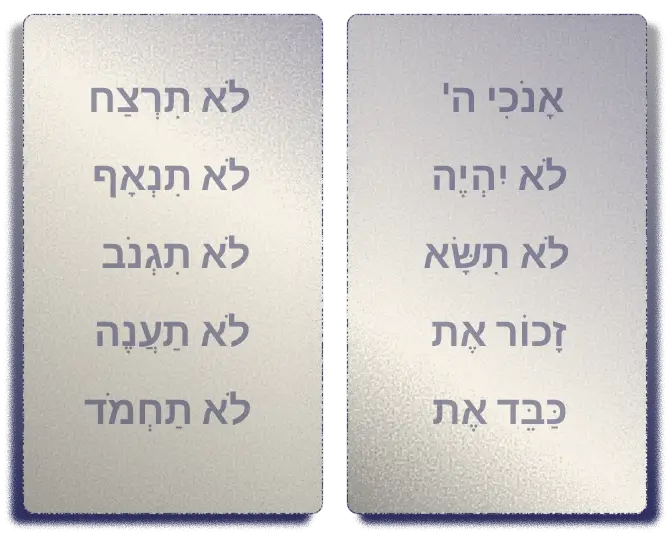
Explore the 613 mitzvos and uncover the meaning behind each one. Discover practical ways to integrate them into your daily life with insights, sources, and guided reflection.
Learn the structure, depth, and spiritual intent behind Jewish prayer. Dive into morning blessings, Shema, Amidah, and more—with tools to enrich your daily connection.
Each week’s parsha offers timeless wisdom and modern relevance. Explore summaries, key themes, and mitzvah connections to deepen your understanding of the Torah cycle.