www.Mitzvah-Minute.com
"Terumah — Part V — “וְעָשׂוּ אֲרוֹן”: Torah, Knowledge, and the Equality of Israel"
5.1 — Why the Ark Comes First
The Order of the Command
When the Torah begins to describe the vessels of the Mishkan, it does something surprising. One might expect the description to begin with the structure of the sanctuary itself—the walls, the coverings, the courtyard, and the layout of the building.
But the Torah does not begin with the structure. It begins with the Ark:
וְעָשׂוּ אֲרוֹן עֲצֵי שִׁטִּים
“And they shall make an Ark of acacia wood” (Shemos 25:10)
This is the first vessel described. Only afterward does the Torah describe the table, the Menorah, and the other elements of the sanctuary.
The question naturally arises: why does the Torah begin with the Ark?
Abarbanel: The Purpose of the Mishkan
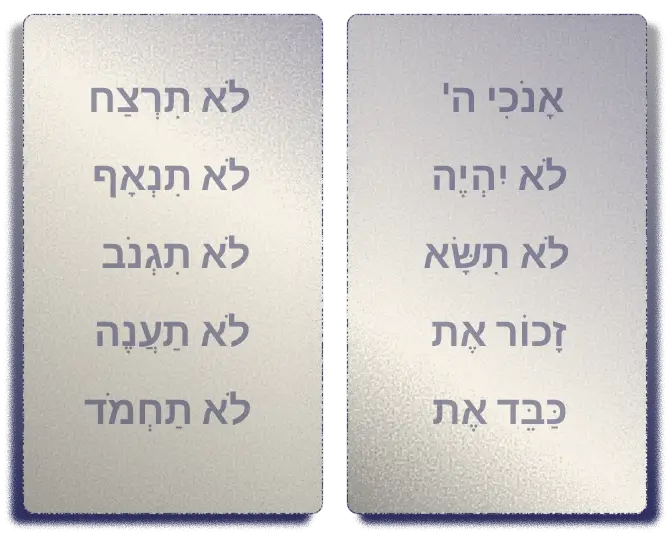
Abarbanel explains that the order of the vessels reveals the true purpose of the Mishkan. The sanctuary is not primarily about offerings, incense, or ritual activity. Its deepest purpose is to house the Ark, which contains the Luchos—the tablets of the covenant.
The Ark represents the Torah.
And the Torah is the heart of the sanctuary.
This is why the Torah describes the Ark first. It is the central object around which everything else is built. The Mishkan is not an end in itself. It is a structure designed to protect, honor, and house the Torah.
Without the Ark, the Mishkan would be an empty shell.
With the Ark, it becomes a dwelling place for the Divine word.
The Center of the Sanctuary
The placement of the Ark reinforces this idea. It stands in the innermost chamber, the Kodesh HaKodashim. No one enters this space except the Kohen Gadol, and even he enters only once a year.
This location reveals the Ark’s status. It is the most sacred object in the sanctuary. Everything else surrounds it, protects it, and serves it.
The structure of the Mishkan can be understood as concentric layers:
- The outer courtyard contains the altar and the realm of action.
- The inner chamber contains the Menorah and the table.
- The Holy of Holies contains the Ark and the Torah.
At the very center of all sacred space stands the Torah.
The Torah as the Goal of Holiness
Abarbanel teaches that this arrangement is not only architectural. It is philosophical.
Many ancient cultures built temples centered around sacrifices or images of their gods. The Torah presents a different vision. At the center of the sanctuary is not an image, but a set of tablets—words, commandments, teachings.
The heart of holiness is not ritual alone.
It is knowledge, instruction, and covenant.
The Ark teaches that the ultimate purpose of the Mishkan is to preserve and honor the Torah. All other elements of the sanctuary exist to support that central mission.
The offerings, the incense, the lights, and the bread all serve the greater goal: a life shaped by Divine teaching.
The Ark and the Equality of Israel
There is another striking feature of the Ark. Unlike the other vessels, it has a crown—זֵר זָהָב—around its edge. The sages explain that this crown represents the crown of Torah.
But the crown of Torah is different from the crown of kingship or priesthood. Kingship belongs to a royal lineage. Priesthood belongs to the descendants of Aharon. But the crown of Torah is open to everyone.
Anyone who studies, learns, and lives according to the Torah can claim it.
This idea is hinted at in the Ark itself. The Ark is constructed from wood covered with gold on the inside and outside. It symbolizes a person whose inner and outer life are aligned with Torah.
The Ark teaches that Torah is not the possession of a class or a tribe.
It is the inheritance of the entire nation.
Life Built Around the Ark
The order of the vessels therefore reflects the order of life.
If the Ark comes first in the sanctuary, then Torah must come first in the life of a person. Everything else—work, relationships, community, and even ritual—should be arranged around it.
Torah becomes the inner chamber of the soul.
Other aspects of life become the surrounding layers.
When Torah is at the center, life gains clarity and direction. Without that center, life becomes scattered and unfocused.
The Ark as the Inner Core
The Ark is hidden behind a curtain. It is not visible to the people. This reflects the nature of Torah itself.
The deepest truths are not always on display. They reside in the inner chambers of the mind and heart. Torah is not meant to be an external decoration. It is meant to be the hidden core of the personality.
Just as the Ark stands at the center of the sanctuary, the Torah must stand at the center of the human being.
Application for Today — Placing Torah at the Center
In modern life, it is easy for Torah to become one aspect among many. Work, entertainment, social obligations, and distractions can easily push learning and spiritual growth to the margins.
The Ark teaches a different model. Torah is not meant to be one element among others. It is meant to be the center around which everything else is arranged.
This does not mean abandoning ordinary responsibilities. It means orienting them around a central axis of Torah.
That can look like:
- Setting fixed times for learning each day.
- Consulting Torah values when making decisions.
- Building a home where Torah learning is visible and valued.
- Encouraging children to see Torah as the core of life, not an accessory to it.
When Torah stands at the center, other aspects of life find their proper place. Work becomes a means of supporting a life of meaning. Relationships become expressions of Torah values. Time itself becomes structured around sacred priorities.
The Ark comes first in the Mishkan.
And Torah must come first in life.
📖 Sources
- Full sources available on the Mitzvah Minute Parshas Terumah page under insights and commentaries