The Mitzvah Minute newsletter brings the beauty of Torah learning to your inbox — exploring mitzvot, parsha insights, and timeless Jewish wisdom in a clear, uplifting format. Browse our latest issue below, or explore past editions to keep growing one mitzvah at a time.

שֵׁשֶׁת יָמִים תַּעֲבֹד… וְיוֹם הַשְּׁבִיעִי שַׁבָּת לַה׳ אֱלֹקֶיךָ.”
“Six days you shall labor… but the seventh day is a Shabbos to Hashem your G-d.”
— Shemos 23:12
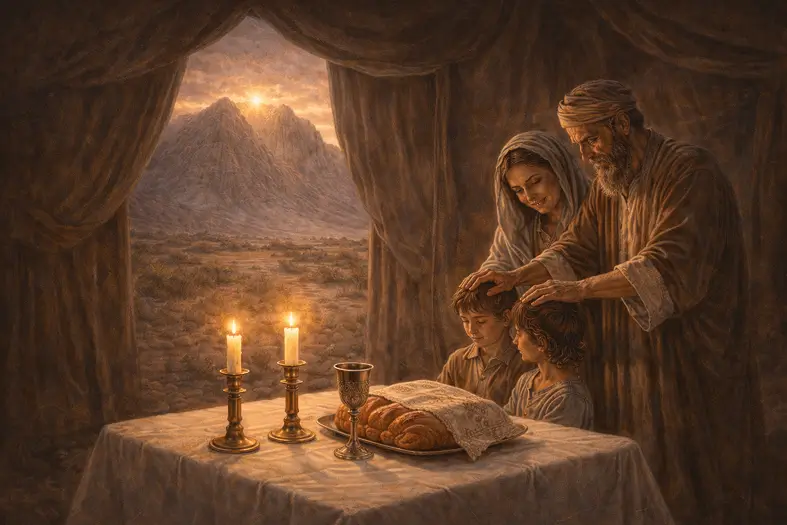
Mitzvah #87 is a command to rest—to step back from creative labor and recognize that the world does not belong to human control alone. Shabbos reminds us that work is not our identity and productivity is not our purpose. The universe has a Creator, and one day each week we return to that awareness.
The Torah introduces Shabbos as the sign of covenantal time. By ceasing from melachah, a person declares that life is not measured only in output, profit, or achievement, but in relationship—with Hashem, with family, and with the soul.
From the Talmud through the Rishonim and Acharonim—Rambam, Sefer HaChinuch, Rav Hirsch, Rav Kook, and the great Torah giants of every generation—the commentaries reveal how Shabbos shapes faith, humility, compassion, and inner freedom, and how to live this mitzvah in daily life.
Explore the full mitzvah →
https://www.mitzvah-minute.com/613-mitzvahs/to-rest-on-the-seventh-day

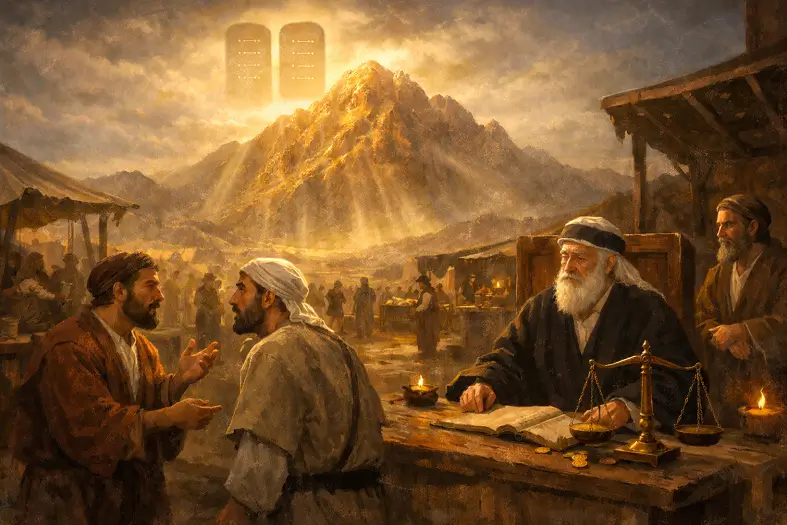
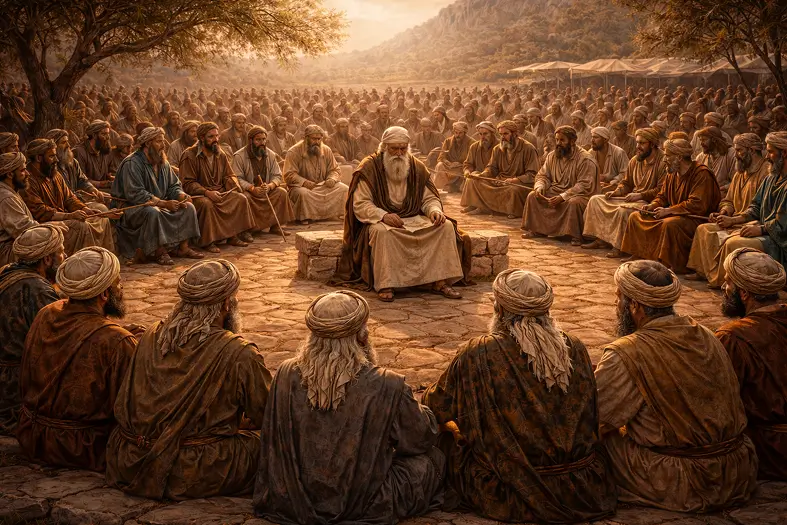
Parshas Mishpatim transforms the thunder of Sinai into the quiet structure of daily life.
From courts and contracts to compassion for the vulnerable, the parsha reveals that covenant is not only proclaimed at the mountain—it is built in the marketplace, the courtroom, the home, and the rhythm of sacred time.
Read the Parsha insights and commentaries →
https://www.mitzvah-minute.com/parshiyot/mishpatim

Read the full essays →
1.1 — From Revelation to Civilization
How the thunder of Sinai becomes the quiet structure of daily justice.
1.2 — The Mishpatim as the Living Dibros
How civil law completes the moral structure of the Ten Commandments.
1.3 — The Two Perfections of Torah
Why a just society is the foundation of knowing Hashem.
1.4 — Application: Building a Society After Sinai
What it means to translate revelation into daily life.

Read the full essays →
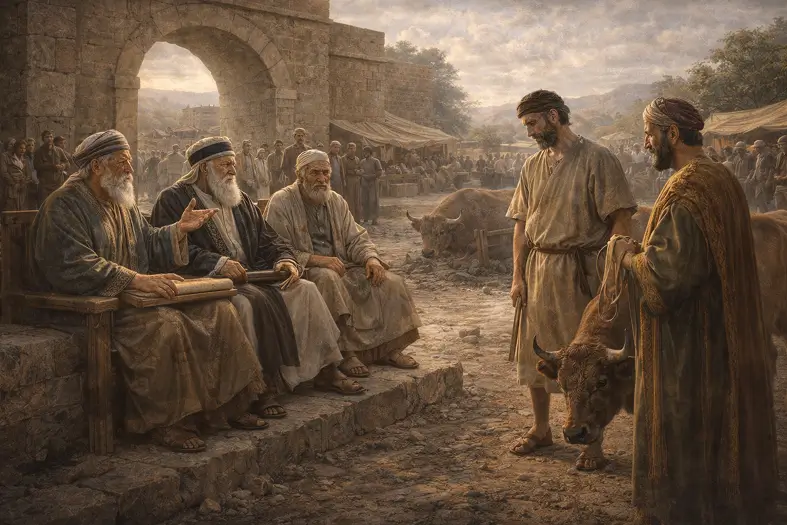
2.1 — The Courtroom as a Mikdash
Why the Sanhedrin must stand near the Mizbeach.
2.2 — Judges as Agents of the Divine
Why the Torah calls judges “אֱלֹהִים.”
2.3 — Precision, Not Passion
Why Torah justice is measured and rational.
2.4 — Application: Justice as Avodas Hashem
How courts and business dealings become acts of Divine service.

Read the full essays →
3.1 — Why the Torah Begins with a Slave
The first civil law as the memory of Egypt.
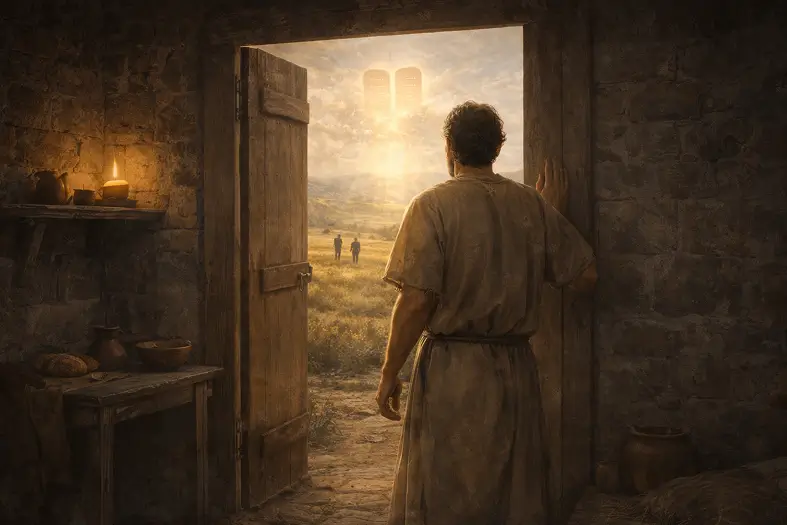
3.2 — The Ear That Heard at Sinai
Why the servant’s ear is pierced at the doorpost.
3.3 — The Number Seven and the Rhythm of Freedom
How the servant’s release reflects the structure of creation.
3.4 — Application: Freedom as a Spiritual Obligation
Why true freedom means serving Hashem alone.

Read the full essays →
4.1 — Free Will and Legal Responsibility
Why liability presumes moral agency.
4.2 — The Dangerous Ox
Ownership includes liability.
4.3 — Accident, Negligence, and Intention
Why the Torah distinguishes types of wrongdoing.
4.4 — Application: Owning the Consequences of Power
Why responsibility defines moral adulthood.

Read the full essays →
5.1 — The Stranger Is You
Why the Torah repeats the command to protect the stranger.
5.2 — Helping the Enemy
How Torah law transforms hostility into responsibility.
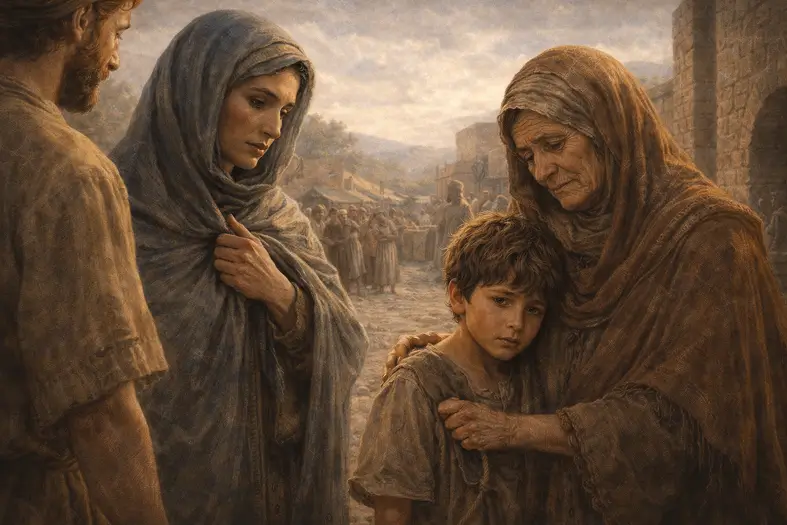
5.3 — The Cry of the Widow and Orphan
Why the Torah singles out the vulnerable.
5.4 — Application: Empathy as Social Architecture
Why a covenantal society is built on compassion.

Read the full essays →
6.1 — The Meaning of Na’aseh V’nishma
Why action precedes understanding.
6.2 — Law, Narrative, and Moral Memory
How Torah fuses story and law into covenant.
6.3 — The Blood of the Covenant
The bond between heaven and earth at Sinai.
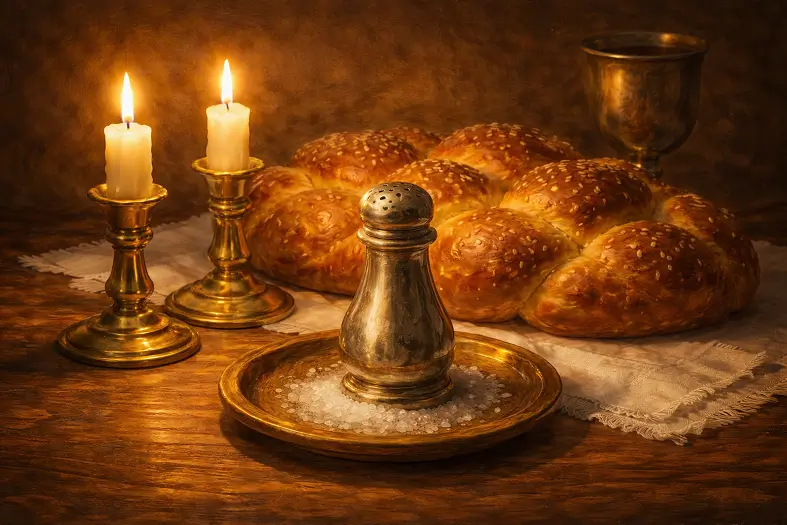
6.4 — Shabbos: The Sign of the Covenant
How sacred time protects human dignity.
6.5 — Application: Living a Life of Covenant
What it means to live by “Na’aseh v’nishma” today.


Read the full essays →
7.1 — Israel Under Direct Divine Rule
Why Israel is governed differently from the nations.
7.2 — Gradual Redemption
Why the land is conquered slowly.
7.3 — Moshe’s First Ascent
The transformation from leader to prophetic vessel.
7.4 — The Three Forty-Day Ascents
Why Moshe ascends the mountain three times.
7.5 — The Four Realms of Creation
How the forty days mirror the structure of existence.
7.6 — Torah as the Blueprint of the Universe
Why the Torah precedes creation.
7.7 — Application: The Ascent of a Human Being
What Moshe’s ascent teaches about personal growth.

Read the full essay →
8.1 — Shabbos, Covenant, and the Society of Responsibility
A life shaped by Torah is a life lived in the presence of Hashem, where every deed becomes part of the covenantal relationship.
Mishpatim teaches that revelation is not only heard at Sinai—it is lived in the courtroom, the marketplace, the field, and the home.
Rabbi Jonathan Sacks taught that the Torah does not seek a perfect world overnight. It seeks a society that steadily aligns itself with Divine principles.
Rav Avigdor Miller taught that each mitzvah refines the individual soul until society itself becomes elevated.
When responsibility, compassion, justice, and sacred time come together, the covenant becomes visible in daily life.
Through Torah and mitzvos, the presence of Hashem is drawn into the structures of society, and the world itself becomes a dwelling place for the Divine.

Dive into mitzvot, prayer, and Torah study—each section curated to help you learn, reflect, and live with intention. New insights are added regularly, creating an evolving space for spiritual growth.
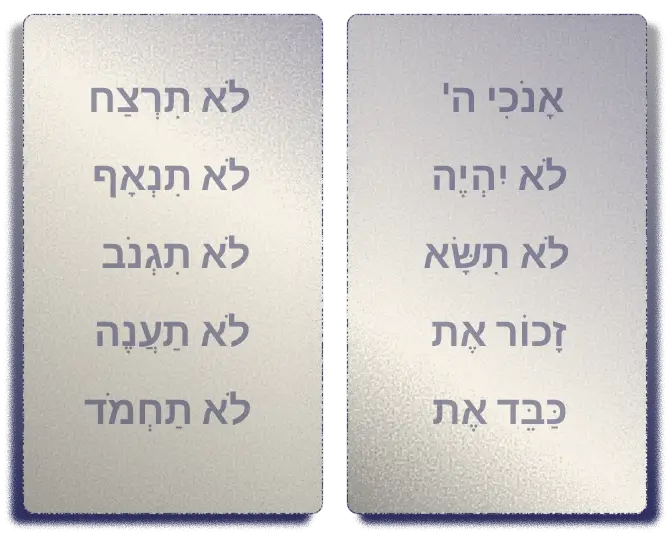
Explore the 613 mitzvot and uncover the meaning behind each one. Discover practical ways to integrate them into your daily life with insights, sources, and guided reflection.
Learn the structure, depth, and spiritual intent behind Jewish prayer. Dive into morning blessings, Shema, Amidah, and more—with tools to enrich your daily connection.

Each week’s parsha offers timeless wisdom and modern relevance. Explore summaries, key themes, and mitzvah connections to deepen your understanding of the Torah cycle.