www.Mitzvah-Minute.com
"Terumah — Part VII — “לְכָבוֹד וּלְתִפְאָרֶת”: Beauty, Art, and Spiritual Harmony"
7.2 — Beauty as a Reflection of Creation
A Sanctuary of Color and Light
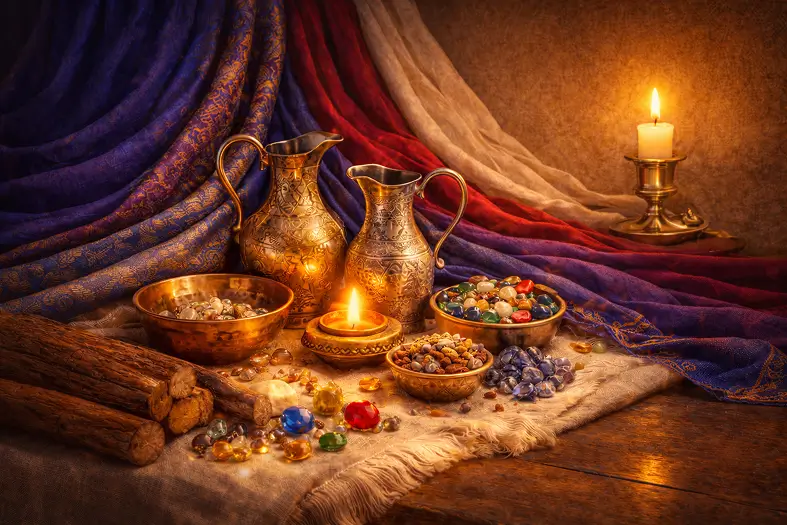
Parshas Terumah describes the Mishkan in language rich with color, texture, and material beauty. The Torah lists the donations the people are asked to bring:
- Gold, silver, and copper.
- Blue, purple, and crimson wool.
- Fine linen.
- Precious stones.
- Spices and oil.
This is not the language of bare utility. It is the language of artistry. The Mishkan is not designed to be merely functional. It is meant to be beautiful.
The curtains are woven with colors and patterns.
The vessels are plated with gold.
The lights of the Menorah illuminate the inner chamber.
The sanctuary becomes a place of harmony, light, and splendor.
This raises a fundamental question: why must holiness be beautiful?
Rav Kook: Beauty as a Divine Language
Rav Kook teaches that beauty is not separate from holiness. It is one of the ways the Divine presence is revealed in the world.
The natural world is filled with beauty:
- The colors of a sunset.
- The symmetry of a flower.
- The rhythm of the seasons.
- The harmony of the stars.
This beauty is not accidental. It reflects the inner harmony of creation. It is a visible expression of the Divine wisdom that sustains the universe.
When the Mishkan is built with beauty, it mirrors this cosmic harmony. Its colors, proportions, and materials echo the beauty of the natural world.
The sanctuary becomes a miniature reflection of creation itself.
The Mishkan as a Model of the World
Many commentators note the parallels between the Mishkan and the creation of the world.
Just as the world was created with wisdom, order, and harmony, the Mishkan is constructed with careful design and proportion.
Just as creation contains light, color, and structure, the Mishkan contains the light of the Menorah, the colors of the curtains, and the structure of the sanctuary.
The Mishkan becomes a symbolic universe—a small world within the larger world.
Its beauty is not decorative.
It is symbolic of the harmony of creation.
Chassidus: Beauty Awakens the Soul
Chassidic teachings emphasize that beauty has a direct effect on the human heart. A beautiful environment can awaken feelings of reverence, joy, and spiritual sensitivity.
When a person enters a space filled with harmony and grace, his inner world is affected. The senses influence the soul.
The Mishkan is therefore designed to elevate not only the mind, but the heart. The gold, the colors, the fragrances, and the lights create an atmosphere that inspires awareness of the Divine.
Beauty becomes a pathway to holiness.
Chassidus explains that the material world is not meant to be rejected. It is meant to be refined. When physical materials are arranged in a harmonious and beautiful way, they reveal their inner spiritual potential.
The Mishkan represents this idea. The same gold and fabrics that could have been used for ordinary luxury are transformed into a sanctuary.
Material beauty becomes spiritual beauty.
The Harmony of Materials
The Mishkan brings together many different materials:
- Metals of different colors and values.
- Fabrics of different textures.
- Woods, oils, and spices.
Each material has its own nature. Yet in the Mishkan, they are arranged in a unified design.
This harmony reflects the deeper unity of creation. The world is full of diversity, but beneath that diversity lies a single Divine source.
The Mishkan’s beauty expresses this unity. It shows how different elements can come together to form a harmonious whole.
Why Holiness Must Be Beautiful
One might imagine that holiness requires simplicity or austerity. Perhaps a plain, unadorned structure would be more spiritual.
But the Torah chooses the opposite approach. It commands a sanctuary of beauty.
This teaches that the physical world is not the enemy of holiness. When used properly, it becomes its expression.
Beauty:
- Lifts the spirit.
- Refines the senses.
- Awakens gratitude.
- Inspires reverence.
The Mishkan shows that holiness does not reject the aesthetic dimension of life. It sanctifies it.
A World Made Beautiful
The Mishkan was a small sanctuary in the desert. But its message extends far beyond its walls.
If beauty reflects the harmony of creation, then every act of beautification can become an act of holiness.
A clean and orderly home.
A well-designed space.
Clothing worn with dignity.
Food prepared with care.
Music that uplifts the spirit.
All these become reflections of the Divine harmony embedded in creation.
The Mishkan teaches that holiness is not only about laws and rituals. It is also about beauty, harmony, and refinement.
Application for Today — Sanctifying Aesthetics
In modern culture, beauty is often separated from holiness. Aesthetics may be pursued for pleasure, status, or self-expression alone.
The Mishkan offers a different vision. It teaches that beauty can be sanctified.
A person can bring holiness into the aesthetic dimension of life:
- Keeping a home clean, orderly, and dignified.
- Choosing clothing that reflects self-respect.
- Creating spaces that inspire calm and reverence.
- Supporting art that uplifts rather than degrades.
- Beautifying mitzvos, such as a beautiful Shabbos table or a carefully chosen siddur.
These acts are not superficial. They shape the atmosphere of life. They refine the senses and direct them toward holiness.
When beauty is aligned with spiritual purpose, it becomes more than decoration. It becomes a reflection of creation itself.
The Mishkan’s beauty teaches that the world is meant to be not only good, but also beautiful.
📖 Sources
- Full sources available on the Mitzvah Minute Parshas Terumah page under insights and commentaries