www.Mitzvah-Minute.com
"Terumah — Part VII — “לְכָבוֹד וּלְתִפְאָרֶת”: Beauty, Art, and Spiritual Harmony"
7.4 — The Holiness of Craft and Creativity
The Sanctuary as a Work of Art
The Mishkan is not only a sacred structure. It is a masterpiece of craftsmanship. Every curtain is woven with care. Every vessel is shaped with precision. Every garment is designed “לְכָבוֹד וּלְתִפְאָרֶת”—for honor and for beauty.
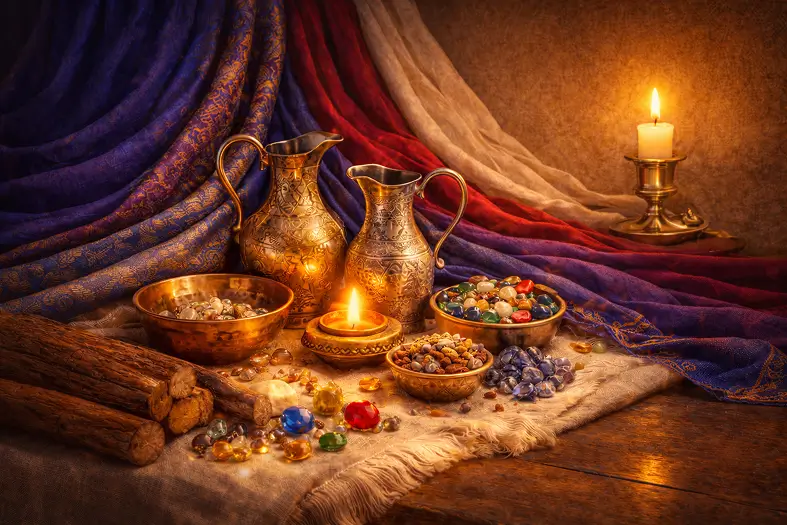
The sanctuary is a place of gold, color, texture, fragrance, and light. It is built not only with obedience, but with artistry.
This teaches that holiness is not expressed only through law, ritual, or discipline. It is also expressed through beauty, creativity, and skilled craftsmanship.
The Mishkan shows that art itself can become a form of Divine service.
Rav Kook: Creativity as a Channel of the Divine
Rav Kook taught that the human capacity for creativity is itself a reflection of the Divine image within the soul. Just as Hashem created the world with wisdom, harmony, and beauty, human beings are endowed with the ability to create.
When this creative power is used for selfish or empty purposes, it may remain superficial. But when it is directed toward holiness, it becomes a channel for Divine light.
The Mishkan represents this ideal. The artisans do not create for personal glory. They create for the sake of the sanctuary. Their work becomes part of a larger spiritual vision.
Rav Kook explains that beauty is not an optional addition to holiness. It is one of its essential expressions. A beautiful sanctuary reflects the harmony of creation and awakens the soul to a higher awareness.
Through beauty, the physical world becomes a vessel for the Divine.
Rav Avigdor Miller: Doing Things Well Is a Form of Service
Rav Avigdor Miller emphasized that serving Hashem is not limited to formal mitzvos. It includes the way a person performs ordinary actions.
A person who does things carelessly trains himself in carelessness. But a person who does things with care, precision, and excellence trains himself in greatness.
The artisans of the Mishkan did not work casually. They worked with skill, attention, and dedication. Every stitch, every carving, and every measurement mattered.
Their craftsmanship was not only technical. It was spiritual.
By working with excellence, they honored the sanctuary and the One who would dwell within it.
Rav Miller teaches that this principle applies to all areas of life. When a person performs his tasks with care and dignity, he turns them into acts of service.
The Unity of Beauty and Holiness
Some people imagine that holiness requires rejecting beauty. They associate spirituality with austerity, plainness, or neglect of the physical world.
The Mishkan offers a different vision. It is a place of splendor, harmony, and artistic expression.
This teaches that beauty and holiness are not opposites. When properly directed, they support one another.
Beauty:
- Refines the senses.
- Lifts the spirit.
- Inspires reverence.
- Creates an atmosphere of dignity.
The Mishkan shows that a beautiful environment can help create a holy heart.
The Craftsman as a Servant of Hashem
In the Mishkan, the artisan is not a separate figure from the priest or the scholar. He is part of the Divine service.
The one who weaves the curtain, the one who shapes the gold, and the one who sets the stones all participate in the sanctuary’s holiness.
Their tools become instruments of service.
Their skills become offerings.
Their creativity becomes a form of worship.
The Mishkan elevates craftsmanship from mere labor to sacred work.
Creativity in Everyday Life
Most people do not build sanctuaries or weave priestly garments. But every person engages in acts of creation.
A person creates:
- A home environment.
- A business or workplace.
- Meals for his family.
- Words in conversation.
- Projects, designs, and ideas.
These acts can be done with indifference, or they can be done with care, beauty, and intention.
When a person chooses the latter, he follows the path of the Mishkan’s artisans. He turns ordinary creativity into a form of service.
The Sanctuary Beyond the Desert
The Mishkan stood in the desert for a limited time. But its message continues wherever people bring beauty and craftsmanship into their service of Hashem.
A well-prepared Shabbos table.
A thoughtfully designed home.
A beautifully written piece of Torah.
A carefully built object.
A business run with integrity and dignity.
All these become extensions of the Mishkan’s spirit.
The sanctuary is no longer only in a tent of gold and linen. It exists wherever human creativity is aligned with holiness.
Application for Today — Craft as Avodah
Modern life includes countless opportunities for creative expression—design, music, writing, cooking, building, organizing, and more.
These activities are often seen as separate from spirituality. But the Mishkan teaches that craftsmanship itself can be a form of avodah.
A person can transform his creative work into service by:
- Striving for excellence rather than mediocrity.
- Creating environments that inspire dignity and calm.
- Producing art that uplifts rather than degrades.
- Approaching even small tasks with care and intention.
- Using talents to benefit others.
When creativity is guided by holiness, it becomes more than self-expression. It becomes a reflection of the Divine image within the human soul.
The artisans of the Mishkan show that the path to holiness is not only through study and prayer. It is also through the careful, beautiful work of human hands.
📖 Sources
- Full sources available on the Mitzvah Minute Parshas Terumah page under insights and commentaries