3.1 — Tamid as Faithful Recurrence
At the beginning of Parshas Tetzaveh, the Torah commands:
שמות כ״ז:כ׳–כ״א
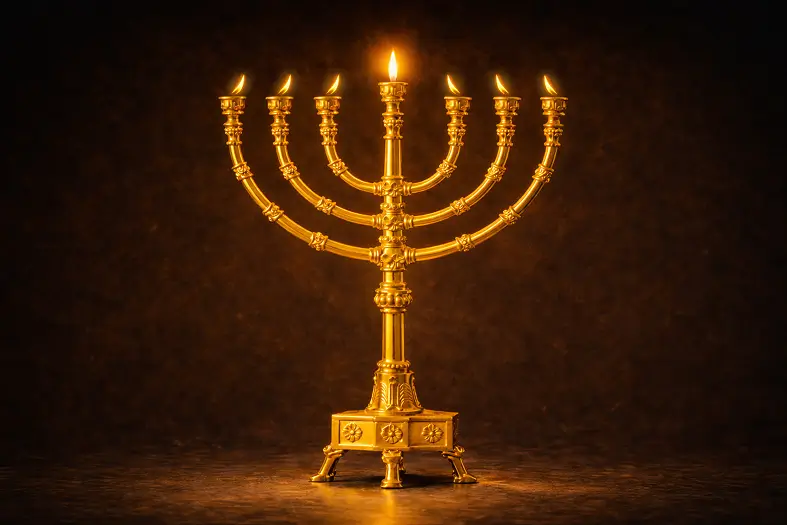
“לְהַעֲלֹת נֵר תָּמִיד”
“To raise a continual lamp.”
And immediately afterward, the Torah clarifies:
“מֵעֶרֶב עַד בֹּקֶר”
“From evening until morning.”
At first glance, these two phrases seem contradictory. If the lamp is to burn תָּמִיד—continually—why is it described as burning specifically from evening to morning?
Rashi addresses this question directly. He explains that תָּמִיד does not always mean uninterrupted. It can mean regular, faithful recurrence. The Menorah was lit every evening and burned through the night. Each day it was tended, and each evening it was lit again.
“Tamid” here means constancy through rhythm.
Not endless intensity, but reliable return.
The Menorah’s light was not a wild, uncontrolled blaze. It was a carefully measured flame, lit at a specific time, tended with precision, and sustained through the night.
Each day followed the same pattern:
There was no improvisation. No dramatic variation. Just a steady rhythm.
This rhythm is what the Torah calls תָּמִיד.
Holiness, according to Rashi, is not sustained through constant emotional intensity. It is sustained through faithful recurrence.
In modern language, “always” often implies nonstop activity or emotional consistency. If something is not constantly felt or experienced, we assume it is fading.
But the Torah’s concept of תָּמִיד is different.
A daily prayer is tamid, even though it lasts only minutes.
A weekly Shabbos is tamid, even though it occurs once every seven days.
A yearly festival is tamid, even though it returns only at its appointed time.
In the Torah’s vocabulary, constancy is not defined by duration. It is defined by rhythm.
A practice is tamid when it reliably returns.
The Mishkan was not a place of spontaneous spirituality. It was a place of carefully engineered holiness.
Every aspect of the service was measured:
Nothing was left to emotional impulse. The system was built around repetition, structure, and schedule.
Rashi’s understanding of tamid fits this larger design. Holiness is engineered by recurrence.
The covenant is not sustained by moments of inspiration alone. It is sustained by rhythms that return again and again.
Many people approach spirituality through emotion. When they feel inspired, they pray deeply. When they feel uplifted, they learn intensely. But when the feeling fades, the practice disappears.
This creates a fragile spiritual life.
If avodah depends on emotion, it rises and falls with mood. There is no stability, no structure, no continuity.
The Menorah offers a different model. It is not lit when the Kohen feels inspired. It is lit every evening.
The flame does not depend on mood. It depends on schedule.
Rashi’s comment transforms the meaning of the verse. The Torah is not commanding endless intensity. It is commanding faithful recurrence.
The Menorah teaches a simple but powerful truth:
Holiness survives through return.
Not one perfect prayer, but daily prayer.
Not one dramatic insight, but steady learning.
Not one overwhelming act of kindness, but consistent compassion.
The covenant is built not on rare peaks, but on regular steps.
Jewish life is structured around recurring cycles:
Each cycle returns, again and again, forming a rhythm of holiness.
This is the meaning of נֵר תָּמִיד. The light of the covenant is sustained not by constant intensity, but by reliable recurrence.
The flame is lit each evening, and it burns through the night. Then it is prepared again the next day.
Holiness is a rhythm you keep.
In the Mishkan, the Menorah was not lit when the Kohen felt uplifted, nor when the atmosphere happened to be inspiring. It was lit at its appointed time, evening after evening. The flame did not wait for emotion. It waited for the Kohen—and he came.
This is the meaning of תָּמִיד. Not endless intensity, but faithful return.
In our own lives, we often wait for the right mood, the right energy, the right moment of inspiration. But the covenant is not built on moods. It is built on meeting Hashem at the time we have promised to meet Him.
When a person sets aside a moment each day that belongs only to Hashem, something sacred begins to take root. It may be a quiet corner of the morning with a siddur, a few lines of Torah learned at night, or a gentle pause in the day to whisper gratitude. The act itself may be small, but its constancy creates a sanctuary in time.
Over days and weeks, that moment becomes familiar. Over months and years, it becomes an anchor. The world may shift around it—schedules change, pressures rise, distractions multiply—but that one hour, or even that one minute, remains a place where the soul returns home.
The Menorah was not lit because it felt right.
It was lit because it was time.
And because it was lit every evening, the light never left the Sanctuary.
So too, when a person gives Hashem a fixed place in the day, the flame of holiness finds a place to live. That is תָּמִיד—the quiet, faithful rhythm that keeps the covenant burning.
📖 Sources


3.1 — Tamid as Faithful Recurrence
At the beginning of Parshas Tetzaveh, the Torah commands:
שמות כ״ז:כ׳–כ״א
“לְהַעֲלֹת נֵר תָּמִיד”
“To raise a continual lamp.”
And immediately afterward, the Torah clarifies:
“מֵעֶרֶב עַד בֹּקֶר”
“From evening until morning.”
At first glance, these two phrases seem contradictory. If the lamp is to burn תָּמִיד—continually—why is it described as burning specifically from evening to morning?
Rashi addresses this question directly. He explains that תָּמִיד does not always mean uninterrupted. It can mean regular, faithful recurrence. The Menorah was lit every evening and burned through the night. Each day it was tended, and each evening it was lit again.
“Tamid” here means constancy through rhythm.
Not endless intensity, but reliable return.
The Menorah’s light was not a wild, uncontrolled blaze. It was a carefully measured flame, lit at a specific time, tended with precision, and sustained through the night.
Each day followed the same pattern:
There was no improvisation. No dramatic variation. Just a steady rhythm.
This rhythm is what the Torah calls תָּמִיד.
Holiness, according to Rashi, is not sustained through constant emotional intensity. It is sustained through faithful recurrence.
In modern language, “always” often implies nonstop activity or emotional consistency. If something is not constantly felt or experienced, we assume it is fading.
But the Torah’s concept of תָּמִיד is different.
A daily prayer is tamid, even though it lasts only minutes.
A weekly Shabbos is tamid, even though it occurs once every seven days.
A yearly festival is tamid, even though it returns only at its appointed time.
In the Torah’s vocabulary, constancy is not defined by duration. It is defined by rhythm.
A practice is tamid when it reliably returns.
The Mishkan was not a place of spontaneous spirituality. It was a place of carefully engineered holiness.
Every aspect of the service was measured:
Nothing was left to emotional impulse. The system was built around repetition, structure, and schedule.
Rashi’s understanding of tamid fits this larger design. Holiness is engineered by recurrence.
The covenant is not sustained by moments of inspiration alone. It is sustained by rhythms that return again and again.
Many people approach spirituality through emotion. When they feel inspired, they pray deeply. When they feel uplifted, they learn intensely. But when the feeling fades, the practice disappears.
This creates a fragile spiritual life.
If avodah depends on emotion, it rises and falls with mood. There is no stability, no structure, no continuity.
The Menorah offers a different model. It is not lit when the Kohen feels inspired. It is lit every evening.
The flame does not depend on mood. It depends on schedule.
Rashi’s comment transforms the meaning of the verse. The Torah is not commanding endless intensity. It is commanding faithful recurrence.
The Menorah teaches a simple but powerful truth:
Holiness survives through return.
Not one perfect prayer, but daily prayer.
Not one dramatic insight, but steady learning.
Not one overwhelming act of kindness, but consistent compassion.
The covenant is built not on rare peaks, but on regular steps.
Jewish life is structured around recurring cycles:
Each cycle returns, again and again, forming a rhythm of holiness.
This is the meaning of נֵר תָּמִיד. The light of the covenant is sustained not by constant intensity, but by reliable recurrence.
The flame is lit each evening, and it burns through the night. Then it is prepared again the next day.
Holiness is a rhythm you keep.
In the Mishkan, the Menorah was not lit when the Kohen felt uplifted, nor when the atmosphere happened to be inspiring. It was lit at its appointed time, evening after evening. The flame did not wait for emotion. It waited for the Kohen—and he came.
This is the meaning of תָּמִיד. Not endless intensity, but faithful return.
In our own lives, we often wait for the right mood, the right energy, the right moment of inspiration. But the covenant is not built on moods. It is built on meeting Hashem at the time we have promised to meet Him.
When a person sets aside a moment each day that belongs only to Hashem, something sacred begins to take root. It may be a quiet corner of the morning with a siddur, a few lines of Torah learned at night, or a gentle pause in the day to whisper gratitude. The act itself may be small, but its constancy creates a sanctuary in time.
Over days and weeks, that moment becomes familiar. Over months and years, it becomes an anchor. The world may shift around it—schedules change, pressures rise, distractions multiply—but that one hour, or even that one minute, remains a place where the soul returns home.
The Menorah was not lit because it felt right.
It was lit because it was time.
And because it was lit every evening, the light never left the Sanctuary.
So too, when a person gives Hashem a fixed place in the day, the flame of holiness finds a place to live. That is תָּמִיד—the quiet, faithful rhythm that keeps the covenant burning.
📖 Sources


“3.1 — Tamid as Faithful Recurrence”
לְהַעֲלֹת נֵר תָּמִיד
The Menorah’s daily lighting defines the meaning of tamid: faithful recurrence. The covenantal light is sustained through daily, structured service.
וַעֲבַדְתֶּם אֵת ה׳ אֱלֹקֵיכֶם
Daily prayer reflects the principle of tamid. Holiness is maintained through regular, scheduled devotion rather than sporadic inspiration.
וְשִׁנַּנְתָּם לְבָנֶיךָ
Consistent Torah learning embodies faithful recurrence. The rhythm of daily study sustains the covenant across generations.
יוֹם הַשְּׁבִיעִי שַׁבָּת
Shabbos is a weekly expression of tamid. Though it occurs once every seven days, its steady recurrence anchors Jewish time in a rhythm of holiness.


“3.1 — Tamid as Faithful Recurrence”
The Torah commands a “נֵר תָּמִיד,” a continual lamp, but clarifies that it burns “מֵעֶרֶב עַד בֹּקֶר.” Rashi explains that “tamid” means regular, recurring service. The Menorah is lit every evening, establishing a rhythm of constancy through repetition.

Dive into mitzvos, tefillah, and Torah study—each section curated to help you learn, reflect, and live with intention. New insights are added regularly, creating an evolving space for spiritual growth.

Explore the 613 mitzvos and uncover the meaning behind each one. Discover practical ways to integrate them into your daily life with insights, sources, and guided reflection.

Learn the structure, depth, and spiritual intent behind Jewish prayer. Dive into morning blessings, Shema, Amidah, and more—with tools to enrich your daily connection.

Each week’s parsha offers timeless wisdom and modern relevance. Explore summaries, key themes, and mitzvah connections to deepen your understanding of the Torah cycle.