3.2 — Ramban’s Ner Ma’aravi: A Light That Doesn’t Go Out
The Torah commands:
שמות כ״ז:כ״א
“יַעֲרֹךְ אֹתוֹ אַהֲרֹן… לִפְנֵי ה׳ תָּמִיד”
“Aharon shall arrange it… before Hashem continually.”
On the surface, the verse describes the daily tending of the Menorah. But the Ramban, drawing on the words of Chazal, reveals a deeper layer within the phrase נֵר תָּמִיד.
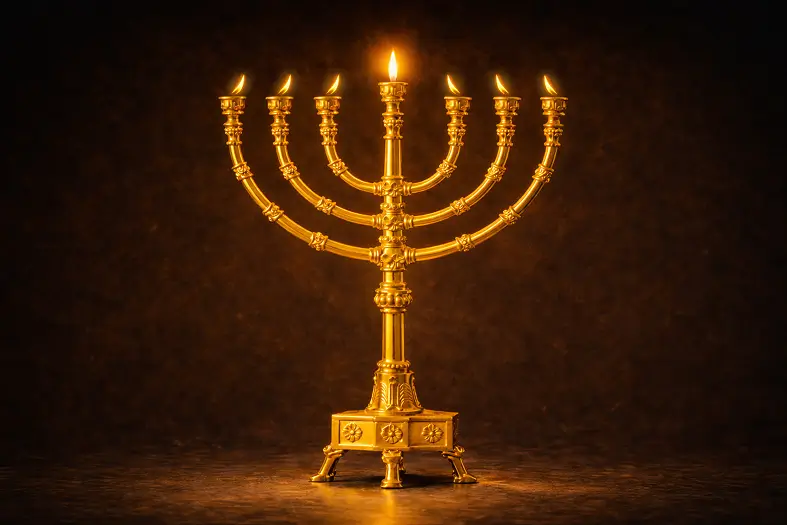
Among the lamps of the Menorah was one known as the נֵר מַעֲרָבִי—the western lamp. According to the tradition recorded in the Gemara and explained by the Ramban, this lamp burned longer than the others. Though all the lamps were filled with equal amounts of oil, the western lamp miraculously remained lit.
It was a sign.
A sign that the Shechinah dwelled among Israel.
A sign that the covenant endured.
A sign that Divine presence was not fleeting, but continuous.
If all the lamps were equal in design, why would one remain lit longer?
The Ramban explains that the western lamp functioned as a testimony. It was not merely a source of light. It was a spiritual indicator, a symbol that the presence of Hashem rested in the Mishkan.
The Menorah as a whole represented wisdom and illumination. But the נֵר מַעֲרָבִי represented something more fundamental: continuity.
Even when other lamps went out, one light remained.
This conveyed a powerful message. The covenant may pass through cycles. There may be moments of brightness and moments of dimness. But at its core, one flame remains unextinguished.
The Ramban’s insight reveals a central principle of Jewish life. A people cannot survive on scattered sparks alone. It needs a stable center.
The western lamp was that center.
It did not depend on fluctuating conditions. It did not reflect the emotional highs and lows of the nation. It stood as a steady point of light, testifying that something deeper than circumstance sustained Israel.
Throughout Jewish history, there have always been cycles:
Yet the covenant endured. Something within the people remained lit.
The נֵר מַעֲרָבִי represents that enduring core.
Chazal describe the western lamp as “עדות היא לבאי עולם שהשכינה שורה בישראל”—a testimony to the world that the Divine Presence dwells among Israel.
The miracle was not for spectacle. It was for reassurance.
The Jewish people needed to know that their relationship with Hashem was not dependent on momentary perfection. It was rooted in an unbroken bond.
The western lamp burned as a quiet affirmation:
Even when other lights flicker, one light remains.
Even when circumstances change, the covenant stands.
In the Ramban’s reading, the phrase נֵר תָּמִיד carries this deeper meaning. The constancy of the Menorah is not only about daily rhythm. It is about the existence of a flame that does not go out.
The tamid is not merely the repetition of action. It is the continuity of presence.
The Menorah therefore teaches two layers of constancy:
Together, they form the architecture of covenantal life: rhythm and center.
A life without anchors drifts. When everything is negotiable, nothing is stable. When all practices depend on mood, the flame flickers unpredictably.
The western lamp teaches that spiritual life requires at least one point of unbroken continuity.
Not everything must be perfect. Not every day must be inspired. But one flame must remain lit.
In Jewish life, this has taken many forms:
These anchors function as personal נֵר מַעֲרָבִי—a light that does not go out.
The western lamp also reflects a deeper truth about the Jewish soul. Even when external observance fluctuates, the inner spark remains.
Generations may wander. Communities may weaken. Individuals may drift. Yet the inner connection to Hashem persists.
There is always a lamp that refuses to go out.
This is the quiet miracle of Jewish history.
Empires rose and fell. Exiles scattered the people across continents. Yet the covenant endured, like the western lamp, burning beyond expectation.
In the Beis HaMikdash, the western lamp was more than a source of light. It was a sign. While the other flames flickered and were relit, this one lamp stood as a testimony that the Divine Presence rested among Israel. It was the quiet proof that the covenant still lived.
Every soul needs such a lamp.
Not the brightest flame.
Not the most dramatic moment.
But the one light that does not disappear when life grows dark.
There are seasons when the heart feels open and the mind feels clear. There are also seasons of pressure, distraction, fatigue, and doubt. In those times, grand resolutions often fade. But a single steady flame can carry a person through the night.
Perhaps it is a short tefillah whispered each morning.
Perhaps it is a few lines of Torah learned before sleep.
Perhaps it is a daily act of kindness done without fanfare.
Perhaps it is a quiet word of gratitude to Hashem at day’s end.
It may seem small. But if it remains constant, it becomes your western lamp—the light that proves the covenant within you has not gone out.
Life will shift. Emotions will rise and fall. Circumstances will change. But when one flame remains, the sanctuary of the soul never goes dark.
Guard that lamp.
Let it burn each day, without drama and without interruption.
And through its steady glow, the presence of Hashem will dwell within you.
📖 Sources


3.2 — Ramban’s Ner Ma’aravi: A Light That Doesn’t Go Out
The Torah commands:
שמות כ״ז:כ״א
“יַעֲרֹךְ אֹתוֹ אַהֲרֹן… לִפְנֵי ה׳ תָּמִיד”
“Aharon shall arrange it… before Hashem continually.”
On the surface, the verse describes the daily tending of the Menorah. But the Ramban, drawing on the words of Chazal, reveals a deeper layer within the phrase נֵר תָּמִיד.
Among the lamps of the Menorah was one known as the נֵר מַעֲרָבִי—the western lamp. According to the tradition recorded in the Gemara and explained by the Ramban, this lamp burned longer than the others. Though all the lamps were filled with equal amounts of oil, the western lamp miraculously remained lit.
It was a sign.
A sign that the Shechinah dwelled among Israel.
A sign that the covenant endured.
A sign that Divine presence was not fleeting, but continuous.
If all the lamps were equal in design, why would one remain lit longer?
The Ramban explains that the western lamp functioned as a testimony. It was not merely a source of light. It was a spiritual indicator, a symbol that the presence of Hashem rested in the Mishkan.
The Menorah as a whole represented wisdom and illumination. But the נֵר מַעֲרָבִי represented something more fundamental: continuity.
Even when other lamps went out, one light remained.
This conveyed a powerful message. The covenant may pass through cycles. There may be moments of brightness and moments of dimness. But at its core, one flame remains unextinguished.
The Ramban’s insight reveals a central principle of Jewish life. A people cannot survive on scattered sparks alone. It needs a stable center.
The western lamp was that center.
It did not depend on fluctuating conditions. It did not reflect the emotional highs and lows of the nation. It stood as a steady point of light, testifying that something deeper than circumstance sustained Israel.
Throughout Jewish history, there have always been cycles:
Yet the covenant endured. Something within the people remained lit.
The נֵר מַעֲרָבִי represents that enduring core.
Chazal describe the western lamp as “עדות היא לבאי עולם שהשכינה שורה בישראל”—a testimony to the world that the Divine Presence dwells among Israel.
The miracle was not for spectacle. It was for reassurance.
The Jewish people needed to know that their relationship with Hashem was not dependent on momentary perfection. It was rooted in an unbroken bond.
The western lamp burned as a quiet affirmation:
Even when other lights flicker, one light remains.
Even when circumstances change, the covenant stands.
In the Ramban’s reading, the phrase נֵר תָּמִיד carries this deeper meaning. The constancy of the Menorah is not only about daily rhythm. It is about the existence of a flame that does not go out.
The tamid is not merely the repetition of action. It is the continuity of presence.
The Menorah therefore teaches two layers of constancy:
Together, they form the architecture of covenantal life: rhythm and center.
A life without anchors drifts. When everything is negotiable, nothing is stable. When all practices depend on mood, the flame flickers unpredictably.
The western lamp teaches that spiritual life requires at least one point of unbroken continuity.
Not everything must be perfect. Not every day must be inspired. But one flame must remain lit.
In Jewish life, this has taken many forms:
These anchors function as personal נֵר מַעֲרָבִי—a light that does not go out.
The western lamp also reflects a deeper truth about the Jewish soul. Even when external observance fluctuates, the inner spark remains.
Generations may wander. Communities may weaken. Individuals may drift. Yet the inner connection to Hashem persists.
There is always a lamp that refuses to go out.
This is the quiet miracle of Jewish history.
Empires rose and fell. Exiles scattered the people across continents. Yet the covenant endured, like the western lamp, burning beyond expectation.
In the Beis HaMikdash, the western lamp was more than a source of light. It was a sign. While the other flames flickered and were relit, this one lamp stood as a testimony that the Divine Presence rested among Israel. It was the quiet proof that the covenant still lived.
Every soul needs such a lamp.
Not the brightest flame.
Not the most dramatic moment.
But the one light that does not disappear when life grows dark.
There are seasons when the heart feels open and the mind feels clear. There are also seasons of pressure, distraction, fatigue, and doubt. In those times, grand resolutions often fade. But a single steady flame can carry a person through the night.
Perhaps it is a short tefillah whispered each morning.
Perhaps it is a few lines of Torah learned before sleep.
Perhaps it is a daily act of kindness done without fanfare.
Perhaps it is a quiet word of gratitude to Hashem at day’s end.
It may seem small. But if it remains constant, it becomes your western lamp—the light that proves the covenant within you has not gone out.
Life will shift. Emotions will rise and fall. Circumstances will change. But when one flame remains, the sanctuary of the soul never goes dark.
Guard that lamp.
Let it burn each day, without drama and without interruption.
And through its steady glow, the presence of Hashem will dwell within you.
📖 Sources


“3.2 — Ramban’s Ner Ma’aravi: A Light That Doesn’t Go Out”
לְהַעֲלֹת נֵר תָּמִיד
The Menorah’s daily lighting includes the symbolism of the western lamp, which testified to the constant presence of the Shechinah. This mitzvah embodies the idea of a steady, unbroken spiritual center.
וַעֲבַדְתֶּם אֵת ה׳ אֱלֹקֵיכֶם
Daily prayer creates a consistent spiritual anchor. Like the western lamp, it provides continuity even when other aspects of life fluctuate.
וְשִׁנַּנְתָּם לְבָנֶיךָ
Regular Torah study forms a stable center of spiritual life, preserving the covenant’s light across generations.
שַׁבָּת קֹדֶשׁ
Shabbos serves as a weekly anchor of holiness, a recurring point of constancy that reflects the principle of the unextinguished lamp.


“3.2 — Ramban’s Ner Ma’aravi: A Light That Doesn’t Go Out”
The Torah commands the Menorah to burn “תָּמִיד.” Ramban, drawing on Chazal, explains that the western lamp burned continuously as a testimony that the Shechinah rested among Israel. This lamp represented the covenant’s unbroken center.

Dive into mitzvos, tefillah, and Torah study—each section curated to help you learn, reflect, and live with intention. New insights are added regularly, creating an evolving space for spiritual growth.

Explore the 613 mitzvos and uncover the meaning behind each one. Discover practical ways to integrate them into your daily life with insights, sources, and guided reflection.

Learn the structure, depth, and spiritual intent behind Jewish prayer. Dive into morning blessings, Shema, Amidah, and more—with tools to enrich your daily connection.

Each week’s parsha offers timeless wisdom and modern relevance. Explore summaries, key themes, and mitzvah connections to deepen your understanding of the Torah cycle.