3.7 — Part III Application for Today: Tamid Habits in a Distracted World
At the center of the Menorah command stands a single word:
שמות כ״ז:כ״א
“יַעֲרֹךְ… לִפְנֵי ה׳ תָּמִיד”
“He shall arrange it… before Hashem continually.”
Throughout Part III, this word has guided us. תָּמִיד does not necessarily mean nonstop intensity. Rashi already taught that it can mean faithful recurrence. A lamp lit every evening, a service repeated at its appointed time, a flame sustained through rhythm.
In the world of the Mishkan, this rhythm created holiness.
In the modern world, this same rhythm becomes the antidote to chaos.
The modern environment is defined by interruption. Attention is pulled in every direction. News, messages, alerts, deadlines, and endless streams of information agitate the mind from morning until night.
In such a world, spiritual life becomes fragile. When every moment is reactive, there is little room for steady devotion. Even meaningful practices are squeezed into the margins, rushed between distractions.
The problem is not only immorality. It is instability. The mind never settles. The schedule never steadies. The soul never finds rhythm.
Without rhythm, the flame flickers.
Rav Avigdor Miller repeatedly emphasized that the path to greatness lies in small, consistent acts. He taught that spiritual growth is not achieved through rare moments of intensity, but through repeated habits that slowly shape the soul.
A daily moment of gratitude, a fixed time of Torah, a consistent act of kindness—these are the building blocks of a life of holiness.
He would often stress that even a brief, steady practice, performed every day, can transform a person over time. The repetition itself becomes the source of growth.
This is the spirit of תָּמִיד.
Rabbi Jonathan Sacks described Judaism as a religion of time structured by rhythm. The covenant is not sustained by one-time events, but by recurring practices.
Shabbos arrives every week.
Prayer returns every day.
Festivals cycle each year.
These rhythms form the architecture of Jewish life. They protect the soul from being swallowed by the surrounding culture.
Without rhythm, the covenant dissolves into the noise of the world. With rhythm, it becomes a steady presence.
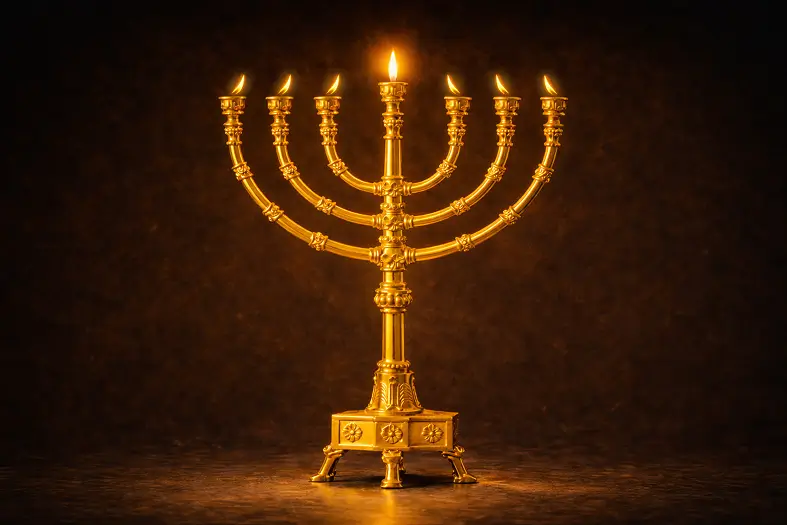
The Menorah’s nightly lighting is one of these rhythms. It is the quiet heartbeat of the Mishkan.
Modern culture prizes intensity. Dramatic experiences, emotional peaks, and powerful moments are seen as the height of spiritual life.
But intensity is difficult to sustain. It depends on conditions. It fades when circumstances change.
Constancy, by contrast, does not rely on emotion. It relies on commitment.
Intensity says: “I will act when I feel inspired.”
Constancy says: “I will act because this is my time.”
The Menorah is lit by constancy. Each evening, regardless of mood, the Kohen arranges the lamps. The flame burns because the appointment is kept.
The Torah’s use of the word תָּמִיד suggests that constancy is not merely a practical tool. It is a protective structure.
A daily act of holiness becomes a fixed point in time. No matter how chaotic the day becomes, that point remains.
Over time, these fixed points form a rhythm:
These rhythms create stability within instability.
The world may remain noisy. But the covenant continues to pulse through its appointed times.
The Menorah teaches that even a single steady flame can illuminate a dark room.
A person does not need dozens of practices to begin. One consistent mitzvah-time can become the center of spiritual life.
One daily lamp can change the atmosphere of an entire day.
That is the power of תָּמִיד.
In the Mishkan, the lamp did not burn by accident.
Someone brought the oil.
Someone prepared the wick.
Someone returned each evening to raise the flame.
And because of that quiet faithfulness, the light never disappeared.
Every soul has a lamp like that—a small place where holiness can live each day. Not in grand gestures or rare moments of inspiration, but in the simple, recurring act that returns again and again, like evening to night.
In a distracted world, the greatest act of faith is not intensity. It is constancy.
When you set aside a moment each day for Torah, for tefillah, for kindness, or for gratitude, you are doing what the kohen did in the Mishkan. You are bringing oil into the sanctuary of your own life. You are saying: this flame matters. This light will not be left to chance.
There will always be noise. There will always be urgency, messages, obligations, and distractions pressing in from every side. But the covenant lives wherever a Jew protects a small, steady flame.
Treat one sacred moment of your day like the Menorah’s oil—pure, guarded, and prepared in advance. Let it be a point of stillness that the world cannot easily invade. Let it be the place where your soul remembers who it belongs to.
Intensity may come and go.
But the flame that is tended daily becomes a covenant of light.
📖 Sources


3.7 — Part III Application for Today: Tamid Habits in a Distracted World
At the center of the Menorah command stands a single word:
שמות כ״ז:כ״א
“יַעֲרֹךְ… לִפְנֵי ה׳ תָּמִיד”
“He shall arrange it… before Hashem continually.”
Throughout Part III, this word has guided us. תָּמִיד does not necessarily mean nonstop intensity. Rashi already taught that it can mean faithful recurrence. A lamp lit every evening, a service repeated at its appointed time, a flame sustained through rhythm.
In the world of the Mishkan, this rhythm created holiness.
In the modern world, this same rhythm becomes the antidote to chaos.
The modern environment is defined by interruption. Attention is pulled in every direction. News, messages, alerts, deadlines, and endless streams of information agitate the mind from morning until night.
In such a world, spiritual life becomes fragile. When every moment is reactive, there is little room for steady devotion. Even meaningful practices are squeezed into the margins, rushed between distractions.
The problem is not only immorality. It is instability. The mind never settles. The schedule never steadies. The soul never finds rhythm.
Without rhythm, the flame flickers.
Rav Avigdor Miller repeatedly emphasized that the path to greatness lies in small, consistent acts. He taught that spiritual growth is not achieved through rare moments of intensity, but through repeated habits that slowly shape the soul.
A daily moment of gratitude, a fixed time of Torah, a consistent act of kindness—these are the building blocks of a life of holiness.
He would often stress that even a brief, steady practice, performed every day, can transform a person over time. The repetition itself becomes the source of growth.
This is the spirit of תָּמִיד.
Rabbi Jonathan Sacks described Judaism as a religion of time structured by rhythm. The covenant is not sustained by one-time events, but by recurring practices.
Shabbos arrives every week.
Prayer returns every day.
Festivals cycle each year.
These rhythms form the architecture of Jewish life. They protect the soul from being swallowed by the surrounding culture.
Without rhythm, the covenant dissolves into the noise of the world. With rhythm, it becomes a steady presence.
The Menorah’s nightly lighting is one of these rhythms. It is the quiet heartbeat of the Mishkan.
Modern culture prizes intensity. Dramatic experiences, emotional peaks, and powerful moments are seen as the height of spiritual life.
But intensity is difficult to sustain. It depends on conditions. It fades when circumstances change.
Constancy, by contrast, does not rely on emotion. It relies on commitment.
Intensity says: “I will act when I feel inspired.”
Constancy says: “I will act because this is my time.”
The Menorah is lit by constancy. Each evening, regardless of mood, the Kohen arranges the lamps. The flame burns because the appointment is kept.
The Torah’s use of the word תָּמִיד suggests that constancy is not merely a practical tool. It is a protective structure.
A daily act of holiness becomes a fixed point in time. No matter how chaotic the day becomes, that point remains.
Over time, these fixed points form a rhythm:
These rhythms create stability within instability.
The world may remain noisy. But the covenant continues to pulse through its appointed times.
The Menorah teaches that even a single steady flame can illuminate a dark room.
A person does not need dozens of practices to begin. One consistent mitzvah-time can become the center of spiritual life.
One daily lamp can change the atmosphere of an entire day.
That is the power of תָּמִיד.
In the Mishkan, the lamp did not burn by accident.
Someone brought the oil.
Someone prepared the wick.
Someone returned each evening to raise the flame.
And because of that quiet faithfulness, the light never disappeared.
Every soul has a lamp like that—a small place where holiness can live each day. Not in grand gestures or rare moments of inspiration, but in the simple, recurring act that returns again and again, like evening to night.
In a distracted world, the greatest act of faith is not intensity. It is constancy.
When you set aside a moment each day for Torah, for tefillah, for kindness, or for gratitude, you are doing what the kohen did in the Mishkan. You are bringing oil into the sanctuary of your own life. You are saying: this flame matters. This light will not be left to chance.
There will always be noise. There will always be urgency, messages, obligations, and distractions pressing in from every side. But the covenant lives wherever a Jew protects a small, steady flame.
Treat one sacred moment of your day like the Menorah’s oil—pure, guarded, and prepared in advance. Let it be a point of stillness that the world cannot easily invade. Let it be the place where your soul remembers who it belongs to.
Intensity may come and go.
But the flame that is tended daily becomes a covenant of light.
📖 Sources


“3.7 — Tamid Habits in a Distracted World”
לְהַעֲלֹת נֵר תָּמִיד
The daily lighting of the Menorah represents constancy through repetition. It models the power of steady, recurring acts of holiness.
וַעֲבַדְתֶּם אֵת ה׳ אֱלֹקֵיכֶם
Daily prayer anchors the soul in fixed time, creating rhythm within a distracted world.
וְשִׁנַּנְתָּם לְבָנֶיךָ
Regular Torah study establishes a recurring point of holiness that sustains the covenant across generations.
וְהָלַכְתָּ בִּדְרָכָיו
Emulating Hashem includes building a life of steady, reliable goodness that reflects Divine constancy.


“3.7 — Tamid Habits in a Distracted World”
The Torah commands that the Menorah be arranged “תָּמִיד,” continually. This word expresses the rhythm of recurring service that sustains the covenant. The nightly lighting becomes a model of steady devotion in the midst of changing circumstances.

Dive into mitzvos, tefillah, and Torah study—each section curated to help you learn, reflect, and live with intention. New insights are added regularly, creating an evolving space for spiritual growth.

Explore the 613 mitzvos and uncover the meaning behind each one. Discover practical ways to integrate them into your daily life with insights, sources, and guided reflection.

Learn the structure, depth, and spiritual intent behind Jewish prayer. Dive into morning blessings, Shema, Amidah, and more—with tools to enrich your daily connection.

Each week’s parsha offers timeless wisdom and modern relevance. Explore summaries, key themes, and mitzvah connections to deepen your understanding of the Torah cycle.