www.Mitzvah-Minute.com
"Tetzaveh — Part III — “נֵר תָּמִיד”: Constancy, Measurement, and the Daily Flame"
3.6 — Mitzvah Highlight: #378 — Daily Lighting as Covenant Metaphor
The Command That Defines the Rhythm
Parshas Tetzaveh opens with a command that appears simple, almost technical:
שמות כ״ז:כ׳–כ״א
“וְאַתָּה תְּצַוֶּה… לְהַעֲלֹת נֵר תָּמִיד… חֻקַּת עוֹלָם לְדֹרֹתָם.”
“And you shall command… to raise a continual lamp… an eternal statute for their generations.”
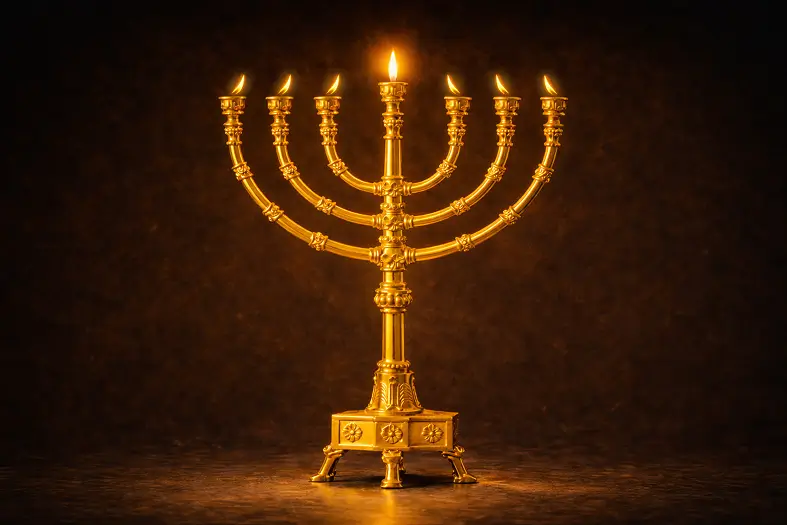
From these verses emerges Mitzvah #378: the obligation to light the Menorah every day.
At first glance, it is a technical ritual of the Mishkan. Oil is brought. Lamps are arranged. Flames are lit. But when we read the verses carefully—and when we listen to the insights of Rambam, Abarbanel, and later thinkers—we discover that this mitzvah is not only about the Menorah.
It is about the structure of the covenant itself.
The Torah is giving us a blueprint for how faith survives.
The Four Words That Form a System
The opening verses of the parsha contain four key terms:
- זָךְ — pure
- כָּתִית — crushed
- תָּמִיד — continual
- חֻקַּת עוֹלָם — eternal statute
These are not random adjectives. Together, they form a complete spiritual system.
First, the oil must be זָךְ—clear and refined.
Then it must be כָּתִית—pressed and prepared.
Then the lamp must burn תָּמִיד—with steady recurrence.
And the whole act becomes a חֻקַּת עוֹלָם—a lasting structure across generations.
The Torah is not merely describing a ritual. It is describing a pattern for sustaining holiness in time.
Rambam: Daily Service Forms the Soul
The Rambam sees the mitzvos of the Mishkan as part of a system designed to shape the human being. Repeated actions, performed at fixed times, gradually mold character.
The daily lighting of the Menorah is one such action. It is not occasional. It is not dependent on inspiration. It is daily.
The Rambam’s philosophy of habit suggests that this repetition is the point. Through steady service, the Kohen becomes a servant of Hashem. The act shapes the person.
In this sense, Mitzvah #378 is not only about the lamp. It is about forming a life of disciplined, repeated holiness.
Abarbanel: The System Begins with the Fuel
Abarbanel reads the opening of Tetzaveh as the first stage in a curriculum of perfection. Before garments, before titles, before priestly roles, the Torah begins with oil.
Why?
Because the system must begin with the fuel.
Abarbanel sees the sequence as deliberate:
- First, purify the material.
- Then establish the service.
- Then elevate the servant.
Mitzvah #378 therefore stands at the foundation of the entire priestly structure. It teaches that holiness does not begin with roles or recognition. It begins with refined inputs and disciplined routine.
The light of the Menorah is only as steady as the oil that feeds it.
Rabbi Sacks: Civilization Requires Rhythm
Rabbi Jonathan Sacks often distinguished between moments of revelation and structures of continuity. Sinai was a moment. The Mishkan was a system.
The Menorah, lit each evening, represents that system.
According to Rabbi Sacks, a covenant survives not through dramatic events alone, but through rhythms embedded in daily life. The lighting of the Menorah is one of those rhythms.
It transforms a moment of Divine revelation into a recurring act of devotion.
The daily flame becomes the heartbeat of the covenant.
The Equation of Enduring Presence
When we combine the insights of Rambam, Abarbanel, and Sacks, a simple equation emerges from Mitzvah #378:
- Purified fuel at the source
- Fixed rhythm in practice
- Faithful repetition over time
These three elements create enduring presence.
If the fuel is impure, the flame flickers.
If the rhythm is irregular, the light becomes unstable.
If repetition stops, the flame disappears.
But when purity, rhythm, and repetition unite, the light endures.
This is the Torah’s blueprint for faith.
The Menorah as a Model of Jewish Life
The Menorah’s structure reflects the structure of Jewish existence.
Jewish life is built around recurring practices:
- Daily prayer
- Regular Torah learning
- Weekly Shabbos
- Seasonal festivals
- Repeated acts of kindness
Each one is a “daily lamp” in its own way.
The covenant is not sustained by rare moments of inspiration. It is sustained by the steady glow of recurring practices.
The Menorah becomes the symbol of this truth: holiness is a flame that must be lit again and again.
The Quiet Heroism of the Daily Flame
The daily lighting of the Menorah is not dramatic. There are no crowds, no thunder, no miracles described in the verses.
A Kohen enters. He measures oil. He arranges wicks. He lights the lamps.
And yet, this quiet act is called a חֻקַּת עוֹלָם—an eternal statute.
Because the covenant does not depend only on great moments. It depends on small, repeated acts performed faithfully.
The Menorah’s flame is the quiet hero of the Mishkan. It burns not through spectacle, but through discipline.
Application for Today — Becoming a Living Menorah
In the Mishkan, the Menorah was not only a vessel of gold. It was a living symbol of the covenant’s rhythm. Each day, oil was brought. Each evening, the lamps were prepared. Each night, the flame rose again.
The light did not appear by accident. It was the result of quiet devotion, repeated faithfully, day after day.
So too in the life of a Jew.
Every soul is meant to become a small Menorah—an inner source of light that does not depend on passing inspiration. The Torah does not ask for constant intensity. It asks for constancy. A steady flame, fed by clear intention, raised at its proper time, and protected from neglect.
When a person returns each day to a moment of Torah, to a whisper of tefillah, to an act of kindness, or to a quiet word of gratitude, something subtle begins to form. The act stops feeling like an obligation and starts to feel like a place of light. A small sanctuary in time.
Over weeks and months, that flame becomes familiar. Over years, it becomes part of the person’s identity. It is no longer something they do. It is something they are.
The Menorah stood in the Mishkan, shining quietly in the sacred space. But its message was never confined to the Sanctuary. It was a vision for every Jewish life—to become a steady light in a restless world.
When one small flame is guarded each day, the soul itself begins to glow. And from that glow, the covenant continues to live.
📖 Sources
- Full sources available on the Mitzvah Minute Parshas Tetzaveh page under insights and commentaries