2.1 — “נָבֹל תִּבֹּל”: When Holy Leadership Becomes Self-Destruction
Yisro does not begin with flattery. He opens with a warning—firm, lucid, and caring: [נָבֹל תִּבֹּל — “You will surely wither”]. The phrase is stark. It does not accuse Moshe of failure; it predicts exhaustion. In Torah, this is not a personal critique but a structural diagnosis. Even holy leadership, if unsustainable, becomes destructive—to the leader and to the people.
This essay examines why Torah insists that leadership be livable, and why spiritual intensity without structure is not piety but peril.
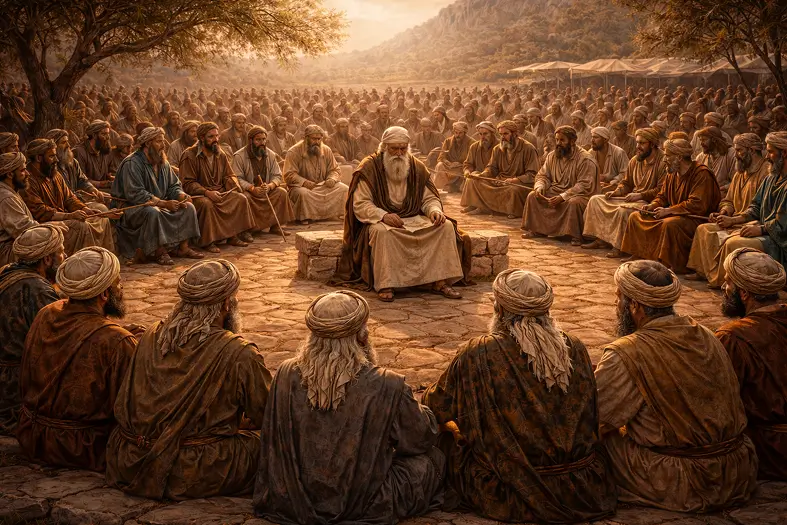
Moshe is judging the people “from morning until evening.” The scene reads as devotion. Yet the Torah pauses to record Yisro’s reaction, not the people’s gratitude. Why?
Because Torah does not romanticize burnout. The warning נָבֹל תִּבֹּל is doubled for emphasis: inevitable erosion. The danger is not merely Moshe’s fatigue; it is the communal cost—justice delayed, access denied, dependence cultivated.
Torah leadership exists to serve the people, not to replace them.
A critical Torah principle emerges here: Divine mission does not suspend human capacity. Moshe’s prophetic stature does not exempt him from bodily and psychological limits. To ignore limits in the name of holiness is to misunderstand holiness.
Yisro names the risk precisely:
Leadership that consumes itself ultimately consumes its mission.
The Torah subtly dismantles a dangerous myth: that one righteous individual must carry everything. Moshe’s attempt to do so is not praised; it is corrected. The covenant is not built on singular heroics but on shared responsibility.
Unsustainable leadership produces three distortions:
Yisro’s warning is therefore an act of loyalty to Torah itself.
Judging requires attentiveness, patience, and discernment. When a leader is depleted, justice becomes transactional. Torah insists that judgment be human—and humans require rest, delegation, and rhythm.
This is why the solution that follows is not reduction of standards, but multiplication of leaders. Quality is preserved through distribution, not dilution.
Yisro’s insight reframes leadership ethics. The failure of sustainability is not a private issue; it is a public one. When leadership collapses, the vulnerable wait longer, the strong push harder, and trust erodes.
Torah therefore treats sustainable leadership as a moral obligation.
Chassidic teachings emphasize that true humility includes recognizing one’s limits. Refusing help can masquerade as devotion, but it often reflects subtle ego—the belief that “only I can do this.” Moshe’s greatness is revealed not in endurance, but in acceptance.
Yielding space is not weakness; it is fidelity to truth.
In a culture that glorifies overwork and equates exhaustion with virtue, Parshas Yisro offers a counter-ethic. Torah leadership must be sustainable—or it becomes harmful. The question is not how much one can carry, but how much one should.
The covenant is not preserved by burning out its leaders, but by building systems that allow holiness to endure.
📖 Sources


2.1 — “נָבֹל תִּבֹּל”: When Holy Leadership Becomes Self-Destruction
Yisro does not begin with flattery. He opens with a warning—firm, lucid, and caring: [נָבֹל תִּבֹּל — “You will surely wither”]. The phrase is stark. It does not accuse Moshe of failure; it predicts exhaustion. In Torah, this is not a personal critique but a structural diagnosis. Even holy leadership, if unsustainable, becomes destructive—to the leader and to the people.
This essay examines why Torah insists that leadership be livable, and why spiritual intensity without structure is not piety but peril.
Moshe is judging the people “from morning until evening.” The scene reads as devotion. Yet the Torah pauses to record Yisro’s reaction, not the people’s gratitude. Why?
Because Torah does not romanticize burnout. The warning נָבֹל תִּבֹּל is doubled for emphasis: inevitable erosion. The danger is not merely Moshe’s fatigue; it is the communal cost—justice delayed, access denied, dependence cultivated.
Torah leadership exists to serve the people, not to replace them.
A critical Torah principle emerges here: Divine mission does not suspend human capacity. Moshe’s prophetic stature does not exempt him from bodily and psychological limits. To ignore limits in the name of holiness is to misunderstand holiness.
Yisro names the risk precisely:
Leadership that consumes itself ultimately consumes its mission.
The Torah subtly dismantles a dangerous myth: that one righteous individual must carry everything. Moshe’s attempt to do so is not praised; it is corrected. The covenant is not built on singular heroics but on shared responsibility.
Unsustainable leadership produces three distortions:
Yisro’s warning is therefore an act of loyalty to Torah itself.
Judging requires attentiveness, patience, and discernment. When a leader is depleted, justice becomes transactional. Torah insists that judgment be human—and humans require rest, delegation, and rhythm.
This is why the solution that follows is not reduction of standards, but multiplication of leaders. Quality is preserved through distribution, not dilution.
Yisro’s insight reframes leadership ethics. The failure of sustainability is not a private issue; it is a public one. When leadership collapses, the vulnerable wait longer, the strong push harder, and trust erodes.
Torah therefore treats sustainable leadership as a moral obligation.
Chassidic teachings emphasize that true humility includes recognizing one’s limits. Refusing help can masquerade as devotion, but it often reflects subtle ego—the belief that “only I can do this.” Moshe’s greatness is revealed not in endurance, but in acceptance.
Yielding space is not weakness; it is fidelity to truth.
In a culture that glorifies overwork and equates exhaustion with virtue, Parshas Yisro offers a counter-ethic. Torah leadership must be sustainable—or it becomes harmful. The question is not how much one can carry, but how much one should.
The covenant is not preserved by burning out its leaders, but by building systems that allow holiness to endure.
📖 Sources


“נָבֹל תִּבֹּל”: When Holy Leadership Becomes Self-Destruction
אָנֹכִי ה׳ אֱלֹקֶיךָ
Acknowledging Hashem as ultimate authority reminds leaders that they are servants, not saviors. Sustainable leadership flows from recognizing Divine sovereignty rather than personal indispensability.
וְהָלַכְתָּ בִדְרָכָיו
Hashem governs the world through ordered systems. Emulating His ways requires leadership that sustains life and justice over time, not heroic collapse.
וְשִׁנַּנְתָּם לְבָנֶיךָ
Teaching Torah demands availability and clarity. Burnout undermines transmission, making sustainable leadership essential to Torah continuity.
שֹׁפְטִים וְשֹׁטְרִים תִּתֵּן לְךָ
The obligation to appoint judges reflects Torah’s insistence on shared responsibility. Justice is preserved through distribution, not centralization.


“נָבֹל תִּבֹּל”: When Holy Leadership Becomes Self-Destruction
Before Sinai, the Torah confronts leadership failure not through rebellion but exhaustion. Yisro’s warning to Moshe establishes that covenantal life requires sustainable structures. The parsha teaches that justice, revelation, and responsibility all depend on leaders who can endure without collapsing under the weight of their role.

Dive into mitzvos, tefillah, and Torah study—each section curated to help you learn, reflect, and live with intention. New insights are added regularly, creating an evolving space for spiritual growth.

Explore the 613 mitzvos and uncover the meaning behind each one. Discover practical ways to integrate them into your daily life with insights, sources, and guided reflection.

Learn the structure, depth, and spiritual intent behind Jewish prayer. Dive into morning blessings, Shema, Amidah, and more—with tools to enrich your daily connection.

Each week’s parsha offers timeless wisdom and modern relevance. Explore summaries, key themes, and mitzvah connections to deepen your understanding of the Torah cycle.