"Yisro — Part IV — “רֹאִים אֶת הַקּוֹלֹת”: Perception, Prophecy, and the Architecture of Revelation"

Mitzvah Minute Logo Icon

4.4 — Holiness as Making Room for the Other: Discipline, Receptivity, and Command

Divine revelation at Mount Sinai
Rabbi Jonathan Sacks reframes holiness as self-limitation, not spiritual power. At Sinai, Israel does not grasp revelation; they step back, set boundaries, and listen. This discipline makes covenant possible. Holiness creates space—for G-d and for others. Revelation is not mystical intensity but moral receptivity, where freedom is preserved through restraint and responsibility.

"Yisro — Part IV — “רֹאִים אֶת הַקּוֹלֹת”: Perception, Prophecy, and the Architecture of Revelation"

4.4 — Holiness as Making Room for the Other: Discipline, Receptivity, and Command

Rethinking Holiness

Holiness is often imagined as spiritual intensity—power, ecstasy, transcendence. Rabbi Jonathan Sacks challenges this assumption at its root. Sinai, he argues, is not about spiritual domination but self-limitation. Holiness does not seize space; it creates space. Revelation does not overwhelm; it waits to be received.

This essay reframes Sinai as an ethic of receptivity: discipline that makes room for command.

Power vs. Covenant

Spiritual power centers the self. Covenant displaces it. At Sinai, Israel does not ascend in mystical triumph; they withdraw, set boundaries, and listen. The Torah repeatedly emphasizes restraint—distance from the mountain, silence before speech, mediation through Moshe.

These are not concessions to weakness. They are the very conditions of holiness.

Rabbi Sacks notes that pagan religion often celebrates power—storm gods, fertility gods, domination of nature. Sinai reverses the model. Hashem’s presence generates humility, not control.

Making Space for the Other

Holiness, in Sacks’ language, is the ability to make space for the Other—for G-d, and therefore for human beings as well. Sinai teaches this first vertically before it can be lived horizontally.

The people step back so that the word can enter. They do not grasp revelation; they receive it.

This discipline distinguishes covenant from charisma.

Why Boundaries Matter

Boundaries appear repeatedly at Sinai. Rabbi Sacks emphasizes that boundaries are not exclusions; they are invitations structured safely. Without boundaries, power overwhelms. With boundaries, relationship becomes possible.

Holiness requires:

  • restraint instead of expansion,
  • listening instead of asserting,
  • receptivity instead of projection.

Sinai is not about climbing higher, but about standing correctly.

From Perception to Ethics

Part IV has explored how perception itself was transformed at Sinai. This essay completes the arc by showing what that transformation demands. Seeing voices does not grant license; it imposes responsibility. Unified perception leads not to mysticism, but to moral discipline.

Revelation is not a moment of spiritual intoxication; it is the beginning of obligation.

Rabbi Sacks: Freedom Through Self-Limitation

Rabbi Sacks repeatedly taught that freedom is sustained not by doing whatever we want, but by choosing what we ought. Sinai embodies this truth. The people become free not because they experience G-d’s power, but because they accept limits that make law possible.

Holiness is not escape from structure. It is commitment to it.

Chassidic Resonance: Bitul as Space

Chassidic thought expresses this as bitul—self-nullification that creates room for Divine will. Not erasure of self, but alignment. At Sinai, bitul is collective: a nation learns how to listen.

Power shouts. Holiness listens.

Application for Today

In a culture that equates authenticity with self-expression, Sinai offers a counter-ethic. Meaning is not found in amplifying the self, but in disciplining it. Holiness today begins where we make room—for truth, for command, for others.

Sinai teaches that revelation enters only where space has been prepared.

📖 Sources

  • Full sources available on the Mitzvah Minute Parshas Yisro page under insights and commentaries.

Organized by:
Boaz Solowitch
February 2, 2026
Mitzvah Minute Logo Icon

Connections

Mitzvah Minute Logo Icon

Mitzvah Links

Mitzvah 1

To know there is a G‑d
A Siddur
Learn this Mitzvah

Mitzvah 1

1
To know there is a G‑d

Mitzvah 5

To fear Him
A Siddur
Learn this Mitzvah

Mitzvah 5

5
To fear Him

Mitzvah 9

To listen to the prophet speaking in His Name
A Siddur
Learn this Mitzvah

Mitzvah 9

9
To listen to the prophet speaking in His Name
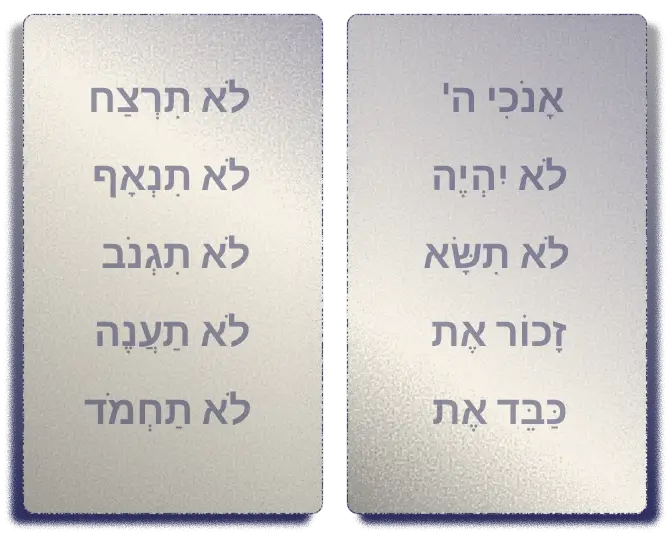
The Luchos - Ten Commandments
View Mitzvah Notes

Mitzvah Reference Notes

"x" close page navigation button

Mitzvah Reference Notes

“Holiness as Making Room for the Other: Discipline, Receptivity, and Command”

Mitzvah #1 — To know there is a G-d (Exodus 20:2)

אָנֹכִי ה׳ אֱלֹקֶיךָ

Knowing Hashem at Sinai requires receptivity rather than assertion. Holiness begins when the self yields space to recognize Divine authority.

Mitzvah #5 — To fear Hashem (Deuteronomy 6:13)

אֶת ה׳ אֱלֹקֶיךָ תִּירָא

Yirah is disciplined awareness, not fear of power. Sinai teaches reverence through restraint that allows relationship rather than domination.

Mitzvah #9 — To listen to the prophet speaking in His Name (Deuteronomy 18:15)

אֵלָיו תִּשְׁמָעוּן

Listening is the posture of holiness. Prophetic authority depends on a people trained at Sinai to receive command rather than impose meaning.

Parsha Links

יִתְרוֹ - Yisro

Haftarah: Isaiah 6:1-13
A Siddur
Learn this Parsha

יִתְרוֹ - Yisro

יִתְרוֹ - Yisro
The Luchos - Ten Commandments
View Parsha Notes
"x" close page navigation button

Parsha Reference Notes

“Holiness as Making Room for the Other: Discipline, Receptivity, and Command”

Parshas Yisro (Shemos 18:1–20:23)

Parshas Yisro presents holiness through boundaries, silence, and mediation. Revelation is received through restraint rather than conquest, teaching that covenantal life begins with the discipline to make space for command.

Mitzvah Minute
Mitzvah Minute Logo

Learn more.

Dive into mitzvos, tefillah, and Torah study—each section curated to help you learn, reflect, and live with intention. New insights are added regularly, creating an evolving space for spiritual growth.

Luchos
Live a commandment-driven life

Mitzvah

Explore the 613 mitzvos and uncover the meaning behind each one. Discover practical ways to integrate them into your daily life with insights, sources, and guided reflection.

Learn more

Mitzvah #

1

To know there is a G‑d
The Luchos - Ten Commandments
Learn this Mitzvah

Mitzvah Highlight

Siddur
Connection through Davening

Tefillah

Learn the structure, depth, and spiritual intent behind Jewish prayer. Dive into morning blessings, Shema, Amidah, and more—with tools to enrich your daily connection.

Learn more

Tefillah

COMING SOON.
A Siddur
Learn this Tefillah

Tefillah Focus

A Sefer Torah
Study the weekly Torah portion

Parsha

Each week’s parsha offers timeless wisdom and modern relevance. Explore summaries, key themes, and mitzvah connections to deepen your understanding of the Torah cycle.

Learn more

יִתְרוֹ - Yisro

Haftarah: Isaiah 6:1-13
A Sefer Torah
Learn this Parsha

Weekly Parsha