"Yisro — Part V — Mitzvah #1 and the First Word of Obligation"

Mitzvah Minute Logo Icon

5.1 — Is “אָנֹכִי ה׳ אֱלֹקֶיךָ” a Mitzvah? Abarbanel’s Foundational Question

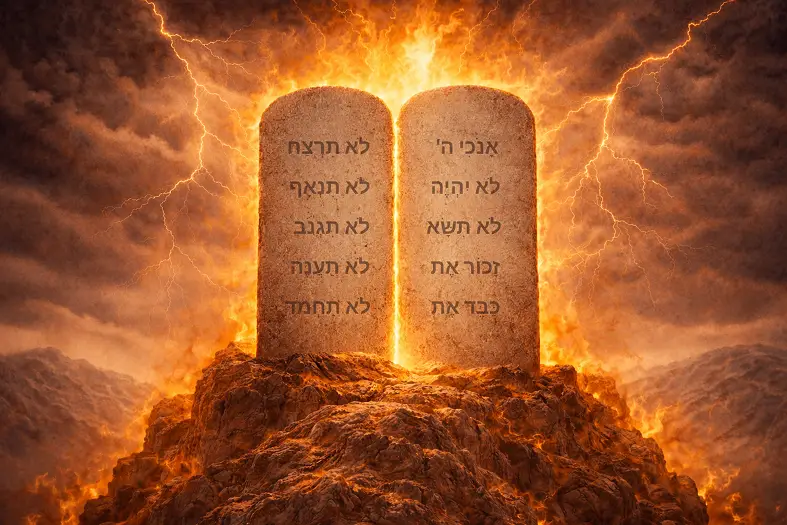
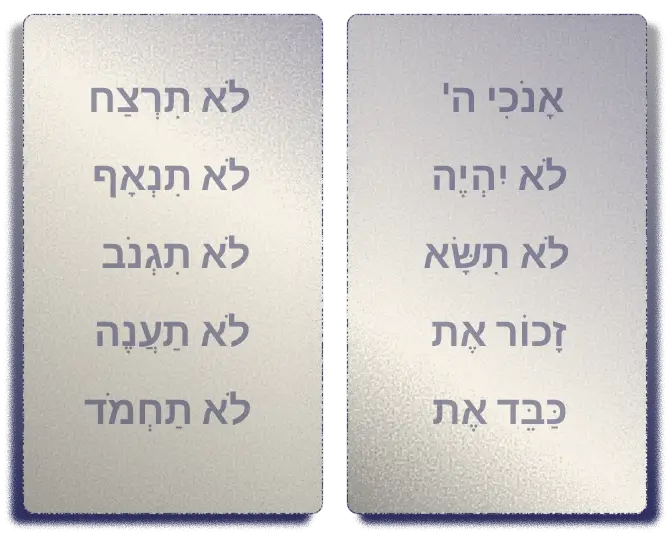
Aseres HaDibros - Anochi Hashem
Abarbanel asks whether “Anochi Hashem Elokecha” can be a mitzvah. Belief cannot be commanded—yet Torah must begin with obligation. His answer is foundational: “Anochi” is not a command among commands, but the ground of command itself. Rooted in Sinai’s public revelation, it establishes authority so mitzvot can bind. Torah begins not with law, but with reality.

"Yisro — Part V — Mitzvah #1 and the First Word of Obligation"

5.1 — Is “אָנֹכִי ה׳ אֱלֹקֶיךָ” a Mitzvah? Abarbanel’s Foundational Question

The Question That Precedes All Questions

The Torah opens the Aseres HaDibros not with a command, but with a declaration:
[אָנֹכִי ה׳ אֱלֹקֶיךָ — “I am Hashem your G-d”].

Abarbanel asks the question that determines the architecture of Torah itself: Can this be a mitzvah? If mitzvot command action, how can existence—or belief—be commanded? And if belief cannot be commanded, what is this statement doing at the head of all obligation?

This is not a technical problem. It is the foundation upon which every command rests.

Abarbanel’s Dilemma: Command or Premise?

Abarbanel formulates the dilemma sharply. If “Anochi” is a mitzvah, it commands belief. But belief, by its nature, is not an act of will; one cannot choose to believe what one knows to be false. If “Anochi” is not a mitzvah, then the Dibros begin only with prohibitions—leaving the Torah without a positive foundation.

Either option seems untenable.

Abarbanel refuses both shortcuts.

Belief Cannot Be Legislated

Abarbanel insists on an intellectual honesty that many avoid: belief cannot be coerced. A command that presupposes acceptance cannot create acceptance. To command belief would be to misunderstand the human mind and undermine Torah’s credibility.

Yet Abarbanel also rejects the idea that Torah begins without obligation. If “Anochi” is merely descriptive, the covenant floats without anchor.

Anochi as the Ground of Obligation

Abarbanel’s resolution is profound: “Anochi” is not a command among commands—it is the source of command.

It does not legislate belief; it establishes authority. The statement “I am Hashem your G-d” functions as the reason mitzvot obligate at all. It is not one brick in the structure; it is the foundation beneath it.

Before there can be “you shall” or “you shall not,” there must be “I am.”

Why Sinai Matters Here

This is why Sinai had to precede mitzvah. Abarbanel emphasizes that “Anochi” only works because it is grounded in public revelation. Authority is not asserted; it is encountered. The declaration binds because it refers back to an experienced reality.

Without Sinai, “Anochi” would be philosophy. With Sinai, it becomes obligation.

Rambam and the Count of the Mitzvot

Rambam famously counts “Anochi” as Mitzvah #1 — to know there is a G-d. Abarbanel does not dispute Rambam’s conclusion, but he clarifies its nature. The mitzvah is not to believe, but to know—to maintain fidelity to the truth already revealed.

Knowledge can be preserved, deepened, and protected. That is commandable.

From Existence to Relationship

Notice the language: “your G-d.” Abarbanel stresses that authority here is relational, not abstract. “Anochi” does not announce a metaphysical fact alone; it establishes a covenantal bond. Obligation flows from relationship, not coercion.

This explains why “Anochi” precedes law but is not reducible to law.

Chassidic Insight: Truth Before Avodah

Chassidic masters frame this as the difference between emet and avodah. Truth is not achieved through effort; it is recognized. Avodah begins only after truth is acknowledged. “Anochi” names truth so that service can follow without distortion.

Application for Today

Modern culture often treats belief as preference. Abarbanel insists it is foundation. Torah does not ask us to invent faith, but to remain loyal to what was made known. Obligation does not suppress freedom; it anchors it in reality.

Before asking what we should do, Torah teaches us who stands before us.

📖 Sources

  • Full sources available on the Mitzvah Minute Parshas Yisro page under insights and commentaries.

Organized by:
Boaz Solowitch
February 3, 2026
Mitzvah Minute Logo Icon

Connections

Mitzvah Minute Logo Icon

Mitzvah Links

Mitzvah 1

To know there is a G‑d
A Siddur
Learn this Mitzvah

Mitzvah 1

1
To know there is a G‑d

Mitzvah 2

Not to entertain thoughts of other gods besides Him
A Siddur
Learn this Mitzvah

Mitzvah 2

2
Not to entertain thoughts of other gods besides Him

Mitzvah 3

To know that He is One
A Siddur
Learn this Mitzvah

Mitzvah 3

3
To know that He is One

Mitzvah 5

To fear Him
A Siddur
Learn this Mitzvah

Mitzvah 5

5
To fear Him
The Luchos - Ten Commandments
View Mitzvah Notes

Mitzvah Reference Notes

"x" close page navigation button

Mitzvah Reference Notes

“Is ‘Anochi Hashem Elokecha’ a Mitzvah? Abarbanel’s Foundational Question”

Mitzvah #1 — To know there is a G-d (Exodus 20:2)

אָנֹכִי ה׳ אֱלֹקֶיךָ

This mitzvah does not command belief ex nihilo; it commands fidelity to knowledge revealed at Sinai. “Anochi” grounds all obligation by establishing Divine authority encountered, not inferred.

Mitzvah #2 — Not to entertain thoughts of other gods besides Him (Exodus 20:3)

לֹא יִהְיֶה לְךָ אֱלֹקִים אֲחֵרִים עַל פָּנָי

Once authority is established, exclusivity follows. Competing loyalties undermine the very ground upon which mitzvot bind.

Mitzvah #3 — To know that He is One (Deuteronomy 6:4)

שְׁמַע יִשְׂרָאֵל ה׳ אֱלֹקֵינוּ ה׳ אֶחָד

Abarbanel’s framework implies unity as a logical corollary of authority. A divided or plural source cannot generate binding obligation. “Anochi” therefore presupposes Divine oneness—not yet as devotional proclamation, but as the metaphysical coherence required for mitzvah itself.

Mitzvah #5 — To fear Hashem (Deuteronomy 6:13)

אֶת ה׳ אֱלֹקֶיךָ תִּירָא

Yirah flows from recognition of authority. “Anochi” establishes the Presence before whom reverence becomes rational and binding.

Parsha Links

יִתְרוֹ - Yisro

Haftarah: Isaiah 6:1-13
A Siddur
Learn this Parsha

יִתְרוֹ - Yisro

יִתְרוֹ - Yisro
The Luchos - Ten Commandments
View Parsha Notes
"x" close page navigation button

Parsha Reference Notes

“Is ‘Anochi Hashem Elokecha’ a Mitzvah? Abarbanel’s Foundational Question”

Parshas Yisro (Shemos 18:1–20:23)

Parshas Yisro opens the covenant with a declaration rather than an imperative. Abarbanel explains that this establishes the authority and relational ground upon which all mitzvot depend, transforming revelation into binding obligation.

Mitzvah Minute
Mitzvah Minute Logo

Learn more.

Dive into mitzvos, tefillah, and Torah study—each section curated to help you learn, reflect, and live with intention. New insights are added regularly, creating an evolving space for spiritual growth.

Luchos
Live a commandment-driven life

Mitzvah

Explore the 613 mitzvos and uncover the meaning behind each one. Discover practical ways to integrate them into your daily life with insights, sources, and guided reflection.

Learn more

Mitzvah #

1

To know there is a G‑d
The Luchos - Ten Commandments
Learn this Mitzvah

Mitzvah Highlight

Siddur
Connection through Davening

Tefillah

Learn the structure, depth, and spiritual intent behind Jewish prayer. Dive into morning blessings, Shema, Amidah, and more—with tools to enrich your daily connection.

Learn more

Tefillah

COMING SOON.
A Siddur
Learn this Tefillah

Tefillah Focus

A Sefer Torah
Study the weekly Torah portion

Parsha

Each week’s parsha offers timeless wisdom and modern relevance. Explore summaries, key themes, and mitzvah connections to deepen your understanding of the Torah cycle.

Learn more

יִתְרוֹ - Yisro

Haftarah: Isaiah 6:1-13
A Sefer Torah
Learn this Parsha

Weekly Parsha