To sanctify the day with Kiddush and Havdalah

This page is incomplete.
Help complete the
Mitzvah Minute website.

This Mitzvah's Summary
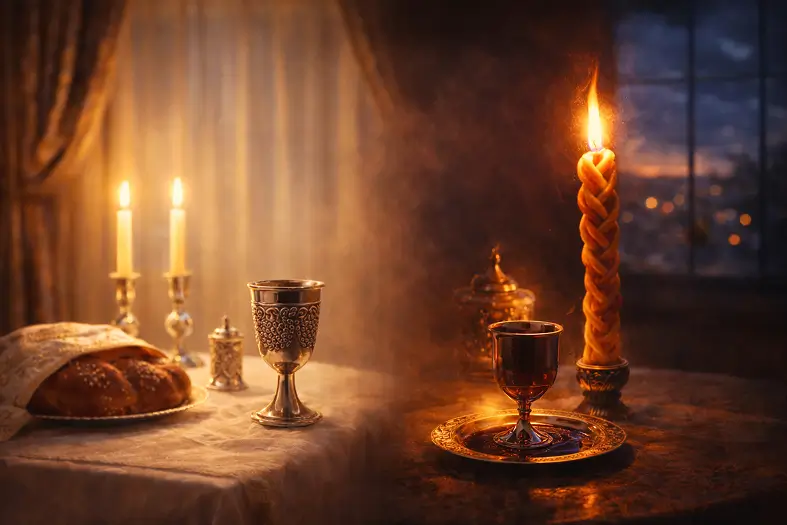
To sanctify the Shabbos day through verbal declaration at its beginning and end, with words — Kiddush and Havdalah.
This mitzvah commands the Jewish people to sanctify Shabbos through words, marking its entrance with Kiddush and its departure with Havdalah. The Torah instructs, “זָכוֹר אֶת יוֹם הַשַּׁבָּת לְקַדְּשׁוֹ”—“Remember the day of Shabbos to sanctify it.” Chazal explain that this remembrance is fulfilled through verbal sanctification, declaring the holiness of the day when it enters and distinguishing it when it departs.
Kiddush affirms the sanctity of Shabbos, testifying to Creation and the covenant between Hashem and Israel. Havdalah, in turn, marks the transition from sacred time back into the weekday world, reminding the Jew that the holiness of Shabbos must continue to influence the days that follow. Together, these declarations transform time itself into an arena of awareness, gratitude, and spiritual consciousness.
Commentaries
Rambam
- Sefer HaMitzvos, Aseh 155:
The mitzvah of Zachor is fulfilled through verbal sanctification of Shabbos. - Hilchos Shabbos 29:1:
One must mention the sanctity of Shabbos at its entrance and at its departure. - Kiddush and Havdalah are expressions of remembering and distinguishing sacred time.
Sefer HaChinuch
- Mitzvah 31:
The mitzvah reinforces belief in Creation and the Exodus. - Verbal sanctification engraves the holiness of Shabbos into the heart and mind.
Rashi
- On “זָכוֹר אֶת יוֹם הַשַּׁבָּת” (Shemos 20:8):
One must remember Shabbos through words, sanctifying it upon its arrival.
Ramban
- Shabbos remembrance affirms both Creation and redemption from Egypt.
- Sanctifying the day verbally makes faith a lived, conscious reality.
Talmud
- Pesachim 106a:
Kiddush is recited over wine to honor and sanctify the day. - Berachos 33a:
Havdalah distinguishes between sacred and ordinary time. - Shabbos 113a:
Honoring Shabbos through speech reflects its sanctity.
Midrash & Chazal
- Mechilta:
“Remember it with wine at its entrance.” - Kiddush transforms the moment of transition into an act of sanctification.
Acharonim & Modern Torah Giants
- Rav Hirsch
Kiddush declares that time belongs to Hashem, not to human control. - Netziv
Havdalah teaches that holiness must flow into the weekday. - Rav Kook
The transition from Shabbos to weekday reflects the movement from spiritual perfection into practical life.
Chassidic & Mussar Classics
- Baal Shem Tov
Words of Kiddush draw holiness into the physical world. - Tanya
Sanctifying Shabbos with speech reveals the soul’s connection to Divine time. - Sfas Emes
Kiddush awakens the inner holiness already present in the day. - Ramchal
Sanctified speech elevates time itself into a vehicle for spiritual growth.
Contrast with Mitzvah 88 — Not to Do Melachah on Shabbos
- Mitzvah 88 prohibits creative labor.
- Mitzvah 91 sanctifies the day verbally.
- One defines the boundary of Shabbos; the other defines its identity.
Parallel to Mitzvah 87 — To Rest on Shabbos
- Mitzvah 87: Positive state of rest.
- Mitzvah 91: Verbal sanctification of the day.
- Rest shapes the experience; Kiddush gives it expression.
Midrashic Insight — The First Havdalah Fire
- The Talmud (Pesachim 54a; Avodah Zarah 8a) teaches that when the first Shabbos ended, Adam experienced darkness for the first time. Until then, he had lived in a world illuminated by a special primordial light. When night fell, he feared that the world was returning to chaos because of his sin. Hashem then granted him wisdom, and Adam struck two stones together, producing the first human-made fire. In gratitude, he recited the blessing, “Borei me’orei ha’eish”—the blessing over fire that we recite every Motzaei Shabbos. This teaching explains why Havdalah includes a multi-wick flame, commemorating the first light Adam created at the close of the first Shabbos (Shulchan Aruch, O.C. 298:2). Chazal add that we look at our fingernails during the blessing because they are remnants of the luminous covering that once clothed Adam before his sin (Bereishis Rabbah 12:6; Berachos 53b).
Applying this Mitzvah Today
Sanctifying Time Through Speech
- Kiddush teaches that holiness is not only experienced but declared. By verbally sanctifying Shabbos, the Jew transforms an ordinary moment into sacred time, affirming that time itself belongs to Hashem. The act of Kiddush elevates the home and the table into a place of Divine awareness, reminding us that holiness begins with conscious recognition (Rambam; Rav Hirsch).
Living with Awareness of Sacred Transitions
- Kiddush and Havdalah frame Shabbos with spiritual consciousness. Rather than slipping into or out of sacred time unconsciously, the Jew pauses, blesses, and reflects. This practice trains the soul to recognize transitions—between holy and ordinary, light and darkness, spirit and matter—throughout life.
Bringing Holiness into the Home
- Kiddush is most often recited at the family table, transforming the home into a sanctuary of sacred time. Meals become more than nourishment; they become moments of gratitude, Torah, and connection. In this way, the mitzvah brings the holiness of Shabbos into the center of daily life.
Carrying Shabbos into the Week
- Havdalah does not merely end Shabbos; it escorts the Jew into the week with its light. The wine, fragrance, and flame symbolize joy, comfort, and illumination as the soul returns to weekday reality. Chazal teach that the purpose of Havdalah is not to abandon holiness, but to carry it forward into ordinary life (Netziv; Rav Kook).
Remembering the First Nightfall
- Chazal teach that when the first Shabbos ended, Adam experienced darkness for the first time and feared the world was collapsing. Hashem granted him wisdom to create fire, and he blessed Hashem for the light. Every Havdalah reenacts that moment: we move from the light of Shabbos into the darker weekday world, yet we are given the flame to illuminate it (Pesachim 54a). The mitzvah reminds us that even after spiritual descent, Hashem provides light to guide us forward.
Strengthening Emunah in Creation and Redemption
- Kiddush proclaims that Hashem created the world and redeemed Israel from Egypt. By reciting these words weekly, the Jew engraves the foundations of faith into his heart and mind, making belief a lived and repeated experience (Sefer HaChinuch).
Melaveh Malkah — Escorting the Shabbos Queen
- Chazal teach that Shabbos should be escorted out with honor, just as a queen is accompanied when she departs. The meal of Melaveh Malkah extends the sanctity of Shabbos into the beginning of the week, ensuring that the holiness of the day does not end abruptly. Through this meal, the Jew demonstrates love for Shabbos and carries its spiritual warmth into the coming days (Shabbos 119b; Rambam Hilchos Shabbos 30:5).
Transforming Speech into Sacred Action
- Through Kiddush and Havdalah, speech becomes a vehicle for sanctifying reality. Words shape awareness, and awareness shapes the soul. By using speech to declare holiness, the Jew transforms time itself into a domain of Divine service.
Notes on this Mitzvah's Fundamentals
Kiddush / Havdalah – קִידּוּשׁ / הַבְדָּלָה
- Kiddush and Havdalah frame Shabbos with sanctification and distinction, marking its entrance and departure through speech. Rambam teaches that the mitzvah of Zachor is fulfilled by verbally sanctifying the day, declaring its holiness at its beginning and distinguishing it at its end. Through these declarations, time itself becomes consecrated, and the rhythm of the week is shaped around Divine awareness (Rambam, Hilchos Shabbos 29:1; Pesachim 106a).
Shabbat – שַׁבָּת
- Kiddush and Havdalah establish Shabbos as sacred time, consciously separated from the weekday. By sanctifying the day verbally, the Jew testifies to Creation and the covenant between Hashem and Israel, transforming the weekly cycle into a recurring encounter with holiness (Shemos 20:8; Shemos 31:16–17).
Blessing – בְּרָכָה
- The mitzvah is fulfilled through blessings, demonstrating that speech has the power to sanctify reality. Through Kiddush and Havdalah, the Jew uses blessings to elevate time, acknowledging Hashem as the source of holiness, creation, and light (Berachos 33a; Pesachim 106a).
Faith – אֱמוּנָה
- Kiddush affirms the two pillars of Jewish faith: Creation and the Exodus. By reciting these truths weekly, the Jew internalizes emunah and renews his connection to the foundations of Torah belief (Sefer HaChinuch).
Covenant – בְּרִית
- Sanctifying Shabbos through speech expresses the eternal covenant between Hashem and Israel. Each week, Kiddush renews this bond, affirming the nation’s unique relationship with the Creator and its role as bearer of sacred time (Shemos 31:16–17).
Holiness – קְדֻשָּׁה
- Kiddush teaches that holiness is not only experienced but proclaimed. Through words, sacred time is declared and elevated, showing that kedushah enters the world through conscious awareness and sanctified speech (Sfas Emes; Ramchal).
Reverence – יִרְאַת שָׁמַיִם
- The mitzvah cultivates reverence by teaching that time itself must be approached with sanctity. By formally declaring the holiness of Shabbos, the Jew expresses awe for the Divine order embedded within creation.
Gratitude – הוֹדָיָה
- Kiddush and Havdalah are expressions of gratitude for the gift of Shabbos. The blessings over wine, fragrance, and fire acknowledge Hashem’s gifts of joy, comfort, and illumination, teaching the soul to recognize Divine kindness in every aspect of existence (Berachos 43b; Pesachim 54a).
Community – קְהִלָּה
- Kiddush is recited in the synagogue and at the family table, uniting the community in a shared declaration of holiness. Through these rituals, individuals become part of a collective rhythm of sacred time and covenantal identity.
Speech – דָּבָר
- This mitzvah highlights the sanctifying power of speech. Through words alone, the Jew transforms time into sacred space, demonstrating that speech, when aligned with Divine command, has the power to elevate reality (Rambam).
Bein Adam L’Makom – בֵּין אָדָם לְמָקוֹם
- Kiddush and Havdalah express direct devotion to Hashem, structuring the rhythm of life around His commandments and affirming His sovereignty over time itself.