Shemos — Rav Avigdor Miller and the Redemption of Awareness: Training the Eye to See Hashem
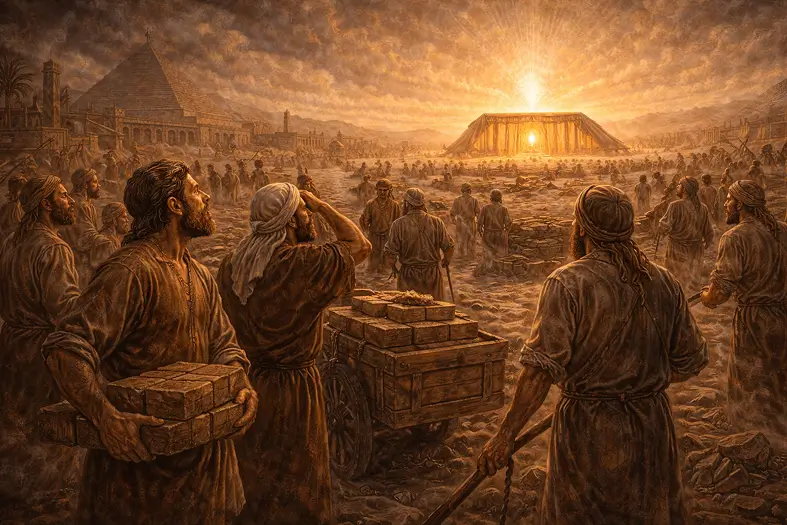
Parshas Shemos describes a nation enslaved not only by bricks and labor, but by perception. Egypt crushes the body, but more dangerously, it distorts awareness. When survival becomes total occupation, consciousness narrows. The soul learns to see only what presses immediately upon it.
Rav Avigdor Miller teaches that this constriction of awareness is the deepest layer of exile.
Before redemption can free a people physically, it must first retrain them to see.
Shemos, in Rav Miller’s reading, is not merely the beginning of national liberation. It is the beginning of a Divine training program — restoring the Jewish capacity to perceive Hashem within reality itself.
Rav Miller emphasizes that Egypt’s greatest danger was not cruelty alone, but mental distortion.
Slavery conditions the mind to interpret reality as closed, mechanical, and godless. When every ounce of energy is spent enduring the present moment, the future disappears. Gratitude fades. Reflection vanishes. Hashem becomes abstract — distant from lived experience.
This is why Parshas Shemos begins with forgetting:
Exile, Rav Miller insists, is a failure of perception before it is a failure of freedom.
Why does Hashem give Moshe signs?
Rav Miller rejects the idea that miracles are designed to overpower skepticism. Faith is not forced. It is cultivated.
Each sign trains awareness:
These signs do not argue. They re-educate.
They restore the ability to notice Hashem’s hand operating quietly within the familiar world.
Rav Miller famously describes the plagues as a progressive curriculum rather than punitive spectacle.
Each plague sharpens perception:
Egypt is dismantled not merely externally, but conceptually. The world Pharaoh claims to command reveals itself as fragile, contingent, and dependent.
For Israel, this is essential preparation. Freedom without awareness would leave them spiritually blind.
Redemption must teach a people how to see before it teaches them how to walk.
One of Rav Miller’s most consistent teachings is that gratitude restores sight.
When a person thanks Hashem:
This is why Shemos repeatedly returns to small acts of recognition — naming, remembering, noticing.
Rav Miller teaches that geulah begins not with dramatic salvation, but with restored attention to the gifts already surrounding us.
A person who cannot see Hashem in bread will not recognize Him in miracles.
Here, "Giants of Interpretation" completes its arc.
The Shechinah does not dwell among people who do not notice its existence.
Redemption requires citizens trained in awareness.
Rav Avigdor Miller’s Shemos leaves no room for passivity.
Redemption is not awaited. It is rehearsed.
Each day offers opportunities to train perception:
The more one sees Hashem, the less exile defines reality.
This is not mysticism. It is disciplined attention.
Parshas Shemos teaches that redemption does not arrive suddenly.
It begins when a slave learns to lift his eyes.
Rav Avigdor Miller reveals that geulah enters the world quietly — through perception reclaimed, gratitude restored, and awareness refined.
When a Jew learns to see Hashem again, Egypt has already begun to fall.
And redemption is no longer distant.
📖 Sources


Shemos — Rav Avigdor Miller and the Redemption of Awareness: Training the Eye to See Hashem
Parshas Shemos describes a nation enslaved not only by bricks and labor, but by perception. Egypt crushes the body, but more dangerously, it distorts awareness. When survival becomes total occupation, consciousness narrows. The soul learns to see only what presses immediately upon it.
Rav Avigdor Miller teaches that this constriction of awareness is the deepest layer of exile.
Before redemption can free a people physically, it must first retrain them to see.
Shemos, in Rav Miller’s reading, is not merely the beginning of national liberation. It is the beginning of a Divine training program — restoring the Jewish capacity to perceive Hashem within reality itself.
Rav Miller emphasizes that Egypt’s greatest danger was not cruelty alone, but mental distortion.
Slavery conditions the mind to interpret reality as closed, mechanical, and godless. When every ounce of energy is spent enduring the present moment, the future disappears. Gratitude fades. Reflection vanishes. Hashem becomes abstract — distant from lived experience.
This is why Parshas Shemos begins with forgetting:
Exile, Rav Miller insists, is a failure of perception before it is a failure of freedom.
Why does Hashem give Moshe signs?
Rav Miller rejects the idea that miracles are designed to overpower skepticism. Faith is not forced. It is cultivated.
Each sign trains awareness:
These signs do not argue. They re-educate.
They restore the ability to notice Hashem’s hand operating quietly within the familiar world.
Rav Miller famously describes the plagues as a progressive curriculum rather than punitive spectacle.
Each plague sharpens perception:
Egypt is dismantled not merely externally, but conceptually. The world Pharaoh claims to command reveals itself as fragile, contingent, and dependent.
For Israel, this is essential preparation. Freedom without awareness would leave them spiritually blind.
Redemption must teach a people how to see before it teaches them how to walk.
One of Rav Miller’s most consistent teachings is that gratitude restores sight.
When a person thanks Hashem:
This is why Shemos repeatedly returns to small acts of recognition — naming, remembering, noticing.
Rav Miller teaches that geulah begins not with dramatic salvation, but with restored attention to the gifts already surrounding us.
A person who cannot see Hashem in bread will not recognize Him in miracles.
Here, "Giants of Interpretation" completes its arc.
The Shechinah does not dwell among people who do not notice its existence.
Redemption requires citizens trained in awareness.
Rav Avigdor Miller’s Shemos leaves no room for passivity.
Redemption is not awaited. It is rehearsed.
Each day offers opportunities to train perception:
The more one sees Hashem, the less exile defines reality.
This is not mysticism. It is disciplined attention.
Parshas Shemos teaches that redemption does not arrive suddenly.
It begins when a slave learns to lift his eyes.
Rav Avigdor Miller reveals that geulah enters the world quietly — through perception reclaimed, gratitude restored, and awareness refined.
When a Jew learns to see Hashem again, Egypt has already begun to fall.
And redemption is no longer distant.
📖 Sources


“Giants of Interpretation — Part III
Shemos — Rav Avigdor Miller and the Redemption of Awareness: Training the Eye to See Hashem”
אָנֹכִי ה׳ אֱלֹקֶיךָ
Rav Avigdor Miller teaches that this mitzvah is not fulfilled through abstract belief alone, but through trained perception. Egypt represents a worldview that interprets reality as closed and autonomous, erasing lived awareness of Hashem. The signs and plagues described across Shemos, Va’eira, and Bo restore this mitzvah to daily consciousness by revealing Divine governance within nature itself. To “know” Hashem, in Rav Miller’s sense, means to habitually notice His presence in sustenance, order, and survival. Redemption begins when this awareness becomes experiential rather than theoretical.
וְהָלַכְתָּ בִדְרָכָיו
Hashem reveals Himself in Shemos not only through power, but through patience, structure, and pedagogy. Rav Miller emphasizes that the plagues unfold as a curriculum, mirroring Divine method rather than impulsive force. Emulating Hashem’s ways therefore requires cultivating attentiveness, restraint, and gratitude—qualities that align human perception with Divine conduct. By learning to observe the world carefully and respond with acknowledgment, a person walks in Hashem’s ways, transforming ordinary life into a space of ongoing relationship.
וְאָכַלְתָּ וְשָׂבָעְתָּ וּבֵרַכְתָּ אֶת־ה׳ אֱלֹקֶיךָ
Rav Avigdor Miller repeatedly teaches that gratitude is the gateway to awareness. Birkat HaMazon is not a ritual formality, but a daily exercise in perceiving Hashem as the source of sustenance. In Egypt, food becomes a product of labor alone; in redemption, nourishment is recontextualized as Divine gift. This mitzvah trains the eye to recognize Hashem within the most basic human experience, ensuring that redemption is sustained not only through miracles, but through conscious recognition embedded in daily life.


“Giants of Interpretation — Part III
Shemos — Rav Avigdor Miller and the Redemption of Awareness: Training the Eye to See Hashem”
Parshiyos Shemos, Va’eira, and Bo present redemption as a gradual reeducation of perception rather than a single act of liberation. Rav Avigdor Miller teaches that Egypt’s deepest bondage was not physical slavery alone, but the collapse of awareness — a worldview conditioned to see reality as closed, mechanical, and devoid of Divine presence. The signs given to Moshe and the Ten Plagues are therefore not merely punishments or proofs, but a carefully structured curriculum designed to retrain how both Israel and Egypt perceive the world. Each plague dismantles the illusion of autonomous power and restores recognition that nature, sustenance, and authority are governed by Hashem. Gratitude, attention, and conscious recognition emerge as the gateways to geulah, preparing Israel to live with the Shechinah not only at moments of miracle, but within ordinary life itself. Redemption, Rav Miller insists, begins when the eye learns to see Hashem again.

Dive into mitzvos, tefillah, and Torah study—each section curated to help you learn, reflect, and live with intention. New insights are added regularly, creating an evolving space for spiritual growth.

Explore the 613 mitzvos and uncover the meaning behind each one. Discover practical ways to integrate them into your daily life with insights, sources, and guided reflection.

Learn the structure, depth, and spiritual intent behind Jewish prayer. Dive into morning blessings, Shema, Amidah, and more—with tools to enrich your daily connection.

Each week’s parsha offers timeless wisdom and modern relevance. Explore summaries, key themes, and mitzvah connections to deepen your understanding of the Torah cycle.