Each Parsha page on Mitzvah Minute is designed as a guided, three-level journey through the weekly Torah reading—integrating the narrative, the mitzvos, and the classical commentaries into one unified experience.
Begin with the foundations of the Parsha:
This level gives you the storyline, the key mitzvos, and the essential connections between them.
A complete journey through the parsha—moving from clarity and depth to inner connection and real-world meaning, culminating in a way to live its ideas in everyday life.
These sections show how the Parsha speaks to the mind, the heart, and the real world — offering wisdom rooted in enduring Torah.
A complete, structured commentary on the parsha—presented pasuk by pasuk, with chapter and overall summaries for clarity and flow.
This level reveals the structural depth of the Parsha and the classical underpinnings of each theme.
Together, these layers create a complete Parsha journey —
narrative, mitzvah, and commentary — all flowing toward deeper understanding, spiritual insight, and meaningful growth.
Tap the Page Navigation tab on the right side of your screen anytime to access quick-links to the entire Parsha page.
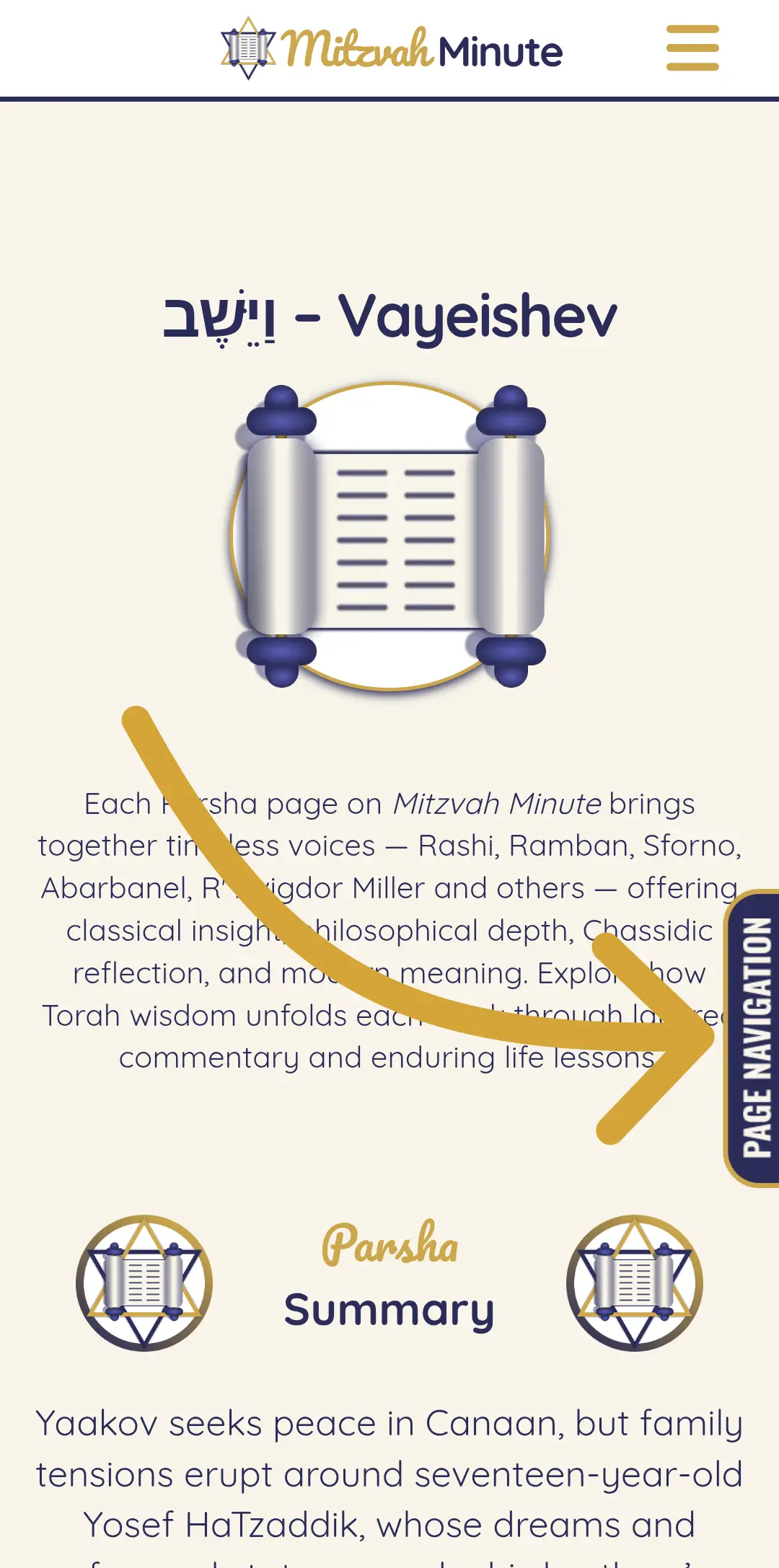
The quick-link panel gives instant access to every section — Parsha Summary, Mitzvos, Divrei Torah, Insights, and Commentaries.
“Every word of Torah and every mitzvah lifts us higher — may your learning bring you closer to Hashem.”

Parshas Bo completes the drama of the Exodus through the final plagues, the breaking of Pharaoh, and the birth of Israel as a redeemed nation. The plagues of locusts and darkness dismantle Egypt’s remaining strength, while the plague of the firstborn delivers the decisive blow that forces Israel’s release. At the same time, Hashem introduces the foundations of Jewish time, faith, and memory through the commandments of the new month and the Korban Pesach. Redemption emerges not only as rescue from slavery, but as a covenantal transformation—marking Israel as a people defined by obedience, distinction, and the obligation to remember and transmit the story of Yetziat Mitzrayim across generations.


Rashi presents Parshas Bo as the moment when the Torah pivots from confrontation with Egypt to the formation of Israel. Until this point, the plagues dismantle Pharaoh’s authority and expose the emptiness of Egyptian power. In Bo, Rashi shows that this collapse is only preparatory. The true objective is not Egypt’s punishment but Israel’s emergence as a covenantal people. As Makas Bechoros approaches, Rashi’s focus shifts decisively toward mitzvos, timing, and obedience. Redemption is no longer something that happens to Israel; it becomes something Israel must actively enter through commanded action.
A defining feature of Rashi’s Bo is his insistence on precision. Midnight occurs exactly when intended. Boundaries are enforced without exception. Distinctions between Israel and Egypt are absolute and deliberate. Rashi repeatedly emphasizes that Divine truth does not tolerate approximation: chametz must be removed at the correct hour, blood must be applied exactly as commanded, and speech must be measured carefully even when announcing judgment. Pharaoh’s power collapses not through chaos, but through exactness. In Rashi’s reading, precision itself becomes a theological statement: Hashem’s mastery is revealed through order, not spectacle.
Rashi consistently frames redemption as conditional upon obedience. Israel is protected only within the house, only under the sign of blood, only through compliance with Divine command. The night of redemption is also a night of danger, and Rashi stresses that protection is not automatic—it is earned through submission to Hashem’s will. Even haste becomes a test: mitzvos must be performed without delay, matzah must be guarded from fermentation, and action must follow acceptance immediately. Rashi thus defines freedom not as autonomy, but as disciplined alignment with command.
One of Rashi’s most profound insights in Bo is the sanctification of time. With Kiddush HaChodesh, Jewish time is no longer measured cosmically or agriculturally, but historically—beginning with redemption. Nisan becomes the first month not because of nature, but because of meaning. Rashi shows that the Exodus restructures time itself: days, nights, months, and years are now oriented around mitzvah and memory. Sacred time becomes the primary vessel through which redemption is preserved.
Rashi repeatedly returns to the obligation to tell, explain, and transmit. The Exodus is structured so that children will ask, and answers will be given in different modes depending on the child. Memory is not left to emotion or tradition alone; it is embedded in ritual, speech, and physical signs. Tefillin, firstborn sanctity, and the Pesach service all function as educational instruments. Rashi makes clear that redemption fails if it is not taught. Continuity depends on explanation, repetition, and embodied practice.
In the final sections of the parsha, Rashi clarifies who belongs within the covenant and under what conditions. Participation in the Korban Pesach is governed not by ancestry alone, but by loyalty, circumcision, and submission to Divine law. Converts are fully included; apostasy excludes. Equality under Torah is affirmed, but only within the framework of obligation. Rashi thus defines Israel not as an ethnic collective, but as a legal-moral community bound by mitzvos.
Across Parshas Bo, Rashi presents freedom as structured belonging. The Exodus is not preserved through wonder alone, but through law, rhythm, restraint, and teaching. What begins with plagues ends with tefillin; what begins with judgment ends with responsibility. Rashi’s Bo is not the story of escape from Egypt—it is the story of becoming Israel.
📖 Source
From Revelation to Remembrance
Ramban frames the final plagues not as escalating retribution, but as deliberate instruction. Pharaoh’s hardened heart is not merely punitive; it enables Hashem to display signs whose purpose is transmission — so that Moshe, Israel, and all future generations would know that Hashem alone governs nature, history, and power. Even when Pharaoh momentarily submits, Hashem sustains the confrontation so that the lesson is not partial or ambiguous, but unmistakable and enduring.
Throughout Parshas Bo, Ramban emphasizes that the plagues unfold with exactness — agriculturally, temporally, and cosmically. The locusts arrive within a single growing cycle; the darkness is a tangible force drawn from heaven; the death of the firstborn strikes across all categories of primacy. Nothing is symbolic alone — everything is real, measurable, and targeted — reinforcing that these events exceed natural explanation while still operating within the physical world.
The Exodus does not occur in secrecy. Ramban insists that Israel is redeemed openly: freed at night, yet departing by day, with dignity and visibility. Pharaoh’s pleas, Egypt’s favor toward Israel, and Moshe’s elevated stature all serve to confirm that redemption is not escape, but recognition. Hashem does not merely save Israel — He compels Egypt to acknowledge the justice of that salvation.
For Ramban, Pesach is not only commemorative; it is constitutive. The laws of time (the first month), sacrifice, chametz, firstborn sanctification, and communal obedience are introduced before Sinai, establishing that mitzvot arise directly from historical encounter with Hashem. Redemption precedes obligation; law responds to experience. Pesach thus becomes the prototype for how Torah itself enters the world.
Ramban repeatedly shows that mitzvot in this parsha are designed to preserve knowledge once open miracles recede. Matzah, maror, chametz removal, firstborn redemption, and annual reenactment transform memory into action. These practices ensure that the Exodus remains a lived reality, not a fading narrative.
Ramban culminates with tefillin as the most concentrated expression of this system. Placed opposite the heart and mind, tefillin bind memory, belief, and obedience together. Their structure encodes unity and multiplicity, law and belief, history and covenant. Through tefillin, the truths revealed in Egypt become permanently inscribed upon the Jewish body and consciousness.
Ramban’s most radical insight emerges here: open miracles exist to teach recognition of hidden miracles. A Jew’s faith is incomplete unless he understands that all events — personal and national — are governed by Divine will, not chance or nature alone. Reward and punishment are not abstractions but lived realities. The Torah stands not on constant spectacle, but on trained awareness.
Parshas Bo, in Ramban’s view, establishes the purpose of mitzvot altogether: that humanity recognize Hashem as Creator, acknowledge His involvement in every moment, and give thanks. From the great miracles, we learn the hidden ones — and through them, faith survives when miracles are no longer seen.
📖 Source
Content Break for my wedding Baruch Hashem. Full Content resumes in Parshas Beshalach.
Content Break for my wedding Baruch Hashem. Full Content resumes in Parshas Beshalach.
Content Break for my wedding Baruch Hashem. Full Content resumes in Parshas Beshalach.
Content Break for my wedding Baruch Hashem. Full Content resumes in Parshas Beshalach.
Rashi’s commentary on Parshas Bo marks a decisive turning point in the Torah’s narrative. Until this point, the story of Egypt unfolds primarily through confrontation: plagues, resistance, and the slow unraveling of Pharaoh’s illusion of control. In Bo, that confrontation reaches its climax—but Rashi shows that destruction alone is not the Torah’s goal. As Makas Bechoros approaches, Rashi shifts the reader’s attention from Egypt’s collapse to Israel’s formation. Time is sanctified, mitzvos are commanded, boundaries are drawn, and memory is structured. Redemption, Rashi teaches, is not merely escape from oppression; it is the disciplined birth of a covenantal people. Through his careful attention to language, timing, and legal precision, Rashi reveals Parshas Bo as the moment when Jewish existence transitions from suffering to responsibility, from Divine intervention to human obligation, and from history endured to Torah lived.
In Chapter 10, Rashi continues his precise, text-anchored exposition of the plagues of Arbeh (locusts) and Choshech (darkness), alongside Pharaoh’s increasingly irrational resistance. Rashi’s method here alternates between linguistic clarification, midrashic depth, and moral revelation. He highlights how Hashem’s actions are simultaneously punitive, revelatory, and pedagogical—aimed not only at Egypt, but at future generations of Israel. The commentary exposes Pharaoh’s self-deception, the cosmic symbolism behind the plagues, and the concealed processes of redemption occurring even in darkness.
Rashi explains that “בֹּא אֶל פַּרְעֹה” includes a command to warn Pharaoh formally. The phrase “שִׁתִי” is understood as an infinitive from שִׂית—“that I may place.” Thus, the verse means that Hashem hardened Pharaoh’s heart in order to place His signs within him, not merely upon him. The emphasis is on Hashem’s deliberate setting of signs as an instructional act, not random punishment.
Rashi explains that “הִתְעַלַּלְתִּי” means “I mocked” or “I toyed with,” as found in similar usages (במדבר כ״ב:כ״ט; שמואל א׳ ו׳). It is not a term of action or deeds, which would have been expressed as “עוֹלַלְתִּי.” The verse emphasizes Hashem’s derision of Egypt’s supposed power.
The phrase “וּלְמַעַן תְּסַפֵּר” teaches that these events are embedded into Torah history specifically to be transmitted across generations, ensuring that the memory of Hashem’s mastery becomes part of Israel’s enduring consciousness.
Rashi follows the Targum, explaining “לְעָנֹת” as “to humble oneself.” It derives from עני (poor), meaning lowliness. Pharaoh’s refusal is not merely political; it is a refusal to submit humbly before Hashem.
“עֵין הָאָרֶץ” means the visible appearance or color of the ground. “וְלֹא יוּכַל” is an elliptical phrase—Rashi explains that anyone attempting to see the land will be unable to do so, due to the density of the locusts.
Rashi explains this as a rebuke: Pharaoh should already know that Egypt is ruined. The statement reflects the servants’ dawning recognition of irreversible collapse (cf. Rashi to שמות ט:ל).
The verb is passive: Moshe and Aharon were brought back by messengers sent after them. Rashi stresses that Pharaoh did not summon them directly.
Rashi explains first according to Targum: Pharaoh warns that evil will rebound upon them. He then brings a Midrash: Pharaoh claimed astrological insight, seeing a star named רָעָה, symbolizing blood and death, rising against Israel in the wilderness.
This prophecy resurfaces later when Moshe prays after the sin of the Golden Calf: “לָמָה יֹאמְרוּ מִצְרַיִם לֵאמֹר בְּרָעָה הוֹצִיאָם” (שמות ל״ב:י״ב). Hashem then transforms the blood omen into the blood of milah performed by Yehoshua, fulfilling “הַיּוֹם גַּלּוֹתִי אֶת חֶרְפַּת מִצְרַיִם” (יהושע ה׳:ט׳; ילקוט שמעוני).
Pharaoh insists that only adult men serve Hashem, claiming this was the original request. Rashi explains Pharaoh’s argument: children are not fit for sacrificial service. “וַיְגָרֶשׁ” is again elliptical; Scripture omits who expelled them.
“בָּאַרְבֶּה” means “on account of the plague of locusts.”
“רוּחַ קָדִים” refers to an east wind bringing locusts from the opposite direction of Egypt’s location (cf. במדבר ל״ד:ג׳).
Rashi distinguishes between the locust plague of Moshe and that of Yoel (יואל ב׳). Yoel’s was heavier due to multiple species; Moshe’s involved only one species, yet was unprecedented and unparalleled.
Rashi clarifies that this refers to green leaves, not herbs—specifically foliage of trees.
“רוּחַ יָם” is a west wind. Rashi explains geographically how the Red Sea relates to Eretz Yisrael’s borders (שמות כ״ג:ל״א; צפניה ב׳:ה׳). No locust remained—even those salted for storage (שמות רבה י״ג:ז׳).
Rashi explains “וְיָמֵשׁ חֹשֶׁךְ” as darkness thickened beyond natural night. He analyzes the missing aleph linguistically, presents Onkelos’s reading, and finally cites Midrash that the darkness was tangible—“מְמַשֵּׁשׁ.”
There were two stages:
Reasons given:
“יִצַּג” means remaining standing in place.
Moshe insists Pharaoh must supply offerings as well.
“פַּרְסָה” is the hoof.
“לֹא נֵדַע מַה נַּעֲבֹד” teaches uncertainty of Hashem’s demands—total submission is required.
Rashi explains that “כֵּן דִּבַּרְתָּ” means “you have spoken correctly.” Moshe is acknowledging the truth of Pharaoh’s words, not submitting to them. The statement affirms that Moshe will no longer come before Pharaoh.
Rashi addresses the apparent difficulty that Pharaoh later encounters Moshe again during Makkas Bechoros. He explains that this does not contradict Moshe’s words, because Moshe meant he would not again come to Pharaoh, but Pharaoh might still come to him. Thus, Moshe’s statement remains fully accurate.
This explanation is supported by Chazal (Mechilta; Shemos Rabbah 18:1; cf. Onkelos).
Rashi presents Chapter 10 as the collapse of illusion—Pharaoh’s power, foresight, and control disintegrate under Hashem’s measured, purposeful actions. Even darkness conceals redemptive preparation. The plagues are not chaotic destruction, but precise instruments teaching humility, transmission of faith, and absolute dependence on Hashem. Nothing is wasted, nothing is random—and even mockery becomes Torah for generations.
Rashi’s commentary on Shemos Chapter 11 focuses on the final moment before the decisive blow of Makas Bechoros. His explanations clarify Moshe’s prophetic posture, Hashem’s precision and mercy, the justice of the plague, and the careful honor shown even toward Pharaoh at the moment of his downfall. Throughout, Rashi interweaves peshat with Chazal to reveal how Divine truth, human error, and historical fulfillment converge at the threshold of redemption.
כֹּלָה
Rashi explains the word כֹּלָה as meaning complete and total. Citing Onkelos, who translates it as גְּמִירָא, Rashi clarifies that Pharaoh’s final act of sending Bnei Yisrael out would be absolute. This would not be a partial release or conditional dismissal, but a complete expulsion of all of them at once. The emphasis underscores the finality of the redemption from Egypt at this stage.
דַּבֶּר נָא
Rashi explains that the word נָא always indicates a request or entreaty. Hashem asks Moshe to urge the people to request silver and gold vessels from the Egyptians. This request is not for Moshe’s sake or theirs alone, but to fulfill the promise made to Avraham Avinu. Rashi explains that Avraham might otherwise say that the decree “they will enslave them and afflict them” was fulfilled, but the promise “afterwards they shall leave with great wealth” was not fulfilled. This explanation is grounded in the verses of the Bris Bein HaBesarim (בראשית ט״ו:י״ג–י״ד) and the Gemara in Berachos (ט ע״א–ע״ב).
וַיֹּאמֶר מֹשֶׁה כֹּה אָמַר ה׳
Rashi explains that this prophecy was given to Moshe while he was still standing before Pharaoh. Once Moshe left Pharaoh’s presence, he never again appeared before him. Therefore, the prophecy describing the final plague had to be delivered at that moment. This is supported by Midrash Shemos Rabbah (י״ח:א).
כַּחֲצוֹת הַלַּיְלָה
Rashi explains the grammatical meaning of כַּחֲצוֹת as an infinitive form, meaning “when the night is divided.” He compares it to similar constructions such as בַּעֲלוֹת (מלכים א י״ח:ל״ו) and בַּחֲרוֹת אַפָּם (תהילים קכ״ד:ג). According to peshat, it refers to the division of the night rather than a precise noun form of “midnight.”
Rashi then brings the explanation of Chazal, who say that Moshe intentionally said כַּחֲצוֹת (“about midnight”) rather than בַּחֲצוֹת (“at midnight”). Moshe feared that Pharaoh’s astrologers might err slightly in calculating the time and accuse him of being a liar if the plague occurred a moment earlier or later. This explanation is cited from Berachos (ד ע״א).
עַד בְּכוֹר הַשְּׁבִי
Rashi asks why the captives were struck, since they had not enslaved the Israelites. He explains that this was so they would not claim that their own deity had taken revenge on Egypt for their humiliation and brought the calamity. This explanation is drawn from the Mechilta.
מִבְּכוֹר פַּרְעֹה עַד בְּכוֹר הַשִּׁפְחָה
Rashi explains that this phrase includes everyone whose status lay between Pharaoh’s firstborn and the handmaid’s firstborn. He then asks why the sons of the handmaids were smitten. His answer is that they too enslaved the Israelites and rejoiced in their suffering. This explanation is based on Midrash Tanchuma (בא ז).
וְכֹל בְּכוֹר בְּהֵמָה
Rashi explains that the firstborn of animals were struck because the Egyptians worshipped them as gods. When Hashem punishes a nation, He also punishes its gods. Rashi cites Bereishis Rabbah (צ״ו:ה) for this principle.
לֹא יֶחֱרַץ כֶּלֶב לְשֹׁנוֹ
Rashi explains that the word יֶחֱרַץ means “to sharpen.” Thus, the verse means that no dog would even sharpen its tongue against the Children of Israel. Rashi supports this interpretation by citing several verses where חָרוּץ refers to sharpness or acuity, including יהושע י׳:כ״א, שמואל ב ה׳:כ״ד, ישעיהו מ״א:ט״ו, משלי כ״א:ה׳, and משלי י׳:ד׳.
אֲשֶׁר יַפְלֶה
Rashi explains this phrase simply as meaning that Hashem makes a distinction between Egypt and Israel.
וְיָרְדוּ כָל עֲבָדֶיךָ
Rashi explains that Moshe showed respect to royalty by saying that Pharaoh’s servants would come down to him, rather than stating directly that Pharaoh himself would do so. In truth, Pharaoh later came himself at night and said, “Arise, go out from among my people” (שמות י״ב:ל״א). Moshe avoided stating this directly out of honor for the king. This explanation is cited from Shemos Rabbah (ז:ג).
אֲשֶׁר בְּרַגְלֶיךָ
Rashi explains this phrase as referring to those who follow Pharaoh’s counsel and ways.
וְאַחֲרֵי כֵן אֵצֵא
Rashi clarifies that Moshe meant that he would leave Egypt together with all the people.
וַיֵּצֵא מֵעִם פַּרְעֹה
Rashi explains that Moshe left Pharaoh’s presence after completing his words.
בָּחֳרִי אָף
Rashi explains that Moshe left in burning anger because Pharaoh had told him, “Do not see my face again” (שמות י׳:כ״ח).
לְמַעַן רְבוֹת מוֹפְתַי
Rashi explains that this refers not only to the plague of the firstborn, but also to the splitting of the Sea of Reeds and the drowning of the Egyptians within it. The wonders would continue beyond Egypt itself.
וּמֹשֶׁה וְאַהֲרֹן עָשׂוּ
Rashi explains that Scripture already stated this fact regarding the earlier plagues. It is repeated here only to connect it with the following section, explaining why the commandments of the next chapter were addressed to Aharon as well as Moshe.
Rashi’s commentary on Chapter 11 reveals the precision, justice, and restraint that characterize the final stage before redemption. Every word Moshe speaks is measured, every act fulfills ancient promises, and every punishment reflects moral accountability. Even at the height of Divine judgment, honor, accuracy, and truth remain intact, preparing the ground for both the Exodus and the enduring lessons it would teach Israel and the world.
Rashi treats Chapter 12 as the constitutional moment of Israel’s national life. Here, time itself is redefined, mitzvos are introduced before freedom is complete, and redemption becomes conditional on obedience. Rashi consistently clarifies why commandments are given when they are, how halachic detail emerges from textual nuance, and how Divine justice operates simultaneously as salvation for Israel and judgment for Egypt.
וַיֹּאמֶר ה׳ אֶל מֹשֶׁה וְאֶל אַהֲרֹן
Rashi explains why Aharon is included alongside Moshe in this first mitzvah. Since Aharon exerted himself equally with Moshe in performing the miracles, Hashem accords him honor by including him in the inaugural commandment given to Israel. This establishes that leadership, responsibility, and credit are shared.
בְּאֶרֶץ מִצְרָיִם
Rashi addresses the location of this Divine communication. He proves that it could not have occurred within the city of Egypt, which was filled with idolatry. If Moshe would not even pray inside the city, certainly Hashem would not deliver a Divine command there. Therefore, this prophecy occurred outside the city, preserving the sanctity of Divine speech.
הַחֹדֶשׁ הַזֶּה לָכֶם
Rashi explains that Hashem physically showed Moshe the moon at its renewal. This was necessary because Moshe was uncertain how much of the moon must be visible for it to be sanctified. Hashem pointed to the moon and taught him: when it appears like this, it is fit for Kiddush HaChodesh.
Rashi then resolves a chronological difficulty. Since Hashem normally speaks to Moshe only by day, how could He show him the moon? The answer is that this command was given close to sunset, allowing Moshe to see the moon as night began.
רֹאשׁ חֳדָשִׁים
Rashi emphasizes that this verse retains its plain meaning as well. Beyond teaching the mechanics of sanctifying the moon, Hashem establishes Nisan as the first month in the count of months. From now on, Jewish time is measured from redemption. Iyar becomes the second month, Sivan the third. Time itself is reordered around freedom.
דַּבְּרוּ אֶל כָּל עֲדַת יִשְׂרָאֵל
Rashi explains why the command is phrased in the plural. Although Moshe was the primary speaker, Moshe and Aharon deliberately deferred to one another out of respect, each saying “teach me.” As a result, the instruction emerged as though both were speaking together. This models shared leadership and humility at the moment the nation is formed.
בֶּעָשֹׂר לַחֹדֶשׁ
Rashi clarifies the timing. The command was given on Rosh Chodesh, instructing the people to take the lamb on the tenth day. The mitzvah requires advance preparation, teaching that redemption demands readiness, not spontaneity.
הַזֶּה
Rashi distinguishes between the Pesach in Egypt and Pesach for future generations. Only the Egyptian Pesach required selection on the tenth day. This highlights that this offering functioned as a one-time act of defiance against Egyptian idolatry.
שֶׂה לְבֵית אָבֹת
Rashi explains that the term “house of fathers” refers to a family unit. One might think a single lamb could serve a large extended family, but the Torah specifies “a lamb for each house,” teaching that the offering must be proportionate to those who will eat it.
וְאִם יִמְעַט הַבַּיִת
Rashi explains that if a household is too small to consume an entire lamb, they must join with a neighbor to avoid leaving sacrificial meat over.
Rashi then adds a halachic layer: once a group has registered for a particular lamb, individuals may withdraw and join another group — but only while the lamb is still alive. After slaughter, the group becomes fixed.
בְּמִכְסַת נְפָשֹׁת
Rashi defines מִכְסַת as a calculation or reckoning, teaching that participation is determined by deliberate counting, not approximation.
לְפִי אָכְלוֹ
Rashi limits eligibility to those capable of eating at least a minimal halachic amount. Those physically unable to eat are excluded, teaching that participation requires real engagement, not symbolic presence.
תָּמִים
Rashi explains that the lamb must be free of blemish, fitting for a sacred offering.
בֶּן שָׁנָה
Rashi clarifies that “one year” means within its first year, not having completed it.
מִן הַכְּבָשִׂים וּמִן הָעִזִּים
Rashi teaches that either sheep or goats are valid, since both are called שֶׂה in Torah language.
וְהָיָה לָכֶם לְמִשְׁמֶרֶת
Rashi explains that the lamb was set aside for guarding and inspection. This four-day delay heightened the test of faith, as the Egyptians saw their deity tied up and awaiting slaughter.
בֵּין הָעַרְבָּיִם
Rashi defines this as the period after midday, when the sun begins to decline — the halachic window for slaughter.
וְנָתְנוּ עַל שְׁתֵּי הַמְּזוּזוֹת
Rashi explains that the blood was placed only on the exterior. The sign was not for Hashem’s knowledge, but as a visible declaration of loyalty and obedience.
צְלִי אֵשׁ
Rashi explains that roasting preserves the integrity of the meat and avoids any resemblance to Egyptian ritual cooking methods.
וּמַצּוֹת
Rashi explains that matzah reflects haste — redemption arrived before dough could rise.
וּמְרֹרִים
Rashi explains that bitterness recalls suffering, embedding memory into the act of eating.
Rashi explains the prohibitions against eating the korban raw or boiled, and against leaving it over. The offering must be consumed fully, reinforcing total commitment.
Rashi explains that the posture of eating — dressed, ready, staff in hand — symbolizes imminent departure. This is not a leisurely meal; it is a threshold moment.
פֶּסַח הוּא לַה׳
Rashi explains that the offering is named for Hashem’s passing over Jewish homes.
Rashi explains that Hashem Himself passed through Egypt, not through an intermediary. The judgment was precise and direct.
וְרָאִיתִי אֶת הַדָּם
Rashi explains again: the blood was a sign of obedience. Where there was no obedience, there was no protection.
וְהָיָה הַיּוֹם הַזֶּה לָכֶם לְזִכָּרוֹן
Rashi explains that “memorial” here does not mean only for that generation. The Torah is establishing an obligation of remembrance that applies across future generations. The day itself becomes an enduring point of national memory, not merely a historical anniversary.
וְחַגֹּתֶם אֹתוֹ חַג לַה׳
Rashi clarifies which day is to be celebrated as the festival. At this point, the Torah has not explicitly identified the memorial day. Rashi therefore connects this verse to later pesukim that command remembrance of the day of departure itself. From the Torah’s own cross-references, Rashi establishes that the memorial corresponds to the actual day of the Exodus.
He then resolves the calendar question: since the Korban Pesach was eaten on the night of the fifteenth and the departure occurred the following morning, the fifteenth of Nisan is established as the festival day. Thus, the chag is anchored to the day of national emergence, not merely to the offering itself.
לְדֹרֹתֵיכֶם חֻקַּת עוֹלָם
Rashi notes a potential limitation. The word “generations” could imply only a minimum of two generations. To remove any doubt, the Torah adds “an eternal statute.” Rashi explains that this language removes all temporal limitation: Pesach is permanently fixed into Jewish time, regardless of historical circumstance.
שִׁבְעַת יָמִים
Rashi explains that the phrase denotes a full seven-day unit, a complete cycle, emphasizing that the festival spans an entire, structured period rather than isolated moments.
שִׁבְעַת יָמִים מַצּוֹת תֹּאכֵלוּ
Rashi addresses an apparent contradiction. Elsewhere, the Torah states “six days you shall eat matzos,” which implies that the seventh day is different. From this, Rashi derives a key halachic principle: eating matzah is obligatory only on the first night. On the remaining days, including the seventh, eating matzah is optional; the only absolute requirement is the avoidance of chametz.
Rashi then applies a foundational rule of Torah interpretation. When something is included in a general category and later excluded to teach a law, that law applies to the entire category. Since the seventh day is excluded from the obligation, all remaining days are likewise optional with respect to eating matzah.
However, Rashi carefully preserves the exception: the first night is explicitly designated as obligatory by a separate verse. Thus, freedom from chametz is continuous, but the mitzvah of eating matzah is time-specific.
אַךְ בַּיּוֹם הָרִאשׁוֹן תַּשְׁבִּיתוּ שְּׂאֹר
Rashi explains that “the first day” here does not mean the first day of the festival, but the day preceding it. The Torah sometimes refers to what comes immediately before as “first.” From this, Rashi derives that chametz must be eliminated before the festival begins.
He reinforces this by connecting the verse to the prohibition against slaughtering the Korban Pesach while chametz still exists. Since the Pesach is slaughtered on the afternoon of the fourteenth, chametz must already have been removed by then.
הַנֶּפֶשׁ הַהִוא
Rashi explains that the punishment of karet applies only when the act is done knowingly and willingly. One who eats chametz under compulsion or without awareness is excluded from this punishment.
מִיִּשְׂרָאֵל
Rashi rejects a mistaken assumption. “Cut off from Israel” does not mean that the offender simply leaves the Jewish people and joins another nation. Rather, karet means removal from Divine presence entirely. There is no external refuge from Hashem’s authority.
מִקְרָא קֹדֶשׁ
Rashi explains that this phrase means an act of designation. The day is sanctified through how it is treated — in eating, drinking, and dress. Holiness is not abstract; it is expressed through conduct.
כָּל מְלָאכָה לֹא יֵעָשֶׂה בָהֶם
Rashi emphasizes that the prohibition applies even if the labor is done through others. Responsibility for the sanctity of the day cannot be outsourced.
אַךְ אֲשֶׁר יֵאָכֵל לְכָל נֶפֶשׁ הוּא לְבַדּוֹ יֵעָשֶׂה לָכֶם
Rashi carefully limits the permission granted. Only acts directly involved in food preparation are permitted, and even then, only those that could not have been done beforehand. Preparatory acts that could have been completed before the festival remain forbidden.
Rashi further explains that food may be prepared even for animals under one’s care, but not for non-Jews. The permission is restricted to those included within the covenantal household.
וּשְׁמַרְתֶּם אֶת הַמַּצּוֹת
Rashi gives both a practical and a moral explanation. Practically, the dough must be guarded so it does not ferment. From here, halachic procedures are derived to interrupt leavening.
Rashi then presents a deeper teaching. The word “matzos” can also be read as “mitzvos.” Just as one may not allow dough to become chametz by delay, so too one must not allow mitzvos to “ferment” by hesitation. When a mitzvah comes to hand, it must be performed immediately.
וּשְׁמַרְתֶּם אֶת הַיּוֹם הַזֶּה
Rashi explains that guarding the day refers to guarding it from prohibited labor, reinforcing that sanctity is preserved through restraint.
לְדֹרֹתֵיכֶם חֻקַּת עוֹלָם
Rashi explains why this phrase is repeated here. Earlier, eternity was stated regarding the festival celebration, not explicitly regarding the labor prohibition. The Torah therefore restates it here to teach that the prohibition of work applies for all generations, not only to those who left Egypt.
עַד יוֹם הָאֶחָד וְעֶשְׂרִים
Rashi explains why the Torah specifies the twenty-first day, even though it already stated “seven days.” The earlier verse mentions days, which could be understood as excluding nights. This verse teaches that the prohibition of chametz applies continuously, both day and night, through the evening of the twenty-first.
שְׂאֹר לֹא יִמָּצֵא בְּבָתֵּיכֶם
Rashi explains that this verse establishes the prohibition of ownership, not just consumption. He then clarifies the scope. Although other verses extend the prohibition to all one’s territory, “your houses” defines the rule: only chametz under one’s control is forbidden. Chametz belonging to a non-Jew and merely stored with a Jew, without responsibility, is excluded.
כִּי כָּל אֹכֵל מַחְמֶצֶת
Rashi explains why the Torah mentions both chametz and se’or. If only chametz were mentioned, one might think the punishment applies only to edible leavened food. If only se’or were mentioned, one might think it applies only to substances that cause fermentation. By mentioning both, the Torah closes both conceptual loopholes and establishes full liability.
בַּגֵּר וּבְאֶזְרַח הָאָרֶץ
Rashi explains that since the miracle of the Exodus was performed for Israel, the Torah must explicitly include converts. Once a person joins Israel, they are fully bound by its covenantal obligations.
Rashi understands this verse as a final inclusive prohibition, reinforcing that all forms and derivatives of leaven are forbidden, without exception, throughout the festival.
מִשְׁכוּ
Rashi explains that this command addresses those who already own sheep. They are instructed to “draw out” an animal from their own possession. The language emphasizes personal responsibility and direct action in preparing the Korban Pesach.
וּקְחוּ
Rashi explains that this phrase addresses a different group: those who do not own sheep. They are commanded to acquire one from the marketplace. The Torah thus accounts for differing economic realities and ensures that no household is excluded from the mitzvah due to lack of resources.
לְמִשְׁפְּחֹתֵיכֶם
Rashi explains that this phrase corresponds directly to the earlier instruction of “a lamb for the house of their fathers.” The korban is organized by family units, reinforcing that Pesach is experienced within structured communal and familial frameworks, not as an isolated individual act.
אֵזוֹב
Rashi explains that hyssop is a simple plant with thin stalks. Its use reflects humility rather than grandeur, teaching that redemption is accessed through obedience rather than display.
אֲגֻדַּת אֵזוֹב
Rashi explains that a “bundle” consists of three stalks bound together. This defines the physical requirement of the ritual act and prevents symbolic or incomplete performance.
אֲשֶׁר בַּסַּף
Rashi explains that the word סף here means a vessel. The blood must be collected in a container, not applied directly, establishing an orderly and deliberate ritual process.
מִן הַדָּם אֲשֶׁר בַּסַּף
Rashi explains why the Torah repeats this phrase. One might have assumed that a single dipping of the hyssop would suffice for all applications. The repetition teaches that each placement of blood — on the lintel and each doorpost — requires a fresh dipping. Precision and repetition are part of obedience.
וְאַתֶּם לֹא תֵצְאוּ אִישׁ מִפֶּתַח בֵּיתוֹ
Rashi explains that this instruction reveals a broader principle: once permission is granted to destructive forces, they do not distinguish between righteous and wicked. Nighttime, in particular, is a domain of danger. Protection exists only within the boundaries Hashem defines. Leaving the house would mean stepping outside the sphere of commanded protection.
וּפָסַח
Rashi explains that the term can mean either “He will spare” or “He will pass over.” Both meanings apply. Hashem actively protects Israel by bypassing their homes and withholding judgment.
וְלֹא יִתֵּן הַמַּשְׁחִית לָבוֹא
Rashi explains that Hashem does not merely signal the destroyer but actively restrains him. The phrase “will not give” means that the destructive force lacks permission and capacity to enter. Protection is not symbolic; it is enforced.
וְהָיָה כִּי תָבֹאוּ אֶל הָאָרֶץ
Rashi explains that the Torah links this service to entry into the Land. The full, regular observance of Pesach applies once Israel settles in Eretz Yisrael. In the wilderness, they were obligated only in a single Pesach offering, performed in the second year, and even that occurred only through a specific Divine command.
כַּאֲשֶׁר דִּבֶּר
Rashi explains that this refers to Hashem’s earlier promise to bring Israel into the Land. The command anticipates fulfillment, embedding future destiny into present obligation.
וַיִּקֹּד הָעָם
Rashi explains that the people bowed in response to multiple pieces of good news: imminent redemption, eventual entry into the Land, and the promise of future generations. Gratitude precedes realization; faith responds before fulfillment.
וַיֵּלְכוּ וַיַּעֲשׂוּ
Rashi addresses an apparent chronological problem. The actions described had not yet been carried out in full. Rashi explains that once the people accepted the mitzvos upon themselves, Scripture credits them as though they had already performed them. Commitment itself is spiritually weighty.
Rashi adds that the Torah deliberately counts both the “going” and the “doing.” There is reward for the movement toward the mitzvah and reward for its completion. Intention, preparation, and execution are each valued.
כַּאֲשֶׁר צִוָּה ה׳ אֶת מֹשֶׁה וְאַהֲרֹן
Rashi explains that this phrase serves to praise Israel. They did not omit a single detail of the commands transmitted by Moshe and Aharon. The concluding phrase “so they did” teaches that Moshe and Aharon themselves also fulfilled these commands, modeling complete alignment between leadership and people.
וַה׳ הִכָּה כָּל בְּכוֹר
Rashi explains that the formulation “וַה׳” signifies more than Hashem alone. Wherever Scripture uses this construction, it indicates Hashem together with His Heavenly Court. The destruction was not chaotic or arbitrary; it was a judicial act carried out with full Divine authority.
כָּל בְּכוֹר
Rashi emphasizes the word “all.” Even firstborn belonging to other nations who happened to be in Egypt were struck. The plague was geographic and absolute, not limited by nationality.
מִבְּכוֹר פַּרְעֹה
Rashi reveals a striking detail: Pharaoh himself was a firstborn. He survived not by chance, but because Hashem deliberately preserved him for a later purpose — to demonstrate Divine power more fully at the Sea. Pharaoh’s survival itself becomes part of the punishment, forcing him to witness the collapse of his power.
עַד בְּכוֹר הַשְּׁבִי
Rashi gives multiple reasons for the inclusion of captives. First, they rejoiced in Israel’s suffering and were therefore liable. Second, had they survived, they might have claimed that their own deity brought punishment upon Egypt. Their deaths prevent any distortion of the miracle.
Rashi adds a structural clarification: the Torah enumerates from the most important to the least important. Even though the firstborn of the handmaid is not explicitly mentioned here, he is included, since such a person is more significant than a captive. The verse is comprehensive by design.
וַיָּקָם פַּרְעֹה
Rashi explains that Pharaoh rose from his bed himself. This detail underscores the shock and terror of the moment.
לַיְלָה
Rashi contrasts this with royal custom. Kings normally rise later in the morning. Pharaoh’s rising in the middle of the night highlights the collapse of normal order and dignity.
הוּא וְכָל עֲבָדָיו
Rashi explains that Pharaoh did not merely summon his servants. He personally went from house to house waking them. Authority has inverted; the king now serves panic.
כִּי אֵין בַּיִת אֲשֶׁר אֵין שָׁם מֵת
Rashi offers two explanations.
First, if a house contained a biological firstborn, he died. If not, the most important person in the household died, since the term “firstborn” can denote status, not only birth order.
Second, Rashi presents a disturbing social reality: Egyptian women were often unfaithful, bearing children from multiple men. As a result, there were frequently many firstborn sons in one house — each a firstborn to his own father. This explains how no house was spared.
וַיִּקְרָא לְמֹשֶׁה וּלְאַהֲרֹן
Rashi explains that Pharaoh did not know where Moshe and Aharon were. He ran through the city, shouting at each district entrance, asking where they lived. The man who once demanded absolute control now begs for guidance.
גַּם אַתֶּם
Rashi explains that this refers to the adult men.
גַּם בְּנֵי יִשְׂרָאֵל
Rashi explains that this includes the children. Pharaoh now grants everything he had previously refused.
וּלְכוּ עִבְדוּ אֶת ה׳ כְּדַבֶּרְכֶם
Rashi explains that Pharaoh explicitly nullifies every restriction he had previously imposed. His earlier refusals collapse entirely. The negotiations are over; Moshe’s terms stand unaltered.
גַּם צֹאנְכֶם גַּם בְּקַרְכֶם
Rashi explains that Pharaoh now concedes even what he had stubbornly withheld before. When he says “as you have spoken,” he refers to Moshe’s demand that Egypt supply sacrificial animals as well. Pharaoh submits fully.
וּבֵרַכְתֶּם גַּם אֹתִי
Rashi explains that Pharaoh asks for prayer because he fears for his life. As a firstborn himself, he understands how close he came to death. His request is not repentance but terror.
כֻּלָּנוּ מֵתִים
Rashi explains that the Egyptians panicked, claiming that Moshe’s decree exceeded its original scope. Moshe had said that the firstborn would die, yet they now perceived death everywhere — five or ten in a single house. Fear magnified reality, and Egypt unraveled psychologically.
טֶרֶם יֶחְמָץ
Rashi explains that the Egyptians did not allow enough time for the dough to ferment. The haste was imposed externally, not chosen.
מִשְׁאֲרֹתָם
Rashi explains that this refers to the remnants of the matzah and bitter herbs already prepared.
עַל שִׁכְמָם
Rashi notes that despite having animals to carry loads, the people carried the dough themselves. This demonstrates affection for the mitzvah. What is precious is borne personally.
כִּדְבַר מֹשֶׁה
Rashi explains that this refers back to Moshe’s instruction that they request valuables from the Egyptians.
כֶּסֶף וְזָהָב וּשְׂמָלֹת
Rashi explains that garments were more valuable to Israel than silver and gold. The Torah lists items in ascending value; what appears last is most cherished.
וַיַּשְׁאִלֻם
Rashi explains that the Egyptians gave more than was requested. They begged Israel to take additional items, pleading for them to leave. What began as a request became a flood of voluntary gifts.
מֵרַעְמְסֵס סֻכֹּתָה
Rashi explains that although the distance between Raamses and Sukkot is vast—one hundred and twenty mil—the people arrived there immediately. This was not ordinary travel. Hashem transported them miraculously, in fulfillment of the idea later expressed as being carried “on eagles’ wings.” The Exodus begins not with gradual movement, but with Divine acceleration that suspends normal physical limits.
כְּשֵׁשׁ מֵאוֹת אֶלֶף הַגְּבָרִים
Rashi clarifies that this number refers specifically to adult males fit for military service—those twenty years and older. The Torah’s count is precise and purposeful, emphasizing the emergence of a nation capable of standing independently, even before formal nationhood is fully established.
עֵרֶב רַב
Rashi explains that this term refers to a mixed multitude composed of people from other nations who attached themselves to Israel and converted. Their inclusion signals that the Exodus exerted a universal pull; the revelation of Hashem’s power drew others toward Israel’s destiny. At the same time, Rashi’s brief explanation leaves room for later developments that will show the complexity—and cost—of this attachment.
עֻגֹת מַצּוֹת
Rashi explains that this refers to flat cakes made from dough that had not fermented. Dough that has not leavened is by definition matzah. The description underscores that matzah is not a symbolic invention after the fact; it is the direct product of historical circumstance.
כִּי לֹא חָמֵץ
Rashi reiterates that the dough did not become leavened because the people were expelled and could not delay. The haste was imposed by Egypt, not chosen by Israel.
וְגַם צֵדָה לֹא עָשׂוּ לָהֶם
Rashi highlights this phrase as praise of Israel. They did not ask practical questions or demand provisions before leaving. They trusted and went. Rashi connects this act of faith to the prophetic praise later articulated by Yirmiyahu, who describes Israel’s youthful devotion in following Hashem into an unsown wilderness. That trust becomes the basis for Israel’s sanctified status.
אֲשֶׁר יָשְׁבוּ בְמִצְרָיִם
Rashi explains that this phrase must be read expansively. It does not mean that Israel spent the entire stated period in Egypt alone. Rather, it includes all periods of sojourning in lands not their own, beginning with the Patriarchs.
שְׁלֹשִׁים שָׁנָה וְאַרְבַּע מֵאוֹת שָׁנָה
Rashi provides a detailed chronological clarification. The four hundred years begin with the birth of Yitzchak, when Avraham’s offspring first existed and could meaningfully be described as “strangers.” The additional thirty years account for the time between the Covenant Between the Pieces and Yitzchak’s birth.
Rashi proves that the Israelites could not have been in Egypt for the full four hundred years by calculating the lifespans of Kehat, Amram, and Moshe. The numbers do not support such a duration. Therefore, the Torah must be including earlier periods of residence in Canaan itself, which the Torah also calls “sojourning.” This interpretation is so essential that it was among the verses adjusted for King Ptolemy to prevent misunderstanding.
וַיְהִי בְּעֶצֶם הַיּוֹם הַזֶּה
Rashi explains that this phrase teaches precision and inevitability. The moment the predetermined end arrived, Hashem did not delay redemption by even an instant. The Exodus occurred on the fifteenth of Nisan—the same date associated with multiple foundational moments: the angelic visit to Avraham, the birth of Yitzchak, and the decree of exile. Redemption unfolds exactly on schedule, embedded in sacred time.
לֵיל שִׁמֻּרִים
Rashi explains that this was a night Hashem Himself had been “watching” and anticipating, awaiting the moment to fulfill His promise. Redemption was not reactive; it was prepared and awaited.
הוּא הַלַּיְלָה הַזֶּה לַה׳
Rashi explains that this specific night had already been designated in Hashem’s communication to Avraham. The Exodus is not an interruption of history but the realization of a long-standing Divine commitment.
שִׁמֻּרִים לְכָל בְּנֵי יִשְׂרָאֵל לְדֹרֹתָם
Rashi explains that this night remains guarded for all generations. Just as the destroyer was restrained on the night of the Exodus, so too this night carries an enduring protection from harmful forces. The Exodus thus establishes not only historical freedom, but an eternal spiritual shelter bound to sacred time.
זֹאת חֻקַּת הַפֶּסַח
Rashi explains that this entire legal section was delivered on the fourteenth of Nisan, the very day the Korban Pesach was brought. The timing underscores urgency: laws defining eligibility are taught precisely when participation is imminent.
כָּל בֶּן נֵכָר לֹא יֹאכַל בּוֹ
Rashi defines “ben nechar” not by lineage but by behavior. It refers to someone whose actions have estranged him from his Heavenly Father. This category includes both a non-Jew and a Jewish apostate. Eligibility for the Korban Pesach depends on covenantal loyalty, not ancestry alone.
וּמַלְתָּה אֹתוֹ אָז יֹאכַל בּוֹ
Rashi records a fundamental halachic dispute.
According to Rabbi Yehoshua, the verse refers to the master. If a Jewish owner has uncircumcised slaves, that neglect prevents the master himself from eating the Korban Pesach. Responsibility for those under one’s authority directly affects one’s own eligibility.
Rabbi Eliezer disagrees. He maintains that the master’s eating is not prevented. Instead, the verse refers to the slave: only once the slave is circumcised may he eat from the korban. According to this view, the obligation affects access, not the owner’s status.
Rashi preserves both positions, emphasizing how deeply Pesach intertwines personal observance with responsibility for others.
תּוֹשָׁב
Rashi explains that this refers to a ger toshav—a resident non-Jew who has accepted the seven Noachide laws but has not entered the covenant of Israel. Despite moral standing, he is excluded from the Korban Pesach.
וְשָׂכִיר
Rashi explains that this refers to a non-Jewish hired worker. Rashi anticipates an objection: since uncircumcised individuals are already excluded, why mention these categories explicitly?
He answers that the verse includes cases of circumcised non-Jews, such as certain Arabs or Gibeonites. Even if physically circumcised, without covenantal conversion they remain excluded. Circumcision alone is insufficient; covenantal identity is decisive.
בְּבַיִת אֶחָד
Rashi explains that “house” here means one group, not necessarily one physical structure. Those registered for a particular Korban Pesach may not divide themselves into multiple eating groups.
Rashi rejects an alternative reading that would prohibit changing physical locations while eating. Proof comes from earlier verses indicating that the korban could be eaten in more than one house. Therefore, the verse governs group integrity, not architecture.
לֹא תוֹצִיא מִן הַבַּיִת
Rashi clarifies that this means one may not remove meat from the group. The unity of the chaburah must be preserved.
וְעֶצֶם לֹא תִשְׁבְּרוּ בּוֹ
Rashi defines the scope of the prohibition. Only bones that contain edible meat—at least the size of an olive—fall under the ban. Bones without meaningful flesh may be broken without violation. The Torah forbids breaking bones for consumption shortcuts, not incidental fracture.
Rashi explains why this verse is necessary. In Egypt, the Korban Pesach was organized strictly by family units. One might assume that future Pesach offerings require the same structure.
The Torah therefore clarifies: in later generations, any grouping of Israel may form a chaburah. Pesach evolves from a family-bound ritual into a nationally inclusive one.
וְעָשָׂה פֶּסַח לַה׳
Rashi addresses a possible misunderstanding. One might think that a convert must bring a Korban Pesach immediately upon conversion, regardless of timing.
The Torah corrects this by stating that the convert is “like a native.” Just as a native brings the Pesach only on the fourteenth of Nisan, so too a convert. Equality includes equal timing, not accelerated obligation.
וְכָל עָרֵל לֹא יֹאכַל בּוֹ
Rashi explains that this verse adds a new case not covered earlier. It includes someone whose brothers died as a result of circumcision, rendering him halachically exempt from circumcision. Although such a person is not an apostate, he is nevertheless excluded from eating the Korban Pesach while uncircumcised. This exclusion could not be derived from the earlier category of “ben nechar,” so the Torah states it explicitly.
תּוֹרָה אַחַת
Rashi explains that this verse extends equality beyond Pesach alone. The convert and the native are fully equal with respect to all mitzvos of the Torah. What was stated earlier about Pesach here becomes a universal principle of covenantal law.
Rashi’s conclusion to Chapter 12 transforms the Exodus from an event into a legal identity. Redemption establishes boundaries, responsibilities, and inclusion criteria that define Israel as a covenantal people. Freedom is not merely departure from Egypt; it is structured belonging under Torah.
פֶּטֶר כָּל רֶחֶם
Rashi explains that peter means the first opening of the womb. The term defines status by sequence, not by outcome; what matters is that this offspring is the first to emerge, thereby opening the womb. Rashi supports this linguistically from verses where poter denotes opening or initiating.
לִי הוּא
Rashi explains that Hashem claims the firstborn as His own because of the plague of the firstborn in Egypt. Through striking Egypt’s firstborn, Hashem “acquired” Israel’s firstborn for Himself. Sanctification here is not symbolic gratitude but covenantal ownership grounded in historical redemption.
Rashi teaches that this command establishes a daily obligation. The Exodus is not to be remembered only annually or ritually, but verbally recalled every day. Memory here is active and continual, forming a daily axis of Jewish consciousness.
Rashi asks why the Torah specifies the month when the people obviously knew it. He explains that Moshe was highlighting Hashem’s kindness: redemption occurred in a season fit for travel—neither extreme heat, cold, nor rain. The Exodus was not only miraculous but mercifully timed. Rashi connects this to the verse describing Hashem bringing prisoners out in fitness, meaning at an opportune time.
Rashi explains that although only five nations are listed, all seven Canaanite nations are included. “Canaanite” functions as both a specific nation and a collective term. The Torah’s wording compresses a broader promise into a representative name.
נִשְׁבַּע לַאֲבֹתֶיךָ
Rashi traces Hashem’s oath explicitly to Avraham, Yitzchak, and Yaakov, citing the distinct verses in which each patriarch received the land promise. The inheritance is thus rooted in a threefold covenantal foundation.
זָבַת חָלָב וּדְבָשׁ
Rashi defines the phrase concretely: milk from goats and honey from dates and figs. The Torah’s imagery is agricultural and literal, emphasizing abundance grounded in the land’s produce.
אֶת הָעֲבֹדָה הַזֹּאת
Rashi explains why the Torah repeats the obligation of the Pesach service. The repetition introduces a new educational dimension. Earlier, the Torah addressed a child who challenges the ritual—identified as the wicked son who excludes himself. Here, the Torah addresses a child who does not know how to ask. The command is to initiate explanation proactively, using narrative and aggadic language that draws the heart.
בַּעֲבוּר זֶה
Rashi explains that redemption is stated as being “for the sake of this”—namely, for the fulfillment of mitzvos such as Pesach, matzah, and maror. The Exodus is framed not as an end in itself but as the enabling condition for commanded service.
עָשָׂה ה׳ לִי
Rashi notes that this phrasing alludes to the response given to the wicked son. One says “for me,” not “for us,” implying that redemption belongs to those who identify with the covenant. One who excludes himself forfeits that claim.
Rashi explains that the Exodus itself becomes a sign.
עַל יָדְךָ וּלְזִכָּרוֹן בֵּין עֵינֶיךָ
Rashi explains this as the commandment of tefillin: writing these sections and binding them on the arm and head.
עַל יָדְךָ
Rashi specifies that this refers to the left arm, the weaker hand. He notes the Torah’s spelling that enables the interpretive reading “hand that is weak,” anchoring halachic placement.
Rashi explains that this phrase means from year to year. Although yamim often means days, here it denotes an annual cycle, establishing the ongoing observance of these laws.
Rashi records a dispute. Some sages derive from this verse that firstborn born in the wilderness were not sanctified, since the command is linked to entering the land. Others maintain they were sanctified, interpreting the verse conditionally: if Israel observes the command in the wilderness, they will merit entry into the land and continued observance there.
נִשְׁבַּע לָךְ
Rashi identifies the oath as the promise in which Hashem “lifted His hand,” a phrase denoting a formal oath.
וּנְתָנָהּ לָךְ
Rashi explains that each fulfillment of the command should feel as though the land is being given anew. One must not relate to the land as inherited habit but as a present Divine gift.
Rashi explains that this verb means to set aside or designate, not to physically pass over.
שֶׁגֶר בְּהֵמָה
Rashi offers two interpretive paths. One explains the term as referring to a premature birth that nonetheless establishes firstborn status, exempting subsequent offspring. Another reads the verse as primarily addressing human firstborn, allowing sheger to retain its standard meaning of natural animal birth. Rashi preserves both readings to clarify the halachic scope.
Rashi explains that only the donkey among impure animals is singled out. This is a Divine decree, supported by two reasons: the Egyptian firstborn are compared to donkeys, and donkeys materially assisted Israel by carrying the wealth of Egypt during the Exodus.
תִּפְדֶּה בְשֶׂה
Rashi explains the redemption process: a lamb is given to a kohen, rendering the donkey permitted for use, while the lamb remains non-sacred property of the kohen.
וְעֲרַפְתּוֹ
If the owner refuses redemption, the donkey’s neck is broken. Rashi explains this measure as moral symmetry: one who withholds the priest’s due suffers personal loss.
וְכָל בְּכוֹר אָדָם בְּבָנֶיךָ תִּפְדֶּה
Rashi notes that the redemption amount is fixed elsewhere at five sela’im.
Rashi explains that machar can mean either the near future or a distant time. Here it refers to a later stage, when children reflect and inquire.
מַה זֹּאת
Rashi identifies this as the question of a child who asks vaguely, lacking depth. He contrasts this with the wise son’s detailed inquiry elsewhere. Rashi then outlines the Torah’s framework of four sons: the wicked, the one who does not know how to ask, the one who asks vaguely, and the wise son. Each receives a tailored response.
Rashi explains that totafot refers to tefillin. One explanation derives the word from languages in which two is expressed twice, alluding to the four compartments. Another explanation, attributed to Menachem, links the word to speech: seeing the tefillin prompts remembrance and verbal recounting of the miracle. Both meanings converge—memory and proclamation bound to the body.
Across Parshas Bo, Rashi traces a single, coherent arc: the dismantling of false power and the construction of enduring identity. Pharaoh’s authority collapses not through chaos, but through exactness—midnight strikes precisely, boundaries are enforced rigorously, and no detail is accidental. Simultaneously, Israel is trained in obedience, restraint, and trust: remaining indoors, guarding matzah, marking doors, and acting without delay. Rashi shows that the Exodus is preserved not through spectacle, but through structure—annual cycles, physical signs, legal distinctions, and generational teaching. By the parsha’s end, redemption has been transformed into obligation, memory into mitzvah, and freedom into covenant. What began with plagues ends with tefillin, firstborn sanctity, and the command to tell the story. Rashi thus seals Parshas Bo as the Torah’s blueprint for Jewish continuity: a people redeemed in order to serve, remember, and transmit.
📖 Source
Miracles, Memory, and the Architecture of Faith
Parshas Bo marks a decisive turning point in the Torah, and Ramban approaches it not merely as the culmination of the plagues, but as the moment when history itself becomes instruction. From the final confrontations with Pharaoh through the laws of Pesach, firstborn sanctification, and tefillin, Ramban reveals that the Exodus is not recorded as past narrative alone, but structured as an enduring system of remembrance. Every commandment introduced here is designed to preserve the knowledge of Hashem’s mastery over nature, nations, and time — not only through open miracles, but through daily ritual, law, and embodied practice. In Ramban’s hands, Parshas Bo becomes the Torah’s blueprint for how revelation is transmitted across generations once prophecy recedes: through mitzvot that anchor memory in action and transform redemption into living faith.
The Holy One, blessed be He, informed Moshe that He Himself hardened the heart of Pharaoh and his servants, even after they had feared Him during the plague of hail and confessed their sin. Hashem explains the reason for this hardening: not in order to punish them further, but so that He could place among them the signs He desired to perform, thereby making His power known to Egypt.
In addition, these wonders were intended so that Moshe and all of Israel would recount them to future generations, establishing eternal knowledge that Hashem alone governs heaven and earth and acts according to His will. This hardening, therefore, is pedagogical and revelatory, not punitive — serving the purposes of Divine knowledge, transmission, and testimony across generations.
The expression hith’alalti signifies that Hashem “mocked” Pharaoh, meaning that He hardened Pharaoh’s heart and executed vengeance upon him. Ramban parallels this idea with the verse: “He who sits in heaven laughs; Hashem mocks them.”
Ramban explains that at this point Hashem informed Moshe of the impending plague of locusts, even though the Torah does not record this explicitly here. The reason for the command “Go in unto Pharaoh” is thus clear — Moshe was meant to warn Pharaoh of the locusts, though Scripture omits the direct speech.
This omission follows a consistent Torah pattern: sometimes the Torah records Hashem’s command to Moshe but omits Moshe’s repetition to Pharaoh, and at other times it does the reverse. The Torah avoids redundancy and shortens the narrative accordingly.
Ramban further cites Shemos Rabbah, which teaches that Hashem revealed to Moshe which plague would follow, and Moshe recorded it by allusion in the verse “And that you may tell in the ears of your son and your son’s son”. This phrasing mirrors the language used by the prophet Yoel regarding locusts, indicating that this verse subtly references the plague of arbeh.
Ramban cites Rabbi Avraham ibn Ezra, who explains that Moshe never appeared before Pharaoh without Aharon, since Aharon served as his interpreter. The Torah nevertheless explicitly mentions both Moshe and Aharon here to emphasize something unique: Pharaoh commanded that both of them be brought before him and later expelled them together, a detail not emphasized during earlier plagues.
This explicit mention highlights Pharaoh’s escalating hostility and his altered treatment of the brothers at this stage of the narrative.
Some commentators suggested that a long interval separated the plagues of hail and locusts, based on the verse describing what “grows” from the field. Ramban firmly rejects this view. He explains that the judgment of Egypt lasted no longer than twelve months, as taught in Tractate Eduyoth.
Ramban reconstructs the agricultural timeline precisely:
Thus, “the fruit of the tree” does not mean mature fruit but rather the blossom that would eventually produce fruit, just as “every herb on the tree” refers to green growth rather than literal herbs.
Ramban concludes that Israel was redeemed in that very month, underscoring that the plagues unfolded swiftly, purposefully, and within a single agricultural cycle — not over an extended span.
Moshe departed from Pharaoh before receiving an answer, without permission. Ramban explains that since the Egyptians had previously been terrified by the plague of hail, Moshe reasoned that they would now fear famine if the remaining produce were destroyed. He therefore exited intentionally so that Pharaoh’s servants would confer among themselves and reach the truth on their own.
Indeed, this calculation proved correct, for the servants immediately protested: “Do you not yet know that Egypt is lost?” Chazal explain that Moshe observed the servants turning to one another and believing his words, and he therefore left to allow them the space to deliberate and repent.
Ramban adds that this was Moshe’s regular practice whenever he entered Pharaoh’s palace: he would warn Pharaoh and then depart. Scripture mentions it explicitly here only because of what follows — “And Moshe and Aharon were brought back to Pharaoh.”
Pharaoh sought to limit the exodus to Israel’s elite — their leaders, elders, and officers, men known by name. Moshe replied that the entire nation must go, including sons and daughters, because the festival of Hashem obligates all of Israel.
This enraged Pharaoh. He insisted that children have no role in sacrificial worship and accused Moshe of deception. Pharaoh therefore proposed a compromise: only the adult males would go, while women and children would remain behind. Ramban presents this as Pharaoh’s attempt to fracture national unity and prevent true liberation.
Rashi explains this phrase in accordance with the Targum, but Ramban laments that Rashi did not quote the Targum explicitly, as multiple textual versions exist.
One version renders Pharaoh’s words as: “The evil you plan is set before you,” meaning that Israel’s intention to flee bears witness against them. Ramban demonstrates that the Aramaic term used here parallels biblical language meaning “to sit,” “to turn,” or “to confront,” as in legal testimony.
Another Targumic version interprets Pharaoh’s words as: “This evil will return upon you,” implying measure for measure — the very plan to escape will rebound against Israel.
A third version reads: “Your countenance does not deny the evil in your hearts,” meaning that Israel’s facial expressions themselves testify to their intent to flee.
Ramban concludes with the plain meaning: Pharaoh is threatening Israel directly — evil stands before you, imminent and ready to strike, for he intends to punish them once he perceives their desire to escape.
Scripture declares prophetically that no plague of locusts like this would ever occur again. Rashi explains that although a later plague in the days of Yoel is also described as unparalleled, that one involved multiple species, whereas the plague in Egypt consisted of a single species.
Ramban strongly challenges this explanation, citing verses in Tehillim that explicitly describe multiple species in Egypt as well. He rejects attempts to rank species sizes as speculative and unconvincing.
Instead, Ramban offers a decisive clarification: the verse refers specifically to Egypt. Due to Egypt’s moisture from the Nile, locusts are naturally rare there, since they typically come during drought. Thus, the plague’s magnitude was unprecedented within Egypt itself.
Ramban cites Rabbeinu Chananel, who records a remarkable tradition: from the time Moshe prayed for the locusts’ removal until his own era, locusts never damaged Egypt’s crops. Even when locusts enter from neighboring lands, they cause no harm. This enduring effect testifies to the miracle’s permanence and fulfills the verse “Speak of all His wonders.”
In Ramban’s own view, the Torah emphasizes the plague’s magnitude precisely because locusts are otherwise a natural phenomenon carried by wind. By surpassing all natural precedent, the plague revealed itself unmistakably as a direct act of Hashem, just as the plague described by Yoel was also Divinely ordained.
Pharaoh addressed Moshe in the singular — “forgive” — as an expression of honor, acknowledging Moshe’s elevated status as “a god to Pharaoh” and as one held in great esteem throughout Egypt.
When Pharaoh then says “entreat Hashem your G-d,” he speaks to both Moshe and Aharon out of courtesy, though he knows full well that Moshe alone is the one whose prayer brings relief. This is evident from Pharaoh’s earlier requests and Moshe’s consistent use of singular language — “I will entreat,” “I will spread my hands” — avoiding falsehood even in wording.
Thus, Pharaoh’s speech reflects deference rather than theological clarity, while Moshe’s precision reflects absolute integrity.
Ramban explains that the darkness of this plague was not merely the absence of sunlight, as at night, but rather a thick, palpable darkness. It descended from the heavens as a dense cloud, which is why Hashem commanded Moshe to stretch his hand toward heaven — to draw down a supernatural darkness.
This darkness extinguished all light, just as lamps cannot remain lit in deep caverns or places of extreme density. Even fire would not burn. For this reason, the Egyptians could neither see one another nor rise from their places. Had this darkness merely been night, they would have used candles or torches.
Ramban cites the verse “He sent darkness and it became dark” to emphasize that this was an active sending of darkness, not a passive loss of daylight. He further suggests, following Midrash, that the darkness may have had tangible substance, comparable to the dense fogs encountered over the great ocean, as attested by Rabbi Avraham ibn Ezra.
Pharaoh demanded that Israel leave their livestock behind. Ramban explains that since Israel were shepherds, their entire wealth consisted of cattle. Pharaoh calculated that they would never abandon their possessions, and even if they attempted to flee, Egypt would retain their enormous wealth.
Thus, Pharaoh’s offer was a calculated trap — an attempt to secure economic leverage and prevent permanent departure.
Ramban clarifies that Moshe did not intend this as a literal demand, nor did Pharaoh actually offer sacrifices. These words were spoken to impress Pharaoh, conveying that Hashem’s power would weigh so heavily upon him that Pharaoh would ultimately offer everything he possessed merely to save his life.
Indeed, when Pharaoh later begged “and bless me also,” he would have willingly surrendered all his livestock in atonement. Yet Moshe never intended to accept such offerings, for “the sacrifice of the wicked is an abomination.” Hashem sought not Pharaoh’s atonement, but his downfall, culminating in the destruction of Pharaoh and his army at the Sea.
Ramban cites Midrash suggesting that Pharaoh’s later statement — “Take also your flocks and herds, as you have said” — alludes back to Moshe’s words here. However, Ramban rejects the idea that Israel took offerings from Pharaoh or that sacrifices were supplied for Hashem’s service. These interpretations, he concludes, are not correct.
Moshe’s declaration means that after leaving Pharaoh now, he would never see him again. Ramban explains that following the plague of the firstborn, Moshe did not return to Pharaoh’s palace. When the Torah states “Pharaoh called Moshe and Aharon,” it means either that Pharaoh went to their dwelling himself and cried out in the darkness, or that he sent messengers to summon them.
Another interpretation is that Moshe meant he would not return to Pharaoh’s palace, but that Pharaoh himself would come to Moshe. This is supported by Midrash, which states: “You have spoken well — I will not come to you again; you will come to me.”
Thus, Moshe’s words stand fulfilled precisely, reinforcing both prophetic accuracy and moral authority.
This prophecy was spoken to Moshe while he was still standing before Pharaoh, for after leaving him, Moshe would never again see Pharaoh’s face. This follows Rashi’s explanation and is reinforced by Midrash: Hashem, as it were, “leapt” into Pharaoh’s palace for Moshe’s sake so that Moshe’s declaration — “I will not see your face again” — would not be rendered false.
Scripture indicates that this was the only time Hashem spoke to Moshe inside Pharaoh’s palace, proven by the earlier verse “As soon as I leave the city…”, implying that Hashem normally spoke to Moshe only after he exited. Here, however, Hashem intervened immediately.
Ramban explains that Scripture once again condenses the narrative. Hashem fully revealed to Moshe the nature of the final plague — the death of the firstborn — including “At midnight I will go out into the midst of Egypt” and all the details Moshe later conveyed to Pharaoh (11:4–8). The Torah omits the intermediate Divine speech and records only Moshe’s declaration “Thus says Hashem”, following a consistent Torah pattern.
Ramban notes that this same literary method appears later in “Sanctify unto Me every firstborn”, where Hashem’s command is abbreviated while Moshe’s address to Israel is recorded in full — though all the words are ultimately Hashem’s own, transmitted verbatim through Moshe.
This command was given after Moshe departed from Pharaoh’s presence, instructing him to speak to Israel at that point rather than within the palace.
The Egyptians did not hate Israel because of the plagues. On the contrary, they developed affection for them, acknowledging their own wickedness and violence and recognizing that Israel deserved Divine grace.
Moshe himself — though the direct agent of their suffering — became very great throughout Egypt, esteemed by Pharaoh’s servants and even by Israel, who had previously doubted him due to despair and broken spirit. Now they recognized him as a true and faithful prophet of Hashem.
Some interpret “in the eyes of the people” as referring to the Egyptians, not Israel. Scripture omits Pharaoh himself from this praise because Hashem deliberately strengthened Pharaoh’s heart against Moshe. Pharaoh’s resistance served to magnify Moshe’s stature further, as Pharaoh would ultimately be forced to bow before him.
Ramban firmly rejects the idea that “Hashem gave the people favor” refers here to the later borrowing of Egyptian wealth. Had this verse referred to a future promise, it would have said “I will give”, not “Hashem gave.” That fulfillment appears later at the time of action (“Hashem gave the people favor…” in 12:36). Here, the verse describes a moral transformation — Egyptian admiration rather than resentment.
Moshe delivered this message to Pharaoh and his servants, as implied by “all your servants will descend to me.” He did not specify which night the plague would occur because this prophecy was delivered before Rosh Chodesh Nisan, making the timing indeterminate.
Moshe therefore did not announce the exact night of the plague. Instead, in righteous anger, he declared that Pharaoh himself would summon him at midnight to leave Egypt. Only later did Hashem clarify the timing to Israel — “on this night” — and finally Scripture records its fulfillment: “It was at midnight.”
By all reason, Pharaoh and his servants should have feared the plague of the firstborn more than any prior plague, having witnessed Moshe’s words consistently fulfilled. Hashem therefore informed Moshe that He Himself would strengthen Pharaoh’s heart, so that His wonders would be magnified — through the death of the firstborn, through judgments upon Egypt’s gods, and through unparalleled displays of Divine justice.
Ramban rejects Rashi’s claim that this refers also to the splitting of the Sea and Egypt’s destruction there, since Scripture explicitly states afterward that Pharaoh still did not let Israel leave following this warning. The context limits the meaning to the plague of the firstborn and its immediate consequences.
This verse summarizes all the signs already performed before Pharaoh, including the announced decree of the plague of the firstborn. It emphasizes closure: Moshe and Aharon completed all actions required of them.
In the actual slaying of the firstborn, Moshe and Aharon had no role — that act belonged solely to Hashem.
This is the first mitzvah commanded by Hashem to Israel through Moshe. Therefore, the Torah specifies that it was given in the land of Egypt, whereas the remainder of the Torah’s commandments were delivered at Sinai. Alternatively, the phrase “in the land of Egypt” teaches that this command was given outside the capital city, as Chazal derive.
Logically, Scripture should have begun with “Speak to the entire congregation of Israel…” and then proceeded with “This month shall be for you…”. Ramban explains that Moshe and Aharon stand in place of Israel for all generations, so commanding them is equivalent to commanding the nation. The Torah then repeats “Speak to the entire congregation of Israel” to introduce a temporary command, namely the instruction to take the Pesach offering on the tenth of the month.
According to the Midrashic interpretation, “for you” (lachem) teaches that Kiddush HaChodesh requires a qualified court, such as Moshe and Aharon. Therefore, the command is not initially addressed to the entire nation, since sanctifying the new moon is not performed by individuals.
The meaning of “This month shall be for you the beginning of months” is that Israel must count this as the first month, and all subsequent months are numbered from it — second, third, and so on — completing a twelve-month cycle. This numbering serves as a constant remembrance of the miracle of the Exodus, for every mention of the months recalls redemption.
For this reason, the Torah does not assign names to the months, referring to them only numerically: the third month, the second year in the second month, the seventh month, and so forth. Just as weekdays are counted relative to Shabbos — first day of the Sabbath, second day of the Sabbath — so too the months are counted relative to the Exodus.
This system does not define the beginning of the year, which is in Tishrei, as Scripture states “at the turn of the year” and “at the end of the year.” Rather, when Nisan is called the first month and Tishrei the seventh, it means first to redemption and seventh to redemption, not first of the calendar year. Thus, “the first month to you” signifies primacy in memory of redemption, not chronology.
Chazal taught that the names of the months came with us from Babylonia, since originally the months had no names. The reason is that initially the numbering commemorated the Exodus from Egypt. After the return from Babylonia, when the verse was fulfilled — “No longer will it be said: ‘Who brought Israel out of Egypt,’ but rather ‘Who brought Israel from the land of the north’” — the Jewish people adopted Babylonian month names to commemorate the second redemption.
These names — Nisan, Iyar, and others — are Persian in origin and appear only in the books of the prophets of the Babylonian era and in Megillas Esther. Scripture therefore says “in the first month, which is the month of Nisan”, just as it clarifies foreign terms elsewhere. To this day, these month names are used in Persia and Media. Thus, through the names of the months, we remember both redemptions — first Egypt, and later Babylonia.
The reason for this command is that the constellation of Aries (the lamb) is at the height of its strength during the month of Nisan, as it is the zodiac sign associated with growth and ascendancy. Hashem therefore commanded Israel to slaughter and eat a lamb in order to proclaim that the Exodus did not occur through astrological forces, but solely by the decree of the Supreme One.
According to Chazal, the Egyptians worshipped this constellation and its earthly symbol, making this act an even greater demonstration of Divine power. By commanding Israel to slaughter the lamb at the peak of its perceived power, Hashem publicly subjugated the gods of Egypt.
As the Midrash states: “Take lambs and slaughter — the gods of Egypt.”
The expression “bein ha’arbayim” refers to the time from the sixth hour of the day onward, when the sun begins to incline toward its setting. Ramban explains that this phrase denotes the hours between the first darkening of the day and the full darkening of night.
The arivah (darkening) of the day begins at the start of the seventh hour, when the shadows lengthen; the arivah of night begins with the onset of night itself. The word erev denotes darkness or gloom, as in “All joy is darkened”, following Rashi’s explanation.
Rabbi Avraham ibn Ezra objected, citing verses that associate bein ha’arbayim with lighting the Menorah and with the slaughter of the Pesach offering “at the going down of the sun”, implying sunset. Ramban responds that this objection does not refute Rashi. Chazal already clarified that the verse means: the slaughter takes place in the afternoon, the eating occurs after sunset, and the burning of leftovers is in the morning. Ramban notes that Rashi already explained this elsewhere.
Ramban then offers what he considers the correct interpretation. The term erev can refer both to night and to the latter part of the day. Scripture calls night erev — “In the evening you shall eat matzah” — which is explicitly at night. Similarly, “There was evening and there was morning” refers to the beginning of night when the stars appear. At the same time, the end of the day is also called erev, as in “The angels came to Sodom in the evening” and “It was in the evening that the quail arose” — events that did not occur at night.
Scripture further divides the day into three periods:
When midday passes and the sun ceases to illuminate both sides of the world, the time is called “arbayim” — plural — because the sun withdraws from both directions. This period continues as long as the sun remains visible in the sky. Once sunset begins — approximately an hour and a quarter before nightfall — the time is no longer arbayim but rather erev yom, the evening of the day, and is no longer valid for slaughter.
The Torah therefore states “bein ha’arbayim”, not ba’arbayim. The word bein here does not mean “between” in a separating sense, but rather “within their midst”, as in many biblical usages (“mibein hasrefah”, “beinoteinu”). Thus, bein ha’arbayim means within the period called arbayim.
Accordingly, the Torah establishes that the time for slaughtering the Pesach is from after the sixth hour of the day until the onset of sunset. This is consistent with verses stating: “On the fourteenth day of the month, bein ha’arbayim, is Pesach to Hashem” — referring to the time of slaughter — and “bein ha’arbayim you shall eat meat”, meaning there was ample time for eating before nightfall.
Ramban allows that the phrase may also align with Rashi’s explanation of two arbayim — the greater and lesser afternoon — corresponding to the times of minchah gedolah and minchah ketanah. This reading fits the Temple service, including the lighting of the Menorah and the incense, which must occur during the period of bein ha’arbayim and not at night. Onkelos’s translation “bein shimshaya” — between the suns — supports this understanding.
Ramban then turns to the verse “There you shall slaughter the Pesach in the evening” and explains that in his view, this verse does not refer to slaughter at all, but rather to the performance and consumption of the Pesach at night, which is the time of the Exodus. The term zevach refers to the offering as eaten, not the act of slaughter.
This interpretation explains the entire passage in Devarim, which never mentions the fourteenth day or the slaughter, but focuses exclusively on the night of the fifteenth — the eating of the Pesach and the seven days of matzah. When Scripture says “on the fourteenth day of the month, in the evening, you shall eat matzah”, it refers to the night of the fifteenth.
Thus, the phrase “which you slaughter in the evening” means: the offering you eat on the evening of the first day of the festival, not the act of slaughter itself.
Through this careful linguistic and halachic analysis, Ramban establishes both the precise time of the Pesach slaughter and the correct understanding of biblical terminology, harmonizing Torah law, narrative, and Temple practice.
The phrase “al matzos u’merorim” means “with matzos and with bitter herbs,” not “upon.” Ramban demonstrates that al often functions as im (“with”), as in: “the men came with the women,” and “its head with its legs and with its innards.” Scripture avoids the explicit word im to teach that there is no obligation to bind them together and eat them as a single unit.
Ramban further explains that the verse omits the preposition bet (“with”)—a known biblical usage—indicating that maror has no independent mitzvah. Rather, maror is eaten only in conjunction with the meat of the Pesach. By contrast, matzah is commanded independently, as the Torah later states: “In the evening you shall eat matzos,” even when there is no Pesach offering, in accordance with the ruling of Chazal.
Ramban then offers what he considers the more precise reading: the commandment is to eat the meat and matzah, while maror is mentioned only to instruct how the meat is eaten—together with bitter herbs. This implies that maror is not a standalone mitzvah from the Torah, and when there is no Pesach offering, there is likewise no Torah obligation of maror. Furthermore, maror does not invalidate the Pesach: one who ate the Pesach without maror has nonetheless fulfilled the mitzvah of Pesach, since Pesach and matzah are each independent mitzvos, whereas maror is ancillary.
This command applies for all generations, because all laws that pertain to the body of the Pesach offering are eternal. By contrast, laws that pertain to the manner of those who eat it—such as “your loins girded” or placing blood on the lintel—apply only to Pesach Mitzrayim.
Ramban proves this from Pesach Sheini, where Scripture states: “According to all the statutes of the Pesach they shall do it,” referring specifically to the requirement that the Pesach be roasted with fire, not eaten raw or boiled.
Ramban explains that Egyptian idols of wood decayed and those of metal melted. Scripture does not elaborate, because idols are “vanity and timber.” At the time of the plague itself, the Torah records only the death of the firstborn, because that was the terror that seized Egypt during the night. The judgments against their gods became known only in the morning, when Egyptians entered their houses of idolatry and discovered the destruction. This is confirmed by the verse: “And upon their gods Hashem executed judgments.”
Ramban then offers a deeper interpretation: “the gods of Egypt” alludes not only to physical idols, but to the celestial powers and spiritual ministers assigned over Egypt. As in the verse “Hashem will punish the host of heaven on high,” Hashem here subjugated Egypt’s mazalos and their heavenly rulers. Scripture alludes to these hidden matters briefly and with restraint.
Rashi explains “I will execute judgments — I am Hashem” as meaning: “I Myself, and not a messenger.” Ramban clarifies that the Midrash expands this further:
Because this section is Moshe’s address to Israel, the Torah uses the first person (“I will pass”), prompting Chazal to expound that this plague was executed directly by Hashem, unlike other plagues carried out through emissaries, as in the days of David or Sancheriv.
Ramban explains that Hashem emphasizes this point to reject the notion of delegated vengeance, such as through seraphic forces. Even the great angel who governs worldly actions—known as Metatron, the “guide of the way”—was not involved here. Hashem alone acted.
Ramban cites Midrashim where Hashem describes Himself as a Metatron—a guide—before Moshe, before Bilam, before Devorah and Barak, and even before Koresh, demonstrating that Hashem alone governs history without rival or intermediary.
The final phrase “I am Hashem — I am He and no other” teaches absolute unity: there is no other power capable of objecting, intervening, or resisting. This is the ultimate meaning of the Midrash.
Rashi explains that this prohibition includes work done even through others. Ramban challenges this reading.
If “others” are Israelites, they are independently commanded not to perform labor, and one is not obligated to prevent another Jew from violating his own prohibition—except in cases of deception, which fall under “lifnei iver lo titen michshol.”
If “others” are non-Jews, the Torah itself does not prohibit a non-Jew from working on Shabbos or Yom Tov. The prohibition of instructing a non-Jew (amira l’goy) is rabbinic, not biblical, as is explicit in the Gemara.
Ramban then cites the Mechilta, which derives from “lo ye’aseh” that:
However, the Mechilta itself clarifies—through Rabbi Yoshiyah and Rabbi Yonatan—that a non-Jew may perform his own work, even on Shabbos, since the Torah says “six days shall work be done.” Ramban concludes that this derashah is merely an asmachta, a Scriptural support for a rabbinic enactment, not a true Torah prohibition.
From this, Ramban establishes a key principle:
The rabbinic prohibition of amira l’goy applies only when the work is for us, not when the non-Jew is doing his own work.
Ramban further critiques additional Mechilta passages that attempt to derive rabbinic shevut prohibitions directly from the verse, warning that such teachings can mislead if taken literally. He notes that he will return to this topic later in Vayikra.
Rashi interprets this as permitting food preparation even for animals, excluding non-Jews through the word “lachem.” Ramban rejects this as incorrect halachically.
Rather, “lachem” means:
Food preparation on Yom Tov is permitted only for Jewish human consumption.
Rashi explains that “homes” teaches ownership and control: just as what is in one’s home is under one’s authority, so too leaven in one’s borders must be under one’s authority—excluding a non-Jew’s chametz deposited with a Jew when the Jew accepted no responsibility.
Ramban strongly disagrees. Chametz belonging to a non-Jew but kept in a Jew’s home is still under the Jew’s control, so that explanation cannot stand. Instead, Ramban reconstructs the law from multiple verses and Midrashic sources.
From “lo yeira’eh lecha” Chazal derive:
Initially this is stated regarding borders. The Torah then repeats “in your homes” to extend the same rule there via a gezeirah shavah of se’or.
The true purpose of “in your homes”, Ramban explains—based on the Mechilta—is to exclude:
The Torah prohibition applies only to chametz that is both owned by the Jew and under his control, whether in his home or within his borders.
By rabbinic enactment, however, Jews are required to eliminate all chametz under any circumstances, to prevent confusion and transgression.
This principle explains the Gemara’s ruling that if a Jew designates a separate room for a non-Jew’s chametz, he does not violate bal yeira’eh or bal yimatzei, even if he accepted responsibility—since it is not under his control.
Ramban notes that Rashi disagrees with this conclusion in his commentary on Pesachim, but Ramban insists this interpretation alone preserves the coherence of the verses.
Thus, the Torah’s prohibitions hinge not on location alone, but on ownership combined with control.
Rashi explains that “kol machmetzet” includes mixtures containing chametz. Ramban rejects this as not in accordance with the final halachah. The accepted ruling follows the Sages: pure chametz of grain incurs the penalty of karet, whereas a mixture containing chametz is prohibited but not included by this verse and does not incur that penalty.
This section condenses Moshe’s transmission of the laws already commanded by Hashem above. It is self-evident that Moshe taught Israel all details, which the Torah summarizes with “As Hashem commanded Moshe and Aharon, so they did.” Scripture mentions here that Moshe called the elders, who then gathered the people, and conveyed the instruction to draw out lambs, keep them from the tenth until the fourteenth, and slaughter them bein ha’arbayim—all as previously explained.
Ramban suggests “mishchu” (“draw out”) because the sheep were far from the people in Goshen, since shepherding was an abomination to Egypt. He then cites the Mechilta:
Accordingly, “Speak to the entire congregation of Israel” may refer to the elders as the representative court, similar to “the eyes of the congregation.”
This passage adds details not explicit earlier: the blood was applied with a bundle of hyssop and dipped from a basin. From “they shall take of the blood” the Torah teaches that an unspecified “taking” is with a bundle, and that receiving blood requires a vessel, as taught by Chazal.
“None of you shall go out of the door of his house until morning” explains why the blood was placed on the lintel—to ensure protection. Ramban critiques Rashi’s phrasing that “night is the domain of destroyers,” clarifying instead that this specific night involved granted permission to destroy—yet even that formulation is delicate here, because Hashem Himself struck Egypt.
The Mechilta presents the broader principle: when destructive permission is granted, it does not distinguish between righteous and wicked; hence one should enter and exit only by day. The patriarchs and prophets exemplified this conduct. Ramban explains the deeper image: Hashem passed through Egypt like a king, with guards preceding Him so none would encounter or behold Him—hence Israel remained indoors for protection.
This refers to the angel of destruction generally active during plagues, as elsewhere in Tanach—not to the One who struck Egypt, for Hashem Himself performed that act.
“This matter” refers to the Pesach offering itself (shechitat ha-Pesach), not to the application of blood, which was commanded only for Pesach Mitzrayim. Likewise, “you shall keep this service” denotes the Pesach sacrifice. Ramban notes similar biblical constructions where a phrase refers back to a more distant antecedent.
“The children of Israel went and did” means they departed from Moshe, went to the sheep, and slaughtered the Pesach at eventide. Scripture repeats “so did they” to emphasize complete compliance, a common Torah style (as with Noach and the Mishkan).
The Midrash adds:
Thus, the repetition serves to praise Israel—they forgot nothing and omitted nothing.
Rashi explains that if there was a firstborn in the house, he died; if there was no biological firstborn, the chief of the household died, since leadership itself is called bechor, as in “I will make him a firstborn.” Another Midrashic explanation states that Egyptian immorality resulted in many children whose paternal firstborn status overlapped, causing multiple “firstborns” to die in a single household.
Ramban then presents the plain meaning: those who died were firstborn of the mother (peter rechem). This explains why Hashem later sanctified only firstborn of the womb among Israel, both human and animal. Pharaoh’s firstborn himself was the firstborn of his mother, and Ramban notes that royal custom often ensured that the queen bore her first child in purity.
However, according to the Sages, all categories of firstborn died:
Nevertheless, Hashem chose to sanctify in Israel only firstborn of the mother, since this status is publicly verifiable, whereas paternal firstborn status is not always known—especially among animals. Ramban supports the rabbinic view with the verse “the first-fruits of their strength”, a phrase used only for males.
Rashi explains that Pharaoh ran through the city at night crying out for Moshe and Aharon. Ramban adds that Moshe and Aharon were staying near the palace to fulfill Moshe’s prophecy that Pharaoh’s servants would come bowing to him.
After Pharaoh granted permission, messengers were sent to Goshen, Israel assembled in Raamses, and by daylight they departed openly and triumphantly, as stated: “They went out with a high hand.”
The verse “Hashem took you out of Egypt by night” refers to the moment of release, not the physical departure. Chazal clarify:
Ramban rejects the view that some Israelites left Egypt at night and others by day, citing the explicit command: “None of you shall go out of the door of his house until morning.” The Mechilta records Moshe’s refusal to leave secretly: “Are we thieves? We will go out with a high hand.”
Onkelos explains that the miracles of the night themselves constitute the “going out,” since they caused the Exodus to unfold.
“Rise, go out from among my people” was a royal command to leave immediately, because Egyptians were dying on Israel’s account. “Both you and the children of Israel” fulfills Hashem’s earlier word that Pharaoh would expel them completely.
“Go serve Hashem as you have said” was spoken as conciliation. Pharaoh then added “and bless me also.”
Rashi explains this as fear for his own life as a firstborn. Ramban gives the plain meaning: Pharaoh sought a blessing for himself and his kingdom, since blessing the king implies peace for the entire realm. The Mechilta interprets it as a plea that punishment cease altogether.
They baked matzos because of the mitzvah forbidding chametz. The verse “because they were driven out of Egypt” teaches that they baked on the road, since they were expelled suddenly and had no time to prepare bread in the city.
They carried the dough on their shoulders and baked it hastily before it could leaven, either on the way or upon reaching Succos shortly thereafter, as taught in the Mechilta.
Rashi, following Chazal, explains that:
Ramban critiques aspects of this explanation and instead follows Seder Olam: Avraham was 70 years old at the Covenant Between the Parts, then returned to Charan for five years before leaving permanently at age 75.
According to Ramban’s peshat, Hashem told Avraham that his descendants would be strangers for four hundred years, without detailing the additional thirty. The mention of “the fourth generation” subtly alluded to the extended timeline. The verse here teaches that the full exile—including the added thirty years—was now complete, and Israel emerged not merely from Egypt, but from exile itself into permanent freedom.
Ramban explains that Scripture states this concisely because the concept was already known, and the verse’s purpose is to complete the count. He compares this to other biblical passages that summarize long periods to conclude a reckoning, such as the thirty-eight years from Kadesh Barnea to the crossing of Zered.
The verse teaches that Hashem “guarded” this night from the moment He decreed the exile, preserving it for the precise moment of redemption. When the appointed end arrived, the redemption occurred immediately, in fulfillment of “In its time I will hasten it.”
Alternatively, “leil shimurim” means that Hashem anticipated and awaited this night — watching for the moment when Israel would become worthy of redemption.
Ramban then revisits the chronology of exile. He rejects the view that the decree “your seed shall be strangers” begins only at Yitzchak’s birth, since Avraham’s own lifetime cannot be classified as exile for his descendants. Rather, the four hundred years begin from the day of the decree itself, with the return delayed until the fourth generation, completing a total of four hundred and thirty years.
Ramban explains several reckonings:
He argues that Divine decrees are not immune to extension due to sin unless sealed by oath. Israel in Egypt were deeply sinful — they abandoned circumcision and clung to Egyptian idolatry — and therefore their exile was extended. It might have been extended further, but their cries and prayers shortened it, as Scripture repeatedly emphasizes Hashem’s response to their suffering.
Ramban notes that later, the wilderness exile was similarly extended forty years due to sin, demonstrating that added suffering due to transgression is a consistent Torah principle. He even suggests that the tragic miscalculation of the sons of Ephraim, who left Egypt prematurely, may reflect this complex timeline.
He concludes with a prayer that Hashem forgive Israel’s sins and errors.
The second half of the verse teaches that this night is sanctified forever — not merely protected in the past. It is designated for ongoing Divine service: eating the Pesach, recounting miracles, and offering praise and thanksgiving. This fulfills the commands “You shall keep this ordinance” and “Guard the month of Aviv.”
Ramban rejects Ibn Ezra’s explanation that the phrase refers only to protection from the destroyer, since the verse explicitly states that the night was guarded for bringing them out of Egypt, not merely for sparing them from death.
Rashi explains that this section was taught on the fourteenth of Nisan, prior to the Exodus. Ramban agrees and explains the Torah’s structure: first Moshe conveyed the promise of redemption, Israel believed and bowed, then Scripture records the fulfillment (“at midnight”), and only afterward returns to complete the laws of Pesach.
This section introduces many commandments:
All applied immediately and for all generations. The verse “all the children of Israel did so” emphasizes that not a single individual disobeyed any of these laws.
Ramban sharply rejects Ibn Ezra’s claim that this section refers to Pesach in the wilderness. The commandments here apply only to Pesach Mitzrayim and Pesach of the Land, not the unique wilderness offering.
Ben neichar refers not merely to a non-Jew, but to an apostate Jew — one estranged from Hashem through his actions. Onkelos explicitly translates it as “an Israelite who has become apostate.”
Toshav refers to a ger toshav, and sachir to a non-Jewish laborer. Ramban rejects Rashi’s explanation that these verses refer to circumcised non-Jews, citing the Gemara’s ruling that non-Jews remain halachically uncircumcised even if physically circumcised. The correct interpretation is a convert who has been circumcised but not yet immersed, who is still barred from the Pesach.
Scripture clarifies that although permission to leave was granted at night — making Israel legally free — the actual departure from Egypt’s borders occurred in full daylight, with all their hosts: men, women, and the mixed multitude.
This explains the earlier phrase “a night of watching”: the redemption began at night, but the Exodus itself occurred openly by day.
Ibn Ezra suggests that this verse introduces the command “Sanctify unto Me the firstborn.” Ramban does not adopt this reading; the verse’s purpose is to resolve the apparent contradiction between nighttime redemption and daytime departure.
The command “Sanctify unto Me” means that Israel was to consecrate the existing firstborn immediately, so that this mitzvah would already be operative in the wilderness. This section then adds many additional commandments, all bound to remembrance of the Exodus:
This is an allusion to intercalation of the year, since Pesach must always occur in the spring. The chapter further expands the prohibition of chametz with the addition: “No leaven shall be seen with you in all your borders.” Finally, it introduces the mitzvah of tefillin (totafot), anchoring remembrance physically and permanently.
Although the verse enumerates only five nations, all seven Canaanite nations are included. Rashi explains that all are subsumed under the name Canaanite, since they are descendants of Canaan. Ramban accepts this generally, but asks: why then list most of them explicitly while leaving some implicit?
Ramban therefore presents the opinion of Chazal:
The land of the five nations mentioned here was truly “flowing with milk and honey,” whereas the lands of the remaining two were not. For this reason, the Torah highlights these five specifically.
This distinction has halachic consequences:
Ramban explains that these five represent the core of the Promised Land, while the others were peripheral. The Girgashite, the seventh nation, voluntarily emigrated and therefore does not appear consistently in conquest verses. This resolves multiple textual inconsistencies throughout the Torah regarding the number and naming of nations.
This teaches that the Festival-offering must be brought on the seventh day, with no postponement beyond it, since there is no make-up offering afterward. By contrast, the Festival-offering of the first day may be compensated for throughout the seven days of the festival.
Nevertheless, both the first and seventh days are equal with respect to their status as mikra kodesh, holy convocations, as explicitly stated earlier.
The phrase means: “Because of that which Hashem did for me when I left Egypt.” The father tells the child that this service exists in response to redemption, just as Scripture later says: “Therefore I sacrifice to Hashem all that opens the womb.”
The word “zeh” (“this”) refers to what is visible before him—the matzah and maror. Chazal explain that the father gestures toward these items as tangible testimony of redemption.
Ramban further explains that ba’avur does not always mean “because of,” but sometimes means “within the context of” or “during.” Thus the verse may mean: “This is what Hashem did for me when I left Egypt.”
Ramban rejects Ibn Ezra’s interpretation that Israel’s current service caused the redemption. Redemption preceded obligation; mitzvot respond to redemption, not the reverse. Ramban notes that he will explain this principle further when discussing tefillin.
Ramban rearranges the verse for clarity:
The sign (tefillin) commemorates the Exodus, because Hashem redeemed Israel with a strong hand, and this remembrance ensures that the Torah remains alive in one’s mouth, guiding obedience.
The tefillin physically encode the Exodus so that remembrance becomes constant, ensuring faithful observance of all mitzvot.
This is stated because the mitzvah of firstborn animals and the firstborn donkey applies only in the Land of Israel.
According to peshat, “Sanctify unto Me every firstborn” referred initially only to the living firstborn at the time of the Exodus, since Hashem spared them during the plague. They were consecrated for Divine service until Hashem later exchanged them for the Leviim and instituted redemption of the excess firstborn.
Thus, the mitzvah did not apply to new births in the wilderness. Only upon entry into the Land did the mitzvah apply permanently—to human firstborn, animals, and the firstborn donkey—along with their redemption laws.
This means that Hashem swore to the patriarchs to give the land to their descendants. Ramban adds that a Divine promise itself may be termed an oath, since Hashem twice declared His intent to redeem Israel and bring them to the Land, lifting His hand in assurance.
The word “v’ha’avarta” means setting aside, removing the firstborn from the flock and designating it for Hashem. The Torah then clarifies that this includes:
Rashi comments that the verse speaks specifically of human firstborn, but Ramban emphasizes that the verse itself explicitly includes all three categories, each governed by its own laws of sanctity and redemption.
Ramban opens by stating that the word “totafos” has no known linguistic root. Some linguists attempt to associate it with expressions meaning speech or dripping words, such as “vehateif” or “titof”, implying that the Exodus should become a spoken message flowing from one’s mouth. However, Ramban rejects this as the authoritative meaning.
Rather, Chazal identify totafos as an object worn upon the head, as seen in the Mishnah’s language regarding head adornments. Rabbi Abahu defines totefet as an item encircling the head from ear to ear. Ramban emphasizes that the Sages are the true masters of the language, having spoken it natively and preserved its meaning through tradition; therefore, their interpretation is binding.
The Torah uses the plural form “totafos” because the head-tefillin contain multiple compartments. This form and structure were received by tradition from the holy ancestors, who observed prophets and sages wearing tefillin in this manner, tracing back uninterruptedly to Moshe Rabbeinu.
Ramban explains that the root of this mitzvah is to place the written testimony of the Exodus from Egypt upon the arm and the head, positioned opposite the heart and the mind, which are the centers of thought and intention.
Accordingly:
Together, these four passages form the entire framework of Torah belief.
Regarding the arm-tefillin, Ramban cites the Gemara that it is placed on the left arm, opposite the heart.
Ramban now introduces sod (the deeper, inner meaning).
The phrase “ba’avur zeh asah Hashem li” parallels “zeh Keili v’anveihu”. It means that Hashem redeemed Israel for His Name and Glory. The tefillin thus serve as a sign of Divine strength, comparable to brit milah and Shabbat, which are also called ot.
Because all Divine emanations are unified, the arm-tefillin contains one compartment, symbolizing unity, while the head-tefillin contains four compartments, corresponding to expanded articulation of Divine knowledge. This structure was transmitted from Moshe directly from Hashem.
“Between your eyes” does not mean literally between the eyes. Rather, it refers to the upper forehead, the beginning of the brain — the seat of memory and perception.
Ramban explains:
The Torah therefore repeats the term totafos to clarify that the tefillin must rest above, not below, the eyes. The plural again affirms the multi-compartment structure received by tradition.
Ramban now delivers his most famous theological passage.
Since the time of Enosh, humanity fractured into false beliefs:
When Hashem performs open miracles, all these falsehoods are shattered at once:
When miracles are foretold by prophets, the truth of prophecy and Torah itself is confirmed.
However, since Hashem does not perform public miracles in every generation, He commanded Israel to eternalize memory through mitzvot:
These mitzvot serve as perpetual testimony to witnessed miracles, so that no heretic can deny them.
From the revealed miracles, one comes to recognize the hidden miracles, which are the foundation of the Torah.
Ramban states his most radical principle:
A person has no share in the Torah of Moshe Rabbeinu unless he believes that everything that happens to us — individually or nationally — is miraculous, not natural.
Reward and punishment are never coincidence; all events flow from Divine decree.
The blessings and curses of the Torah reveal these hidden miracles on a national scale, making Divine justice visible to the world.
The ultimate purpose of all mitzvot is:
Prayer, synagogues, public worship, and mitzvot all serve this end.
From the great miracles, we learn the hidden ones.
And through the hidden ones, the Torah stands forever.
From Open Miracles to Hidden Providence
Across these chapters, Ramban weaves a single, unbroken argument: the purpose of the great miracles of Egypt was to establish eternal truths that would thereafter be upheld through mitzvot rather than spectacle. The plagues, the redemption at midnight, the laws of Pesach, the sanctification of time, the firstborn, and finally the tefillin — all serve one aim: to engrave the knowledge of Creation, Divine providence, reward and punishment, and Hashem’s absolute unity into the consciousness of Israel. From these revealed miracles, Ramban teaches, we are commanded to recognize the hidden miracles that govern every moment of life. Nothing is random; nothing is natural in isolation. Through remembrance, testimony, and obedience, Israel bears witness that history itself is guided by Hashem. Thus Parshas Bo does not conclude the story of redemption — it establishes the conditions under which faith can endure forever, even when miracles are no longer seen.
📖 Source
Sforno approaches Parshas Bo as the Torah’s most sustained lesson in purposeful redemption. For him, the Exodus is not driven by spectacle or vengeance, but by education — of Pharaoh, of Egypt, of Israel, and of future generations. The makkos are carefully calibrated instruments designed to reveal Hashem’s mastery over nature, history, and human psychology, while the mitzvos introduced alongside them transform redemption from a divine act into a covenantal partnership. Sforno’s commentary consistently emphasizes readiness, moral qualification, and divine patience, showing that redemption unfolds only when justice, mercy, and human responsibility align.
Introduction to Sforno on Chapter 10
In Chapter 10, Sforno develops his central thesis that the makkos function primarily as an instructional process rather than as mere punishment. Pharaoh’s continued refusal forces a shift in purpose: the goal becomes the education of Egypt, Israel, and future generations. The warnings, their apparent futility, and the drawn-out duration of the plagues are all integral to this divine pedagogy. Hashem’s mastery over nature, psychology, and history is revealed not only through power, but through patience and repetition.
Although Moshe had already acknowledged that Pharaoh lacked true awe of Hashem — “יָדַעְתִּי כִּי טֶרֶם תִּירְאוּן” (שמות ט:ל) — he nevertheless assumed that Pharaoh would eventually comply once the suffering became unbearable. This expectation was reinforced when Pharaoh admitted, “ה' הַצַּדִּיק” (שמות ט:כז), suggesting that pain might compel submission even without reverence.
When Moshe observed that Pharaoh persisted in defiance despite being unable to endure the plagues, he concluded that further warnings were futile. Hashem therefore informed him that Pharaoh’s heart had already been divinely hardened earlier, beginning with the plague of shechin (שמות ט:יב). From that point onward, ordinary psychological expectations no longer applied.
The hardening served a broader purpose:
Therefore, the warning was still appropriate even though Pharaoh would not heed it.
The signs are intended so that the people recognize Hashem’s greatness and potentially repent. The plagues function as instruments of knowledge rather than as blind destruction.
The objective extends beyond the present generation. Israel is commanded to transmit these events so that Hashem’s attributes remain known throughout the generations — by Israel and by Egypt alike.
Pharaoh had already witnessed Hashem’s control over the atmosphere — something indispensable to life itself — yet he remained unmoved. Sforno explains that once magnitude fails, duration becomes the remaining hope. Perhaps prolonged exposure will succeed where overwhelming force did not.
Thus, the question “until when” addresses the length of resistance rather than the intensity of punishment.
The term “אָכַל” here signifies destruction, not consumption. Sforno demonstrates this usage through parallel verses such as “כִּי אָכַל אֶת יַעֲקֹב” (תהלים עט:ז) and “וְהָיָה לֶאֱכֹל” (דברים לא:יז), both of which clearly mean annihilation.
Pharaoh’s warning that “evil is before you” means that their chosen course will recoil destructively upon them. Sforno links this phrase to expressions of willful self-destruction, including:
The locusts are summoned from their customary southern region. Sforno compares this to the prophetic imagery of distant forces swiftly summoned by Hashem (ישעיהו ה:כו), emphasizing divine orchestration over geography and nature.
Pharaoh hastens to summon Moshe before the locusts can destroy the roots of wheat, spelt, and other essential crops. His urgency reflects fear of irreversible ruin rather than genuine repentance.
“Shamayim” refers here to the atmospheric layer, as previously explained in Bereishis (בראשית א:ז). The plague directly targets the medium through which light operates.
This darkness differs fundamentally from ordinary night. Night is air prepared to receive light but temporarily unilluminated. This plague produces air so dense that it cannot interact with light at all, regardless of its source.
Even torches and flares were ineffective. The darkness was absolute, not merely the absence of light.
Moshe’s statement implies mortal danger, paralleling “לֹא תוֹסִיפוּ לִרְאוֹתָם עוֹד עַד עוֹלָם” (שמות יד:יג). When Pharaoh later summoned Moshe and Aharon at night, he did so only through servants, fulfilling Moshe’s words precisely (שמות יא:ח).
Sforno presents Chapter 10 as the moment when Pharaoh ceases to be the primary audience of the plagues. The true recipients become Egypt as a civilization, Israel as a nation, and history itself. The makkos now serve to engrave emunah, moral clarity, and enduring testimony into the world — not through persuasion, but through sustained revelation.
Introduction to Sforno on Chapter 11
Chapter 11 marks the transition from demonstrative miracles to final judgment and redemption. Sforno frames this chapter as the culmination of the educational phase of the makkos and the beginning of decisive justice. Pharaoh’s resistance has already served its instructional purpose. Now, Hashem prepares both the Egyptians and Israel for a final act that will separate the two nations definitively. Central to this chapter is the principle of midah k’neged midah, the role of Moshe and Aharon as joint agents, and the introduction of mitzvos that actively qualify Israel for redemption.
Hashem informs Moshe that one final plague remains, after which Pharaoh will send Israel out. The manner of this expulsion will mirror Pharaoh’s earlier loss of control, when he had already driven Moshe and Aharon away in anger — “וַיְגָרֶשׁ אֹתָם” (שמות י:יא). This time, however, the pressure will be far greater.
Previously, Pharaoh expelled only Moshe and Aharon from his presence. Now, he will expel the entire nation from the land altogether. Sforno explains that this reflects a fundamental attribute of divine justice: when a person obstinately refuses to do what is right willingly, he will ultimately be compelled to do so under far worse circumstances.
This principle is illustrated by multiple Torah sources:
Pharaoh’s forced compliance exemplifies this moral law.
The Israelites are encouraged to request valuables from the Egyptians. Sforno explains that this reassurance was necessary because Israel might fear that taking Egyptian wealth would provoke pursuit. In reality, the opposite occurred: Egyptian pursuit became the very reason Hashem intervened decisively on Israel’s behalf at the Sea. The pursuit itself completed their liberation.
Moshe’s stature had risen enormously in the eyes of Egypt. Out of respect for him, the Egyptians gave generously to the Israelites. This was not manipulation but genuine recognition of Moshe’s authority and stature.
This phrase denotes social hierarchy — from the most exalted to the most degraded. Sforno contrasts this with the wording later in the Torah — “מִבְּכוֹר פַּרְעֹה עַד בְּכוֹר הַשְּׁבִי” (שמות יב:כט) — where the distinction reflects degrees of guilt rather than social status.
Never before had there been such an outcry during a night of peace. Sforno explains that cries during wartime are expected, citing “קוֹל צְעָקָה מִשַּׁעַר הַדָּגִים” (צפניה א:י). Here, however, Egypt was at peace, making the sudden collective anguish unprecedented and never to be repeated.
Moshe clarifies that he will not leave immediately at Pharaoh’s demand but only afterward, in the morning. The redemption unfolds according to divine order, not under human pressure.
Hashem reiterates that Pharaoh’s refusal is intentional, designed to complete the demonstration of divine power and goodness — “וִידַעְתֶּם כִּי אֲנִי ה'” (שמות י:ב).
Up to this point, Moshe and Aharon jointly carried out the miracles to awaken Egypt and instruct Israel. Now that the time has come for punishment, salvation, and the overthrow of Egypt’s gods, Hashem introduces the mitzvos of Pesach as the decisive human response.
These mitzvos are deliberately transmitted by both Moshe and Aharon together, just as both had labored together throughout the confrontation with Pharaoh. Through this, they merit jointly bringing the redemptive process to completion.
Sforno presents Chapter 11 as the handoff from miraculous instruction to covenantal action. The final plague no longer seeks to persuade; it executes justice and initiates redemption. Israel is no longer a passive witness but an active participant, required to act, prepare, and obey. Pharaoh’s downfall, Moshe’s elevation, and the introduction of mitzvos together signal that redemption emerges not only from divine power, but from moral readiness and commanded action.
Introduction to Sforno on Chapter 12
Chapter 12 marks the transition from impending redemption to enacted redemption. Sforno emphasizes that freedom is not merely release from bondage but the restoration of human agency, sacred time, and covenantal responsibility. The mitzvos introduced in this chapter are not symbolic gestures; they are qualifying acts that render Israel worthy of salvation. Hashem’s personal intervention, the precision of judgment, and the separation between Israel and Egypt all reach their climax here.
From this point onward, the months belong to Israel, granting them authority over their own calendar and time. During slavery, their days were not theirs; every moment served others. Now, time itself becomes an expression of freedom.
This month is designated the first because it marks the beginning of Israel’s independent, chosen existence. Freedom is defined not by the absence of labor but by control over one’s time and direction.
Even if many Egyptian households intervened geographically between two Jewish homes, the Torah still defines the nearest Israelite as one’s “neighbor.” Spiritual and covenantal proximity overrides physical distance.
This posture signifies readiness for departure and unhesitating trust in Hashem. Sforno compares it to Eliyahu girding his loins — “וַיְשַׁנֵּס מָתְנָיו” (מלכים א יח:מו).
The Jewish people prepare for the journey while still imprisoned, demonstrating absolute confidence in divine redemption before its visible arrival.
Hashem declares that He Himself will pass through Egypt. This cannot be delegated to an agent, as an emissary lacks the capacity to distinguish perfectly between the innocent and the guilty.
Sforno explains this using the verse “יְפַלֵּס נָתִיב לְאַפּוֹ” (תהלים עח:נ), emphasizing that only Hashem can direct wrath with precision.
Hashem alone can distinguish between the seminal drop that produces a firstborn and one that does not, a level of discrimination impossible for any messenger. This underlines the necessity of divine, direct action.
Hashem humbles the celestial powers assigned to Egypt. Once these spiritual forces are neutralized, punishment can fully descend upon the nation they represent.
This exclusive declaration explains why Hashem alone performs this act. The Haggadah echoes this idea: “אֲנִי הוּא וְלֹא אַחֵר.”
Sforno contrasts this with the destruction of Sancheriv’s army, which was carried out by an angel (מלכים ב יט:לה). There, no discernment between firstborns was required.
The Israelites are spared not only the death of firstborns but additional destructive forces unleashed that night. Without the divine “passing over,” they too would have been vulnerable to collateral judgment, as illustrated by “פֶּן תִּסָּפֶה בַּעֲוֹן הָעִיר” (בראשית יט:טו).
The blood on the doorposts serves as a sign enabling escape, enacted for the sanctification of Hashem’s Name — “וָאוֹמַר לָךְ בְּדָמַיִךְ חֲיִי” (יחזקאל טז:ו).
Matzos signify haste and immediacy. They embody redemption without delay, dough baked before fermentation could occur.
The entire nation was assembled and redeemed on a single day. Such a gathering would ordinarily require days, yet divine orchestration compressed time itself.
All of Israel departed simultaneously, every group and possession intact. Redemption was communal, ordered, and complete.
Each sprinkling required immersion of the hyssop beforehand. The sequence necessitated three applications of blood, corresponding to three letters י.
Sforno links this symbolism to Menachos 29 and the verse “כִּי בְּיָהּ ה' צוּר עוֹלָמִים” (ישעיהו כו:ד), explaining that the letter י represents eternal, unbounded divine simplicity.
These three moments of perfection correspond to:
The marked house protects its inhabitants, paralleling “וְהִתְוִיתָ תָּו” (יחזקאל ט:ד). The command not to exit reinforces separation and protection.
The term “נגף” denotes affliction not necessarily involving death, as in “וְנָגְפוּ אִשָּׁה הָרָה” (שמות כא:כב). The “משחית” refers to destructive forces unleashed upon Egypt that night.
The question reflects astonishment at a sacrifice performed on a non-festival day, within a limited time window, and requiring individual offerings rather than a single communal korban.
The korban commemorates Hashem’s passing over each individual home at midnight. Ideally, it would be offered afterward, but sacrifices may not be brought at night. Therefore, it is offered during the period closest to nightfall.
Each household must offer its own korban because the miracle occurred for each individual, not merely for the collective.
While Israel was engaged in fulfilling the mitzvos of Pesach, Hashem simultaneously struck Egypt’s firstborn and effected Israel’s redemption. Human obedience and divine action unfold in parallel.
The mixed multitude departed with Israel, bringing their livestock and possessions to dwell among them.
The dough did not ferment due to the brevity of the journey from Raamses to Sukkos, already beyond Egypt’s borders. At Sukkos, the pillars of cloud and fire appeared — “וַה' הֹלֵךְ לִפְנֵיהֶם” (שמות יג:כא).
This was the night that Hashem had been anticipating in order to take Israel out of Egypt. Sforno explains that Israel’s suffering was not imposed arbitrarily or merely to satisfy a predetermined timetable. Hashem does not afflict “מִלִּבּוֹ” — out of caprice or cruelty. Rather, Israel had not yet reached the spiritual readiness and worthiness for redemption until this night.
Accordingly, Hashem preserved and “guarded” this specific night, waiting patiently for the moment when redemption could be enacted properly. This waiting reflects Hashem’s essential attribute of chesed, lovingkindness. Sforno associates this with the teaching of Chazal that Hashem is “מְחַשֵּׁב אֶת הַקֵּץ” — calculating and shaping the end, advancing redemption earlier than Israel themselves might have expected based on the original prophecy to Avraham, as reflected in the Haggadah shel Pessach.
Just as Hashem watched over and anticipated Israel’s redemption throughout their entire Egyptian exile, so too does He continue to watch over and await Israel’s future redemption. This same divine attentiveness extends across history.
Sforno anchors this idea in the prophetic verse:
“וְלָכֵן יְחַכֶּה ה' לַחֲנַנְכֶם” (ישעיהו ל:יח),
teaching that Hashem continues to seek lawful, compassionate means to bring about the final geulah.
This night is preserved for all generations of Israel. Sforno cites the statement of Chazal:
“בְּנִיסָן נִגְאֲלוּ, וּבְנִיסָן עֲתִידִין לְהִגָּאֵל” (ראש השנה יא.)
Just as the redemption from Egypt occurred in Nissan, so too the final redemption will occur in Nissan.
This verse establishes the enduring laws of the Korban Pesach for future generations, particularly with respect to who may eat it and where it may be eaten.
Sforno clarifies that most of the earlier commandments associated with the original Pesach were temporary and applied only to that first offering in Egypt. Specifically excluded from Pesach for future generations are:
As Chazal state:
“אֵין פֶּסַח דּוֹרוֹת טָעוּן הַזָּאָה עַל הַמַּשְׁקוֹף וְעַל שְׁתֵּי הַמְּזוּזוֹת וְאֵינוֹ נֶאֱכָל בְּחִפָּזוֹן” (פסחים צו.)
All other laws of the Pesach offering — its participants, location, and basic structure — apply permanently across generations.
Sforno presents Chapter 12 as the moment when redemption becomes real through action. Time is reclaimed, judgment is precise, protection is earned, and freedom is enacted through mitzvos. Hashem’s direct involvement affirms that redemption is not accidental or symbolic; it is deliberate, discriminating, and covenantal. Israel emerges not merely freed, but transformed into a nation capable of sacred responsibility.
Introduction to Sforno on Chapter 13 (2–15)
Having completed the act of redemption, the Torah now establishes permanent structures of sanctity and remembrance. Sforno explains that these mitzvos do not merely commemorate the Exodus but regulate Israel’s continued engagement with the world of chullin. Sanctification, redemption, and remembrance together ensure that freedom does not dissolve into spiritual erosion, but remains tethered to divine service.
All firstborns are obligated in redemption, just as other sanctified entities that cannot serve in their original sacred function must be redeemed in order to be permitted for secular use. Without redemption, firstborns would be forbidden from engaging in any ordinary labor.
Sforno anchors this in the explicit prohibition:
“לֹא תַעֲבֹד בִּבְכֹר שׁוֹרֶךָ” (דברים טו:יט).
The redemption amount is the fixed valuation assigned to a one-month-old infant in Parshas Arachin, which is the appropriate time for redemption, as stated:
“וּפְדוּיוֹ מִבֶּן חֹדֶשׁ תִּפְדֶּה” (במדבר יח:טז).
In this particular year, the lunar month of Israel’s redemption coincided with the season of spring. Therefore, Israel is commanded to preserve this alignment permanently by instituting intercalation when necessary, ensuring that Pesach always occurs in the month of spring.
This guarantees that the festival of redemption forever coincides with renewal and rejuvenation, a principle carefully preserved by Chazal when establishing the calendar.
The “strong hand” refers to Hashem’s alteration of the immutable forces of nature. Sforno compares this to the splitting of the Jordan River, where the purpose was stated explicitly:
“לְמַעַן דַּעַת כָּל עַמֵּי הָאָרֶץ אֶת יַד ה' כִּי חֲזָקָה הִיא” (יהושע ד:כד).
Redemption is thus defined not only by power, but by revealed mastery over the fundamental structures of creation.
The child’s question refers specifically to the unusual mitzvah of redeeming the firstborn donkey, an impure animal upon which inherent sanctity cannot take hold. The alternative commandment — breaking the donkey’s neck if it is not redeemed — further intensifies the question’s strangeness.
This unusual legislation invites explanation precisely because it deviates from standard sacrificial norms.
Israel was expelled with such urgency that they could not transport their possessions using carts, as was customary in Egypt. Instead, they were forced to use donkeys.
A miracle occurred: the donkeys and transport needs materialized instantly and sufficed immediately. Because these animals played a constructive role in the redemption, their firstborn acquired a degree of sanctity appropriate for redemption rather than destruction.
Pharaoh is compared to a donkey, as expressed by the prophet:
“אֲשֶׁר בְּשַׂר חֲמוֹרִים בְּשָׂרָם” (יחזקאל כג:כ).
He could have redeemed himself and his nation by releasing Israel, who are likened to a lamb:
“שֶׂה פְזוּרָה יִשְׂרָאֵל” (ירמיהו נ:יז),
“וְאַתֵּנָה צֹאנִי” (יחזקאל לד:לא).
By refusing to do so, Pharaoh forfeited redemption.
Hashem therefore killed the entity likened to the donkey, precisely as the law mandates when a firstborn donkey is not redeemed with a lamb.
The Torah deliberately states “every firstborn in Egypt,” rather than “every Egyptian firstborn,” indicating that Israel’s firstborn were also fundamentally liable to death.
They were spared only because Hashem sanctified them as His own possession, similar to the principle:
“פֶּן תִּסָּפֶה בַּעֲוֹן הָעִיר” (בראשית יט:טו).
Israel’s firstborn thereby became uniquely designated for divine service and forbidden from ordinary labor, even more restricted than nazirim.
This divine act of mercy obligates Israel to offer the firstborn of pure animals annually as an expression of gratitude.
Firstborn impure animals are redeemed so they may be used for ordinary labor. Firstborn sons are likewise redeemed so they may live regular lives, since priesthood is no longer available to them following the sin of the Golden Calf.
Redemption permits engagement in chullin. Sanctity without redemption restricts life; redemption restores balance between holiness and worldly responsibility.
Sforno frames these mitzvos as the architecture of post-Exodus life. Redemption without structure would dissolve into chaos. Through sanctification, redemption, and remembrance, Israel learns that freedom does not remove obligation — it intensifies it. The Exodus thus becomes not a moment in history, but a permanent orientation of life toward Hashem.
Across Parshas Bo, Sforno presents redemption as a process that moves from revelation to obligation. Pharaoh’s hardened heart becomes a vehicle for multiplying knowledge of Hashem rather than a mere obstacle, while the plagues shift from attempts at persuasion to acts of instruction and judgment. Israel’s deliverance is never automatic; it is conditioned on mitzvos that shape memory, sanctify life, and regulate freedom. From the sanctification of time and the firstborn to the laws of Pesach and ongoing remembrance, Sforno shows that true geulah is not escape from constraint but entry into disciplined divine service. Redemption endures only when it is preserved through action, structure, and faithful transmission across generations.
📖 Source
Content Break for my wedding Baruch Hashem. Full Content resumes in Parshas Beshalach.
Content Break for my wedding Baruch Hashem. Full Content resumes in Parshas Beshalach.

Dive into mitzvos, tefillah, and Torah study—each section curated to help you learn, reflect, and live with intention. New insights are added regularly, creating an evolving space for spiritual growth.
Explore the 613 mitzvos and uncover the meaning behind each one. Discover practical ways to integrate them into your daily life with insights, sources, and guided reflection.
Learn the structure, depth, and spiritual intent behind Jewish prayer. Dive into morning blessings, Shema, Amidah, and more—with tools to enrich your daily connection.
Each week’s parsha offers timeless wisdom and modern relevance. Explore summaries, key themes, and mitzvah connections to deepen your understanding of the Torah cycle.