Each Parsha page on Mitzvah Minute is designed as a guided, three-level journey through the weekly Torah reading—integrating the narrative, the mitzvos, and the classical commentaries into one unified experience.
Begin with the foundations of the Parsha:
This level gives you the storyline, the key mitzvos, and the essential connections between them.
A complete journey through the parsha—moving from clarity and depth to inner connection and real-world meaning, culminating in a way to live its ideas in everyday life.
These sections show how the Parsha speaks to the mind, the heart, and the real world — offering wisdom rooted in enduring Torah.
A complete, structured commentary on the parsha—presented pasuk by pasuk, with chapter and overall summaries for clarity and flow.
This level reveals the structural depth of the Parsha and the classical underpinnings of each theme.
Together, these layers create a complete Parsha journey —
narrative, mitzvah, and commentary — all flowing toward deeper understanding, spiritual insight, and meaningful growth.
Tap the Page Navigation tab on the right side of your screen anytime to access quick-links to the entire Parsha page.
The quick-link panel gives instant access to every section — Parsha Summary, Mitzvos, Divrei Torah, Insights, and Commentaries.
“Every word of Torah and every mitzvah lifts us higher — may your learning bring you closer to Hashem.”

Parshas Va’eira marks the transition from promise to confrontation. Hashem reveals to Moshe that the covenant sworn to the Avos has entered its phase of fulfillment, even as its realization unfolds through resistance and delay. Moshe and Aharon stand before Pharaoh, not with negotiation, but with Divine mandate, and Egypt’s claim to power begins to unravel through the first seven plagues. Each makkah exposes the fragility of Pharaoh’s authority and the falsehood of Egypt’s gods, while Pharaoh’s heart hardens in defiance. Redemption advances step by step—not through immediate freedom, but through the systematic dismantling of oppression and the gradual revelation of Hashem’s mastery over history, nature, and human power.


Parshas Va’eira — Knowledge, Resistance, and the Moral Education of Redemption
אָנֹכִי ה׳ אֱלֹקֶיךָ
The dominant refrain of Va’eira—“וִידַעְתֶּם כִּי אֲנִי ה׳”—establishes knowledge of Hashem as the explicit goal of the plagues. Across Rashi, Ramban, Rambam, and Ralbag, redemption is framed not as escape but as enforced recognition of Divine reality. Egypt’s worldview is dismantled so that both Israel and Egypt come to know that existence, power, and history are governed by Hashem alone. Knowledge here is not belief but daʿas—clarity forged through sustained confrontation with truth.
שְׁמַע יִשְׂרָאֵל ה׳ אֱלֹקֵינוּ ה׳ אֶחָד
Va’eira systematically collapses all rival sources of power—nature, magic, political authority—into a single governing will. Ramban and Ralbag emphasize that once creation ex nihilo is required, Egyptian magic fails entirely, revealing that no parallel forces exist. The plagues thus educate toward Divine unity: not merely that Hashem exists, but that no autonomous systems operate beside Him.
וְאָהַבְתָּ אֵת ה׳ אֱלֹקֶיךָ
The covenantal language of redemption—“וְלָקַחְתִּי אֶתְכֶם לִי לְעָם”—frames geulah as relational attachment, not rescue alone. Rav Kook and the Chassidic teachings present redemption as drawing Israel toward intimate belonging with Hashem. Love emerges not from comfort, but from recognition that Hashem acts faithfully within suffering, process, and history.
אֶת־ה׳ אֱלֹקֶיךָ תִּירָא
A central axis in Va’eira is the distinction between recognition and fear. Pharaoh repeatedly acknowledges Hashem’s power yet lacks yirah; his admissions evaporate once relief arrives. Rashi and Ramban both stress that fear—enduring moral submission—is what Pharaoh lacks and Israel must learn. Va’eira thus teaches that fear of Hashem is the threshold between awareness and transformation.
וְנִקְדַּשְׁתִּי בְּתוֹךְ בְּנֵי יִשְׂרָאֵל
The plagues function as public revelation of Divine sovereignty before the nations. Ramban explicitly frames them as educational acts meant to proclaim Hashem’s Name in history, not private salvation. Israel’s survival, Egypt’s humiliation, and the distinction of Goshen together sanctify Hashem’s Name by demonstrating moral, discriminating governance rather than indiscriminate power.
וְלֹא תְחַלְּלוּ אֶת־שֵׁם קָדְשִׁי
Pharaoh embodies chillul Hashem: using power to deny accountability, divinizing nature and kingship, and mocking moral order. Va’eira exposes how sustained injustice and denial of Divine authority constitute desecration. Rambam’s framework highlights that when rulers reject obligation, they profane the very concept of law and meaning that sustains the world.
אֵלָיו תִּשְׁמָעוּן
Moshe’s role as Hashem’s emissary stands at the center of Va’eira. Israel’s failure to listen due to kotzer ruach and Pharaoh’s refusal despite clarity both dramatize the mitzvah’s stakes. The parsha distinguishes between inability and refusal, teaching that prophetic authority demands response even when the message is difficult or delayed.
לֹא תְנַסּוּ אֶת־ה׳ אֱלֹקֵיכֶם
Pharaoh repeatedly demands signs while withholding submission, exemplifying illicit testing rather than sincere inquiry. Ramban stresses that once truth is clear, continued demand for proof becomes moral evasion. Va’eira thus models the boundary between clarification and defiance disguised as skepticism.
וְהָלַכְתָּ בִּדְרָכָיו
Hashem’s conduct in Va’eira—measured escalation, warning before destruction, preservation of those who heed instruction—models justice tempered with restraint. Rambam and Ralbag emphasize that Divine governance educates rather than overwhelms. Israel is implicitly taught that moral authority operates through patience, proportionality, and responsibility.
וּבוֹ תִדְבָּק
Moshe and Aharon function as conduits of daʿas, translating Divine truth into humanly receivable form. Ralbag’s analysis of Moshe’s speech limitation and Aharon’s role underscores that attachment to those who carry Divine knowledge is essential for redemption. Cleaving here is intellectual and moral alignment, not charisma.
וְכָל־אַלְמָנָה וְיָתוֹם לֹא תְעַנּוּן
Egypt’s defining sin in Va’eira is systemic oppression. The plagues respond directly to a civilization built on crushing vulnerability. Across all commentators, the Exodus emerges as a moral indictment of exploitation, teaching that power used against the powerless ultimately collapses under Divine judgment.
וַהֲרֵעֹתֶם בַּחֲצֹצְרוֹת
Israel’s groaning and Hashem’s response frame suffering as a call to relationship rather than despair. Even when Israel cannot yet hear redemption, their cry initiates Divine remembrance. Va’eira establishes that catastrophe is not meant to numb conscience, but to awaken directed dependence on Hashem.
Rashi’s commentary on Parshas Va’eira presents redemption as a disciplined unfolding rather than a dramatic rupture. By tracking precise language, grammatical form, and narrative sequencing, Rashi shows that geulah advances through clarification before collapse: false powers must be exposed, human resistance must be revealed, and distinction must be established before freedom can occur. The plagues are therefore not interchangeable punishments but ordered disclosures—each one stripping away another illusion of autonomy until only Divine authority remains intelligible.
A central insight in Rashi is the distinction between recognition and submission. Pharaoh repeatedly acknowledges Hashem’s power—sometimes even verbally confessing wrongdoing—yet his will remains unchanged. Rashi highlights this gap through careful attention to verbs like והכבד (“he allowed his heart to become heavy”) and טרם תיראון (“you do not yet fear”), teaching that awareness without enduring fear produces only temporary compliance. Knowledge may compel concession, but only fear of Hashem produces transformation. Redemption stalls where truth is admitted but not internalized.
Rashi reframes Divine restraint as a form of judgment rather than mercy. Hashem explicitly states that Pharaoh could have been eradicated earlier, yet was preserved in order to magnify Divine sovereignty. Rashi reads Pharaoh’s continued existence as purposeful: survival itself becomes part of the punishment, exposing the conditional nature of power. Existence, in this framework, is not evidence of legitimacy, but an instrument through which false mastery is unmasked.
Another recurring theme in Rashi is distinction, not destruction. From the separation of Israel’s livestock, to the sparing of Goshen, to the precise halting of hail suspended in midair, Rashi emphasizes that Hashem’s control is discriminating and exact. Redemption does not require indiscriminate chaos; it requires clarity. The ability to differentiate—between Egypt and Israel, between continuation and cessation—marks the presence of true sovereignty.
Rashi consistently situates geulah within human psychology. Israel’s inability to hear Moshe because of kotzer ruach, Pharaoh’s irrational postponement of relief, and the return to corruption after respite all point to an inner exile as formidable as the external one. Redemption demands not only miracles, but the reshaping of perception, endurance, and moral posture. Until resistance yields internally, freedom cannot fully emerge externally.
In Rashi’s reading, Parshas Va’eira teaches that redemption is not delayed despite resistance—it is revealed through it. Each refusal clarifies authority, each concession exposes its limits, and each measured plague advances history toward truth. Redemption proceeds not by bypassing opposition, but by transforming it into the means through which Hashem’s presence becomes unmistakable.
📖 Source
Ramban understands the plagues not primarily as punishments, but as a graduated educational process. Their purpose is to dismantle false worldviews — especially the Egyptian belief that nature operates independently of Divine will. Each stage of the plagues corrects a deeper theological error: first that nature is autonomous, then that it can be manipulated, and finally that moral responsibility can be postponed without consequence. Va’eira thus marks the beginning of a curriculum rather than a confrontation — a deliberate unveiling of Hashem’s governance over the world.
A defining feature of Ramban’s approach is the sharp distinction he draws between manipulation and creation. As long as the plagues involved re-directing existing forces — water turning to blood, frogs emerging from the Nile — the magicians could imitate the effects. Once the plague required true yesh me’ayin, the transformation of dust into living beings, their power collapsed. Ramban sees this moment as decisive: only Hashem creates. From here forward, human attempts to rival Divine authority no longer function, because the illusion of parallel power has been exposed.
When the magicians can no longer stand before Moshe, Ramban does not read this merely as physical incapacity. Their disappearance represents the end of ideological resistance. As long as Pharaoh could outsource doubt to advisors, his defiance remained psychologically reinforced. Once those voices vanish, Pharaoh stands alone with his knowledge. Ramban emphasizes that from this point forward, stubbornness is no longer sustained by confusion, but by willful resistance to truth already acknowledged.
Ramban treats the separation between Egypt and Goshen as a theological declaration. Earlier plagues could plausibly be attributed to regional or natural phenomena. Once Hashem explicitly distinguishes space, population, and even air itself, chance explanations collapse. Providence becomes visible. Ramban stresses that this distinction is not merely protective; it is revelatory. It announces that Divine governance is precise, intentional, and morally targeted — not a blunt force acting indiscriminately.
Pharaoh’s repeated confessions — “I have sinned this time” — are read by Ramban with surgical clarity. Fear during suffering is not repentance if it evaporates with relief. Ramban identifies a consistent pattern: Pharaoh fears Hashem before the plague ends and rebels once stability returns. This cycle reveals that emotional submission without moral transformation has no spiritual weight. Ramban treats this as a foundational principle of teshuvah: endurance after relief is the measure of sincerity.
One of Ramban’s most subtle insights appears in the plague of hail. Hashem warns Egypt to shelter its livestock — not to save Egypt, but to teach responsibility. Mercy here is pedagogical. Ramban highlights that Hashem continues to preserve elements of Egypt’s survival not because Pharaoh deserves it, but because the lesson is not yet complete. What remains intact is deliberately left vulnerable, communicating that continued defiance will destroy even what mercy preserved.
Ramban draws a sharp line between earlier hardening of Pharaoh’s heart and the later stage where Hashem reinforces it. As long as Pharaoh chooses resistance freely, Heaven allows it. Once resistance becomes a settled posture against revealed truth, freedom itself is curtailed. Ramban does not frame this as punishment, but as consequence: persistent misuse of free will eventually forfeits it. Va’eira thus becomes the threshold where moral choice begins to close.
Across these chapters, Ramban consistently strips nature of independent power. Air, water, land, disease, and weather all behave contrary to their usual patterns — not randomly, but obediently. Ramban’s theology leaves no room for intermediaries or cosmic systems acting on their own. Nature is revealed as an instrument in the hands of Hashem, responsive to moral reality rather than blind causation.
By the end of Va’eira, Ramban shows that Egypt knows the truth. The remaining question is not awareness, but surrender. Pharaoh understands Hashem’s power, acknowledges His justice, and yet refuses alignment. Ramban presents this as the most dangerous spiritual state: clarity without compliance. From here forward, the plagues no longer argue. They proceed.
📖 Source
Knowledge, Law, and the Moral Education of Freedom
Parshas Va’eira presents the Torah’s most sustained confrontation between human arrogance and Divine governance. Through the lens of Rambam, this parsha is not primarily about miracles, but about the education of human understanding — how freedom, responsibility, and knowledge of Hashem are forged through law, restraint, and moral clarity rather than emotional spectacle.
Rambam’s philosophy consistently rejects the notion that Divine intervention exists to overwhelm the human mind. Instead, Hashem’s actions aim to cultivate daʿas — disciplined awareness of truth — within both individuals and societies. Va’eira marks the stage at which Egypt and Israel are placed under prolonged instruction rather than immediate overthrow.
Rambam teaches that true knowledge of Hashem is acquired through recognition of order, justice, and causality in the world, not through awe alone (Moreh Nevuchim III:17–18). In Va’eira, the plagues unfold gradually and methodically, not as a single annihilating act. This structure reflects Rambam’s principle that Divine governance educates rather than coerces.
Pharaoh’s repeated resistance is not incidental. It exposes the intellectual failure at the heart of tyranny: the refusal to acknowledge a moral order higher than power. Hashem’s insistence — “לְמַעַן תֵּדַע כִּי אֲנִי ה׳” — frames the plagues as instruments of knowledge. Egypt is not destroyed until it has been intellectually indicted.
For Rambam, this demonstrates that miracles are not violations of reason but confirmations of it. They reveal that nature, politics, and power all operate within Divine law.
Rambam defines freedom not as the absence of constraint, but as alignment with truth and obligation (Hilchos Teshuvah 5–6). Va’eira emphasizes this distinction by contrasting Pharaoh and Moshe.
Pharaoh embodies absolute autonomy — a ruler who recognizes no authority beyond himself. His downfall is not military but philosophical: he cannot conceive of obligation. Each plague strips away another illusion of self-sufficiency, revealing that power without submission leads to chaos and collapse.
Moshe, by contrast, is not portrayed as forceful or charismatic. He speaks only what he is commanded to speak. Rambam would identify this as the model of free human action: obedience to Divine command through rational assent, not emotional impulse. Moshe’s authority flows precisely from restraint.
Thus, Va’eira teaches that liberation from Egypt will not be meaningful unless Israel learns to serve law rather than impulse — a principle that will culminate at Sinai.
Rambam insists that Divine punishment is never arbitrary (Moreh Nevuchim III:12). In Va’eira, each plague corresponds to a specific distortion in Egyptian values: the Nile worshipped as life-giver becomes blood; fertility becomes infestation; physical dominance dissolves into helplessness.
This correspondence reinforces Rambam’s view that punishment functions as moral consequence rather than retribution. Egypt’s collapse is intelligible. Its worldview contains the seeds of its own undoing.
Pharaoh’s hardened heart does not negate free will in Rambam’s framework. Rather, it reflects the natural outcome of entrenched corruption: repeated moral refusal eventually narrows the capacity for repentance. Va’eira thus serves as Rambam’s cautionary model of how sustained injustice degrades human freedom from within.
Rambam emphasizes that prophecy operates through perfected intellect expressed via disciplined speech (Moreh Nevuchim II:36). In Va’eira, Moshe’s difficulty with speech persists, underscoring that prophecy is not rhetorical brilliance but fidelity to truth.
Aharon’s role as spokesman reinforces Rambam’s principle that communication of law requires clarity and structure. Emotion alone cannot transmit Divine command. The redemption process therefore unfolds through measured dialogue, warnings, and foreknowledge — not impulsive displays of force.
For Rambam, redemption is not a moment but a transformation of understanding (Hilchos Teshuvah 9). Va’eira represents the beginning of this transformation. Israel witnesses that power is limited, suffering is meaningful, and history is governed.
Freedom will only be sustainable once the people internalize these truths. The plagues do not merely dismantle Egypt; they re-educate reality itself.
Through Rambam’s philosophical framework, Parshas Va’eira teaches that:
Va’eira is therefore not yet geulah — but the education that makes geulah possible.
📖 Sources
Providence, Moral Causality, and the Educated Path to Redemption
Ralbag approaches Parshas Va’eira as a systematic exposition of Divine governance operating through intelligible law, graduated causality, and purposeful hashgachah. For Ralbag, the parsha is not a display of raw supernatural force, but a carefully ordered educational process through which both Israel and Egypt are brought to knowledge of Hashem, moral responsibility, and the structure of true providence.
Ralbag establishes at the outset that Divine providence does not attach uniformly to all people. Hashgachah follows intellectual and spiritual preparedness. When Hashem declares “אֲנִי ה׳” to Moshe (שמות ו:ב), Ralbag explains that this Name signifies absolute existence and sovereignty — Hashem alone exists independently, while all other beings derive existence from Him.
Israel, at this stage, is not inherently worthy of full hashgachah due to their spiritual deficiency and lack of direct knowledge of the Divine Name. Nevertheless, Hashem extends providence to them because of the Avos and the covenant sworn to them. This demonstrates a critical Ralbag principle:
hashgachah may operate on descendants not only through their own merit, but through inherited covenantal obligation — yet this is temporary and preparatory, not permanent.
Once the Divine Name becomes known to Israel through Moshe’s teaching, they become newly fit for a higher degree of providence. From this point onward, Moshe need not fear that Israel’s shortcomings will block redemption, since their intellectual awareness has now changed the metaphysical conditions under which hashgachah applies (שמות ו:ב–ח).
Ralbag confronts directly the philosophical problem of Pharaoh’s hardened heart. He rejects any reading that would undermine Divine justice. Pharaoh is not punished because Hashem arbitrarily removes his free will. Rather, Pharaoh and Egypt are already profoundly corrupt — in cruelty, sexual immorality, and violence — and therefore subject to harm regardless.
Ralbag explains two legitimate mechanisms by which evil befalls the wicked:
The plagues belong to the second category. They are inflicted for the sake of Israel, not primarily to punish Egypt. Hashem hardens Pharaoh’s heart so that the redemptive process can unfold fully, allowing Israel to acquire complete and unshakable emunah through the multiplicity of wonders. Pharaoh’s obstinacy is thus instrumental, not unjust (שמות ו:ב; ז:ג).
Ralbag emphasizes that redemption’s central goal is not physical escape but intellectual and spiritual transformation. The miracles are designed to extract Israel from false beliefs and habituated idolatrous assumptions embedded in Egyptian culture.
Through the plagues, Israel acquires:
Ralbag underscores how astonishingly rapid this transformation is. In a short span of time, a nation immersed in distorted belief emerges prepared to receive the Torah. This is the meaning of “וָאֶשָּׂא אֶתְכֶם עַל כַּנְפֵי נְשָׁרִים” — an image of accelerated intellectual ascent, not mere rescue (שמות ו:ז).
Ralbag devotes careful attention to Moshe’s difficulty with speech. Moshe’s “עֲרַל שְׂפָתָיִם” is not a physical defect but a result of profound immersion in abstract Divine contemplation. His intellect is oriented toward the highest truths, making ordinary persuasive speech difficult.
This explains both:
Ralbag derives from this a moral-psychological principle: even true ideas must be communicated with structured persuasion suited to the listener’s capacity. Failure to do so can block acceptance, even when the message is for the listener’s own benefit (שמות ו:ט).
In his commentary to שמות ז:ח, Ralbag presents one of his most systematic analyses: the plagues proceed in deliberate, rational stages, mirroring the conduct of a wise ruler disciplining rebels.
The progression follows a clear hierarchy:
This sequence teaches that Hashem does not rush to destroy. He escalates gradually, offering space for recognition and repentance. Only when every rational avenue fails does the final blow arrive. This preserves Divine justice while maximizing instructional value.
Ralbag further distinguishes between plagues enacted through intermediate substances (staff, water, dust) and those enacted directly by Divine command, reflecting ascending levels of supernatural intervention. This structure underlies the classic division of the plagues into דצ״ך עד״ש באח״ב.
Ralbag presents Parshas Va’eira as a philosophical model of how Divine governance educates humanity:
Va’eira thus reveals a world governed not by chaos or arbitrary force, but by moral intelligence — where history itself becomes a classroom for emunah.
📖 Source
This section distills the inner teachings of Chassidus on Parshas Va’eira, drawing faithfully and comprehensively from the Baal Shem Tov (as transmitted in Degel Machaneh Ephraim), Kedushas Levi, and Sfas Emes. Together, they reveal that the drama of redemption in Va’eira is not only historical, but existential: a revelation of how Divine presence flows into human life, how concealment itself becomes a vessel for truth, and how inner avodah makes geulah possible.
The Baal Shem Tov teaches that the revelation described in “וָאֵרָא אֶל־אַבְרָהָם… בְּאֵל שַׁדָּי” hinges not only on how Hashem reveals Himself, but on the condition of the human vessel receiving that revelation. The Name “אֵ־ל” alludes to the Alufo shel Olam, the Master of the World, while the letter ל represents three inner conduits of the soul. When these channels are refined, the Divine flow that passes through them is clear and pure; when they are damaged, the flow becomes distorted. Thus, Avraham, Yitzchok, and Yaakov each received the same Divine emanation, but only through the measure they were able to draw it cleanly into themselves (שמות ו:ג).
This insight reframes the verse “וּשְׁמִי ה׳ לֹא נוֹדַעְתִּי לָהֶם.” Hashem’s Name is not something external that can merely be “announced.” Hashem and His Name are one. The limitation lay not in Him, but in the degree to which the recipients could internalize that oneness. Knowing Hashem, therefore, is not informational; it is existential alignment, where a person’s inner state becomes a transparent channel for Divine reality.
The Baal Shem Tov extends this further: every life circumstance—wealth or poverty, expansiveness or constriction—corresponds to a particular Divine middah manifesting through the Shechinah. A person’s task is not to escape these states, but to recognize them, pray from within them, and consciously unite each middah below with its root Above. In this way, even physical actions, eating, work, and daily struggle become acts of yichud, uniting Hashem and His Presence in every step of life (דברים א:כח; זוהר וארא).
Kedushas Levi focuses on the distinction between “וָאֵרָא” (I appeared) and “נֹודַעְתִּי” (I was known). The Avos experienced Hashem through a measured, constricted illumination—El Shaddai—where Divine light is filtered to sustain the world. This level allows for “seeing,” a form of perception within limits. Moshe Rabbeinu, however, was granted access to the level of Havayah, a mode of Divine disclosure that allows for true daas: intimate attachment and cleaving, beyond mediated vision (יבמות מט:).
Yet even Moshe’s revelation was not unbounded; absolute Divine essence remains beyond all created grasp. The difference lies in proximity and clarity. The Avos sanctified the hidden places of nature, discovering Hashem within the world as it is. Moshe stood closer to the source, where the Divine will stands above nature itself. This explains why the Avos are associated with El Shaddai—“שֶׁיֵּשׁ דַּי בֵּאלֹקוּתוֹ לְכָל בְּרִיָּה”—the Name that sustains existence through measured flow.
Kedushas Levi deepens this by linking humility to spiritual perception. True anavah is not self-erasure without action, but self-nullification expressed through Torah, tefillah, and mitzvos—the “letters” that connect finite action to infinite truth. Moshe’s unique humility allowed him to receive clarity without self-interest, and precisely for this reason, he refrained from overstating his own greatness. Authentic kedushah increases awareness of distance from Hashem even as one draws closer, ensuring that revelation never collapses into ego.
The Sfas Emes teaches that every human action reverberates upward to its spiritual root beyond human comprehension. Nothing is accidental; “אֲשֶׁר כְּבָר עָשָׂהוּ” teaches that all events are already rooted in Divine will, even when concealed. The proper response, therefore, is not questioning, but bittul—surrender of intellect and desire to Hashem’s purpose (קהלת ב:יב; שמות ה:כב–ו:ב).
This sheds light on “מִקֹּצֶר רוּחַ.” In exile, the problem was not merely physical oppression, but spiritual asphyxiation. The “breath of life” that binds a person to his Divine source was constricted, making it difficult to hear Moshe’s message. Redemption begins when this inner breath is restored—when a person recognizes that even exile itself is sustained by Hashem’s life-force.
The Sfas Emes emphasizes that remembrance of Yetzi’as Mitzrayim is therefore daily and perpetual. Every person has personal “Mitzrayim,” inner constraints that recur whenever one forgets that all vitality comes from Hashem. True freedom is not the absence of burden, but the removal of foreign yokes so that one can accept Malchus Shamayim alone. Even after redemption, one must remember: were it not for Hashem’s mercy, we would still be enslaved. This humility safeguards freedom and allows continual renewal of geulah within ordinary life (דברים טז:ג; ברכות ה.).
Across these teachings, a unified Chassidic vision emerges. Va’eira teaches that revelation is not about overwhelming light, but about preparing vessels. The Avos sanctified concealment; Moshe revealed the source behind it. Exile constricts breath, but also trains the soul to seek Hashem within hiddenness. True knowledge of Hashem is not achieved by escaping limitation, but by recognizing Divine presence within it.
Thus, “וִידַעְתֶּם כִּי אֲנִי ה׳” is not a promise of information, but of transformation: a lived awareness that every moment, every struggle, and every redemption flows from the same singular Divine will. Through refined inner work, even darkness becomes a place of meeting—and geulah begins from within.
📖 Sources
Rabbi Jonathan Sacks reads Parshas Va’eira as one of the Torah’s most sustained meditations on freedom, power, and moral responsibility — not as abstract ideas, but as lived realities forged, tested, and sometimes destroyed by human action. At the center of the parsha stands Pharaoh, whom Rabbi Sacks presents as a tragic figure: a ruler who begins with choice and ends without it. Pharaoh hardens his own heart repeatedly, until refusal becomes habit, habit becomes character, and character becomes destiny. Freedom, Rabbi Sacks insists, is not an all-or-nothing state. It exists in degrees. Each moral failure narrows the future, until a person can no longer hear alternatives. Pharaoh, master of the greatest empire of the ancient world, becomes a slave — not to Israel, but to his own obsession with power and control.
This gradual erosion of freedom explains why redemption itself unfolds slowly. Rabbi Sacks draws attention to the four — and ultimately five — expressions of redemption promised by Hashem to Moshe (שמות ו:ו–ח). Liberation is staged: release from oppression, freedom from slavery, redemption through judgment, and covenantal belonging. Yet the fifth stage — entry into the land — remains unresolved for centuries. This tension gives rise to the “Cup of Hope” at the Seder. Even in exile, Jews refused to relinquish the future. Memory became moral courage; history became promise rather than nostalgia. Pesach, in Rabbi Sacks’ reading, is not only about celebrating past freedom but about sustaining hope when freedom is incomplete.
Underlying this vision is a revolutionary biblical idea: history itself has meaning. Unlike pagan myth, where gods are forces of nature to be manipulated, the Torah reveals Hashem as the G-d who intervenes in history on behalf of the powerless. The plagues are not mere punishments; they are moral revelations. Egypt’s gods collapse one by one because they are powers without ethics. Biblical monotheism, by contrast, insists that justice, dignity, and responsibility are the meeting-point between Heaven and earth. Reality itself has a moral structure, and when power is used to degrade life, it ultimately turns against its wielder.
Rabbi Sacks notes the Torah’s use of irony and even humour to dismantle false power. Egyptian magicians who believe they can control the forces of nature discover they cannot even create a louse. God reveals His presence not only in cosmic upheaval but in the smallest details of creation. This satire exposes a central truth: mastery over nature is not the measure of greatness. Moral responsibility is. A civilisation that worships power without ethics will eventually collapse under its own weight.
Va’eira also speaks directly to modern anxieties about freedom. Contemporary culture celebrates autonomy while simultaneously denying free will through economic, psychological, or biological determinism. Rabbi Sacks rejects both extremes. Freedom must be exercised or it atrophies. Ritual, law, and restraint — especially Shabbos and mitzvos that interrupt impulse — are not limits on freedom but its training ground. Judaism emerges as an ongoing education in self-mastery: the capacity to say no, to resist crowds and idols, and to allow Hashem’s will to challenge our own.
Moshe stands as Pharaoh’s mirror image. Leadership is not defined by uninterrupted success but by perseverance through failure. Moshe’s mission falters repeatedly before it succeeds, yet he persists. Rabbi Sacks emphasizes that greatness is born not from the absence of setbacks but from fidelity to purpose despite them. Redemption begins not when circumstances improve, but when responsibility endures.
Taken together, Rabbi Jonathan Sacks’ reading of Parshas Va’eira presents the Exodus as the Torah’s enduring manifesto of hope: that freedom is fragile but real, that history is morally charged, and that even in the darkest moments, Hashem calls human beings to choose responsibility over power, conscience over coercion, and faith over despair.
📖 Source
Rav Kook reads Parshas Va’eira as the moment when what was always present beneath the surface of reality is finally drawn forth into visibility. Redemption is not a sudden rupture with the natural order, but the unveiling of a deeper Divine process already embedded within it. This is why the Torah frames geulah in the language of “ha-motzi” — bringing forth — rather than pure creation. Just as bread emerges from the earth through stages of cultivation and human partnership, so too Israel’s redemption emerges from within history rather than descending upon it fully formed. What appears as disruption is, in truth, revelation.
Rav Kook places special weight on the verb ha-motzi in Hashem’s declaration to Israel: “I am Hashem… ha-motzi etchem” (שמות ו:ז). The present tense is deliberate. Redemption is not only a past miracle or a future promise; it is an ongoing Divine attribute. Hashem is eternally the One who brings forth — liberating, sustaining, and elevating across all generations. Just as the blessing over bread acknowledges a continuous Divine act rather than a single historical event, so too the Exodus becomes a timeless pattern: whenever Israel is drawn out from constriction toward purpose, ha-motzi is at work.
Rav Kook confronts a painful tension at the heart of Israel’s condition in Egypt. Spiritually, the people possessed priceless inner jewels: a natural longing for holiness and an innate national destiny that refused to die even under slavery. Yet morally and ethically, they were “naked and bare.” These lofty aspirations, unsupported by basic ethical refinement, resembled radiant jewels pinned to tattered clothing. Va’eira thus reveals that redemption requires not only spiritual yearning but moral formation. Holiness without integrity cannot endure; the inner light must be clothed in ethical conduct.
Contrary to viewing miracles as chaos imposed upon nature, Rav Kook insists that miracles themselves possess structure and hierarchy. The episode of Aharon’s staff swallowing the staffs of the Egyptian magicians demonstrates this principle. The Torah emphasizes that the staff — not merely the serpent — performed the swallowing, signaling a “miracle within a miracle.” Egyptian magic could manipulate surface-level forces, but Divine power operates at the deepest strata of reality, overriding both detailed laws and foundational structures. Miracles are not disorder; they are revelations of a higher order than nature itself.
Rav Kook explains that the transition from the Divine name El Shaddai to Hashem reflects Israel’s maturation from individuals to a nation. The Avot encountered episodic Divine intervention — moments of miracle within a largely natural framework. Their descendants, however, were destined for a continuous, all-encompassing providence tied to national existence and eventual settlement in Eretz Yisrael. The revelation of Hashem signifies a world no longer governed primarily by impersonal forces, but by a living, sustaining Divine will that accompanies Israel through history itself.
In Rav Kook’s vision, Va’eira teaches that history is not a random sequence of suffering and release. It is the gradual disclosure of Divine meaning. Egypt represents a world of power without transcendence, order without soul. Israel’s emergence reveals a higher harmony in which nature, morality, nationhood, and Divine presence converge. Redemption, therefore, is not escape from the world but the elevation of the world — when what was hidden is finally brought forth into the open.
This is Rav Kook’s modern voice in Va’eira: geulah as the unveiling of inner truth, freedom as a process rooted in moral growth, and history itself as the vessel through which Divine light steadily emerges into human life.
📖 Sources
Parshas Va’eira — Lessons for Today
Parshas Va’eira teaches that geulah does not begin with physical release, but with intellectual and moral clarification. Before Israel can leave Egypt, false authority must be exposed and distorted assumptions dismantled. The Torah presents redemption as education before liberation.
What this demands of us:
This reframes how we approach personal and communal challenges. Growth is not achieved by fleeing difficulty, but by confronting what has been misunderstood or falsely relied upon.
Pharaoh repeatedly acknowledges Hashem’s power, confesses wrongdoing, and even submits temporarily — yet returns to defiance as soon as pressure eases. Va’eira warns of the danger of clarity that does not penetrate the will.
This challenges how we measure growth:
For today, this demands self-honesty. Moments of inspiration, guilt, or motivation must be evaluated by what remains once comfort returns. Enduring alignment — not temporary awareness — is the Torah’s standard for change.
Egypt represents mastery detached from morality: control without accountability. Hashem’s response is not immediate annihilation, but exposure. Each plague dismantles another illusion of autonomous power.
Here the Torah offers a warning about influence:
In leadership, work, and personal influence, Va’eira teaches that strength is legitimate only when answerable to truth.
A defining feature of Va’eira is precision. Hashem separates Goshen from Egypt, Israel from its oppressors, and even halts destruction mid-force. Redemption advances through discernment, not indiscriminate upheaval.
This reframes how change should look:
In daily life, this means cultivating the ability to distinguish:
Redemption in the human soul mirrors redemption in history: it proceeds through clarity.
The Torah acknowledges “מִקֹּצֶר רוּחַ” — spiritual shortness of breath. Crushing circumstances can narrow the soul’s ability to hear hope. Va’eira validates this without condemnation.
Here the Torah speaks directly to exhaustion:
Redemption does not demand emotional readiness at every stage. Continued fidelity under constriction is itself part of the redemptive process.
Pharaoh loses freedom through repeated refusal. Moshe models freedom through submission to truth and command. Va’eira rejects the idea that freedom means absence of restraint.
This reshapes how freedom is understood:
Shabbos, mitzvos, and ethical boundaries are not limits on freedom — they are its architecture.
Parshas Va’eira calls us not to wait for miracles, but to participate in redemption’s slow work:
Va’eira reminds us that before history changes, people must change — and that the most enduring geulah begins quietly, within the human heart.
Rashi approaches Parshas Va’eira as a sustained clarification of how Divine promises move from covenantal declaration into historical execution. Across Perakim 6–9, Rashi repeatedly returns to a central tension: the gap between knowing Hashem and submitting to Him. The Avos lived with promises that were not fulfilled in their lifetimes, yet did not question; Moshe stands at the threshold of fulfillment, yet struggles with delay, rejection, and resistance. Rashi carefully distinguishes Hashem’s Names, verb forms, and grammatical structures to show that redemption unfolds through measured stages—psychological, moral, and political—rather than sudden collapse. Pharaoh’s power is dismantled incrementally, Egypt’s illusions are exposed layer by layer, and Israel’s redemption is framed not as spectacle, but as a process requiring endurance, clarity, and distinction. Throughout, Rashi insists on precision: every word, tense, and construction teaches how Divine justice operates within human history.
Rashi reads Perek 6 as a moment of sharp recalibration. Moshe has spoken מתוך צער and protest, questioning the Divine mission in the face of worsening exile. Hashem responds not by dismissing Moshe, but by clarifying the nature of His Names, His covenantal fidelity, and the difference between the spiritual posture of the Avos and the crisis-facing generation of the Exodus. Throughout this perek, Rashi is careful to distinguish peshat from Midrash, often presenting both while insisting that the narrative logic of the pesukim remain intact. The chapter establishes that redemption depends not only on Divine promise, but on human capacity to hear, endure, and trust.
וַיְדַבֵּר אֱלֹקִים אֶל־מֹשֶׁה
“And Elokim spoke to Moshe”
Rashi explains that the use of וידבר indicates דיבור של משפט — speech of rebuke. Hashem takes Moshe to task for having spoken harshly and questioningly when he said, “לָמָה הֲרֵעֹתָה לָעָם הַזֶּה.” This is not rejection of Moshe, but moral correction.
וַיֹּאמֶר אֵלָיו אֲנִי ה׳
“And He said to him: I am Hashem”
Rashi explains that the phrase “אני ה׳” signifies Divine faithfulness. Hashem is נאמן לשלם שכר — faithful to reward those who walk before Him. Moshe was not sent in vain; his mission is to fulfill the promises made to the Avos. Rashi establishes a key interpretive rule:
וָאֵרָא אֶל־אַבְרָהָם אֶל־יִצְחָק וְאֶל־יַעֲקֹב
“I appeared to Avraham, to Yitzchok, and to Yaakov”
Rashi notes simply: to the Avos.
בְּאֵל שַׁדָּי
“As Keil Shakkai”
Rashi explains that under this Name, Hashem made promises to the Avos. In every such revelation, Hashem said “אני אל שדי.”
וּשְׁמִי ה׳ לֹא נוֹדַעְתִּי לָהֶם
“But by My Name Hashem I was not known to them”
Rashi emphasizes the precise wording: it does not say “לא הודעתי” (I did not inform), but “לא נודעתי” (I was not recognized). The Avos did not experience Hashem in the attribute of absolute faithfulness that fulfills promises within their lifetimes. They received promises, but did not see their realization.
Rashi explains that even when Hashem appeared as Keil Shakkai, He actively established and upheld His covenant with the Avos.
לָתֵת לָהֶם אֶת־אֶרֶץ כְּנָעַן
“To give them the land of Canaan”
Rashi traces the specific promises:
Yet Rashi stresses: all these were vows that remained unfulfilled during their lifetimes.
Rashi explains the logical flow: since Hashem established the covenant, it is incumbent upon Him to fulfill it. Therefore, He hears the groaning of Bnei Yisrael.
וָאֶזְכֹּר אֶת־בְּרִיתִי
“And I remembered My covenant”
Rashi links this directly to the Bris Bein HaBesarim, where Hashem promised to judge the nation that would enslave Avraham’s descendants.
לָכֵן
“Therefore”
Rashi explains: this follows directly from the oath.
אֲנִי ה׳
“I am Hashem”
Here again, it means Hashem is faithful to His promise.
וְהוֹצֵאתִי אֶתְכֶם
“And I will bring you out”
Rashi connects this explicitly to the promise in Bereishis: “ואחרי כן יצאו ברכוש גדול.”
סִבְלֹת מִצְרַיִם
“The burdens of Egypt”
Rashi defines סבלות as the crushing physical burden of Egyptian labor.
נָשָׂאתִי אֶת־יָדִי
“I lifted My hand”
Rashi explains this as a gesture of oath-taking: Hashem swore by His Throne.
Rashi explains that Bnei Yisrael did not accept Moshe’s words of comfort.
מִקֹּצֶר רוּחַ
“From shortness of spirit”
Rashi explains literally: a person in anguish cannot breathe deeply. Spiritually, suffering constricts the soul’s ability to receive consolation.
Rashi brings an additional Midrash: Hashem contrasts Moshe with the Avos. They endured unfulfilled promises without questioning; Moshe questioned immediately. Rashi then insists that while the Midrash is valid, the pesukim must be read primarily according to peshat so that the narrative flows coherently.
Rashi notes that Moshe’s argument is one of the ten קל וחומר constructions in Tanach: if Yisrael would not listen, how could Pharaoh?
עֲרַל שְׂפָתָיִם
“Of uncircumcised lips”
Rashi explains that ערלה always denotes blockage or obstruction — lips unable to function freely, just as “ערל לב” or “ערלה אזן” denote blocked perception.
Because Moshe declared his speech impediment, Hashem joins Aharon to him as spokesman.
וַיְצַוֵּם אֶל־בְּנֵי יִשְׂרָאֵל
Rashi explains this as a charge to lead the people gently and patiently.
וְאֶל־פַּרְעֹה
Midrashically: to show Pharaoh respect in speech.
Peshat: Hashem commands them regarding both Israel and the mission to Pharaoh.
Rashi explains why the genealogy interrupts the narrative:
Rashi explains details including:
Rashi explains that these verses resume the earlier command after the genealogical interruption. Scripture repeats Moshe’s objection — “ערל שפתים אני” — as is the normal style when returning to a paused subject.
Rashi presents Perek 6 as a disciplined clarification of redemption. Hashem does not deny Moshe’s pain, but reframes it: the Avos lived with promise without fulfillment; Moshe lives at the threshold of fulfillment but struggles with delay. Redemption requires fidelity, patience, and the capacity to hear hope even under crushing רוח. Hashem’s Name, His covenant, and His timing remain unwavering — but human endurance is part of the redemptive test.
Perek 7 marks the shift from covenantal declaration to public confrontation. Hashem redefines Moshe’s role, not as a petitioner but as an agent of judgment, and establishes the structure through which Divine authority will confront Egyptian power. Rashi emphasizes that the plagues are not chaotic punishments but deliberate revelations: first of hierarchy, then of false divinity, and finally of moral accountability. This perek introduces the logic of signs, hardened hearts, and measured escalation.
רְאֵה נְתַתִּיךָ אֱלֹקִים לְפַרְעֹה
“See, I have made you elokim to Pharaoh”
Rashi explains that Moshe is made a judge and ruler over Pharaoh — empowered to dominate him through plagues and afflictions. The term אלקים here denotes authority and judgment, not divinity.
וְאַהֲרֹן אָחִיךָ יִהְיֶה נְבִיאֶךָ
“And Aharon your brother shall be your prophet”
Rashi explains נביא not as one who foretells, but as a spokesman and interpreter — one who publicly proclaims and conveys messages. The term derives from expressions of speech and articulation. Aharon serves as Moshe’s translator and amplifier.
אַתָּה תְדַבֵּר
“You shall speak”
Rashi explains that Moshe is to transmit each command exactly once, precisely as he hears it from Hashem. Aharon then delivers it eloquently and clearly into Pharaoh’s ears, expanding and explaining the message.
וַאֲנִי אַקְשֶׁה
“And I will harden”
Rashi explains that this hardening comes only after Pharaoh has already acted wickedly and defiantly. Since the nations do not naturally return with full-hearted repentance, Hashem allows Pharaoh’s heart to harden so that Divine signs will be multiplied and recognized.
Rashi adds a broader principle: Hashem brings punishment upon the nations so that Yisrael will hear, learn, and fear. Nevertheless, Rashi carefully notes that during the first five plagues, the Torah does not say that Hashem hardened Pharaoh’s heart — only that Pharaoh’s heart was hardened.
אֶת־יָדִי
“My hand”
Rashi insists this is literal — Hashem’s “hand,” meaning direct, tangible blows rather than abstract power.
מֹפֵת
“A wonder”
Rashi defines מופת as a sign meant to demonstrate that the One who sent Moshe and Aharon possesses real power and authority.
לְתַנִּין
“A serpent”
Rashi explains simply that תנין here means a snake.
בְּלַהֲטֵיהֶם
“With their secret arts”
Rashi explains that this refers to whispered spells and incantations. He compares the word to the turning flame of the sword in Gan Eden, which appeared to move through magical illusion.
Rashi clarifies that Aharon’s staff swallowed the others after it returned to being a staff — not while still a serpent. This demonstrated superiority beyond imitation.
כָּבֵד
“Hard”
Rashi explains this is an adjective, not a verb. Pharaoh’s heart was heavy and resistant, not merely momentarily hardened.
Rashi reveals Pharaoh’s hypocrisy: he claimed divinity and denied bodily needs, yet secretly went to the Nile early each morning to relieve himself. Moshe is instructed to confront him there, exposing the lie at its source.
עַד כֹּה
“Until now”
Rashi adds a Midrashic layer: Pharaoh will not listen until he hears the word כֹּה in the proclamation of Makas Bechoros.
Rashi explains that Egypt worshipped the Nile because it replaced rainfall. Therefore Hashem first struck their god, then the nation itself.
The Egyptians exhausted themselves seeking remedies to restore the Nile’s water for drinking.
Rashi explains why Aharon, not Moshe, strikes the Nile: the river once protected Moshe, and therefore Moshe does not strike it.
Rashi defines:
The plague reached even baths and household water vessels of wood and stone.
Rashi distinguishes between two forms of sorcery:
Pharaoh dismisses the miracle as sorcery, likening it to bringing straw to a city already full of straw.
Rashi explains that Pharaoh did not take to heart either the sign of the staff or the plague of blood.
Rashi explains that the plague lasted seven days. Each plague spanned a quarter of a month, with three quarters devoted to warning.
Rashi explains:
The singular “צפרדע” may mean one frog multiplying when struck (Midrash), or simply a collective noun (peshat).
Rashi presents Perek 7 as the unveiling of Divine authority through measured confrontation. Pharaoh’s resistance is neither accidental nor arbitrary; it is permitted in order to magnify recognition of Hashem’s power. The first plague dismantles Egypt’s false god, exposes the limits of imitation, and establishes that redemption proceeds through clarity, patience, and escalating truth — not immediate surrender.
In Perek 8, Rashi develops the inner logic of escalation within the plagues. The chapter moves from Tzefardea to Kinim and then to Arov, revealing increasing limits of Egyptian power and increasingly explicit manifestations of Divine control. Rashi alternates between midrashic amplification and peshat clarification, frequently pausing to explain grammar, verb forms, and word choice. A central through-line emerges: recognition of Hashem may occur intellectually, yet still fail to penetrate the will.
Rashi’s question:
Why does the Torah use the singular “frog” rather than the plural?
Rashi’s explanation:
Rashi presents two readings:
Rashi concludes that grammatically, the peshat reading is sufficient, while the Midrash explains the experiential phenomenon.
הִתְפָּאֵר עָלַי
Rashi explains this expression as a challenge. The word means “boast” or “assert superiority,” as in “Should the axe boast over the one who chops with it.” Moshe invites Pharaoh to demonstrate cleverness by demanding something Moshe seemingly cannot accomplish.
לְמָתַי אֶעְתִּיר
Rashi makes a precise grammatical distinction:
Moshe will pray immediately, but Pharaoh is invited to set the deadline. This ensures the removal of the plague cannot be dismissed as coincidence.
Rashi further explains the verb אעתיר as a Hiphil form, meaning “to multiply prayer.” The root עתר always connotes abundant supplication, just as verbs of increase appear in causative form.
Rashi’s note:
Pharaoh says “tomorrow,” meaning: pray today so that the frogs will be destroyed tomorrow. Rashi highlights the irrationality of delaying relief even one day, revealing Pharaoh’s stubbornness.
Rashi explains that Moshe and Aharon cried out immediately, praying at once that the frogs be removed by the appointed time. The immediacy reinforces Moshe’s authority and the precision of Divine response.
Rashi explains this phrase to mean heaps upon heaps. He cites the Targum rendering דגורין, meaning piles, and connects it to other uses of the term for gathered mounds.
וְהַכְבֵּד אֶת־לִבּוֹ
Rashi explains that this is a verbal noun indicating an action: Pharaoh allowed his heart to become heavy. The form parallels other infinitive-style constructions used as past actions.
כַּאֲשֶׁר דִּבֶּר ה׳
Rashi asks: where had Hashem said this?
Answer: earlier, when Hashem stated that Pharaoh would not listen.
Rashi explains why Aharon, not Moshe, strikes the dust. The dust once protected Moshe when he killed the Egyptian and buried him. Because it benefited Moshe, it would be improper for him to strike it. Therefore, Aharon performs the act.
Rashi explains the word as describing swarming movement. He gives the Old French gloss pedulier, indicating crawling infestation.
לְהוֹצִיא אֶת־הַכִּנִּים
Rashi explains this means to create them and bring them forth from another substance — not to transform dust itself.
וְלֹא יָכְלוּ
Rashi explains the limitation of sorcery: demons cannot control or generate creatures smaller than a barley grain. Therefore, the magicians fail here.
אֶצְבַּע אֱלֹקִים הִוא
Rashi explains that this plague is openly acknowledged as Divine. It cannot be attributed to sorcery; it comes directly from Hashem.
כַּאֲשֶׁר דִּבֶּר ה׳
Again, Rashi links this to Hashem’s prior declaration that Pharaoh would not listen.
מַשְׁלִיחַ בְּךָ
Rashi explains this as “to incite” or “to unleash,” similar to letting loose beasts against someone.
אֶת־הֶעָרֹב
Rashi defines this as a mixture of destructive creatures — wild animals, serpents, and scorpions. He adds a Midrashic explanation: Hashem wages war as a king besieging a city — first cutting water, then terrifying with noise, then unleashing forces.
וְהִפְלֵיתִי
Rashi explains this as separation and distinction, citing parallel usages meaning “set apart.”
לְמַעַן תֵּדַע כִּי אֲנִי ה׳ בְּקֶרֶב הָאָרֶץ
Even though Hashem’s Presence is in the heavens, His decrees are carried out fully on earth.
Rashi explains that this refers to a clear division between Israel and Egypt.
Rashi explains the verb as ongoing destruction. The land was being continuously ruined by the plague.
Rashi explains Pharaoh’s proposal: sacrifice where you are, without leaving Egypt.
תּוֹעֲבַת מִצְרַיִם
Rashi offers two explanations:
וְלֹא יִסְקְלֻנוּ
Rashi explains this must be read as a rhetorical question: Will they not stone us?
Rashi explains this as equivalent to לְהָתֵל — to mock or deceive.
Rashi explains this verb as intense, concentrated prayer. The Kal form emphasizes Moshe’s personal exertion in supplication.
Rashi explains that the swarm was removed, not killed. Had they died, Egypt could have benefited from their hides. Their complete removal prevents any gain.
Rashi explains that despite all concessions, Pharaoh ultimately hardens his heart once more, completing the pattern established earlier.
Rashi presents Perek 8 as the exposure of Egypt’s spiritual limits. Sorcery collapses, recognition emerges, and yet submission remains absent. Linguistic precision, grammatical nuance, and moral psychology converge to show that knowing Hashem exists does not guarantee obedience. Distinction, not destruction, becomes the central sign of Divine mastery.
In Perek 9, Rashi highlights a decisive shift in the plagues: Pharaoh is no longer merely resisting out of stubbornness, but is now being sustained deliberately for a greater revelation of Divine power. The plagues of Dever, Shechin, and Barad expose not only Egypt’s vulnerability, but the limits of human autonomy when confronted with sustained Divine judgment. Linguistic precision, grammatical analysis, and theological framing combine to show that Pharaoh’s continued existence is itself part of the punishment.
Rashi’s explanation:
Even this time, although Pharaoh said “I will send you out,” he failed to keep his word. Rashi emphasizes the repetition of deceit: Pharaoh’s promises are consistently empty.
Rashi explains מַחֲזִיק as “holding fast” or “grasping,” comparable to other biblical uses meaning physical or forceful restraint. Pharaoh is actively keeping Israel from leaving.
Rashi explains הוֹיָה as a present-tense form, describing an action that is ongoing. He carefully distinguishes between past (הָיְתָה), future (תִּהְיֶה), and present (הוֹיָה), emphasizing that Hashem’s hand is currently active.
Rashi explains this word simply and precisely: separation. Hashem will distinguish between Egyptian and Israelite livestock.
מְלֹא חָפְנֵיכֶם
Rashi translates this as “as much as will fill the fists,” noting the foreign-language equivalent and emphasizing quantity.
פִּיחַ כִּבְשָׁן
Rashi explains this as soot blown from extinguished coals in a furnace. The word derives from a root meaning “blowing,” because the wind scatters it.
וְזָרְקוּ מֹשֶׁה
Rashi notes multiple miracles:
לִשְׁחִין פֹּרֵחַ אֲבַעְבֻּעֹת
Rashi explains that blisters burst forth from the boils, following the Targum’s phrasing.
שְׁחִין
Rashi defines the word as related to heat, citing Mishnaic usage to show that it refers to burning inflammation.
Rashi raises a question: where did the Egyptians get cattle if all had already died?
Answer: the decree applied only to livestock in the fields. Those who feared Hashem brought their animals indoors, and these survived.
Rashi derives that Makas Bechoros is equivalent in severity to all previous plagues combined. This verse establishes the scale of what is yet to come.
Rashi explains that Hashem could have destroyed Pharaoh and Egypt entirely during the plague of Dever. Pharaoh’s survival is intentional — not mercy, but design — in order to display Divine power.
Rashi explains מִסְתּוֹלֵל as “treading down” or “oppressing,” deriving it from the root meaning a trodden path. He adds a grammatical note explaining how verbs whose root begins with ס form reflexive constructions.
כָּעֵת מָחָר
Moshe marks a point on the wall and says: when the sun reaches this point tomorrow, the hail will fall.
הֻסְּדָה
Rashi explains the grammatical transformation of verbs whose root begins with י, where a ו replaces the י in reflexive forms.
שְׁלַח הָעֵז
Rashi explains this as “send and gather,” meaning to bring people and animals indoors.
וְלֹא יֵאָסֵף
The verb denotes being brought into a place — those not gathered inside will perish.
Rashi explains this as “caused to flee.”
Rashi explains this as “toward the heavens.”
He adds a Midrashic layer: Hashem elevated Moshe above the heavens.
Rashi calls this a miracle within a miracle: fire and hail coexist, despite hail being water. They make peace to fulfill Hashem’s will.
Rashi explains Pharaoh’s words as: Enough — let it suffice with what has already fallen.
Moshe will pray outside the city, because Egypt is filled with idols. Prayer cannot take place amidst defilement.
Rashi clarifies that טֶרֶם means “not yet”, not “before.” Moshe knows Pharaoh does not yet fear Hashem — and that once relief comes, corruption will resume.
Rashi explains נֻכָּתָה as “broken,” not “smitten,” showing the נ is part of the root.
Barley and flax were already hardened and upright, making them vulnerable to hail.
Rashi explains they were late-growing and still soft, able to withstand hail.
He notes a Midrashic view that miraculous wonders occurred so they were spared.
Rashi explains this as “did not reach / was not poured out.” Even rain already suspended in the air halted. He discusses competing explanations and affirms the interpretation relating to molten pouring.
Rashi presents Perek 9 as the moment Pharaoh’s survival becomes its own indictment. Each plague now demonstrates not only Divine power, but Divine restraint. Pharaoh exists because Hashem wills it — to magnify recognition, to expose false repentance, and to prepare for the final reckoning. Knowledge without fear, and confession without submission, are shown to be spiritually empty.
By the end of Parshas Va’eira, Rashi reveals that the plagues are not merely punishments, but instruments of discernment. Egypt learns that imitation is not mastery, that recognition without obedience is hollow, and that survival itself can be a form of judgment. Pharaoh is sustained not because he deserves mercy, but because his continued existence magnifies Hashem’s sovereignty. Each escalation—from blood to frogs, from sorcery to its collapse, from distinction to open separation—demonstrates that Hashem’s rule is neither distant nor arbitrary, but active “in the midst of the earth.” Even confession proves insufficient when fear does not endure. Rashi closes Va’eira with a sober insight: knowledge of Hashem does not guarantee moral transformation. Redemption advances not when truth is acknowledged, but when resistance is finally relinquished.
📖 Source
In these chapters, the Ramban presents the plagues not as a sequence of punishments alone, but as a systematic revelation of Divine governance, dismantling Egypt’s theology layer by layer. From the initial signs through the escalation of the plagues, Ramban shows that the purpose is not merely to coerce Pharaoh, but to educate the world—to demonstrate that Hashem is not a distant force acting through chance or intermediaries, but the active, sovereign Master of nature, history, and moral consequence. Each plague exposes a different illusion: that nature is autonomous, that power can be manipulated, that repentance without submission is meaningful, and that punishment operates blindly. Across Chapters 6–9, Ramban traces the transition from warning to inevitability, from opportunity for teshuvah to its closure, and from counterfeit authority to the unmistakable hand of Hashem acting within the world.
Ramban begins by acknowledging Rashi’s explanation on the opening phrase “וַיְדַבֵּר אֱלֹהִים אֶל מֹשֶׁה”, that Hashem spoke with Moshe in a tone of judgment because Moshe had questioned, “לָמָה הֲרֵעֹתָה לָעָם הַזֶּה.” Ramban does not reject this reading, but he makes clear that it does not exhaust the verse’s meaning. The rebuke sets the stage, but the substance of Hashem’s response lies in what follows.
On the words “וַיֹּאמֶר אֵלָיו אֲנִי ה׳”, Ramban explains that this declaration introduces a profound theological clarification. Hashem is identifying Himself not merely as faithful to reward those who walk before Him wholeheartedly, but as the One whose mode of governance is now about to change. The phrase “אני ה׳” is not reassurance alone; it signals a transition in how Divine power will be revealed in history.
Ramban then turns to the interpretation of Rabbi Avraham ibn Ezra, who explains the verse syntactically by connecting the bet in “בְּאֵל שַׁדָּי” to what follows. According to this view, Hashem appeared to the Avos as Keil Shakkai — the One who conquers the systems of the heavens — performing great miracles for them without overturning the natural order. In famine He redeemed them from death, in war from the sword, and He granted them wealth, honor, and blessing. These acts, Ibn Ezra explains, are miracles, but hidden ones: interventions that appear to operate within nature rather than suspend it.
Ramban expands this idea and sharpens it. He explains that all reward and punishment described in the Torah in this world are, in truth, miracles — but concealed ones. If a person were left purely to nature or astrological fate, neither mitzvot nor transgressions would alter outcomes. The Torah therefore emphasizes worldly blessings and curses, because they demonstrate that what appears to be natural causality is in fact Divine providence allocating reward and punishment. By contrast, the soul’s attachment to Hashem after death requires no such elaboration, for it follows naturally from the soul’s origin and essence.
Ramban then restates Hashem’s message to Moshe in his own terms. Hashem is saying: I appeared to the Avos through the power by which I subdue the constellations and assist My chosen ones, yet I did not make Myself known to them through My essential Name — the Name that brings all existence into being and through which new realities are created by altering the order of nature. The Avos experienced Divine assistance and protection, but not open innovation within creation itself.
Therefore, Hashem commands Moshe to tell the people “אני ה׳” again — to reveal to them the great Name through which He will perform wonders. These miracles will not merely aid Israel; they will demonstrate unmistakably that Hashem alone governs reality.
Ramban agrees with Ibn Ezra’s conceptual framework, but he criticizes his formulation. If the intent were merely syntactic, the verse should have said “ואודע אל אברהם” or “ובשמי ה׳ לא נראיתי להם.” Ibn Ezra attempts to resolve this by distinguishing between the prophetic modes of the Avos and Moshe — the Avos receiving visions at night, Moshe speaking face to face — but Ramban ultimately moves beyond this explanation.
On the path of deeper truth, Ramban explains that the verse means exactly what it says. Hashem appeared to the Avos through the lens of Keil Shakkai, an obscured prophetic medium, comparable to “במראה אליו אתודע.” They knew the unique Name intellectually, but they did not know it through prophetic revelation. They did not gaze into the illuminated lens through which Hashem is fully known, as Moshe did, of whom it is said “אשר ידעו ה׳ פנים אל פנים.”
This distinction leads to Ramban’s concluding insight. With the Avos, Divine speech and presence were revealed through a softened attribute of judgment. With Moshe, Hashem conducts Himself through the attribute of mercy associated with the great Name. From this point onward, Moshe will no longer invoke Keil Shakkai, because the Torah itself is given through the great Name, as stated, “אנכי ה׳ אלקיך.” Heaven and earth alike bear witness to this mode of revelation.
Ramban thus reads verse 6:2 as the moment when history pivots. The Exodus will not merely display Divine assistance within nature, but Divine sovereignty over nature itself. Redemption begins with the revelation of the Name through which all existence is governed.
On the phrase “וְגַם הֲקִמֹתִי אֶת בְּרִיתִי אִתָּם”, Ramban explains that the verse is not merely recalling a past promise, but establishing a sequence. Hashem is saying: I appeared to the Avos as Keil Shakkai, and in that mode I also established the covenant before Me; and now, through My great Name, I have heard the groaning of the children of Israel and remembered that covenant which I established with them.
Ramban emphasizes the cumulative force of the repeated “וְגַם”. The verse links three realities into one continuous Divine process: the revelation to the Avos, the establishment of the covenant, and the present response to Israel’s suffering. What was initiated under Keil Shakkai now reaches activation under the great Name. The covenant was not dormant; it stood before Hashem, awaiting its moment of fulfillment.
When Ramban adds, “והמשכיל יבין”, he signals that this continuity has a deeper layer. The covenant established with the Avos is not merely remembered as history; it operates across Divine Names. What was promised under hidden providence is now executed under revealed governance.
Ramban then turns to the Midrash of the Sages in Shemos Rabbah 6:4, which reads this passage as a rebuke to Moshe. The Midrash records Hashem’s lament: “Alas for those who are gone and are no more to be found.” Many times Hashem appeared to Avraham, Yitzchok, and Yaakov as Keil Shakkai, yet He did not reveal to them the Name Hashem as He revealed it to Moshe. Despite this, the Avos did not question His ways. They did not ask, “What is Your Name?” as Moshe did at the outset of his mission (Shemos 3:13), nor did they complain as Moshe later did, saying, “ומאז באתי אל פרעה לדבר בשמך הרע לעם הזה” (Shemos 5:23).
Ramban explains why this Midrash fits the plain meaning of the verse. The Sages were troubled by a textual question: why does the Torah mention the prophecy of the Avos here in a way that appears to lessen their prophetic stature, saying that Hashem appeared to them only as Keil Shakkai? What purpose does this serve? The verse could have proceeded directly to the message of redemption: “I am Hashem… and you shall know that I am Hashem who brings you out.”
According to the Midrash, the answer is that the verse functions as a moral contrast. The Avos, whose prophetic experience was more limited and who did not behold Hashem through the great Name, nevertheless believed fully. They trusted Hashem, accepted His promises, and did not question His conduct. Because of them, Hashem established the covenant and heard the groaning of their descendants.
Moshe, by contrast, has known Hashem through the great Name and has been given explicit assurance that redemption will come through signs and wonders. Ramban explains that the rebuke implicit in the Midrash is not meant to diminish Moshe’s greatness, but to remind him of the responsibility that accompanies greater revelation. One who knows Hashem through the great Name must place deeper trust in Divine mercy and must be able to reassure Israel with confidence.
Ramban concludes that this Midrashic reading is both correct and fitting. It does not contradict the plain meaning of the verse, but illuminates its moral dimension. The mention of the Avos is not incidental; it establishes a standard of faith against which Moshe’s moment of distress is measured. The covenant, remembered now in Israel’s suffering, binds past faithfulness to present redemption.
On the words “וְהוֹצֵאתִי אֶתְכֶם מִתַּחַת סִבְלֹת מִצְרַיִם”, Ramban explains that Hashem is promising a concrete and immediate change in Israel’s condition. This expression refers specifically to removal from the land of Egypt and relief from the crushing weight of labor. The burden itself will cease; Israel will no longer endure the physical suffering imposed upon them. This stage addresses pain, not sovereignty.
On “וְהִצַּלְתִּי אֶתְכֶם מֵעֲבוֹדָתָם”, Ramban explains that this promise goes further. It is not only relief from suffering, but liberation from domination. Egypt will no longer rule over Israel in any form, nor will they retain the right to impose forced labor, tribute, or servitude wherever Israel might be. This stage establishes freedom from foreign control, not merely respite from hardship.
Ramban then turns to “וְגָאַלְתִּי אֶתְכֶם”, explaining that redemption here is defined through the language of acquisition. The term geulah is conceptually related to mecher (sale). Hashem will bring such judgments upon Egypt that the Egyptians themselves will say, in effect: “Take Israel as a redemption for our lives.” Redemption is therefore not escape alone, but transfer of possession. Israel is reclaimed from Egyptian ownership through Divine judgment.
Ramban emphasizes that this redemption is achieved “בִּזְרוֹעַ נְטוּיָה”. This phrase does not describe a single act, but sustained pressure. Hashem’s “outstretched arm” remains extended over Egypt, applying judgment continuously, until Israel is fully removed. The arm is not withdrawn until the process is complete.
In Ramban’s reading, these expressions are not poetic repetition but progressive stages. Removal from suffering, release from subjugation, and redemption through judgment are distinct acts, each addressing a different aspect of bondage. Redemption is not instantaneous; it unfolds through ordered Divine action until Egypt relinquishes its claim entirely.
On the words “וְלָקַחְתִּי אֶתְכֶם לִי לְעָם”, Ramban explains that this promise does not refer to the moment of physical redemption from Egypt, but to a later and higher stage. This taking occurs when Israel comes to Mount Sinai and accepts the Torah. Only there does Israel become Hashem’s people in the full sense. Ramban anchors this explicitly in the verse “וִהְיִיתֶם לִי סְגֻלָּה” (Shemos 19:5), which defines Israel’s covenantal status as a treasured nation.
Redemption, in this reading, is not complete at the Exodus. Liberation from Egypt prepares the way, but becoming Hashem’s people requires revelation, obligation, and acceptance of the Torah. Until Sinai, Israel is freed but not yet fully taken.
Ramban then addresses the continuation of the verse, “וִידַעְתֶּם כִּי אֲנִי ה׳ אֱלֹהֵיכֶם הַמּוֹצִיא אֶתְכֶם מִתַּחַת סִבְלוֹת מִצְרָיִם.” He cites Rabbi Avraham ibn Ezra, who explains that according to the configuration of the great celestial system governing the higher ministers, Israel should have remained in exile. Their redemption therefore required disruption of that astrological order.
Ramban rejects this explanation as foreign to the flow of the parashah. The Torah here is not discussing hidden cosmic constraints or astrological decrees. Rather, Ramban explains, the verse means that when Hashem redeems Israel with an outstretched arm — a redemption visible to all nations — Israel will know that Hashem alone performs new signs and wonders in the world. These acts reveal mastery not only over Egypt, but over nature itself.
Ramban emphasizes that this knowledge is relational. “וַאֲנִי אֱלֹהֵיכֶם” means that these wonders are performed not abstractly, but on Israel’s behalf. Hashem acts for them because they are “חֵלֶק הַשֵּׁם” — a portion bound to Him. The miracles of redemption therefore serve a dual purpose: they demonstrate Hashem’s sovereignty universally and establish Israel’s unique covenantal relationship with Him.
In Ramban’s reading, verse 6:7 unites the goal of redemption with its meaning. Israel is freed in order to be taken; miracles are performed in order to be known; and Divine power is revealed in order to establish covenant. Knowledge of Hashem emerges not from theory, but from lived history shaped by revelation.
On the phrase “אֲשֶׁר נָשָׂאתִי אֶת יָדִי”, Ramban begins by citing Rashi, who explains that Hashem “lifted His hand” as an act of oath-taking — raising it, as it were, to swear by His throne. According to Rashi, the expression denotes a formal Divine oath guaranteeing the promise of the land.
Ramban then brings the explanation of Rabbi Avraham ibn Ezra, who understands the phrase as figurative human language. Just as a person raises his hand toward heaven when swearing, so the Torah uses this idiom to describe Divine oath. Ibn Ezra supports this reading with parallel verses: “כִּי אֶשָּׂא אֶל שָׁמַיִם יָדִי” (Devarim 32:40), and “וַיָּרֶם יְמִינוֹ וּשְׂמֹאלוֹ אֶל הַשָּׁמַיִם וַיִּשָּׁבַע” (Daniel 12:7). In this view, lifting the hand is a metaphor drawn from human oath-taking behavior.
Ramban then moves to what he calls the path of truth. Here, “נָשָׂאתִי אֶת יָדִי” does not merely describe an oath, but a metaphysical act. Hashem “raises” the strength of His mighty arm toward Himself, committing Divine power to the fulfillment of the promise. The lifting of the hand signifies the elevation and activation of Divine might, binding it, as it were, to the realization of the covenant — that He will give Israel the land.
Ramban reinterprets the verse “כִּי אֶשָּׂא אֶל שָׁמַיִם יָדִי” (Devarim 32:40) accordingly. There too, the lifting of the great hand toward heaven signifies enduring Divine action, connected to eternal life and sustained existence, rather than a momentary gesture.
Ramban is careful to limit this interpretation. The verse in Daniel — “וַיָּרֶם יְמִינוֹ וּשְׂמֹאלוֹ אֶל הַשָּׁמַיִם” (Daniel 12:7) — does not belong to this category. There, the action is performed by an angel clothed in linen, who swears by “the One who lives forever.” That scene concerns angelic testimony and eschatological oath, not the Divine self-binding described in the Torah’s promise to Israel.
In Ramban’s reading, “אֲשֶׁר נָשָׂאתִי אֶת יָדִי” therefore expresses the ultimate guarantee of redemption. The covenant of the land is not only spoken, remembered, or sworn — it is secured through the deliberate elevation of Divine power itself. The promise rests not on circumstance, but on Hashem’s active and enduring commitment.
On the words “מִקֹּצֶר רוּחַ וּמֵעֲבֹדָה קָשָׁה”, Ramban is careful to reject a possible misunderstanding. The Torah does not mean that Bnei Yisrael failed to listen because they lacked faith in Hashem or in His prophet. Their silence is not theological rebellion, nor is it disbelief.
Rather, Ramban explains that they did not incline their ears to Moshe’s words because of kotzer ruach, a constriction of spirit. He defines this as a psychological state: like a person whose soul has become so distressed by suffering that he cannot bear to endure another moment of pain, even if he knows with certainty that relief will come afterward. Knowledge of future salvation does not ease present agony when the spirit itself has been narrowed.
Ramban then specifies the concrete causes of this inner constriction. Kotzer ruach refers to their fear that Pharaoh would kill them with the sword, as their officers warned Moshe after his confrontation with Pharaoh (Shemos 5:21). The people were not merely exhausted; they were terrified. Hope could not take root in a heart dominated by immediate mortal fear.
The phrase “וּמֵעֲבֹדָה קָשָׁה” addresses a different but complementary factor. Ramban explains that this refers to the relentless pressure exerted by the Egyptian taskmasters. They drove the people harshly and continuously, giving them no opportunity to pause, to listen, or even to think. The bondage itself crowded out reflection.
Together, these two elements explain Israel’s reaction. Fear constricted their spirit, and crushing labor eliminated the space needed for comprehension. Redemption was spoken, but the conditions of exile rendered them unable to receive it.
Ramban thus reads verse 6:9 as a description of human limitation, not moral failure. The Torah records this moment to teach that suffering damages not only the body, but the inner faculties required for hope and attentiveness. Before redemption can be heard, the spirit itself must be given room to breathe.
Ramban opens by addressing a fundamental linguistic question: what does the word “לֵּאמֹר” mean throughout the Torah? Some commentators, including Radak (Sefer HaShorashim, entry אמר), explain that leimor generally means “to say to Israel,” indicating that Hashem instructs Moshe to transmit the message onward. According to this approach, “וַיְדַבֵּר ה׳ אֶל מֹשֶׁה לֵּאמֹר” would mean “Hashem spoke to Moshe, saying [tell this to Israel].” In this verse, they suggest, it instead means “to say to Pharaoh.”
Ramban rejects this explanation as inconsistent with Scripture. He points out multiple verses where leimor cannot plausibly mean “to say to others.” For example, “אֶמֶשׁ אָמַר אֵלַי לֵּאמֹר” (Bereishis 31:29), where Lavan reports that Hashem spoke to him, does not involve any command to relay the message. Likewise, the Torah often doubles the formulation, such as “וַיְדַבֵּר ה׳ אֶל מֹשֶׁה לֵּאמֹר דַּבֵּר אֶל בְּנֵי יִשְׂרָאֵל וְאָמַרְתָּ אֲלֵיהֶם” (Vayikra 18:1–2; Bamidbar 15:37–38), where leimor precedes an explicit command to speak, making the relay-interpretation redundant.
Ramban adds further examples where leimor appears in speech that is plainly not instructional: “וַיֹּאמְרוּ אֶל כָּל עֲדַת בְּנֵי יִשְׂרָאֵל לֵּאמֹר” (Bamidbar 14:7), “וַיֹּאמְרוּ בְּנֵי יִשְׂרָאֵל אֶל מֹשֶׁה לֵּאמֹר הֵן גָּוַעְנוּ” (Bamidbar 17:27), and “וָאֹמַר אֲלֵיכֶם בָּעֵת הַהִיא לֵּאמֹר” (Devarim 1:9). He notes that even later in this very section we read “כִּי יְדַבֵּר אֲלֵיכֶם פַּרְעֹה לֵּאמֹר” (Shemos 7:9), where leimor clearly cannot mean “to tell others.”
Ramban therefore proposes his own explanation. The word leimor indicates clarity and explicitness. It signifies that the speech is complete, direct, and unambiguous — not hinted, not symbolic, and not subject to doubt. Thus “וַיְדַבֵּר ה׳ אֶל מֹשֶׁה לֵּאמֹר” means that Hashem spoke to Moshe in a fully articulated manner.
Ramban anchors this understanding in the nature of Moshe’s prophecy itself. Moshe alone received prophecy “פֶּה אֶל פֶּה”, mouth to mouth, “וְלֹא בְחִידוֹת” (Bamidbar 12:8). The consistent use of leimor throughout the Torah reflects this quality: Moshe’s prophecy is characterized by precision, not riddles.
Ramban then revisits the verse concerning Lavan: “אֶמֶשׁ אָמַר אֵלַי לֵּאמֹר” (Bereishis 31:29). Lavan means that Hashem spoke to him clearly, warning him not to harm Yaakov. Had the message been ambiguous, Lavan implies, he would have acted otherwise. Similarly, when “וַיֹּאמְרוּ בְּנֵי יִשְׂרָאֵל אֶל מֹשֶׁה לֵּאמֹר” (Bamidbar 17:27), Ramban explains that they were speaking openly and forcefully, crying out their fear without restraint.
Ramban concludes by noting that Hebrew infinitive constructions often function to clarify meaning, sometimes appearing before the verb and sometimes after it, as in “אֹמְרִים אָמוֹר לִמְנַאֲצַי” (Yirmiyahu 23:17). In all such cases, the purpose is emphasis and explicitness.
Thus, in Ramban’s reading, leimor is not primarily about transmission to another audience. It is about the quality of speech itself. Hashem’s words to Moshe are deliberate, unmistakable, and fully revealed — fitting the unique stature of Moshe’s prophecy and setting the tone for the acts of redemption that follow.
On Moshe’s words “הֵן בְּנֵי יִשְׂרָאֵל לֹא שָׁמְעוּ אֵלַי”, Ramban explains that Moshe is not claiming that Israel refused to listen out of disbelief. Rather, Moshe argues that his words failed to be received because Hashem had not yet acted in a way that would make his message compelling. In Moshe’s assessment, nothing had yet occurred that rendered his words “נשמעים להם” — acceptable or persuasive to the people.
Moshe then adds a second argument: “וְאֵיךְ יִשְׁמָעֵנִי פַרְעֹה וְעוֹד כִּי אֲנִי עֲרַל שְׂפָתָיִם.” Ramban explains that Moshe views his arel sefatayim not merely as a technical speech difficulty, but as a deficiency of stature. He considers himself unfit to speak before a great king. Speech before Pharaoh requires presence, dignity, and rhetorical force, which Moshe feels he lacks.
Ramban suggests a further layer to Moshe’s concern. Moshe may have thought that Israel’s failure to listen was itself a consequence of his inadequacy. Because he was arel sefatayim, he could not speak to their hearts with words of comfort and reassurance. If he could not inspire his own people, how could he hope to confront Pharaoh?
Ramban then explains why Moshe raises this argument again, even though he had already objected earlier, saying “לֹא אִישׁ דְּבָרִים אָנֹכִי” (Shemos 4:10). Initially, Hashem had not commanded Moshe to speak personally to Pharaoh. Rather, He said, “וּבָאתָ אַתָּה וְזִקְנֵי יִשְׂרָאֵל אֶל מֶלֶךְ מִצְרַיִם וַאֲמַרְתֶּם אֵלָיו” (Shemos 3:18). This left open the possibility that the elders would speak while Moshe remained silent.
At that stage, Moshe even hesitated to speak to the people themselves, expressing shame and inability. Hashem responded by appointing Aharon as his spokesman, saying, “וְדִבֶּר הוּא לְךָ אֶל הָעָם” (Shemos 4:16). This arrangement was carried out when they first addressed Israel, as the Torah states: “וַיְדַבֵּר אַהֲרֹן אֵת כָּל הַדְּבָרִים אֲשֶׁר דִּבֶּר ה׳ אֶל מֹשֶׁה וַיַּעַשׂ הָאֹתֹת לְעֵינֵי הָעָם” (Shemos 4:30).
The situation changes here. Moshe is now commanded explicitly, “לָכֵן אֱמֹר לִבְנֵי יִשְׂרָאֵל אֲנִי ה׳.” Moshe himself speaks to the people, in accordance with the command, and they do not listen. When Hashem then commands him again to speak to Pharaoh, Moshe renews his objection: how can he speak before Pharaoh when he is arel sefatayim?
Ramban explains that Hashem’s response is not to dismiss Moshe’s concern, but to resolve it structurally. Hashem associates Aharon with Moshe and commands them both — “וַיְצַוֵּם אֶל בְּנֵי יִשְׂרָאֵל וְאֶל פַּרְעֹה” — that together they are to speak to Israel and to Pharaoh in order to bring Israel out of Egypt. Authority is thus redistributed, not denied.
Ramban notes that Rashi explains this verse as referring to the command regarding Israel and the mission to Pharaoh (Rashi on Shemos 6:13), but Ramban states that such an explanation is unnecessary. The verse is fully explained by the narrative flow itself: Moshe’s objection arises from changed circumstances, and Hashem’s response addresses the practical reality of leadership and communication.
In Ramban’s reading, Moshe’s humility and hesitation do not undermine his mission. They reveal the limits of individual leadership and the necessity of divinely ordered partnership. Redemption advances not by silencing human weakness, but by integrating it into the structure Hashem establishes.
Ramban begins by citing Rashi, who explains that the command mentioned in “וַיְצַוֵּם אֶל בְּנֵי יִשְׂרָאֵל” is not detailed here because it is explained later, after the interruption of the genealogy. According to Rashi, the Torah momentarily suspends the narrative to record the lineage of Moshe and Aharon, and then resumes the same command in “וַיְדַבֵּר ה׳ אֶל מֹשֶׁה… דַּבֵּר אֶל פַּרְעֹה מֶלֶךְ מִצְרַיִם” (Shemos 6:29). Likewise, Rashi understands Moshe’s later statement “וַיֹּאמֶר מֹשֶׁה לִפְנֵי ה׳” (Shemos 6:30) as a repetition of his earlier objection in verse 12, repeated only because the Torah had paused the flow of the narrative. This, Rashi argues, is simply a stylistic return to an interrupted subject, similar to a person saying, “Let us return to what we were discussing before.” Ramban notes that Rabbi Avraham ibn Ezra agrees with this approach.
Ramban then states plainly: this is not his view.
Ramban explains instead that the sequence of events reflects a real progression, not a literary rewind. When Hashem commanded Moshe, “לָכֵן אֱמֹר לִבְנֵי יִשְׂרָאֵל” (Shemos 6:6), Moshe carried out the command himself, and the people did not listen. Hashem then commanded Moshe to go to Pharaoh and instruct him to send Israel out. At that point Moshe responded, “הֵן בְּנֵי יִשְׂרָאֵל לֹא שָׁמְעוּ אֵלַי” (Shemos 6:12). In response, Hashem issued a new command: Moshe and Aharon together were charged to speak both to Israel and to Pharaoh.
Ramban explains Moshe’s understanding of this arrangement. Moshe assumed that both he and Aharon would participate equally in the prophetic mission — both in performing signs and in speaking before Israel and Pharaoh. Yet he also assumed that, as with all pairs of emissaries, it would suffice that one speak while the other remain silent. This assumption satisfied him, given his discomfort with speaking.
Hashem then clarified matters decisively. He said, “אֲנִי ה׳… דַּבֵּר אֶל פַּרְעֹה מֶלֶךְ מִצְרַיִם אֵת כָּל אֲשֶׁר אֲנִי דֹּבֵר אֵלֶיךָ” (Shemos 6:29). Ramban emphasizes Hashem’s point: Moshe alone receives the communications in the Great Name. Moshe alone is the primary emissary to Pharaoh. The words are given to him, not to Aharon as an equal recipient of revelation.
This clarification causes Moshe to object once again, “הֵן אֲנִי עֲרַל שְׂפָתָיִם” (Shemos 6:30). Hashem then resolves the tension by defining the prophetic hierarchy explicitly: “רְאֵה נְתַתִּיךָ אֱלֹהִים לְפַרְעֹה” (Shemos 7:1). Moshe stands in the role of Divine authority before Pharaoh; Aharon functions as Moshe’s prophet. Moshe commands; Aharon articulates. Pharaoh does not hear Moshe’s words directly; Aharon conveys them as Moshe’s agent, just as a prophet conveys the word of G-d.
Ramban stresses that this structure represents a great elevation for Moshe. His humility — his shame at speaking due to his uncircumcised lips — merited him this unique role. Measure for measure, Moshe feared being despised, yet Scripture testifies, “גַּם הָאִישׁ מֹשֶׁה גָּדוֹל מְאֹד בְּאֶרֶץ מִצְרַיִם בְּעֵינֵי עַבְדֵי פַרְעֹה וּבְעֵינֵי הָעָם” (Shemos 11:3). His restraint and humility became the source of his greatness.
Ramban concludes by rejecting Rashi’s later explanation on “אַתָּה תְּדַבֵּר” (Rashi on Shemos 7:2), which suggests that Moshe speaks once and Aharon elaborates eloquently. Ramban insists that this misrepresents the relationship. Moshe is the sole bearer of Divine speech; Aharon is the prophetic mouthpiece who transmits Moshe’s words. The distinction is essential to understanding the structure of prophecy and leadership established at the threshold of redemption.
On the words “אֵלֶּה רָאשֵׁי בֵית אֲבֹתָם”, Ramban explains that the Torah deliberately does not begin the genealogy with Levi. Scripture avoids opening with “These are the names of the sons of Levi according to their generations,” so that it should not appear that Levi is being placed first in lineage from this point onward merely in honor of Moshe. To prevent any impression of favoritism, the Torah first mentions Levi’s elder brothers, Reuven and Shimon, thereby situating Levi properly as the third son.
Ramban then explains the structural distinction within the genealogy itself. In the case of Reuven and Shimon, the Torah lists only those who descended to Egypt with them. Their genealogical treatment is minimal and functional. By contrast, when the Torah turns to Levi, it uses the phrase “לְתוֹלְדֹתָם” and expands significantly, detailing Levi’s descendants, their lifespans, and their continuity across generations.
Ramban explains the reason for this expansion. From Levi come the fathers of the prophets — Kehat and Amram — the grandfather and father of Moshe and Aharon. Scripture therefore records not only their names but also the years of their lives, granting them honor and distinction. This treatment parallels the Torah’s handling of foundational figures, whose lifespans and lineages are preserved to underscore their stature.
Ramban adds a further reason. Kehat and Amram are not significant merely because of whom they fathered. They themselves were chasidei elyon — pious servants of the Most High — worthy of being remembered and spoken of as the “fathers of the world,” comparable in spiritual stature, in their own measure, to earlier patriarchal figures.
In Ramban’s reading, the genealogy is not an interruption or digression. It is a carefully balanced presentation of honor and order. The Torah preserves lineage without distorting hierarchy, highlights Levi without eclipsing his brothers, and records the lives of the prophetic ancestors not as a courtesy to Moshe, but as recognition of their own righteousness and worth.
On the verse “וַיִּקַּח אַהֲרֹן אֶת אֱלִישֶׁבַע בַּת עַמִּינָדָב אֲחוֹת נַחְשׁוֹן”, Ramban explains that the Torah’s mention of Elisheva is deliberate and honorific. Just as Scripture earlier emphasized the mother of the prophets — Yocheved — noting that she was the daughter of Levi, a righteous man, and hinting to the miracle associated with her, so too the Torah highlights the mother of the priesthood. Elisheva is identified as belonging to distinguished lineage, being the sister of Nachshon, the great prince of the tribe of Yehudah. This establishes that the priesthood emerges not only from Levi, but is bound by marriage to the seed of kingship.
Ramban then explains why the Torah proceeds to mention the mother of Pinchas. Pinchas too became a priest, not by inheritance alone, but through merit, as the Sages explain (Zevachim 101b). His lineage therefore warrants special attention, and the Torah records his maternal ancestry as part of his earned distinction.
Ramban raises a difficulty concerning the name Putiel. If Putiel is merely an ordinary proper name, why does the Torah introduce a figure whose identity is otherwise unknown? To address this, Ramban cites the teaching of the Sages (Bava Batra 110a; Sotah 43a), who explain that Putiel represents a dual lineage: Pinchas descended from Yosef, who conquered his inclination (pitpet be-yitzro), and from Yitro, who had once fattened calves for idolatrous worship. The Torah mentions this ancestry not to diminish Pinchas, but to praise him — that despite such origins, righteousness elevated him and his descendants to everlasting priesthood.
Ramban then offers a straightforward explanation according to peshat. Scripture regularly records the names of mothers when describing kings and figures of stature, as seen in verses such as “וְשֵׁם אִמּוֹ מַעֲכָה בַּת אֲבִישָׁלוֹם” (I Melachim 15:2–10) and “וְשֵׁם אִמּוֹ עֲזוּבָה בַּת שִׁלְחִי” (II Divrei HaYamim 20:31). The same convention applies here to the families of the priesthood, whose status parallels that of royalty. Alternatively, Ramban suggests that Putiel may have been a prominent and honored figure in his generation, and mentioning his name sufficed to confer distinction.
Ramban also notes the Torah’s precise phrasing: “מִבְּנוֹת פּוּטִיאֵל” — “from the daughters of Putiel,” rather than “the daughter of Putiel.” This implies either that Putiel had many daughters and Eleazar selected one of them, or that the woman in question was not his direct daughter but his granddaughter, who traced her lineage to him because of his prominence. For this reason, Scripture does not record her personal name.
In Ramban’s reading, the genealogical details of verse 6:23 are neither incidental nor ornamental. They establish the spiritual stature of the priesthood, its connection to kingship, and the principle that holiness may emerge not only from pristine lineage, but from righteousness that redeems and elevates ancestry itself.
On the verse “וַיְהִי בְּיוֹם דִּבֶּר ה׳ אֶל מֹשֶׁה בְּאֶרֶץ מִצְרָיִם”, Ramban explains that this statement must be read in connection with the verses immediately preceding it. The Torah is clarifying a potential misunderstanding created by the genealogical section and its conclusion.
Earlier, the Torah states: “הוּא אַהֲרֹן וּמֹשֶׁה אֲשֶׁר אָמַר ה׳ לָהֶם הוֹצִיאוּ אֶת בְּנֵי יִשְׂרָאֵל מֵאֶרֶץ מִצְרָיִם” (Shemos 6:26). Ramban explains that this wording could give the impression that the Divine communication itself — the prophecy — was addressed equally to both Moshe and Aharon.
The Torah therefore adds verse 6:28 to correct that impression. The prophecy — the act of Divine speech — was directed to Moshe alone. The command to bring Israel out of Egypt, however, was given to both Moshe and Aharon jointly. Moshe is the exclusive recipient of revelation; Aharon is a commanded partner in execution.
Ramban explains that this distinction accounts for the placement and purpose of the genealogical interruption. The Torah paused to establish who Moshe and Aharon are, and now closes that section by defining their respective roles precisely. Moshe receives the word of Hashem; Moshe and Aharon together act upon it.
In Ramban’s reading, verse 6:28 is not a narrative repetition, but a structural clarification. It resolves ambiguity and preserves the unique status of Moshe’s prophecy while affirming the shared responsibility of leadership in the redemption itself. For this reason, the Torah concludes the genealogical passage here and transitions back into the unfolding confrontation with Pharaoh.
Ramban presents Chapter 6 as the theological and structural foundation of the Exodus. The chapter clarifies not only what redemption will be, but how Hashem now chooses to reveal Himself in history. The opening verses establish a decisive transition: the Avos encountered Hashem through the Name Keil Shakkai, experiencing Divine faithfulness through hidden providence within nature, while Moshe is entrusted with revelation through the great Name, Hashem, which governs creation openly and can overturn its order. Redemption thus marks a shift from concealed guidance to manifest sovereignty.
Ramban explains that the promises of redemption unfold in ordered stages. Removal from suffering, release from domination, redemption through judgment, covenantal attachment at Sinai, and entry into the land are not repetitions, but distinct acts addressing different dimensions of bondage. Freedom alone is incomplete; redemption reaches fulfillment only when Israel becomes Hashem’s people through Torah and covenant. The miracles of the Exodus therefore serve both to liberate Israel and to establish Divine authority before all nations.
The chapter also confronts the human limits imposed by oppression. Ramban interprets Israel’s failure to heed Moshe not as disbelief, but as psychological constriction caused by fear and relentless labor. Kotzer ruach describes a spirit so narrowed by suffering that even certain hope cannot be absorbed. Redemption must therefore heal the inner damage of exile, not only remove external chains.
Ramban then turns to the nature of prophecy and leadership. He explains that Moshe’s repeated hesitation reflects changing circumstances, not inconsistency. Initially shielded from direct confrontation, Moshe is now required to speak personally, and his sense of inadequacy resurfaces. Hashem responds not by negating Moshe’s limitation, but by structuring authority: Moshe alone receives Divine speech, while Aharon serves as his prophetic mouthpiece. This hierarchy preserves Moshe’s unique prophetic status while enabling effective communication.
The genealogical section is shown to be essential, not incidental. The Torah carefully balances honor and order, situating Levi properly among his brothers while expanding on his descendants because they are the fathers of prophecy and priesthood. The mention of mothers and lineages highlights that holiness emerges through both righteousness and responsibility, not privilege alone.
The chapter concludes by clarifying roles definitively. Divine speech is directed to Moshe alone; the mission of redemption is carried out jointly. Ramban shows that this clarification resolves any ambiguity introduced by the genealogy and prepares the narrative for the direct confrontation with Pharaoh.
In Ramban’s reading, Chapter 6 teaches that redemption is a disciplined process — theological, psychological, and structural — through which Hashem reveals His Name, restores human capacity for hope, and establishes ordered leadership to carry redemption forward.
Ramban opens by citing Midrash Rabbah (Shemos Rabbah 5:6), which explains that Hashem revealed to Moshe in advance that Pharaoh’s heart would be hardened in order to execute justice upon him for enslaving Israel with cruel labor. This foreknowledge does not excuse Pharaoh, but frames the coming judgment as measured retribution.
Ramban then brings a further teaching from Shemos Rabbah 13:4, addressing the well-known theological challenge: if Hashem hardened Pharaoh’s heart, how can Pharaoh be held culpable? Rabbi Yochanan warns that this verse appears to grant heretics an argument that Pharaoh was denied repentance. Rabbi Shimon ben Lakish responds sharply, invoking the verse “אִם לַלֵּצִים הוּא יָלִיץ” (Mishlei 3:34). Hashem warns a sinner repeatedly; only after persistent refusal does He seal the door of repentance in order to exact justice for sins already committed. Pharaoh, having been warned repeatedly and having ignored Hashem’s demands, forfeited the path of return through his own obstinacy.
Ramban then formulates his own explanation and states explicitly that there are two true reasons, not one, for the hardening of Pharaoh’s heart.
The first reason is juridical. Pharaoh had already committed immense and gratuitous evil against Israel, enslaving and afflicting them without cause. For such crimes, Ramban explains, Scripture attests that Hashem may withhold repentance as punishment, judging a person according to his earlier freely chosen actions. Pharaoh’s loss of repentance is itself a consequence of his prior wickedness, not its cause.
The second reason is historical and theological. Ramban notes that during the first half of the plagues, the Torah attributes Pharaoh’s obstinacy to himself alone: “וַיֶּחֱזַק לֵב פַּרְעֹה” (Shemos 7:13; 7:22; 8:15) and “וַיַּכְבֵּד פַּרְעֹה אֶת לִבּוֹ” (Shemos 8:28; 9:7). Pharaoh initially refused to release Israel not for theological reasons, but out of pride and defiance. However, as the plagues intensified and became unbearable, Pharaoh’s resistance began to weaken — not because he wished to obey Hashem, but because he sought relief from suffering.
At this point, Ramban explains, Hashem intervened by strengthening Pharaoh’s resolve. Had Pharaoh released Israel merely to escape pain, Hashem’s name would not have been fully sanctified. Therefore, Hashem hardened Pharaoh’s heart so that the release would come only through undeniable Divine triumph, allowing Hashem’s wonders to be multiplied and His sovereignty proclaimed openly.
Ramban supports this with the prophetic parallel “וְהִתְגַּדִּלְתִּי וְהִתְקַדִּשְׁתִּי וְנוֹדַעְתִּי לְעֵינֵי גּוֹיִם רַבִּים” (Yechezkel 38:23), where Hashem’s self-revelation comes through judgment that establishes His Name before the nations.
Ramban then clarifies that Hashem’s earlier statement to Moshe — “וַאֲנִי אֲחַזֵּק אֶת לִבּוֹ” (Shemos 4:21) — was not describing Pharaoh’s initial behavior, but foretelling what would occur during the later plagues, as Hashem had already told Moshe “וַאֲנִי יָדַעְתִּי כִּי לֹא יִתֵּן אֶתְכֶם מֶלֶךְ מִצְרַיִם לַהֲלֹךְ” (Shemos 3:19). The hardening was instrumental, not arbitrary — designed to allow the full sequence of signs to unfold.
This same pattern appears again at the splitting of the sea, where Scripture says “וַיְחַזֵּק ה' אֶת לֵב פַּרְעֹה” (Shemos 14:8). Ramban concludes by anchoring the entire discussion in the verse “לֶב מֶלֶךְ בְּיַד ה' עַל כָּל אֲשֶׁר יַחְפֹּץ יַטֶּנּוּ” (Mishlei 21:1): Hashem governs human power without negating moral responsibility.
Thus, Ramban establishes that Pharaoh’s hardening is neither injustice nor coercion, but the final stage of judgment upon a ruler who first hardened himself, and whose downfall became the instrument through which Hashem’s Name was revealed in the world.
Ramban explains that when the Torah states that the Egyptian magicians acted “בְּלַהֲטֵיהֶם,” it refers to genuine acts of sorcery performed through destructive spiritual agents. He cites the teaching of the Sages in Sanhedrin 67b that these acts were carried out through מלאכי חבלה, angels of destruction. The term “בְּלַהֲטֵיהֶם” is linguistically connected to expressions of flame and burning, such as “אֵשׁ לוֹהֵט” (Tehillim 104:4) and “לֶהָבָה תְּלַהֵט רְשָׁעִים” (Tehillim 106:18). According to Ramban, this indicates that the power involved is fiery and consuming in nature.
Ramban clarifies that these actions are executed by beings he calls “לוֹהֲטִים,” fiery angels whose influence enters a person internally. The individual is unaware that this destructive force burns within him and does not recognize its operation, similar to hidden spiritual forces acting beneath conscious perception. Ramban illustrates this concept by referencing the vision granted to Elisha’s attendant, when Hashem revealed chariots and horses of fire surrounding them (Melakhim II 6:17). He suggests that these beings may correspond to angels that dwell within the atmospheric layers associated with the elemental spheres, sometimes referred to as “sarim,” governing forces within creation.
Ramban then distinguishes this term from a related expression that appears later, “בְּלָטֵיהֶם” (Shemos 8:3). There, the Sages explain that the acts were performed through shedim, demons. The word “בְּלָטֵיהֶם” derives from “לָט,” meaning secrecy, as in “דַּבְּרוּ אֶל דָּוִד בַּלָּט” (Shmuel I 18:22). Ramban explains that demons are described as coming quietly because they possess airy, insubstantial bodies whose presence is not readily perceived.
This distinction explains why the verse lists both “the wise men” and “the sorcerers.” The wise men were experts in incantations and the summoning of demons, serving as the leaders and elders of Egyptian occult practice, while the sorcerers performed acts through destructive angelic forces. The term “חַרְטֻמֵּי מִצְרַיִם” encompasses both categories.
Ramban notes that the root of the word “חַרְטֻמִּים” is uncertain. Ibn Ezra (on Shemos 7:11) suggests that it is an Egyptian or Chaldean term, since it appears only in those cultural contexts. Ramban favors the explanation attributed to Rashi (Bereishis 41:8), who understands it as an Aramaic compound expression, “חַר טָמֵי,” referring to practitioners who excite or manipulate themselves through bones. Ramban adds that it was widely known that much of this occult practice involved the use of bones of the dead or of animals, as discussed by the Sages in their treatment of the yid’oni (Sanhedrin 65b).
This completes Ramban’s explanation of how the Egyptian magicians were able to imitate signs through real, but subordinate, spiritual forces that operate within creation, in contrast to the direct Divine power manifest through Moshe.
Ramban explains that this verse introduces the transition from warning to punishment. The phrase “until now you have not listened” indicates that this moment marks the beginning of active retribution. Pharaoh’s failure to heed the command of his Creator now becomes the cause that necessitates punishment, and from this point onward the blows will commence.
Ramban notes that at this stage Pharaoh does not explicitly declare refusal. Unlike his first encounter with Moshe and Aharon, when he openly said, “I do not know Hashem, and Israel I will not send” (Shemos 5:2), here he neither rebukes them nor voices defiance. Instead, he listens in silence. This silence does not reflect repentance or submission, but fear. Since the sign of the tannin had already been performed before him and Aharon’s staff had swallowed those of the magicians, Pharaoh now fears the coming plagues.
Nevertheless, Ramban explains that during the early plagues Pharaoh attempts to reassure himself by turning to the chartumim, testing whether they can replicate the signs. By doing so, he treats the events as acts of sorcery rather than manifestations of Divine power. This allows him to maintain resistance even while experiencing fear.
Ramban concludes that Pharaoh exists in a state of tension: he is frightened by what he sees, yet he strengthens himself inwardly in order not to yield. This inner resolve to withstand fear without submitting to Hashem is what the Torah describes as “וַיֶּחֱזַק לֵב פַּרְעֹה.” His heart is hardened not through open defiance, but through deliberate self-fortification against the implications of the signs placed before him.
Ramban explains the sequence of actions in this verse with precision. When the Torah says that Aharon lifted the staff and struck the waters, it does not describe a single motion, but a two-stage act. First, Aharon raised the staff and extended his hand over the land of Egypt in all directions, corresponding to the spreading effect of the plague. Only afterward did he strike the waters of the Nile itself, and this was done openly before Pharaoh.
Ramban emphasizes that the transformation of the Nile into blood occurred directly in Pharaoh’s presence, establishing that the source of the plague was unmistakable and publicly witnessed. The phrase stating that the blood was throughout all the land of Egypt indicates that the effect extended beyond the river alone, reaching all water systems dependent upon it.
Ramban then records the view of Rabbi Abraham ibn Ezra (on Shemos 7:20), who explains that Scripture focused on mentioning the striking of the Nile and did not consider it necessary to restate explicitly the stretching of the hand over the entire land. Ramban’s presentation preserves the textual sequence while clarifying how the plague’s scope is conveyed through the combined actions of elevation, extension, and striking.
Ramban explains the phrase “גם לזאת” by first noting the interpretation cited by Rashi, who understands it as referring both to the sign of the staff turning into a tannin and to the plague of blood. According to that reading, Pharaoh paid no attention either to the earlier wonder or to the present plague.
Ramban, however, offers what he considers a more accurate interpretation. He explains that “גם לזאת” refers specifically to this event as a makah, a true plague, rather than a sign alone. Unlike the transformation of the staff into a serpent, which served as a mofet but was not itself a punishment, the turning of the waters into blood was an act of direct affliction.
According to Ramban, the verse emphasizes Pharaoh’s failure at this critical moment. Having now experienced an actual plague, he should have feared that the hand of Hashem was beginning to act against him in earnest from this point forward. His refusal to take this to heart reflects not ignorance, but deliberate disregard, even when the transition from sign to punishment had already begun.
Ramban explains that this verse is grammatically and conceptually linked to the preceding passage. The phrase “וַיִּמָּלֵא שִׁבְעַת יָמִים” does not stand independently, but completes the description of what occurred after the striking of the river.
The meaning is that the seven days were filled through the circumstance already described: the Egyptians dug around the Nile because they were unable to drink from its waters. This condition persisted continuously until the full seven-day period following the plague had elapsed.
According to Ramban, the verse clarifies the duration and completeness of the plague. The suffering was not momentary, nor symbolic, but sustained. Only after the full measure of seven days passed following the striking of the river did the plague of blood conclude.
In Chapter 7, Ramban frames the opening of the plagues as a carefully structured revelation of Divine justice, not an impulsive display of power. The chapter establishes the moral logic behind Pharaoh’s hardening of heart, clarifies the nature of Egyptian sorcery, and defines the transition from signs to true punishment.
Ramban explains that Hashem’s hardening of Pharaoh’s heart does not negate free will. Rather, Pharaoh’s earlier, voluntary cruelty toward Israel justly earned him the withholding of repentance. Ramban offers two complementary truths: first, Pharaoh’s original sins warranted punishment without further opportunity for teshuvah; second, once the plagues intensified, Pharaoh’s moments of softness were driven by pain, not submission to Hashem. At that point, Hashem strengthened his resolve so that the plagues would unfold fully and Hashem’s Name would be made known openly among the nations, as Scripture itself declares.
The chapter then addresses the imitation of Moshe’s signs by the Egyptian magicians. Ramban affirms that their acts were real, but derivative. They operated through destructive spiritual forces embedded within creation—angels of harm, demons, and occult practices rooted in impurity. Their power, however, was limited, concealed, and dependent, standing in contrast to the direct, sovereign action of Hashem acting through Moshe. This distinction establishes that the contest is not illusion versus miracle, but subordinate forces versus absolute authority.
As the plagues begin, Ramban emphasizes Pharaoh’s psychological state. At the onset of the plague of blood, Pharaoh does not openly defy Hashem. Instead, he listens in silence, fearful yet resistant. He seeks reassurance through the magicians, framing the plagues as sorcery in order to avoid acknowledging Divine judgment. This internal self-fortification—fear combined with stubborn resolve—is what the Torah describes as the strengthening of Pharaoh’s heart.
Ramban further clarifies that the plague of blood marks a decisive shift. Unlike earlier signs, it is a true punishment. Pharaoh’s failure to take this to heart reflects not confusion, but conscious disregard, even after Hashem’s hand has begun to strike in earnest. The sustained duration of the plague—seven full days during which Egypt was deprived of drinkable water—underscores that Divine judgment is measured, deliberate, and complete.
Overall, Ramban presents Chapter 7 as the opening act of a moral reckoning. Hashem reveals that domination, cruelty, and resistance to truth produce consequences that unfold gradually but inexorably. The plagues are not merely acts of force; they are instruments of justice, exposure, and revelation, setting the stage for the full drama of redemption to come.
Ramban opens by citing Rashi’s grammatical distinction between “מָתַי” and “לְמָתַי.” Had the verse said “מָתַי אַעְתִּיר,” it would have meant “when shall I pray?” Since it says “לְמָתַי,” Rashi explains that Moshe was telling Pharaoh that he would pray immediately, and that the frogs would be cut off by whatever time Pharaoh himself would designate. Pharaoh is thus invited to set the deadline for the removal of the plague, so that its timing would demonstrate unmistakably that it was removed through Divine intervention.
Ramban then turns to the plain meaning of the text and explains that the removal of the plagues occurred at the time of Moshe’s prayer itself. Scripture states, “Moshe cried out to Hashem… and Hashem did according to the word of Moshe,” and does not say that Hashem acted the following day. Ramban therefore argues that the presence of the letter lamed in “לְמָתַי” does not prove that Moshe prayed immediately or that the prayer was deferred. Rather, “לְמָתַי” is equivalent in meaning to “מָתַי,” since the Torah frequently uses a prefixed lamed as a stylistic or grammatical construction without altering the temporal meaning. Ramban supports this by citing multiple verses where the lamed appears in this way, such as “לְמָחָר יִהְיֶה הָאֹת הַזֶּה” (Shemos 8:19), “לְמִן הַיּוֹם אֲשֶׁר יָצָאתָ” (Devarim 9:7), “לְמִנְחַת הָעֶרֶב” (Ezra 9:4), and similar constructions elsewhere in Tanach.
Ramban next explains the phrase “לְהַכְרִית הַצְפַרְדְּעִים” as an allusion to death. The verb “הכרתה” is used in Scripture to describe complete removal through destruction, as in “וְנִכְרְתָה הַנֶּפֶשׁ הַהִיא” (Shemos 12:19) and “וְהִכְרַתִּי לְאַחְאָב” (Melakhim I 21:21). Thus, Moshe is not promising relocation alone, but the actual death of the frogs.
Ramban explains that Moshe later repeats, “וְסָרוּ הַצְפַרְדְּעִים,” in order to clarify the nature of the removal. The intent is to reassure Pharaoh that once Moshe prays, all the frogs afflicting Egypt will depart immediately. Pharaoh should not fear that when the existing frogs die, new ones will rise from the Nile to replace them. The plague will be fully removed, even though frogs will naturally remain in the river itself.
Ramban concludes that all of these details are meant to teach Pharaoh that the plague is not a natural phenomenon, nor an uncontrolled force, but an act of G-d directed specifically at Egypt for the sake of Israel. The timing, scope, and total withdrawal of the plague are all calibrated to make its Divine origin unmistakable.
Ramban begins by noting that Pharaoh’s response is surprising, since it is human nature to ask that suffering be removed immediately. One would expect Pharaoh to plead for instant relief, yet he deliberately delays the removal of the frogs until the next day.
Ramban records an explanation transmitted in the name of Rav Shmuel ben Chophni Gaon. According to this view, Pharaoh suspected that the plague of frogs might have arisen through the influence of celestial forces. He therefore assumed that Moshe knew, through knowledge of the heavenly order, the natural moment when the frogs would subside. When Moshe said, “הִתְפָּאֵר עָלַי,” Pharaoh assumed that Moshe expected him to demand immediate removal. To test this, Pharaoh extended the time and said “לְמָחָר,” reasoning that if the frogs disappeared at that time anyway, the event could still be attributed to natural causes rather than Divine intervention.
Ramban then presents what he considers the correct interpretation. Pharaoh understood Moshe’s words “לְמָתַי אַעְתִּיר לְךָ” as a request for a designated time. Thinking that Moshe needed a set interval, Pharaoh chose the shortest possible delay and said “לְמָחָר.” Moshe accepted this condition and responded that it would indeed be according to Pharaoh’s word. Since Pharaoh did not ask for immediate removal, the plague would not be lifted until the following day.
According to Ramban, this exchange reinforces that the timing of the plague’s removal was not dictated by nature or astrology, but by explicit agreement and Divine control. The delay itself becomes part of the proof that the plague is governed by Hashem alone, responding precisely to the terms spoken between Moshe and Pharaoh.
Ramban explains that the phrase “וַיַּעֲשׂוּ כֵן” indicates that the Egyptian magicians attempted to act in the same manner they had used previously. They struck the dust of the earth and recited their incantations, summoning demonic forces and employing their secret arts just as they had done on earlier occasions. Their intention was to bring forth the lice through the same methods that had previously succeeded with other signs.
Ramban clarifies that the wording does not imply hesitation or confusion on their part. On the contrary, the magicians were fully aware of the limits and capabilities of their craft. They performed the correct procedures that, under normal circumstances, would have produced the desired effect. The Torah emphasizes “וַיַּעֲשׂוּ כֵן” to show that their actions were properly executed according to their knowledge and experience.
Nevertheless, Ramban explains that this time their efforts failed. Although they acted as they had on other occasions and attempted what was within the natural scope of their occult power, they were unable to produce the lice. This failure was not due to ignorance or error, but because their power was now withdrawn. Hashem prevented their arts from functioning at this stage.
According to Ramban, this moment marks a decisive boundary. The magicians had already tested their abilities in similar situations and knew what they could normally accomplish. Their inability here demonstrates that the plague of lice lay beyond the reach of demonic and sorcerous forces, making it clear that this act proceeded directly from Hashem and not through any intermediary power within creation.
Ramban addresses this verse at great length because it marks a fundamental turning point in the plagues and in the collapse of Egyptian spiritual authority.
He first records the view of Ibn Ezra, who explains that the magicians did not fully concede Divine intervention in the sense Moshe intended. According to Ibn Ezra, since they had previously duplicated the sign of the serpent, the plague of blood, and the frogs, but now failed with the lice, they concluded that this plague did not come through Moshe and Aharon on behalf of Israel. Rather, they attributed it to a general divine force operating through the natural order and the constellations that governed Egypt at that time. Pharaoh, in this reading, did not deny a Creator altogether, but denied the specific Divine Name that Moshe invoked. This allowed Pharaoh to dismiss the plague as a cosmic occurrence rather than a covenantal act tied to Israel, which is why his heart remained hardened. Ibn Ezra further supports his position by noting that the magicians said “אֶצְבַּע אֱלֹהִים” and not “אֶצְבַּע ה׳,” and by pointing out that Moshe had not warned Pharaoh in advance about the plague of lice.
Ramban firmly rejects this interpretation.
He argues that random occurrence or astrological influence is never described by Scripture as “the finger of G-d.” Biblical language reserves expressions such as “the hand of Hashem” or “the finger of G-d” exclusively for direct acts of punishment or intervention coming from Him. Ramban brings multiple verses to demonstrate that “hand” and “finger” consistently denote deliberate divine action, not chance. The phrase “אֶצְבַּע אֱלֹהִים” therefore cannot mean a neutral cosmic force; it must indicate recognition of a true act of G-d.
Ramban then presents the plain meaning of the verse. When the magicians realized that they were completely unable to produce lice, they acknowledged that Aharon’s act was truly from G-d. From this point forward, Pharaoh ceased calling upon them to imitate the plagues. Their declaration was a confession, not a deflection.
However, Ramban explains why they deliberately minimized their admission. They said “finger” rather than “hand” to suggest that this was a small, limited blow rather than a devastating one. Likewise, they avoided saying the explicit Divine Name. Pharaoh and his servants would only use that Name when speaking directly to Moshe, because Moshe forced it into the conversation. Among themselves, they avoided invoking it openly.
Ramban then explains why this plague succeeded where the earlier imitations had been possible. The plagues of blood and frogs did not involve true creation. Turning water to blood is a transformation of an existing substance, and bringing frogs from the river involves gathering and multiplying creatures that already exist. Scripture itself reflects this by saying “the frogs came up,” not that they were created.
The plague of lice was fundamentally different. Dust turning into living creatures is an act of creation. Scripture explicitly says “וְהָיָה לְכִנִּים,” language parallel to the creation narrative in Bereishis. Such creation lies exclusively in the power of the Creator. No demon, angel, or occult force can generate new life from inert matter. Thus, even if the magicians attempted their usual incantations and summoned demonic forces, they were powerless.
Ramban reinforces this with Midrashic teachings. One teaching states that demonic forces have no power over creatures smaller than a lentil. Another states that once the magicians saw their failure, they immediately recognized that this was an act of G-d rather than demonic manipulation, and from that moment they stopped attempting to rival Moshe.
Finally, Ramban addresses why there was no warning before the plague of lice. He explains that Hashem only warned Pharaoh before plagues that entailed human death. The lice, like boils and darkness later on, caused suffering but not direct loss of life. Plagues involving death, such as pestilence, locusts (which caused famine), and others, were preceded by warning as an act of Divine mercy, in accordance with the principle that warning is given before mortal judgment.
Thus, this verse marks the collapse of Egypt’s spiritual defenses. The magicians concede the reality of Divine action, their powers are stripped away, and a clear boundary is drawn between manipulation within creation and creation itself, which belongs to Hashem alone.
The Ramban explains that the need for explicit separation arises specifically with this plague. The earlier plagues were stationary in nature — water turning to blood, frogs emerging from the river — and it was therefore unsurprising that they affected Egypt proper and not Goshen. This plague, however, was a makkah meshullachat, a roaming affliction. Wild beasts emerging from their natural habitats — lions’ dens, leopard mountains, and the like — would, by the ordinary course of nature, spread indiscriminately across the entire land, including Goshen, which lies within Egypt itself.
Therefore, it was necessary for the Torah to state explicitly that Hashem would distinguish the land of Goshen, granting it complete protection, because His people dwell there. Since the majority of Goshen’s inhabitants were Yisrael, the land itself merited salvation.
וְשַׂמְתִּי פְדֻת בֵּין עַמִּי וּבֵין עַמֶּךָ
This separation was not merely geographic. Even within the broader land of Egypt, if a wild beast encountered a Jewish individual, it would not harm him, but would instead attack the Egyptians. This is the meaning of pedut — a redemptive distinction at the level of the individual, not only the territory. The verse “יְשַׁלַּח בָּהֶם עָרֹב וַיֹּאכְלֵם” reflects this directly: the beasts devoured them, the Egyptians. This usage of pedut parallels the expression “נָתַתִּי כָפְרְךָ מִצְרַיִם כּוּשׁ וּסְבָא תַּחְתֶּיךָ,” where one people is given over in place of another.
אֲנִי ה׳ בְּקֶרֶב הָאָרֶץ
Ibn Ezra interprets this metaphorically, likening it to the custom of kings who establish their throne in the center of the kingdom in order to govern its extremities. The Ramban rejects this explanation as insufficient.
Rather, the verse teaches that Hashem actively rules and supervises within the world itself, not as one who is distant or detached. It negates the mistaken belief that the Divine presence is obscured behind the heavens, removed from earthly affairs, as described in Iyov: “עָבִים סֵתֶר לוֹ וְלֹא יִרְאֶה.” Instead, Hashem’s mastery and providence operate within the created order.
The Ramban adds that this expression may be related to “כִּי שְׁמִי בְּקִרְבּוֹ,” alluding to a profound and hidden concept: the immanence of Divine governance within the world itself — a deep sod that is hinted at here but not fully revealed.
Moshe says “מָחָר” here to parallel Pharaoh’s own wording by the frogs, when Pharaoh asked relief “לְמָחָר” (שמות ח:ו). The Ramban explains that Moshe deliberately follows the same pattern in this plague as well: he will daven now, but the removal will be fixed for the next day, in accordance with the time Pharaoh establishes, and Moshe responds “כִּדְבָרְךָ כֵּן יִהְיֶה.” (רמב״ן על שמות ח:כה; רמב״ן על שמות ח:ו)
וְהִנֵּה סָר הֶעָרֹב וְהָלְכוּ לָהֶם
The Ramban notes the contrast with the frogs. By the frogs, the language was “לְהַכְרִית הַצְפַרְדְּעִים,” a term that hints to their death and leaves behind the aftermath. Here, however, “סָר” and “הָלְכוּ” implies total departure, with nothing remaining. He ties this distinction to the Midrash: HaKadosh Baruch Hu wished to afflict Mitzrayim through the makkos, not to provide them any benefit (for example, not leaving behind something that could be used or leveraged), hence the arov “went away” completely. (רמב״ן על שמות ח:כה; שמות רבה יא:ג; רמב״ן על שמות ח:ה)
וּמֹשֶׁה נִשְׁמַר בְּכָךְ בְּאָמְרוֹ
Moshe is careful with lashon: by frogs he said “לְהַכְרִית” — a wording of cutting off, i.e., death — and here he says “וְסָר” (removal). The Ramban emphasizes that this was intentional: Moshe framed each tefillah in the precise terms that match the nature of that makah and its intended withdrawal, so that Pharaoh would recognize the plague as directly governed by Hashem’s decree and not as a vague easing of conditions. (רמב״ן על שמות ח:כה; רמב״ן על שמות ח:ה)
If you want, I’ll keep the “8:25 — [opening phrase]” single-line marker format for every sub-point exactly like this going forward, and I’ll keep the citations tight (Ramban pasuk + Midrash/Talmud only when he explicitly invokes it).
Chapter 8 marks a decisive shift in the structure and meaning of the makkos. Until now, Pharaoh can still plausibly imagine natural causation, sorcery, or coincidence. In this chapter, that illusion collapses in stages, and responsibility becomes unavoidable.
The frogs reveal that the plagues operate by precise command, not by timing, astrology, or chance. Moshe’s tefillah governs not only removal but its exact moment, demonstrating that relief itself is an act of Divine will. Pharaoh’s choice of “לְמָחָר” exposes his attempt to test whether the plague follows a schedule or a command — and the answer is unmistakable.
With kinim, the line between manipulation and creation is crossed. The chartumim can imitate phenomena that rearrange what already exists, but they fail completely when faced with a makar that requires true yetsirah. Their declaration “אֶצְבַּע אֱלֹהִים הִוא” is not repentance but admission: something beyond their reach is now operating. From this point forward, their role ends.
The arov introduces a new dimension: selective judgment. For the first time, the Torah emphasizes separation — not only geographically between Egypt and Goshen, but ontologically between My people and your people. Even within Egypt itself, identity determines fate. This establishes that the plagues are not indiscriminate disasters but targeted acts of justice.
Finally, the removal of arov clarifies the nature of the punishment. Unlike the frogs, which die and linger, the arov departs entirely. The affliction is meant purely as suffering, not as a source of benefit or aftermath. Moshe’s careful language reflects this distinction, showing that even the withdrawal of a makah follows deliberate, measured intent.
Chapter 8 therefore transforms the plagues from spectacle into judgment. Pharaoh is no longer facing wonders to interpret, but consequences to answer for. The world is revealed as governed not by forces, systems, or intermediaries, but by direct, moral supervision — in the midst of the land.
The verse speaks according to the ordinary situation, since most livestock are found in the fields. Nevertheless, the dever struck also the animals that were in the houses, as is explicit later: “וַיָּמָת כֹּל מִקְנֵה מִצְרַיִם” (שמות ט:ו). The wording “אֲשֶׁר בַּשָּׂדֶה” is therefore descriptive of the norm, not a limitation of the plague.
It is possible that because “כָּל רֹעֵה צֹאן תּוֹעֲבַת מִצְרַיִם” (בראשית מו:לד), the Egyptians generally kept their livestock outside the cities, except for animals needed for transport, such as horses for riding and donkeys for carrying loads. As a result, much of the Egyptian cattle grazed in areas bordering Goshen, where they could intermingle with the livestock of Yisrael.
For this reason, the Torah had to emphasize that Hashem made a clear distinction between the cattle of Egypt and the cattle of Yisrael. Even though, by the natural course of things, a dever caused by a שינוי האוויר would be expected to spread throughout the entire region, Hashem acted in a wondrous and exceptional manner, ensuring that the plague struck only the Egyptian livestock and not that of Yisrael.
According to our Rabbis (שמו"ר י:ו), the handful of soot itself was transformed into a fine dust that spread throughout the entire land of Egypt. When this dust settled upon people and animals, it caused boils and blistering eruptions, because it was a burning, scorching dust. It is possible that the wind carried this dust even into the houses, so that no one could escape its effects, and this explanation is sound.
We find a parallel phenomenon in times of drought, when dew descends together with a fine dust, and Scripture alludes to this natural pattern when it says, “יִתֵּן ה' אֶת מְטַר אַרְצְךָ אָבָק וְעָפָר” (דברים כח:כד). Thus, the miracle employed a form that resembles known occurrences, though its scope and effect were entirely beyond nature.
On the level of peshat, the phrase “וְהָיָה לְאָבָק” means that the soot, once struck and dispersed, produced dust which, in that very place, brought about boils throughout the land of Egypt. This happened because the air itself was altered to generate the affliction, all by a decree from Above. The plague, therefore, did not require that the dust physically settle everywhere in great quantity; rather, the שינוי האוויר effected by Hashem caused the disease to spread universally, fulfilling His decree with precision and completeness.
The magicians were unable to stand before Moshe because they were filled with boils. Beyond the physical pain, they were overcome with shame and humiliation, covering their heads and unable to present themselves either in the royal palace or publicly before Moshe. They could not extricate themselves from their affliction, and thus withdrew into seclusion within their homes.
This verse marks the definitive collapse of the Egyptian magicians’ standing. Until now, they had attempted to confront Moshe either through imitation or explanation, but once they themselves were stricken and rendered powerless, they disappeared entirely from the narrative. Their inability to stand “before Moshe” reflects not only physical incapacity but the loss of all authority, credibility, and presence. From this point onward, the confrontation is no longer between rival powers, but solely between Pharaoh and the will of Hashem, made manifest through Moshe.
It is possible that during the earlier plagues the chartumim themselves strengthened Pharaoh’s resolve, allowing him to take pride in their wisdom and to persist in his obstinacy. Now, however, they no longer appeared before him. There was no advisor to support him and no ally to reinforce his folly; only his own iniquities remained to entrap him. In this sense, the hardening of his heart came solely from within, as the natural consequence of his accumulated sins.
Alternatively, the verse alludes to what Chazal explained: in the first plagues the hardening of Pharaoh’s heart was the result of his own transgression, but at this stage it became a cause from Hashem, as previously explained (7:3). This transition reflects a measure-for-measure response, where the door of repentance is closed only after persistent, willful resistance.
This, the Ramban concludes, is the true understanding of the verse.
Because Scripture states regarding the hail that there had never been anything like it in Egypt from the day it was founded, and then repeats that nothing like it had ever been in all the land of Egypt since it became a nation, the Ramban explains that this wording implies a limitation. Such phenomena had occurred elsewhere in the world, such as the stones cast down from Heaven in the days of Yehoshua, or the destruction of Sedom with brimstone, fire, and salt. However, in Egypt this was entirely unprecedented, for Egypt is a land where rain does not fall and hail is unknown. There, such a storm was a פלא גדול, an extraordinary wonder.
For this reason, the Ramban expresses difficulty with the Midrash that suggests the verse means nothing like it ever occurred anywhere in the world. The plain sense of the text does not support that reading. Rather, “since the day it was founded” means that neither their fathers nor their fathers’ fathers had ever seen such a thing in Egypt’s history. It cannot mean that such hail occurred before the world existed or before Egypt became a nation.
The Ramban further suggests that this hail was unique because it was a direct punishment for the sins of Egypt and not a natural occurrence within the ordinary order of the world. Since Egypt had not previously existed as a sinful nation deserving of such judgment, nothing comparable had ever occurred there.
“Behold, tomorrow about this time I will cause it to rain a very grievous hail… Now therefore send, hasten in thy cattle.” These words were spoken by Hashem to Moshe, and it is understood that Moshe conveyed them fully to Pharaoh and his servants, even though the Torah does not repeat the entire exchange. The proof is the verse stating that those among Pharaoh’s servants who feared the word of Hashem brought their servants and livestock indoors.
This warning itself reflects Divine mercy. The plague of hail was intended primarily to destroy the produce of the land, not to kill people. Therefore, Hashem instructed them how to save themselves from it, for He guides even sinners in a way that allows them an opportunity to avoid destruction.
Only in the land of Goshen, where the children of Israel were, was there no hail. The Ramban explains that since Moshe stretched out his hand toward the heavens and the hail descended from above, it would have been natural for it to fall equally upon Goshen as well, for the air of Goshen and the air of Egypt are one and the same. Goshen is not a separate atmospheric domain.
Therefore, Scripture explicitly clarifies that the air over the land of Goshen was spared. This was not due to any natural boundary, but solely because the children of Israel dwelled there. The preservation of Goshen thus demonstrates that the plague was not governed by natural forces, but by precise Divine providence, distinguishing between Egypt and Israel even where nature itself would suggest no distinction.
“I have sinned this time.” The Ramban explains that Pharaoh’s words are to be read as a declaration limited in scope and sincerity. His intent was: This time I acknowledge Hashem; this time I admit that I have sinned against Him. He recognizes that Hashem is the righteous One, while he and his people are the wicked ones, for they have rebelled against His word from the beginning until now.
The emphasis on הַפָּעַם (“this time”) is critical. Pharaoh is not expressing enduring repentance or a fundamental moral reversal, but a momentary confession under the pressure of the plague. He admits guilt in response to suffering, not out of submission to Hashem’s authority. The language reveals awareness of truth without transformation of will — a recognition compelled by fear rather than by teshuvah.
On the level of peshat, the Ramban explains that although Moshe would ordinarily pray in his dwelling, on this occasion he wished to spread his hands heavenward so that the thunder and hail would cease immediately. Such an act could not properly be done within the city, and therefore he specified that it would occur only after leaving it. This reading is supported by the continuation of the narrative: “וַיֵּצֵא מֹשֶׁה מֵעִם פַּרְעֹה אֶת הָעִיר וַיִּפְרֹשׂ כַּפָּיו אֶל ה׳” (שמות ט:ל״ג). Earlier as well, Moshe had said merely “הִנֵּה אָנֹכִי יוֹצֵא מֵעִמָּךְ” (שמות ח:כ״ה), implying prayer elsewhere rather than a public gesture.
Chazal state explicitly that Moshe did not pray within the city because it was filled with idolatry, and all the more so would not converse with Pharaoh there. This teaching appears in the Mechilta (מכילתא דרבי ישמעאל, פסחא, פתיחתא ב), which establishes that Moshe’s tefillah and prophetic encounter required removal from a מקום טומאה.
Accordingly, since Pharaoh now pleaded for the hail to cease immediately, Moshe found it necessary to clarify the delay: he would first leave the city, then spread his hands to Hashem, and only afterward would the plague be removed through prayer. This resolves the sequence of verses and preserves both the dignity of tefillah and the coherence of the narrative.
The Ramban first cites the position of Rabbeinu Avraham ibn Ezra, who correctly challenges Rashi’s linguistic assumption regarding the word טֶרֶם. Rashi understands טֶרֶם consistently as “not yet,” whereas Ibn Ezra demonstrates that its primary meaning is “before,” not a negation. According to Ibn Ezra, the verse is חסר מילה אחת, and should be read as though it said: טֶרֶם זֶה תִּירְאוּן — “before this, you fear Hashem.” That is, before Moshe spreads his hands and the thunder and hail cease, Pharaoh and his servants display fear of Hashem, but once the plague is removed they return to rebellion.
The Ramban then offers a broader and, in his view, more correct explanation. Moshe is not speaking only about the present moment but is alluding to a recurring pattern already established in earlier plagues. He is saying: I already know from past experience that before the plague is lifted you fear Hashem, and afterward you rebel. This occurred during the plague of frogs (שמות ח:ד), and again during the plague of arov (שמות ח:כ״ד). In every instance, fear of Hashem emerges only under the pressure of suffering, and disappears as soon as relief arrives.
Accordingly, טֶרֶם functions temporally rather than negatively: fear precedes removal, rebellion follows it. This cycle defines Pharaoh’s spiritual posture throughout the plagues.
For this reason, Moshe no longer rebukes or warns Pharaoh when he retracts his commitment, since his repentance is known to be temporary and insincere. Nevertheless, Moshe continues to pray on Pharaoh’s behalf later, including during the plague of locusts, fully aware that Pharaoh will persist in sin. This itself serves the Divine plan, allowing Pharaoh’s culpability to be fully established through repeated conscious rebellion.
The Ramban opens by noting a structural difficulty in the pesukim. Scripture interrupts the narrative of Moshe’s tefillah and the cessation of the barad in order to describe which crops were damaged and which were spared. The Ramban initially states that he does not understand why these two verses appear at this point, before the account of Moshe’s prayer has concluded.
In the name of Rav Saadia Gaon, it is explained that these verses are not narrative, but rather part of Moshe’s speech to Pharaoh. According to this reading, Moshe tells Pharaoh that even before Pharaoh acknowledged, “Hashem is the righteous One” (שמות ט:כ״ז), the flax and barley had already been destroyed and could not be restored, whereas the wheat and spelt had not yet been struck, and therefore no further loss would occur.
The Ramban explicitly rejects this interpretation. The barad struck all vegetation — “כָּל עֵשֶׂב הַשָּׂדֶה” and “כָּל הָעֵץ שִׁבֵּר” (שמות ט:כ״ה). The wheat and spelt were spared not because the plague had ceased, but because they were אֲפִילוֹת — either not yet grown or too tender to be destroyed, and therefore capable of later regrowth. Consequently, even had the hail continued for additional days, these crops would not have suffered permanent damage. There was thus no practical need for Moshe to inform Pharaoh which crops were lost and which were spared, since Pharaoh would see this himself once the plague ended.
The Ramban therefore offers his own explanation. These verses are part of Moshe’s words to Pharaoh, but not as reassurance — rather, as a warning. Moshe is continuing the theme of the previous pasuk (9:30): Pharaoh’s fear of Hashem exists only while the plague is present, and rebellion follows immediately afterward. Moshe therefore tells him: the flax and barley have already been destroyed, but the wheat and spelt — which sustain your livelihood — have not yet been struck. They remain in the hands of Hashem, Who may yet destroy them if Pharaoh returns to sin.
In this way, Moshe subtly alludes to the coming plague of locusts, which will consume “אֶת יֶתֶר הַפְּלֵטָה הַנִּשְׁאֶרֶת לָכֶם מִן הַבָּרָד” (שמות י:ה׳). The interruption in the narrative is therefore intentional: it embeds a prophetic warning within Pharaoh’s moment of apparent submission.
Chapter 9 marks a decisive escalation in the plagues, shifting from public humiliation to irreversible devastation, while clarifying the theological axis of free will, punishment, and Divine sovereignty.
The chapter opens with dever (pestilence) striking Egyptian livestock. Ramban emphasizes that although the warning addresses animals “in the field,” the plague was total — even livestock in enclosed areas perished — underscoring that this was not a natural epidemic but a targeted act of Hashem. The explicit separation between Egyptian and Israelite livestock demonstrates Divine supervision overriding environmental continuity.
This is followed by shechin (boils), a plague introduced without warning. Ramban explains that Hashem only warns Pharaoh regarding plagues that directly threaten human life; boils, though humiliating and incapacitating, were non-lethal. The magicians’ inability to stand before Moshe marks their complete collapse — not merely physically, but ideologically. Their disappearance signals the end of Egypt’s counterfeit spiritual authority.
At this stage, Scripture states explicitly that Hashem strengthens Pharaoh’s heart. Ramban clarifies that earlier obstinacy was self-generated; now, with all external reinforcement gone, Pharaoh is sustained in defiance only by his accumulated guilt. This transition represents the closing of the door of repentance.
The chapter then introduces barad (hail) — a plague unprecedented in Egypt’s climate and history. Ramban explains that while hail has occurred elsewhere in the world, in rainless Egypt it constitutes a theological rupture, not merely a meteorological one. Significantly, Hashem warns Pharaoh and even allows mitigation for those Egyptians who fear His word — a final act of mercy embedded within judgment.
Pharaoh’s confession — “חָטָאתִי הַפָּעַם” — is dissected by Ramban as situational, not transformative. His righteousness language is reactive, not covenantal. Moshe’s response makes clear that fear before relief is meaningless if rebellion follows afterward.
The sparing of wheat and spelt is not mercy but deferred judgment. Ramban explains that these crops survived only due to their immaturity, leaving Pharaoh’s sustenance deliberately vulnerable. This sets the stage for the plague of locusts, which will consume what barad left behind.
The chapter concludes with Pharaoh once again hardening his heart once relief arrives — confirming Moshe’s assessment that Pharaoh’s fear is temporary and instrumental.
Core themes of Chapter 9:
Chapter 9 thus functions as the moral hinge of the plagues, after which Egypt no longer negotiates — it only collapses.
By the end of Chapter 9, Ramban makes clear that Egypt has crossed a point of no return. The magicians are silenced, Pharaoh’s confessions are revealed as hollow, and fear that precedes relief is exposed as spiritually meaningless. Mercy remains—but only as instruction, not rescue. What survives is left deliberately vulnerable, not spared. Hashem’s governance is now unmistakable: nature bends, borders dissolve and re-form, and human will persists only insofar as it is permitted to persist. Ramban thus frames these chapters as the closing of the educational phase of the plagues. From this point onward, the question is no longer whether Egypt will recognize Hashem, but whether Pharaoh will be allowed to continue defying what he already knows. The groundwork is complete; the remaining plagues will no longer argue—they will conclude.
📖 Source
Sforno’s commentary on Parshas Va’eira reframes the Exodus narrative as a sustained moral education rather than a sequence of escalating punishments. From the opening assurances of redemption in Chapter 6 through the unfolding plagues of Chapters 7–9, Sforno consistently emphasizes that Hashem’s actions are measured, purposeful, and instructive. The plagues are designed to dismantle false assumptions about power, causality, and autonomy, exposing the limits of human authority while preserving space for free choice. Pharaoh is not overwhelmed into submission; he is confronted, warned, and given repeated opportunities to respond with genuine recognition and change.
Throughout these chapters, Sforno highlights precision as the hallmark of Divine governance. Distinctions between Israel and Egypt, between man and beast, between land and land, and even between crops destroyed and crops spared all serve to demonstrate that nothing occurs indiscriminately. Nature itself becomes a disciplined instrument, responding exactly to Divine command and timing. The narrative thus establishes a theological foundation: redemption is not achieved through chaos or brute force, but through clarity, order, and moral accountability.
I am Hashem — the One Who maintains existence. Not only did I bring all that exists into being, but I also sustain it continuously, for no created entity possesses independent existence or endurance except through what I constantly bestow upon it. As it is stated, “And You give life to them all” (Nechemyah 9:6). From this it necessarily follows that no being can exist independently of My will.
“I appeared” — by a manifestation preceding full prophecy, as in “And Hashem appeared to him” (Bereishis 18:1).
“By E-l Shaddai” — by the attribute demonstrating My role as the Originator of existence itself, as explained earlier (Bereishis 17:1).
“My Name Hashem I did not make known to them” — the letter ב applies to both phrases, meaning: I did not reveal Myself to them through the attribute of Hashem, as I never altered the immutable laws of nature on their behalf. Since the Avos never experienced this mode of revelation, they could not transmit it to their descendants. Therefore, it is now necessary that I reveal it to their children, in order to establish them as My people and redeem them.
I also established My covenant. This constitutes a second cause for their redemption: the covenant I forged with their fathers. The term “established” parallels the Targum’s rendering of oath-taking as confirmation and permanence.
A third cause of redemption is that I heard their groaning and prayer in their distress. Through this, they became worthy that I remember My covenant on their behalf, as expressed in Tehillim 106:44–45.
Because of these three causes, say to Bnei Yisrael that I am Hashem — the One who grants ongoing existence to all beings — and through this power I will take them out by altering aspects of nature.
This will occur at Har Sinai. You will recognize and internalize that all these promises have been fulfilled. Because I am Hashem your Elokim who watches over you with particular providence, there is no doubt that all I promised will be accomplished.
Once you properly reflect upon all this, you will be worthy that I bring you into the land and give it to you.
They did not absorb these words so as to trust fully in the salvation of Hashem, unlike Avraham. Therefore, the promise of the land was not fulfilled for them but for their children. Their spirit could not accept it, and the crushing labor prevented proper contemplation.
Moshe reasoned that since Israel had seen Pharaoh worsen their oppression, they concluded his mission had failed. All the more so would Pharaoh ignore him, especially given his speech impediment and the absence of Aharon’s accompaniment.
Hashem appointed Moshe and Aharon as authoritative leaders over Israel and over Pharaoh regarding the exodus, so that both would be compelled to heed them.
The genealogy establishes Moshe and Aharon as the rightful and most honored leaders of Levi, uniquely suited to command Israel and confront Pharaoh. Levi’s longevity allowed the emergence of prophetic leadership culminating in Moshe, Aharon, and Miriam. Aharon’s lineage produced kehuna and Pinchas, who merited the covenant of peace. Moshe would serve as Divine authority to Pharaoh, with Aharon as his spokesman.
Chapter 6 presents the theological foundation of redemption. Sforno explains that Hashem introduces Himself not merely as Creator, but as the One who continuously sustains existence, emphasizing that redemption flows from absolute Divine governance. The Avos experienced revelation through the attribute of E-l Shaddai, perceiving Divine power within nature, but they did not witness open transformation of natural law. That mode of revelation, associated with the Name Hashem, is reserved for their descendants, for whom redemption requires overt intervention.
Sforno identifies three causes for redemption: the covenant with the Avos, the suffering and prayer of Israel, and Hashem’s providential commitment to fulfill His promises. The four expressions of redemption describe distinct stages: the cessation of labor, physical departure, liberation from pursuit through the drowning of Egypt, and finally national selection at Sinai. Knowledge of Hashem emerges through lived experience, culminating in covenantal recognition.
Israel’s failure to absorb Moshe’s message stems from spiritual constriction and crushing labor, preventing reflective trust. This limitation explains why the generation of slavery would not merit entry into the land. Moshe’s hesitation reflects realistic assessment: if Israel doubted him after increased suffering, Pharaoh would certainly resist, especially given Moshe’s speech limitation.
The genealogical interlude establishes legitimate authority. Levi’s spiritual legacy culminates in Moshe and Aharon, whose leadership is not incidental but divinely prepared. Moshe is positioned as the Divine agent over Pharaoh, with Aharon as his prophetic mouthpiece, grounding the coming plagues and redemption in lawful, ordained leadership rather than improvisation.
Sforno explains that the will of Hashem is not the death of the wicked but their repentance, as stated in Yechezkel (33:11). Accordingly, the multiplication of signs and wonders was not punitive in intent but pedagogical and restorative. The purpose of hardening Pharaoh’s heart was to allow the process of repentance to unfold through repeated exposure to Divine power and kindness, rather than through coercion born of unbearable suffering.
Had Pharaoh been released from pressure too early, he would have capitulated merely out of fear, not מתוך הכנעה ותשובה שלמה. Such submission would not constitute genuine repentance. The hardening therefore served to preserve moral agency, ensuring that any future release of Israel would result from recognition of Divine sovereignty rather than exhaustion.
This process also served Israel, who were to witness these events and internalize them as enduring testimony, transmitted to future generations, that suffering is meant to provoke introspection and moral repair.
Sforno distinguishes between two categories of plagues. Most were signs and wonders designed to awaken awareness and repentance in Egypt and Israel alike. Only two acts — the death of the firstborn and the drowning in the Sea — functioned as true punishments, executed measure for measure.
The earlier plagues repeatedly carried an educational refrain: so that you may know that I am Hashem; so that you may know that I am Hashem in the midst of the land; so that you may recount and know. Even the final destruction at the Sea was arranged so that survivors would recognize Divine authority.
Moshe and Aharon adhered precisely to the commanded protocol. Moshe spoke first as the Divine emissary; Aharon followed as interpreter and executor. They neither added nor subtracted, modeling absolute fidelity to the Divine mission.
Despite advanced age, both Moshe and Aharon acted with alacrity and vigor. Sforno notes that even in an era of longer lifespans, eighty was considered old age, emphasizing their devotion and self-transcendence in service of Hashem.
Sforno defines a distinction between אות and מופת. An אות authenticates the messenger; a מופת establishes the authority and power of the sender. Before Israel, Moshe performed signs to validate his role as emissary. Before Pharaoh, who denied the existence of Hashem altogether, miracles were required to demonstrate the existence and supremacy of the One Who sent him.
A single act may function as both sign and miracle depending on the audience and their epistemological deficit.
The staffs of the magicians assumed the appearance of serpents but lacked true vitality and motion. Aharon’s staff, by contrast, swallowed theirs, demonstrating that only Hashem grants life and authentic motion. Sorcery imitates form; it cannot confer essence.
Despite observing the qualitative difference between Divine action and magical imitation, Pharaoh hardened his heart. Intellectual recognition alone did not produce moral submission.
Unlike the magicians’ illusion, Moshe’s staff became a living serpent with full motion, as evidenced by Moshe fleeing from it earlier. This underscores the distinction between transformation and illusion.
The Nile represented immutable natural order. Its transformation demonstrated sovereignty over stable, life-sustaining systems, not merely anomalous events.
The river did not merely appear blood-like; it became blood in essence, eliminating the ecological conditions necessary for life. The Egyptians’ frantic digging underscored the totality of the transformation.
Pharaoh failed to grasp the crucial distinction: Divine action altered the fundamental nature of reality, while the magicians manipulated unstable elements or produced illusion. His refusal to internalize this difference marked a willful moral blindness.
Chapter 7 presents the opening confrontation between Moshe and Pharaoh as a carefully structured educational process rather than a blunt exercise of force. Sforno explains that the hardening of Pharaoh’s heart is not punitive but purposeful: it preserves Pharaoh’s moral agency so that submission, if it comes, will emerge from recognition of Hashem rather than fear alone. The signs and wonders are therefore designed to teach, not merely to overpower.
A central theme of the chapter is the distinction between Divine action and human imitation. The Egyptian magicians can mimic appearances through sorcery, but they cannot produce true life, essence, or enduring transformation. Aharon’s staff swallowing theirs, and the Nile truly becoming blood rather than appearing so, demonstrate Hashem’s exclusive mastery over reality itself, not just its surface forms.
Sforno also emphasizes that the plagues serve multiple audiences: Pharaoh, Egypt, Israel, and future generations. Each sign is framed as a revelation of Hashem’s sovereignty “in the midst of the land,” overturning the assumption that nature operates independently or immutably. Pharaoh’s repeated failure lies not in ignorance of the events, but in his refusal to internalize their meaning — a moral blindness that sets the stage for the escalating plagues to follow.
Sforno explains that although both Aharon and the Egyptian sorcerers succeeded in producing frogs, none of these creatures possessed the ability to reproduce. The essential limitation exposed here is that human manipulation—even when it appears supernatural—cannot generate autonomous life. True vitality, defined by self-propagation and independent motion, belongs exclusively to Hashem. The sorcerers’ actions therefore reveal their fundamental impotence: they can imitate surface effects but cannot create enduring reality. This distinction establishes the qualitative difference between Divine action and all forms of human artifice.
Pharaoh’s request that Moshe and Aharon pray reflects a partial recognition of Hashem’s superiority. Sforno notes that Pharaoh does not repent or submit; rather, he acknowledges that appealing to the G-d of Israel may be useful for removing the plague. This is a utilitarian concession, not a moral one. Pharaoh discerns a practical advantage in Divine intervention without internalizing its implications, revealing a mindset that treats Hashem as a force to be negotiated with rather than a sovereign to be obeyed.
Moshe’s insistence that Pharaoh specify the time for the plague’s removal is deliberate. Sforno explains that this was meant to demonstrate unmistakably that the cessation of the plague would occur neither randomly nor gradually, but precisely according to Hashem’s will. By placing the timing in Pharaoh’s hands, Moshe ensures that the relief cannot be attributed to coincidence, natural processes, or delayed sorcery. The exact fulfillment of the request establishes Divine sovereignty over time itself, not merely over the event.
Sforno explains that Pharaoh’s request for a delay until “tomorrow” reveals that his plea was not born of genuine submission or fear of Heaven, but of calculation. A person in true distress seeks immediate relief; postponement indicates that Pharaoh believed the plague might subside naturally or that its continuation was tolerable. This response exposes Pharaoh’s persistent attempt to preserve a sense of control, treating the plague as an inconvenience to be scheduled rather than a Divine summons demanding repentance.
Moshe’s response affirms that the timing will unfold exactly as Pharaoh specified. Sforno notes that this removes any possible claim of coincidence or natural timing. By aligning the removal of the plague precisely with Pharaoh’s chosen moment, the event becomes incontrovertible evidence of Divine mastery over time and causation. Pharaoh himself becomes the witness against his own denial.
Sforno emphasizes that the purpose of the precise timing is epistemological: to force recognition. The plague is not merely punitive but instructional. Its structured removal demonstrates that there is no competing power, no intermediary force, and no autonomous natural system at work. The intent is that Pharaoh come to know that nothing operates independently of Hashem’s will.
Sforno explains that the failure of the sorcerers at this stage reveals the absolute boundary between imitation and reality. While they could previously mimic certain external effects, they lacked the capacity to produce entities endowed with independent movement and persistence. This failure is not technical but ontological: true vitality and sustained action belong exclusively to Hashem. The sorcerers’ impotence exposes the emptiness of Egyptian claims to mastery over nature.
Sforno explains that Moshe’s departure prior to prayer underscores that the removal of the plague is not the result of personal charisma or ritual presence. Moshe does not pray in Pharaoh’s court, nor before the symbols of Egyptian authority. This separation reinforces that the efficacy of prayer lies not in proximity to power but in alignment with Divine command.
Sforno notes that the death of the frogs and their accumulation into heaps served a further purpose beyond relief. The stench made the plague memorable and undeniable even after its cessation. Unlike a plague that simply vanishes, this one leaves a physical aftermath that prevents Pharaoh from reframing the event as illusion or exaggeration. The lingering decay ensures that denial becomes increasingly untenable.
Sforno explains that the plague affected not only open spaces but the very ground beneath the Egyptians’ homes. Creatures emerging from beneath the earth filled the foundations of their dwellings, depriving them of security even behind closed doors. The plague therefore collapses the illusion of private refuge. Egyptian civilization, which relied on architectural stability and control of space, is shown to be vulnerable at its most fundamental level. No barrier can shield a society that denies Hashem’s authority.
Sforno emphasizes that the distinction between Egypt and Israel was absolute and precise. Even if members of Israel happened to be physically present in an area afflicted by arov, the creatures would not harm them at all, while harming Egyptians in the very same place. This is not a geographical separation but a metaphysical one. The plague reveals that Hashem’s governance operates on identity and covenant, not on location. Protection is relational, not environmental.
ויעתר — in order for Hashem to remove the wild beasts at the specific time and in the precise manner that Moshe had designated before Pharaoh. The verse states וַיָּסַר הֶעָרֹב, indicating removal rather than destruction, unlike the frogs, which died in place. This demonstrates that Hashem fulfilled Moshe’s words exactly, both regarding the timing of the plague’s removal and the manner in which it ceased.
גם בפעם הזאת — as Pharaoh had done after the removal of the frogs, he hardened his heart once again. Even though this plague should have inspired greater fear, since the wild beasts had not died but merely retreated and therefore remained a continuing threat, Pharaoh nevertheless reverted to his obstinacy. In Hashem’s judgment, this reversal was insignificant and easily permitted, for Pharaoh’s repentance was superficial and unstable.
Chapter 8 develops a sustained contrast between surface imitation and authentic Divine power. While Egyptian sorcery can mimic external phenomena, it consistently fails to produce true vitality, autonomy, or permanence. Life, motion, and enduring causation remain exclusively in the domain of Hashem. The plagues therefore function not only as punishments, but as controlled demonstrations of the limits of human manipulation and the uniqueness of Divine action.
Pharaoh’s responses throughout the chapter reveal a pattern of calculated engagement rather than submission. He negotiates timing, seeks temporary relief, and treats prayer as a tool rather than an act of repentance. Even when forced to acknowledge Hashem’s effectiveness, Pharaoh reframes events to preserve a sense of agency and control. Delays, reversals, and hardened resolve expose a mindset unwilling to internalize the moral implications of what he witnesses.
The precision with which plagues are removed underscores Hashem’s sovereignty over time, space, and identity. Relief occurs neither gradually nor coincidentally, but exactly according to the declared word of Moshe. This precision eliminates naturalistic explanations and compels recognition that causality itself is governed by Divine will.
A defining feature of the chapter is the emergence of metaphysical distinction. Protection is no longer geographical but covenantal. Israel is spared not because of location, but because of identity. Even within shared space, harm differentiates perfectly between Egyptian and Israelite, revealing that Divine governance operates on relational boundaries rather than physical ones.
Finally, the chapter exposes the instability of Pharaoh’s repentance. Temporary fear yields momentary concession, but once pressure lifts, resistance returns. Even when the threat remains latent, Pharaoh resumes defiance. The plagues thus reveal not only Hashem’s power, but the moral fragility of a ruler who confronts truth repeatedly and refuses transformation.
Sforno explains that Pharaoh’s act of sending to verify whether the cattle of Israel had been affected demonstrates that he already recognized the uniqueness of the plague. This was not a general calamity but a targeted one. Pharaoh’s investigation confirms that he understood the implication of the plague: that it distinguished between Egypt and Israel with precision. Nevertheless, despite acquiring direct empirical confirmation that the cattle of Israel remained unharmed, Pharaoh did not respond with repentance or submission. His heart remained unmoved, indicating that knowledge alone, even when confirmed by observation, does not compel moral transformation.
Sforno notes that the instruction to take soot from the furnace reflects the symbolic reversal of Egypt’s own instruments of oppression. The furnace, which had been used to enslave and afflict Israel through forced labor, now becomes the source of affliction for Egypt itself. The physical origin of the plague reinforces its moral message: the very tools of injustice are transformed into agents of punishment. This reflects a measure-for-measure principle embedded within the plague.
Sforno explains that at this stage, the hardening of Pharaoh’s heart marks a transition from self-induced obstinacy to Divinely reinforced resistance. Earlier, Pharaoh’s stubbornness had been sustained by the perceived success and presence of his advisors and magicians. Now, those figures have been incapacitated and humiliated, unable even to stand before Moshe due to their afflictions (as stated in 9:11). With no external reinforcement remaining, Pharaoh’s continued resistance stems solely from his accumulated guilt and moral corruption. At this point, the strengthening of his heart serves to allow the process of judgment to reach completion.
Sforno explains that the phrase “all My plagues” does not imply a numerical total, but rather a qualitative escalation. Until now, the plagues had been directed primarily at property or environment. With the forthcoming plague, the punishment approaches a comprehensive severity that demonstrates Hashem’s absolute sovereignty. The warning is meant to awaken Pharaoh to the possibility that complete destruction lies within Divine power, restrained only by purpose, not by limitation.
Sforno explains that Pharaoh’s continued existence is itself instrumental. He is sustained not despite his rebellion, but because of it. His resistance becomes the vehicle through which Hashem’s authority is publicized throughout the world. The unfolding events are not confined to Egypt alone; they are designed to establish an enduring awareness of Divine governance across nations and generations. Pharaoh’s role is thus reduced from sovereign ruler to historical instrument.
Sforno explains that this warning represents an exceptional act of Divine mercy within the framework of judgment. Although the plague of hail was decreed, Hashem nevertheless provided advance notice and practical instruction to mitigate loss. This demonstrates that the purpose of the plague was not indiscriminate destruction, but moral instruction. Those Egyptians who feared the word of Hashem and acted upon the warning were spared loss of life and property, while those who dismissed it suffered the consequences. The plague thus became a test of responsiveness to Divine command, distinguishing not only between Israel and Egypt, but within Egypt itself.
Sforno emphasizes that the Torah deliberately records the reaction of certain Egyptians who feared the word of Hashem. This fear was not abstract belief but manifested in concrete action: bringing servants and livestock indoors. Their behavior demonstrates that even among Egypt, recognition of Divine authority was possible. The verse underscores that punishment is not arbitrary; those who heed warning and act responsibly are protected. This further reinforces that the plagues functioned as instruments of moral clarity rather than mere coercion.
Sforno contrasts those who feared Hashem with those who ignored the warning. The failure described here is not intellectual disbelief but moral negligence. These individuals did not “set their heart” to the Divine word, meaning they failed to internalize its seriousness. Their loss was therefore self-inflicted. The Torah records this distinction to establish accountability: destruction followed disregard, not ignorance.
Sforno explains that Moshe’s stretching of the staff toward the heavens signifies that the plague was not a natural meteorological anomaly but a directed act of Divine will. The simultaneous presence of fire within the hail further underscores its supernatural character, as such a combination defies natural order. This convergence of opposites reinforces the message that Hashem governs and suspends natural law at will.
Sforno notes that the unprecedented intensity of the hail served to eliminate any attempt to explain it as a rare but natural phenomenon. The Torah emphasizes that nothing like it had occurred in Egypt since its founding. The plague therefore functioned as a definitive demonstration of Divine intervention, erasing the plausibility of coincidence or environmental causation.
Sforno explains that Moshe’s insistence on leaving the city before praying reflects the spiritual contamination of Egypt. Prayer, which requires alignment with holiness, could not be offered in a place saturated with idolatry. This teaches that spiritual acts are affected by environment, and that distance from impurity is sometimes a prerequisite for effective supplication. Moshe’s behavior models reverence for the conditions of prayer rather than reliance on personal stature.
Sforno explains that Moshe’s statement reflects his awareness of Pharaoh’s pattern. Pharaoh’s fear was reactive and temporary, emerging only under immediate threat. Moshe knew that once the danger passed, Pharaoh would revert to defiance. This insight reveals that fear alone, when unaccompanied by humility or transformation, does not produce lasting change. The verse highlights the difference between situational fear and enduring reverence.
Sforno explains that the Torah records which crops were destroyed and which survived in order to clarify the measured nature of the plague. The destruction was not total; essential future sustenance remained. This selective impact underscores Divine restraint and intentionality. The remaining crops would later be consumed by the locusts (as stated in Shemos 10:5), demonstrating that continued rebellion would exhaust even what mercy had preserved.
Sforno concludes that Pharaoh’s renewed hardening confirms the pattern established throughout the plagues. Each moment of relief becomes an opportunity either for transformation or regression. Pharaoh consistently chooses regression. The verse emphasizes that his heart was strengthened “he and his servants,” indicating that leadership failure extended downward, reinforcing collective resistance. The process of judgment thus advances not through sudden collapse, but through repeated, willful refusal.
Chapter 9 presents the plagues as instruments of moral differentiation rather than indiscriminate punishment. Through dever, shechin, and barad, Sforno shows that Hashem’s governance operates with precision, restraint, and pedagogy. Warnings are issued in advance, allowing space for human response, and those Egyptians who fear the word of Hashem and act upon it are spared loss. The plagues thus function as tests of moral attentiveness, not merely as displays of power.
Sforno emphasizes that the supernatural character of the plagues—particularly the fire within the hail—eliminates any natural explanation and forces recognition of Divine mastery over nature. Yet even within judgment, mercy remains visible: not all crops are destroyed, preserving future sustenance and signaling that continued rebellion, not fate, leads to total ruin. Moshe’s conduct reinforces this framework, modeling reverence, spiritual boundaries, and clarity of purpose.
Pharaoh’s repeated hardening confirms the chapter’s central lesson: fear without transformation is fleeting. Each plague creates an opportunity for change, and each act of relief exposes the shallowness of Pharaoh’s resolve. Chapter 9 therefore portrays judgment as cumulative and self-reinforcing, advancing not through sudden annihilation but through the steady consequences of persistent moral refusal.
Across Chapters 6–9, Sforno presents the plagues as cumulative lessons that progressively strip away Egypt’s illusions of control. Early signs reveal the emptiness of sorcery and human imitation, later plagues expose the fragility of social order, and the climactic hail demonstrates Hashem’s mastery over the very structure of nature. Yet at every stage, Sforno underscores that judgment is tempered by restraint. Warnings precede destruction, repentance remains possible, and even those outside Israel who heed the word of Hashem are spared loss.
Pharaoh’s tragedy, in Sforno’s reading, is not ignorance but refusal. Each moment of fear that fails to mature into transformation hardens into deeper resistance. By the end of Parshas Va’eira, the reader is left with a clear moral architecture: Divine power seeks recognition, not submission alone; miracles aim to educate, not merely to punish; and redemption advances only when acknowledgment leads to obedience. Sforno thus transforms the plagues into a timeless study of leadership, responsibility, and the cost of delayed moral awakening.
📖 Source
Abarbanel approaches Parshas Va’eira not as a story of escalating punishments, but as a philosophical trial of worldviews. From the moment Moshe falters and Israel despairs, the Torah shifts from narrative to argument: Who governs reality? What is freedom? How does Divine justice operate within human history? Chapters 6–9 therefore form a single, tightly structured unit in which Hashem re-establishes covenantal purpose, legitimizes leadership, and then systematically dismantles Egypt’s intellectual foundations. Redemption, for Abarbanel, cannot proceed through force alone. It must first pass through clarity—of prophecy, authority, justice, and Divine presence. Before Pharaoh can be defeated, his worldview must be exposed, tested, and shown to collapse under its own weight.
Introduction to Abarbanel on Va’eira (6:2)
Abarbanel approaches this passage as a densely layered theological reset at the precise moment Moshe and Yisrael stand on the brink of despair. After Pharaoh’s cruelty intensifies and Moshe protests “מֵאָז בָּאתִי לְדַבֵּר בִּשְׁמֶךָ הֵרַע לָעָם הַזֶּה” (שמות ה:כ״ג), Hashem’s response in 6:2 is not reassurance alone, but a structured explanation of why redemption must occur, how it will occur, and why its delay was necessary. Abarbanel therefore treats this unit as a single conceptual block, raising a systematic set of questions and resolving them through a unified framework of causality, covenant, prophecy, and justice.
וַיְדַבֵּר אֱלֹקִים אֶל־מֹשֶׁה וַיֹּאמֶר אֵלָיו אֲנִי ה׳
Abarbanel opens by listing a series of interrelated questions that arise from the language and structure of the surrounding verses (שמות ו:2–ז:7). These questions are not stylistic; they are the analytical engine of his commentary.
Abarbanel asks why Hashem says “אֲנִי ה׳” at this moment, given that Moshe already knew Hashem from the burning bush, where he was told “אָנֹכִי אֱלֹקֵי אָבִיךָ” (שמות ג:ו). What new knowledge is conveyed here?
He further questions the double expression “וַיְדַבֵּר… וַיֹּאמֶר,” noting that Chazal sometimes associate “דיבור” with harsh speech and “אמירה” with gentleness. Yet all of Moshe’s prophecies use “וַיְדַבֵּר,” and they are not rebukes. Therefore, it cannot be correct to interpret this as rebuke for Moshe’s protest.
Abarbanel also rejects the view that “וַיְדַבֵּר אֱלֹקִים” refers to an angel, as some commentators suggest regarding the bush. If so, it would be impossible for the speaker to say “אֲנִי ה׳,” the Shem HaMeforash, which applies only to the First Cause, not to any intermediary.
Abarbanel challenges the claim that the Avos did not know the Name Hashem. The Torah explicitly records Hashem speaking to Avraham as “אֲנִי ה׳ אֲשֶׁר הוֹצֵאתִיךָ מֵאוּר כַּשְׂדִּים” (בראשית ט״ו:ז), and “וַיֵּרָא ה׳ אֶל־אַבְרָהָם” (בראשית י״ז:א).
He therefore rejects Rashi’s explanation that “לֹא נוֹדַעְתִּי” means Hashem was not recognized as faithful in fulfilling promises. Abarbanel argues that Hashem did fulfill His promises to the Avos: children, protection, and continuity. The land itself was never promised for their lifetimes, as Avraham was told “וְדוֹר רְבִיעִי יָשׁוּבוּ הֵנָּה” (בראשית ט״ו:ט״ז). There was therefore no failure of fulfillment that would justify this reading.
He also rejects the interpretation that the Avos did not experience miracles, noting the many miracles in their lives: Ur Kasdim, Pharaoh and Sarai, Sedom and Amorah, and the salvation of Lot.
Abarbanel asks why the Torah repeatedly uses “וְגַם,” which implies addition. What is being added, and how do these clauses relate to the claim that Hashem was not known to the Avos in the manner now being revealed?
Why does Hashem say:
והוצאתי אתכם מתחת סבלות מצרים
והצלתי אתכם מעבודתם
וגאלתי אתכם בזרוע נטויה
when all three appear to describe the same act? And why does the verse conclude, “וִידַעְתֶּם כִּי אֲנִי ה׳ אֱלֹקֵיכֶם הַמּוֹצִיא אֶתְכֶם,” mentioning only “הוצאה” and not salvation or redemption?
Abarbanel notes that Moshe’s argument “הֵן בְּנֵי יִשְׂרָאֵל לֹא שָׁמְעוּ אֵלַי וְאֵיךְ יִשְׁמָעֵנִי פַרְעֹה” is logically flawed. Israel’s failure to listen was due to “קֹצֶר רוּחַ וַעֲבֹדָה קָשָׁה” (שמות ו:ט), which does not apply to Pharaoh. The kal vachomer should therefore collapse.
Why does the Torah say “וַיְצַוֵּם אֶל־בְּנֵי יִשְׂרָאֵל וְאֶל־פַּרְעֹה” (שמות ו:י״ג) as if a new command were given, when this mission was already assigned at the bush?
Why does the Torah interrupt the narrative with the genealogies of Reuven, Shimon, and Levi, instead of only Levi? And why does it record specifically the lifespans of Levi, Kehos, and Amram?
Abarbanel rejects the midrashic explanation that these numbers teach the duration of the servitude, arguing that the calculations are not precise and cannot bear the weight placed upon them.
Why is Moshe again told to speak to Pharaoh, and why does he repeat the claim of being “עֲרַל שְׂפָתַיִם,” which he already raised earlier? What new element appears here?
Why does Hashem repeat the response already given earlier—“וְהָיָה הוּא יִהְיֶה לְךָ לְפֶה” (שמות ד:ט״ז)—without rebuking Moshe for returning to an objection that was already answered?
Abarbanel raises the classic problem: if Hashem hardens Pharaoh’s heart, how can Pharaoh be punished? He further notes the apparent redundancy between “וַאֲנִי אַקְשֶׁה אֶת־לֵב פַּרְעֹה” (שמות ז:ג) and “וְלֹא יִשְׁמַע אֲלֵכֶם פַּרְעֹה” (שמות ז:ד).
Abarbanel explains that Hashem’s words in 6:2 are meant to establish that redemption is necessary and unavoidable, for three independent reasons.
The Avos experienced prophecy only through intermediaries. Even when the Name Hashem appears in their narratives, it was not face-to-face prophecy. Therefore, Hashem was not “נודע” to them in the fullest sense. Redemption is necessary so that Moshe—and later Yisrael—can experience prophecy without intermediaries, achieving a level of knowledge of Hashem never previously attained.
Hashem swore to give the land to Avraham’s descendants. The Avos themselves lived there only as “גֵּרִים,” as the verse says “אֶרֶץ מְגֻרֵיהֶם אֲשֶׁר גָּרוּ בָהּ” (שמות ו:ד). The covenant therefore obligates Hashem to redeem their descendants and settle them there.
Hashem heard the groaning of Bnei Yisrael and, as Judge of the world, must act with justice: “וְגַם אֲנִי שָׁמַעְתִּי אֶת־נַאֲקַת בְּנֵי יִשְׂרָאֵל” (שמות ו:ה). This refers not to the land covenant but to the decree of “וְגַם אֶת־הַגּוֹי אֲשֶׁר יַעֲבֹדוּ דָּן אָנֹכִי” (בראשית ט״ו:י״ד).
Abarbanel explains that Israel suffered in three distinct ways:
Each phrase of redemption addresses one suffering:
Thus, the language is precise, not repetitive.
For Abarbanel, this entire section is Hashem’s answer to despair. Moshe’s objections, Israel’s collapse, Pharaoh’s resistance, and the delay itself are not failures but necessary exposures. Redemption is not a reversal of reality but its moral clarification. Only when prophecy, covenant, and justice converge does geulah become inevitable.
Introduction to Abarbanel on Va’eira (6:14)
Abarbanel treats the genealogy in 6:14–27 not as a technical interruption, but as an essential theological clarification of leadership, prophecy, and Divine selection. Coming immediately after the renewed command to Moshe and Aharon, this lineage explains why these two brothers—and no others—were chosen as the agents of redemption. The genealogy is therefore not historical padding; it is the Torah’s formal justification of authority, merit, and hierarchy at the moment the confrontation with Pharaoh is about to begin.
Abarbanel explains that the phrase “אֵלֶּה רָאשֵׁי בֵית־אֲבֹתָם” does not refer to all of Yisrael, as Ibn Ezra suggested. If that were the intent, the Torah would have listed all twelve tribes. Rather, the verse introduces the ancestral heads of Moshe and Aharon specifically. Just as the Torah traced generations before Avraham in Parshas Noach to highlight his stature, so here it traces lineage to establish the spiritual pedigree of Moshe and Aharon.
The purpose is to demonstrate that their fathers and forefathers were all קדושים, יראי ה׳, and worthy bearers of Hashem’s Name—from Avraham, Yitzchok, and Yaakov, through Levi, Kehos, and Amram, culminating in Moshe and Aharon.
Abarbanel emphasizes that the genealogy deliberately begins with Reuven, the firstborn, and then Shimon, to show that there was no favoritism. The Torah conducts a fair and open “search” among the tribes.
Reuven’s sons—Chanoch, Palu, Chetzron, and Karmi—are listed, and then passed over. No lifespan is recorded, because none was found fit for the supreme mission of redemption.
The same process occurs with Shimon and his descendants. Their names are listed, and the Torah moves on. This establishes that Moshe and Aharon were not chosen arbitrarily or tribally, but because they alone possessed the necessary completeness and merit.
When the Torah reaches Levi, the tone changes. Levi is identified as “רֹאשׁ הַיַּחַס,” the head of the lineage for the Divine purpose at hand. For this reason, the Torah records “וּשְׁנֵי חַיֵּי לֵוִי,” signaling that Levi himself was a righteous and complete individual worthy of producing kingship, prophecy, and priesthood.
Abarbanel stresses that the counting of years is not chronological trivia; it is an indicator of spiritual stature. Where no years are counted, it is because no individual was found worthy of bearing this destiny.
Among Levi’s sons—Gershon, Kehos, and Merari—only Kehos is marked by the counting of years: “וּשְׁנֵי חַיֵּי קְהָת.” This signals that Kehos resembled Levi in righteousness and suitability. Gershon and Merari are listed but passed over, as no one among their descendants met the required standard.
From Kehos’ sons—Amram, Yitzhar, Chevron, and Uziel—the Torah again narrows its focus. Amram alone has his years recorded, because from him would emerge the chosen brothers.
Abarbanel explains that Amram’s marriage to Yocheved is recorded to show that Moshe and Aharon were born of a lineage pure on both paternal and maternal sides. Amram’s lifespan is counted “לְחֲשִׁיבוּתוֹ,” reflecting his parity with his forebears.
Other branches—Korach from Yitzhar, and the sons of Uziel—are mentioned only to complete the tribal record, but their years are not counted, because none were fit for the supreme role of geulah.
The Torah then records Aharon’s marriage to Elisheva to establish the sanctity of the priestly line from both parents. It further notes that Elazar married into the family of Putiel, whom Chazal identify either as a descendant of Yosef or of Yisro—both righteous figures. This is included to honor Pinchas and to complete the dignity of the Levi’im.
From all of Yaakov’s sons, no one was chosen until Levi.
From Levi’s sons, only Kehos.
From Kehos’ sons, only Amram.
From Amram’s children, all were worthy—but Moshe and Aharon were supreme.
Thus, the genealogy demonstrates that prophecy, kingship, and kehuna converged uniquely in this family.
“He Is Aharon and Moshe”
When the Torah states, “הוּא אַהֲרֹן וּמֹשֶׁה,” it reflects chronological order: Aharon was older and prophesied first in Egypt. But when it later states, “הוּא מֹשֶׁה וְאַהֲרֹן,” it reflects rank: Moshe precedes Aharon in prophetic stature.
Abarbanel identifies three distinct praises embedded in the verses:
In execution, Moshe was primary, and Aharon accompanied him.
“וַיְהִי בְּיוֹם דִּבֶּר ה׳ אֶל־מֹשֶׁה”
Abarbanel addresses the apparent redundancy of this verse. He explains that it marks the moment when Moshe’s prophetic superiority over Aharon became actualized—when Moshe began prophesying פנים בפנים in Egypt. From that point onward, the Torah consistently places Moshe before Aharon.
Alternatively, Abarbanel explains that this verse clarifies that Divine speech was directed to Moshe alone, and that Moshe transmitted it to Aharon. This explains Moshe’s renewed objection of “עֲרַל שְׂפָתַיִם”—he feared being sent alone before Pharaoh. Hashem therefore clarifies that Aharon would still serve as his נביא, even before Pharaoh.
Abarbanel concludes that there is no redundancy in the repeated commands or objections. The Torah first presents them in compressed form, then returns to explain them fully. Moshe’s objection was stated once, but recorded twice—first briefly, then in full context. Hashem’s response likewise unfolds progressively.
Rashi, Abarbanel notes, already sensed this structure, explaining that “וַיְהִי בְּיוֹם דִּבֶּר ה׳” reconnects to the earlier command after the genealogical interruption—and “בְּצֶדֶק כָּל אִמְרֵי פִיו, אֵין בָּהֶם נָפְתָּל וְעִקֵּשׁ.”
For Abarbanel, the genealogy of 6:14 is the Torah’s formal certification of redemption’s messengers. Before Moshe can stand as “אֱלֹקִים לְפַרְעֹה,” the Torah must establish that his authority is rooted in lineage, merit, prophecy, and Divine choice. Redemption does not proceed through power alone, but through legitimacy refined across generations.
Abarbanel reads Chapter 6 as the Torah’s formal re-grounding of redemption after collapse. Following Moshe’s despair and Israel’s refusal to listen, Hashem does not merely restate the promise of geulah; He explains why redemption is now necessary, inevitable, and structured as it is. Chapter 6 therefore functions as a theological and moral reset before the plagues begin.
In 6:2, Abarbanel shows that Hashem’s declaration “אֲנִי ה׳” is not informational but relational. The Avos knew the Divine Name, but not the mode of knowing that Moshe and Israel are about to attain. Their prophecy came through intermediaries; the coming redemption will introduce direct, פנים בפנים revelation. Geulah is therefore required not only to free Israel physically, but to inaugurate a new level of Divine knowledge in history. Alongside this stands the covenantal obligation of the land, which the Avos never possessed except as גרים, and the demand of justice: Hashem has heard the cry of an oppressed nation and must act as Judge of the world.
Abarbanel further explains that the language of redemption—והוצאתי, והצלתי, וגאלתי—is precise, not repetitive. Each phrase addresses a distinct form of Egyptian cruelty: taxation, forced labor, and bloodshed. Redemption unfolds measure-for-measure, responding to the full moral weight of Egypt’s crimes.
In 6:14, the Torah interrupts the narrative with genealogy in order to establish legitimacy before authority is exercised. Moshe and Aharon are not chosen arbitrarily, tribally, or emotionally. The Torah conducts a deliberate narrowing: from all of Yaakov’s sons to Levi, from Levi to Kehos, from Kehos to Amram, and from Amram to Moshe and Aharon. Lifespans are recorded only where spiritual completeness warrants it. This lineage demonstrates that prophecy, leadership, and kehuna converge in this family alone, by merit rather than favoritism.
The alternating order—“הוא אהרן ומשה” and “הוא משה ואהרן”—captures both chronology and hierarchy. Aharon is older and prophesied first; Moshe is supreme in prophetic stature once Hashem speaks to him directly in Egypt. From that moment onward, Moshe stands as the primary agent of redemption, with Aharon as his prophetic voice.
Taken together, Chapter 6 establishes the moral architecture of the Exodus. Redemption is not reactive, nor symbolic, nor sudden. It is compelled by prophecy, covenant, justice, and merit. Before Pharaoh is confronted and before power is displayed, the Torah clarifies who leads, why they lead, and why redemption can no longer be delayed.
Introduction to Abarbanel on Va’eira (7:6)
Abarbanel treats the declaration “וַאֲנִי אַקְשֶׁה אֶת־לֵב פַּרְעֹה” as the most theologically dangerous statement in the entire Exodus narrative. Here the Torah appears to attribute Pharaoh’s moral collapse not to his own will, but to direct Divine intervention. Abarbanel therefore frames this unit as a sustained philosophical inquiry into free will, justice, punishment, and Divine causality. His method is systematic: he surveys the dominant explanations among Chazal and the Rishonim, rejects what he finds untenable, and then constructs a three-tiered resolution that preserves both Divine justice and human responsibility.
Abarbanel opens by stating the core difficulty plainly: if Hashem hardens Pharaoh’s heart, why is Pharaoh punished? Would it not have been preferable for Pharaoh to submit immediately, release Yisrael, and avoid further suffering? The Torah itself intensifies the problem by repeatedly stating that Hashem hardened Pharaoh’s heart “לְמַעַן שִׁיתִי אֹתֹתַי אֵלֶּה בְּקִרְבּוֹ” (שמות י:א), making the hardening appear purposeful and instrumental.
Abarbanel first presents the position of the Rambam, as articulated in the introduction to Pirkei Avos and in Sefer HaMadda. According to this view, a person may sin so grievously and repeatedly that Divine justice decrees the removal of the opportunity for repentance. Pharaoh, having sinned of his own volition, was denied teshuvah so that he would perish through the punishment of his crimes. Ramban aligns himself with this approach, supported by Midrash Shemos Rabbah (ה:י״ג), which states that after repeated warnings, Hashem “locks the gates of repentance” to exact judgment.
Abarbanel finds this position deeply troubling. He argues that it contradicts the unanimous voice of the Nevi’im, who insist that Hashem desires repentance, not death: “לֹא אֶחְפֹּץ בְּמוֹת הָרָשָׁע כִּי אִם בְּשׁוּבוֹ מִדַּרְכּוֹ וְחָיָה” (יחזקאל ל״ג:י״א). He notes that even the most wicked—Achav and Menasheh—were accepted when they humbled themselves (דברי הימים ב׳ ל״ג:י״ב). He further observes that the Rambam himself rules unequivocally that nothing stands before teshuvah, even for one who denied the fundamentals of faith (ישעיה נ״ז:י״ט).
To assert that Hashem tells a sinner “הוֹסֵף רֶשַׁע” is, to Abarbanel, incompatible with Divine justice. He therefore rejects this explanation as philosophically and textually unsustainable.
Abarbanel’s first answer distinguishes between sins against Hashem and sins against human beings. Teshuvah is effective for עבירות שבין אדם למקום, but not sufficient to cancel punishment for עבירות שבין אדם לחבירו. A murderer who repents is still executed by Beis Din; restitution is still required for theft; blood guilt is not erased by remorse alone: “וְלָאָרֶץ לֹא יְכֻפַּר לַדָּם… כִּי אִם בְּדַם שֹׁפְכוֹ” (במדבר ל״ה:ל״ג).
Pharaoh’s crimes were not theological errors alone. Egypt murdered children, enslaved a nation with cruelty, and “עָזְרוּ לָרָעָה” beyond what the Divine decree required (זכריה א:ט״ו). As Yisro later declares, “כִּי בַדָּבָר אֲשֶׁר זָדוּ עֲלֵיהֶם” (שמות י״ח:י״א). These were deliberate acts of violence and injustice. For such crimes, justice demands punishment even if repentance is offered. Thus, Pharaoh’s suffering does not contradict Hashem’s desire for repentance; it reflects the inescapability of משפט.
Abarbanel’s second answer asserts that full teshuvah is a חסד מיוחד granted to Yisrael under Divine providence. “מִי גוֹי גָּדוֹל אֲשֶׁר לוֹ אֱלֹקִים קְרֹבִים אֵלָיו” (דברים ד:ז). Non-Jewish nations, steeped in idolatry, do not automatically merit the same restorative relationship unless they abandon avodah zarah entirely and turn to the G-d of Yisrael.
Pharaoh and Egypt remained idolaters throughout the plagues. Their cries were pragmatic, not covenantal. Abarbanel addresses the case of Ninveh, explaining that its preservation served a temporary historical function—as Assyria would later act as the rod of Divine anger. That exception does not undermine the rule. Pharaoh’s repentance, lacking true submission to Hashem, could not annul judgment.
Abarbanel’s final answer is, in his words, the most correct.
Hashem did not directly harden Pharaoh’s heart or remove his free will. Rather, Pharaoh’s stubbornness emerged naturally from the structure of the plagues themselves. Each plague was severe but temporary. When relief came, Pharaoh rationalized the event as coincidence, magic, or natural occurrence. The removal of each plague bred skepticism, not humility: “וַיַּרְא פַּרְעֹה כִּי הָיְתָה הָרְוָחָה וְהַכְבֵּד אֶת־לִבּוֹ” (שמות ח:י״א).
Thus, the very mercy of Hashem—the suspension of punishment—became the cause of Pharaoh’s defiance. When the plagues escalated and distinctions were introduced, Pharaoh wavered briefly, only to relapse once relief arrived. In this sense, “וַאֲנִי אַקְשֶׁה” means that Hashem sent the plagues whose pattern and removal indirectly produced hardness of heart.
Abarbanel explains that the Torah often attributes indirect causation to Hashem. Moshe is said to have sent the spies “עַל פִּי ה׳” (במדבר י״ג:ג׳), even though the initiative came from the people (דברים א:כ״ב). Similarly, Hashem “hardened” Sichon’s heart by orchestrating circumstances—Israel’s detours around Edom, Moav, and Amon—that enticed him into confrontation (דברים ב).
Thus, Hashem is the פועל רחוק, not the פועל קרוב. Pharaoh hardened his own heart; Hashem created the conditions through which that obstinacy emerged.
Abarbanel concludes that the multiplication of signs served a pedagogical purpose: “וְיָדְעוּ מִצְרַיִם כִּי אֲנִי ה׳.” Egypt denied Divine existence, providence, and power. The plagues were structured to dismantle those beliefs publicly and historically. Only the final plague—מכת בכורות—would break Pharaoh completely and force release.
The Torah testifies that Moshe and Aharon executed every command without further objection. Their advanced age is noted to emphasize fitness for such a mission: only elders seasoned with wisdom and restraint are suited to confront kings and bear the weight of Divine judgment.
For Abarbanel, the hardening of Pharaoh’s heart is not a suspension of justice but its exposure. Hashem does not coerce evil; He reveals it. Pharaoh falls not because repentance was denied, but because arrogance interpreted mercy as weakness. In this, Egypt becomes a cautionary monument: when truth is revealed gradually, the proud may harden rather than bend.
Introduction to Abarbanel on Va’eira (7:8)
Abarbanel treats the episode of the staff becoming a תנין as a foundational prelude to the plagues, not as one of the plagues themselves. Its purpose is epistemological, not punitive. Before confronting Pharaoh over the existence of Hashem, His providence, or His absolute power, Moshe and Aharon must first establish their own credibility as true prophets rather than magicians or court illusionists. This section therefore addresses the most basic prerequisite of the Exodus narrative: whether Moshe and Aharon speak with Divine authority at all.
Abarbanel opens by identifying seven precise questions raised by the text and resolves them through a single integrated framework.
Why is this command addressed to both Moshe and Aharon, when all other miracles and plagues are commanded to Moshe alone?
Abarbanel explains that this sign concerns their joint mission, not the Divine attributes themselves. Pharaoh’s challenge would not be about Hashem yet, but about the legitimacy of His messengers. Since both Moshe and Aharon stood before Pharaoh as emissaries, the Divine instruction necessarily addressed them together.
By contrast, the plagues—whose purpose is to demonstrate Hashem’s existence, providence, and power—are directed to Moshe alone, because Aharon is not the focal point of those theological proofs.
Why does the Torah say “כִּי יְדַבֵּר אֲלֵיכֶם פַּרְעֹה” — as if Pharaoh wants a sign, when he explicitly rejects them?
Abarbanel explains that Pharaoh’s demand for a sign is not sincere. Pharaoh is not seeking truth; he is seeking disqualification. Before addressing theological claims, Pharaoh insists that Moshe and Aharon first prove that they are prophets at all, rather than skilled magicians or natural philosophers.
Thus, “תְּנוּ לָכֶם מוֹפֵת” does not mean “give me a sign,” but “produce a sign for yourselves”—prove your own prophetic legitimacy.
Why is this act called a מופת, when the earlier staff miracle was called an אות?
Abarbanel rejects the view that אות, מופת, נס, and פלא are interchangeable. He carefully distinguishes their meanings:
The earlier staff sign given to Moshe was an אות, a limited proof meant for Israel. Pharaoh, however, demands a מופת—a stronger, more dramatic disruption of nature.
Hashem nevertheless commands Moshe and Aharon to perform only the weaker sign, not a full מופת, intentionally allowing Pharaoh room to rationalize and harden his heart.
Why must Aharon perform the miracle with his staff, rather than Moshe using his own?
Abarbanel rejects Ibn Ezra’s claim that “מטך” refers to Moshe’s staff. The Torah explicitly says “קַח אֶת־מַטֶּךָ” to Aharon—his own staff.
Hashem deliberately minimizes the miracle’s force for two reasons:
Why does the staff become a תַּנִּין here, whereas earlier it became a נָחָשׁ?
Abarbanel rejects Ramban’s suggestion that this is a different miracle. Rather, the distinction is symbolic:
The transformation into a תנין signals that Moshe will dominate Egypt just as Aharon’s staff consumes the Egyptian staffs. The miracle is not merely demonstrative; it is prophetic symbolism.
Why is there no warning before this act, unlike the plagues?
Because this act is not a plague. It does not aim to teach theological truths about Hashem, but to authenticate Moshe and Aharon as genuine prophets. Therefore, no formula of “בְּזֹאת תֵּדַע” or “לְמַעַן תֵּדַע” is required.
How could Egyptian magicians replicate a Divine miracle?
Abarbanel presents two approaches, preserving both philosophical rigor and traditional sources.
The magicians employed optical illusion and sleight of hand (אחיזת עינים). Their staffs did not truly transform; they manipulated perception through rapid motion and technique. This explains why they could imitate but never reverse Moshe’s acts.
There exist three tiers of spiritual beings:
Egyptian magicians operated through forbidden channels, manipulating destructive spiritual forces to create illusions—not true creation. Their power extended only to deception and harm, never healing or reversal.
Thus, they could imitate the appearance of signs but could not nullify Moshe’s miracles.
This act demonstrates that even where illusion or destructive power exists, Divine truth absorbs and nullifies it. The illusion collapses; only Hashem’s instrument remains.
“וַיָּבֹא מֹשֶׁה וְאַהֲרֹן אֶל־פַּרְעֹה”
The verse uses the singular form (וַיָּבֹא) to indicate that Moshe entered first. Aharon followed. Moshe alone possessed the courage and stature to initiate the confrontation; Aharon served as his prophetic voice.
For Abarbanel, the תנין episode is not spectacle—it is strategy. Hashem deliberately chooses a limited sign, performed by Aharon, with just enough ambiguity to allow Pharaoh to resist. Redemption does not begin with overwhelming force, but with a test of humility. Pharaoh fails not because truth was hidden, but because pride refused to yield.
Introduction to Abarbanel on Va’eira (7:14)
Abarbanel treats the opening of the plague narrative as a carefully calibrated transition from symbolic testing to punitive justice. With the sign of the תנין completed and Pharaoh still unmoved, Hashem now initiates the סדר המכות. Yet before a single plague strikes, the Torah pauses to frame Pharaoh’s inner state, the logic of the warnings, the structure of the plagues, and the method by which they will unfold. Abarbanel therefore understands 7:14–25 as a foundational section that explains not only the first plague, but the entire architecture of the ten plagues that follow.
Abarbanel opens by identifying seven major difficulties in the verses from 7:14 through the end of the plague of blood:
He then resolves all of these through a unified explanation.
Hashem’s statement is not informational; it is directive. Abarbanel explains that Hashem is telling Moshe: do not assume that the sign of the תנין will suffice. Pharaoh’s heart remains unmoved and obstinate. Therefore, the plagues are not optional or contingent—they are necessary.
This prevents Moshe from misreading the moment. Pharaoh’s silence after the תנין might appear as hesitation or openness; Hashem clarifies that it is hardness, not reflection.
Abarbanel explains that “עד כה” does not mean “until now you have not yet seen plagues,” but rather: until now Pharaoh has never accepted Divine authority. The phrase refers to Pharaoh’s ideological refusal—his denial of Hashem’s existence, providence, and power—not to experiential evidence.
This section contains one of Abarbanel’s most important interpretive frameworks.
Pharaoh rejects three fundamental principles:
The plagues are therefore arranged in three groups of three, each designed to prove one principle:
• Blood – Frogs – Lice
→ Proof of Hashem’s existence
Therefore only the first says: “בזאת תדע כי אני ה׳”
• Wild Beasts – Pestilence – Boils
→ Proof of Divine providence
Therefore the first says: “למען תדע כי אני ה׳ בקרב הארץ”
• Hail – Locusts – Darkness
→ Proof of absolute power over nature
Therefore the first says: “בעבור תדע כי אין כמוני בכל הארץ”
The remaining plagues in each group rely on the foundation laid by the first. This explains the variation in language and resolves the third question entirely.
Abarbanel explains that two distinct actions occur:
This dual action reflects dual responsibility:
This also explains the repetition of commands and descriptions: they refer to two coordinated but distinct acts, not redundancy.
This phrase refers specifically to the secondary action—Aharon’s extension of the plague beyond the Nile. The repetition clarifies scope, not sequence.
Abarbanel rejects the idea that the magicians duplicated Moshe’s act in full. He explains that not all water was immediately affected; pockets remained—either in unstruck areas or newly drawn water. These were used by the magicians for deceptive imitation, performed quietly (בלטיהם), not publicly or conclusively.
Pharaoh therefore interprets Aharon’s act as comparable to theirs, while Moshe’s act at the Nile leaves him shaken but unwilling to submit.
This explains the dual reactions:
Abarbanel offers three reasons:
This is why the Torah specifies the duration here and nowhere else.
Abarbanel concludes by explaining that the plagues follow three simultaneous orders:
The Nile turns to blood because Egyptian blood was spilled there. The first plague mirrors the first sin; the final plague completes the reckoning.
For Abarbanel, the plague of blood is not merely the first punishment—it is the blueprint. It establishes the logic of the plagues, the justice behind them, and the certainty of their outcome. Pharaoh is not overwhelmed at once; he is confronted with truth in stages. Each stage hardens him further, not because truth is insufficient, but because pride resists illumination.
Introduction to Abarbanel on Va’eira (7:26)
Abarbanel treats the plague of צְפַרְדְּעִים as the critical hinge between symbolic warning and experiential collapse. Whereas the plague of blood was endured with distance and delegation, the frogs penetrate private space, domestic life, and the royal household itself. In this section, Abarbanel explains not only the nature of the plague, but the precise pedagogical order of warnings, the identity of the creatures involved, and the psychological turning point that compels Pharaoh to plead for relief—yet still refuse repentance.
Abarbanel establishes a governing rule across the plagues:
Each set of three plagues follows the same structure:
This pattern repeats three times, corresponding to the three theological objectives of the plagues (existence, providence, omnipotence).
Accordingly:
Thus, the opening of the frog narrative is deliberate, not incidental. Pharaoh has already been warned publicly; now he is confronted privately, as one who might yet listen without public humiliation.
Abarbanel explains that the first three plagues were intentionally designed to be imitable by the magicians, in order to allow Pharaoh room to harden his heart.
Because:
the performance of these plagues was assigned primarily—or entirely—to Aharon. In contrast, plagues performed directly by Moshe could not be imitated.
Thus:
This preserves Moshe’s uniqueness while advancing the Divine strategy.
Abarbanel forcefully rejects the common assumption that these were small, croaking amphibians.
He identifies them as תַּמְסָאחִים—large, Nile-based reptilian predators (crocodile-like creatures), for several reasons:
These creatures emerge because the Nile’s ecosystem has collapsed after the blood plague. Unable to survive in the putrefied water, they surge onto land in unprecedented numbers.
Moshe’s insistence—“רַק בַּיְאֹר תִּשָּׁאַרְנָה”—is not logistical but symbolic.
These creatures had not previously inhabited the Nile. Their permanent presence would serve as an enduring memorial of judgment, a reminder that Egypt’s national god had become a source of terror rather than blessing.
Pharaoh did not plead during the plague of blood because:
The frogs, however:
This is the first plague Pharaoh experiences personally.
Abarbanel cites the explanation that Pharaoh suspected astrological inevitability. By asking for delay, Pharaoh hoped to expose Moshe as predicting rather than controlling events.
Moshe accepts the challenge and replies:
“כְּדִבְרְךָ”—demonstrating that Divine providence, not cosmic necessity, governs reality.
Abarbanel rejects the idea that Moshe cried out in distress.
Rather, Moshe had committed himself to a timeline without explicit Divine command. He now prays urgently that Hashem ratify his word.
Thus:
Relief exposes Pharaoh’s character.
The removal of the plague does not humble him—it confirms his belief that:
Thus:
“וַיַּכְבֵּד אֶת־לִבּוֹ” means Pharaoh remains fixed, unmoved, unrepentant.
For Abarbanel, the plague of frogs is the moment Pharaoh could have broken. It invades his body, his home, his throne, and his illusion of control. Yet when relief arrives, humility does not follow. The very mercy that should awaken repentance instead fortifies denial.
The tragedy of Egypt is not ignorance—it is endurance without transformation.
Abarbanel reads Chapter 7 as the Torah’s transition from theological groundwork to experiential confrontation. Whereas Chapter 6 established why redemption must occur and who is authorized to lead it, Chapter 7 explains how Divine truth enters history: gradually, strategically, and in a way that exposes—not overrides—human moral failure.
At the chapter’s core stands the problem of Pharaoh’s hardened heart. Abarbanel rejects the notion that Hashem directly removes Pharaoh’s free will. Instead, he argues that Pharaoh hardens himself through misinterpretation. The plagues are designed with intermittent relief, allowing Pharaoh to rationalize each blow as coincidence, magic, or temporary disruption. Divine mercy becomes, paradoxically, the condition that reveals Pharaoh’s obstinacy. Hashem is the remote cause—creating circumstances; Pharaoh remains the direct cause of his own resistance.
The episode of the staff becoming a תנין (7:8) is not a plague but a prelude. Its purpose is not punishment, but authentication. Before addressing Hashem’s existence, providence, or power, Moshe and Aharon must first establish that they are true prophets rather than magicians. For this reason, the sign is deliberately limited, performed by Aharon, and susceptible to imitation. Hashem allows ambiguity so that Pharaoh’s response will reflect character rather than coercion. The swallowing of the Egyptian staffs signals the ultimate collapse of false power—but only after resistance is chosen.
With the onset of the plagues, Abarbanel uncovers a precise architectural structure. The ten plagues are arranged in three groups of three, each group proving a different foundational truth that Pharaoh denies:
Each triad follows a fixed pedagogical pattern:
first a public warning, then a private warning, then no warning at all. Pharaoh is confronted openly, then privately, and finally before the people—removing every excuse for ignorance or embarrassment. Resistance persists at every level.
The plague of blood (7:14) serves as the blueprint for all that follows. It is executed in two stages: Moshe strikes the Nile—the symbol of Pharaoh’s sovereignty—while Aharon extends the plague throughout Egypt. This division reflects moral responsibility: Pharaoh is punished as architect of oppression; Egypt as executor. The seven-day duration signals deliberateness, endurance, and foreshadows the later seven-day arc leading from Exodus to the drowning at the Sea. Blood answers blood: the Nile that received Israelite children becomes the instrument of judgment.
The plague of frogs (7:26) marks a psychological turning point. Unlike blood, it cannot be delegated or avoided. It invades homes, beds, food, and bodies. Abarbanel identifies the creatures not as harmless amphibians, but as destructive Nile predators whose emergence represents ecological and moral collapse. For the first time, Pharaoh pleads for relief—not repentance, but respite. He tests Moshe by delaying the request to “tomorrow,” hoping to attribute the plague to astrological necessity. Moshe accepts the test, proving that Divine providence—not fate—governs events.
Yet relief does not produce humility. It produces relapse. Pharaoh’s heart grows heavy precisely because mercy arrives. The removal of suffering confirms his illusion of control.
Across Chapter 7, Abarbanel reveals a consistent principle: Hashem does not overwhelm denial; He exposes it. Truth is introduced in stages, each sufficient to awaken repentance—yet none force it. Pharaoh is not destroyed by ignorance, but by interpretation. Every sign gives him another opportunity to choose humility. Every reprieve gives him another excuse to refuse it.
Chapter 7 therefore sets the tragic pattern of Egypt:
not blindness to truth, but endurance without transformation.
Introduction to Abarbanel on Va’eira (8:11)
Abarbanel treats the plague of כִּנִּים as the concluding strike of the first triad of plagues—those meant to establish the most fundamental truth Pharaoh denies: the existence of Hashem as the First Cause. Unlike the earlier plagues, this one arrives without warning, publicly and suddenly, transforming not water but the very ground beneath Egypt’s feet. In doing so, it exposes Pharaoh’s breach of trust, humiliates the magicians, and marks the first explicit acknowledgment—even if begrudging—of Divine agency.
Abarbanel rejects the idea that the Torah omitted the warning for brevity. Rather, the absence of warning is deliberate and structural.
The first triad of plagues follows this pattern:
Here, after Pharaoh publicly denied Hashem and privately broke his word following the frogs, Hashem commands Aharon to strike in the streets, not in the palace. This act publicly exposes Pharaoh’s deceit and curses the land he rules. The blow to the earth is a moral protest: a kingdom built on falsehood cannot sustain blessing.
Although Aharon performs the physical act, Moshe fulfills his role by transmitting the command. Both obey precisely what they were commanded—Moshe by speaking, Aharon by striking—hence the plural form. Obedience, not physical action alone, defines agency.
Abarbanel explains that both occurred, but in different scopes.
The Torah distinguishes carefully: it says “כָּל עֲפַר הָאָרֶץ” but not “כָּל הָאָדָם וְהַבְּהֵמָה.” There is no contradiction—only precision.
Abarbanel rejects the idea that the magicians lacked power to create small creatures. Instead, he explains:
Thus, “לְהוֹצִיא אֶת־הַכִּנִּים” means to extract or remove, not to create. Their failure was not technical—it was total humiliation.
The repetition “וַתְּהִי הַכִּנָּם בָּאָדָם וּבַבְּהֵמָה” emphasizes that no one—not even the magicians—was spared.
Abarbanel explains that the Torah does not claim Pharaoh hardened his heart because of their statement, but despite it.
Throughout the plagues, references to Pharaoh’s hardened heart serve one of two purposes:
Here, the verse records his corruption. Even after expert acknowledgment that this was a Divine act—not magic—Pharaoh refuses to submit.
This plague completes דְּצַ״ךְ, the first triad, whose goal is to prove Hashem’s existence. Water and animals might be attributed to natural forces or magic. But dust—the most inert element—transformed universally and instantly, leaves no room for denial.
The land itself testifies.
For Abarbanel, the plague of lice is the first moment truth pierces Egypt’s intellectual defenses. The magicians concede. The people suffer. The ground rebels. Only Pharaoh remains unmoved.
Denial no longer rests on ignorance or imitation—it rests solely on will.
With this plague, the first foundation of Egyptian belief collapses. The question is no longer “Is there a G-d?” but whether pride can survive the answer.
Introduction to Abarbanel on Va’eira (8:17)
Abarbanel understands the plague of עָרוֹב as the opening strike of the second triad of plagues—those designed to establish Divine providence and active governance within the world. Unlike the earlier plagues, which could be framed as disruptions of natural substances, the plague of wild beasts introduces intelligent, lethal agents that act with precision, discrimination, and moral intent. It is therefore the first plague explicitly structured to prove that Hashem not only exists, but intervenes selectively in human affairs.
Abarbanel explains that the ten plagues divide according to who performs them:
The plague of ערוב belongs to the category of direct Divine action. It is not mediated through human agency or symbolic instruments. Therefore, no staff is mentioned, and the Torah explicitly says “וַיַּעַשׂ ה׳ כֵּן”—to emphasize that Hashem Himself acts.
This explains why no human hand is credited and resolves why this formulation appears here and nowhere else in the earlier plagues.
The phrase highlights that this plague was not triggered symbolically but enacted immediately by Divine will. This directness is essential, because the plague’s purpose is to demonstrate hashgachah pratis—particular providence. Only Hashem Himself can direct wild creatures to invade cities, homes, and people in a coordinated, purposeful manner.
Abarbanel explains that providence is proven not merely by destruction, but by discrimination. The separation between Egypt and Goshen cannot be explained by nature, geography, or astrology. It demonstrates conscious governance—Hashem acts within the land, distinguishing between nations and individuals.
Therefore, the phrase “לְמַעַן תֵּדַע” properly follows the declaration of separation, not the plague itself.
Abarbanel rejects the interpretation that this merely restates the physical separation of Goshen.
Instead, he explains that from this plague onward, Israel’s enslavement effectively ends. Pharaoh, recognizing Hashem’s protection over Israel, begins treating them as a distinct, protected people rather than as property.
This shift is reflected in Pharaoh’s language:
“לְכוּ זִבְחוּ לֵאלֹקֵיכֶם בָּאָרֶץ”—an acknowledgment of Israel’s autonomy.
Thus, “פְדוּת” here means social and political release, not geographic exemption.
Unlike earlier plagues, Pharaoh now requests negotiation. The announcement of “tomorrow” applies not to the plague’s arrival, but to the removal of the plague and the onset of Israel’s “פדות”.
From this point forward, Moshe consistently sets a timeline for relief, demonstrating control over both onset and cessation.
Pharaoh’s offer to sacrifice “in the land” stems from his acceptance of Hashem’s presence everywhere. If Hashem is “בְּקֶרֶב הָאָרֶץ,” why go to the wilderness?
Moshe responds that the form of worship matters. Sacrificing sheep—objects of Egyptian worship—within Egypt would provoke violence. More fundamentally, Israel serves Hashem only as He commands, not as Pharaoh permits.
When Pharaoh says “רַק הַרְחֵק לֹא תַרְחִיקוּ”, he attempts to minimize the spiritual and political meaning of the journey. Moshe refuses to renegotiate the Divine mandate.
Moshe does not wait for the sacrifice. He prays immediately, because Pharaoh’s condition concerns future worship, not present mercy. Moshe agrees to remove the plague but warns Pharaoh not to deceive again—a warning rooted in Pharaoh’s prior betrayal.
Unlike the frogs, not a single beast remains. Abarbanel explains that this total removal prevents Pharaoh from claiming lingering natural causes or residual effects. Divine control is absolute—both in infliction and in cessation.
Despite:
Pharaoh again hardens his heart. No magicians are summoned. No excuses remain.
At this point, denial no longer relies on illusion or imitation—it relies solely on stubbornness.
For Abarbanel, the plague of ערוב marks the moment Egypt’s worldview should have collapsed. The world is no longer chaotic, natural, or indifferent. It is governed, watched, and judged.
Pharaoh understands this—and still refuses to yield.
Abarbanel reads Chapter 8 as the moment when Egypt’s denial shifts from intellectual resistance to moral defiance. If the earlier plagues established Hashem’s existence, Chapter 8 demonstrates that Divine governance operates within the world with precision, discrimination, and moral intent. The question is no longer whether Hashem exists, but whether human power is willing to submit to His rule.
The chapter opens with כִּנִּים (lice), the final blow of the first triad. This plague arrives without warning, publicly and suddenly, transforming the very dust of Egypt. Unlike blood and frogs, which might be attributed to nature or magic, the universal conversion of inert earth leaves no rational escape. The magicians are humiliated—not because they cannot create lice, but because they cannot remove them. Their confession, “אֶצְבַּע אֱלֹקִים הִוא,” marks the first open acknowledgment of Divine agency within Egypt. Pharaoh’s refusal at this point is no longer based on doubt or comparison; it is an act of sheer will.
With עָרוֹב (wild beasts), a new dimension is introduced. The plague is executed directly by Hashem, without staff or human intermediary, signaling a transition from symbolic signs to active hashgachah pratis. Intelligent, destructive creatures invade homes, cities, and the royal palace itself—yet not Goshen. This deliberate separation proves that the world is not governed by blind nature or astrology, but by conscious Divine supervision. The phrase “לְמַעַן תֵּדַע כִּי אֲנִי ה׳ בְּקֶרֶב הָאָרֶץ” is fulfilled not by destruction alone, but by distinction.
Abarbanel explains that from this point onward, Israel experiences a form of פְדוּת even before leaving Egypt. Pharaoh begins to treat them not as property but as a protected people. His offer—“לְכוּ זִבְחוּ לֵאלֹקֵיכֶם בָּאָרֶץ”—reflects a recognition of their autonomy, even as he attempts to control its limits. Moshe rejects compromise, insisting that service of Hashem is defined by Divine command, not royal convenience.
Throughout Chapter 8, Pharaoh’s pattern becomes unmistakable. Relief produces not repentance, but regression. Each removal of suffering confirms his illusion of control. By the end of the chapter, no intellectual defenses remain: the magicians concede, the land distinguishes, and Pharaoh negotiates. Yet submission does not follow.
For Abarbanel, Chapter 8 exposes the true tragedy of Egypt. Truth has been revealed, acknowledged, and even feared—yet still rejected. Denial now rests entirely on pride. The plagues no longer ask whether Hashem exists or governs, but whether power can endure once it knows it does not.
Introduction to Abarbanel on Va’eira (9:1)
Abarbanel understands Chapter 9 as the decisive completion of the second triad of plagues, whose purpose is to establish Divine providence (השגחה פרטית) beyond all possible denial. If the plague of ערוב proved discrimination in space (Egypt versus Goshen), the plagues of דֶּבֶר and שְׁחִין prove discrimination in outcome, timing, agency, and human vulnerability. At this stage, Pharaoh’s resistance no longer rests on illusion or misinterpretation alone; it requires sustained self-deception, aided increasingly by Divine hardening.
Abarbanel frames this unit (9:1–12) as a single conceptual block and raises seven major questions, resolving them through a unified theological explanation.
Unlike other plagues, the Torah explicitly states that Hashem Himself set a fixed time for the plague of דֶּבֶר to strike: “מָחָר יַעֲשֶׂה ה׳ הַדָּבָר הַזֶּה בָּאָרֶץ.”
Abarbanel explains that this was not part of Moshe’s warning to Pharaoh, but a Divine decision revealed by the Torah itself. Hashem knew that Pharaoh would not ask Moshe to pray for relief, either because the plague would strike suddenly or because Pharaoh viewed loss of livestock as tolerable damage. Therefore, Hashem hastened the punishment and fixed it immediately, as if saying to Moshe: do not pray—there will be no reprieve.
The phrase “וַיַּעַשׂ ה׳” emphasizes that this plague was executed directly by Hashem, without staff, messenger, or intermediary.
This silence is explained by the suddenness and totality of the plague. All Egyptian livestock died at once, leaving no opportunity for negotiation or prayer. Moreover, Pharaoh regarded this as a financial loss, not a personal threat. His thinking followed the logic of “עור בעד עור”—wealth is expendable; life is not.
Ironically, the plague benefited Israel: the Egyptians were forced to purchase livestock from them, transferring wealth in preparation for the Exodus.
Abarbanel explains that the plagues divide by mode of execution:
The plague of שְׁחִין belongs to Moshe’s category, as it operates through corruption of the air, the most subtle of the physical elements. The furnace soot did not cause boils directly; rather, when Moshe cast it heavenward, it symbolically and miraculously corrupted Egypt’s atmosphere, turning the air itself into a burning, disease-bearing medium.
The soot serves as a visible catalyst, not a natural cause—just as dust becomes “אבק” in drought years, scorching and destructive.
Moshe alone performs the casting because the act required spiritual elevation. Aharon’s role was preparatory: supplying the soot. Together they provided the four handfuls needed to affect all four directions of the world.
Abarbanel accepts Rashi’s answer: “כל מקנה מצרים” refers to livestock in the field. Animals sheltered indoors survived. In addition, Egyptians acquired new animals—from Israel and foreign traders—before the plague of boils. These, too, were afflicted.
Abarbanel rejects explanations based purely on physical pain or embarrassment. Instead, he explains that until this point, the magicians functioned as ideological reinforcement, constantly supplying Pharaoh with alternative explanations—astrology, coincidence, regional fate.
With the plague of boils, they could offer no explanation at all. The corruption of the air did not conform to any known astrological or magical framework. They were intellectually silenced.
Thus, “לֹא יָכְלוּ לַעֲמֹד לִפְנֵי מֹשֶׁה” means they could not stand in argument, not merely in body.
Up to this point, Pharaoh hardened his own heart—through excuses, rationalizations, and advisors. Once the magicians are silenced, Pharaoh would have collapsed entirely. To carry the process to its destined conclusion, Hashem now actively strengthens Pharaoh’s resolve, not by coercing evil, but by sparing Pharaoh himself from bodily harm. Because Pharaoh was not personally afflicted, he could persist in denial.
This marks the transition described by Chazal:
For Abarbanel, Chapter 9 completes the proof of Divine providence. Livestock die selectively, humans suffer directly, the air itself turns hostile, and all competing explanations collapse. At this point, Pharaoh’s resistance can no longer be sustained by intellect, advisors, or illusion.
Only Divine hardening remains—so that justice, once revealed beyond doubt, may be fully executed.
Abarbanel treats the plague of בָּרָד (hail) as the opening strike of the third and final triad of plagues, whose purpose is to establish the absolute, unrivaled power of Hashem over all natural forces. Whereas the first triad proved Divine existence and the second proved Divine providence, this final group demonstrates that Hashem is not merely a governing force within nature, but its sovereign master—able to override, invert, and weaponize nature itself at will.
This section (9:13–35) is therefore the most philosophically charged unit in the plague narrative. Abarbanel raises seven major questions on the verses and resolves them through a single, carefully layered explanation.
Why does Hashem say: “בַּפַּעַם הַזֹּאת אֲנִי שֹׁלֵחַ אֶת כָּל מַגֵּפֹתַי אֶל לִבְּךָ,” when the hail is only one plague?
Abarbanel rejects Rashi’s explanation that hail is “equal to all the plagues,” and he also rejects the view that the phrase refers to the multiple elements within hail (fire, rain, thunder). Rain and sound are not plagues, and the language would have required “מופתי,” not “מגפותי.”
Rather, Abarbanel explains that “בַּפַּעַם הַזֹּאת” refers not to hail alone, but to the entire series of plagues beginning now—hail, locusts, darkness, and the death of the firstborn. Together, these constitute “all My plagues,” because they culminate in the blow that strikes Pharaoh’s heart directly: the death of his firstborn.
Thus:
This resolves the language precisely: “all My plagues” refers to the total devastation of the final triad, not to hail alone.
Why does Hashem warn the Egyptians to bring their livestock indoors? Is this not misplaced mercy?
Abarbanel explains that these words are spoken by Moshe, not by Hashem, and they are intentionally framed as advice, not command. Moshe speaks “כְּאָדָם אֹהֵב”—in a conciliatory tone—to remove any claim that the Egyptians were destroyed without warning or choice.
If the Egyptians heed the warning, the plague still retains its force:
Thus, the warning does not weaken the plague—it sharpens its moral clarity.
Why does the Torah repeat—twice—that this hail was unprecedented in Egypt?
Abarbanel explains that the repetition refers to two distinct novelties:
The first verse emphasizes the quantity and violence of the hail.
The second emphasizes its quality—fire and ice fused together, overturning the laws of nature.
There is no redundancy; each verse highlights a different impossibility.
Why does Pharaoh say “חָטָאתִי הַפַּעַם” — “I have sinned this time”?
Abarbanel rejects Ramban’s reading that Pharaoh means “this time I confess.” The verse does not say “אודה.”
Instead, Pharaoh is making a philosophical admission:
Thus “חטאתי הפעם” means:
Now—after the first two foundations have been proven—my continued denial of Divine power is truly sinful.
Pharaoh is not confessing emotionally; he is conceding intellectually.
Why does Moshe say: “לְמַעַן תֵּדַע כִּי לַה׳ הָאָרֶץ,” when earlier it said “אֵין כָּמוֹנִי בְּכָל הָאָרֶץ”?
Abarbanel explains that these are not repetitions, but two stages of the same truth.
Moshe is telling Pharaoh:
You are not sovereign in Egypt. The land responds not to you, nor to nature, but to Hashem alone.
This completes the proof of absolute dominion.
Why does the Torah insert agricultural details about flax, barley, wheat, and spelt in the middle of the dialogue?
Abarbanel explains that Moshe is preemptively answering Pharaoh’s unspoken argument.
Pharaoh might think:
“The damage is already total. What more can be lost?”
Moshe clarifies:
The message is implicit but sharp:
There is still more to lose.
Divine restraint is not impotence—it is patience.
Why does the Torah use three expressions together:
“וַיֹּסֶף לַחֲטֹא,” “וַיַּכְבֵּד לִבּוֹ,” “וַיְחַזֵּק לֵב פַּרְעֹה”?
Abarbanel explains that each phrase refers to a different layer of failure:
Unlike earlier plagues, all three occur together, because Pharaoh now resists on every possible level.
Abarbanel emphasizes that hail is impossible in Egypt by nature. Egypt is hot, dry, rainless, and agriculturally dependent on the Nile. Thunder, lightning, hail, and fire descending together contradict both climate and physics.
This is why the Torah stresses:
Nature itself becomes a servant.
For Abarbanel, the plague of hail marks the collapse of Pharaoh’s worldview. After this plague, denial is no longer philosophical—it is pathological. Pharaoh knows the truth. He articulates it. He fears it. And yet he refuses to yield.
The final plagues are no longer proofs.
They are consequences.
Abarbanel reads Chapter 9 as the decisive collapse of all remaining Egyptian denials. By this stage, the plagues no longer introduce new truths; they force acknowledgment of truths already established. Chapter 9 completes the second triad and opens the third, moving from proof of Divine providence to proof of absolute sovereignty over nature itself.
The chapter opens with דֶּבֶר (pestilence) and שְׁחִין (boils), which complete the demonstration of hashgachah pratis. Livestock die selectively and at a Divinely appointed time, without warning or negotiation. Pharaoh does not pray—not because the blow is mild, but because it strikes wealth rather than life. Egypt’s loss becomes Israel’s gain, as economic power quietly shifts in preparation for redemption.
With boils, judgment becomes personal. The air itself is corrupted, and the human body becomes the battlefield. This plague silences the magicians entirely—not through pain alone, but through intellectual collapse. No astrological, magical, or natural explanation remains. At this point, Pharaoh would have broken completely had he been personally afflicted. Instead, Hashem strengthens him by sparing his body, allowing the process of justice to continue to its intended end.
Chapter 9 then opens the final triad with בָּרָד (hail)—the most theologically explicit plague yet. Fire descends within ice, rain falls in a land that does not know rain, and nature contradicts itself at Hashem’s command. Here, Pharaoh is forced to admit what he had previously denied: “ה׳ הַצַּדִּיק וַאֲנִי וְעַמִּי הָרְשָׁעִים.” This is not emotional confession, but intellectual surrender. The remaining plagues are therefore described collectively as “כָּל מַגֵּפֹתַי”—the final sequence that will strike Pharaoh’s heart itself.
Even here, Hashem offers distinction and choice. Egyptians who fear Hashem heed Moshe’s warning and save their livestock. The plague does not weaken because mercy is offered; it sharpens. Divine power is revealed not only in destruction, but in discrimination.
Yet Pharaoh’s failure is now complete. After the hail ceases, he sins again—on every level at once. He doubts, he rationalizes, and he refuses. The Torah records three expressions of hardening to show that resistance has become total: intellectual, moral, and volitional.
For Abarbanel, Chapter 9 marks the end of argument. Hashem’s existence has been proven. His providence has been demonstrated. His mastery over nature has been displayed beyond precedent. What remains is not persuasion, but consequence.
From this point forward, the plagues no longer teach.
They execute judgment.
Across Chapters 6–9, Abarbanel reveals the Exodus as a graduated revelation of truth, not an abrupt overthrow of power. Chapter 6 establishes the moral and prophetic groundwork: redemption is necessary, leadership is earned, and Moshe and Aharon stand as the culmination of generations of merit. Chapters 7–9 then unfold the plagues as a carefully ordered sequence proving three foundational principles Pharaoh denies—Hashem’s existence, His providence, and His absolute sovereignty over nature. Each plague is measured, discriminating, and reversible, allowing Pharaoh room to choose humility. His tragedy is not ignorance, but interpretation: mercy is mistaken for weakness, relief for victory. By the end of Chapter 9, denial is no longer intellectual—it is willful. Truth has been acknowledged, feared, even spoken aloud, yet still rejected. At this point, the plagues cease to function as proofs. They become judgments. For Abarbanel, Va’eira teaches that redemption advances only once truth has been made unmistakable—and resistance persists anyway.
📖 Source
Introduction to Rav Avigdor Miller on Parshas Va’eira
Rav Avigdor Miller approaches Parshas Va’eira not as a record of ancient miracles, but as a foundational curriculum in Jewish consciousness. For Rav Miller, the makkos are not dramatic spectacles meant to impress Pharaoh, nor are they primarily instruments of punishment or even tools of redemption. They are Hashem’s most explicit classroom in history — a sustained, carefully structured program designed to teach daas Elokim: living, penetrating awareness of Hashem’s active rule over the world.
A central premise governs Rav Miller’s entire reading of the parsha: the Exodus did not require plagues. Hashem could have freed Bnei Yisroel through dreams, decrees, or political turns of heart, just as He had done with earlier kings. The Torah itself testifies that Pharaoh’s heart would be hardened regardless, and that freedom would come only when Hashem chose the moment. From this Rav Miller derives a decisive conclusion — if the makkos were unnecessary for liberation, they must have served a higher purpose.
That purpose is stated repeatedly in the Torah itself: וְיָדְעוּ מִצְרַיִם כִּי אֲנִי ה׳ — that Egypt should know that I am Hashem (שמות ז:ה). Rav Miller insists that this verse cannot be read superficially. The true audience was never Egypt alone. The enduring students of the makkos are Bnei Yisroel — the people who would read, retell, analyze, and transmit these events for all generations. Egypt learned temporarily; Israel was meant to learn permanently.
Across these commentaries, Rav Miller reveals the makkos as a comprehensive educational system. Each plague is precise, purposeful, and rich with clues. Nothing occurs arbitrarily. Every detail reflects middah k’neged middah, moral symmetry that invites thought and interpretation. Hashem, Rav Miller explains, does not merely act — He communicates. Events are messages, and the failure of mankind is not ignorance, but refusal to think.
Equally central to Rav Miller’s lens is the distinction between seeing and knowing. Many Egyptians witnessed the plagues, yet remained blind. Others — the yerei devar Hashem and the eventual eirev rav — allowed the evidence to penetrate, transforming their worldview and even their identity. The same miracles that hardened Pharaoh refined others. The difference lay not in exposure, but in intellectual and moral openness.
Rav Miller’s Va’eira is therefore not a parsha about ancient Egypt alone. It is a manifesto on how Jews are meant to read history, respond to crises, interpret suffering, and cultivate awareness. Busyness, distraction, and intellectual laziness are exposed as spiritual failures. Thinking itself becomes an avodah. Daas is not information, but internalized truth — knowledge that enters the nerves, reshapes perception, and governs behavior.
This compiled commentary brings together Rav Miller’s teachings across six dedicated booklets, unified into a single, coherent exposition. What emerges is a demanding and bracing vision of Jewish life: a people trained to study events, extract meaning, resist cultural confusion, and live with constant consciousness of Hashem’s presence. Parshas Va’eira, in Rav Miller’s hands, becomes nothing less than the blueprint for Jewish awareness in every generation.
(Rav Avigdor Miller — compiled from 5780 Judgments With Justice and 5785 Makkos in Europe)
Rav Avigdor Miller begins with a point that overturns the most common assumption about Parshas Va’eira: the makkos were not designed to free Bnei Yisroel. This must be stated clearly at the outset, because misunderstanding their purpose distorts everything that follows.
The Torah itself testifies that the plagues would not accomplish redemption. Hashem explicitly told Moshe, וַאֲנִי אַקְשֶׁה אֶת לֵב פַּרְעֹה — “I will harden Pharaoh’s heart” (שמות ז:ג). More than once, Hashem states openly that Pharaoh would not relent as a result of the makkos, and that only when Hashem Himself decided the time had come would Pharaoh drive Bnei Yisroel out. That is precisely what occurred: the plagues came and went, Pharaoh resisted again and again, and only at the final moment did Hashem cause Pharaoh to rise in the middle of the night and expel the nation.
From this Rav Miller draws a decisive inference. If the makkos were ineffective as instruments of liberation, then liberation was never their function.
Hashem could have redeemed Bnei Yisroel in countless simpler ways. He could have sent Pharaoh a dream, as He did to Lavan when he pursued Yaakov, or to Avimelech, or to Pharaoh himself in the days of Avraham Avinu. Pharaoh could have awakened, summoned his ministers, and issued a royal decree releasing the Hebrews. History would have ended the same way — Bnei Yisroel would have walked out of Mitzrayim — without blood, frogs, hail, or devastation. Hashem did not lack options.
Why, then, the elaborate drama? Why ten plagues, drawn out over time, accompanied by warning, resistance, repetition, and escalation?
The Torah answers this question explicitly, and Rav Miller insists that we read the answer honestly. וְיָדְעוּ מִצְרַיִם כִּי אֲנִי ה׳ — “And Egypt shall know that I am Hashem” (שמות ז:ה). This declaration is repeated in varied forms throughout the narrative: בַּעֲבוּר תֵּדַע כִּי אֵין כָּמֹנִי בְּכָל הָאָרֶץ — “So that you shall know that there is none like Me in all the land” (שמות ט:יד).
The makkos were a teaching device. They were designed to produce knowledge.
But Rav Miller immediately warns against a superficial reading. The Torah does not mean that Egypt alone was the intended student. Egypt was incidental. The enduring audience of the makkos is the nation that would retell them forever. Who reads Parshas Va’eira every year? Who reenacts the story at the Seder? Who studies the details, argues over their meaning, and transmits their lessons? Not the Egyptians. The phrase וְיָדְעוּ מִצְרַיִם כִּי אֲנִי ה׳ must be read as: even Egypt shall know — but the real purpose is that Bnei Yisroel should know.
This explains one of the most striking outcomes of the plagues: וְגַם עֵרֶב רַב עָלָה אִתָּם — “And a great mixed multitude went up with them” (שמות יב:לח). Many Egyptians absorbed the lesson. Some learned a little; some learned much; some learned enough to abandon their land, their culture, and their future to attach themselves permanently to Am Yisroel. The makkos succeeded as education. They failed only as coercion — and coercion was never the goal.
Yet Rav Miller emphasizes that the Egyptians were not the primary beneficiaries. Of all the talmidim in this Divine classroom, the most important were Bnei Yisroel. Every makkah was another shiur in awareness of Hashem. לְמַעַן תֵּדְעוּ כִּי אֲנִי ה׳ אֱלֹקֵיכֶם — “So that you shall truly know that I am Hashem your G-d” (דברים כט:ה). The plagues taught that the world has an Owner, that nothing happens accidentally, and that Hashem responds to human behavior.
Crucially, Rav Miller stresses that Hashem does not communicate through chaos. He does not send events that are meaningless or opaque. Instead, He embeds clues within events themselves. Every calamity contains information. The manner, timing, and form of an occurrence all point toward its cause. When misfortune strikes, it is not merely to be endured; it is to be studied. This is a fundamental principle of emunah.
Chazal articulated this principle as middah k’neged middah. The Mishnah teaches, בְּמִדָּה שֶׁאָדָם מוֹדֵד מוֹדְדִין לוֹ — “With the measure a person uses, it is measured back to him” (סוטה ח:ב). Rav Miller explains that punishments resemble the sins that produced them. Every makkah was calibrated with precision to reflect Egyptian crimes. The details were not decorative; they were explanatory. Those who paid attention could uncover why each plague appeared exactly as it did.
However, this education demanded effort. Insight was not automatic. Rav Miller invokes the Mesillas Yesharim, who explains that people fail to learn Hashem’s lessons not because they are unintelligent, but because they are distracted. הַטִּפּוּל וְהַטִּרְדָה — involvement and busyness — consume attention and block reflection. Life is crowded with activity, pleasure, urgency, and noise. People are simply too busy to ask, “Why is Hashem doing this, in this way, now?”
This insight sheds light on a puzzling Midrash. Chazal teach that alongside every makkah there was also a dever, a pestilence (שמו״ר י:א). Even before the formal plague of dever, disease accompanied each calamity. Why was this necessary?
Rav Miller explains using a principle from the Gemara: דֶּבֶר בָּעִיר, כַּנֵּס רַגְלֶיךָ — “When there is pestilence in the city, gather your feet,” meaning stay indoors (בבא קמא ס:ב). Epidemics force withdrawal from public life. They eliminate travel, commerce, and distraction. They compel people to remain home.
That enforced stillness created the ideal conditions for education. The elders of Am Yisroel instructed the people to remain indoors during the plagues. Families crowded together in small homes with nothing to do but talk. And so they talked — about the makkos. Each week’s plague became the subject of intense discussion. Why did it occur this way? What crime did it reflect? What lesson was Hashem teaching?
Rav Miller describes this period as the longest Pesach Seder in history. The insights recorded later in Midrash were not invented by distant sages; they were discovered by the people themselves as they sat, watched, thought, and learned. The makkos worked — not because they terrified, but because they forced reflection.
“The Purpose of the Makkos: Education, Not Redemption” thus establishes Rav Avigdor Miller’s foundation: Parshas Va’eira is not about escape from slavery. It is about the training of a nation to read reality, recognize Hashem, and transform events into daas. Redemption was the end of the process. Awareness was its purpose.
(Rav Avigdor Miller — from 5781 Seeing His Wonders)
Rav Avigdor Miller turns from the purpose of the makkos to their results, asking a penetrating question: did the plagues actually succeed? The answer, he insists, is an unequivocal yes — but not in the way people usually imagine.
The Torah declares openly why the makkos were sent: וְיָדְעוּ מִצְרַיִם כִּי אֲנִי ה׳ — that Egypt should know that I am Hashem (שמות ז:ה). This knowledge was not theoretical. It was meant to be experiential, undeniable, and transformative. And indeed, the makkos achieved exactly that — for those willing to see.
The most striking proof is the phenomenon of the עֵרֶב רַב. When Bnei Yisroel left Mitzrayim, the Torah records: וְגַם עֵרֶב רַב עָלָה אִתָּם — a great mixed multitude went up with them (שמות יב:לח). Rav Miller stresses the magnitude of this event. Never before, and never again in Jewish history, did such a large number of non-Jews abandon their nation, culture, property, and future to join Am Yisroel.
This was not a marginal group. These were not desperate refugees or social outcasts. Rav Miller describes them as the intellectual aristocracy of Egypt — the thoughtful, perceptive members of society who watched events unfold and reached an unavoidable conclusion: Hashem rules the world. These people did not merely acknowledge miracles; they reshaped their identities around the truth those miracles revealed.
In fact, Rav Miller notes that many of their descendants remain among us. Over generations, their origins became untraceable, but their spiritual legacy endured. Some of the greatest Torah figures in Jewish history may well descend from those Egyptian converts. The makkos succeeded beyond expectation.
Yet this success only sharpens the paradox. If the evidence was so overwhelming, how did Pharaoh and his advisors remain unmoved? How could anyone witness blood flowing through the Nile, darkness swallowing a civilization, and still deny Hashem’s hand?
Rav Miller rejects the simplistic answer that Pharaoh was a fool. On the contrary, ancient Egypt was a sophisticated society. Its ruling class was educated, analytical, and capable of complex reasoning. Pharaoh was not blind; he was rationalizing.
When the Nile turned to blood, Egypt buzzed with conversation. People talked day and night about what they were seeing. But Pharaoh and his intellectual elite responded the way many modern thinkers do. They searched for natural explanations. Perhaps a red algae bloomed. Perhaps bacteria multiplied under rare conditions. The phenomenon was unusual, but not Divine.
Rav Miller draws a sharp parallel to later history. He recounts how medieval theologians “proved” the doctrine of transubstantiation when church wafers appeared to bleed — only to accuse Jews of secretly stabbing them. Faced with evidence that challenged their beliefs, they preferred absurd explanations over truth. Intelligence, Rav Miller warns, does not guarantee honesty. Often it only equips a person with better tools for denial.
This is the dividing line Rav Miller identifies throughout Parshas Va’eira. The makkos created two groups: those who opened their eyes and those who closed them tighter. The Torah itself records this distinction. Some Egyptians are described as יְרֵאֵי דְבַר ה׳ — those who feared the word of Hashem. They brought their livestock indoors before the hail and were spared (שמות ט:כ). Others ignored the warnings and suffered the consequences.
Seeing, Rav Miller insists, is a moral act. The same evidence can lead one person to submission and another to defiance. The difference lies not in exposure but in humility. Those willing to admit that the world has an Owner learned. Those invested in self-sovereignty refused.
This explains another uncomfortable truth Rav Miller emphasizes: not all Jews left Mitzrayim. Many Bnei Yisroel remained behind. The Haggadah calls them reshaim, but Rav Miller clarifies that this is only relative language. Compared to the extraordinary generation that emerged from Egypt, they were unfit. But by ordinary standards, they would have constituted a remarkable Jewish community. The ones who left were the terumah — the elevated portion — of a much larger population.
And yet, the Egyptian converts were admitted. This reversal is astonishing. Egyptians who learned deeply enough were accepted, while Jews who failed to internalize the lesson were left behind. Lineage was not decisive; perception was.
From this Rav Miller derives one of his most sobering conclusions. Miracles do not compel faith. They reveal truth, but they do not force acceptance. The makkos exposed Hashem’s presence in the most dramatic way possible — and still, many refused to see. Pharaoh did not lack evidence; he lacked willingness.
Parshas Va’eira thus becomes a timeless warning. One may live amid wonders and remain blind. One may possess intelligence, education, and culture — and still deny the obvious. Emunah is not the product of spectacle. It is the result of honesty.
“Seeing His Wonders: Who Learned and Who Refused” establishes that the true miracle of the makkos was not the transformation of nature, but the transformation of people. Those who allowed the events to penetrate their minds were changed forever. Those who protected their pride were destroyed by the very evidence they dismissed.
(Rav Avigdor Miller — from 5782 Always Enthusiastic)
In this segment, Rav Avigdor Miller turns from history to inner avodah. If the makkos were a Divine curriculum, what kind of student was Hashem seeking to create? The answer is not a scholar of information, but a Jew of daas — one whose knowledge is alive, emotional, and transformative.
Rav Miller introduces this theme through a striking episode involving the Chofetz Chaim. A yeshiva man once peered through the keyhole of the Chofetz Chaim’s room in Radin, curious to see how a great tzaddik occupied his private moments. What he witnessed was unexpected. The Chofetz Chaim, already an elderly man, was sitting on the edge of his bed with a simple Chumash, learning Parshas Va’eira — not Zohar, not esoteric texts, but plain pesukim describing the makkos.
He was not reading dispassionately. He was animated, smiling, even laughing. As he read about the Nile turning to blood and the Egyptians recoiling in disgust, he relived the scene vividly, like a child encountering the story for the first time. He reacted with delight at the justice of it — “Good for them! They’re getting what they deserve!” — stamping his foot in excitement, as if standing among Bnei Yisroel watching their oppressors punished.
Rav Miller emphasizes that this was no childishness. This was greatness. The Chofetz Chaim understood that the makkos were written for him. He grasped their purpose more clearly than most scholars: they were meant to ignite awareness, not merely convey facts. The Torah was not a historical archive; it was a living instrument of daas.
Rav Miller returns to his foundational claim: the makkos were unnecessary for redemption. Hashem could have freed Bnei Yisroel quietly, without spectacle. Pharaoh’s heart could have been turned, as hearts of kings always are, בְּיַד ה׳. The reason Hashem chose ten dramatic plagues, stretched over time, was because He wanted knowledge to enter the world.
The Torah repeats this motivation explicitly: לְמַעַן תֵּדַע כִּי אֲנִי ה׳ בְּקֶרֶב הָאָרֶץ — “So that you shall know that I am Hashem in the midst of the land” (שמות ח:יח), and בַּעֲבוּר תֵּדַע כִּי אֵין כָּמֹנִי בְּכָל הָאָרֶץ — “So that you shall know that there is none like Me in all the earth” (שמות ט:יד). Knowledge — תֵּדַע — is the stated goal.
But Rav Miller insists that daas is not what people usually think it is. The Gemara teaches, גְּדוֹלָה דֵּעָה שֶׁנִּתְּנָה בֵּין שְׁתֵּי אוֹתִיּוֹת — “Great is knowledge, for it is placed between two Divine Names” (ברכות לג.). The verse reads: כִּי קֵ־ל דֵּעוֹת ה׳. Rav Miller explains the implication: anything situated between two great entities must itself be great. Daas is not a minor virtue; it stands at the center of Divine service.
Daas, however, is not the ability to repeat ideas. Rav Miller sharply criticizes the attitude of intellectual complacency — “I already know this.” A person may say Hashem is great, may assent to every principle of emunah, and yet possess no daas at all. Rav Miller compares such knowledge to a check written on an empty bank account. The words exist, but nothing backs them up.
True daas is sensory. It enters the nerves. It excites the emotions. It reshapes how a person sees the world. A Jew with daas does not merely acknowledge Hashem’s greatness; he feels it. His reactions, priorities, and instincts are governed by that awareness.
This, Rav Miller explains, is why enthusiasm is not optional. The Chofetz Chaim’s joy while learning about the makkos was not a personality trait; it was avodas Hashem. Daas must be kindled repeatedly. It requires effort, imagination, and emotional investment. Without enthusiasm, knowledge dries up into slogans.
Rav Miller warns against laziness in thought. A person who dismisses repetition as boredom misunderstands human nature. Daas is acquired through constant reinforcement. Torah ideals must be transferred from the Chumash and the siddur into the mind, again and again, until they become part of one’s inner world.
He cites the verse, בְּלֵב נָבוֹן תָּנוּחַ חָכְמָה — “In the heart of the discerning, wisdom comes to rest” (משלי יד:לג). Wisdom does not rest in a mind that resists it. Only one who seeks understanding, who wants knowledge to settle within him, becomes a vessel for it. Daas remains where it is welcomed.
“Daas, Enthusiasm, and Living the Chumash” thus reveals the inner demand of Parshas Va’eira. The makkos are not only to be analyzed; they are to be relived. The Jew is expected to read the Chumash with freshness, excitement, and emotional honesty — like a child encountering truth for the first time, and like a sage who knows that without enthusiasm, knowledge never becomes life.
In Rav Miller’s vision, daas is the purpose of Torah history. Parshas Va’eira trains the Jew not merely to believe, but to feel Hashem’s presence so vividly that it animates thought, reaction, and behavior. This is the fire the makkos were meant to light — and it is the fire each generation must keep alive.
(Rav Avigdor Miller — from 5783 Consulting the Sages and 5784 Dangerous Mixtures)
In this final segment, Rav Avigdor Miller turns from the inner world of daas to its communal expression. Parshas Va’eira is not only about what individuals learn from the makkos, but about how a nation survives spiritually while living inside a dominant foreign culture. The plagues, Rav Miller explains, were not only punishments and lessons for Egypt — they were also mirrors held up to Am Yisroel themselves.
Rav Miller begins with a historical anomaly that is often overlooked. Moshe and Aharon move freely in and out of Pharaoh’s palace. They are not burdened by brickmaking or beaten by taskmasters. More surprisingly, Chazal teach that the entire Shevet Levi was never enslaved at all (שמו״ר ה). While the rest of Am Yisroel endured brutal labor, Levi lived relatively normal lives.
How did this happen?
Rav Miller rejects mystical explanations and offers a sociological one rooted in leadership. The Shevet Levi possessed something no other shevet had: an old grandfather who said no.
Levi ben Yaakov was still alive when Pharaoh launched his “patriotic” building campaign. Pharaoh did not enslave the Jews overnight. He proceeded gradually and cleverly. He appealed to gratitude, loyalty, and civic pride. Egypt had sheltered Yaakov and his family during famine; now it was time to give back. Pharaoh presented the construction projects as national service, a chance to honor the legacy of Yosef and participate in building the greatness of Egypt.
Pharaoh himself set the example, parading with a brick hung from a golden chain around his neck. Public enthusiasm followed. Applause, speeches, symbolism, honor — all the familiar tools of manipulation. The Bnei Yisroel, eager to express gratitude and belonging, volunteered eagerly.
Except for one voice.
Levi, the old patriarch, recognized the danger immediately. He had not grown up Egyptian. He still carried the instincts of the בית יעקב. He understood that voluntary participation would become obligation, and obligation would become enslavement. When his descendants wanted to join the national effort, Levi forbade them. He insisted that they remain apart, refuse involvement, and preserve separation.
Rav Miller compares Levi to the old European zeide who resists assimilation instinctively — who objects to speaking “goyish” at home, who senses danger where others see opportunity. Levi’s refusal was not popular. It was not progressive. But it saved his shevet. By refusing to mix at the earliest stage, Levi prevented enslavement entirely.
This pattern, Rav Miller explains, is fundamental to Jewish survival. Enslavement does not begin with chains; it begins with cultural participation. When Jews adopt the goals, language, and values of surrounding nations, coercion is no longer necessary.
This theme reappears forcefully in Rav Miller’s analysis of Makkas Arov. Unlike other plagues, its name reveals almost nothing. Arov means “mixture.” Mixture of what? The Torah leaves the question open because the answer is conceptual, not zoological.
Ordinarily, Hashem created the world with separation. Species remain distinct. Animals do not mingle in unnatural combinations. Even when cooperation exists, it is purposeful and limited. Segregation of kinds is part of Divine order.
Arov shattered that order. Wild animals that normally avoid one another — predators and rivals — converged in chaotic packs. Wolves, bears, lions, and other beasts advanced together into Egyptian cities. This was not merely frightening; it was profoundly unnatural.
Rav Miller explains that this was the clue. The arov was a living metaphor. Just as the animals violated their natural boundaries, so too had Jews violated theirs. The Torah states, וַתִּמָּלֵא הָאָרֶץ אֹתָם — “The land became filled with them” (שמות א:ז). Chazal explain that Jews spread beyond Goshen and settled among Egyptians. Physical proximity produced cultural imitation. Jewish distinctiveness blurred.
The leaders of the generation understood the message and taught it openly. The arov was not only for Egypt; it was for Am Yisroel. It warned that unnatural mixtures produce confusion, danger, and spiritual collapse. Hashem was demonstrating, through nature itself, the consequences of abandoning boundaries.
Rav Miller stresses that this lesson was not theoretical. Jews who mixed freely with Egyptian society absorbed Egyptian values. Their behavior changed. Their priorities shifted. Over time, enslavement followed naturally. The plagues exposed this process and reversed it — but only partially. Those who refused to learn were lost.
“Leadership, Separation, and Dangerous Mixtures” completes Rav Miller’s Va’eira vision. The makkos teach daas, but daas must be guarded by separation, leadership, and courage to resist social pressure. Knowledge without boundaries dissolves. Emunah without discipline fades. Only a nation willing to remain distinct — intellectually, culturally, and spiritually — can preserve what it has learned.
Parshas Va’eira thus emerges as both warning and instruction: miracles educate, but survival depends on refusal to mix. Leadership begins with saying no early, before the price becomes enslavement.
Across all six booklets, Rav Avigdor Miller presents Parshas Va’eira as a single, integrated lesson in how Jews are meant to understand history, suffering, miracles, leadership, and themselves. The makkos are not a dramatic prelude to redemption; they are the redemption’s intellectual and spiritual foundation. Without daas, freedom would have been meaningless.
The plagues were not needed to defeat Pharaoh. Hashem Himself declared that Pharaoh’s heart would remain hardened until the exact moment He chose. Redemption could have arrived quietly, through dreams or decrees. The deliberate choice to unleash ten structured, escalating, and highly specific makkos reveals their true function: education. Hashem was teaching the world — and more importantly, Am Yisroel — how to recognize Him as the active Owner of reality.
Each makkah was crafted with precision, embedding clues that demanded interpretation. Middah k’neged middah was not punitive symbolism; it was explanatory language. Events were meant to be studied, discussed, and internalized. Hashem does not communicate through randomness. He teaches through pattern, structure, and consequence.
Yet miracles alone did not guarantee understanding. Some Egyptians — the yerei devar Hashem and the eventual eirev rav — allowed the evidence to penetrate and were transformed. Others, including Pharaoh and his elite, used intelligence as a shield against truth. The makkos thus revealed a deeper divide: not between Jew and Egyptian, but between those willing to think honestly and those committed to denial.
For Rav Miller, this distinction extends inward. Daas is not assent to ideas, slogans, or beliefs already “known.” It is knowledge that enters the nerves, animates emotion, and governs behavior. Enthusiasm, repetition, and emotional engagement are not childish; they are essential. Torah that does not excite is Torah that has not yet been absorbed.
At the national level, Rav Miller shows that daas cannot survive without boundaries. The exemption of Shevet Levi from slavery and the message of Makkas Arov converge on the same warning: assimilation begins with voluntary mixing and ends in coercion. Leadership is not accommodation; it is foresight. Survival depends on early refusal to blur lines — cultural, linguistic, and spiritual.
Taken together, Rav Avigdor Miller’s Va’eira teaches that Jewish history is not driven by force, nor sustained by miracles alone. It is driven by thinking. The makkos trained a nation to read events, extract meaning, resist confusion, and live with conscious awareness of Hashem’s presence. Redemption was the outcome. Daas was the goal.
Parshas Va’eira, in this vision, is not ancient history. It is a manual for every generation on how to see, how to think, and how to remain a people who truly know that Hashem is in the midst of the land.
📖 Sources

Dive into mitzvos, tefillah, and Torah study—each section curated to help you learn, reflect, and live with intention. New insights are added regularly, creating an evolving space for spiritual growth.
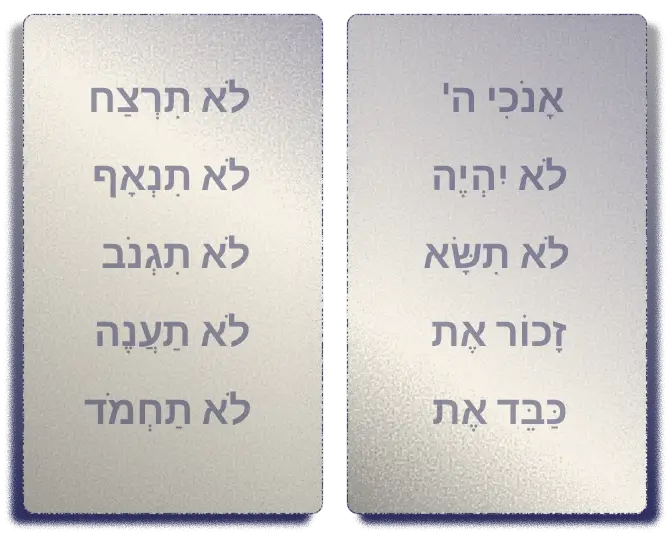
Explore the 613 mitzvos and uncover the meaning behind each one. Discover practical ways to integrate them into your daily life with insights, sources, and guided reflection.
Learn the structure, depth, and spiritual intent behind Jewish prayer. Dive into morning blessings, Shema, Amidah, and more—with tools to enrich your daily connection.
Each week’s parsha offers timeless wisdom and modern relevance. Explore summaries, key themes, and mitzvah connections to deepen your understanding of the Torah cycle.