www.Mitzvah-Minute.com
"Ki Sisa — Part VI — Second Luchos: The Birth of Historical Holiness"
6.1 — First Luchos and Second Luchos
The Command to Carve
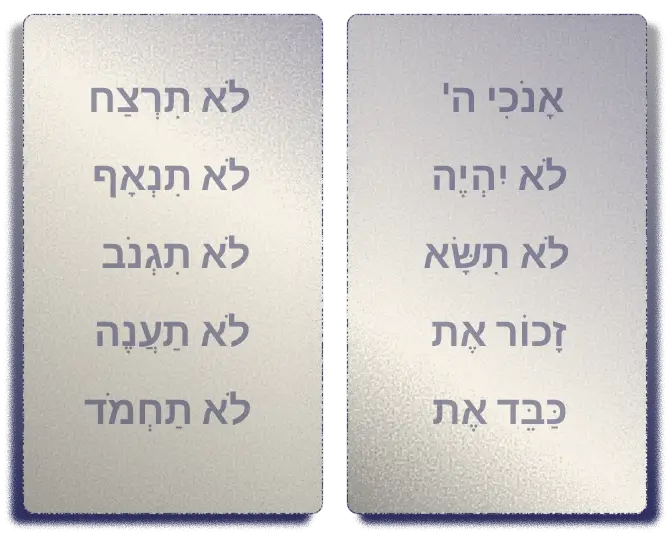
After the destruction of the first Tablets, Hashem commands Moshe to prepare a second set:
שמות לד:א
“פְּסָל־לְךָ שְׁנֵי לֻחֹת אֲבָנִים כָּרִאשֹׁנִים וְכָתַבְתִּי עַל־הַלֻּחֹת אֶת־הַדְּבָרִים אֲשֶׁר הָיוּ עַל־הַלֻּחֹת הָרִאשֹׁנִים אֲשֶׁר שִׁבַּרְתָּ.”
The command begins with a striking phrase:
“פסל לך” — “Carve for yourself.”
The first Tablets were entirely the work of Hashem:
“והלחת מעשה אלקים המה.”
The second Tablets begin with human action. Moshe must carve the stone before Hashem inscribes the words.
This change marks a turning point in the history of the covenant.
The first Tablets represented revelation descending from Heaven.
The second Tablets represent covenant sustained through human participation.
Rav Kook: Holiness Within History
Rav Kook understood the difference between the two Tablets as the foundation of historical Judaism.
The first Luchos emerged from the extraordinary moment of Sinai. Holiness appeared in its purest form, untouched by struggle or failure. The Tablets were given directly by Hashem, expressing a perfection beyond human limitation.
Such holiness was overwhelming but fragile. It depended on a level of spiritual elevation that could not be sustained indefinitely.
The second Luchos represent a different kind of holiness — holiness that grows within history.
After the Golden Calf, holiness no longer appears only as a gift from above. It becomes a partnership between Hashem and Israel.
Moshe carves the stone.
Hashem writes the words.
Rav Kook saw this partnership as the defining feature of covenant life after Sinai. The Torah becomes something not only received but built.
Holiness enters the world through human effort.
Rabbi Sacks: Covenant Partnership
Rabbi Jonathan Sacks emphasized that covenant differs from revelation in one crucial respect: covenant requires participation.
Revelation is given. Covenant is lived.
The first Tablets symbolize revelation alone. The second Tablets symbolize covenant — a relationship sustained through the actions of human beings.
Rabbi Sacks described Judaism as a partnership between Hashem and Israel. The Torah is Divine, but its realization depends on human commitment.
The command “פסל לך” expresses this idea in concrete form.
Moshe must prepare the Tablets before the words can be written.
Human action becomes part of the covenant itself.
The Torah is not only bestowed; it is built.
Rambam: Torah Within Human Life
The Rambam emphasized that the purpose of Torah is to guide human life within the natural world rather than to replace it with miraculous existence.
The second Tablets reflect this principle. The Torah must exist within the conditions of ordinary human experience.
After the Golden Calf, the covenant moves away from total dependence on miraculous revelation. The Torah becomes the stable framework through which the relationship with Hashem endures.
The second Luchos therefore represent a Torah that lives within human reality.
Knowledge of Hashem develops through study and practice rather than through constant revelation.
The covenant becomes sustainable.
From Gift to Responsibility
The transition from the first Tablets to the second reflects a deeper transformation.
The first Tablets descend into a world still shaped by miracles.
The second Tablets emerge from a world that has experienced failure and renewal.
This transition marks the movement from Divine gift to human responsibility.
The covenant after the Golden Calf depends on:
- Human effort in Torah study.
- Commitment to mitzvos.
- Growth through struggle.
- Renewal after failure.
The Torah becomes a living relationship rather than a single moment of revelation.
Rav Miller: Effort Creates Permanence
Rav Avigdor Miller emphasized that spiritual growth becomes lasting when it requires effort. Achievements gained easily are easily lost, but achievements built through effort endure.
The second Tablets reflect this principle. The Torah that emerges from human participation becomes more deeply rooted in the life of the nation.
Moshe’s carving of the stone symbolizes the effort required to build covenant life.
Rav Miller taught that Torah becomes permanent when it is earned rather than merely received.
The second Luchos represent such permanence.
A Stronger Covenant
At first glance the second Tablets appear inferior to the first. They lack the miraculous perfection of the original Luchos.
Yet the Torah presents them as the enduring foundation of the covenant.
The second Luchos remain with Israel throughout history.
They represent a covenant capable of surviving failure.
Holiness becomes stronger when it passes through human struggle.
The covenant matures from revelation into history.
Application for Today — Partnership with Hashem
The command “פסל לך” teaches that covenant life depends on partnership between Hashem and human beings. The Torah is Divine in origin, yet its realization depends on human effort. Spiritual growth takes place when a person participates actively in building a relationship with Hashem.
Learning Torah, observing mitzvos, and striving for improvement all reflect this partnership. Each effort becomes part of the process through which holiness enters the world. The covenant becomes real not only through inspiration but through consistent action.
Moments of struggle often deepen this partnership. When a person rebuilds after failure or renews commitment after difficulty, the relationship with Hashem becomes stronger and more enduring.
Ki Sisa teaches that the second Luchos represent a covenant sustained through participation. Holiness becomes lasting when human effort joins Divine guidance, creating a partnership that endures across generations.
📖 Sources
- Full sources available on the Mitzvah Minute Parshas Ki Sisa page under insights and commentaries