Each Parsha page on Mitzvah Minute is designed as a guided, three-level journey through the weekly Torah reading—integrating the narrative, the mitzvos, and the classical commentaries into one unified experience.
Begin with the foundations of the Parsha:
This level gives you the storyline, the key mitzvos, and the essential connections between them.
A complete journey through the parsha—moving from clarity and depth to inner connection and real-world meaning, culminating in a way to live its ideas in everyday life.
These sections show how the Parsha speaks to the mind, the heart, and the real world — offering wisdom rooted in enduring Torah.
A complete, structured commentary on the parsha—presented pasuk by pasuk, with chapter and overall summaries for clarity and flow.
This level reveals the structural depth of the Parsha and the classical underpinnings of each theme.
Together, these layers create a complete Parsha journey —
narrative, mitzvah, and commentary — all flowing toward deeper understanding, spiritual insight, and meaningful growth.
Tap the Page Navigation tab on the right side of your screen anytime to access quick-links to the entire Parsha page.
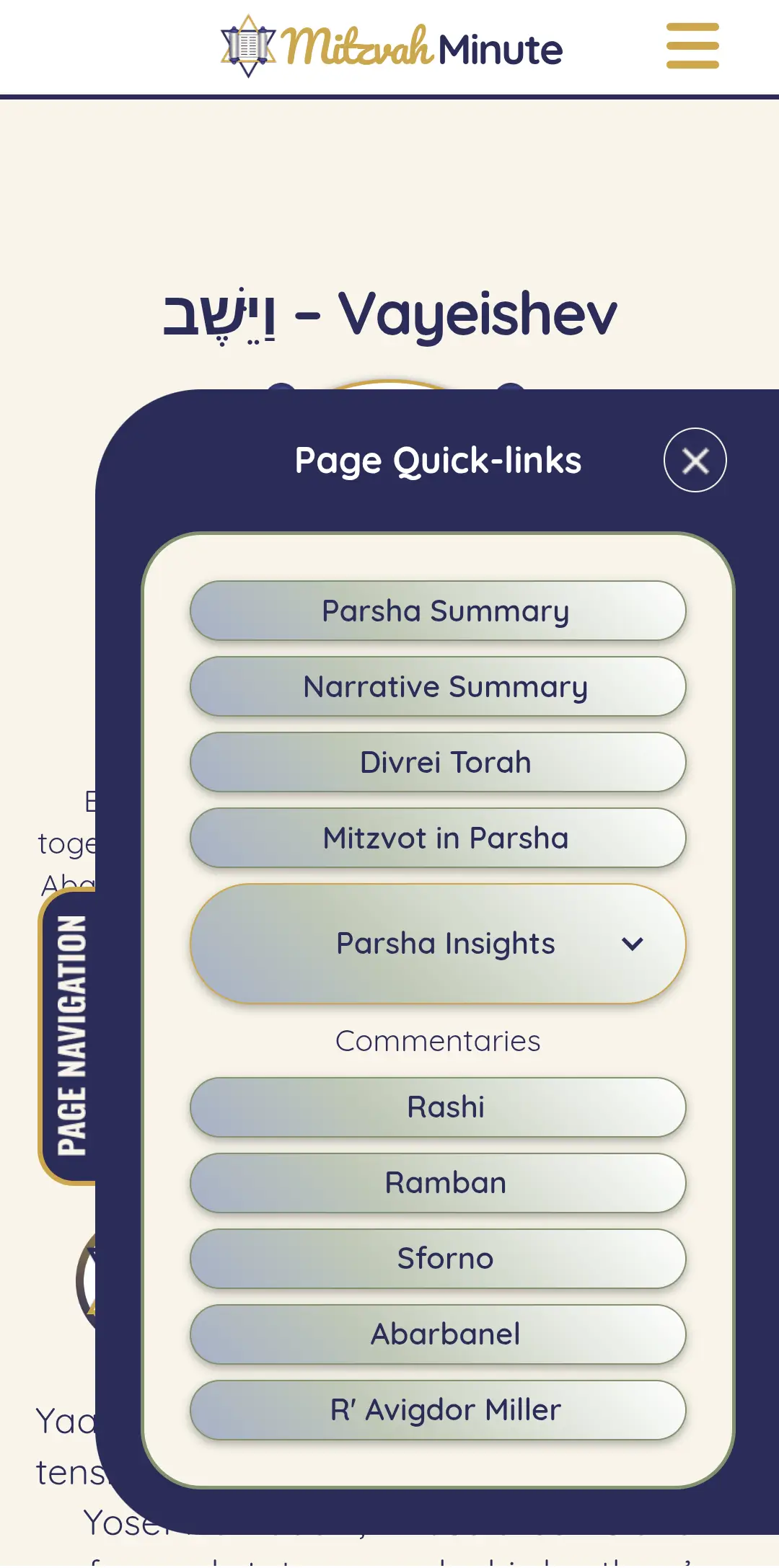
The quick-link panel gives instant access to every section — Parsha Summary, Mitzvos, Divrei Torah, Insights, and Commentaries.
“Every word of Torah and every mitzvah lifts us higher — may your learning bring you closer to Hashem.”

Parshas Beha’aloscha traces the difficult transition from a nation gathered around Har Sinai to a nation beginning its journey through the wilderness toward Eretz Yisrael. The parsha opens with the lighting of the מנורה — Menorah, the consecration of the לויים — Levi’im, and the orderly movement of the camp around the Mishkan, all reflecting clarity, structure, and Divine purpose. Yet as the journey begins, the deeper struggles of the nation emerge. Complaints, cravings, fear, spiritual exhaustion, and failures of speech reveal how difficult it is to transform a freed people into a holy nation living entirely על פי ה׳ — by the word of Hashem. From the gift of פסח שני — the Second Pesach, which offers another opportunity for closeness, to the downfall of תאוה — uncontrolled desire, to Miriam’s punishment for speaking against Moshe, the parsha repeatedly contrasts spiritual elevation with human weakness. Beha’aloscha becomes a portrait of a nation learning that holiness is not built only through miracles, structure, or movement, but through humility, trust, restraint, gratitude, and the willingness to follow Hashem even through uncertainty.

Parshas Beha'aloscha
נָבִיא מִקִּרְבְּךָ מֵאַחֶיךָ כָּמֹנִי יָקִים לְךָ ה׳ אֱלֹקֶיךָ אֵלָיו תִּשְׁמָעוּן
Beha’aloscha closes by clarifying the unique נבואה — prophecy of Moshe Rabbeinu. Hashem declares that Moshe is not like other prophets, who receive prophecy through dream, vision, and riddle. Moshe speaks with Hashem in unmatched clarity. The mitzvah to listen to the true נביא — prophet is therefore rooted in the parsha’s final message: Torah authority depends on recognizing the truth of Hashem’s word as carried by His chosen messenger.
לֹא תְנַסּוּ אֶת ה׳ אֱלֹקֵיכֶם
The complaints over meat reveal the danger of turning desire into a test of Hashem. The people were surrounded by מן — manna, ענן — cloud, and open Divine care, yet they spoke as if Hashem’s ability still needed to be proven. Beha’aloscha teaches that a person may not turn frustration, craving, or impatience into a demand that Hashem prove Himself again.
וְהָלַכְתָּ בִּדְרָכָיו
Moshe’s conduct after Miriam speaks against him becomes a living model of walking in דרכי ה׳ — the ways of Hashem. He does not answer insult with anger, does not seek honor, and does not use her punishment to protect his pride. He davens for her healing with mercy. Beha’aloscha shows that emulating Hashem means becoming patient, humble, forgiving, and ready to help even one who caused pain.
אֶת ה׳ אֱלֹקֶיךָ תִּירָא אֹתוֹ תַעֲבֹד וּבוֹ תִדְבָּק
The parsha repeatedly teaches that closeness to Hashem also requires attachment to those who carry His Torah faithfully. Yisrael travels by Hashem’s word through Moshe, the elders receive רוח — prophetic spirit through Moshe, and Miriam’s mistake comes from failing to grasp Moshe’s unique level. Beha’aloscha therefore connects דבקות — cleaving to Hashem with reverence for true Torah leadership.
לֹא תֵלֵךְ רָכִיל בְּעַמֶּיךָ
Miriam’s speech about Moshe becomes one of the Torah’s central warnings about לשון הרע — harmful speech. The parsha shows that even subtle speech, spoken by great people and about a real concern, can still damage truth and dignity. Beha’aloscha teaches that guarding speech is not only social refinement. It protects the holiness of the camp and the honor of Hashem’s servants.
וְשִׁנַּנְתָּם לְבָנֶיךָ
When Moshe can no longer carry the burden alone, Hashem appoints seventy elders and places from Moshe’s רוח — spirit upon them. Leadership expands like one flame lighting many flames. Beha’aloscha connects Torah transmission with shared responsibility: the Torah is not weakened when it is taught faithfully. It becomes stronger as more people are prepared to guide Klal Yisrael.
וְלֹא תָתוּרוּ אַחֲרֵי לְבַבְכֶם וְאַחֲרֵי עֵינֵיכֶם
The people’s craving for meat becomes a portrait of תאוה — uncontrolled desire. They remember the foods of Mitzrayim but forget the slavery attached to them. Beha’aloscha teaches how desire can distort memory, weaken gratitude, and make bondage appear sweet. The mitzvah not to follow the heart and eyes speaks directly to this danger: the inner life must be guided by Torah, not by appetite.
וַהֲרֵעֹתֶם בַּחֲצֹצְרֹת וְנִזְכַּרְתֶּם לִפְנֵי ה׳ אֱלֹקֵיכֶם וְנוֹשַׁעְתֶּם מֵאֹיְבֵיכֶם
The חצוצרות — trumpets teach that crisis is not met by fear or strategy alone. When danger comes, Yisrael must awaken the heart and cry out to Hashem. Ralbag explains that the trumpet blast stirs spiritually sleeping people toward humility, tefillah — prayer, and return. Beha’aloscha frames national distress as a call to inner awakening before Hashem.
מִזָּכָר עַד נְקֵבָה תְּשַׁלֵּחוּ אֶל מִחוּץ לַמַּחֲנֶה תְּשַׁלְּחוּם וְלֹא יְטַמְּאוּ אֶת מַחֲנֵיהֶם
The men who were טמאים — ritually impure before Pesach do not deny the boundary that keeps impurity away from the holy. Their question is not a demand to enter sacred service improperly, but a longing not to be spiritually diminished. Beha’aloscha teaches that reverence for the Mikdash requires boundaries, and true longing for avodah — Divine service begins by honoring those boundaries.
יַעֲרֹךְ אֹתוֹ אַהֲרֹן וּבָנָיו מֵעֶרֶב עַד בֹּקֶר לִפְנֵי ה׳
Beha’aloscha opens with the מנורה — Menorah because the parsha begins with steady, ordered light. Aharon is praised because שלא שינה — he did not change. The lighting is not a passing emotional moment, but a daily avodah — sacred service performed with precision and faithfulness. The מנורה — Menorah becomes the parsha’s first image of holiness: light raised before Hashem until it stands on its own.
בַּחֹדֶשׁ הַשֵּׁנִי בְּאַרְבָּעָה עָשָׂר יוֹם בֵּין הָעַרְבַּיִם יַעֲשׂוּ אֹתוֹ
Pesach Sheini — the Second Pesach is revealed through people who could not bring the קרבן פסח — Pesach offering at its proper time. Their cry, למה נגרע — why should we be diminished, expresses holy longing. They do not seek exemption. They seek a way back into the mitzvah. Beha’aloscha teaches that distance from avodah — Divine service can become the beginning of renewed responsibility.
עַל מַצּוֹת וּמְרֹרִים יֹאכְלֻהוּ
Pesach Sheini — the Second Pesach is not only about bringing a korban — offering. It restores the full experience of eating it with matzah and maror. Beha’aloscha teaches that return is not merely emotional. It becomes action, memory, and renewed belonging. The person who missed the first Pesach is given a way to reenter the covenantal story of Yetzias Mitzrayim — the Exodus from Egypt.
זֹאת הַתּוֹרָה אָדָם כִּי יָמוּת בְּאֹהֶל
The men of Pesach Sheini — the Second Pesach are described as טמאים לנפש אדם — ritually impure through contact with a dead person. Their condition is not vague spiritual distance; it is a defined halachic state. Beha’aloscha therefore points toward the laws of טומאת מת — impurity from the dead, showing that closeness to korbanos — offerings and Mikdash life depends on precise Torah categories of purity and impurity.
וְרָחַץ בַּמַּיִם אֶת כָּל בְּשָׂרוֹ וְטָמֵא עַד הָעָרֶב
The purification of the לויים — Levi’im and the exclusion of those who were טמאים — ritually impure from the first Pesach both show that holiness requires a path back to טהרה — purity. A person does not remain defined by distance when Torah gives a process of return. Beha’aloscha turns טהרה — purity into more than a technical status; it becomes the doorway back into avodah — Divine service.
שֹׁפְטִים וְשֹׁטְרִים תִּתֶּן לְךָ בְּכָל שְׁעָרֶיךָ
Beha’aloscha is filled with the need for ordered leadership. The camps travel in formation, the חצוצרות — trumpets call leaders and people with distinct signals, and the seventy elders are appointed to help Moshe carry the nation. Ralbag emphasizes that wise leadership prevents jealousy, confusion, and disorder. The mitzvah to appoint judges connects to this theme: a holy people needs clear systems of justice, authority, and public order.

Rashi opens Beha’aloscha with Aharon’s consolation. After the נשיאים — princes brought their dedication offerings, Aharon felt pained that he and his shevet — tribe had no share in that חנוכת הנשיאים — dedication of the princes. Hashem answered that his portion was greater, because he would kindle and prepare the מנורה — Menorah. Rashi shows that quiet avodah — sacred service can be greater than public honor. Aharon’s greatness was not in a one-time display, but in steady faithfulness before Hashem.
The מנורה — Menorah itself teaches precision. The flames had to rise until they stood on their own, and the lamps faced inward toward the נר האמצעי — central lamp. Rashi explains that this showed Hashem did not need the light. The Menorah was not practical illumination for Hashem’s sake. It was an avodah — sacred service for Yisrael, arranged with exact purpose and dignity.
Aharon’s praise is captured in the words שינה שלא — he did not deviate. Rashi does not present greatness as originality or personal expression. Aharon’s greatness was that he did exactly what Hashem commanded. In the Mishkan, holiness begins with obedience, precision, and the humility to serve without changing the command.
Rashi then turns to the לויים — Levi’im, whose dedication is described with unusual depth. Moshe was told to “take” them, which Rashi explains as taking them with words. They were to be drawn close with encouragement: fortunate are they to serve Hashem. Their role began not with force, but with dignity.
Their purification also carried deep meaning. The sprinkling of מי חטאת — purification water addressed possible טומאת מת — impurity from contact with the dead. Their shaving connected them to מצורעים — those purified from tzara’as, because they were replacing the בכורות — firstborn after the חטא העגל — sin of the Golden Calf. Rashi is precise: the Levi’im were not simply appointed to a job. They became a כפרה — atonement structure for Yisrael.
This explains why the nation had to gather and place hands on them through סמיכה — leaning of hands, like owners standing by a korban — offering. The Levi’im belonged to all of Yisrael because they served in place of all Yisrael. Their תנופה — waving by Aharon also showed that each family of Levi’im had its own holy mission: the sons of Kehas with the holiest vessels, the sons of Gershon with curtains and coverings, and the sons of Merari with the structural elements of the Mishkan.
Rashi’s halachic precision is central here. The Levi’im were given for two services, משא — carrying and שיר — song. Age disqualified them from certain service, but מומים — bodily blemishes did not. At twenty-five they began learning the עבודה הלכות — laws of the service; at thirty they began the actual work; at fifty they stopped shoulder-carrying but continued lighter forms of service. Holiness is not vague inspiration. It has structure, training, limits, and continuing responsibility.
In perek 9, Rashi shows that Torah order is not always chronological. The command of Pesach in the Midbar came before the opening of Sefer Bamidbar, yet it appears later because it contains a גנאי — disgrace for Yisrael: in forty years, they brought only this one קרבן פסח — Pesach offering in the wilderness.
Still, the center of the chapter is not disgrace, but yearning. The men who were טמאים — ritually impure asked, למה נגרע — why should we be diminished? They did not reject the law that sacred offerings cannot be brought in impurity. They searched for a way to remain connected. Rashi explains that their merit caused the parsha of פסח שני — the Second Pesach to be revealed through them. זכות — merit is brought through the meritorious.
This is one of Rashi’s great insights into spiritual desire. A person may be unable to serve in the ordinary way, yet still be judged by his longing. These men were not content to be exempt. Their pain at being distant became part of Torah itself.
Rashi reads the ענן — cloud as the visible guide of Yisrael’s movement. Whether the cloud rested for days, a month, or a year, Yisrael stayed. When it lifted, they traveled. Their movement was not controlled by convenience, fear, strategy, or impatience. It was controlled by פי ה׳ — the command of Hashem.
The חצוצרות — trumpets added another layer of order. They honored Moshe like a king and organized the assembly, the leaders, the camps, and the journeys. Even sound had halachic structure. A תקיעה — straight blast and תרועה — broken blast each carried different meanings. Rashi shows that a holy camp does not move chaotically. It moves through command, signal, hierarchy, and disciplined attention.
Yet Rashi also preserves the warmth of Moshe’s appeal to Yisro. Moshe asks him to remain with Yisrael and be their eyes, not because Yisrael lacked the ענן — cloud, but because Yisro knew the wilderness and could help give practical guidance. The parsha therefore holds both truths together: Yisrael travels by Hashem’s command, and human wisdom still has a place within that command.
After the ordered camp begins to travel, the tone changes. Rashi reads the complaints as a spiritual unraveling. The people become מתאוננים — complainers, seeking a pretext to separate from Hashem. Their desire for meat is not only hunger. It is תאוה — craving, a pull toward the uncontrolled life they imagined in Mitzrayim.
Rashi’s treatment of the מן — manna sharpens the point. The manna could taste like many foods, yet the people still complained. Their problem was not lack. It was desire without discipline. They remembered fish, cucumbers, melons, leeks, onions, and garlic, but forgot slavery. Their memory became selective because תאוה — craving reshaped how they saw the past.
Moshe’s distress also becomes part of the parsha’s pshat. Rashi explains that Moshe could no longer carry the burden alone, so Hashem appointed seventy elders. The elders received from Moshe’s spirit, like one candle lighting many others without losing its own flame. Leadership in Torah is not reduced when shared properly. It expands through faithful transmission.
The parsha closes with Miriam and Aharon speaking about Moshe. Rashi explains that Miriam misunderstood Moshe’s separation from Tzipporah. She and Aharon were prophets too, yet they had not separated from normal married life. Their mistake was comparing their prophecy to Moshe’s.
Hashem’s answer reveals Moshe’s unique level. Other prophets receive visions and dreams. Moshe speaks פה אל פה — mouth to mouth, with clarity and constant readiness. That is why his separation was not personal harshness. It flowed from the unique demands of his prophecy.
Rashi also defines Moshe’s humility as שפל וסבלן — lowly in his own eyes and patient. Moshe does not defend himself. Hashem defends him. This is why the rebuke is so serious: speaking against Moshe is not only a personal offense. It shows a failure to recognize the dignity of Hashem’s servant.
Yet even in judgment, Rashi highlights mercy and dignity. Hashem first explains the offense before displaying anger. The ענן — cloud departs before Miriam’s צרעת — tzara’as appears, like a king who leaves before his son is punished because he has mercy. Moshe prays briefly and powerfully, אל נא רפא נא לה — please, Hashem, please heal her. Miriam is shut outside the camp, but all Yisrael waits for her, because she once waited for Moshe by the Nile.
Across the parsha, Rashi shows the greatness and danger of living near the שכינה — Divine Presence. The Menorah must be lit precisely. The Levi’im must be purified and assigned with care. Pesach must be brought in its appointed time. The camp must move only when Hashem commands. Desire, complaint, and speech can damage the nation from within.
Beha’aloscha therefore becomes a parsha of holy closeness. Yisrael is not only traveling through the Midbar. They are learning how to live with Hashem in their midst. Rashi’s pshat teaches that such closeness requires loyalty, restraint, humility, longing, and exact obedience to the word of Hashem.
📖 Source
Ramban begins Beha’aloscha with the מנורה — Menorah, but he does not see it only as a command about lighting lamps in the Mishkan. He first brings the Midrash that Aharon felt weakened when the נשיאים — tribal princes brought offerings for the dedication and Shevet Levi had no share. Hashem comforted him by saying that his portion was greater, because he would light the נרות — lamps.
Ramban asks why this comfort came through the Menorah. Aharon had many great forms of avodah — sacred service: קטורת — incense, korbanos — offerings, ברכת כהנים — the priestly blessing, and the special avodah — service of Yom Kippur. The Menorah was also an obligation, so how did it answer Aharon’s pain over not bringing a voluntary dedication-offering?
Ramban explains that the Menorah hints to a later חנוכה — dedication: the miracle of the Chashmona’im. Aharon’s descendants would bring salvation to Yisrael, rededicate the Mikdash, and establish the Chanukah lights. These lights would continue even after the חורבן — destruction and even in גלות — exile. The korbanos — offerings ceased when the Beis HaMikdash was destroyed, but the light of Aharon continued through Chanukah. This is why Hashem’s comfort was truly greater than the offerings of the נשיאים — princes. It pointed to a light that would outlive destruction.
Ramban also explains the halachic side of the Menorah with care. The Torah repeats the Menorah here to teach that the lamps must be arranged on the מנורה הטהורה — pure Menorah, and that all seven lamps must face toward its center. The lighting is not practical illumination for a dark room. Even in the Beis HaMikdash, which had windows, the Menorah remained an eternal avodah — sacred service. Its light expressed holiness, not human need.
Ramban then turns to the לויים — Levi’im. Their appointment is not a simple staffing of the Mishkan. It is a carefully ordered entrance into avodah — sacred service, requiring טהרה — purification, כפרה — atonement, learning, age, and discipline.
Ramban explains the age structure of the Levi’im with great precision. At thirty, the Levi’im were formally counted for their assigned avodah — service and משא — burden. At twenty-five, a Levi could begin entering the circle of service, learning the עבודה הלכות — laws of the sacred service, watching the work, and helping according to his ability. Ramban keeps the pesukim exact: twenty-five is preparation and joining; thirty is formal appointment.
He also clarifies the end of service at fifty. Ramban disagrees with the broader reading that an older Levi could still perform שיר — song. He argues that when the Mishkan still required בכתף משא — carrying on the shoulder, the official Levi service, including שיר — song, belonged to those fit for the full age range of thirty to fifty. After fifty, the Levi could still assist in lighter roles, such as שערים נעילת — closing the gates and related tasks, but the primary appointment changed. Holiness in Ramban is not loose inspiration. It is structured, measured, and bound by the Torah’s exact order.
In perek 9, Ramban explains why the Torah returns to Korban Pesach — the Pesach offering, even though this command came before the beginning of Sefer Bamidbar. The Torah first completed the order of the Mishkan, the דגלים — banners, the camps, the Levi’im, and the dedication of the mizbeach — altar. Only then does it return to the Pesach in the midbar — wilderness.
Ramban explains that this command was needed because the Torah had earlier connected Pesach Doros — the Pesach offering for future generations to entering Eretz Yisrael. One might think it did not apply in the wilderness. Hashem therefore commanded Yisrael to bring it in the second year, so the memory of Yetzias Mitzrayim — the Exodus from Egypt would remain alive. The fathers who saw the miracles would transmit them to their children, and those children would pass them onward until the final generation.
At the same time, Ramban preserves Chazal’s criticism that Yisrael brought only this one Pesach in the wilderness. He prefers the explanation that this failure resulted from the later חטא המרגלים — sin of the spies, which left the nation נזופים — rebuked and unable to perform milah — circumcision safely. Since milah was מעכב — prevented participation in Korban Pesach, the later offerings could not be brought. The shortcoming was real, but Ramban frames it within the tragic spiritual damage of the spies rather than simple laziness.
Ramban reads Pesach Sheini — the Second Pesach with strong halachic balance. The Torah mentions the טמא — ritually impure person and the one on a דרך רחוקה — distant road because these are the main cases that create Pesach Sheini. Yet Ramban explains that anyone who missed Pesach Rishon — the first Pesach must bring Pesach Sheini, even if he failed intentionally.
Still, the Torah chooses its examples carefully. The טמא — impure person may not bring the first Pesach. The traveler, however, is different. If he is far away and cannot reach the עזרה — Temple courtyard in time, the Torah has mercy on him and gives him Pesach Sheini. But if others slaughter and sprinkle the blood for him, and he can arrive by night to eat it, his first Pesach can count. Ramban’s reading shows both דין — law and רחמים — mercy. The Torah protects the fixed time of the korban — offering, but it also creates a path back for one who could not enter at the proper moment.
Ramban also includes the גר — convert in this system. The Torah teaches that a גר — convert is fully obligated in Pesach Doros — the Pesach offering of later generations. Even if he was not personally part of Yetzias Mitzrayim — the Exodus from Egypt, he enters the covenantal memory of Yisrael. The story of redemption becomes his story too.
Ramban gives deep weight to the ענן — cloud over the Mishkan. Yisrael did not travel by comfort, planning, or personal desire. They traveled only when the ענן — cloud lifted, and they encamped only when it rested. Sometimes the waiting was short. Sometimes it was long. Sometimes the people surely wanted to move, and sometimes they surely wanted to remain. Yet the rule was always the same: פי ה׳ — the word of Hashem.
This obedience was not easy. Ramban reads the pesukim as training Yisrael to surrender their movement to Hashem’s will. They could not control the schedule of their lives. The wilderness became a school of trust. To live near the שכינה — Divine Presence means learning that even movement and waiting belong to Hashem.
The חצוצרות — trumpets also show Ramban’s sense of sacred order. They were not only signals for gathering or travel. They expressed the organized life of a holy nation around the Mishkan. The leaders, camps, and journeys all had their proper sound and structure.
Ramban connects the תרועה — alarm blast to danger, war, fasting, and calling out to Hashem. The sound of the trumpet awakens the people to remember that success, protection, and salvation do not come from human strength alone. In war, in trouble, and in avodah — sacred service, the nation must turn its heart toward Hashem.
When the parsha turns to complaint, Ramban reads the fall with moral sharpness. The מתאוננים — complainers were not simply tired travelers. Their complaint showed an inner refusal to accept the burdens of the journey. They stood near the שכינה — Divine Presence, but their hearts turned toward resentment.
The craving for meat deepens the fall. Ramban treats the people’s desire as more than hunger. It becomes תאוה — craving, a spiritual disorder that turns memory against truth. They romanticized Mitzrayim and forgot slavery. They remembered food but not oppression. Desire reshaped the past until bondage looked sweet.
This is why the punishment is severe. The quail answers their request, but it also exposes the danger inside the request. Hashem can give a person what he demands and still make that gift reveal the sickness of the demand itself.
Ramban’s treatment of Eldad and Medad shows both the seriousness of prophecy and the greatness of Moshe. Yehoshua feared that they were acting against Moshe’s authority by prophesying outside the appointed group at the Ohel Moed. Ramban explains that there was a concern about someone speaking prophecy in the presence of a greater prophet, like a תלמיד — student ruling before his rebbi.
Moshe’s answer reveals his ענוה — humility. He does not guard his honor jealously. He wishes that all Hashem’s people could be prophets. Ramban stresses that Moshe forgave his honor as the רב — teacher. True leadership is not threatened by the spiritual rise of others. It wants more kedushah — holiness, not less.
The final chapter brings Ramban’s central contrast between ordinary prophecy and Moshe Rabbeinu. Miriam and Aharon spoke about Moshe because they did not fully grasp the unique level of his נבואה — prophecy. Other prophets receive מראה — vision, חלום — dream, and חידות — riddles. Moshe speaks with Hashem פנים אל פנים — face to face, with clarity, constancy, and readiness.
This explains why Moshe’s life could not be compared to other prophets. His separation from ordinary family life was not a personal choice of harshness. It flowed from the constant demands of his prophetic level. Ramban shows that the rebuke to Miriam and Aharon was not only about speech. It was about failing to recognize the difference between Moshe and every other prophet.
Moshe’s greatness is also seen in his silence. The Torah says he was עניו מאד — exceedingly humble because he did not defend himself. Hashem defended him. And when Miriam was punished with צרעת — spiritual affliction, Moshe did not hold pain or seek honor. He immediately prayed for her healing. This is Ramban’s portrait of true greatness: clarity before Hashem, humility before people, and compassion even toward those who wronged him.
Ramban’s Beha’aloscha is a parsha of movement under holiness. The Menorah carries eternal light into exile. The Levi’im carry sacred service through discipline and order. Korban Pesach carries the memory of redemption across generations. The ענן — cloud carries Yisrael through uncertainty. The חצוצרות — trumpets call the nation back to Hashem in travel, war, and service.
Yet the same parsha shows how fragile people can be near holiness. They complain, crave, misremember, fear, and speak wrongly. Ramban does not flatten these failures. He shows that the wilderness tested whether Yisrael could carry the שכינה — Divine Presence through real life. At the center stands Moshe Rabbeinu: humble, faithful, clear in prophecy, and ready to pray for others. Through him, Ramban shows what it means to carry Hashem’s word without bending it to ego, fear, or desire.
📖 Source
Rambam’s worldview helps frame Parshas Beha’aloscha as a parsha of ordered avodah — Divine service. The lighting of the מנורה — Menorah, the consecration of the לויים — Levi’im, the movement of the camp, and the trumpets all teach that holiness does not rest on emotion alone. It requires form, discipline, timing, and responsibility.
For Rambam, the Torah trains the human being toward שלימות — perfection. A person becomes elevated when the body, emotions, mind, and actions are brought under the rule of Torah. Beha’aloscha shows this on a national scale. The people do not travel randomly. They move by the ענן — cloud. They gather through the חצוצרות — trumpets. The לויים — Levi’im are purified before serving. Even inspiration must enter a structure.
The מנורה — Menorah represents more than beauty in the Mishkan. It stands for ordered light. In Rambam’s language, the highest part of the human being is the שכל — intellect, the faculty that recognizes truth and directs life toward Hashem. Light becomes holy when it is steady, clean, and placed before Hashem.
Aharon’s lighting teaches that spiritual clarity must be tended. A person cannot rely on scattered flashes of inspiration. The wick must be prepared, the flame must be raised, and the light must face its purpose. This fits Rambam’s broader teaching in Hilchos De’os that character is formed through repeated, balanced action. Holiness is not a mood. It is a trained way of living.
The purification of the לויים — Levi’im shows that sacred service demands preparation. Rambam’s halachic world is built on the idea that inner devotion must be expressed through precise action. The heart matters, but the heart alone is not enough. Service of Hashem requires responsibility, readiness, and obedience to command.
The לויים — Levi’im are not simply inspired individuals. They are assigned to a role within the nation. Their holiness is not private. It serves the Mishkan, the Kohanim, and Klal Yisrael. Rambam would see here a major Torah principle: the individual reaches greatness when his gifts are disciplined into service of a higher order.
פסח שני — the second Pesach reveals the dignity of responsibility. The people who were טמא — ritually impure do not excuse themselves and disappear. They ask, לָמָּה נִגָּרַע — “Why should we be diminished?” Their question shows that mitzvos are not burdens to escape. They are opportunities to come close to Hashem.
This fits Rambam’s understanding of בחירה חפשית — free will in Hilchos Teshuvah. A person is responsible for his direction. Even when circumstances limit him, he must still ask how he can return to the avodah — Divine service. פסח שני — the second Pesach teaches that distance is not always rejection. Sometimes it becomes the beginning of renewed obligation.
The journeys by the ענן — cloud teach a deep form of discipline. The nation travels when Hashem commands and rests when Hashem commands. From a Rambam-centered view, this trains the people away from impulse. The human being must learn that his own desire is not the highest guide.
Rambam often emphasizes that Torah forms a disciplined society. Beha’aloscha shows a nation learning to move by Divine command, not by panic, comfort, or personal preference. The camp becomes a school of obedience. Its movement teaches that freedom in Torah does not mean self-rule without limits. It means choosing to live under the wisdom of Hashem.
The complaints in Beha’aloscha reveal the opposite of Rambam’s ideal human being. Instead of gratitude, the people fall into craving. Instead of reason guiding desire, desire overtakes reason. They remember food from Mitzrayim while forgetting the slavery attached to it.
In Hilchos De’os, Rambam teaches that a person must train his middos — character traits toward balance. The complaints show what happens when appetite becomes the center of life. The issue is not only food. It is a collapse of spiritual proportion. A nation that received Torah begins to speak as if comfort is the main measure of reality.
Moshe’s cry under the burden of leadership shows that even the greatest leader carries real human strain. Rambam presents Moshe Rabbeinu as the highest prophet, but not as someone detached from responsibility. His greatness is shown through complete devotion to the mission Hashem gave him.
The appointment of the elders shows that Torah leadership must be structured. A leader is not meant to carry a nation through personal strength alone. The רוח — spirit placed upon the elders creates ordered responsibility. Leadership becomes shared service under Hashem, not personal control.
The episode of Miriam and Aharon brings Moshe’s uniqueness into focus. Rambam’s Hilchos Yesodei HaTorah gives a precise account of Moshe’s prophecy as different from all other prophets. Other prophets receive prophecy through vision or image, while Moshe receives with unmatched clarity and readiness.
This explains why Moshe’s humility is not weakness. ענווה — humility means knowing one’s place before Hashem with complete truth. Moshe is the greatest prophet, yet he does not defend his honor. His greatness is not self-assertion. It is total alignment with Hashem’s will.
Miriam’s punishment shows that speech is not a small matter. Rambam treats לשון הרע — harmful speech as a serious moral failure because it damages people, community, and truth. Speech reveals how a person sees reality. When speech becomes careless, it distorts the dignity of another person.
In Beha’aloscha, the issue is even sharper because Moshe’s prophetic standing is part of the Torah’s foundation. To speak wrongly about Moshe is not only a personal mistake. It risks misunderstanding the nature of נבואה — prophecy and the authority of Torah itself.
Through Rambam’s lens, Beha’aloscha teaches that holiness is the disciplined elevation of life. Light must be tended. Service must be purified. Desire must be governed. Leadership must be ordered. Speech must be guarded. Even longing, as in פסח שני — the second Pesach, must become responsibility.
The parsha presents a nation being trained for closeness to Hashem. That closeness is not built by emotion alone. It is built through mitzvos, reason, humility, moral discipline, and faithful obedience to Divine command. This is the Rambam world of avodas Hashem — service of Hashem: the whole person shaped by Torah until life itself becomes ordered toward Hashem.
📖 Sources
Ralbag opens his philosophical reading of Beha’aloscha with the קדושת הלויים — sanctity of the Levi’im. Before the לויים — Levi’im may approach the עבודת אהל מועד — service of the Tent of Meeting, they require כפרה — atonement and a formal process of preparation. This teaches that service in the Mikdash is not casual. Holiness must be entered with awe, order, and inward seriousness.
Ralbag explains that this process strengthens יראת המקדש — reverence for the Mikdash in the heart of the people. It also trains the לויים — Levi’im themselves to serve with the highest קדושה — holiness. Their age limits also serve this purpose. A Levi begins only when he has reached full strength, because part of his work involved משא — carrying. He retires from that work when age weakens him. Ralbag also sees another reason: the age requirement gives the service dignity in people’s eyes. When a person sees that not every Levi may serve immediately, he understands that this avodah — Divine service is elevated.
The Kohanim do not need the same age-based limit, because their בגדי כהונה — priestly garments already impress upon the heart the greatness of their work. The לויים — Levi’im also sing שיר — sacred song, and Ralbag stresses that such song requires settled דעת — understanding. Their guarding of the Mikdash likewise raises the honor of the Mikdash, because a guarded place is felt as important and holy.
Ralbag treats פסח שני — the second Pesach as a mitzvah teaching that exclusion from a mitzvah does not end a person’s responsibility. Those who were pushed away because of טומאה — ritual impurity or a דרך רחוקה — distant road receive a new path back into the korban Pesach — Pesach offering.
The philosophical point is clear. Torah does not view religious failure or distance as mere absence. It creates a structured way to return. פסח שני — the second Pesach teaches that mitzvah life is not only about ideal performance. It also includes repair, renewed obligation, and the refusal to let distance become final.
Ralbag reads the ענן — cloud by day and the עמוד אש — pillar of fire by night as public signs of the greatness of Hashem’s wonders through Moshe Rabbeinu. As soon as the Mishkan is established, Hashem covers it with His cloud. When Hashem wants the nation to travel, the cloud moves. When the cloud rests, the people rest.
Ralbag emphasizes the phrase על פי ה׳ ביד משה — by the word of Hashem through Moshe. This teaches two connected ideas. First, the miracle itself comes from Hashem through Moshe His prophet. Second, the people do not travel from the cloud alone; they travel when Moshe commands them by Divine instruction, including through the חצוצרות — trumpets. This preserves both השגחה — Divine providence and ordered human leadership.
The חצוצרות — trumpets teach Ralbag a major rule of leadership. A leader must arrange public communication in a way that avoids קנאה — jealousy and confusion. When the leaders are called, one חצוצרה — trumpet is sounded. When the whole people are called, two are sounded. The sounds distinguish between different forms of assembly.
Ralbag’s point is practical and philosophical. Leadership is not only about authority. It is about סדר — order. If some leaders were called before others in a way that seemed unequal, jealousy could enter the camp. A wise leader creates systems that are clear, public, and fair.
Ralbag extends this principle to the order of travel. The nation and the army must know who travels first, who follows, and where each group belongs. Without order, quarrel and rivalry enter the people.
For Ralbag, the camp of Yisrael is a model of a disciplined society. Spiritual life does not remove the need for structure. It increases it. A holy nation needs clear movement, assigned places, and public systems that protect peace.
Ralbag explains that the חצוצרות — trumpets are also a mitzvah in times of צרה — distress. The people must call to Hashem to be saved from approaching harm, because Hashem is near to those who truly call Him. The trumpet blast is not only a signal. It awakens the heart.
Its purpose is to stir נרדמים — spiritually sleeping people, so they humble their hearts and return to Hashem. Ralbag links prayer, fasting, inner surrender, and the trumpet sound into one process. The sound helps make the תפילה — prayer sincere, so the people may be remembered before Hashem.
Ralbag also sees a separate mitzvah in sounding the חצוצרות — trumpets over the קרבנות — offerings. This sound helps the Kohanim focus their hearts on the korban — offering and understand what the act is meant to awaken. He connects this to the שיר ה׳ — song of Hashem sung by the לויים — Levi’im.
Ralbag notes that the use of trumpets for calling the people and arranging the camp was temporary, tied to the wilderness need. But the two mitzvos of trumpets in distress and trumpets over offerings are לדורות — for future generations. He also disagrees with Rambam’s count, arguing that these should be understood as two mitzvos rather than one.
Ralbag learns from Moshe’s request to Yisro that every שלם — complete person should guide others toward good as much as he can. Moshe already knew Yisro’s good heart and his faith in Hashem, yet he still feared that if Yisro returned to his land, his children might remain in a mistaken belief system.
Moshe therefore asked Yisro to stay with Yisrael, so his children could come to him and live according to משפטי התורה — the laws of the Torah. To persuade him, Moshe promised that Yisro would share in the good Hashem would give Yisrael. Yisro did not accept, because he trusted that he could bring his children toward true אמונה — faith. Ralbag’s lesson is that spiritual concern for others is part of human perfection.
At תבערה — Taveirah, Ralbag sees the Torah publicizing that Hashem knows human thoughts and judges hidden motives. The people looked for a bad claim in order to remove from themselves the עבודת ה׳ — service of Hashem. They imagined that Hashem would not see or hear what was hidden inside their complaint.
The punishment revealed the opposite. Hashem heard, judged, and responded. The place was called תבערה — burning to make this truth public. For Ralbag, this is not only a story of punishment. It is a lesson in השגחה — Divine providence over the inner world of man.
Ralbag reads the episode of the אספסוף — mixed multitude as a warning to avoid bad company. When Yisrael attached themselves to the אספסוף — mixed multitude, they were pulled after their weakness. They began craving meat even though they had the מן — manna, the easiest and most pleasant food, without labor or burden.
This teaches that desire often spreads socially. A person may be stable alone, but when he joins people who lower his values, he may begin to want what they want. Ralbag’s language is sharp: the failure begins through התחברות — attachment to a bad group.
Ralbag then develops the danger of pursuing תאוות — physical desires. The people’s craving brought many deaths. Hashem gave them meat in great abundance to show that יד ה׳ לא תקצר — Hashem’s hand is not limited. The miracle strengthened belief by proving that Hashem could provide even an enormous quantity of meat.
Ralbag distinguishes this from the earlier request for food in the wilderness of Sin. There, the people had no מן — manna yet, so asking for food was reasonable. Here, they already had the מן — manna. Their request therefore showed either pursuit of desire or an attempt to test whether Hashem could provide meat in such great abundance. Desire becomes spiritually dangerous when it turns comfort into a test of Hashem.
Ralbag teaches a major philosophical principle from the appointment of the seventy elders. When a miracle becomes necessary, Hashem arranges it with the least possible זרות — deviation from the normal order. Therefore, Hashem tells Moshe to gather זקני העדה — elders of the congregation, meaning wise men fit for leadership.
These men were more suited to נבואה — prophecy than others, because wisdom and political leadership are among the conditions that prepare a person for prophecy. Even so, Ralbag makes clear that they were not naturally worthy of prophecy on their own. Their prophecy remained miraculous. But the miracle was arranged through the most fitting available vessels.
Ralbag sees two great wonders in this section: the נבואה — prophecy given to the seventy elders and the enormous amount of שלו — quail given to Yisrael. Both events strengthen the foundations of Torah. The prophecy shows Hashem’s power to extend רוח — prophetic spirit through Moshe to the elders. The quail shows Hashem’s power over physical provision.
Together, these wonders confirm core Torah principles: Hashem guides the nation, sustains it, judges it, and reveals His will through prophecy.
Ralbag explains that the highly complete person desires only עבודת ה׳ — service of Hashem and leaves bodily matters as much as possible. This includes even marital life, when Divine service requires separation. Miriam and Aharon criticized Moshe because they believed prophecy did not require such separation, since Hashem had spoken with them while they continued normal physical life at the proper time.
Ralbag’s point is that Moshe’s level was different. His life was entirely bound to Divine service. The issue is not a rejection of the body in ordinary life. It is that Moshe’s prophetic standing required a level of constant readiness beyond all others.
Ralbag learns from Moshe that a person should practice ענוה ושפלות — humility and lowliness as fully as possible. Moshe had unmatched perfection. He was both מלך — king and נביא — prophet. Yet the Torah testifies that he was עניו מכל האדם — humbler than every person.
For Ralbag, this is not a side trait. It is central to perfection. Greatness without humility becomes self-centered. True greatness stands before Hashem without ego.
Ralbag also learns that a person should not place into his heart words spoken against him, even if he is the master of those who spoke. Moshe does not react when Miriam and Aharon speak against him. He remains silent. This is why the Torah places Moshe’s humility next to the episode.
Ralbag adds that Moshe did know what had happened, as is clear from Aharon’s later plea: אל נא תשת עלינו חטאת — “Please do not place sin upon us.” Moshe’s silence was not ignorance. It was self-mastery.
Ralbag emphasizes the greatness of Moshe Rabbeinu’s נבואה — prophecy. Hashem Himself describes the wondrous differences between Moshe’s prophecy and the prophecy of all others. Moshe’s prophetic level is not simply higher in amount. It is different in kind.
This matters because the authority of Torah depends on Moshe’s unique standing. Miriam and Aharon’s words required Divine clarification, not only to defend Moshe’s honor, but to establish the truth of his prophetic rank.
Ralbag draws a further ethical lesson from Moshe. A complete person should not take revenge or bear a grudge against someone who insulted him. More than that, he should help that person when he can.
Moshe does exactly this. He is not moved by the hurtful words Miriam spoke against him. He does not defend himself or seek payback. Instead, he prays for her: קֵל נָא רְפָא נָא לָהּ — “Please, Hashem, heal her now.” This is the fullest expression of humility joined with chesed — kindness.
Ralbag closes by noting Hashem’s concern for Moshe’s honor. Yisrael does not travel from Chatzeiros until Miriam is gathered back into the camp. This prevents her from being left alone outside the camp during the nation’s journey, which would have brought her greater shame.
Even while Miriam is punished, Hashem protects the dignity of the story and the honor of Moshe. The nation waits. The public delay itself teaches that Moshe’s honor matters, that punishment must be measured, and that Hashem’s judgment contains exact care.
Ralbag reads Beha’aloscha as a parsha about ordered holiness. The לויים — Levi’im require preparation. The camp requires structure. Leaders must prevent jealousy. Trumpets awaken prayer, focus korbanos — offerings, and organize the people. Desire must be controlled, bad company avoided, and complaints understood as failures of both faith and character.
At the same time, the parsha teaches the heights of human perfection. Moshe seeks to guide Yisro’s family toward truth. The elders receive נבואה — prophecy through a measured miracle. Moshe shows separation for Divine service, unmatched humility, silence before insult, prayer for the one who harmed him, and a prophetic level unlike any other. For Ralbag, Beha’aloscha is a philosophical map of a holy society and a perfected human being: ordered, disciplined, humble, and directed fully toward Hashem.
📖 Source
(Baal Shem Tov · Kedushas Levi · Sfas Emes)
Parshas Beha’aloscha opens with the מנורה — Menorah, because the whole parsha is about hidden light becoming visible. The Baal Shem Tov’s tradition teaches that the seven branches of the מנורה — Menorah hint to the seven kinds of souls within Yisrael. Each soul has its own path, color, and avodah — service of Hashem. Yet all seven must shine אל מול פני המנורה — toward the face of the Menorah, meaning toward one shared inner root. The goal is not that every Jew shine the same way. The goal is that every light face the same Source.
This is why Moshe had difficulty understanding the מנורה — Menorah more than the other keilim — sacred vessels. The Mishkan — Sanctuary parallels מעשה בראשית — the work of Creation, and Betzalel knew how to combine the letters through which heaven and earth were created. Creation began with ten מאמרות — Divine utterances, yet the first, בראשית — “In the beginning,” is hidden. It is a מאמר עליון — supernal utterance that does not appear with the words “ויאמר — and He said.” Speech reveals inner thought, but this first utterance remains above revelation.
The מנורה — Menorah corresponds to that hidden first utterance. Moshe could not grasp it through speech because its root is beyond speech. Hashem first spoke it to him so Moshe would realize that this vessel belongs to the place where words fail. Only then did Hashem show him a מנורה של אש — Menorah of fire. The deepest light cannot always be explained. Sometimes it must be shown.
The Sfas Emes builds the entire parsha around the pasuk נר מצוה ותורה אור — “a mitzvah is a candle, and Torah is light.” תורה — Torah is the light itself, but mitzvos — commandments are the candles that allow that light to enter the world of action. Without a כלי — vessel, light stays above. Through mitzvos, the hidden אור תורה — light of Torah enters hands, speech, time, food, body, and ordinary life.
This is יגדיל תורה — making Torah great. Torah becomes “great” not because it changes, but because its light spreads into more places. The תרי״ג מצוות — 613 commandments correspond to the limbs and sinews of the person. They refine the גוף — body until it can receive the נשמה — soul. When one mitzvah is done fully, it can awaken the whole person, because each mitzvah contains a path back to all תרי״ג — 613.
Aharon’s task was therefore not only to light lamps. He lifted the lower world until its own flame could rise. Rashi’s phrase שתהא שלהבת עולה מאליה — that the flame should rise on its own means that every created thing already contains a נקודת חיות — point of Divine life. The tzaddik does not create holiness from nothing. He awakens what is already buried inside.
Rashi praises Aharon with שלא שינה — he did not change. The Sfas Emes reads this with great depth. Aharon was chosen to bring light to all Yisrael and to the world, yet he did not become inflated by the greatness of his task. He remained in השתוות — inner steadiness. If the doer changes through ego, the deed also changes. Aharon’s greatness was that he did the mitzvah only because Hashem commanded it.
This explains עשה רצונו כרצונך — make His will like your will. A person should not merely perform Hashem’s will with more enthusiasm than his own desires. He should bring Hashem’s will into every ordinary desire until no separate desire remains. And when he performs a mitzvah, even joy in the mitzvah must remain pure. The center must be only נחת רוח להבורא — giving pleasure to the Creator.
The Midrash says that Hashem does not need our light. Even darkness is not dark to Him. The world was darkened only so that human beings could uncover the אור הגנוז — hidden light. This is the mashal — analogy of the blind person lighting a lamp. The פיקח — seeing person does not need the lamp, but he asks the blind person to light it so the blind person can walk with dignity and not feel dependent.
So too, Hashem gives us נר מצוה — the candle of mitzvah. תורה אור — Torah as light is like being led by the seeing guide. It is higher, safer, and clearer. But נר מצוה — mitzvah as candle lets the person find the path through his own avodah — spiritual work. This is not because Hashem lacks light. It is because He wants Yisrael to own the light through their deeds.
The Kedushas Levi explains בהעלותך את הנרות — when you raise the lights as the raising of fallen ניצוצות — sparks. Sometimes even a tzaddik falls from his level. Yet because the tzaddik remains tied to his שורש העליון — upper root, his return can lift sparks trapped in קליפות — shells of impurity. His descent brings him near those sparks; his return draws them back with him.
The inverted נו״ן — letter nun around ויהי בנסוע הארון — “When the Aron traveled” also points to this. נו״ן — nun hints to יראה — awe, which is usually hidden and modest. But when Yisrael travel through the wilderness to raise sparks, יראה — awe must sometimes become visible. Public reverence awakens reverence in the fallen sparks themselves. The journey of the Aron is not movement through empty space. It is a mission to awaken hidden holiness.
The Leviim — Levites are chosen for special avodah — service, but the Kedushas Levi stresses that this does not lessen Hashem’s love for the rest of Yisrael. The Torah repeats בני ישראל — Children of Israel five times to show their חיבה — belovedness. The Leviim are selected not because others are rejected, but because they serve as a כפרה — atonement for the nation.
Their korbanos — offerings also reveal Hashem’s defense of Yisrael. Normally, a חטאת — sin-offering comes before an עולה — burnt offering, because the חטאת — sin-offering is like an advocate who gains forgiveness before a gift is brought. For עבודה זרה — idolatry, however, the עולה — burnt offering comes first, because idolatrous thought joins action. By the Leviim, the order shows that Yisrael’s heart was not truly for idolatry at the עגל — Golden Calf. They wanted a leader. Their failure needed repair, but their inner loyalty remained with Hashem.
The Kedushas Levi’s mashal — analogy of a gift to a great minister gives a powerful key to mitzvos. A small official values the object itself. A great minister does not need the object; he cherishes the heart of the giver. So too, Hashem does not need our gifts. The precious thing is the רצון — will, the desire to come close and serve Him.
This explains why one must be careful with a מצוה קלה — light mitzvah like a מצוה חמורה — weighty mitzvah. The reward is not measured only by size, cost, or difficulty. The essence is that the person performs ציווי הבורא — the command of the Creator because he wants to fulfill Hashem’s will. A small act done with pure רצון — will can carry the inner value of a great offering.
The complaints about meat are not simple hunger. The Sfas Emes explains התאוו תאוה — they desired a desire. After Matan Torah — the giving of the Torah, they were above ordinary appetite, free from the יצר הרע — evil inclination. They thought they lacked the chance to serve Hashem בכל נפשכם — with all your soul, by taking desire itself and nullifying it to Hashem.
Their mistake was subtle. They wanted a test so they could rise higher. But a person who truly fears Hashem does not seek danger. He prefers simple obedience over spiritual adventure. Hashem gives nisyonos — tests when they are needed. A person should not create them for himself, because even spiritual ambition can contain לגרמייהו — self-interest.
The Kedushas Levi adds another layer. The מן — manna could taste like any food one already knew. But kosher meat after שחיטה — ritual slaughter and מליחה — salting had a taste they had never experienced in Egypt. Fish had not changed through new halachos, so they could still taste fish in the מן — manna. Their request for meat was also a request to experience a new holy taste. In the future, the feast of לוויתן — Leviathan, שור הבר — wild ox, and יין המשומר — preserved wine will give the tzaddikim those tastes, so even heavenly food will contain every holy delight.
The מן — manna is called כזרע גד — like coriander seed. The Kedushas Levi reads גד as גומל דלים — one who gives to the poor. In צדקה — charity, the wealthy person gives physical support, but the poor person gives spiritual merit. Each is a משפיע — giver. So too, the מן — manna gave physical nourishment to Yisrael, while Yisrael gave the מן — manna spiritual form through the taste they drew into it by thought.
This is a deep picture of Jewish life. Even receiving can be giving. Even food can become spiritual. Even the poor person, who seems dependent, may be giving the richer gift.
Moshe’s level was constant שפע — overflowing Divine kindness. The מן — manna descended in his merit, and it contained all tastes because Moshe’s avodah — service was broad, generous, and above limitation. But meat represents צמצום — contraction, the concentrated taste of earthly food. That belongs more to ארץ ישראל — Eretz Yisrael, where holiness enters soil, borders, and physical detail.
When Moshe says, “Did I carry them על האדמה — on the earth?” the Kedushas Levi hears Moshe saying that the people are asking for a kind of avodah tied to land and limitation. Moshe could pour down heavenly expansiveness, but they were asking for the tighter, earthier holiness of meat.
The Sfas Emes explains that when the אספסוף — gathered multitude fell into desire, Hashem told Moshe to gather שבעים זקנים — seventy elders. The lower souls needed a leadership that could gather scattered רצונות — desires and direct them toward good. Moshe himself was אספקלריא המאירה — the clear shining lens. He did not need outer desire to awaken inner service. But the people, living more in נפש — lower soul and רוח — spirit, needed help unifying their desires.
This is the difference between אספה לי — gather for Me and אספסוף — a gathering that is not fully for Heaven. Even the complainers had high intentions. They remembered Egypt because in Egypt they elevated sparks from low places. They wanted that work again. But Hashem’s will for that generation was higher. Their task was not to seek old forms of struggle. Their task was to trust the present form of Divine guidance.
The Baal Shem Tov’s tradition notes על פי ה׳ יסעו — by Hashem’s word they traveled and על פי ה׳ יחנו — by Hashem’s word they encamped. The Sfas Emes reads the travels as the rhythm of life itself. ויהי בנסוע — when the Aron traveled is like the ימי המעשה — weekdays, when one battles concealment and clarifies Hashem within nature. ובנוחה — when it rested is like שבת — Shabbos, when the hidden unity is revealed.
The three days after Shabbos carry its light forward, and the three days before Shabbos prepare for its return. Ezra’s takanah — enactment that three days not pass without Torah reflects this same rhythm. Shabbos is not isolated from the week. It is the inner מנוחה — rest that sends strength before and after itself.
The Leviim — Levites belong especially to שירה — song and זמן — time. The Sfas Emes explains that every day has its own renewal, and therefore its own song. No day is exactly like another. The Leviim, who sing in the Beis Hamikdash, draw each day back to its root.
The harp of this world has seven strings, corresponding to the seven days and the seven branches of the מנורה — Menorah. In the days of Mashiach it will have eight, and in the future ten. Shabbos already contains a taste of that higher song. It is one of the seven, yet it lifts all seven toward the eighth, toward a world beyond ordinary nature.
The Baal Shem Tov’s tradition explains והאיש משה עניו מאוד — Moshe was exceedingly humble through the Zohar’s teaching that “Moshe Moshe” has no pause. There was no split between Moshe above and Moshe below. Even when dealing with physical matters, his thought remained above. Yet he saw himself lower than even the person whose thoughts were fully on the earth.
The Sfas Emes develops this through בכל ביתי נאמן הוא — he is faithful in all My house. Other prophets had to change during prophecy. They had to rise beyond themselves. Moshe was different. Prophecy was attached to his very being. When he spoke to the people, he needed a מסוה — veil. When Hashem spoke through him, he was most himself. His humility made room for the שכינה — Divine Presence to speak from his throat.
When Eldad and Meidad prophesied, Yehoshua feared the danger of uncontrolled prophecy and told Moshe, כלאם אדני משה — “My master Moshe, restrain them.” Their prophecy that “Moshe will die and Yehoshua will bring Yisrael into the Land” carried the weight of a heavenly decree. Moshe answered instead, מי יתן כל עם ה׳ נביאים — “Would that all Hashem’s people were prophets.” The Kedushas Levi explains that within these words lies a profound teaching about prophecy, tefillah — prayer, and the power of tzaddikim — righteous people to sweeten decrees.
A harsh decree can sometimes be annulled through tefillah — prayer and through the avodah — spiritual service of tzaddikim before that decree becomes fixed within prophetic revelation. Once a prophecy is written and established publicly, however, its annulment creates a danger: people may claim that the prophet spoke falsely. For this reason, prophetic decrees appear irreversible once they become part of revealed prophecy and written Torah.
This creates a deep question regarding חבלי משיח — the birth pangs of the Messianic era. If suffering before the coming of Mashiach is described by the Nevi’im — Prophets, how can Yisrael pray for those decrees to be sweetened or removed? The Kedushas Levi explains that many prophetic descriptions remain hidden and unclear until the final redemption itself. As the Rambam teaches, the exact order and meaning of the events before Mashiach are not fully understood. Since these prophecies are not fully revealed to us, tefillah — prayer can still operate within that hiddenness and seek mercy.
Even more deeply, when Mashiach comes, ונבאו בניכם ובנותיכם — “your sons and daughters will prophesy.” דעת ה׳ — knowledge of Hashem will fill the world so completely that all Yisrael will understand how both truths can coexist: the prophecy was true, and yet the decree itself was transformed through prayer and repentance. No one will suspect false prophecy, because the world itself will understand the hidden power Hashem placed within tefillah — prayer and within the עבודת הצדיקים — service of the righteous.
This is why Moshe did not fear Eldad and Meidad’s prophecy. Even regarding his own decree not to enter Eretz Yisrael, Moshe still hoped Yisrael might daven on his behalf. The decree could potentially be sweetened without weakening the truth of prophecy itself. Moshe longed for a world in which all Yisrael would understand this mystery — that heavenly decrees are real, prophecy is true, and yet Hashem, in His mercy, leaves room for tefillah — prayer, teshuvah — repentance, and the כוח הצדיקים — spiritual power of the righteous to transform judgment into compassion.
When Moshe cried, א-ל נא רפא נא לה — “Please, Hashem, heal her,” Hashem answered with קל וחומר — a fortiori reasoning: if a father’s rebuke brings seven days of shame, how much more so the שכינה — Divine Presence. The Baal Shem Tov’s tradition explains that this is not incidental. קל וחומר — a fortiori reasoning is the first of the י״ג מידות שהתורה נדרשת בהן — thirteen principles through which Torah is interpreted, and it corresponds to the Divine attribute of א-ל. Moshe invoked that attribute in prayer, and Hashem answered through the matching Torah measure.
Even judgment here is measured, structured, and healing. Miriam must remain outside the camp, but the camp waits. Shame becomes repair, not rejection.
Aharon felt pain that the Leviim were not included in the חנוכת הנשיאים — inauguration of the leaders. Hashem consoles him: שלך לעולם קיימת — yours lasts forever. The Sfas Emes explains that korbanos — offerings belong to חיי שעה — temporal life, bounded by time and place. The מנורה — Menorah belongs to חיי עולם — eternal life, because it joins תורה אור — Torah as light to נר מצוה — mitzvah as candle.
Even after the visible Menorah is hidden, its inner light remains. The נר מערבי — western lamp still burns in the hidden place. Whenever Shabbos and Yom Tov open the hidden storehouse of light, the Menorah’s illumination returns. Aharon’s avodah — service lasts because he did not only light a flame in the Mishkan. He taught the world how hidden Torah light can enter action, darkness, body, time, and desire.
The Chassidic heart of Beha’aloscha is one movement: hidden light must rise from below. The Menorah teaches that creation has a concealed first utterance. Aharon teaches that mitzvos make the body a lamp. The Leviim teach that song lifts time. The מן — manna teaches that even food can carry thought. The complaints teach that desire must be elevated, not pursued for its own sake. The seventy elders teach that lower wills can be gathered for Heaven. Moshe teaches that the highest soul is the one most emptied of self.
Beha’aloscha is therefore not only about lighting lamps. It is about becoming a lamp. The body becomes a כלי — vessel. The week faces Shabbos. Desire is gathered into רצון ה׳ — Hashem’s will. Darkness becomes the place where light is found. And every Jew, in his own branch of the מנורה — Menorah, is asked to turn toward the center until the flame rises on its own.
📖 Sources
Parshas Beha’aloscha turns from the ordered holiness of the Mishkan toward the painful realities of human nature. The nation has received the Torah. The camp has been sanctified. The Mishkan stands at the center of the people as a visible sign of the שכינה — Divine Presence. The journey toward Eretz Yisrael has finally begun. Yet almost immediately, the nation begins to complain. The people long for meat, romanticize Mitzrayim, and speak as though slavery had been preferable to freedom. In one of the Torah’s most startling moments, Moshe Rabbeinu reaches emotional collapse. He asks not for strength, but for death.
Rabbi Jonathan Sacks sees this parsha as one of the Torah’s deepest studies of leadership, loneliness, humility, and hope. Beneath the complaints about food lies a far greater crisis: the fear that people do not truly change. Moshe had witnessed miracles, revelation, judgment, forgiveness, and the building of the Mishkan. Yet the nation still returned to the habits of fear, resentment, and spiritual smallness. The despair of Moshe came not from physical exhaustion alone, but from the terrifying possibility that even the greatest revelation in history might fail to transform the human heart.
At the same time, Beha’aloscha becomes a profound meditation on the inner life of those who lead others. Rabbi Sacks returns repeatedly to the loneliness of responsibility. Great leaders carry visions others cannot yet see. They absorb criticism, disappointment, and resistance while continuing to guide people toward a future they themselves may never fully enter. Moshe’s greatness emerges not in triumph, but in vulnerability. His humility is not weakness or self-negation. It is the ability to care so deeply about truth, mission, and other people that the self no longer occupies the center of consciousness.
The parsha also explores the difference between power and influence. Power compels. Influence elevates. The greatest leaders do not create dependence; they create other leaders. G-d’s response to Moshe’s despair is therefore not merely practical. The seventy elders become living proof that Moshe’s spirit has entered others. His life’s work is not failing. His vision is taking root in souls beyond his own.
Running through the entire parsha is Rabbi Sacks’ larger vision of the Jewish people themselves. Yisrael is both מחנה — a camp formed through shared suffering, and עדה — a congregation united by shared purpose. Jews are bound not only by persecution and survival, but by a covenantal mission to bear witness to G-d through the way they live, build society, and sanctify life. Beha’aloscha asks whether a people shaped by hardship can rise into a nation shaped by destiny.
In these essays, Rabbi Sacks transforms moments of complaint, loneliness, humility, and even despair into a larger theology of moral courage. Leadership is not the absence of pain. Faith is not the absence of doubt. Greatness is not self-celebration. The holiest people are often those who think least about themselves and most about the task G-d has placed before them. In that quiet selflessness lies the strength to continue guiding others even through disappointment, resistance, and darkness.
The crisis of Beha’aloscha begins with something that appears almost trivial: the people complain about food. Yet Rabbi Jonathan Sacks explains that beneath the request for meat lies one of the Torah’s deepest revelations about human nature. The nation does not cry out because it is starving. The מן — manna sustains them completely. Their complaint comes from dissatisfaction, boredom, and the inability to appreciate the blessings already surrounding them. They begin romanticizing Mitzrayim, remembering “the fish, cucumbers, melons, leeks, onions, and garlic,” while forgetting the slavery, oppression, and murder that defined life there. Freedom suddenly feels difficult, while bondage becomes emotionally attractive in memory.
Rabbi Sacks sees this as a recurring spiritual danger. Human beings often prefer familiar discomfort to demanding freedom. Slavery narrows responsibility. Freedom enlarges it. In Mitzrayim, decisions were made for the people. In the wilderness, they were being called to become a ממלכת כהנים — kingdom of priests and a holy nation. That transformation demanded emotional maturity, discipline, and vision. The people, however, remained trapped in a mentality shaped by dependency and appetite.
What breaks Moshe is not merely the complaint itself. Similar complaints had happened before. Earlier in the wilderness the people protested bitter water, lack of food, and lack of water. Each time, Hashem responded with miracles and provision. This moment is different because everything should have changed by now. Sinai has already occurred. The people stood before revelation itself. They witnessed the consequences of the עגל הזהב — Golden Calf. They built the Mishkan and organized themselves around the visible presence of the שכינה — Divine Presence. The nation has undergone months of spiritual formation. Yet the moment the journey resumes, the people fall immediately back into the same patterns of fear, craving, and complaint.
Rabbi Sacks explains that this is the true source of Moshe’s despair. Until now, failure could be explained by immaturity. The people had just left slavery. They did not yet know how to live as free human beings under the sovereignty of G-d. But now Moshe confronts a terrifying possibility: perhaps miracles do not change people. Perhaps revelation alone cannot transform character. Perhaps even the greatest spiritual experiences fade before the force of habit and desire. The complaint about meat therefore becomes symbolic of something much larger — the struggle between physical appetite and spiritual destiny.
The Torah’s description of the people is strikingly psychological. The אספסוף — rabble or mixed multitude begin craving, and soon the entire nation is drawn into the same emotional atmosphere. Desire spreads socially. Complaint becomes contagious. Gratitude disappears almost instantly once dissatisfaction enters the camp. Rabbi Sacks repeatedly emphasizes how easily communities become trapped in cycles of negativity when people focus exclusively on what they lack rather than what they have been given.
The tragedy is sharpened by the contrast between the people’s words and reality itself. They describe Egypt as a place where they ate “for free.” Nothing in Egypt had been free. Their food was purchased with slavery. The nation has begun rewriting memory itself in order to justify present frustration. Rabbi Sacks sees this as one of the enduring dangers of collective despair. When people lose sight of purpose, they begin to reinterpret the past through the lens of present discomfort. Oppression can become nostalgia when responsibility feels too heavy.
At this moment, Moshe faces not merely a complaining nation but a crisis of belief in human change itself. The leader who had confronted Pharaoh, split the sea, ascended Sinai, and brought the Torah to earth suddenly wonders whether his entire mission is failing. The wilderness generation has physically left Mitzrayim, but Mitzrayim may not yet have left them.
Moshe’s response to the people’s complaint is one of the most emotionally raw moments in the entire Torah. He turns to Hashem and cries out: “Did I conceive this people? Did I give birth to them, that You tell me to carry them like a nurse carries an infant?” Rabbi Jonathan Sacks explains that Moshe is no longer speaking only as a leader. He speaks as someone crushed beneath the emotional weight of carrying a nation that refuses to grow.
The imagery Moshe uses is striking. He describes himself not as a king, commander, or judge, but as a nursing parent carrying a child. Leadership in Torah is not domination. It is emotional responsibility. The leader absorbs fear, complaint, instability, and pain while continuing to guide people forward. Moshe feels abandoned beneath that burden. The people’s endless dissatisfaction has become spiritually exhausting.
Rabbi Sacks notes that Moshe does something almost unimaginable: he asks to die. “If this is how You are going to treat me, kill me now.” This places Moshe alongside Eliyahu, Yirmiyahu, and Yonah, all prophets who at moments of despair prayed for death rather than continue their mission. The Torah does not hide these moments. On the contrary, it records them with painful honesty. Great spiritual leaders are not portrayed as emotionally invulnerable superhumans. They remain deeply human, carrying loneliness, discouragement, and inner struggle.
Rabbi Sacks explains that this realism is one of the Torah’s greatest strengths. Ancient mythologies often portrayed heroes as semi-divine figures untouched by ordinary weakness. Tanach does the opposite. Precisely because Hashem alone is truly Divine, human beings can be portrayed truthfully — great yet fragile, elevated yet wounded, capable of courage and despair simultaneously. Moshe’s breakdown therefore does not diminish his greatness. It reveals the depth of the burden he carries.
The crisis also reveals the loneliness built into transformative leadership. A leader sees possibilities others cannot yet see. Moshe is trying to turn former slaves into a holy nation bound by covenant and responsibility. The people, however, continue thinking like slaves. They define life through appetite and immediate comfort. Moshe realizes that external redemption is far easier than inner transformation. Taking the Jews out of Egypt required miracles. Taking Egypt out of the Jews may require generations.
Rabbi Sacks emphasizes that despair often emerges precisely in people who care most deeply. Those driven by moral vision and responsibility can become overwhelmed when reality resists change. The prophet does not despair because he lacks faith in Hashem. He despairs because he feels the distance between Divine vision and human behavior. Moshe had given everything to this mission. If even revelation at Sinai could not permanently elevate the people, what could?
This tension appears throughout the lives of the prophets. Yirmiyahu feels mocked and humiliated. Eliyahu flees into the wilderness asking for death. Yonah collapses after Ninveh is spared. Rabbi Sacks notes that even great modern leaders experienced similar darkness. Winston Churchill called depression “the black dog.” Leadership often demands carrying fears and responsibilities invisible to everyone else. The greater the sense of mission, the deeper the possibility of exhaustion.
Yet Rabbi Sacks insists that this despair itself becomes part of spiritual refinement. When every layer of ego, ambition, and self-importance burns away, something purer remains: the mission itself. The leader continues not because success is guaranteed, not because appreciation is certain, but because the task remains sacred. At that point leadership is no longer about self. It becomes complete devotion to responsibility before Hashem.
Moshe’s breakdown therefore becomes more than a personal collapse. It reveals one of the Torah’s deepest truths about spiritual greatness. The holiest leaders are often those most painfully aware of human weakness — including their own. Their greatness lies not in emotional invulnerability, but in the willingness to continue carrying others despite disappointment, criticism, and exhaustion.
Hashem’s response to Moshe’s despair is unexpected. He does not rebuke Moshe. He does not simply command him to continue. Instead, He tells Moshe to gather seventy elders, and He declares: “I will take from the spirit that is upon you and place it upon them.” Rabbi Jonathan Sacks explains that this moment is far more than administrative delegation. Moshe already had officers and judges from the earlier counsel of Yisro. The crisis was not logistical. It was spiritual.
Moshe’s despair came from believing that his efforts were failing to transform the people. He had confronted Pharaoh, led the Exodus, brought the Torah down from Sinai, and overseen the building of the Mishkan, yet the nation still complained like slaves frightened by freedom. What Moshe needed was not assistance carrying burdens. He needed proof that his life’s work had entered the souls of others.
Rabbi Sacks offers a profound reading of the seventy elders. For one brief moment, Hashem allows Moshe to see that his spirit has reproduced itself in other human beings. The elders begin to prophesy because Moshe’s vision, faith, and moral courage have already taken root beyond himself. Leadership had not ended with him. The message had entered others.
This changes everything. Moshe no longer sees himself as laboring in vain. He realizes that influence often works invisibly. A leader may hear complaints on the surface while profound transformation quietly unfolds beneath. The people may still struggle, fail, and resist, yet seeds have already been planted that will outlive the present moment. Moshe does not need instant perfection from the nation. He only needs to know that the covenantal vision has begun to live within others.
Rabbi Sacks sees this as one of the deepest antidotes to despair. Human beings rarely see the full impact of their goodness while they are alive. Parents, teachers, leaders, and friends often never fully know how deeply their words and actions shaped another person. Influence moves quietly through memory, character, and example. Sometimes it surfaces decades later in ways the original giver never witnesses.
Rabbi Sacks reflects personally on this truth through experiences during שבעה — mourning periods after the death of loved ones. Again and again, families discover hidden acts of kindness performed quietly many years earlier. Only after someone passes away do others reveal how deeply they were helped, comforted, or changed by that person’s presence. The tragedy is that the giver often never heard those words during life. Yet the influence remained real and enduring nonetheless.
Moshe’s crisis therefore becomes universal. Every person who tries to elevate others eventually confronts moments of doubt. Did anything truly change? Did the effort matter? Did the words reach anyone at all? Hashem’s answer to Moshe is that goodness leaves traces long after the moment itself passes. Spiritual influence cannot always be measured externally or immediately. Sometimes it works silently beneath the visible surface of events.
This insight also transforms the meaning of leadership itself. Great leaders do not merely accomplish tasks. They transmit spirit. They awaken moral vision in others until those people themselves become carriers of the mission. That is why prophecy resting upon the elders mattered so deeply. It demonstrated continuity. The covenant would survive because the spirit of Torah had moved from one soul into many.
Moshe emerges from this experience changed. Earlier he had prayed for death. Now he regains serenity and generosity of spirit. The complaints of the people no longer crush him in the same way because he has seen that the story is larger than immediate frustration. The work of holiness unfolds across generations, often invisibly, through the transmission of spirit from one human being to another.
Rabbi Sacks turns this into a larger philosophy of hope. The good a person does lives after them. Wealth, fame, and power fade quickly, but moral influence enters the future through human hearts. A single act of courage, kindness, faith, or truthfulness may shape lives far beyond what anyone can see. The leader does not need to witness the final outcome. It is enough to know that the spirit has entered others and will continue the journey forward.
Immediately after the seventy elders receive prophecy, two men — Eldad and Meidad — begin prophesying within the camp itself. Yehoshua reacts with alarm. Fearing a threat to Moshe’s authority, he urges: “My master Moshe, stop them!” Yet Moshe answers with extraordinary generosity: “Are you jealous for my sake? Would that all of Hashem’s people were prophets, that Hashem would place His spirit upon them.” Rabbi Jonathan Sacks sees this as one of the Torah’s clearest revelations about the difference between power and influence.
Power seeks control. Influence creates growth. Power fears rivals. Influence rejoices when others rise. A leader driven by ego becomes threatened when greatness appears in someone else. A leader driven by mission wants the vision to spread beyond himself. Moshe does not experience Eldad and Meidad as competitors. Their prophecy confirms that the spirit of holiness is expanding throughout the nation.
Rabbi Sacks repeatedly returns to this principle: the highest form of leadership is not creating followers but creating leaders. A true teacher does not keep wisdom private in order to preserve status. He shares it until others themselves become sources of wisdom and strength. Moshe’s greatness lies precisely in his willingness to make space for others rather than guarding authority possessively.
This becomes one of Rabbi Sacks’ defining distinctions between power and influence. Power is finite. If one person gains power, another loses it. Influence is not diminished by sharing. It grows larger the more it is distributed. A candle loses nothing by lighting another candle. Spiritual leadership works through multiplication, not scarcity.
That is why Moshe’s reaction stands in such sharp contrast to ordinary political behavior. Most leaders instinctively protect status, territory, and control. They fear independent voices because those voices may weaken their authority. Moshe responds differently because his identity is not rooted in self-importance. His concern is not whether he remains unique, but whether the people become elevated. The success of others is therefore not a threat to him but a fulfillment of his mission.
Rabbi Sacks connects this directly to the Torah’s description of Moshe as ענו מאד — exceedingly humble. Humility does not mean denying one’s gifts. Moshe clearly knows he is a prophet and leader. Rather, humility means that the self no longer occupies the center of consciousness. The humble person thinks primarily about truth, responsibility, and the needs of others rather than personal honor. Because Moshe does not worship his own status, he can rejoice when greatness emerges elsewhere.
This idea also explains why Yehoshua reacts differently. Yehoshua loves Moshe deeply and wishes to defend him. But he still understands leadership through the lens of centralized authority. Moshe understands something deeper: the covenant cannot survive through one towering figure alone. A holy nation requires distributed responsibility, shared vision, and spiritual maturity spread throughout the people. The goal is not dependence on a single leader but the elevation of the nation itself.
Rabbi Sacks sees this principle throughout Jewish history. The most transformative Jewish leaders did not merely build institutions or movements around themselves. They cultivated students, disciples, and future teachers capable of carrying Torah forward long after the original leader was gone. Their greatness was measured not by how indispensable they became, but by how many others they empowered.
This understanding transforms the meaning of spiritual influence. The leader’s task is not to stand above others permanently, but to awaken capacities hidden within them. Influence means helping another person discover strength, dignity, responsibility, and holiness they did not know they possessed. That is why the seventy elders matter so profoundly. Moshe’s spirit entering others is not a loss of greatness. It is the ultimate confirmation of greatness.
Rabbi Sacks suggests that this truth extends far beyond formal leadership. Parents, teachers, rabbis, and friends shape others most deeply not through coercion, but through presence, trust, encouragement, and example. The greatest people are often those who quietly enlarge the souls around them. They create environments in which others become more courageous, thoughtful, faithful, and morally alive.
Moshe therefore emerges in Beha’aloscha not only as a prophet, but as the model of selfless influence. He understands that holiness expands when shared. The highest spiritual achievement is not gathering greatness inward, but releasing it outward into the lives of others.
The Torah introduces Moshe’s humility at one of the most painful moments of his life. Miriam and Aharon speak critically about him, questioning whether Hashem speaks only through Moshe. Yet Moshe says nothing in response. Immediately the Torah declares: “והאיש משה ענו מאד מכל האדם אשר על פני האדמה” — “The man Moshe was exceedingly humble, more than any person on the face of the earth.” Rabbi Jonathan Sacks explains that this sentence is not interrupting the story. It is explaining Moshe’s silence.
Moshe remains calm because the criticism is personal. When the people rebel against Hashem or against the covenant, Moshe reacts passionately. But when the attack concerns himself, he remains serene. He does not define leadership through ego or honor. His identity is rooted in the mission rather than the self.
Rabbi Sacks insists that humility does not mean low self-esteem or self-hatred. That form of “humility” is actually another form of self-obsession. True humility means becoming so devoted to something greater than oneself that the ego no longer dominates consciousness. The humble person is not constantly thinking “I am small.” The humble person is simply not thinking about himself at all. His attention is directed toward Hashem, truth, responsibility, and other human beings.
This is why Moshe could be both humble and extraordinarily strong. He confronts Pharaoh without fear. He argues with Hashem on behalf of the Jewish people. He shatters the לוחות — Tablets after the sin of the Golden Calf. Humility does not weaken courage. It purifies it. Moshe’s actions are never driven by self-display. They emerge entirely from devotion to the covenant and the moral demands of the moment.
Rabbi Sacks defines humility as “the silence of the self in the presence of that which is greater than the self.” Humility means standing in awe before the grandeur of creation, the dignity of another person, the majesty of moral truth, and the nearness of Hashem. The humble individual remains open to wonder because he is not trapped inside endless self-reference.
Modern culture often moves in the opposite direction. Rabbi Sacks describes a society built increasingly around visibility, branding, self-promotion, and the craving for recognition. People seek attention through image, performance, and public display because they fear anonymity and loneliness. The result is a culture obsessed with being noticed. Humility becomes difficult because the self is constantly demanding validation.
Against this background, Moshe’s humility appears almost revolutionary. He does not need constant affirmation because his life is anchored in purpose rather than image. Rabbi Sacks notes that true virtue rarely advertises itself. The holiest acts are often done quietly, without public recognition. Many of the greatest deeds of kindness remain known only to Hashem. This hidden goodness reflects genuine spiritual maturity because it seeks no applause.
Rabbi Sacks illustrates this through two personal examples. He describes his father’s extraordinary ability to admire beauty, wisdom, and excellence in others despite lacking formal education himself. Humility gave him openness to greatness beyond himself. Rabbi Sacks also recalls meeting the Lubavitcher Rebbe, Rabbi Menachem Mendel Schneerson. Though world-famous, the Rebbe displayed no self-conscious grandeur. Instead, he listened so fully and attentively that Rabbi Sacks felt as though he himself had become the center of the conversation. The Rebbe’s greatness lay in his ability to create space for another human being.
This, for Rabbi Sacks, becomes one of the deepest expressions of humility: listening. To truly listen requires quieting the ego long enough to encounter another person fully. Humility therefore is not passivity. It is radical attentiveness. It allows someone to affirm the dignity and significance of others because the self no longer demands constant centrality.
Rabbi Sacks connects this directly to leadership. Leadership exposes a person continually to criticism, misunderstanding, and attack. A leader who takes every criticism personally cannot survive. Only someone devoted primarily to the mission rather than personal prestige can endure the burdens of responsibility without becoming consumed by resentment or vanity.
That is why the Torah places Moshe’s humility precisely here, in the middle of criticism and emotional pain. His silence is not weakness. It is evidence that his inner life has become rooted in something larger than personal honor. He no longer needs to defend the self because the self is not the center. In the presence of Hashem’s mission, the ego falls silent, and that silence becomes the source of moral greatness.
Rabbi Jonathan Sacks returns repeatedly throughout these essays to a difficult truth: spiritual greatness is often born through pain. The Torah does not portray its leaders as untouched by struggle. Moshe, Eliyahu, Yirmiyahu, and Yonah each pass through moments of despair so deep that they pray for death. Yet these moments do not destroy their greatness. They refine it.
Moshe’s crisis in Beha’aloscha emerges precisely because he cares so deeply. Indifference rarely leads to despair. Despair comes when someone gives heart, energy, faith, and responsibility to a mission and begins to fear that nothing is changing. The more a person longs to elevate others, the more painful resistance and failure become. Moshe sees the nation return to complaint immediately after revelation, covenant, and the building of the Mishkan. He feels the crushing possibility that even miracles cannot permanently transform the human heart.
Rabbi Sacks explains that this experience strips away illusion. Leadership often begins with confidence, ambition, or idealism. Over time, disappointment burns away ego and romanticism. The leader discovers that human change is slow, fragile, and uncertain. Yet paradoxically, this painful discovery can produce a deeper and purer form of greatness. When success, recognition, and personal validation disappear, only the mission remains. The leader continues not because the work is easy or appreciated, but because the work itself is sacred.
This becomes the path from pain to humility. Suffering weakens the illusion of self-sufficiency. It teaches a person that greatness does not come from domination, image, or invulnerability. True spiritual depth emerges when a person stands honestly before weakness, limitation, and dependence upon Hashem. Humility grows when the ego loses its fantasies of control and learns instead to serve something greater than itself.
Rabbi Sacks repeatedly contrasts external success with inner moral character. A culture focused entirely on achievement, fame, and visibility trains people to pursue what can be displayed publicly. Yet the Torah directs attention toward quieter virtues: kindness, responsibility, listening, faithfulness, courage, and compassion. Public accomplishment matters, but inner character matters more. The deepest victories are often invisible.
This is why Rabbi Sacks sees humility not as self-erasure, but as liberation from self-preoccupation. The humble person is free to focus on truth, responsibility, and love because the ego no longer demands constant reinforcement. Such people become capable of genuine hope even in disappointment because their identity is anchored beyond immediate success.
Hope itself becomes one of the central themes of Beha’aloscha. Moshe begins the parsha overwhelmed by despair, yet he emerges transformed. What changes him is not the sudden perfection of the people. The nation remains difficult and unstable. Rather, Moshe receives the ability to see beyond the immediate moment. He sees that influence can outlive frustration, that spirit can enter other souls, and that moral work unfolds across generations rather than instant victories.
Rabbi Sacks understands hope not as optimism or naïveté. Optimism believes things will naturally improve. Hope is the courage to continue working for goodness even when improvement seems uncertain. It is born precisely in those moments when despair could easily take over. Hope emerges when a person realizes that he is part of a story larger than himself and therefore not responsible for completing the entire task alone.
This idea appears powerfully in Rabbi Tarfon’s teaching: “It is not upon you to finish the work, but neither are you free to desist from it.” Rabbi Sacks sees this as the spiritual antidote to despair. Human beings are not asked to redeem the entire world alone. They are asked only to remain faithful to their portion of the mission.
The prophet therefore becomes a symbol not of perfection, but of endurance. Moshe’s greatness lies not in never feeling broken, but in continuing after brokenness. Leadership does not require emotional invulnerability. It requires the courage to continue carrying responsibility while fully aware of human weakness — one’s own included.
Beha’aloscha thus transforms despair into a doorway toward deeper faith. Pain humbles the self. Humility opens the soul to Hashem. And from that humility emerges hope — not shallow optimism, but the enduring strength to continue building holiness even in an unfinished world.
One of Rabbi Jonathan Sacks’ deepest insights throughout these essays is that the human being is fundamentally relational. Loneliness is not merely emotional discomfort. It is one of the great spiritual crises of existence. From the beginning of the Torah, “It is not good for man to be alone.” Human beings require connection — not only socially, but spiritually. Much of the pain in Beha’aloscha emerges from fractured relationships: between the people and Hashem, between the nation and Moshe, and even within Moshe’s own family.
Rabbi Sacks sees Moshe as profoundly lonely in this parsha. Leadership isolates. The leader must carry burdens others cannot fully see. He must continue believing in the future while surrounded by disappointment in the present. Moshe stands between Hashem and the people, absorbing complaint from below while carrying responsibility from above. The deeper the mission, the deeper the possibility of isolation.
Yet Rabbi Sacks insists that faith itself is the answer to loneliness. In Judaism, faith is not merely belief that G-d exists. It is relationship. The Torah does not present Hashem as an abstract philosophical force detached from human life. Hashem speaks, commands, listens, comforts, forgives, and enters covenant. Faith means discovering that one is not alone in the universe. Even in suffering and confusion, there remains a Divine Presence accompanying the human being through darkness.
This idea appears repeatedly throughout Tehillim. The Psalmist cries out from fear, betrayal, danger, and despair, yet continually returns to the realization: “כי אתה עמדי” — “For You are with me.” Rabbi Sacks sees this not as poetic comfort alone, but as one of Judaism’s deepest spiritual truths. Faith redeems loneliness because it restores relationship at the center of existence.
At the same time, Judaism refuses to reduce spiritual life to a purely private relationship between the individual and Hashem. Holiness is also built through friendship, community, and shared responsibility. Rabbi Sacks repeatedly emphasizes that human dignity is affirmed through the presence of others who truly see and hear us. One of the greatest acts a person can perform is attentive listening.
This becomes part of Rabbi Sacks’ description of true humility. The humble person creates space for others. Because the ego no longer dominates the conversation, another human being can enter fully. Rabbi Sacks recalls how the Lubavitcher Rebbe listened with such total presence that he made others feel significant and valued. The Rebbe’s greatness lay not in projecting himself outward, but in drawing others inward with dignity and care.
Friendship therefore becomes spiritually transformative. A true friend does more than provide companionship. A friend helps another person become more fully himself. Through trust, encouragement, honesty, and presence, friendship strengthens moral courage and emotional resilience. Isolation weakens the spirit. Relationship restores it.
Rabbi Sacks also connects loneliness to the culture of modernity. In earlier generations, people lived within neighborhoods, communities, congregations, and networks of belonging. Increasingly, however, modern society produces anonymity and fragmentation. People seek visibility through image, self-promotion, and public performance because they fear being unseen. Yet public attention cannot heal inner loneliness. Recognition is not the same as relationship.
The Torah offers a different vision. Human beings find redemption not through self-advertisement, but through covenantal connection — with Hashem and with one another. The deepest spiritual experiences often occur quietly within relationships of loyalty, listening, compassion, and shared responsibility.
This also reframes Moshe’s crisis. His despair begins easing once he realizes he is no longer carrying the mission entirely alone. The spirit resting upon the seventy elders demonstrates that his vision now lives within others. The burden of leadership becomes bearable once relationship replaces isolation.
Rabbi Sacks ultimately portrays faith and friendship as parallel forms of covenant. Both require trust, attentiveness, loyalty, and openness beyond the self. Both rescue the individual from imprisonment within loneliness. And both reveal one of the Torah’s deepest truths: human beings are healed not through radical independence, but through sacred relationship.
In Beha’aloscha, the wilderness becomes more than a physical desert. It becomes the landscape of the lonely human soul searching for connection, meaning, and companionship. Faith answers that search by teaching that neither Hashem nor human beings were meant to walk alone.
At the beginning of the parsha, Hashem commands Moshe to make two silver trumpets. Their purpose is both practical and symbolic: “They shall serve to summon the congregation and cause the camps to journey.” Rabbi Jonathan Sacks, drawing upon Rabbi Yosef Dov Soloveitchik, sees in these words one of the Torah’s deepest definitions of Jewish identity. The Jewish people are both מחנה — a camp and עדה — a congregation.
A מחנה — camp forms when people unite because of danger. Human beings gather together defensively in response to external threat. Shared enemies create solidarity. In this sense, the Jewish people became a camp in Mitzrayim. Slavery, suffering, persecution, and exile forged Jews into a collective bound by shared fate. Throughout history, antisemitism repeatedly strengthened this dimension of Jewish identity. Jews discovered again and again that what happened to one part of the nation ultimately affected all.
Rabbi Sacks calls this ברית גורל — the covenant of fate. Jews share a common historical destiny regardless of class, geography, language, or level of observance. When one Jew suffers, the security of every Jew becomes vulnerable. This shared fate creates responsibility, compassion, and mutual obligation. “כל ישראל ערבים זה בזה” — all Jews are responsible for one another — emerges from this covenantal reality.
Yet Judaism is not sustained by shared suffering alone. A people defined only by enemies eventually loses spiritual purpose. Therefore the Torah speaks not only about a camp, but also about an עדה — congregation. A congregation forms not because of danger, but because of shared vision. People unite voluntarily around ideals, values, mission, and covenant. This second dimension of Jewish identity was born at Har Sinai, when the people accepted the Torah and entered into covenant with Hashem.
Rabbi Sacks calls this ברית יעוד — the covenant of destiny. Under this covenant, the Jewish people become more than survivors of history. They become witnesses to Hashem through the way they live. The prophet Yeshayahu declares: “אתם עדי נאם ה׳” — “You are My witnesses, says Hashem.” Rabbi Sacks notes that the word עדי — witnesses shares the same root as עדה — congregation. A true congregation exists to testify to moral and spiritual truth within history.
This witness is meant to appear not only in prayer or ritual, but in the structure of life itself. Torah creates a society built around holiness, justice, compassion, dignity, and responsibility. Through mitzvos, ethics, family life, learning, and communal care, the Jewish people bear testimony that human existence has Divine purpose.
Rabbi Sacks warns, however, that modern Jewish life often remains stronger as a מחנה — camp than as an עדה — congregation. Shared suffering still unites Jews powerfully. Threats from the outside continue generating solidarity. Yet internally the Jewish world often fragments into competing groups, ideologies, and subcultures unable to speak meaningfully with one another. The covenant of fate remains strong, but the covenant of destiny weakens when a shared moral and spiritual vision disappears.
Beha’aloscha therefore asks whether the Jewish people can become more than a nation reacting to hostility. Can they recover a collective sense of sacred purpose? Can Jews see themselves not merely as survivors of history, but as builders of covenantal life?
Rabbi Sacks understands this question as central to the meaning of Jewish existence itself. A camp survives. A congregation creates. A camp protects the body. A congregation elevates the soul. Both are necessary, but destiny must ultimately transcend mere survival. The Jewish people were not called only to endure history, but to sanctify it.
This distinction also transforms the meaning of community. A congregation is not simply a crowd of people occupying the same physical space. It is a moral fellowship shaped by shared responsibility and transcendent purpose. Members of an עדה — congregation do not merely consume community benefits. They become active participants in a covenant larger than themselves.
The silver trumpets therefore symbolize more than movement through the wilderness. They represent two dimensions of Jewish life that must remain joined together. The Jewish people carry the memory of suffering, but they must also carry a vision of holiness. They are bound together by fate, but called forward by destiny.
In Rabbi Sacks’ reading, Beha’aloscha becomes a profound challenge to every generation. Judaism cannot survive on fear alone. A people remains spiritually alive only when it remembers why it was chosen: to become Hashem’s witnesses through lives of holiness, humility, justice, compassion, and covenantal responsibility.
Rabbi Jonathan Sacks reads Parshas Beha’aloscha as one of the Torah’s deepest explorations of the inner life of leadership. Beneath the complaints, crises, and journeys of the wilderness lies a larger question: how does a human being continue carrying responsibility for others without collapsing beneath disappointment, loneliness, or despair?
Moshe enters this parsha at the edge of emotional exhaustion. The people complain not because they lack sustenance, but because they cannot yet bear the demands of spiritual freedom. They long nostalgically for Mitzrayim while forgetting the degradation of slavery. Moshe realizes that changing circumstances is easier than changing character. External redemption can happen in a moment. Inner redemption may take generations.
Yet the parsha refuses to end in despair. Hashem does not ask Moshe to carry the burden alone. The seventy elders reveal that Moshe’s spirit has already entered others. Leadership succeeds not when one person remains permanently dominant, but when holiness, wisdom, and responsibility spread outward into many souls. The greatest leaders are therefore not those who create dependence, but those who create future leaders.
This is why humility stands at the center of the parsha. Moshe’s greatness emerges precisely because he does not live for himself. He can endure criticism without bitterness because his identity is rooted in mission rather than ego. True humility is not self-negation. It is the ability to stand before Hashem, truth, and other people without the self constantly demanding attention. In that silence of ego, genuine greatness becomes possible.
Rabbi Sacks also transforms loneliness into part of the spiritual journey. Leadership isolates, but faith restores relationship. Judaism teaches that human beings are never meant to walk entirely alone. Through covenant with Hashem and covenant with one another, loneliness is redeemed by connection, listening, friendship, and shared responsibility. The Jewish people become not merely a camp surviving danger, but a congregation united by destiny and sacred purpose.
Throughout these essays, Rabbi Sacks returns to one enduring truth: influence matters more than power. Power controls people. Influence elevates them. The deepest human achievements are often quiet acts of goodness, kindness, listening, teaching, and encouragement whose effects continue long after the moment itself has passed. A person may never fully know how many lives were changed through a single word of faith or act of compassion. Yet holiness leaves traces in the souls of others, and those traces continue shaping the future.
Beha’aloscha ultimately becomes a parsha about hope born through humility. The Torah does not demand perfect leaders or perfect people. It demands the courage to continue moving forward despite weakness, frustration, and unfinished growth. Moshe’s greatness lies not in never breaking, but in continuing after brokenness. His life teaches that the work of transforming the world is larger than any one generation, yet every act of faithfulness matters.
The wilderness generation struggled constantly between appetite and destiny, complaint and covenant, fear and faith. That struggle continues within every age and every soul. Rabbi Sacks reminds us that holiness is built when human beings choose to rise beyond self-concern and dedicate themselves to something greater — to Hashem, to truth, to responsibility, and to lifting others upward along the journey toward redemption.
📖 Source
Parshas Beha’aloscha opens with light. Aharon is commanded to kindle the seven lamps of the מנורה — Menorah so that all of them shine toward the center branch. Rav Kook sees this image not merely as a detail of Mishkan service, but as a vision of reality itself. The world contains many paths, personalities, forms of wisdom, and spiritual temperaments. Human beings are not meant to become identical. Each soul carries its own mission, character, and intellectual inclination. Yet all authentic wisdom must ultimately turn toward one center: the unifying light of Torah.
Throughout Beha’aloscha, Rav Kook traces the tension between fragmentation and unity, partial vision and complete vision, isolated desire and universal holiness. The parsha moves continually between these poles. Miriam and Aharon misunderstand Moshe’s prophetic level because they evaluate him through ordinary categories of spiritual experience. The people complain because they remain trapped within immediate appetite rather than seeing the larger Divine process unfolding around them. Hidden enemies gather in darkness while the Aron — Ark quietly clears the path before the nation. Dreams can either express selfish fantasy or reveal the deeper truth hidden within creation itself. Prayer can remain within ordinary emotional limits, or it can rise upward with such purity that it seems to break beyond natural spiritual boundaries.
Again and again, Rav Kook returns to one central theme: reality possesses an inner unity that is often concealed beneath surface division. The seven branches of the Menorah appear separate, yet they emerge from one piece of gold. Human wisdom appears fragmented into many disciplines and perspectives, yet all truth flows from one Divine source. Human beings experience life through private concerns and limited perception, yet beneath the visible world exists a deeper harmony rooted in the אור ה׳ — Divine light that sustains all existence.
This theme shapes Rav Kook’s understanding of prophecy itself. Ordinary prophecy comes through dreams, symbols, and flashes of illumination because most human beings cannot continuously sustain higher spiritual vision. Moshe alone rises to the level of constant clarity. His prophecy resembles uninterrupted light rather than occasional lightning flashes. Through Moshe’s Torah, eternal truth enters the world not as isolated moments of inspiration, but as continual illumination capable of guiding all generations.
Rav Kook also reads the parsha through the lens of redemption. Even conflict, confusion, and spiritual struggle become part of a larger process moving creation toward perfection. The Torah’s battles are not only against physical enemies, but also against distorted ideas, uncontrolled desires, and worldviews detached from holiness. Yet Rav Kook remains profoundly hopeful. Hidden within history itself is a movement toward greater light, unity, and spiritual refinement. The inner soul of creation longs for completion.
In these essays, Beha’aloscha becomes a parsha about learning to see beyond fragmentation. Torah reveals the unity beneath diversity, the holiness beneath struggle, and the eternal light hidden within the unfinished world. Rav Kook teaches that every authentic wisdom, every purified dream, every sincere prayer, and every step of redemption ultimately shines toward one center — the revelation of Divine truth within all of life.
The opening mitzvah of Beha’aloscha commands Aharon to kindle the seven lamps of the מנורה — Menorah so that “the seven lamps should shine toward the center of the Menorah.” Rav Kook asks why the Torah emphasizes this detail specifically. Why focus on the direction of the lamps rather than the mitzvah of lighting itself? And why does the Menorah possess seven branches?
Rav Kook explains that the Menorah symbolizes wisdom itself. Chazal taught that the Menorah represents enlightenment and intellectual illumination (בבא בתרא כה:). Yet wisdom does not appear in only one form. Human beings possess different personalities, temperaments, and intellectual inclinations. Each person is naturally drawn toward different forms of understanding and different modes of spiritual and intellectual growth.
This diversity is not accidental. Rav Kook points to the Midrash comparing the seven lamps of the Menorah to the seven planets illuminating the night sky (במדבר רבה ט״ו:ז׳). Ancient thinkers understood the heavenly bodies as influencing different personality traits and natural tendencies. One person may incline toward strength and action, another toward contemplation, another toward beauty, another toward discipline. Hashem created these distinctions intentionally so that each individual could perfect a unique dimension of creation. Through the combination of all these individual perfections, the world itself moves toward wholeness.
The seven branches of the Menorah therefore represent different paths of wisdom and spiritual development. Every branch shines with its own light. Every person contributes something distinct to the perfection of the world. Torah does not seek to erase individuality. On the contrary, holiness often emerges precisely through the elevation of one’s unique gifts and tendencies.
Yet Rav Kook immediately warns of a danger. A person may become so absorbed in his own intellectual path that he forgets the larger unity underlying all wisdom. Someone devoted exclusively to science, philosophy, aesthetics, emotion, or personal spirituality may begin treating that one branch as self-sufficient. Fragmentation begins when individual forms of wisdom disconnect themselves from their Divine source.
This is why the Torah commands that all seven lamps face the center. Every branch of wisdom must ultimately orient itself toward Torah, which Rav Kook describes as the unifying source from which all true wisdom flows. The center branch represents the underlying oneness of Divine truth. The various disciplines and forms of human understanding are not truly separate realities. They are different expressions of one deeper illumination.
The physical structure of the Menorah reflects this idea powerfully. The Menorah was fashioned מקשה זהב — from a single hammered piece of gold. Though the branches appear distinct externally, they emerge from one unified source. Rav Kook sees this as a metaphor for reality itself. All authentic wisdom, beauty, morality, and holiness ultimately derive from one Divine unity underlying creation.
This teaching also shapes Rav Kook’s understanding of human greatness. Spiritual perfection does not require suppressing individuality. Each person must illuminate the particular branch entrusted to him. The scholar, artist, thinker, leader, builder, and dreamer all contribute different dimensions of Divine light to the world. But greatness requires directing those gifts toward holiness rather than ego or fragmentation.
Rav Kook therefore presents Torah not as one wisdom among many, but as the inner soul unifying all wisdom. Science, philosophy, creativity, ethics, and human culture become elevated when they shine toward the center — toward the revelation of Divine truth within the world. Detached from that center, wisdom fragments and loses its higher purpose. Connected to Torah, every branch becomes part of a harmonious whole.
The Menorah thus becomes a vision of redeemed humanity itself. Different souls, different talents, and different forms of understanding all remain distinct, yet all turn toward one center of holiness. True unity does not erase diversity. It sanctifies diversity by revealing the single Divine light flowing through every authentic path of wisdom.
Miriam and Aharon speak critically about Moshe, questioning why he separated from Tzipporah and wondering whether Hashem speaks only through him. Their mistake was not merely personal criticism. Rav Kook explains that they failed to grasp the utterly unique nature of Moshe’s prophecy. They measured Moshe according to the standards of ordinary prophetic experience, unable to perceive how completely his soul had become attached to the constant illumination of the שכינה — Divine Presence.
The Torah records that Miriam was struck with צרעת — leprosy, becoming “white like snow.” Yet Aharon appears outwardly untouched. Rav Kook notes that Chazal strongly rejected the idea that Aharon escaped punishment entirely. The verse states that Hashem displayed anger toward “them,” indicating that both siblings were disciplined. The question is not whether Aharon was punished, but what form that punishment took.
Rabbi Akiva and Rabbi Yehudah ben Beseira dispute this issue. Rabbi Akiva maintains that Aharon also suffered leprosy, though only briefly and without public exposure. Rabbi Yehudah argues that Aharon’s punishment consisted solely of Divine rebuke. Rav Kook explains that beneath this disagreement lies a deeper question about the nature of sin itself.
According to Rabbi Akiva, even Aharon’s error reflected a subtle flaw within character. If he failed to recognize Moshe’s singular prophetic stature, then some minute imperfection in spiritual sensitivity required purification. Leprosy, even if momentary, served as a corrective force cleansing the soul from that hidden deficiency. Miriam’s punishment lasted longer because she initiated the criticism and therefore required a more public and prolonged process of rectification.
Rabbi Yehudah, however, sees Aharon differently. Aharon’s mistake was intellectual rather than moral. He misjudged the situation but did not suffer from an underlying defect of character requiring physical purification. Therefore rebuke alone sufficed. His error emerged from misunderstanding, not from spiritual corruption.
Rav Kook’s explanation reveals an important distinction between two kinds of failure. Some sins emerge from distorted middos — character traits requiring deep internal correction. Others emerge from limited understanding and therefore require greater clarity rather than spiritual cleansing. Not every mistake reflects moral corruption. Sometimes even great souls err simply because finite human understanding cannot fully grasp a higher spiritual reality.
This insight becomes even more profound through Rabbi Yehudah’s challenge to Rabbi Akiva. Rabbi Yehudah protests that if the Torah itself chose not to reveal Aharon’s punishment explicitly, how could Rabbi Akiva expose it publicly? “If you are right, the Torah concealed it and you reveal it. And if you are wrong, you place a stain upon a righteous man.”
Why, then, was Rabbi Akiva unconcerned? Rav Kook explains that Rabbi Akiva’s extraordinary love for Torah made no sharp distinction between explicit and implicit meanings. Rabbi Akiva famously expounded even the decorative crowns upon Torah letters. To him, a truth hinted within the Torah carried nearly the same force as one openly stated. His spiritual sensitivity perceived hidden layers of Torah with intense clarity.
At the same time, Rav Kook subtly preserves Rabbi Yehudah’s concern for human dignity. The Torah itself sometimes conceals weakness rather than displaying it publicly. Even when correction is necessary, holiness does not delight in exposing the failures of righteous people. There are moments when concealment itself becomes part of spiritual refinement.
This entire episode therefore becomes more than a story of punishment. Rav Kook transforms it into a meditation on judgment, dignity, and the complexity of spiritual failure. Great souls can misunderstand one another. Human beings may misjudge realities greater than themselves. Yet even correction emerges מתוך חסד — מתוך mercy and care, calibrated precisely according to the inner nature of the flaw.
Most importantly, the episode reinforces the uniqueness of Moshe’s prophetic level. Miriam and Aharon assumed that prophecy functioned identically for all prophets. Rav Kook insists otherwise. Moshe belonged to an entirely different order of spiritual existence, one rooted in continual illumination rather than intermittent revelation. Their inability to perceive that difference became the root of the entire conflict.
Hashem tells Miriam and Aharon that ordinary prophecy comes through visions and dreams: “If there shall be prophets among you, I, Hashem, make Myself known in a vision; I speak in a dream.” Rav Kook asks a striking question: why dreams? Why should prophecy, the revelation of Divine truth, emerge through something so fragile, symbolic, and uncertain?
Rav Kook answers that dreams perform a vital role within creation itself. Great dreams are not escapes from reality. They are among the deepest forces shaping reality. Human civilization advances through the power of vision — through people capable of imagining a world not yet visible. The prophet, poet, visionary, and redeemer all live partly within a future that has not yet fully emerged into history.
Dreams therefore exist on many levels. There are prophetic dreams revealing Divine truth. There are the imaginative visions of poets and thinkers. There are the moral dreams of those who long to perfect society. And there are the national dreams of redemption through which the Jewish people survive exile and continue yearning for return. Rav Kook cites the verse, “בשוב ה׳ את שיבת ציון היינו כחולמים” — “When Hashem returns the captivity of Zion, we will be like dreamers” (תהלים קכ״ו:א׳). Redemption itself emerges first through the power of holy dreaming.
Yet not all dreams are holy. Zechariah warns that “dreams speak falsely” (זכריה י׳:ב׳). Rav Kook therefore asks what distinguishes true dreams from empty fantasy. The answer lies within the dreamer himself.
A person devoted entirely to selfish desire can only dream within the narrow boundaries of the self. His imagination remains trapped within personal cravings, anxieties, and ambitions. Such dreams possess no enduring truth because they never rise above ego and immediate appetite. Rav Kook describes these dreams as fantasies generated by fragmented desires disconnected from the deeper order of reality.
But when a person dedicates his life to the perfection of creation, his imaginative world changes completely. Someone who seeks truth, holiness, justice, and universal good begins aligning his inner life with the deeper currents through which Hashem guides the world. Such a soul naturally dreams dreams connected to reality’s inner truth — to the past, present, and future movement of creation toward perfection.
Rav Kook explains this idea through Chazal’s teaching that angels bring true dreams while demons produce false dreams (ברכות נ״ה:). Angels symbolize the stable, holy forces through which Hashem advances the world toward goodness and completion. Demons symbolize fragmented desires rooted in selfishness and disorder. True dreams emerge when the soul attaches itself to the world’s inner harmony. False dreams emerge when imagination becomes enslaved to private impulse.
This distinction shapes Rav Kook’s entire philosophy of spiritual life. Human beings often pride themselves on being “realists,” limiting themselves to the visible present and dismissing dreams as impractical fantasy. Rav Kook rejects this entirely. What many call realism is actually spiritual blindness. A person focused only on the present state of the world sees only fragmented surface reality. Dreams reveal the deeper truth hidden within existence — the direction toward which creation itself is moving.
Without dreams, life becomes spiritually suffocating. Rav Kook describes a world immersed entirely in materialism as coarse and joyless, like a bird with clipped wings unable to rise above present limitations. Dreams allow humanity to transcend confinement within the immediate moment. Through them, the soul senses the possibility of redemption, holiness, and transformation beyond what currently exists.
Ultimately, Rav Kook sees all authentic dreams leading toward greater spiritual clarity. As humanity becomes purified, the fragmented flashes of ordinary prophecy begin approaching the luminous clarity of Moshe’s vision. Human beings gradually move from symbolic glimpses toward deeper perception of the world’s Divine unity.
Dreams therefore are not departures from truth. At their highest level, they are revelations of reality’s hidden future. They allow the soul to perceive what the world can become before history itself fully arrives there. In Rav Kook’s vision, redemption begins when humanity learns once again how to dream holy dreams.
Whenever the Aron — Ark traveled through the wilderness, Moshe proclaimed: “קומה ה׳ ויפוצו אויביך וינוסו משנאיך מפניך” — “Arise, Hashem, and let Your enemies scatter; let those who hate You flee before You.” Rav Kook asks why the verse appears repetitive. What distinction exists between אויבים — enemies and משנאים — foes? And in what sense did the Aron itself defeat them?
Rav Kook explains that the Torah speaks about two entirely different kinds of opposition. Some enemies are visible and direct. Amalek represents this type of adversary — an open enemy who attacks physically and openly. But there are also hidden foes: dangers concealed beneath the surface, ideological or spiritual threats that operate quietly and indirectly. These hidden enemies may be even more dangerous precisely because they are difficult to recognize.
To explain this idea, Rav Kook turns to Chazal’s description of the miracle at the מעבר ארנון — Arnon Pass. As the Jewish people journeyed toward Eretz Yisrael, the Emorites prepared an ambush within the narrow canyon walls. Enemy soldiers concealed themselves inside mountain crevices, waiting to attack from hiding once the nation entered the pass. Yet the Aron, traveling before the camp, caused the mountains to collapse together, crushing the hidden enemy forces before the people even realized danger existed.
The nation itself passed through unaware of the miracle. Only two lepers traveling at the edge of the camp noticed the blood flowing through the canyon afterward and understood what had occurred. They informed the people, who then sang שירת הבאר — the Song of the Well in gratitude for their hidden deliverance.
Rav Kook accepts the story historically, yet also reads it allegorically. The Aron symbolizes Torah itself — the eternal Divine light guiding the Jewish people through history. The hidden enemies in the canyon represent ideological and spiritual forces that quietly threaten holiness from beneath the surface of culture and civilization.
This symbolism appears in the mysterious names of the two lepers: Et and Vahav. Rav Kook interprets these names as representing two major spiritual conflicts confronting the Torah world.
The word Et — את contains the first and last letters of אמת — truth, yet lacks the middle letter completing the word. Rav Kook explains that Et symbolizes systems of knowledge possessing partial truth but disconnected from their spiritual center. These are intellectual and scientific developments that contain genuine insight yet become spiritually dangerous when severed from ultimate Divine truth. Knowledge detached from holiness loses its inner balance.
Vahav — והב derives from אהבה — love, but with its letters distorted and rearranged. It represents desire cut loose from holiness and discipline — a culture centered entirely on immediate gratification, uncontrolled appetite, and emotional impulse. Love itself is sacred, but when disconnected from eternal values it becomes chaotic and destructive.
These two enemies — fragmented intellectualism and uncontrolled desire — often join together. Human beings become trapped between a worldview emptied of transcendence and a culture devoted entirely to pleasure and self-expression. Rav Kook compares this condition to the Jewish people trapped within the narrow canyon of Arnon, seemingly surrounded with no escape.
Yet Rav Kook insists that the Aron ultimately triumphs. Torah possesses an inner power capable of overcoming even hidden enemies operating beneath the surface of history. The Divine wisdom contained within Torah exposes the incompleteness of partial truths and reorders human desire toward holiness and eternal purpose. The mountains collapse upon the hidden adversaries because fragmented ideologies cannot ultimately withstand the deeper unity of Divine truth.
Strikingly, Rav Kook notes that those most aware of these struggles are often people standing at the edge of the camp rather than securely within its center. Those whose connection to Torah feels fragile frequently sense the intensity of ideological conflict more sharply than those fully immersed within protected environments of holiness. The lepers at the margins therefore become the first to recognize the miracle.
Rav Kook sees in this story a prophetic image of modern Jewish history. As the Jewish people return to Eretz Yisrael, Torah once again confronts powerful intellectual and cultural movements challenging its authority and vision. Yet Rav Kook remains profoundly hopeful. The Aron continues traveling before the nation. Hidden enemies may appear overwhelming for a time, but the inner light of Torah ultimately clears the path forward.
The journey through the wilderness thus becomes a symbol of history itself. The Jewish people advance through a world filled with visible dangers and hidden spiritual traps. Yet wherever the Aron travels, the possibility of redemption remains alive. Torah carries within it the power to reveal truth, crush falsehood, and guide humanity safely through even the darkest and narrowest passages of history.
When Miriam is struck with צרעת — leprosy after speaking against Moshe, Moshe responds with one of the shortest prayers in the Torah: “קל נא רפא נא לה” — “Please, G-d, please heal her.” Rav Kook notes the striking brevity of this prayer and connects it to a teaching in the Gemara.
The Gemara recounts that one student leading prayer in Rabbi Eliezer’s בית מדרש — study hall prayed at great length, causing others to complain that he was excessively slow. Rabbi Eliezer defended him by noting that Moshe himself prayed for forty days and forty nights after the sin of the Golden Calf. On another occasion, a student prayed unusually quickly, and again the students complained. Rabbi Eliezer defended him as well, pointing to Moshe’s brief prayer for Miriam.
Why were Moshe’s prayers so radically different in length? Rav Kook explains that prayer serves two fundamentally distinct spiritual functions. The first type of prayer works gradually to refine and transform the soul. Such prayer seeks inner correction — either for the person praying or for the person on whose behalf the prayer is offered. Since deep moral and spiritual transformation takes time, this kind of prayer naturally requires persistence, repetition, and prolonged effort.
This explains Moshe’s forty days of prayer after the sin of the Golden Calf. The nation had suffered a catastrophic spiritual collapse. Their relationship with Hashem required profound inner rebuilding. Rav Kook notes that forty days corresponds to the formation of an embryo within the womb — the period in which human form begins emerging visibly. Moshe’s forty days of prayer therefore symbolized the rebirth of the Jewish people themselves. Through prayer, a new heart and spirit gradually formed within the nation.
Prayer in this sense becomes a process of spiritual creation. It slowly reshapes character, deepens awareness, purifies desire, and reconnects the soul to holiness. Long prayer reflects the reality that genuine inner transformation rarely occurs instantly. Human beings require sustained spiritual labor in order to heal distortion and rebuild moral clarity.
But Rav Kook identifies a second kind of prayer entirely different in nature. Sometimes the inner work has already been completed. The soul has already recognized truth, repented, and returned inwardly to holiness. In such cases, prayer no longer functions primarily as a process of refinement. Instead, prayer simply gives expression to a reality already present within the purified soul.
This was the case with Miriam. Her error had already been recognized. The internal correction had already occurred. Her soul no longer required prolonged spiritual reshaping. Therefore Moshe’s prayer could remain brief. A few simple words sufficed because the essential inner healing already existed beneath them.
Rav Kook’s distinction reveals a profound understanding of prayer itself. Prayer is not merely the recitation of requests directed toward Heaven. Prayer changes according to the spiritual condition of the soul. Sometimes prayer is laborious because the soul itself is still struggling toward purification. At other times prayer becomes brief and luminous because the inner truth has already been clarified.
This insight also explains why short prayers can sometimes possess extraordinary depth. A brief prayer emerging from a purified soul may contain within it tremendous spiritual power. Length alone does not determine intensity. Sometimes a few honest words spoken from a soul already aligned with holiness express more than countless pages of speech.
At the same time, Rav Kook carefully preserves the value of prolonged prayer. Extended prayer is not a sign of weakness or inefficiency. It reflects the reality that human beings often require time to reshape themselves spiritually. Prayer becomes part of the slow process through which the soul learns humility, dependence upon Hashem, moral clarity, and inner renewal.
Moshe therefore embodies both dimensions of prayer. At times he prays with sustained intensity over forty days in order to help recreate a broken nation. At other times he utters a few simple words because the spiritual work has already been completed inwardly. Both forms are holy because both emerge from deep alignment between the soul and the Divine will.
Rav Kook ultimately portrays prayer as something far greater than speech alone. Prayer is the movement of the soul toward perfection. Sometimes that movement unfolds gradually through long struggle and refinement. Sometimes it shines forth immediately from a heart already purified. In either case, true prayer reveals the soul’s longing to return toward its Divine source.
After the people complain in the wilderness and Divine fire begins consuming the edge of the camp, the Torah states simply: “Moshe prayed to Hashem, and the fire subsided.” Chazal, however, describe Moshe’s prayer in astonishing language. The Gemara teaches that Moshe did not merely pray to Hashem — כביכול — as it were, he prayed “against Hashem.”
Rav Kook asks how such an expression could possibly be understood. What does it mean to pray “against” G-d? Prayer is an act of submission, closeness, and dependence. How could the Sages describe Moshe’s prayer with language suggesting struggle or opposition?
To answer this, Rav Kook begins by examining the nature of תפילה — prayer itself. The Hebrew word להתפלל appears in reflexive form, implying an inward action upon the self. Prayer does not merely direct requests outward toward Heaven. Prayer transforms the inner emotional and spiritual state of the person praying. Through prayer, the soul becomes awakened, refined, and elevated.
For this reason, Rav Kook explains that the Torah usually describes prayer as taking place לפני ה׳ — before Hashem. Prayer means standing consciously before the Divine Presence, directing heart and mind toward awareness of Hashem. Chazal therefore taught: “Know before Whom you stand.” Prayer is fundamentally relational and contemplative rather than intellectual mastery.
Yet Rav Kook notes something striking: the Torah rarely uses the phrase “to pray to Hashem.” Why? Because ordinary prayer does not generally elevate a person to complete intellectual grasp of Divine reality. Human contemplation can perceive certain truths about Hashem’s governance and wisdom, but emotional prayer normally operates within more limited spiritual boundaries. Prayer uplifts the soul, but it does not usually transcend the natural limits of human spiritual perception.
Moshe’s prayer was different.
The Sages describe Moshe as praying “against Hashem” because his soul rose beyond the normal spiritual structure of prayer itself. Rav Kook compares this to someone forcefully throwing an object upward beyond its natural gravitational limit. Prayer ordinarily rises only to the level permitted by human emotional and intellectual capacity. Moshe’s yearning for the good of the Jewish people became so powerful and pure that his prayer exceeded those ordinary limits.
Moshe’s soul burned with such overwhelming longing for perfection, mercy, and redemption that his prayer ascended higher than his own intellectual comprehension of Divine providence. Even though Moshe understood the justice underlying Hashem’s actions, his love for the people drove his prayer upward with extraordinary force. This is the meaning of praying “against Hashem” — not rebellion against the Divine will, but spiritual yearning so intense that it seems to push upward beyond the ordinary boundaries of created existence.
Rav Kook sees this phenomenon as possible only for rare spiritual giants. Most human beings remain fragmented internally. Their desires conflict, their intentions fluctuate, and their prayers often emerge from mixed motivations. But when a soul becomes profoundly purified, unified around goodness and holiness alone, prayer acquires extraordinary power. The soul’s longing itself becomes capable of transcending ordinary limitation.
This insight transforms Rav Kook’s understanding of the relationship between intellect and prayer. Intellect seeks clarity, structure, and comprehension. Prayer emerges from yearning, emotion, and inward longing. Normally, intellectual understanding reaches further than emotional experience. Yet in moments of supreme spiritual purity, yearning itself can rise beyond what the intellect alone can grasp. The soul reaches upward toward a goodness greater than it can fully conceptualize.
Moshe therefore embodies the highest synthesis of prophetic understanding and compassionate longing. He does not pray mechanically or passively. His prayer emerges from complete identification with the moral and spiritual destiny of the Jewish people. He longs for their perfection with such purity that his prayer becomes an act of immense spiritual ascent.
Rav Kook’s vision of prayer is therefore both exalted and demanding. Prayer is not merely recitation or emotional comfort. True prayer requires inward refinement, concentration, humility, and longing for holiness. The deeper and purer the soul becomes, the more powerful prayer grows.
At its highest level, prayer reveals the soul refusing to accept fragmentation, evil, and distance from Hashem as final realities. The praying soul strains upward toward a world healed and perfected by Divine goodness. In Moshe’s case, that yearning became so powerful that Chazal could describe it as rising beyond the natural limits of prayer itself — as though his soul hurled itself upward toward Heaven in its love for the people and its longing for redemption.
Miriam and Aharon criticize Moshe for separating from Tzipporah. Chazal explain that their complaint centered on Moshe’s decision to withdraw from ordinary marital life because of his constant prophetic state. Miriam and Aharon themselves experienced prophecy without separating from family life. Why, then, did Moshe feel such separation was necessary?
The Gemara explains that Moshe reached this conclusion independently after Har Sinai. If the entire nation had to separate temporarily from physical intimacy before a single moment of revelation, then surely Moshe — with whom the שכינה — Divine Presence spoke continually and unpredictably — required permanent readiness. Later, Hashem confirmed Moshe’s reasoning by telling the people, “Return to your tents,” while instructing Moshe, “Remain here with Me” (דברים ה׳:כ״ז־כ״ח).
Rav Kook asks why this separation was uniquely necessary for Moshe and for no other prophet. The answer lies in the unparalleled nature of Moshe’s prophetic consciousness.
Human beings naturally experience reality through the narrow framework of personal life. Even great people remain deeply shaped by private concerns, family relationships, emotional attachments, and individual perspective. But prophecy requires the soul to expand beyond its ordinary boundaries and become receptive to a wider Divine horizon.
Rav Kook describes the שכינה as an all-encompassing light filling every level of existence. Compared to that infinite illumination, ordinary human life resembles a small candle beside the brilliance of the sun. The cosmos overflow with holiness: every movement of creation, every transformation of history, every physical and spiritual process reflects Divine purpose and sanctity. To perceive reality from this universal perspective, the prophet must rise beyond confinement within the self.
For ordinary prophets, occasional ascent into this expanded consciousness sufficed. Their prophetic experiences resembled temporary flashes of illumination interrupting ordinary life. Moshe, however, lived within continual prophetic awareness. His soul remained permanently attached to the universal Divine perspective. Because his consciousness operated continuously on this level, he could not return fully to the ordinary limitations of private existence.
Rav Kook stresses that this separation was not a rejection of family holiness. From the Divine perspective, all existence is holy, including ordinary human life and relationships. The separation was necessary only from Moshe’s human side, in order to preserve uninterrupted clarity of prophetic vision. Moshe understood that his mission demanded complete inward openness to the continual light of Divine revelation.
This distinction reveals something profound about Moshe’s uniqueness. Most prophets encounter moments of revelation. Moshe lives permanently within revelation itself. His entire being becomes attached to the Soul of all worlds rather than primarily to the narrower framework of individual life. That is why his prophecy surpasses all others in clarity and constancy.
Rav Kook illustrates this difference through a striking metaphor. Imagine a world immersed in total darkness, illuminated only by occasional flashes of lightning. Even repeated flashes would provide only fragmented perception. One could never truly recognize reality clearly through intermittent illumination alone. But if the flashes became constant and uninterrupted, they would transform into steady light capable of revealing the world continuously.
Ordinary prophecy resembles occasional lightning. It provides powerful but temporary glimpses into higher truth. Moshe’s prophecy, however, resembles continual illumination. Through him, Divine truth enters the world as stable and enduring light rather than intermittent flashes.
This is why Rav Kook identifies Moshe’s prophecy uniquely with Torah itself. Torah is not merely a collection of isolated revelations or spiritual experiences. Torah becomes the constant light through which humanity can perceive the inner moral and spiritual structure of reality. Through the Torah of Moshe, eternal truth remains continuously accessible across generations.
Rav Kook’s vision here reaches beyond prophecy into the meaning of Jewish existence itself. Human beings often live spiritually within darkness, perceiving truth only in fragments and fleeting moments. Torah provides enduring illumination guiding life steadily toward holiness, justice, and redemption. It allows humanity to perceive not merely isolated sparks of truth, but the deeper unity underlying existence itself.
Moshe therefore stands as the prophet of continual light. His separation from ordinary private life reflects not rejection of the world, but total attachment to the universal holiness filling all worlds. Through his prophecy, the Divine light becomes steady enough to guide history itself.
In Beha’aloscha, Rav Kook portrays Moshe not simply as the greatest prophet, but as the channel through which eternal illumination enters human civilization. Other prophets reveal flashes of transcendence. Moshe gives the world Torah — the continual light through which creation itself can finally be understood.
Rav Kook reads Parshas Beha’aloscha as a revelation of the hidden unity flowing beneath all existence. What appears fragmented, conflicted, or divided on the surface is, at its deepest level, moving toward harmony within the אור ה׳ — Divine light. The parsha begins with the seven lamps of the מנורה — Menorah because the entire spiritual journey of the parsha revolves around learning how many forms of life, wisdom, and experience ultimately shine toward one center.
Human beings naturally perceive reality in fragments. Different personalities pursue different forms of wisdom. Prophets experience varying levels of revelation. People struggle with conflicting desires, intellectual confusion, and hidden spiritual dangers. History itself appears filled with contradiction and darkness. Yet Rav Kook insists that beneath these divisions lies an underlying unity rooted in Divine holiness.
This unity becomes visible only when human beings rise beyond narrow self-centered perception. Dreams become true when they emerge from souls devoted to the perfection of creation rather than private desire. Prayer rises higher when the soul becomes purified through longing for goodness and redemption. Wisdom becomes holy when every branch turns back toward Torah, the center from which all truth flows. Even the battles of history reveal hidden spiritual processes guiding the world toward ultimate redemption.
Throughout these essays, Rav Kook repeatedly contrasts partial vision with complete vision. Miriam and Aharon misunderstand Moshe because they interpret prophecy according to ordinary categories. The people complain because appetite blinds them to the larger Divine process unfolding around them. Hidden enemies threaten from darkness while most remain unaware of the spiritual battle taking place. Humanity often mistakes temporary surface reality for ultimate truth.
Against this fragmentation stands Moshe Rabbeinu. Moshe alone attains continual illumination rather than intermittent flashes of insight. His prophecy resembles constant light rather than occasional lightning. Through Moshe’s Torah, humanity receives not isolated moments of transcendence, but an enduring light capable of guiding every generation toward holiness and truth.
Rav Kook’s vision of Torah is therefore profoundly expansive. Torah is not merely one wisdom among others. It is the inner soul harmonizing all authentic wisdom. Science, philosophy, morality, beauty, imagination, and spiritual striving all become elevated when connected back to their Divine source. Detached from holiness, human culture fragments into confusion and selfishness. Joined to Torah, every branch contributes to the perfection of creation itself.
The parsha also becomes a meditation on redemption. Rav Kook sees history moving slowly but steadily toward greater spiritual clarity. The return to Eretz Yisrael, the struggles of modernity, the conflicts between Torah and contemporary culture, and the longing for moral renewal all form part of a larger unfolding process. Even hidden enemies and spiritual confusion cannot extinguish the deeper movement of creation toward Divine perfection. The Aron continues traveling before the nation, clearing pathways through darkness toward redemption.
Prayer occupies a central role within this process. Prayer refines the soul, reshapes character, and expresses the deepest longings hidden within creation itself. At its highest level, prayer becomes the soul’s refusal to accept fragmentation and distance from Hashem as final realities. Moshe’s extraordinary prayer rises upward with such purity that it seems to transcend the natural limits of spiritual existence.
Beha’aloscha ultimately becomes a parsha about learning to see the world through the light of unity rather than fragmentation. Every purified dream, every sincere prayer, every authentic wisdom, and every movement toward holiness participates in a larger Divine harmony guiding creation toward completion.
Rav Kook teaches that redemption begins when humanity learns once again how to perceive this deeper light. The seven lamps of the Menorah still shine. The task of the soul is to turn every branch of life toward the center until all wisdom, all longing, and all existence illuminate together within the eternal light of Torah.
📖 Source
Beha’aloscha begins with the מנורה — Menorah, because modern life is full of scattered light. A person can have information, talent, creativity, and ambition, yet still feel pulled in too many directions. The מנורה — Menorah teaches that every branch must shine toward one center. A Jew does not need to erase his personality. He needs to aim it.
This speaks deeply to life today. People are often told to “be themselves,” but Torah asks for something higher: to become a self that faces Hashem. Work, family, learning, friendships, technology, and creativity all become stronger when they are not separate lives competing for attention. They become branches of one מנורה — Menorah, each one turned toward קדושה — holiness.
Aharon’s greatness was שלא שינה — he did not change. In a culture that prizes novelty, his praise sounds almost surprising. He became great through faithfulness. He lit the same lights, in the same way, because Hashem commanded it. That kind of person becomes steady. He is not controlled by mood, trend, attention, or applause. His inner light becomes reliable.
The לויים — Levi’im were not moved into service through vague inspiration. They needed טהרה — purification, training, age, assignment, and structure. Their avodah — service of Hashem had boundaries. Their song, carrying, guarding, and assistance all belonged to an ordered system.
That is one of the most practical lessons of the parsha. A meaningful life cannot depend only on feeling inspired. Inspiration is precious, but it is not enough to carry a person through tired mornings, pressure at work, family tension, distraction, or disappointment. The לויים — Levi’im teach that holiness needs systems.
A person who wants to grow needs set times, steady habits, protected spaces, and clear responsibilities. Torah learning becomes stronger when it has a time. Tefillah — prayer becomes deeper when it is not squeezed between distractions. Speech becomes cleaner when a person has boundaries around gossip, venting, and online reaction. Gratitude becomes real when it is practiced even before the heart naturally feels it.
The ענן — cloud teaches the same idea from another angle. Yisrael traveled when Hashem said to travel and rested when Hashem said to rest. They were trained not to make comfort the ruler of life. Modern people often build schedules around convenience, efficiency, and personal preference. The ענן — cloud teaches a different rhythm: movement with obedience, waiting with trust, and action guided by something higher than impulse.
The cry of Pesach Sheini — the Second Pesach is one of the most human moments in the parsha: למה נגרע — why should we be diminished? These men were unable to bring the קרבן פסח — Pesach offering because of טומאה — ritual impurity. They were not rebelling. They were not looking for an easier path. They were heartbroken to be outside a mitzvah.
That feeling is rare today, but it is powerful. Many people feel pain when they miss a social event, a business opportunity, a trip, or an experience. Beha’aloscha asks whether a person can also feel the pain of missing closeness to Hashem. Not guilt that crushes, but longing that awakens.
A person may look at his life and feel behind. He may feel that he lost years, missed opportunities, did not learn enough, did not daven with enough focus, did not build the home or inner life he wanted. Pesach Sheini — the Second Pesach teaches that distance does not have to become final. The first question is not, “Am I perfect?” The first question is, “Do I still want to come close?”
That longing itself changes a person. It means the heart is still alive.
The fall of the מתאוננים — complainers feels painfully modern. They were surrounded by miracles, guided by the ענן — cloud, fed by the מן — manna, and carried toward Eretz Yisrael. Yet their speech turned bitter. They found what was missing and made that the center of reality.
This is one of the great struggles of today’s world. Complaint has become a language, a social bond, and sometimes even an identity. People complain about work, community, family, institutions, traffic, prices, leaders, and other people’s failures. Some complaints are valid and need action. But the parsha warns against a deeper danger: when complaint becomes a way of seeing.
תאוה — craving makes the danger worse. The people remembered the food of Mitzrayim but forgot the slavery. Desire edited their memory. That happens in modern life constantly. A person remembers the pleasure but forgets the emptiness after it. He remembers the freedom of a former lifestyle but forgets the confusion it caused. He sees someone else’s life online and imagines ease, success, and happiness without seeing the hidden burdens.
The parsha teaches that gratitude is not a soft trait. It is spiritual protection. Without gratitude, the mind becomes unfair. It exaggerates what is missing and minimizes what Hashem has already given.
Moshe Rabbeinu’s burden speaks to anyone who carries responsibility. Parents, teachers, rabbanim, community leaders, employers, older siblings, and devoted friends all know what it means to carry people who are not always grateful. Leadership can be lonely. Sometimes the people one serves complain most loudly precisely when one has given most deeply.
Beha’aloscha does not hide Moshe’s pain. His greatness is not that he never felt strain. His greatness is that he remained faithful. Hashem’s answer was not only comfort; it was structure. The seventy elders received from Moshe’s רוח — spirit, like one flame lighting many flames without losing its own light.
That is a model for leadership today. A healthy leader does not need everyone dependent on him. He wants others to grow. He shares responsibility. He creates more light, more maturity, and more servants of Hashem. Power seeks control. Torah leadership seeks transmission.
The episode of Miriam shows that even great people can fail in speech. Lashon hara — harmful speech is dangerous because it often sounds small at first. It can appear thoughtful, concerned, honest, or justified. Yet words can quietly damage trust, dignity, and the way people see one another.
Modern speech moves faster than any generation before us. A thought becomes a message. A frustration becomes a post. A private judgment becomes public within seconds. Beha’aloscha slows the soul down. It reminds a person that speech is never “just words.” Speech builds or breaks the camp.
Moshe’s response is the opposite of reactive culture. He does not rush to defend himself. He does not answer insult with insult. He remains עניו — humble, and when Miriam needs healing, he davens for her. That is not weakness. It is spiritual strength. The person who can pray for someone who hurt him has escaped the prison of ego.
Rav Avigdor Miller’s reading of Miriam’s episode gives a sharp modern lesson. Life is constantly teaching. A person sees conflict destroy a family, jealousy ruin a friendship, anger damage a child, or craving empty a soul. The easy reaction is judgment. The Torah reaction is learning.
Every human story can become a מוסר sefer — ethical work. Another person’s failure is not entertainment. It is a mirror. Another person’s greatness is not competition. It is a call upward. The wise person does not say, “That could never be me.” He says, “Human beings are fragile, and I also need guarding.”
This kind of awareness changes how a person walks through the world. News, community events, family patterns, and personal encounters stop being noise. They become invitations to deeper דעת — understanding. Hashem teaches through Torah, and He also teaches through life.
Rav Kook’s vision of the מנורה — Menorah speaks directly to a divided age. People live in separate camps of politics, culture, technology, ideology, and personal taste. Even within Torah life, people can become narrow, seeing only their branch and forgetting the center.
The מנורה — Menorah does not flatten the branches into one shape. It unites them through one direction. Different strengths, minds, families, communities, and paths can all serve Hashem when they face the same inner source. That is a powerful societal lesson. Unity does not mean sameness. It means shared orientation toward אמת — truth, קדושה — holiness, and the light of Torah.
A healthy community makes room for many lights while guarding the center. It values learning, tefillah — prayer, chesed — kindness, halachic loyalty, emotional honesty, and responsibility. It does not turn every difference into a threat. It asks whether each branch is helping the whole מנורה — Menorah shine.
Beha’aloscha is not a parsha of perfect people. It is a parsha of holy people learning how hard it is to carry holiness through real life. They begin with light and order, but they also face fatigue, craving, complaint, confusion, leadership strain, and failed speech. That is why the parsha feels so close to life now.
A person today also travels through a wilderness of distraction, pressure, desire, and uncertainty. He also needs light that faces the center, routines that hold him steady, longing that keeps him alive, speech that protects dignity, humility that softens ego, and trust that allows him to move when Hashem says move and wait when Hashem says wait.
The parsha’s hope is that failure does not have to end the journey. Miriam is healed. The nation waits. Moshe prays. The ענן — cloud still leads. The מנורה — Menorah still shines. And every Jew can become the kind of person whose life, with all its branches, turns back toward Hashem until the flame rises on its own.
Rashi reads Parshas Beha’aloscha as the unfolding movement of a nation being formed around the presence of Hashem. The parsha begins with the steady light of the מנורה — Menorah and the sanctification of the לויים — Levi’im, then moves into the structure of travel, the guidance of the ענן — cloud, and the trumpet-calls that ordered the camps of Yisrael. But as the journey continues, the parsha also reveals strain, complaint, desire, fear, and failure. The people long for meat, speak against Moshe, and struggle beneath the burden of the wilderness. Through every stage, Rashi shows that the Midbar was not only a physical journey. It was a training ground in obedience, humility, holiness, leadership, and trust in Hashem’s command.
Rashi opens Parshas Beha’aloscha by showing how the parsha moves from חנוכת הנשיאים — the dedication of the princes to the quiet greatness of Aharon’s avodah — sacred service. The first markers focus on the מנורה — Menorah: its placement, its flames, its form, and the precision of its construction. Then Rashi turns to the לויים — Levi’im, whose purification and dedication are presented as a kind of כפרה — atonement for Yisrael. Throughout these pesukim, Rashi reads each phrase closely, showing how every detail reveals dignity, structure, and Divine purpose.
Speak to Aharon and say to him: When you kindle the lamps, toward the face of the Menorah shall the seven lamps give light.
Rashi asks why the parsha of the מנורה — Menorah is placed immediately after the parsha of חנוכת הנשיאים — the dedication offerings of the princes. Aharon saw the dedication brought by the נשיאים — princes, and his spirit weakened because neither he nor his shevet — tribe had a share in that dedication. Hashem answered him: “By your life, yours is greater than theirs, for you kindle and prepare the lamps.” Rashi is showing that the placement of this parsha is not accidental. The Torah places the Menorah here to comfort Aharon and to reveal the unique greatness of his avodah — sacred service. His role was not lesser because it was quieter. It was greater because it was constant, inner, and tied to the light of the Mishkan.
Rashi then explains the word בהעלתך — when you cause to rise. Since the flame rises upward, the Torah uses a language of עלייה — ascent for the lighting. From here Chazal teach that the Kohen had to light the wick until the flame rose on its own, meaning until it became steady and self-sustaining. Rashi cites שבת כ״א, where this principle is derived.
Rashi adds another teaching from the same word. Chazal also learn that there was a מעלה — step in front of the מנורה — Menorah, upon which the Kohen stood when preparing the lamps. This detail is learned from ספרי במדבר נ״ט. The word בהעלתך therefore teaches both the upward rise of the flame and the physical ascent of the Kohen as he served.
Rashi explains that אל מול פני המנורה — toward the face of the Menorah means toward the נר האמצעי — central lamp. This middle lamp was not on one of the side branches, but on the central body of the Menorah itself. The phrase פני המנורה — face of the Menorah refers to that central shaft and its lamp, as reflected in מנחות צ״ח.
Rashi explains that the seven lamps shone in a focused arrangement. The middle lamp naturally faced the central body of the Menorah. The other six lamps, three on the eastern side and three on the western side, had their wicks turned toward the middle lamp.
The reason for this arrangement was so that people should not say Hashem needed the light of the Menorah. The lamps did not face outward as though they were illuminating a dark room for Hashem’s sake. They faced inward, toward the center, showing that the light was an avodah — sacred service for Yisrael, not a need of Hashem. Rashi cites ספרי במדבר נ״ט and תנחומא בהעלותך ה.
And Aharon did so; toward the face of the Menorah he kindled its lamps, as Hashem commanded Moshe.
Rashi explains that the Torah states ויעש כן אהרן — and Aharon did so in order to tell Aharon’s praise: שלא שינה — he did not deviate. Aharon performed the command exactly as Hashem instructed Moshe. The praise is not only that he obeyed, but that he made no personal adjustment, addition, or alteration. His greatness appears in complete faithfulness to the command. Rashi cites ספרי במדבר ס.
And this was the workmanship of the Menorah: beaten work of gold; from its base to its flower it was beaten work. According to the appearance that Hashem showed Moshe, so he made the Menorah.
Rashi explains that the word וזה — and this indicates that Hashem showed Moshe the Menorah with His finger. Moshe had difficulty understanding its construction, so Hashem showed him its form directly. The Torah therefore says וזה מעשה המנרה — this was the workmanship of the Menorah. The word “this” points to something shown visibly. Rashi cites ספרי במדבר ס״א and מנחות כ״ט.
Rashi explains מקשה — beaten work as באַטידיץ in Old French, meaning beaten. He connects it to the Aramaic expression in דניאל ה׳, where the king’s knees knocked against each other. The Menorah began as one solid ככר זהב — talent of gold. The craftsman hammered it with a קורנס — hammer and cut with a כשיל — chisel, spreading out its parts properly.
Rashi stresses that the Menorah was not made as separate limbs joined together afterward. It was one unified piece, shaped by beating and cutting from a single mass of gold. This preserves the Torah’s meaning of מקשה — hammered from one piece.
Rashi explains ירכה — its base as the boxlike base standing above the Menorah’s feet. It was hollow, like the silver candelabras found before princes. This means ירך — base is not a small decorative detail, but the broad lower support of the Menorah.
Rashi explains that the phrase עד ירכה עד פרחה — from its base to its flower means the entire body of the Menorah and everything attached to it. The Torah is not naming only two parts. It is describing the totality of the Menorah, from the large base to the delicate decorative flower.
Rashi adds that עד ירכה — to its base refers to a large part of the Menorah. The base was a significant structural piece.
Rashi explains that עד פרחה — to its flower refers to the most delicate part of the Menorah’s workmanship. Even this fine decorative element was מקשה — beaten work from the same single piece. The Torah’s repeated use of עד — until serves to include everything between the large and the delicate. Rashi compares this to שופטים ט״ו:ה, where the phrase “from the shocks until the standing grain and until the vineyard and olive trees” uses עד in the same inclusive way.
Rashi explains that כמראה אשר הראה — according to the appearance that He showed means according to the תבנית — form or pattern that Hashem showed Moshe on the mountain. This connects back to שמות כ״ה:מ׳, “וראה ועשה בתבניתם” — “See and make them according to their pattern.” The Menorah was not built from human imagination. It followed the exact form revealed to Moshe by Hashem. Rashi cites ספרי.
Rashi explains that כן עשה את המנרה — so he made the Menorah means that whoever made it made it according to this pattern. The verse does not clearly name the craftsman, so Rashi first reads it as referring generally to the maker.
Rashi then brings a Midrashic explanation from תנחומא: the Menorah was made by Hashem and came into being by itself. According to this reading, the phrase points to Divine involvement, because the Menorah’s form was too difficult for ordinary human construction. Its creation carried the mark of Hashem’s own assistance.
Take the Levi’im from among Bnei Yisrael and purify them.
Rashi explains קח את הלוים — take the Levi’im to mean: take them with words. Moshe was to draw them close with encouraging speech, saying, “Fortunate are you that you merited to become servants of the Omnipresent.” The taking was not only physical selection. It was a dignified invitation into sacred service, given with words that showed the greatness of their calling.
And so shall you do to them to purify them: sprinkle upon them water of purification; they shall pass a razor over all their flesh, wash their garments, and become purified.
Rashi explains מי חטאת — water of purification as water mixed with the ashes of the פרה אדומה — Red Heifer. This was necessary because some of the Levi’im may have become טמאי מתים — ritually impure through contact with the dead. Their purification required הזאה — sprinkling of the purification water.
Rashi cites רבי משה הדרשן, who explains why the Levi’im had to shave all their flesh. The Levi’im were given as כפרה — atonement substitutes for the בכורות — firstborn, who had worshipped עבודה זרה — idolatry at the חטא העגל — sin of the Golden Calf. Idolatry is called זבחי מתים — offerings to the dead, as in תהלים ק״ו:כ״ח. A מצורע — one afflicted with tzara’as is also called dead, as in במדבר י״ב:י״ב. Therefore, the Levi’im required shaving like מצורעים — those undergoing purification from tzara’as.
Rashi’s point is precise. Their shaving was not a random purification act. It reflected their role as a living כפרה — atonement for the firstborn, whose sin was linked to spiritual death.
And they shall take a young bull, with its meal-offering of fine flour mixed with oil; and a second young bull you shall take as a sin-offering.
Rashi explains that the first פר בן בקר — young bull was an עולה — burnt offering. This is clear from verse 12, which says that one bull was offered as a חטאת — sin-offering and the other as an עולה — burnt offering.
Rashi then explains, following רבי משה הדרשן, that this bull resembled the communal קרבן — offering brought when the ציבור — community sinned through עבודה זרה — idolatry, as described in במדבר ט״ו:כ״ד. Since the Levi’im were serving as כפרה — atonement for the firstborn, and the firstborn had sinned with the Golden Calf, the korbanos — offerings here carry that meaning.
Rashi asks why the Torah says פר שני — a second bull. There is no matching “first bull” stated in the opening phrase. Rashi explains that the word שני — second teaches a comparison between the two bulls. Just as the עולה — burnt offering is not eaten, so too this חטאת — sin-offering was not eaten, even though an external sin-offering would normally be eaten by the Kohanim.
Rashi says this gives some support to רבי משה הדרשן’s explanation, since the unusual law that the חטאת — sin-offering was not eaten fits the idea that these offerings relate to עבודה זרה — idolatry.
However, Rashi then states his own position: this was a הוראת שעה — temporary exceptional ruling. If רבי משה הדרשן’s view were fully correct, the Levi’im should have brought a שעיר — goat as the חטאת — sin-offering for communal idolatry, together with a bull as the עולה — burnt offering, as required in במדבר ט״ו:כ״ד. Since the Torah here commands a bull for the חטאת — sin-offering, Rashi concludes that the non-eating of the חטאת was an exceptional rule for this moment, not the standard korban — offering for communal idolatry.
You shall bring the Levi’im near before the Ohel Moed, and you shall gather the entire assembly of Bnei Yisrael.
Rashi explains that the entire assembly had to be gathered because the Levi’im were being given as a קרבן כפרה — atoning offering in place of Bnei Yisrael. Since they functioned like an offering on behalf of the people, the people had to come and stand by their offering.
They also placed their hands upon the Levi’im, like סמיכה — leaning of hands upon a korban — offering. Rashi connects this to the general law of korbanos — offerings, where the owner stands near the offering and performs סמיכה — leaning, as described in ויקרא א:ד. The gathering of the nation therefore shows that the Levi’im’s dedication was not a private tribal event. It belonged to all of Yisrael.
Aharon shall wave the Levi’im as a waving before Hashem, from Bnei Yisrael, and they shall be to perform the service of Hashem.
Rashi explains that Aharon waved the Levi’im through תנופה — waving, just as the אשם מצורע — guilt-offering of a person purified from tzara’as required waving while alive. This connects back to Rashi’s earlier explanation that the Levi’im’s shaving resembled the purification of מצורעים — those afflicted with tzara’as.
Rashi then explains that three separate תנופות — wavings are mentioned in this parsha, and each one corresponds to a different family of Levi’im.
The first תנופה — waving refers to the בני קהת — sons of Kehas. Therefore, the Torah says about them, “והיו לעבוד את עבודת ה׳” — “and they shall be to perform the service of Hashem,” because their service involved קדש הקדשים — the most holy objects: the ארון — Ark, the שלחן — Table, and the other holiest vessels.
The second תנופה — waving refers to the בני גרשון — sons of Gershon. Therefore, the Torah describes them as “תנופה לה׳” — “a waving for Hashem,” because they too carried holy service. Their work involved the יריעות — curtains and קרסים — clasps, which were visible in the area of the קדש הקדשים — Holy of Holies.
The third תנופה — waving refers to the בני מררי — sons of Merari. Rashi preserves the division of the three families and shows that each wave corresponds to its own sacred task within the Mishkan.
For they are given, given to Me from among Bnei Yisrael; instead of the opening of every womb, every firstborn among Bnei Yisrael, I have taken them for Myself.
Rashi explains the double phrase נתנים נתנים — given, given as teaching that the לויים — Levi’im were given for two forms of service. They were נתונים למשא — given for carrying the holy objects, and נתונים לשיר — given for song in the Sanctuary. The repetition is therefore not extra language. It marks two distinct roles within their avodah — sacred service.
The Levi’im are not presented as a general helper-class. They are assigned to specific forms of holy work: physical carrying of sacred objects and vocal service through song. Both are part of their dedication to Hashem.
Rashi explains פטרת — opening as פתיחת — the opening of the womb. The phrase refers to the firstborn, because the firstborn is the one who opens the womb. The Levi’im are taken in place of that original firstborn status.
For every firstborn among Bnei Yisrael is Mine, among man and animal; on the day I struck every firstborn in the land of Mitzrayim, I sanctified them for Myself.
Rashi explains that the בכורות — firstborn originally belonged to Hashem בקו הדין — by the line of justice, meaning by strict right. Hashem protected them when He distinguished between the firstborn of Mitzrayim and the firstborn of Yisrael. Because He spared them, He took them as His own.
That status remained until they sinned with the עגל — Golden Calf. After that failure, Hashem says, “ואקח את הלוים” — “I have taken the Levi’im.” The Levi’im now stand in place of the firstborn. Rashi’s reading makes the exchange morally clear: the firstborn had a rightful sacred role, but that role was lost through sin and transferred to the Levi’im.
And I gave the Levi’im as given ones to Aharon and to his sons from among Bnei Yisrael, to perform the service of Bnei Yisrael in the Ohel Moed, and to atone for Bnei Yisrael, so that there shall not be a plague among Bnei Yisrael when Bnei Yisrael approach the Sanctuary.
Rashi notes that בני ישראל — Bnei Yisrael is mentioned five times in this one pasuk. It could have been shortened with pronouns, but the Torah repeats the name again and again to show Hashem’s חיבה — affection for them. Their name is repeated five times in one pasuk, corresponding to the חמשה חומשי תורה — Five Books of the Torah.
Rashi says he saw this in בראשית רבה, with the parallel source in ויקרא רבה ב:ד. The repetition is not stylistic. It is a sign of love. Even in a pasuk explaining why the Levi’im must serve in place of the nation, the Torah keeps repeating the name of Bnei Yisrael to show their preciousness before Hashem.
Rashi explains that the Levi’im were given so Bnei Yisrael would not need to approach the קודש — Sanctuary. Since Bnei Yisrael had sinned with the עגל — Golden Calf, approaching the Sanctuary improperly could bring נגף — plague. The Levi’im therefore serve as a protective structure for the nation.
Their service is not only functional. It prevents danger. They stand between Yisrael and the קודש — Sanctuary, doing the sacred work on behalf of the people so that the people do not enter a space that could bring judgment upon them.
Moshe, Aharon, and the entire assembly of Bnei Yisrael did to the Levi’im according to all that Hashem commanded Moshe concerning the Levi’im; so Bnei Yisrael did to them.
Rashi explains the role of each party in the dedication of the Levi’im. Moshe העמידן — positioned them. Aharon הניפן — waved them. Yisrael סמכו את ידיהם — placed their hands upon them.
The pasuk mentions Moshe, Aharon, and the entire assembly because each had a real part in the process. Moshe presented the Levi’im. Aharon performed תנופה — waving. Bnei Yisrael performed סמיכה — leaning of hands. The dedication required leadership, priestly avodah — sacred service, and national participation.
Afterward the Levi’im came to perform their service in the Ohel Moed before Aharon and before his sons; as Hashem commanded Moshe concerning the Levi’im, so they did to them.
Rashi explains that the Torah repeats “as Hashem commanded... so they did” to praise both sides: העושין — those who performed the rite, and הנעשה בהן — those upon whom it was performed. Moshe, Aharon, and Yisrael carried out the command properly, and the Levi’im accepted what was done to them.
Rashi adds that not one of them עיכב — delayed or obstructed the process. No one resisted. No one held back. The dedication succeeded because everyone involved accepted Hashem’s command without interference.
This is what applies to the Levi’im: from twenty-five years old and upward, he shall come to join the legion in the service of the Ohel Moed.
Rashi explains that זאת אשר ללוים — this is what applies to the Levi’im teaches that שנים פוסלים — years disqualify them, but מומין — bodily blemishes do not disqualify them. This differs from Kohanim, whose bodily blemishes can disqualify them from certain forms of avodah — sacred service.
For the Levi’im, age is the controlling factor. If a Levi is too young or past the age for certain work, he cannot perform that service. But a physical blemish does not remove him from Levi service. Rashi cites ספרי במדבר ס״ב and חולין כ״ד.
Rashi asks a question. Here the Torah says that the Levi begins from twenty-five years old, but earlier, in במדבר ד׳:ג, the Torah says service begins from thirty years old. Rashi reconciles the pesukim by explaining that from age twenty-five the Levi comes to learn the הלכות עבודה — laws of the service. He studies for five years. At age thirty, he begins the actual service.
From here Chazal derive a broader rule: a תלמיד — student who does not see a סימן יפה — good sign of success in his learning after five years will no longer see it. This does not reduce the value of effort, but it shows that five years is a meaningful period for testing whether a person is finding success in a field of study. Rashi cites ספרי במדבר ס״ב and חולין כ״ד.
From the age of fifty years he shall withdraw from the legion of service, and he shall no longer serve.
Rashi explains that ולא יעבד עוד — he shall no longer serve refers specifically to עבודת משא בכתף — the service of carrying loads on the shoulder. At age fifty, the Levi no longer carries the holy objects on his shoulder.
However, Rashi stresses that he may still return for other tasks. He may close the gates, sing, and load the sacred articles onto wagons. This is why the next pasuk says, ושרת את אחיו — he shall serve with his brothers. Rashi follows the Targum’s reading: עם אחוהי — together with his brothers. It does not mean he becomes a servant to his brothers. It means he continues serving alongside them in lighter forms of avodah — sacred service.
He shall serve with his brothers in the Ohel Moed, to keep the charge, but he shall not perform the service; so shall you do for the Levi’im in their watches.
Rashi explains לשמר משמרת — to keep the charge as referring to guarding and maintaining the Mishkan’s structure around the time of travel. The Levi’im camped around the Ohel Moed to keep unauthorized people away. They also erected and dismantled it when the people began and ended their journeys.
This final marker clarifies that even after the age of shoulder-carrying ends, the older Levi still belongs to the sacred order of the Mishkan. His role changes, but his connection to the משמרת — charge remains.
In this perek, Rashi presents the transition from the dedication of the נשיאים — princes to the ongoing inner avodah — sacred service of the Mishkan. Aharon is comforted through the lighting of the מנורה — Menorah, whose flames symbolize a steady and self-sustaining holiness directed inward toward the center. The Menorah itself reflects precision and unity, formed from one beaten piece according to the exact pattern shown to Moshe. The chapter then turns to the לויים — Levi’im, whose purification, shaving, korbanos — offerings, and תנופה — waving ceremonies establish them as substitutes for the בכורות — firstborn after the sin of the עגל — Golden Calf. Rashi repeatedly emphasizes that their role is one of כפרה — atonement and protection for Yisrael. The Levi’im stand between the nation and the קדש — Sanctuary so that no נגף — plague should strike the people. The chapter closes with the laws of Levi service, showing that their avodah — sacred service is structured through discipline, training, age, and responsibility. Even after retirement from carrying the sacred vessels, the Levi remains connected to the משמרת — sacred charge of the Mishkan.
Rashi reads this chapter as a movement from Pesach in the Midbar to the daily guidance of the ענן — cloud. The opening pesukim teach that the Torah is not always written in chronological order, and they also reveal a quiet גנאי — disgrace for Yisrael: during forty years in the wilderness, they brought only this one Pesach offering. The middle of the chapter gives the merit of those who were טמאים — ritually impure yet refused to be left out, and through them the parsha of פסח שני — the Second Pesach was revealed. The final pesukim describe how Yisrael traveled and encamped only by Hashem’s command, with the ענן — cloud and Moshe together forming the visible order of their journeys.
Hashem spoke to Moshe in the Wilderness of Sinai, in the second year after they left the land of Mitzrayim, in the first month, saying.
Rashi explains that the parsha at the beginning of Sefer Bamidbar was not spoken until Iyar, the second month. Yet here, the Torah records a command spoken in Nissan, the first month. From this, Rashi teaches אין סדר מוקדם ומאוחר בתורה — there is no strict earlier-and-later order in the Torah. The Torah’s arrangement is not always chronological.
Rashi then asks why the Torah did not open Sefer Bamidbar with this parsha, since it was spoken earlier. He answers that this section contains גנותן של ישראל — the disgrace of Yisrael. During all forty years that Yisrael were in the Midbar, they brought only this one קרבן פסח — Pesach offering. Because this fact reflects poorly on them, the Torah did not begin the sefer with it. Rashi cites ספרי במדבר ס״ד and the discussion noted in תוספות קידושין ל״ח.
Bnei Yisrael shall make the Pesach offering in its appointed time.
Rashi explains במועדו — in its appointed time to mean that the קרבן פסח — Pesach offering is brought even on Shabbos. The appointed time overrides the regular restriction of melachah — prohibited labor on Shabbos, because the Torah fixes the time of this korban — offering.
Rashi adds that the repetition of במועדו — in its appointed time in the next pasuk teaches that it is brought even בטומאה — in a state of ritual impurity, when the public or most of the public is טמא מת — ritually impure through contact with a dead body. The fixed time gives the korban — offering special force. Rashi cites ספרי במדבר ס״ה.
On the fourteenth day of this month, in the afternoon, you shall make it in its appointed time; according to all its statutes and according to all its laws you shall make it.
Rashi explains ככל חקתיו — according to all its statutes as referring to מצות שבגופו — mitzvos connected to the body of the korban itself while it is alive. The animal must be a שה — lamb or kid, תמים — unblemished, זכר — male, and בן שנה — one year old, as taught in שמות י״ב:ה.
Rashi is reading חקתיו — its statutes as the defining requirements of the קרבן פסח — Pesach offering itself. These laws determine what kind of animal can become the korban — offering.
Rashi explains וככל משפטיו — according to all its laws as referring to mitzvos connected with the korban — offering from another place. These include laws that surround the Pesach, such as the seven days of מצה — matzah and ביעור חמץ — removal of chametz.
Rashi also preserves another version of the explanation. According to that wording, there are three categories: מצות שבגופו — mitzvos about the animal itself, such as that it must be unblemished, male, and one year old; מצות שעל גופו — mitzvos done to its body, such as roasting it with fire, with its head, legs, and innards, as stated in שמות י״ב:ט; and מצות שחוץ לגופו — mitzvos outside the korban itself, such as מצה — matzah and ביעור חמץ — removal of chametz. In either reading, Rashi shows that the Pesach must be kept with its full halachic framework, not only with the act of slaughtering.
Moshe spoke to Bnei Yisrael to make the Pesach offering.
Rashi asks why the Torah needs to say that Moshe spoke to Bnei Yisrael about making the Pesach. It was already stated in ויקרא כ״ג:מ״ד that Moshe declared the מועדי ה׳ — appointed festivals of Hashem to Bnei Yisrael.
Rashi answers that when Moshe heard the parsha of the festivals at Sinai, he told it to them then. But he would also return and warn them again בשעת מעשה — at the time of action, when the mitzvah had to be performed. This pasuk teaches that Moshe did not rely only on the original teaching. He repeated the warning at the practical moment, so the people would fulfill the mitzvah properly. Rashi cites ספרי במדבר ס״ו.
There were men who were impure through a human corpse, and they could not make the Pesach offering on that day; they came before Moshe and before Aharon on that day.
Rashi explains that these men came before Moshe and Aharon while both were sitting together in the בית המדרש — house of study. The phrase does not mean that they came first to Moshe and then afterward to Aharon.
Rashi says it cannot mean they approached them one after another. If Moshe did not know the answer, how would Aharon know it? Therefore, they came to both of them together. Rashi cites ספרי במדבר ס״ח and בבא בתרא קי״ט.
Those men said to him: We are impure through a human corpse. Why should we be diminished by not bringing the offering of Hashem in its appointed time among Bnei Yisrael?
Rashi explains the exchange between Moshe and these men. Moshe told them that קדשים — sacred offerings may not be brought בטומאה — in ritual impurity. They answered, “למה נגרע — why should we be diminished?” They suggested that the דם — blood could be sprinkled on their behalf by טהורים כהנים — ritually pure Kohanim, and the בשר — meat could be eaten by those who were טהורים — ritually pure. Their question was not casual complaint. They were seeking a way to remain connected to the korban — offering in its appointed time.
Moshe answered, “עמדו ואשמעה” — “Stand, and I will hear.” Rashi says Moshe spoke like a תלמיד — student who is assured he can hear from his rebbi. Rashi then praises Moshe with wonder: fortunate is one born of woman who is so assured that whenever he wishes, he can speak with the שכינה — Divine Presence.
Rashi adds that this parsha should have been said through Moshe like the rest of the Torah. However, these men merited that it be said through them, because מגלגלין זכות על ידי זכאי — merit is brought about through the meritorious. Their desire not to be excluded became the occasion for the revelation of פסח שני — the Second Pesach. Rashi cites ספרי במדבר ס״ח and בבא בתרא קי״ט.
Speak to Bnei Yisrael, saying: Any man who will be impure through a corpse, or on a distant road, whether among you or in your generations, shall make a Pesach offering to Hashem.
Rashi explains that the word רחקה — distant has a dot over it. This teaches that the road does not need to be truly distant. Even if the person was merely outside the threshold of the עזרה — Temple courtyard during the entire time of שחיטת הפסח — the slaughtering of the Pesach offering, he is considered unable to bring the first Pesach and is pushed to פסח שני — the Second Pesach. Rashi cites פסחים צ״ג and ספרי במדבר ס״ט.
Rashi then explains key differences between פסח ראשון — the first Pesach and פסח שני — the Second Pesach. On פסח שני, a person may have מצה — matzah and חמץ — leavened bread together in his house. There is no יום טוב — festival day attached to it. The only חמץ — leaven prohibition applies while eating the korban — offering itself; one may not eat חמץ together with it. Rashi cites פסחים צ״ה.
When a convert will dwell with you and make a Pesach offering to Hashem, according to the statute of the Pesach and according to its law so shall he do; one statute shall be for you, for the convert, and for the native of the land.
Rashi explains that one might think this pasuk teaches that every גר — convert must bring a Pesach offering immediately after his conversion and circumcision, even if it is not close to Pesach. Therefore, the Torah says חקה אחת — one statute. This teaches that the גר — convert has the same law as the native-born Jew. Just as the native brings the korban — offering only on the fourteenth of Nissan, so too the גר — convert brings it only at that time.
Rashi therefore reads the pasuk as follows: if a גר — convert dwells with you and comes to celebrate the Pesach with his fellow Jews, then he must do it according to the statute of the Pesach and according to its law. The words ועשה פסח — and he shall make the Pesach are not commanding an immediate offering upon conversion. They describe the case of a convert who joins the nation in the proper time for Pesach. Rashi cites ספרי במדבר ע״א.
On the day the Mishkan was erected, the cloud covered the Mishkan, the tent of the testimony; and in the evening it would be upon the Mishkan like the appearance of fire until morning.
Rashi explains המשכן לאהל העדת — the Mishkan, the tent of the testimony to mean that the משכן — Mishkan was made to be an אהל — tent for the לוחות העדות — Tablets of Testimony. The phrase identifies the Mishkan by its inner purpose. It houses the עדות — testimony, meaning the luchos — tablets that testify to the covenant between Hashem and Yisrael.
Rashi explains that יהיה על המשכן — it would be upon the Mishkan means הוה על המשכן — it was continuously upon the Mishkan. The verb does not describe a one-time future action. It describes an ongoing state.
Rashi adds that this is the style of the entire section. The verbs describe repeated, continuous behavior: the ענן — cloud resting, lifting, and guiding the people through many stages of travel and encampment.
According to the lifting of the cloud from upon the Tent, afterward Bnei Yisrael would journey; and in the place where the cloud would rest, there Bnei Yisrael would encamp.
Rashi explains העלות הענן — the lifting of the cloud according to the Targum as אסתלקות — departure. The word here means that the cloud removed itself or rose away from the Mishkan.
Rashi says the Torah could not have written the phrase in the ordinary active form, such as ועלה הענן — and the cloud rose, because that would imply צמוח ועלייה — sprouting and upward rising, like a cloud rising from the sea. He brings the example from מלכים א׳ י״ח:מ״ד, where a small cloud rises from the sea. Here, however, the Torah means departure and removal, not natural upward growth. The same applies to the phrase ונעלה הענן — when the cloud raised itself.
By the command of Hashem Bnei Yisrael would journey, and by the command of Hashem they would encamp; all the days that the cloud would rest upon the Mishkan, they would encamp.
Rashi explains על פי ה׳ יסעו — by the command of Hashem they would journey through a teaching from the Baraisa of Meleches HaMishkan. When Yisrael prepared to travel, the עמוד הענן — pillar of cloud would fold itself and stretch over the camp of Yehudah like a beam. Then they would blow a תקיעה — straight trumpet blast, a תרועה — broken trumpet blast, and another תקיעה — straight trumpet blast.
Even then, the cloud would not move until Moshe said, “קומה ה׳” — “Rise up, Hashem,” as stated later in במדבר י׳:ל״ה. Only afterward would the דגל מחנה יהודה — banner of the camp of Yehudah begin traveling. Rashi cites the Baraisa of Meleches HaMishkan and notes that the statement about Moshe’s words is found in ספרי במדבר פ״ד.
Rashi explains על פי ה׳ יחנו — by the command of Hashem they would encamp. When Yisrael encamped, the עמוד הענן — pillar of cloud rose upright and stretched over the camp of Yehudah like a סוכה — sheltering roof. It did not fully spread until Moshe said, “שובה ה׳ רבבות אלפי ישראל” — “Return, Hashem, to the myriads of thousands of Yisrael,” as stated later in במדבר י׳:ל״ו.
Rashi concludes that this is the meaning of the Torah’s phrase “על פי ה׳” — by Hashem’s command, together with “וביד משה” — through the hand of Moshe. The journeys and encampments were guided by Hashem, but they also passed through Moshe’s spoken command. Rashi cites ברייתא דמלאכת המשכן פרק י״ג.
And sometimes the cloud would be upon the Mishkan for a number of days; by the command of Hashem they would encamp, and by the command of Hashem they would journey.
Rashi explains ויש — and there is to mean ופעמים — and sometimes. The pasuk is describing one of the possible patterns of the ענן — cloud. Sometimes it rested for a limited period, and the people remained encamped until Hashem signaled movement.
Rashi explains ימים מספר — a number of days as ימים מועטים — a few days. The phrase does not mean a large count. It means a small number of days, showing that even a short stay depended fully on Hashem’s command.
Whether two days, or a month, or a year, when the cloud prolonged its stay upon the Mishkan, resting upon it, Bnei Yisrael would encamp and not journey; and when it lifted, they would journey.
Rashi explains או ימים — or days as meaning שנה — a full year. He compares this to ויקרא כ״ה:כ״ט, where the phrase ימים תהיה גאולתו — “days shall be its redemption” means a full year. Here too, ימים means a year.
Rashi’s reading shows the full range of Yisrael’s dependence on the ענן — cloud. Whether the stay was short, monthly, or a full year, they did not move by preference, strategy, or impatience. They moved only when the cloud lifted.
In this perek, Rashi shows two forms of loyalty to Hashem’s command. The first is the loyalty of Pesach: its appointed time, its full laws, and the yearning of those who were טמאים — ritually impure not to be left out. Their cry of למה נגרע — “why should we be diminished?” becomes the merit through which פסח שני — the Second Pesach is revealed. The second is the loyalty of the journeys: Yisrael moves and rests only by the ענן — cloud, by Hashem’s command, and through Moshe’s words. The chapter teaches that avodas Hashem — service of Hashem requires both longing to come close and patience to move only when Hashem says to move.
Make for yourself two silver trumpets; of beaten work shall you make them, and they shall be for you to summon the assembly and to move the camps.
Rashi explains עשה לך — make for yourself as meaning that the trumpets were to be blown before Moshe like trumpets blown before a king. The word לך — for yourself shows personal honor to Moshe. Rashi connects this to דברים ל״ג:ה׳, “ויהי בישורון מלך” — “and he was king in Yeshurun,” which Rashi applies to Moshe. The trumpets express Moshe’s public authority as leader of Yisrael.
Rashi gives a second explanation of עשה לך — make for yourself: the trumpets had to be made משלך — from your own resources. They were not made from communal funds. The word לך — for yourself teaches that they belonged to Moshe’s personal responsibility and honor. Rashi cites ספרי במדבר ע״ב.
Rashi gives a third explanation of עשה לך — make for yourself: you shall make them and use them, but no one else. The trumpets are tied to Moshe’s leadership. They are not ordinary public instruments for anyone to use. Their use belongs to Moshe’s role in guiding and gathering the nation.
Rashi explains למקרא העדה — for calling the assembly as the signal used when Moshe wanted to speak with the סנהדרין — Sanhedrin and the rest of the people. When he needed them to gather to him, he would call them through the חצוצרות — trumpets. The trumpets therefore served as a structured way to bring leadership and nation together before Moshe.
Rashi explains ולמסע את המחנות — and for moving the camps as the signal used when the journeys were beginning. At the time of סילוק מסעות — departure for travel, they would blow the trumpets as a sign.
Rashi adds that Yisrael traveled through a threefold command. They moved על פי הקב״ה — by the command of Hashem, על פי משה — by the word of Moshe, and על פי החצוצרות — by the sound of the trumpets. The journeys were therefore guided by Divine will, human leadership, and public signal. Rashi cites ברייתא דמלאכת המשכן פרק י״ג.
Rashi explains מקשה — beaten work to mean that the trumpets were made from a solid block of silver by hammer blows. They were not assembled from separate parts. Like other sacred vessels made as מקשה — beaten work, their form came through shaping one piece. Rashi cites ספרי במדבר ע״ב.
They shall blow with them, and the entire assembly shall gather to you at the entrance of the Ohel Moed.
Rashi explains ותקעו בהן — they shall blow with them as meaning with both trumpets. This תקיעה — straight trumpet blast on both trumpets was the signal for gathering the whole עדה — assembly. The pasuk itself states that when both trumpets are blown, “all the assembly shall gather to you at the entrance of the Ohel Moed.”
If they blow with one, the princes, the heads of the thousands of Yisrael, shall gather to you.
Rashi explains that blowing with one trumpet was the signal for gathering the נשיאים — princes. Since the verse says, “the princes shall gather to you,” the single blast marks a smaller leadership gathering, not the whole nation.
Rashi adds that their meeting place was also at the entrance of the Ohel Moed. This is derived in the ספרי through a גזירה שוה — comparison of matching Torah expressions. The signal differs from the gathering of all Yisrael, but the place of assembly remains connected to the Ohel Moed.
You shall blow a teruah, and the camps that encamp to the east shall journey.
Rashi explains that the travel signal for the camps was not only a תרועה — broken trumpet blast. It was תקיעה תרועה ותקיעה — a straight blast, a broken blast, and another straight blast. This pattern announced the journey of the camps. Rashi says this is derived in the ספרי from the extra verses, and it is also connected to ראש השנה ל״ד.
When gathering the congregation, you shall blow a tekiah, but you shall not blow a teruah.
Rashi explains why the Torah adds this pasuk. Earlier, the Torah says the trumpets are used both למקרא העדה — to call the assembly and למסע את המחנות — to move the camps. One might compare the two cases in both directions.
From the gathering of the assembly, one could reason that travel should also use both trumpets, since the assembly is called with two trumpets. From the journeying of the camps, one could reason that gathering should also use תקיעה תרועה ותקיעה — a straight blast, broken blast, and straight blast. If so, there would be no difference between the signal for gathering and the signal for travel.
Therefore, the Torah says, “ובהקהיל את הקהל תתקעו ולא תריעו” — when gathering the congregation, blow a straight blast and do not sound a teruah. This teaches that there is no תרועה — broken blast for gathering the assembly, and the same is true for gathering the princes.
Rashi concludes that the Torah gives three distinct signals. The full assembly is gathered with two trumpets and no תרועה — broken blast. The נשיאים — princes are gathered with one trumpet and no תרועה — broken blast. The camps travel with two trumpets and a תרועה — broken blast, with a תקיעה — straight blast before and after it. Rashi cites ספרי במדבר ע״ד.
The sons of Aharon, the Kohanim, shall blow the trumpets, and they shall be for you an eternal statute for your generations.
Rashi explains that ובני אהרן יתקעו — the sons of Aharon shall blow refers to the gatherings and journeys just described. The Kohanim were the ones who sounded the חצוצרות — trumpets for these מקראות — assemblies and מסעות — journeys. The pasuk assigns the actual blowing to the sons of Aharon.
On the day of your rejoicing, on your appointed festivals, and on your new moons, you shall blow the trumpets over your burnt offerings and over your peace-offerings; they shall be for you as a remembrance before your G-d; I am Hashem your G-d.
Rashi explains על עלתיכם — over your burnt offerings as referring to קרבן ציבור — a communal offering. The Torah is speaking about the ציבור — community, not a private individual’s offering. The trumpets are blown over public korbanos — offerings brought by Yisrael as a nation. Rashi cites ערכין י״א.
Rashi explains that from this pasuk Chazal derive the structure of מלכיות — verses of Hashem’s Kingship, זכרונות — verses of Divine remembrance, and שופרות — verses of shofar blasts, recited on Rosh Hashanah. The pasuk contains all three roots of the Rosh Hashanah order. “ותקעתם” — “you shall blow” points to שופרות — shofar verses. “לזכרון” — “as a remembrance” points to זכרונות — remembrance verses. “אני ה׳ אלהיכם” — “I am Hashem your G-d” points to מלכיות — Kingship verses. Rashi cites ספרי במדבר ע״ז.
It was in the second year, in the second month, on the twentieth of the month, that the cloud lifted from upon the Mishkan of the Testimony.
Rashi calculates the length of Yisrael’s stay at Chorev. They encamped there on Rosh Chodesh Sivan, as stated in שמות י״ט:א׳, and did not travel until the twentieth of Iyar in the next year. Therefore, they spent twelve months less ten days at Chorev. This date marks the first major movement after their long encampment at Sinai.
Bnei Yisrael journeyed according to their journeys from the Wilderness of Sinai, and the cloud rested in the Wilderness of Paran.
Rashi explains למסעיהם — according to their journeys as meaning according to the order already set for the journeys of their דגלים — banners. The Torah had explained which camp traveled first and which traveled last. Here, Rashi says the word למסעיהם points back to that fixed arrangement. The nation traveled with structure, not as a scattered crowd.
Rashi explains that קברות התאוה — Kivros HaTaavah was in the Wilderness of Paran, and there they encamped after this journey. He connects this verse with במדבר י״א:ל״ד–ל״ה and במדבר ל״ג:ט״ז–י״ז. The phrase במדבר פארן — in the Wilderness of Paran therefore identifies the region of their next encampment after leaving Sinai.
The Mishkan was taken down, and the sons of Gershon and the sons of Merari, bearers of the Mishkan, journeyed.
Rashi explains the order of dismantling the Mishkan. As soon as the דגל יהודה — banner of Yehudah was ready to travel, Aharon and his sons entered the Mishkan, took down the פרכת — partition curtain, and covered the ארון — Ark with it. This follows במדבר ד׳:ה׳: “ובא אהרן ובניו בנסוע המחנה” — “Aharon and his sons shall come when the camp is about to travel.”
After that, the בני גרשון — sons of Gershon and בני מררי — sons of Merari dismantled the Mishkan and loaded it onto the wagons. The ארון — Ark and the other כלי הקודש — holy vessels assigned to the בני קהת — sons of Kehas remained covered and placed on their poles. They waited there until the דגל מחנה ראובן — banner of the camp of Reuven began to travel. Only after that did the בני קהת — sons of Kehas journey, as stated later in verse 21. Rashi cites תנחומא.
The Kehasites, bearers of the Sanctuary, journeyed; and they set up the Mishkan before their arrival.
Rashi explains נשאי המקדש — bearers of the Sanctuary as meaning bearers of the דברים המקודשים — holy articles. It does not mean they carried the structure of the Mishkan itself. The structure was carried by the sons of Gershon and Merari, as stated earlier in verse 17. The sons of Kehas carried the holy vessels.
Rashi explains the phrase והקימו את המשכן עד באם — and they set up the Mishkan before their arrival. The “they” who set it up were the sons of Gershon and Merari, who traveled ahead of the sons of Kehas together with the first two divisions, Yehudah and Reuven. When the cloud rested and the sign of encampment appeared over the camp of Yehudah, Gershon and Merari began setting up the Mishkan.
While the sons of Kehas were still traveling behind them together with the last two divisions, Ephraim and Dan, Gershon and Merari erected the Sanctuary. By the time the sons of Kehas arrived, they found the Mishkan already standing in its proper place. Then they brought in the ארון — Ark, the שלחן — Table, the מנורה — Menorah, and the מזבחות — altars.
Rashi therefore reads the verse as follows: “והקימו” — those who erect the Mishkan erected it, “עד באם” — before the arrival of the sons of Kehas. This explains how the vessels could be placed immediately into a prepared Mishkan.
The banner of the camp of the children of Dan journeyed, gathering all the camps according to their legions; over its legion was Achiezer son of Ammishaddai.
Rashi cites the תלמוד ירושלמי עירובין ה:א, which explains that the tribe of Dan was very numerous. Therefore, it traveled last. Because it was in the rear, anyone from the other tribes who lost an object would have it returned by Dan. The phrase מאסף לכל המחנות — gatherer of all the camps means that Dan gathered what was lost from all the camps and restored it.
Rashi then brings two views about how Yisrael traveled. One opinion says they traveled כתיבה — like a box or square formation, and derives this from במדבר ב׳:י״ז, “כאשר יחנו כן יסעו” — “as they encamp, so shall they travel.” Another opinion says they traveled כקורה — like a beam, meaning in a straight line, and derives this from the phrase מאסף לכל המחנות — gatherer of all the camps. If Dan gathered everyone from the rear, this suggests a long traveling formation in which Dan came at the end.
These are the journeys of Bnei Yisrael according to their legions, and they journeyed.
Rashi explains אלה מסעי — these are the journeys as meaning: this is the סדר מסעיהם — order of their journeyings. The phrase does not mean, “these are the stations,” as it does later in במדבר ל״ג:א׳, where the Torah lists the actual places where they stopped. Here, the Torah is summarizing the organized order in which they traveled: tribe by tribe, banner by banner, according to their fixed arrangement.
Rashi explains ויסעו — and they journeyed to mean that they set out on that very same day mentioned earlier in the chapter. The word does not introduce a later event. It completes the description of the immediate journey from Sinai.
Moshe said to Chovav son of Reuel the Midianite, father-in-law of Moshe: We are journeying to the place about which Hashem said, “I will give it to you.” Go with us, and we will do good to you, for Hashem has spoken good concerning Yisrael.
Rashi explains that חבב — Chovav is the same person as Yisro. This is proven from שופטים ד׳:י״א, which speaks of “the children of Chovav, father-in-law of Moshe.” In this pasuk, the phrase חותן משה — father-in-law of Moshe refers to Chovav, not to Reuel immediately before it.
Rashi then asks why שמות ב׳:י״ח says that Yisro’s daughters came to Reuel “their father,” if Reuel was their grandfather. Rashi answers that children commonly call their grandfather “father.” He then explains that Yisro had many names. He was called יתרו — Yisro because a parsha was added to the Torah through him, namely the section of appointing judges in שמות י״ח. He was called חובב — Chovav because he loved the Torah. Rashi cites ספרי.
Rashi explains that Moshe’s words, “נסעים אנחנו אל המקום” — “we are journeying to the place,” mean that they expected to enter Eretz Yisrael immediately, within three days. On this first journey after leaving Sinai, Yisrael traveled with the intention of entering the Land right away.
Only afterward did they sin through the מתאוננים — complainers, which interrupted that movement. Rashi also asks why Moshe included himself by saying “we are journeying,” as though he too would enter the Land. The answer is that the decree preventing Moshe from entering had not yet been issued. At this point, Moshe still believed he would enter with them. Rashi cites ספרי.
He said to him: I will not go, but rather to my land and to my birthplace I will go.
Rashi explains that Yisro’s words mean: I must go either בשביל נכסי — for the sake of my property, or בשביל משפחתי — for the sake of my family. The repeated אל — to/for points to his reasons for returning. It was not only a geographic move. He had obligations and attachments connected to his land and kindred. Rashi cites ספרי במדבר ע״ט.
He said: Please do not leave us, because you have known our encampments in the wilderness, and you have been for us as eyes.
Rashi explains that נא — please is always a language of בקשה — request or entreaty. Moshe begged Yisro not to leave because of how others might interpret his departure. People could say that Yisro did not convert from true love. They might claim he converted because he thought גרים — converts would receive a portion in the Land, and now that he saw they would not receive a portion, he abandoned Yisrael and left.
Moshe therefore asks him to remain, so that his conversion and attachment to Torah should not be misunderstood. Rashi cites ספרי במדבר פ׳.
Rashi explains the phrase כי על כן ידעת — because you have known as meaning: it is fitting for you to do this because you have known our encampments in the wilderness. Yisro saw the ניסים — miracles and גבורות — mighty deeds Hashem performed for Yisrael. Since he witnessed their journey and Hashem’s care for them, it was proper for him to remain attached to the nation.
Rashi adds that כי על כן — because of this is like saying על אשר — because. He brings several examples where the phrase works this way: בראשית ל״ח:כ״ו, “כי על כן לא נתתיה לשלה בני”; בראשית י״ט:ח׳, “כי על כן באו בצל קורתי”; and בראשית ל״ג:י׳, “כי על כן ראיתי פניך.” In each place, the phrase means “because” or “for this reason.” Here too, Moshe means: because you have known our encampments and seen Hashem’s wonders, you should not leave.
Rashi gives three explanations of והיית לנו לעינים — and you have been for us as eyes. First, he reads it in the past tense, as the Targum does: you saw with your own eyes all the mighty deeds performed for us. According to this, Moshe is reminding Yisro of what he already witnessed.
Second, Rashi reads it in the future tense: anything hidden from our eyes, you will enlighten our eyes about it. According to this, Yisro’s knowledge and counsel would guide Yisrael in the wilderness.
Third, Rashi explains that it means Yisro would be beloved to them like the גלגל עינינו — pupil of our eye. This connects to the mitzvah of loving the גר — convert, as stated in דברים י׳:י״ט, “ואהבתם את הגר” — “you shall love the convert.” Rashi cites ספרי.
It shall be, if you go with us, that the good which Hashem will do for us, we will do good to you.
Rashi asks what good Yisrael actually gave to Yisro. Chazal answer that when Yisrael divided the Land, the most fertile part of Yericho measured five hundred by five hundred amos — cubits. They left it undivided, saying that whoever would have the Beis HaMikdash built in his portion would take this fertile area as compensation for giving up land for the Mikdash.
In the meantime, they gave this fertile area to the descendants of Yisro, to Yonadav ben Rechav. This is supported by שופטים א׳:ט״ז, which says, “ובני קיני חותן משה עלו מעיר התמרים” — “the children of the Keini, father-in-law of Moshe, went up from the city of palms,” meaning Yericho. This was the fulfillment of Moshe’s promise, “והטבנו לך” — “we will do good to you.” Rashi cites ספרי במדבר פ״א.
They journeyed from the mountain of Hashem a journey of three days, and the Ark of the covenant of Hashem traveled before them a journey of three days, to seek rest for them.
Rashi explains that they traveled a distance of three days in one day. Hashem wanted to bring them into Eretz Yisrael immediately, so their journey was miraculously shortened. The phrase דרך שלשת ימים — a journey of three days therefore describes the distance they covered, not the amount of time they spent traveling. Rashi cites ספרי במדבר פ״ב.
Rashi explains that this ארון ברית ה׳ — Ark of the covenant of Hashem was the Ark that went out with them to war, and inside it rested the שברי לוחות — broken Tablets. It traveled before them at a distance of three days, preparing a suitable מקום חניה — place of encampment for them.
This Ark did not merely accompany the nation. It went before them to arrange the way and secure a resting place. Rashi cites ספרי במדבר פ״ב and תלמוד ירושלמי שקלים ו׳:א׳.
The cloud of Hashem was upon them by day when they journeyed from the camp.
Rashi explains that seven עננים — clouds are written in the account of their journeys, alluding to seven Clouds of Glory. Four clouds protected them from the four directions, one was above them, one was beneath them, and one traveled before them.
The cloud in front performed several functions. It lowered high places, raised low places, and killed snakes and scorpions. The ענני כבוד — Clouds of Glory therefore did not only shade Yisrael. They surrounded, protected, leveled, and prepared the path for them. Rashi cites ספרי במדבר פ״ג, מכילתא שמות י״ג, and ברייתא דמלאכת המשכן י״ד.
Rashi explains מן המחנה — from the camp as meaning from the place where they had encamped. The phrase refers to their departure point, the location of their previous resting place.
It was when the Ark traveled that Moshe said: Rise, Hashem, and let Your enemies scatter, and let those who hate You flee from before You.
Rashi explains that Hashem placed סימניות — special markings before and after this section, the inverted nuns, to show that this is not its proper place. Its natural place would have been in the section describing the order of travel earlier, in Bamidbar chapter 2 after verse 17.
Rashi then asks why it is written here. He answers that it was placed here כדי להפסיק בין פורענות לפורענות — to separate one punishment from another punishment. The Torah interrupts the flow so that two negative episodes should not stand directly next to each other. Rashi cites שבת קט״ו and ספרי במדבר פ״ד.
Rashi explains Moshe’s words קומה ה׳ — rise, Hashem in relation to the Ark traveling three days ahead. Because the Ark was going so far in front of the nation, Moshe was asking it to stop and wait: “Stand and wait for us, and do not distance yourself more.” Rashi cites תנחומא on ויקהל.
Rashi explains ויפצו איביך — let Your enemies be scattered as referring to enemies who were gathered or massed for battle. Moshe’s tefillah — prayer asks Hashem to scatter those who had assembled against Yisrael.
Rashi explains וינסו משנאיך — let those who hate You flee as referring to the pursuing enemies, those actively chasing after Yisrael. The prayer asks that those already in pursuit should flee from before Hashem. Rashi cites ספרי במדבר פ״ד.
Rashi explains משנאיך — those who hate You as referring to those who hate Yisrael. Whoever hates Yisrael hates מי שאמר והיה העולם — the One Who spoke and the world came into being. Rashi supports this from תהלים פ״ג:ג׳–ד׳. The pasuk says, “ומשנאיך נשאו ראש” — “those who hate You have lifted their head.” Who are they? The next pasuk explains: “על עמך יערימו סוד” — “they take crafty counsel against Your people.” Hatred of Yisrael is therefore hatred of Hashem. Rashi cites ספרי במדבר פ״ד.
And when it rested, he would say: Rest, Hashem, among the myriads of thousands of Yisrael.
Rashi explains that Menachem ben Seruk interprets שובה — return/rest as a language of מרגוע — rest. He compares it to ישעיהו ל׳:ט״ו, “בשובה ונחת תושעון” — “in rest and calm you shall be saved.” According to this, Moshe’s words mean: rest, Hashem, with Yisrael when the Ark comes to rest.
Rashi explains that the phrase רבבות אלפי ישראל — myriads of thousands of Yisrael teaches that the שכינה — Divine Presence does not rest upon Yisrael when they are fewer than twenty-two thousand. The wording combines רבבות — myriads, at least twenty thousand, and אלפי — thousands, at least two thousand, making twenty-two thousand. Rashi cites יבמות ס״ד and ספרי במדבר פ״ד.
In Chapter 10, Rashi explains how the journeys of Yisrael were ordered through sacred structure and public signals. The silver חצוצרות — trumpets gathered the nation, summoned the princes, and directed the movement of the camps. Every blast carried meaning: different sounds distinguished between assembly and travel, and the journeys themselves occurred only through a partnership of Hashem’s command, Moshe’s word, and the trumpet-call of the Kohanim. Rashi presents the encampments not as chaotic travel, but as a carefully ordered nation moving beneath the guidance of the ענן — cloud. The chapter also marks the first departure from Har Sinai after nearly a full year. The camps travel according to the arrangement of their דגלים — banners, while the Mishkan and its vessels are dismantled and carried in precise order by the families of Levi’im. Throughout the chapter, Rashi highlights that Yisrael’s movement was never self-directed. Whether gathering, journeying, or encamping, the nation moved only through the revealed will of Hashem.
The people were like complainers, evil in the ears of Hashem; Hashem heard, and His anger burned. A fire of Hashem burned among them and consumed at the edge of the camp.
Rashi explains that the term העם — the people often points to רשעים — wicked people. He supports this from שמות י״ז:ד׳, where Moshe says, “מה אעשה לעם הזה” — “What shall I do with this people?” and from ירמיהו י״ג:י׳, “העם הזה הרע” — “this evil people.” When Yisrael is described in a worthy state, they are called עמי — My people, as in שמות ח׳:ט״ז, “שלח עמי” — “send out My people,” and מיכה ו׳:ג׳, “עמי מה עשיתי לך” — “My people, what have I done to you?” Rashi cites ספרי במדבר פ״ה.
Rashi is not treating the word as neutral. The Torah’s use of העם — the people signals a lowered spiritual state. The complaint begins not with a specific need, but with a group already turning itself into opposition.
Rashi explains that מתאננים — complainers is a language of עלילה — pretext. They were looking for an excuse to separate themselves from following Hashem. Their complaint was not an honest pain brought before Hashem. It was a searched-for reason to pull away from His authority.
Rashi supports this from שופטים י״ד:ד׳, where Shimshon is described as seeking a תואנה — pretext. The same root shows that the issue here was not merely what they said, but what they were trying to create through what they said. Rashi cites ספרי במדבר פ״ה.
Rashi explains רע באזני ה׳ — evil in the ears of Hashem as a complaint deliberately meant to reach Hashem’s ears and provoke Him. They wanted Hashem to hear it and become angered.
Their words were: “Woe to us! How worn out we have become on this journey. For three days we have had no rest from the hardship of the road.” Rashi shows that their complaint focused on the very speed of travel that had been intended for their good. What they framed as suffering was really Hashem’s attempt to bring them quickly into the Land.
Rashi explains Hashem’s anger as a response to their ingratitude. Hashem was saying, “I intended this for your good, so that you could enter the Land immediately.” The journey that they treated as harsh was really a gift. It was meant to shorten the road and bring them to Eretz Yisrael without delay.
Their complaint therefore reversed the meaning of Hashem’s kindness. They took a favor and called it suffering.
Rashi gives two explanations of בקצה המחנה — at the edge of the camp. The first explanation reads it as referring to those at the extreme low end of the people, the מקוצין שבהם לשפלות — those most base among them. These were the ערב רב — mixed multitude.
Rashi then brings the view of Rabbi Shimon ben Menasya, who explains בקצה המחנה — at the edge of the camp as the קצינים — officers and גדולים — prominent leaders among them. According to this view, the fire struck the distinguished people. Rashi preserves both readings, showing that the phrase can point either to the lowest elements or to the most prominent figures, depending on how קצה — edge is understood.
The people cried out to Moshe; Moshe prayed to Hashem, and the fire sank.
Rashi explains this through a משל — parable. It is like an earthly king who became angry with his son. The son went to his father’s friend and said, “Go and ask forgiveness for me from my father.”
So too, when the people faced Hashem’s anger, they cried to Moshe. They understood that Moshe could intercede for them. Their cry to Moshe was not merely panic. It was an appeal to the beloved servant of Hashem to plead on their behalf. Rashi cites ספרי במדבר פ״ו.
Rashi explains that ותשקע האש — the fire sank means it sank in its own place. It did not turn aside or roll along the camp. If it had moved in one direction, it would have continued along that whole side of the camp and consumed far more. The sinking of the fire was itself a mercy. The punishment stopped at its place and did not spread. Rashi cites ספרי במדבר פ״ו.
The gathered multitude among them desired a desire, and Bnei Yisrael also returned and wept, and they said: Who will feed us meat?
Rashi explains והאספסף — the gathered multitude as the ערב רב — mixed multitude that gathered onto Yisrael when they left Mitzrayim. The word comes from the root אסף — to gather. These were not the core of Yisrael, but those who joined them at the Exodus and now stirred desire within the camp. Rashi cites ספרי במדבר פ״ו.
Rashi explains that the words should be understood as: “The children of Yisrael also again wept with them.” The ערב רב — mixed multitude began the desire, and Bnei Yisrael joined them. The crying spread from the gathered multitude into the nation itself.
This is important for Rashi’s reading. The complaint began at the margins, but it did not remain there. Yisrael allowed themselves to be pulled into the same craving and the same public weeping.
Rashi asks: Did they not have meat? The Torah already says in שמות י״ב:ל״ח that when they left Mitzrayim, “צאן ובקר” — sheep and cattle went with them in very great numbers. If one argues that they had already eaten all of them, Rashi answers from במדבר ל״ב:א׳, much later near their entry into the Land, where the Torah says that the children of Reuven had very great cattle.
Therefore, their question “Who will feed us meat?” was not based on actual lack. Rashi concludes that they were merely seeking a עלילה — pretext. Their complaint about meat was another excuse for rebellion, not a truthful report of need. Rashi cites ספרי במדבר פ״ו.
We remember the fish that we ate in Mitzrayim for free, the cucumbers, the melons, the leeks, the onions, and the garlic.
Rashi explains that חנם — for free cannot mean that the Mitzrim gave them fish without payment. After all, in שמות ה׳:י״ח the Mitzrim would not even give them straw for free. If they did not give straw, would they have given fish?
Rather, חנם — free means free from mitzvos. Their memory of Mitzrayim was not really about food. It was about wanting life without the burden of Divine commandments. They were longing for a false freedom: not freedom from slavery, but freedom from obligation. Rashi cites ספרי במדבר פ״ז.
Rashi brings Rabbi Shimon’s question: Why could the מן — manna change into the taste of every food except these vegetables listed here? The answer is that these foods are harmful to nursing mothers. People commonly tell a woman not to eat garlic or onions because of the baby. Hashem withheld those tastes for the good of nursing children and their mothers.
Rashi notes that the ספרי gives a משל — parable to explain this idea. The point is that even what seemed like a limit in the מן — manna was really kindness and care. Their complaint ignored the protective wisdom behind what Hashem gave them.
Rashi explains הקשאים — cucumbers as “concombres” in Old French. The word refers to cucumbers.
Rashi explains אבטיחים — melons as “boudekes” in Old French. The word refers to melons.
Rashi explains החציר — leeks as כרישין — leeks, “porels” in Old French. He notes that the Targum renders the vegetable names with its own terms, beginning with בוציניא.
And now our soul is dried out; there is nothing at all, except that our eyes are on the manna.
Rashi explains their complaint as: מן בבוקר, מן בערב — manna in the morning, manna in the evening. They claimed that all they ever saw was the מן — manna. Their words presented the constant gift as monotony.
Rashi’s phrase captures their attitude. They were surrounded by a miracle each day, yet they spoke as if repeated blessing had become a burden. Rashi cites ספרי במדבר פ״ז.
The manna was like coriander seed, and its appearance was like the appearance of bedolach.
Rashi explains that the one who said the previous complaint did not say this praise. Yisrael said, “Our eyes are only on the manna.” But Hashem had written in the Torah, “והמן כזרע גד” — “the manna was like coriander seed.” This is as if Hashem says to the nations of the world: “See what My children complain about, while the manna is so precious and excellent.”
The Torah’s description interrupts the people’s complaint to defend the מן — manna. It shows that their words were not fair. The object of their complaint was in truth a wondrous and valuable gift. Rashi cites ספרי במדבר פ״ח.
Rashi explains כזרע גד — like coriander seed as meaning that the מן — manna was round like גד — coriander seed. He identifies גד with “coriandre” in Old French.
Rashi explains הבדלח — bedolach as the name of a precious stone, crystal-like in appearance. The Torah is describing the מן — manna as visually fine and precious, not dull or lowly.
The people would stroll and gather it; they would grind it in mills or pound it in a mortar, cook it in a pot, and make it into cakes. Its taste was like the taste of rich oil-moisture.
Rashi explains שטו — they went about as a language of טיול — strolling. He gives the Old French term “esbanoyer,” meaning to walk about leisurely. They gathered the מן — manna without exertion.
This detail deepens the contrast between the complaint and the reality. The people acted as though life had become harsh through the מן — manna, yet the Torah describes gathering it as easy and effortless.
Rashi explains that the מן — manna did not actually go into a mill, a pot, or a mortar. Instead, its taste changed according to the person’s desire. It could taste like ground grain, pounded grain, or cooked food.
The Torah speaks in the language of grinding, pounding, and cooking because the מן — manna gave the experience of those prepared foods without requiring the normal labor. The miracle was not only that food fell from heaven, but that it carried many forms of preparation within itself. Rashi cites ספרי במדבר פ״ט.
Rashi explains בפרור — in a pot. The word refers to a cooking pot.
Rashi brings a careful explanation of לשד השמן. Dunash ibn Labrat explains it as לחלוח של שמן — moisture of oil. Rashi compares this to תהלים ל״ב:ד׳, “נהפך לשדי בחרבני קיץ,” where לשדי means my sap or moisture. According to this, the מן — manna tasted like something moist with oil.
Rashi then brings the explanation of Chazal that לשד is related to שדים — breasts. This would mean that just as a nursing child draws many forms of nourishment through milk, the people tasted many flavors in the מן — manna. However, Rashi notes that the idea of breasts does not fit easily with the word שמן — oil.
Rashi also rejects the possibility that השמן here means “fat” like the phrase וישמן ישורון — Yeshurun became fat in דברים ל״ב:ט״ו. If that were the meaning, the vowels and accent would be different. Since the מ is vowelized differently and the accent rests under the ש, the word belongs to the meaning of שמן — oil. The pausal form explains why the ש appears with a kamatz.
Rashi then gives another explanation: לשד is a notarikon — abbreviation for ליש שמן דבש — kneaded with oil and honey. According to this, the מן — manna tasted like dough kneaded with oil and smeared with honey. Rashi adds that Onkelos, who translates it as dough with oil, leans toward Dunash’s explanation, since dough kneaded with oil contains the moisture of oil.
Moshe heard the people weeping by their families, each man at the entrance of his tent; Hashem’s anger burned greatly, and in Moshe’s eyes it was evil.
Rashi explains בכה למשפחתיו — weeping by their families as meaning that families gathered together and cried publicly to display their complaint openly. Their crying was not private sadness. It was organized public grievance, meant to spread dissatisfaction through the camp.
Rashi then brings the explanation of Chazal: למשפחתיו — by their families means על עסקי משפחות — over family matters. They were crying over the עריות — forbidden relationships that had now become prohibited to them. According to this, their complaint about food masked a deeper resentment against the Torah’s limits in family life. Rashi cites ספרי במדבר צ׳ and יומא ע״ה.
Did I conceive this entire people? Did I give birth to it, that You should say to me, “Carry it in your bosom,” as the nurse carries the infant, to the land that You swore to its fathers?
Rashi explains כי תאמר אלי — that You should say to me as Moshe saying to Hashem: You are always telling me, “Carry them in your bosom.” Moshe is referring to the burden of leading Yisrael as if he were a caretaker carrying an infant close to his body.
Rashi asks where Hashem said this to Moshe. He answers from שמות ל״ב:ל״ד, where Hashem said, “לך נחה את העם” — “Go, lead the people,” and from שמות ו׳:י״ג, where Hashem commanded Moshe and Aharon concerning Bnei Yisrael. Rashi explains that this command meant they had to accept leadership even on condition that the people might stone them or insult them. Leadership of Yisrael required bearing the people even when they became difficult, angry, or rebellious. Rashi cites ספרי במדבר צ״א.
Rashi explains that the phrase על האדמה אשר נשבעת לאבתיו — to the land that You swore to its fathers continues Moshe’s complaint. Moshe is saying: You told me to carry them in my bosom all the way to the Land that You swore to their fathers. The mission is not a short act of guidance. It is the burden of carrying an entire people toward the fulfillment of Hashem’s oath.
And if this is how You are doing to me, please kill me now, if I have found favor in Your eyes, and let me not see my evil.
Rashi notes that the word את — You is written in the feminine form rather than the expected masculine אתה. This teaches that Moshe’s strength weakened like that of a woman when Hashem showed him the punishment He would later bring upon Yisrael for this sin.
When Moshe saw what was coming, he said before Hashem: “If so, kill me first.” He could not bear to witness the punishment that would come upon the people he was responsible to carry. Rashi cites ספרי במדבר צ״א.
Rashi explains that the pasuk should have written ברעתם — their evil, because Moshe was asking not to see the evil that would come upon Yisrael. Instead, the Torah writes ברעתי — my evil. Rashi explains that the Torah changed the wording as a כינוי — euphemistic substitution, improving the expression rather than stating the harsher phrase directly.
This is one of the תיקוני סופרים — scribal adjustments in the Torah, where the wording is modified for refined expression. Rashi compares this to his discussion at בראשית י״ח:כ״ב and cites the tradition in Midrash Tanchuma.
Hashem said to Moshe: Gather for Me seventy men from the elders of Yisrael, whom you know to be the elders of the people and its officers. Take them to the Ohel Moed, and they shall stand there with you.
Rashi explains that Hashem’s command אספה לי — gather for Me is the answer to Moshe’s complaint, “I cannot bear this people alone.” Hashem gives him seventy elders to help carry the burden.
Rashi then asks: where were the first elders? They had already been with Yisrael in Mitzrayim, as Hashem told Moshe in שמות ג׳:ט״ז, “לך ואספת את זקני ישראל” — “Go and gather the elders of Yisrael.” Rashi answers that those elders died in the fire of Taveirah. They had really deserved punishment already at Sinai, as it says in שמות כ״ד:י״א, “ויחזו את האלקים” — “they gazed at Elokim.” Rashi explains that they acted with קלות ראש — lightheaded disrespect, like a person nibbling his bread while speaking before the king. This is the meaning of “ויאכלו וישתו” — “they ate and drank.”
Hashem did not want to bring mourning at the time of Matan Torah — the Giving of the Torah, so He delayed their punishment until here, at Taveirah. The new appointment of seventy elders therefore follows the loss of the earlier elders. Rashi cites ספרי במדבר צ״ב and Midrash Tanchuma.
Rashi explains that Hashem told Moshe to choose those whom he knew had been appointed as שוטרים — officers over Yisrael in Mitzrayim during the עבודת פרך — crushing labor. These officers had pity on their fellow Jews and were beaten by the Mitzri taskmasters on their behalf, as it says in שמות ה׳:י״ד, “ויוכו שוטרי בני ישראל” — “the officers of Bnei Yisrael were beaten.”
Now those who suffered with the people in their distress would be appointed in their greatness. Rashi’s principle is clear: those who bore pain with Yisrael when Yisrael was low are worthy to lead when Yisrael is elevated. Rashi cites ספרי במדבר צ״ב.
Rashi explains ולקחת אותם — take them to mean: draw them close with words. Moshe was to say to them, “Fortunate are you that you have been appointed פרנסים — leaders over the children of Hashem.” This appointment required encouragement. The elders were not simply ordered into office; they were honored and invited into a sacred responsibility. Rashi cites ספרי במדבר צ״ב.
Rashi explains that the elders had to stand with Moshe at the Ohel Moed so that Yisrael would see them and treat them with greatness and honor. The people would say: “Beloved are these men, for they entered with Moshe to hear speech from the mouth of Hashem.”
The public standing was therefore part of the appointment. It gave the elders visible legitimacy. Yisrael needed to see that these leaders stood with Moshe before Hashem. Rashi cites ספרי במדבר צ״ב.
I will descend and speak with you there; I will increase from the spirit that is upon you and place it upon them. They shall bear with you the burden of the people, and you shall not bear it alone.
Rashi explains וירדתי — I will descend as one of the ten ירידות — descents written in the Torah, meaning one of the times the Torah uses the language of Hashem “coming down” for a Divine manifestation on earth. Rashi cites ספרי במדבר צ״ג.
Rashi explains ודברתי עמך — I will speak with you as meaning with you, but not with them. Even though the elders were being appointed and given רוח — spirit, the direct speech would still be to Moshe. Their authority came through Moshe’s leadership, not as an equal prophetic channel. Rashi cites ספרי במדבר צ״ג.
Rashi explains ואצלתי — I will take/increase from the spirit according to the Targum as וארבי — I will make great or increase. He connects it to שמות כ״ד:י״א, “ואל אצילי בני ישראל” — “upon the great men of Bnei Yisrael.” Here too, the language points to greatness being extended.
Rashi explains that Moshe at that moment was like a נר — lamp placed on a מנורה — lampstand. Everyone lights from it, and its own light is not diminished at all. So too, the spirit placed on the elders did not reduce Moshe’s רוח — spirit. Sharing from Moshe’s greatness did not lessen him. Rashi cites ספרי במדבר צ״ג.
Rashi explains that Moshe had to stipulate with the elders that they were accepting the burden of Hashem’s children. They had to know that Yisrael are טרחנים — troublesome and סרבנים — resistant. Leadership would not be honor without hardship. It meant carrying the burden of a difficult people together with Moshe. Rashi cites ספרי במדבר צ״ב.
Rashi explains that ולא תשא אתה לבדך — you shall not bear it alone is the answer to Moshe’s statement, “לא אוכל אנכי לבדי” — “I cannot bear them alone.” Hashem does not remove the mission from Moshe. He gives him others to share its weight.
To the people you shall say: Prepare yourselves for tomorrow, and you shall eat meat, because you cried in the ears of Hashem, saying, “Who will feed us meat, for it was good for us in Mitzrayim?” Hashem will give you meat, and you shall eat.
Rashi explains התקדשו — prepare yourselves not as spiritual sanctification, but as preparation for punishment. The people are being told to ready themselves for the פורענות — punishment that will come through the meat they demanded.
Rashi compares this to ירמיהו י״ב:ג׳, “והקדשם ליום הרגה” — “prepare them for the day of slaughter.” Here too, the word carries the sense of being set aside for judgment. Rashi cites ספרי במדבר צ״ד.
Until a full month of days, until it comes out of your nostrils and becomes loathsome to you, because you rejected Hashem Who is among you, and you cried before Him, saying: Why did we leave Mitzrayim?
Rashi explains that עד חדש ימים — until a full month applies, according to the ספרי, to the comparatively כשרים — more virtuous among them. They would waste away on their beds, and only afterward their souls would depart. By contrast, regarding the רשעים — wicked, the Torah later says, “הבשר עודנו בין שניהם” — “the meat was still between their teeth” in verse 33, meaning they died immediately while eating.
Rashi then notes that the Mechilta teaches the opposite version: the רשעים — wicked ate and suffered for thirty days, while the כשרים — more virtuous died immediately while the meat was still between their teeth. Rashi preserves both traditions, citing ספרי במדבר צ״ד, Mechilta on שמות ט״ז:י״ג, and the discussion in יומא ע״ה.
Rashi explains עד אשר יצא מאפכם — until it comes out of your nostrils according to the Targum: until you become disgusted by it. The meaning is not only physical. It will feel as if they ate far too much, until the meat is rejected and expelled as though through the nose.
Their craving will become revulsion. What they pursued as pleasure will become unbearable.
Rashi explains והיה לכם לזרא — and it will become strange or loathsome to you as meaning that they will push it away even more than they had first drawn it close. Their desire will turn into disgust.
Rashi adds that in the words of Rabbi Moshe HaDarshan, he saw that in one language the word זרא refers to a sword. This adds a sharp undertone: the very meat they demanded becomes like a weapon against them.
Rashi explains את ה׳ אשר בקרבכם — Hashem Who is among you as Hashem saying: If I had not planted My שכינה — Divine Presence among you, your heart would not have become so arrogant as to enter into all these matters. Their closeness to Hashem should have made them humble, but instead it became the setting in which they dared to complain and reject Him.
Rashi’s reading is severe. Their sin was not only desire for meat. It was rejection of Hashem’s nearness. The very fact that Hashem was among them made their arrogance more serious. Rashi cites ספרי במדבר צ״ד.
Moshe said: Six hundred thousand footmen are the people in whose midst I am, and You have said, “I will give them meat, and they shall eat for a full month.”
Rashi explains that Moshe did not bother to count the extra three thousand beyond the six hundred thousand. He rounded the number and did not mention the smaller additional count.
Rashi then brings Rabbi Moshe HaDarshan, who explains that the number was exact. Only those who had left Mitzrayim cried, because only they could say, “We remember the fish that we ate in Mitzrayim.” The phrase שש מאות אלף רגלי — six hundred thousand footmen matches the description of those who left Mitzrayim in שמות י״ב:ל״ז. According to this reading, Moshe was not rounding; he was identifying the particular group whose memory of Mitzrayim fueled the complaint.
Shall sheep and cattle be slaughtered for them and suffice for them? Or shall all the fish of the sea be gathered for them and suffice for them?
Rashi explains that this is one of four places where Rabbi Akiva interpreted a pasuk one way, and Rabbi Shimon did not interpret it like him. According to Rabbi Akiva, Moshe’s words are read literally. Moshe said that the people numbered six hundred thousand footmen, and Hashem had said He would give them meat for a full month. Moshe then asked: if sheep and cattle were slaughtered for them, would it be enough? Rashi connects ומצא להם — and it would suffice for them to וּמָצָא כְּדֵי גְאֻלָּתוֹ in ויקרא כ״ה:כ״ו, where מצא means having enough.
Rabbi Akiva then asks which case was more severe: this statement, or Moshe’s later words at Mei Merivah, “שמעו נא המורים” — “Listen now, rebels” (במדבר כ׳:י׳). This statement seems more severe, because it appears to question whether Hashem could provide enough. Yet since Moshe did not say it publicly, the Torah spared him and did not punish him. At Merivah, however, Moshe spoke publicly, so the Torah did not spare him.
Rabbi Shimon rejects this strongly. He says: חס ושלום — Heaven forbid. Such a thought never entered the mind of Moshe HaTzaddik, about whom the Torah says, “בכל ביתי נאמן הוא” — “in all My house he is faithful” (במדבר י״ב:ז׳). Moshe would never say that Hashem could not provide.
According to Rabbi Shimon, Moshe’s question was different. Moshe was saying: You are telling me to give meat to six hundred thousand people for a month, and then You will kill such a great nation? Is the meat being given so that this eating should “satisfy” them forever, because they will die afterward? Is this Your praise? Does one say to a donkey, “Take a kor of barley, and then we will cut off your head?” Moshe’s concern was not Hashem’s power, but the meaning of giving them meat if it would lead directly to death.
Hashem answered Moshe: if I do not give them meat, they will say that My hand is shortened. Would it be better in your eyes that Hashem’s hand appear shortened to them? Let them perish, and even a hundred like them, but My hand must not appear shortened before them even for one moment. Rashi cites Tosefta Sotah 6:4.
Hashem said to Moshe: Is Hashem’s hand shortened? Now you will see whether My word will happen to you or not.
Rashi brings Rabban Gamliel, son of Rabbi Yehudah HaNasi, who explains the dialogue differently. Moshe argued that it is impossible to satisfy a person who is merely looking for a pretext. Since the people were not truly seeking meat but an excuse to complain, no gift would satisfy them. If Hashem gave them beef, they would say they wanted mutton. If He gave them mutton, they would say they wanted beef. If He gave them domestic meat, they would say they wanted wild animals or birds. If He gave those, they would say they wanted fish or locusts.
Hashem answered that if He gave them nothing, they would say His hand was shortened. Moshe then said he would go and appease them. Hashem replied, “עתה תראה היקרך דברי” — now you will see whether My word will happen to you, meaning: they will not listen to you.
Moshe went out to calm them and said, “היד ה׳ תקצר” — “Is Hashem’s hand shortened?” He reminded them of Hashem’s power, echoing the language later used in תהלים ע״ח:כ׳: “הן הכה צור ויזובו מים... הגם לחם יוכל תת” — He struck the rock and water flowed; surely He can give bread and provide meat. But the people answered that this was only a compromise. They claimed that Hashem did not really have the power to fulfill their request. This is the meaning of the next pasuk’s phrase that Moshe went out and spoke Hashem’s words to the people. When they would not listen, he gathered the seventy elders. Rashi cites ספרי במדבר צ״ה and Tosefta Sotah 6:4.
Hashem descended in a cloud and spoke to him. He increased from the spirit that was upon him and placed it upon the seventy elders. When the spirit rested upon them, they prophesied and did not continue.
Rashi explains ולא יספו — and they did not continue according to the ספרי as meaning that they prophesied only on that day. Their prophecy was a temporary event tied to their appointment.
Rashi then brings Onkelos, who translates ולא יספו as ולא פסקין — they did not cease. According to that reading, prophecy did not depart from them afterward. Rashi preserves both explanations, showing that the phrase can mean either that they did not continue beyond that day, or that they did not stop from then on.
Two men remained in the camp. The name of one was Eldad, and the name of the second was Meidad. The spirit rested upon them. They were among those written, but they did not go out to the Tent, and they prophesied in the camp.
Rashi explains that the two men who remained were from those selected for the group of elders. They stayed in the camp because they said, “We are not worthy of this greatness.” Their remaining behind came from humility, not rebellion. Rashi cites Sanhedrin 17a.
Rashi explains that והמה בכתבים — they were among those written means that Eldad and Meidad were among the selected candidates for the Sanhedrin. The names of all the candidates were written down, but the final number had to be chosen by גורל — lottery.
The problem was numerical. If six elders were chosen from each of the twelve shevatim — tribes, there would be seventy-two. But only seventy elders were needed, meaning two tribes would end up with only five. Moshe knew no tribe would accept having one elder less.
Therefore, Moshe took seventy-two slips. On seventy he wrote זקן — elder, and on two he left blank. He selected six men from each shevet — tribe, making seventy-two candidates. Each one drew from the box. Whoever drew a slip marked זקן — elder was sanctified for the role. Whoever drew a blank was told, “המקום לא חפץ בך” — the Omnipresent does not desire you for this appointment. Rashi cites ספרי במדבר צ״ה and Sanhedrin 17a.
The lad ran and told Moshe, and he said: Eldad and Meidad are prophesying in the camp.
Rashi explains that there are those who say this נער — lad was Gershom, the son of Moshe. He was the one who ran to report that Eldad and Meidad were prophesying in the camp. Rashi cites Midrash Tanchuma.
Yehoshua bin Nun, Moshe’s attendant from his youth, answered and said: My master Moshe, imprison them.
Rashi gives two explanations of כלאם. First, he reads it as related to כלה — to finish or destroy. Yehoshua meant: place the needs of the ציבור — community upon them, and they will wear themselves out on their own. Public responsibility would consume them.
Rashi then gives another explanation: כלאם means put them into בית הכלא — prison. According to this reading, Yehoshua reacted because Eldad and Meidad were prophesying that Moshe would die and Yehoshua would bring Yisrael into the Land. Yehoshua saw this as improper and asked Moshe to restrain them. Rashi cites ספרי במדבר צ״ו and Sanhedrin 17a.
Moshe said to him: Are you being zealous for me? Would that all the people of Hashem were prophets, that Hashem would place His spirit upon them.
Rashi explains המקנא אתה לי — are you being zealous for me as meaning: are you showing קנאה — zeal where I would need to show zeal? Moshe tells Yehoshua that there is no need to defend his honor in this way.
Rashi explains לי — for me as בשבילי — for my sake. He then defines קנאה — zeal as a person setting his heart strongly upon a matter, whether to take revenge or to help. Rashi gives the Old French term “emportement,” meaning intense zeal or passion. Such a person grabs the thickest part of the burden, meaning he takes responsibility for the matter with intensity.
Moshe’s answer shows that Yehoshua’s zeal was misplaced. Moshe was not threatened by the spread of prophecy. He desired that all Hashem’s people could become נביאים — prophets.
Moshe withdrew to the camp, he and the elders of Yisrael.
Rashi explains that ויאסף משה — Moshe withdrew means that Moshe withdrew from the entrance of the Ohel Moed. The gathering of the elders and the prophetic moment had taken place there, and now Moshe returned from that place.
Rashi explains אל המחנה — to the camp as meaning that each person entered his own tent in the camp. Moshe and the elders did not remain outside. They returned to their places.
Rashi further explains that אסף — gathered or withdrawn can mean bringing something into the house. He compares this to דברים כ״ב:ב׳, “ואספתו אל תוך ביתך” — “you shall bring it into your house.” He also brings תהלים ל״ט:ז׳, “יצבור ולא ידע מי אוספם” — “he heaps up and does not know who will gather them in,” where אסף means bringing into one’s possession or house.
Rashi then explains why the Torah tells us that Moshe and the elders entered their tents before the punishment began. This teaches that Hashem did not bring פורענות — punishment upon the people until the צדיקים — righteous ones had entered, each man into his tent. Rashi cites ספרי במדבר צ״ו.
A wind traveled from Hashem and carried quail from the sea. It spread them over the camp, about a day’s journey on this side and a day’s journey on that side, around the camp, and about two cubits above the surface of the earth.
Rashi explains ויגז — and He carried/flew as ויפריח — He caused them to fly. He compares this to תהלים צ׳:י׳, “כי גז חיש” — “for it flies swiftly,” and to נחום א׳:י״ב, “נגוזו ועבר” — “they will fly away and pass.” The word describes the quail being made to fly toward the camp.
Rashi explains ויטש — and He spread them as ויפשט — He spread them out. He compares this to שמואל א׳ ל׳:ט״ז, “והנה נטשים על פני כל הארץ” — “behold, they were spread over all the earth,” and יחזקאל כ״ט:ה׳, “ונטשתיך המדברה” — “I will spread you into the wilderness.” The quail were not dropped in one small place. They were spread widely around the camp.
Rashi explains וכאמתים — about two cubits as meaning that the quail flew at the height of a person’s heart. This made them easy to gather. The people did not have to stretch upward or bend downward. Even in the punishment, the delivery of the quail was arranged so that gathering them would involve no difficulty. Rashi cites ספרי במדבר צ״ז.
The people arose all that day, all the night, and all the next day, and they gathered the quail. The one who gathered least gathered ten chomers, and they spread them out for themselves all around the camp.
Rashi explains הממעיט — the one who gathered least as the person who gathered less than everyone else, meaning even the lazy and the lame. Even those least able or least active gathered ten חמרים — chomers. This shows the enormous abundance of the quail. Rashi cites ספרי במדבר צ״ח.
Rashi explains וישטחו — they spread them out as meaning that they spread the quail in many layers. They laid them out in sheet after sheet around the camp. Rashi cites ספרי במדבר צ״ח and Yoma 75b.
The meat was still between their teeth, before it was cut off, and Hashem’s anger burned against the people. Hashem struck the people with a very great blow.
Rashi first explains טרם יכרת — before it was cut off according to the Targum: עד לא פסק — before the supply of meat ceased. The punishment began while the meat was still present and had not yet stopped.
Rashi then gives another explanation. טרם יכרת means that a person did not even have time to bite through the meat with his teeth before his soul departed. The death came with terrible speed, while the demanded meat was still in their mouths. Rashi cites ספרי במדבר צ״ח.
In this perek, Rashi presents the first major spiritual collapse after Yisrael leaves Har Sinai. The complaints of the people are not described as simple hunger or exhaustion, but as עלילה — pretext and rebellion against the discipline of Torah life. The people cry over meat, glorify Mitzrayim, and reject the מן — manna despite its miraculous qualities and limitless taste. Rashi repeatedly shows that their grievance was rooted not in deprivation, but in resistance to mitzvos and to the closeness of Hashem. Moshe, overwhelmed by the burden of leading such a nation, cries out that he cannot carry the people alone, and Hashem responds by appointing seventy elders drawn from those who once suffered for Yisrael in Mitzrayim. The chapter also introduces Eldad and Meidad, Yehoshua’s zeal for Moshe’s honor, and Moshe’s extraordinary humility in wishing that all of Hashem’s people could become prophets. The craving for meat ultimately becomes the instrument of punishment itself. The quail arrive in overwhelming abundance, but desire turns into judgment, and the place is named קברות התאוה — Graves of Craving, because there the people were buried beneath the consequences of their unchecked longing.
Miriam and Aharon spoke about Moshe concerning the Cushite woman whom he had married, for he had married a Cushite woman.
Rashi explains that the word דיבור — speech always implies לשון קשה — harsh language. He supports this from בראשית מ״ב:ל׳, where Yosef’s brothers say, “דבר האיש אדני הארץ אתנו קשות” — “the man, the lord of the land, spoke harshly with us.” By contrast, אמירה — saying is a softer language of תחנונים — pleading or supplication. Rashi brings בראשית י״ט:ז׳, “ויאמר אל נא אחי תרעו” — “and he said, please, my brothers, do not act wickedly,” and the later phrase in this chapter, “ויאמר שמעו נא דברי” — “and He said, please hear My words.” The word נא — please always expresses בקשה — request. Rashi cites ספרי במדבר צ״ט.
This opening matters because the Torah does not describe Miriam’s words as casual conversation. The word ותדבר — she spoke marks the speech as sharp, even though the broader episode will show that Miriam did not intend to degrade Moshe.
Rashi explains that Miriam is mentioned first because she began the conversation. Aharon joined afterward. Rashi then asks how Miriam knew that Moshe had separated from his wife Tzipporah.
Rabbi Nassan explains that Miriam was standing beside Tzipporah when the report came that Eldad and Meidad were prophesying in the camp. When Tzipporah heard this, she said, “Woe to the wives of these men if they become connected to prophecy, for they will separate from their wives the way my husband separated from me.” From this, Miriam learned what had happened, and she told Aharon.
Rashi then draws the moral lesson. Miriam did not intend to disgrace Moshe, yet she was punished. How much more severe is the case of one who intentionally speaks in disgrace of another person. Rashi cites ספרי במדבר צ״ט.
Rashi explains האשה הכשית — the Cushite woman as a praise of Tzipporah’s beauty. Just as everyone recognizes the dark complexion of a Cushite, so everyone recognized her beauty. The phrase is not meant as an insult. It marks something obvious and universally acknowledged. Rashi cites ספרי במדבר צ״ט.
Rashi explains that the numerical value of כושית — Cushite equals יפת מראה — beautiful in appearance. The word therefore hints to Tzipporah’s beauty through גימטריא — numerical equivalence.
Rashi explains על אדות האשה — concerning the woman as meaning concerning her גירושין — divorce or separation. The issue was not that Moshe married her, but that he had separated from her.
Rashi asks why the Torah adds כי אשה כשית לקח — for he had married a Cushite woman, since the earlier phrase already mentioned her. Rashi explains that this teaches her complete pleasantness. Some women are pleasant in appearance but not in deeds. Others are pleasant in deeds but not in appearance. Tzipporah was נאה בכל — pleasant in every respect: both in beauty and in conduct. Rashi cites ספרי במדבר צ״ט.
Rashi gives another explanation of why she was called כושית — Cushite. She was called this because of her beauty, like a person who calls his handsome son “Cushite” so that עין הרע — the evil eye should not have power over him. The name hides praise inside an opposite-sounding description. Rashi cites Midrash Tanchuma.
Rashi explains again that the phrase means Moshe had married a Cushite woman, and now he had divorced or separated from her. The repetition sharpens the contrast: the woman he had married was fully worthy and beautiful, yet Moshe had now separated from her because of the unique demands of his prophecy.
They said: Has Hashem spoken only with Moshe? Has He not also spoken with us? And Hashem heard.
Rashi explains הרק אך — has He indeed only as meaning: has Hashem spoken only with Moshe? Miriam and Aharon were questioning why Moshe’s prophetic status required separation from his wife if they too were prophets.
Rashi explains הלא גם בנו — has He not also spoken with us as meaning: Hashem has spoken with us too, and we did not separate from דרך ארץ — normal marital life. This was their argument. They assumed Moshe’s prophecy could be compared to theirs, and therefore they questioned his separation. Rashi cites ספרי במדבר ק׳.
And the man Moshe was exceedingly humble, more than any person on the face of the earth.
Rashi explains ענו — humble as שפל וסבלן — lowly in his own eyes and patient. Moshe’s humility was not weakness. It was deep patience, restraint, and willingness to bear insult without answering for himself.
This explains why Hashem Himself answers Miriam and Aharon. Moshe does not defend his own honor. His humility leaves the defense of his prophecy to Hashem.
Hashem said suddenly to Moshe, to Aharon, and to Miriam: Go out, the three of you, to the Ohel Moed. And the three of them went out.
Rashi explains פתאם — suddenly as part of Hashem’s rebuke. Hashem revealed Himself to them suddenly while they were טמאים בדרך ארץ — ritually unprepared because of marital relations. They cried, “מים, מים” — “water, water,” seeking purification.
Hashem did this to show them that Moshe had acted correctly in separating from his wife. Since the שכינה — Divine Presence revealed itself to Moshe constantly, and there was no fixed time for Divine speech, Moshe had to remain always ready. Their own sudden encounter taught them the difference between their prophecy and Moshe’s. Rashi cites Midrash Tanchuma.
Rashi explains צאו שלשתכם — go out, the three of you as teaching that all three were called in one single דיבור — utterance. Their names were spoken at once, something impossible for a human mouth to say and a human ear to hear. This shows the Divine nature of the call. Rashi cites ספרי במדבר ק״ב.
Hashem descended in a pillar of cloud and stood at the entrance of the Tent. He called Aharon and Miriam, and both of them went out.
Rashi explains that Hashem descended בעמוד ענן — in a pillar of cloud alone, which is not the way of a human king. When a human king goes to war, he goes with many troops; when he goes in peace, he goes with only a few attendants. Hashem’s way is the opposite. He goes to war alone, as it says in שמות ט״ו:ג׳, “ה׳ איש מלחמה” — “Hashem is a Man of war.” But He goes forth in peace with multitudes, as it says in תהלים ס״ח:י״ח, “רכב אלקים רבותים אלפי שנאן” — “the chariots of Elokim are myriads, thousands of angels of peace.” Rashi cites ספרי במדבר ק״ב.
Here, Hashem comes alone because He is coming to punish and rebuke. The solitary descent expresses דין — judgment.
Rashi explains that Hashem called Aharon and Miriam so they would be drawn outward from the courtyard toward the דיבור — Divine speech. They had first come out with Moshe, but now they were called apart to receive rebuke directly.
Rashi asks why Hashem drew Aharon and Miriam away from Moshe. He gives two explanations. First, one says only part of a person’s praise in his presence, but all of it outside his presence. Hashem was about to speak of Moshe’s greatness, so He separated Aharon and Miriam from him. Rashi compares this to Noach. Away from Noach, the Torah calls him “איש צדיק תמים” — “a righteous and wholehearted man” (בראשית ו׳:ט׳). In Noach’s presence, Hashem says only, “כי אתך ראיתי צדיק לפני” — “for I have seen you righteous before Me” (בראשית ז׳:א׳), omitting “wholehearted.”
Rashi’s second explanation is that Moshe should not hear the נזיפה — rebuke given to Aharon. Hashem separated them to protect Aharon’s dignity before Moshe. Rashi cites ספרי במדבר ק״ב.
He said: Please hear My words. If there will be prophets among you, I, Hashem, will make Myself known to him in a vision; in a dream I will speak with him.
Rashi explains שמעו נא דברי — please hear My words as showing that נא — please is a language of בקשה — request. Even while rebuking them, Hashem uses a softened form of speech. Rashi cites ספרי במדבר ק״ג.
Rashi explains אם יהיה נביאכם — if there will be your prophet as meaning: if you will have prophets. Hashem is setting up the contrast between ordinary prophecy and Moshe’s prophecy.
Rashi explains that for ordinary prophets, the שכינת שמי — Divine Presence of My Name does not reveal itself through אספקלריא המאירה — a clear, shining lens. Rather, it comes through חלום — dream and חזיון — vision.
This means other prophecy is real, but indirect. It is filtered, clothed, and limited. That is why Miriam and Aharon could not compare their prophecy to Moshe’s.
Mouth to mouth I speak with him, in clear vision and not in riddles; he beholds the image of Hashem. Why were you not afraid to speak against My servant, against Moshe?
Rashi explains פה אל פה — mouth to mouth as Hashem saying: I Myself told Moshe to separate from his wife. Where did Hashem tell him this? At Sinai, when He said in דברים ה׳:כ״ז–כ״ח, “לך אמר להם שובו לכם לאהליכם” — “Go say to them, return to your tents,” meaning the rest of Yisrael could return to normal family life. But to Moshe He said, “ואתה פה עמד עמדי” — “but you, stand here with Me.” From there, Rashi learns that Moshe’s separation was commanded by Hashem. Rashi cites Shabbos 87a and ספרי במדבר ק״ג.
Rashi explains ומראה ולא בחדת — in clear vision and not in riddles as referring to the clarity of the Divine communication. Hashem explained His words to Moshe in a clear form, not through riddles. This contrasts with Yechezkel, to whom Hashem said, “חוד חידה” — “pose a riddle” (יחזקאל י״ז:ב׳).
Rashi then guards the meaning carefully. One might think מראה — vision means that Moshe saw the appearance of the שכינה — Divine Presence itself. Therefore, Rashi brings שמות ל״ג:כ׳, “לא תוכל לראות את פני” — “you cannot see My face.” The pasuk means clarity of communication, not seeing Hashem’s actual face. Rashi cites ספרי במדבר ק״ג.
Rashi explains ותמנת ה׳ יביט — he beholds the image of Hashem as referring to מראה אחורים — the vision of Hashem’s “back,” as stated in שמות ל״ג:כ״ג, “וראית את אחורי” — “you shall see what is behind Me.” This does not mean seeing Hashem’s essence. It means perceiving the after-effect or backward revelation that Hashem allowed Moshe to see. Rashi cites ספרי במדבר ק״ג.
Rashi notes that the pasuk does not say בעבדי משה — against My servant Moshe, but בעבדי במשה — against My servant, against Moshe. This divided wording teaches two separate reasons they should have feared speaking. Even if he were “My servant” but not Moshe, they should have feared him. And even if he were “Moshe” but not “My servant,” they should have feared him. How much more so when he is both Moshe and Hashem’s servant.
Rashi adds that עבד מלך מלך — the servant of a king has kingly dignity. They should have reasoned that the King does not love him for nothing. If they would answer that Hashem does not recognize Moshe’s actions, that would be even worse than their first statement. Their speech would then imply not only criticism of Moshe, but a failure to trust Hashem’s knowledge and love for His servant. Rashi cites ספרי במדבר ק״ג and Midrash Tanchuma.
Hashem’s anger burned against them, and He went away.
Rashi explains that Hashem became angry only after He first informed Miriam and Aharon of their wrongdoing. Only then did He decree נידוי — excommunication or distancing upon them. From here, Rashi derives a kal vachomer — a fortiori lesson for human conduct: if Hashem did not show anger before explaining the offense, a person certainly should not become angry with another person before first telling him what he did wrong. Rashi cites ספרי במדבר ק״ד.
The cloud departed from upon the Tent, and behold, Miriam was stricken with tzara’as like snow. Aharon turned toward Miriam, and behold, she was stricken with tzara’as.
Rashi explains that first the ענן — cloud departed, and only afterward Miriam became מצורעת — afflicted with tzara’as, white like snow. He gives a משל — parable: a king told his son’s teacher, “Punish my son, but do not punish him until I leave you, because I have mercy on him.” So too, Hashem’s cloud departed before Miriam’s punishment became visible. The punishment was real, but Hashem’s mercy is shown in the way He does not remain visibly present while it appears. Rashi cites ספרי במדבר ק״ה.
Aharon said to Moshe: Please, my master, do not place upon us sin, for we acted foolishly and sinned.
Rashi explains נואלנו — we acted foolishly according to the Targum, as a term related to אויל — a fool. Aharon is admitting that their speech was not only mistaken, but foolish. It lacked proper understanding of Moshe’s unique prophecy and Hashem’s love for him.
Please do not let her be like one who is dead, who, when he comes out of his mother’s womb, half his flesh is consumed.
Rashi explains אל נא תהי — please let her not be as referring to Miriam, “our sister.” Aharon is pleading that Miriam should not remain in this condition of tzara’as — spiritual skin affliction.
Rashi explains כמת — like one who is dead because a מצורע — person afflicted with tzara’as is considered like a dead person. Just as a corpse creates טומאה — ritual impurity through entering a room or covered space, so too a מצורע — person afflicted with tzara’as creates טומאה — ritual impurity through entering. Rashi cites ספרי במדבר ק״ה.
Rashi explains that the pasuk should have said מרחם אמנו — from our mother’s womb, and חצי בשרנו — half of our flesh. Instead, the Torah uses third-person language, אמו — his mother and בשרו — his flesh, as a refined כינוי — euphemistic wording. The meaning is that since Miriam came from the same mother’s womb as Aharon and Moshe, her suffering is like half of their own flesh being consumed. Rashi connects this to בראשית ל״ז:כ״ז, “כי אחינו בשרנו הוא” — “for he is our brother, our flesh.”
Rashi adds that even according to the simple reading, the idea remains: it is not proper for a brother to leave his sister in a state like death. Aharon is asking Moshe not to let Miriam remain like a מת — dead person.
Rashi gives a further explanation. Since this afflicted person came from the same womb as the one who has power to help him, if that person does not help, it is as if half his own flesh is consumed. A brother’s flesh is bound with his sibling’s flesh.
Rashi then gives another explanation of אל נא תהי כמת — do not let her be like the dead. If Moshe does not heal her through tefillah — prayer, who will quarantine her and who will declare her pure? Aharon cannot examine her נגעים — tzara’as afflictions because he is a close relative, and a relative may not inspect tzara’as afflictions. There was no other Kohen in the world who was not related to her. This is hinted in “אשר בצאתו מרחם אמו” — because the one who could declare her pure came from the same womb. Rashi cites ספרי במדבר ק״ה and Mishnah Negaim 2:5.
Moshe cried out to Hashem, saying: Please, Hashem, please heal her.
Rashi explains that this short tefillah — prayer teaches דרך ארץ — proper conduct. When a person asks a favor from another person, he should first say two or three words of תחנונים — supplication, and only then make his request. Moshe begins with “אל נא” — please, Hashem, before asking “רפא נא לה” — please heal her. Rashi cites ספרי במדבר ק״ה.
Rashi asks why the pasuk says לאמר — saying. He explains that Moshe was asking Hashem to answer him: Will You heal her or not? Moshe waited until Hashem answered with the response in the next pasuk, “ואביה ירק ירק בפניה” — “If her father had spit in her face.”
Rabbi Elazar ben Azaryah says there are four places where Moshe asked Hashem to answer whether He would fulfill the request or not. Here, Moshe asks whether Miriam will be healed. In שמות ו׳:י״ב, Moshe says “וידבר משה לפני ה׳ לאמר” — asking whether Hashem will redeem Yisrael, until Hashem answers, “עתה תראה” — “now you will see.” In במדבר כ״ז:ט״ו–י״ח, Moshe asks Hashem to appoint a leader over the nation, and Hashem answers, “קח לך את יהושע” — “take Yehoshua.” In דברים ג׳:כ״ג–כ״ו, Moshe says, “ואתחנן אל ה׳ בעת ההיא לאמר” — asking whether he may enter the Land, and Hashem answers, “רב לך” — “enough for you.” Rashi cites ספרי במדבר ק״ה.
Rashi asks why Moshe did not lengthen his prayer. He answers that Moshe did not want Yisrael to say, “His sister is in trouble, and he stands there increasing in prayer.” In another explanation, Moshe did not pray at length so people should not say, “For his sister he prays long, but for us he does not pray long.” Moshe’s brief tefillah — prayer was therefore not coldness. It was humility and care for public perception. Rashi cites ספרי במדבר ק״ה.
Hashem said to Moshe: If her father had spit in her face, would she not be ashamed for seven days? Let her be confined outside the camp for seven days, and afterward she shall be gathered in.
Rashi explains that “if her father had spit in her face” means if her father had shown her an angry face. In that case, she would be ashamed for seven days. By kal vachomer — a fortiori reasoning, if the שכינה — Divine Presence rebuked her, she should have been ashamed for fourteen days.
Yet the rule is דיו לבא מן הדין להיות כנדון — it is enough for a law derived through kal vachomer — a fortiori reasoning to be like the original case from which it is derived. Therefore, Miriam is shut outside the camp for only seven days, not fourteen. Rashi cites ספרי במדבר ק״ו and Bava Kamma 25a.
Rashi explains ואחר תאסף — afterward she shall be gathered in as part of the Torah’s general language about a מצורע — person afflicted with tzara’as. A מצורע — person afflicted with tzara’as is sent outside the camp. When healed, he is gathered back into the camp. Therefore, the Torah uses אסיפה — gathering in, meaning bringing inside someone who had been outside.
Miriam was confined outside the camp for seven days, and the people did not journey until Miriam was gathered in.
Rashi explains that Hashem gave Miriam this honor because of one hour when she waited for Moshe after he was placed in the Nile. As it says in שמות ב׳:ד׳, “ותתצב אחותו מרחוק” — “his sister stood from afar,” waiting to see what would happen to him. Because Miriam waited for Moshe, all of Yisrael now waited for Miriam. Rashi cites Sotah 9b.
In perek 12, Rashi explains the episode of Miriam and Aharon speaking about Moshe concerning his separation from Tzipporah. Miriam’s words emerge from misunderstanding rather than deliberate malice, yet the Torah still treats the speech with grave seriousness. Hashem reveals that Moshe’s prophecy is unlike all other prophecy: while ordinary prophets receive visions and dreams through indirect revelation, Moshe speaks פה אל פה — mouth to mouth with complete clarity and constant readiness for Divine communication. Because of this unique prophetic level, Moshe separated from his wife through Hashem’s command. Rashi also highlights Moshe’s extraordinary humility, which causes Hashem Himself to defend him rather than Moshe defending his own honor. Miriam is struck with צרעת — tzara’as after the cloud departs from the Mishkan, and Aharon pleads for mercy. Moshe responds with the brief but powerful tefillah — prayer, “אל נא רפא נא לה” — “Please, Hashem, please heal her.” Miriam is shut outside the camp for seven days through a kal vachomer — a fortiori judgment, yet the chapter closes with honor and gratitude: all of Yisrael waits for Miriam before traveling onward because she once waited for Moshe as a child by the Nile.
Rashi’s commentary on Parshas Beha’aloscha traces the tension between Divine order and human weakness. The parsha opens with light, precision, and sacred service: the Menorah shines inward, the Levi’im are purified for holy work, and the camps move only through Hashem’s command. Yet the same nation later falls into תאוה — craving, complaint, and לשון הרע — destructive speech. Moshe struggles beneath the burden of leadership, Miriam is struck with צרעת — tzara’as for speaking against him, and the people are forced to confront the consequences of spiritual failure. Still, even within rebuke, Rashi continually reveals Hashem’s mercy: Moshe’s prayer is accepted, Miriam is honored by the nation waiting for her, and the journeys of Yisrael continue under the protection of the ענן — cloud. The parsha becomes a portrait of a nation learning how to live near the שכינה — Divine Presence, with all the greatness and danger that such closeness demands.
📖 Source
Parshas Beha’aloscha unfolds as a movement from sacred order into the tensions of human weakness, leadership, prophecy, longing, and national destiny. Ramban traces these transitions with remarkable depth, showing how every stage of the journey through the midbar — wilderness reveals deeper truths about the relationship between Hashem and Yisrael. The lighting of the Menorah becomes an eternal sign of spiritual continuity through the Chanukah lights of the Chashmona’im. The Levi’im are purified and elevated into sacred service. Korban Pesach — the Pesach offering becomes a testimony that the memory of Yetzias Mitzrayim — the Exodus from Egypt must never disappear from Jewish history. The ענן — cloud over the Mishkan teaches absolute trust in Hashem’s direction, even when the journey is exhausting or unclear.
As the parsha continues, Ramban reveals the inner structure of the journeys themselves, the meaning of the חצוצרות — trumpets, the spiritual force behind the תרועה — alarm blast, and the careful order of the camps surrounding the Mishkan. Yet alongside the majesty of prophecy and Divine guidance stands the painful reality of human failure: complaints, desire, jealousy, and lashon hara — harmful speech. The climax of the parsha becomes the contrast between ordinary prophecy and the singular greatness of Moshe Rabbeinu, whose ענוה — humility and פנים אל פנים — face-to-face relationship with Hashem place him beyond all other prophets. Through every section, Ramban presents Beha’aloscha as a parsha about the challenge of carrying holiness through movement, struggle, and history itself.
Speak to Aharon and say to him: When you raise up the lamps, toward the face of the Menorah the seven lamps shall give light.
Ramban opens with Rashi’s explanation from Midrash Aggadah. Rashi asks why the parsha of the מנורה — Menorah follows immediately after the חנוכת הנשיאים — dedication-offerings of the princes. When Aharon saw that the נשיאים — tribal princes had brought offerings for the dedication, his mind weakened because neither he nor his שבט — tribe had taken part. Hashem told him: חייך, שלך גדולה משלהם — “By your life, yours is greater than theirs,” because Aharon would light and prepare the נרות — lamps every morning and evening.
Ramban then raises a strong question on this explanation. If Hashem wished to comfort Aharon, why was he comforted specifically through הדלקת הנרות — lighting the lamps? Aharon had other forms of avodah — sacred service that seem even more directly connected to his greatness. He had קטורת — incense every morning and evening, about which Moshe later says, “יָשִׂימוּ קְטוֹרָה בְּאַפֶּךָ” (דברים לג:י). He had all the korbanos — offerings brought by the Kohanim, the מנחת חביתין — daily meal-offering of the Kohen Gadol, and the unique avodah — service of Yom Kippur, which is valid only through the Kohen Gadol. He alone enters לפני ולפנים — the innermost chamber, and he stands as קדוש ה׳ — the holy one of Hashem, serving in His Heichal and blessing Yisrael in His Name. His entire tribe is devoted to serving Elokeinu.
Ramban also questions the very source of Aharon’s חלישות הדעת — weakened spirit. Why should Aharon feel diminished at all? His korban — offering during the ימי המילואים — inauguration days was greater than the offerings of the נשיאים — princes, since he brought many korbanos throughout those days. And even if one answers that those offerings were obligatory, while the נשיאים brought voluntary offerings for the חנוכת המזבח — dedication of the mizbeach, that still does not explain the comfort of the Menorah. The lighting of the Menorah was also obligatory and commanded. How could another obligation comfort Aharon for lacking a voluntary dedication-offering?
Because of this, Ramban explains that the deeper meaning of the Midrash is not limited to the daily lighting in the Mishkan. Rather, the Midrash is reading a remez — allusion in this parsha to a later חנוכה — dedication of lights in the days of the Second Beis HaMikdash. This would come through Aharon and his sons, meaning the Chashmona’im — Hasmoneans: Mattisyahu Kohen Gadol and his sons. Their miracle, salvation, and dedication would be called by their name, חנוכת בני חשמונאי — the dedication of the sons of the Chashmona’im.
Ramban supports this by quoting Megillas Setarim of Rabbeinu Nissim. Rabbeinu Nissim records a Midrash that when the twelve tribes brought offerings and Shevet Levi did not, Hashem told Moshe to speak to Aharon. There would be another dedication, one connected to הדלקת הנרות — lighting the lamps, in which Hashem would perform ניסים ותשועה — miracles and salvation for Yisrael through Aharon’s descendants. This is why the parsha of the Menorah is placed next to the חנוכת המזבח — dedication of the mizbeach.
Ramban further cites Yelamdeinu and Bamidbar Rabbah (טו:ו). There Hashem tells Moshe: Go tell Aharon not to fear, because he is prepared for something greater. The korbanos — offerings apply only while the Beis HaMikdash stands, but the נרות — lights will shine forever, and the ברכות — blessings given to Aharon for blessing Hashem’s children will never cease.
Ramban explains that this cannot mean the physical Menorah in the Beis HaMikdash continues forever in a simple sense. Once the Beis HaMikdash is destroyed, the korbanos cease, and the Menorah service also ceases. Therefore, Chazal must be alluding to the Chanukah lights of the Chashmona’im, which continue even after the חורבן — destruction of the Beis HaMikdash and even in galus — exile. In the same way, ברכת כהנים — the priestly blessing, which appears before the dedication-offerings of the נשיאים, also continues forever. Chazal therefore read the sections before and after the חנוכת הנשיאים — dedication of the princes as both honoring Aharon, who was not counted among them.
Ramban then brings the explanation of Rabbi Avraham Ibn Ezra. Ibn Ezra says that this parsha is placed here to teach that the דיבור — Divine speech to Moshe could also occur at night, because the lamp was burning in the Mishkan and would not go out.
Ramban rejects this sharply. According to Chazal, Hashem spoke to Moshe only by day, as stated in Mechilta Bo 1. Ramban adds that if Ibn Ezra had understood the difference between נבואת משה — Moshe’s prophecy and נבואת שאר הנביאים — the prophecy of other prophets, he would not have suggested this. The Torah itself later distinguishes Moshe from all other prophets: “בַּמַּרְאָה אֵלָיו אֶתְוַדָּע בַּחֲלוֹם אֲדַבֶּר בּוֹ. לֹא כֵן עַבְדִּי מֹשֶׁה” (במדבר יב:ו–ז). Other prophets may receive prophecy through a dream, and dreams occur at night. Moshe’s prophecy was not like that.
Ramban then gives his own peshat — plain explanation for the placement of the parsha. The structure of Sefer Bamidbar, as he explained at the beginning of the sefer, is to complete the laws of the korbanos — offerings and all matters that must be done in the Ohel Moed — Tent of Meeting.
In Shemos, the Torah already commanded, “וְאַתָּה תְּצַוֶּה... שֶׁמֶן זַיִת זָךְ... לְהַעֲלֹת נֵר תָּמִיד” (שמות כז:כ), but there the Torah did not mention the Menorah itself. One might have thought that the mitzvah is simply to maintain a constant lamp, and that if the Menorah exists, the lamp should be lit in it. This would fit the earlier description of the Menorah’s making: “וְהֶעֱלָה אֶת נֵרֹתֶיהָ וְהֵאִיר עַל עֵבֶר פָּנֶיהָ” (שמות כה:לז). But if the Menorah were lost or broken, one might think the lighting could continue without it, since the main mitzvah is להעלות נר תמיד — to raise a continual lamp.
Therefore, the Torah later adds in Vayikra, “צַו אֶת בְּנֵי יִשְׂרָאֵל... שֶׁמֶן זַיִת זָךְ” (ויקרא כד:ב), and states, “עַל הַמְּנֹרָה הַטְּהֹרָה יַעֲרֹךְ אֶת הַנֵּרוֹת.” This teaches that the lamps may be arranged only upon the מנורה הטהורה — pure Menorah. The Menorah is not incidental; it is essential to the mitzvah.
Here, after the Torah has completed the account of the הקמת המשכן — setting up of the Mishkan, it completes the laws of the lamps. It commands that all seven lamps must burn for all generations אל מול פני המנורה — toward the face of the Menorah. This follows what was already said in the making of the Menorah, that its lamps should give light toward its front. The lighting must not be done without the Menorah, and not unless all seven lamps shine toward its face.
Ramban adds one final precision. This parsha does not mention “באהל מועד” — in the Tent of Meeting. That omission teaches that the law applies also in the Beis HaMikdash in Yerushalayim. Without this, one might think the light was needed only in the Mishkan because the Ohel Moed had no windows. But the Beis HaMikdash had “חַלּוֹנֵי שְׁקֻפִים” (מלכים א ו:ד), windows that brought light. Therefore, the Torah omits “Ohel Moed” here to show that the mitzvah of the Menorah is not merely practical lighting for a dark structure. It is an eternal avodah — sacred service, required in the Mikdash as well.
Aharon did so; toward the face of the Menorah he raised its lamps, as Hashem had commanded Moshe.
Ramban explains that the phrase “וַיַּעַשׂ כֵּן אַהֲרֹן” teaches that Aharon himself lit the נרות — lamps throughout his lifetime. Even though the mitzvah — commandment was valid if performed by his sons, as the Torah says, “יַעֲרֹךְ אֹתוֹ אַהֲרֹן וּבָנָיו” (שמות כז:כא), Aharon personally remained זריז — zealous in this great mitzvah. It was not merely a technical act of lighting. Ramban says it was “רומזת לדבר עליון וסוד נשגב” — it alluded to a higher matter and a sublime secret.
Ramban suggests that Aharon may have understood this from the pasuk, “מִחוּץ לְפָרֹכֶת הָעֵדֻת יַעֲרֹךְ אֹתוֹ אַהֲרֹן מֵעֶרֶב עַד בֹּקֶר” (ויקרא כד:ג). The Torah singles out Aharon, implying that Hashem chose him for this avodah — sacred service during his lifetime. This also explains why our pasuk says, “דַּבֵּר אֶל אַהֲרֹן... בְּהַעֲלֹתְךָ” — speak to Aharon, when you raise up the lamps, and does not say, “Speak to Aharon and his sons, when you raise them.” The wording points to Aharon’s personal devotion to this mitzvah.
This was the work of the Menorah: beaten work of gold, from its base to its flower it was beaten work; according to the appearance that Hashem showed Moshe, so he made the Menorah.
Ramban explains that the Torah repeats the מעשה המנורה — making of the Menorah here to teach a law for all generations. The Menorah must be מקשה — beaten from one piece, and this requirement is מעכב — essential to its validity. That is why the pasuk first mentions מקשה — beaten work explicitly.
At the same time, the pasuk does not repeat all the decorative parts of the Menorah, such as the קנים — branches, כפתורים — knobs, and גביעים משוקדים — almond-shaped cups. Ramban explains that these details are not all equally essential in the same way. The Torah does mention זהב — gold, because it is a mitzvah for all generations to make the Menorah from gold in order to elevate and beautify בית אלוקינו — the House of our G-d. Still, when the pasuk repeats “מִקְשָׁה הִוא” — it is beaten work, it teaches that only the מקשה — one-piece beaten form invalidates the Menorah if missing. The gold does not invalidate it, and certainly the other beautiful features do not invalidate it. Ramban says this is the teaching of Chazal in Sifrei Beha’aloscha 61 and Menachos 28.
Ramban explains that “כֵּן עָשָׂה” refers to Moshe, who was mentioned in the pasuk. Moshe worked to understand the Menorah’s form and directed its making according to Hashem’s command. Ramban cites the Sifrei, which says this phrase praises Moshe: just as Hashem told him, so he did.
Ramban then brings Rashi’s explanation. Rashi says “כֵּן עָשָׂה” refers to whoever made the Menorah, not necessarily to Moshe himself. Rashi also cites Midrash Aggadah, from Tanchuma Beha’aloscha 3, that the Menorah was made by itself through Hashem. Ramban preserves both readings, but his own explanation keeps the phrase attached to Moshe’s effort and obedience.
Hashem spoke to Moshe, saying.
Ramban explains the placement of this next section. After the בכורות — firstborn and the Levi’im — Levites were counted, and after the Levi’im were commanded about their avodah — sacred service and משמרת — charge, and after the wagons were given to them, the Torah completed the mitzvos of the Kohanim with the Menorah. Now the Torah turns back to the mitzvos of the Levi’im, so they can begin their service. For that, they first need טהרה — purification and כפרה — atonement. This is why the parsha of purifying the Levi’im is placed here.
Ramban says the Torah later completes this with a mitzvah for all generations: “מִבֶּן חָמֵשׁ וְעֶשְׂרִים שָׁנָה וָמַעְלָה יָבוֹא לִצְבֹא צָבָא” — from twenty-five years old and upward, the Levi comes to join the host for the work of the Ohel Moed.
Ramban brings Rashi’s explanation of the age difference. Here the Torah says the Levi’im begin at twenty-five, while earlier it says they begin at thirty (במדבר ד:ג). Rashi explains that from twenty-five, the Levi enters to learn the הלכות עבודה — laws of the sacred service. He studies for five years, and at thirty he begins the actual work. From here Chazal derive that if a student sits before his rebbi for five years and does not see success in his learning, he will no longer see that success in that learning.
According to this reading, Ramban explains the phrase “יָבוֹא לִצְבֹא צָבָא” carefully. It does not mean that the Levi begins full service at twenty-five. It means he comes to gather among those already assembled for the avodah — service of the Ohel Moed. He stands with them and watches their service constantly, by day and by night, so he can learn the halachos — laws of the service both through study and through practice. This is why the Torah does not say here “לַעֲבֹד עֲבֹדָה” — to perform service, as it said earlier regarding age thirty. Instead, it says “לִצְבֹא צָבָא בַּעֲבֹדַת אֹהֶל מוֹעֵד” — to come among those gathered for the service.
Still, Ramban is not certain that this is the unanimous view of Chazal. In the Sifrei Beha’aloscha 63, he finds this teaching stated in the name of one opinion: Rabbi Nosson says that one pasuk says “from twenty-five,” while another says “from thirty.” Ramban also suggests that this teaching may be an אסמכתא — Scriptural support for the practice that students would spend five years learning the הלכות עבודה — laws of the sacred service.
Ramban then gives the peshat — plain meaning. The Levi’im counted by Moshe and Aharon were from thirty years old and upward. Those were the men appointed, each one to his specific avodah — service and משא — burden. But here the Torah teaches that any Levi who knows he has reached twenty-five is already fit to help in the service. He may come with “כל אות נפשו” — all the desire of his soul, to work with them and assist them. However, he is not appointed as a פקיד נגיד — chief officer over a defined task.
Ramban explains why the formal count began at thirty rather than twenty-five. People naturally notice the major decades of life, because physical changes become visible. A person knows when he reaches twenty or thirty, and his neighbors, relatives, parents, and children also notice and can tell him. But age twenty-five is not as noticeable. Therefore, Hashem did not command Moshe to trouble himself by counting those from twenty-five. He counted from thirty, when a man’s age is more recognized. Ramban supports this from David HaMelech, who also counted the Levi’im from thirty years and upward: “וַיִּסָּפְרוּ הַלְוִיִּם מִבֶּן שְׁלֹשִׁים שָׁנָה וָמָעְלָה” (דברי הימים א כג:ג).
Ramban then brings Ibn Ezra’s peshat and rejects it. Ibn Ezra says that age thirty was for עבודת משא — carrying service, while age twenty-five was for עבודת האהל — service of the Tent. Ramban says this is not correct, because earlier, regarding those above thirty, the Torah also says they came “לַעֲבֹד עֲבֹדָה בְּאֹהֶל מוֹעֵד” (במדבר ד:כג), and it also says “לַעֲבֹד וּלְמַשָּׂא” (במדבר ד:כד). The earlier group was not only for carrying; they were also for service in the Ohel Moed.
Ramban adds another proof from Divrei HaYamim. In the days of the Beis HaMikdash, David later counted the Levi’im from twenty years old and upward, because Hashem had given rest to Yisrael, the Mikdash would stand in Yerushalayim, and the Levi’im no longer needed to carry the Mishkan and its vessels. Their work was then by the side of the Kohanim in the courtyards and chambers of the Beis HaMikdash, as it says, “מִבֶּן עֶשְׂרִים שָׁנָה וָמָעְלָה” (דברי הימים א כג:כד–כח). Ramban explains that once the Beis HaMikdash was built and there was no more shoulder-carrying, David counted them from twenty. At first, before that stage, he counted them from thirty. If Ibn Ezra were correct that the general service began at twenty-five, then David should have counted them from twenty-five, not twenty. This shows that Ibn Ezra’s distinction does not fit the pesukim.
From the age of fifty years, he shall return from the host of the service, and he shall serve no more.
Ramban begins with Rashi’s explanation. Rashi says that the Levi no longer performs עבודת משא בכתף — the service of carrying loads on the shoulder, but he may still return to נעילת שערים — closing the gates, שיר — singing, and טעון עגלות — loading the wagons.
Ramban challenges this. In Sifrei Beha’aloscha 63, Chazal say only that the Levi returns to נעילת שערים — closing the gates and to the עבודת בני גרשון — service of the sons of Gershon. They do not say that he returns to שיר — singing. Ramban says that this more limited reading appears correct.
Ramban explains why. If Rashi were correct that a Levi over fifty may still sing, close the gates, and load the wagons, then why were Levi’im not appointed already from age twenty for these roles? Why wait until they became older? Also, why were they counted specifically from thirty to fifty if that age range applied only to משא — carrying? If singing, gatekeeping, and wagon-loading could be done outside that age range, then the count should not have been limited in this way.
Ramban adds a second difficulty. The sons of Gershon and Merari did not carry the Aron on the shoulder. Much of their work related to items transported by wagons. If all their work remained valid in old age, why were they also counted from thirty to fifty? This shows that the age range was not only a technical limit on physical carrying. It shaped the official appointment of Levi’im for their central service.
Ramban therefore explains that since the בני קהת — sons of Kehas were appointed to carry the Aron only from age thirty to fifty, they were not appointed to שיר — singing, the main avodah — sacred service of Levi’im, unless they were also fit for משא — carrying. All those appointed for song needed to be fit for the full service of the Levi’im. Since the בני קהת — sons of Kehas were counted from thirty to fifty even for שיר — singing, all Levi’im were counted that way. Otherwise, the sons of Gershon and Merari would be valid for song outside those years while the sons of Kehas would be invalid, creating an uneven structure among the Levi’im.
For נעילת שערים — closing the gates and טעון עגלות — loading the wagons, however, Ramban agrees that all Levi’im remain valid. These functions do not carry the same status as שיר — singing, which is the עיקר עבודה של לויים — main service of the Levi’im.
Ramban then brings a proof from Bamidbar 4:47: “מִבֶּן שְׁלֹשִׁים שָׁנָה וָמַעְלָה וְעַד בֶּן חֲמִשִּׁים שָׁנָה כָּל הַבָּא לַעֲבֹד עֲבֹדַת עֲבֹדָה וַעֲבֹדַת מַשָּׂא בְּאֹהֶל מוֹעֵד.” Chazal in Chullin 24 explain that one might have thought this age limit applies even in Shiloh and in the Beis HaMikdash, when the Levi’im no longer carried the Mishkan on their shoulders. The pasuk therefore says “עֲבֹדַת עֲבֹדָה וַעֲבֹדַת מַשָּׂא” — service of service and service of carrying, to teach that the disqualification applies only when there is עבודת משא בכתף — carrying service on the shoulder.
Ramban notes that “עֲבֹדַת עֲבֹדָה” — service of service refers to שיר — singing, as Rashi himself explained earlier in Parshas Nasso on Bamidbar 4:47. If so, when the Levi’im were in the period of carrying on the shoulder, they were disqualified after fifty even from שיר — singing. This supports Ramban’s objection to Rashi here. In the wilderness period, where shoulder-carrying still existed, the age limit affected the song service as well.
Ramban then supports this from the words of David HaMelech. Divrei HaYamim says, “וַיִּסָּפְרוּ הַלְוִיִּם מִבֶּן שְׁלֹשִׁים שָׁנָה וָמָעְלָה” (דברי הימים א כג:ג), and then says that among them were twenty-four thousand appointed over the work of the House of Hashem and four thousand who praised Hashem with instruments (דברי הימים א כג:ד–ה). This shows that before the Beis HaMikdash was built, while the Levi’im still had משא בכתף — shoulder-carrying, those appointed for שיר — singing were only those fit for משא — carrying, meaning from thirty to fifty.
But David later counted the Levi’im again from age twenty for the needs of the Beis HaMikdash once it was built, as Ramban explained earlier. Once there was no longer משא בכתף — shoulder-carrying, the old age limit no longer applied in the same way. The Levi’im could then be appointed from age twenty for the Mikdash service.
Chapter 8 centers on the sanctification of sacred service and the eternal meaning hidden within the avodah — service of the Mishkan. Ramban explains that the lighting of the Menorah was not merely a practical command for illumination, but an eternal symbol connected to the future Chanukah lights of the Chashmona’im. Aharon’s role in kindling the Menorah expressed a unique spiritual greatness that would continue even after the destruction of the Beis HaMikdash. The chapter then turns to the purification and appointment of the Levi’im, whose service required preparation, atonement, and disciplined training. Ramban carefully analyzes the age structure of Levitic service, distinguishing between formal appointment, learning, and practical avodah — sacred labor. He also clarifies the relationship between carrying the Mishkan, singing, and gatekeeping, showing that the Levi’im functioned within a highly ordered spiritual system. Throughout the chapter, Ramban presents the Mishkan not as a temporary structure, but as an earthly reflection of enduring heavenly order.
Hashem spoke to Moshe in Midbar Sinai, in the second year after they left the land of Mitzrayim, in the first month, saying.
Ramban explains that from this pasuk Chazal derive the rule אין מוקדם ומאוחר בתורה — there is not always strict chronological order in the Torah, as taught in Sifrei Beha’aloscha 64 and Pesachim 6. The beginning of Sefer Bamidbar describes events from the first day of the second month, while this section returns to the first month of that same year.
Ramban explains why the Torah delayed this parsha. Sefer Bamidbar first came to record the mitzvos — commandments given to Yisrael in Midbar Sinai for that time. Therefore, the Torah first completed the full structure of the Ohel Moed — Tent of Meeting and its order during the wilderness years. It described the דגלים — tribal banners, the placement of the Ohel, the position of those who served it, the משמרות — guard divisions for carrying it, and all the avodah — sacred service of the Ohel. It then recorded the korbanos — offerings of the נשיאים — princes, who brought wagons to carry the Mishkan whenever Yisrael traveled, and it completed their korbanos for the חנוכת המזבח — dedication of the mizbeach, which began on the first of Nissan or slightly before.
Only afterward does the Torah return to the warning that Hashem had given them not to forget the mitzvah of Korban Pesach — the Pesach offering. According to Chazal, this mitzvah applied in the wilderness only in this second year. Afterward, they did not bring the Korban Pesach because they did not perform milah — circumcision in the wilderness, and the milah of male children and servants was מעכב — prevented participation in the Korban Pesach.
Ramban explains why this command was needed at all. At first, the Torah had commanded the Pesach offering of future generations specifically for when Yisrael would enter Eretz Yisrael, as it says, “וְהָיָה כִּי תָבֹאוּ אֶל הָאָרֶץ... וּשְׁמַרְתֶּם אֶת הָעֲבֹדָה הַזֹּאת” (שמות יב:כה), and again, “וְהָיָה כִי יְבִיאֲךָ ה׳ אֶל אֶרֶץ הַכְּנַעֲנִי... וְעָבַדְתָּ אֶת הָעֲבֹדָה הַזֹּאת בַּחֹדֶשׁ הַזֶּה” (שמות יג:ה). That could imply that the mitzvah did not apply outside the Land for future generations. Now Hashem desired and commanded that they should bring it in the midbar — wilderness, so the memory of their geulah — redemption and the nissim — miracles done for them and their fathers would be transmitted from fathers who saw them to their children, from those children to their children, and onward to the last generation.
Ramban then clarifies that according to Chazal, Yisrael brought the Korban Pesach in the wilderness only this one year. In later years, they had sons and servants who could not be circumcised, because circumcision in the wilderness was dangerous. This is explained in Yevamos 71, where Chazal say that the northern wind did not blow for them in the midbar.
Ramban also cites the Sifrei Beha’aloscha 67, which reads the pasuk “וַיַּעֲשׂוּ אֶת הַפֶּסַח בָּרִאשׁוֹן” as speaking בגנות ישראל — in criticism of Yisrael, because they brought only this one Pesach in the wilderness. The Sifrei also connects this to the pasuk in Amos, “הַזְּבָחִים וּמִנְחָה הִגַּשְׁתֶּם לִי בַמִּדְבָּר אַרְבָּעִים שָׁנָה” (עמוס ה:כה).
Ramban explains how Chazal saw this criticism in the text. Bamidbar 9:5 says that they made the Pesach “בָּרִאשׁוֹן בְּאַרְבָּעָה עָשָׂר יוֹם לַחֹדֶשׁ בֵּין הָעַרְבַּיִם בְּמִדְבַּר סִינָי.” This detail seems extra, because the Torah could have simply said that they made the Pesach as Hashem commanded Moshe. By mentioning the exact day and the wilderness setting, the Torah hints that they made it in the wilderness only on that day. That was their גנות — disgrace or shortcoming.
Ramban then offers two ways to understand that גנות — shortcoming. First, it may refer to the damage caused by the chet hameraglim — sin of the spies. Because of that sin, Yisrael became נזופים — rebuked or disfavored, the northern wind did not blow for them, they could not circumcise, and they became forbidden to eat kodshim — sacred offerings. This made them unable to continue bringing Korban Pesach.
Second, the Sifrei may follow the view in Mechilta Bo 15 that the lack of milah for one’s sons and servants does not prevent a person from bringing Korban Pesach. If so, Yisrael really could have brought it, but they were lazy and failed to do so. That would be a great גנות — shortcoming.
Ramban prefers the first explanation. If they had truly been obligated and able to bring it, Moshe would have forced them to do so and would not have allowed them to enter a חיוב כרת — liability of spiritual excision. Therefore, it is more likely that the criticism flows from the sin of the spies, which created the later situation that prevented circumcision and korbanos.
Ramban adds that the Torah did not need to say that Yisrael observed Chag HaMatzos — the Festival of Matzos for seven days or the removal of chametz — leaven. Those are חובת הגוף — personal obligations that apply in every place, and the Torah had already said about them, “לְדֹרֹתֵיכֶם חֻקַּת עוֹלָם” (שמות יב:יז).
On the fourteenth day of this month, in the afternoon, you shall make it in its appointed time; according to all its statutes and according to all its ordinances, you shall make it.
Ramban begins by citing the text as found in Rashi’s commentary. Rashi explains “כְּכָל חֻקֹּתָיו” — according to all its statutes, as referring to mitzvos שבגופו — laws concerning the korban itself, such as that it must be a שה תמים — unblemished lamb, זכר — male, בן שנה — in its first year. Rashi then explains “וּכְכָל מִשְׁפָּטָיו” — according to all its ordinances, as referring to mitzvos שעל גופו — laws “upon” it, such as seven days of matzah and removal of chametz.
Ramban says that this wording in Rashi is a טעות סופר — copyist’s error. The correct structure is that mitzvos שבגופו — laws within the korban itself refer to the animal’s identity: שה תמים — unblemished lamb, זכר — male, בן שנה — in its first year. Mitzvos שעל גופו — laws done to the body of the korban refer to how it is prepared: צלי אש — roasted by fire, with its head, legs, and inner parts. Mitzvos שחוץ לגופו — laws outside the korban itself refer to matzah and removal of chametz, but the Torah is not speaking about those laws here.
Ramban proves this from Pesach Sheini — the Second Pesach. The Torah also says there, “חֻקֹּתָיו וּמִשְׁפָּטָיו” (במדבר ט:יד), yet by Pesach Sheini a person may have both matzah and chametz in his house, and the observance lasts only one day. This shows that “חֻקֹּתָיו וּמִשְׁפָּטָיו” cannot mean the full seven-day removal of chametz.
Ramban explains that the pasuk speaks briefly. It says, “בֵּין הָעַרְבַּיִם תַּעֲשׂוּ אֹתוֹ... כְּכָל חֻקֹּתָיו וּכְכָל מִשְׁפָּטָיו תַּעֲשׂוּ אֹתוֹ,” to include the laws of eating the korban, even though the eating does not take place on the day mentioned in the pasuk. The korban is slaughtered on the fourteenth, but it is eaten that night, as the Torah already explained in Shemos: “וְאָכְלוּ אֶת הַבָּשָׂר בַּלַּיְלָה הַזֶּה” (שמות יב:ח).
Ramban says the same is true regarding Pesach Sheini. When the Torah says, “בַּחֹדֶשׁ הַשֵּׁנִי בְּאַרְבָּעָה עָשָׂר בֵּין הָעַרְבַּיִם יַעֲשׂוּ אֹתוֹ עַל מַצּוֹת וּמְרֹרִים יֹאכְלֻהוּ” (במדבר ט:יא), the meaning is not that they eat it at the time of slaughter. Rather, they eat it at the eating time already stated in the command of Pesach Rishon — the first Pesach, meaning the night that follows.
Speak to the children of Yisrael, saying: Any man who will be טמא לנפש — ritually impure through contact with a dead body, or on a distant road, whether among you or for your generations, shall make a Pesach offering for Hashem.
Ramban begins with Rashi’s explanation that דרך רחוקה — a distant road means a person was outside the threshold of the עזרה — Temple courtyard during the full time of שחיטת הפסח — slaughtering the Pesach offering. According to that view, the dot over the ה in “רְחֹקָה” hints that the road does not need to be truly far. Even being just outside the עזרה — Temple courtyard during the time of slaughter can count as דרך רחוקה — a distant road.
Ramban is surprised that Rashi chose the view of Rabbi Eliezer. Ramban says it is more correct to follow Rabbi Akiva, who defines דרך רחוקה — a distant road as being from Modiin and beyond. This also fits the view of the Amoraim in Pesachim 93, where Ulla explains that the person is far enough that he cannot enter the עזרה — Temple courtyard by the time of שחיטה — slaughter. Ramban says this is the plain meaning of the pasuk. A person who begins בין הערבים — the afternoon period in a place from which he cannot reach the עזרה in time for the slaughter is considered on a distant road and is exempt from the first Pesach.
Ramban then explains the dot on “רְחֹקָה.” It may teach that the person is “far” only in relation to עשיית הפסח — performing the Pesach offering. He is not necessarily extremely distant in physical distance. This is why the later pasuk says, “וּבְדֶרֶךְ לֹא הָיָה” (במדבר ט:יג), and does not repeat “רחוקה” — distant.
Ramban adds that the Torah mentions specifically the טמא — impure person and the one on a distant road because they are the main cases that create Pesach Sheini — the Second Pesach. But the same law applies to anyone who did not bring Pesach Rishon — the first Pesach, even if he failed intentionally. Such a person must bring Pesach Sheini, as Chazal teach in Pesachim 93.
Still, the Torah chose these cases for a reason. It teaches that the טמא — impure person and the traveler may bring Pesach Sheini with permission, and it also teaches that the טמא — impure person may not bring the first Pesach. A person on a distant road, however, is different. He is exempt from the first Pesach and brings the second, but if he wanted to fulfill the first Pesach by having others slaughter and sprinkle the blood on his behalf, it is accepted. Ramban cites the rule in Pesachim 92 that the Torah had mercy on him by giving him a second chance, but if he brings the first Pesach, תבא עליו ברכה — blessing should come upon him.
Ramban then offers another way to understand why the Torah says “רחוקה” — distant. If the person is on a truly distant road, he is directed to Pesach Sheini. But if he is on a closer road, he may fulfill either option. He may bring Pesach Sheini, or he may have the Pesach slaughtered and the blood sprinkled for him on the fourteenth, then arrive in Yerushalayim by evening and eat it.
When a גר — convert or resident stranger sojourns with you and makes a Pesach offering to Hashem, according to the statute of the Pesach and according to its ordinance, so shall he do. One statute shall be for you, for the גר — convert, and for the native of the land.
Ramban explains that this pasuk commands גרים — converts regarding this Pesach of the wilderness, just as Yisrael were commanded. The Torah must state this here because an earlier pasuk in Parshas Bo, “וְכִי יָגוּר אִתְּךָ גֵּר וְעָשָׂה פֶסַח” (שמות יב:מח), may have referred only to Pesach Mitzrayim — the Pesach offering in Egypt.
If that earlier parsha refers only to Pesach Mitzrayim, one might think only the גרים — converts who left Egypt with Yisrael, the ערב רב — mixed multitude, were obligated. They too were part of that miracle. But later converts, whether in the wilderness or in Eretz Yisrael, might not be obligated, since neither they nor their fathers were included in “וְאוֹתָנוּ הוֹצִיא מִשָּׁם” (דברים ו:כג), the declaration that Hashem took us out from there.
Therefore, this pasuk is needed to obligate all גרים — converts in Pesach Doros — the Pesach offering of later generations, both in the wilderness and in the Land.
On the day the Mishkan was set up, the cloud covered the Mishkan, the Tent of Testimony; and in the evening it would be upon the Mishkan like the appearance of fire until morning.
Ramban explains that the Torah now returns to the subject of the journeys and the mitzvos connected to travel. This includes the חצוצרות — trumpets, which Moshe is commanded to make for calling the עדה — congregation and for causing the מחנות — camps to travel.
Ramban then explains the phrase “כִּסָּה הֶעָנָן אֶת הַמִּשְׁכָּן לְאֹהֶל הָעֵדֻת.” The pasuk teaches that the ענן — cloud covered only the אהל העדות — Tent of Testimony, not the חצר המשכן — courtyard of the Mishkan. The cloud rested over the inner structure that housed the עדות — testimony, not over the entire outer courtyard.
When the cloud lingered upon the Mishkan for many days, the children of Yisrael kept the charge of Hashem and did not travel.
Ramban explains that this pasuk reveals Yisrael’s obedience to Hashem’s will in all conditions. If the ענן — cloud remained over the Mishkan for many days, and the place was not good in their eyes, they may have wanted badly to leave. Even so, they did not violate Hashem’s will. This is the meaning of “וְשָׁמְרוּ בְנֵי יִשְׂרָאֵל אֶת מִשְׁמֶרֶת ה׳ וְלֹא יִסָּעוּ.” Out of יראת השם — fear of Hashem, and because they guarded His command, they did not travel.
The same was true in the opposite case. If the cloud remained only a few days, such as two or three, and the people were exhausted from the road, they still followed Hashem’s will and traveled after the cloud. Their movement was not based on comfort, strength, or preference. It was based on the command shown through the cloud.
Ramban explains that the later pesukim describe several difficult forms of travel. Sometimes they stopped only for one night and traveled again in the morning, even though this was a great burden. Sometimes the cloud stayed for a day and a night. In that case, they may have traveled all night, arrived in the morning, and then the cloud rested there for that day and night. When it rose the next morning, they had to travel again.
Ramban says this second case was even harder than the first. The people would think they were settling there for a longer stay. They would unload the wagons and put down their burdens, as travelers normally do when they arrive. Then, once the cloud rose, they had to load everything again. They had no chance to prepare properly for the next stage of the journey.
Ramban continues that the Torah also mentions a stay of two days, after which they might travel at night. It is possible, Ramban says, that these exact patterns happened during their journeys: evening to morning, day and night, two days, a month, and a year. That is why the Torah lists these time periods in detail.
The cloud could also remain for many years, as the Torah first indicated with “יָמִים רַבִּים” — many days. Ramban gives the example of Kadesh, where the Torah says, “וַתֵּשְׁבוּ בְקָדֵשׁ יָמִים רַבִּים כַּיָּמִים אֲשֶׁר יְשַׁבְתֶּם” (דברים א:מו). The same obedience applied whether the stay was brief, difficult, inconvenient, or very long. Yisrael traveled and rested by the word of Hashem.
Chapter 9 focuses on memory, obedience, and dependence upon Divine guidance. Ramban explains why the Torah returns chronologically to the command of Korban Pesach — the Pesach offering in the wilderness, deriving from this the principle that the Torah does not always follow strict chronological order. The Korban Pesach in the second year becomes a testimony that the memory of Yetzias Mitzrayim — the Exodus from Egypt must remain alive for every generation, including גרים — converts who join the covenant later. Ramban also develops the laws of Pesach Sheini — the Second Pesach, clarifying the meanings of ritual impurity and a distant road. The chapter then shifts to the ענן — cloud over the Mishkan, which directed every journey and encampment of Yisrael. Ramban emphasizes the extraordinary obedience of the nation, who remained in place or traveled solely according to the will of Hashem, regardless of comfort, exhaustion, or uncertainty. The chapter portrays Yisrael as a people learning to surrender entirely to Divine direction while journeying through the wilderness.
You shall blow a second תרועה — broken alarm blast, and the camps encamped to the south shall travel; a תרועה — broken alarm blast shall be blown for their journeys.
Ramban explains that the Torah first describes two תרועות — alarm blasts. The first תרועה — alarm blast, mentioned in the previous pasuk, signals the journey of the eastern camp. The second תרועה — alarm blast signals the journey of the southern camp.
When the pasuk then says “תְּרוּעָה יִתְקְעוּ לְמַסְעֵיהֶם” — a תרועה shall be blown for their journeys, Ramban explains that this includes all the other journeys as well. There would be a third תרועה — alarm blast for the camps encamped to the west, and a fourth תרועה — alarm blast for the camps encamped to the north. Each דגל — banner camp traveled as its own unit, as the Torah later says, “וְנָסַע דֶּגֶל מַחֲנֵה בְנֵי אֶפְרַיִם” (במדבר י:כב), and “וְנָסַע דֶּגֶל מַחֲנֵה בְנֵי דָן” (במדבר י:כה).
Ramban notes that this is how the matter is taught in the Baraisa of Meleches HaMishkan, chapter 13. He then cites the Sifrei Beha’aloscha 73, which records another structure. The Sifrei asks whether, just as one blows for the east and south, one must also blow separately for the west and north. It answers from “תְּרוּעָה יִתְקְעוּ לְמַסְעֵיהֶם” that there is one blowing for both of the remaining camps. The Sifrei also records another view: יש אומרים — some say, there were three sounds for each direction, meaning תקיעה — straight blast, תרועה — broken blast, and תקיעה — straight blast.
Ramban concludes that the plain meaning of the pasuk is truly that they blew for each direction, as he explained. The travel of Yisrael was not random movement. Every דגל — banner camp moved through an ordered sound, with each side of the national camp receiving its proper signal.
Ramban then explains the inner meaning of תרועה — broken alarm blast. He refers back to what he already explained in Parshas Emor, that תרועה — broken alarm blast alludes to מידת הדין — the Divine attribute of judgment. This is fitting here because the travels of Yisrael were “עַל פִּי ה׳ בְּיַד מֹשֶׁה” (במדבר ט:כג), by the command of Hashem through Moshe, and this attribute is the force that brings victory in war.
Ramban proves this from the later command, “וְכִי תָבֹאוּ מִלְחָמָה בְּאַרְצְכֶם... וַהֲרֵעֹתֶם” (במדבר י:ט). In war, the Torah commands תרועה — alarm blast. This is why Moshe says when the Aron travels, “וְיָנֻסוּ מְשַׂנְאֶיךָ מִפָּנֶיךָ” (במדבר י:לה), that Hashem’s enemies should flee before Him. Ramban also refers to the סוד הפנים — secret of the Divine “face,” which he explained by the Aseres HaDibros (שמות כ:ג).
Ramban adds another proof from Yericho. The wall of Yericho fell through תרועה — alarm blast, as Yehoshua told the people, “עַד יוֹם אָמְרִי לָכֶם הָרִיעוּ וַהֲרֵעֹתֶם” (יהושע ו:י), and then the pasuk says, “וַיָּרִיעוּ הָעָם תְּרוּעָה גְדוֹלָה וַתִּפֹּל הַחוֹמָה” (יהושע ו:כ). Because the conquest came through this force of דין — judgment, the city became חרם — devoted and prohibited for private use.
By contrast, when the people are gathered, they receive תקיעה — straight blast. The תקיעה פשוטה — simple straight blast alludes to מידת רחמים — the Divine attribute of mercy, because Hashem’s “right hand is stretched out to receive those who return.” Therefore, when the Aron rests, Moshe says, “שׁוּבָה ה׳ רִבְבוֹת אַלְפֵי יִשְׂרָאֵל” (במדבר י:לו), asking Hashem to return to the multitudes of Yisrael. The same pattern appears in the pasuk, “וּבְיוֹם שִׂמְחַתְכֶם וּבְמוֹעֲדֵיכֶם וּתְקַעְתֶּם” (במדבר י:י). War belongs to תרועה — alarm blast, while מועדים — festivals and שמחה — joy belong to תקיעה — straight blast and רחמים — mercy.
Ramban then explains the received tradition of Chazal in Rosh Hashanah 33. The sound pattern is פשוטה לפניה ופשוטה לאחריה ותרועה באמצע — a straight blast before it, a straight blast after it, and the תרועה — broken blast in the middle. This applies on Rosh Hashanah, Yom Kippur of Yovel — Jubilee, and over the korban — offering. Ramban says this prevents קיצוץ בנטיעות — cutting the plantings, meaning separating what must remain joined in emunah — faith. Yet the inner intent remains distinct: this sound belongs to תקיעה — straight blast and רחמים — mercy, and that sound belongs to תרועה — broken blast and דין — judgment. Ramban closes that המשכיל יבין — the wise student will understand.
The banner of the camp of the children of Yehudah traveled first, according to their hosts; and over its host was Nachshon son of Amminadav.
Ramban says he does not know why the Torah repeats the names of the נשיאים — princes of the דגלים — banner camps here, since it already listed them earlier. If one says the Torah repeats them to show that these princes were still alive at the time of the journey, that too was already hinted in the earlier section of the דגלים — banners. From the day of the census until the time of travel, not one of those counted had died.
Ramban therefore suggests that the Torah repeats the names to teach the order of leadership during travel. Even when Yisrael moved on the road, each נשיא — prince walked at the head of his host. His people followed his command, and he dwelled among them “כמלך בגדוד” — like a king within the troop. They did not travel like sheep without a shepherd.
This also means they did not appoint someone else for travel leadership, as one might appoint a משוח מלחמה — Kohen anointed for war for a specific military role. The נשיא — prince remained the leader of his own camp even in motion. The dignity and structure of the camp stayed intact on the road.
The Mishkan was taken down, and the sons of Gershon and the sons of Merari, who carried the Mishkan, traveled.
Ramban explains the sequence implied by the pesukim. After דגל יהודה — the banner camp of Yehudah traveled, they began dismantling the Mishkan. The first stage of this dismantling was done by Aharon and his sons. They entered and took down the פרוכת המסך — partition curtain, as the Torah says, “וּבָא אַהֲרֹן וּבָנָיו בִּנְסֹעַ הַמַּחֲנֶה וְהוֹרִידוּ” (במדבר ד:ה). Ramban explains “בִּנְסֹעַ הַמַּחֲנֶה” as referring to the travel of the first camp, meaning the camp of Yehudah.
Once the Kohanim finished covering the Aron and all the כלי הקודש — sacred vessels carried by the בני קהת — sons of Kehas, the Levi’im took down the entire Mishkan and loaded it onto wagons. Then the בני גרשון — sons of Gershon and בני מררי — sons of Merari traveled after דגל יהודה — the banner of Yehudah. Meanwhile, the Aron and the כלי הקודש — sacred vessels remained covered and placed on their poles until דגל ראובן — the banner of Reuven traveled.
Ramban uses this to explain the earlier pasuk, “וְנָסַע אֹהֶל מוֹעֵד מַחֲנֵה הַלְוִיִּם בְּתוֹךְ הַמַּחֲנוֹת” (במדבר ב:יז). This means that the Ohel Moed and the camp of the Levi’im traveled in the middle of the camps already listed. The Gershonites and Merarites traveled between דגל יהודה — the banner of Yehudah and דגל ראובן — the banner of Reuven. The Kehasites traveled between דגל ראובן — the banner of Reuven and דגל אפרים — the banner of Ephraim, as the Torah later explains.
Ramban adds that the Torah gives the reason for this order: “וְהֵקִימוּ אֶת הַמִּשְׁכָּן עַד בֹּאָם” (במדבר י:כא). The Gershonites and Merarites had to arrive earlier so they could set up the Mishkan before the Kehasites arrived with the Aron and כלי הקודש — sacred vessels.
Ramban then quotes the Baraisa of Meleches HaMishkan, chapter 13. It describes the order differently at first glance. They blew תקיעה — straight blast, תרועה — broken blast, and תקיעה — straight blast, and דגל יהודה — the banner of Yehudah traveled first. Then the sons of Aharon entered, removed the פרוכת — curtain, and covered the Aron. Then they again blew תקיעה, תרועה, תקיעה, and דגל ראובן — the banner of Reuven traveled. Immediately, the sons of Gershon and Merari entered, dismantled the Mishkan, loaded it on wagons, and set it up before the arrival of the sons of Kehas, as it says, “וְנָסְעוּ הַקְּהָתִים נֹשְׂאֵי הַמִּקְדָּשׁ וְהֵקִימוּ אֶת הַמִּשְׁכָּן עַד בֹּאָם” (במדבר י:כא). Then they blew again for דגל אפרים — the banner of Ephraim, and the sons of Kehas entered, dismantled the Mikdash elements, and carried them on their shoulders, as it says, “וְכִלָּה אַהֲרֹן וּבָנָיו” (במדבר ד:טו).
Ramban then explains how to read the Baraisa so it fits the pesukim. When they blew תקיעה, תרועה, תקיעה for דגל ראובן — the banner of Reuven to travel, the sons of Gershon and Merari first moved ahead. They dismantled the Mishkan and traveled before the sons of Reuven. Similarly, when they blew תקיעה, תרועה, תקיעה for דגל אפרים — the banner of Ephraim to travel, the sons of Kehas first loaded the כלי הקודש — sacred vessels on their shoulders and traveled before the sons of Ephraim.
The Baraisa therefore teaches that the journeys of the Levi’im also had trumpet blasts. Immediately after each Levitic movement came the דגל — banner camp that followed them. The Mishkan traveled within Yisrael, but with precise order: first the structure, then the vessels, each placed so that the Mikdash could be rebuilt before its holiest vessels arrived.
Moshe said to Chovav son of Reuel the Midianite, the father-in-law of Moshe: We are traveling to the place about which Hashem said, “I will give it to you.” Come with us, and we will do good to you, for Hashem has spoken good concerning Yisrael.
Ramban explains that חובב — Chovav was a new name given to Yisro when he returned to the Torah of Yisrael. Ramban had already explained this in Shemos 2:16. This follows the way of a גר — convert, because Hashem gives His servants a new name.
Moshe begged Chovav to travel with them. At first, Moshe said only in general terms, “וְהֵטַבְנוּ לָךְ” — we will do good to you. Chovav understood this to mean that Yisrael would give him from the spoils: silver, gold, clothing, sheep, and cattle. But he thought he would not receive a נחלה — inheritance among them in Eretz Yisrael. Therefore, he did not want to go. He answered that he would return “אֶל אַרְצִי וְאֶל מוֹלַדְתִּי” — to my land and birthplace, because there he had inheritance, property, and honor.
Moshe then clarified his request: “אַל נָא תַּעֲזֹב אֹתָנוּ” — please do not leave us. Since Chovav knew the wilderness, he would be “לְעֵינַיִם” — like eyes for Yisrael in the conquest of the lands. He would show them the path by which they should go up. Moshe then said that from all the good Hashem would give Yisrael, they would do good to him as well. Ramban explains that Moshe was hinting that Chovav would receive an אחוזה — landholding in the good Land as reward for his effort and help in the conquest.
Ramban says that in his view, Chovav accepted this and did as Moshe requested, as Ramban explained earlier in Shemos 18:1. He supports this from the Yerushalmi, Bikkurim 1:4, which says that בני קיני חותן משה — the descendants of the Kenite, Moshe’s father-in-law, bring ביכורים — first fruits and recite the declaration, because the Torah says, “לְכָה אִתָּנוּ וְהֵטַבְנוּ לָךְ.”
They traveled from the mountain of Hashem a three-day journey, and the Aron of the covenant of Hashem traveled before them a three-day journey, to seek out rest for them.
Ramban explains the pasuk according to the peshat — plain meaning. The ענן — cloud traveled before Yisrael for three days, and the Aron — Ark followed the cloud in front of the people. It did not rest in a fixed place until the evening of the third day, when the cloud settled in Midbar Paran. That place was good for their encampment.
This explains the phrase “לָתוּר לָהֶם מְנוּחָה” — to seek out rest for them. The cloud and Aron led them until a suitable resting place was found. When the cloud rested, Yisrael set up the Mishkan and brought the Aron into it. Ramban notes that the pasuk does not explain whether they also traveled at night.
It was, when the Aron traveled, that Moshe said: Arise, Hashem, and let Your enemies scatter; let those who hate You flee from before You.
Ramban begins with Rashi’s explanation. Rashi says that Hashem placed a סימן — sign before and after this section, meaning the inverted נונים — inverted letter nuns, to show that this is not its proper place. Why, then, was it written here? To separate between פורענות לפורענות — one punishment and another punishment, as stated in Shabbos 116.
Ramban questions Rashi’s presentation. Rashi does not explain what first פורענות — punishment appears before “וַיְהִי בִּנְסֹעַ הָאָרֹן.” No actual punishment is mentioned in the pesukim before this section. Ramban then quotes the Gemara’s language. The second פורענות — punishment is “וַיְהִי הָעָם כְּמִתְאֹנְנִים” (במדבר יא:א). The first פורענות is “וַיִּסְעוּ מֵהַר ה׳” (במדבר י:לג), about which Rabbi Chanina says: this teaches that they turned aside from after Hashem.
Ramban then addresses Rashi’s explanation there. Rashi writes that within three days of their journey, the אספסוף — mixed multitude developed a תאוה — craving and complained about meat in order to rebel against Hashem. Ramban calls this difficult, because the פורענות of “וַיְהִי הָעָם כְּמִתְאֹנְנִים” is written first, while the תאוה — craving for meat is written second, and both are adjacent. If so, why identify the first פורענות with the later craving for meat?
Ramban suggests that perhaps Rashi thought the events were not written in order. According to that possibility, the phrase “מֵהַר ה׳” hints that from the time they left that journey they already intended to complain for meat. The Torah then interrupted with “וַיְהִי בִּנְסֹעַ הָאָרֹן,” wrote the second פורענות — punishment of the complainers, and only afterward returned to the first פורענות — their craving for meat. Ramban rejects this approach strongly, saying that it has “no taste or smell,” meaning it does not fit well.
Ramban then explains the Midrash differently. Chazal found in the Aggadah that Yisrael traveled from Har Sinai with joy like a child running away from school. They said, “Perhaps Hashem will increase and give us more mitzvos.” This is the meaning of “וַיִּסְעוּ מֵהַר ה׳” — they traveled away from the mountain of Hashem. Their thought was to remove themselves from there specifically because it was Har Hashem, the mountain of Hashem.
This was the first פורענות — punishment, meaning the first sin. The Torah then interrupted with “וַיְהִי בִּנְסֹעַ הָאָרֹן” so that there would not be three פורעניות — punishments or sins written one after another, which would strengthen the pattern of פורענות. Ramban explains that Chazal call this first חטא — sin a “פורענות” even though no actual punishment happened from it. It is called פורענות because they deserved punishment. Ramban adds that perhaps, if not for this sin, Hashem would have brought them into Eretz Yisrael immediately.
Chapter 10 describes the movement of the camp of Yisrael with remarkable precision and spiritual symbolism. Ramban explains the function of the חצוצרות — silver trumpets, whose blasts organized the journeys of each דגל — banner camp and reflected deeper themes of רחמים — Divine mercy and דין — Divine judgment. The תקיעה — straight blast symbolized gathering, joy, and mercy, while the תרועה — broken alarm blast reflected movement, war, and judgment. Ramban also details the exact order of travel for the camps and the Levi’im, explaining how the Mishkan was dismantled, transported, and rebuilt with careful coordination so the sacred vessels could arrive only after the structure itself stood prepared. The chapter also introduces Moshe’s plea to Chovav to accompany Yisrael toward Eretz Yisrael, emphasizing the importance of guidance, loyalty, and shared destiny. By the end of the chapter, the journeys of Yisrael emerge not as chaotic travel through the desert, but as a carefully ordered march of the שכינה — Divine Presence through the world.
The people were like מתאוננים — complainers in the ears of Hashem; Hashem heard, His anger burned, and the fire of Hashem burned among them and consumed at the edge of the camp.
Ramban first cites Ibn Ezra, who explains “כְּמִתְאֹנְנִים” from the root און — wickedness, as in “מַחְשְׁבוֹת אוֹנֵךְ” (ירמיהו ד:יד). According to Ibn Ezra, the people spoke wicked words. Ramban rejects this. If that were the meaning, why would the Torah hide their sin? In other places, the Torah states the sin openly.
Ramban explains that “כְּמִתְאֹנְנִים” comes from a language of pain, self-pity, and distress. After they traveled away from Har Sinai, which was close to settled land, they entered the great and frightening wilderness on their first journey. They began to feel anguish and said in their hearts: What will we do? How will we live in this wilderness? What will we eat and drink? How will we endure the hardship and suffering? When will we escape from here?
Ramban supports this from “מַה יִּתְאוֹנֵן אָדָם חָי” (איכה ג:לט), where the word means a person pained and sorrowing over himself. He also compares it to “בֶּן אוֹנִי” (בראשית לה:יח), meaning the son of my sorrow, and “וְאָנוּ הַדַּיָּגִים וְאָבְלוּ” (ישעיהו יט:ח), where the language expresses mourning and distress.
According to Ramban, once the Torah says they were מתאוננים — self-pitying complainers, it has already described the sin. They spoke from מר נפשם — the bitterness of their soul, as suffering people often do. This was evil in the eyes of Hashem because they should have followed Him בשמחה ובטוב לבב — with joy and gladness of heart, after all the good He had given them. Instead, they acted like people forced against their will, complaining about their situation.
This also explains why the Torah later says, “וַיָּשֻׁבוּ וַיִּבְכּוּ גַּם בְּנֵי יִשְׂרָאֵל” (במדבר יא:ד) — they returned and cried again. Their first sin was complaining about the lack of comfort in the wilderness. Then they returned to that same kind of complaint, and did not learn mussar — correction from the fire of Hashem that had burned among them.
He called the name of that place תבערה — Burning, because the fire of Hashem had burned among them.
Ramban explains that the name תבערה — Burning was given to the specific place where the fire descended at the edge of the camp. The nation did not leave that general location immediately. While still in that same encampment, they developed the next תאוה — craving. Later, the city or place was called קברות התאוה — Graves of Craving.
The אספסוף — mixed multitude among them craved a craving; then the children of Yisrael also returned and cried, and they said: Who will feed us meat?
Ramban explains the double expression “הִתְאַוּוּ תַּאֲוָה” — they craved a craving. They were not truly lacking food in the wilderness. They had plenty of מן — manna, and they could prepare from it many different dishes with very fine taste, as the Torah later describes.
Their problem was not hunger. They stirred themselves into a great craving, like people who desire even charcoal, dirt, or foul foods. Ramban’s point is that תאוה — craving can create its own feeling of need, even when the person is not actually lacking what is necessary.
Ramban explains why they said, “Who will feed us meat?” It was not that meat never existed in the camp. Some people had livestock, and they ate meat at times. But there was not enough meat for the entire nation to eat every day. The important people may have eaten meat more often, as happens in large camps or expensive places, but meat was not available equally to all.
Fish was different. About fish they said, “זָכַרְנוּ אֶת הַדָּגָה” (במדבר יא:ה) — we remember the fish, like someone remembering something long gone. From the day they left Mitzrayim until this point, they had not eaten fish at all.
We remember the fish that we ate in Mitzrayim for free, the cucumbers, the melons, the leeks, the onions, and the garlic.
Ramban explains “חִנָּם” — for free according to the peshat — plain meaning. The Egyptian fishermen would force Yisrael to work pulling in the fish caught in their traps and nets. As is common among people who spread nets, they would give the workers some fish to eat.
Ramban adds that cucumbers, melons, leeks, onions, and garlic were extremely abundant in Mitzrayim, because it was like a vegetable garden. When Yisrael dug in the gardens and performed all kinds of field labor, they would eat from the vegetables.
Ramban offers another possibility. Yisrael may have been royal slaves doing the king’s work. The king supported them with לחם צר ומים לחץ — narrow bread and pressured water, meaning bare and limited provisions. They were scattered throughout the city and entered gardens and fields, where they ate vegetables without anyone stopping them, as servants of the king often do. They may also have received small fish from the king’s portion at the edge of the Nile, fish that had no real market value in Egypt, as Ramban explained in Shemos 1:11.
Ramban emphasizes that this complaint came from Bnei Yisrael, not from the אספסוף — mixed multitude. The mixed multitude could not honestly say, “We remember the fish we ate in Egypt for free,” because they were not part of the enslaved Yisrael experience in the same way. Rather, after the אספסוף stirred up craving, Bnei Yisrael joined the complaint. They complained to Moshe and cried out, “תְּנָה לָּנוּ בָשָׂר וְנֹאכֵלָה” — give us meat and we will eat, as the Torah later says in Bamidbar 11:13.
Now our soul is dried out; there is nothing at all, except that our eyes are toward the מן — manna.
Ramban explains “נַפְשֵׁנוּ יְבֵשָׁה” in two ways. First, following Onkelos, their nature had become heated from many desires, and therefore their נפש — inner life felt dried out. Their craving itself created the dryness.
Second, they meant that their נפש — inner life was dried out because they had nothing to moisten it. Food produces moisture in the body and restores the soul to a state of satisfaction. They claimed that the מן — manna did not give them that feeling.
Ramban then explains their phrase “בִּלְתִּי אֶל הַמָּן עֵינֵינוּ” — our eyes are only toward the manna. They meant that even the food by which they lived was not in their possession. They could not feel secure, full, and satisfied, because each day they had to look toward the מן — manna and hope it would come. They had nothing except the expectation of manna.
Ramban connects this to the well-known statement in Yoma 74: אינו דומה מי שיש לו פת בסלו למי שאין לו פת בסלו — a person who has bread in his basket is not like someone who has no bread in his basket. Their complaint was that their food security never felt settled.
The Torah then describes the many מעלות — qualities of the מן — manna. It says its taste was like לשד השמן — a rich oil-cake, to show that those who ate it did not truly dry out. The מן — manna did moisten and satisfy them. It made the souls of those who ate it like a גן רוה — watered garden and like a spring of water.
Did I conceive all this people? Did I give birth to them, that You should say to me: Carry them in your bosom as the nursing father carries the nursing child, to the land that You swore to its fathers?
Ramban first explains Onkelos’s reading. Onkelos understands “הֲרִיתִי” as connected to הורה — progenitor, like “בִּרְכֹת הוֹרַי” (בראשית מט:כו). A father is called הורה because he causes conception and brings about the pregnancy. According to this, Moshe is saying: Am I their father who caused their conception, or their mother who gave birth to them?
Ramban then brings the בעלי הפשט — plain-meaning commentators, who explain the verse in the opposite way. According to them, Moshe says: Am I their mother, who was pregnant with them and gave birth to them? Or am I their father, who begot them? They compare “יְלִדְתִּיהוּ” to “וַיּוֹלֶד נֹחַ” (בראשית ו:י) and “לְאָבִיךָ זֶּה יְלָדֶךָ” (משלי כג:כב), where the language of birth can refer to the father.
Ramban gives his own view. The whole pasuk is a מליצה — figurative expression about a mother. Moshe is saying: Did I conceive this entire people, and did I give birth to them? He speaks this way because a mother bears the great pain of raising children, remembering what she suffered for them from conception, pregnancy, and birth.
When Moshe says “כַּאֲשֶׁר יִשָּׂא הָאֹמֵן אֶת הַיֹּנֵק” — as the nursing caretaker carries the nursing child, Ramban explains that the word אומן — nursing caretaker is masculine because Moshe is speaking about himself. He is like an אומן — nursing father, not an אומנת — nursing mother.
I alone cannot carry this entire people, because it is too heavy for me.
Ramban explains that Moshe did not mean the זקנים — elders would help him provide meat for the people. They had no meat to give. Also, even if Yisrael had many פרנסים — leaders, the people would still complain mainly against Moshe Rabbeinu, because he was the one who had taken them out of Mitzrayim. Their usual claim was directed at him: “Why did you bring us up from Mitzrayim?” They expected him, through his tefillah — prayer, to give them every request and bring them every desire.
Rather, Moshe thought that if the people had many leaders, those leaders could calm their anger and speak to their hearts when they began complaining. The זקנים — elders would not solve the physical problem of meat by themselves. They would help carry the emotional and communal burden of the people’s anger.
Ramban then offers another possibility. Once the זקנים — elders would receive from the רוח — prophetic spirit and become established as נביאים — prophets, the people would know they were trustworthy spiritual leaders. Then the people would not all gather against Moshe alone. They would also bring their requests and desires to the elders, seeking help through them as well.
And if You do this to me, please kill me, if I have found favor in Your eyes, and let me not see my evil.
Ramban first cites Rashi. Rashi explains that the word “אַתְּ” is written in the feminine form because Moshe’s strength weakened like a woman’s. Hashem had shown him the פורענות — punishment that He would bring upon the people, and because of that Moshe said: if so, please kill me.
Ramban says he does not understand this explanation. The pronoun “אַתְּ” here is directed כלפי מעלה — toward Hashem above. Since Moshe is speaking to Hashem, the word cannot be read as describing Moshe’s own weakened strength.
According to the peshat — plain meaning, Ramban says this is simply the style of the Hebrew language. Sometimes the feminine form “אַתְּ” is used even when speaking to a male. He gives the example “אַתְּ כְּרוּב מִמְשַׁח הַסּוֹכֵךְ” (יחזקאל כח:יד).
Then Ramban gives the explanation על דרך האמת — by way of the inner truth. “וְאִם כָּכָה אַתְּ עֹשֶׂה לִּי” refers to מידת הדין — the Divine attribute of judgment. This fits the earlier phrase, “וַיִּחַר אַף ה׳ מְאֹד” (במדבר יא:י), where Hashem’s anger burned greatly. Ramban compares this to “וְאַתְּ תְּדַבֵּר אֵלֵינוּ” (דברים ה:כד), where “אַתְּ” refers to the great fire that spoke Hashem’s words to Yisrael. He also compares it again to “אַתְּ כְּרוּב מִמְשַׁח,” which alludes to the second keruv — cherub. Ramban closes this point with “המשכיל יבין” — the wise student will understand.
Ramban explains the phrase “הָרְגֵנִי נָא הָרֹג” as meaning: send against me people who kill by the sword. Moshe is saying that it would be better for him to die even by the sword of man than to continue living with this pain.
Ramban then offers another possibility. The phrase may simply mean “put me to death” or “take my life,” not necessarily through human killers. He brings parallel usages from Tanach: “וְאַנְשֵׁיהֶם יִהְיוּ הֲרוּגֵי מָוֶת, בַּחוּרֵיהֶם מֻכֵּי חֶרֶב בַּמִּלְחָמָה” (ירמיהו יח:כא), and “וּפְחִי בַהֲרוּגִים הָאֵלֶּה” (יחזקאל לז:ט).
Hashem said to Moshe: Gather for Me seventy men from the elders of Yisrael, whom you know to be the elders of the people and its officers. Take them to the Ohel Moed, and they shall stand there with you.
Ramban explains the meaning of the number seventy. Chazal teach that there are שבעים אומות — seventy nations and שבעים לשון — seventy languages. Each nation has its מזל — heavenly constellation and its שר — ministering prince above. This is seen in Daniel, where the pasuk speaks of “שַׂר מַלְכוּת פָּרַס” (דניאל י:יג), the prince of the kingdom of Persia, and “שַׂר יָוָן” (דניאל י:כ), the prince of Greece. Ramban connects this also to “יִפְקֹד ה׳ עַל צְבָא הַמָּרוֹם בַּמָּרוֹם” (ישעיהו כד:כא), as taught in Mechilta Shirah 2.
Chazal also say in Sukkah 55 that the פרי החג — bulls offered on Sukkos allude to the seventy nations. In Pirkei D’Rabbi Eliezer 24, Hashem says to the seventy malachim — angels surrounding the throne of His glory: “Come, let us confuse their language.” Because of this structure, seventy people descended to Mitzrayim, and Hashem commanded this same number for the שופטי ישראל — judges of Yisrael.
Ramban explains that seventy is a complete number because it includes all דעות — views and all כוחות — powers. Therefore, no matter should be too wondrous or hidden from such a court. The same number appears at Matan Torah — the Giving of the Torah, where there were “שִׁבְעִים מִזִּקְנֵי יִשְׂרָאֵל” (שמות כד:א). It is fitting that the כבוד השכינה — glory of the Divine Presence should rest upon this complete number, because it reflects the מחנה העליון — heavenly camp.
Ramban then connects this to the wider structure of the Mishkan and the camp. Yisrael are צבאות השם בארץ — the hosts of Hashem on earth. The Aron — Ark, כפורת — cover, and Mishkan were made in the likeness of those who serve above. The דגלים — banners were arranged like the מרכבה — Divine chariot seen by Yechezkel, so that the שכינה — Divine Presence could rest upon Yisrael on earth as it rests in heaven.
Moshe stood above the seventy elders. This alludes to Yisrael as “גוי אחד בארץ” — one nation in the earth. Chazal received that every Sanhedrin Gedolah — Great Court sitting in the House of Hashem, in the place He chooses for His Presence, must have seventy judges, with the נשיא — leader above them like Moshe Rabbeinu. Together, they are seventy-one.
Ramban then adds a deeper allusion. The letters of the שם הגדול המפורש — great explicit Divine Name are seventy-two, corresponding to the seventy princes, together with the שם המיוחד — unique Name, the One Master over all. This is hinted in the pasuk, “אֱלֹקִים נִצָּב בַּעֲדַת אֵל בְּקֶרֶב אֱלֹקִים יִשְׁפֹּט” (תהלים פב:א). The שכינה — Divine Presence stands with the judges and agrees with their judgment.
Because of that, the same perek warns: “עַד מָתַי תִּשְׁפְּטוּ עָוֶל” (תהלים פב:ב). Since the honorable Name is with them in judgment, they must fear Him and not twist justice. Ramban compares this to “הָעָם הַמַּכְעִיסִים אוֹתִי עַל פָּנַי” (ישעיהו סה:ג), where sin is especially grave because it is done before Hashem’s Presence.
The perek then says, “אֲנִי אָמַרְתִּי אֱלֹקִים אַתֶּם וּבְנֵי עֶלְיוֹן כֻּלְּכֶם” (תהלים פב:ו). Ramban explains that their number corresponds to the number of the heavenly princes and the One Master, and Hashem said that they would sit in the seat of Elokim on earth. But if they judge falsely, “אָכֵן כְּאָדָם תְּמוּתוּן” (תהלים פב:ז) — like Adam HaRishon, who was driven from his honored place and died, they too will be driven from the House of Hashem and die. They had been like one of the heavenly princes, but they fell from that high level. Ramban notes that he already discussed part of this matter in Parshas Mishpatim on Shemos 21:6.
I will descend and speak with you there, and I will take from the רוח — spirit that is upon you and place it upon them. They shall bear with you the burden of the people, and you shall not bear it alone.
Ramban explains that the pasuk is teaching when and how the אצילות — setting aside or transmission of spirit to the elders would happen. It would take place at the time Hashem spoke with Moshe, and it would come from that דיבור — Divine communication with Moshe. This is why the later account says, “וַיֵּרֶד ה׳ בֶּעָנָן וַיְדַבֵּר אֵלָיו” (במדבר יא:כה). The Torah does not explain what Hashem said in that דיבור, unlike the usual pattern in the Torah, where the speech is followed by the content of what Hashem said. Here, the point is not the content of a new message. The point is that the elders’ prophetic awareness came from Hashem’s speech to Moshe.
Ramban emphasizes that the elders did not hear a דיבור — Divine communication directly from the mouth of Hashem, and Hashem did not appear to them in a מראה — vision or חלום — dream. Rather, Hashem spoke with Moshe, and from the אצילות רוח משה — spirit set aside from Moshe, the elders knew that prophecy. This explains “וַיִּתְנַבְּאוּ וְלֹא יָסָפוּ” (במדבר יא:כה). They did not continue to prophesy independently from themselves. They prophesied only in that prophecy which Hashem spoke to Moshe.
This is also the meaning of “וְאָצַלְתִּי.” Ramban explains it as: I will leave or set aside with Myself from the רוח — spirit that I placed upon you, and I will place it upon them. Ramban stresses that this is not like the later command to Moshe about Yehoshua, “וְנָתַתָּה מֵהוֹדְךָ עָלָיו” (במדבר כז:כ), where Moshe gives from his הוד — splendor or honor to Yehoshua. Here, the word אצילות — setting aside does not simply mean giving away from Moshe as a loss. It means something is held, reserved, or set apart in relation to the giver.
Ramban then analyzes the word אצילות — setting aside through several pesukim. In Koheles, “וְכֹל אֲשֶׁר שָׁאֲלוּ עֵינַי לֹא אָצַלְתִּי מֵהֶם” (קהלת ב:י) means “I did not withhold from them.” In Yitzchok’s words to Esav, “הֲלֹא אָצַלְתָּ לִּי בְּרָכָה” (בראשית כז:לו), it means “Have you not reserved a blessing for me?” In Yechezkel, “עַל כֵּן נֶאֱצַל מֵהַתַּחְתּוֹנוֹת וּמֵהַתִּיכֹנוֹת מֵהָאָרֶץ” (יחזקאל מב:ו), it means that space remained or was left with the upper chambers more than with the lower and middle ones.
Ramban also explains “וְאֶל אֲצִילֵי בְּנֵי יִשְׂרָאֵל” (שמות כד:יא). The word אצילי — nobles can mean those who remained separate and distinguished from the rest of the people. Alternatively, great people are called אצילים — nobles because everyone comes אצלם — near them, for counsel and direction.
Ramban then notes that translators of languages use אצילות — emanation to mean the emergence of a power from the Creator and its spreading upon a created being. They speak of a soul as אצולה מרוח הקודש — drawn from Ruach HaKodesh, because they understand אצילות as המשכה — drawing forth. Ramban does not accept this as the precise meaning. In his view, אצילות — setting aside means a drawing, leaving, or separating that remains related to the giver.
Ramban explains that Onkelos uses the word in two ways. Here, Onkelos translates “וְאָצַלְתִּי” as “וַאֲרַבֵּי” — I will make great. Similarly, “וְאֶל אֲצִילֵי” becomes “וּלְרַבְרְבֵי” — to the great ones. But “הֲלֹא אָצַלְתָּ לִּי בְּרָכָה” is translated as “שְׁבַקְתְּ” — have you left. This shows that Onkelos understands אצילות — setting aside as both bestowing greatness upon the receiver and also reserving something with the giver.
According to that reading, the pasuk here means: I will draw forth from the רוח הנבואה — prophetic spirit that is upon you and place it upon them. But the word can also refer to what the giver keeps by himself from what is given, as in “הֲלֹא אָצַלְתָּ לִּי בְּרָכָה,” meaning: have you not kept one blessing with you for me?
Ramban summarizes the principle. The נבואה — prophecy of the elders came only from the רוח — spirit through which Hashem spoke to Moshe, and from Moshe it came to them. Therefore, Bamidbar Rabbah gives a mashal — parable. A king gave an orchard to a guardian and paid him for guarding it. Later, the guardian said he could not guard it alone and asked for others to help. The king answered that he would bring others, but their wages would come from the wages already given to the first guardian. So too, Hashem told Moshe: I gave you רוח ודעת — spirit and knowledge to lead My children, and I did not seek another, so that you alone would be singled out for this guardianship. Now that you ask for others, they will not take anything from Mine; rather, “וְאָצַלְתִּי מִן הָרוּחַ אֲשֶׁר עָלֶיךָ וְשַׂמְתִּי עֲלֵיהֶם.” Yet the Midrash adds that Moshe lost nothing.
Ramban concludes with what seems closest to him. This connection continued for the elders throughout their lives. They would know whatever Hashem commanded Yisrael through Moshe regarding the needs of that time and the events that arose in the wilderness. This is the meaning of “וְנָשְׂאוּ אִתְּךָ בְּמַשָּׂא הָעָם” — they shall bear with you the burden of the people. Whatever Moshe told the people, the elders would also know and prophesy it to the people, each one within his own שבט — tribe and אלף — thousand-family division. In this way, Moshe would no longer carry their complaints alone.
You shall not eat one day, and not two days, and not five days, and not ten days, and not twenty days.
Ramban explains that the phrase means they would not eat meat for only one day, nor only two days, but for an entire month. He compares this to “לֹא אַחַת וְלֹא שְׁתָּיִם” (מלכים ב ו:י), meaning not only once and not only twice.
Ramban adds a linguistic point. When someone eats or does something for many consecutive days, we do not describe him as having eaten or acted for only one day. Likewise, if one eats for thirty straight days, we do not say he ate for twenty days. Therefore, Ramban suggests another reading: the word “אחד” — one may carry forward through the list. The meaning is: not one day, not two single days, not ten or twenty separate days, but one full month.
Ramban emphasizes that Hashem gave them the תאוה — craving they demanded in meat, not fish or vegetables. Their main cry was “תְּנָה לָּנוּ בָשָׂר” — give us meat (במדבר יא:יג). That was the center of their complaint.
The meaning of “עַד חֹדֶשׁ יָמִים עַד אֲשֶׁר יֵצֵא מֵאַפְּכֶם וְהָיָה לָכֶם לְזָרָא” (במדבר יא:כ) is that Hashem would give them a huge amount of meat. They would eat from it the whole month until they became disgusted by it. It would become like something strange, foul, and no longer edible.
According to the peshat — plain meaning, Ramban explains that on the first day the first people who craved were struck by a great plague and died. These were the אספסוף — mixed multitude, together with the first group of Bnei Yisrael who said, “מִי יַאֲכִלֵנוּ בָּשָׂר” (במדבר יא:ד). But the rest of the people, who cried afterward “לְמִשְׁפְּחֹתָיו אִישׁ פֶּתַח אָהֳלוֹ” (במדבר יא:י), ate from the meat for a full month. It became disgusting to them, and they threw away the remaining piles.
Ramban supports this from Tehillim: “וַיַּמְטֵר עֲלֵיהֶם כֶּעָפָר שְׁאֵר... וַיֹּאכְלוּ וַיִּשְׂבְּעוּ מְאֹד וְתַאֲוָתָם יָבִא לָהֶם. לֹא זָרוּ מִתַּאֲוָתָם עוֹד אָכְלָם בְּפִיהֶם וְאַף אֱלֹקִים עָלָה” (תהלים עח:כז–לא). Some ate and were very full, while the בעלי התאוה — those ruled by craving never separated from their craving at all. While the food was still in their mouths, Hashem’s anger rose against them.
Ramban then turns to the debate about Moshe’s question, “הֲצֹאן וּבָקָר יִשָּׁחֵט לָהֶם וּמָצָא לָהֶם” (במדבר יא:כב). He says the Midrashic readings of Rabbi Shimon and Rabbi Yehudah HaNasi do not fit the simple wording, because Hashem answers, “עַתָּה תִרְאֶה הֲיִקְרְךָ דְבָרִי אִם לֹא” (במדבר יא:כג). The reading of Rabbi Akiva, that Moshe’s words are understood literally — “Will it be enough for them?” — is the true meaning of the pasuk, and this is also the view of Onkelos.
Still, Ramban says the matter itself is astonishing. How could Moshe, about whom the Torah later says “בְּכָל בֵּיתִי נֶאֱמָן הוּא” (במדבר יב:ז), ask whether Hashem could supply enough meat? Yisrael had already seen miracles greater than this.
Ramban cites Ibn Ezra’s answer and rejects it. Ibn Ezra says Moshe thought Hashem would create a new miracle only to validate His prophet, not merely to satisfy a complaint. Ramban says this is not correct, because Hashem had already done such things for their complaints: the first שלו — quail (שמות טז:יג), the water (שמות יז:ו), and the מן — manna (שמות טז).
Ramban gives his own explanation. When Hashem performs signs and wonders for Yisrael, they are usually חסד — kindness and complete good, because “טוֹב ה׳ לַכֹּל וְרַחֲמָיו עַל כָּל מַעֲשָׂיו.” The exception is when קצף — wrath goes out against those who violate His will. Then He acts through אף — anger and מידת הדין — the attribute of judgment for punishment. Miracles are therefore either perfect goodness in רחמים — mercy, or punishment in מידת הדין — judgment.
Here, Hashem told Moshe that He would give them meat until it came out of their nostrils and became disgusting to them. Moshe understood that Hashem would not create meat for them as a heavenly miracle, like the דגן שמים — grain of heaven, since Chazal teach, “אין דבר טמא יורד מן השמים” — no impure thing descends from heaven (סנהדרין נט:ב). Also, when Hashem performed miracles before, He told Moshe the miracle clearly, as in “הִנְנִי מַמְטִיר לָכֶם לֶחֶם מִן הַשָּׁמָיִם” (שמות טז:ד), and “הִנְנִי עֹמֵד לְפָנֶיךָ שָּׁם עַל הַצּוּר” (שמות יז:ו). Here, Hashem only told Moshe to say to the people, “הִתְקַדְּשׁוּ לְמָחָר” — prepare yourselves for tomorrow, without explaining a miracle.
Therefore, Moshe asked in astonishment: what can be done for them בדרך כל הארץ — through the ordinary ways of the world? If all the sheep and cattle around them were slaughtered, it would not satisfy them. If all the fish of the nearby sea were gathered, it would not suffice.
Hashem answered that “יַד ה׳” — the hand of Hashem is not short. Ramban explains that this means Hashem can satisfy them even through ordinary events. This is the meaning of “הֲיִקְרְךָ דְבָרִי אִם לֹא” — whether My word will happen to you, from the language of מקרה — occurrence. Hashem did not say, “הֲמִמֶּנִּי יִפָּלֵא כָּל דָּבָר” — is anything wondrous beyond Me, because this would not happen as an open miracle.
And that is what happened. “וְרוּחַ נָסַע מֵאֵת ה׳” (במדבר יא:לא) — a wind went forth from Hashem. It was not called a very strong wind or a mighty east wind, as the Torah says by open miracles (שמות י:יט; שמות יד:כא). It was simply a wind, in the ordinary pattern of the world, and it brought quail from the sea. They were not newly created for Yisrael. The only new element was that the quail came in overwhelming abundance.
Yehoshua bin Nun, Moshe’s attendant from his youth, answered and said: My master Moshe, restrain them.
Ramban explains Yehoshua’s concern. Moshe had told the people Hashem’s words: the spirit upon Moshe would be given to those who stood with him at the Ohel Moed — Tent of Meeting. Eldad and Medad did not go out to the Ohel, yet they acted as part of those who received that רוח — spirit. To Yehoshua, this seemed like rebellion against Moshe’s words.
Therefore Yehoshua said, “כְּלָאֵם” — shut them in. Perhaps a רוח שקר — false spirit was in their mouths, or a רוח רעה — harmful spirit was frightening them. If so, they should be placed in prison like a deranged person who presents himself as a prophet.
Moshe, in his ענוה — humility, answered, “וּמִי יִתֵּן כָּל עַם ה׳ נְבִיאִים” — would that all Hashem’s people were prophets. Hashem had placed His spirit upon them without taking from the spirit upon Moshe, and Moshe wished this would happen to all the people.
Ramban then explains that from Chazal it appears there was a custom in Yisrael that a person should not prophesy future events in the presence of a greater prophet. Instead, they followed the greater prophet like talmidim — students; these were called בני הנביאים — sons of the prophets. In Sanhedrin 17, Chazal say that according to the view that Eldad and Medad prophesied, “Moshe will die,” Yehoshua’s cry “כְּלָאֵם” is understandable. According to the view that they prophesied about the quail, the issue was that they resembled a תלמיד המורה הלכה לפני רבו — a student ruling in front of his rebbi. The same applies to the view that they prophesied about Gog and Magog. Chazal mention a similar matter regarding Devorah in Megillah 14.
Moshe answered that he, as the רב — teacher, forgave his honor. He desired this and rejoiced in their prophecy.
Ramban also cites Targum Yerushalmi, which translates “כְּלָאֵם” as “prevent from them רוח הקודש — holy spirit.” This reads the word from the language of withholding, like “הִנֵּה שְׂפָתַי לֹא אֶכְלָא” (תהלים מ:י) and “לֹא תִכְלָא רַחֲמֶיךָ מִמֶּנִּי” (תהלים מ:יב).
According to this reading, Yehoshua thought Eldad and Medad were prophesying because they were among those written down for the seventy. Since Moshe intended that all the written names receive the רוח — spirit, some of Moshe’s הוד — splendor rested on them too. Yehoshua argued that it was not proper for them to prophesy in the camp, because they had not fulfilled Hashem’s command to stand with Moshe at the Ohel Moed (במדבר יא:טז). It could look as if not all the prophecy came through the אצילות — transmission of the spirit upon Moshe.
Yehoshua therefore asked Moshe to focus through the רוח אלוקים — spirit of Elokim and withdraw that spirit from them, so that it would rest only on those standing before Moshe according to Hashem’s word. Since Moshe had first intended all the written names, some of his glory had come upon them. If Moshe now intended to bring it back, it would rest only upon those present at the Ohel.
Moshe answered that Yehoshua should not be jealous for him. Moshe wanted them to prophesy, whether before him or not before him, since Hashem had given His spirit upon them, either through אצילות — transmission from Moshe or without that transmission.
Chapter 11 reveals the spiritual collapse that begins when Yisrael turn away from gratitude and become consumed by complaint and craving. Ramban explains that the sin of the מתאוננים — complainers was not simple hunger or physical suffering, but bitterness of spirit and resentment toward the difficult conditions of the wilderness. Instead of recognizing the greatness of the miracles surrounding them, they viewed themselves as trapped and burdened. This inner dissatisfaction then developed into open תאוה — craving for meat and the nostalgic idealization of Mitzrayim. Ramban emphasizes that the מן — manna itself was perfect nourishment, but the people’s desires distorted their perception. The chapter also presents Moshe Rabbeinu’s crushing leadership burden and Hashem’s appointment of the seventy elders, whose prophetic spirit emerged through Moshe’s own רוח — spirit. Ramban explores the profound structure of the seventy elders, connecting them to the heavenly order, the nations of the world, and the Sanhedrin. The chapter culminates in the overwhelming gift of quail and the deadly plague at Kivros HaTaavah — Graves of Craving, where Ramban explains that Hashem responded through a natural wind directed by Divine judgment. The chapter becomes a portrait of how unchecked desire can corrupt faith, gratitude, and spiritual vision.
The man Moshe was very עניו — humble, more than any person on the face of the earth.
Ramban explains that the Torah mentions Moshe’s ענוה — humility to teach why Hashem Himself became zealous for Moshe’s honor. Moshe would never answer a quarrel against him, even if he understood clearly that he was being wronged. Because Moshe would not defend himself, Hashem defended him.
Ramban then brings Ibn Ezra’s explanation. Ibn Ezra says the pasuk means Moshe never sought greatness over anyone, and he did not feel pride in his high level at all, certainly not over his own brother. Therefore, Aharon and Miriam sinned by speaking against him for no reason.
Ramban then cites the Sifrei, Beha’aloscha 100. Rabbi Nosson says they spoke about Moshe even in Moshe’s presence, as the Torah says, “וַיִּשְׁמַע ה׳” and then, “וְהָאִישׁ מֹשֶׁה עָנָו מְאֹד.” Moshe restrained himself and did not respond. According to this, the pasuk emphasizes that Moshe endured the insult and did not answer them, and therefore Hashem became zealous for him.
Hashem said suddenly to Moshe, to Aharon, and to Miriam: The three of you go out to the Ohel Moed. And the three of them went out.
Ramban explains that Moshe was not with Aharon and Miriam when they were speaking about him. Still, the נבואה — prophecy came to all three at once. The word “פִּתְאֹם” — suddenly means that Aharon and Miriam were not preparing their minds or directing themselves toward prophecy at that moment. In honor of Moshe, Hashem’s word came to them without any prior preparation.
Ramban notes that according to the מפרשים — earlier commentators, “פִּתְאֹם” means something unexpected, related to פתי — simple or unprepared. The Torah uses this word because of Aharon and Miriam. Moshe Rabbeinu, however, was fit for prophecy at every moment. His mind was always ready to cleave to Hashem’s honored Name, as Chazal explain in Shabbos 87 regarding why Moshe separated from his wife.
Ramban then brings Onkelos, who translates “פִּתְאֹם” as “בִּתְכֵיף” — immediately. According to this, while Aharon and Miriam were still speaking about Moshe, while the words were still in their mouths, Hashem said to them, “צְאוּ שְׁלָשְׁתְּכֶם” — the three of you go out. Hashem did not delay the rebuke at all.
Ramban expands the language of “פִּתְאֹם” — suddenly as a term of speed. He compares it to “וָאֶקּוֹב נָוֵהוּ פִּתְאֹם” (איוב ה:ג), “אֲשֶׁר פִּתְאֹם לְפֶתַע” (ישעיהו ל:יג), and “בְּפֶתַע פִּתְאֹם” (במדבר ו:ט). These doubled expressions intensify the idea, like “כִּמְעַט קָט” (יחזקאל טז:מז), “הַרְבֵּה מְאֹד” (בראשית טו:א), and “בִּמְאֹד מְאֹד” (בראשית יז:ב).
Ramban also explains that פתאים — simple or impulsive people are those who act too quickly, without deep thought or counsel. He connects this with “וַעֲצַת נִפְתָּלִים נִמְהָרָה” (איוב ה:יג), as well as “פֶּתַע יִשָּׁבֵר” (משלי ו:טו), and “וְאִם בְּפֶתַע בְּלֹא אֵיבָה” (במדבר לה:כב), which Onkelos also reads as immediacy.
Ramban then explains why Hashem first told all three to come out, but afterward called only Aharon and Miriam. Hashem wanted Moshe present so he could see how Hashem was zealous for his honor. Hashem also wanted Moshe available because Aharon and Miriam would need forgiveness through him. Hashem would not forgive them except through Moshe, once they pleaded to him and he agreed to forgive them.
Finally, Ramban explains that Hashem called Aharon and Miriam separately because He wanted to speak Moshe’s praise not in Moshe’s presence. Moshe was present at the Ohel Moed, but Hashem called Aharon and Miriam forward so the praise would not be said directly in front of Moshe.
He said: Please listen to My words. If there will be a prophet among you of Hashem, in a vision I make Myself known to him; in a dream I speak with him.
Ramban explains “נְבִיאֲכֶם” as “if there will be a prophet among you,” following Onkelos. Ibn Ezra explains it as: if there will be among you a prophet who is a prophet of Hashem, similar to “וְהַנְּבוּאָה עֹדֵד הַנָּבִיא” (דברי הימים ב טו:ח). Ramban says Ibn Ezra explained this well.
The meaning is that even if there is a true נביא ה׳ — prophet of Hashem, he does not receive prophecy through Hashem’s great Name except through מראה — vision or חידות — riddles. Ramban says the Torah phrases it this way because many prophets do not even reach this level. Some are prophets only through רוח הקודש — holy spirit, as in “רוּחַ ה׳ דִּבֶּר בִּי” (שמואל ב כג:ב), which is also the יד ה׳ — hand of Hashem mentioned in Yechezkel and explained in Zechariah.
Ramban notes that the pasuk does not say, “במראה אליו אראה” — in a vision I appear to him. It says, “אֶתְוַדָּע” — I make Myself known. This is similar to the pasuk, “וָאֵרָא אֶל אַבְרָהָם אֶל יִצְחָק וְאֶל יַעֲקֹב בְּאֵל שַׁדָּי” (שמות ו:ג). The great Name appears in the vision, and through that vision Hashem becomes known to the prophet, but not through His great Name itself. This matches “וּשְׁמִי ה׳ לֹא נוֹדַעְתִּי” (שמות ו:ג), as Ramban explained there.
The pasuk then says that the דיבור — Divine speech to ordinary prophets comes in a חלום — dream. Moshe is not like this. “בְּכָל בֵּיתִי נֶאֱמָן הוּא” (במדבר יב:ז) means that in the whole “house” where other prophets see dreams, Moshe is trusted. He knows all the מידות — Divine attributes by himself, and Hashem speaks with him “מִפֶּה אֶל פֶּה” — mouth to mouth. He beholds the תמונה — form or likeness, and not in a dream.
Ramban cites the Sifrei, Beha’aloscha 103, which explains “וּתְמֻנַת ה׳ יַבִּיט” — he beholds the likeness of Hashem, as מראה אחורים — the vision of the back.
Ramban explains that here the Torah teaches the difference between the prophecy of Moshe and the prophecy of the other prophets of his generation. The Torah had already taught the same difference regarding those before Moshe, in “וָאֵרָא אֶל אַבְרָהָם...” (שמות ו:ג), and it teaches it again at the end of the Torah regarding those who came after him: “וְלֹא קָם נָבִיא עוֹד בְּיִשְׂרָאֵל כְּמֹשֶׁה אֲשֶׁר יְדָעוֹ ה׳ פָּנִים אֶל פָּנִים” (דברים לד:י). In all these places, the idea is the same: Moshe’s נבואה — prophecy is different in kind, not only in degree.
Ramban then warns not to be troubled by the statement of Chazal that Shmuel was equal to Moshe, based on “אִם יַעֲמֹד מֹשֶׁה וּשְׁמוּאֵל לְפָנַי” (ירמיהו טו:א). Chazal meant that because Shmuel is mentioned with Moshe, this shows Shmuel’s greatness. They did not mean, chas v’shalom, that their prophecies were equal.
The pasuk in Yirmiyahu mentions Moshe because Moshe stood before Hashem “בַּפֶּרֶץ” — in the breach, turning back His anger from destroying Yisrael at the חטא העגל — sin of the Golden Calf and at the חטא המרגלים — sin of the spies, when Yisrael deserved destruction. It mentions Shmuel because that passage discusses drought and the need for rain, as it says, “הֲיֵשׁ בְּהַבְלֵי הַגּוֹיִם מַגְשִׁמִים” (ירמיהו יד:כב). Shmuel had brought rain out of season during the wheat harvest (שמואל א יב:יז), yet Hashem says that even if Shmuel stood before Him, He would not listen to bring rain for that generation in its trouble.
Ramban concludes that the pasuk names the great men of the שבט — tribe chosen by Hashem to serve Him and bless in His Name, who prayed for Yisrael. This is also the meaning of “מֹשֶׁה וְאַהֲרֹן בְּכֹהֲנָיו וּשְׁמוּאֵל בְּקֹרְאֵי שְׁמוֹ” (תהלים צט:ו).
Afterward, the people traveled from Chatzeros, and they encamped in Midbar Paran.
Ramban explains that the Torah says they encamped “בְּמִדְבַּר פָּארָן” to clarify geography. When they traveled from Chatzeros, they did not leave one wilderness and enter another, as they did earlier when they traveled from Midbar Sinai and encamped in Midbar Paran (במדבר י:יב). Rather, Chatzeros itself was already in Midbar Paran, and they traveled to another place within that same wilderness.
That place was Kadesh Barnea. From there, the מרגלים — spies were sent, as another pasuk says, “אֶל מִדְבַּר פָּארָן קָדֵשָׁה” (במדבר יג:כו). The same is stated in Devarim: “וַנָּבֹא עַד קָדֵשׁ בַּרְנֵעַ... וַתִּקְרְבוּן אֵלַי וַתֹּאמְרוּ נִשְׁלְחָה אֲנָשִׁים” (דברים א:יט–כב).
Ramban explains why the Torah does not simply say, “They traveled from Chatzeros and encamped in Kadesh Barnea.” Perhaps there were many journeys between those points, and this is not the place to list them. Instead, the Torah mentions Midbar Paran to teach that this Kadesh was Kadesh Barnea in Midbar Paran, from where the spies were sent. It was not the Kadesh in Midbar Tzin, where the episode of מי מריבה — the waters of Merivah occurred in the fortieth year.
Chapter 12 centers on the unique greatness of Moshe Rabbeinu and the danger of misunderstanding true spiritual stature. Miriam and Aharon speak critically about Moshe regarding his separation from ordinary family life, but Ramban explains that they failed to grasp the incomparable level of Moshe’s prophecy. The Torah therefore interrupts to testify that Moshe was “עניו מאד” — exceedingly humble, because he did not defend himself even when insulted. Hashem Himself intervened suddenly, summoning Miriam and Aharon to the Ohel Moed and declaring the absolute distinction between Moshe and all other prophets. Ramban explains that ordinary prophecy comes through visions, dreams, and symbolic revelation, while Moshe spoke with Hashem פנים אל פנים — face to face, with complete clarity and constant readiness. The chapter also highlights Moshe’s compassion and humility even after Miriam is punished with צרעת — spiritual affliction. Rather than seeking honor or revenge, Moshe immediately prays for her healing. Ramban presents this chapter as the culmination of the parsha’s themes: true greatness belongs not to power, jealousy, or status, but to humility, faithfulness, and total devotion to the will of Hashem.
Ramban’s commentary on Parshas Beha’aloscha presents the wilderness not as empty space, but as the place where the deepest structures of Jewish existence were formed. The Menorah teaches that sacred light continues even through exile. The Levi’im embody disciplined avodah — sacred service rooted in preparation, order, and humility. Korban Pesach preserves the living memory of redemption across generations. The journeys directed by the ענן — cloud reveal a nation learning to surrender its comfort, timing, and movement entirely to the will of Hashem.
At the same time, the parsha exposes the fragility of human beings standing near holiness. Desire corrupts gratitude. Complaints distort perspective. Even great leaders such as Miriam and Aharon can misjudge the incomparable nature of Moshe’s prophecy. Yet precisely within these struggles, Ramban reveals the greatness of Moshe Rabbeinu. His silence under insult, his complete humility, his constant readiness for נבואה — prophecy, and his willingness to stand in prayer for Yisrael define the model of true spiritual leadership. The parsha closes with the nation entering Midbar Paran, approaching the tragedy of the meraglim — spies. The movement toward Eretz Yisrael continues, but Ramban shows that the real journey is spiritual: whether Yisrael can become a nation capable of carrying the שכינה — Divine Presence faithfully through history.
📖 Source
Sforno reads Parshas Beha’aloscha as the story of a nation standing at the edge of greatness. The parsha opens with the מנורה — Menorah, whose lights turn toward one center, symbolizing a unified nation directed toward Hashem’s will. It continues with the consecration of the לויים — Levi’im, the סדר — ordered arrangement of the camp, the פסח קרבן — Pesach offering, and the cloud guiding Yisrael through the midbar — wilderness with complete dependence upon Hashem. The silver trumpets announce a royal march toward Eretz Yisrael, while the ארון — Aron travels before the people to prepare a secure resting place for them. Again and again, Sforno emphasizes that Yisrael had reached a level of readiness worthy of immediate entry into the land.
Yet alongside this preparation, the parsha reveals the dangers that can unravel spiritual greatness from within. Complaint, תאוה — uncontrolled desire, testing Hashem, and failure to recognize true prophetic authority begin to fracture the nation’s trust. The contrast reaches its climax in the episode of Miriam and Aharon speaking about Moshe Rabbeinu. There, Sforno explains the absolute uniqueness of Moshe’s nevuah — prophecy: direct, awake, clear, and without riddle or intermediary vision. Through these episodes, the parsha becomes a study in what allows the שכינה — Divine Presence to dwell among Yisrael, and what threatens that closeness. Beha’aloscha therefore stands as both a portrait of extraordinary spiritual readiness and a warning about how quickly that readiness can be weakened when trust, humility, and obedience begin to fail.
Sforno reads this opening perek of Beha’aloscha as a carefully ordered movement from light, to unity, to national service. The מנורה — Menorah teaches that all parts of Yisrael must face one shared spiritual center. The לויים — Levi’im then embody that same idea in action: a separate group, dedicated to the avodah — Divine service, but supported by the whole nation and serving on its behalf.
Speak to Aharon and say to him: When you kindle the lamps, toward the face of the Menorah shall the seven lamps give light.
Sforno explains that בְּהַעֲלֹתְךָ אֶת הַנֵּרֹת — when you kindle the lamps refers to lighting the six outer lamps of the מנורה — Menorah. The command is not only that the lamps should burn. It is that their flames should be directed toward the center.
Sforno explains that פְּנֵי הַמְּנוֹרָה — the face of the Menorah means the middle branch, the central shaft. The wicks of the six side lamps had to be turned toward that center, so that the flames from both sides faced inward.
This detail makes the lighting into a symbol. The Menorah is not six separate lights plus one center. It is one united structure, where all lights turn toward the inner source.
Sforno explains that only when the side lamps face the center do all seven lamps truly “give light.” They then become channels for אור עליון — higher spiritual light that flows to Yisrael.
The right side represents those occupied with חיי עולם — eternal life, meaning Torah and spiritual purpose. The left side represents those occupied with חיי שעה — temporary life, meaning worldly labor and physical needs. The left assists the right, and the right gives direction to the left.
Sforno cites Chazal in חולין צב. that without the higher elements, the lower clusters could not endure: “אִלְמָלֵי עִלָּיָא לָא מִתְקַיְּימֵי אִתְכִּלְיָא.” His point is that the world needs both groups. The spiritually focused and the practically engaged must join together to fulfill Hashem’s will.
This unity was already accepted at Har Sinai, when the Torah says, “וַיַּעֲנוּ כָל הָעָם יַחְדָּו וַיֹּאמְרוּ כֹּל אֲשֶׁר דִּבֶּר ה׳ נַעֲשֶׂה” (שמות יט:ח). Sforno stresses the word יַחְדָּו — together. All of Yisrael joined in one shared mission: “Between all of us, we will fulfill His will.”
And this was the workmanship of the Menorah: hammered work of gold, from its base to its flower it was hammered work; according to the vision that Hashem showed Moshe, so he made the Menorah.
Sforno explains that the Menorah being מִקְשָׁה — hammered from one solid piece teaches the same goal as the lamps facing the center. The whole Menorah points to אחדות — unity. Its many branches are not separate pieces attached together. They are one body, formed for one purpose.
This means that Yisrael’s many roles must also become one shared avodah — Divine service. Those on the right, those on the left, those more spiritual, and those more practical must all aim toward one center: fulfilling the will of Hashem and increasing His honor.
You shall separate the Levi’im from among the children of Yisrael, and the Levi’im shall be Mine.
Sforno explains that this separation means the Levi’im would be distinguished in a visible and practical way. They would have their own encampment and their own role. This applied to the Levi’im then alive, those who had left Mitzrayim, and to their children growing up in the midbar — wilderness.
Sforno explains that “they shall be Mine” means that the Levi’im and their descendants would be prepared for Hashem’s avodah — Divine service. Even later, when they would not all live next to the Beis HaMikdash — Holy Temple, their identity would remain tied to that readiness.
Afterward the Levi’im shall come to serve the Ohel Moed; you shall purify them and wave them as a waving.
Sforno explains that this refers to the Levi’im then existing at that time. After their purification and designation, those Levi’im would enter into service.
For they are wholly given to Me from among the children of Yisrael; instead of every first issue of the womb, every firstborn among the children of Yisrael, I have taken them for Myself.
Sforno explains the doubled phrase נְתֻנִים נְתֻנִים — given, given in two ways. First, the Levi’im gave themselves to Hashem’s service. They showed this at the חטא העגל — sin of the golden calf, when Moshe called, “מִי לַה׳ אֵלָי,” and all the בני לוי — sons of Levi gathered to him (שמות לב:כו).
Second, they are also “given” by Bnei Yisrael. The nation supports them through מעשר ראשון — the first tithe, so the Levi’im can live and perform their service. In this way, Hashem’s avodah — Divine service is carried out through everyone together.
Sforno explains that the Levi’im are given from within Bnei Yisrael because the nation provides their livelihood. Their service is not disconnected from the people. The people sustain the Levi’im, and the Levi’im serve on behalf of the people.
Sforno explains that the Levi’im replace the firstborn, because the avodah — Divine service had originally been placed upon the בכורים — firstborn sons.
For every firstborn among the children of Yisrael is Mine, among man and animal; on the day I struck every firstborn in the land of Mitzrayim, I sanctified them for Myself.
Sforno explains that the firstborn originally belonged to Hashem for avodah — Divine service. They were chosen because they were the honored members of their households. It is fitting that the most distinguished person in a family should represent that family before its Master, Hashem.
Sforno explains that when Hashem struck the firstborn of Mitzrayim, He sanctified the firstborn of Yisrael. This sanctity meant they should not be involved in ordinary weekday work at all. Sforno compares this to a firstborn animal, which may not be used for גיזה — shearing or עבודה — labor.
This holiness also explains why the firstborn of Yisrael were spared. Since they lived within Egyptian society and were the honored members of their families, they might have deserved to be included in the plague. Sforno connects this danger to the phrase “מִשְׁלַחַת מַלְאֲכֵי רָעִים” — a band of harmful messengers (תהלים עח:מט).
Yet Hashem sanctified them and saved them in the category of קודש — holiness. Later, they required פדיון — redemption, so they could leave that sacred status and return to ordinary life. Without redemption, they would remain removed from mundane work and would not be able to live normal lives.
I took the Levi’im instead of every firstborn among the children of Yisrael.
Sforno explains that this exchange applied only to that generation, the generation alive at the time of Moshe. It was a one-time act, as Sforno had explained earlier. The Levi’im of that generation were taken in place of the firstborn of that generation.
I gave the Levi’im as given ones to Aharon and to his sons from among the children of Yisrael, to perform the service of the children of Yisrael in the Ohel Moed, and to atone for the children of Yisrael, so that there shall not be a plague among the children of Yisrael when the children of Yisrael approach the holy.
Sforno explains that because the Levi’im had already given themselves to Hashem’s service, Hashem now gave them to Aharon and his sons. Aharon and his sons are Hashem’s appointed representatives in the Mishkan — Tabernacle.
Sforno explains that the Levi’im now perform the very service that had previously belonged to the firstborn of Bnei Yisrael. Their avodah — Divine service is therefore called the service of Bnei Yisrael, because they do it on the nation’s behalf.
Sforno explains that the Levi’im bring כפרה — atonement for Bnei Yisrael by accepting the tithes from them and being freed to serve Hashem. This arrangement repairs the loss caused by the חטא העגל — sin of the golden calf, where the firstborn also participated and became rejected for their former service.
Sforno explains that this protects both Yisrael and the Levi’im from נֶגֶף — plague. The danger is not only that ordinary Israelites might approach a sacred area improperly. The Levi’im would also be guilty if they allowed unauthorized people to enter.
Sforno explains that when Bnei Yisrael approach the קודש — holy area improperly, the זרים — unauthorized non-Levi’im sin by entering where they may not go. The Levi’im sin by failing to stop them.
This shared responsibility is later stated in the warning, “וְלֹא יָמֻתוּ גַם הֵם גַּם אַתֶּם” (במדבר יח:ג). If the Levi’im do not guard the holy boundaries, both sides become liable.
Moshe, Aharon, and the entire assembly of the children of Yisrael did to the Levi’im according to all that Hashem commanded Moshe concerning the Levi’im; so the children of Yisrael did to them.
Sforno explains that the ל in לַלְוִיִּם means “for the sake of” or “in aid of.” Moshe, Aharon, and the people helped the Levi’im with their preparation. This included the גילוח — shaving, כיבוס הבגדים — laundering of garments, and קרבן — offering.
Sforno explains that this means Hashem commanded Moshe to command the Levi’im what they had to do. The people then acted according to that command.
Sforno explains that the wording shows זריזות — eagerness. Bnei Yisrael rushed to help the Levi’im, because they wanted the will of their Creator to be fulfilled.
Afterward the Levi’im came to perform their service in the Ohel Moed before Aharon and before his sons; as Hashem commanded Moshe concerning the Levi’im, so they did to them.
Sforno explains that Hashem had commanded that the Levi’im should have appointed משמרות — watches or divisions. Their roles included serving, carrying, and singing, all under the direction of Aharon and his sons.
Sforno explains that Aharon and his sons organized the Levi’im and assigned each one to his proper משמרת — division. The service was not left vague or general. Each Levi had his place in the ordered avodah — Divine service.
For Sforno, the Menorah and the Levi’im teach one unified lesson. Spiritual light enters Yisrael when every part of the nation turns toward one center. Some serve through Torah, some through worldly support, some through guarding the Mishkan, and some through sustaining those who serve. But all must face the same goal: fulfilling Hashem’s will together.
Sforno reads perek 9 as a defense of Yisrael’s spiritual readiness before the sin of the meraglim — spies. The Torah does not follow simple chronological order here. Instead, it gathers the deeds that showed Yisrael was ready to enter Eretz Yisrael immediately: the חנוכת המזבח — dedication of the altar, the חינוך הלויים — dedication of the Levi’im, the קרבן פסח — Pesach offering, and their willingness to follow Hashem through the desert by the movement of the cloud.
Hashem spoke to Moshe in the wilderness of Sinai, in the second year after they left the land of Mitzrayim, in the first month, saying.
Sforno explains that this section is not placed here because it happened after the census. It happened earlier, in the first month. The Torah places it here because it is describing Yisrael’s spiritual merits before they were meant to enter the land.
After Moshe counted the men fit for the army, arranged the דגלים — tribal camps, and organized the carriers of the Mishkan — Tabernacle, the nation was being prepared to enter Eretz Yisrael. Their camp also needed to be pure, as the Torah says, “וְהָיָה מַחֲנֶיךָ קָדוֹשׁ” (דברים כג:טו). They had to remove טמאים — ritually impure people from the camp, and through the section of סוטה — suspected adulteress, they also had to protect the family purity of the nation.
The goal was that the שכינה — Divine Presence should rest among them in their military camp. If the שכינה — Divine Presence rested with them, they would be ready for victory and protected from harm.
Sforno then explains that the Torah records four good deeds of Yisrael. Through these, they deserved to enter Eretz Yisrael immediately and without war, if not for the sin of the מרגלים — spies. Moshe himself expected this immediate entry when he told Chovav, “נֹסְעִים אֲנַחְנוּ אֶל הַמָּקוֹם” (במדבר י:כט).
The four merits were not listed by time, but by their value before Hashem. First came the חנוכת המזבח — dedication of the altar. Second came their זריזות — eagerness in the חינוך הלויים — dedication of the Levi’im. Third came their זריזות — eagerness in the קרבן פסח — Pesach offering. Fourth came their willingness to follow Hashem in the midbar — wilderness, even when the cloud rose at unknown times, sometimes after long stops and sometimes after short ones.
Sforno says this teaches the rule אין מוקדם ומאוחר בתורה — the Torah does not always follow chronological order. The Torah is deeply ordered, but not always by time. Here, the order follows the Torah’s purpose: to show the deeds that made Yisrael worthy before Hashem.
The children of Yisrael shall make the Pesach offering in its appointed time.
Sforno explains that even after the eighth day of the מילואים — inauguration offerings and after the חנוכת הנשיאים — dedication offerings of the tribal leaders, Bnei Yisrael still had to bring the קרבן פסח — Pesach offering.
They could not say that the joy of earlier mitzvos exempted them from this mitzvah. Sforno contrasts this with the dedication of the First Beis HaMikdash — Holy Temple, where Chazal teach that Shlomo set aside Yom Kippur because of the great joy of the חנוכת הבית — dedication of the Temple (מועד קטן ט). Here, however, Yisrael’s joy in one mitzvah did not remove their duty to perform another.
Those men said to him: We are impure through a human corpse; why should we be diminished by not bringing the offering of Hashem in its appointed time among the children of Yisrael?
Sforno explains their claim with precision. Their טומאה — ritual impurity came through a דבר מצוה — mitzvah matter. Since they became impure while doing a mitzvah, why should that mitzvah lead them into an עבירה — transgression by preventing them from bringing the קרבן פסח — Pesach offering?
Their words are not a complaint against the law. They are asking how service of Hashem in one area can cause them to lose service of Hashem in another area.
Sforno explains that they stressed “in its appointed time” because this mitzvah is a מצוה עוברת — passing mitzvah. It has a fixed time. Once that time passes, the opportunity is gone.
If a convert dwells with you and makes a Pesach offering to Hashem, according to the statute of Pesach and according to its law, so shall he do; one statute shall be for you, for the convert and for the native of the land.
Sforno explains that “one statute shall be for you” refers to the law while they are still in the midbar — wilderness. The same halachah applies to all who are with the nation there.
Sforno explains that “for the convert and for the native of the land” refers to later, once they are settled in Eretz Yisrael. The law of Pesach applies both in the desert setting and in the settled national life of the land.
According to the rising of the cloud from above the Tent, afterward the children of Yisrael would travel; and in the place where the cloud would rest, there the children of Yisrael would encamp.
Sforno explains that after the cloud lifted from the Mishkan — Tabernacle, the people traveled in the direction toward which the cloud turned. They did not choose their own direction. Their journey followed the cloud.
Sforno explains that the Torah records this to praise Yisrael. They followed Hashem in the midbar — wilderness and camped wherever the cloud rested, even if the place was a desolate and frightening wasteland, a תֹּהוּ יְלֵל יְשִׁימוֹן — empty howling wilderness.
Their greatness was not only that they traveled. It was that they accepted whatever place Hashem chose for them.
When the cloud remained upon the Mishkan for many days, the children of Yisrael kept the charge of Hashem and did not travel.
Sforno explains that this is the second praise in the Torah’s account of the cloud. Even when the cloud remained for a long time in a very bad location, Bnei Yisrael waited. They guarded the משמרת ה׳ — charge of Hashem and did not leave on their own.
They did not search for a better place to camp. Their loyalty was shown through staying, not only through moving.
Sforno explains that they did not travel to seek a better campsite. Even if the place was difficult, they did not decide that their comfort should override Hashem’s direction.
Sometimes the cloud would be upon the Mishkan for a number of days; according to the word of Hashem they would encamp, and according to the word of Hashem they would travel.
Sforno explains that this is the third praise. Sometimes the place was good for them and for their livestock. It was a pleasant place, and the cloud remained there only a few days.
Even then, when the cloud rose, they left. They did not complain that the place was useful or comfortable. They did not attach themselves to the pleasantness of the location.
Sforno explains that they camped by the word of Hashem, not because they loved that place. Their rest was obedience, not personal preference.
Sforno explains that they traveled by the word of Hashem, even when they were leaving a good place. Their movement was also obedience, not a decision based on their own comfort.
Sometimes the cloud would be from evening until morning, and the cloud would rise in the morning and they would travel; or by day and night, and the cloud would rise and they would travel.
Sforno explains that this is the fourth praise. Sometimes the cloud rested for an unpredictable amount of time, even only one night. A single night was not enough time to settle properly, arrange the camp, or prepare well for the next journey.
Even so, Sforno adds that the Torah teaches an important detail: no journey began at night. Even when the stop was very short, the actual beginning of travel was by day.
Or two days, or a month, or many days, when the cloud extended its stay upon the Mishkan, resting upon it, the children of Yisrael would encamp and not travel; and when it rose, they would travel.
Sforno explains that this is the fifth time the Torah emphasizes the pattern of the cloud. This repetition is unusual and teaches how difficult their obedience was.
Sometimes they had no time to arrange their own needs or the needs of their animals. At other times, they had already settled everything in order, only to be told suddenly to leave. They would then dismantle all their preparations at once.
Their greatness was that they did not treat their plans as final. When the cloud moved, they moved.
According to the word of Hashem they would encamp, and according to the word of Hashem they would travel; they kept the charge of Hashem, according to the word of Hashem through Moshe.
Sforno explains that even during a very short stop, when they could not properly arrange their affairs, they still camped by the word of Hashem. They accepted the stop even when it did not seem useful from a practical view.
Sforno explains that even after a long stay, when everything had already been arranged and dismantling would take much more effort, they still traveled when the cloud rose. They hurried to pack and follow Hashem.
This final pasuk gathers the full praise of Yisrael: they camped when Hashem told them to camp, and they traveled when Hashem told them to travel, whether it was easy, hard, short, long, pleasant, or difficult.
Sforno presents perek 9 as one long testimony to Yisrael’s readiness. They were purified as a camp, eager in korbanos — offerings, careful in the קרבן פסח — Pesach offering, and deeply loyal in the desert. Their obedience to the cloud showed a nation prepared to live by Hashem’s word, not by comfort, habit, or personal control.
Sforno explains perek 10 as the moment when Yisrael was prepared to leave Sinai and enter Eretz Yisrael without delay. The חצוצרות — trumpets announce royal movement, the camps travel in ordered formation, the Aron moves before them through the great desert, and Moshe’s words frame the journey as a march toward immediate entry into the land. The entire section shows a nation moving under Hashem’s rule, with the Mishkan, the cloud, and the Aron guiding the way.
Make for yourself two silver trumpets; hammered work shall you make them, and they shall be for you to summon the assembly and to move the camps.
Sforno explains that the command to make the חצוצרות — trumpets comes because the plan now was to travel and bring Yisrael into Eretz Yisrael immediately. These trumpets were not simple tools of communication. They were תרועת מלך — royal blasts, announcing the movement of the Mishkan — Tabernacle and the movement of the Mikdash — Sanctuary presence with the nation.
The trumpets would also be used when Yisrael went out to war, as the Torah later says, “וְכִי תָבֹאוּ מִלְחָמָה בְּאַרְצְכֶם עַל הַצַּר הַצֹּרֵר אֶתְכֶם וַהֲרֵעֹתֶם בַּחֲצֹצְרֹת” (במדבר י:ט). Their sound marks a nation moving under the authority of Hashem, whether in camp, in travel, or in battle.
Sforno explains that the trumpets were used to summon the עדה — assembly, or the נשיאים — tribal leaders, to the entrance of the Ohel Moed — Tent of Meeting before Hashem. Since this gathering took place before the King, Hashem wanted the summons to be made through trumpets, as an act of royal honor.
The call itself therefore became part of כבוד המלך — honor of the King. Yisrael was not merely gathering for organization. They were assembling before Hashem.
You shall blow a teruah, and the camps that encamp to the east shall travel.
Sforno explains that the eastern camp traveled first because the carriers of the Mishkan — Tabernacle traveled with them. The תרועה — broken trumpet blast did not only tell a tribe to begin moving. It marked the movement of the Mishkan structure itself as part of the ordered journey toward the land.
You shall blow a second teruah, and the camps that encamp to the south shall travel; they shall blow a teruah for their journeys.
Sforno explains that the second תרועה — broken trumpet blast caused the second דגל — camp formation, the southern camp, to begin traveling. This group was accompanied by the Levi’im who carried the כלי הקודש — sacred vessels. Their movement therefore also required the trumpet signal, because the holy vessels were now moving with the nation.
Sforno explains that the Torah spells this out because both תקיעה — straight trumpet blast and תרועה — broken trumpet blast were used in connection with the journeys. The תקיעה — straight blast gathered the people into their proper places. The תרועה — broken blast marked the actual movement connected with the Mikdash — Sanctuary.
This parallels the earlier use of the תקיעה — straight blast for assembly. The עדה — assembly and the נשיאים — tribal leaders were called by a תקיעה — straight blast without a תרועה — broken blast. For travel, however, both forms were needed: one to gather the camps properly, and one to signal movement.
It was in the second year, in the second month, on the twentieth of the month, that the cloud rose from upon the Mishkan of testimony.
Sforno explains that this took place after those who had been טמאים — ritually impure had purified themselves and brought פסח שני — the second Pesach offering on the fourteenth of the second month. After that, the חצוצרות — trumpets were made, and through them Moshe gathered the עדה — assembly and the נשיאים — tribal leaders.
The Torah then teaches the order of their journey through the trumpets. It also teaches the order of trumpet use in the Mikdash — Sanctuary and in war. Once this was in place, the cloud rose to travel toward Kadesh Barnea.
Sforno explains that Kadesh Barnea was the first city in Eretz Yisrael that they would meet on that route, through the great and awesome wilderness. Moshe later describes this journey: “וַנִּסַּע מֵחֹרֵב וַנֵּלֶךְ אֵת כָּל הַמִּדְבָּר הַגָּדֹל וְהַנּוֹרָא וַנָּבֹא עַד קָדֵשׁ בַּרְנֵעַ” (דברים א:יט). This shows again that, before the sin of the meraglim — spies, the march was directed toward immediate entry into the land.
He said to him: I will not go, but rather to my land and to my birthplace I will go.
Sforno explains that Yisro wanted to return because of his old age. He did not want to have to adjust to the climate and food of another land, different from the place where he had grown up.
His concern was practical and personal. He was not rejecting Yisrael’s mission. He was saying that, at his age, a different land with different air and food would be too difficult for him.
He said: Please do not leave us, for because of this you know our encampment in the wilderness, and you shall be for us as eyes.
Sforno explains Moshe’s words as a request that at least Yisro’s children should go with Yisrael. If Yisro himself could not continue because of his age, his family should not fully separate from the nation.
Sforno explains that this was the purpose of Yisro becoming familiar with Yisrael’s ways in the midbar — wilderness. If even his children left, it would create a חילול ה׳ — desecration of Hashem’s Name among the nations. They would say: if Yisro had truly seen a Divine matter in Yisrael, he and his sons would not have abandoned them.
Sforno concludes that Moshe, Yisro, and Yisro’s sons accepted this argument. Yisro himself returned to his land, as the Torah says, “וַיְשַׁלַּח מֹשֶׁה אֶת חֹתְנוֹ וַיֵּלֶךְ לוֹ אֶל אַרְצוֹ” (שמות יח:כז). But his sons stayed with Yisrael, as Sefer Shoftim testifies: “וּבְנֵי קֵינִי חֹתֵן מֹשֶׁה עָלוּ מֵעִיר הַתְּמָרִים אֶת בְּנֵי יְהוּדָה” (שופטים א:טז).
They traveled from the mountain of Hashem a journey of three days, and the Aron of the covenant of Hashem traveled before them a journey of three days, to seek rest for them.
Sforno explains that this three-day journey was toward Eretz Yisrael. In three journeys they reached opposite Kadesh Barnea, near Midbar Paran — the wilderness of Paran, from where the meraglim — spies were sent.
Moshe later describes that moment when he says, “וַתִּקְרְבוּן אֵלַי כֻּלְּכֶם וַתֹּאמְרוּ נִשְׁלְחָה אֲנָשִׁים” (דברים א:כב). This was the camp in Midbar Paran mentioned later, after the delay caused by Miriam’s tzaraas — spiritual skin affliction, where the Torah says, “וְאַחַר נָסְעוּ הָעָם מֵחֲצֵרוֹת” (במדבר יב:טז).
Sforno identifies this with the place where the spies returned, as the Torah says, “וַיָּשֻׁבוּ וַיָּבֹאוּ אֶל מִדְבַּר פָּארָן קָדֵשָׁה” (במדבר יג:כו). It is also the place later called רִתְמָה — Rismah, as the Torah says, “וַיִּסְעוּ מֵחֲצֵרֹת וַיַּחֲנוּ בְּרִתְמָה” (במדבר לג:יח).
Sforno explains that there were three journeys from Midbar Sinai to that place: קִבְרוֹת הַתַּאֲוָה — Graves of Craving, חֲצֵרוֹת — Chatzeiros, and רִתְמָה — Rismah. The episode of תַּבְעֵרָה — burning took place on the road, not at a formal encampment.
Sforno explains that during these three days, while Yisrael traveled through the “great and awesome wilderness” (דברים א:יט), the Aron — Ark traveled before them. Its purpose was to secure the way from snakes, scorpions, and other dangers.
This was not the normal position of the Aron. During the rest of the journeys, the Aron traveled inside the camps, like the other sacred items carried by the בני קהת — sons of Kehas, as described earlier in Bamidbar 2:17. Here, because of the danger and the urgency of entering the land, the Aron went before them.
Sforno explains that this means the Aron sought for them a safe encampment in the awesome wilderness. מנוחה — rest here means a secure place to camp, protected from the dangers of the desert.
The cloud of Hashem was over them by day when they traveled from the camp.
Sforno explains that during this journey the cloud did not travel in front of them as it did on other journeys. Since the Aron was traveling ahead and guiding them toward a safe place to camp, the cloud did not need to lead from the front.
Instead, the cloud stood above them by day while they traveled. The Aron guided the way ahead, and the cloud covered them from above.
When the Aron traveled, Moshe said: Rise, Hashem, and let Your enemies scatter, and let those who hate You flee from before You.
Sforno explains that the Aron was traveling in order to go and enter Eretz Yisrael. This was not simply another stage in desert travel. It was a march toward the land.
Sforno explains that if Yisrael had not sent the meraglim — spies, they would have entered the land without war. The nations would have scattered before the armies of Hashem without resisting.
Sforno supports this from the image in Yeshayahu: “בַּיּוֹם הַהוּא יִהְיוּ עָרֵי מָעוּזּוֹ כַּעֲזוּבַת הַחֹרֶשׁ וְהָאָמִיר אֲשֶׁר עָזְבוּ מִפְּנֵי בְּנֵי יִשְׂרָאֵל” (ישעיהו יז:ט). The fortified cities would be abandoned before Bnei Yisrael. Moshe’s prayer therefore fits Sforno’s whole reading: the journey was meant to bring them directly into the land under open Divine protection.
Sforno explains that the enemies would flee because they would fear being destroyed by Yisrael. They would run before Hashem’s Presence, lest Yisrael come and wipe them out.
And when it rested, he would say: Return, Hashem, to the myriads of thousands of Yisrael.
Sforno explains that Moshe was asking Hashem that His resting place should be here with Yisrael. This is like the pasuk, “זֹאת מְנוּחָתִי עֲדֵי עַד” (תהלים קלב:יד), where Hashem’s מנוחה — resting place is connected with His enduring presence.
Even though Hashem would reveal His שכינה — Divine Presence before Yisrael in order to drive away their enemies, Moshe prayed that the resting place of the שכינה — Divine Presence should remain among them. Hashem’s Presence should go before them to conquer, but it should also rest within them.
Sforno explains that this phrase describes Hashem in relation to the hosts of Yisrael, similar to the title ה׳ צבאות — Hashem of hosts. Chazal teach, “לא נקרא צבאות אלא על שם צבאות ישראל” (קידושין עו), that the title צבאות — hosts is connected to the armies of Yisrael.
Sforno adds that the phrase רִבְבוֹת אַלְפֵי — myriads of thousands recalls “רִבֹּתַיִם אַלְפֵי שִׁנְאָן” (תהלים סח:יח). Perhaps at that time, when counting men, women, and children together, Yisrael reached that vast number.
Sforno presents this perek as the march that should have brought Yisrael straight into Eretz Yisrael. The trumpets gave royal order to the camp, Yisro’s family remained so Hashem’s Name would not be diminished among the nations, the Aron went ahead to protect the way, and Moshe’s prayers assumed that the enemies would scatter before Hashem. The chapter captures a moment of readiness, before the meraglim changed the course of the journey.
Sforno teaches this perek as the collapse from readiness into testing, complaint, and desire. After Yisrael had been prepared to travel toward Eretz Yisrael, the people began speaking as מתאוננים — complainers, not because they had real cause, but to test Hashem. Sforno’s focus is sharp: the chapter is not only about food. It is about mistrust, free choice, leadership, and the danger of turning desire into a challenge against Hashem.
The people were like complainers, evil in the ears of Hashem; Hashem heard, His anger burned, and a fire of Hashem burned among them and consumed at the edge of the camp.
Sforno explains that the people complained about טֹרַח הַדֶּרֶךְ — the hardship of the journey. Yet they were not truly complaining in their hearts. They had no real cause that justified complaint.
The word כְּמִתְאוֹנְנִים — like complainers is therefore exact. They spoke complaints, but the deeper purpose was לנסות — to test Hashem. Their words were not honest pain. They were a way of provoking a response.
The people cried out to Moshe, Moshe prayed to Hashem, and the fire sank.
Sforno explains that the fire sinking was against the normal nature of fire. Fire rises upward. It does not sink down into the earth.
This showed that the fire was a פלא בלתי טבעי — supernatural wonder. It was not an ordinary fire that broke out for a natural reason. Hashem made it clear that this was direct Divine punishment.
The mixed multitude among them desired a desire; the children of Yisrael also returned and cried, and they said: Who will feed us meat?
Sforno explains that they returned to being כְּמִתְאוֹנְנִים — like complainers, again testing Hashem. Now they cried about having left Mitzrayim.
This was not merely nostalgia for food. It was like rejecting the great level of having the שכינה — Divine Presence among them. Sforno proves this from Moshe’s later words: “יַעַן כִּי מְאַסְתֶּם אֶת ה׳ אֲשֶׁר בְּקִרְבְּכֶם וַתִּבְכּוּ לְפָנָיו לֵאמֹר לָמָּה זֶּה יָצָאנוּ מִמִּצְרָיִם” (במדבר יא:כ). Their crying was treated as despising Hashem Who was in their midst.
Sforno explains that their request for meat was also a test. They wanted to see whether Hashem would provide שְׁאֵר — flesh for His people.
Sforno cites the pasuk in Tehillim: “וַיְנַסּוּ אֵל בִּלְבָבָם לִשְׁאָל אֹכֶל לְנַפְשָׁם” (תהלים עח:יח). Outwardly, they asked for food. Inwardly, their request carried a deeper drive of תאוה — desire and testing.
Moshe said to Hashem: Why have You done evil to Your servant, and why have I not found favor in Your eyes, to place the burden of this entire people upon me?
Sforno explains Moshe’s words as a reference back to the beginning of his mission. Moshe asks why Hashem sent him against his will to take this people out of Mitzrayim.
Moshe is not rejecting the mission in anger. He is saying that from the start he did not seek this role, and now the burden has become unbearable.
Sforno explains that Moshe means: why did You not accept my earlier request when I said, “שְׁלַח נָא בְּיַד תִּשְׁלָח” (שמות ד:יג)? Moshe had asked Hashem to send someone else.
Now, after the people’s testing and complaints, Moshe returns to that earlier plea. He asks why his request did not find favor before Hashem.
Sforno explains that Moshe says Hashem placed the entire burden of the nation upon him, as if there were no other leader who could help. At the very least, Hashem could have joined someone else with him, so the people would benefit from shared leadership.
Moshe’s pain is not about honor. It is about the people’s good. He feels that their lack of trust requires additional leaders whom they can trust.
Did I conceive this entire people? Did I give birth to it, that You say to me: Carry it in your bosom as a nurse carries an infant, to the land that You swore to its fathers?
Sforno explains Moshe’s comparison to a father. A father can guide his children even when they have different views, because they all know that he loves them and wants their good.
But this people does not trust Moshe at all. They suspect him and test him to see what he will do for them. Therefore, Moshe says he cannot carry them like a natural father carries children who know his love.
From where do I have meat to give to this entire people, that they cry upon me, saying: Give us meat and let us eat?
Sforno explains that the people certainly know Moshe has no meat to give them. Therefore, when they cry to him and say, “Give us meat,” they are acting as if Moshe has the power to satisfy them and is withholding it.
This proves that their crying is another test. They want to see whether Moshe’s leadership truly comes by Hashem’s command, and what Moshe can obtain from Hashem on their behalf.
I cannot carry this entire people alone, for it is too heavy for me.
Sforno explains that Moshe asks Hashem to provide assistants. The people need leaders whom they will trust. Only then can Moshe carry the burden of leadership properly.
If this is how You do to me, please kill me if I have found favor in Your eyes, and let me not see my evil.
Sforno explains that Moshe says: if Hashem, in His perfection, is withholding the proper shared leadership because of Moshe’s honor, then the nation is being led in a lacking way for Moshe’s sake.
Moshe means that if Hashem is not appointing others so that Moshe’s honor will not be diminished, Moshe does not want that honor. He would rather that the people receive the complete leadership they need.
Sforno explains that Moshe asks to die so that Hashem can appoint others through whom the nation’s leadership will become complete. Moshe is willing to leave the world if his presence prevents better leadership for Yisrael.
Sforno compares this to what Chazal say about Shmuel, who died before his time so that the kingdom of Beis Dovid could arise, as discussed by Chazal (שבת נה.).
Sforno explains that “my evil” means the evil of deficient leadership caused because of Moshe. To see the people harmed by this lack would be harder for Moshe than death itself.
I will descend and speak with you there; I will draw from the spirit that is upon you and place it upon them, and they shall carry with you the burden of the people, and you shall not carry it alone.
Sforno explains that once the elders became established as נביאים — prophets, the people would trust Moshe’s leadership more. They would see the elders standing with him and agreeing with his actions.
The elders were not replacing Moshe. They were strengthening public trust in Moshe’s leadership by sharing the burden with him.
Until a month of days, until it comes out of your nose and becomes disgusting to you, because you despised Hashem Who is among you, and you cried before Him, saying: Why did we leave Mitzrayim?
Sforno explains that they would eat so much meat that it would create מותר מחליא — a sickening excess in their bodies. This is what Tehillim describes: “וּבַחוּרֵי יִשְׂרָאֵל הִכְרִיעַ” (תהלים עח:לא), that Hashem struck down the young men of Yisrael.
The punishment fits the desire. They wanted meat as תאוה — craving, so the meat itself would become the source of disgust and sickness.
Sforno explains that their claim was that in Mitzrayim they had many kinds of food, while now they had only מן — manna. Their words showed that they valued Egyptian variety more than the closeness of Hashem’s Presence.
Moshe said: Six hundred thousand footmen are the people among whom I am, and You said: I will give them meat and they will eat for a month of days.
Sforno explains that Moshe points to the huge number of people. Six hundred thousand footmen would require a tremendous amount of meat to satisfy them.
Sforno explains that if they are to eat meat for a full month, the quantity must be enormous. Tehillim later describes this abundance: “וַיַּמְטֵר עֲלֵיהֶם כֶּעָפָר שְׁאֵר וּכְחוֹל יַמִּים עוֹף כָּנָף” (תהלים עח:כז). Hashem would rain down flesh like dust and birds like the sand of the seas.
Shall sheep and cattle be slaughtered for them and be enough for them? Shall all the fish of the sea be gathered for them and be enough for them?
Sforno explains that Moshe’s question is not only about quantity. He asks how meat could ever be enough to remove their complaint, since they are not really asking for meat. They are asking in order to test Hashem.
Sforno again cites “וַיְנַסּוּ אֵל בִּלְבָבָם” (תהלים עח:יח). If their goal is testing, then after meat they will test Hashem with other foods, endlessly. Hashem will not remove their בחירה — free choice, because Chazal teach, “הכל בידי שמים חוץ מיראת שמים” (ברכות לג). Everything is in Heaven’s hand except יראת שמים — fear of Heaven.
Hashem said to Moshe: Is the hand of Hashem limited? Now you will see whether My word will happen to you or not.
Sforno explains that Hashem is saying He can find a way for them to become disgusted by every food of תאוה — craving. This is the meaning of “עַד אֲשֶׁר יֵצֵא מֵאַפְּכֶם” (במדבר יא:כ): it will come out of your nose.
Hashem does not need to remove their free choice. He can let their own desire run its course until they themselves become revolted by it.
Sforno explains that Moshe will see Hashem’s word occur. They will continue after pleasure by their own בחירה — free choice, eat the meat until it comes out of their nose, and then despise it.
Hashem will not interfere with their free choice at all. They will still be able to do תשובה — repentance, whether from love or fear, if they choose. Sforno connects this to Iyov’s words: “יָדַעְתִּי כִּי כֹל תּוּכָל וְלֹא יִבָּצֵר מִמְּךָ מְזִמָּה” (איוב מב:ב). Hashem can accomplish His plan without canceling human choice.
Yehoshua bin Nun, Moshe’s attendant from his youth, answered and said: My master Moshe, restrain them.
Sforno explains that Yehoshua thought Eldad and Meidad had not gone out to the Ohel Moed — Tent of Meeting because they wanted to show they could prophesy without אצילות — spiritual transmission from Moshe Rabbeinu.
Yehoshua feared that their prophecy looked independent of Moshe’s prophetic authority. That is why he asked Moshe to restrain them.
Moshe said to him: Are you being zealous for me? Would that all the people of Hashem were prophets, that Hashem would place His spirit upon them.
Sforno explains that Moshe means: if Hashem gives His spirit upon them without any אצילות — spiritual transmission from me, that would still be good. Moshe does not need prophecy to pass only through him.
This shows Moshe’s complete humility. He wants the people to receive רוח ה׳ — the spirit of Hashem, even if it does not come through his own prophetic influence.
A wind traveled from Hashem and drove quail from the sea, and spread them over the camp, about a day’s journey on this side and a day’s journey on that side around the camp, about two cubits above the face of the earth.
Sforno explains that the quail came from the Yam Suf — Sea of Reeds, which was south of them. The quail crossed over that sea from the southern side.
The people arose all that day, all the night, and all the next day, and gathered the quail; the one who gathered least gathered ten chomers, and they spread them out around the camp.
Sforno explains that even the one who gathered least collected ten חֳמָרִים — large measures, because they all desired to eat very large amounts of the quail.
The gathering itself revealed the depth of the תאוה — craving. They did not collect modestly. They collected as people ruled by appetite.
The meat was still between their teeth, before it was cut off, and the anger of Hashem burned against the people, and Hashem struck the people with a very great plague.
Sforno explains that the meat had not yet reached the point where they would despise it and be disgusted by it. The punishment came while the meat was still between their teeth.
Sforno explains that the month-long period Hashem had spoken about had not yet passed. The time set for eating meat had not yet reached its end.
Sforno explains that Hashem struck the מתאווים — those who craved, meaning those who asked for meat in order to test Him. They were punished through their own test.
When Hashem said they would eat for a month, Sforno says that referred to those who cried without true craving, those who said, “Why did we leave Mitzrayim?” They would experience the meat as sickness, as the Torah said, “וְהָיָה לָכֶם לְזָרָא” (במדבר יא:כ). But the active testers, those driven by תאוה — craving, were struck earlier, before the meat was even swallowed.
From Kivros HaTaavah the people traveled to Chatzeiros, and they remained in Chatzeiros.
Sforno explains that וַיִּהְיוּ — they remained means they stayed there for some period of time, though the length is not given. He compares this usage to “וַיִּהְיוּ שָׁם כְּעֶשֶׂר שָׁנִים” (רות א:ד), where the time is about ten years, and to “וַיִּהְיוּ שָׁם כַּאֲשֶׁר צִוַּנִי ה׳” (דברים י:ה), where the time is longer.
Here, Sforno says it is reasonable that this refers to the time they remained while Miriam was isolated. Since the Ohel Moed — Tent of Meeting had already been set up, Hashem called Moshe, Aharon, and Miriam to leave their tents and come to the entrance of the Ohel Moed.
Sforno presents perek 11 as a chapter about false complaint and tested desire. The people’s words sounded like hunger and hardship, but Sforno shows that the deeper issue was mistrust and provocation. Moshe’s crisis of leadership came from that mistrust, and Hashem’s answer preserved both shared leadership and human free choice. The meat did not solve the craving; it exposed it. In Sforno’s reading, the chapter warns that when desire becomes a test of Hashem, the very thing a person demands can become the instrument of his downfall.
Sforno reads perek 12 as a study in the unique level of Moshe Rabbeinu’s nevuah — prophecy, and the danger of speaking against someone whose greatness is known to Hashem. Miriam and Aharon thought Moshe’s prophecy could be measured alongside their own, but Hashem revealed that Moshe’s relationship to Divine speech was entirely different: awake, clear, direct, and without riddle. The episode then becomes a lesson in kavod talmidei chachamim — honor for Torah scholars, Divine defense of the righteous, and the shame required for repair.
They said: Has Hashem spoken only with Moshe? Has He not also spoken with us? And Hashem heard.
Sforno explains that Miriam and Aharon were asking whether Moshe alone had received the special distinction of Hashem speaking to him. They understood that all of Yisrael had heard Hashem at Matan Torah — the giving of the Torah. Their question was whether Moshe had some further unique level beyond that shared national revelation and beyond their own prophetic experience.
Their error was not denial of Moshe’s prophecy. It was lowering Moshe’s unique nevuah — prophecy into the same category as other prophetic experience.
Sforno explains that Hashem heard and responded because, as Chazal teach, even a young Torah scholar receives special Divine defense when his honor is slighted. Sforno cites the teaching that when a צורבא דרבנן — young Torah scholar is insulted, Hashem is exacting about his honor (ברכות יט).
Here, Moshe’s honor was not private pride. It was the honor of Hashem’s chosen servant and prophet.
Hashem said suddenly to Moshe, to Aharon, and to Miriam: Go out, the three of you, to the Ohel Moed. And the three of them went out.
Sforno explains that Hashem wanted Moshe himself to know that Hashem cared about his honor. Moshe did not defend himself. Hashem therefore made the response immediate and public before all three.
The call to the Ohel Moed — Tent of Meeting showed that the matter was not ordinary family tension. It was a Divine clarification of Moshe’s true standing.
He said: Please hear My words. If there will be a prophet among you, I, Hashem, make Myself known to him in a vision; in a dream I speak with him.
Sforno explains that Hashem is saying: if Moshe were only a prophet on the level you thought when you said, “הֲלֹא גַם בָּנוּ דִבֵּר” (במדבר יב:ב), then he would experience prophecy like other prophets.
This opens the contrast. The issue is not whether Miriam and Aharon were prophets. The issue is whether Moshe’s prophecy was like theirs.
Sforno explains that ordinary prophets receive revelation through מַּרְאָה — a vision, using the feminine form of the word. This means a prophetic vision, not a direct waking encounter. Such a prophet does not receive Hashem’s revelation while fully awake in the same way Moshe does.
Sforno gives examples. Yeshayahu says, “וָאֶרְאֶה אֶת ה׳ יֹשֵׁב עַל כִּסֵּא רָם וְנִשָּׂא” (ישעיהו ו:א). Michayahu also says, “רָאִיתִי אֶת ה׳ יֹשֵׁב עַל כִּסְאוֹ” (מלכים א כב:יט). These were real prophetic visions, but they were visions of nevuah — prophecy, not waking face-to-face revelation like Moshe.
Sforno then contrasts this with Bilam. Even though Bilam received speech while awake, he did not receive revelation through the Shem HaMeyuchad — the special Divine Name. Bilam hoped for that when he said, “אוּלַי יִקָּרֶה ה׳ לִקְרָאתִי” (במדבר כג:ג), but he did not reach it. The Torah instead says, “וַיִּקָּר אֱלֹקִים אֶל בִּלְעָם” (במדבר כג:ד), showing that his encounter came through Elokim, not the direct level of the Shem HaMeyuchad.
Not so My servant Moshe; in all My house he is trusted.
Sforno explains that Moshe is different because Hashem speaks with him through the Shem HaMeyuchad — the special Divine Name while Moshe is awake. This is what the next pasuk will explain in detail.
Moshe’s nevuah — prophecy is not merely a higher version of ordinary prophecy. It is a distinct category.
Mouth to mouth I speak with him, and by clear vision and not in riddles; he gazes upon the image of Hashem. Why were you not afraid to speak against My servant, against Moshe?
Sforno explains that Moshe receives prophecy without תרדמת חושיו — the sleep or suspension of his senses. Other prophets must be drawn away from normal sensory awareness. Moshe remains fully awake.
“פֶּה אֶל פֶּה” means that Hashem speaks to him with direct clarity, as if mouth to mouth. Moshe’s senses are not neutralized before prophecy.
Sforno explains that this uses the masculine form מַרְאֶה — clear vision, which Chazal call אספקלריא המאירה — a clear shining lens (יבמות מט:). This is unlike the lower form of מַּרְאָה — vision mentioned by other prophets.
Moshe’s prophetic sight is clear, not shadowed or indirect.
Sforno explains that Moshe does not receive prophecy through חידות — riddles, meaning obscure parables or symbolic visions that require interpretation. Other prophets often receive such images.
Sforno gives examples. Zecharyah saw symbolic visions and had to be asked, “הֲלֹא יָדַעְתָּ מָה הֵמָּה אֵלֶּה?” He answered, “לֹא אֲדֹנִי” (זכריה ד:ה), and the malach — angel explained the mashal — parable. Some prophets did understand their visions, as Yirmiyahu was told, “הֵיטַבְתָּ לִרְאוֹת” (ירמיהו א:יב). Bilam also introduced his prophecy as a mashal — parable, as it says, “וַיִּשָּׂא מְשָׁלוֹ” (במדבר כג:ז), first presenting the image and then explaining its meaning.
Moshe’s prophecy is not like that. It comes as clear speech, without riddling form.
Sforno explains that all these levels belong to Moshe’s direct encounter through the Shem HaMeyuchad — the special Divine Name. This is unlike Bilam, who only received prophecy through mashal — parable and only through the Name Elokim, not through the Shem HaMeyuchad.
Moshe’s nevuah — prophecy is therefore clear in both form and source. It is not dreamlike, not symbolic, and not indirect.
Sforno explains that Hashem’s rebuke is severe. If Miriam and Aharon were not afraid to speak about Moshe, this could only come from רוע לב — evil of heart.
Hashem presents two possible errors. If they believed Hashem knew Moshe’s deeds, then they were accusing Hashem of wrongly favoring someone unworthy, as if Hashem desires the wicked. They should have thought the opposite: if Hashem gave Moshe such a level, it must be because Moshe was worthy of it.
If they thought Hashem did not know Moshe’s deeds and that they knew Moshe better than Hashem did, then their error was even worse. Sforno says this follows the idea that “this is worse than the first.” In either case, speaking against Moshe showed a failure of fear before Hashem.
The anger of Hashem burned against them, and He went.
Sforno explains that Hashem’s anger burned because they did not immediately humble themselves. They should have responded like Dovid HaMelech when Nosson HaNavi rebuked him and he said, “חָטָאתִי” (שמואל ב יב:יג).
Their failure was not only the original speech. It was that, after Hashem’s rebuke, they did not immediately submit and confess.
The cloud departed from upon the Tent, and behold, Miriam was afflicted with tzaraas like snow; Aharon turned to Miriam, and behold, she was afflicted with tzaraas.
Sforno explains that the cloud moved away like one who distances himself from a מצורעת — person afflicted with tzaraas. It withdrew so Miriam could be sent outside the camp and experience the necessary shame.
The cloud’s departure was not a travel signal here. It was part of the response to tzaraas — the spiritual skin affliction that requires separation from the camp.
Please let her not be like the dead one, who when he comes out of his mother’s womb, half his flesh is consumed.
Sforno explains Aharon’s plea as a powerful image. A stillborn child who emerges from the womb with half his flesh consumed seems, in one sense, to have moved toward a fuller state by leaving the womb and entering the world of life. Yet that birth only adds pain and loss, because the child emerges damaged and dead.
Aharon applies this image to Moshe. Moshe is about to leave the midbar — wilderness and enter the chosen land, thereby improving the place of his dwelling. But if Miriam is left behind in the desert like one dead, then Moshe’s ascent would carry a terrible loss. It would be like leaving half of his own flesh behind.
Aharon therefore begs Moshe not to let his sister remain in that state as he moves forward toward Eretz Yisrael.
Moshe cried out to Hashem, saying: Please, G-d, please heal her.
Sforno explains that Moshe pleaded for Miriam to be healed immediately, so they would not need to embarrass her by sending her outside the camp.
His tefillah — prayer was not only for healing. It was also to spare her the shame of public removal.
Hashem said to Moshe: If her father had surely spat in her face, would she not be embarrassed for seven days? Let her be closed outside the camp for seven days, and afterward she shall be gathered in.
Sforno explains that Miriam deserved this shame. Even though Moshe prayed that she be healed immediately and spared embarrassment, Hashem ruled that the shame itself was fitting.
Her isolation was therefore not only medical or ritual. It was part of the moral correction.
Miriam was closed outside the camp for seven days, and the people did not travel until Miriam was gathered in.
Sforno explains that the people did not travel, even though the cloud had moved away from the Ohel Moed — Tent of Meeting. Earlier, the Torah stated, “וּבְהֵעָלוֹת הֶעָנָן מֵעַל הַמִּשְׁכָּן יִסְעוּ בְּנֵי יִשְׂרָאֵל בְּכָל מַסְעֵיהֶם” (במדבר ט:יז), meaning that when the cloud rose, Yisrael would travel.
Here they understood that the cloud had not risen to signal a journey. It had withdrawn only to distance itself from the tzaraas — spiritual skin affliction. Therefore, the people waited until Miriam was brought back.
Afterward the people traveled from Chatzeiros, and they encamped in the wilderness of Paran.
Sforno explains that they camped in a region of the midbar — wilderness that did not yet have a name. It was opposite Kadesh Barnea and near it, so they could arrange their matters and prepare to enter the first city they encountered on the way into Eretz Yisrael.
Moshe later describes this point directly: “וַנָּבֹא עַד קָדֵשׁ בַּרְנֵעַ” and then, “בָּאתֶם עַד הַר הָאֱמֹרִי אֲשֶׁר ה׳ אֱלֹקֵינוּ נֹתֵן לָנוּ עֲלֵה רֵשׁ” (דברים א:יט–כא). They had reached the edge of entry.
Sforno adds that this place was later called רִתְמָה — Rismah, as stated in the list of journeys: “וַיִּסְעוּ מֵחֲצֵרֹת וַיַּחֲנוּ בְּרִתְמָה” (במדבר לג:יח).
Sforno explains the ending of the parsha as the final clarification before the story of the meraglim. Moshe’s nevuah — prophecy is unlike all other prophecy: direct, awake, clear, and through the Shem HaMeyuchad. Speaking against Moshe therefore becomes a failure in kavod haTorah — honor for Torah and in yiras Hashem — fear of Hashem. Yet the chapter also shows Moshe’s mercy, Aharon’s plea, Miriam’s necessary shame, and the nation’s waiting. They stand at the edge of Eretz Yisrael, but first they must learn how carefully Hashem guards the dignity of His faithful servant.
Sforno presents Beha’aloscha as the transition from Sinai toward the threshold of Eretz Yisrael. Every major section of the parsha points toward movement, preparation, and closeness to Hashem. The Menorah teaches unified purpose. The Levi’im embody a nation ordered around avodah — Divine service. The cloud trains Yisrael to surrender comfort and certainty in order to follow Hashem completely. The trumpets announce the march of a people traveling under Divine kingship, while the Aron moves before them through the wilderness to bring them safely toward their inheritance. According to Sforno, these moments reveal what Yisrael could have become before the sin of the meraglim — spies changed the course of the journey.
At the same time, the parsha exposes the inner dangers capable of undoing even a spiritually elevated nation. The מתאוננים — complainers, the craving for meat, the exhaustion of leadership, and the criticism of Moshe all emerge from a failure to trust the goodness of Hashem’s direction. Sforno repeatedly shows that the central struggle is not physical hardship but the condition of the heart: whether Yisrael will live by desire and fear, or by obedience and faith. The closing episode of Miriam’s punishment therefore becomes more than a personal story. It establishes the sanctity of Moshe’s mission and the seriousness of speaking against one chosen by Hashem. In Sforno’s reading, Beha’aloscha captures the fragile moment before national destiny could have been fulfilled — a nation filled with spiritual potential, standing only steps away from the land promised to them.
📖 Source
Abarbanel’s commentary on Parshas Beha’aloscha presents the parsha as a gradual unveiling of מדרגות — spiritual levels within the nation and, at the same time, a painful exposure of the dangers hidden within human speech, desire, and instability. The parsha begins with the radiant order of the Mishkan: Moshe’s unparalleled נבואה — prophecy, Aharon’s wisdom and sacred illumination through the מנורה — Menorah, and the consecration of the לויים — Levi’im into lives of purity and service. It then moves into the structure of the camp, the cloud, the trumpets, and the journeys through the wilderness, all revealing a nation guided directly by Divine Presence. Yet as the journeys unfold, the same nation repeatedly weakens through complaint, craving, impatience, and לשון הרע — destructive speech. For Abarbanel, the parsha becomes a study in contrast: the closer a person stands to holiness, the greater the expectation for discipline, humility, and purity of speech.
“When you raise up the lamps.”
Abarbanel opens this marker by framing a large unit of Parshas Beha’aloscha, beginning with הדלקת הנרות — lighting the lamps, and continuing until וַיְהִי הָעָם כְּמִתְאֹנְנִים — “the people were like complainers.” In this opening marker, he raises fifteen major questions across the parsha’s early sections. He then begins resolving the first two questions, both centered on the מנורה — Menorah and the placement of its lighting here.
Abarbanel’s first question asks why Hashem commands here that Aharon light the lamps of the מנורה — Menorah. This mitzvah already appeared in Parshas Tetzaveh, where the Torah says, וְיִקְחוּ אֵלֶיךָ שֶׁמֶן זַיִת זָךְ — “they shall take for you pure olive oil,” and that אַהֲרֹן וּבָנָיו — Aharon and his sons would arrange it. It appears again in Parshas Emor, where the Torah commands the Jewish people to bring שֶׁמֶן זַיִת זָךְ כָּתִית לַמָּאוֹר — “pure beaten olive oil for illumination.” If so, the command seems to be repeated three times without need.
Abarbanel cites Rashi’s answer that the section of the Menorah follows חנוכת הנשיאים — the inauguration offerings of the Nesi’im, because Aharon felt distressed when he saw that the Nesi’im brought offerings while he did not. Hashem comforted him by saying that his portion was greater than theirs, because he would light and prepare the lamps morning and evening. Abarbanel then brings Ramban’s difficulty with Rashi. Why would Aharon be comforted specifically through lighting the lamps, rather than through קטרת — the incense service, or through the other forms of avodah — sacred service that belonged uniquely to him, including entering לפני ולפנים — into the innermost chamber on Yom Kippur?
Abarbanel notes that Ramban answers through the later חנוכת הנרות — rededication of the lights in the days of the Chashmona’im. Yet Abarbanel says that this path belongs to דרש — midrashic interpretation. His own goal is to explain the section according to פשוטו — the plain meaning.
Abarbanel’s second question is on the pasuk, וְזֶה מַעֲשֵׂה הַמְּנֹרָה מִקְשָׁה זָהָב — “and this was the workmanship of the Menorah, hammered work of gold.” Why does the Torah describe the making of the Menorah here? Its construction was already commanded in Parshas Terumah, together with the other vessels of the Mishkan. There the Torah already described that the Menorah must be made of pure gold, hammered work, with its base, branches, cups, knobs, and flowers.
Abarbanel sharpens the question further. If the Torah wanted to repeat the Menorah’s construction here, why mention only מִקְשָׁה — hammered work, and not repeat its כַּפְתֹּרִים — knobs, פְּרָחִים — flowers, and other details? This shows that the Torah is not simply reviewing the technical construction. Something deeper must be happening in this marker.
Abarbanel’s third question turns to the next section, קַח אֶת הַלְוִיִּם — “take the Levi’im.” Why does Hashem command Moshe here to take the Levi’im from among Bnei Yisrael, when this was already commanded in Parshas Bamidbar? There the Torah already said, הַקְרֵב אֶת מַטֵּה לֵוִי — “bring near the tribe of Levi,” and stated that the Levi’im were given to Aharon and his sons in place of the firstborn.
Abarbanel’s fourth question asks why the Torah mentions several תנופות — wavings, regarding the Levi’im. First it says that Aharon shall wave the Levi’im as a תנופה — wave-offering from Bnei Yisrael. Then it says that Moshe shall bring the Levi’im before Aharon and his sons and wave them as a תנופה לה׳ — wave-offering to Hashem. Then it says again that after their purification, they shall be waved.
Abarbanel rejects Rashi’s explanation that the three wavings correspond to the families of Kehas, Gershon, and Merari. Abarbanel says this does not fit the text, because each waving is stated about the Levi’im as a whole, not about one family within Levi.
Abarbanel’s fifth question follows from the fourth. If the command included three wavings, why does the Torah later describe only one actual waving? The Torah says, וַיִּתְחַטְּאוּ הַלְוִיִּם וַיְכַבְּסוּ בִגְדֵיהֶם וַיָּנֶף אַהֲרֹן אֹתָם תְּנוּפָה לִפְנֵי ה׳ — “the Levi’im purified themselves, washed their garments, and Aharon waved them as a wave-offering before Hashem.” The other wavings are not described in the performance.
Abarbanel’s sixth question is on the pasuk that says the Levi’im enter service from age twenty-five. Earlier, the Torah said their work begins from age thirty. Rashi explains that from thirty they were counted for actual service, while from twenty-five they entered training to learn the laws of the avodah — sacred service. Abarbanel says he will later mention other explanations as well.
Abarbanel’s seventh question concerns the men who were טְמֵאִים לְנֶפֶשׁ אָדָם — ritually impure through contact with a dead body. They asked, לָמָּה נִגָּרַע — “why should we be diminished,” meaning why should they lose the chance to bring the קרבן פסח — Pesach offering? Abarbanel asks why Moshe did not answer them immediately. Their own words explained the reason: they were impure, had not yet been sprinkled with מֵי נִדָּה — purification waters, and could not enter the Mikdash without severe consequence. Why then did Moshe say, עִמְדוּ וְאֶשְׁמְעָה — “stand and I will hear,” instead of answering from the law already known?
Abarbanel’s eighth question asks why the Torah here mentions the גֵּר — convert or resident stranger, who brings the Pesach offering. This law was already taught in Parshas Bo, where the Torah explains that a גֵּר — convert who wishes to bring Pesach must have all males circumcised and then may bring it like a native-born Jew. Since the Torah already said here that Pesach must be done according to all its laws, why repeat this detail?
Abarbanel’s ninth question concerns the ענן — cloud over the Mishkan. Why does the Torah describe here what happened on the day the Mishkan was erected, that the cloud covered it by day and fire appeared by night? This was already stated at the end of Parshas Pekudei. Since the Torah already explained that Bnei Yisrael traveled when the cloud rose and camped when it remained, why repeat it here?
Abarbanel’s tenth question is on the extended wording describing how long the cloud rested. The Torah mentions many possibilities: a few days, from evening until morning, day and night, two days, a month, or longer. Abarbanel asks why all these divisions are necessary. It would have been enough to say generally that when the cloud stayed, they camped, and when it rose, they traveled.
Abarbanel’s eleventh question asks why the חצוצרות — trumpets are described as creating זיכרון — remembrance before Hashem. In war, the blasts bring remembrance before Hashem for salvation, and with offerings they serve as remembrance and favor. But why should Israel need trumpets to be remembered before Hashem, as if without them they would not be remembered?
Abarbanel’s twelfth question asks about the order of travel. Gershon and Merari carried the curtains, boards, pillars, and sockets of the Mishkan, and they traveled near the camp of Yehudah. The sons of Kehas, who carried the holy vessels, traveled only after the camp of Reuven. Abarbanel asks why the holier vessels did not travel immediately after Yehudah.
Abarbanel’s thirteenth question concerns Moshe’s conversation with his father-in-law. First, why did Moshe ask Yisro to travel with them only now, almost two years after Yisro had come, and not earlier? Second, why did Yisro refuse and say he would return to his land and birthplace? Third, what did Moshe add in his second appeal that was not already said in the first? If the promise of good did not persuade Yisro the first time, why should repeating it help?
Abarbanel’s fourteenth question is on וַאֲרוֹן בְּרִית ה׳ נֹסֵעַ לִפְנֵיהֶם — “the Aron of the covenant of Hashem traveled before them.” Earlier, the Torah said that the Aron carried by the sons of Kehas traveled in the middle of the camps, after Yehudah and Reuven and before Ephraim and Dan. If so, how can the Torah say here that it traveled before them a distance of three days to seek rest for them? Abarbanel cites Rashi’s explanation that this was a second Aron, the one that went out to war and contained the broken luchos — tablets. Abarbanel says he will later present the views of Chazal and argue for his own position against Rashi.
Abarbanel’s fifteenth question is on Moshe’s prayers: קוּמָה ה׳ — “Arise, Hashem,” when the Aron traveled, and שׁוּבָה ה׳ רִבְבוֹת אַלְפֵי יִשְׂרָאֵל — “Return, Hashem, to the myriads of thousands of Israel,” when it rested. Why are these prayers specifically tied to travel and encampment? Even when they were resting, they needed increase and protection.
Abarbanel closes the question section by saying that he will explain the pesukim in a way that resolves all these questions.
Abarbanel begins his answer by citing Ibn Ezra. Ibn Ezra explains that the Menorah section is placed after the previous statement that Hashem spoke to Moshe in the Ohel Moed because Divine speech could come there even at night, since a lamp was burning and would not go out.
Ramban objects that Moshe did not receive prophecy at night, only by day. He supports this from Chazal, who read the phrase וַיְהִי בְּיוֹם דִּבֶּר ה׳ אֶל מֹשֶׁה — “it was on the day Hashem spoke to Moshe” as teaching that Hashem spoke to Moshe by day, not at night.
Abarbanel answers that this is not a real difficulty. Chazal did not mean to deny that Moshe could receive prophecy at night. They meant to deny that Moshe’s prophecy came through a nighttime dream. Moshe’s prophecy was not בחלום הלילה — in a dream of the night, but בהקיץ — while awake, with his senses functioning. This is the contrast stated by Hashem: בַּחֲלוֹם אֲדַבֶּר בּוֹ, לֹא כֵן עַבְדִּי מֹשֶׁה — “in a dream I speak to him; not so My servant Moshe.”
Therefore, Abarbanel says, Chazal did not exclude the possibility that Moshe could receive waking prophecy by day or by night. Since Moshe could receive prophecy whenever he wished, it follows that if he wished to receive prophecy at night, prophecy could come then as well. At the Yam Suf — Sea of Reeds, the Torah describes events at night, and Moshe received prophecy then. Since this was waking prophecy and not dream prophecy, Chazal had no difficulty with it.
Abarbanel adds another proof. Chazal themselves ask how Moshe knew, during his continuous prophecy on Har Sinai — Mount Sinai, when it was day and when it was night. This question assumes that Moshe’s prophecy continued at night as well. Therefore, Ibn Ezra’s point can stand even according to Chazal.
Abarbanel then explains the סמיכות הפרשיות — connection between the sections. The Torah had just said that when Moshe entered the Ohel Moed, he heard the Divine voice. Aharon, however, did not hear that voice. Therefore, the Torah immediately commands Aharon regarding the lighting of the Menorah in the היכל — Sanctuary chamber, to teach that Aharon and his sons entered the היכל — Sanctuary every morning and evening to light the lamps, yet Aharon still did not hear the voice that Moshe heard.
The Menorah also served a practical role in this explanation. Moshe sometimes entered at night to hear the words of Hashem, and the היכל — Sanctuary was illuminated by the lamps of the Menorah. This lit Moshe’s path as he came toward the קודש הקדשים — Holy of Holies to receive prophecy. In this way, Abarbanel says, the placement of the Menorah section is beautiful and settled.
Abarbanel then clarifies why the Torah assigns the lighting here specifically to Aharon. The lighting was not only Aharon’s task, because his sons also lit the lamps, as the Torah says elsewhere: יַעֲרֹךְ אֹתוֹ אַהֲרֹן וּבָנָיו — “Aharon and his sons shall arrange it.” The same was true of קטרת — incense. Still, in this place the Torah assigns the lighting to Aharon alone because he was קודש ה׳ — sacred to Hashem, and because the Mishkan was built in his days. Out of honor for the Mishkan, Aharon himself lit the Menorah throughout his life. This is why the Torah later says, וַיַּעַשׂ כֵּן אַהֲרֹן — “Aharon did so.”
Abarbanel then explains why the three Torah passages about the Menorah are all necessary. In Parshas Tetzaveh, the words about oil were not yet a command to light the Menorah. Rather, they were a future notice. The Torah says, וְאַתָּה תְּצַוֶּה — “and you shall command,” meaning that Moshe would later command Bnei Yisrael to bring oil. Since Aharon and his sons would eventually perform that avodah — sacred service, Moshe was then told to bring Aharon and his sons near for priestly service. The main purpose there was not the lighting, but the appointment of Aharon and his sons.
In Parshas Emor, the command was directed to Bnei Yisrael regarding the oil itself. They had to provide שֶׁמֶן לַמָּאוֹר — oil for illumination from their own funds. But that section did not command Aharon and his sons regarding the manner of lighting. Therefore, Hashem now tells Moshe to command Aharon about the actual way the lighting must be done: בְּהַעֲלֹתְךָ אֶת הַנֵּרֹת — “when you raise up the lamps.”
Abarbanel then explains the phrase בְּהַעֲלֹתְךָ — “when you raise up.” Many explain that lighting is called העלאה — raising, because the flame rises upward. Abarbanel says a more precise explanation is that the seven lamps were removed from the Menorah when they were cleaned. The Kohen would lower them, remove old oil and soot, clean them, place in pure olive oil and new wicks, light them, and then raise the lit lamps back onto the Menorah. The command here is that when Aharon raises the lamps back onto the Menorah, he must set them so that they face אֶל מוּל פְּנֵי הַמְּנוֹרָה — “toward the face of the Menorah.”
Abarbanel explains that פְּנֵי הַמְּנוֹרָה — “the face of the Menorah” means the body or central front of the Menorah, similar to expressions where פָּנִים — face means presence or front. The three lamps on one side and the three lamps on the other side turned toward the middle lamp, and the middle lamp faced toward the קודש הקדשים — Holy of Holies. This completes Abarbanel’s first resolution: the Menorah appears here not as a needless repetition, but to show Aharon’s role in the Mishkan after Moshe’s unique prophetic level has just been described.
Abarbanel now gives what he calls the more correct explanation of the connection between the sections. After the Torah described the census of the people, the separation of the Levi’im in place of the firstborn, and the inauguration of the מזבח — altar by the Nesi’im, the Torah now arranges the levels of perfection among the leaders of Israel.
First, the Torah describes the level of Moshe. Moshe could receive prophecy whenever he wished and could enter לפני ולפנים — into the innermost chamber at any time. This is why the Torah says, וּבְבֹא מֹשֶׁה אֶל אֹהֶל מוֹעֵד — “when Moshe came into the Ohel Moed.” After describing Moshe’s level, the Torah describes Aharon’s level. Aharon entered the היכל — Sanctuary chamber each day to light and arrange the Menorah.
Abarbanel says he already explained in Parshas Terumah that the Menorah and its seven lamps allude, according to many sages, to the seven wandering stars, with the middle lamp corresponding to the sun and the six other lamps corresponding to the other six heavenly bodies. He then adds his own view: the Menorah symbolizes חכמות עיוניות — theoretical wisdoms. Its seven lamps allude to seven wisdoms that illuminate the human soul.
Because Aharon had perfected himself in these wisdoms, fulfilling the idea that שִׂפְתֵי כֹהֵן יִשְׁמְרוּ דַעַת — “the lips of a Kohen preserve knowledge,” the Torah describes him as raising the lamps. When it says that the seven lamps should shine אֶל מוּל פְּנֵי הַמְּנוֹרָה — “toward the face of the Menorah,” Abarbanel explains that these wisdoms must align with the Aron HaEdus — Ark of Testimony and the Divine Torah. Human wisdom must face and serve Torah.
This is why the Torah speaks here about the Menorah rather than קטרת — incense, even though both services belonged to Aharon. The Menorah is the vessel that expresses Aharon’s spiritual and intellectual level. Moshe’s greatness is נבואה — prophecy; Aharon’s greatness is חכמה — wisdom, ordered beneath Torah.
Abarbanel then explains why the Torah repeats only certain construction details of the Menorah. The phrase מִקְשָׁה זָהָב — “hammered work of gold” is not repeated here to teach the technical law of how to make the Menorah. That was already taught in Parshas Terumah. Rather, it is repeated here to praise the Menorah in all four dimensions of its meaning.
The Torah praises its תכלית — purpose by saying that the Menorah is מִקְשָׁה — solid hammered work, not hollow or empty. Abarbanel reads this as symbolic: the Menorah is not דבר ריק — an empty thing. It contains a great fullness of knowledge and meaning.
The Torah praises its חומר — material by saying it is זָהָב — gold. Wisdom is lasting and enduring, like gold among metals. The Menorah’s golden material therefore reflects the permanent value of חכמה — wisdom.
The Torah praises its צורה — form by saying עַד יְרֵכָהּ עַד פִּרְחָהּ מִקְשָׁה הִוא — “from its base until its flower, it is hammered work.” From the ירך — base, the thickest and lowest part, until the פרח — flower, the most delicate part, the entire form is unified. Every part of the Menorah is intentional and carries רמז — symbolic meaning.
Finally, the Torah praises its פועל — maker or active cause, by saying כַּמַּרְאֶה אֲשֶׁר הֶרְאָה ה׳ אֶת מֹשֶׁה כֵּן עָשָׂה אֶת הַמְּנֹרָה — “according to the vision that Hashem showed Moshe, so he made the Menorah.” Its making followed the Divine pattern shown to Moshe.
Abarbanel concludes that these details are not repeated to teach how the Menorah was built. They are stated here to explain Aharon’s greatness. Aharon was deeply perfected in the wisdoms symbolized by the Menorah. Therefore, the Torah places the Menorah after Moshe’s prophetic access and before the Levi’im, who were lower than Aharon in spiritual rank.
Moshe’s highest perfection was נבואה — prophecy, and therefore he entered לפני ולפנים — into the innermost chamber. Aharon’s perfection was in the חכמות עיוניות — theoretical wisdoms symbolized by the Menorah, and therefore he entered the Ohel Moed to arrange and raise its lamps. The Levi’im were beneath Aharon’s level. They did not enter the Ohel Moed like the Kohanim, but served the Kohanim of Hashem. This is why the Torah next says, קַח אֶת הַלְוִיִּם — “take the Levi’im.”
Abarbanel explicitly states that with this explanation, the first two questions are resolved: why the lighting of the Menorah appears here, and why the Torah repeats the description of the Menorah’s construction.
“Hashem spoke to Moshe, saying.”
Abarbanel explains that this marker begins the Torah’s description of the third level among those who serve Hashem in the Mikdash. After the Torah described Moshe’s level through נבואה — prophecy, and Aharon’s level through the מנורה — Menorah, it now turns to the לויים — Levi’im. They are lower than Aharon, but they are still chosen servants of Hashem in the Mishkan.
Abarbanel says this section is not coming to teach for the first time that the Levi’im were taken instead of the firstborn. That was already stated earlier, when Hashem said, וַאֲנִי הִנֵּה לָקַחְתִּי אֶת הַלְוִיִּם — “I have taken the Levi’im,” and commanded that they serve Him in place of every בְּכוֹר — firstborn. The purpose here is different. Since the Levi’im were now being raised to a new sacred role, the Torah had to describe their חינוך — inauguration, and the way their hands were filled for service, just as Aharon, his sons, and the Nesi’im received visible acts that showed their new level. With this, Abarbanel explicitly resolves שאלה ג — Question 3: the section does not repeat the taking of the Levi’im, but explains the order of their inauguration.
The first act in their inauguration is קַח אֶת הַלְוִיִּם מִתּוֹךְ בְּנֵי יִשְׂרָאֵל — “take the Levi’im from among Bnei Yisrael.” Abarbanel explains that until now the Levi’im were mixed among the camps like the rest of the nation. Hashem now commands Moshe to separate them by place. Their dwelling and station must become distinct, because they will camp around the Mishkan and serve in its sacred structure.
This physical separation is not only a matter of organization. It expresses a new מדרגה — level. A group that serves closer to the Mishkan cannot remain fully blended into the regular camp. Its place must show its role.
The second act is וְטִהַרְתָּ אֹתָם — “you shall purify them.” Abarbanel explains that the Torah itself describes how this purification is done: הַזֵּה עֲלֵיהֶם מֵי חַטָּאת — “sprinkle upon them the waters of purification.” Until this point, the Levi’im were not more careful than the rest of Bnei Yisrael regarding bodily טומאות — ritual impurities, such as טמא מת — impurity from contact with the dead, or צרעת — tzaraas impurity. Now, because Hashem brings them near to His service, they must be taught that from this point on they are קדושים לאלהיהם — holy to their G-d.
Abarbanel gives a powerful image. Any limb closer to the heart is more honored than a limb farther away. So too, those who stand closer to the Mishkan must live with a higher level of קדושה — holiness and טהרה — purity than the rest of the people.
The מֵי חַטָּאת — purification waters were made from the ashes of the פרה אדומה — red heifer, which had already been burned and prepared. These waters are called חַטָּאת — sin-offering or purification, because they remove חטאת הטומאה — the defilement of impurity. Here Abarbanel keeps the language precise: the word חטאת does not mean only a sin-offering in the usual korban sense. In this context it refers to the purification process that removes the stain of טומאה — ritual impurity.
The third act is וְהֶעֱבִירוּ תַעַר עַל כָּל בְּשָׂרָם — “they shall pass a razor over all their flesh.” Abarbanel explains that the order of the pasuk should not be misunderstood. The sprinkling does not come first in the actual sequence. Rather, the מטהר — purifier sprinkles the מֵי חַטָּאת — purification waters after the Levi’im pass a razor over their flesh.
This shaving parallels the process of a מצורע — one purified from tzaraas. Just as the מצורע shaves in order to distance himself from his earlier טומאה — ritual impurity, the Levi’im also shave as part of leaving behind their previous state. The act shows that they are no longer living as ordinary members of the camp. They are entering a state of service near the Mishkan.
Abarbanel then adds a symbolic layer. Hair is מותר הגוף — the extra growth of the body. Removing it hints to separating from unnecessary physical excess. The Levi’im are not only purifying their bodies from טומאה — ritual impurity. They are also being trained to move away from תאוות גשמיות — bodily desires and material excess, because sacred service requires a cleaner inner life.
The fourth act is וְכִבְּסוּ בִגְדֵיהֶם וְהִטֶּהָרוּ — “they shall wash their garments and become pure.” Abarbanel explains that they must remove their soiled garments and wash them after the body has been purified and washed. The clothing represents the outer conduct of the person, especially the מדות מגונות — low or corrupted character traits that cling to a person like garments.
Abarbanel compares this to the preparation for Har Sinai, where Hashem commanded, וְקִדַּשְׁתָּם הַיּוֹם וּמָחָר וְכִבְּסוּ שִׂמְלֹתָם — “sanctify them today and tomorrow, and they shall wash their garments.” He also compares it to Yaakov’s command when he went up to Beis El: הִטַּהֲרוּ וְהַחֲלִיפוּ שִׂמְלֹתֵיכֶם — “purify yourselves and change your garments.” In both places, changing and washing garments expresses readiness for a higher encounter with Hashem.
Abarbanel now reads the whole purification process as a sequence of spiritual preparation. First, the Levi’im are separated from the place of the ordinary camp and placed around the Mishkan. Then they are purified from past sins and impurities. Then they are taught to distance themselves from extra physical desire, symbolized by shaving. Then they are taught to change their character traits, symbolized by washing their garments. All of this prepares the חכמה — wise soul for קדושה — holiness.
After these acts of purification, Hashem commands that the Levi’im bring korbanos — offerings. The Torah says, וְלָקְחוּ פַּר בֶּן בָּקָר וּמִנְחָתוֹ — “they shall take a young bull and its meal-offering,” and then mentions a second bull. Abarbanel explains that the Levi’im brought two equal bulls, one for חטאת — sin-offering and one for עולה — burnt offering, as the parsha later states clearly: וַעֲשֵׂה אֶת הָאֶחָד חַטָּאת וְאֶת הָאֶחָד עֹלָה לַה׳ לְכַפֵּר — “make one a sin-offering and one a burnt offering to Hashem, to atone.”
The Torah speaks briefly about the first bull and does not immediately say that it is for an עולה — burnt offering, because it explains later that one bull is for חטאת — sin-offering and the other for עולה — burnt offering. It also does not spell out the amount of the מנחה — meal-offering, because that law was already known: the meal-offering of a bull is three-tenths of fine flour mixed with oil.
When the Torah says וּפַר שֵׁנִי — “and a second bull,” Abarbanel says this means the second bull must be like the first: a young, good בן בקר — young bull. The חטאת — sin-offering atones for any sin that the Levi’im may have committed as a collective group. Since the Levi’im are one tribe, their law here resembles the law of the ציבור — community, whose communal sin-offering is a bull.
The second bull is an עולה — burnt offering, whose purpose is to bring closeness and דבקות — cleaving to Hashem. Abarbanel explains that the עולה — burnt offering, as he explained elsewhere, is meant to bring a person near to Elokim and bind him to Hashem. Therefore, when the Torah says לְכַפֵּר עַל הַלְוִיִּם — “to atone for the Levi’im,” Abarbanel says this refers to the חטאת — sin-offering, not the עולה — burnt offering.
The Torah says, וְהִקְרַבְתָּ אֶת הַלְוִיִּם לִפְנֵי אֹהֶל מוֹעֵד — “you shall bring the Levi’im near before the Ohel Moed.” Abarbanel explains that this wording prevents a mistake. The Levi’im should not think they may enter the Mikdash of Hashem like the Kohanim. They are brought near only to the area where ordinary members of the nation may reach. Their role is elevated, but it is not the same as Kehunah — priesthood.
Since the Levi’im were taken instead of the firstborn of Bnei Yisrael, Hashem commands that the entire עדה — congregation gather there and stand by their korban. The Levi’im function as a korban kapparah — atoning offering for Bnei Yisrael in this sense, because they replace the firstborn who originally belonged to Hashem. Therefore, Bnei Yisrael place their hands upon the Levi’im, as though Israel is offering them to Hashem. The Levi’im become קודש — sacred, in the manner of a korban — offering.
Abarbanel explains the practical meaning of this act. From now on, the guarding and service of the Mikdash will rest upon the Levi’im, not upon the firstborn. This is also why the people give the Levi’im מעשר — tithe from their produce. The tithe is a replacement and payment for the Levi’im’s sacred service on behalf of the people.
Abarbanel says one must pay close attention: the Levi’im enter here into two forms of שעבוד — obligation of service. The first is their obligation to serve Hashem directly, through guarding the Mikdash, transporting it, singing, and all other duties placed upon them by Hashem. The second is their obligation to serve Aharon and his sons by helping them in matters of the Mikdash.
This second service does not mean that the Levi’im perform the avodah — sacred service that belongs only to Kohanim, such as the bodily sacrificial service, libations, or priestly portions. Rather, they serve the Kohanim in sacred matters by doing whatever the Kohanim command them concerning the needs of the Mikdash.
This distinction explains why the Torah mentions different תנופות — wavings. The first תנופה — waving corresponds to the Levi’im’s service to Hashem in place of the firstborn. Therefore the Torah says, וְסָמְכוּ בְנֵי יִשְׂרָאֵל אֶת יְדֵיהֶם עַל הַלְוִיִּם — “Bnei Yisrael shall place their hands on the Levi’im,” and then, וְהֵנִיף אַהֲרֹן אֶת הַלְוִיִּם תְּנוּפָה לִפְנֵי ה׳ מֵאֵת בְּנֵי יִשְׂרָאֵל — “Aharon shall wave the Levi’im as a wave-offering before Hashem from Bnei Yisrael.” Aharon waves them before Hashem as if to say: these are the servants of Hashem, appointed to serve Him in place of the firstborn of Bnei Yisrael.
Abarbanel explains that תנופה — waving is done through movement forward and back, downward and upward. Since work and service are done through movement, the waving shows that the Levi’im are זריזים לעבודתו — energetic and ready for His service. Their bodies are moved as a sign that their whole life is now devoted to sacred movement and service.
After the first waving, the Torah mentions a second תנופה — waving. This one corresponds to the second שעבוד — obligation of service, meaning the Levi’im’s service under Aharon and his sons. Therefore the Torah says, וְהַעֲמַדְתָּ אֶת הַלְוִיִּם לִפְנֵי אַהֲרֹן וְלִפְנֵי בָנָיו וְהֵנַפְתָּ אֹתָם תְּנוּפָה לַה׳ — “you shall stand the Levi’im before Aharon and before his sons, and you shall wave them as a wave-offering to Hashem.”
Abarbanel notes that the Torah does not say here that Aharon waves them. That would not fit, because this waving shows that the Levi’im are being placed in service to Aharon. Aharon cannot wave them toward himself. Rather, Moshe himself waves them before Aharon, to show that the Levi’im must be quick and ready to guard and perform whatever the Kohanim instruct them in the matters of the Mikdash.
Still, this service is also called לַה׳ — “to Hashem.” Abarbanel explains that the Levi’im are not personal servants of Aharon in ordinary matters. Their service to Aharon and his sons is only in עניני המקדש — matters of the Mikdash. It is service to Aharon, but only because Aharon stands as Kohen in the service of Hashem.
After mentioning the two wavings, the Torah again says, וְהִבְדַּלְתָּ אֶת הַלְוִיִּם מִתּוֹךְ בְּנֵי יִשְׂרָאֵל — “you shall separate the Levi’im from among Bnei Yisrael.” Abarbanel explains that this is not a new command. It repeats the earlier idea because the Torah now arranges the order of the process.
First, Moshe separates the Levi’im from Bnei Yisrael and places them in their proper משמרות — watches or assigned duties. After that, the Levi’im come to serve the Ohel Moed. Before beginning that service, they are purified as described earlier. Then the Torah says again, וְהֵנַפְתָּ אֹתָם תְּנוּפָה — “you shall wave them as a wave-offering.”
Abarbanel stresses that this is not a third waving. It is a reference back to the two wavings already described. Just as the Torah repeats the separation and purification in order to give the sequence, it also repeats the waving to show that after purification the two wavings are performed.
Hashem then gives the reason for the two wavings and two obligations: כִּי נְתֻנִים נְתֻנִים הֵמָּה לִי — “for they are given, given to Me.” Abarbanel explains that the doubled phrase points to two forms of giving.
The first giving is to Hashem Himself. The Levi’im are given to Hashem because they replace the firstborn, who were originally His. This is the first obligation of the Levi’im: they belong to Hashem in place of the פֶּטֶר כָּל רֶחֶם — first issue of every womb among Bnei Yisrael.
The second giving is expressed later: וָאֶתְּנָה אֶת הַלְוִיִּם לְאַהֲרֹן וּלְבָנָיו — “I gave the Levi’im to Aharon and his sons.” Abarbanel explains that Hashem transferred that service, which was His, so that the Levi’im would serve before Aharon and his sons. But this does not mean the Levi’im become slaves owned by the Kohanim like purchased servants. They are given to Aharon only לַעֲבֹד אֶת עֲבֹדַת בְּנֵי יִשְׂרָאֵל בְּאֹהֶל מוֹעֵד — “to perform the service of Bnei Yisrael in the Ohel Moed,” and לְכַפֵּר — to provide protection and atonement by keeping Israel from approaching improperly.
Through the Levi’im guarding the Mikdash, Bnei Yisrael will not draw near in a forbidden way. This prevents נגף — plague or punishment from striking them because of improper approach to the sacred place.
The Torah then says that Moshe, Aharon, and all the congregation of Bnei Yisrael did for the Levi’im according to all that Hashem commanded Moshe. Abarbanel explains that this first statement is general. It says that everything commanded regarding the Levi’im was done.
The Torah then repeats, כֵּן עָשׂוּ לָהֶם בְּנֵי יִשְׂרָאֵל — “so Bnei Yisrael did to them,” because it now wants to specify what the nation did in particular. The Levi’im purified themselves, washed their garments, and Aharon waved them as a תנופה — wave-offering before Hashem. This is the first waving, the one performed by Aharon before Hashem. Aharon also atoned for them by bringing their korbanos — offerings, in order to purify them.
The Torah then hints to the second waving when it says, וְאַחֲרֵי כֵן בָּאוּ הַלְוִיִּם לַעֲבֹד אֶת עֲבֹדָתָם בְּאֹהֶל מוֹעֵד לִפְנֵי אַהֲרֹן וְלִפְנֵי בָנָיו — “afterward the Levi’im came to perform their service in the Ohel Moed before Aharon and before his sons.” This expresses the second obligation, their service before Aharon and his sons.
Abarbanel explains that when the Torah says, כַּאֲשֶׁר צִוָּה ה׳ אֶת מֹשֶׁה עַל הַלְוִיִּם כֵּן עָשׂוּ לָהֶם — “as Hashem commanded Moshe regarding the Levi’im, so they did to them,” it refers to the second waving. The second waving had not been assigned to Aharon. It was assigned to Moshe, as Abarbanel explained. Therefore the Torah hints to it by saying that they did as Hashem commanded Moshe regarding the Levi’im.
With this, Abarbanel explicitly resolves שאלה ד — Question 4 and שאלה ה — Question 5. There were not three separate wavings. There were two wavings, corresponding to the two obligations of the Levi’im. In the performance, one is stated openly and one is stated through allusion, because the second was performed by Moshe and expressed the Levi’im’s service before Aharon and his sons.
Since the Torah is speaking about the Levi’im, Abarbanel says it now explains the years of their service. The pasuk says that from age twenty-five and upward, a Levi comes לִצְבֹא צָבָא בַּעֲבֹדַת אֹהֶל מוֹעֵד — “to join the legion in the service of the Ohel Moed.”
Rashi explains that from age twenty-five the Levi begins learning the laws of the avodah — sacred service for five years, and from age thirty he performs the service. Abarbanel says Ramban does not accept this, and Ramban’s objection appears correct. The phrase לִצְבֹא צָבָא לַעֲבֹדַת אֹהֶל מוֹעֵד — “to join the legion for the service of the Ohel Moed” sounds like actual service, not study. This is also supported by the later phrase, וּמִבֶּן חֲמִשִּׁים שָׁנָה יָשׁוּב מִצְּבָא הָעֲבֹדָה וְלֹא יַעֲבֹד עוֹד — “from age fifty he shall return from the legion of service and shall no longer work.” The wording points to work, not learning.
Abarbanel therefore gives what he considers the better explanation. From age thirty, the Levi’im were counted for משא — carrying, because carrying the Mishkan and its vessels required the strength of a thirty-year-old. But from age twenty-five, the Levi could already enter the service of the Ohel Moed in tasks such as שיר — song and שמירת האהל — guarding the Tent. These tasks are more fitting for younger men, whose voices are pleasant and whose energy is strong for guarding.
This is why the pasuk here says בַּעֲבֹדַת אֹהֶל מוֹעֵד — “in the service of the Ohel Moed,” and does not mention משא — carrying. It refers to the work done when the Mishkan is resting in its place, not to carrying it on the journeys. Abarbanel notes that Ibn Ezra inclines toward this view.
Abarbanel then answers Ramban’s difficulty against Ibn Ezra. Ramban objected that regarding those counted from age thirty, the Torah also says כָּל הַבָּא לִצְבֹא צָבָא לַעֲבֹד עֲבֹדָה בְּאֹהֶל מוֹעֵד — “everyone who comes to join the legion to serve in the Ohel Moed.” Abarbanel answers that there, the Torah also says לַעֲבֹד וְלַמַּשָּׂא — “to serve and to carry.” Here, by age twenty-five, the Torah does not say וְלַמַּשָּׂא — “and to carry.” Therefore, everything assigned to age twenty-five is also included in age thirty, but not everything assigned to age thirty applies to age twenty-five.
Abarbanel adds that Dovid HaMelech later expanded the matter further and appointed the Levi’im to serve in the Beis Hashem from age twenty. This shows that there can be a broader range for lighter forms of Levi’im service, while משא — carrying remains tied to the stronger age.
Abarbanel also cites Rashi on the age of fifty. Rashi says that from age fifty the Levi returns from the labor of carrying on the shoulder, but he may still return to locking gates, singing, and loading wagons. Abarbanel says this itself supports his explanation. Before age thirty, a Levi’s status is like his status after age fifty: he may serve in other areas, but not in the carrying service.
From this, Abarbanel concludes that for Levi’im, years disqualify but bodily blemishes do not disqualify. For Kohanim, the opposite is true: bodily blemishes disqualify, but age does not disqualify. With this, Abarbanel explicitly resolves שאלה ו — Question 6: the age twenty-five refers to lighter forms of Levi’im service in the Mishkan, while age thirty refers to the full carrying service.
Chapter 8 presents the ordered elevation of those who serve closest to the Mishkan. Abarbanel explains that the chapter moves through descending spiritual מדרגות — levels: first Moshe Rabbeinu through his unparalleled נבואה — prophecy, then Aharon through the מנורה — Menorah and the wisdom it symbolizes, and finally the לויים — Levi’im through their purification and inauguration into sacred service. The lighting of the Menorah is not repeated accidentally, but placed here to contrast Moshe’s direct prophetic access with Aharon’s daily entrance into the היכל — Sanctuary chamber. The Menorah itself symbolizes חכמה — wisdom aligned toward Torah. The consecration of the Levi’im then reveals how holiness requires separation, purification, discipline, and service. Their shaving, washing, korbanos — offerings, and תנופות — wave-offerings symbolize their transfer from ordinary national life into lives fully devoted to guarding and serving the Mishkan. Abarbanel also resolves the complex question of the Levi’im’s multiple תנופות — wavings by explaining that they correspond to two distinct forms of service: direct service to Hashem in place of the firstborn, and subordinate service assisting Aharon and his sons in Mikdash matters. The chapter closes with clarification of the ages of Levi’im service, distinguishing between lighter sanctuary duties beginning at twenty-five and the physically demanding carrying service beginning at thirty.
“Hashem spoke to Moshe in the Wilderness of Sinai, in the second year.”
Abarbanel opens by noting a chronological difficulty. If the Torah’s parshiyos were written only according to the order of time, this section should have appeared before the census and the Levi’im. The Pesach discussed here took place on the fourteenth of the first month, Erev Pesach, while the census and the Levi’im were arranged in the second month. From here, Chazal teach אין מוקדם ומאוחר בתורה — “there is no strict earlier and later order in the Torah.”
Abarbanel cites Ramban’s explanation. Ramban says that Sefer Bamidbar first wanted to complete the order of the Ohel Moed — Tent of Meeting for the years in the wilderness: the camps, the placement of the Mishkan, its servants, the watches, the wagons of the Nesi’im, and the dedication of the מזבח — altar. Only afterward did the Torah return to the warning that Israel should not forget the mitzvah of Pesach.
Abarbanel rejects this explanation. In his view, the Torah is not simply returning to an earlier event. The earlier books already described what happened at Har Sinai. Sefer Bamidbar now begins to describe what happened afterward, in the second year, from the second month onward. Therefore the Torah first records the census, the taking of the Levi’im instead of the firstborn, the דגלים — camp formations, the משמרות — watches of the Levi’im, their carrying duties, the offerings of the Nesi’im, the level of Moshe in prophecy, the level of Aharon in wisdom and service, and the purification and inauguration of the Levi’im.
Only after all this does the Torah introduce another matter connected to that same second month: the command of פסח שני — Second Pesach. The impurity that caused the question began in the first month, but the new command that emerged from it was to bring Pesach in the second month. Therefore, Abarbanel says, this section is not out of order. The Torah records it here because the new law created by this event belongs to the second month.
Abarbanel explains that the pasuk is not written merely to inform us that Hashem commanded Israel to bring the Pesach at its proper time. That command was already known. Rather, it is a הקדמת ידיעה — introductory notice. Since Hashem commanded them to bring the Pesach in the first month, and certain men were unable to bring it because of טומאת מת — impurity from contact with the dead, a new Divine command came: they should bring the Pesach in the second month.
Abarbanel brings the view of Chazal that throughout all the years in the wilderness, Israel brought only this one Pesach, in the second year. Chazal say this is stated as a גנות ישראל — criticism of Israel, because they did not bring Pesach during the rest of the wilderness years. The reason was that they had not circumcised the sons and servants born to them on the journey, and מילת זכרים — circumcision of males prevents participation in the קרבן פסח — Pesach offering.
Abarbanel then raises the natural question. If the sons born in the wilderness were not circumcised, as Sefer Yehoshua later states, how could Israel bring the Pesach even in the second year? Surely many children were born during the first year, and their lack of circumcision should have prevented the fathers from bringing the Pesach.
Abarbanel cites Ralbag’s answer. Ralbag says that in the first year, Israel had not yet journeyed away from Midbar Sinai. They remained there for many days, as this parsha later describes. Since they were settled there for a long time, they could circumcise the children born in the wilderness. Only later, once they began traveling and did not know how long they would remain in each place, circumcision became impossible until Yehoshua circumcised them in Eretz Yisrael.
Abarbanel gives his own view. He says it appears that מילת הבנים והעבדים — circumcision of sons and servants does not prevent one from bringing Pesach, according to some of Chazal. Israel left Mitzrayim in Nissan, received the Torah in the third month, sinned with the עגל — calf shortly afterward, and were forgiven on Yom Kippur in the seventh month. When Nissan arrived in the second year, they brought the Pesach at its proper time according to all its חוקים — statutes and משפטים — laws.
However, by the second year, Israel was already farther from the time of יציאת מצרים — the Exodus from Egypt. Hashem therefore was concerned that they might become lazy regarding the mitzvah of Pesach. He commanded them specifically to bring it in its time. At that point they were still in Midbar Sinai, near settled areas and near Midyan, where they could find lambs, matzah, and maror. Later, during the other years in the wilderness, they were too far from settled places and could not bring another Pesach until they came to an inhabited land.
Since Hashem commanded them to bring the Pesach in its proper time, the Torah immediately explains that time: בְּאַרְבָּעָה עָשָׂר יוֹם — “on the fourteenth day.” Abarbanel explains that כְּכָל חֻקֹּתָיו — “according to all its statutes” refers to the mitzvos that belong to the body of the Pesach itself, such as being a שֶׂה תָמִים זָכָר בֶּן שָׁנָה — a perfect male lamb in its first year. The phrase וּכְכָל מִשְׁפָּטָיו — “according to all its laws” refers to the mitzvos that are done to its body, such as צלי אש — roasted by fire, with its head, legs, and innards.
Moshe then told the matter to Israel, and they did as Hashem commanded. But an event occurred: certain men were טמאים לנפש אדם — ritually impure through contact with a dead body. Since Parshas Bo had already taught that the Pesach may not be slaughtered for someone who cannot eat it, these men knew they had a problem. They had become impure recently and had not yet been purified with מי נדה — purification waters. Before the seventh day of their purification arrived, the fourteenth of Nissan had already come.
These men came on that very day, the day of שחיטת הפסח — slaughtering the Pesach, before Moshe and Aharon. Abarbanel notes that although they came before both Moshe and Aharon, their actual speech was directed to Moshe, while Aharon listened.
They said, אֲנַחְנוּ טְמֵאִים לְנֶפֶשׁ אָדָם, לָמָּה נִגָּרַע — “we are impure through a human corpse; why should we be diminished?” Abarbanel explains that their argument was precise. They were not מצורעים — people with tzaraas, who are sent away from מחנה שכינה — the camp of the Divine Presence, מחנה לויה — the Levite camp, and מחנה ישראל — the Israelite camp. They were also not זבים וזבות — men or women with severe ritual discharge, who are sent away from the camp of the Divine Presence and the Levite camp. Their טומאה — impurity was lighter. A טמא מת — one impure from contact with the dead is sent only from the camp of the Divine Presence, but may remain in the camp of Levi and certainly in the camp of Israel.
Therefore, they argued, why should they be prevented from offering the קרבן ה׳ — offering of Hashem together with Bnei Yisrael? Even if they could not eat kodshim — sacred foods, and even if they could not eat the Pesach itself, they thought their korban should still be brought on the מזבח — altar among the offerings of Israel. Since they were permitted to remain among Israel in their camps, their korban should also be accepted among Israel’s korbanos.
Abarbanel stresses that their words were about הקרבת הקרבן — bringing the offering, not about אכילת הפסח — eating the Pesach. They believed their Pesach could be offered on the altar so they would not suffer shame and loss, as if they were ערלים — uncircumcised men, or בני נכר — foreign people. They did not demand to eat from it while impure. They wanted the honor of Hashem’s korban to be brought in its time.
Moshe answered, עִמְדוּ וְאֶשְׁמְעָה מַה יְצַוֶּה ה׳ לָכֶם — “stand, and I will hear what Hashem will command for you.” Abarbanel explains why Moshe did not answer them immediately. Moshe found the matter difficult because their intention was רצויה לשם שמים — desired for the sake of Heaven. Their request was not a complaint against the law. It came from a genuine wish not to lose the opportunity to bring Hashem’s korban.
Moshe also knew that Hashem does not withhold the reward of any creature. Since their desire was proper, Moshe understood that Hashem would provide a ישרה דרך — a straight path for their question. With this, Abarbanel explicitly resolves שאלה ז — Question 7: Moshe could not simply reject them as impure, because their claim was not to eat the Pesach in impurity, but to avoid losing the mitzvah of bringing Hashem’s korban; their intention was worthy and required a new Divine ruling.
Hashem answered, דַּבֵּר אֶל בְּנֵי יִשְׂרָאֵל אִישׁ אִישׁ כִּי יִהְיֶה טָמֵא לָנֶפֶשׁ — “speak to Bnei Yisrael: any man who is impure through a corpse.” Abarbanel explains that the repeated phrase אִישׁ אִישׁ — “any man” teaches that this law of פסח שני — Second Pesach applies only when the impure people are יחידים — individuals. If most of the ציבור — congregation is impure, they bring the Pesach in impurity and eat it in impurity, because טומאה נדחת בציבור — impurity is overridden for the community.
Abarbanel brings proof from the Pesach made by Chizkiyahu in Divrei HaYamim. There, many of the people were not purified, as the pasuk says, כִּי מַרְבִּית הָעָם מֵאֶפְרַיִם וּמְנַשֶּׁה יִשָּׂשכָר וּזְבֻלוּן לֹא הִטֶּהָרוּ — “for most of the people from Ephraim, Menasheh, Yissachar, and Zevulun had not purified themselves.” It also says they ate the Pesach שלא ככתוב — not according to what was written. Chizkiyahu and his court delayed the Pesach to the second month because the Kohanim had not become sufficiently sanctified and the people could not do it in the proper time.
Abarbanel explains that from the fact that the pasuk criticizes this delay when most of the community was impure, we learn the rule. An individual who is impure is pushed to Pesach Sheini. But when most of the community is impure, the ציבור — community is not pushed off; they bring Pesach in impurity.
Abarbanel then explains that this law is not limited only to טמא מת — one impure from contact with the dead. The same principle applies to other forms of טומאה — ritual impurity. The Torah mentions טמא לנפש — impure through a corpse only because that was the case that produced the question.
The Torah also says או בדרך רחוקה — “or on a distant road.” Abarbanel says that according to the plain meaning, this refers to someone who traveled and was delayed, so he could not arrive on the fourteenth of the first month. But according to Chazal, this cannot simply mean a person who traveled far away, because everyone knows the time of Pesach and should plan his journey accordingly.
Chazal therefore explain that the distance can refer to the korban itself. The שֶׂה — lamb may be “distant” at the time of slaughter, such as if it ran outside the threshold of the Azarah — Temple courtyard, was torn by an animal, or the person could not find a lamb. This is why the word רְחֹקָה — “distant” is dotted from above, to show that it does not mean only geographical distance. It also means the practical unavailability of the korban.
The Torah says וְעָשָׂה פֶסַח לַה׳ — “he shall make a Pesach for Hashem,” meaning that he shall make it in the second month, on the fourteenth day. Abarbanel explains the idea as if that year had been extended, and Nissan was delayed. Chazal say that an individual is delayed to Pesach Sheini, but the ציבור — community is not delayed. This is seen from Chizkiyahu, who delayed the years one after another because of a communal need, and he was a righteous king.
Abarbanel then returns to the original claim of the impure men. They had made a distinction between bringing the korban and eating the Pesach. Hashem’s answer teaches that there is no such distinction. The Torah says עַל מַצּוֹת וּמְרֹרִים יֹאכְלֻהוּ — “they shall eat it with matzah and maror.” Whoever slaughters his Pesach must also eat from it. He may not leave any of it until morning, and no bone may be broken in it, because כְּכָל חֻקַּת הַפֶּסַח יַעֲשׂוּ אֹתוֹ — “according to all the statutes of the Pesach they shall do it.”
Abarbanel explains that the Torah does not need to repeat all the laws of matzah, because they are included in all the laws of the Pesach. However, Pesach Sheini does not require removing chametz from the home, and it does not have the status of מקרא קודש — a holy convocation.
The Torah then warns that a man who is pure and was not on the road may not decide to delay the Pesach on his own. If he willingly refrains from bringing the Pesach without being forced by impurity or distance, his punishment is כרת — spiritual excision. The pasuk says, וְנִכְרְתָה — “he shall be cut off,” because קָרְבַּן ה׳ לֹא הִקְרִיב בְּמֹעֲדוֹ — “he did not bring the offering of Hashem in its appointed time,” meaning the first month.
Abarbanel adds that the Torah does not separately state the punishment for an impure or distant person who fails to bring Pesach in the second month. That is because the punishment is the same. Whether the person is pure and near in the first month, or impure and distant and therefore obligated in the second month, failure to bring the Pesach carries the same consequence already stated.
Abarbanel now explains why the Torah mentions the גֵּר — convert or resident stranger here. In Parshas Bo, the Torah already discussed a גֵּר — convert who became attached to Israel in Egypt. Such a person also experienced the miracles of יציאת מצרים — the Exodus from Egypt, and therefore the Torah taught that he may bring the Pesach after circumcision.
Here, however, the Torah discusses a different case. A person may have been a non-Jew in the first month and therefore did not bring the first Pesach, but then converted before the second month. The Torah teaches that such a גֵּר — convert brings פסח שני — Second Pesach.
Abarbanel explains the reason: פסח שני רגל בפני עצמו — Pesach Sheini is an independent festival in its own right, not merely a makeup payment for the first Pesach. Therefore, it applies even to someone who was not obligated in the first Pesach but became obligated before the second.
When the Torah says כְּחֻקַּת הַפֶּסַח — “according to the statute of the Pesach,” Abarbanel explains that this refers to the mitzvos that belong to the body of the korban itself. When it says וּכְכָל מִשְׁפָּטָיו — “and according to all its laws,” it refers to matzah, maror, and the other requirements done with the korban.
With this, Abarbanel explicitly resolves שאלה ח — Question 8. The law of the גֵּר — convert is not repeated here unnecessarily. Parshas Bo taught the law of a convert connected to the original Pesach of Egypt. This section teaches that a convert who joins before the second month brings Pesach Sheini, because Pesach Sheini is a separate appointed time and not only compensation for the first Pesach.
“On the day the Mishkan was erected, the cloud covered the Mishkan, the Tent of Testimony.”
Abarbanel explains that when Hashem wanted to describe the journey of the nation from Midbar Sinai, the Torah first introduced the ענן — cloud and the אש — fire. These served as signs that showed Israel when to travel and when to camp. The phrase וּבְיוֹם הָקִים אֶת הַמִּשְׁכָּן — “on the day the Mishkan was erected” does not mean that this event began here. It refers back to what had already happened on the day the Mishkan was first established, as recorded at the end of Parshas Pekudei.
Abarbanel explains that the Torah recalls that earlier event because it is now about to describe how the cloud guided their movements. The cloud covered the Mishkan לְאֹהֶל הָעֵדֻת — “for the Tent of Testimony,” meaning because of the honor of the Ohel HaEdus — Tent of Testimony, where the לוחות העדות — Tablets of Testimony were placed. The Divine cloud covered the whole Mishkan in honor of the place that held the עדות — testimony of Hashem’s covenant.
Abarbanel cites Ramban’s explanation that לְאֹהֶל הָעֵדֻת — “for the Tent of Testimony” means the cloud covered only the Tent itself and not the courtyard. Abarbanel then continues with the Torah’s description: by day, the cloud rested over the Mishkan, and by evening the appearance of fire rested upon it until morning.
After describing the wonder that began on the day of the Mishkan’s erection, the Torah teaches that this same pattern continued throughout the wilderness. The pasuk says, כֵּן יִהְיֶה תָמִיד — “so it shall be always.” Abarbanel explains that this future wording should be understood as past-continuous: כֵּן הָיָה תָמִיד — “so it was always.” He compares this to the phrase כָּכָה יַעֲשֶׂה אִיּוֹב כָּל הַיָּמִים — “so Iyov would do all the days,” where the wording describes a regular past pattern.
The meaning is that just as on the day the Mishkan was erected, the cloud covered it by day and the fire appeared by night, so it continued all the days of the wilderness. The אש — fire was needed at night to give light in the deep darkness. But one could still ask: why was the ענן — cloud needed by day? The Torah answers this by explaining that the cloud was not merely a display of honor. It became the sign of Hashem’s will for their travel and encampment.
The Torah says that when the cloud rose from above the Ohel, Bnei Yisrael traveled, and in the place where the cloud rested, there they camped. Abarbanel explains that the cloud was an אות ומופת — sign and wonder, revealing the רצון אלקי — Divine will for both their journeys and their resting places. Therefore, עַל פִּי ה׳ יִסְעוּ וְעַל פִּי ה׳ יַחֲנוּ — “by the word of Hashem they traveled, and by the word of Hashem they camped,” means that they followed the cloud because the cloud itself moved by the word and will of Hashem.
Abarbanel adds that from this we learn that the pillars of cloud and fire were drawn after the ארון העדות — Ark of Testimony. The cloud’s motion did not serve as a separate natural sign. It followed the Divine presence centered around the Aron and revealed Hashem’s direction to the people.
The Torah then describes how Israel behaved when the cloud remained for many days. Abarbanel says this shows the הכנעה — submission and humility of Bnei Yisrael in their travel and encampment. If the cloud stayed for many days, as in the phrase וַתֵּשְׁבוּ בְקָדֵשׁ יָמִים רַבִּים — “you dwelled in Kadesh many days,” they did not become disgusted by remaining there. They did not pressure Moshe, their leader, to move them away.
Instead, they guarded מִשְׁמֶרֶת ה׳ — the charge of Hashem. They did not travel, and they did not resent the delay. Their own desire did not determine their movement. Hashem’s sign did.
Abarbanel continues that the opposite was also true. Sometimes the cloud remained only יָמִים מִסְפָּר — a small number of days. Even if the place had calm water, pleasant conditions, and gave them rest from the hardships of the road, they did not ask Moshe to remain longer. They still followed the same rule: עַל פִּי ה׳ יַחֲנוּ וְעַל פִּי ה׳ יִסָּעוּ — “by the word of Hashem they camped, and by the word of Hashem they traveled.”
This explains why the Torah repeats the idea in different forms. It is not needless length. It shows that Israel’s obedience remained steady in every kind of situation: when they wanted to move, they waited; when they wanted to stay, they left.
Abarbanel then explains the next case: וְיֵשׁ אֲשֶׁר יִהְיֶה הֶעָנָן מֵעֶרֶב עַד בֹּקֶר — “sometimes the cloud would remain from evening until morning.” This teaches that they did not follow personal comfort or avoid effort. Sometimes the cloud settled in the evening and remained until morning. The people assumed they would stay. They unloaded the wagons and placed down their burdens, as travelers usually do when they finish a journey.
Then, immediately in the morning, the cloud rose, and they had to travel again. This was a great burden. They could have said, “We just came from the road; why must we return to it right away?” Yet Abarbanel emphasizes that they did not complain. They followed the sign of Hashem.
The Torah then adds an even harder case: אוֹ יוֹמָם וָלַיְלָה — “or a day and a night.” Abarbanel explains that sometimes they traveled all day, camped at the beginning of the night, and then the cloud rose that same night. This would have been even more difficult. They could have protested, “You know our encampment; how can we travel at night?”
Still, because of their great הכנעה — submission, they traveled immediately. Abarbanel notes that in the heat of summer, people often travel in deserts at night. Even so, the main point is that no one opened his mouth to complain or chirp with resentment. Their movements were governed by Hashem, not by comfort.
After giving the specific cases, the Torah summarizes: אוֹ יֹמַיִם אוֹ חֹדֶשׁ אוֹ יָמִים — “or two days, or a month, or days.” Abarbanel explains that the first יָמִים — “days” means actual days, while the later יָמִים — “days” means years, as in the expression יָמִים תִּהְיֶה גְאֻלָּתוֹ — “its redemption shall be for days,” meaning a year.
Whether the matter lasted days, months, or years, it was all equal to them. When the cloud remained on the Mishkan, they camped. When it rose, they traveled. The Torah repeats עַל פִּי ה׳ יַחֲנוּ וְעַל פִּי ה׳ יִסָּעוּ — “by the word of Hashem they camped, and by the word of Hashem they traveled,” to teach that this was how they lived for all forty years in the wilderness.
With this, Abarbanel explicitly resolves שאלה ט — Question 9 and שאלה י — Question 10. The cloud is repeated here because the Torah is now beginning the account of Israel’s journeys from Midbar Sinai, and the cloud was the sign that directed those journeys. The many repeated cases are not unnecessary; they show Israel’s complete submission to Hashem in every possible pattern of delay, haste, comfort, and hardship.
Abarbanel adds that besides the visible sign of the cloud, there was also a direct Divine command to Moshe. The pasuk says, אֶת מִשְׁמֶרֶת ה׳ שָׁמָרוּ עַל פִּי ה׳ בְּיַד מֹשֶׁה — “they guarded the charge of Hashem by the word of Hashem through Moshe.” This means that even with the sign of the cloud, they did not travel only because the cloud moved. They traveled with דבור השם — the word of Hashem and His command through Moshe.
Since Moshe did not need to walk personally to every tribe to announce what Hashem commanded, Hashem next commanded him to make חצוצרות — trumpets. These would help gather the people and signal the journeys.
Hashem says, עֲשֵׂה לְךָ שְׁתֵּי חֲצוֹצְרֹת כֶּסֶף — “make for yourself two silver trumpets.” Abarbanel explains that עֲשֵׂה לְךָ — “make for yourself” means Moshe should command them to be made according to his will. The people would know that Moshe, like a king in his camp, had ordered these trumpets for the needs of national movement and assembly.
The trumpets were like a long hollow tube, similar to instruments used in military camps, whose sound trembles and shakes the heart. Hashem commanded that there be two trumpets and no more, because two were enough for all the needed signals. They were made of silver because of Moshe’s honor, for this was the way of kings. They had to be alike, so the sound of one would match the sound of the other. They were also made מִקְשָׁה — hammered from one piece, without separate joints, so they would be stronger and the sound would not be weakened at the points of connection.
Abarbanel explains that the trumpets had two immediate uses in the wilderness. They were לְמִקְרָא הָעֵדָה — for calling the congregation, and לְמַסַּע אֶת הַמַּחֲנוֹת — for moving the camps. They were necessary for Moshe, and they lightened his burden. That is why the Torah says וְהָיוּ לְךָ — “they shall be for you.”
When both trumpets were blown with a simple תקיעה — straight blast, the whole congregation gathered to Moshe at the entrance of the Ohel Moed. If only one trumpet was blown with that same תקיעה — straight blast, only the Nesi’im gathered.
Abarbanel defines תקיעה — straight blast as one strong push of air, like a powerful breath. תרועה — broken blast, by contrast, comes from the language of shaking and breaking, as in רֹעָה הִתְרֹעֲעָה הָאָרֶץ — “the earth is broken, utterly broken,” followed by נוֹעַ תָּנוּעַ הָאָרֶץ כַּשִּׁכּוֹר — “the earth sways like a drunkard.” A תרועה — broken blast expresses crying out to a savior from pressure, and it also awakens urgency. תקיעה — straight blast expresses strength, authority, and victory.
For this reason, the gathering of the Nesi’im and the gathering of the nation used תקיעה — straight blast, like the command of a king to his officers or people. But for the journey of the camps, the Torah says וּתְקַעְתֶּם תְּרוּעָה — “you shall blow a broken blast,” as if warning them: “Hurry to travel. קוּמָה ה׳ וְיָפֻצוּ אֹיְבֶיךָ — Arise, Hashem, and let Your enemies scatter.”
Abarbanel clarifies that the journeys did not use תרועה — broken blast alone. The Torah says וּתְקַעְתֶּם תְּרוּעָה — “you shall blow a broken blast,” meaning they first blew a תקיעה — straight blast and then a תרועה — broken blast. From the later phrase תְּרוּעָה יִתְקְעוּ לְמַסְעֵיהֶם — “a broken blast they shall blow for their journeys,” Abarbanel learns that after the תרועה — broken blast, they blew another תקיעה — straight blast.
Thus, when the camps traveled, the trumpeters made a תר״ת pattern: תקיעה — straight blast before, תרועה — broken blast in the middle, and תקיעה — straight blast afterward. This combination joined שמחה וגבורה — joy and strength, with צעקה אל המושיע — crying out to the Savior.
When they blew and sounded the תרועה — broken blast the first time, the camps on the east traveled: Yehudah, Yissachar, and Zevulun. When they blew and sounded the תרועה — broken blast a second time, the southern camps traveled: Reuven, Shimon, and Gad. The same applied to the northern and western camps, each according to its order.
Abarbanel concludes that for the journeys of the camps, there was תרועה — broken blast with straight blasts before and after it. But for gathering the people, there was only תקיעה — straight blast. This is why the Torah says, וּבְהַקְהִיל אֶת הַקָּהָל תִּתְקְעוּ וְלֹא תָרִיעוּ — “when gathering the congregation, you shall blow, but not sound a broken blast.” The difference between assembly and travel is not that travel had only תרועה — broken blast. Rather, assembly had only תקיעה — straight blast, while travel had תקיעה, תרועה, תקיעה — straight blast, broken blast, straight blast.
Until this point, Abarbanel says, the Torah described the uses of the trumpets in the wilderness: calling the congregation, calling the Nesi’im, and moving the camps. Now it turns to their use לדורות — for future generations, after Israel enters the land.
The Torah says, וּבְנֵי אַהֲרֹן הַכֹּהֲנִים יִתְקְעוּ בַּחֲצֹצְרוֹת — “the sons of Aharon, the Kohanim, shall blow the trumpets,” and וְהָיוּ לָכֶם לְחֻקַּת עוֹלָם לְדֹרֹתֵיכֶם — “they shall be for you an eternal statute for your generations.” Abarbanel explains, based on Chazal, that the requirement for Kohanim applies to the later uses that the Torah is now about to mention. These are the uses לדורות — for generations. The Kohanim must be fit for service, excluding בעלי מומים — blemished Kohanim. But for the earlier uses, calling the congregation and moving the camps, the Torah was not exacting about who blew, and any person could blow.
Abarbanel now explains the first future use: war and danger. The Torah says, וְכִי תָבֹאוּ מִלְחָמָה בְּאַרְצְכֶם — “when war comes in your land,” meaning when enemies enter Eretz Yisrael to wage war against it. The Torah adds עַל הַצַּר הַצֹּרֵר אֶתְכֶם — “against the enemy who oppresses you.” Abarbanel notes that every war is obviously against an enemy, but the Torah adds this phrase to teach that for any enemy and any צרה — distress that comes upon Israel, they should sound the trumpets through the Kohanim.
The reason is that if Israel is doing Hashem’s will, no enemy should enter their land, for Hashem promised, וְחֶרֶב לֹא תַעֲבֹר בְּאַרְצְכֶם — “a sword shall not pass through your land.” If enemies do come, it means Israel has sinned, and the enemies are agents of השגחה — Divine providence sent to punish them.
Therefore, Hashem commands the Kohanim, the servants of His Mikdash, to blow and sound the trumpets. The purpose is not that Hashem needs the sound in order to remember them. Rather, the sound shakes the listeners and awakens them to תשובה — repentance. Abarbanel cites the idea, אִם יִתָּקַע שׁוֹפָר בְּעִיר וְעָם לֹא יֶחֱרָדוּ — “will a shofar be blown in a city and the people not tremble?” The sound is meant to make them tremble, return to Hashem, and cry out before Him.
Abarbanel explains that when the Torah says וְנִזְכַּרְתֶּם לִפְנֵי ה׳ אֱלֹקֵיכֶם — “you shall be remembered before Hashem your G-d,” it means: act in a way that causes you to be remembered before Him. When Israel sins, Hashem hides His face from them. This is called שכחה — forgetting, meaning that His providence is not openly directed toward their protection. But when they return to Hashem through תפלה — prayer, תשובה — repentance, and עינוי נפש — self-affliction, and when they tremble before Him, they are remembered, watched over, and saved from their enemies.
Abarbanel adds that since the Torah says לִפְנֵי ה׳ אֱלֹקֵיכֶם — “before Hashem your G-d,” we learn that the blowing of the trumpets over distress was done only in the Mikdash. It is an avodah — sacred service assigned to the sons of Aharon, the Kohanim. But תפלה — prayer and תשובה — repentance are not limited to one place, as Shlomo HaMelech said in his prayer, וְהִתְפַּלְלוּ אֵלֶיךָ דֶּרֶךְ אַרְצָם — “they will pray to You toward their land.”
Abarbanel then explains another use of the trumpets, both for future generations and also in the wilderness: days of joy, festivals, and Rosh Chodesh. These are not days of danger or enemy attack, but days of שמחה — joy and yom tov. When Israel brings their עולות — burnt offerings and זבחים — peace or feast offerings on the מזבח — altar of Hashem, they blow the trumpets.
Here, Abarbanel says, the sound is תקיעה פשוטה — a simple straight blast, not תרועה — broken blast, because it signals joy and strength, not distress. Still, it also serves a spiritual purpose. When the people gather together in large numbers, they are close to sinning in many ways. The trumpet blast awakens their hearts to remember that they stand before Hashem. Through this awareness, Hashem’s השגחה — providence rests upon them for good. This is the זכרון — remembrance mentioned here.
Abarbanel adds that from the phrase עַל עֹלֹתֵיכֶם — “upon your burnt offerings,” we learn that the trumpets were sounded over קרבנות ציבור — communal offerings, not over קרבנות יחיד — private offerings. At the time of the blowing, the Levi’im would sing שיר לה׳ — song to Hashem. This is stated in Sefer Ezra: הַשִּׁיר מְשׁוֹרֵר וְהַחֲצֹצְרוֹת מַחְצְרִים — “the singers sang and the trumpets sounded.” The song and trumpet blasts worked together in the avodah — sacred service.
With this, Abarbanel explicitly resolves שאלה יא — Question 11. The trumpets do not make Hashem remember because He otherwise forgets. Rather, they awaken Israel to fear, repentance, prayer, and awareness before Hashem. Through that inner return, they become worthy of being remembered, protected, and helped by Divine providence.
Abarbanel closes by addressing a possible question. If on days of joy, festivals, and Rosh Chodesh they blew תקיעה — straight blasts and did not sound תרועה — broken blasts, how would anyone know that this was not a signal to gather the congregation or the Nesi’im?
He answers that when the blasts were sounded over korbanos — offerings, they did not use only trumpets. They also blew a שופר — ram’s horn. This is shown by the pasuk, בַּחֲצֹצְרוֹת וְקוֹל שׁוֹפָר הָרִיעוּ לִפְנֵי הַמֶּלֶךְ ה׳ — “with trumpets and the sound of the shofar, call out before the King, Hashem,” and by the pasuk, תִּקְעוּ בַחֹדֶשׁ שׁוֹפָר בַּכֵּסֶה לְיוֹם חַגֵּנוּ — “blow the shofar at the new month, at the covered time for our festival day.”
Abarbanel says this also fits the command regarding the first day of the seventh month, זִכְרוֹן תְּרוּעָה יִהְיֶה לָכֶם — “it shall be for you a remembrance of broken-blast sound.” That day is a time of favor, when זכרונות — remembrances, מלכיות — kingship verses, and שופרות — shofar verses must be recited by a proper שליח ציבור — prayer leader, like the sons of Aharon, the Kohanim.
Chapter 9 centers upon the mitzvah of פסח — Pesach and the emergence of פסח שני — Second Pesach. Abarbanel explains that this section appears after the organization of the Mishkan and Levi’im because the new law born from the episode belongs to the second month, even though the original Pesach occurred in the first month. The men who became טמאים לנפש — impure through contact with the dead did not rebel against the Torah’s law; rather, they longed not to lose participation in Hashem’s korban — offering. Their sincere desire for closeness to Hashem created the opening for a new Divine command. Abarbanel emphasizes that Moshe did not immediately answer them because their request possessed genuine spiritual integrity and therefore required a fresh Divine ruling. The resulting mitzvah of פסח שני — Second Pesach demonstrates Hashem’s compassion toward those prevented from fulfilling a mitzvah through circumstances beyond their control. The chapter also clarifies the distinction between individual impurity and communal impurity, teaches that Pesach Sheini possesses an independent status, and expands the inclusion of converts who entered the covenant between the first and second Pesach. The latter half of the chapter turns to the ענן — cloud over the Mishkan. Abarbanel explains that the repeated descriptions of the cloud’s movements emphasize Israel’s total dependence upon Divine direction. Whether the cloud remained for a day, a month, or longer, the nation traveled and encamped solely according to Hashem’s command, revealing the wilderness existence as one of complete submission to Divine guidance.
“It was in the second year.”
After the Torah explained that Bnei Yisrael traveled when the ענן — cloud rose, it now describes what happened during the first journey of the דגלים — camp formations from Midbar Sinai. This took place in the second year after יציאת מצרים — the Exodus from Egypt, in the second month of that year. From this, Abarbanel says, we learn that Israel remained at Chorev for twelve months minus one-third of a month. They camped there at the beginning of Sivan in the first year, and did not travel until the twentieth of Iyar in the second year.
When the Torah says they traveled לְמַסְעֵיהֶם — “according to their journeys,” Abarbanel explains that they traveled according to the Divine order already assigned to them: which דגל — camp-banner traveled first, which traveled after it, and how the entire camp moved in proper order. The first journey was guided by the cloud, which rose from above the Ohel HaEdus — Tent of Testimony and rested in Midbar Paran. That route took three days until they reached Kivros HaTaavah, as described later in Parshas Masei. This was part of the great and fearful wilderness, a place of snake, fiery serpent, and thirst, whose border was near Har Seir, as Moshe later says, וַנָּסָב אֶת הַר שֵׂעִיר יָמִים רַבִּים — “we circled Mount Seir for many days.”
The first to travel was דגל מחנה יהודה — the camp-banner of Yehudah, together with Yissachar and Zevulun. When they traveled, Aharon and his sons entered the Mishkan, took down the פרוכת — curtain, and covered the Aron with it. At the same time, the sons of Gershon and the sons of Merari dismantled the Mishkan and loaded it onto the wagons. The Aron and the other כלי הקודש — holy vessels remained covered and placed on their poles until the camp of Reuven traveled.
This explains the Torah’s order. First it says that the sons of Gershon and Merari traveled, carrying the Mishkan. Then it says that the camp of Reuven traveled. Only afterward does it say that the Kehosim traveled, carrying the holy things. The sons of Gershon and Merari therefore traveled after the camp of Yehudah, while the sons of Kehas, who carried the Aron and the holy vessels, traveled after the camp of Reuven. After them came the camp of Ephraim, and after Ephraim came the camp of Dan.
The camp of Dan is called מְאַסֵּף לְכָל הַמַּחֲנֹת — “the gatherer for all the camps,” because the weak, the stragglers, and the ערב רב — mixed multitude traveled last. Dan gathered those who had fallen behind.
Abarbanel explains that the Aron and the כלי הקודש — holy vessels traveled specifically in the middle of the camps, not at the front. There were two reasons for this order.
First, it was fitting that the Aron and the holy vessels should be in the center of the camps, with two camps before them and two camps after them. Just as the Aron belonged at the center of Israel’s holiness, it traveled surrounded by Israel.
Second, if the Aron had traveled first, right after the camp of Yehudah, while Gershon and Merari traveled after it, the Aron would have arrived before the wagons that carried the Mishkan structure. The Aron would then stand outside in the open field, waiting for the wagons to arrive and for the Mishkan to be built. That would have been a ביזיון — disgrace and a cause of קצף — anger.
Therefore, Hashem commanded that Gershon and Merari travel first with the curtains, boards, sockets, and structure of the Mishkan. They would arrive first at the new encampment and set up the Mishkan. Then, when the Kehosim arrived with the Aron, the holy vessels, and the mizbechos — altars, they would find the Mishkan already standing and could place each vessel in its proper place. In this way, everything was done in a worthy and honorable order.
With this, Abarbanel explicitly resolves שאלה י״ב — Question 12: Gershon and Merari traveled before Kehas so the Mishkan would be ready before the Aron and the holy vessels arrived, and so the Aron would travel in the honored center of the nation rather than waiting exposed in the field.
Abarbanel explains that the Torah repeats here the names of the Nesi’im of the דגלים — camp-banners, even though they were already listed earlier. This teaches that even while traveling, the Nesi’im walked at the heads of the people so the nation would follow their instructions.
They camped and traveled like a king within his battalion. This ensured that the עדת ה׳ — congregation of Hashem would not move like צאן אשר אין להם רועה — “sheep without a shepherd.” Abarbanel notes that Ramban also writes this idea.
The Torah then describes another event that occurred during this first journey. Moshe spoke to חובב בן רעואל המדיני — Chovav son of Reuel the Midianite, who is Yisro, Moshe’s father-in-law. Abarbanel explains that he is called חובב — Chovav because Moshe loved him with an אהבת עולם — enduring love. He had two names. His father was called רעואל — Reuel, as the Torah says, וַתָּבֹאנָה אֶל רְעוּאֵל אֲבִיהֶן — “they came to Reuel their father,” because an elder can be called father, as in אֱלֹקֵי אָבִי אַבְרָהָם וֵאלֹקֵי אָבִי יִצְחָק — “the G-d of my father Avraham and the G-d of my father Yitzchok.” He is called מדיני — Midianite because he had been the priest of Midyan.
Moshe said to him, נֹסְעִים אֲנַחְנוּ אֶל הַמָּקוֹם אֲשֶׁר אָמַר ה׳ אֹתוֹ אֶתֵּן לָכֶם — “we are traveling to the place of which Hashem said: I will give it to you.” Abarbanel explains that Moshe meant: do not think that because we stayed so long at Sinai, every journey will be delayed like this. We remained there only by command of the Most High. Now we are hurrying on the road toward the land that Hashem swore to our fathers, and to us as well, that He would give us.
Abarbanel adds that this truly was the Divine will at that time. Hashem intended to give them the land in the second year after leaving Mitzrayim. Only the sin of the מרגלים — spies later caused them to be delayed in the wilderness until that generation was finished, as explained in Parshas Shelach.
Moshe’s purpose was to say, לְכָה אִתָּנוּ וְהֵטַבְנוּ לָךְ — “go with us, and we will do good for you.” Since Hashem had spoken good about Israel, Moshe promised that they would give Yisro an inheritance in the chosen land when they would conquer it.
Yisro answered, לֹא אֵלֵךְ כִּי אִם אֶל אַרְצִי וְאֶל מוֹלַדְתִּי אֵלֵךְ — “I will not go, but rather to my land and my birthplace I will go.” Abarbanel explains that Yisro was not rejecting Hashem’s truth. He was saying that he did not need the material benefit Moshe offered. In his own land, he had a boundless inheritance and did not need Israel’s land. It was more fitting for him, he said, to return to his own land, where he already had much.
Abarbanel adds that Yisro had certainly remained with Israel during all the time they were in Midbar Sinai, because Midyan was close to Sinai. Perhaps he sent his servants home from there and continued managing his household from nearby. This fits the earlier story that when Moshe shepherded Yisro’s flock, he brought the sheep to Midbar Sinai. Since Yisro’s homeland was near, he did not want to travel far away to Eretz Canaan. This is also included in his words, אֶל אַרְצִי וְאֶל מוֹלַדְתִּי — “to my land and my birthplace.”
Moshe then replied, אַל נָא תַּעֲזֹב אֹתָנוּ — “please do not leave us.” Abarbanel explains that Moshe now made several arguments.
The first argument was based on timing. If Yisro had wanted to return home immediately after coming to Moshe, that would have been understandable. But now he had remained at Sinai for a full year. He had seen מתן תורה — the giving of the Torah. He had seen Moshe remain on the mountain many days without food or drink. He had seen קרון פני משה — the shining of Moshe’s face, a terrifying and wondrous act of Hashem. He had seen the תרומת המשכן — donation for the Mishkan, the הקמת המשכן — erection of the Mishkan, the wonders of the Mikdash, the dedication offerings of the Nesi’im, and the order of the דגלים — camp formations.
After seeing all of this, how could he leave? Abarbanel reads the word נָא — “please” as related to עתה — “now.” Moshe was saying: now, after you have seen all these things, please do not leave us.
Moshe’s second argument was, כִּי עַל כֵּן יָדַעְתָּ חֲנֹתֵנוּ בַּמִּדְבָּר — “because you know our encampments in the wilderness.” Abarbanel explains that Moshe meant: you remained with us in this desolate wilderness in order to know and grasp the truth of these Divine matters. You endured the hardship of staying here many days so that you could draw near to Elokim and understand our faith. After suffering so much for that closeness, it is not fitting to leave us now.
If Yisro would remain with Israel, he would cling to Elokim, to the truth of His form, and to His Torah. Moshe therefore urged him not to return to Midyan after already coming so close to Hashem’s revealed truth.
Moshe also answered another possible reason for Yisro’s refusal. Perhaps Yisro wanted to return because in his homeland he was highly honored as Kohen Midyan — priest of Midyan. Moshe therefore told him that he could gain great honor among Bnei Yisrael as well: וְהָיִיתָ לָנוּ לְעֵינָיִם — “you will be for us as eyes.”
Abarbanel explains this to mean that the eyes of all Israel would be upon Yisro, and his counsel would guide them. Yisro was wise, a capable adviser, and knowledgeable in the ways of the wilderness and in the conquest of lands. His experience would make him valuable and honored among Israel.
Moshe then addressed Yisro’s concern about inheritance. If Yisro wanted to return because he had property and inheritance in Midyan, Moshe told him that he would also gain possessions and inheritance with Israel. Moshe said, וְהָיָה הַטּוֹב הַהוּא אֲשֶׁר יֵיטִיב ה׳ עִמָּנוּ וְהֵטַבְנוּ לָךְ — “the good that Hashem will do for us, we will do for you.”
Abarbanel explains that Moshe feared Yisro may have misunderstood his earlier words. Perhaps Yisro thought Moshe meant that Israel would give him only from the spoils taken in the land. To honor him properly, Moshe repeated the promise and clarified that Yisro would be treated like one of the important Nesi’im in the inheritance of the land. This was better than anything he had left behind in Midyan.
Abarbanel says it appears that Yisro abandoned the idolatry he had in his land, converted, and returned to Elokim. This is why his name changed and he was called Chovav, as happens with converts, like the pasuk says, וְלַעֲבָדָיו יִקָּרֵא שֵׁם אַחֵר — “His servants will be called by another name.”
We also find Yisro’s descendants living in Eretz Yisrael. In Sefer Shoftim it says, וּבְנֵי קֵינִי חֹתֵן מֹשֶׁה עָלוּ מֵעִיר הַתְּמָרִים מִדְבַּר יְהוּדָה — “the children of the Kenite, Moshe’s father-in-law, went up from the city of palms to the wilderness of Yehudah.” It also says, וְחֶבֶר הַקֵּינִי נִפְרָד מִקַּיִן מִבְּנֵי חֹבָב חֹתֵן מֹשֶׁה — “Chever the Kenite separated from Kayin, from the children of Chovav, Moshe’s father-in-law.” These pesukim show that Yisro’s descendants joined Israel.
Abarbanel also points to Sefer Yirmiyahu, where Hashem tells the prophet, הָלוֹךְ אֶל בֵּית הָרֵכָבִים וְהִשְׁקִיתָ אוֹתָם יָיִן — “go to the house of the Rechavites and give them wine to drink.” This shows that the Rechavites were counted among Israel. Abarbanel explains that they descended from Yisro, as the pasuk says, וּמִמִּשְׁפְּחוֹת סֹפְרִים יֹשְׁבֵי יַעְבֵּץ תִּרְעָתִים שִׁמְעָתִים שׂוּכָתִים הֵמָּה הַקֵּינִים הַבָּאִים מֵחַמַּת אֲבִי בֵית רֵכָב — “the families of scribes who dwelled at Yabetz… they were the Kenites who came from Chamas, father of the house of Rechav.”
Therefore, Abarbanel thinks Yisro did convert, though the Torah shortened the story. He cites Ralbag, who explains that Yisro’s words, כִּי אִם אֶל אַרְצִי וְאֶל מוֹלַדְתִּי אֵלֵךְ — “rather, to my land and birthplace I will go,” meant that he wanted to draw the hearts of his children and family toward the service of Hashem.
Abarbanel then gives what he considers the more correct explanation. Yisro did not accept Moshe’s arguments and returned to his land, as his first answer revealed his true desire. Later, however, his children and descendants came to dwell among Israel because of their family closeness to Moshe and Aharon.
With this, Abarbanel explicitly resolves שאלה י״ג — Question 13. Moshe spoke to Yisro only now because the nation was finally beginning its journey toward Eretz Yisrael after a year at Sinai. Yisro refused because he had land, honor, and connection in Midyan, and did not want to travel far from his homeland. Moshe’s second appeal added several arguments: after seeing the wonders at Sinai, Yisro should not leave; after enduring the wilderness to learn Hashem’s truth, he should remain close; he would gain honor as Israel’s guide and adviser; and he would receive a noble inheritance, not merely spoils.
Abarbanel adds one final transition. Because Yisro did not want to travel with them, even though he was wise and knew the paths of the wilderness, the Aron of Hashem traveled before them a distance of three days to seek rest for them. This will be explained in the next marker.
“And it shall be, if you go with us.”
Abarbanel opens by saying that this is the place to resolve שאלה י״ד — Question 14, which he calls a very great difficulty. The Torah had already described the order of the camps, where the Ohel Moed — Tent of Meeting and the holy vessels traveled in the middle of the דגלים — camp formations. Yet here the Torah says, וַאֲרוֹן בְּרִית ה׳ נֹסֵעַ לִפְנֵיהֶם דֶּרֶךְ שְׁלֹשֶׁת יָמִים — “the Aron of the covenant of Hashem traveled before them a journey of three days.” This appears to contradict the earlier order.
Abarbanel first cites Rashi. Rashi explains that they traveled a three-day journey in one day because Hashem wanted to bring them into Eretz Yisrael immediately. Rashi further explains that the Aron traveling before them was not the Aron made by Betzalel, but another Aron that went out with them to war and contained the שברי לוחות — broken tablets. This second Aron would go ahead of them to prepare a resting place.
Abarbanel adds that Rashi follows this view also in Parshas Eikev, on the pasuk וְעָשִׂיתָ לְּךָ אֲרוֹן עֵץ — “make for yourself a wooden Aron.” According to Rashi, Moshe made a separate Aron before Betzalel’s Aron was completed, and later the broken tablets were placed in it. Radak also writes this view in Sefer Shmuel.
Abarbanel then cites Ramban. Ramban explains that according to פשט — plain meaning, only one Aron was made in the wilderness. That Aron contained both the לוחות — tablets and the שברי לוחות — broken tablets. Ramban says Rashi’s approach follows an aggadic view and a יחיד — individual opinion.
Abarbanel says he discussed this matter more fully in his commentary to Sefer Shmuel, because great authorities disagreed about it. Since the root of the discussion begins here, he now brings that full analysis into this marker.
Abarbanel explains that the root of the dispute appears in Maseches Shekalim. There, Rabbi Yehudah bar Rabbi Ilai says there were two Aronos with Israel in the wilderness. One had the Sefer Torah inside it and remained in the Ohel Moed, as it says, וַאֲרוֹן בְּרִית ה׳ וּמֹשֶׁה לֹא מָשׁוּ מִקֶּרֶב הַמַּחֲנֶה — “the Aron of the covenant of Hashem and Moshe did not move from inside the camp.” The other had the שברי לוחות — broken tablets and would go out and return with them.
The Rabbanan say there was only one Aron, and it left its place only once, in the days of Eli, when it was captured. Abarbanel notes that each view has pesukim that seem to support it. The Rabbanan are supported by the Pelishtim’s fear when they saw the Aron and said, אוֹי לָנוּ מִי יַצִּילֵנוּ מִיַּד הָאֱלֹקִים הָאַדִּירִים הָאֵלֶּה — “woe to us, who will save us from the hand of these mighty powers,” because they saw something they had never seen before. Rabbi Yehudah bar Rabbi Ilai is supported by the pasuk where Shaul says, הַגִּישָׁה אֲרוֹן הָאֱלֹקִים — “bring near the Aron of Elokim,” and by Uriyah’s words to Dovid, הָאָרוֹן וְיִשְׂרָאֵל וִיהוּדָה יֹשְׁבִים בַּסֻּכּוֹת — “the Aron, Israel, and Yehudah dwell in booths.”
Abarbanel also notes that the Mishnas HaMishkan follows the two-Aron view, with one Aron for the final tablets and one Aron for the broken tablets. According to that source, the Aron captured in the days of Eli was the Aron with the final tablets, which explains why the Pelishtim feared it as something never before brought to war.
Abarbanel says that in Bava Basra, Rabbi Yehudah and Rabbi Meir disagree about the size of the Aron and how the Sefer Torah rested in it, yet both accept that the לוחות — tablets and שברי לוחות — broken tablets were in one Aron. This supports the view of the Rabbanan, that Israel had only one Aron, and it is also Ramban’s view.
Abarbanel says the Rabbanan’s view is correct and straight in his eyes. Israel had only one Aron in the wilderness. It held both the tablets and the broken tablets. It normally stayed and traveled inside the camp, and it did not go out to war except one time, in the days of Eli, when it was captured.
Abarbanel rejects Rashi’s two-Aron view with six strong arguments. His first argument is that in the entire construction of the Mishkan, the Torah mentions only one Aron, never two. Hashem commands Moshe, וְעָשׂוּ אֲרוֹן עֲצֵי שִׁטִּים — “they shall make an Aron of acacia wood.” Moshe commands Betzalel regarding “the Aron and its poles.” Betzalel makes “the Aron.” When the Mishkan is erected, Moshe brings “the Aron” into the Mishkan. All of this shows one Aron, not two.
His second argument is from Parshas Bamidbar. There the Torah describes how the Kohanim prepared the vessels of the Mikdash for the sons of Kehas to carry. It says, וְהוֹרִדוּ אֵת פָּרֹכֶת הַמָּסָךְ וְכִסּוּ בָהּ אֵת אֲרוֹן הָעֵדֻת — “they shall lower the curtain and cover the Aron of Testimony with it.” No second Aron is mentioned. If there were two Aronos, Abarbanel asks, where did the second one stand all the days of the wilderness? It was not in the קודש הקדשים — Holy of Holies, where only one Aron stood. Why is it never listed among the vessels?
His third argument is that here the Torah says simply, וַאֲרוֹן בְּרִית ה׳ נֹסֵעַ לִפְנֵיהֶם — “the Aron of the covenant of Hashem traveled before them.” If there were two Aronos, the Torah should have explained which Aron it meant. The same difficulty applies when Moshe tells the Levi’im, לָקֹחַ אֵת סֵפֶר הַתּוֹרָה הַזֶּה וְשַׂמְתֶּם אֹתוֹ מִצַּד אֲרוֹן בְּרִית ה׳ — “take this Sefer Torah and place it at the side of the Aron of the covenant of Hashem.” If there were two Aronos, Moshe should have clarified which one.
One cannot answer that only the Aron with the complete tablets is called אֲרוֹן בְּרִית ה׳ — “the Aron of the covenant of Hashem,” because according to the two-Aron view, the Aron here, which they identify as the one with the broken tablets, is also called by that same title.
His fourth argument is from Yehoshua’s command before crossing the Yarden. Yehoshua tells the people that when they see אֲרוֹן בְּרִית ה׳ אֱלֹקֵיכֶם — “the Aron of the covenant of Hashem your G-d,” carried by the Kohanim and Levi’im, they should travel from their place and follow it, keeping about two thousand amos away, so they will know the path to take, כִּי לֹא עֲבַרְתֶּם בַּדֶּרֶךְ מִתְּמוֹל שִׁלְשׁוֹם — “for you have not traveled this way yesterday or the day before.”
Abarbanel argues that if one Aron had always traveled before them, why would Yehoshua need to tell them to follow it now? They would already be used to that arrangement. Rashi himself, in Sefer Yehoshua, says this journey was different from all earlier journeys. In Moshe’s lifetime, the cloud traveled first and showed them the way, and the Aron traveled after two camps. Now, because there was no cloud, the Aron traveled first. Abarbanel notes that this contradicts Rashi’s explanation here in the Torah, where he says the Aron always traveled before them.
Nor can one say that Yehoshua spoke about the Aron with the complete tablets, while the other Aron still traveled before them. That would mean two Aronos crossed before them at the Yarden, which the pesukim never say. Also, if the usual war-Aron still guided them, the absence of the cloud would not require the complete Aron to lead them.
His fifth argument is from the war against the Pelishtim in the days of Eli. When Israel was defeated, they said, נִקְחָה אֵלֵינוּ מִשִּׁלֹה אֶת אֲרוֹן בְּרִית ה׳ — “let us take for ourselves from Shiloh the Aron of the covenant of Hashem,” so it would come among them and save them from their enemies.
This shows that no Aron was already with them in the war. If there had been a regular war-Aron, why would they need to send for the Aron from Shiloh? One cannot say they wanted both Aronos for greater holiness, because the verse never says that. The Pelishtim captured only one Aron, and only one was returned. Nor can one say they sent for the complete-tablet Aron and returned the broken-tablet Aron to the Mishkan, because the Torah says none of this, and there is no reason to leave the usual practice for something unmentioned.
His sixth argument is from the building of the Beis HaMikdash. When Shlomo built the Mikdash, only one Aron was brought into the קודש הקדשים — Holy of Holies. It was the Aron captured in the field of the Pelishtim, returned on a new wagon, brought to Kiryas Yearim, later brought by Dovid to Tziyon, and finally brought by Shlomo into the קודש הקדשים — Holy of Holies. Chazal also speak of only one Aron being hidden away in גניזה — concealment. All of this proves, Abarbanel says, that the Rabbanan’s view is true and clear.
Abarbanel then turns to the arguments that could be raised against his view. The first is Rashi’s argument from וְעָשִׂיתָ לְּךָ אֲרוֹן עֵץ — “make for yourself a wooden Aron” in Parshas Eikev. Rashi says this was the Aron Moshe made before Betzalel’s Aron, since Moshe needed a place for the tablets before the Mishkan was built.
Abarbanel accepts Ramban’s answer. When Moshe came down from the mountain, he placed the tablets in the Ohel Moed until Betzalel made the Aron. Had Moshe not broken the first tablets, they too would have rested in the Ohel Moed until the Aron was made. The broken tablets also had to remain there, since Moshe did not bring them back up the mountain. Therefore, וְעָשִׂיתָ לְּךָ אֲרוֹן עֵץ — “make for yourself a wooden Aron” refers to the Aron Betzalel later made. The Torah mentions only the Aron in Mishneh Torah because it was the main vessel, and all other Mishkan items followed it.
Abarbanel adds that even if one admits that Moshe made a temporary Aron for immediate use, it does not follow that Israel had two permanent Aronos. Once Betzalel made the Aron HaEdus — Aron of Testimony, Moshe’s temporary Aron would have been hidden away like other תשמישי קדושה — sacred items. This still does not prove that two Aronos traveled with Israel.
The second opposing argument is from the pasuk, וַאֲרוֹן בְּרִית ה׳ וּמֹשֶׁה לֹא מָשׁוּ מִקֶּרֶב הַמַּחֲנֶה — “the Aron of the covenant of Hashem and Moshe did not move from within the camp.” Rabbi Yehudah bar Rabbi Ilai used this to support the two-Aron view.
Abarbanel says he is very surprised by this proof. The pasuk does not say one Aron went with the people and another remained in the camp. It says that after the decree following the sin of the מרגלים — spies, Israel tried to go up to the land without permission. Moshe warned them not to go, because they were violating Hashem’s word and would not succeed. They did not listen. Therefore, neither Moshe nor the Aron went up with them. The Aron did not move from the camp, because Hashem knew they would fail.
This proves only that Moshe and the Aron did not go with them. It does not prove there was another Aron. Just as it does not imply there were two Moshes, one who went and one who stayed, it does not imply there were two Aronos.
The third opposing argument is from Shaul, who said to Achiyah, הַגִּישָׁה אֲרוֹן הָאֱלֹקִים — “bring near the Aron of Elokim.” This was brought in Shekalim as support for Rabbi Yehudah bar Rabbi Ilai.
Abarbanel answers that the Aron mentioned there was not the Aron that contained the tablets, neither whole nor broken. The proof is that it is not called אֲרוֹן בְּרִית ה׳ — “the Aron of the covenant of Hashem,” because it did not contain the tablets of the covenant. Rather, it was a chest used to carry the אפוד — ephod with the אורים ותומים — Urim and Tumim, which were brought to war together with a Kohen so they could ask Hashem what to do.
This fits the Torah’s description of leadership through the אורים ותומים — Urim and Tumim: וְלִפְנֵי אֶלְעָזָר הַכֹּהֵן יַעֲמֹד וְשָׁאַל לוֹ בְּמִשְׁפַּט הָאוּרִים לִפְנֵי ה׳ — “he shall stand before Elazar the Kohen, who shall inquire for him by the judgment of the Urim before Hashem.”
Abarbanel proves this from the context in Sefer Shmuel, where Achiyah is described as נֹשֵׂא אֵפוֹד — “wearing/carrying the ephod.” Shaul wanted to ask whether to pursue the Pelishtim. When he saw the enemy camp growing more confused and fleeing, he told the Kohen, אֱסֹף יָדֶךָ — “withdraw your hand,” meaning there was no longer a need to ask. Abarbanel notes that Rashi himself explains there that the Aron means the אורים ותומים — Urim and Tumim, and therefore Rashi’s own explanation there supports Abarbanel’s view.
The fourth opposing argument is from Uriyah, who said to Dovid, הָאָרוֹן וְיִשְׂרָאֵל וִיהוּדָה יֹשְׁבִים בַּסֻּכּוֹת — “the Aron, Israel, and Yehudah are dwelling in booths.” This seems to imply that an Aron went with them to war while the main Aron remained in Tziyon.
Abarbanel says the Gemara answers that Uriyah referred to the Aron in Tziyon, which was still under curtains because the Beis HaMikdash had not yet been built. Abarbanel rejects this answer as weak. The Aron’s being under a covering was not temporary in a way that should prevent Uriyah from returning home, because it had long rested in a tent. Also, the Aron in Tziyon was in a tent, not in booths, and was not with Yoav at war.
Abarbanel therefore gives his own answer. Uriyah was not speaking about the Aron HaBris — Aron of the covenant at all. He meant the chest that held the אפוד — ephod and אורים ותומים — Urim and Tumim, which they would take to war with a Kohen in order to ask Hashem what the moment required. That is why Uriyah says simply הָאָרוֹן — “the Aron,” and not אֲרוֹן ה׳ — “the Aron of Hashem,” the special name for the Aron of Testimony with the tablets. The true Aron HaBris did not move from its place except by a specific Divine command, such as in the first journey from Sinai, the crossing of the Yarden, and the events of Yericho.
When Israel removed it from Shiloh in the days of Eli without Hashem’s command, they committed a severe sin and were punished when the Aron was captured. The Pelishtim later returned it, and it stayed many years in Kiryas Yearim, then Dovid brought it to the house of Oved Edom, and later to Tziyon.
Abarbanel now addresses the strongest argument against the one-Aron view, which is the very question of this marker. The Torah says the Ohel Moed traveled in the middle of the camps, yet it also says the Aron of Hashem traveled before them three days. These statements seem contradictory, and the two-Aron view appears to solve the problem.
Abarbanel answers that the Ohel Moed normally traveled in the middle of the camps. That was the regular order of all journeys. But the first journey from Har Sinai was different. On that one journey, the Aron went before them to seek rest for them, while the other vessels of the Ohel Moed traveled in the middle as usual.
Hashem wanted to give Israel the merit that the Aron of His covenant should go before them in that first journey, because they were leaving Har Hashem — the mountain of Hashem. It was as if their King went before them and Hashem was at their head. Hashem did the same at their final journey into Eretz Yisrael, when they crossed the Yarden and the Aron went before them. Abarbanel compares this to a person escorting his friend when he leaves a city and when he enters a city, in order to honor him.
Abarbanel notes that Rashi himself was forced to say something similar by Yehoshua, where he writes that the crossing of the Yarden was different from all other journeys. Abarbanel says the style of the pesukim also proves his point. First the Torah gives the general journey: וַיְהִי בַּשָּׁנָה הַשֵּׁנִית... נַעֲלָה הֶעָנָן... וַיִּסְעוּ בְנֵי יִשְׂרָאֵל לְמַסְעֵיהֶם — “in the second year... the cloud rose... and Bnei Yisrael traveled according to their journeys.” Then it says, וַיִּסְעוּ בָּרִאשֹׁנָה עַל פִּי ה׳ בְּיַד מֹשֶׁה — “they traveled first by the word of Hashem through Moshe.” Abarbanel reads this as referring to the journey of the Aron by specific Divine command, before the camps.
That is why later it says, וַיִּסְעוּ מֵהַר ה׳ דֶּרֶךְ שְׁלֹשֶׁת יָמִים — “they traveled from the mountain of Hashem a journey of three days,” and not merely “from Midbar Sinai.” The phrase Har Hashem explains why this journey was different. Since they were leaving the place where the King had spoken and His decree had gone forth, the Aron traveled before them.
Abarbanel explains that דֶּרֶךְ שְׁלֹשֶׁת יָמִים — “a journey of three days” does not mean the Aron always went three days ahead in every journey. It means that during those first three days from Har Hashem until Midbar Paran, the Aron traveled before them. In all other journeys, it traveled with the Ohel Moed inside the camp. Abarbanel says this is also Ibn Ezra’s explanation.
Abarbanel brings another proof from the pasuk, וַעֲנַן ה׳ עֲלֵיהֶם יוֹמָם בְּנָסְעָם מִן הַמַּחֲנֶה — “the cloud of Hashem was upon them by day when they traveled from the camp.” This pasuk is not merely teaching that the clouds of glory covered the camp. Why would that be mentioned here specifically?
Rather, it teaches that when the Aron of Hashem traveled from Har Hashem, the rest of the דגלים — camps had not yet traveled. The cloud was still upon Israel. Abarbanel reads בְּנָסְעָם מִן הַמַּחֲנֶה — “when they traveled from the camp” as hinting to the Kehosim who carried the Aron away from the camp. The cloud had not yet fully risen from the Ohel for the whole nation’s travel, because the Aron first moved ahead during those three days. The other vessels of the Ohel Moed and the other holy items traveled with the sons of Kehas in the middle of the camps as usual.
This is why the Torah says specifically וַאֲרוֹן בְּרִית ה׳ נֹסֵעַ לִפְנֵיהֶם — “the Aron of the covenant of Hashem traveled before them,” and not “the Ohel Moed traveled before them.” Only the Aron went ahead. The Shulchan — table, Menorah, mizbechos — altars, and the rest of the vessels did not.
Abarbanel says one should not wonder how the Aron could be in one place while the Ohel Moed and its vessels were in another. In the days of Dovid, the Aron HaEdus — Aron of Testimony was in Tziyon while the Ohel Moed and the mizbeach remained in Givon, and Israel went to Givon to bring korbanos — offerings and seek Hashem. Divrei HaYamim records that after Dovid built a mizbeach — altar at the threshing floor of Aravnah, the Mishkan made in the wilderness and the altar of burnt-offering were still at the high place in Givon. Seder Olam also says that all the years the Aron was in Kiryas Yearim, offerings were brought in Nov. Therefore, the Aron and the Mishkan structure could be temporarily separated.
Abarbanel concludes that during those three days, Israel traveled without stopping until Midbar Paran. The Aron did not rest until the Mishkan was erected and the Aron was brought inside.
Abarbanel concludes that Israel had only one Aron in the wilderness. It contained both the לוחות — tablets and the שברי לוחות — broken tablets. It did not leave the Ohel Moed except by Hashem’s command. It did not go out with them regularly to war. Only on this first journey from Har Hashem, a journey of three days to Midbar Paran, Hashem commanded that the Aron travel before them to seek rest for them.
The Aron was then like the שר צבא ה׳ — commander of Hashem’s army, going before them to find a proper encampment. With this, Abarbanel explicitly resolves שאלה י״ד — Question 14: the Aron did not normally travel before the camps, and there were not two Aronos. This was one unique journey, by Divine command, in which the one Aron went ahead of the nation.
Because this happened only in that first journey, Abarbanel explains that Moshe said קוּמָה ה׳ — “Arise, Hashem,” specifically then. It does not mean Moshe recited this prayer in every journey. Rather, in that first journey, when the Divine Aron traveled before them, Moshe prayed that Hashem would cut down the enemies and haters of Hashem, who were also enemies of Israel, so they would not harm them on the road as Amalek had tried to do after they left Mitzrayim.
Moshe said קוּמָה ה׳ — “Arise, Hashem,” in the sense of עַתָּה אָקוּם עַתָּה אֶנָּשֵׂא — “now I will arise, now I will be exalted.” Divine vengeance against enemies is described as קימה — arising, as in וּמָה אֶעֱשֶׂה כִּי יָקוּם אֵל — “what will I do when G-d arises?” Abarbanel says perhaps this is also the meaning of the pasuk in Tehillim, קוּמָה ה׳ לִמְנוּחָתֶךָ אַתָּה וַאֲרוֹן עֻזֶּךָ — “Arise, Hashem, to Your resting place, You and the Aron of Your strength.”
When the Aron rested at the end of that first three-day journey, Moshe arranged to say, שׁוּבָה ה׳ רִבְבוֹת אַלְפֵי יִשְׂרָאֵל — “Return, Hashem, to the myriads of thousands of Israel.” Abarbanel explains this as a prayer that Hashem should give מנוח והשקט — rest and quiet, with שובה ונחת — calm return and settled peace, to the tens of thousands and thousands of Israel.
Abarbanel also cites Ralbag, who explains that the prayer asks Hashem to increase Israel into many tens of thousands. Since רִבְבוֹת — myriads means tens of thousands, it is as though Moshe prayed that Hashem multiply them tenfold.
Abarbanel then addresses the two inverted נונים — letter nuns, one before this passage and one after it. He notes that Chazal and the commentators offer many explanations for this sign.
His own view is that since the Torah first described the journey of the דגלים — camps and the Ohel Moed, and only afterward described the Aron traveling before them, these signs show that the written order is not the actual order of events. Although the journey of the Aron is written after the journey of the camps and the Ohel Moed, in reality it came first. The Aron went before them.
Abarbanel adds that there were two times when the Aron traveled before the people. The first was at the beginning of their journeys, when they entered the great wilderness from Har Hashem. The second was at the end of their journeys, when they crossed the Yarden to enter Eretz Yisrael. Therefore, there are two נונים — nuns. He reads נון as connected to נסיעה — journeying. The first נון hints to this first journey at the beginning of the travels, and the second נון hints to the final journey when they entered the land. In both cases, the Aron of the covenant of Hashem traveled before them.
With this, Abarbanel explicitly resolves שאלה ט״ו — Question 15. Moshe’s prayers are tied to the journey and rest of the Aron because this was a unique moment when the Aron went before Israel by Divine command. In its travel, Moshe prayed for Hashem to arise and scatter the enemies; in its rest, he prayed for Hashem to return blessing, calm, and increase to the multitudes of Israel.
Chapter 10 describes the transition from preparation to movement as Bnei Yisrael finally begin their journeys from Har Sinai. Abarbanel explains that the חצוצרות — silver trumpets served not merely as practical signals, but as instruments that expressed Divine remembrance, gathering, war, celebration, and national order before Hashem. The detailed arrangement of the camps and journeys demonstrates that Israel traveled with precision under heavenly direction. Abarbanel carefully resolves the question of why Gershon and Merari traveled before Kehas by explaining that the Mishkan’s structural components had to arrive first so the holy vessels carried by Kehas would have a prepared resting place. He also explains Moshe’s appeal to Yisro as an attempt to secure wise human guidance alongside Divine guidance, showing that even a nation led by miracles still benefits from practical wisdom. The chapter culminates with the journey of the Aron — Ark, which traveled before the nation spiritually even when physically positioned within the camps. Moshe’s prayers, קומה ה׳ — “Arise, Hashem,” and שובה ה׳ — “Return, Hashem,” frame the journeys as movements of Divine Presence itself among Israel. For Abarbanel, the chapter presents the ideal structure of the wilderness nation: ordered camps, sacred service, Divine guidance, and national unity moving together toward their destiny. Yet beneath this order lies the tension that will soon erupt in the complaints and failures of the following chapters.
“The people were like complainers, evil in the ears of Hashem.”
Abarbanel begins a new large unit, from וַיְהִי הָעָם כְּמִתְאֹנְנִים — “the people were like complainers,” until the episode of Miriam and Aharon speaking against Moshe. This marker opens with seventeen new questions on the complaints, the desire for meat, Moshe’s anguish, the seventy elders, Eldad and Meidad, and the punishment at Kivros HaTaavah. In this uploaded marker, Abarbanel raises all seventeen questions, then begins the resolution and completes the answers to the first nine questions.
Abarbanel first asks why the Torah says only that the people were כְּמִתְאֹנְנִים רַע — “like complainers of evil,” without explaining the actual sin. Why does the Torah use the כ״ף הדמיון — comparative kaf, saying “like complainers,” instead of simply saying they were complainers? And why was their punishment specifically אש ה׳ — fire of Hashem, at the קצה המחנה — edge of the camp? Were the sinners only there and nowhere else?
Abarbanel asks what the Torah means when it says, וְהָאסַפְסֻף אֲשֶׁר בְּקִרְבּוֹ הִתְאַוּוּ תַּאֲוָה — “the mixed multitude within them desired a desire.” What exactly was this desire? Why does the Torah say וַיָּשֻׁבוּ וַיִּבְכּוּ — “they returned and cried,” implying that they had cried before and now cried again? And if the asafsuf — mixed multitude stirred the matter, why were Bnei Yisrael punished?
Abarbanel asks why they said, מִי יַאֲכִלֵנוּ בָּשָׂר — “who will feed us meat,” and then immediately said, זָכַרְנוּ אֶת הַדָּגָה — “we remember the fish.” Fish is not the same as meat. In Parshas Beshalach, when they wanted meat, they said directly that they remembered sitting by the pots of meat. Here, however, they begin with meat, shift to fish, and then mention other foods that are neither meat nor fish.
Abarbanel asks why the Torah now describes the מעלות המן — qualities of the man. These details were already explained in Parshas Beshalach. Also, the people did not say the man was bad. They only complained that they had nothing else. Why then does the Torah interrupt to praise it, and what is the special point of saying that it fell at night?
Abarbanel asks about וַיִּשְׁמַע מֹשֶׁה אֶת הָעָם בֹּכֶה לְמִשְׁפְּחֹתָיו — “Moshe heard the people crying by their families.” He says Rashi’s explanation, that they cried over forbidden עריות — forbidden relationships, is not sufficient here. A person who desires food because he is hungry does not cry over lack of relations, because these are different desires. Hashem’s answer also does not address that issue.
Abarbanel asks why the Torah says both וַיִּחַר אַף ה׳ מְאֹד — “the anger of Hashem burned greatly,” and וּבְעֵינֵי מֹשֶׁה רָע — “it was evil in Moshe’s eyes.” If the sin was so serious that Hashem’s anger burned greatly, it is obvious that Moshe would see it as bad. What new point does the Torah teach?
Abarbanel asks why Moshe says, לָמָה הֲרֵעֹתָ לְעַבְדֶּךָ — “why have You done evil to Your servant,” and then, וְלָמָּה לֹא מָצָתִי חֵן בְּעֵינֶיךָ — “why have I not found favor in Your eyes.” These seem like the same idea. If Hashem has done evil to him, clearly he has not found favor. Also, Moshe explains the first phrase by saying that Hashem placed the burden of the people upon him, but the pasuk does not explain the second phrase.
Abarbanel asks why Moshe compares himself to a woman who gave birth, rather than to a father who produces children. A father also works to feed and support his children, and the pasuk says, כְּרַחֵם אָב עַל בָּנִים — “like a father has mercy on children.” Since the father gives the form and the mother gives the material, the father should, in one sense, love the child even more.
Abarbanel asks why Moshe then compares himself to כַּאֲשֶׁר יִשָּׂא הָאֹמֵן אֶת הַיֹּנֵק — “as the male caretaker carries the nursing child.” If he already compared himself to a woman who bore the nation, why now compare himself to a man? Also, an אומן — male caretaker does not nurse a baby; an אומנת — nursemaid does. Why connect a nursing child to a male caretaker? And why does Moshe say, אַל אֶרְאֶה בְּרָעָתִי — “let me not see my evil,” as though the main issue is not the evil itself but seeing it?
Abarbanel asks how the appointment of seventy elders solves Moshe’s complaint. Moshe was capable of leading the nation. Why did these elders need to be prophets? If the issue was judgment, judges had already been appointed at Chorev as leaders over thousands, hundreds, fifties, and tens. If the issue was complaints, how would seventy elders help, since the people would still come to Moshe in times of crisis?
Abarbanel asks why the seventy elders had to come to the Ohel Moed and stand there with Moshe. If this was to teach that they were Moshe’s students, the prophecy itself would show that. If it was to ensure that they would agree and not sin, that also would not help, since they later sinned with the spies and died in the wilderness.
Abarbanel asks why Israel was punished now for asking meat, but not the first time, when they left Egypt and asked for meat. If the request was evil, it would have been more fitting for Hashem to deny it than to give it and then make it bitter in the end. And why give meat for a full month? If the goal was only to fill their desire, one day or five days would have been enough.
Abarbanel asks how Moshe could say, הֲצֹאן וּבָקָר יִשָּׁחֵט לָהֶם — “shall sheep and cattle be slaughtered for them,” as though he doubted Hashem’s ability. Moshe had seen Hashem strike the rock and bring water, bring the man, and send slav — quail once before. How could he now ask whether Hashem’s hand is limited?
Abarbanel notes that Chazal already addressed this and said that because this happened privately, Moshe was forgiven, unlike Mei Merivah, which happened publicly. But Abarbanel says his difficulty is not how Moshe was forgiven. The difficulty is how such a statement could emerge from the mouth of the holy master of prophets.
He also rejects the explanation that Moshe did not question Hashem’s ability, but only meant that their desire had no limit. If their desire had no limit, Hashem’s ability is also without limit. Ramban explains that Moshe thought Hashem would not perform a miracle for a destructive purpose, meaning in order to kill them. But Abarbanel says Hashem’s response, הֲיַד ה׳ תִּקְצָר — “is the hand of Hashem limited?” shows that Moshe’s words did touch the question of Divine ability.
Abarbanel asks why Moshe says, הֲצֹאן וּבָקָר יִשָּׁחֵט לָהֶם וּמָצָא לָהֶם — “shall sheep and cattle be slaughtered for them and be enough for them?” This seems unreasonable, because there are vastly greater populations in the world who eat meat and are satisfied. In Divrei HaYamim, Israel’s armies in the days of Yeravam and Aviyah numbered over a million men, and they certainly ate meat. All the more so, Moshe’s statement about all the fish of the sea does not seem literally correct.
Abarbanel asks about וַיִּתְנַבְּאוּ וְלֹא יָסָפוּ — “they prophesied and did not continue.” Onkelos explains it to mean “they did not cease,” but Abarbanel finds this strange, because we do not find them prophesying again. Also, if they were true prophets, how did they later sin with the spies and die in the wilderness? If it means, as Rashi explains, that they did not continue prophesying, why would Hashem prepare them for prophecy and then prevent it? Hashem does not withhold good from those fit to receive it. Also, what need was there for their prophecy if it lasted only one day and did not affect the meat episode?
Abarbanel asks why Eldad and Meidad remained in the camp, and how they prophesied if Hashem had commanded the elders to come to the Ohel Moed. If Hashem placed His spirit upon them, what was their sin that Yehoshua said, אֲדֹנִי מֹשֶׁה כְּלָאֵם — “my master Moshe, restrain them”? And how could Moshe say, וּמִי יִתֵּן כָּל עַם ה׳ נְבִיאִים — “would that all Hashem’s people were prophets,” if the whole nation was not prepared for prophecy?
Abarbanel asks why the Torah says, הַבָּשָׂר עוֹדֶנּוּ בֵּין שִׁנֵּיהֶם טֶרֶם יִכָּרֵת — “the meat was still between their teeth, before it was cut off.” Hashem had agreed to give them meat for a month. Why, then, did they die while it was still in their mouths, before reaching the stomach? This matches the pasuk, לֹא זָרוּ מִתַּאֲוָתָם עוֹד אָכְלָם בְּפִיהֶם וְאַף ה׳ חָרָה בָהֶם — “they did not yet turn from their desire; their food was still in their mouths, and the anger of Hashem burned against them.”
Abarbanel begins the resolution by explaining the connection between the two sins in this section. Although Bnei Yisrael stood at Sinai for a full year, received Torah, mitzvos, teachings, and Divine rebuke, they had not fully separated from the false beliefs and corrupt habits they had absorbed in Egypt. They were still shaped by bad אמונות — beliefs, and by low מדות — character traits, especially indulgence in eating and drinking.
The Torah had come to straighten them in true belief and refined character. But they did not receive that discipline fully. They remained sunk in their damaged views and in the זוללות — gluttony and looseness they had acquired in Egypt.
Therefore, as soon as they traveled from Har Hashem, even though the Aron HaBris — Aron of the covenant traveled before them and the cloud of Hashem was over them, they fell back into their old weakness. The first story, the מתאוננים — complainers, reveals their damaged beliefs. The second story, the מתאווים — desirers, reveals their bodily indulgence and low appetite.
Abarbanel rejects Ibn Ezra’s explanation that מתאוננים comes from און — evil, and he also rejects Ramban’s explanation that it means pain or distress. In Abarbanel’s view, it comes from תואנה — pretext or excuse, as in תואנה הוא מבקש — “he seeks a pretext.” They were looking for arguments and excuses to claim רַע בְּאָזְנֵי ה׳ — “evil in the ears of Hashem.”
Abarbanel explains this phrase to mean that they were saying Hashem does not truly hear human speech. It resembles the wicked claim, לֹא יִרְאֶה יָהּ וְלֹא יָבִין אֱלֹקֵי יַעֲקֹב — “Hashem does not see, and the G-d of Yaakov does not understand.” Their words implied that Hashem does not know or grasp the details of the lower world.
This arose specifically after Moshe had said, קוּמָה ה׳ וְיָפֻצוּ אֹיְבֶיךָ — “Arise, Hashem, and let Your enemies scatter,” and, שׁוּבָה ה׳ רִבְבוֹת אַלְפֵי יִשְׂרָאֵל — “Return, Hashem, to the myriads of thousands of Israel.” The people mocked these prayers, saying in effect that Hashem does not have attentive ears for such words.
Because their speech was said in mockery and jest, the Torah says כְּמִתְאֹנְנִים — “like complainers,” with the כ״ף הדמיון — comparative kaf. They did not openly deny Hashem’s providence and power. Instead, they made sarcastic arguments, hinting that He does not hear the matters of the lower world. Since the sin was not public and direct, the Torah does not spell it out fully, and Moshe did not rebuke them for it.
But the Torah says וַיִּשְׁמַע ה׳ — “Hashem heard.” This directly overturns their claim. They said, as it were, that the matter was evil in Hashem’s ears because He does not hear. But the truth was the opposite: Hashem heard their arguments and words, and His anger burned. He is הַנֹּטַע אֹזֶן הֲלֹא יִשְׁמָע — “the One who plants the ear; shall He not hear?”
Abarbanel explains that Hashem had loved them, yet they denied Him with their mouths. Since they did not recognize Him through His kindness, He wanted them to recognize Him through punishment. Therefore, אש ה׳ — the fire of Hashem burned among them.
Abarbanel gives two possible explanations of this fire. It may have been literal miraculous fire that came into the camp and burned them. Since it did not come by human action, whether deliberate or accidental, they knew it was אש ה׳ — fire of Hashem. It burned only at the edge of the camp, showing it was directed by השגחה — Divine providence, not spreading naturally like ordinary fire.
Even then, the sinners did not cry out to Hashem and did not say to Moshe, חטאנו כי דברנו בה׳ ובך — “we have sinned, for we spoke against Hashem and against you.” They only cried to Moshe to extinguish the fire. Moshe prayed for them, Hashem turned back from His anger, and the fire sank. Abarbanel notes that this too showed Divine providence, because fire naturally rises upward, yet here it sank downward into the earth.
To preserve the memory of the event, Moshe called the place תבערה — Burning. Abarbanel explains that the name was not only because fire had found them, but because it was אש ה׳ — the fire of Hashem. It seems that תבערה — Burning was on the road between Midbar Sinai and Kivros HaTaavah, as Moshe later says, וּבְתַבְעֵרָה וּבְמַסָּה וּבְקִבְרֹת הַתַּאֲוָה מַקְצִפִים הֱיִיתֶם אֶת ה׳ — “at Taveirah, at Masah, and at Kivros HaTaavah, you provoked Hashem.”
Abarbanel then gives what he sees as the more correct explanation. אש ה׳ — fire of Hashem here may mean sharp burning fevers that killed suddenly. Since they did not arise from natural bodily decay or spoiled fluids, but from Hashem’s punishment, they are called אש ה׳ — fire of Hashem. Alternatively, it is called this because Nadav and Avihu had also died through such Divine fire, as if the Torah means the Divine fire that kills.
When the Torah says it consumed בִּקְצֵה הַמַּחֲנֶה — “at the edge of the camp,” Abarbanel explains that this means it struck קציני העם — the officers or nobles of the people. Chazal say these were the אצילי בני ישראל — nobles of Bnei Yisrael who had sinned at Har Sinai by overreaching in their vision. Moshe prayed for them then, and Hashem delayed their punishment. Now, when they added this new sin by saying רַע בְּאָזְנֵי ה׳ — “evil in the ears of Hashem,” their measure became full and they died.
Abarbanel notes that this does not mean they died now only for the earlier sin. The pasuk says they were punished because they were כְּמִתְאֹנְנִים — like complainers. Rather, the earlier sin joined with this new one.
Abarbanel also rejects Ibn Kaspi’s explanation that the people were merely complaining about the hardship of travel in the wilderness and crying into Hashem’s ears so He would fix their suffering. Abarbanel says this is not correct. With his explanation, שאלה א — Question 1 is resolved: the sin was sarcastic denial of Hashem’s hearing and providence; the Torah uses כְּמִתְאֹנְנִים because the denial was hidden under mockery; and the fire struck the leaders at the קצה המחנה — edge or nobility of the camp.
After describing their damaged beliefs, Abarbanel explains that the Torah now describes their bad מדות — character traits, especially their indulgence in food. The pasuk says, וְהָאסַפְסֻף אֲשֶׁר בְּקִרְבּוֹ הִתְאַוּוּ תַּאֲוָה — “the mixed multitude within them desired a desire.” The asafsuf — mixed multitude, who had attached themselves to Israel, desired without need and without necessity.
Yet Abarbanel stresses that the asafsuf did not speak improperly. They desired, but they did not have the strength or boldness to cry out, lest Moshe rebuke them. They stirred the desire, but Bnei Yisrael acted worse. This is the meaning of וַיָּשֻׁבוּ וַיִּבְכּוּ גַּם בְּנֵי יִשְׂרָאֵל — “Bnei Yisrael also returned and cried.” The Torah is speaking in Israel’s disgrace. The asafsuf desired, but Bnei Yisrael cried and expressed words of denial.
The phrase וַיָּשֻׁבוּ וַיִּבְכּוּ — “they returned and cried” means that besides their first crying during the burning fire, they now cried a second time because they were drawn after the desire of the mixed multitude. The phrase גַּם בְּנֵי יִשְׂרָאֵל — “also Bnei Yisrael” adds crying upon crying. They were Bnei Yisrael, yet they lowered themselves to a second public weeping.
Their sin became worse when they said, מִי יַאֲכִלֵנוּ בָּשָׂר — “who will feed us meat?” Abarbanel explains that they did not ask Moshe, “Give us meat and we will eat.” They spoke as if no one could provide it. This denied Hashem’s ability. A person cries over something only when he thinks there is no repair or solution.
Their mention of fish was an answer to an imagined response. Someone hearing them might say: “Why do you complain about not having meat? Did you eat meat in Egypt? You were poor slaves, and meat was expensive.” To this they answered: even if we did not eat meat, we ate fish. Fish were abundant in Egypt because of the Nile, and they could get them חנם — for free, without money and without price.
Abarbanel explains how this could be. The Nile would overflow, and Egyptians would dig pits that filled with river water. When the river returned to its place, fish remained in the pits, and people could take them for free. Others explain that because Israel worked for the king, they were given fish freely when fish were plentiful.
They also remembered vegetables: קִשֻּׁאִים — cucumbers, אֲבַטִּחִים — melons, חָצִיר — leeks, בְּצָלִים — onions, and שׁוּמִים — garlic. Their complaint was that now they had neither meat, nor fish, nor vegetables. They said, נַפְשֵׁנוּ יְבֵשָׁה — “our soul is dried out,” because their eyes saw nothing except the man.
Abarbanel says their low nature is revealed in several ways. First, they sinned more than the asafsuf. The mixed multitude desired but did not speak disgracefully. Bnei Yisrael cried, denied Hashem’s providence and ability, and spoke improper words.
Second, they showed a degraded appetite. They had the most excellent of foods, the man, yet they asked for fish and low vegetables. Abarbanel cites the Rambam in the Moreh Nevuchim, who writes that field workers often prefer low foods over refined foods, unlike people of higher stature.
Third, they showed foolishness. A burning sickness had just struck them, yet they desired damp fruits and vegetables whose matter is close to spoilage and can lead to burning fevers. Cucumbers are extremely cold and harsh to the body. Melons are especially ready for spoilage. Leeks, onions, and garlic are sharp and hot, harmful to warm bodies, especially in summer and in the hot wilderness. They desired what could damage and kill them, like a dog-like appetite without reason.
Abarbanel offers another possible explanation. Perhaps they did not literally want fish in the wilderness, since there was no sea there. They wanted meat because dry inland regions have more animals and less fish, just as coastal regions have more fish and less meat. They remembered that in Egypt they had fish and cooked them with cucumbers, melons, leeks, onions, and garlic to remove the fish’s harmful quality. There they did not desire meat. Here, far from settled land and without fish or vegetables, and in the heat of Iyar, they wanted meat.
Still, Abarbanel says his first explanation is more correct. With this, שאלה ב — Question 2 and שאלה ג — Question 3 are resolved: the asafsuf began the desire, but Bnei Yisrael sinned more through crying and denial; and the mention of fish explains that even if they lacked meat in Egypt, they had other physical foods they now missed.
To prove that their desire was animal-like and not guided by reason, the Torah praises the man. It says, וְהַמָּן כִּזְרַע גַּד הוּא — “the man was like coriander seed.” Abarbanel explains that the Torah is saying: see how disgraceful their complaint was, since they already had a noble and useful food.
He identifies four qualities in the man. First, it was visually beautiful, not ugly or disgusting. It was like coriander seed, round and complete in form, and its appearance was like בְּדֹלַח — crystal. Second, it was good food given for free. The people did not fight over buying it, and they did not spend money on it. Each person simply went out from his tent and gathered according to his need.
Third, it was pleasant and refined. The pasuk says its taste was כְּטַעַם לְשַׁד הַשָּׁמֶן — “like the taste of rich oil.” If they wanted fatty meat sweet to the palate, the man already had such a quality. Abarbanel explains that this does not contradict the earlier pasuk in Parshas Beshalach, which says its taste was like צַפִּיחִית בִּדְבָשׁ — “a wafer with honey.” There, the Torah describes the man as it fell. Here, the Torah describes its taste after preparation, grinding, pounding, cooking, and baking.
Fourth, it was pure and clean. When the dew fell at night, the man fell upon it, so it did not touch the dust of the earth. It rested on the dew in great purity. This also answers their complaint that their eyes were only toward the man. While they slept in their beds, the man came down at night, and when they rose, the bread was ready. They were not waiting for it; it was waiting for them.
The man was therefore beautiful in form and appearance, free of cost, pleasant in taste, and pure from filth. This makes their disgrace clear: they had לחם אלקי — Divine bread in abundance, yet desired meat, fish, and low vegetables. With this, Abarbanel resolves שאלה ד — Question 4.
Abarbanel explains that Moshe heard the people crying לְמִשְׁפְּחֹתָיו — “by their families.” This does not mean one or two people from each family. It means that entire families gathered to cry and scream over the matter. They cried like a woman mourning the dead. Not only did each person cry as though one relative had died; each person cried as though all his family members had died before him.
The phrase אִישׁ לְפֶתַח אָהֳלוֹ — “each man at the entrance of his tent” shows that this crying was public. The families living near one another came out to the entrances of their tents and cried openly. They were not ashamed of their denial or their low gluttony.
Moshe saw that the matter itself was disgraceful, and he also perceived that Hashem’s anger burned greatly because they had denied His providence and ability. Abarbanel rejects the explanation that Moshe only noticed the external ugliness of crying for meat, like a spoiled child demanding something unnecessary. Rather, through prophecy, Moshe saw the severe punishment that Hashem would bring upon them. This is the meaning of וּבְעֵינֵי מֹשֶׁה רָע — “it was evil in Moshe’s eyes”: the evil that would come upon them was already revealed before Moshe.
When Moshe saw this, he planned a strategy to calm Hashem’s anger. Before the decree and punishment would come, Moshe himself would express deep distress from Israel and say that he no longer wanted to lead them. This would cause Hashem, so to speak, to plead with Moshe not to abandon them and to forgive their sin. Moshe hoped this would become a cause for their מחילה — forgiveness.
Therefore, Moshe quickly said, לָמָה הֲרֵעֹתָ לְעַבְדֶּךָ — “why have You done evil to Your servant?” With this, Abarbanel resolves שאלה ה — Question 5 and שאלה ו — Question 6. Their crying by families means public, family-wide mourning over food, not private grief over forbidden relations. And “it was evil in Moshe’s eyes” means Moshe foresaw the punishment and therefore acted to soften the decree.
Abarbanel rejects the explanation that Moshe meant, “Why did You send me to take them out of Egypt?” and that had he found favor, Hashem would not have sent him. Abarbanel says these are two different matters, not one.
The correct explanation is that Moshe described himself as caught between two opposites. First, the whole burden of the people rested on him, and they complained to him whenever they needed something. Second, he did not have the ability to satisfy their desires. If he had the power to fulfill their requests, he would not be pained by leadership.
Therefore, concerning the first issue, Moshe said, לָמָה הֲרֵעֹתָ לְעַבְדֶּךָ — “why have You done evil to Your servant?” Concerning the second, he said, וְלָמָּה לֹא מָצָתִי חֵן בְּעֵינֶיךָ — “why have I not found favor in Your eyes?” meaning: why have You not graced me with the ability to fulfill their needs?
Moshe then explains the first complaint: לָשׂוּם אֶת מַשָּׂא כָּל הָעָם הַזֶּה עָלָי — “to place the burden of all this people upon me.” He strengthens it by saying, הֶאָנֹכִי הָרִיתִי אֵת כָּל הָעָם הַזֶּה — “did I conceive this entire people?” In other words, why put the burden of the people on me as though I were a mother who bears the great trouble of her children? Then he adds, אִם אָנֹכִי יְלִדְתִּיהוּ — “did I give birth to it?” meaning, am I like the father who produced these children and therefore must labor for them, as in כְּרַחֵם אָב עַל בָּנִים — “like a father has mercy on children”?
Against the second issue, his lack of power to satisfy them, Moshe says, כִּי תֹאמַר אֵלַי שָׂאֵהוּ בְחֵיקֶךָ כַּאֲשֶׁר יִשָּׂא הָאֹמֵן אֶת הַיֹּנֵק — “that You say to me: carry it in your bosom as the male caretaker carries the nursing child.” Moshe asks why he must carry them to the land sworn to their fathers. If the promise of the land had been made to Moshe and for Moshe, it would make sense for him to labor to bring it about. But the gift and oath were made to their fathers, so why must he bear the pain of bringing them there?
The hardest part, Moshe says, is that Hashem made him like an אומן — male caretaker, not like an אומנת — nursemaid. A nursemaid can calm a crying infant with milk. But the male caretaker, the husband of the nursemaid, cannot nurse the child. He has no breasts and no milk. So the baby cries and cannot be calmed.
Moshe says this is exactly his position. Hashem placed the burden of the people upon him, but did not give him the power to fill their request. מֵאַיִן לִי בָּשָׂר — “from where do I have meat?” They cry to him, תְּנָה לָּנוּ בָשָׂר וְנֹאכֵלָה — “give us meat and we will eat.” They are like an infant asking milk from the male caretaker, who has nothing to give.
Moshe therefore says, לֹא אוּכַל אָנֹכִי לְבַדִּי לָשֵׂאת אֶת כָּל הָעָם הַזֶּה — “I cannot alone carry this entire people.” Abarbanel explains that even if Hashem gives them meat now, that will not solve the problem. Their desire is without limit. Every day they will continue sinning and asking for other things. This is especially true now that their elders and nobles have died, as the Torah said, וַתֹּאכַל בִּקְצֵה הַמַּחֲנֶה — “it consumed at the edge of the camp.” Those leaders had helped Moshe through rebuke and guidance, and now they were gone.
Moshe says כִּי כָבֵד מִמֶּנִּי — “it is heavier than I.” Abarbanel notes the sharpness of the phrase: normally, what is heavy is carried; it does not carry. How can Moshe carry what is heavier than himself?
Moshe then says, וְאִם כָּכָה אַתְּ עֹשֶׂה לִּי הָרְגֵנִי נָא הָרֹג — “if this is what You are doing to me, please kill me.” If Hashem expects him to carry them without giving him the ability to satisfy them, death would be better than life. Then Moshe would consider it as though he had found favor, because בַּל אֶרְאֶה בְּרָעָתִי — “I will not see my evil,” meaning he will not have to see the disgrace and collapse of his leadership before them.
Abarbanel also offers another possible reading. Moshe may have meant: if You are doing to me as You did to the other אצילי בני ישראל — nobles of Bnei Yisrael who were burned, then kill me now in that same way before I see my evil, so I should not be humiliated in their eyes by being unable to lead them or satisfy their requests. Others explain that “if this is what You do to me” means if You will not appoint others to help me lead them.
With this, Abarbanel resolves שאלה ז — Question 7, שאלה ח — Question 8, and שאלה ט — Question 9. Moshe’s two phrases name two different pains: the burden of leadership and the lack of power to fulfill the people’s demands. The mother and father language shows that Moshe is not naturally obligated to bear them as a parent. The אומן — male caretaker image explains that Moshe is asked to carry a crying people but has no “milk,” meaning no ability to satisfy their desire.
“Hashem said to Moshe: Gather for Me seventy men.”
Abarbanel explains that Hashem understood Moshe’s intention and the depth of his words. Moshe had hoped that by expressing the pain of leadership, Hashem would ask him to continue carrying the people and would forgive their sin. Hashem, however, did not respond in that way. He granted Moshe’s request for help, but He did not fulfill Moshe’s deeper wish that Israel escape punishment.
This is Abarbanel’s sharp formulation: Hashem gave Moshe his request, but not his will. Moshe asked, in effect, not to carry the nation alone, so Hashem gave him colleagues and helpers in leadership. But Moshe’s hidden goal was to save Israel from punishment, and Hashem made clear that this would not happen. Therefore, after commanding the seventy elders, Hashem says, וְאֶל הָעָם תֹּאמַר הִתְקַדְּשׁוּ לְמָחָר — “to the people you shall say: prepare yourselves for tomorrow.” The punishment would still come.
Hashem commands Moshe to gather שִׁבְעִים אִישׁ מִזִּקְנֵי יִשְׂרָאֵל — “seventy men from the elders of Israel.” Abarbanel explains that זקן — elder means one who has acquired חכמה — wisdom. These men had to be wise and understanding, and they had to know the ways of guiding the people. This is why Hashem says, אֲשֶׁר יָדַעְתָּ כִּי הֵם זִקְנֵי הָעָם וְשֹׁטְרָיו — “whom you know to be the elders of the people and its officers.” They were already used to dealing with public needs.
Abarbanel says Hashem told Moshe to take them to the Ohel Moed — Tent of Meeting, meaning Moshe’s own tent of instruction, so he could teach them, just as he had done with the first judges and elders who ascended with him at Har Sinai. The phrase וְלָקַחְתָּ אֹתָם — “you shall take them” is understood in the sense of וְלֹקֵחַ נְפָשׁוֹת חָכָם — “one who takes souls is wise,” meaning Moshe would draw them close and prepare them for leadership.
Abarbanel cites Ramban, who writes that Hashem commanded specifically seventy men because the world contains seventy nations and seventy languages, with seventy heavenly ministers corresponding to them. These seventy elders therefore stood as a leadership structure over Israel, parallel to the full human world.
Abarbanel then explains that these seventy men were not appointed because Moshe lacked the ability to lead. Rather, they were appointed to remove the people’s complaints from Moshe. When the nation would see these great men from their own tribes and families agreeing with Moshe’s commands and actions, they would listen more readily. The elders were close to the people through family, tribe, and public standing. Their presence would help calm the nation and draw its heart toward truth.
With this, Abarbanel resolves שאלה י — Question 10. The seventy elders were not needed because Moshe could not judge or lead. They were needed because the people required a broader circle of respected leaders who could speak to them, guide them, pacify them, and carry part of the public burden with Moshe.
Hashem says, וְאָצַלְתִּי מִן הָרוּחַ אֲשֶׁר עָלֶיךָ וְשַׂמְתִּי עֲלֵיהֶם — “I will draw from the spirit that is upon you and place it upon them.” Abarbanel explains that this does not mean the elders reached true נבואה — prophecy in the full sense. Rather, Hashem gave them a רוח הנהגה — spirit of leadership, a Divine force that awakened them toward שלמות — human perfection and taught them the ways of governing.
This רוח — spirit enabled them to satisfy the people through speech, calm them, and draw their hearts toward אמת — truth. Abarbanel identifies this with the first level of רוח הקודש — Divine spirit described by Rambam in Moreh Nevuchim, where the person does not see a spiritual form or hear prophetic words, but a Divine spirit rests upon him and moves him to perform noble action.
This is the spirit described in the pasuk, וְנָחָה עָלָיו רוּחַ ה׳ רוּחַ עֵצָה וּגְבוּרָה רוּחַ דַּעַת וְיִרְאַת ה׳ — “the spirit of Hashem shall rest upon him, a spirit of counsel and strength, a spirit of knowledge and fear of Hashem.” Abarbanel says this kind of spirit rested upon Moshe in his youth, giving him the courage to strike the Egyptian and to rescue the daughters of Yisro.
For this reason, Hashem says only about Moshe, וְיָרַדְתִּי וְדִבַּרְתִּי עִמְּךָ שָׁם — “I will descend and speak with you there.” Hashem would speak with Moshe alone, not with the elders. The elders would receive רוח עצה וגבורה — spirit of counsel and strength, and practical completion for good leadership.
Abarbanel explains why the elders needed to stand with Moshe. Since their leadership spirit had to come from one source, they needed to stand together with Moshe so their instincts, counsel, and practical judgment would align. If the spirit of leadership came from Moshe’s own source of guidance, they would agree in nature about what should be done, and there would not be conflicting opinions among them.
Abarbanel then gives what he considers the stronger explanation. They gathered at the Ohel Moed — Tent of Meeting of the Mishkan so that when Moshe heard Hashem’s prophetic voice, he could immediately tell them the word of Hashem. They would then hurry to carry it out according to Moshe’s command. Their role was not independent prophecy. Their role was to stand near Moshe, receive direction from him, and help bring the Divine command into action among the people.
This is the meaning of וְנָשְׂאוּ אִתְּךָ בְּמַשָּׂא הָעָם — “they shall carry with you the burden of the people.” Their own power would not be enough to lead the vast nation alone. They had to be with Moshe and help within his leadership. The goal was not mainly the practical benefit they would produce on their own, but to satisfy Moshe’s request that he not carry the burden alone.
With this, Abarbanel resolves שאלה י״א — Question 11. The elders stood with Moshe because their leadership force had to flow from Moshe’s source, and because they needed to receive Hashem’s word through Moshe and carry it out together with him.
Hashem then commands Moshe to tell the people, הִתְקַדְּשׁוּ לְמָחָר וַאֲכַלְתֶּם בָּשָׂר — “prepare yourselves for tomorrow, and you shall eat meat.” Abarbanel explains that Hashem did not give them meat because their request was proper. Their request was evil and disgraceful. He gave it because they had cried in Hashem’s ears, saying מִי יַאֲכִלֵנוּ בָּשָׂר — “who will feed us meat?”
Moshe had softened their sin by saying that they said to him, תְּנָה לָּנוּ בָשָׂר וְנֹאכֵלָה — “give us meat and we will eat.” But Hashem says He knew the true ugliness of their words. They had denied His providence and ability by saying, “Who can feed us meat?” Therefore, He would give them meat in a way that would expose their desire and punish it.
They would not eat it for only one day, two days, five days, or ten days. They would eat it עַד חֹדֶשׁ יָמִים — “up to a full month,” until it came out of their noses and became לְזָרָא — loathsome and distant to them. Abarbanel explains that זָרָא — loathsome or estranged comes from the language of distance, as in וְאֶתְכֶם אֱזָרֶה בַגּוֹיִם — “I will scatter you among the nations,” and זָר לֹא יִקְרַב — “a stranger shall not approach.” They had drawn the meat close through desire, and now they would want to push it far away.
This is the way of bodily desires. When a person continues in them without restraint, the desired thing quickly becomes disgusting to him. Abarbanel explains that the listed spans of one day, five days, ten days, twenty days, and a month correspond to the stages of their deaths. Some died after one day, some after five, some after ten, some after twenty, and the longest-lived among them lived until the full month. Each person received punishment according to his own sin, so all would recognize that the hand of Hashem had done this.
Hashem says the reason is כִּי מְאַסְתֶּם אֶת ה׳ אֲשֶׁר בְּקִרְבְּכֶם — “because you despised Hashem Who is among you.” They despised the One Who watched over and guided them. They cried before Him, because He was truly present and aware of all their actions. Their words, לָמָּה זֶּה יָצָאנוּ מִמִּצְרָיִם — “why did we leave Egypt,” showed that they rejected closeness to Hashem’s Divinity.
Abarbanel explains why they were punished now, though they were not punished the first time they asked for meat after leaving Egypt. The first request came before Matan Torah — the giving of the Torah, before the man had descended, and before they had become complete in true belief. But now, after they had received the precious man, stood at Sinai, seen the terrifying work of Hashem, traveled with the Aron HaBris — Aron of the covenant before them, lived beneath the cloud of His glory, and saw fire descend from Heaven upon their offerings, they had no excuse to doubt Hashem’s providence or ability. Hashem had even given them slav — quail once before. Therefore, their words now were far worse.
With this, Abarbanel resolves שאלה י״ב — Question 12. The first request for meat came before their spiritual formation was complete; this second request came after Sinai, after the man, after visible Divine guidance, and after earlier quail. Therefore, this time the request deserved punishment. The month-long period was not merely to satisfy desire, but to make the desired thing itself become disgusting and deadly according to each person’s sin.
Abarbanel explains that when Moshe heard that Hashem had given him helpers and then promised meat, Moshe thought the practical work of finding meat might fall upon him. Perhaps this was why Hashem had given him seventy elders: to help him obtain and distribute the meat. Although Hashem had said, “Hashem will give you meat,” Moshe may have understood that it would be given through his efforts.
Therefore Moshe said, שֵׁשׁ מֵאוֹת אֶלֶף רַגְלִי הָעָם אֲשֶׁר אָנֹכִי בְּקִרְבּוֹ — “six hundred thousand footmen are the people among whom I am,” and, וְאַתָּה אָמַרְתָּ בָּשָׂר אֶתֵּן לָהֶם — “and You said: I will give them meat.” Abarbanel explains that Moshe was speaking about himself, not doubting Hashem. He meant: how can I give them meat? Shall sheep and cattle be slaughtered for them and be enough? Shall fish be gathered from the sea and be enough?
They had spoken both about meat and about fish, so Moshe mentioned both. If the matter is animals, where will I get enough צאן ובקר — sheep and cattle? If fish are also called בשר — flesh because they are living creatures, will all the fish of the sea be gathered for them and suffice?
Hashem answered, הֲיַד ה׳ תִּקְצָר — “is the hand of Hashem limited?” Meaning: your words show that you thought this matter would be done by you. It will not. The meat is not your burden to produce through planning or labor. It belongs to Hashem, who can give it miraculously. עַתָּה תִרְאֶה הֲיִקְרְךָ דְבָרִי אִם לֹא — “now you will see whether My word will happen to you or not.” Hashem would show that He would give the meat, and it would become their harm.
With this first approach, Abarbanel resolves the great difficulty of שאלה י״ג — Question 13. Moshe did not doubt Hashem’s power. He misunderstood the role assigned to him and thought the practical burden of providing meat was being placed on him.
Abarbanel then gives what he considers the more correct explanation. Moshe always understood that Hashem would give the meat, and he never doubted Divine ability. Rather, Moshe was responding to two parts of Hashem’s message.
To the first part, the command to gather seventy elders and the statement that Hashem would draw from Moshe’s spirit and place it upon them, Moshe responded briefly and by hint. He said, שֵׁשׁ מֵאוֹת אֶלֶף רַגְלִי הָעָם אֲשֶׁר אָנֹכִי בְּקִרְבּוֹ — “six hundred thousand footmen are the people among whom I am.” Abarbanel notes that Moshe did not say “this people,” but “the people among whom I am.” Moshe meant that because the people were so vast, it would seem proper to add spirit upon his spirit to help him lead them. Instead, Hashem had said He would draw from Moshe’s spirit and place it upon others. Moshe expressed this only briefly out of honor, so it should not appear that he was jealous of their prophetic standing.
To the second part, Hashem’s promise of meat, Moshe said, וְאַתָּה אָמַרְתָּ בָּשָׂר אֶתֵּן לָהֶם — “and You said: I will give them meat.” Moshe’s point was not that Hashem lacked power. His point was that their desire was so wild and unbounded that no physical thing would truly satisfy them. Even if Hashem could give every kind of meat, would their craving find completion? If they received one kind of fish, they would ask for another. As the philosopher says, המותר אין לו גבול — excess has no limit.
According to this approach, Hashem’s answer, הֲיַד ה׳ תִּקְצָר — “is the hand of Hashem limited?” responds first to the matter of the spirit. יַד ה׳ — the hand of Hashem can mean the flow of prophecy. Hashem was saying: is My prophetic flow limited, that I cannot give them spirit through you without lessening your own portion? Then Hashem says, עַתָּה תִרְאֶה — “now you will see,” regarding the meat. Moshe would see that the meat would be enough because they would die through it and would not ask again.
Abarbanel also offers another possible reading: הֲיַד ה׳ תִּקְצָר — “is the hand of Hashem limited?” may refer to punishment, as in הִנֵּה יַד ה׳ הוֹיָה — “behold, the hand of Hashem is upon.” Meaning, Hashem’s punishing hand would come upon them in such a way that the meat would indeed be enough.
With these explanations, Abarbanel resolves שאלה י״ג — Question 13 and שאלה י״ד — Question 14. Moshe did not deny Hashem’s ability. Either he misunderstood the burden as falling on him, or he argued that the people’s desire had no natural boundary. Hashem answered that His hand, whether in prophecy or punishment, was not limited, and that the meat would satisfy them by becoming the instrument of judgment.
Abarbanel explains that Moshe first announced the meat to the people in order to win their hearts. Only afterward did he gather the elders, as Hashem commanded. He did not bring them inside the היכל — Sanctuary chamber called Ohel Moed. Rather, they stood close to the Ohel, as the pasuk says, וַיַּעֲמֵד אֹתָם סְבִיבֹת הָאֹהֶל — “he stood them around the Tent,” meaning in the camp of Levi.
The Torah then says, וַיֵּרֶד ה׳ בֶּעָנָן וַיְדַבֵּר אֵלָיו — “Hashem descended in the cloud and spoke to him.” Abarbanel explains that although Moshe normally heard Hashem’s voice in the Ohel without the medium of a cloud, here the Divine cloud descended so that the hearts of the elders would be moved. Hashem spoke to Moshe alone, not to them, while the elders saw the cloud over Moshe.
Abarbanel cites Rambam in Moreh Nevuchim, who explains that “descent” can be attributed to Hashem when prophecy becomes revealed to human beings. Abarbanel adds that it is even more correct to say the descent refers to the cloud, which descended from above upon the Ohel. Thus, וַיֵּרֶד ה׳ בֶּעָנָן — “Hashem descended in the cloud” means the Divine revelation appeared through the descending cloud.
Then Hashem drew from the spirit of leadership upon Moshe. Because Moshe was attached to Hashem, his power became so strong that the elders were influenced through him with practical wisdom, called רוח עצה — spirit of counsel, and with inner force to lead, protest wrongdoing, and execute justice and righteousness, called גבורה — strength.
Abarbanel explains that the elders did not receive full prophecy. They received רוח הקודש — Divine spirit in the practical leadership sense, as Rambam describes regarding the spirit that clothed the judges of Israel. Therefore, when the pasuk says, וַיְהִי כְּנוֹחַ עֲלֵיהֶם הָרוּחַ וַיִּתְנַבְּאוּ — “when the spirit rested upon them, they prophesied,” it means that they entered that level of רוח הקודש — Divine spirit, which is called prophecy in a broader borrowed sense.
The phrase וְלֹא יָסָפוּ — “and they did not add” means they did not rise to a higher level of prophecy than this. Once they received this practical leadership spirit, there was no need for further prophecy.
Abarbanel also allows the Targum’s reading, that וְלֹא יָסָפוּ means “they did not cease.” According to this, it means they did not lose the רוח הקודש — Divine spirit that had clothed them. They remained invested with that leadership force.
With this, Abarbanel resolves שאלה ט״ו — Question 15. Their prophecy was not full prophetic vision, nor was it needed as an independent mission. It was רוח הקודש — Divine spirit for leadership, and either they did not increase beyond that level or they did not cease from retaining that power.
The Torah says that two men remained in the camp. Abarbanel explains that they were אנשי המעלה — men of spiritual stature, and they remained because of their great humility. The Torah names them, Eldad and Meidad, because unique people, whether in perfection or in evil, are named so they will always be remembered.
Abarbanel cites the Sifrei. Moshe did not want to cause jealousy among the tribes, so he selected six elders from each tribe, which made seventy-two written candidates. Since Hashem had commanded only seventy, two would not be chosen. Eldad and Meidad thought that if they went with the others, two of the written candidates would be embarrassed by being left out. Therefore, out of humility, they remained in the camp and did not come to the Ohel Moed with the other elders.
But Hashem does not withhold reward from any creature. Although these two complete men did not come to the Ohel Moed, they still merited the same influence. The spirit rested upon them as it rested on the other elders. This is why the Torah says וַיִּתְנַבְּאוּ בַּמַּחֲנֶה — “they prophesied in the camp.” The רוח אלקים — spirit of G-d clothed them there. Their own greatness was enough for them to receive it without Moshe’s mediation and without standing by the Ohel Moed.
The pasuk says, וַיָּרָץ הַנַּעַר — “the youth ran.” Abarbanel explains that this was likely the public servant or officer who had been sent by the court to call the elders before Moshe. That is why the Torah says הַנַּעַר — “the youth,” with the definite article. When he saw that Eldad and Meidad had remained in the camp and had not come to Moshe at the Ohel Moed, and that they were there in solitude preparing themselves for prophetic influence, he reported: אֶלְדָּד וּמֵידָד מִתְנַבְּאִים בַּמַּחֲנֶה — “Eldad and Meidad are prophesying in the camp.”
Abarbanel notes that מִתְנַבְּאִים — “prophesying” is in the reflexive form, suggesting they were preparing themselves and entering the prophetic state. Chazal explain that the youth was Gershom, Moshe’s son, and that he reported that they were prophesying something negative about Moshe.
Yehoshua bin Nun, Moshe’s servant from his youth, responded, אֲדֹנִי מֹשֶׁה כְּלָאֵם — “my master Moshe, restrain them.” Abarbanel explains that Yehoshua was shaken because he had served Moshe from his own youth. He thought: how can these men prophesy without Moshe, while I, who served Moshe from youth and walked with the wise, have not merited this?
Abarbanel gives two explanations of כְּלָאֵם — “restrain them.” It may come from מניעה — prevention, meaning Yehoshua asked Moshe to stop them from prophecy. Yehoshua thought the spirit must come through Moshe, and therefore Moshe could prevent it just as he could transmit it. Alternatively, כְּלָאֵם may mean “place them in confinement.” If they made themselves into prophets without authority, Yehoshua thought they were false prophets or acting like madmen, and should be placed in prison as such people are treated.
Moshe answered, הַמְקַנֵּא אַתָּה לִי — “are you jealous for me?” If Yehoshua was jealous for himself, his complaint was not against Moshe, because Hashem brings to prophecy whomever He wishes. If Yehoshua was jealous for Moshe’s honor because Eldad and Meidad did not prophesy through Moshe’s mediation, Moshe did not care. On the contrary, Moshe said, וּמִי יִתֵּן כָּל עַם ה׳ נְבִיאִים — “would that all Hashem’s people were prophets,” even without his mediation, if Hashem would place His spirit upon them. Everything comes from Hashem.
Abarbanel also cites Ran, who explains Yehoshua differently. Yehoshua thought Eldad and Meidad were disrupting Hashem’s intended order, since Hashem had commanded the elders to stand with Moshe. If people received prophecy outside that structure, it might cause disorder and confusion in leadership. Therefore, Yehoshua asked Moshe to confine them. Moshe answered that since Hashem Himself placed His spirit upon them, no conflict of views could come from it.
With either explanation, Abarbanel resolves שאלה ט״ז — Question 16. Eldad and Meidad did not sin by remaining in the camp; they acted from humility and were rewarded. Yehoshua objected either from concern for Moshe’s honor, his own surprise, or fear of disorder. Moshe answered that prophecy belongs to Hashem, and if Hashem gives His spirit, no jealousy or disorder is needed.
After this period of התבודדות — spiritual withdrawal and preparation ended, Moshe and the elders returned to the camp. Abarbanel explains that they either returned to their homes and tents, knowing that Hashem would give the meat and that they had no labor to perform in obtaining it, or they moved from the camp of Levi to the camp of Israel to tell the people, הִתְקַדְּשׁוּ לְמָחָר — “prepare yourselves for tomorrow,” as Hashem had commanded.
The Torah says, וְרוּחַ נָסַע מֵאֵת ה׳ — “a wind traveled from Hashem.” Abarbanel explains that this wind was not natural at that time. The people recognized that it came from Hashem. It was an eastern wind, as the pasuk says, יַסַּע קָדִים בַּשָּׁמָיִם — “He drove an east wind in the heavens.”
The wind cut off and brought slav — quail from the sea. Abarbanel explains וַיָּגָז — “He cut off” from the language of כִּי גָז חִישׁ וַנָּעֻפָה — “for it is cut off swiftly and we fly away.” The slav — quail were a type of bird that grows along the sea.
There was an enormous quantity. In their gluttony, the people gathered all that day, all that night, and all the next day. Even the one who gathered least collected ten חמרים — donkey-loads or large measures. Their eye of desire was not satisfied. They spread the quail out so they would not spoil and so the eating would last longer.
Although Hashem had promised meat for a full month, Abarbanel explains that not all the desirers died at the same moment. Some died on the first day of eating, and these were the most wicked among them. Others died during the following days, up to the full month Hashem had stated. This is the meaning of הַבָּשָׂר עוֹדֶנּוּ בֵּין שִׁנֵּיהֶם טֶרֶם יִכָּרֵת — “the meat was still between their teeth, before it was cut off.” The death began from the first day of eating and continued until the month was complete.
Abarbanel also offers another reading. Perhaps no one died until the month was complete. Then הַבָּשָׂר עוֹדֶנּוּ בֵּין שִׁנֵּיהֶם — “the meat was still between their teeth” means that throughout that whole month, while they were still eating the meat in gluttony, the plague came upon them.
With this, Abarbanel resolves שאלה י״ז — Question 17. Hashem’s word was fulfilled. The meat did last according to the stated period, but the punishment began either in stages from the first eating or at the end of the month while they were still absorbed in their desire.
Abarbanel explains that Hashem specifically gave them slav — quail because quail is poisonous in nature. Physicians had already noted that this bird eats a deadly plant or substance called הרו״ש — “hemlock-like poison,” also called נאפילו — a deadly poison. This is why the Torah testifies that they died while the meat was still between their teeth.
The first quail that descended with the man was small in amount and came only in the evening. This second quail was very abundant, and they ate from it morning, noon, and evening for thirty days. That is why it killed them this time and not the first time.
Moshe named the place קברות התאוה — Graves of Desire, because their desire brought them there to the grave. The Torah explains, כִּי שָׁם קָבְרוּ אֶת הָעָם הַמִּתְאַוִּים — “because there they buried the people who desired.” Abarbanel notes that it could have been called קברות המתאוים — Graves of the Desirers. Instead, it is called קברות התאוה — Graves of Desire, because the place buried the desire that had overpowered them.
Abarbanel closes by clarifying that תבערה — Taveirah and קברות התאוה — Kivros HaTaavah are not the same place. In Parshas Masei, the Torah says, וַיִּסְעוּ מִמִּדְבַּר סִינַי וַיַּחֲנוּ בְּקִבְרֹת הַתַּאֲוָה — “they traveled from Midbar Sinai and camped in Kivros HaTaavah,” and then, וַיִּסְעוּ מִקִּבְרֹת הַתַּאֲוָה וַיַּחֲנוּ בַּחֲצֵרֹת — “they traveled from Kivros HaTaavah and camped in Chatzeiros.” One should not think that Taveirah is Kivros HaTaavah. Taveirah was on the road from Midbar Sinai to Kivros HaTaavah, as Moshe says, וּבְתַבְעֵרָה וּבְמַסָּה וּבְקִבְרֹת הַתַּאֲוָה — “at Taveirah, at Masah, and at Kivros HaTaavah,” proving they were distinct locations.
Chapter 11 marks a dramatic spiritual collapse within the wilderness generation. Abarbanel explains that the chapter contains two connected sins: the sin of the מתאוננים — complainers, who subtly denied Hashem’s providence and awareness through sarcastic speech, and the sin of the מתאוים — those consumed by physical craving, who revealed the nation’s continued attachment to the corrupt appetites and attitudes absorbed in Egypt. The fire at תבערה — Taveirah demonstrates that even hidden mockery against Hashem is fully known before Him, while the craving for meat exposes the people’s inability to appreciate the מן — man, the miraculous bread that possessed beauty, purity, nourishment, and ease. Moshe’s anguish emerges from the unbearable burden of carrying a nation trapped between spiritual revelation and physical desire. Hashem responds by appointing the seventy elders, not because Moshe lacked greatness, but because the people needed additional respected leaders who could help calm and guide them. Abarbanel explains that the elders received רוח הקודש — Divine spirit for leadership rather than Moshe’s unique level of prophecy. The episode of Eldad and Meidad further demonstrates that prophetic influence belongs entirely to Hashem and can rest even outside expected structures. The chapter concludes with the plague of קברות התאוה — Graves of Desire, where the very object of the people’s craving becomes the instrument of punishment. Abarbanel presents the chapter as a profound lesson about unchecked appetite, destructive speech, and the inability of physical desire ever to find true satisfaction.
“Miriam and Aharon spoke about Moshe.”
Abarbanel opens this final marker of Parshas Beha’aloscha by raising ten questions about the episode of Miriam and Aharon speaking against Moshe. These questions address why the Torah attributes the speech mainly to Miriam, why Tzipporah is called אִשָּׁה כֻשִׁית — Cushite woman, what exactly Miriam and Aharon criticized, why Moshe’s humility is mentioned, why Hashem summoned all three siblings, and how Hashem’s answer proves the unique level of Moshe’s נבואה — prophecy.
Abarbanel asks why the pasuk says וַתְּדַבֵּר מִרְיָם וְאַהֲרֹן — “Miriam and Aharon spoke,” using the feminine singular form וַתְּדַבֵּר — “she spoke.” Since both Miriam and Aharon spoke, the Torah should have said וַיְדַבְּרוּ — “they spoke.” This is not merely a general style of the Torah, because the entire episode places the main responsibility on Miriam. The speech is phrased through Miriam, and the punishment falls on Miriam alone. Abarbanel asks why this is so.
Abarbanel asks why the Torah calls Moshe’s wife הָאִשָּׁה הַכֻּשִׁית — “the Cushite woman.” If this refers to Tzipporah, she has already been mentioned several times in the Torah and was never called Cushite. If it refers to a princess of Cush, as found in stories about Moshe, Abarbanel says those accounts are already doubtful among the commentators and should not be relied upon.
Abarbanel asks why the Torah repeats, כִּי אִשָּׁה כֻשִׁית לָקָח — “for he had taken a Cushite woman.” The pasuk had already said that Miriam and Aharon spoke about the Cushite woman whom Moshe had taken. Why repeat the phrase a second time?
Abarbanel asks what Miriam and Aharon actually said against Moshe. Most commentators and Chazal explain that they criticized him for separating from his wife. But if so, why did they speak about this only now, when they came to Chatzeiros? Who appointed Aharon and Miriam as guardians over Tzipporah’s marital life? And how could two holy prophets criticize the master of prophets for separating from marital relations because of his constant attachment to prophecy?
Abarbanel asks why the Torah says וַיִּשְׁמַע ה׳ — “Hashem heard.” We already know that Hashem sees and hears everything. He also asks why the Torah suddenly praises Moshe as עָנָו מְאֹד — “exceedingly humble.” What did humility have to do with this episode? Chazal say Moshe heard their words and did not answer because of his humility, but Abarbanel finds that explanation difficult.
Abarbanel asks why Hashem said, צְאוּ שְׁלָשְׁתְּכֶם — “the three of you, go out,” when the actual rebuke was only for Aharon and Miriam. Hashem did not speak to Moshe in this rebuke. Moshe was not needed there in order to pray for Miriam, because she was confined for seven days and Moshe could have prayed during that time. Nor was he needed to witness Hashem’s defense of his honor, because as a prophet he would have known it through prophecy.
Abarbanel asks why, after Hashem commanded all three to go to the Ohel Moed, the cloud descended at the entrance and Hashem called Aharon and Miriam to step outside. If Hashem had told them to come to the Ohel Moed, why were they then brought out to hear the rebuke? Why did the prophecy not come to them inside the Ohel? And why was Moshe not called out with them?
Abarbanel asks that if Hashem came to teach the difference between Moshe’s נבואה — prophecy and the prophecy of other prophets, the pasuk does not seem clear enough. Hashem says that to other prophets He becomes known בַּמַּרְאָה — “in a vision” and speaks בַּחֲלוֹם — “in a dream.” But by Moshe, Hashem also says פֶּה אֶל פֶּה אֲדַבֶּר בּוֹ — “mouth to mouth I speak with him,” and וּמַרְאֶה וְלֹא בְחִידֹת — “in vision and not in riddles.” If both have speech and vision, what is the essential difference?
Abarbanel asks why Hashem says, לֹא כֵן עַבְדִּי מֹשֶׁה בְּכָל בֵּיתִי נֶאֱמָן הוּא — “not so My servant Moshe; in My whole house he is faithful.” This sounds as if other prophets, including Aharon and Miriam, were not faithful. But all true prophecy comes from one Shepherd, and all true prophets are faithful within the Torah of Moshe. No falsehood is found in their words. Why, then, is Moshe’s faithfulness contrasted with theirs?
Abarbanel asks that if Miriam and Aharon criticized Moshe for separating from his wife, and Hashem wanted to show that Moshe acted properly because he had to be ready for prophecy at all times, why did Hashem not say that directly? That seems to be the whole issue. Instead, Hashem describes many other qualities of Moshe’s prophecy. Why mention those qualities rather than the central reason that Moshe was always prepared for prophecy?
Abarbanel begins by explaining the connection between this episode and the previous ones. The Torah is showing how much harm comes from unnecessary or evil speech, both among the masses and among great individuals. The מתאוננים — complainers were punished because of their evil words in Hashem’s ears. The מתאוים — those who desired, were punished because of what they said about Hashem and His ability. Now the Torah teaches that even Aharon and Miriam, prophets and holy servants of Hashem, failed to guard themselves from harmful speech. In that same period, they spoke against Moshe, the master of prophets, and Hashem rebuked and punished them.
Abarbanel accepts that the core criticism was that Moshe had separated from his wife because of his deep התבודדות — spiritual withdrawal and prophetic attachment. He explains why the matter arose only now through two approaches.
First, Chazal say that when the youth came and told Moshe, אֶלְדָּד וּמֵידָד מִתְנַבְּאִים בַּמַּחֲנֶה — “Eldad and Meidad are prophesying in the camp,” Miriam was sitting with Tzipporah. When Tzipporah heard this, she said before Miriam, “Woe to their wives, for their husbands will separate from them, just as my husband Moshe separated from me because of his prophecy.” Miriam then learned that Moshe had withheld עונה — marital intimacy from his wife.
Abarbanel also cites Ran, who explains differently. Aharon and Miriam had previously judged Moshe favorably. They thought Moshe was overwhelmed by the burden of leading the people, and since he was occupied with a mitzvah, he considered himself exempt from his marital obligation. But now that seventy elders had joined him in leadership, they thought the burden had lessened. Therefore, they felt he no longer had reason to separate from his wife.
Abarbanel explains that the Torah attributes the main speech to Miriam because she began the conversation. Also, this criticism was more improper coming from a woman, especially a prophetess. Therefore, Miriam’s sin was heavier, and she alone was struck with צרעת — tzaraas.
The phrase הָאִשָּׁה הַכֻּשִׁית — “the Cushite woman” refers to Tzipporah. She came from Midyan, and Midyanites are connected with Yishmaelites, who were darkened by the power and heat of the sun. Miriam and Aharon were suggesting that perhaps Moshe separated from her because she was dark like a Cushite and no longer pleasing in his eyes.
Abarbanel says the real reason for Moshe’s separation was much deeper. From the time Moshe remained on the mountain for forty days and forty nights, his intellect became separated from his body in an extraordinary way. He no longer had ordinary physical appetite, not for bread, not for water, and not for marital relations. Aharon and Miriam did not understand this truth. They thought Moshe chose separation for other reasons, and therefore criticized him.
With this, Abarbanel resolves שאלה א — Question 1 and שאלה ב — Question 2. Miriam is singled out because she began the speech and bore greater responsibility. Tzipporah is called כושית — Cushite because Miriam and Aharon framed one possible reason for Moshe’s separation around her dark Midyanite appearance.
Abarbanel explains that the repeated phrase כִּי אִשָּׁה כֻשִׁית לָקָח — “for he had taken a Cushite woman” is not the Torah adding new information. It is part of Miriam and Aharon’s own argument. They suggested three possible reasons why Moshe separated from his wife, and then rejected each one.
First, perhaps Moshe separated because Tzipporah was כושית — dark like a Cushite. But if that were the reason, she was already that way when he married her. הֲיַהֲפֹךְ כּוּשִׁי עוֹרוֹ — “Can a Cushite change his skin?” He knew whom he married, and he had children with her. If her appearance was a problem, he should not have married her; it was not a reason to leave her after many years.
Second, perhaps Moshe separated because of the needs of prophecy. Against this they said, הֲרַק אַךְ בְּמֹשֶׁה דִּבֶּר ה׳ הֲלֹא גַּם בָּנוּ דִבֵּר — “Has Hashem spoken only with Moshe? Has He not also spoken with us?” They too were prophets, yet they did not separate from ordinary family life. Why should Moshe do so because of prophecy?
Abarbanel explains that וַיִּשְׁמַע ה׳ — “Hashem heard” is also part of their argument, not only the Torah’s report. They were saying: Hashem also speaks with us and hears our voice, yet we do not separate from marital life. Why, then, must Moshe?
Third, perhaps Moshe separated because he was unusually humble and disgusted by the lowliness of marital relations. Against this, they said, וְהָאִישׁ מֹשֶׁה עָנָו מְאֹד — “the man Moshe was exceedingly humble.” Abarbanel reads this too as part of their claim. They were saying: is Moshe so humble beyond all people that he does what no other human being does? This seems far from the natural path and from the social need for human settlement.
With this, Abarbanel resolves שאלה ג — Question 3, שאלה ד — Question 4, and שאלה ה — Question 5. The repeated “Cushite woman,” “Hashem heard,” and “Moshe was humble” are not separate Torah notices. They are part of Miriam and Aharon’s argument. They criticized Moshe’s separation from Tzipporah by considering and rejecting possible reasons for it.
Hashem commanded Aharon, Miriam, and Moshe, צְאוּ שְׁלָשְׁתְּכֶם אֶל אֹהֶל מוֹעֵד — “the three of you, go out to the Ohel Moed,” in order to rebuke Aharon and Miriam through a visible demonstration. Moshe was called with them so that, once they arrived, Hashem would separate him from them in front of their eyes.
When all three were at the Ohel, Hashem descended in the עמוד ענן — pillar of cloud and stood at the entrance. Abarbanel explains that the cloud did not descend for Moshe’s sake, because Moshe did not need the cloud for prophecy. It came for Aharon and Miriam, whose prophecy required cloud and concealment. Therefore, it stood at the entrance of the Ohel, not over the inner place where Moshe stood.
Hashem then called Aharon and Miriam to leave the Ohel, and they came out. Hashem did not want all three to stand on one level inside the holy Tent, because they were not equal in prophetic level. It was not fitting for Aharon and Miriam to stand in the same place as Moshe. They were also brought outside so that Miriam would not become מצורעת — stricken with tzaraas inside the Ohel, which would bring טומאה — ritual impurity into the holy place.
Hashem said, שִׁמְעוּ נָא דְבָרָי — “please hear My words,” meaning that while they had been standing with Moshe, it was not fitting for the speech to be directed to them. Now that they had been separated from him and brought outside, they could hear Hashem’s words.
Abarbanel cites the Sifrei, which says נָא — “please” is a term of request. Ran explains that Hashem used this language because prophecy came to Aharon and Miriam suddenly, without preparation, and this was difficult for them. Unlike Moshe, they were not always prepared for prophecy. Their sudden experience was like a person who has been in darkness for a long time and is suddenly brought into strong light; his sight recoils and he suffers. Hashem revealed Himself to them suddenly so they would feel the difference between themselves and Moshe, who was always ready and did not suffer from such sudden revelation.
If נָא is read as עתה — “now,” then Hashem was saying: although it is not your way to receive sudden prophecy without preparation, now hear My words suddenly, so you will recognize that Moshe acted properly by separating from his wife.
With this, Abarbanel resolves שאלה ו — Question 6 and שאלה ז — Question 7. Moshe was called so Aharon and Miriam would see him separated from them in level. They were then called outside because they could not receive prophecy in Moshe’s place, and because Miriam’s punishment could not occur inside the holy Ohel.
Abarbanel first explains Hashem’s words according to Ibn Ezra. If one of your prophets is a נביא ה׳ — prophet of Hashem, his level is lower, through an אספקלריאה שאינה מאירה — unclear lens. If he hears a Divine voice, it comes in a dream, where the imaginative faculty overpowers the speaking intellect. But Moshe is not like this. He enters לפני ולפנים — inward before Hashem at every time, like a trusted member of the household. Hashem speaks with him פֶּה אֶל פֶּה — mouth to mouth, as one person speaks with another, not through dream, not through riddles, and not through imaginative forms.
Abarbanel then gives his own preferred explanation, close to Onkelos. Hashem says: if there is ever one prophet among you, I, Hashem, become known to him in a vision. That means Hashem gives him רוח דעת ויראת ה׳ — spirit of knowledge and fear of Hashem. If that prophet reaches the level of hearing Divine speech, it will only be in a dream, where the imaginative faculty is so strong that it seems as though a voice speaks to him. But a prophet does not receive direct speech in waking vision.
Moshe is different. When Hashem says, בְּכָל בֵּיתִי נֶאֱמָן הוּא — “in My whole house he is faithful,” Abarbanel explains that other prophets speak through משלים וחידות — parables and riddles. Because their prophecy comes through symbolic forms, their words necessarily contain a kind of non-literal element. They may see a boiling pot, a golden Menorah, or other images that do not exist physically before them. The truth is not the image itself, but its meaning. Moshe, however, did not prophesy through parable and riddle. His words were fully faithful, with nothing falling away as mere symbolic image. This is the meaning of “faithful in My whole house.”
The phrase פֶּה אֶל פֶּה אֲדַבֶּר בּוֹ — “mouth to mouth I speak with him” means that Moshe’s prophecy came from Hashem directly, without an intermediary. His prophecy was complete from the side of the Giver. It was also complete from the side of the receiver, because Moshe did not use the כח המדמה — imaginative faculty. This is the meaning of וּמַרְאֶה וְלֹא בְחִידֹת — “in vision and not in riddles.” Moshe’s vision was clear and without symbolic riddles, because it did not pass through imagination.
Moshe therefore did not prophesy through the nullification of his senses, sleep, or falling on his face like other prophets. He remained standing, with his eyes open. Abarbanel explains וּתְמֻנַת ה׳ יַבִּיט — “he beholds the image of Hashem” as referring not to any image of Hashem, chas v’shalom, but to the heavenly forms that Hashem made in the upper worlds. Moshe, while prophesying, could have his eyes open toward the heavens and remain in his place.
Hashem therefore says, וּמַדּוּעַ לֹא יְרֵאתֶם לְדַבֵּר בְּעַבְדִּי בְמֹשֶׁה — “why were you not afraid to speak against My servant, against Moshe?” Abarbanel explains the double language. They should have feared because he was עַבְדִּי — My servant and messenger, and because he was Moshe, a person complete in every perfection.
Abarbanel then addresses why Hashem did not state the main issue directly, that Moshe was prepared for prophecy at all times. He explains that complete knowledge means knowing a thing through its causes. Hashem therefore showed the root cause of Moshe’s constant readiness. Change in a person comes not from the soul itself, but from bodily forces that oppose and disturb the soul. Other prophets must quiet or suspend bodily powers in order to receive prophecy. Therefore they are not always ready. Moshe’s body did not oppose his prophecy in that way. His physical powers were so weakened and subdued that they did not disturb his intellect. Since his prophecy came without the imaginative faculty and without bodily disturbance, he was always prepared. This also explains why he was not drawn after physical desire.
With this, Abarbanel resolves שאלה ח — Question 8, שאלה ט — Question 9, and שאלה י — Question 10. Hashem did show the essential difference: other prophets receive through dream, vision, symbol, imagination, and bodily interruption; Moshe receives directly, clearly, faithfully, awake, and without imaginative riddles. This is why he needed to separate from marital life and remain constantly ready for prophecy.
Abarbanel adds another interpretation he has seen. According to this approach, בַּמַּרְאָה — “in a mirror” is read with a kamatz under the alef, meaning a polished glass or mirror, like מראות הצובאות — mirrors of the women who assembled. It refers to the prophetic lens of other prophets, who see through an אספקלריאה שאינה מאירה — unclear lens.
When Hashem says, בַּמַּרְאָה אֵלָיו אֶתְוַדָּע — “in a mirror I become known to him,” the meaning is that the prophet does not grasp the thing itself. It is as though Hashem becomes known to him through a polished mirror. Likewise, בַּחֲלוֹם אֲדַבֶּר בּוֹ — “in a dream I speak with him” means the prophet does not hear Divine speech with full sensory clarity, but like a voice heard in a dream.
Abarbanel says this mirror model has four lacks, and Hashem answers each through Moshe’s superiority.
First, one who looks in a mirror sees only the outer surface of the image, not its inner essence. So too, other prophets may see things but not understand their inner meaning, as in prophetic visions where the prophet is asked, הֲלֹא יָדַעְתָּ מָה הֵמָּה אֵלֶּה — “do you not know what these are?” and answers, לֹא אֲדֹנִי — “no, my master.” Daniel likewise says, וַאֲנִי שָׁמַעְתִּי וְלֹא אָבִין — “I heard, but did not understand.” Moshe was not like this. בְּכָל בֵּיתִי נֶאֱמָן הוּא — “in My whole house he is faithful” means the inner and outer orders of the upper and lower worlds were open before him.
Second, the image in a mirror does not answer the one who looks at it. If it seems to move, it is only because the real form opposite it moves. So too, other prophets may receive through a מלאך — angelic intermediary, but the speech is not truly from the intermediary itself. It is the Divine message reflected through it. Moshe was not like this. The very form he encountered spoke to him and answered him whenever he called. This is פֶּה אֶל פֶּה אֲדַבֶּר בּוֹ — “mouth to mouth I speak with him.”
Third, because a mirror stands between the viewer and the object, some fine details cannot be seen clearly. So too, other prophets sometimes do not understand because they receive through an intermediary. Moshe was not like this. His prophetic seeing was clear and complete, without uncertainty. This is וּמַרְאֶה וְלֹא בְחִידֹת — “clear vision and not riddles.”
Fourth, one who looks in a mirror does not see the object itself, but only its reflected image. So too, other prophets speak in Hashem’s Name but do not grasp from Hashem Himself; they perceive through the form of the angel speaking to them. Moshe, however, grasped from Hashem directly. This is וּתְמֻנַת ה׳ יַבִּיט — “he beholds the image of Hashem,” stated in borrowed language.
According to this interpretation too, Hashem’s rebuke is clear: since Moshe’s prophecy is so different from theirs, how could they say, הֲלֹא גַּם בָּנוּ דִבֵּר — “has He not also spoken with us?”
The Torah says וַיִּחַר אַף ה׳ בָּם וַיֵּלַךְ — “Hashem’s anger burned against them, and He went.” Abarbanel explains that once Hashem finished speaking, He gave them no chance to defend themselves or answer the rebuke. His anger immediately burned, the prophetic flow departed from them, and the cloud that had descended for their sake also departed. This proves that the cloud had come for Aharon and Miriam, not for Moshe.
Miriam became מְצֹרַעַת כַּשָּׁלֶג — “stricken with tzaraas like snow.” Abarbanel explains that a sudden, intense white moisture appeared in her body until she became entirely white like snow. Chazal say from here that one who suspects the innocent is struck in the body.
Her צרעת — tzaraas came so suddenly that she herself did not notice the change in her body. Only when Aharon turned toward her to speak about the matter did he see that she was מצורעת — stricken with tzaraas. Since she was no longer fit to go to Moshe and ask forgiveness herself, Aharon had to speak to Moshe on her behalf.
Aharon said, בִּי אֲדֹנִי — “please, my master, let the guilt be on me.” Abarbanel explains that Aharon meant: the sin and guilt belong to me, not to Miriam. She is a talkative woman, and דעתן של נשים קלה — women’s judgment is lighter; therefore the responsibility rests more on me.
He continued, אַל נָא תָשֵׁת עָלֵינוּ חַטָּאת אֲשֶׁר נוֹאַלְנוּ וַאֲשֶׁר חָטָאנוּ — “please do not place upon us the sin in which we acted foolishly and sinned.” נוֹאַלְנוּ — “we acted foolishly” comes from the language of נוֹאֲלוּ שָׂרֵי צֹעַן — “the princes of Tzoan acted foolishly,” and is the reverse of איוולת — folly. Aharon admits both lack of wisdom and actual sin.
Abarbanel gives several explanations of Aharon’s plea, אַל נָא תְהִי כַּמֵּת — “please, let her not be like the dead.”
One explanation is that Aharon spoke about Miriam. He pleaded that their sister should not be like a dead fetus whose flesh is half consumed when it leaves its mother’s womb. A מצורע — one stricken with tzaraas is considered like dead, as though life had never fully come to him.
A second explanation is that Aharon spoke about siblinghood. Siblings come from the same mother’s womb and are therefore like one flesh, as in כִּי אָחִינוּ בְשָׂרֵנוּ הוּא — “he is our brother, our flesh.” When one sibling dies, it is as though half the flesh of the other is consumed. Aharon therefore asked Moshe to have mercy on Miriam because she was his own flesh, born from the same mother.
Abarbanel then gives what he considers the more correct explanation. Moshe was standing in that holy place in deep התבודדות — spiritual withdrawal, and he did not answer Aharon’s confession. Aharon therefore rebuked Moshe gently, saying: my master Moshe, this is not the time for such strong withdrawal. Do not be like one dead, who is not among the living and does not feel. Do not stand now as though unresponsive. Pray for her, because we need your prayer.
Abarbanel notes that one should not be bothered that Aharon uses the feminine form תְהִי — “be,” because Scripture sometimes uses forms like אַתְּ — “you” even for males, as in וְאַתְּ תְּדַבֵּר אֵלֵינוּ — “you speak to us,” and אַתְּ כְּרוּב מִמְשַׁח — “you are an anointed cherub.”
When Moshe heard Aharon’s words and saw Miriam’s suffering, he prayed to Hashem and said, אֵל נָא רְפָא נָא לָהּ — “Please, Hashem, please heal her.” Abarbanel explains that the first נָא — please, is a word of supplication, and the second נָא means עתה — now. Moshe was asking: please heal her now, without delay.
Abarbanel notes that no prayer could be shorter than this. It contains only eleven letters. This itself showed Aharon and Miriam that Moshe was a בן בית — trusted member of the household and עבד נאמן — faithful servant before his Master. With only the briefest words, he could ask such a request from Hashem.
Hashem answered that He had heard Moshe’s prayer and would heal Miriam, but not immediately as Moshe requested. Hashem says, וְאָבִיהָ יָרֹק יָרַק בְּפָנֶיהָ — “if her father had spit in her face,” in anger or rebuke, would she not be ashamed for seven days? If ordinary shame from a father would require seven days, then a rebuke from the שכינה — Divine Presence should really require fourteen days. Yet because of Moshe’s prayer, she would be confined only seven days, like one rebuked and like the minimum law of a מוסגר — quarantined metzora.
Afterward, תֵּאָסֵף — “she shall be gathered back” from her tzaraas to the camp. The nation waited for her and did not travel until Miriam was brought back.
Abarbanel closes the parsha by explaining why the Torah says afterward, וְאַחַר נָסְעוּ הָעָם מֵחֲצֵרוֹת וַיַּחֲנוּ בְּמִדְבַּר פָּארָן — “afterward the people traveled from Chatzeiros and camped in Midbar Paran.” The Torah is showing that in each journey, trouble and distress came because of sinful speech.
At Taveirah, the מתאוננים — complainers spoke improperly and אש ה׳ — the fire of Hashem burned among them. At Kivros HaTaavah, the people desired and spoke against Hashem and His ability, and there the desirers were buried. At Chatzeiros came the matter of Aharon, Miriam, and Miriam’s tzaraas. At Paran, they sent the מרגלים — spies, rebelled against Hashem, and the decree was sealed against them. There too, later, came the matter of Korach and his assembly.
Abarbanel ends with the painful pattern: in every journey, they corrupted and made their deeds disgusting; אין עושה טוב — “there was none who did good.”
Chapter 12 concludes the parsha with the episode of Miriam and Aharon speaking against Moshe regarding his separation from Tzipporah. Abarbanel explains that their criticism emerged from a misunderstanding of the nature of Moshe’s unique נבואה — prophecy. Miriam and Aharon believed that if they themselves could remain married while serving as prophets, Moshe should not have separated from his wife. They therefore questioned whether his conduct was truly necessary. Hashem’s response establishes the absolute uniqueness of Moshe’s prophetic level. Unlike all other prophets, whose revelation comes through dreams, visions, riddles, and the imaginative faculty, Moshe receives prophecy directly, clearly, awake, and without symbolic intermediaries. Because Moshe’s body no longer obstructed his intellect in the ordinary human way, he remained perpetually prepared for Divine revelation and therefore separated from physical life more completely than any other prophet. Abarbanel emphasizes that Miriam’s punishment with צרעת — tzaraas demonstrates the severity of improper speech even among the righteous. The chapter closes with Moshe’s brief but powerful prayer, אֵל נָא רְפָא נָא לָהּ — “Please, Hashem, please heal her,” and with the nation waiting for Miriam before traveling onward. Abarbanel frames the chapter as the climax of the parsha’s recurring theme: from the complainers, to the desirers, to Miriam and Aharon, every stage of the journey reveals the destructive consequences of corrupted speech and misunderstanding, even in spiritually elevated people.
By the close of the parsha, Abarbanel presents Beha’aloscha as a turning point in the wilderness narrative. The Mishkan has been established, the camps arranged, the Levi’im sanctified, and the nation prepared to journey toward Eretz Yisrael. Yet nearly every stage of travel becomes marked by failure. The מתאוננים — complainers, the מתאוים — those consumed by craving, and finally even Miriam and Aharon fall through improper speech and misunderstanding. Against all of this stands Moshe Rabbeinu, whose separation from physicality and whose uniquely clear נבואה — prophecy reveal a level beyond ordinary human experience. Abarbanel ultimately frames the parsha as a warning that closeness to holiness demands inner refinement. The wilderness generation possessed Divine guidance, heavenly protection, and sacred leadership, yet still struggled to govern desire, speech, and trust. The parsha therefore teaches that spiritual greatness depends not only upon revelation, but upon the human ability to guard the soul from corruption within.
📖 Source
Parshas Beha’aloscha is a parsha about the hidden world inside a person. On the surface, the parsha moves through many different subjects: the lighting of the menorah, Pesach Sheini, the travels in the midbar — wilderness, the complaints of the nation, the מן — manna, the seventy elders, Miriam’s speech about Moshe, and the extraordinary humility of Moshe Rabbeinu. But Rav Avigdor Miller reveals that all these episodes are tied together by one great subject: the inner attitudes that determine whether a person becomes close to Hashem or drifts away from Him.
The parsha begins with people crying out, לָמָּה נִגָּרַע — “Why should we lose out?” They were exempt from the korban Pesach — Pesach offering because they were טְמֵאִים — ritually impure. They had done nothing wrong. And yet they could not bear the thought of missing an opportunity to serve Hashem. Rav Miller sees in those words one of the foundations of all עבודת ה׳ — service of Hashem. A Jew is not measured only by what he succeeds in doing. He is measured by what he longs to do, what he regrets missing, and what his heart truly desires. A person can build yeshivos in his mind, yearn for the Beis Hamikdash, dream of healing Jews, desire Torah greatness, and ache over lost opportunities. Those longings themselves create greatness inside the soul.
From there the parsha turns to another battlefield entirely: the struggle against selfishness, comfort, desire, arrogance, and complaint. The generation that saw the ים סוף — splitting of the sea, ate מן — heavenly bread, and lived beneath the ענני הכבוד — Clouds of Glory still found reasons to complain. Rav Miller explains that unhappiness does not come from lacking comforts. It comes from failing to recognize gifts that already surround us. The complainers in the midbar were not hungry people begging for survival. They were a nation drowning in miracles while training themselves to focus on what they did not have. Gratitude, therefore, is not merely good manners. It is one of the greatest forms of wisdom.
Again and again, Rav Miller returns to the same principle: the outer actions of a person are only the surface. Beneath every action are motives, desires, jealousies, ambitions, fears, and cravings that shape an entire life. A person may speak words that sound harmless while secretly driven by arrogance or resentment. Another person may appear simple while carrying within himself a burning desire for holiness. The true עבודה — spiritual labor of life is learning to examine the hidden machinery of the heart.
That is why the parsha concludes with Miriam speaking about Moshe Rabbeinu. Rav Miller explains that lashon hara — harmful speech is not merely a failure of the tongue. It emerges from subtle feelings inside the personality: insecurity, ego, familiarity with greatness, and failure to appreciate whom one is speaking about. Against this stands Moshe, whom the Torah describes as עָנָיו מְאֹד — exceedingly humble. Rav Miller explains that humility does not mean weakness or low self-esteem. Moshe knew exactly who he was. His greatness came from understanding that every gift, every ability, every achievement was placed in him by Hashem for a purpose. True humility means living with constant awareness of the One who gave everything.
Throughout these teachings, Rav Miller speaks with urgency because he believes ordinary life is filled with eternal opportunities. Walking in the street, saying Shemoneh Esrei, wishing for the Beis Hamikdash, controlling one sentence, admiring a talmid chacham — Torah scholar, appreciating food, regretting a missed mitzvah — commandment, or noticing the happiness already present in life can transform a person completely. The greatness of a Jew is not built only in dramatic moments. It is built in thoughts, attitudes, desires, and reactions that nobody else can see.
Beha’aloscha therefore becomes a training ground for the inner life. It teaches how to desire holiness before achieving it, how to recognize blessings before losing them, how to examine motives before they corrupt actions, and how to guard speech before words become destruction. Rav Miller reveals that the true battle of life is fought quietly, inside the heart and mind, where greatness or failure begins long before anyone else notices it.
The story of Pesach Sheini begins with a cry that Rav Avigdor Miller sees as one of the most important cries in all of the Torah: לָמָּה נִגָּרַע — “Why should we lose out?” The men who approached Moshe Rabbeinu were טְמֵאִים לְנֶפֶשׁ אָדָם — ritually impure through contact with a corpse, and therefore they could not bring the korban Pesach — Pesach offering together with the rest of Klal Yisroel. According to the halacha — Torah law, they were completely exempt. They had done nothing wrong. They were אנוסים — prevented by circumstances beyond their control. Ordinarily, a person in such a situation says, “I am patur — exempt,” and moves on peacefully. But these men could not accept losing the mitzvah so easily.
Rav Miller explains that this itself was the greatness of these people. They did not merely want reward. They wanted the opportunity to serve Hashem. The pain was not punishment; the pain was absence. “Why should we be missing from among the Jewish people when they are bringing the korban to Hashem?” That yearning created an entirely new mitzvah in the Torah. Hashem intentionally withheld the parsha of Pesach Sheini until these men demanded closeness. The lesson is eternal: when a Jew sincerely aches over a lost mitzvah, that longing itself becomes precious before Hashem.
Most people think success in עבודת ה׳ — service of Hashem is measured only by practical accomplishment. Rav Miller overturns that assumption completely. A Jew is judged not only by what he achieves, but by what he sincerely wishes he could achieve. The longing itself has value. The regret itself creates greatness. A person who misses an opportunity for holiness and feels no pain has lost something far more serious than the mitzvah itself. But one who cries לָמָּה נִגָּרַע already demonstrates that his heart belongs to Hashem.
Rav Miller brings the teaching of the חובות הלבבות — Chovos Halevavos, who explains that there are many things a person cannot attain in action. One person dreams of becoming a great talmid chacham — Torah scholar but lacks the ability or circumstances. Another wishes to support Torah institutions but has no wealth. Another longs to bring korbanos — offerings in the Beis Hamikdash, but lives in a world without a Beis Hamikdash. Most people conclude that since these things are impossible, they no longer matter. But the Chovos Halevavos teaches otherwise. What a person cannot accomplish physically, he can still attain through דעת — understanding and רצון — desire. If he learns about these ideals, thinks about them deeply, and sincerely longs for them, then before Hashem it is considered a real achievement.
Rav Miller explains that many Jews never even reach that stage because they do not train themselves to desire greatness. Their imaginations are occupied entirely with material success. But a Jew must learn to dream spiritually. He must think: “If I could, I would build yeshivos everywhere. I would support talmidei chachamim. I would heal sick Jews. I would spread Torah across the world. I would rebuild Yerushalayim.” Even if he has no practical ability to do these things, those desires themselves reshape the personality. A person becomes what he admires and what he yearns for.
To Rav Miller, this is not fantasy. It is reality. Hakadosh Baruch Hu examines not only actions but possibilities hidden inside the heart. If a person truly would have done great things had he possessed the means, then that desire itself is treasured Above. Rav Miller compares it to a poor man whom Rav Yisroel Salanter encouraged to think about supporting a kollel — advanced Torah study institution. The man had no money at all. Rav Yisroel still spoke to him about Torah support because “Doesn’t he also need to want a kollel?” That desire alone elevates a person.
This idea changes the entire understanding of spiritual life. A Jew walking to work can fill his thoughts with Torah ambitions. A woman preparing supper can long for greater closeness to Hashem. A bochur — yeshivah student who struggles in learning can still dream of becoming a gadol baTorah — Torah giant because he genuinely loves Torah. Rav Miller explains that these desires are not empty imagination. They are acts of inner construction. The soul is built through yearning.
That is why Rav Miller speaks so passionately about regret over missed opportunities. Most people excuse themselves too quickly. “I couldn’t help it,” they say, and the matter ends there. But the Torah teaches that missing holiness should hurt. Not because of guilt, but because closeness to Hashem is precious. Rav Miller remembers how an old mashgiach — spiritual mentor in Slabodka would cry during Mussaf on Yom Tov when saying that we can no longer ascend to the Beis Hamikdash and bring korbanos. He would groan with real pain: “אֵין אֲנַחְנוּ יְכוֹלִים — We are no longer able.” Rav Miller says this yearning itself was greatness. A Jew must learn to krechtz — sigh with longing for lost holiness.
He then brings the remarkable Gemara in Kesubos about the death of Rebbi Yehudah HaNasi. Thousands gathered to daven for Rebbi’s recovery, and a בת קול — Heavenly voice proclaimed that all who attended would merit Olam Haba — the World to Come. One simple laundryman had been unable to attend. When he heard what he had missed, he became overwhelmed with grief and died from anguish. Another בת קול declared that he too was guaranteed Olam Haba. Rav Miller explains that sincere regret for missing holiness can itself earn eternity. The laundryman’s heart had been present even though his body was absent.
This becomes one of Rav Miller’s central principles: Hashem judges a person not only by reality, but by the direction of his inner world. Evil desires reveal what destruction a person would commit if given power. Holy desires reveal what greatness he would create if given opportunity. Therefore a Jew must fill his mind with ambitions for Torah, chesed — kindness, kedushah — holiness, and greatness. Even if the opportunities never arrive, the desires themselves transform him into a different person.
The lesson of Pesach Sheini is therefore much larger than one missed korban. It is a program for life. Never become satisfied with spiritual limitation. Never stop yearning for more closeness to Hashem. A Jew who says לָמָּה נִגָּרַע with sincerity has already begun to rise beyond the ordinary world, because the heart itself has become a place where holiness is being built.
Rav Avigdor Miller explains that once a person understands the greatness of holy desire, an entirely new world opens before him. Most people think their lives are limited by their circumstances. They measure themselves only by what they physically accomplish. If they lack money, influence, brilliance, or opportunity, then they assume they are trapped inside a small life. But Rav Miller teaches that the inner world of a Jew has no such limits. A person can build enormous worlds inside his thoughts long before he ever builds them in reality.
That is why Rav Miller constantly returns to the principle of רצון — sincere desire. Not passing wishes. Not fantasy for entertainment. He means a deep inner longing for Torah, mitzvos — commandments, kindness, holiness, and greatness. When a Jew trains himself to genuinely want what Hashem wants, he becomes attached to greatness even before he ever reaches it.
Rav Miller describes a Jew walking home at night thinking about what he would do if Hashem suddenly gave him wealth. Most people immediately picture comforts, status, houses, vacations, luxuries, or honor. But a Jew who has trained his mind differently begins thinking: “I would build yeshivos. I would support widows and orphans. I would establish בתי מדרש — Torah study halls. I would spread Torah throughout the world. I would help sick Jews. I would support talmidei chachamim.” Rav Miller says these thoughts are not meaningless dreams. They reveal what the person truly values.
He gives the example of a man imagining that he has won a fortune. If his first instinct is immediately to dedicate the money toward Torah institutions and helping Klal Yisroel, then Heaven regards him as someone whose heart already belongs to those ideals. The greatness is not only in the future action. The greatness is in the inner identity being formed now.
Rav Miller explains that people underestimate how much Hashem values thoughts, aspirations, and inner loyalties. Human beings judge only visible accomplishments. But Hakadosh Baruch Hu examines the machinery inside the soul. A poor man may never support a yeshivah in practice, yet he can still become a person who loves Torah deeply enough to desire building one. A Jew may never become a famous talmid chacham — Torah scholar, yet he can still ache to know Torah with all his heart. Those desires are themselves forms of spiritual achievement.
This changes how a person should think about learning Torah. Rav Miller speaks about the Jew who wishes he could become like the Ketzos HaChoshen, the Nesivos, or the Minchas Chinuch — towering Torah giants whose seforim — Torah works illuminate the Jewish world. Perhaps he lacks the mind, the time, or the circumstances to reach such heights. Most people therefore surrender internally. They stop aspiring. Rav Miller refuses to allow that surrender. Even if a person cannot attain such greatness fully, he must still love it, admire it, and long for it.
He describes a Jew taking a sefer from the shelf and kissing it with yearning. “Ribono Shel Olam — Master of the World, how I wish I could spend my life plumbing the depths of Your Torah.” Rav Miller explains that such moments are not sentimental gestures. They are acts of inner construction. The person is shaping himself into someone who treasures Torah. Heaven sees that desire and values it immensely.
At the same time, Rav Miller never allows desire to become an excuse for laziness. A person must still do everything realistically within his ability. If he can attend shiurim — Torah lectures, he must attend them. If he can support Torah even slightly, he must do so. If he can help one sick neighbor, he must help him. The point is not to replace action with dreams. The point is to understand that where action ends, yearning must continue.
Rav Miller compares this to someone who wants to build hospitals for Jews. He imagines laboratories curing illnesses, helping generations of people, healing suffering throughout Klal Yisroel. In reality, perhaps the man can barely afford groceries. But if he genuinely develops inside himself a love for helping Jews and healing pain, then Hashem values that inner desire tremendously. The person becomes identified with those holy ambitions even if practical reality limits him.
This principle also explains why Chazal — our Sages speak so severely about bad middos — character traits. Rav Miller cites the Gemara describing a man who terrorized his household with anger. Eventually one terrible event led indirectly to civil war and the deaths of thousands of Jews. Chazal declare that a person who spreads excessive fear in his home is considered as though he spilled much blood. Rav Miller explains that Hashem judges a person not only by what he currently has power to do, but by what his character would produce if given greater opportunity. Corruption inside the heart is dangerous because under different circumstances it could become enormous destruction.
And therefore the opposite is equally true. A person whose inner world is filled with generosity, Torah ideals, kindness, humility, and yearning for holiness is already creating greatness inside himself. Even before opportunities arrive, he is becoming a different type of human being.
Rav Miller wants a Jew to understand that inner life is not secondary to reality. Inner life creates reality. The imagination, desires, hopes, and regrets of a person slowly shape the direction of his soul. Someone who constantly dreams of material pleasures becomes a servant of physicality even before attaining them. Someone who fills his mind with Torah ambitions, yearning for mitzvos, and visions of helping Klal Yisroel becomes elevated even before achieving those goals outwardly.
That is why Rav Miller insists that a Jew must never stop expanding his spiritual ambitions. The mind should become crowded with holy dreams. “If only I could spread Torah. If only I could build holiness. If only I could strengthen the Jewish people.” Those thoughts are not empty air. They are bricks. Long before buildings rise in the physical world, entire worlds are already being built quietly inside the heart.
Rav Avigdor Miller explains that one of the greatest tragedies of Jewish life is not only that we lost the Beis Hamikdash — Holy Temple, but that we no longer feel the loss deeply enough. People say the words about Yerushalayim — Jerusalem and the Beis Hamikdash every day in davening, yet their hearts remain calm. They have grown comfortable in exile. Rav Miller sees this numbness itself as part of the churban — destruction.
The lesson of לָמָּה נִגָּרַע — “Why should we lose out?” applies not only to one missed korban Pesach — Pesach offering. It applies to the entire condition of Jewish history. A Jew is supposed to feel pain over lost holiness. Not depression. Not hopelessness. But longing. A burning awareness that the world once contained levels of קדושה — holiness, Awareness of Hashem, and greatness that we can barely imagine anymore.
Rav Miller describes what ancient Yerushalayim once looked like. The streets themselves were saturated with Torah. The city was alive with kedushah. People walked differently, spoke differently, thought differently. Everywhere there were כהנים — kohanim serving in the Beis Hamikdash, לויים — Levi’im singing שירה — sacred song, תלמידי חכמים — Torah scholars teaching Torah publicly, and ordinary Jews whose lives revolved around serving Hashem. A visit to Yerushalayim transformed a person permanently.
The Torah itself says regarding עליה לרגל — pilgrimage to Yerushalayim: לְמַעַן תִּלְמַד לְיִרְאָה אֶת ה׳ — “So that you will learn to fear Hashem” (דברים י״ד:כ״ג). Rav Miller explains that merely being present in the city elevated a person’s soul. The atmosphere itself taught יראת שמים — awe of Heaven. When Jews saw the avodah — Temple service, the crowds learning Torah, the devotion of the nation, and the constant Awareness of Hashem, they returned home changed forever.
He describes ancient Yerushalayim as a city overflowing with holiness in every direction. Even the streets taught emunah — faith. Young people dedicated themselves to holiness. נזירים — Nezirim walked openly through the city, visibly separated for Hashem. Torah was not hidden in isolated buildings. It filled public life itself. Rav Miller says that modern people cannot fully imagine what was lost because they never experienced such a world.
And therefore, a Jew must train himself to yearn for it.
Rav Miller explains that many people are too attached to modern comforts to genuinely long for the old Yerushalayim. If offered the choice to travel back centuries into a world without modern luxuries, many would hesitate. That reaction itself reveals confused priorities. A Jew must learn what true greatness actually is. Once a person understands what closeness to Hashem looked like in earlier generations, he begins to feel the poverty of modern spiritual life.
This yearning is itself a form of avodah — service of Hashem. Rav Miller repeatedly cites the teaching of the חובות הלבבות — Chovos Halevavos that when a person cannot attain holiness physically, he must still attain it through דעת — understanding and רצון — desire. A Jew today cannot build the Beis Hamikdash with his hands. He cannot bring korbanos. He cannot fully restore ancient Yerushalayim. But he can refuse to become emotionally detached from those losses.
That is why Rav Miller speaks so strongly about davening for the rebuilding of Yerushalayim. Most people rush through the concluding requests of Shemoneh Esrei. They are already thinking about breakfast, business, errands, or the rest of the day. But Rav Miller says those final tefillos — prayers are enormous opportunities. When a Jew says, וְתֶחֱזֶינָה עֵינֵינוּ בְּשׁוּבְךָ לְצִיּוֹן — “May our eyes behold Your return to Tzion,” or וְהָשֵׁב אֶת הָעֲבוֹדָה לִדְבִיר בֵּיתֶךָ — “Restore the service to Your Sanctuary,” he should stop and think what those words actually mean.
Do you really want it?
Do you truly miss it?
Do you understand what the world lost?
Rav Miller admits that at first the feelings are not genuine. Most people say the words mechanically. But he insists that a Jew must still begin training himself. Even if the heart is not yet fully awakened, the person should at least want to want it. That itself is already precious before Hashem.
He gives practical advice that sounds simple but contains enormous depth. Walking through city streets surrounded by secular culture, atheism, and spiritual confusion, a Jew should quietly say to himself, “Ribono Shel Olam — Master of the World, rebuild the Beis Hamikdash.” Even one sincere sentence plants holiness into the heart. A person who repeatedly trains himself to long for Yerushalayim slowly changes internally. The soul becomes attached to an older, holier world.
Rav Miller explains that this longing is not fantasy or nostalgia. It shapes identity. A person who constantly thinks about rebuilding Yerushalayim begins to measure life differently. Physical comforts become smaller. Spiritual greatness becomes more real. The Beis Hamikdash stops being an abstract historical memory and becomes a living absence.
That is why Chazal — our Sages teach that whoever mourns Yerushalayim merits seeing her joy. Rav Miller explains that mourning does not mean emotional despair. It means refusing to become satisfied with spiritual exile. It means carrying inside oneself the awareness that Jewish life is incomplete without open גילוי שכינה — revelation of the Divine Presence.
And this longing affects every area of life. A Jew who misses the Beis Hamikdash begins valuing Torah more deeply. He guards mitzvos more carefully. He becomes more sensitive to kedushah. He understands that holiness is not theoretical. It once filled an entire city and will one day fill the world again.
Rav Miller therefore transforms yearning into an active spiritual discipline. Regret for lost holiness is not weakness. It is construction. Every sincere ache for Yerushalayim rebuilds something inside the Jewish soul. Every whispered request for the Beis Hamikdash reconnects a person to eternity.
The exile becomes most dangerous when Jews stop missing what they lost. But when a Jew says לָמָּה נִגָּרַע with sincerity — “Why should we lose out from closeness to Hashem?” — then even in exile, the rebuilding has already begun inside the heart.
One of the most striking moments in Parshas Beha’aloscha is the Torah’s description of Moshe Rabbeinu as עָנָיו מְאֹד מִכֹּל הָאָדָם — “more humble than any person on the face of the earth” (במדבר י״ב:ג׳). Rav Avigdor Miller explains that this statement is often misunderstood completely. Most people imagine humility as weakness, insecurity, or thinking poorly of oneself. But Moshe Rabbeinu certainly did not suffer from confusion about his greatness. He knew he was the greatest prophet who ever lived. He knew that the Shechinah — Divine Presence spoke to him פנים אל פנים — face to face. So what exactly was his humility?
Rav Miller explains that true ענוה — humility means living with constant awareness that every gift comes from Hashem. Moshe understood his greatness better than anyone else did, but he also understood with absolute clarity that none of it belonged to him independently. Every ability, every level of wisdom, every ounce of holiness, every accomplishment, and every success had been given to him by Hakadosh Baruch Hu for a purpose. Moshe never experienced himself as the source of his own greatness.
This is the opposite of arrogance. A בעל גאווה — arrogant person lives with the illusion of self-creation. Even if he speaks religiously, inwardly he believes that his talents, intelligence, success, and accomplishments are fundamentally his own. Rav Miller explains that arrogance is not merely bad manners. It is a distortion of reality. It is forgetting one’s place before Hashem.
That is why Rav Miller repeatedly attacks the modern obsession with self-importance. The world trains people to admire themselves constantly, to feel entitled to honor, comfort, recognition, and praise. People become fragile because their entire identity depends on how others treat them. The smallest insult wounds them deeply because their ego sits at the center of their world.
Moshe Rabbeinu was free from all of that because his attention was fixed entirely upon Hashem.
Rav Miller explains that humility creates inner stability. A humble person does not constantly need validation because he is not worshipping himself. He understands that life is about fulfilling the will of Hashem, not about protecting personal honor. Such a person can accomplish enormous things without becoming intoxicated by his own success.
This also explains why Moshe remained calm during the episode of Miriam and Aharon speaking about him. An arrogant person becomes consumed when criticized. He immediately feels attacked because his ego demands protection. But Moshe was not occupied with defending personal dignity. Rav Miller explains that Moshe’s identity was built entirely around serving Hashem. Therefore criticism did not shake him the way it shakes ordinary people.
At the same time, Rav Miller makes clear that humility does not mean pretending to be worthless. False humility is simply another form of self-absorption. A person who constantly speaks about how insignificant he is may still be entirely occupied with himself. Real humility means seeing oneself accurately. If Hashem gave a person talents, intelligence, wealth, influence, or leadership, he must acknowledge those gifts honestly. The humility lies in understanding why they were given and to Whom they truly belong.
Rav Miller compares this to a messenger delivering a precious treasure on behalf of a king. The messenger may carry something magnificent, but he understands that the treasure is not his. He is merely entrusted with it temporarily. Moshe Rabbeinu viewed his greatness exactly this way. The more gifts Hashem gave him, the more responsibility he felt, not the more self-importance he felt.
This understanding changes how a Jew should think about all success. A person who learns Torah well should not become arrogant. Instead he should think: “Hashem gave me the opportunity and ability to learn. What does He want me to do with it?” A wealthy person should think: “Hashem entrusted me with resources. How can I use them for Torah and chesed — kindness?” A gifted speaker should ask how his speech can strengthen others instead of glorifying himself.
Rav Miller explains that once a person truly lives this way, jealousy also begins disappearing. Much jealousy comes from comparing oneself to others and demanding honor for oneself. But if every person receives a different mission from Hashem, then another person’s success no longer threatens you. Moshe Rabbeinu could appoint elders, share leadership, and elevate others because he was not competing for personal glory.
This also explains why humility is deeply connected to happiness. An arrogant person can never rest. He constantly measures how much honor he receives, whether people appreciate him enough, whether others are surpassing him, and whether he is getting what he deserves. His ego turns life into endless pressure and resentment. But a humble person can rejoice in serving Hashem wherever he is placed.
Rav Miller sees this as one of the great secrets of spiritual greatness. The closer a person comes to Hashem, the less room remains for obsession with self. That is why the greatest people in Jewish history were also the humblest. They lived with overwhelming awareness of the greatness of Hashem, and in that awareness their own ego naturally shrank.
At the same time, Rav Miller warns that arrogance can hide beneath religious behavior itself. A person may learn Torah, perform mitzvos — commandments, or speak passionately about holiness while secretly seeking admiration and superiority. That is why honest self-examination is so important. The battlefield of humility exists mostly inside the heart, where motives are often mixed and hidden.
Moshe Rabbeinu therefore stands in the parsha not only as the greatest prophet, but as the model for proper self-understanding. Rav Miller explains that true greatness and true humility are not opposites. They grow together. The more a person recognizes that every breath, every talent, and every accomplishment comes entirely from Hashem, the more capable he becomes of using those gifts correctly.
A Jew is not supposed to become small. He is supposed to become devoted. The goal is not to deny greatness, but to place greatness back into its proper place — as a כלי — vessel for serving the One who gave it.
Rav Avigdor Miller explains that one of the strangest tragedies in the Torah is the unhappiness of the דור המדבר — generation of the wilderness. No nation in history ever lived with such open miracles. They saw the ים סוף — splitting of the sea, heard the voice of Hashem at Har Sinai, lived beneath the ענני הכבוד — Clouds of Glory, drank water from the miraculous well, and ate מן — heavenly bread that descended daily from Heaven. And yet, again and again, they complained.
To Rav Miller, this reveals one of the deepest truths about human nature: happiness does not come from possessing more. Happiness comes from learning to appreciate what one already has.
The complainers in the midbar were not starving people begging for survival. They were surrounded by constant kindness from Hashem. But instead of training their eyes to notice blessings, they trained themselves to notice absences. “We remember the fish in Egypt,” they cried. They complained about the מן even though it was miraculous food that sustained them perfectly. Rav Miller points out the absurdity: the same people who had once groaned beneath Egyptian slavery now romanticized the place of their suffering simply because desire had distorted their perspective.
This, Rav Miller explains, is the danger of uncontrolled physical craving. Once a person becomes accustomed to chasing comforts, luxuries, and stimulation, gratitude begins disappearing. The mind stops noticing gifts and becomes obsessed only with what is missing. A person may live in abundance and still experience himself as deprived.
Rav Miller says this is one of the great illnesses of modern life. People possess comforts that kings once never dreamed of, yet they remain restless, dissatisfied, and resentful. Instead of appreciating what they already received, they constantly train themselves to desire more. Advertising, entertainment, and material culture all strengthen this hunger. A person begins imagining that happiness lies one purchase, one luxury, one promotion, or one new experience away. But the appetite never ends.
The Torah’s response to this confusion is the מן.
Rav Miller explains that the מן was not only food. It was a daily lesson in emunah — faith, restraint, and gratitude. Hashem intentionally gave the Jewish people exactly what they needed each day so they would learn dependence upon Him. They could not hoard it indefinitely. They could not secure themselves through excess accumulation. Every morning they had to look upward again and recognize Who was feeding them.
The complainers rejected this education. They wanted variety, indulgence, excitement, and physical stimulation. Rav Miller explains that beneath many complaints lies not genuine suffering, but rebellion against limitation. People do not merely want comfort. They want the freedom to satisfy every impulse. The דור המדבר struggled because Hashem was training them to become a holy nation rather than a nation enslaved to appetite.
This is why Rav Miller speaks so often about the importance of enjoying simple blessings. A person who cannot appreciate ordinary gifts will never become truly happy. Clean water, bread, eyesight, children, air, clothing, Torah, health, Shabbos, a functioning body — these are miracles that people ignore every day simply because they are familiar.
Rav Miller insists that gratitude must become an active discipline. A Jew should constantly notice the kindnesses surrounding him. Not mechanically. Consciously. He should think while eating: “Hashem is feeding me.” While breathing: “Hashem is sustaining me.” While seeing his family: “Hashem gave me these people.” Happiness grows from awareness.
This is why Rav Miller describes Klal Yisroel as potentially “the happy nation.” The Jewish people possess the greatest tools for happiness because Torah trains a person to recognize blessings. ברכות — blessings before and after food, tefillah — prayer, Shabbos, mitzvos — commandments, and daily awareness of Hashem all cultivate gratitude when approached correctly.
But if a Jew performs these things mechanically while allowing his mind to remain obsessed with what he lacks, then he loses the entire gift.
Rav Miller explains that the complainers in the midbar teach how dangerous negativity can become. Complaint spreads quickly because human beings naturally focus on dissatisfaction. One ungrateful voice influences another until an entire nation begins forgetting reality. The people stopped seeing miracles because they became emotionally attached to grievance.
This is why Rav Miller places such enormous emphasis on guarding thought. A person becomes whatever he repeatedly thinks about. If he constantly reviews his frustrations, disappointments, and unmet desires, then bitterness slowly takes over the personality. But if he trains himself to review blessings, opportunities, and kindnesses from Hashem, then gratitude slowly reshapes his inner world.
Rav Miller especially emphasizes that gratitude is not merely emotional health. It is אמת — truth. Complaining often comes from falsehood because it selectively ignores reality. The דור המדבר focused on onions and fish while forgetting slavery, beatings, and oppression. Desire rewrote memory itself. Gratitude, by contrast, means seeing life honestly.
This also explains why happy people are often spiritually stronger. A grateful person naturally feels closer to Hashem because he constantly notices His kindness. But a complaining person gradually experiences life as unfair, empty, and hostile. Complaint creates distance from Hashem because it blinds a person to His constant goodness.
Rav Miller therefore teaches that happiness is not accidental temperament. It is avodah — spiritual labor. A Jew must deliberately train himself to enjoy what Hashem already gave him. He must learn to say, “What I have is precious.” He must stop measuring life entirely through missing comforts and begin noticing the countless gifts already present.
The דור המדבר stood surrounded by miracles yet remained dissatisfied because desire controlled their vision. Rav Miller warns that modern people face the exact same danger. The world encourages endless craving while destroying appreciation.
But the Torah trains a Jew differently. It teaches him to want less from the world and more from Hashem. It teaches him to recognize ordinary life itself as overflowing with חסדי ה׳ — the kindnesses of Hashem. And once a person truly learns that skill, he begins discovering a happiness that no material possession can ever provide.
Rav Avigdor Miller explains that one of the most important lessons in Parshas Beha’aloscha is that human beings rarely understand themselves honestly. People speak lofty words, present noble explanations, and justify their behavior intelligently, yet beneath the surface entirely different motives may be operating. The Torah therefore does not merely record the sins of the דור המדבר — generation of the wilderness. It exposes the hidden forces inside the human personality that produced those failures.
The complaints in the midbar — wilderness did not begin because the nation lacked necessities. They began because people failed to govern their inner world. Rav Miller explains that beneath many arguments, grievances, and emotional explosions lies a complicated mixture of desire, ego, jealousy, laziness, physical craving, insecurity, or wounded pride. A person often convinces himself that he is fighting for truth when in reality he is defending his own appetite or honor.
That is why Rav Miller constantly emphasizes self-examination. Without honest examination, a person becomes a stranger to himself.
When the people cried about the מן — heavenly bread, they claimed they wanted variety and remembered the foods of Mitzrayim — Egypt. Rav Miller points out how irrational this was. Egypt was a place of slavery, suffering, degradation, and fear. Yet the mind, once captured by physical desire, begins rewriting reality itself. The appetite selectively remembers pleasures while erasing pain. The nation convinced itself that what it missed was food, but deeper forces were operating underneath: resistance to spiritual discipline, resentment of limitation, and attachment to physical indulgence.
Rav Miller explains that this pattern repeats constantly in ordinary life. A person may become angry over some small inconvenience, yet the true cause may be wounded ego. Another person may criticize others “for the sake of Heaven” while secretly motivated by jealousy. Someone may complain endlessly about circumstances while refusing to acknowledge his own laziness or selfishness. The external argument becomes a mask hiding the deeper inner struggle.
This is why Rav Miller believes that גדלות האדם — human greatness depends largely upon learning to uncover hidden motives. Most people live superficially, reacting emotionally without investigating themselves. But a wise person asks difficult questions: “Why did this upset me so much? Why do I need this honor? Why am I speaking this way? What am I really seeking?”
Such honesty is painful because ego naturally protects itself. People prefer flattering explanations about themselves. But without truthfulness, spiritual growth becomes impossible.
Rav Miller explains that the Torah repeatedly reveals the inner failures beneath outer behavior in order to train Jews in this self-awareness. The nation complains about food, but the deeper issue is ingratitude and physical obsession. Miriam speaks about Moshe, but beneath the words lies failure to fully appreciate his unparalleled greatness. Korach later speaks about equality and holiness, but Rav Miller notes that ambition and jealousy burned underneath his arguments. Again and again, the Torah peels away external language and reveals the hidden inner engine driving behavior.
This principle also explains why small negative traits are so dangerous. A person may think, “So I get angry sometimes. So I enjoy honor. So I complain a little.” But Rav Miller explains that middos — character traits are seeds. Under greater opportunity or pressure, those same traits can produce enormous destruction. A small arrogance today may become tyranny tomorrow. A little jealousy may one day destroy relationships, families, or communities. That is why Chazal — our Sages treat inner corruption so seriously.
At the same time, Rav Miller stresses that positive hidden motives also shape a person profoundly. A Jew who quietly desires Torah, holiness, kindness, humility, and closeness to Hashem becomes elevated internally even before others see outward change. The inner world is always producing consequences.
This is especially true regarding complaints. Rav Miller views habitual complaint as spiritually destructive because it trains the personality toward negativity, entitlement, and rebellion against reality. Once a person becomes emotionally attached to grievance, he begins interpreting life through dissatisfaction. Every inconvenience feels like injustice. Every limitation becomes unbearable. Such a person loses the ability to recognize blessings because his attention constantly searches for deficiencies.
The דור המדבר became trapped in exactly this cycle. The more they complained, the more miserable they became. And the more miserable they became, the more they complained. Complaint fed itself continuously.
Rav Miller warns that modern society encourages this mentality constantly. Entire cultures are built around dissatisfaction. People are trained to focus on what they deserve, what they lack, how they were insulted, and why they are unhappy. Gratitude weakens while entitlement grows stronger. Even successful people often remain bitter because desire endlessly expands.
The Torah therefore demands inner discipline. A Jew must learn not to trust every emotional reaction automatically. Not every grievance is noble. Not every criticism is truthful. Not every craving deserves fulfillment. Sometimes the real battle is not external circumstances at all, but the hidden forces inside the self.
Rav Miller especially emphasizes that people must become suspicious of their own justifications. Human beings are masters at disguising selfish motives beneath respectable language. One person hides greed beneath “practicality.” Another hides arrogance beneath “principle.” Another hides jealousy beneath “concern.” Rav Miller explains that this inner dishonesty blinds people to their actual condition.
That is why humility is so essential. A humble person is capable of admitting uncomfortable truths about himself. An arrogant person cannot tolerate self-exposure because ego constantly demands self-protection. Humility therefore becomes the doorway to honest self-awareness.
At the same time, Rav Miller never presents this introspection as depressing. Its purpose is liberation. A person who identifies hidden motives can begin correcting them. Instead of remaining enslaved to ego, appetite, resentment, or jealousy, he begins reclaiming control over his inner life.
Beha’aloscha becomes, in Rav Miller’s hands, a study of the unseen personality beneath outward events. The Torah is teaching that the greatest battles in life are often invisible. Entire destinies emerge from hidden desires, quiet resentments, unchecked cravings, and subtle ambitions operating beneath ordinary words and actions.
A Jew who wishes to grow must therefore become courageous enough to look inward honestly. Because long before conflict erupts publicly, the real struggle has already begun quietly inside the heart.
Parshas Beha’aloscha closes with one of the most frightening episodes in the Torah: Miriam HaNeviah — the prophetess Miriam speaks about Moshe Rabbeinu and is struck with צרעת — spiritual leprosy. Rav Avigdor Miller explains that the Torah places this incident at the end of the parsha because it reveals how dangerous speech can become when a person loses proper awareness of greatness.
Miriam was not an ordinary person. She was one of the greatest women in Jewish history, a צדקת — righteous woman whose merit helped sustain Klal Yisroel. Her intentions were not wicked. She was concerned for Tzipporah, Moshe’s wife. And yet the Torah still records her punishment publicly for all generations. Rav Miller explains that this teaches how severe lashon hara — harmful speech truly is, especially when directed toward someone greater than oneself.
The Torah itself immediately testifies that Moshe was עָנָיו מְאֹד — exceedingly humble. Rav Miller explains that this is not merely background information. It is part of the lesson. Moshe never defended himself because he had no personal ego to protect. His life was entirely devoted to Hashem. Yet even though Moshe himself remained silent, Hashem intervened forcefully on his behalf. Why? Because speaking lightly about a gadol — great Torah leader means failing to recognize what Hashem Himself values.
Rav Miller explains that one of the roots of lashon hara is familiarity. People become accustomed to greatness and stop seeing it properly. They begin speaking casually about remarkable individuals because externally they appear ordinary. Moshe walked among the people like a human being. Miriam therefore related to him partially through the lens of family familiarity instead of fully recognizing the unparalleled level of prophecy he possessed.
This danger exists constantly. Human beings naturally reduce greatness to ordinary proportions because ego feels uncomfortable standing before someone truly elevated. Instead of admiring greatness, people instinctively pull it downward through criticism, mockery, cynicism, or casual speech. Rav Miller explains that this impulse damages not only the person being discussed, but the speaker himself. A Jew who cannot appreciate greatness loses the ability to grow from it.
That is why Rav Miller speaks so passionately about honoring talmidei chachamim — Torah scholars and gedolim — great Torah leaders. He explains that reverence for Torah leaders is not personality worship. It is reverence for Torah itself. When a Jew learns to admire greatness properly, he becomes connected to greatness. But when he trains himself to criticize constantly, he destroys his own ability to receive influence from elevated people.
Rav Miller warns that modern culture especially weakens this sensitivity. The world glorifies skepticism, irreverence, and criticism. People feel sophisticated when they mock authority or expose flaws in respected figures. But Torah demands the opposite approach. A Jew must train himself to notice greatness before noticing faults. Even when imperfections exist, one must understand proportion. A fly sitting on a diamond does not reduce the value of the diamond.
At the same time, Rav Miller explains that lashon hara is not only about attacking famous people. It affects ordinary relationships constantly. Families, friendships, communities, and marriages are all damaged by careless speech. Words are never “just words.” Speech shapes emotional reality. It creates respect or contempt, closeness or distance, trust or suspicion.
This is why Rav Miller repeatedly emphasizes restraint. A person does not need to express every thought that enters his mind. The ability to remain silent is itself a form of greatness. Many conflicts grow not because of evil intentions, but because people lack control over speech. One sentence spoken emotionally can produce years of pain.
Rav Miller explains that speech is uniquely powerful because it reveals what fills the heart. Complaining speech comes from ingratitude. Mocking speech comes from arrogance. Cruel speech comes from lack of empathy. Gossip often emerges from jealousy, insecurity, boredom, or the desire to feel superior. Words expose the inner condition of a person.
That is why the Torah punishes Miriam specifically with צרעת — a physical manifestation of spiritual failure. Rav Miller explains that lashon hara is not merely social misconduct. It is a corruption of the soul becoming visible externally. Speech is supposed to elevate human beings above animals. Through speech people learn Torah, daven — pray, comfort others, teach wisdom, and sanctify Hashem’s Name. When speech becomes destructive, one of the greatest gifts Hashem gave humanity is being misused.
Rav Miller also emphasizes that positive speech possesses enormous power. Encouragement, praise, gratitude, respect, and words of Torah build worlds. A father’s encouraging sentence to a child can shape an entire life. A husband’s appreciation toward his wife creates warmth inside a home. Respectful words toward talmidei chachamim strengthen attachment to Torah. Speech can spread holiness just as easily as it can spread destruction.
And therefore a Jew must become deeply conscious of what leaves his mouth.
Rav Miller especially warns against the illusion that “everyone talks this way.” Entire social environments become saturated with criticism, sarcasm, gossip, and negativity until people stop noticing the poison. But Torah demands separation from that culture. A Jew must remember constantly that Hashem hears every word. Speech is never ownerless once released into the world.
This awareness transforms ordinary conversation. Before speaking, a person begins asking himself: “Why am I saying this? Is this true? Is it necessary? Does it help? Does it honor Hashem? Does it honor another Jew?” Such questions slowly purify speech because they force a person to examine the motives beneath his words.
Rav Miller explains that guarding speech is ultimately about guarding awareness. A person who truly senses the Presence of Hashem cannot speak carelessly so easily. The more real Hashem becomes, the more careful speech becomes. And the more a person trains himself in restraint, respect, and positive speech, the more refined his inner world becomes as well.
Miriam’s punishment therefore stands forever as a warning not only against malicious gossip, but against casual disrespect toward greatness, careless criticism, and undisciplined speech. Rav Miller reveals that words are among the most powerful forces in human life. Through them a person can destroy holiness — or create it.
Rav Avigdor Miller explains that one of the greatest gifts Hashem gives a person is the ability to learn without personally suffering every lesson himself. A wise person watches what happens around him and changes before punishment ever reaches him. A foolish person waits until pain forces him to grow. Throughout Parshas Beha’aloscha, the Torah repeatedly presents examples meant not only for the people involved, but for every Jew who would later read these events and learn from them.
This is especially true in the episode of Miriam. The Torah commands: זָכוֹר אֵת אֲשֶׁר עָשָׂה ה׳ אֱלֹקֶיךָ לְמִרְיָם — “Remember what Hashem your G-d did to Miriam” (דברים כ״ד:ט׳). Rav Miller explains that remembering means much more than historical awareness. It means studying the consequences of another person’s mistake and allowing that lesson to reshape one’s own behavior before repeating the same failure.
Most people resist learning this way because ego instinctively separates itself from others. A person sees someone else fail and immediately thinks, “That could never be me.” But Rav Miller explains that the Torah wants the opposite reaction. Every event a Jew witnesses should become an opportunity for introspection. “What is Hashem teaching me through this? What weakness inside myself resembles this danger?”
This principle applies not only to punishments, but to all of life. A person sees another Jew dedicated to Torah and becomes inspired. He watches someone consumed by anger and learns caution. He observes the destruction caused by jealousy, greed, arrogance, or laziness and begins guarding himself more carefully. Life itself becomes a continuous מוסר sefer — ethical work for the person paying attention.
Rav Miller explains that most people waste these opportunities because they observe events superficially. They notice drama, entertainment, scandal, or emotion, but fail to extract wisdom. The Torah therefore records episodes with extraordinary detail because every story contains permanent instruction about human nature and עבודת ה׳ — service of Hashem.
The complaints in the midbar — wilderness teach what happens when gratitude disappears. Miriam teaches the danger of speech. The craving for meat teaches the danger of uncontrolled desire. The humility of Moshe teaches proper self-understanding. Pesach Sheini teaches yearning for holiness. Every event becomes a mirror through which later generations can examine themselves.
Rav Miller especially emphasizes that learning from others requires humility. An arrogant person sees failures only as proof of his own superiority. Instead of learning caution, he learns pride. But a wise person reacts differently. He says: “Human beings are fragile. If I possessed the same weaknesses and entered the same circumstances, perhaps I too could stumble.” Such awareness creates compassion together with vigilance.
This is why Rav Miller believes observing consequences is one of the greatest tools for growth. Hashem allows people to witness results before personally experiencing them so they can choose wisdom voluntarily. A child watches another child burned by fire and learns caution immediately. Spiritually the process works the same way. A Jew sees where arrogance leads, where indulgence leads, where careless speech leads, where jealousy leads, and he begins correcting himself early.
Rav Miller explains that the world constantly broadcasts lessons for those willing to see them. Entire lives become warnings or inspirations. One family is destroyed by conflict because nobody restrained anger or speech. Another home becomes filled with warmth because gratitude and kindness were cultivated carefully. One person wastes life chasing physical pleasure and remains empty. Another builds Torah, chesed — kindness, and emunah — faith and radiates inner happiness. Every human story quietly teaches something.
This idea also changes how a person should view suffering and punishment. Rav Miller explains that the Torah does not record punishments merely to frighten people. Punishment itself is educational. Hashem wants others to observe consequences and awaken before they require the same painful lessons themselves. Miriam’s צרעת — spiritual leprosy therefore became a kindness not only to Miriam, but to Klal Yisroel. The nation paused for her, watched what happened, and learned how seriously Heaven treats speech.
Rav Miller points out that people often demand personal experience before accepting truth. They want to “learn for themselves.” But this attitude is foolish and dangerous. A wise person learns quickly from observation because he understands that life is too short to survive every mistake personally. Torah gives generations of accumulated wisdom precisely so Jews can avoid repeating old failures.
This is also why Rav Miller places such importance on reading biographies of גדולים — great Torah figures and studying the lives of righteous people. When a person learns how tzadikim — righteous individuals lived, thought, reacted, and disciplined themselves, he absorbs new standards internally. Greatness becomes imaginable. Without such models, people unconsciously adopt the standards of the surrounding culture instead.
At the same time, Rav Miller stresses that learning from others requires active thought. Merely hearing stories accomplishes little. A person must pause and reflect: “What does this teach about human nature? What weakness do I share? What strength should I imitate?” Otherwise even dramatic events leave almost no permanent impact.
The דור המדבר repeatedly failed because they witnessed miracles and punishments yet still did not internalize lessons deeply enough. Rav Miller explains that seeing alone is insufficient. A person must choose to think. He must turn events into awareness.
And therefore the wise Jew walks through life differently. He watches carefully. He studies people, Torah narratives, consequences, and history. Every encounter becomes potential instruction from Hashem. Instead of merely reacting emotionally to events, he asks what truth is being revealed.
Beha’aloscha becomes, in Rav Miller’s vision, a school for learning through observation before suffering forces the lesson personally. Hashem fills the Torah with human stories because He wants Jews to grow through wisdom rather than pain.
The greatest people are not always those who never fail. Often they are those who learn early — before destruction hardens, before ego blinds completely, and before consequences become irreversible. A wise Jew sees what happens to others and quietly says to himself: “Hashem is teaching me now so that I do not need to learn this lesson the harder way later.”
Rav Avigdor Miller reveals Parshas Beha’aloscha as far more than a collection of events from the midbar — wilderness. It is a guide to the hidden inner life of a Jew. Beneath every episode in the parsha lies the same great question: What is happening inside the heart of a person? What does he truly desire? What does he notice? What does he admire? What controls his speech? What thoughts fill his mind when nobody else can see?
The men who cried לָמָּה נִגָּרַע — “Why should we lose out?” teach that yearning itself creates greatness. A Jew is not measured only by practical achievement, but by the holiness he longs for and the opportunities he regrets missing. Rav Miller transforms desire into avodah — service of Hashem. A person can build yeshivos, dream of Torah greatness, ache for the Beis Hamikdash, and yearn to help Klal Yisroel even before any physical accomplishment arrives. The heart itself becomes a place where holiness is constructed.
The complaints of the דור המדבר — generation of the wilderness reveal the opposite process. A person who trains himself to focus constantly on what he lacks slowly loses the ability to see miracles already surrounding him. Gratitude disappears. Happiness weakens. Desire grows larger than reality. Rav Miller explains that happiness is not created by abundance, but by awareness. The Jewish people possessed heavenly bread, Divine protection, and constant closeness to Hashem, yet complaint blinded them to their blessings. The lesson remains eternal: a Jew must deliberately train himself to notice חסדי ה׳ — the kindnesses of Hashem filling ordinary life every day.
Moshe Rabbeinu stands at the center of the parsha as the model of true ענוה — humility. Rav Miller explains that humility does not mean denying greatness. It means recognizing that greatness belongs to Hashem. Moshe knew his extraordinary level clearly, yet his attention remained fixed entirely upon the One who gave him every gift. Arrogance traps a person inside self-obsession. Humility frees him to serve Hashem honestly and steadily.
The parsha’s warnings about speech reveal how dangerous inner corruption becomes once it reaches the tongue. Miriam’s punishment teaches that words are never casual. Speech exposes what fills the heart: gratitude or resentment, reverence or arrogance, kindness or cruelty. Rav Miller shows that guarding speech is really guarding awareness itself. A Jew who truly senses the Presence of Hashem speaks differently, judges differently, and treats others differently.
Again and again, Rav Miller returns to the same principle: the greatest battles of life are usually invisible. The world sees actions, but Hashem examines motives. Beneath complaints lie cravings. Beneath criticism may hide jealousy. Beneath holy ambitions can stand genuine love of Torah and closeness to Hashem. A person’s future is shaped quietly inside the inner world long before it becomes visible publicly.
And therefore Beha’aloscha becomes a lifelong program for spiritual growth. Learn to desire holiness before attaining it. Learn to appreciate blessings before losing them. Learn to examine motives before they become destructive. Learn to guard speech before words spread damage. Learn from the mistakes of others before pain forces the lesson personally. Learn to fill the mind constantly with thoughts of Torah, gratitude, humility, yearning, and Awareness of Hashem.
Rav Miller teaches that ordinary life is overflowing with opportunities for greatness. Walking through the street, saying one sincere tefillah — prayer, controlling one sentence, appreciating one kindness from Hashem, admiring one talmid chacham — Torah scholar, regretting one missed mitzvah — commandment, or noticing one blessing more deeply can slowly transform an entire personality. Greatness is not built only in dramatic moments. It is built quietly through repeated thoughts, desires, reactions, and acts of awareness that shape the soul day after day.
Beha’aloscha therefore trains a Jew to live consciously. Not mechanically. Not superficially. But with eyes open to Hashem’s kindness, ears guarded from destructive speech, and a heart constantly striving upward toward holiness. Rav Avigdor Miller reveals that the true measure of a person is not merely what he does in public, but the unseen inner world he builds before Hashem alone.
📖 Sources

Dive into mitzvos, tefillah, and Torah study—each section curated to help you learn, reflect, and live with intention. New insights are added regularly, creating an evolving space for spiritual growth.
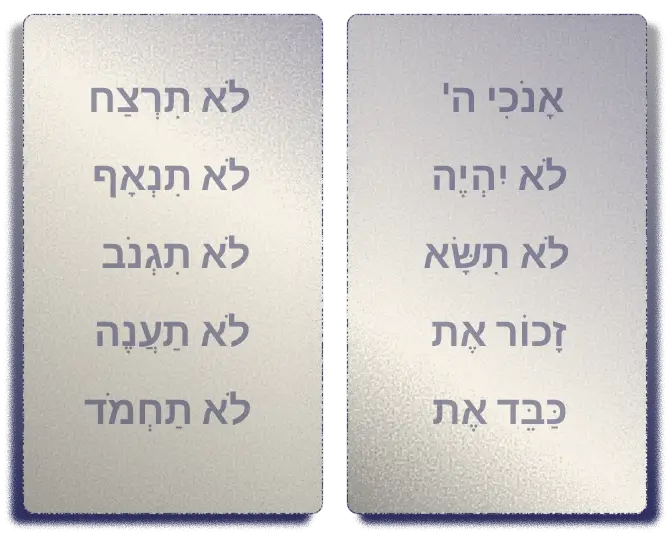
Explore the 613 mitzvos and uncover the meaning behind each one. Discover practical ways to integrate them into your daily life with insights, sources, and guided reflection.
Learn the structure, depth, and spiritual intent behind Jewish prayer. Dive into morning blessings, Shema, Amidah, and more—with tools to enrich your daily connection.
Each week’s parsha offers timeless wisdom and modern relevance. Explore summaries, key themes, and mitzvah connections to deepen your understanding of the Torah cycle.