6.5 — Historical Holiness
The renewal of the covenant described in שמות לד marks the final stage in the transformation that began with the sin of the Golden Calf. The revelation of the Thirteen Middos, the command to carve the second Tablets, and the reestablishment of the covenant all signal the emergence of a new kind of holiness.
Before the Golden Calf, holiness appeared primarily through direct revelation. Divine presence was open and unmistakable, and the covenant was sustained by extraordinary experiences.
After the Golden Calf, the covenant becomes capable of enduring under very different conditions.
Holiness becomes able to survive concealment.
The covenant becomes able to survive history.
This transformation creates the form of covenant life that will sustain Klal Yisrael across generations.
Rav Kook taught that the deepest holiness does not depend on constant revelation. True sanctity can exist even when Divine presence is hidden.
The first Tablets belonged to a world illuminated by open miracles. The second Tablets belong to a world in which holiness develops within the ordinary flow of history.
This change allows the covenant to endure through changing circumstances.
Holiness becomes independent of visible revelation.
Rav Kook described this as a transition from revealed holiness to concealed holiness — holiness that continues even when the light of revelation is no longer visible.
Such holiness proves stronger because it does not depend on extraordinary conditions.
It lives within the life of the nation.
Rav Avigdor Miller emphasized that the greatest test of faith is to recognize Hashem even when miracles are not visible.
The generation of the desert experienced revelation directly. Later generations would need to sustain faith without such clarity.
Rav Miller taught that awareness of Hashem must develop through reflection on the ordinary events of life.
Faith becomes stronger when it rests on understanding rather than on spectacle.
The covenant after the Golden Calf prepares the nation for this reality.
The relationship with Hashem becomes stable because it no longer depends on constant miracles.
Faith becomes permanent.
The covenant renewed in Ki Sisa becomes the covenant that sustains the Jewish people throughout exile.
Later generations would live far from the Mishkan and the Beis HaMikdash. Divine presence would often be hidden, and history would bring periods of difficulty and uncertainty.
Yet the covenant would endure.
This endurance becomes possible because the covenant now rests on:
These elements sustain holiness even when external conditions become difficult.
The covenant becomes independent of place and time.
The breaking of the first Tablets might have appeared to threaten the future of the covenant. Instead, the second Tablets establish a form of holiness that cannot be destroyed.
The covenant now includes the possibility of renewal after failure.
It includes the possibility of faith during concealment.
It includes the possibility of growth through difficulty.
This covenant proves capable of surviving history because it includes the tools necessary for endurance.
Holiness becomes resilient.
The covenant described in שמות לד becomes the covenant that continues throughout Jewish history.
Generations separated from Sinai would still stand within the same relationship with Hashem.
The second Luchos represent a covenant that lives beyond the desert and beyond the generation of revelation.
The covenant becomes eternal because it becomes historical.
Holiness enters time and remains there.
Periods of spiritual clarity can inspire strong commitment, yet lasting faith develops when the relationship with Hashem continues even during times of concealment. Ki Sisa teaches that the covenant became enduring when holiness entered history and no longer depended on constant revelation.
Faith grows stronger when it persists through difficulty. Learning Torah, observing mitzvos, and maintaining commitment during uncertain times create a relationship with Hashem that does not depend on circumstances. Such commitment allows holiness to endure even when inspiration fades.
History presents challenges that test spiritual life, yet the covenant provides the tools for endurance. Prayer, study, and teshuvah allow a person to maintain connection across changing conditions.
Ki Sisa teaches that the covenant established after the Golden Calf created a form of holiness capable of surviving history. When commitment endures through concealment and challenge, the covenant remains alive across generations.
📖 Sources

6.5 — Historical Holiness
The renewal of the covenant described in שמות לד marks the final stage in the transformation that began with the sin of the Golden Calf. The revelation of the Thirteen Middos, the command to carve the second Tablets, and the reestablishment of the covenant all signal the emergence of a new kind of holiness.
Before the Golden Calf, holiness appeared primarily through direct revelation. Divine presence was open and unmistakable, and the covenant was sustained by extraordinary experiences.
After the Golden Calf, the covenant becomes capable of enduring under very different conditions.
Holiness becomes able to survive concealment.
The covenant becomes able to survive history.
This transformation creates the form of covenant life that will sustain Klal Yisrael across generations.
Rav Kook taught that the deepest holiness does not depend on constant revelation. True sanctity can exist even when Divine presence is hidden.
The first Tablets belonged to a world illuminated by open miracles. The second Tablets belong to a world in which holiness develops within the ordinary flow of history.
This change allows the covenant to endure through changing circumstances.
Holiness becomes independent of visible revelation.
Rav Kook described this as a transition from revealed holiness to concealed holiness — holiness that continues even when the light of revelation is no longer visible.
Such holiness proves stronger because it does not depend on extraordinary conditions.
It lives within the life of the nation.
Rav Avigdor Miller emphasized that the greatest test of faith is to recognize Hashem even when miracles are not visible.
The generation of the desert experienced revelation directly. Later generations would need to sustain faith without such clarity.
Rav Miller taught that awareness of Hashem must develop through reflection on the ordinary events of life.
Faith becomes stronger when it rests on understanding rather than on spectacle.
The covenant after the Golden Calf prepares the nation for this reality.
The relationship with Hashem becomes stable because it no longer depends on constant miracles.
Faith becomes permanent.
The covenant renewed in Ki Sisa becomes the covenant that sustains the Jewish people throughout exile.
Later generations would live far from the Mishkan and the Beis HaMikdash. Divine presence would often be hidden, and history would bring periods of difficulty and uncertainty.
Yet the covenant would endure.
This endurance becomes possible because the covenant now rests on:
These elements sustain holiness even when external conditions become difficult.
The covenant becomes independent of place and time.
The breaking of the first Tablets might have appeared to threaten the future of the covenant. Instead, the second Tablets establish a form of holiness that cannot be destroyed.
The covenant now includes the possibility of renewal after failure.
It includes the possibility of faith during concealment.
It includes the possibility of growth through difficulty.
This covenant proves capable of surviving history because it includes the tools necessary for endurance.
Holiness becomes resilient.
The covenant described in שמות לד becomes the covenant that continues throughout Jewish history.
Generations separated from Sinai would still stand within the same relationship with Hashem.
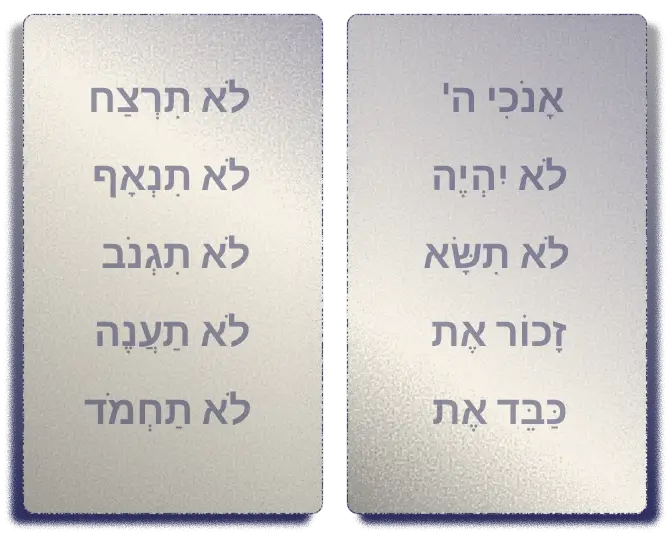
The second Luchos represent a covenant that lives beyond the desert and beyond the generation of revelation.
The covenant becomes eternal because it becomes historical.
Holiness enters time and remains there.
Periods of spiritual clarity can inspire strong commitment, yet lasting faith develops when the relationship with Hashem continues even during times of concealment. Ki Sisa teaches that the covenant became enduring when holiness entered history and no longer depended on constant revelation.
Faith grows stronger when it persists through difficulty. Learning Torah, observing mitzvos, and maintaining commitment during uncertain times create a relationship with Hashem that does not depend on circumstances. Such commitment allows holiness to endure even when inspiration fades.
History presents challenges that test spiritual life, yet the covenant provides the tools for endurance. Prayer, study, and teshuvah allow a person to maintain connection across changing conditions.
Ki Sisa teaches that the covenant established after the Golden Calf created a form of holiness capable of surviving history. When commitment endures through concealment and challenge, the covenant remains alive across generations.
📖 Sources


"Historical Holiness"
"וְשִׁנַּנְתָּם לְבָנֶיךָ"
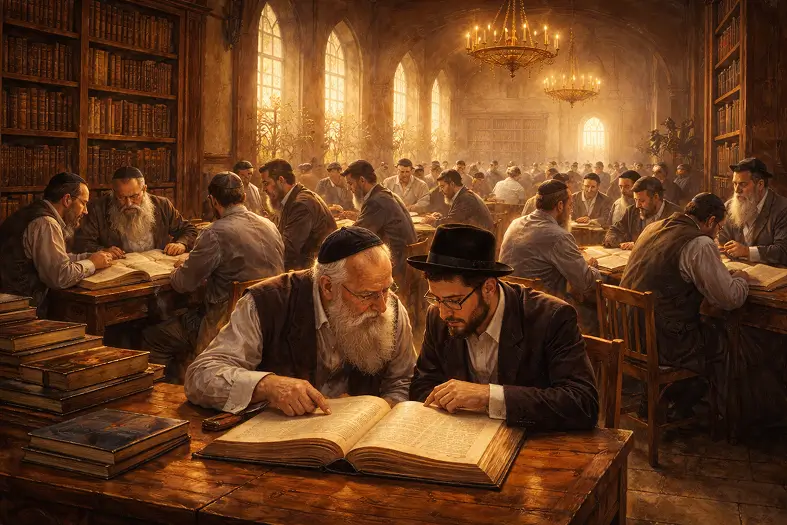
Historical holiness depends on the continuous transmission of Torah across generations. The covenant renewed after the Golden Calf becomes capable of surviving time precisely because Torah can be learned, preserved, and transmitted even in the absence of open revelation. Through Torah study, each generation reconnects to Sinai and sustains the covenant within changing historical conditions.
The second Luchos represent a Torah that lives within history, and this mitzvah ensures that holiness remains alive even in periods of concealment.
"וַעֲבַדְתֶּם אֵת ה׳ אֱלֹקֵיכֶם"
Prayer becomes a central pillar of covenant endurance after the Golden Calf. When revelation is no longer constant and the Divine Presence is less openly revealed, tefillah sustains the living relationship between Hashem and Israel.
Through prayer, the covenant remains active even in exile and difficulty. Tefillah allows holiness to persist across generations and circumstances, preserving awareness of Hashem within the flow of history.
"וְהִתְוַדּוּ אֶת־חַטָּאתָם"
Teshuvah is one of the central foundations of historical holiness. The Golden Calf established repentance as a permanent feature of covenant life, ensuring that failure would never end the relationship between Hashem and Israel.
This mitzvah allows the covenant to endure despite human imperfection. Through confession and return, the bond with Hashem can be restored again and again, making a lasting covenant possible even across generations marked by struggle and change.
Teshuvah transforms failure into renewal and ensures that holiness can survive within history.
"אָנֹכִי ה׳ אֱלֹקֶיךָ"
Knowledge of Hashem forms the foundation of covenant endurance. While the generation of Sinai experienced direct revelation, later generations must come to know Hashem through Torah, reflection, and awareness of Divine providence.
The covenant after the Golden Calf establishes a form of faith that does not depend on constant miracles. This mitzvah expresses the enduring task of recognizing Hashem within the unfolding events of history.
Through this knowledge, holiness remains alive even when Divine presence appears hidden.


"Historical Holiness"
The renewal of the covenant in Shemos 34, including the second Luchos and the revelation of the Thirteen Middos, establishes a lasting covenant capable of enduring beyond the generation of Sinai.

Dive into mitzvos, tefillah, and Torah study—each section curated to help you learn, reflect, and live with intention. New insights are added regularly, creating an evolving space for spiritual growth.

Explore the 613 mitzvos and uncover the meaning behind each one. Discover practical ways to integrate them into your daily life with insights, sources, and guided reflection.

Learn the structure, depth, and spiritual intent behind Jewish prayer. Dive into morning blessings, Shema, Amidah, and more—with tools to enrich your daily connection.

Each week’s parsha offers timeless wisdom and modern relevance. Explore summaries, key themes, and mitzvah connections to deepen your understanding of the Torah cycle.