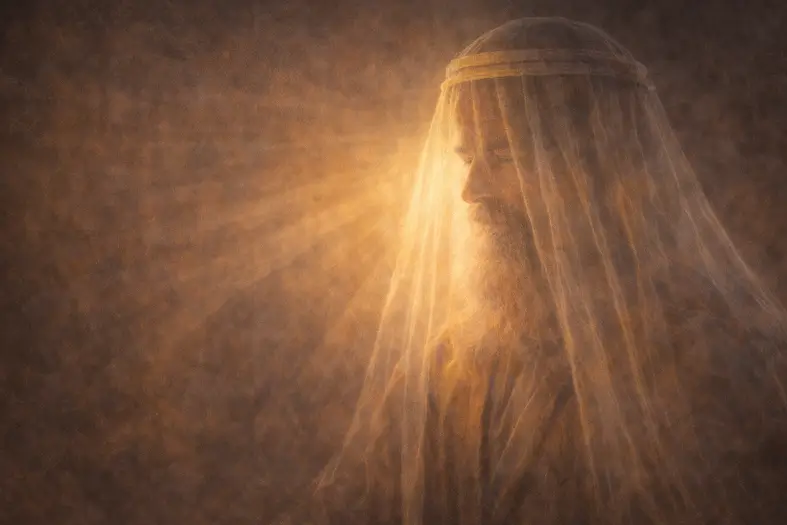
7.3 — Moshe’s Radiance
After receiving the second Tablets and descending from Sinai, Moshe appears transformed:
שמות לד:כט
“וַיְהִי בְּרֶדֶת מֹשֶׁה מֵהַר סִינַי… וּמֹשֶׁה לֹא־יָדַע כִּי קָרַן עוֹר פָּנָיו בְּדַבְּרוֹ אִתּוֹ.”
The Torah describes Moshe’s face as radiant — "קרן עור פניו" — shining with a visible light that inspires awe among the people. Aharon and the elders hesitate to approach him until Moshe calls them near.
This radiance appears not after the first Tablets but after the second. The light emerges from the process of renewal that followed the Golden Calf.
Moshe’s shining face reflects the transformation of the covenant itself.
The renewed Torah transforms the person who lives within it.
The Rambam understood prophecy as the highest level of intellectual and spiritual perfection. A prophet achieves clarity of knowledge and closeness to Hashem through the development of the intellect.
Moshe stands at the summit of this development. His prophecy differs from that of all other prophets in its directness and clarity.
Moshe’s radiance reflects this perfection.
The light shining from Moshe’s face symbolizes the refinement of the human intellect through knowledge of Hashem.
The Torah becomes the path to intellectual illumination.
Through Torah, the human mind approaches Divine wisdom.
The renewed covenant deepens this illumination.
Ramban explains Moshe’s radiance as a physical manifestation of Divine presence. The light shining from Moshe’s face results from his closeness to the Shechinah during his extended stay on Sinai.
Moshe’s encounter with the Divine leaves a visible impression upon him.
The radiance reflects the intensity of that encounter.
Ramban emphasizes that this transformation demonstrates the reality of Divine revelation. Moshe does not merely convey words from Hashem; his very being reflects the experience of revelation.
The Torah leaves its imprint upon the person who receives it.
Moshe becomes a living testimony to Sinai.
Ralbag interpreted prophecy as the perfection of both intellect and character. True closeness to Hashem requires not only knowledge but moral refinement.
Moshe’s radiance expresses the harmony of these qualities.
The light shining from his face reflects a person whose intellect and character have reached extraordinary refinement.
Ralbag emphasizes that Moshe’s transformation results from sustained engagement with Torah and with Hashem’s will.
Spiritual perfection shapes the entire person.
The Torah transforms not only thought but character.
The radiance appears specifically after the giving of the second Tablets.
This detail reflects the deeper transformation that follows the Golden Calf.
The first Tablets represent revelation descending from Heaven.
The second Tablets represent covenant sustained through human effort.
Moshe’s radiance reflects this mature covenant.
Holiness achieved through renewal becomes internalized.
The Torah becomes part of the person.
The Torah describes Moshe placing a veil over his face when speaking to the people, removing it only when returning to speak with Hashem.
This detail reveals another dimension of Moshe’s transformation.
The radiance is not merely a sign of greatness. It represents a level of holiness that ordinary people cannot easily encounter.
Moshe mediates between Divine light and human life.
The veil allows the people to approach.
The Torah becomes accessible through Moshe’s guidance.
Moshe’s shining face reveals a fundamental principle of covenant life.
The Torah does not remain external to the person who studies and lives it.
The Torah transforms the individual.
This transformation includes:
The radiance of Moshe expresses the ultimate form of this transformation.
The covenant shapes the human being.
Rav Avigdor Miller emphasized that Torah study should visibly change a person. Growth in Torah produces refinement in thought, speech, and behavior.
Moshe represents the ultimate example of this transformation.
Rav Miller taught that Torah shapes the entire personality. A person who lives with Torah develops clarity of thought and depth of character.
Even if such transformation is not visibly radiant, it remains real.
Torah changes the person who lives it.
Moshe’s radiance teaches that Torah has the power to transform the human being. The covenant is not only a system of commandments but a path of personal growth that shapes both intellect and character.
Through sustained learning and commitment, a person develops deeper understanding and greater refinement. Torah gradually influences the way a person thinks, speaks, and acts, bringing life into closer alignment with the will of Hashem.
Transformation does not always appear dramatic or immediate. Growth often occurs gradually, through steady effort and renewed commitment. Over time, Torah becomes part of a person’s identity and shapes the direction of life.
Ki Sisa teaches that Moshe’s shining face reflects the highest expression of covenant life. The renewed Torah illuminates the person who lives within it, guiding a life of clarity, growth, and closeness to Hashem.
📖 Sources

7.3 — Moshe’s Radiance
After receiving the second Tablets and descending from Sinai, Moshe appears transformed:
שמות לד:כט
“וַיְהִי בְּרֶדֶת מֹשֶׁה מֵהַר סִינַי… וּמֹשֶׁה לֹא־יָדַע כִּי קָרַן עוֹר פָּנָיו בְּדַבְּרוֹ אִתּוֹ.”
The Torah describes Moshe’s face as radiant — "קרן עור פניו" — shining with a visible light that inspires awe among the people. Aharon and the elders hesitate to approach him until Moshe calls them near.
This radiance appears not after the first Tablets but after the second. The light emerges from the process of renewal that followed the Golden Calf.
Moshe’s shining face reflects the transformation of the covenant itself.
The renewed Torah transforms the person who lives within it.
The Rambam understood prophecy as the highest level of intellectual and spiritual perfection. A prophet achieves clarity of knowledge and closeness to Hashem through the development of the intellect.
Moshe stands at the summit of this development. His prophecy differs from that of all other prophets in its directness and clarity.
Moshe’s radiance reflects this perfection.
The light shining from Moshe’s face symbolizes the refinement of the human intellect through knowledge of Hashem.
The Torah becomes the path to intellectual illumination.
Through Torah, the human mind approaches Divine wisdom.
The renewed covenant deepens this illumination.
Ramban explains Moshe’s radiance as a physical manifestation of Divine presence. The light shining from Moshe’s face results from his closeness to the Shechinah during his extended stay on Sinai.
Moshe’s encounter with the Divine leaves a visible impression upon him.
The radiance reflects the intensity of that encounter.
Ramban emphasizes that this transformation demonstrates the reality of Divine revelation. Moshe does not merely convey words from Hashem; his very being reflects the experience of revelation.
The Torah leaves its imprint upon the person who receives it.
Moshe becomes a living testimony to Sinai.
Ralbag interpreted prophecy as the perfection of both intellect and character. True closeness to Hashem requires not only knowledge but moral refinement.
Moshe’s radiance expresses the harmony of these qualities.
The light shining from his face reflects a person whose intellect and character have reached extraordinary refinement.
Ralbag emphasizes that Moshe’s transformation results from sustained engagement with Torah and with Hashem’s will.
Spiritual perfection shapes the entire person.
The Torah transforms not only thought but character.
The radiance appears specifically after the giving of the second Tablets.
This detail reflects the deeper transformation that follows the Golden Calf.
The first Tablets represent revelation descending from Heaven.
The second Tablets represent covenant sustained through human effort.
Moshe’s radiance reflects this mature covenant.
Holiness achieved through renewal becomes internalized.
The Torah becomes part of the person.
The Torah describes Moshe placing a veil over his face when speaking to the people, removing it only when returning to speak with Hashem.
This detail reveals another dimension of Moshe’s transformation.
The radiance is not merely a sign of greatness. It represents a level of holiness that ordinary people cannot easily encounter.
Moshe mediates between Divine light and human life.
The veil allows the people to approach.
The Torah becomes accessible through Moshe’s guidance.
Moshe’s shining face reveals a fundamental principle of covenant life.
The Torah does not remain external to the person who studies and lives it.
The Torah transforms the individual.
This transformation includes:
The radiance of Moshe expresses the ultimate form of this transformation.
The covenant shapes the human being.
Rav Avigdor Miller emphasized that Torah study should visibly change a person. Growth in Torah produces refinement in thought, speech, and behavior.
Moshe represents the ultimate example of this transformation.
Rav Miller taught that Torah shapes the entire personality. A person who lives with Torah develops clarity of thought and depth of character.
Even if such transformation is not visibly radiant, it remains real.
Torah changes the person who lives it.
Moshe’s radiance teaches that Torah has the power to transform the human being. The covenant is not only a system of commandments but a path of personal growth that shapes both intellect and character.
Through sustained learning and commitment, a person develops deeper understanding and greater refinement. Torah gradually influences the way a person thinks, speaks, and acts, bringing life into closer alignment with the will of Hashem.
Transformation does not always appear dramatic or immediate. Growth often occurs gradually, through steady effort and renewed commitment. Over time, Torah becomes part of a person’s identity and shapes the direction of life.
Ki Sisa teaches that Moshe’s shining face reflects the highest expression of covenant life. The renewed Torah illuminates the person who lives within it, guiding a life of clarity, growth, and closeness to Hashem.
📖 Sources


"Moshe’s Radiance"
“וְשִׁנַּנְתָּם לְבָנֶיךָ”
Moshe’s radiance reflects the transformative power of Torah. The mitzvah of Torah study expresses the ongoing process through which the covenant shapes intellect and character.
“אָנֹכִי ה׳ אֱלֹקֶיךָ”
Knowledge of Hashem refines the human intellect and draws a person closer to Divine wisdom. Moshe’s radiance represents the highest level of such knowledge.
“וְהָלַכְתָּ בִּדְרָכָיו”
The transformation of Moshe reflects the ideal of imitating Hashem’s attributes through refined character and conduct.
“וְהִתְוַדּוּ אֶת־חַטָּאתָם”
Moshe’s radiance emerges after the renewal of the covenant following the Golden Calf, illustrating how spiritual transformation follows repentance and renewal.


"Moshe’s Radiance"
After receiving the second Luchos, Moshe descends from Sinai with a radiant face — "קרן עור פניו". The radiance reflects the transformation produced by renewed covenant and sustained closeness to Hashem.

Dive into mitzvos, tefillah, and Torah study—each section curated to help you learn, reflect, and live with intention. New insights are added regularly, creating an evolving space for spiritual growth.

Explore the 613 mitzvos and uncover the meaning behind each one. Discover practical ways to integrate them into your daily life with insights, sources, and guided reflection.

Learn the structure, depth, and spiritual intent behind Jewish prayer. Dive into morning blessings, Shema, Amidah, and more—with tools to enrich your daily connection.

Each week’s parsha offers timeless wisdom and modern relevance. Explore summaries, key themes, and mitzvah connections to deepen your understanding of the Torah cycle.