7.4 — The Veil and Transmission
After the giving of the second Luchos, the Torah describes a striking detail about Moshe’s relationship with the people:
שמות לד:לג–לה
“וַיְכַל מֹשֶׁה מִדַּבֵּר אִתָּם וַיִּתֵּן עַל־פָּנָיו מַסְוֶה… וּבְבֹא מֹשֶׁה לִפְנֵי ה׳ לְדַבֵּר אִתּוֹ יָסִיר אֶת־הַמַּסְוֶה… וְרָאוּ בְּנֵי יִשְׂרָאֵל אֶת־פְּנֵי מֹשֶׁה כִּי קָרַן עוֹר פְּנֵי מֹשֶׁה וְהֵשִׁיב מֹשֶׁה אֶת־הַמַּסְוֶה עַל־פָּנָיו.”
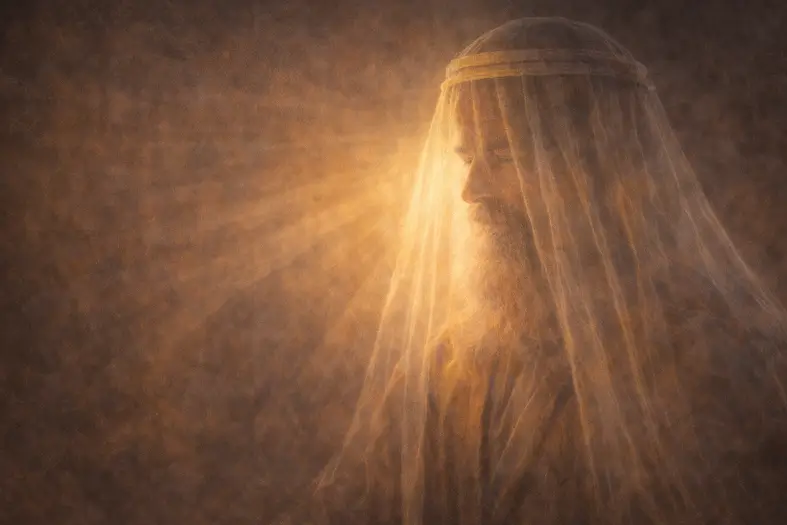
Moshe removes the veil when speaking with Hashem and when transmitting Torah to the people, but afterward he replaces it. The Torah carefully describes this pattern, emphasizing that the veil becomes a permanent feature of Moshe’s leadership.
This veil is not merely a practical response to the people's fear. It reveals a deeper principle about how Torah must be transmitted.
Torah must be given in a form that the nation can receive.
Rashi explains that Moshe covered his face because the radiance frightened the people. When Moshe spoke to them, he removed the veil so that they could hear the words of Torah directly. Afterward he replaced the covering.
The sequence reveals an important pattern:
Rashi emphasizes that the Torah must be communicated clearly and directly. The people must encounter the Torah itself rather than merely the awe inspired by Moshe’s radiance.
The veil removes unnecessary fear.
Torah becomes approachable.
Ralbag explains the veil as part of Moshe’s role as teacher of the nation. The intensity of Moshe’s prophetic experience exceeded what the people could sustain.
The veil allowed Moshe to relate to the nation in a way suited to their level.
Ralbag understood prophecy as intellectual illumination. Moshe’s level of knowledge stood far beyond that of the people, yet the Torah had to be taught in a form accessible to all Israel.
Transmission requires adaptation.
True teaching adjusts to the capacity of the listener.
The veil symbolizes this adjustment.
At Sinai the Torah was revealed directly through Divine speech. The people experienced revelation together.
After Sinai, the Torah would be transmitted through teaching.
Moshe becomes the first teacher of Torah.
The veil reflects this transition.
Revelation becomes education.
The covenant becomes sustainable because Torah can be taught across generations.
The Torah given at Sinai belonged to the entire nation, but it had to be transmitted in a structured way in order to become a lasting inheritance.
Moshe’s veil represents the process through which Torah becomes a national possession.
Transmission requires:
Through this process, the Torah becomes accessible to all Israel.
The covenant becomes stable because the Torah becomes teachable.
Rav Avigdor Miller emphasized that Torah must be taught in practical and understandable ways. Wisdom that remains abstract or inaccessible cannot transform life.
Rav Miller stressed that the purpose of Torah teaching is growth. A teacher must communicate in a way that reaches the student and produces real understanding.
Moshe’s veil reflects this principle.
Torah becomes effective when it becomes understandable.
Teaching transforms knowledge into life.
The Torah describes Moshe’s pattern in careful detail:
This pattern reflects the structure of Torah transmission.
The teacher receives Torah in its fullness.
The teacher communicates Torah clearly.
The teacher then returns to ordinary life among the people.
Through this structure, the Torah becomes accessible without losing its depth.
The veil of Moshe teaches that Torah must be transmitted in a way that people can truly receive. Wisdom that remains beyond reach cannot become part of life. Torah teaching must therefore be clear, structured, and suited to the needs of the learner.
Effective teaching balances depth with accessibility. The goal is not only to convey information but to help students internalize Torah and make it their own. When Torah is taught in a way that respects the listener’s capacity, learning becomes meaningful and lasting.
Transmission also requires patience. Torah becomes a national inheritance through steady teaching across generations. Each teacher participates in the same process that began with Moshe, making Torah accessible to new learners while preserving its depth.
Ki Sisa teaches that Moshe’s veil represents the structure of Torah transmission. When Torah is taught properly, it becomes the shared possession of the entire nation and sustains covenant life across generations.
📖 Sources

7.4 — The Veil and Transmission
After the giving of the second Luchos, the Torah describes a striking detail about Moshe’s relationship with the people:
שמות לד:לג–לה
“וַיְכַל מֹשֶׁה מִדַּבֵּר אִתָּם וַיִּתֵּן עַל־פָּנָיו מַסְוֶה… וּבְבֹא מֹשֶׁה לִפְנֵי ה׳ לְדַבֵּר אִתּוֹ יָסִיר אֶת־הַמַּסְוֶה… וְרָאוּ בְּנֵי יִשְׂרָאֵל אֶת־פְּנֵי מֹשֶׁה כִּי קָרַן עוֹר פְּנֵי מֹשֶׁה וְהֵשִׁיב מֹשֶׁה אֶת־הַמַּסְוֶה עַל־פָּנָיו.”
Moshe removes the veil when speaking with Hashem and when transmitting Torah to the people, but afterward he replaces it. The Torah carefully describes this pattern, emphasizing that the veil becomes a permanent feature of Moshe’s leadership.
This veil is not merely a practical response to the people's fear. It reveals a deeper principle about how Torah must be transmitted.
Torah must be given in a form that the nation can receive.
Rashi explains that Moshe covered his face because the radiance frightened the people. When Moshe spoke to them, he removed the veil so that they could hear the words of Torah directly. Afterward he replaced the covering.
The sequence reveals an important pattern:
Rashi emphasizes that the Torah must be communicated clearly and directly. The people must encounter the Torah itself rather than merely the awe inspired by Moshe’s radiance.
The veil removes unnecessary fear.
Torah becomes approachable.
Ralbag explains the veil as part of Moshe’s role as teacher of the nation. The intensity of Moshe’s prophetic experience exceeded what the people could sustain.
The veil allowed Moshe to relate to the nation in a way suited to their level.
Ralbag understood prophecy as intellectual illumination. Moshe’s level of knowledge stood far beyond that of the people, yet the Torah had to be taught in a form accessible to all Israel.
Transmission requires adaptation.
True teaching adjusts to the capacity of the listener.
The veil symbolizes this adjustment.
At Sinai the Torah was revealed directly through Divine speech. The people experienced revelation together.
After Sinai, the Torah would be transmitted through teaching.
Moshe becomes the first teacher of Torah.
The veil reflects this transition.
Revelation becomes education.
The covenant becomes sustainable because Torah can be taught across generations.
The Torah given at Sinai belonged to the entire nation, but it had to be transmitted in a structured way in order to become a lasting inheritance.
Moshe’s veil represents the process through which Torah becomes a national possession.
Transmission requires:
Through this process, the Torah becomes accessible to all Israel.
The covenant becomes stable because the Torah becomes teachable.
Rav Avigdor Miller emphasized that Torah must be taught in practical and understandable ways. Wisdom that remains abstract or inaccessible cannot transform life.
Rav Miller stressed that the purpose of Torah teaching is growth. A teacher must communicate in a way that reaches the student and produces real understanding.
Moshe’s veil reflects this principle.
Torah becomes effective when it becomes understandable.
Teaching transforms knowledge into life.
The Torah describes Moshe’s pattern in careful detail:
This pattern reflects the structure of Torah transmission.
The teacher receives Torah in its fullness.
The teacher communicates Torah clearly.
The teacher then returns to ordinary life among the people.
Through this structure, the Torah becomes accessible without losing its depth.
The veil of Moshe teaches that Torah must be transmitted in a way that people can truly receive. Wisdom that remains beyond reach cannot become part of life. Torah teaching must therefore be clear, structured, and suited to the needs of the learner.
Effective teaching balances depth with accessibility. The goal is not only to convey information but to help students internalize Torah and make it their own. When Torah is taught in a way that respects the listener’s capacity, learning becomes meaningful and lasting.
Transmission also requires patience. Torah becomes a national inheritance through steady teaching across generations. Each teacher participates in the same process that began with Moshe, making Torah accessible to new learners while preserving its depth.
Ki Sisa teaches that Moshe’s veil represents the structure of Torah transmission. When Torah is taught properly, it becomes the shared possession of the entire nation and sustains covenant life across generations.
📖 Sources


“The Veil and Transmission”
"וְשִׁנַּנְתָּם לְבָנֶיךָ"
Moshe’s veil symbolizes the structured transmission of Torah from teacher to student. After Sinai, the covenant depends not only on revelation but on the ongoing teaching of Torah in forms that each generation can understand and receive.
This mitzvah transforms Torah from a moment of revelation into a permanent national inheritance. Through teaching and learning, the Torah becomes accessible to all Israel and sustains covenant life across generations.
"אָנֹכִי ה׳ אֱלֹקֶיךָ"
Moshe’s transmission of Torah made knowledge of Hashem accessible to the entire nation. The veil reflects the process through which Divine knowledge is communicated in a way human beings can grasp.
Through Torah learning, knowledge of Hashem becomes part of the life of the nation rather than remaining limited to prophetic experience.
"וְהָלַכְתָּ בִּדְרָכָיו"
Teaching Torah with sensitivity reflects the Divine attribute of compassion. Just as Hashem reveals Himself in ways human beings can receive, Torah teachers must communicate in ways appropriate to the listener.
Moshe’s veil represents this principle of measured revelation and responsible transmission.
"וְאָהַבְתָּ אֵת ה׳ אֱלֹקֶיךָ"
Love of Hashem grows through understanding Torah. Proper transmission of Torah allows the covenant to be internalized emotionally as well as intellectually.
Moshe’s teaching transformed revelation into a relationship that could be experienced by the entire nation.


"The Veil and Transmission"
Moshe covers his face with a veil after teaching the people. He removes it when speaking with Hashem and when transmitting Torah. This pattern reflects the structure through which Torah is taught and transmitted to the nation.

Dive into mitzvos, tefillah, and Torah study—each section curated to help you learn, reflect, and live with intention. New insights are added regularly, creating an evolving space for spiritual growth.

Explore the 613 mitzvos and uncover the meaning behind each one. Discover practical ways to integrate them into your daily life with insights, sources, and guided reflection.

Learn the structure, depth, and spiritual intent behind Jewish prayer. Dive into morning blessings, Shema, Amidah, and more—with tools to enrich your daily connection.

Each week’s parsha offers timeless wisdom and modern relevance. Explore summaries, key themes, and mitzvah connections to deepen your understanding of the Torah cycle.