"Living With Emunah Inside Constriction"

Mitzvah Minute Logo Icon

Parshas Shemos — Lessons for today

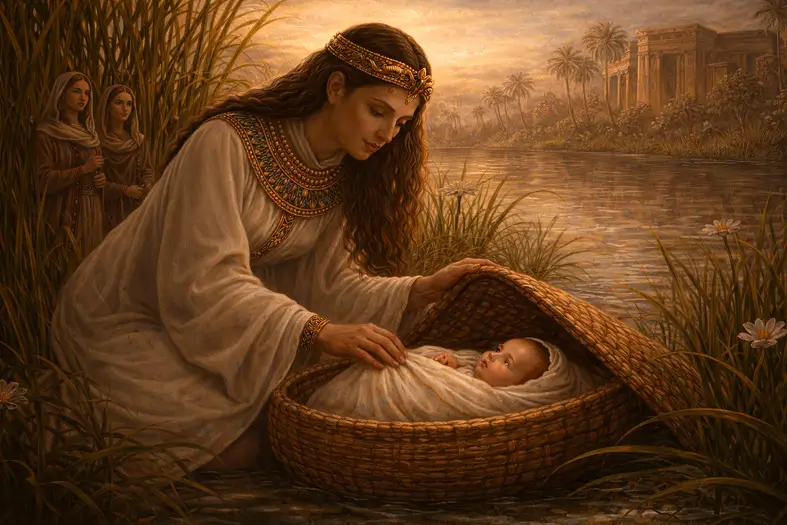
Bas Pharaoh (Batya) saving Moshe by the Nile
Parshas Shemos teaches that faith is often forged not in clarity, but in constriction. Drawing directly from the Torah’s lived realities of exile, this essay explores how emunah is sustained when answers are absent, timelines are withheld, and pressure feels unrelenting. Rather than offering escape, Shemos models a way of living faithfully inside limitation—through presence, responsibility, and quiet endurance. “Living With Emunah Inside Constriction” reframes daily struggle as a sacred arena, showing how redemption begins not by leaving hardship behind, but by remaining spiritually awake within it.

"Living With Emunah Inside Constriction"

Parshas Shemos — Lessons for today

Parshas Shemos speaks to moments when life feels narrow, pressured, and morally confusing — when responsibility grows heavier before relief appears, and clarity seems delayed rather than granted. The Torah does not present redemption as an escape from reality, but as a transformation that begins within it. Long before the sea splits, the work of geulah is already underway in quiet decisions, disciplined faith, and moral courage exercised under strain.

Shemos teaches that the first stage of redemption is not external freedom, but inner alignment. Israel does not leave Egypt because conditions improve; conditions worsen. Brick quotas increase, hope is mocked, and leadership itself becomes a source of disappointment. Yet it is precisely here that the Torah locates growth: faith that survives pressure, leadership that matures through humility, and responsibility that deepens when outcomes are uncertain.

Responsibility Before Relief

One of the most striking lessons of Shemos is that doing the right thing may initially make life harder. Moshe speaks in Hashem’s Name, and suffering intensifies. Pharaoh tightens control. The people protest. From a surface perspective, obedience appears counterproductive. From the Torah’s perspective, this is the necessary refining stage before true change can occur.

Applied to life today, Shemos teaches that:

  • Moral action is not validated by immediate success
  • Setbacks do not mean one has misread Hashem’s will
  • Growth often begins when illusions of control are removed

Faith that depends on visible progress cannot survive prolonged challenge. Faith that persists despite delay becomes resilient and transformative.

Seeing Suffering Without Turning Away

Shemos emphasizes the act of seeing. Moshe goes out to see the burdens of his brothers. Hashem declares that He has seen the affliction of His people. Redemption begins when suffering is neither ignored nor explained away.

This carries a powerful application:

  • Do not normalize injustice because it is widespread
  • Do not avert attention because the problem feels unsolvable
  • Do not reduce people to systems, quotas, or categories

The Torah does not require us to fix everything — but it does require us not to look away. Moral vision is itself a form of action.

Speech, Silence, and Integrity

Another defining theme of Shemos is speech under pressure. Pharaoh speaks with authority but without truth. Moshe struggles to speak, precisely because he refuses to distort language. The Torah teaches that corrupted speech sustains oppression, while honest speech — even when halting — begins to dismantle it.

In daily life, this translates into care with words:

  • Speaking truthfully without cruelty
  • Refusing to participate in language that dehumanizes
  • Knowing when silence protects and when it enables harm

Speech rooted in yiras Shamayim may not be eloquent, but it carries moral weight.

Leadership as Burden, Not Status

Shemos reframes leadership entirely. Moshe does not seek prominence; he resists it. He doubts himself, fears failure, and carries the pain of the people personally. Leadership, in the Torah’s vision, is not self-expression — it is self-obligation.

For parents, educators, community members, and professionals, Shemos teaches that leadership means:

  • Carrying responsibility even when unappreciated
  • Remaining accountable even when misunderstood
  • Accepting limits while still acting faithfully

True leadership is measured not by control, but by willingness to remain committed when conditions are unrewarding.

Faith Without Timetables

Perhaps the most enduring application of Shemos is learning how to live faithfully without knowing when relief will come. Hashem reveals His Name as ongoing presence, not predictable outcome. “I will be with you” replaces guarantees of ease.

This reshapes how we approach uncertainty:

  • We are not asked to calculate redemption
  • We are asked to live responsibly within concealment
  • We are not promised clarity — we are promised presence

Shemos trains us to build lives anchored in obligation, emunah, and moral steadiness, even when the horizon remains unclear.

Preparing Redemption in Advance

Shemos ends without resolution. Egypt still stands. Pharaoh still resists. Yet something irreversible has already begun. Awareness has shifted. Responsibility has deepened. Faith has been articulated aloud.

The Torah’s message is subtle but demanding: redemption is prepared long before it arrives.

Through choosing integrity under pressure
Through sustaining faith without reassurance
Through speaking truth without dominance
Through seeing suffering and refusing to normalize it

Parshas Shemos teaches that when we live this way — patiently, responsibly, and with emunah — we do not merely wait for redemption. We quietly help bring it closer.

📖 Sources

  • Full sources available on the Mitzvah Minute Parshas Shemos page under insights and commentaries.

Organized by:
Boaz Solowitch
January 3, 2026
Mitzvah Minute Logo Icon

Connections

Mitzvah Minute Logo Icon

Mitzvah Links

Mitzvah 1

To know there is a G‑d
A Siddur
Learn this Mitzvah

Mitzvah 1

1
To know there is a G‑d

Mitzvah 5

To fear Him
A Siddur
Learn this Mitzvah

Mitzvah 5

5
To fear Him

Mitzvah 11

To emulate His ways
A Siddur
Learn this Mitzvah

Mitzvah 11

11
To emulate His ways
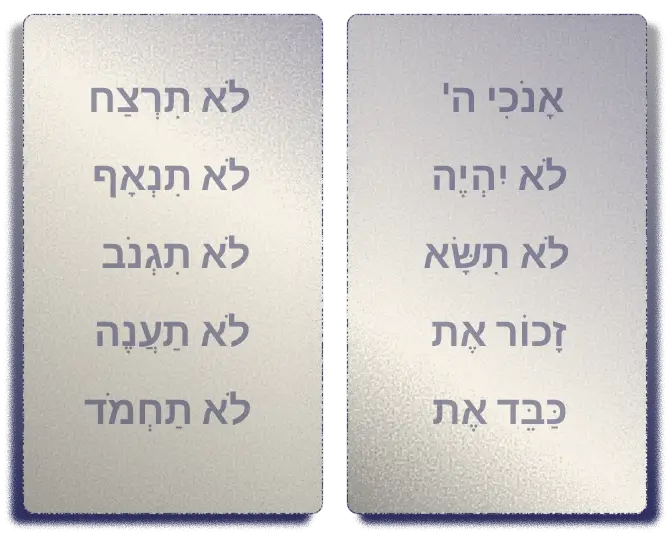
The Luchos - Ten Commandments
View Mitzvah Notes

Mitzvah Reference Notes

"x" close page navigation button

Mitzvah Reference Notes

“Living With Emunah Inside Constriction
Parshas Shemos — Lessons for Today”

Mitzvah #1 — To know there is a G-d (Exodus 20:2)

אָנֹכִי ה׳ אֱלֹקֶיךָ

Parshas Shemos reframes this mitzvah as lived awareness rather than intellectual certainty. In exile, knowledge of Hashem is not expressed through clarity or prediction, but through sustained trust when redemption is delayed. The people’s struggle with קֹצֶר רוּחַ reveals that emunah is often tested precisely when awareness feels constricted. This mitzvah is fulfilled by maintaining recognition of Hashem’s presence even when outcomes remain hidden and pressure persists.

Mitzvah #5 — To fear Him (Deuteronomy 10:20)

אֶת־ה׳ אֱלֹקֶיךָ תִּירָא

Fear of Hashem in Shemos is not emotional dread but reverent loyalty under strain. The Torah depicts individuals who continue to act faithfully despite danger, exhaustion, and uncertainty. Yiras Shamayim emerges here as spiritual steadiness—the refusal to abandon responsibility or moral clarity when circumstances are harsh. This mitzvah teaches that reverence is expressed through endurance and restraint, not only through feeling.

Mitzvah #11 — To emulate His ways (Deuteronomy 28:9)

וְהָלַכְתָּ בִדְרָכָיו

Hashem’s conduct in Parshas Shemos models presence without immediacy and guidance without guarantees. Emulating His ways therefore means learning to remain present, patient, and faithful even when relief is delayed. Living with emunah inside constriction reflects this Divine mode: accompanying others, sustaining commitment, and acting responsibly without demanding timelines. The mitzvah is fulfilled through steady moral presence amid uncertainty.

Parsha Links

שְׁמוֹת – Shemos

Haftarah: Isaiah 27:6 - 28:13; Isaiah 29:22-23
A Siddur
Learn this Parsha

שְׁמוֹת – Shemos

שְׁמוֹת – Shemos
The Luchos - Ten Commandments
View Parsha Notes
"x" close page navigation button

Parsha Reference Notes

“Living With Emunah Inside Constriction
Parshas Shemos — Lessons for Today”

Parshas Shemos (Exodus 1:1–6:1)

Parshas Shemos portrays a reality in which redemption is promised but not yet visible, and faith must be sustained under pressure rather than clarity. Israel groans beneath oppression, Moshe struggles with doubt and limitation, and Divine deliverance unfolds gradually, without timetables or immediate relief. The Torah describes the people’s inability to hear words of redemption due to “קֹצֶר רוּחַ וַעֲבֹדָה קָשָׁה”—constriction of spirit and crushing labor—revealing that spiritual endurance is often tested precisely when conditions feel most narrow. Shemos thus frames emunah not as certainty about outcomes, but as fidelity within uncertainty. Faith is lived through presence, responsibility, and continued commitment even when answers are withheld. The parsha teaches that redemption begins forming inside constriction itself, as trust in Hashem is maintained without escape from difficulty.

Mitzvah Minute
Mitzvah Minute Logo

Learn more.

Dive into mitzvos, tefillah, and Torah study—each section curated to help you learn, reflect, and live with intention. New insights are added regularly, creating an evolving space for spiritual growth.

Luchos
Live a commandment-driven life

Mitzvah

Explore the 613 mitzvos and uncover the meaning behind each one. Discover practical ways to integrate them into your daily life with insights, sources, and guided reflection.

Learn more

Mitzvah #

5

To fear Him
The Luchos - Ten Commandments
Learn this Mitzvah

Mitzvah Highlight

Siddur
Connection through Davening

Tefillah

Learn the structure, depth, and spiritual intent behind Jewish prayer. Dive into morning blessings, Shema, Amidah, and more—with tools to enrich your daily connection.

Learn more

Tefillah

COMING SOON.
A Siddur
Learn this Tefillah

Tefillah Focus

A Sefer Torah
Study the weekly Torah portion

Parsha

Each week’s parsha offers timeless wisdom and modern relevance. Explore summaries, key themes, and mitzvah connections to deepen your understanding of the Torah cycle.

Learn more

וָאֵרָא – Va’eira

Haftarah: Ezekiel 28:25 - 29:21
A Sefer Torah
Learn this Parsha

Weekly Parsha