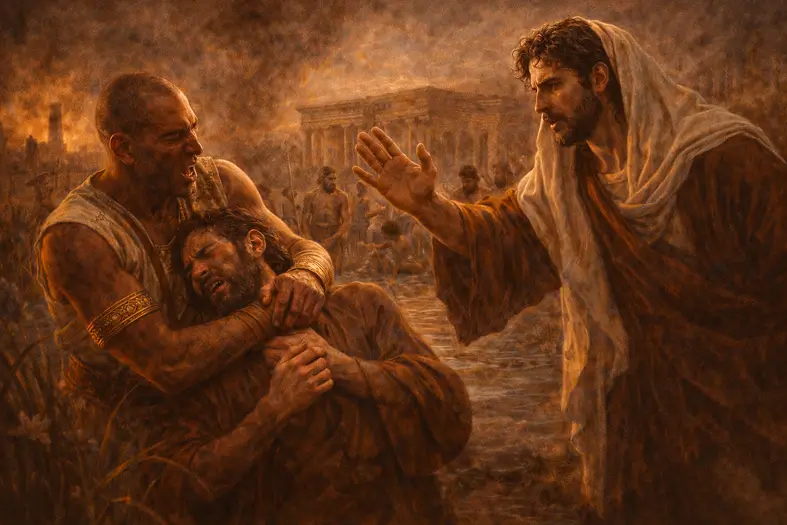
Moshe and the Egyptian: When Stopping Violence Raises New Questions
Moshe’s first recorded act as a redeemer is not speech, prayer, or prophecy.
It is intervention.
“וַיַּרְא אִישׁ מִצְרִי מַכֶּה אִישׁ עִבְרִי”
“He saw an Egyptian striking a Hebrew man.” (Shemos 2:11)
Moshe looks.
Moshe understands.
Moshe acts.
And yet, unlike the midwives or Bat-Paroh, this act does not lead immediately toward redemption. Instead, it produces fear, flight, and exile.
The Torah insists that we do not read this moment simplistically. Stopping violence is necessary — but how it is done, under what conditions, and with what consequences matters deeply.
Ramban notices something unusual. The Torah lingers over details that seem unnecessary if Moshe’s act were unambiguous.
Ramban asks:
If Moshe acted righteously, why the anxiety?
Why the need to check witnesses?
Why the danger of informers?
His answer is sobering. Moshe was morally justified — but the legal and social environment was broken. There was no court, no trust, no system capable of absorbing justice without collapse.
Moral urgency does not eliminate procedural risk.
This is the Torah’s hardest tension.
Moshe kills in order to stop lethal violence.
The Torah neither condemns nor celebrates the act. Instead, it exposes its cost.
Even when murder must be stopped, violence creates ripple effects:
The Torah refuses the fantasy of clean heroism.
Stopping violence is sometimes necessary.
But it is never simple.
Moshe’s fear is not abstract.
“אָכֵן נוֹדַע הַדָּבָר”
“Surely the matter is known.”
Ramban emphasizes the role of informers. A society that tolerates violence also destroys trust. Once betrayal becomes normal, even righteous action becomes dangerous.
Moshe realizes that Israel is not yet ready for redemption — not because of powerlessness, but because internal fracture makes justice impossible.
This realization sends him into exile.
The Torah draws a line.
But he does not yet possess communal authority.
The Torah teaches that stopping violence requires not only courage, but legitimacy. Without structures of law and accountability, even necessary acts fracture society further.
Redemption must therefore wait.
This episode speaks with painful relevance.
There are moments when violence must be stopped immediately.
There are moments when delay is complicity.
And yet the Torah warns: urgency does not abolish consequence.
Moshe’s act teaches that even morally necessary intervention can carry:
Wisdom lies in recognizing both truths simultaneously.
Explained:
The Torah refuses absolutism.
It demands moral courage and moral restraint.
Moshe stops violence — and is forced to flee.
Not because he was wrong,
but because the world was not yet ready to absorb justice.
The Torah teaches that redemption requires more than bravery.
It requires a society capable of sustaining life without unraveling itself.
Until then, even necessary acts will hurt.
That is not a failure of Moshe.
It is the Torah’s insistence on truth.
📖 Sources


Moshe and the Egyptian: When Stopping Violence Raises New Questions
Moshe’s first recorded act as a redeemer is not speech, prayer, or prophecy.
It is intervention.
“וַיַּרְא אִישׁ מִצְרִי מַכֶּה אִישׁ עִבְרִי”
“He saw an Egyptian striking a Hebrew man.” (Shemos 2:11)
Moshe looks.
Moshe understands.
Moshe acts.
And yet, unlike the midwives or Bat-Paroh, this act does not lead immediately toward redemption. Instead, it produces fear, flight, and exile.
The Torah insists that we do not read this moment simplistically. Stopping violence is necessary — but how it is done, under what conditions, and with what consequences matters deeply.
Ramban notices something unusual. The Torah lingers over details that seem unnecessary if Moshe’s act were unambiguous.
Ramban asks:
If Moshe acted righteously, why the anxiety?
Why the need to check witnesses?
Why the danger of informers?
His answer is sobering. Moshe was morally justified — but the legal and social environment was broken. There was no court, no trust, no system capable of absorbing justice without collapse.
Moral urgency does not eliminate procedural risk.
This is the Torah’s hardest tension.
Moshe kills in order to stop lethal violence.
The Torah neither condemns nor celebrates the act. Instead, it exposes its cost.
Even when murder must be stopped, violence creates ripple effects:
The Torah refuses the fantasy of clean heroism.
Stopping violence is sometimes necessary.
But it is never simple.
Moshe’s fear is not abstract.
“אָכֵן נוֹדַע הַדָּבָר”
“Surely the matter is known.”
Ramban emphasizes the role of informers. A society that tolerates violence also destroys trust. Once betrayal becomes normal, even righteous action becomes dangerous.
Moshe realizes that Israel is not yet ready for redemption — not because of powerlessness, but because internal fracture makes justice impossible.
This realization sends him into exile.
The Torah draws a line.
But he does not yet possess communal authority.
The Torah teaches that stopping violence requires not only courage, but legitimacy. Without structures of law and accountability, even necessary acts fracture society further.
Redemption must therefore wait.
This episode speaks with painful relevance.
There are moments when violence must be stopped immediately.
There are moments when delay is complicity.
And yet the Torah warns: urgency does not abolish consequence.
Moshe’s act teaches that even morally necessary intervention can carry:
Wisdom lies in recognizing both truths simultaneously.
Explained:
The Torah refuses absolutism.
It demands moral courage and moral restraint.
Moshe stops violence — and is forced to flee.
Not because he was wrong,
but because the world was not yet ready to absorb justice.
The Torah teaches that redemption requires more than bravery.
It requires a society capable of sustaining life without unraveling itself.
Until then, even necessary acts will hurt.
That is not a failure of Moshe.
It is the Torah’s insistence on truth.
📖 Sources


“The Anti-Murder Axis
Moshe and the Egyptian: When Stopping Violence Raises New Questions”
לֹא תַעֲמֹד עַל דַּם רֵעֶךָ
Moshe’s intervention embodies the Torah’s rejection of passivity in the face of lethal harm. Seeing an Egyptian beating a Hebrew, Moshe refuses to stand aside. This mitzvah emerges here as a demand for action when life is threatened. Yet Parshas Shemos also teaches that fulfilling this obligation can entail grave personal and communal consequences when legal structures are absent. The Torah affirms the duty to intervene while simultaneously revealing the dangers of a world without courts, trust, or authority to absorb justice.
לֹא תִרְצָח
Parshas Shemos presents a moment where stopping murder appears to require lethal force. Moshe intervenes when he sees an Egyptian striking a Hebrew slave, acting to halt ongoing violence. The Torah neither celebrates nor condemns the act outright; instead, it exposes the cost and consequence that follow. This narrative teaches that the prohibition of murder remains absolute even when violence must be stopped, and that such moments generate halachic and moral tension rather than simple resolution. The issur of murder is upheld not by denying urgency, but by refusing to normalize killing even in pursuit of justice.
וְהָלַכְתָּ בִדְרָכָיו
Hashem’s ways unite justice with order and compassion with restraint. Moshe’s act reflects Divine concern for the victim, but the aftermath exposes the limits of unilateral action in a fractured society. Emulating Hashem’s ways therefore includes not only moral courage, but commitment to law, process, and legitimacy. Parshas Shemos teaches that redemption requires more than stopping violence—it requires building conditions in which justice can endure without unraveling the community.


“The Anti-Murder Axis
Moshe and the Egyptian: When Stopping Violence Raises New Questions”
Parshas Shemos presents Moshe’s first act of intervention as morally urgent yet deeply complex. When Moshe sees an Egyptian striking a Hebrew slave, he acts decisively to stop lethal violence. However, the Torah deliberately slows the narrative, emphasizing Moshe’s careful assessment—“וַיִּפֶן כֹּה וָכֹה” and “וַיַּרְא כִּי אֵין אִישׁ”—and his immediate fear upon realizing the act has become known. Ramban explains that Moshe’s anxiety reflects the absence of legal structure, communal trust, and judicial authority. Although the violence had to be stopped, the surrounding society was incapable of absorbing justice without unraveling further. The presence of informers and the collapse of internal trust reveal that redemption cannot proceed through force alone. Parshas Shemos thus teaches that while the defense of life is paramount, lasting justice requires law, legitimacy, and communal integrity. Moral courage is necessary—but without structures to sustain it, even righteous intervention carries painful consequences and delays redemption.

Dive into mitzvos, tefillah, and Torah study—each section curated to help you learn, reflect, and live with intention. New insights are added regularly, creating an evolving space for spiritual growth.

Explore the 613 mitzvos and uncover the meaning behind each one. Discover practical ways to integrate them into your daily life with insights, sources, and guided reflection.

Learn the structure, depth, and spiritual intent behind Jewish prayer. Dive into morning blessings, Shema, Amidah, and more—with tools to enrich your daily connection.

Each week’s parsha offers timeless wisdom and modern relevance. Explore summaries, key themes, and mitzvah connections to deepen your understanding of the Torah cycle.