www.Mitzvah-Minute.com
"Mishpatim — Part III — The Hebrew Servant"
3.4 — Application: Freedom as a Spiritual Obligation
Freedom Misunderstood
In the modern imagination, freedom often means the absence of limits: the right to choose without constraint, to define oneself without obligation, to live without any authority higher than the self. It is a powerful ideal—and it contains a hidden contradiction. If freedom is only “no one tells me what to do,” then the loudest forces in society become the new masters: appetite, fashion, status, money, and fear.
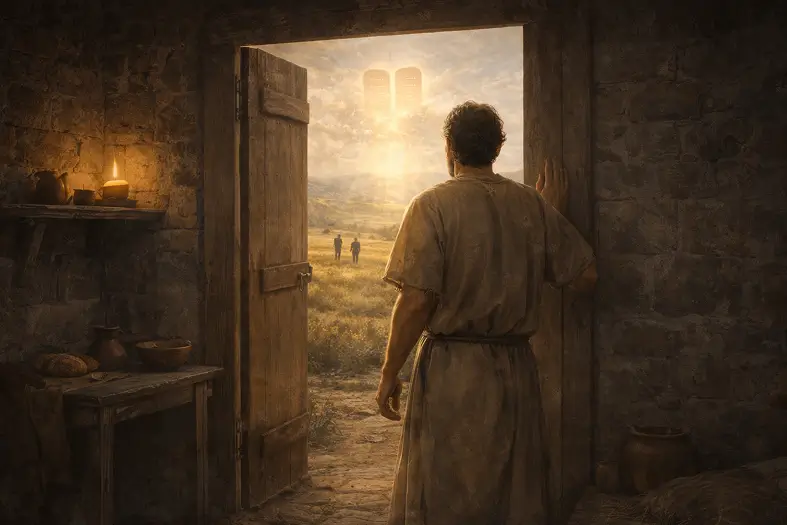
Parshas Mishpatim, in its opening laws of the Hebrew servant, offers a Torah definition of freedom that is both stricter and more uplifting. It teaches that true freedom is not autonomy. It is belonging—belonging to Hashem.
The Torah states this explicitly: [וִיקְרָא כ״ה:נ״ה — “כִּי לִי בְּנֵי יִשְׂרָאֵל עֲבָדִים” — “For the Children of Israel are servants to Me.”] The verse defines an identity. Israel’s freedom is the freedom of covenant: released from Pharaoh in order to serve Hashem alone.
A People Redeemed for Service
Rabbi Jonathan Sacks often emphasized that the Exodus is not simply a liberation-from. It is a liberation-to. Hashem does not take Israel out of Egypt so they can drift without purpose. He takes them out to bind them to a covenant, a shared moral destiny, and a life shaped by Divine law.
This is why Mishpatim follows Sinai so immediately. Revelation without obligation becomes spectacle. Inspiration without structure fades into sentiment. The Torah therefore turns at once to laws that discipline power, protect dignity, and organize society. Freedom is preserved not by slogans, but by commandments that shape daily life.
Rav Avigdor Miller sharpened this point in his own register: the path to holiness begins where people try to keep life “neutral”—money, work, speech, responsibility. The first step is not dramatic feeling but disciplined obedience. In that sense, avdus to Hashem is not a limitation—it is the beginning of human greatness.
Why “Servants” Is Not an Insult
In contemporary language, “servant” sounds degrading. The Torah uses the same word—עבד—but transforms its meaning. Servitude to human beings reduces a person to utility. Servitude to Hashem restores a person to purpose.
Hashem is not a tyrant seeking benefit. He seeks our good, our growth, and our moral elevation. His mitzvos are not arbitrary demands but the architecture of a dignified life. When the Torah calls Israel “servants to Me,” it is saying: you belong to the only Master who does not exploit.
This is the paradox at the heart of Torah freedom: the more a person binds himself to Hashem, the less he is enslaved to anything else.
The Obligation That Protects Dignity
Mishpatim’s laws of the Hebrew servant illustrate the point with precision. The servant is protected because society has the right rules. The Torah imposes limits on the master and guarantees a return to dignity. A Hebrew servant cannot be treated as permanent property; he is not meant to disappear into the machinery of someone else’s life.
That is why the Torah places freedom inside law. A covenantal society binds everyone—strong and weak—to a higher standard. It trains its members to ask a different question than “What do I want?” It asks: “What does Hashem want of me, here, now, in this situation?” That question is the beginning of freedom, because it forces the self to step out of its own gravity.
Modern “Slaveries” That Don’t Look Like Chains
If the Torah’s definition of freedom is allegiance to Hashem, then the enemy of freedom is not only political oppression. It is anything that replaces Hashem as the ultimate authority in a person’s life.
Many modern forms of servitude are voluntary. People become servants to endless productivity, to consumer desire, to the constant need for approval, to the panic of “falling behind.” The culture applauds these masters, so the bondage is easy to miss. Parshas Mishpatim offers a quiet resistance: a life with limits that are holy, and obligations that are liberating.
Shabbos and Shemittah: Freedom Written Into Time
The Torah does not only describe freedom; it schedules it. Shabbos interrupts the week and declares that the human being is not owned by labor. Shemittah interrupts the economy and declares that land, wealth, and control are not absolute. Both are reminders that the Jew is not owned by work, and the world is not owned by man.
Rabbi Sacks framed Shabbos as a sanctuary in time that protects human dignity from being swallowed by work and power. Rav Miller saw Shabbos as training in emunah: stepping back from control to remember Who truly runs the world. These mitzvos are not escapes from reality. They are what keep reality human.
Freedom as a Spiritual Obligation
Freedom is not merely something we possess. It is something we must uphold—through the choices we make, the values we honor, and the masters we refuse. The Torah rejects the definition of freedom as permission to do whatever we feel. It insists that freedom must produce responsibility, and responsibility must produce dignity.
Freedom therefore becomes an avodah: the work of building a life in which Hashem is the highest authority.
Application for Today — Redefining Freedom in a Culture of Autonomy
To live Mishpatim today is to resist the shallow definition of freedom as “no obligations.” The Torah invites us to ask, daily: who is shaping my choices?
A practical way to translate this into life is to identify the areas where we most crave autonomy—money, time, image, comfort—and to place them consciously under the covenant.
This can look like:
- Choosing one boundary that protects Shabbos as genuine liberation, not merely a day off.
- Practicing honest limits in business or spending so desire does not become a master.
- Taking responsibility for speech and anger so impulse does not rule the home.
- Building a weekly rhythm of Torah learning that trains the mind to answer to truth, not noise.
- Remembering that “servants to Hashem” means no human being—and no inner compulsion—gets to own the soul.
The Torah’s freedom is demanding, because it requires allegiance. But it is also deeply hopeful. It promises that a life lived under Hashem is freer from fear, freer from obsession, and freer from the tyranny of the self.
📖 Sources
- Full sources available on the Mitzvah Minute Parshas Mishpatim page under insights and commentaries.