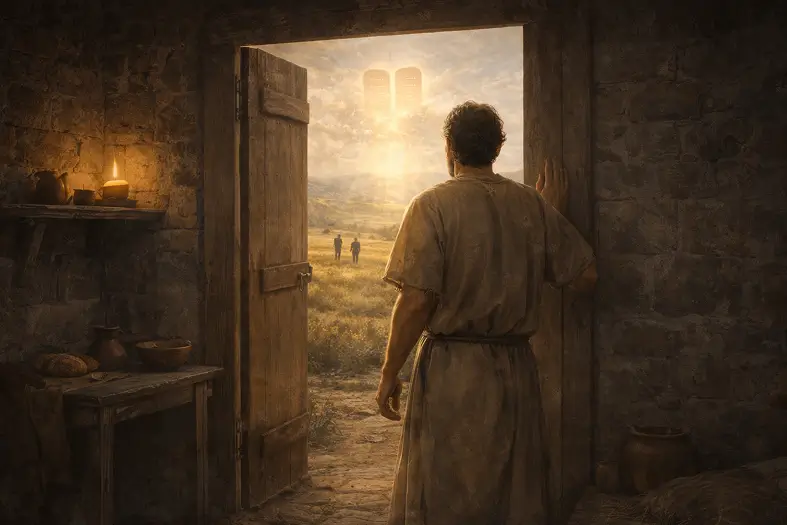
"Mishpatim — Part III — The Hebrew Servant"

Mitzvah Minute Logo Icon

3.3 — The Number Seven and the Rhythm of Freedom

The Hebrew Servant
The Torah releases the Hebrew servant in the seventh year to mirror the rhythm of creation itself. Just as the seventh day brings rest after six days of labor, the seventh year brings freedom after six years of service. This cycle teaches that redemption is built into time, and that Shabbos remains the weekly reminder that a Jew is not meant for endless servitude.

"Mishpatim — Part III — The Hebrew Servant"

3.3 — The Number Seven and the Rhythm of Freedom

Time as a Teacher of Freedom

The Torah commands that the Hebrew servant work for six years and go free in the seventh:

שֵׁשׁ שָׁנִים יַעֲבֹד וּבַשְּׁבִעִת יֵצֵא לַחָפְשִׁי חִנָּם
“Six years he shall serve, and in the seventh he shall go free without payment.”
(Shemos 21:2)

This law is not only economic or social. It is structured around the number seven—the same rhythm that governs Shabbos, Shemittah, and many of the Torah’s cycles of holiness.

The servant’s release is not arbitrary. It is anchored in the same rhythm that shapes creation itself.

The Pattern of Creation

The Torah’s first act of ordering the world is the seven-day cycle of creation. Six days of labor are followed by the seventh day, a day of rest, sanctity, and completion.

This pattern becomes the foundation of sacred time. The week teaches that:

  • Work has a limit.
  • Rest has spiritual meaning.
  • Human life is not meant for endless labor.

By structuring the servant’s release around the seventh year, the Torah embeds that same lesson into social law. The servant’s freedom is not just a legal provision. It is a reflection of the rhythm of creation.

Just as the seventh day frees a person from the demands of labor, the seventh year frees the servant from his master.

The Ramban: Redemption Built into Time

The Ramban explains that the cycles of seven in the Torah constantly remind Israel of the Exodus and the creation of the world. Shabbos recalls creation, and the various cycles of seven recall redemption.

The Hebrew servant’s six years of labor followed by freedom in the seventh year reflects this same structure. Time itself carries the memory of liberation.

The servant does not rely only on the kindness of his master or the strength of his own efforts. His freedom is guaranteed by the structure of sacred time. The rhythm of seven ensures that servitude cannot become permanent.

This teaches a profound idea:
Redemption is not only an event. It is built into the fabric of time.

The Difference Between Endless Labor and Sacred Time

In Egypt, the Israelites were subjected to endless labor. There was no rhythm of rest, no cycle of release, no sacred interruption of work. Time in Egypt was the time of slavery—continuous, exhausting, and without dignity.

The Torah reverses that experience. It constructs a society where time itself protects human dignity.

In the Torah’s system:

  • The seventh day brings rest.
  • The seventh year brings release.
  • The seventh cycle of years leads to Yovel and broader restoration.

The Hebrew servant lives inside this structure. Even if he has fallen into servitude, time itself moves him toward freedom.

Freedom as a Built-In Destination

The servant’s release is not a matter of negotiation. It is not dependent on his master’s generosity. It is commanded by the Torah and anchored in the rhythm of seven.

This teaches several foundational principles:

  • Servitude is temporary, not natural.
  • Freedom is the default condition of a Jew.
  • Time itself pushes society toward redemption.
  • The structure of creation is a model for social justice.

The servant’s six years of labor are framed by an inevitable seventh year of freedom. The Torah transforms time into a moral force.

Shabbos: The Weekly Echo of Redemption

The cycle of seven is most familiar through Shabbos. Every week, a person stops working and reclaims his freedom from labor. Shabbos reminds the Jew that he is not defined by his productivity or his status. He is a servant of Hashem alone.

The Hebrew servant’s release in the seventh year is an extension of that same idea. Just as Shabbos frees a person from work every week, the seventh year frees the servant from human authority.

Both rhythms teach the same truth:
No Jew is meant for endless servitude.

Time That Heals and Restores

One of the Torah’s great innovations is the idea that time can heal injustice. Instead of allowing social conditions to become permanent, the Torah builds cycles of restoration into the calendar itself.

The servant who has fallen into poverty or debt is not trapped forever. The structure of time ensures that he will return to freedom. The same principle appears in the laws of Shemittah and Yovel, where land returns to its original owners and economic imbalances are reset.

Time, in the Torah’s vision, is not neutral. It is a force of redemption.

Application for Today — Living in the Rhythm of Shabbos

The law of the Hebrew servant teaches that freedom is not only a political condition. It is a rhythm of life. The Torah builds liberation into time itself, so that human beings are never swallowed by endless labor or dependence.

In modern life, the danger of “Egypt” still exists. Endless work, constant pressure, and a culture of productivity can make people feel like servants to their schedules, their careers, or their expectations.

Shabbos stands as the Torah’s weekly declaration of freedom.

Living in the rhythm of Shabbos means:

  • Recognizing that our worth is not measured only by work
  • Creating sacred time free from pressure and productivity
  • Remembering that we serve Hashem, not our tasks
  • Allowing rest to restore dignity and perspective

The Hebrew servant’s release in the seventh year is the long rhythm of redemption. Shabbos is the short rhythm, repeated every week.

Both teach the same truth:
Freedom is written into the structure of time.

📖 Sources

  • Full sources available on the Mitzvah Minute Parshas Mishpatim page under insights and commentaries.

Organized by:
Boaz Solowitch
February 9, 2026
Mitzvah Minute Logo Icon

Connections

Mitzvah Minute Logo Icon

Mitzvah Links

Mitzvah 504

Purchase a Hebrew slave in accordance with the prescribed laws
A Siddur
Learn this Mitzvah

Mitzvah 504

504
Purchase a Hebrew slave in accordance with the prescribed laws

Mitzvah 509

Give him gifts when he goes free
A Siddur
Learn this Mitzvah

Mitzvah 509

509
Give him gifts when he goes free

Mitzvah 510

Not to send him away empty-handed
A Siddur
Learn this Mitzvah

Mitzvah 510

510
Not to send him away empty-handed

Mitzvah 87

To rest on the seventh day
A Siddur
Learn this Mitzvah

Mitzvah 87

87
To rest on the seventh day

Mitzvah 279

To rest the land during the seventh year by not doing any work which enhances growth
A Siddur
Learn this Mitzvah

Mitzvah 279

279
To rest the land during the seventh year by not doing any work which enhances growth

Mitzvah 280

Not to work the land during the seventh year
A Siddur
Learn this Mitzvah

Mitzvah 280

280
Not to work the land during the seventh year

Mitzvah 285

To release all loans during the seventh year
A Siddur
Learn this Mitzvah

Mitzvah 285

285
To release all loans during the seventh year
The Luchos - Ten Commandments
View Mitzvah Notes

Mitzvah Reference Notes

"x" close page navigation button

Mitzvah Reference Notes

Mitzvah #504 — Purchase a Hebrew Slave in Accordance with the Prescribed Laws (Exodus 21:2)

כִּי תִקְנֶה עֶבֶד עִבְרִי
The Torah establishes the six-year term of service, culminating in release during the seventh year. This structure embeds freedom into the cycle of time.

Mitzvah #509 — Give Him Gifts When He Goes Free (Deuteronomy 15:14)

הַעֲנֵק תַּעֲנִיק לוֹ
When the servant is released, he must be provided with gifts, ensuring that his freedom begins with dignity and stability.

Mitzvah #510 — Not to Send Him Away Empty-Handed (Deuteronomy 15:13)

לֹא תְשַׁלְּחֶנּוּ רֵיקָם
The Torah forbids dismissing the servant without provisions, reinforcing that the seventh-year release is meant to restore him fully to independent life.

Mitzvah #87 — To Rest on the Seventh Day (Exodus 23:12)

וּבַיּוֹם הַשְּׁבִיעִי תִּשְׁבֹּת
Shabbos reflects the same rhythm of seven that governs the servant’s release. The weekly cessation of labor teaches that human beings are not created for endless servitude, but for freedom in the service of Hashem.

Mitzvah #279 — To Rest the Land During the Seventh Year (Exodus 23:11)

וְהַשְּׁבִיעִת תִּשְׁמְטֶנָּה וּנְטַשְׁתָּהּ
The land itself rests in the seventh year, mirroring the servant’s release. The Torah embeds the rhythm of freedom into both society and the natural world.

Mitzvah #280 — Not to Work the Land During the Seventh Year (Leviticus 25:4)

שָׂדְךָ לֹא תִזְרָע
The prohibition against agricultural labor during Shemittah reinforces that the seventh cycle is a time of rest, release, and recognition of Divine ownership.

Mitzvah #285 — To Release All Loans During the Seventh Year (Deuteronomy 15:2)

שָׁמוֹט כָּל בַּעַל מַשֵּׁה יָדוֹ
Shemittah cancels debts, restoring financial dignity and preventing permanent economic servitude. This parallels the release of the Hebrew servant.

Parsha Links

מִשְׁפָּטִים – Mishpatim

Haftarah: Kings II 11:17 - 12:17
A Siddur
Learn this Parsha

מִשְׁפָּטִים – Mishpatim

מִשְׁפָּטִים – Mishpatim
The Luchos - Ten Commandments
View Parsha Notes
"x" close page navigation button

Parsha Reference Notes

“The Number Seven and the Rhythm of Freedom”

Parshas Mishpatim (Shemos 21:1–24:18)

Parshas Mishpatim establishes that the Hebrew servant works for six years and is released in the seventh. This cycle reflects the broader pattern of sacred time in the Torah, where the rhythm of seven marks rest, release, and renewal. The servant’s freedom is thus tied to the structure of creation itself.

Mitzvah Minute
Mitzvah Minute Logo

Learn more.

Dive into mitzvos, tefillah, and Torah study—each section curated to help you learn, reflect, and live with intention. New insights are added regularly, creating an evolving space for spiritual growth.

Luchos
Live a commandment-driven life

Mitzvah

Explore the 613 mitzvos and uncover the meaning behind each one. Discover practical ways to integrate them into your daily life with insights, sources, and guided reflection.

Learn more

Mitzvah #

87

To rest on the seventh day
The Luchos - Ten Commandments
Learn this Mitzvah

Mitzvah Highlight

Siddur
Connection through Davening

Tefillah

Learn the structure, depth, and spiritual intent behind Jewish prayer. Dive into morning blessings, Shema, Amidah, and more—with tools to enrich your daily connection.

Learn more

Tefillah

COMING SOON.
A Siddur
Learn this Tefillah

Tefillah Focus

A Sefer Torah
Study the weekly Torah portion

Parsha

Each week’s parsha offers timeless wisdom and modern relevance. Explore summaries, key themes, and mitzvah connections to deepen your understanding of the Torah cycle.

Learn more

מִשְׁפָּטִים – Mishpatim

Haftarah: Kings II 11:17 - 12:17
A Sefer Torah
Learn this Parsha

Weekly Parsha