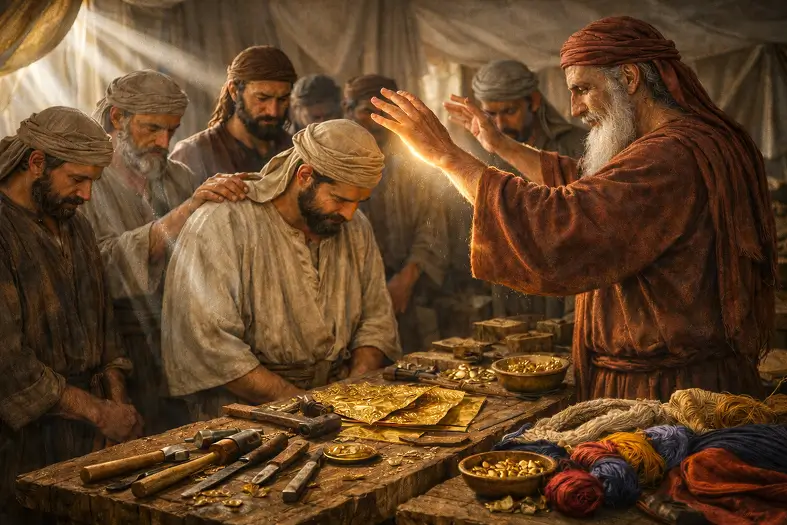
3.1 — Why Moshe Had to Erect the Mishkan
After many chapters describing the donations, craftsmanship, and detailed construction of the Mishkan, the Torah records the moment when the sanctuary is finally assembled. The verse states:
שמות מ׳:י״ח
“וַיָּקֶם מֹשֶׁה אֶת הַמִּשְׁכָּן.”
“And Moshe erected the Mishkan.”
This statement raises an important question. The Mishkan had already been built by the artisans—Betzalel, Oholiav, and the skilled craftsmen of Israel. If the construction had been completed by the people, why does the Torah emphasize that Moshe himself erected the sanctuary?
Ramban explains that the Mishkan represents the continuation of the revelation at Sinai. The Divine Presence that descended upon the mountain now seeks to dwell within the sanctuary constructed in the midst of the Israelite camp.
Because the Mishkan serves as the dwelling place of the Divine Presence, its establishment must be connected to the same figure who mediated the revelation of the Torah itself. Moshe is the prophet through whom the covenant between Hashem and Israel was revealed. It is therefore fitting that he inaugurate the sanctuary that will embody that covenant.
The artisans constructed the physical structure of the Mishkan, but Moshe establishes its spiritual purpose.
Through his act of erection, the sanctuary becomes integrated into the covenantal life of the nation.
Rashi adds an additional dimension to this moment. The Midrash explains that although the Mishkan had been constructed, the people were unable to erect it successfully. The structure proved too heavy and complex for the builders to assemble.
Moshe was then instructed to erect the Mishkan himself.
This detail underscores the unique role Moshe plays within the life of the nation. The artisans possessed remarkable skill and dedication, yet the final act of establishing the sanctuary required the leadership of the prophet who had guided the people since their redemption from Egypt.
The Mishkan was built through the efforts of the entire nation, but its inauguration required the authority of Moshe Rabbeinu.
Through this moment, the Torah highlights the relationship between communal effort and prophetic leadership.
Rabbi Jonathan Sacks often wrote about the nature of leadership within covenantal communities. In many societies, leadership is associated with power or prestige. The Torah presents a different model.
Moshe does not dominate the construction of the Mishkan. The artisans and the people carry out the work. Their generosity and craftsmanship create the sanctuary itself.
Yet when the moment of inauguration arrives, Moshe assumes responsibility for establishing the institution.
Leadership in the Torah therefore involves accountability rather than privilege.
Moshe stands at the center of the covenant between Hashem and Israel. By erecting the Mishkan, he affirms that the sanctuary exists not merely as a human achievement but as part of the covenantal relationship revealed through the Torah.
Rav Avigdor Miller frequently emphasized that spiritual institutions require leadership grounded in moral authority. Buildings and organizations may be constructed through the efforts of many individuals, but the enduring purpose of those institutions depends upon leaders who embody the values they represent.
The Mishkan illustrates this principle.
The people contribute their wealth and labor. Skilled artisans craft the vessels and the structure. Yet the sanctuary does not become fully established until Moshe erects it.
Moshe represents the spiritual vision that gives the Mishkan meaning. Without that vision, the sanctuary would remain only a remarkable architectural achievement.
With it, the Mishkan becomes the dwelling place of the Divine Presence.
The Torah’s description of the Mishkan’s inauguration reveals a delicate balance between communal participation and leadership.
The sanctuary could not have been built without the generosity of the people or the skill of the artisans. Their contributions transformed the Divine command into physical reality.
At the same time, the Mishkan required a leader capable of connecting the structure to its covenantal purpose.
Moshe fulfills that role.
By erecting the sanctuary, he bridges the gap between the human effort that constructed the Mishkan and the Divine presence that will dwell within it.
The story of the Mishkan offers an enduring lesson about the nature of institutions and leadership.
Communities thrive when individuals contribute their talents, resources, and creativity toward shared goals. Yet successful institutions also require leaders who embody the values those institutions seek to promote.
Leadership in this sense does not consist of authority alone. It involves responsibility for ensuring that the work of the community remains aligned with its deeper purpose.
Moshe’s role in erecting the Mishkan illustrates how leadership connects human effort with sacred vision.
When communities combine collective participation with principled leadership, they create institutions capable of sustaining meaning and purpose across generations.
📖 Sources


3.1 — Why Moshe Had to Erect the Mishkan
After many chapters describing the donations, craftsmanship, and detailed construction of the Mishkan, the Torah records the moment when the sanctuary is finally assembled. The verse states:
שמות מ׳:י״ח
“וַיָּקֶם מֹשֶׁה אֶת הַמִּשְׁכָּן.”
“And Moshe erected the Mishkan.”
This statement raises an important question. The Mishkan had already been built by the artisans—Betzalel, Oholiav, and the skilled craftsmen of Israel. If the construction had been completed by the people, why does the Torah emphasize that Moshe himself erected the sanctuary?
Ramban explains that the Mishkan represents the continuation of the revelation at Sinai. The Divine Presence that descended upon the mountain now seeks to dwell within the sanctuary constructed in the midst of the Israelite camp.
Because the Mishkan serves as the dwelling place of the Divine Presence, its establishment must be connected to the same figure who mediated the revelation of the Torah itself. Moshe is the prophet through whom the covenant between Hashem and Israel was revealed. It is therefore fitting that he inaugurate the sanctuary that will embody that covenant.
The artisans constructed the physical structure of the Mishkan, but Moshe establishes its spiritual purpose.
Through his act of erection, the sanctuary becomes integrated into the covenantal life of the nation.
Rashi adds an additional dimension to this moment. The Midrash explains that although the Mishkan had been constructed, the people were unable to erect it successfully. The structure proved too heavy and complex for the builders to assemble.
Moshe was then instructed to erect the Mishkan himself.
This detail underscores the unique role Moshe plays within the life of the nation. The artisans possessed remarkable skill and dedication, yet the final act of establishing the sanctuary required the leadership of the prophet who had guided the people since their redemption from Egypt.
The Mishkan was built through the efforts of the entire nation, but its inauguration required the authority of Moshe Rabbeinu.
Through this moment, the Torah highlights the relationship between communal effort and prophetic leadership.
Rabbi Jonathan Sacks often wrote about the nature of leadership within covenantal communities. In many societies, leadership is associated with power or prestige. The Torah presents a different model.
Moshe does not dominate the construction of the Mishkan. The artisans and the people carry out the work. Their generosity and craftsmanship create the sanctuary itself.
Yet when the moment of inauguration arrives, Moshe assumes responsibility for establishing the institution.
Leadership in the Torah therefore involves accountability rather than privilege.
Moshe stands at the center of the covenant between Hashem and Israel. By erecting the Mishkan, he affirms that the sanctuary exists not merely as a human achievement but as part of the covenantal relationship revealed through the Torah.
Rav Avigdor Miller frequently emphasized that spiritual institutions require leadership grounded in moral authority. Buildings and organizations may be constructed through the efforts of many individuals, but the enduring purpose of those institutions depends upon leaders who embody the values they represent.
The Mishkan illustrates this principle.
The people contribute their wealth and labor. Skilled artisans craft the vessels and the structure. Yet the sanctuary does not become fully established until Moshe erects it.
Moshe represents the spiritual vision that gives the Mishkan meaning. Without that vision, the sanctuary would remain only a remarkable architectural achievement.
With it, the Mishkan becomes the dwelling place of the Divine Presence.
The Torah’s description of the Mishkan’s inauguration reveals a delicate balance between communal participation and leadership.
The sanctuary could not have been built without the generosity of the people or the skill of the artisans. Their contributions transformed the Divine command into physical reality.
At the same time, the Mishkan required a leader capable of connecting the structure to its covenantal purpose.
Moshe fulfills that role.
By erecting the sanctuary, he bridges the gap between the human effort that constructed the Mishkan and the Divine presence that will dwell within it.
The story of the Mishkan offers an enduring lesson about the nature of institutions and leadership.
Communities thrive when individuals contribute their talents, resources, and creativity toward shared goals. Yet successful institutions also require leaders who embody the values those institutions seek to promote.
Leadership in this sense does not consist of authority alone. It involves responsibility for ensuring that the work of the community remains aligned with its deeper purpose.
Moshe’s role in erecting the Mishkan illustrates how leadership connects human effort with sacred vision.
When communities combine collective participation with principled leadership, they create institutions capable of sustaining meaning and purpose across generations.
📖 Sources


3.1 — Why Moshe Had to Erect the Mishkan
Exodus 25:8 — וְעָשׂוּ לִי מִקְדָּשׁ
The Mishkan was constructed as the dwelling place of the Divine Presence among the people of Israel. The erection of the sanctuary by Moshe marks the culmination of the nation’s fulfillment of this commandment.
Deuteronomy 10:20 — וּבוֹ תִדְבָּק
The Torah teaches that individuals should attach themselves to spiritual leaders devoted to the service of Hashem. Moshe’s role in erecting the Mishkan reflects the trust placed in leaders who embody the covenant and guide the community in fulfilling the Divine command.
Deuteronomy 28:9 — וְהָלַכְתָּ בִּדְרָכָיו
Moshe’s leadership demonstrates humility, responsibility, and dedication to the Divine mission. By modeling these qualities, he exemplifies the Torah’s call for individuals to walk in the ways of Hashem.


3.1 — Why Moshe Had to Erect the Mishkan
"וַיָּקֶם מֹשֶׁה אֶת הַמִּשְׁכָּן"
The Torah emphasizes that Moshe erected the Mishkan upon its completion. Although the artisans constructed the sanctuary, its inauguration was carried out by the prophet who mediated the revelation at Sinai, connecting the structure to the covenant between Hashem and Israel.

Dive into mitzvos, tefillah, and Torah study—each section curated to help you learn, reflect, and live with intention. New insights are added regularly, creating an evolving space for spiritual growth.

Explore the 613 mitzvos and uncover the meaning behind each one. Discover practical ways to integrate them into your daily life with insights, sources, and guided reflection.

Learn the structure, depth, and spiritual intent behind Jewish prayer. Dive into morning blessings, Shema, Amidah, and more—with tools to enrich your daily connection.

Each week’s parsha offers timeless wisdom and modern relevance. Explore summaries, key themes, and mitzvah connections to deepen your understanding of the Torah cycle.