3.2 — The Mishkan That Rose on Its Own
As the Torah describes the moment when the Mishkan was established, it uses a striking grammatical form:
שמות מ׳:י״ז
“הוּקַם הַמִּשְׁכָּן.”
“The Mishkan was erected.”
This wording differs from the earlier verse that states “וַיָּקֶם מֹשֶׁה אֶת הַמִּשְׁכָּן”—“Moshe erected the Mishkan.” The shift in language raises a question: who actually raised the structure?
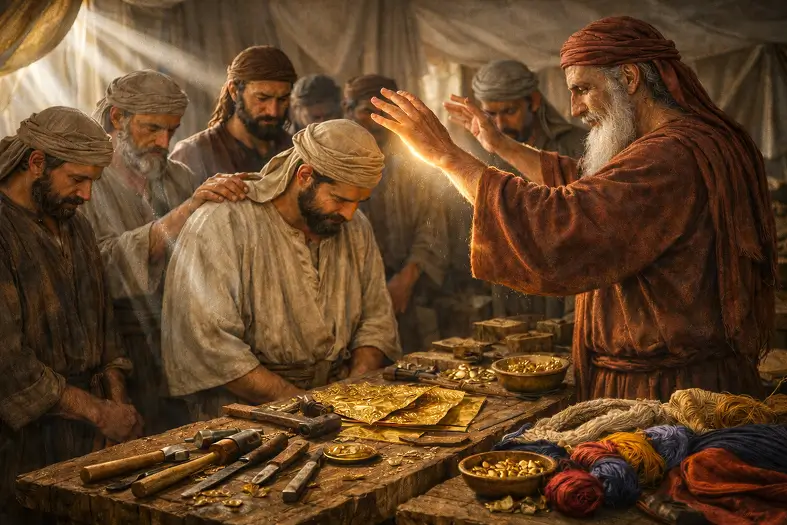
Rashi explains that the Mishkan’s massive beams and components were far too heavy for any individual to assemble alone. Even the skilled artisans who built the sanctuary were unable to raise it.
Moshe attempted to erect the structure as he had been commanded, but the task exceeded normal human strength. At that moment, a miracle occurred: the Mishkan rose and stood upright.
The Torah therefore describes the event with the passive phrase “הוּקַם הַמִּשְׁכָּן.”
The Mishkan was erected—not solely by human hands, but through the partnership between human effort and Divine assistance.
Moshe initiated the act, but the completion came from Hashem.
The Kedushas Levi sees in this moment a profound spiritual principle. Human beings are commanded to act—to build, to create, and to pursue sacred goals. Yet the Torah also teaches that ultimate success lies beyond human control.
The Mishkan illustrates this balance perfectly.
The people contributed their wealth. The artisans invested their skill. Moshe attempted to assemble the structure. Every element of human effort was present.
Yet the final act—the raising of the Mishkan—occurred through Divine intervention.
This teaches that spiritual accomplishments emerge from a partnership between human initiative and Divine assistance. People must devote themselves fully to the task before them, while recognizing that the ultimate outcome rests in the hands of Hashem.
The Mishkan therefore becomes a symbol of humility within achievement.
Rav Avigdor Miller frequently emphasized that one of the Torah’s most important lessons involves recognizing the limits of human power. Individuals often assume that their achievements arise solely from their own ability and determination.
The Mishkan challenges this assumption.
The sanctuary represents one of the most remarkable projects undertaken by the people of Israel. Its construction required extraordinary generosity, craftsmanship, and leadership. Yet at the decisive moment, the Torah reminds the nation that even their greatest accomplishments depend upon the assistance of Hashem.
Moshe begins the act of erecting the Mishkan, but the structure ultimately rises through Divine help.
Through this experience, the people learn that human effort is essential—but it is never sufficient on its own.
The story of the Mishkan’s erection reveals an enduring pattern within spiritual life.
Human beings are commanded to act with determination and dedication. The artisans of the Mishkan did not wait for miracles to build the sanctuary. They labored with extraordinary care to complete every detail of the project.
Yet the final stage of the Mishkan’s construction demonstrates that sacred work ultimately transcends human capacity.
The Torah’s wording captures this truth with subtle precision. Moshe acts, but the Mishkan “was erected.”
The passive form reflects the presence of a Divine partner in the process.
The lesson of the Mishkan offers an important perspective on the nature of human achievement.
Modern culture often celebrates independence and personal success. Individuals are encouraged to believe that determination and talent alone determine the outcome of their efforts.
The Torah presents a more balanced vision.
Human beings are called upon to invest their energy, skill, and commitment into the tasks before them. At the same time, they must recognize that ultimate success often involves factors beyond their control.
The Mishkan teaches that sacred work emerges when individuals act with dedication while remaining humble about the role of Divine assistance.
By acknowledging that our achievements depend upon both effort and grace, we cultivate the humility that allows spiritual life to flourish.
📖 Sources


3.2 — The Mishkan That Rose on Its Own
As the Torah describes the moment when the Mishkan was established, it uses a striking grammatical form:
שמות מ׳:י״ז
“הוּקַם הַמִּשְׁכָּן.”
“The Mishkan was erected.”
This wording differs from the earlier verse that states “וַיָּקֶם מֹשֶׁה אֶת הַמִּשְׁכָּן”—“Moshe erected the Mishkan.” The shift in language raises a question: who actually raised the structure?
Rashi explains that the Mishkan’s massive beams and components were far too heavy for any individual to assemble alone. Even the skilled artisans who built the sanctuary were unable to raise it.
Moshe attempted to erect the structure as he had been commanded, but the task exceeded normal human strength. At that moment, a miracle occurred: the Mishkan rose and stood upright.
The Torah therefore describes the event with the passive phrase “הוּקַם הַמִּשְׁכָּן.”
The Mishkan was erected—not solely by human hands, but through the partnership between human effort and Divine assistance.
Moshe initiated the act, but the completion came from Hashem.
The Kedushas Levi sees in this moment a profound spiritual principle. Human beings are commanded to act—to build, to create, and to pursue sacred goals. Yet the Torah also teaches that ultimate success lies beyond human control.
The Mishkan illustrates this balance perfectly.
The people contributed their wealth. The artisans invested their skill. Moshe attempted to assemble the structure. Every element of human effort was present.
Yet the final act—the raising of the Mishkan—occurred through Divine intervention.
This teaches that spiritual accomplishments emerge from a partnership between human initiative and Divine assistance. People must devote themselves fully to the task before them, while recognizing that the ultimate outcome rests in the hands of Hashem.
The Mishkan therefore becomes a symbol of humility within achievement.
Rav Avigdor Miller frequently emphasized that one of the Torah’s most important lessons involves recognizing the limits of human power. Individuals often assume that their achievements arise solely from their own ability and determination.
The Mishkan challenges this assumption.
The sanctuary represents one of the most remarkable projects undertaken by the people of Israel. Its construction required extraordinary generosity, craftsmanship, and leadership. Yet at the decisive moment, the Torah reminds the nation that even their greatest accomplishments depend upon the assistance of Hashem.
Moshe begins the act of erecting the Mishkan, but the structure ultimately rises through Divine help.
Through this experience, the people learn that human effort is essential—but it is never sufficient on its own.
The story of the Mishkan’s erection reveals an enduring pattern within spiritual life.
Human beings are commanded to act with determination and dedication. The artisans of the Mishkan did not wait for miracles to build the sanctuary. They labored with extraordinary care to complete every detail of the project.
Yet the final stage of the Mishkan’s construction demonstrates that sacred work ultimately transcends human capacity.
The Torah’s wording captures this truth with subtle precision. Moshe acts, but the Mishkan “was erected.”
The passive form reflects the presence of a Divine partner in the process.
The lesson of the Mishkan offers an important perspective on the nature of human achievement.
Modern culture often celebrates independence and personal success. Individuals are encouraged to believe that determination and talent alone determine the outcome of their efforts.
The Torah presents a more balanced vision.
Human beings are called upon to invest their energy, skill, and commitment into the tasks before them. At the same time, they must recognize that ultimate success often involves factors beyond their control.
The Mishkan teaches that sacred work emerges when individuals act with dedication while remaining humble about the role of Divine assistance.
By acknowledging that our achievements depend upon both effort and grace, we cultivate the humility that allows spiritual life to flourish.
📖 Sources


3.2 — The Mishkan That Rose on Its Own
Exodus 25:8 — וְעָשׂוּ לִי מִקְדָּשׁ
The commandment to build the Mishkan required the people of Israel to construct a dwelling place for the Divine Presence. The miracle of the Mishkan’s erection demonstrates that while human beings must initiate sacred work, its ultimate completion depends upon Divine assistance.
Deuteronomy 28:9 — וְהָלַכְתָּ בִּדְרָכָיו
The humility displayed by Moshe in recognizing the limits of human ability reflects the Divine attributes that the Torah calls upon humanity to emulate.
Deuteronomy 10:20 — וּבוֹ תִדְבָּק
The people of Israel attach themselves to the leadership of Moshe, whose devotion and humility guide the nation in fulfilling the Divine command to establish the Mishkan.


3.2 — The Mishkan That Rose on Its Own
"הוּקַם הַמִּשְׁכָּן"
The Torah describes the Mishkan’s erection using the passive form “the Mishkan was erected.” According to Rashi, Moshe attempted to raise the heavy structure, but it ultimately stood through a miracle, illustrating the partnership between human effort and Divine assistance.

Dive into mitzvos, tefillah, and Torah study—each section curated to help you learn, reflect, and live with intention. New insights are added regularly, creating an evolving space for spiritual growth.

Explore the 613 mitzvos and uncover the meaning behind each one. Discover practical ways to integrate them into your daily life with insights, sources, and guided reflection.

Learn the structure, depth, and spiritual intent behind Jewish prayer. Dive into morning blessings, Shema, Amidah, and more—with tools to enrich your daily connection.

Each week’s parsha offers timeless wisdom and modern relevance. Explore summaries, key themes, and mitzvah connections to deepen your understanding of the Torah cycle.