
Each Parsha page on Mitzvah Minute is designed as a guided, three-level journey through the weekly Torah reading—integrating the narrative, the mitzvos, and the classical commentaries into one unified experience.
Begin with the foundations of the Parsha:
This level gives you the storyline, the key mitzvos, and the essential connections between them.
A complete journey through the parsha—moving from clarity and depth to inner connection and real-world meaning, culminating in a way to live its ideas in everyday life.
These sections show how the Parsha speaks to the mind, the heart, and the real world — offering wisdom rooted in enduring Torah.
A complete, structured commentary on the parsha—presented pasuk by pasuk, with chapter and overall summaries for clarity and flow.
This level reveals the structural depth of the Parsha and the classical underpinnings of each theme.
Together, these layers create a complete Parsha journey —
narrative, mitzvah, and commentary — all flowing toward deeper understanding, spiritual insight, and meaningful growth.
Tap the Page Navigation tab on the right side of your screen anytime to access quick-links to the entire Parsha page.

The quick-link panel gives instant access to every section — Parsha Summary, Mitzvos, Divrei Torah, Insights, and Commentaries.
“Every word of Torah and every mitzvah lifts us higher — may your learning bring you closer to Hashem.”

Parshas Pekudei concludes Sefer Shemos with the final reckoning, assembly, and consecration of the Mishkan. The Torah records the exact accounting of the materials donated — gold, silver, and copper — underscoring integrity and collective responsibility. The sacred garments of Aharon and his sons are completed in precise accordance with Hashem’s command, and the entire Mishkan is brought to Moshe for inspection. Upon verifying that everything was fashioned “כַּאֲשֶׁר צִוָּה ה׳,” Moshe blesses the people. On the first of Nissan in the second year, the Mishkan is erected, anointed, and sanctified; Aharon and his sons are inaugurated into eternal priesthood. The parsha — and the book — culminate with the revelation of the Shechinah: the Cloud of Glory fills the Mishkan, guiding Bnei Yisrael’s journeys and marking the transformation of a redeemed nation into a people among whom Hashem dwells.



"Completion and Divine Presence — When Sacred Work Becomes a Dwelling for the Shechinah"
וְעָשׂוּ לִי מִקְדָּשׁ
Parshas Vayakhel and Pekudei describe the fulfillment of this command through the construction of the Mishkan. Every vessel, garment, and structure is fashioned precisely according to the Divine instruction, transforming human craftsmanship into a dwelling place for the Shechinah. The sanctuary becomes the center of Israel’s spiritual life, where the Divine Presence rests among the people.
וְרָחֲצוּ אַהֲרֹן וּבָנָיו מִמֶּנּוּ
Before performing their service, the Kohanim must purify themselves at the laver. The completed Mishkan described in Pekudei prepares the setting for this sacred discipline, emphasizing that approaching Divine service requires both physical and spiritual preparation.
וְקִדַּשְׁתּוֹ
Parshas Pekudei concludes the preparation of the Mishkan and the sacred garments worn by the Kohanim during their service. The Torah commands that the Kohen be honored because he stands in service before Hashem on behalf of the people. Respect for the Kohen therefore reflects reverence for the sanctity of the Divine service itself.
וְהָיוּ עַל־אַהֲרֹן וְעַל־בָּנָיו בְּבֹאָם אֶל־אֹהֶל מוֹעֵד
Pekudei describes the completion of the priestly garments prepared for Aharon and his sons. These garments are not merely ceremonial clothing but an essential component of the avodah. The mitzvah teaches that Divine service must be performed with dignity, preparation, and visible sanctity.
לֹא יִקָּרֵעַ
The Torah commands that the priestly garments remain whole and unbroken. In Pekudei, where the garments are crafted with great precision and care, this mitzvah underscores the permanence and integrity required for sacred service. The holiness of the Mishkan demands that its garments be preserved with honor.
וְלֹא־יִזַּח הַחֹשֶׁן מֵעַל הָאֵפֹד
The Choshen and Ephod are permanently bound together as part of the High Priest’s garments. Pekudei describes their careful construction and assembly, symbolizing the unity of judgment, leadership, and Divine service embodied in the Kohen Gadol. Their inseparable connection reflects the harmony required within sacred leadership.
וְעָשׂוּ לָהֶם צִיצִת
Parshas Pekudei describes the sacred garments worn by the Kohanim in the service of the Mishkan. These garments demonstrate how clothing itself can become a vessel of holiness. The mitzvah of tzitzit extends this idea to every Jew, transforming ordinary garments into reminders of the commandments and of one’s constant awareness of Hashem.
כֹּה תְבָרְכוּ אֶת־בְּנֵי יִשְׂרָאֵל
The priestly garments described in Pekudei prepare the Kohanim for their sacred role. Through these garments and their service in the Mishkan, the Kohanim become channels through which blessing flows to the people.
וְאָהַבְתָּ אֵת ה׳ אֱלֹקֶיךָ
The completion of the Mishkan reflects a national expression of love for Hashem. Every vessel, garment, and structure is crafted precisely “as Hashem commanded Moshe,” demonstrating devotion expressed through action. Pekudei teaches that love of Hashem is revealed not only through emotion but through faithful dedication to fulfilling His commandments.
אֶת־ה׳ אֱלֹקֶיךָ תִּירָא
The Mishkan embodies reverence for the Divine Presence. The careful assembly of the sanctuary and the sacred garments reflects the awe required when approaching holiness. Pekudei reminds us that yir’at Shamayim is expressed through humility, discipline, and recognition that the Shechinah dwells among Israel.
וְנִקְדַּשְׁתִּי בְּתוֹךְ בְּנֵי יִשְׂרָאֵל
The Mishkan publicly reveals Hashem’s presence within the camp of Israel. When the cloud fills the sanctuary at the end of the parsha, the nation witnesses the sanctification of His Name through collective obedience and sacred service.
וְהָלַכְתָּ בִּדְרָכָיו
The Mishkan project reflects Divine attributes of order, wisdom, and purpose. By constructing the sanctuary according to the Divine blueprint, Israel imitates the harmony of creation itself, shaping human craftsmanship into an act of spiritual alignment with Hashem’s ways.
וְשִׁנַּנְתָּם לְבָנֶיךָ
The Mishkan stands as a living classroom of Torah principles. Every vessel and garment embodies mitzvos and sacred symbolism, teaching the nation that Divine wisdom must be studied, transmitted, and embodied through action.
וַעֲבַדְתֶּם אֵת ה׳ אֱלֹקֵיכֶם
The Mishkan functions as the center of avodah, where offerings and prayer elevate the nation’s service to Hashem. Pekudei concludes the preparation of this sacred space, establishing the framework through which Israel approaches the Divine.
וּבַיּוֹם הַשְּׁבִיעִי תִּשְׁבֹּת
The Mishkan narrative echoes the language of creation, culminating in the completion of sacred work. Just as creation concludes with Shabbat, the building of the Mishkan culminates in the resting presence of the Shechinah among Israel.
לֹא תַעֲשֶׂה כָל־מְלָאכָה
The Mishkan defines the categories of creative labor from which one must cease on Shabbat. The very activities used to build the sanctuary become the archetypes of the melachot prohibited on the sacred day of rest.
זֶה יִתְּנוּ כָּל־הָעֹבֵר עַל־הַפְּקֻדִים
The silver used in the Mishkan sockets derives from the half-shekel contributions of the people. Pekudei’s detailed accounting of these materials reflects the communal participation that sustains sacred institutions.
פָּתֹחַ תִּפְתַּח אֶת־יָדְךָ לוֹ
The Mishkan stands as a monument to generosity. The people’s voluntary contributions demonstrate how material resources can be elevated through giving, transforming wealth into a vessel for holiness and communal purpose.
וְעָשִׂיתָ אֹתוֹ שֶׁמֶן מִשְׁחַת־קֹדֶשׁ
The Mishkan and its vessels, completed in Pekudei, are sanctified through the sacred anointing oil. This oil consecrates the sanctuary and its service, transforming a physical structure into a dwelling place for the Divine Presence.
עַל־בְּשַׂר אָדָם לֹא יִיסָךְ
The holiness of the Mishkan requires boundaries. By prohibiting the reproduction of the anointing oil for personal use, the Torah preserves the uniqueness of sacred consecration and protects the sanctity of the sanctuary’s service.
עַל־בְּשַׂר אָדָם לֹא יִיסָךְ
The anointing oil is reserved for the consecration of sacred roles. Pekudei highlights the unique garments and service of the Kohanim, reminding us that certain forms of holiness are entrusted only to those designated for Divine service.
וְהַקְּטֹרֶת אֲשֶׁר תַּעֲשֶׂה בְּמַתְכֻּנְתָּהּ לֹא תַעֲשׂוּ לָכֶם
The ketores represents the intimate spiritual connection between Israel and Hashem within the Mishkan. By prohibiting the reproduction of its formula for personal enjoyment, the Torah safeguards the sanctity of Temple service.
Parshas Pekudei opens with a meticulous accounting of the materials used in constructing the Mishkan:
"אֵלֶּה פְקוּדֵי הַמִּשְׁכָּן מִשְׁכַּן הָעֵדֻת" (שמות ל״ח:כ״א)
Rashi explains that the Torah enumerates all the weights of the metals donated for the Mishkan — gold, silver, and copper — together with the vessels fashioned from them. This accounting establishes a model of integrity and transparency in sacred work. Every contribution is weighed, recorded, and accounted for.
At the same time, Rashi notes that the phrase "המשכן משכן" appears twice. This repetition hints to a deeper historical reality: the future Beis HaMikdash would be “taken as a pledge” twice — destroyed twice because of the sins of Yisrael (תנחומא פקודי ה). The Mishkan therefore embodies both Divine closeness and the fragile responsibility required to preserve it.
Rashi explains the expression:
"מִשְׁכַּן הָעֵדֻת"
The Mishkan is called the “Tabernacle of Testimony” because it testifies that Hashem forgave Yisrael for the sin of the Eigel. The very fact that the Shechinah rests among them demonstrates Divine reconciliation (תנחומא פקודי ו).
Thus the Mishkan serves not only as a sanctuary but as visible evidence of restored relationship between Hashem and His people. After the national failure of the Golden Calf, the presence of the Mishkan proves that forgiveness has been granted.
Rashi emphasizes that the accounting of the Mishkan is connected to the service entrusted to the Levi’im. The phrase:
"עֲבֹדַת הַלְוִיִּם"
refers to the structured responsibilities assigned to the Levite families in the Midbar. Their tasks included:
This service was organized under the supervision of Ithamar, the son of Aharon, who oversaw the assignments given to each family group.
The Mishkan therefore represents not only holiness but disciplined organization — a national avodah carried out through order and responsibility.
Rashi highlights Betzalel’s remarkable spiritual insight in the verse:
"וּבְצַלְאֵל בֶּן אוּרִי… עָשָׂה אֵת כָּל אֲשֶׁר צִוָּה ה׳ אֶת מֹשֶׁה" (שמות ל״ח:כ״ב)
The Torah does not say that Betzalel performed what Moshe commanded, but rather what Hashem commanded Moshe. Rashi explains that Betzalel intuitively grasped the Divine intention behind the instructions.
Moshe had initially instructed that the vessels be made before the Mishkan structure itself. Betzalel objected, reasoning that one normally builds a house before placing its furnishings within it. Moshe acknowledged that Betzalel’s understanding reflected the true Divine order and declared:
"בְּצֵל א-ל הָיִיתָ"
“You must have been in the shadow of G-d,” for Betzalel had perceived the Divine intent correctly (ברכות נה ע״א).
Rashi thus portrays Betzalel as possessing extraordinary wisdom — a mind aligned with the Divine blueprint.
A striking feature of Pekudei is the Torah’s mathematical exactitude. Rashi carefully explains the system of sacred weights used in the Mishkan’s construction.
A kikkar equals sixty maneh, yet the sacred maneh used for holy purposes was double the standard measure. Consequently:
This precision allows the Torah to explain the totals contributed through the half-shekel census. Six hundred thousand people each contributed half a shekel, totaling three hundred thousand shekels — precisely one hundred kikkar.
Even the remaining 1,775 shekels are accounted for, used to overlay the tops of the pillars. Rashi emphasizes that nothing is left unexplained. Holiness rests upon careful stewardship of communal resources.
In the construction of the priestly garments, Rashi explains several technical details that illuminate the extraordinary craftsmanship involved.
The gold used in the Ephod and Choshen was not merely decorative. Artisans beat the gold into extremely thin sheets and cut them into threads, which were then woven together with colored wool threads.
The structure of each strand was:
This weaving created a richly textured fabric integrating precious metal into the cloth itself (יומא ע״ב ע״א).
Rashi also distinguishes between different categories of garments. The “בגדי שרד” mentioned in the Torah cannot refer to the priestly garments because linen (שש) is not mentioned in that verse. Instead, these were coverings used to protect the sacred vessels during travel.
Rashi offers an extended explanation of how the Tzitz — the golden plate worn by the Kohen Gadol — was fastened to the mitznefes (turban).
The verse states that the Tzitz was attached by means of a “פתיל תכלת,” a blue thread. Yet the Gemara teaches that the Kohen Gadol’s hair remained visible between the Tzitz and the turban, in the place where he wore tefillin (זבחים י״ט ע״א).
Rashi resolves the textual tension by explaining that the blue threads served as fastening cords. Since the Tzitz extended only from ear to ear across the forehead, multiple threads were needed to secure it:
These cords were tied behind the Kohen Gadol’s neck, holding the plate in its proper position.
Even when the Torah uses the singular word “פתיל,” Rashi explains that it may refer collectively to multiple threads, as occurs elsewhere in the Mishkan descriptions.
When the Mishkan was completed, the people brought all its components to Moshe. According to Rashi, the boards were so massive that the people themselves could not erect the structure.
Moshe wondered how a human being could possibly raise such a structure. Hashem instructed him to place his hands upon the boards and attempt the task. Although it appeared that Moshe erected the Mishkan, in truth the structure stood upright miraculously.
This explains the verse:
"הוּקַם הַמִּשְׁכָּן" (שמות מ׳:י״ז)
The Mishkan “was erected,” implying that it rose on its own.
Through this miracle Moshe received the merit of completing the Mishkan, since he had not participated directly in its construction.
After the work was completed, Moshe blessed the people:
"וַיְבָרֶךְ אֹתָם מֹשֶׁה" (שמות ל״ט:מ״ג)
Rashi explains the content of this blessing:
"יהי רצון שתשרה שכינה במעשה ידיכם"
“May it be Hashem’s will that the Shechinah rest upon the work of your hands.”
Moshe continued with the verse:
"וִיהִי נֹעַם ה׳ אֱלֹקֵינוּ עָלֵינוּ וּמַעֲשֵׂה יָדֵינוּ כּוֹנְנָה עָלֵינוּ" (תהילים צ׳:י״ז)
The ultimate success of the Mishkan would not lie merely in its completion but in whether the Divine Presence would dwell within it.
At the end of the parsha, the cloud of the Shechinah fills the Mishkan:
"וְלֹא יָכֹל מֹשֶׁה לָבוֹא אֶל אֹהֶל מוֹעֵד כִּי שָׁכַן עָלָיו הֶעָנָן" (שמות מ׳:ל״ה)
Rashi resolves the apparent contradiction between this verse and the later verse stating that Moshe entered the Tent of Meeting (במדבר ז׳:פ״ט). As long as the cloud rested upon the Mishkan, Moshe could not enter; when it lifted, he would enter and speak with Hashem.
The cloud therefore served both as revelation and as guide. The Torah concludes:
"לְעֵינֵי כָּל בֵּית יִשְׂרָאֵל בְּכָל מַסְעֵיהֶם"
Rashi explains that the word “מסעיהם” refers not only to journeys but also to encampments. At every stage of their travels, the cloud rested upon the Mishkan, visibly guiding the nation through the wilderness.
The Mishkan thus becomes the spiritual center of Israel’s life: the place where the Shechinah dwells, the source of Divine communication, and the visible sign that Hashem continues to accompany His people throughout their journeys.
📖 Source
Ramban views the construction and completion of the Mishkan in Parshas Pekudei as the culmination of the revelation at Har Sinai. The Mishkan is not merely a portable sanctuary but the continuation of the Divine encounter that began with Matan Torah.
At Sinai, the nation experienced the revelation of the Shechinah publicly. In the Mishkan, that revelation becomes permanent within the camp of Yisrael. Ramban therefore explains that the purpose of the Mishkan was:
"וְשָׁכַנְתִּי בְּתוֹכָם" (שמות כ״ה:ח)
The Divine Presence that appeared at Sinai would now dwell continuously among the people. When the cloud fills the Mishkan at the end of Pekudei —
"וַיְכַס הֶעָנָן אֶת אֹהֶל מוֹעֵד" (שמות מ׳:ל״ד)
— it mirrors the cloud that covered Har Sinai (שמות כ״ד:ט״ו–ט״ז). The Mishkan therefore recreates the Sinai experience in a permanent national structure.
Ramban explains that although Betzalel and the artisans constructed the Mishkan and its vessels, the Torah emphasizes that Moshe himself erected the Mishkan:
"וַיָּקֶם מֹשֶׁה אֶת הַמִּשְׁכָּן" (שמות מ׳:י״ח)
This detail highlights Moshe’s unique role as the mediator between Hashem and Yisrael. Just as Moshe served as the conduit through which the Torah was given at Sinai, he must also be the one who inaugurates the dwelling place of the Shechinah.
The Mishkan therefore stands as an extension of Moshe’s prophetic mission. Through him, the Divine Presence enters the camp and begins to dwell among the nation.
Ramban pays careful attention to the order in which Moshe assembled the Mishkan. The Torah describes a precise sequence:
This order reflects the logic of sacred space. A dwelling must first be established before its furnishings can be placed within it. Only after the inner sanctuary is prepared can the outer courtyard be completed.
Through this structure, the Mishkan becomes a layered sacred environment:
Ramban emphasizes that each stage reflects increasing levels of sanctity as one moves inward.
When the Mishkan is completed, the cloud of the Divine Presence fills the structure:
"וַיְכַס הֶעָנָן אֶת אֹהֶל מוֹעֵד וּכְבוֹד ה׳ מָלֵא אֶת הַמִּשְׁכָּן" (שמות מ׳:ל״ד)
Ramban explains that this moment marks the fulfillment of the Mishkan’s purpose. The Shechinah now dwells among Yisrael just as it rested upon Har Sinai.
Yet the Torah immediately adds that Moshe could not enter the Tent of Meeting because the cloud rested upon it:
"וְלֹא יָכֹל מֹשֶׁה לָבוֹא אֶל אֹהֶל מוֹעֵד" (שמות מ׳:ל״ה)
Ramban interprets this not as a permanent restriction but as a temporary state. Until Moshe was summoned by Hashem, he could not enter the Mishkan because the intensity of the Divine Presence filled the structure completely.
This prepares the transition to Sefer Vayikra, which begins:
"וַיִּקְרָא אֶל מֹשֶׁה" (ויקרא א׳:א)
Only once Moshe is called may he enter the Mishkan and receive the instructions of the korbanos.
Thus the conclusion of Pekudei flows directly into the opening of Vayikra.
Ramban also reflects on the repeated references to the Mishkan throughout Pekudei. The Torah repeatedly emphasizes phrases such as:
"כַּאֲשֶׁר צִוָּה ה׳ אֶת מֹשֶׁה"
This repetition highlights that the construction of the Mishkan was executed precisely according to the Divine command. Every detail — from the vessels to the garments to the structure itself — reflects complete obedience to the instructions revealed to Moshe.
The Mishkan therefore represents the transformation of Divine command into physical reality. What was spoken at Sinai becomes embodied through human craftsmanship and national participation.
The closing verses of Pekudei describe how the cloud of the Mishkan guided the journeys of the nation:
"וּבְהֵעָלוֹת הֶעָנָן מֵעַל הַמִּשְׁכָּן יִסְעוּ בְנֵי יִשְׂרָאֵל" (שמות מ׳:ל״ו)
Ramban explains that the Mishkan thus becomes the center of Israel’s national life. The movement of the cloud determines when the people travel and when they encamp.
The presence of the Mishkan ensures that the Shechinah accompanies Yisrael wherever they go. The nation’s journey through the wilderness therefore unfolds under the visible guidance of the Divine Presence.
The Mishkan is not only a sanctuary; it is the axis around which the life of the nation revolves. Through it, the covenant established at Sinai continues to shape the daily existence of Yisrael as they travel toward their destiny.
📖 Source
Parshas Pekudei concludes the narrative of the Mishkan with an atmosphere of precision, accountability, and completion. Every vessel is counted, every material is recorded, every garment is prepared exactly as commanded, and finally the Mishkan is assembled. The parsha culminates with the revelation of the Divine Presence:
שמות מ:ל״ד
“וַיְכַס הֶעָנָן אֶת־אֹהֶל מוֹעֵד וּכְבוֹד ה׳ מָלֵא אֶת־הַמִּשְׁכָּן.”
Through the philosophical framework of the Rambam, this closing section of Sefer Shemos illustrates several foundational principles of Torah life: the role of law in shaping society, the necessity of moral accountability, the disciplined fulfillment of mitzvos, and the ultimate purpose of the Torah — the creation of a society capable of sustaining awareness of Hashem. These themes align with Rambam’s broader teachings about the structure of mitzvos and the perfection of the individual and the nation.
The parsha begins with a detailed accounting of the materials used in the Mishkan:
שמות ל״ח:כ״א
“אֵלֶּה פְקוּדֵי הַמִּשְׁכָּן מִשְׁכַּן הָעֵדֻת…”
Moshe provides a full public record of the silver, gold, and copper contributed by the people. From a Rambam perspective, this moment illustrates a core principle of Torah governance: leadership must operate with transparency and moral accountability.
Rambam emphasizes in Hilchos De’os that ethical conduct is not limited to private virtue but includes public integrity. A leader responsible for communal resources must demonstrate complete honesty so that trust within the community remains intact.
This episode therefore teaches that spiritual authority does not exempt one from scrutiny. On the contrary, the greater the responsibility entrusted to a leader, the greater the obligation to demonstrate integrity before the people.
The Torah’s detailed accounting serves several purposes:
The Rambam consistently stresses that the stability of a Torah society depends upon leaders who embody moral discipline and public trust.
Throughout the parsha the Torah repeats a striking refrain:
שמות ל״ט:ל״ב
“כַּאֲשֶׁר צִוָּה ה׳ אֶת־מֹשֶׁה.”
This phrase appears repeatedly as the craftsmen complete each component of the Mishkan exactly as commanded. For Rambam, such precision is not merely ritual detail but an essential element of divine service.
Rambam explains in Moreh Nevuchim (ג:כ״ז–כ״ח) that mitzvos serve to discipline human behavior and create a structured life oriented toward the service of Hashem. The exact fulfillment of commandments trains the individual to subordinate personal impulse to divine wisdom.
In this sense, the repetition of “כַּאֲשֶׁר צִוָּה ה׳” reflects a deeper philosophical principle: holiness emerges through obedience to a structured system of law.
The Mishkan is therefore not merely a symbolic structure but the product of disciplined adherence to divine instruction. The craftsmen do not improvise their own design; they faithfully execute the divine blueprint.
Rambam teaches that the Torah aims to produce two forms of perfection:
Parshas Pekudei demonstrates how these two dimensions intersect.
The meticulous organization of the Mishkan project creates communal order:
Such order reflects Rambam’s understanding that human beings cannot achieve spiritual awareness in a chaotic environment. Intellectual and spiritual development require a stable society governed by law.
Thus the administrative structure of the Mishkan is itself part of the Torah’s educational system. Through discipline, coordination, and accountability, the nation becomes capable of sustaining a higher spiritual life.
The climax of the parsha occurs when Moshe finishes the assembly of the Mishkan:
שמות מ:ל״ג
“וַיְכַל מֹשֶׁה אֶת־הַמְּלָאכָה.”
Immediately afterward, the Torah records the descent of the Divine Presence.
Rambam explains in Moreh Nevuchim (ג:ל״ב) that the system of mitzvos gradually educates humanity, guiding people away from idolatrous practices toward a structured and purified service of Hashem.
The Mishkan embodies this educational process. Rather than abandoning ritual entirely, the Torah transforms ritual into a disciplined system directed toward the worship of the One G-d.
In this sense, the completion of the Mishkan represents a turning point in the spiritual formation of the nation:
Through this system the people learn to orient every aspect of life toward the recognition of G-d.
The final scene of the parsha describes the cloud that fills the Mishkan:
שמות מ:ל״ה
“וְלֹא יָכֹל מֹשֶׁה לָבוֹא אֶל־אֹהֶל מוֹעֵד כִּי־שָׁכַן עָלָיו הֶעָנָן.”
For Rambam, the ultimate goal of Torah life is the awareness of Hashem that arises from disciplined intellectual and moral development. Divine revelation does not appear arbitrarily; it emerges when human beings construct a life ordered around wisdom and obedience to the mitzvos.
The Mishkan therefore functions as the culmination of a process that began with the Exodus:
In Rambam’s philosophical framework, the presence of the Shechinah represents the highest stage of collective spiritual refinement. A society governed by Torah law becomes capable of sustaining a relationship with Hashem.
Sefer Shemos begins with slavery and concludes with the revelation of the Shechinah. From the perspective of Rambam’s philosophy, this progression reflects the Torah’s vision of human development.
Freedom alone is not the ultimate goal of redemption. True freedom emerges only when human beings live within a structure of divine law that refines their character and directs their intellect toward knowledge of Hashem.
Parshas Pekudei demonstrates the final stage of this transformation:
Through the lens of Rambam, the completion of the Mishkan reveals the purpose of the entire Exodus narrative: the creation of a people whose collective life makes space for the Divine Presence in the world.
The four Mishkan parshiyot — Terumah, Tetzaveh, Vayakhel, and Pekudei — may be understood through the philosophical framework articulated by the Rambam. Together they describe the gradual formation of a society capable of sustaining the presence of Hashem.
Each stage reflects a different dimension of the Torah’s educational system, guiding the nation from inspiration to disciplined structure and finally to divine presence.
Parshas Terumah introduces the concept of the Mishkan itself.
שמות כ״ה:ח
“וְעָשׂוּ לִי מִקְדָּשׁ וְשָׁכַנְתִּי בְּתוֹכָם.”
In Rambam’s philosophy, the Torah often guides human religious instinct rather than attempting to eliminate it immediately. The Mishkan channels humanity’s natural desire for sacred space and ritual into a structured form of service directed toward the One G-d.
Moreh Nevuchim explains that the Torah gradually educates humanity away from idolatrous practices by transforming familiar religious forms into disciplined avodah directed to Hashem (Moreh Nevuchim ג:ל״ב).
Thus Terumah establishes the vision: a sacred center where the nation will orient its spiritual life.
Parshas Tetzaveh introduces the Kehunah and the garments of the Kohanim.
The service of the Mishkan becomes structured through clearly defined roles and responsibilities. The Kohen Gadol, the daily offerings, and the priestly garments transform the Mishkan from an abstract vision into an organized system of divine service.
Rambam emphasizes that the Torah’s commandments establish both individual virtue and social order (Moreh Nevuchim ג:כ״ז–כ״ח). The priesthood therefore serves as an institutional structure that preserves the continuity of sacred service.
Tetzaveh represents the stage of structure — the institutional framework necessary for a stable religious society.
Parshas Vayakhel shifts from command to action.
The people gather, donate materials, and participate in the construction of the Mishkan. The Torah emphasizes both voluntary generosity and disciplined obedience to the divine blueprint.
שמות ל״ט:ל״ב
“כַּאֲשֶׁר צִוָּה ה׳ אֶת־מֹשֶׁה.”
From Rambam’s perspective, mitzvos cultivate moral character through repeated action (Hilchos De’os א–ג). The building of the Mishkan therefore becomes a national exercise in ethical development:
Vayakhel represents the stage of discipline, in which the nation internalizes the structure of Torah through action.
Parshas Pekudei completes the process.
The materials are counted, the Mishkan is assembled, and the Divine Presence descends upon the sanctuary.
שמות מ:ל״ד
“וּכְבוֹד ה׳ מָלֵא אֶת־הַמִּשְׁכָּן.”
For Rambam, divine awareness emerges when human life is structured by wisdom, law, and disciplined service. The Mishkan becomes the visible expression of a society ordered according to Torah.
Pekudei therefore represents the stage of completion, where the disciplined structure of mitzvos produces a community capable of sustaining the presence of Hashem.
Seen together, the Mishkan parshiyot describe a philosophical progression:
In Rambam’s worldview, the Torah does not merely teach ideas; it builds a society.
Through law, ritual, and moral discipline, the nation is gradually refined until it becomes capable of sustaining the Shechinah. The Mishkan thus stands as the culmination of a philosophical process: the transformation of a redeemed people into a community whose ordered life makes space for the Divine Presence.
📖 Sources
Ralbag approaches the conclusion of Sefer Shemos through philosophical reflection on the structure of Torah narrative and the intellectual purpose behind the repetition found in the description of the Mishkan’s construction. In Parshas Pekudei he addresses a methodological problem: why the Torah repeats in great detail the account of the Mishkan’s construction after already describing the instructions for it. By resolving this difficulty, Ralbag reveals a deeper philosophical insight into the precision of Divine wisdom, the pedagogical structure of the Torah, and the intellectual responsibility placed upon the reader to investigate the reasons behind the commandments.
Ralbag begins by identifying a significant textual difficulty. Since the Torah is the product of perfect wisdom, it would seem inappropriate for it to contain unnecessary repetition.
Yet in the account of the Mishkan we encounter what appears to be extensive duplication. The Torah first records the commands given to Moshe regarding the construction of the Mishkan, and later repeats many of the same details when describing the actual execution of the work.
Ralbag formulates the problem clearly:
This question reflects Ralbag’s philosophical method. The apparent redundancy of the text becomes an invitation to search for the deeper intellectual purpose embedded within the Torah’s structure.
Ralbag proposes a general principle regarding the style of the Torah.
In many areas the Torah speaks with extraordinary brevity, leaving profound subjects only briefly indicated. At other times, however, the Torah deliberately expands its narrative and records events with considerable detail.
This pattern itself serves a pedagogical function.
If the Torah spoke only briefly, one might assume that brevity was simply its standard literary style. By occasionally expanding its descriptions at length, the Torah demonstrates that its brevity in other places is intentional and meaningful.
This literary structure encourages the reader to investigate the deeper meaning of those concise passages. The Torah’s alternation between brevity and elaboration therefore functions as a philosophical guide for intellectual inquiry.
The extended description of the Mishkan’s construction thus serves as evidence that when the Torah speaks briefly elsewhere, it is because the subject itself requires deeper investigation rather than extended narrative.
Ralbag offers another explanation for the repetition in the narrative of the Mishkan.
By recounting the construction in detail, the Torah demonstrates that every element of the Mishkan was carried out with exact precision according to the Divine command.
The repetition therefore teaches that:
Through this structure the Torah signals that each feature of the Mishkan possesses purpose and meaning.
This insight encourages the reader to search for the reasons behind each element of the Mishkan’s design. The repetition therefore functions as an intellectual invitation to contemplate the wisdom embedded in the structure of the sanctuary.
Ralbag further observes that the order of the Mishkan’s construction differs from the order in which the commandments were originally given to Moshe.
In the Divine instructions, the Torah begins with the vessels of the Mishkan and proceeds toward the structure itself. In the description of the actual construction, however, the order follows the practical necessities of craftsmanship.
The craftsmen first constructed the tent and structure of the Mishkan and only afterward fashioned the vessels to be placed within it.
From this difference Ralbag derives an important principle.
The order in which Hashem presented the instructions reflects the conceptual structure of the Mishkan and its symbolic meaning. The order in which the craftsmen executed the work reflects the practical requirements of construction.
Thus the Torah presents two perspectives:
This dual presentation allows the reader to understand both the conceptual significance of the Mishkan and the practical process through which it was built.
Through these explanations Ralbag clarifies that the detailed narrative of the Mishkan’s construction serves an educational purpose.
The repetition encourages careful study and philosophical reflection. By emphasizing that each element of the Mishkan was executed exactly as commanded, the Torah signals that the structure contains profound wisdom worthy of investigation.
The reader is therefore directed toward several intellectual goals:
The Mishkan narrative thus becomes a model for how the Torah communicates deeper truths through careful literary structure.
Ralbag concludes his discussion by noting that with this explanation the philosophical analysis of the book reaches its completion. The narrative of the Mishkan not only describes the construction of a sacred structure but also demonstrates the intellectual method through which the Torah should be studied.
The apparent repetition in the text becomes an instrument for philosophical inquiry, guiding the reader toward deeper understanding of the wisdom embedded in the commandments.
Through this lens, Parshas Pekudei represents not merely the completion of the Mishkan but also the culmination of the intellectual journey of Sefer Shemos, revealing the harmony between Divine wisdom, textual structure, and human understanding.
📖 Source
(Baal Shem Tov · Kedushas Levi · Sfas Emes)
Chassidic masters read Parshas Pekudei not only as the closing account of the Mishkan’s construction, but as a profound revelation about the inner structure of avodas Hashem. The detailed accounting of every vessel, every measure, and every act becomes a map of the human soul: how physical action, spiritual intention, and communal unity together draw the Shechinah into the world.
The teachings below synthesize the reflections of the Baal Shem Tov, Kedushas Levi, and Sfas Emes, each illuminating a different dimension of the Mishkan as a living model of spiritual life.
The Torah repeatedly emphasizes that every element of the Mishkan was performed “כַּאֲשֶׁר צִוָּה ה׳ אֶת מֹשֶׁה — as Hashem commanded Moshe.” At first glance this repetition seems unnecessary; it could have been stated once at the end.
The Baal Shem Tov explains that the Torah is revealing the inner structure of mitzvah observance. Every mitzvah contains three dimensions:
Even the greatest individuals grasp only a tiny fraction of the deep mystical intentions embedded within the mitzvos and the prayers formulated by the Anshei Knesses HaGedolah. Nevertheless, every Jew must participate in all three aspects.
The Chassidic teaching describes their cosmic impact:
Because the inner meaning of the mitzvos is vast, the Baal Shem Tov advises a simple yet powerful path: unite one’s intentions with those of Klal Yisrael. Before prayer one accepts the mitzvah of
"וְאָהַבְתָּ לְרֵעֲךָ כָּמוֹךָ"
so that one’s tefillah becomes joined with the intentions of all righteous Jews. Through this unity, even simple acts of prayer and mitzvos become spiritually elevated.
The builders of the Mishkan were not merely constructing a physical structure. Their thoughts were directed toward a higher spiritual reality.
Chazal teach:
“כְּשֶׁהוּקַם הַמִּשְׁכָּן לְמַטָּה — הוּקַם לְמַעְלָה.”
When the Mishkan was erected below, the Mishkan above was also established.
The physical labor performed by Betzalel and the artisans was accompanied by spiritual intention. Through the physical construction of boards, vessels, and curtains, they were simultaneously building a spiritual Mishkan in the upper worlds.
Because not every person can grasp these mystical intentions, the Torah repeats after each step that the work was done exactly as Hashem commanded Moshe. The builders consciously aligned their actions with the Divine intention revealed through Moshe Rabbeinu.
The Kedushas Levi teaches that the Mishkan mirrors the very structure of creation itself. Just as the world was created through combinations of Divine letters, so too the Mishkan was constructed through sacred wisdom.
Chazal say:
“יודע היה בצלאל לצרף אותיות שנבראו בהם שמים וארץ.”
Betzalel knew how to combine the letters with which heaven and earth were created.
The opening phrase of the parsha hints to this mystical reality. The letters of
"אלה פקודי המשכן"
contain numerical and symbolic references to the Divine names associated with creation. These allusions show that the Mishkan embodies the same spiritual forces through which the universe itself was formed.
Moshe and Betzalel therefore paralleled two stages of creation:
Through their partnership, the Mishkan became a miniature universe — a structure where the spiritual and physical worlds were united.
A well-known principle teaches that blessing does not rest on something counted. Yet the Mishkan was meticulously measured, weighed, and accounted for.
The Kedushas Levi explains that counting normally separates objects from their source, creating independence and vulnerability to the evil eye. However, when something is perceived through the awareness of Hashem’s presence, the opposite occurs.
The verse in Shir HaShirim says:
"עֵינַיִךְ בְּרֵכוֹת בְּחֶשְׁבּוֹן"
The eyes of the Jewish people transform even calculation into a source of blessing. When a Jew looks at the world, he instinctively connects everything back to its Divine origin. Through this awareness, even counting can draw down blessing.
Because Moshe performed the accounting of the Mishkan with complete spiritual attachment, the counting itself became a conduit of Divine abundance rather than a barrier to it.
Another teaching of the Kedushas Levi describes two levels of Divine service.
The first level emerges from witnessing miracles. When a person sees Hashem alter the natural order — as in the miracles of Egypt — he recognizes that Hashem rules the world and must be served.
The second level is deeper. Here a person serves Hashem not because of miracles, but because he recognizes that Hashem is the Creator of all existence. If Hashem created nature, then changing nature is no wonder at all.
Before Sinai, Bnei Yisrael primarily served Hashem because of the miracles they had witnessed. After receiving the Torah, their awareness deepened. They understood that miracles are not displays of power but expressions of Hashem’s love for His people.
The Mishkan reflects this transition. It restored the first level of service — awareness of Hashem through His revealed acts — but the higher level attained at Sinai must be rebuilt gradually through continual devotion and self-sacrifice.
The Kedushas Levi further teaches that the Mishkan reflects the Divine attributes expressed through the mitzvos.
Each vessel corresponds to a spiritual quality:
Betzalel constructed vessels that embodied these spiritual traits. Moshe then revealed which mitzvos corresponded to each attribute, linking the structure of the Mishkan to the structure of Torah itself.
This explains why Moshe alone could erect the Mishkan. The true establishment of the Mishkan was not merely assembling its pieces but connecting the Divine attributes represented by its vessels with the mitzvos of the Torah.
The Sfas Emes emphasizes that the Mishkan teaches how spiritual unity can enter the material world.
Blessing normally rests on what remains hidden and unified. Counting separates objects into individual parts, distancing them from their source of blessing.
Yet when counting is performed with emunah — recognizing that everything comes from Hashem — each individual element remains connected to its spiritual root. In this way divine illumination can descend even into the multiplicity of the physical world.
This is the deeper meaning of the Mishkan: a place where Divine light flows into physical action. Through Moshe, whose perception reflected the clarity of spiritual vision, even the counting of the Mishkan became a vessel for blessing.
The Sfas Emes teaches that the Mishkan also repaired the realm of human action.
Before the sin of the Golden Calf, Bnei Yisrael had reached such a spiritual level that action itself seemed unnecessary. Their declaration
“נַעֲשֶׂה וְנִשְׁמָע”
reflected a state where spiritual awareness transcended physical effort.
After the sin, however, that level was lost. The path back required sanctifying action itself. Through the physical work of constructing the Mishkan — performing each task “כַּאֲשֶׁר צִוָּה ה׳” — the Jewish people repaired the world of action and restored their spiritual standing.
Thus the Mishkan became a testimony:
Ultimately the Mishkan reveals a profound unity.
The Sfas Emes explains that the mitzvos themselves are called
"פִּקּוּדֵי ה׳"
— the commands of Hashem. When Jews perform these mitzvos, they testify that they accept Hashem’s sovereignty and seek to fulfill His will.
Through this testimony the Divine presence rests upon the mitzvos. The Mishkan therefore represents the unity of three realities:
When Jews live according to the Torah, they recreate the original harmony of creation itself. The Mishkan becomes the visible sign of that unity — a dwelling place where the Divine presence rests within the physical world.
In the Chassidic vision, Parshas Pekudei is not merely the closing account of a sanctuary long ago. It is the blueprint of spiritual life. Every mitzvah we perform builds another beam in the Mishkan of the soul. Every act done “as Hashem commanded” restores unity between heaven and earth, allowing the Divine presence to dwell once again within the world.
📖 Sources
The closing chapters of Sefer Shemos bring the drama of the Exodus to its final resolution. A people who began the book enslaved in Egypt now stand transformed. They have encountered revelation at Sinai, survived the catastrophe of the Golden Calf, and undertaken the great collective task of building the Mishkan. With the completion of the Sanctuary, the narrative reaches its climax: “Then the cloud covered the Tent of Meeting, and the glory of the Lord filled the Tabernacle” (שמות מ:ל״ד). The Divine Presence now rests among the people.
Yet the Torah frames this moment in a striking way. The language used to describe the completion of the Mishkan echoes the language of creation itself. Just as Bereishis describes how G-d “completed the work” of creating the universe, Pekudei describes how Moshe and the Israelites “completed the work” of building the Sanctuary. The parallel is deliberate. In creating the universe, G-d made a home for humanity. In building the Mishkan, humanity made a home for G-d. The Sanctuary becomes a miniature cosmos, a human reflection of Divine creation.
This symmetry reveals one of the deepest themes of the Torah. The story that begins with G-d’s creative act ends with human beings becoming creators themselves. The Exodus from Egypt was not merely liberation from oppression. It was the beginning of a transformation: slaves becoming builders, a collection of individuals becoming a covenantal community, and a wandering people becoming partners in shaping sacred space.
The Mishkan therefore represents far more than a physical structure. It is the visible sign that the Israelites have learned how to translate revelation into responsibility. Every element of the Sanctuary was fashioned exactly “as the Lord commanded Moses,” demonstrating that holiness emerges when human creativity aligns with the Divine will. The presence of G-d does not descend arbitrarily into the world; it rests where people make space for it through obedience, dedication, and shared purpose.
Yet Pekudei also introduces a second, equally powerful theme. The Sanctuary itself was portable. It was designed to travel with the people through the wilderness. When the cloud lifted, the Israelites journeyed; when it rested, they encamped. This detail became, in the interpretation of Rashi, a profound symbol of Jewish identity. Even an encampment is called a journey, because the people know they have not yet reached their final destination. Jewish life is defined not by a fixed place but by a covenant that accompanies the people wherever they go.
From this perspective, the Mishkan is more than a sacred building. It is the architectural expression of a faith that travels through history. Unlike the gods of the ancient world, tied to specific territories and temples, the G-d of Israel is present wherever His people carry His covenant. The Sanctuary is therefore both a dwelling and a direction: a reminder that holiness can accompany a nation across deserts, exiles, and generations.
Through this lens, the closing chapters of Shemos tell a larger story about the nature of Jewish civilization. A people becomes a nation not merely through shared experiences but through shared creation. Community emerges when individuals contribute their unique gifts to a common purpose. Holiness arises when human beings practice restraint, generosity, and responsibility in the service of something greater than themselves.
Parshas Pekudei thus completes the movement that began with creation itself. G-d made space in the universe for humanity. Humanity, in turn, learns to make space in the world for G-d. And in that reciprocal act—human beings building together, dedicating their work to the Divine presence—the covenantal community of Israel is born.
At the very end of Sefer Shemos, the Torah describes the relationship between the Mishkan and the Cloud of Glory that accompanied the Israelites through the wilderness:
שמות מ:לו–לח
וּבְהֵעָלֹת הֶעָנָן מֵעַל הַמִּשְׁכָּן יִסְעוּ בְּנֵי יִשְׂרָאֵל בְּכֹל מַסְעֵיהֶם.
וְאִם לֹא יֵעָלֶה הֶעָנָן וְלֹא יִסְעוּ עַד יוֹם הֵעָלֹתוֹ.
כִּי עֲנַן ה׳ עַל הַמִּשְׁכָּן יוֹמָם וְאֵשׁ תִּהְיֶה לַיְלָה בּוֹ לְעֵינֵי כָּל בֵּית יִשְׂרָאֵל בְּכָל מַסְעֵיהֶם.
“When the cloud lifted from above the Tabernacle, the Israelites went onward in all their journeys. If the cloud did not lift, they did not set out until the day it lifted. For the cloud of the Lord was over the Tabernacle by day and fire was in it by night, in the sight of all the house of Israel in all their journeys.”
At first glance the verses appear straightforward. The cloud signaled when the Israelites should travel and when they should remain encamped. Yet Rashi notices a subtle textual difficulty. The Torah concludes by saying that the cloud rested over the Mishkan “in all their journeys.” But that cannot be taken literally. When the people were travelling, the cloud moved ahead of them. It rested over the Mishkan only when they had stopped.
Rashi therefore offers a striking explanation: a place where they encamped is also called a “journey.” Even a resting place is considered part of the journey because from there the people would soon move on again.
What begins as a linguistic observation becomes, in Rabbi Jonathan Sacks’ reading, one of the most profound insights into Jewish identity. Jewish existence is defined not by where we are but by where we are going. Even moments of rest are stages in a larger journey.
This idea is embodied in the very structure of the Mishkan. Unlike the Temple that would later stand in Jerusalem, the Sanctuary in the wilderness was designed to be portable. Its beams could be dismantled, its coverings folded, its sacred vessels carried by the Levites. It travelled with the people wherever they went.
The symbolism is powerful. The G-d of Israel is not confined to a particular place. The gods of the ancient world belonged to territories: Egypt had its gods, Moab had its gods, Babylon had its gods. Their power was tied to geography. When Pharaoh declared, “Who is the Lord that I should obey Him?” (שמות ה:ב), he was expressing precisely this worldview. In Egypt, Pharaoh believed, only the Egyptian gods ruled.
The Torah presents a radically different vision. The G-d of Israel is not a god of place but the G-d of everywhere. His presence accompanies the people wherever they travel. The cloud that hovered above the Mishkan in the wilderness became the enduring symbol of a faith that moves through history rather than remaining rooted in a single location.
This idea shaped Jewish history for millennia. Unlike most ancient peoples, whose identities dissolved when they lost their land, the Jewish people retained a strong sense of identity even in dispersion. The reason lies in the spiritual logic of the Mishkan: holiness travels with the covenant.
Throughout centuries of exile, Jews understood that the places in which they lived were temporary encampments rather than permanent homes. The language of the Pesach Seder captures this sentiment with poignant simplicity: “Now we are here; next year in the land of Israel.” Even when Jews built communities across the world, they never mistook the temporary for the ultimate.
A small halachic detail expresses the same idea. Outside the Land of Israel, one who rents a house becomes obligated to place a mezuzah only after thirty days. Until then the dwelling is not considered truly permanent. In Israel, by contrast, the obligation is immediate, because the land itself is the people’s enduring home.
The Ark of the Covenant symbolised this same message. The Torah commands that the poles used to carry the Ark must never be removed from its rings (שמות כה:טו). Rabbi Samson Raphael Hirsch explained that this unusual instruction signified that the Torah must always remain ready to travel. The covenant cannot be confined to a single location. It must accompany the people wherever they go.
This is why the Torah itself became, in the famous phrase of Heinrich Heine, the “portable homeland of the Jew.” When Jews were expelled from city after city across Europe and beyond, they carried with them not territory but Torah. Their homeland was the covenant.
Rabbi Jonathan Sacks highlights how extraordinary this phenomenon is in world history. Few civilizations have survived prolonged dispersion without losing their identity. Yet the Jewish people endured centuries of exile while maintaining continuity of faith, law, and memory. The reason lies in the spiritual architecture established in the wilderness: a sanctuary that travelled and a covenant that transcended geography.
Even in the darkest chapters of history, this faith sustained the people. The belief that G-d accompanies Israel in exile appears repeatedly in rabbinic literature. “When Israel went into exile, the Divine Presence went with them.” The cloud that once hovered above the Mishkan continued, metaphorically, to travel with the nation through time.
Thus the closing verses of Shemos do more than describe a moment in the wilderness. They reveal the enduring rhythm of Jewish history. The people pause, build, rest, and gather strength—but they never lose sight of the journey that continues beyond the horizon.
To be a Jew is to live in the present while remembering the past and moving toward the future. Even an encampment is part of the journey. A people that knows it is travelling never becomes stagnant or complacent. It carries its sacred purpose forward, generation after generation, sustained by faith in the G-d who journeys with it.
One of the most subtle and powerful lessons of the Mishkan narrative concerns the difference between a crowd and a community. The Torah signals this distinction through a single Hebrew root: ק־ה־ל (k-h-l), meaning to gather or assemble. At two crucial moments in the wilderness story the same verb appears, yet the outcomes could not be more different.
The first instance occurs during the crisis of the Golden Calf:
שמות ל״ב:א
וַיַּרְא הָעָם כִּי־בֹשֵׁשׁ מֹשֶׁה לָרֶדֶת מִן־הָהָר וַיִּקָּהֵל הָעָם עַל־אַהֲרֹן
“When the people saw that Moshe was delayed in coming down from the mountain, the people gathered around Aharon.”
The second appears at the beginning of the Mishkan narrative:
שמות ל״ה:א
וַיַּקְהֵל מֹשֶׁה אֶת־כָּל־עֲדַת בְּנֵי־יִשְׂרָאֵל
“Moshe assembled the entire community of the children of Israel.”
The same root is used in both verses. Yet Rabbi Jonathan Sacks notes that the two gatherings represent fundamentally different forms of human association. One is a crowd. The other is a community.
A crowd forms when individuals are swept up by shared emotion—often fear, anxiety, or excitement. When Moshe delayed in returning from Sinai, the people panicked. Their gathering around Aharon was spontaneous and uncontrolled. In such moments individuals lose their sense of responsibility. The psychology of the crowd takes over, and people find themselves doing things they would never do alone.
History offers many examples of this phenomenon. The crowd can become irrational and volatile. Its members feed off one another’s emotions. Reasoned judgment disappears. As the Torah describes the scene after the Calf was made, “the people sat down to eat and drink and rose up to revel.” Moshe, descending the mountain, saw that the people had become uncontrolled, a spectacle before their enemies.
The gathering at the beginning of Parshas Vayakhel—and ultimately the building of the Mishkan—was the opposite. Here the people assembled under Moshe’s leadership with a constructive purpose. Rather than losing their individuality, they contributed it.
Each person brought something unique:
The Torah repeatedly emphasises the voluntariness of their participation: “Every person whose heart moved him” brought an offering. The Mishkan was not imposed upon the people. It emerged from their collective willingness to build something together.
This difference lies at the heart of the Torah’s concept of community. A community does not erase individuality. It brings individuals together around a shared purpose that elevates each participant.
Rabbi Jonathan Sacks explains that this principle is essential to understanding how the Israelites became a nation. The miracles of the Exodus—spectacular though they were—did not transform a group of former slaves into a cohesive society. Even the revelation at Sinai, the greatest collective religious experience in history, did not accomplish this on its own.
What forged the people into a nation was the act of building the Mishkan together.
Freedom, the Torah suggests, cannot simply be given from above. It must be built through shared responsibility. A free society arises when individuals collaborate to create institutions and structures that embody their shared values. The Sanctuary was precisely such a project.
In building the Mishkan, the Israelites discovered something essential about themselves: a people is created through the act of creation itself. A nation is built by building.
This insight has profound implications beyond the wilderness generation. Rabbi Sacks points out that protests, revolutions, and mass movements—however dramatic—do not automatically produce free societies. They may express the energy of crowds, but they rarely generate the durable structures of community.
Community requires something different: patience, cooperation, sacrifice, and the willingness to contribute one’s talents to a shared undertaking.
Even in the modern world this distinction remains visible. Social media can mobilize crowds instantly, amplifying voices and emotions across vast networks. Yet it does not necessarily create genuine community. True community arises through sustained interaction, mutual responsibility, and the building of something together.
The Torah’s narrative of the Mishkan therefore offers a timeless lesson. Human beings can gather in two fundamentally different ways. They can assemble as a crowd, driven by fear or impulse, capable of destruction. Or they can assemble as a community, united by purpose, capable of building sacred institutions.
Moshe’s greatness lay in transforming the Israelites from the former into the latter. After the chaos of the Golden Calf, he gathered them again—not to rebel but to build. In doing so he turned a fractured people into a covenantal community.
The Mishkan was more than a sanctuary. It was the birthplace of the Jewish nation, a society formed through shared creation and collective responsibility.
With the completion of the Mishkan, the Torah records a moment of extraordinary spiritual significance:
שמות מ:לד–לה
וַיְכַס הֶעָנָן אֶת־אֹהֶל מוֹעֵד וּכְבוֹד ה׳ מָלֵא אֶת־הַמִּשְׁכָּן.
וְלֹא יָכֹל מֹשֶׁה לָבוֹא אֶל־אֹהֶל מוֹעֵד כִּי שָׁכַן עָלָיו הֶעָנָן וּכְבוֹד ה׳ מָלֵא אֶת־הַמִּשְׁכָּן.
“The cloud covered the Tent of Meeting, and the glory of the Lord filled the Tabernacle. Moshe could not enter the Tent of Meeting because the cloud rested upon it, and the glory of the Lord filled the Tabernacle.”
This scene represents the climax of the Mishkan narrative. After many chapters describing the Sanctuary’s construction in meticulous detail, the Divine Presence finally rests among the people. Yet the question naturally arises: why does the Torah devote so much space to describing the Mishkan at all?
The Sanctuary was not permanent. It was a portable structure suited to the wilderness. Later it would be replaced by the Beit HaMikdash in Yerushalayim. After the destruction of the Temple, Jewish worship would center on the synagogue and the study hall. Why then does the Torah dedicate such extensive attention to a structure that was, historically speaking, temporary?
Rabbi Jonathan Sacks explains that the Torah’s intention is not merely to describe a building but to reveal a profound theological idea. The language used in Pekudei mirrors the language used in the creation narrative of Bereishis.
Several striking parallels appear:
Bereishis 1–2 — Creation of the universe
Shemos 39–40 — Construction of the Mishkan
These parallels are deliberate. They reveal that the Mishkan is a symbolic microcosm of the universe itself.
Bereishis begins with G-d creating a world for humanity. Shemos ends with humanity creating a dwelling place for G-d.
The Torah therefore frames the Mishkan as the culmination of the entire Exodus narrative. The Israelites who were once slaves have now become builders—creators capable of shaping sacred space in the world.
Yet the deeper meaning of the Mishkan lies in understanding the relationship between the sacred and the ordinary. Jewish thought distinguishes between two fundamental categories:
קֹדֶשׁ — kodesh, the sacred
חֹל — chol, the ordinary
Rabbi Sacks draws here on a profound mystical concept developed by Rabbi Yitzchak Luria: the idea of tzimtzum, Divine self-limitation.
The question that mystics asked was simple yet paradoxical. If G-d is infinite, how can a finite universe exist at all? Would not the Divine presence overwhelm everything else?
The answer given by the mystics is that G-d “contracted” His presence, creating a space within which the universe could exist. This act of self-limitation—tzimtzum—allowed the world to come into being.
Within this framework, the ordinary world—chol—is the space G-d makes for human beings.
But holiness arises through the reverse process.
Kodesh is the space that human beings make for G-d.
When people restrain their own impulses and act according to the Divine will, they create an opening through which the Divine Presence can enter the world. Holiness is not created through self-assertion but through self-limitation.
This insight explains why the Torah insists repeatedly that the Mishkan was constructed exactly “as the Lord commanded Moshe.” The Sanctuary was not a product of human imagination or aesthetic creativity. Its holiness lay precisely in the fact that it embodied obedience to the Divine command.
By setting aside their own preferences and following G-d’s instructions, the Israelites created a space in which the Shechinah could dwell.
This principle extends far beyond the Mishkan itself. It illuminates the deeper structure of religious life.
For six days of the week—the days of chol—G-d makes space for human creativity. People work, build, invent, and shape the world.
On Shabbos, the day that is kodesh, human beings reciprocate. They refrain from creative labor, acknowledging that the world ultimately belongs to G-d.
The same dynamic exists in space. There are ordinary places where we pursue our own purposes, and there are sacred spaces where we dedicate ourselves to the purposes of G-d.
At its deepest level, the Mishkan teaches that holiness arises through the discipline of making space for others.
The happiest marriages are those in which each partner makes room for the other’s individuality.
The greatest parents make space for their children to grow.
The finest leaders create room for others to contribute.
The best teachers allow their students to develop their own understanding.
All of these relationships embody a form of tzimtzum—self-limitation for the sake of another.
This, Rabbi Sacks suggests, is one of the Torah’s most transformative ideas. The highest achievement of human life is not unlimited self-expression. It is the capacity to step back and allow something greater to emerge.
That is precisely what happened in the wilderness. The Israelites limited their own desires and dedicated their talents to the construction of the Mishkan. In doing so they created a space in which the Divine Presence could dwell among them.
Holiness, the Torah teaches, is born when human beings make space for G-d.
When the Mishkan was finally completed, the Torah records Moshe’s response:
שמות ל״ט:מ״ג
וַיַּרְא מֹשֶׁה אֶת־כָּל־הַמְּלָאכָה וְהִנֵּה עָשׂוּ אֹתָהּ כַּאֲשֶׁר צִוָּה ה׳ כֵּן עָשׂוּ וַיְבָרֶךְ אֹתָם מֹשֶׁה.
“Moshe saw all the work, and behold they had done it just as the Lord commanded; so they had done it, and Moshe blessed them.”
The Torah does not tell us explicitly what blessing Moshe gave. Yet the Sages preserved its content in the Midrash. According to the Sifre, Moshe said to the people:
“May it be G-d’s will that the Divine Presence rests in the work of your hands.”
The people responded with the words of a later verse attributed to Moshe:
תהילים צ:י״ז
וִיהִי נֹעַם ה׳ אֱלֹקֵינוּ עָלֵינוּ
וּמַעֲשֵׂה יָדֵינוּ כּוֹנְנָה עָלֵינוּ
וּמַעֲשֵׂה יָדֵינוּ כּוֹנְנֵהוּ
“May the pleasantness of the Lord our G-d be upon us; establish for us the work of our hands.”
This exchange captures the essence of the Mishkan’s meaning. The Sanctuary was not holy simply because of the materials used to build it. It became holy because it represented the people’s devotion, obedience, and intention.
Rabbi Jonathan Sacks draws from this a principle with far-reaching implications: holiness does not reside in objects. It arises from human action directed toward G-d.
The Mishkan itself was, in physical terms, modest. It was not a monumental structure like the temples of Egypt or Mesopotamia. It was small, portable, and fragile. What made it sacred was not its size or grandeur but the fact that it was built “as the Lord commanded Moshe.” The Divine Presence rested there because the people dedicated their labor to fulfilling the Divine will.
This idea is expressed clearly in Jewish law. Consider the case of sacred texts. A Torah scroll written with the proper intention becomes one of the holiest objects in Judaism. Yet if a scroll containing the Divine Name were written by a heretic who denied the sanctity of G-d’s name, halachah rules that it must be burned.
Physically the two scrolls may appear identical. No scientific test could distinguish between them. The difference lies not in the object but in the intention behind its creation.
Holiness, therefore, is not an intrinsic property of material things. It is a quality generated by human intention aligned with G-d’s command.
This idea appears already at the moment of Israel’s covenantal calling. Before the giving of the Torah at Sinai, G-d declared:
שמות י״ט:ו
וְאַתֶּם תִּהְיוּ־לִי מַמְלֶכֶת כֹּהֲנִים וְגוֹי קָדוֹשׁ
“You shall be to Me a kingdom of priests and a holy nation.”
The people did not become holy because of their ancestry or inherent nature. Their holiness would come through the mitzvos they were about to receive. As the Mechilta teaches: when G-d commands Israel in a mitzvah, He endows them with new holiness.
The same principle appears in the thought of R. Meir Simcha of Dvinsk. Mount Sinai, the site of the greatest revelation in history, was temporarily the holiest place on earth. Yet once the revelation ended, the Torah permitted animals to graze there. The holiness was not inherent in the mountain itself; it arose from the Divine encounter that took place there.
Likewise, the first Tablets of the Covenant were engraved by G-d Himself. Yet Moshe shattered them when he saw the Golden Calf. The act demonstrated that even the most sacred objects have no independent holiness if they are disconnected from the living covenant between G-d and His people.
The Mishkan illustrates this truth in architectural form.
One might imagine that building a “house for G-d” implies that G-d somehow inhabits a physical structure. Yet the Torah itself corrects that misunderstanding. When the command to build the Sanctuary was first given, G-d said:
שמות כ״ה:ח
וְעָשׂוּ לִי מִקְדָּשׁ וְשָׁכַנְתִּי בְּתוֹכָם
“Let them make for Me a Sanctuary, and I will dwell among them.”
The verse does not say “I will dwell in it,” but “I will dwell among them.” The Divine Presence resides not in the building but within the people who build and sustain it.
This insight was later echoed by King Shlomo at the dedication of the Beit HaMikdash:
מלכים א ח:כ״ז
הַאֻמְנָם יֵשֵׁב אֱלֹקִים עַל־הָאָרֶץ
הִנֵּה הַשָּׁמַיִם וּשְׁמֵי הַשָּׁמַיִם לֹא יְכַלְכְּלוּךָ
“Will G-d truly dwell on earth? The heavens, even the highest heavens, cannot contain You.”
The Temple, like the Mishkan before it, was not literally a dwelling place for the Infinite. Rather, it was a focal point where human beings gathered to direct their actions and intentions toward G-d.
Rabbi Sacks therefore concludes that the Mishkan teaches one of Judaism’s most radical ideas: sanctity is created by human beings when they align their lives with the Divine will.
Holiness emerges not from objects, places, or buildings. It emerges from the work of our hands.
When people build, act, and live according to G-d’s commands, the Divine Presence rests among them.
Parshas Pekudei opens with what might seem like an unexpectedly technical subject: the accounting of the materials donated for the construction of the Mishkan. Gold, silver, and copper are carefully recorded. Every contribution is listed and audited. At first glance the passage appears almost administrative.
Yet beneath this surface lies a powerful insight into Jewish character.
The Torah earlier described the astonishing generosity with which the Israelites responded to Moshe’s call for donations. People brought gifts continuously for the building of the Mishkan:
שמות ל״ו:ה–ז
וַיֹּאמְרוּ אֶל־מֹשֶׁה לֵּאמֹר מַרְבִּים הָעָם לְהָבִיא
מִדֵּי הָעֲבֹדָה לַמְּלָאכָה אֲשֶׁר צִוָּה ה׳ לַעֲשֹׂת אֹתָהּ.
“So the craftsmen said to Moshe: The people are bringing more than enough for doing the work that the Lord commanded.”
Moshe was forced to make an announcement throughout the camp instructing the people to stop bringing donations, because there was already more than enough for the task.
This is a remarkable portrait of the Israelites. Throughout the wilderness narrative the people often appear quarrelsome, fearful, and rebellious. Yet here we see a completely different side of their character: an extraordinary willingness to give.
Rabbi Jonathan Sacks notes that the same generosity appears elsewhere in the Torah in a far more troubling context. When Aharon attempted to delay the construction of the Golden Calf, he told the people:
שמות ל״ב:ב–ג
פָּרְקוּ נִזְמֵי הַזָּהָב אֲשֶׁר בְּאָזְנֵי נְשֵׁיכֶם בְּנֵיכֶם וּבְנֹתֵיכֶם וְהָבִיאוּ אֵלָי.
“Take off the gold rings from the ears of your wives, your sons and your daughters and bring them to me.”
Aharon hoped this request would slow the people down, perhaps even provoke resistance within families. Instead, the opposite happened:
וַיִּתְפָּרְקוּ כָּל־הָעָם אֶת־נִזְמֵי הַזָּהָב
אֲשֶׁר בְּאָזְנֵיהֶם וַיָּבִיאוּ אֶל־אַהֲרֹן.
“All the people took off the gold rings from their ears and brought them to Aharon.”
In both cases—whether for the Calf or the Mishkan—the people responded immediately with generosity.
The Sages noticed this paradox and expressed it succinctly:
“If they are asked for the Calf, they give. If they are asked for the Mishkan, they give.”
The common element in both episodes is not the moral correctness of the project but the generosity of the people themselves.
This observation led Rabbi Jonathan Sacks to highlight a defining feature of Jewish character: the instinct to give.
Maimonides expressed the same idea in striking terms. In his Mishneh Torah he writes that one has never seen or heard of a Jewish community that does not maintain a charity fund. The existence of systems of charitable support is not merely a commendable practice; it is a defining characteristic of Jewish communal life.
Maimonides goes even further. Charity, he writes, is the sign of the descendants of Avraham Avinu. Someone who refuses to show compassion or generosity raises questions about his spiritual lineage, because cruelty and indifference contradict the very essence of Jewish identity.
Generosity, therefore, is not simply a virtue among many. It lies at the heart of the covenantal personality.
Rabbi Sacks illustrates this idea with a striking geographical metaphor found in the land of Israel. Two bodies of water are fed by the same river, the Jordan: the Kinneret (Sea of Galilee) and the Yam HaMelach (Dead Sea).
The Sea of Galilee is full of life. The Dead Sea, by contrast, is barren.
The difference is simple. The Sea of Galilee both receives water and gives it onward. The Dead Sea receives water but does not give it out again.
To receive without giving leads to stagnation and lifelessness. Life flows through generosity.
This insight reflects a broader truth about Jewish civilization. Across centuries and continents, Jewish communities have developed extensive networks of charitable institutions: support for the poor, care for the sick, education for children, and hospitality for travelers.
The Mishkan itself was born from this instinct. Every individual brought something. Some gave precious metals; others contributed materials or craftsmanship. The Sanctuary was built not by a small elite but by the collective generosity of the people.
In this sense, the Mishkan embodied more than a place of worship. It revealed the moral character of the nation itself.
To be Jewish is not merely to believe or to belong. It is to give—to contribute one's resources, talents, and energy to a shared sacred purpose.
Through generosity, individuals become partners in the creation of holiness.
Parshas Pekudei begins with a detailed accounting of the materials donated for the Mishkan:
שמות ל״ח:כ״א
אֵלֶּה פְקוּדֵי הַמִּשְׁכָּן מִשְׁכַּן הָעֵדֻת
אֲשֶׁר פֻּקַּד עַל־פִּי מֹשֶׁה
עֲבֹדַת הַלְוִיִּם בְּיַד אִיתָמָר בֶּן־אַהֲרֹן הַכֹּהֵן.
“These are the accounts of the Tabernacle, the Tabernacle of Testimony, recorded at Moshe’s command by the Levites under the direction of Itamar son of Aharon the priest.”
The Torah proceeds to list, in precise detail, the amounts of gold, silver, and copper that were contributed and how they were used in the construction of the Mishkan. At first glance, this section reads like an audit report. Yet Rabbi Jonathan Sacks points out that its purpose is profoundly ethical.
The Torah is teaching the importance of transparency and integrity in public life.
Why was such an accounting necessary? According to a Midrash, some people had begun whispering suspicions about Moshe himself. Observing his leadership of the great national project, they speculated that he might have personally benefited from the vast wealth donated for the Mishkan.
The Midrash imagines people saying to one another: look at Moshe’s stature and influence—surely someone responsible for so much gold and silver must have enriched himself.
In response to these suspicions, Moshe insisted that a complete accounting be made public. Every contribution would be recorded, every expenditure documented. Importantly, the accounting was not performed by Moshe himself but by the Levites under the supervision of Itamar. Independent oversight ensured that the process would be beyond reproach.
This episode reveals a crucial principle of Torah leadership: even the most righteous leaders must demonstrate financial transparency.
One might imagine that Moshe, the greatest prophet who ever lived, could rely on his personal integrity alone. After all, G-d Himself knew that Moshe had not taken anything for himself. Yet Judaism insists that leaders must also be accountable to the people they serve.
The Torah recognizes a deep psychological truth about human nature. When money is involved, temptation can cloud judgment. The Sages expressed this insight with a simple observation: people can act irrationally when financial gain is at stake.
Even individuals of strong character must be careful to avoid situations in which suspicion might arise. Integrity in leadership therefore requires not only honesty but also visible accountability.
This principle appears throughout Jewish tradition. The Talmud recounts the final moments of Rabban Yochanan ben Zakkai. As he lay on his deathbed, his students asked him for a blessing. He responded:
“May it be G-d’s will that the fear of Heaven be upon you as the fear of flesh and blood.”
His students were surprised. Is fear of Heaven not greater than fear of human beings? Rabban Yochanan replied that when people contemplate wrongdoing, they often say to themselves: “I hope no one sees me.” In that moment they forget that G-d always sees.
Human beings are powerfully influenced by the awareness of public scrutiny. Systems of accountability therefore play a vital role in maintaining ethical standards.
A later biblical episode reinforces this idea. During the reign of King Yehoash, funds were collected to repair the Beit HaMikdash. The text notes that the administrators of the project were so trustworthy that no accounting was required, because they acted with complete honesty.
Yet Moshe nevertheless insisted on providing an accounting for the Mishkan. He did so not because he was suspected of wrongdoing in any official sense, but because leadership demands a higher standard.
The Torah thus establishes an enduring principle: public trust must never be taken for granted. Leaders must ensure that their actions are transparent and beyond suspicion.
The Mishkan itself represented the collective devotion of the entire people. Every contribution carried the hopes and sacrifices of the nation. Precisely for that reason, its construction required the highest standards of integrity.
Rabbi Jonathan Sacks emphasizes that this message remains vital in every generation. Societies depend on trust. When public institutions lose credibility, the bonds that hold communities together begin to erode.
The Torah therefore places extraordinary emphasis on ethical leadership. Authority must be accompanied by accountability. Power must be exercised with humility and transparency.
Moshe’s public accounting of the Mishkan donations stands as one of the earliest recorded examples of financial accountability in public life. It reminds us that holiness is not only expressed in sacred rituals but also in the ethical conduct of those entrusted with responsibility.
Integrity, in the Torah’s vision, is itself a form of holiness.
The final chapters of Sefer Shemos bring the story of the Exodus to a profound and carefully constructed conclusion. The book that began with oppression and suffering ends with a moment of sacred presence:
שמות מ:ל״ד
וַיְכַס הֶעָנָן אֶת־אֹהֶל מוֹעֵד
וּכְבוֹד ה׳ מָלֵא אֶת־הַמִּשְׁכָּן
“The cloud covered the Tent of Meeting, and the glory of the Lord filled the Tabernacle.”
The Mishkan now stands at the center of the Israelite camp, and the Divine Presence rests among the people. Yet as Rabbi Jonathan Sacks shows, this moment represents far more than the completion of a building project. It is the culmination of a spiritual transformation that has unfolded throughout the book of Shemos.
At the beginning of the narrative the Israelites were slaves, a fractured group struggling to survive under oppression. Through the experience of liberation, revelation, and failure, they gradually became something new: a covenantal community capable of building sacred institutions.
The Mishkan was the expression of that transformation.
Several profound ideas converge in this final stage of the story.
First, the Mishkan represents the partnership between G-d and humanity. The Torah intentionally parallels the construction of the Sanctuary with the creation of the universe. Just as G-d created a home for humanity in the beginning of Bereishis, humanity now creates a symbolic home for G-d in the closing chapters of Shemos.
The message is revolutionary. Human beings are not merely recipients of Divine blessing. They are participants in the work of creation. Through their labor, dedication, and obedience to the Divine command, they bring holiness into the world.
Second, the Mishkan reveals the nature of Jewish community. The same people who once gathered in panic around the Golden Calf are now gathered with purpose around the task of building the Sanctuary. What transformed them was not merely belief but collaboration.
A nation is formed when individuals contribute their unique gifts to a shared project. The Mishkan became the place where goldsmiths, weavers, craftsmen, and donors alike could say: I helped build this. In the act of building together, the Israelites became a people.
Third, the Mishkan teaches the principle of making space for the Divine. Holiness emerges not through self-assertion but through self-limitation. Just as G-d made space for the world through an act of self-withdrawal, human beings create sacred space by restraining their own impulses and aligning their actions with the Divine will.
When people dedicate their work to something higher than themselves, they create a place where the Divine Presence can dwell.
Fourth, the narrative reveals the moral character that sustains Jewish life. The generosity of the people in contributing to the Mishkan reflects a deep instinct toward giving. At the same time, the careful accounting of the materials demonstrates the importance of integrity and transparency in public leadership.
Together these qualities—generosity and responsibility—form the ethical foundation of covenantal society.
Finally, the Mishkan teaches that holiness resides not in objects but in human action. The Sanctuary itself was small, portable, and fragile. What made it sacred was the devotion of those who built it and the faith of those who worshipped there.
The verse commanding its construction captures this idea perfectly:
שמות כ״ה:ח
וְעָשׂוּ לִי מִקְדָּשׁ
וְשָׁכַנְתִּי בְּתוֹכָם
“Let them make for Me a Sanctuary, and I will dwell among them.”
The Divine Presence does not dwell in buildings alone. It dwells within the people who build and sustain them.
The closing verses of Shemos therefore leave us with an enduring image. The cloud rests upon the Mishkan, and the Israelites prepare to continue their journey through the wilderness. The Sanctuary will travel with them wherever they go, a constant reminder that holiness can accompany a people across deserts, exiles, and generations.
Jewish history begins with a journey and continues as a journey. Even when the people pause to build and rest, they remain travelers moving toward a promised destination.
In building the Mishkan, the Israelites learned the central lesson of covenantal life: when human beings dedicate their work to G-d, they create a dwelling place for the Divine presence in the world.
📖 Source
Parshas Pekudei concludes the long narrative describing the Mishkan and the sacred garments of the Kohen Gadol. Among those garments was the tzitz, a golden plate worn across the forehead of the High Priest, engraved with the words:
שמות כ״ח:ל״ח
קֹדֶשׁ לַה׳
“Holy to Hashem.”
The Torah states that this tzitz must be worn “always” upon the forehead of the Kohen Gadol during his service. Rav Kook explains that this instruction does not merely refer to its physical placement. Rather, it speaks to a deeper spiritual requirement: the Kohen Gadol must remain constantly conscious of the tzitz and the message it carries. His service cannot be mechanical or distracted. It must be performed with continual awareness of its purpose — that all his actions are dedicated to Hashem.
Through this requirement, the Torah teaches a broader principle about spiritual life. Holiness is not merely a matter of performing sacred acts. It requires awareness — a clear recognition of the purpose that guides those acts.
Rav Kook illustrates this idea through a story about the great Lithuanian scholar Rabbi Chaim Ozer Grodzinski. Rabbi Grodzinski was known for an extraordinary ability: he could write complex halachic responsa while simultaneously conversing with visitors about unrelated matters.
When asked how he could perform two such different tasks at once, Rabbi Grodzinski responded with humility. His ability, he said, was not so unusual. After all, people commonly recite their morning prayers while their minds are busy planning the day’s business affairs.
The anecdote highlights an important truth about human nature. Our actions are often accompanied by wandering thoughts. We may perform sacred rituals, yet our minds are elsewhere. The service of the Kohen Gadol demanded the opposite condition. His mind had to remain focused on the sacred meaning of his actions.
The tzitz therefore served as a constant reminder: every act of service in the Beis HaMikdash must be performed with the awareness that it is “Holy to Hashem.”
The Sages drew an instructive comparison between the tzitz of the Kohen Gadol and another sacred object worn above the forehead: tefillin.
The Talmud teaches that just as the Kohen Gadol must remain constantly aware of the tzitz, so too a person wearing tefillin must remain conscious of their presence. The argument is expressed through a kal va-chomer: if the tzitz — which bears the Divine Name only once — requires constant awareness, then certainly tefillin, whose scrolls contain the Divine Name many times, require the same mindfulness.
At first glance this comparison raises a difficulty. The tzitz was worn only by the Kohen Gadol in the Temple, while tefillin are worn by every Jew. Are the Sages suggesting that tefillin are holier objects than the High Priest’s sacred headplate?
Rav Kook explains that the distinction lies in the spiritual role each object represents.
The Kohen Gadol stands at the pinnacle of spiritual clarity. His life is directed toward a single ultimate purpose: the service of Hashem. For this reason, the tzitz bears the Divine Name only once. It expresses a single, unified ideal — that all existence is directed toward holiness.
Most people, however, do not live at such a level of spiritual simplicity. Our lives contain many goals and responsibilities. We serve Hashem through numerous pathways: Torah study, acts of kindness, charity, prayer, wisdom, and ethical conduct.
The scrolls contained in tefillin therefore mention the Divine Name many times. They reflect the many spiritual values through which ordinary people sanctify their lives.
Rav Kook concludes by returning to the deeper purpose of these sacred reminders.
Human life can be understood as consisting of two dimensions:
It is easy to become absorbed in the details of daily activity and lose sight of the ultimate purpose that gives those activities meaning. Even those striving to live righteous lives may struggle to see clearly how each action relates to the highest spiritual aim.
The Sages expressed the ideal with a simple principle:
“All of your deeds should be for the sake of Heaven” (אבות ב:י״ב).
Yet applying this principle requires constant mindfulness. Without conscious awareness, actions easily become routine, and their spiritual meaning fades.
The tzitz and tefillin therefore function as visible reminders placed above the eyes — at the center of thought and perception. They call upon us to live with awareness, to remember that our actions are meant to be directed toward a higher purpose.
Even the Kohen Gadol, who stood at the summit of holiness, required such a reminder. How much more so ordinary people, whose lives contain many competing goals and distractions.
Through these sacred symbols, the Torah teaches that true holiness is not achieved merely through outward action. It arises when a person performs those actions with clarity of purpose and constant awareness that life itself is meant to be “Holy to Hashem.”
📖 Sources
Pekudei begins with counting. Every weight is recorded. Every contribution is measured. Every material is accounted for. At first glance, that can feel far removed from modern spiritual life. People often imagine that holiness lives in inspiration, emotion, or private devotion, while numbers, records, and accountability belong to a colder world. Pekudei teaches the opposite. Sometimes the deepest sign of kedushah is not ecstasy but honesty.
That lesson feels especially urgent now. We live in an age of branding, projection, and image management. Institutions can look polished while trust quietly erodes beneath the surface. Leaders can sound elevated while avoiding scrutiny. Pekudei restores a Torah standard that is both simple and demanding: if something is sacred, it must also be accountable. If a project claims to serve Hashem, it cannot fear transparency. If leadership is genuine, it must be willing to be seen clearly.
This is not merely administrative wisdom. It is spiritual wisdom. A life of Torah does not ask a person to choose between inwardness and integrity. It insists on both. The accounting of the Mishkan teaches that the Shechinah does not rest where people speak loftily while living vaguely. It rests where there is trust, responsibility, and moral clarity. In modern life, that means that faithfulness is often revealed not only in what inspires us, but in what we are willing to answer for.
The closing of Sefer Shemos reaches its climax not when the people finish building, but when the cloud fills the Mishkan. That movement is everything. Human beings do the work. They give, build, weave, organize, and complete. But the final gift is not theirs to manufacture. The Presence comes from above.
That is a needed corrective for the modern soul. Much of contemporary culture trains people to believe that with enough effort, strategy, and discipline, everything can be produced. If something is not happening, it must be because we have not optimized enough, worked enough, or controlled enough. Pekudei teaches a more truthful and more humble vision. Human beings are commanded to build, but they are not masters of presence. We can create a vessel. We cannot force the Shechinah.
That insight brings both dignity and relief. It gives dignity because our work matters deeply. The Mishkan is built through human hands. But it also brings relief because the final outcome does not depend on human power alone. There are moments in life when a person does everything he can and still must wait for what cannot be engineered: peace in a home, trust after strain, clarity after confusion, healing after pain, depth in tefillah, meaning after long effort. Pekudei teaches that such waiting is not emptiness. It is part of avodah. There is a form of holiness that appears only after a person has done the work and then made room for what only Hashem can send.
Again and again, Pekudei returns to the refrain that the work was done as Hashem commanded Moshe. The repetition is deliberate. It does not merely say that the Mishkan was beautiful or moving or spiritually powerful. It says it was exact.
That emphasis speaks powerfully to a modern world that often prizes sincerity over discipline. People want to feel connected, expressive, authentic. Those desires are real and important. But Pekudei reminds us that holiness is not sustained by mood alone. There is a difference between a life animated by passing intensity and a life shaped by faithfulness. The Mishkan becomes a dwelling for the Divine not because the people were emotionally stirred once, but because they repeatedly aligned themselves with command, detail, and order.
This has enormous relevance now. Many people live with a subtle form of drift. Not rebellion, not indifference, but drift. Values are affirmed in theory yet weakened in practice. Commitments remain cherished yet become inconsistent. Ideals stay emotionally attractive while daily habits tell another story. Pekudei offers a gentle but uncompromising response: sanctity is built through precision. What matters is not only what one admires, but what one actually does. Not only what one intends, but what one carries through.
That is not meant to flatten the soul. It is meant to anchor it. Exactness in avodas Hashem does not suffocate meaning. It protects meaning from dissolving.
There is something deeply moving about the fact that Pekudei is a parsha of completion. So much of life takes place in unfinished states. Projects remain open. Conversations trail off. Goals stretch forward. Even growth itself is usually experienced as partial, uneven, incomplete. Pekudei offers a rare Torah image of something brought to wholeness: וַיְכַל מֹשֶׁה אֶת הַמְּלָאכָה.
That matters because modern life often celebrates beginnings more than endings. It is easy to be excited at the outset of a new undertaking. It is harder to remain faithful through detail, repetition, fatigue, and delayed fulfillment. Yet the Mishkan is not sanctified at the stage of vision alone. It becomes what it is because the people persist until the work is complete.
There is a profound human application here. Much of what makes a life meaningful depends less on brilliance than on completion. Finishing what must be finished. Following through where one once promised. Repairing what one damaged. Carrying something good past the stage of excitement into the stage of endurance. Pekudei honors not the glamour of beginnings, but the quiet greatness of completion.
For many people today, this is one of the hardest avodos of all. Distraction is everywhere. Attention is fragmented. The new constantly competes with the necessary. Pekudei teaches that something holy happens when a person resists the culture of endless interruption and becomes someone who brings things to fulfillment. Completion itself becomes a moral form.
Rav Kook’s reading of the tzitz introduces another striking dimension of Pekudei: holiness requires consciousness. The Kohen Gadol bears upon his forehead the words קֹדֶשׁ לַה׳, and this is not merely an ornament or symbol. It is a demand upon awareness. Sacred service cannot be merely external. It must remain inwardly present.
That teaching cuts directly against one of the central struggles of modern life: distraction. People today often live with divided attention. One part of the self is physically present while another is somewhere else entirely. A person can daven while thinking about work, sit with family while absorbed in a device, accomplish much while inwardly absent from his own life. Pekudei insists that holiness requires more than performance. It requires presence.
This does not mean that every moment must feel elevated. It means that life changes when a person remembers what he is doing and why. The issue is not only ritual distraction. It is existential distraction. One of the great dangers of modern life is not that people do nothing, but that they do many things without a clear center. Rav Kook’s language calls a person back to inner orientation. To live with sacred awareness is to reconnect action to purpose, responsibility to meaning, and daily life to its highest end.
In that sense, Pekudei becomes intensely contemporary. The question is not only whether one is active, productive, or committed. The deeper question is whether one is awake within his own avodah.
One of the most beautiful truths in Pekudei is that the Mishkan is complete, and yet it is not permanent in the ordinary sense. It is meant to travel. The cloud rests, then lifts. The people encamp, then move. The dwelling place of the Shechinah accompanies a nation in motion.
That image speaks with unusual force to modern Jewish life. People today often experience instability as a defining condition. Families move. Communities shift. Careers change. Plans unravel. Entire life stages can feel temporary. Many live with the quiet ache of not yet feeling fully settled. Pekudei answers that ache with a profoundly Jewish vision: holiness is not limited to the fixed and final. The Mishkan itself moved. The Presence traveled with the people.
This does not romanticize uncertainty. Travel in the midbar was real travel, with all its strain and vulnerability. But Pekudei teaches that movement does not mean abandonment. A person may be between places, between chapters, between certainties, and still be accompanied by Hashem. The Mishkan was not only a sanctuary. It was a sign that kedushah can remain present in transit.
That is one of the great consolations of Torah life. A Jew does not need every condition to be ideal before beginning to live with purpose. The cloud does not wait for permanence. It guides the journey itself.
Pekudei closes Sefer Shemos, and in doing so it reveals that redemption was never only about leaving Mitzrayim. Freedom was not the endpoint. The endpoint was the creation of a people capable of bearing the Divine Presence in the world. A nation had to be formed, a center had to be built, and a moral order had to take shape.
That remains true now. The great challenge of modern life is not merely surviving its pressures. It is building an inner civilization within them. A person must become someone whose life has a center, whose commitments have form, whose ideals are embodied, whose work can bear the weight of trust, and whose movement through the world remains aligned with something eternal.
Pekudei therefore feels deeply contemporary not because it mirrors modern life superficially, but because it answers one of its deepest needs. It teaches that holiness does not emerge from chaos, vagueness, or self-invention alone. It emerges when life is ordered around truth. Through integrity. Through exactness. Through completion. Through awareness. Through shared responsibility. Through the willingness to build a dwelling place for the Divine even in a world that rarely feels settled.
Pekudei is a parsha of details, but it is not a parsha of smallness. Its details are majestic because they reveal what it takes for holiness to become real. Not imagined, not admired, not spoken about, but made real in the world.
For the modern reader, that may be its greatest gift. It reminds us that the sacred is not found only in dramatic moments. It is found in trustworthy leadership, finished work, disciplined action, focused awareness, and lives shaped by purpose. The Mishkan was built from gold and silver, but also from precision, patience, and responsibility. So too the life of Torah now. The Shechinah still rests where human beings are willing to build with honesty, humility, and devotion.
Source grounding for this draft: the uploaded Pekudei source set develops the themes of accountability and public trust, exact obedience, the Mishkan as the completion of Sinai, the cloud-guided journey, the intellectual purpose of repetition, the inner Mishkan built through mitzvos, Rabbi Sacks’ “portable home for G-d,” Rav Kook’s sacred awareness, and Rav Avigdor Miller’s vision of a Torah-shaped civilization.
In Parshas Pekudei, Rashi frames the completion of the Mishkan as both an act of accountability and a moment of restored intimacy between Hashem and Yisrael. The detailed reckoning of materials becomes more than financial transparency; it is a spiritual audit following the sin of the Eigel. Throughout these chapters, Rashi highlights textual nuances, midrashic layers, halachic precision, and structural clarity. The Mishkan emerges not merely as architecture, but as עדות — testimony — that the Shechinah has returned. Rashi’s lens reveals a delicate balance: human obedience and craftsmanship on one side, Divine presence and miraculous assistance on the other.
אלה פקודי
“In this section are enumerated all the weights of the metals given as a contribution for the Tabernacle — silver, gold, and copper — and all its vessels for every service.”
Rashi explains that this parsha contains a full reckoning of the donated materials. The Torah lists both:
This establishes transparency and precision in the construction of the Mishkan.
המשכן משכן
The word משכן appears twice — “המשכן משכן” — which Rashi interprets as an allusion (רמז) to the Beis HaMikdash that would be “taken in pledge” (נתמשכן) twice — destroyed twice — because of the sins of Yisrael (תנחומא פקודי ה).
The repetition thus hints to:
The Mishkan stands as both presence and potential loss — holiness contingent upon conduct.
משכן העדת
“The Tabernacle of the Testimony.”
Rashi explains that the Mishkan served as testimony (עדות) to Yisrael that Hashem had forgiven them for the sin of the Golden Calf. The proof was that He caused His Shechinah to dwell among them (תנחומא פקודי ו).
The Mishkan is therefore:
עבודת הלוים
“The service of the Levites.”
The counting of the Mishkan and its vessels relates to the avodah entrusted to the Levi’im in the Midbar:
Each Levi was assigned his specific burden, as detailed in Parshas Naso (במדבר ד). The accounting reflects their structured responsibility.
ביד איתמר
“By the hand of Ithamar.”
Ithamar served as the appointed overseer who assigned to each בית אב the avodah designated for it. He functioned as administrative supervisor over the Levi’im.
ובצלאל בן אורי וגו' עשה את כל אשר צוה ה' את משה
The Torah does not say “אשר צוה משה” (“that Moshe commanded”), but rather “אשר צוה ה׳ את משה” (“that Hashem commanded Moshe”).
Rashi explains that even matters which Moshe did not explicitly instruct Betzalel, Betzalel’s דעת aligned with what was told to Moshe at Sinai (ירושלמי פאה א:א; בראשית רבה א:יד).
Moshe had instructed Betzalel to build the vessels first and the Mishkan afterward. Betzalel responded:
Moshe replied that this indeed was what he had heard from Hashem. He said to Betzalel:
“בצל א-ל היית” — You must have been in the shadow of G-d — for certainly this is what He commanded me (ברכות נה ע״א).
Accordingly:
Rashi highlights Betzalel’s spiritual intuition and alignment with Divine intent.
ככר
A kikkar consists of sixty maneh. However, the maneh used for sacred purposes was double the ordinary maneh.
Therefore:
Because of this, Scripture itemizes separately any number of shekels fewer than 3,000 — since they do not amount to a full kikkar (בכורות ה ע״א).
Rashi explains the Torah’s arithmetic precision in the accounting.
בקע
The word בקע refers to a weight equal to half a shekel. The term derives from בָּקַע — to split — indicating half of a whole.
לשש מאות אלף וגו'
The number of Yisrael at that time was 600,000, consistent with their census in Sefer Bamidbar (cf. רש״י שמות ל:טז).
The half-shekels of 600,000 people equal:
Additionally:
Rashi explains the full mathematical breakdown of the totals recorded in the pesukim.
לצקת
Rashi explains that לצקת means “to cast,” as rendered in the Targum: לאתכא.
את אדני הקדש
This refers to the sockets of the boards of the Mishkan.
There were:
Total: 100 sockets.
Other sockets (for the courtyard enclosure and entrance curtain) are not counted here, since those were made of copper — and the Torah here is discussing silver sockets only.
וצפה ראשיהם
The remaining 1,775 shekels of silver were used to overlay the tops of the pillars.
Rashi clarifies:
For Scripture states (38:19): “וְצִפּוּי רָאשֵׁיהֶם וַחֲשֻׁקֵיהֶם כָּסֶף” — “the overlaying of their tops and their fillets were of silver.”
In Chapter 38, Rashi centers on the theme of פקודי — reckoning and responsibility. The double expression “המשכן משכן” alludes to the two future Churbanos, while “משכן העדות” testifies that Hashem forgave Yisrael for the Eigel by causing His Shechinah to dwell among them. Rashi carefully explains the role of the Levi’im under Ithamar’s supervision and clarifies the precise accounting of gold and silver, including the halachic breakdown of kikkar, maneh, and shekel. Even the remaining 1,775 shekels are accounted for in the overlaying of the pillars. The chapter thus becomes a portrait of exactitude — numerical, structural, and moral — underscoring that holiness rests upon integrity and clarity.
ומן התכלת והארגמן וגו׳
Rashi notes that the word שש (linen) is not mentioned here. From this omission he derives that the בגדי שרד referenced in this pasuk are not the garments of the Kohanim, because the priestly garments did contain linen.
Rather, these בגדי שרד were:
This aligns with what Rashi explained earlier (cf. שמות ל״א:י׳). The absence of שש is thus decisive textual evidence.
וירקעו
Rashi explains that וירקעו is related to לרקע הארץ (תהילים קל״ו:ו׳), meaning “to stretch out.” The Targum renders it ורדידו — they beat out or extended.
They would:
These gold threads were woven together with the colored wool threads in the Ephod and Choshen, where gold is mentioned.
The structure was:
Each material’s threads were six-fold, and the gold formed the seventh thread in each mixture (cf. יומא ע״ב ע״א). Rashi thus explains the technical weaving process.
ואת פארי המגבעות
Rashi explains that this phrase means:
The term “פארי” refers to their splendor and adornment.
לתת על המצנפת מלמעלה
Rashi clarifies that the Tzitz was placed upon the mitznefes by means of threads, like a crown resting upon it.
However, it cannot mean that the Tzitz was literally positioned on top of the mitznefes. The Gemara teaches (זבחים י״ט ע״א) that the Kohen Gadol’s hair was visible between the Tzitz and the mitznefes — in the place where he wore tefillin. Since:
The Tzitz was below the mitznefes, not on top of it.
Rashi raises a second difficulty:
Here it states “וַיִּתְּנוּ עָלָיו פְּתִיל תְּכֵלֶת” — they placed upon it a thread of blue.
In the command section (שמות כ״ח:ל״ז) it says “וְשַׂמְתָּ אוֹתוֹ עַל פְּתִיל תְּכֵלֶת” — place it upon a blue thread.
Rashi resolves both issues:
The פתיל תכלת was not decorative but consisted of threads used to tie the Tzitz to the mitznefes. Since the Tzitz extended only from ear to ear, it required threads to secure it to the forehead.
Therefore:
At each end there were two threads:
Similarly at the middle. Since tying requires at least two threads, the singular “פתיל” is appropriate — just as with the Choshen and Ephod (שמות כ״ח:כ״ח), where it also says “בפתיל תכלת” though multiple threads were required.
The Kohen Gadol would:
Rashi emphasizes that even though multiple threads were involved, the Torah may refer to them in the singular.
ויעשו בני ישראל
“And the children of Israel made…”
Rashi explains that they performed the work exactly “ככל אשר צוה ה׳ את משה” — precisely as Hashem commanded Moshe. Their execution matched the Divine directive.
ויביאו את המשכן וגו׳
They brought the Mishkan to Moshe because they were unable to erect it themselves.
Since Moshe had not participated in the physical labor of constructing the Mishkan, Hashem reserved for him the merit of erecting it.
The boards were extremely heavy:
Moshe asked Hashem how a human being could possibly erect it. Hashem told him:
“You occupy yourself with it using your hand, and it will appear as though you are erecting it.”
In truth, it stood up by itself.
Therefore the Torah states (שמות מ׳:י״ז):
“הוּקַם הַמִּשְׁכָּן” — the Mishkan was erected — implying it erected itself.
This is brought from Midrash Rabbi Tanchuma.
ויברך אתם משה
Moshe blessed them, saying:
“יהי רצון שתשרה שכינה במעשה ידיכם” — May it be Hashem’s will that the Shechinah rest upon the work of your hands.
He continued:
“ויהי נעם ה׳ אֱלֹקינו עלינו ומעשה ידינו כוננה עלינו…” (תהילים צ׳:י״ז)
This verse is part of one of the eleven Tehillim (90–100) in the section beginning תפלה למשה (ספרי; במדבר רבה י״ב:ט).
Moshe’s blessing was that:
In Chapter 39, Rashi moves from accounting to craftsmanship. He distinguishes the בגדי שרד from the priestly garments based on the omission of שש, and explains in detail the technical process of beating gold into threads for weaving into the Ephod and Choshen. He clarifies the adornment of the migba’os and offers an extended halachic analysis of how the Tzitz was tied to the mitznefes, reconciling textual variations and Gemara in Zevachim. The completion of the Mishkan’s components culminates in Moshe’s blessing: “ויהי נעם ה׳ אֱלֹקינו עלינו.” The work was executed exactly as commanded, and the prayer is that the Shechinah rest upon it. Chapter 39 thus highlights fidelity to command and the aspiration for Divine indwelling.
וסכת על הארן
Rashi explains that וסכת denotes screening or protection (לשון הגנה). The Paroches functioned as a partition — a protective separation between the Aron and the rest of the Mishkan (cf. רש״י שמות ל״ה:י״ב). The term is therefore exact: it refers to shielding.
וערכת את ערכו
This refers to arranging the two rows (שתי מערכות) of the Lechem HaPanim upon the Shulchan. The “setting” described is specifically the placement of the two orderly piles.
ויפרש את האהל
The אהל refers to the curtains of goats’ hair. Rashi identifies the term specifically as the יריעות העזים — the goat-skin coverings that formed the outer layer.
את העדת
This refers to the Luchos — the Tablets of the Covenant. The “testimony” placed inside the Aron is the physical testimony of the covenant itself.
על ירך המשכן צפנה
Rashi explains that this means the northern half of the width of the Mishkan — not directly against the northern wall, but in the northern half-space (יומא ל״ג ע״ב).
ירך
Although ירך literally means “thigh,” the Targum renders it צדא — “side.” Just as a thigh is at the side of a person, so the side of a structure is described by this term.
ויקטר עליו קטרת
Moshe caused the incense to ascend upon the Mizbeach:
As stated in Shemos 30:7–8: “בבקר בבקר בהיטיבו את הנרות… ובהעלות אהרן את הנרות בין הערבים…” The avodah followed the established daily pattern.
ויעל עליו וגו׳
Rashi clarifies that Moshe officiated not only during the seven days of the Milu’im, when he erected and dismantled the Mishkan daily, but also on the eighth day — the day of the permanent erection.
On that day Moshe:
Except for those korbanos that were commanded specifically for that day, as stated in Vayikra 9:7 (“קרב אל המזבח…”).
את העלה
This refers to the Korban Tamid — the daily burnt offering.
ואת המנחה
This refers to the Minchas Nesachim of the Tamid, as described in Shemos 29:40: “ועשרון סלת בלול בשמן…” — the flour mingled with oil and accompanied by wine libations.
ורחצו ממנו משה ואהרן
On the eighth day of the Milu’im, all present — including Moshe — were equal in priestly function. The Targum renders ורחצו as ומקדשין — they sanctified (their hands and feet).
On that day:
ובקרבתם
Rashi explains that this is equivalent to ובקרבם — meaning “when they approached.” It carries an imperfect sense: whenever they approached.
ולא יכל משה לבוא אל אהל מועד
Rashi notes an apparent contradiction:
The third verse resolves the contradiction: “כי שכן עליו הענן” — for the cloud rested upon it.
Thus:
This reconciliation is brought from Sifra (ברייתא דרבי ישמעאל י״ח).
לעיני כל בית ישראל בכל מסעיהם
Rashi explains that at every מסע — meaning at every encampment — the cloud rested upon the Mishkan at the place where they encamped.
A place of encampment is also called מסע. Examples:
Since from each encampment they would journey onward, all stages — including resting places — are called מסעות.
Chapter 40 focuses on erection, inauguration, and Divine manifestation. Rashi explains the Paroches as protective screening, the orderly placement of the Lechem HaPanim, and the identification of the Luchos as “העדות.” He clarifies the spatial arrangement of the Mishkan and the daily avodah of ketores and Tamid. Moshe serves even on the eighth day of the Milu’im, washing together with Aharon and his sons, participating in the sanctification. The Mishkan stands miraculously — Moshe appears to erect it, yet it rises on its own. Finally, Rashi resolves the tension between Moshe’s inability to enter and his later entry by explaining that entry depended upon the presence of the cloud. The Anan becomes the visible guide of all their מסעות, even their encampments. The chapter closes with the Shechinah revealed and Yisrael journeying under its watchful presence.
Rashi’s commentary on Pekudei presents the Mishkan as testimony, structure, and covenantal renewal. Every weight is counted, every thread explained, every spatial detail clarified. Betzalel’s insight reflects alignment with Divine will; Moshe’s role in erecting the Mishkan demonstrates partnership with Heaven. The cloud governs access, and the Shechinah rests only upon exact obedience. Pekudei, through Rashi’s lens, teaches that sacred space is built through precision, humility, and faithful adherence to command — and that when Yisrael act “ככל אשר צוה ה׳,” the Divine Presence returns to dwell among them.
📖 Source
Ramban approaches Parshas Pekudei as the completion of the Mishkan’s construction and the theological fulfillment of redemption. In this final parsha of Sefer Shemos, he moves meticulously through matters of accounting, structure, vestments, sanctification, and chronology, clarifying linguistic nuances and resolving apparent contradictions. He distinguishes between Mishkan and Mishkan Ha’Eidus, between Isamar’s and Elazar’s charges, between measurable materials and those beyond calculation, and between Moshe’s inaugural service and Aharon’s enduring priesthood. For Ramban, the details are not technical digressions but expressions of Divine order. Pekudei reveals that redemption reaches its apex not in departure from bondage, nor even in revelation at Sinai, but in the resting of the Shechinah within a precisely constructed dwelling. This section therefore serves as the gateway to the Book of Redemption’s culmination: the transformation of human craftsmanship into a מקום השראת השכינה.
“These are the accounts of the Mishkan, the Mishkan of the Testimony…”
Ramban explains that the Torah uses two expressions intentionally. The word מִשְׁכָּן by itself refers specifically to the curtains of fine-twined linen, as it is called both in the command (שמות כ"ו:א׳) and in the actual construction (שמות ל"ו:ח׳).
However, מִשְׁכַּן הָעֵדֻת includes the entire structure—the full building that houses the Luchos Ha’Eidus. It is the Mishkan as the dwelling place of the Testimony.
Ramban then addresses the view of “many” (Rashi and Ibn Ezra), who understand the phrase אֵלֶּה פְקוּדֵי הַמִּשְׁכָּן as referring back to all the items mentioned previously. According to them:
Ramban rejects this interpretation. If so, why would Scripture mention the entrusting of Isamar but not mention that of Elazar, whose charge was more honored?
Rather, Ramban explains that אֵלֶּה פְקוּדֵי refers forward, not backward. It alludes to the materials that will be detailed below:
All of this Moshe delivered by number and by weight through the hand of Isamar.
Ramban then explains why gold is not described in the same manner. The gold was divided:
Because it is impossible to determine precisely how much gold was used in covering each individual vessel, Scripture does not state that Moshe delivered it by number and weight. For this reason, the Torah does not mention here the entrusting of the items under Elazar’s supervision.
Ramban clarifies the scope of the section: the Torah here is discussing the work of the Mishkan itself, not the transport arrangements for the journeyings.
One might object: the copper altar is mentioned here, yet it was under Elazar’s charge. Ramban responds that the Torah needed to state that it was made from the brass of the wave-offering, and Scripture is not concerned with excluding a single item from a general category when necessary. He notes that this is the common manner of Scripture, citing parallels (בראשית ל"ה:כ"ו; מ"ו:כ"ז).
Ramban further explains why the laver (כיור) and its base are not mentioned:
It is also possible, Ramban suggests, that the laver was not under Isamar’s charge at all, but rather included under the verse (במדבר ג:ל"א):
"וּמִשְׁמַרְתָּם הָאָרֹן וְהַשֻּׁלְחָן וְהַמְּנֹרָה וְהַמִּזְבְּחֹת וּכְלֵי הַקֹּדֶשׁ אֲשֶׁר יְשָׁרְתוּ בָּהֶם"
For the priests ministered through the laver in order to serve at the altar. Therefore, it does not fall within the accounting structure of this section.
“And Bezalel son of Uri son of Hur, of the tribe of Yehudah, made all that Hashem commanded Moshe.”
Ramban explains that this does not mean Bezalel personally performed all the labor. Rather:
This accords with the earlier verse (שמות ל"ה:ל"ד):
"וּלְהוֹרוֹת נָתַן בְּלִבּוֹ"
He was given the capacity to teach.
At the same time, Ramban emphasizes that the wise-hearted men themselves performed the work, as it states (שמות ל"ו:ח׳):
"וַיַּעֲשׂוּ כָל חֲכַם לֵב בְּעֹשֵׂי הַמְּלָאכָה אֶת הַמִּשְׁכָּן"
According to Chazal (ירושלמי פאה א:א), this verse praises Bezalel even further. It teaches that even matters that Moshe did not explicitly tell him, his own understanding aligned exactly with what was told to Moshe at Sinai.
Thus, the verse does not mean that Bezalel physically did everything, but that in all that was done through him, he fulfilled precisely what Hashem commanded Moshe.
Ramban explains an important textual observation. Earlier, the Torah did not repeatedly say “as Hashem spoke to Moshe.” If it had, that would imply: “as Moshe said in the name of Hashem.” But Bezalel altered the order from that which Moshe had told him. Therefore, the Torah here states in general that he did everything as Hashem commanded Moshe—emphasizing fidelity to Divine command rather than to Moshe’s transmitted sequence. Ramban refers back to his earlier explanation (ל"ו:ח׳).
“The sockets of the Sanctuary and the sockets of the veil.”
Ramban explains that Scripture refers to the Mishkan here as הַקֹּדֶשׁ. It then mentions the veil separately because the veil divides between the Kodesh and the Kodesh HaKodashim.
Thus the verse effectively means:
By distinguishing the paroches, the Torah emphasizes its function as the boundary between levels of sanctity.
In these opening pesukim of Pekudei’s accounting, Ramban clarifies the structural language of Mishkan and Mishkan Ha’Eidus, corrects earlier interpretations regarding the scope of the accounting, and explains the selective listing of materials based on measurability and administrative structure. He distinguishes between Isamar’s and Elazar’s charges, defends the internal logic of the Torah’s listing, and highlights Bezalel’s intellectual and spiritual alignment with Sinai. Even in technical accounting, Ramban reveals a deeper order: textual precision reflects structural sanctity, and faithful execution requires alignment not merely with instruction, but with the Divine will itself.
“And they beat the gold into thin plates…”
Ramban observes that throughout the sacred work, Scripture does not generally describe the method of craftsmanship. It simply states that an item was made, following the established formula. For example, it would have been expected to say:
This is the standard pattern in the description of the Mishkan’s vessels.
Yet here, uniquely, the Torah describes the technical process: the gold was beaten into thin plates and then cut into threads.
Ramban suggests that this deviation is intentional. The Torah records this detail because of the astonishing ingenuity involved. The craftsmen were commanded to spin and twine gold threads just as one spins wool or linen. Such a technique was unprecedented—no one had ever heard of gold being spun and woven in this manner until that day.
Thus, the verse highlights the chiddush in the method itself, reflecting the innovative craftsmanship required for the ephod.
“And they made upon the skirts of the robe pomegranates of blue-purple and red-purple…”
Ramban explains the sequence carefully. The pomegranates were made in order to be placed around the bottom hem of the robe. They also made bells of pure gold.
The process unfolded as follows:
Thus:
This explains why Scripture repeats the phrase “בְּתוֹךְ הָרִמֹּנִים” twice—once to describe their initial insertion, and once in the context of their attachment.
Ramban notes that this interpretation supports what he previously explained in Parshas Tetzaveh (רמב"ן שמות כ"ח:ל"א).
“And they made the tunics of fine linen of woven work for Aharon and for his sons.”
Ramban deduces from this wording that the tunics were identical for Aharon and his sons.
Although in the command regarding Aharon it says:
"וְשִׁבַּצְתָּ הַכְּתֹנֶת שֵׁשׁ" (שמות כ"ח:ל"ט),
while regarding his sons it says only:
"תַּעֲשֶׂה כֻּתֳּנֹת" (שם מ׳),
the intent is that the sons’ tunics were to be made like the one described for Aharon.
This is supported by the earlier verse (שמות כ"ח:ד׳):
"חֹשֶׁן וְאֵפוֹד וּמְעִיל וּכְתֹנֶת תַּשְׁבֵּץ מִצְנֶפֶת וְאַבְנֵט וְעָשׂוּ בִגְדֵי קֹדֶשׁ לְאַהֲרֹן אָחִיךָ וּלְבָנָיו לְכַהֲנוֹ לִי"
The phrase “for Aharon… and his sons” refers back to the ketones tashbetz, the mitznefes, and the avnet—indicating that these garments were alike for all of them.
Similarly, the verse here (שמות ל"ט:כ"ח) mentions:
"וְאֵת הַמִּצְנֶפֶת שֵׁשׁ וְאֶת פַּאֲרֵי הַמִּגְבָּעוֹת"
This includes both Aharon and his sons. The mitznefes (for Aharon) and the migba’os (for his sons) were made in the same fashion. The only difference was in how they were worn:
Ramban refers to his earlier explanation (כ"ח:ל"א, ל"ז).
“The beautiful head-tires…”
Ramban explains that the term פַּאֲרֵי denotes something that rises upon the head like a crown or turban. He connects it to:
"הַפְּאֵרִים וְהַצְּעָדוֹת" (ישעיה ג:כ׳),
"פַּאֲרֵי פִשְׁתִּים יִהְיוּ עַל רֹאשָׁם" (יחזקאל מ"ד:י"ח).
Regarding the avnet (belt), the verse specifies that it was made of:
This composition was not explicitly detailed in the original command. There it only stated:
"תַּעֲשֶׂה מַעֲשֵׂה רֹקֵם" (שמות כ"ח:ל"ט).
From this, it is inferred that the belt was woven from the same four materials as the screen of the Tent (שמות כ"ו:ל"ו), which is explicitly described as:
"תְּכֵלֶת וְאַרְגָּמָן וְתוֹלַעַת שָׁנִי מַעֲשֵׂה רֹקֵם".
Ramban addresses the dispute in Yoma (יומא י"ב):
In that second opinion, Scripture explains the composition only for Aharon’s belt (ma’aseh rokem), and it was unnecessary to specify that the sons’ belts were of linen, since the verse already states (שמות כ"ח:מ׳):
"וְלִבְנֵי אַהֲרֹן תַּעֲשֶׂה כֻּתֳּנֹת וְעָשִׂיתָ לָהֶם אַבְנֵטִים וּמִגְבָּעוֹת תַּעֲשֶׂה לָהֶם"
implying that they were made of linen like the tunics.
“And they brought the Mishkan to Moshe, the Tent, and all its vessels…”
Ramban explains that the verse should be read as if a connective “ו” were present:
“And they brought the Mishkan to Moshe, and the Tent, and all its vessels.”
The word Mishkan refers specifically to the curtains of fine-twined linen, as stated (שמות כ"ו:א׳):
"וְאֶת הַמִּשְׁכָּן תַּעֲשֶׂה עֶשֶׂר יְרִיעֹת שֵׁשׁ מָשְׁזָר"
and (שם ו):
"וְחִבַּרְתָּ אֶת הַיְרִיעֹת וְהָיָה הַמִּשְׁכָּן אֶחָד".
The “Tent” (אֹהֶל) refers to the goat-hair curtains, as it says (שם ז):
"וְעָשִׂיתָ יְרִיעֹת עִזִּים לְאֹהֶל עַל הַמִּשְׁכָּן"
and (שם י"א):
"וְחִבַּרְתָּ אֶת הָאֹהֶל וְהָיָה אֶחָד".
Similarly, earlier it states (שמות ל"ה:י"א):
"אֶת הַמִּשְׁכָּן אֶת אָהֳלוֹ וְאֶת מִכְסֵהוּ".
Thus here too, the verse enumerates all components distinctly.
Ramban adds that sometimes the entire structure is called אֹהֶל מוֹעֵד, as in (שמות ל"א:ו׳–ז׳):
"וְעָשׂוּ אֵת כָּל אֲשֶׁר צִוִּיתִךָ אֵת אֹהֶל מוֹעֵד וְאֶת הָאָרֹן לָעֵדֻת"
because אֹהֶל מוֹעֵד refers to the building as a whole, the place where Hashem meets with Moshe. Likewise (שמות ל"ט:מ׳):
"כָּל כְּלֵי עֲבֹדַת הַמִּשְׁכָּן לְאֹהֶל מוֹעֵד"
refers to the structure in its entirety.
“Its lamps—the lamps to be set in order…”
Ramban explains that in ordinary candelabra, lamps might be decorative or intended to increase light as needed. But this was not the case with the Menorah of the Sanctuary.
The Menorah of the Mikdash had only seven lamps—no more. Therefore the Torah specifies:
נֵרֹת הַמַּעֲרָכָה
meaning the lamps that were regularly arranged and set in order between the evenings (בֵּין הָעַרְבַּיִם). They were fixed, functional, and prescribed—not ornamental.
“According to all that Hashem commanded Moshe, so did the children of Israel do all the avodah.”
Ramban notes that Scripture calls the work עֲבוֹדָה to emphasize that it was done for the service of the Glorious Name, similar to:
"וַעֲבַדְתֶּם אֵת ה׳ אֱלֹקֵיכֶם" (שמות כ"ג:כ"ה),
"וְאוֹתוֹ תַעֲבֹדוּ" (דברים י"ג:ה׳).
It is possible that “all the avodah” refers specifically to the vessels, as in (שמות ל"ט:מ׳):
"אֵת כָּל כְּלֵי עֲבֹדַת הַמִּשְׁכָּן".
Scripture first mentions the vessels to teach that even in the crafting of the utensils they were careful to fulfill the command precisely. Only afterward does it say:
"וַיַּרְא מֹשֶׁה אֶת כָּל הַמְּלָאכָה"
Thus Ramban emphasizes that not only the structure but every implement of the Mishkan was executed with scrupulous fidelity, transforming craftsmanship into avodas Hashem.
In Chapter 39, Ramban shifts from structural accounting to the sacred garments, uncovering the extraordinary precision embedded in their craftsmanship. He highlights the unique technical detail of hammering gold into threads, underscoring the unprecedented ingenuity required for the ephod. He clarifies the internal structure of the me’il’s pomegranates and bells, demonstrating the Torah’s exactitude in describing their assembly. Ramban further establishes the essential equivalence between the garments of Aharon and his sons, distinguishing only in manner of wearing rather than material or sanctity. He resolves halachic implications concerning the avnet and explains terminological nuances such as פַּאֲרֵי הַמִּגְבָּעוֹת. Finally, he emphasizes that the entire construction was true עֲבוֹדָה—Divine service—executed with scrupulous fidelity to the command of Hashem. Chapter 39, in Ramban’s reading, reveals that sacred vestments are not merely attire, but embodiments of obedience, wisdom, and avodas Hashem woven into physical form.
“On the first day of the first month, you shall set up the Mishkan, the Tent of Meeting.”
Ramban, following Chazal (תורת כהנים סוף פרשת צו סימן קצא), explains that this refers to the eighth day of the milu’im—the day when the Mishkan was finally established permanently.
The meaning of תָּקִים is that on this day Moshe was to erect the Mishkan and leave it standing, not dismantle it again. When the camps would later journey, the Levi’im would dismantle and reassemble it, but not on this inaugural day.
There was no need to command Moshe explicitly regarding the erection and dismantling during the first seven days, because he had already been instructed earlier:
"וַהֲקֵמֹתָ אֶת הַמִּשְׁכָּן כְּמִשְׁפָּטוֹ אֲשֶׁר הָרְאֵיתָ בָּהָר" (שמות כ"ו:ל').
Now that it was clarified that on the first of the first month the Mishkan’s erection would be permanent, Moshe understood that during the seven preceding days he would erect and dismantle it daily.
Ramban offers possible reasons for this repeated assembly:
According to Chazal, during the seven days:
This is inferred from the verse:
"וּפֶתַח אֹהֶל מוֹעֵד תֵּשְׁבוּ יוֹמָם וָלַיְלָה" (ויקרא ח:ל"ה),
for there can be no “door” to the Tent of Meeting except when it is erected.
Chazal further derived:
"אֶל פֶּתַח אֹהֶל מוֹעֵד" — only when it is open, not when dismantled (תורת כהנים ויקרא א:ה).
Similarly (זבחים נה:):
Likewise in the Mishkan:
Moreover, during these seven days Moshe would offer the Tamid of the afternoon and kindle the Menorah at night.
In Vayikra Rabbah (עי' במדבר רבה י"ב:ט"ו) Ramban cites a further tradition:
Once for:
Ramban suggests that all this repetition was for training purposes—to establish familiarity with its order and procedure. Yet it was never left dismantled for any extended time during those seven days.
The verse later states:
"וַיְכַס הֶעָנָן אֶת אֹהֶל מוֹעֵד וּכְבוֹד ה' מָלֵא אֶת הַמִּשְׁכָּן" (שמות מ':ל"ד).
According to Chazal, this occurred on the eighth day—the first of Nisan—after Moshe completed the erection. Rashi (ויקרא ט:כ"ג) explains that throughout the seven days of milu’im, although Moshe erected, served in, and dismantled the Mishkan, the Shechinah did not rest upon it.
The people were distressed and said:
“All our effort was to merit that the Shechinah dwell among us and that we know that the sin of the Eigel has been atoned for!”
Moshe responded that Aharon, his brother, was more worthy; through Aharon’s offerings and service the Shechinah would rest among them.
In Parshas HaMilu’im (תורת כהנים שם), Chazal clarify:
One might think that the Mishkan was erected on Rosh Chodesh and that the Shechinah rested only on the eighth day of the month. Therefore the Torah states:
"וּבְיוֹם הָקִים אֶת הַמִּשְׁכָּן כִּסָּה הֶעָנָן" (במדבר ט:ט"ו),
teaching that on the very day it was erected, the Shechinah rested—through the service of Aharon.
Thus, the cloud’s covering occurred on the eighth day of the milu’im, which was the first of Nisan.
Accordingly, the entire chapter took place on that eighth day. The Torah presents the sequence as:
Then the Torah returns to the beginning of the Divine communication:
"וַיִּקְרָא אֶל מֹשֶׁה" (ויקרא א:א),
in proper chronological order.
Ramban offers a supporting proof from:
"וַיְהִי בְּיוֹם כַּלּוֹת מֹשֶׁה לְהָקִים אֶת הַמִּשְׁכָּן" (במדבר ז:א).
If Moshe did not dismantle it daily, why say “on the day he finished erecting”? He began and finished in one day; it should have said simply “on the day he erected.”
Additionally:
"זֶה הַדָּבָר אֲשֶׁר צִוָּה ה'" (ויקרא ט:ו),
"וַיֵּרָא כְבוֹד ה' אֶל כָּל הָעָם" (שם כ"ג),
imply that until that moment the cloud had not yet covered the Tent nor had the Glory filled it.
Nevertheless, from the first day of milu’im, Hashem communicated to Moshe from the Mishkan all the sections from the beginning of Sefer Vayikra until:
"וַיְהִי בַּיּוֹם הַשְּׁמִינִי" (ויקרא ט:א).
Yet the cloud had not covered it, and the people assumed that the communication was directly from heaven, as in Egypt.
Ramban cites Midrash Chazit (קהלת א:י"ב), which states:
"וַיְהִי בַּיּוֹם הַשְּׁמִינִי" should have been the opening of Sefer Vayikra, but it appears earlier because “אין מוקדם ומאוחר בתורה.”
According to that view:
"וַיִּקְרָא אֶל מֹשֶׁה" (ויקרא א:א)
occurred after:
"וַיֵּרָא כְבוֹד ה'… וַתֵּצֵא אֵשׁ" (ויקרא ט:כ"ג–כ"ד),
and the command to Aharon:
"יַיִן וְשֵׁכָר אַל תֵּשְׁתְּ" (ויקרא י:ט)
occurred the following day. For it is impossible that Hashem would speak to Aharon from the Tent before speaking to Moshe.
Ramban concludes uncertain whether this midrash represents a unanimous view or an individual opinion, since it is attributed there to Rabbi Yishmael.
תָּקִים אֶת מִשְׁכַּן אֹהֶל מוֹעֵד — Further Explanation
Ramban notes that the Torah does not specify here the precise order of erection, as it does later in the narrative:
"וַיִּתֵּן אֶת אֲדָנָיו וַיָּשֶׂם אֶת קְרָשָׁיו" (שמות מ':י"ח).
The reason is that Moshe had already been shown the full procedure visually on the mountain:
"וַהֲקֵמֹתָ אֶת הַמִּשְׁכָּן כְּמִשְׁפָּטוֹ אֲשֶׁר הָרְאֵיתָ בָּהָר" (שמות כ"ו:ל').
Similarly, the Torah abbreviates:
"וְשַׂמְתָּ שָׁם אֵת אֲרוֹן הָעֵדוּת" (שמות מ':ג'),
without repeating:
"וְאֶל הָאָרֹן תִּתֵּן אֶת הָעֵדֻת".
The phrase “Aron HaEidus” implies the presence of the Luchos, since it is only called that when the Tablets are inside. This had already been commanded (שמות כ"ה:כ"א).
Here, the mention serves to establish priority—the placement of the Aron with the Luchos precedes all other vessels.
Likewise, the Torah abbreviates regarding the Shulchan and Menorah, since their placement had already been specified (שמות כ"ו:ל"ה).
The Torah also shortens the description of the dressing of Aharon and his sons:
"וְהִלְבַּשְׁתָּ אֶת אַהֲרֹן אֵת בִּגְדֵי הַקֹּדֶשׁ" (שמות מ':י"ג),
"וְהִלְבַּשְׁתָּם כֻּתֳּנוֹת" (שם י"ד).
The full order of vesting had already been detailed (שמות כ"ט:ה–ט). Here the purpose is only to establish the timing—that the dressing occurs after the complete erection of the Mishkan.
The tunics are mentioned specifically because vesting begins with them.
Ramban presents 40:2 as the culmination of the Mishkan narrative: the permanent establishment of the Divine dwelling on the eighth day of milu’im. He weaves halachic derivations, midrashic chronology, structural reasoning, and textual nuance into one integrated explanation. The repeated erection and dismantling trained the Levi’im and heightened the eighth day’s significance; the cloud’s descent marked not mere completion of construction but reconciliation after the Eigel. Even the brevity of the command here reflects that Moshe had already seen and internalized the Mishkan’s form. The verse thus stands at the hinge of Torah history—the moment when human craftsmanship became a permanent מקום השראת השכינה.
“And you shall screen upon the Ark…”
Ramban explains that the word עַל here functions in place of אֶל (“to”). The expression וְסַכֹּתָ derives from מָסָךְ (a screen or curtain). Thus the meaning is: you shall place the screen toward (or against) the Ark.
Similarly, the verse later states:
"וַיָּשֶׂם אֵת פָּרֹכֶת הַמָּסָךְ וַיָּסֶךְ עַל אֲרוֹן הָעֵדוּת" (שמות מ':כ"א),
where עַל carries the same sense—screening the Ark with the paroches.
“And the altar shall be most holy.”
Ramban explains that although the Mizbe’ach HaChitzon stood in the courtyard, it is described as קֹדֶשׁ קָדָשִׁים because offerings of the highest sanctity (קדשי קדשים) were brought upon it.
In contrast, regarding the Mishkan itself it states (שמות מ':ט'):
"וְהָיָה קֹדֶשׁ",
for the term קֹדֶשׁ קָדָשִׁים is generally reserved for the place where the Aron rests, as in:
"וְהִבְדִּילָה הַפָּרֹכֶת לָכֶם בֵּין הַקֹּדֶשׁ וּבֵין קֹדֶשׁ הַקֳּדָשִׁים" (שמות כ"ו:ל"ג).
Ramban offers an additional possibility: the Mizbe’ach is called קֹדֶשׁ קָדָשִׁים because it sanctifies whatever touches it, as stated:
"וְהָיָה הַמִּזְבֵּחַ קֹדֶשׁ קָדָשִׁים כָּל הַנֹּגֵעַ בַּמִּזְבֵּחַ יִקְדָּשׁ" (שמות כ"ט:ל"ז).
“And it came to pass in the first month, on the first day of the month…”
According to Chazal, this refers to the first of Nisan—the eighth day of the milu’im—when the Mishkan was finally erected permanently, as commanded in 40:2.
The verse states:
"וַיָּקֶם מֹשֶׁה אֶת הַמִּשְׁכָּן" (שמות מ':י"ח),
in order to describe what Moshe did from the first day he began erecting it, which was the twenty-third of Adar.
Ramban notes that the Torah does not mention here:
This is because Moshe did not perform these until after completing the erection and receiving a second command:
"קַח אֶת אַהֲרֹן" (ויקרא ח:ב).
The Mishkan and its vessels were sanctified for service only through anointing, as stated:
"וּמָשַׁחְתָּ אֶת הַמִּשְׁכָּן וְאֶת כָּל אֲשֶׁר בּוֹ וְקִדַּשְׁתָּ אֹתוֹ וְאֶת כָּל כֵּלָיו" (שמות מ':ט').
Therefore, when the Torah later states:
"וַיַּעֲרֹךְ עָלָיו עֵרֶךְ לֶחֶם" (שמות מ':כ"ג),
"וַיַּעַל הַנֵּרוֹת" (שמות מ':כ"ה),
it means that these actions were performed at their proper time—after the anointing. Their mention here indicates their ultimate purpose.
Similarly, earlier:
"וְהֵבֵאתָ אֶת הַשֻּׁלְחָן וְעָרַכְתָּ אֶת עֶרְכּוֹ" (שמות מ':ד'),
means that the arrangement of the bread would occur after anointing.
Likewise:
"וְנָתַתָּ אֶת מִזְבַּח הַזָּהָב לִקְטֹרֶת" (שמות מ':ה'),
and:
"וַיַּעַל עָלָיו אֶת הָעֹלָה וְאֶת הַמִּנְחָה" (שמות מ':כ"ט),
all refer to their proper times.
At this stage, the courtyard had not yet been erected, and offerings cannot be brought without the hangings of the court—otherwise they would be considered שחוטי חוץ (slaughtered outside the designated place). Thus these verses refer to actions performed in their correct time, not immediately at that narrative moment.
“And he took and placed the Testimony…”
Ramban explains that Moshe took the Luchos from the wooden ark that had been in his tent and brought them into the Mishkan, placing them in the Aron.
“And he burned upon it incense of sweet spices.”
Ramban explains that Moshe himself burned the incense on the golden altar throughout the seven days of milu’im.
Although the command in 40:5 does not explicitly state that he should burn incense, Moshe inferred it from the other services, since he was commanded (שמות מ':ד') to arrange the bread and light the lamps.
Similarly:
"וַיַּעַל עָלָיו אֶת הָעֹלָה וְאֶת הַמִּנְחָה" (שמות מ':כ"ט),
means that Moshe himself offered them, as he had been commanded:
"וְזֶה אֲשֶׁר תַּעֲשֶׂה עַל הַמִּזְבֵּחַ" (שמות כ"ט:ל"ח),
which refers to Moshe beginning the daily offerings during the days of milu’im. All the commands there pertain to Moshe’s service.
Afterward, it states:
"עוֹלַת תָּמִיד לְדֹרֹתֵיכֶם" (שמות מ':מ"ב),
meaning that from then onward the Kohanim would perform these services for future generations.
For this reason, in Parshas Pinchas it says:
"עֹלַת תָּמִיד הָעֲשֻׂיָה בְּהַר סִינַי" (במדבר כ"ח:ו),
meaning that Moshe initiated this offering at Sinai.
Thus Moshe Rabbeinu served as the first Kohen in all these acts of service, including the burning of incense.
Ramban suggests that the command:
"וְנָתַתָּ אֶת מִזְבַּח הַזָּהָב לִקְטֹרֶת" (שמות מ':ה'),
may implicitly include that he should immediately burn incense upon it.
However, when it says earlier:
"וְהִקְטִיר עָלָיו אַהֲרֹן קְטֹרֶת סַמִּים" (שמות ל':ז'),
this refers to the period beginning when Aharon commenced his priestly service and thereafter permanently.
Likewise:
"וּבְהַעֲלֹת אַהֲרֹן אֶת הַנֵּרוֹת בֵּין הָעַרְבַּיִם" (שם ל':ח'),
refers to the time from Aharon’s initiation onward.
Here in our parsha (שמות מ':ד') Moshe was explicitly commanded:
"וְהַעֲלֵיתָ אֶת נֵרֹתֶיהָ",
indicating that during the milu’im Moshe himself performed the service.
Ramban notes that in some versions of Rashi, the verse here is interpreted as referring to Aharon burning the incense morning and evening, citing:
"בַּבֹּקֶר בַּבֹּקֶר… וּבְהַעֲלֹת אַהֲרֹן" (שמות ל':ז–ח).
Ramban expresses uncertainty whether that reading is a scribal error, since in context Moshe was the one performing the service during the milu’im.
Ramban on 40:3–27 — In these pesukim Ramban clarifies textual nuances (such as the meaning of עַל), distinguishes levels of sanctity, and carefully reconstructs the chronology of the Mishkan’s erection and consecration. He emphasizes that sanctification required anointing; that Moshe functioned as the first Kohen during the milu’im; and that many narrative descriptions refer to actions performed at their proper halachic time rather than immediately upon placement. Through halachic reasoning and midrashic integration, Ramban presents the eighth day as the culmination of training, sanctification, and transition—from Moshe’s temporary priesthood to Aharon’s enduring service.
“And the cloud covered the Tent of Meeting…”
Ramban explains that the cloud covered the Mishkan from all sides, so that the entire structure was enveloped and concealed within it. The Tent was literally wrapped and hidden in the cloud.
“And the Glory of Hashem filled the Mishkan.”
The interior of the Mishkan was completely filled with the Divine Glory, for the Glory dwelled within the cloud inside the Mishkan.
This parallels what occurred at Har Sinai:
"אֶל הָעֲרָפֶל אֲשֶׁר שָׁם הָאֱלֹהִים" (שמות כ':כ"א)
Just as at Sinai the Divine Presence rested within the thick cloud, so too here the Glory abided within the cloud inside the Mishkan.
The Torah states (40:35) that Moshe was unable to enter the Tent of Meeting — even to its entrance — because:
How could one enter such a space?
The reason, Ramban explains, was that Moshe was not to enter without permission. Rather:
Just as at Sinai:
"וַיִּקְרָא אֶל מֹשֶׁה בַּיּוֹם הַשְּׁבִיעִי מִתּוֹךְ הֶעָנָן" (שמות כ"ד:ט"ז)
"וַיָּבֹא מֹשֶׁה בְּתוֹךְ הֶעָנָן" (שם י"ח)
Entry followed invitation.
On the level of plain meaning, Ramban explains that since it says:
"וַיְדַבֵּר ה' אֵלָיו מֵאֹהֶל מוֹעֵד" (ויקרא א':א)
Moshe did not enter the Mishkan at that moment. Rather:
Chazal note an apparent contradiction:
How can both be true?
They resolve the tension based on the phrase:
"כִּי שָׁכַן עָלָיו הֶעָנָן"
According to the Rabbis:
However, as long as:
"וּכְבוֹד ה' מָלֵא אֶת הַמִּשְׁכָּן"
Moshe did not enter.
Therefore they explain that Moshe would only enter after the cloud withdrew from covering the entire Tent, and the Glory no longer filled the Mishkan. This complete filling of Glory occurred specifically on the eighth day of the milu’im when the Glory descended.
Regarding:
"וַיִּקְרָא אֶל מֹשֶׁה"
Chazal maintain that this calling preceded the full descent of Glory on the eighth day, as Ramban explained earlier.
Ramban suggests that the repetition:
"וּכְבוֹד ה' מָלֵא אֶת הַמִּשְׁכָּן"
may hint to the Glory dwelling within it — emphasizing not merely the external covering of cloud, but the indwelling Presence within.
Ramban concludes with a poetic summation, marking the completion of Sefer Shemos — which he calls Sefer HaGeulah, the Book of Redemption:
וְהִנֵּה נִשְׁלַם סֵפֶר הַגְּאֻלָּה אֲשֶׁר ה' אֱלֹהֵי יִשְׂרָאֵל בָּא בוֹ
לִבְנֵי יִשְׂרָאֵל עַם קְרֹבוֹ
Thus is completed the Book of Redemption,
In which Hashem, the G-d of Israel, came to His people, who are near to Him.
הוֹשִׁיעוֹ מִיַּד שׂוֹנְאוֹ וּגְאָלוֹ מִיַּד אוֹיְבוֹ
He saved him from the hand of his enemy,
And redeemed him from the hand of his foe.
וּבָרוּךְ ה' הֶחָפֵץ שְׁלוֹם עַבְדּוֹ
אֲשֶׁר עַד הֵנָּה עֲזָרוֹ לָבֹא
Blessed is Hashem, Who delights in the peace of His servant,
Who has helped him until now.
הַמְחַדֵּשׁ נְעוּרָיו בְּשֵׂיבוֹ
הַמַּשְׁבִּיעַ בְּתוֹרָתוֹ רְעָבוֹ
Who renews his youth in his old age,
Who satisfies his hunger with His Torah.
וַיֵּנִקֵהוּ דְּבַשׁ וַחֲלָבוֹ
Who nourished him with honey and richness.
כִּי הֵכִין כָּל לְבָבוֹ
וְלִשְׁמוֹ יְבָרֵךְ בָּקְרוֹ וְעַרְבּוֹ
For he prepared his whole heart,
And blesses His Name morning and evening.
בָּרוּךְ שֶׁאָכַלְנוּ מִשֶּׁלּוֹ וְחָיִינוּ בְּטוּבוֹ
Blessed is He from Whose bounty we have eaten,
And by Whose goodness we live.
For Ramban, Sefer Shemos is not merely the story of departure from Egypt — it is the completion of redemption through the indwelling of the Divine Presence. Redemption culminates not at the sea, nor at Sinai, but when the cloud rests and the Glory fills the Mishkan.
The Book of Redemption ends not with travel, but with Presence.
Chapter 40, according to Ramban, is the culmination of the Mishkan narrative and the theological climax of Sefer Shemos. He reconstructs the chronology of the seven days of milu’im and the eighth day—Rosh Chodesh Nisan—when the Mishkan was permanently established. Ramban explains the repeated erection and dismantling as preparatory training and as a means of elevating the final day’s sanctity. He clarifies that sanctification occurred only through anointing, that Moshe functioned as the first Kohen during the milu’im, and that many narrative descriptions refer to acts performed at their proper halachic time. Ramban reconciles the verses concerning Moshe’s entry into the Mishkan and shows that the descent of the cloud and the filling of Divine Glory marked the true completion of redemption. The cloud covering the Tent externally and the Glory filling it internally mirror the revelation at Sinai, transforming the Mishkan into a portable Sinai. Chapter 40 thus closes the Book of Redemption with Presence: the Shechinah rests among Israel.
In Ramban’s reading, Parshas Pekudei is not merely an inventory of materials nor a repetition of construction details; it is the final stage of geulah. He moves carefully between peshat, halachic reasoning, and midrashic tradition to clarify terminology, chronology, and sanctity. He distinguishes between measurable and immeasurable materials, between structural components and sacred vessels, between Moshe’s temporary priesthood and Aharon’s eternal service. He emphasizes fidelity—not merely to transmitted instruction but to the Divine will itself. The parsha culminates when the cloud envelops the Mishkan and the Glory fills it, echoing Sinai and signaling that redemption is complete only when the Divine Presence dwells among Israel. Thus, for Ramban, Sefer Shemos closes not with departure from Egypt, but with arrival at intimacy: a people redeemed, a sanctuary erected, and the Shechinah resting in their midst.
📖 Source
In Parshas Pekudei, Sforno views the completion of the Mishkan not merely as the conclusion of a construction project but as the culmination of a spiritual process through which the Jewish people made themselves worthy of the Divine Presence. His commentary repeatedly emphasizes that the true significance of the Mishkan lies not in its physical beauty or wealth but in the moral and spiritual conditions that allowed the Shechinah to dwell within it. Sforno highlights the careful accounting of every vessel, the collective participation of all Israel in the work, and the precise obedience to Hashem’s command transmitted through Moshe. Through these themes, he demonstrates that the Mishkan represents a model of sacred society: a structure built through humility, exact obedience, and devotion to Hashem’s will. The permanence of the Mishkan’s sanctity and the enduring presence of the Shechinah within it reflect the spiritual integrity of those who built it.
These are the records of the Tabernacle.
Sforno explains that the phrase “אֵלֶּה פְקוּדֵי הַמִּשְׁכָּן” refers to the enumeration and accounting of every individual component of the Mishkan. Each item mentioned previously was counted and recorded individually, as implied by the verse:
"וּבְשֵׁמוֹת תִּפְקְדוּ אֶת כְּלֵי מִשְׁמֶרֶת מַשָּׂאָם בְּיַד אִיתָמָר" (במדבר ד:לב–לג).
The meaning is that every item of the Mishkan was significant enough to be known and recorded by its own specific name. It was not treated merely as a generic category of utensil, but each object possessed individual importance.
This individualized accounting gave the vessels lasting significance. Chazal state that these items would never be permanently lost. The Gemara teaches that even if someone imagined that such utensils might one day disappear, the verse
"עֲצֵי שִׁטִּים עֹמְדִים" (שמות כו:טו)
indicates that they “stand forever,” meaning their existence endures eternally (יומא עא).
Accordingly:
This stands in contrast to what occurred with the vessels of Shlomo’s Temple. During the destruction of the First Temple by Nevuzaradan, many Temple vessels were taken by the Babylonians, yet none of the vessels of Moshe’s Mishkan are mentioned among the captured items.
מִשְׁכַּן הָעֵדוּת
The Tabernacle of the Testimony.
Sforno explains that the Torah calls the Mishkan “משכן העדות” in order to highlight the special virtues that made it worthy of permanence and protection from enemy capture.
He lists four defining qualities:
Because of these conditions:
Sforno contrasts this with later Temples.
Shlomo’s Temple, though graced by the Shechinah, was constructed largely by laborers from Tzor (Tyre). Over time its structure deteriorated and required repeated repairs (מלכים ב כב:ה), and ultimately it was destroyed and its vessels lost.
The Second Temple was even more deficient:
Because these spiritual conditions were lacking, the Second Temple did not merit the same enduring Divine presence.
All the gold.
Sforno explains that the Torah records the exact quantities of gold, silver, and copper used in the Mishkan to demonstrate how small these amounts were compared to the wealth invested in later Temples.
For example:
Despite this disparity, the Mishkan of Moshe enjoyed a more sustained manifestation of the Divine Presence than either of the later Temples.
Specifically:
From this, Sforno derives an important theological lesson:
The presence of Hashem does not depend on wealth, size, or architectural grandeur.
Rather, the Shechinah dwells where Hashem finds favor in the conduct and character of His people:
רוצה ה׳ את יראיו ומעשיהם לשכנו בתוכם
Hashem desires those who fear Him and whose actions are worthy for Him to dwell among them.
Garments of service.
Sforno explains that these coverings had no inherent decorative form or shape beyond the identifying designs woven into them. Their purpose was functional: they served as coverings for the sacred vessels.
The patterns on them indicated which vessel each covering was meant to protect during transport.
They hammered the gold sheets.
Sforno explains that the donors who contributed gold for the priestly garments first flattened the gold into thin plates. This preparation made it possible for artisans to cut the gold into fine strands that could be woven into the fabric of the garments.
וְקִצֵּץ פְּתִילִים
The artisan then cut threads from these hammered sheets in order to integrate the gold into the embroidery of the priestly garments.
As Hashem commanded Moshe.
Sforno explains that in every aspect of the Mishkan’s construction, the artisans worked with a conscious intention to fulfill the Divine will as transmitted through Moshe.
Their craftsmanship was therefore not merely technical labor but an act of spiritual obedience directed toward fulfilling Hashem’s command.
All the work was completed, and the children of Israel made it.
Sforno emphasizes that the entire nation participated in the Mishkan’s construction.
Although different people contributed in different ways, the work is attributed collectively to all of Israel because:
All acted willingly in order to fulfill the will of their Creator.
כֵּן עָשׂוּ
They carried out the work exactly as commanded—neither adding nor subtracting from the instructions.
They brought the Tabernacle.
Sforno explains the components mentioned in this verse:
These furnishings included:
Even the massive boards forming the Mishkan’s frame are included under the term כלי המשכן, the furnishings of the Tabernacle.
According to everything Hashem commanded Moshe.
Sforno explains that the artisans followed precisely the sequence that Hashem had commanded Moshe concerning the eventual assembly of the Mishkan.
Thus they did.
The craftsmen executed their work in the same order in which the Mishkan was later presented to Moshe. Their actions corresponded perfectly to the Divine instructions transmitted through Moshe.
Moshe erected the Tabernacle.
Sforno explains that the ten main curtains of artistic weaving were considered the essential core of the Mishkan’s structure.
These curtains were erected before the installation of the boards.
This may have occurred in one of two ways:
These curtains formed the primary structure of the Mishkan, while the remaining components—such as boards, sockets, bolts, pillars, and coverings—served mainly to support and protect the central structure.
Moshe completed the work.
Immediately after Moshe finished the work necessary for the resting of the Shechinah—namely the erection of the Mishkan and the performance of its service—the cloud covered the structure and the Divine Presence rested upon it.
מָלֵא אֶת הַמִּשְׁכָּן
The Shechinah filled every part of the Mishkan itself rather than appearing outside it.
Into the Tent of Meeting.
Sforno clarifies that this refers specifically to the space within the curtains but outside the Paroches separating the Holy of Holies.
When the cloud lifted.
Sforno explains that the Divine Presence remained permanently within the Mishkan. The cloud did not depart except when it was time for the nation to journey.
This permanence distinguished the Mishkan from later sanctuaries:
However, Sforno concludes with a prophetic hope that an even greater manifestation will occur in the future Temple:
"וַאֲנִי אֶהְיֶה לָּהּ נְאֻם ה׳ חוֹמַת אֵשׁ סָבִיב וּלְכָבוֹד אֶהְיֶה בְתוֹכָהּ"
(זכריה ב:ט)
The Third Temple, speedily in our days, will surpass even the Mishkan in the revealed presence of Hashem.
חסלת פרשת פקודי.
Sforno’s commentary on Pekudei reveals that the Mishkan’s greatness did not derive from grandeur or material wealth but from the spiritual character of the nation that built it. Although the Tabernacle contained far less gold and silver than the later Temples, it merited a more constant manifestation of the Shechinah because it was constructed in perfect fidelity to Hashem’s command and with the wholehearted participation of the entire people. The Mishkan possessed several unique advantages: it housed the Tablets of the Covenant, it was established by Moshe through direct Divine command, its service was entrusted to the proper spiritual leadership of the Levites, and its craftsmanship was carried out by righteous and inspired artisans such as Betzalel. For this reason its vessels were never lost to enemies, and the Divine Presence rested within it immediately upon completion. Sforno contrasts this with the later Temples, whose spiritual deficiencies prevented the same enduring presence of the Shechinah. Ultimately, he concludes with a vision of the future, when the Divine Presence will again dwell among Israel with even greater clarity in the rebuilt Temple, fulfilling the promise: “וַאֲנִי אֶהְיֶה לָּהּ… חוֹמַת אֵשׁ סָבִיב וּלְכָבוֹד אֶהְיֶה בְתוֹכָהּ” (זכריה ב:ט).
📖 Source
In his commentary on Parshas Pekudei, Abarbanel turns his attention to the final stage of the Mishkan narrative: the accounting of its materials, the completion of its sacred vessels and garments, and the moment when the Divine Presence comes to dwell among Israel. Throughout this section he weaves together careful textual analysis, Midrashic insight, and philosophical reflection. Abarbanel first examines the detailed reckoning of the Mishkan’s construction, explaining the purpose of the public accounting and the spiritual significance of the sanctuary’s vessels and priestly garments. He then explores the process by which the completed Mishkan becomes the Tent of Meeting, the place where prophecy is received and the Divine Presence is revealed. Finally, in his extended discussion of the verse “ויכס הענן את אהל מועד וכבוד ה׳ מלא את המשכן”, Abarbanel develops a profound philosophical inquiry into the nature of the cloud and the Divine glory, explaining how the visible manifestation of Divine light within the cloud expresses the presence of the Shechinah in the world. Through these discussions he presents the Mishkan not merely as a physical sanctuary but as the earthly focal point of Divine revelation.
אלה פקודי המשכן משכן העדות אשר פקד על פי משה עבודת הלויים ביד איתמר בן אהרן הכהן
“These are the accounts of the Mishkan, the Mishkan of testimony, which were counted at Moshe’s command, the service of the Levi’im under the hand of Itamar son of Aharon the Kohen.”
Abarbanel begins this section with a series of analytical questions designed to clarify the purpose and structure of the Torah’s accounting of the Mishkan materials.
This introduction follows his usual method: first presenting difficulties in the text, then offering a unified explanation resolving them.
The verse begins:
אֵלֶּה פְקוּדֵי הַמִּשְׁכָּן
But it is unclear what exactly these “accounts” refer to.
Several possibilities present themselves:
Abarbanel explains why each option appears problematic:
If the phrase refers to the items mentioned earlier, that would include the Mishkan structure and courtyard. Yet the verse immediately states:
עבודת הלויים ביד איתמר
However, the primary sacred vessels — the Aron, Shulchan, Menorah, and Mizbechos — were not under Itamar, but under Elazar (see במדבר ד:ט״ז). Why then is only Itamar’s role mentioned?
But if the verse refers to items mentioned later, that also fails, because the following section mainly describes the priestly garments, not the Mishkan structure itself.
Nor is it convincing to say that the verse refers to both earlier and later items together, because then the Torah would be placing the accounting in the middle of the construction narrative.
Logically, the accounting should appear either:
Why does the Torah insert it here?
Thus the meaning of אלה פקודי המשכן remains unclear.
The verse states:
עבודת הלויים ביד איתמר בן אהרן הכהן
But if this passage concerns an accounting of the donations and materials, why does the Torah mention the service of the Levi’im?
Normally, the Levi’im are associated with:
Yet at this point in the narrative:
Why then introduce the Levi’im here, in the context of financial accounting of the construction?
The verse later states:
ובצלאל בן אורי בן חור למטה יהודה עשה את כל אשר צוה ה׳ את משה
But Betzalel was already mentioned multiple times earlier as the chief craftsman.
We were already told:
If so, why repeat Betzalel’s role again here, especially in the context of the accounting of materials?
The Torah records:
כל הזהב העשוי למלאכה
It specifies the amount of gold donated, yet it does not explicitly state how that gold was used.
This differs from the treatment of other materials:
Why does the Torah not do the same with gold?
Abarbanel also rejects an earlier explanation offered by the Gaon, who suggested that the gold weight corresponded to the weights of the Menorah, Kapores, Keruvim, Aron, and Mizbeach HaKetores.
This explanation cannot work because:
Their weights would therefore not match.
The Torah records the silver from the census contributions:
כסף פקודי העדה
It explains how that silver was used.
But it does not record the silver that was donated voluntarily as part of the Terumah.
Yet in Parshas Vayakhel we clearly read:
כָּל מֵרִים תְּרוּמַת כֶּסֶף וּנְחֹשֶׁת (שמות ל״ה:כ״ד)
Meaning that silver was indeed donated voluntarily.
Rashi also explains that three separate donations existed (see שמות ל׳):
If voluntary silver existed, why does the Torah not record it here?
The Torah lists many items made from copper:
But it does not mention the Laver (כיור) and its base, even though the Torah earlier stated explicitly:
ועשית כיור נחשת וכנו נחשת (שמות ל׳:י״ח)
Since these were made of copper, why are they missing from this accounting?
The Torah states:
ומן התכלת והארגמן ותולעת השני עשו בגדי שרד לשרת בקדש
But it does not record the quantities donated of:
This differs from the accounting given for:
Furthermore, the Torah also does not record the quantities of:
Why are these materials omitted from the accounting?
Another difficulty arises:
The verse specifically mentions the garments of Aharon, but does not mention:
All of which were also made from techeiles, argaman, and tola’as shani.
Nor does it explicitly mention the garments of Aharon’s sons.
Why does the Torah highlight only Aharon’s garments?
In the description of the priestly garments — including:
After describing the making of each individual garment, the Torah repeatedly states:
כאשר צוה ה׳ את משה
This repetition appears after every item.
Yet earlier in Parshas Vayakhel the Torah did not repeat this phrase after every individual component of the Mishkan. Instead it relied on the broader statement:
וַתֵּכֶל כָּל עֲבֹדַת מִשְׁכַּן אֹהֶל מוֹעֵד
וַיַּעֲשׂוּ בְנֵי יִשְׂרָאֵל כְּכֹל אֲשֶׁר צִוָּה ה׳ אֶת מֹשֶׁה כֵּן עָשׂוּ (שמות ל״ט:ל״ב)
Why, in the case of the priestly garments, does the Torah repeat the formula for every single item, instead of relying on the general statement that everything was done as commanded?
Later the Torah states:
וַיָּבִיאוּ אֶת הַמִּשְׁכָּן אֶל מֹשֶׁה אֶת הָאֹהֶל וְאֶת כָּל כֵּלָיו…
The Torah then proceeds to list again all the elements of the Mishkan that had already been described in earlier sections.
This repetition appears unnecessary.
It would seemingly have been sufficient for the Torah to write:
Instead, the Torah once again recounts each of the Mishkan components individually, even though they had already been described several times previously.
Why does the Torah repeat this entire inventory?
Later the Torah records that Hashem commanded Moshe:
בְּיוֹם הַחֹדֶשׁ הָרִאשׁוֹן בְּאֶחָד לַחֹדֶשׁ תָּקִים אֶת מִשְׁכַּן אֹהֶל מוֹעֵד
(שמות מ׳:ב׳)
The Torah then testifies that Moshe indeed fulfilled this command exactly.
However, after already stating that Moshe acted as Hashem commanded, the Torah proceeds to describe step by step how Moshe erected the Mishkan:
And repeatedly the Torah again states:
כאשר צוה ה׳ את משה
This results in a long sequence of repeated detail, even though the Torah already affirmed that Moshe fulfilled the command fully.
Thus the question arises:
Why does the Torah present this detailed description after already stating the general fulfillment of the command?
After presenting these ten questions, Abarbanel writes:
והנני מפרש הפסוקים באופן יותרו השאלות האלה כלם
“I will now explain the verses in such a way that all these questions will be resolved.”
The remainder of the commentary provides a unified interpretation explaining:
After presenting his ten questions, Abarbanel begins his explanation with a fundamental clarification of the purpose of the Torah’s accounting of the Mishkan materials.
Abarbanel explains that the Torah did not record this accounting in order to determine whether any of the donations remained unused after the completion of the Mishkan.
The purpose was not to investigate:
Such an accounting would have been unnecessary.
The craftsmen who worked on the Mishkan were men of integrity and faith. The donations were not distributed to them under strict measured supervision, nor were they treated with suspicion.
The Torah therefore had no need to verify the honesty of the artisans.
As Abarbanel explains:
Because of this, it would be inconceivable that they would steal or misuse the sacred contributions dedicated to Hashem.
Moshe himself trusted them fully.
The Torah records this accounting for an entirely different reason.
Earlier in the narrative, the Torah reports that a proclamation was issued throughout the camp:
אִישׁ וְאִשָּׁה אַל יַעֲשׂוּ עוֹד מְלָאכָה לִתְרוּמַת הַקֹּדֶשׁ
וַיִּכָּלֵא הָעָם מֵהָבִיא
(שמות ל״ו:ו׳)
A public announcement was made instructing the people to stop bringing further donations, because enough material had already been collected.
Despite the cessation of contributions, the Torah now wishes to demonstrate something remarkable:
The materials already donated proved fully sufficient.
As the Torah had previously stated:
וְהַמְּלָאכָה הָיְתָה דַיָּם וְהוֹתֵר
(שמות ל״ו:ז׳)
The work had exactly what it needed, and even more.
Thus the accounting serves to reveal:
With this in mind, Abarbanel explains the opening phrase:
אֵלֶּה פְקוּדֵי הַמִּשְׁכָּן
This does not mean an investigation of leftover materials.
Rather it refers to:
The verse therefore means:
“These are the accounted amounts of the Mishkan — the measured quantities of the materials used in the construction previously described in Parshas Vayakhel.”
The accounting refers specifically to the materials used in the Mishkan structure and its vessels, which had already been described earlier.
Abarbanel further explains the phrase:
מִשְׁכַּן הָעֵדוּת
The Torah adds this phrase for clarification.
Elsewhere the term “Mishkan” can refer specifically to the tent curtains, as in:
וְאֶת הַמִּשְׁכָּן תַּעֲשֶׂה עֶשֶׂר יְרִיעֹת
(שמות כ״ו:א׳)
But here the Torah intends the entire sanctuary complex, not merely the curtains.
Therefore it clarifies:
משכן העדות
The Mishkan that houses the Aron of the Testimony.
Because the Aron HaEidus stood within the Holy of Holies, the entire structure became known as “the Mishkan of Testimony.”
Abarbanel explains that any financial accounting normally contains three essential elements:
The Torah therefore identifies all three elements in this verse.
אֲשֶׁר פֻּקַּד עַל פִּי מֹשֶׁה
Moshe Rabbeinu commanded that the accounting be made.
He is the leader who ordered the review.
עֲבֹדַת הַלְוִיִּם בְּיַד אִיתָמָר בֶּן אַהֲרֹן הַכֹּהֵן
The work of recording the Mishkan’s accounts belonged to the Levi’im, and it was carried out under the authority of Itamar, son of Aharon.
This explains why the verse mentions the Levi’im here.
The Levi’im were suited to such responsibilities, and the accounting was therefore entrusted to them.
Itamar oversaw the process because he possessed expertise in calculation and administration.
Finally, the verse identifies the individuals who could provide the accounting of materials:
בְּצַלְאֵל בֶּן אוּרִי בֶן חוּר לְמַטֵּה יְהוּדָה
וְאִתּוֹ אָהֳלִיאָב בֶּן אֲחִיסָמָךְ
Betzalel and Oholiav were the chief artisans responsible for constructing the Mishkan.
Because they supervised the entire project:
Thus the accounting is presented by the very craftsmen who oversaw the construction.
Through this explanation, Abarbanel resolves the first three questions he raised:
Abarbanel now continues his explanation by clarifying the Torah’s accounting of the precious materials — gold, silver, and copper — used in the construction of the Mishkan. Through this explanation he resolves several of the remaining questions raised earlier.
The Torah states:
כָּל הַזָּהָב הֶעָשׂוּי לַמְּלָאכָה בְּכֹל מְלֶאכֶת הַקֹּדֶשׁ
Abarbanel explains that this phrase teaches that all the gold donated by the people entered directly into the sacred work.
The Torah then records the amount of this gold:
תֵּשַׁע וְעֶשְׂרִים כִּכָּר וְשֶׁבַע מֵאוֹת וּשְׁלֹשִׁים שֶׁקֶל בְּשֶׁקֶל הַקֹּדֶשׁ
The verse emphasizes that the entire quantity of donated gold was used in the construction of the Mishkan and its vessels, as described earlier in Parshas Vayakhel.
Thus the meaning of:
כָּל הַזָּהָב הֶעָשׂוּי לַמְּלָאכָה
is that all the gold offered as terumah entered into the sacred craftsmanship.
Nothing remained unused.
Abarbanel further explains the significance of the recorded measure.
According to the accepted calculation of the shekel of the sanctuary, the weight of a single kikar corresponds to a very large monetary value.
He notes that, according to the measurements known in his time, a Torah kikar corresponds approximately to 12,300 ducats in Italian currency.
Accordingly, the total amount of gold donated for the Mishkan would have equaled approximately:
360,800 ducats.
This calculation illustrates the immense generosity of the donations brought by the people of Israel.
Thus the Torah’s accounting reveals the extraordinary scale of the contributions made for the Mishkan.
Through this explanation Abarbanel resolves the fourth question concerning the recording of the gold.
The Torah next records:
כֶּסֶף פְּקוּדֵי הָעֵדָה
This refers specifically to the silver collected through the census contributions, the half-shekel given by each member of the nation.
From this silver the following items were made:
Abarbanel explains that all of these elements were produced from the census silver.
This resolves the earlier difficulty concerning the absence of voluntary silver donations in this accounting.
The reason is that the silver used in the Mishkan construction came entirely from the census contributions, not from the voluntary donations.
Therefore the Torah lists only:
כסף פקודי העדה
the silver of the census.
The voluntary silver offerings were not mentioned here because none of them were used for the structural vessels of the Mishkan.
According to Abarbanel, that silver was used instead for other service vessels.
This explanation resolves the fifth question.
The Torah next records the amount of copper donated:
וּנְחֹשֶׁת הַתְּנוּפָה
The total given was:
שִׁבְעִים כִּכָּר וְאַלְפַּיִם וְאַרְבַּע מֵאוֹת שָׁקֶל
The Torah then specifies the items produced from this copper.
Abarbanel notes that in ancient Egypt and throughout the eastern lands, copper was considered highly valuable, which explains why its quantity is carefully recorded.
Abarbanel now addresses the earlier question regarding the Laver (כיור) and its base, which do not appear in the copper accounting.
The reason is simple.
The copper listed here refers specifically to:
נְחֹשֶׁת הַתְּנוּפָה
— the copper donated by the people as part of the Mishkan contributions.
However, the Torah earlier states that the Laver and its base were made from:
מַרְאֹת הַצֹּבְאֹת
(שמות ל״ח:ח׳)
the mirrors of the women who gathered at the entrance of the Tent of Meeting.
Because the Laver was made from these mirrors rather than from the general donated copper, it is not included in the accounting of נְחֹשֶׁת הַתְּנוּפָה.
Thus the omission of the Laver and its base is explained.
This resolves the sixth question.
Abarbanel next addresses the omission of other donated materials such as:
These materials are not recorded quantitatively.
The reason, he explains, is that the accounting here focuses only on the most precious materials:
These metals possessed significantly greater monetary value.
Because the purpose of the accounting was to demonstrate the magnitude of the donations, the Torah focused on the materials of greatest importance.
For the other materials, the Torah relied on the detailed descriptions already given earlier in Parshas Vayakhel, where the construction of the Mishkan components made from those materials had already been explained.
The Torah states:
וּמִן הַתְּכֵלֶת וְהָאַרְגָּמָן וְתוֹלַעַת הַשָּׁנִי עָשׂוּ בִגְדֵי שְׂרָד לְשָׁרֵת בַּקֹּדֶשׁ
וַיַּעֲשׂוּ אֶת בִּגְדֵי הַקֹּדֶשׁ לְאַהֲרֹן
Abarbanel explains that the term:
בִּגְדֵי שְׂרָד
includes the garments worn by the ordinary Kohanim as well.
They too serve in the sacred service.
The verse therefore encompasses all priestly garments, including those of Aharon and those of his sons.
The entire accounting reveals a fundamental point:
Only the Tzitz, being made of gold, appears to have been fashioned later.
This entire explanation resolves the seventh question concerning the materials used in the priestly garments and Mishkan components.
וּמִן־הַתְּכֵלֶת וְהָאַרְגָּמָן וְתוֹלַעַת הַשָּׁנִי עָשׂוּ בִגְדֵי שְׂרָד לְשָׁרֵת בַּקֹּדֶשׁ וַיַּעֲשׂוּ אֶת־בִּגְדֵי הַקֹּדֶשׁ לְאַהֲרֹן כַּאֲשֶׁר צִוָּה ה׳ אֶת־מֹשֶׁה
“And from the turquoise, purple, and scarlet they made garments of service to minister in the sanctuary, and they made the holy garments for Aharon, as Hashem commanded Moshe.”
Abarbanel examines the linguistic structure of the Torah’s description of the priestly garments and explains several literary differences in the wording of the verses. He also resolves the earlier question concerning the repeated phrase “כאשר צוה ה׳ את משה.”
Abarbanel begins by observing a stylistic feature in the verses describing the garments.
In some garments the Torah writes in the singular, while in others it writes in the plural.
Examples:
Singular forms:
Plural forms:
This variation raises a question:
Why does the Torah sometimes attribute the work to one individual, and other times to multiple craftsmen?
Abarbanel explains that Betzalel personally participated in the making of the most important priestly garments.
These include:
Because Betzalel himself was involved, the Torah sometimes uses singular language, referring primarily to him.
For example:
ויעש את האפוד
This wording alludes specifically to Betzalel’s leadership and involvement.
However, the verses that describe the detailed craftsmanship within these garments often revert to plural language, indicating the participation of the other artisans.
For example:
These plural forms refer to the craftsmen who worked together with Betzalel.
Thus the Torah alternates between singular and plural to reflect the collaborative nature of the work:
The same pattern appears in the stones of the Ephod.
The Torah states:
ויעשו את אבני השהם
This plural form refers to the artisans who fashioned the stones.
But when the verse states:
וישם אותם על כתפות האפוד
the language becomes singular, referring to Betzalel, who oversaw their placement.
A similar pattern appears in the Choshen.
The Torah says:
ויעש את החשן
This singular form again refers to Betzalel.
But the subsequent verses describing the detailed work of the Choshen shift to plural language:
These plural verbs refer to the craftsmen who carried out the work under Betzalel’s direction.
The same structure appears in the Me’il.
The verse begins:
ויעש את מעיל האפוד
This refers to Betzalel.
But the detailed work of decorating the garment is described in plural:
Again indicating the artisans who worked alongside him.
When the Torah describes the following garments, it uses only plural forms:
In these cases the Torah does not attribute the work directly to Betzalel.
Abarbanel explains the reason:
These garments were simpler items of clothing, and therefore their construction was not attributed specifically to Betzalel in the same way as the more elaborate garments.
Thus the Torah writes only:
ויעשו
referring to the craftsmen generally.
The Tzitz — the golden headplate engraved with the words:
קֹדֶשׁ לַה׳
is described entirely with plural verbs:
Abarbanel explains that all the artisans participated equally in the making of the Tzitz.
Two reasons explain this.
First, the Tzitz possessed extraordinary sanctity, bearing the inscription “Holy to Hashem.”
Second, it represented the final element in the entire construction process.
Just as the Torah earlier said regarding the Mishkan construction:
ויעשו כל חכם לב בעושי המלאכה את המשכן
(שמות ל״ו:ח׳)
indicating that all the artisans participated together, so too here all the craftsmen took part collectively in fashioning the Tzitz.
Abarbanel now explains the repeated phrase:
כאשר צוה ה׳ את משה
which appears after each garment.
The reason is that in several places the description of the actual construction differs in wording from the earlier commandment given in Parshas Tetzaveh.
Without clarification, one might mistakenly think that the artisans added elements of their own initiative.
The Torah therefore repeatedly emphasizes that everything was done exactly as Hashem commanded Moshe.
Examples illustrate this point.
In the description here we read:
וירקעו את פחי הזהב וקצץ פתילים
These details are not mentioned explicitly in the earlier command.
Someone might therefore assume that the artisans introduced these elements themselves.
The Torah therefore concludes:
כאשר צוה ה׳ את משה
affirming that Moshe had indeed been commanded regarding these details.
The Torah describes them as:
אבני זכרון לבני ישראל
But the meaning of this “memorial” might seem unclear.
In Parshas Tetzaveh the Torah explains the purpose explicitly:
ונשא אהרן את שמותם לפני ה׳ על שתי כתפיו לזכרון
(שמות כ״ח:י״ב)
Thus the phrase “כאשר צוה ה׳ את משה” confirms that the earlier command fully explains the meaning of the memorial.
In the earlier command the Torah states:
ונתת אל חשן המשפט את האורים ואת התומים
(שמות כ״ח:ל׳)
However, in the description of the construction here the Urim and Tumim are not mentioned.
Because the narrative omits this detail, the Torah adds:
כאשר צוה ה׳ את משה
to indicate that everything followed the original command.
In Parshas Tetzaveh the Torah explains the purpose of the bells:
ונשמע קולו בבואו אל הקדש לפני ה׳ ובצאתו ולא ימות
(שמות כ״ח:ל״ה)
Since this purpose is not repeated here in the narrative, the Torah again states:
כאשר צוה ה׳ את משה
to confirm that the full meaning appears in the earlier command.
In the earlier instruction the Torah says:
ושבצת הכתנת
(שמות כ״ח:ל״ט)
But in the construction narrative that detail is not repeated.
Hence the Torah adds again:
כאשר צוה ה׳ את משה.
Here the Torah specifies that it was made from:
שש משזר תכלת וארגמן ותולעת שני
Yet in the command earlier it simply states:
אבנט תעשה מעשה רוקם
(שמות כ״ח:ל״ט)
Thus the Torah again affirms that the work followed the command exactly.
Earlier the Torah explains its purpose:
ונשא אהרן את עון הקדשים
והיה על מצחו תמיד לרצון
(שמות כ״ח:ל״ח)
Because that purpose is not restated here in the construction narrative, the Torah again emphasizes:
כאשר צוה ה׳ את משה.
Abarbanel explains that this repeated formula appears only for the priestly garments.
In the construction of the Mishkan vessels there was no difference between the command and the description of execution.
Therefore the Torah there did not repeat the phrase for each item.
Instead it concluded with a general statement:
וַתֵּכֶל כָּל עֲבֹדַת מִשְׁכַּן אֹהֶל מוֹעֵד
וַיַּעֲשׂוּ בְנֵי יִשְׂרָאֵל כְּכֹל אֲשֶׁר צִוָּה ה׳ אֶת מֹשֶׁה כֵּן עָשׂוּ
(שמות ל״ט:ל״ב)
Meaning that all Israel, both those who brought the donations and those who performed the craftsmanship, fulfilled Hashem’s command exactly.
The word:
ותכל
is used here in the sense of completion, similar to the grammatical form found in:
ותרב משאת בנימין
(בראשית מ״ג:ל״ד).
Through this explanation Abarbanel resolves Question 8 that he raised earlier.
Abarbanel now turns to the verse:
וַיָּבִיאוּ אֶת הַמִּשְׁכָּן אֶל מֹשֶׁה אֶת הָאֹהֶל וְאֶת כָּל כֵּלָיו
Ramban explains that the verse should be understood as if it read:
וַיָּבִיאוּ אֶל מֹשֶׁה אֶת הַמִּשְׁכָּן וְאֶת הָאֹהֶל וְאֶת כָּל כֵּלָיו
since the linen curtains are called Mishkan, while the goat-hair coverings are called Ohel (see שמות כ״ו).
Abarbanel accepts this interpretation as reasonable.
However, he offers an additional explanation.
The word Mishkan can function both:
Thus the verse first states generally:
ויביאו את המשכן אל משה
They brought the Mishkan to Moshe.
It then explains in detail how they presented it, specifying the individual components:
Abarbanel concludes by explaining the repetition that earlier formed Question 9.
The skilled artisans constructed the Mishkan in their own working spaces, after hearing Moshe’s instructions describing all that Hashem had commanded.
During the construction process:
Instead, they completed the entire work independently.
Only after the entire Mishkan had been completed did they bring all the components before Moshe.
For this reason the Torah lists each element again:
so that Moshe could examine them one by one in their proper order.
When Moshe saw the finished work he was astonished.
None of the artisans had made a mistake.
They had not forgotten any instruction.
Everything had been executed exactly according to the Divine command.
The Torah therefore concludes:
וירא משה את כל המלאכה
Moshe saw the entire work only after its completion, and marveled at the precision and wisdom with which it had been performed.
Because of this excellence and devotion to the service of Hashem, Moshe blessed the artisans.
This explanation resolves Question 9.
וַיְדַבֵּר ה׳ אֶל מֹשֶׁה לֵּאמֹר. בְּיוֹם הַחֹדֶשׁ הָרִאשׁוֹן בְּאֶחָד לַחֹדֶשׁ תָּקִים אֶת מִשְׁכַּן אֹהֶל מוֹעֵד
“And Hashem spoke to Moshe, saying: On the first day of the first month you shall erect the Mishkan of the Tent of Meeting.”
Abarbanel now addresses the final section of the parsha, explaining the command to erect the Mishkan and the Torah’s detailed description of how Moshe carried it out. Through this discussion he resolves the final question he raised earlier concerning the apparent repetition in the narrative.
According to the teaching of Chazal, the command described here occurred during the seventh day of the Milu’im.
During the seven days of inauguration, Moshe performed the following procedure each day:
This repeated process served a practical purpose:
Only on the first day of the month of Nisan was Moshe commanded to erect the Mishkan in a permanent manner.
From that day onward:
Ramban explains that the Torah did not need to command Moshe explicitly to erect the Mishkan during the seven days of inauguration.
This is because the earlier instruction had already stated:
וְהֲקֵמֹתָ אֶת הַמִּשְׁכָּן כְּמִשְׁפָּטוֹ אֲשֶׁר הָרְאֵיתָ בָּהָר
(שמות כ״ו:ל׳)
“You shall erect the Mishkan according to the manner shown to you on the mountain.”
Once Hashem clarified here that the Mishkan would be permanently erected on the first day of the first month, Moshe understood that during the seven days of Milu’im he would erect and dismantle it repeatedly in order to train the Levi’im.
A Midrash cited in Vayikra Rabbah states that Moshe assembled and dismantled the Mishkan twice each day:
Abarbanel explains that Hashem needed to instruct Moshe carefully regarding the order of assembling the Mishkan and its vessels.
This is because the order of assembly differed from the order in which the items had been mentioned earlier in the command to build them.
In the earlier command describing the construction, the sequence appeared as follows:
However, when Moshe assembled the Mishkan, the order was different.
The sequence of assembly was:
Because of this difference between the order of the command and the order of assembly, the Torah carefully describes the process of erection in detail.
Earlier the Torah already stated:
וַיַּעַשׂ מֹשֶׁה כְּכֹל אֲשֶׁר צִוָּה ה׳ אֹתוֹ כֵּן עָשָׂה
Yet the Torah proceeds to describe the entire process of assembly step by step.
Abarbanel explains the reason.
The earlier verse confirms that Moshe fulfilled the command to construct the Mishkan.
But that statement does not clarify whether Moshe followed:
Therefore the Torah records the assembly again in detail to demonstrate that Moshe fulfilled both commands correctly.
Thus:
Moshe first erected the Mishkan structure:
Then he spread the goat-hair tent over the Mishkan and placed the outer coverings of ram skins and tachash skins.
Because this order differed from the original construction instructions, the Torah repeatedly states:
כאשר צוה ה׳ את משה
to emphasize that Moshe followed the specific command concerning the order of assembly.
Moshe placed the Aron in its location and then positioned the Paroches before it.
Although the original construction instructions mentioned the Paroches after the Mishkan structure, in the assembly the Paroches was placed in relation to the Aron itself.
Thus the Torah again emphasizes:
כאשר צוה ה׳ את משה.
Similarly:
Because this sequence did not follow the exact order of the earlier command, the Torah again states:
כאשר צוה ה׳ את משה.
Moshe then placed:
The placement of the Laver next to the altar differed from the order of the earlier command.
Thus the Torah again emphasizes:
כאשר צוה ה׳ את משה.
Finally Moshe erected the courtyard surrounding the Mishkan and the altar.
In the earlier command the courtyard had been mentioned before the Laver, but here it appears afterward.
Therefore the Torah again states:
כאשר צוה ה׳ את משה.
The Torah states that Moshe:
This is because during the seven days of the Milu’im, Moshe himself served in the role of Kohen Gadol.
Ramban explains why the Torah does not mention here:
These actions were not performed until after the Mishkan had been fully erected.
Moshe was later commanded regarding them in Parshas Tzav:
קַח אֶת אַהֲרֹן
(ויקרא ח׳)
Through this explanation Abarbanel resolves the final difficulty.
The Torah’s detailed repetition of the Mishkan’s erection is not redundant.
Rather, it demonstrates that Moshe carefully fulfilled:
Thus the narrative confirms Moshe’s complete faithfulness to Hashem’s instructions.
ויכס הענן את אהל מועד וכבוד ה׳ מלא את המשכן
“And the cloud covered the Tent of Meeting, and the glory of Hashem filled the Mishkan.”
Abarbanel explains pshat in 5 parts:
When the Mishkan was erected and all the sacred vessels were placed in their proper locations, Scripture records that the cloud immediately covered the Tent of Meeting on all sides, and the glory of Hashem, which appeared like a consuming fire, filled the Mishkan.
Thus the interior of the Mishkan became filled with this Divine glory, while the cloud surrounded it from the outside, encompassing the entire structure. Because of this, Moshe could not enter the Tent of Meeting, for the cloud covered it and he was not permitted to enter within the cloud without being called. The Mishkan was filled with the glory of Hashem, and therefore it was impossible to enter it without permission and invitation.
A similar pattern had already occurred at Har Sinai, where it is written:
ויקרא אל משה ביום השביעי מתוך הענן
“And He called to Moshe on the seventh day from within the cloud.”
Only after this call did Moshe enter the cloud.
The Sages observed an apparent contradiction between different verses regarding Moshe’s ability to enter the Tent of Meeting.
One verse states:
ולא יכול משה לבוא אל אהל מועד
“Moshe could not enter the Tent of Meeting.”
Yet another verse says:
ובבוא משה אל אהל מועד
“When Moshe would come into the Tent of Meeting.”
A third verse resolves the contradiction:
כי שכן עליו הענן
“For the cloud rested upon it.”
The meaning is as follows: the verse stating “when Moshe would enter the Tent of Meeting” might imply that Moshe entered there freely, without needing a special call. It also says:
וישמע את הקול מדבר אליו מעל הכפרת
“He heard the voice speaking to him from above the Ark-cover,”
which seems to indicate that Moshe stood inside the Tent before the Ark.
However, Scripture elsewhere testifies the opposite — that as long as the glory of Hashem filled the Mishkan, Moshe could not enter it.
Therefore the third verse clarifies the matter: the entry of Moshe occurred only after the cloud lifted from covering the Tent, for that covering and the filling of Divine glory occurred specifically on the eighth day, when the glory descended upon the Mishkan.
According to the Sages, the verse:
ויקרא אל משה וידבר ה׳ אליו מאהל מועד
“And He called to Moshe, and Hashem spoke to him from the Tent of Meeting”
refers to an earlier stage, before the cloud permanently rested upon the Mishkan.
According to the straightforward meaning of the text, the matter may be understood differently.
When the master of the prophets, Moshe Rabbeinu, transferred the Ark of the Covenant and the Tablets within it from his own tent — which had previously stood outside the camp — and placed them within the Holy of Holies, the Mishkan then became the true Tent of Meeting.
From that point onward, Moshe would hear the Divine voice speaking to him from above the Ark-cover, between the two cherubim.
The verse stating:
ולא יכול משה לבוא אל אהל מועד כי שכן עליו הענן
therefore teaches the greatness and awe of the Divine presence in the Mishkan. Even Moshe Rabbeinu — the greatest of prophets, who spoke with Hashem face to face — was not permitted to enter the inner sanctum until Hashem called to him, as it is written:
ויקרא אל משה וידבר ה׳ אליו מאהל מועד.
After that initial calling, however, the Mishkan became a place where Moshe could enter whenever necessary to receive instruction from Hashem, as he himself later said:
עמדו ואשמעה מה יצוה ה׳ לכם
“Stand, and I will hear what Hashem will command for you.”
This opening discussion clarifies the narrative tension in the verses and prepares the ground for Abarbanel’s deeper inquiry into the meaning of the cloud and the glory of Hashem described in the verse.
Having explained the narrative meaning of the verse, Abarbanel now turns to a deeper investigation of the phenomena described in the text — the cloud and the glory of Hashem.
He writes that it is necessary to clarify the true nature of these two expressions, which appear throughout the Torah and the Prophets.
The Torah frequently refers to:
Therefore it is necessary to investigate the meaning of these terms.
Several possibilities present themselves:
Understanding this distinction is essential in order to interpret the verses correctly.
Abarbanel also raises a second line of inquiry regarding the cloud itself.
We must ask:
Similarly, regarding the fire that the Torah often associates with the Divine glory — as it says at Sinai:
ומראה כבוד ה׳ כאש אוכלת בראש ההר לעיני בני ישראל
“The appearance of the glory of Hashem was like a consuming fire at the top of the mountain before the eyes of the children of Israel.”
We must ask:
A further question follows from this:
Were these phenomena:
Or were they:
And if they were miraculous, we must ask:
Or perhaps:
Abarbanel then broadens the investigation even further.
Many places in the Torah describe appearances of cloud and fire associated with the Divine Presence.
We must therefore determine whether these are all the same phenomenon or different ones.
For example:
Are all these manifestations:
Or are they:
Abarbanel explains that by answering these questions we will understand not only:
However, Abarbanel notes that he did not find in earlier commentators a treatment of this subject that fully resolves the matter.
Therefore he undertakes to explain it himself.
He writes that he will attempt to clarify the issue:
With sincerity and intellectual honesty, he says, he will explain the matter according to whatever insight Hashem grants him.
This introduction prepares the way for Abarbanel’s extended philosophical explanation of כבוד ה׳ and the Divine cloud, which he now begins.
Having posed his philosophical questions regarding the cloud and the Divine glory, Abarbanel now begins to define what the Torah means when it speaks of כבוד ה׳.
Abarbanel explains that the expression כבוד ה׳ refers to the luminous light that appeared within the cloud.
This is what the verse means when it says that the glory of Hashem filled the Mishkan. The cloud itself was not the Divine glory. Rather, the glory was a radiant light resembling fire, visible within the cloud.
This interpretation is supported by the description given at Mount Sinai, where the Torah states:
ומראה כבוד ה׳ כאש אוכלת בראש ההר לעיני בני ישראל
“The appearance of the glory of Hashem was like a consuming fire at the top of the mountain before the eyes of the children of Israel.”
From this verse it is clear that the Divine glory is not the cloud itself, but something resembling fire — a radiant and luminous presence.
The cloud therefore functioned as the surrounding enclosure, while the glory was the inner light.
According to Abarbanel, the relationship between these two elements can be compared to natural phenomena familiar to us.
Just as:
so too the Divine glory appeared as a brilliant light within the cloud that surrounded it.
The cloud concealed and encircled the light, while the light itself manifested the presence of the Divine.
Abarbanel notes that several great authorities understood the matter in this way.
The Rambam writes that the phrase כבוד ה׳ can refer to a created light through which the Divine presence becomes perceptible.
Ramban explains that the cloud covered the Mishkan from the outside, while the Divine glory filled the interior. The cloud surrounded the structure, and the luminous presence rested within it.
Ibn Ezra also interprets the verse describing the cloud over the Mishkan and the fire by night as referring to a visible light within the cloud, rather than identifying the cloud itself as the Divine glory.
Thus these sages all arrive at the same fundamental understanding:
The cloud functions as the enclosing veil, while the light represents the visible manifestation of the Divine Presence.
Abarbanel acknowledges that the phrase כבוד ה׳ is used in Scripture in several different senses.
For example, it can refer to:
However, when the Torah speaks of a visible manifestation, such as at Sinai or in the Mishkan, the phrase כבוד ה׳ refers specifically to the radiant light that appears within the cloud.
This establishes the foundation of Abarbanel’s explanation: the Mishkan was filled with a created Divine light, visible within the cloud that surrounded it.
He will now proceed to explore the broader philosophical implications of Divine light, and why Scripture describes the Divine presence using the imagery of light and illumination.
Having explained that כבוד ה׳ refers to the radiant light seen within the cloud, Abarbanel now turns to a deeper philosophical investigation: why Scripture describes the Divine Presence in terms of light.
Some philosophers suggested that the term כבוד ה׳ refers simply to the created light that appears within the cloud. Others offered additional interpretations in which the expression can sometimes denote:
Abarbanel rejects these interpretations as incomplete.
He argues that the Divine essence itself cannot properly be called “glory”, because the true essence of the Creator is beyond all human conception and cannot be grasped by any created intellect.
Even Moshe Rabbeinu, the greatest of prophets, could not perceive the Divine essence, as Scripture states:
כי לא יראני האדם וחי
“No human being can see Me and live.”
Therefore the expression כבוד ה׳ cannot refer directly to the Divine essence.
Instead, Abarbanel proposes a deeper explanation.
The highest spiritual manifestation referred to as כבוד ה׳ is the first emanation from the Creator, the earliest effect of the Divine will in creation.
This highest emanation is what the Sages refer to as the Shechinah.
It is neither:
Rather, it is the first created spiritual reality, the beginning of the chain through which the Divine influence flows into the world.
Because it is the first emanation, it bears the name of its source, and Scripture refers to it metaphorically as the glory of Hashem.
From this perspective, Abarbanel explains that the phrase כבוד ה׳ is used in Scripture in two distinct senses.
This refers to the first emanation, the highest spiritual reality through which the Divine presence is manifested in creation.
This is what the Sages call the Shechinah.
Moshe sought to perceive this level when he said:
הראני נא את כבודך
“Show me Your glory.”
But even Moshe was not granted the ability to perceive this level fully while alive.
The second meaning of כבוד ה׳ refers to the created luminous light that appears within the cloud and becomes visible to human beings.
This is the phenomenon described:
This light resembles fire in its brightness and radiance, which is why Scripture describes it as:
כאש אוכלת
“like a consuming fire.”
Abarbanel explains that the Torah uses the metaphor of light because light is the most fitting physical symbol for Divine influence.
Light possesses several qualities that make it an appropriate metaphor:
For this reason, Scripture frequently describes the Divine presence in terms of light.
For example:
These verses illustrate that the language of illumination is the most appropriate way to describe the revelation of the Divine presence.
Abarbanel notes that even the philosophers recognized that the ultimate source of existence must be compared to pure light.
Some described the First Cause as:
Just as physical light enables objects to be seen, the Divine influence enables created beings to exist and to be understood.
Thus the metaphor of light expresses both:
This philosophical framework prepares the way for Abarbanel’s further explanation of the relationship between the Divine light and the cloud that surrounds it, which he will now examine in greater depth.
Having explained why the Torah describes the Divine Presence in terms of light, Abarbanel now develops the comparison further by examining the structure of illumination in the physical world and using it as an analogy for the manifestation of the Divine Presence.
Scripture itself frequently describes Hashem using imagery of light. The verses speak of:
These expressions are not literal descriptions of physical light, but metaphors that reflect a profound truth: the Divine is the ultimate source of illumination and existence.
Even philosophers outside the tradition recognized that the First Cause must resemble a perfect light — something that shines from itself and illuminates all that follows from it.
Just as light allows objects to become visible, so the Divine influence allows all beings to come into existence and be perceived.
Abarbanel now draws an analogy from the natural world.
In the physical realm we observe two principal kinds of light:
These two lights share similar properties:
Just as sunlight brings growth and life to the world but can also scorch and destroy, fire can warm and sustain life but can also consume and burn.
The effects depend upon the nature of the recipient.
Abarbanel explains that the spiritual world reflects a similar structure.
There are two levels of Divine illumination:
The first is the supreme spiritual light, the first emanation from the Creator, which he previously identified with the Shechinah.
This level corresponds metaphorically to the sun, the highest and most powerful source of illumination.
It governs the realm of spiritual beings and higher intelligences.
The second is the created luminous manifestation that appears to human beings.
This is the light that appeared:
This light corresponds metaphorically to fire in the natural world.
It is a visible expression of the higher spiritual influence.
For this reason, the Torah often describes the Divine glory as fire-like, even though it is not the same as ordinary physical fire.
Abarbanel now returns to the role of the cloud.
Just as natural light is often surrounded by atmospheric phenomena — such as smoke, vapor, or clouds — the Divine light also appears within a surrounding cloud.
This cloud functions as a veil, moderating the intensity of the light and preventing it from overwhelming human perception.
Without such a covering, the brilliance of the Divine light would be impossible for human beings to endure.
Thus the cloud serves both:
Abarbanel also observes that in nature light is frequently accompanied by darkness.
For example:
Similarly, the manifestation of Divine light in the world is often accompanied by elements of concealment.
Scripture therefore describes the Divine presence as surrounded by:
ענן וערפל
“cloud and thick darkness.”
This does not mean that darkness is part of the Divine itself. Rather, it reflects the limitations of human perception when confronted with overwhelming illumination.
With this philosophical framework established, Abarbanel prepares to return to the verse describing the inauguration of the Mishkan.
The Mishkan became the place where this created Divine light manifested within the cloud.
The cloud surrounded the structure externally, while the Divine glory filled the interior.
Through this arrangement the Mishkan became the earthly location where the Divine Presence was revealed among Israel.
After establishing the philosophical nature of the Divine light and the cloud that surrounds it, Abarbanel now returns to explain the verse describing the inauguration of the Mishkan.
When the Mishkan was erected, the cloud covered the Tent of Meeting, while the glory of Hashem filled the Mishkan. The cloud surrounded the structure externally, and the Divine light — the created luminous manifestation of the Divine presence — filled its interior.
In this way the Mishkan became the earthly location where the Divine presence was revealed among Israel.
Abarbanel explains that this luminous manifestation was not something newly created at the moment the Mishkan was erected.
Rather, this light originates from the primordial light created on the first day of Creation.
This light was a pure and exalted illumination, distinct from the light of the sun or the ordinary fire known in the physical world. According to the tradition of the Sages, this original light was later hidden away, reserved for moments when the Divine presence would be revealed in a special way.
Thus the light that appeared:
is connected to that original Divine illumination.
Likewise, the cloud associated with the Divine glory is not a natural cloud formed from vapors rising from the earth.
Instead, Abarbanel explains that a special cloud of Divine glory was created from the beginning for this purpose.
This cloud functions as the surrounding medium through which the Divine light appears. Just as smoke surrounds fire or clouds surround lightning, the cloud envelops the Divine illumination.
Through this cloud the Divine presence becomes visible while still remaining concealed enough for human beings to perceive it.
Abarbanel now identifies the same phenomenon appearing in many different places in Scripture.
The created Divine light and its surrounding cloud are the same reality that appeared in:
The same Divine manifestation also appeared later in the Temple built by Shlomo, when Scripture records that the cloud filled the House of Hashem so that the priests could not stand to minister.
Abarbanel further explains that this Divine fire appeared in other moments of revelation.
It was the fire that descended:
It is even possible, he suggests, that this same Divine fire is referred to in prophetic visions, such as the description in the book of Daniel of a river of fire flowing from before the Divine throne.
With this understanding, the verse describing the inauguration of the Mishkan becomes clear.
The Torah states:
ויכס הענן את אהל מועד
וכבוד ה׳ מלא את המשכן
The meaning is that:
Through this event the Mishkan became the dwelling place of the Divine presence within the camp of Israel.
Abarbanel concludes this long philosophical discussion by noting that he has elaborated on this subject at length because of its importance and because previous commentators had not explained it sufficiently.
Having clarified the nature of the Divine cloud and the glory of Hashem, he now returns to continue the interpretation of the verses of the parsha.
ובהעלות הענן מעל המשכן יסעו בני ישראל בכל מסעיהם
“And when the cloud rose from above the Mishkan, the children of Israel would journey in all their travels.”
After describing the revelation of the Divine Presence within the Mishkan, the Torah now explains the ongoing role of the cloud and the Divine glory throughout Israel’s journeys in the wilderness.
Abarbanel explains that once the Mishkan was established and the Ark of the Covenant placed within it, the cloud remained constantly over the Mishkan during the day, while the glory of Hashem — appearing as fire — was visible at night.
This difference between day and night reflects only what was visible to the human eye. In truth, both elements were always present:
During the day the cloud was visible because it overshadowed the Mishkan. At night, however, the cloud could not easily be seen in the darkness, and therefore what appeared to the people was the radiant light within the cloud, resembling fire.
Thus the people saw:
even though both existed together continuously.
The journeys of the Israelites were determined entirely by the movement of this cloud.
Whenever the cloud rested upon the Mishkan, the people remained encamped. When the cloud rose and departed from the Mishkan, the people would begin their journey.
In this way the entire movement of Israel through the wilderness was governed by the visible sign of the Divine Presence.
Abarbanel then cites a Midrash explaining the profound symbolism of the Mishkan.
The verse states:
ה׳ אהבתי מעון ביתך ומקום משכן כבודך
“Hashem, I love the habitation of Your house and the place where Your glory dwells.”
The Sages teach that the Mishkan corresponds to the creation of the world itself.
The Midrash demonstrates this correspondence through a series of parallels:
The Sages intended to teach that the Mishkan and its vessels represent a symbolic structure of the entire universe.
Just as the six days of Creation prepared the world for the divine order that would unfold thereafter, so too the work of constructing the Mishkan served as preparation for the indwelling of the Divine Presence.
This is why the Torah places the commandment of Shabbat near the commandment of building the Mishkan.
Both reflect the pattern of Creation:
The day the Mishkan was erected was especially significant.
According to the Sages, that day received ten crowns, corresponding to the ten divine utterances through which the world was created.
This further reinforces the idea that the Mishkan represents a renewal of the structure of creation.
Abarbanel concludes by explaining the deeper meaning of the cloud guiding Israel’s journeys.
Just as Hashem is the soul and form of the universe, sustaining and moving it, so too the Divine presence resting upon the Mishkan functioned as the animating force guiding Israel’s camp.
The Mishkan did not move unless the cloud moved.
When the cloud rested, the people remained in place. When the cloud rose, they journeyed.
Thus the cloud served as the visible sign that the Divine Presence was directing the life and movement of the nation.
Scripture therefore states:
על פי ה׳ יחנו ועל פי ה׳ יסעו
“At the command of Hashem they encamped, and at the command of Hashem they journeyed.”
Abarbanel closes his commentary on Sefer Shemos by noting that the Mishkan reflects the structure of creation and that the Divine Presence dwelling within it guided Israel throughout their journeys.
He concludes by recording that he completed this commentary in the city of Venice, on the first day of the month of MarCheshvan in the year 5266 (1505–1506).
He offers praise and thanks to Hashem for granting him the ability to complete the work.
תם ונשלם. שבח לאל עולם.
“Completed and concluded. Praise to the Eternal G-d.”
ברוך אשר עד הנה עזרנו להשלים ספר שמות.
“Blessed is He who has helped us until now to complete the Book of Shemos.”
May He continue in His kindness to strengthen us to complete further works with strength and wisdom.
Abarbanel concludes his commentary on Parshas Pekudei by showing how the completion of the Mishkan represents the culmination of the entire narrative of Sefer Shemos. The careful accounting of the Mishkan’s materials demonstrates the integrity and holiness required in sacred service, while the completion of its vessels and priestly garments reflects the harmony and order of the sanctuary. With the erection of the Mishkan and the descent of the cloud and Divine glory, the structure becomes the place where the Shechinah dwells among Israel and where Moshe receives the Divine word. Abarbanel’s extended philosophical treatment of כבוד ה׳ clarifies that the glory filling the Mishkan is a luminous Divine manifestation appearing within the cloud, a created light through which the Divine Presence becomes perceptible. He further explains that the Mishkan itself mirrors the structure of creation, serving as a microcosm of the universe and a focal point of Divine providence. Thus the book of Shemos closes with the revelation that the same Divine power that created and governs the world now rests within the Mishkan, guiding Israel through the wilderness and establishing the foundation of their covenantal life.
📖 Source
Parshas Pekudei brings Sefer Shemos to its culmination. The story that began with slavery in Mitzrayim, continued through the miracles of the Exodus and the revelation at Har Sinai, now reaches its final stage with the erection of the Mishkan. On the first day of Nissan in the second year after leaving Mitzrayim, the Mishkan was finally established:
שמות מ׳:י״ז
וַיְהִי בַּחֹדֶשׁ הָרִאשׁוֹן בַּשָּׁנָה הַשֵּׁנִית בְּאֶחָד לַחֹדֶשׁ הוּקַם הַמִּשְׁכָּן
This moment, Rav Avigdor Miller explains, represents one of the most significant turning points in the history of the world. The Mishkan became the place where the Divine Presence would dwell among the Jewish people, fulfilling the promise stated earlier in the Torah:
שמות כ״ה:ח׳
וְשָׁכַנְתִּי בְּתוֹכָם
“And I will dwell among them.”
Yet the Torah immediately reveals something remarkable about the nature of that Divine dwelling. When Moshe completed the structure and prepared the holiest chamber, the Kodesh Kodoshim, one might imagine that the room meant for the presence of Hashem would contain a magnificent throne symbolizing Divine kingship. Instead, Hashem commanded that the most sacred place on earth should contain something very different:
וַיִּתֵּן אֶת הָעֵדֻת אֶל הָאָרֹן … וַיָּבֵא אֶת הָאָרֹן אֶל הַמִּשְׁכָּן
The Ark containing the Luchos was placed at the center of the sanctuary, and alongside them the Torah itself was deposited. The holiest place in the world was therefore not a chamber dedicated to power or spectacle; it was a chamber dedicated to the Word of Hashem.
Dovid HaMelech later expressed this idea with a striking phrase:
תהילים ס״ח:י״ח
ה׳ בָּם סִינַי בַּקֹּדֶשׁ
“Hashem is among them; Sinai is in the sanctuary.”
The Mishkan, in other words, contained within it the experience of Har Sinai itself. The revelation that took place at Sinai was not a single historical event but an enduring reality preserved within the heart of the Mishkan. The sanctuary therefore served not merely as a place of ritual service but as the living continuation of the revelation of Torah.
This insight reveals the deeper meaning of the Mishkan. Building a dwelling place for Hashem did not mean constructing a palace for the Divine Presence in the ordinary sense. Rather, it meant establishing a national center devoted entirely to Torah. The Mishkan became an altar of devotion to the Word of Hashem, demonstrating that the revelation of Hashem in this world occurs through Torah and through the people who live according to it.
From this perspective, the wilderness generation can be understood in an entirely new light. The Dor Hamidbar was not merely a nation traveling through the desert on its way to Eretz Yisroel. It was a society organized around Torah learning and spiritual growth. Sustained by manna from heaven and protected by Divine providence, the people were freed from the ordinary burdens of survival and could devote themselves to studying the Torah taught by Moshe Rabbeinu. The entire camp functioned as a vast academy of Torah, a nation whose primary occupation was the pursuit of Divine wisdom.
In this way the Mishkan became the symbolic heart of the Jewish nation. The sanctuary standing in the center of the camp proclaimed a profound truth: the Jewish people exist not merely as an ethnic or political entity but as a people whose life revolves around the service of Hashem and the study of His Torah.
The following sections synthesize Rav Avigdor Miller’s teachings on Parshas Pekudei, tracing how the completion of the Mishkan established the foundations of Jewish civilization. Through the Torah placed in its holiest chamber, through the national devotion to Torah study, through the sanctity of the Jewish home, and through the shaping of human character itself, the Mishkan reveals the enduring identity of the Jewish people as the Torah nation.
When the Mishkan was finally completed and Moshe Rabbeinu began arranging its sacred vessels, the Torah describes a sequence of actions that reveals the deepest meaning of the entire structure. The climax occurs when Moshe prepares the Kodesh Kodoshim, the most sacred chamber of the Mishkan:
שמות מ׳:כ׳
וַיִּקַּח וַיִּתֵּן אֶת הָעֵדֻת אֶל הָאָרֹן
He placed the Tablets of Testimony into the Aron and then brought the Ark into the sanctuary.
At first glance, this procedure might seem like one detail among many in the inauguration of the Mishkan. Yet Rav Avigdor Miller explains that this moment contains the central message of the entire sanctuary. The holiest room in the world was not designed to display grandeur or majesty in the way earthly palaces do. Instead of a throne, Hashem commanded that the room contain the Luchos—the stone tablets engraved with the words of the Torah—and the Torah itself placed beside them.
If a human king were building a palace, the central chamber would undoubtedly contain a magnificent throne symbolizing royal authority. Such a throne would demonstrate power and inspire awe among those who entered. But Hashem declared that His “room” would contain something entirely different. The revelation of the Divine Presence in this world would come not through displays of power but through the Torah.
The Ark therefore became the focal point of the entire Mishkan because it housed the Word of Hashem.
Dovid HaMelech later expressed this idea in a striking phrase:
תהילים ס״ח:י״ח
ה׳ בָּם סִינַי בַּקֹּדֶשׁ
“Hashem is among them; Sinai is in the sanctuary.”
Rav Miller explains that this verse teaches a profound concept. The Mishkan was not merely a structure built after the revelation at Sinai; it was the continuation of Sinai itself. The experience of Matan Torah was preserved within the Kodesh Kodoshim.
The two stone tablets placed inside the Ark represented the moment when Hashem spoke to the Jewish people and revealed His Torah to them. By placing those tablets in the heart of the sanctuary, the Torah teaches that the center of Jewish life must always remain the revelation of Sinai.
In this sense the Mishkan served as a permanent reminder that the Jewish people live under the authority of the Torah.
From this perspective, the entire Mishkan can be understood as a structure built around the Torah. Every curtain, every vessel, and every detail of craftsmanship ultimately served the purpose of housing the Ark that contained the Luchos.
The sanctuary was therefore not merely a place where sacrifices were offered. Its deepest purpose was to establish a national center devoted to the Word of Hashem.
Rav Miller explains that when the Jewish people built the Mishkan they were not simply constructing a building. They were establishing a civilization centered upon Torah. The presence of the Ark in the Kodesh Kodoshim proclaimed that the guiding authority of the nation would be the Torah given at Sinai.
This idea reshapes our understanding of the Mishkan. Rather than viewing it as a structure designed primarily for ritual activity, we must see it as a symbolic declaration that Torah stands at the center of Jewish existence.
The placement of the Ark within the sanctuary therefore reveals the true heart of the Jewish people. Nations throughout history have organized themselves around power, territory, or culture. The Jewish nation, however, organizes itself around something entirely different: the Torah.
The Ark in the Kodesh Kodoshim demonstrates that the essence of the Jewish people lies in their commitment to the Divine word.
The Mishkan standing in the middle of the camp made this truth visible to every member of the nation. Each tribe encamped around the sanctuary, orienting its life toward that sacred center. The message was unmistakable: the Jewish people are a nation whose life revolves around the Torah.
The presence of the Luchos within the Mishkan also teaches that the revelation of Sinai was not meant to remain a single historical moment. Instead, it was meant to shape the daily life of the Jewish people.
The sanctuary preserved the memory of Sinai so that every generation could continue living under its influence. Whenever the Jewish people looked toward the Mishkan, they were reminded that their existence was defined by the Torah that had been revealed to them.
In this way the Mishkan ensured that the experience of Sinai would remain alive within the nation.
Rav Miller therefore concludes that the Mishkan established the foundation of Jewish civilization. By placing the Torah at the center of the sanctuary, the Torah itself declared that the Jewish people would become a nation whose primary occupation was the study and fulfillment of the Word of Hashem.
The sanctuary did not merely commemorate the giving of the Torah; it created a society built around it.
This insight leads naturally to the next stage of Rav Miller’s teaching. If the Mishkan placed the Torah at the center of the nation, then we must ask an important question: how did the Jewish people live during the years in the wilderness once this Torah-centered society was established?
The answer, Rav Miller explains, reveals one of the most remarkable chapters in Jewish history—the forty-year period in which the entire nation functioned as a vast academy of Torah.
Once the Mishkan stood at the center of the camp and the Torah occupied its holiest chamber, the structure of Jewish life in the wilderness took on a unique character. Rav Avigdor Miller explains that the forty years in the desert were not merely a period of travel between Mitzrayim and Eretz Yisroel. They constituted one of the most remarkable social experiments in history—a nation organized around the study and practice of Torah.
Unlike ordinary societies, the Jewish people in the wilderness were largely freed from the daily struggle for survival. Their food descended from heaven in the form of the manna, their clothing did not wear out, and the clouds of glory protected them from the harsh conditions of the desert. The usual burdens that occupy human life—agriculture, commerce, and economic competition—were largely removed.
This extraordinary arrangement allowed the people to devote themselves to a different pursuit: learning the Torah taught by Moshe Rabbeinu. The desert generation therefore functioned as a vast national academy devoted to understanding the Word of Hashem.
Such a society required organization. The Torah describes how Moshe established a system of leadership to guide the people in their spiritual growth. Following the advice of Yisro, judges and teachers were appointed over the nation at multiple levels:
שמות י״ח:כ״א
שָׂרֵי אֲלָפִים שָׂרֵי מֵאוֹת שָׂרֵי חֲמִשִּׁים וְשָׂרֵי עֲשָׂרֹת
These leaders were responsible not only for resolving disputes but also for guiding the people in the practical application of Torah law. Through this system the teachings given at Sinai could be transmitted to every member of the nation.
Rav Miller notes that the arrangement resembles the structure of a great yeshivah. Just as students in a large academy are guided by teachers and mentors at different levels, the Jewish people were organized in a hierarchy of spiritual leadership that ensured the constant dissemination of Torah knowledge throughout the camp.
The result of this system was a society whose primary occupation was Torah study. While individuals still performed necessary tasks such as maintaining the camp or preparing food, the central activity of the nation was the pursuit of Divine wisdom.
Moshe Rabbeinu himself served as the supreme teacher, transmitting the Torah directly from Hashem to the people. Around him stood the elders and judges who clarified the laws and taught them to the nation.
The Jewish camp therefore resembled a vast academy of Torah learning stretching across the desert.
This arrangement was unprecedented in human history. No other nation had ever organized itself around the study of Divine law as its central activity. The wilderness generation thus became the prototype of a society built upon Torah.
Through this experience the Jewish people developed a unique national identity. They were not merely a group bound together by common ancestry or territory. Their defining characteristic was their relationship to the Torah.
Rav Miller emphasizes that this identity was not accidental. Hashem deliberately created circumstances that allowed the Jewish people to devote themselves entirely to Torah during those formative years. By living for decades in an environment centered on learning and spiritual growth, the nation internalized the idea that Torah would forever remain the foundation of its existence.
The Dor Hamidbar therefore served as the training ground in which the Jewish people became the Torah nation.
Although later generations would no longer live under the miraculous conditions of the desert, the model established during those forty years continued to shape Jewish civilization. Even when Jews settled in cities, worked in fields, and engaged in commerce, Torah study remained the central value around which communal life revolved.
The wilderness generation thus established a pattern that would endure throughout history: a nation whose greatest honor belongs to those who dedicate themselves to understanding the Torah.
This historical reality leads to a remarkable observation. Many powerful civilizations have risen and fallen over the course of history. Empires that once dominated the world eventually disappeared, leaving behind only ruins and fragments of memory.
The Jewish people, however, have endured through centuries of exile, persecution, and dispersion. Rav Miller explains that the key to this endurance lies in the identity forged during the years in the wilderness.
Because the Jewish people defined themselves through Torah rather than through political power or territorial control, their identity could survive even when external circumstances changed.
This insight leads directly to the next stage of Rav Miller’s teaching: understanding why the Torah has served as the life-force that preserves the Jewish nation across the generations.
When we survey the history of the ancient world, we encounter a striking pattern. Many powerful civilizations once dominated the stage of history: Egypt, Assyria, Babylonia, Persia, Greece, and Rome. Each of these empires possessed immense wealth, military strength, and cultural influence. Yet with the passage of centuries they disappeared as living civilizations. Their monuments remain, and their names appear in history books, but the nations themselves have vanished.
In contrast, the Jewish people—far smaller in number and often deprived of political power—have continued to exist throughout thousands of years of upheaval. Rav Avigdor Miller explains that this phenomenon is one of the great historical wonders of the world.
What preserved this nation when so many others disappeared?
The answer lies in the identity formed during the years in the wilderness: the Jewish people became a nation defined not by territory or political power but by the Torah.
This principle was expressed with striking clarity by Rav Saadia Gaon, who wrote:
אֵין אֻמָּתֵנוּ אֻמָּה אֶלָּא בַּתּוֹרָה
“Our nation is not a nation except through the Torah.”
Rav Miller explains that this statement captures the essence of Jewish history. Most nations derive their identity from land, language, or political institutions. When those foundations collapse, the nation itself dissolves.
The Jewish people, however, were built upon something different. Their identity rests upon the Torah—the Divine wisdom that binds the nation together wherever its members may live.
Because Torah can be studied anywhere and transmitted from generation to generation, it provides a foundation for national continuity that does not depend upon external circumstances.
Chazal expressed this idea in another striking statement:
סנהדרין צ״ב:ב
כָּל מִי שֶׁיֵּשׁ בּוֹ דֵּעָה כְּאִלּוּ נִבְנֶה בֵּית הַמִּקְדָּשׁ בְּיָמָיו
The presence of Torah knowledge within a generation is compared to the rebuilding of the Beis Hamikdash. Rav Miller explains that this teaching reveals the role played by the talmid chacham in Jewish civilization.
Throughout history, the scholars of Torah have served as the spiritual leaders who preserve and transmit the Divine wisdom revealed at Sinai. Even when the Jewish people were scattered across continents, these scholars maintained the chain of tradition.
They studied the Torah, taught it to their students, and ensured that its teachings remained alive within the community. In this way the Torah itself became the unifying force that sustained the Jewish nation.
Rav Miller emphasizes that the survival of the Jewish people cannot be explained solely through sociological factors. The Jewish nation has endured circumstances that would have destroyed almost any other people: exile, persecution, dispersion across the globe, and repeated attempts to eradicate it.
Yet despite these challenges the Jewish people continued to exist. The reason, Rav Miller explains, is that Torah study constantly renews the spiritual life of the nation.
Every generation produces individuals who dedicate themselves to learning and teaching Torah. These scholars serve as the guardians of the nation’s spiritual heritage, ensuring that the teachings revealed at Sinai remain alive.
Through them the Jewish people continue to draw vitality from the Divine word.
This dynamic created a unique form of civilization. In many societies the most honored individuals are warriors, rulers, or wealthy elites. In Jewish civilization, however, the greatest honor belongs to the person who dedicates his life to Torah study.
The talmid chacham becomes the model of greatness because he embodies the central value of the nation: devotion to the Word of Hashem.
From the earliest generations after Sinai, Jewish communities organized themselves around this principle. Even in times of hardship, families and communities made sacrifices to ensure that Torah learning continued.
The result was a civilization whose defining characteristic was the constant pursuit of Divine wisdom.
This perspective transforms our understanding of Jewish history. The endurance of the Jewish people is not merely a historical curiosity; it reflects the fulfillment of the mission revealed at Sinai.
The Jewish nation exists in order to preserve and transmit the Torah.
As long as the Torah remains alive within the nation, the nation itself continues to live. When Jews study the Torah, teach it to their children, and build their communities around its teachings, they sustain the covenant that began at Sinai.
Yet Rav Miller reminds us that this Torah-centered identity did not arise in isolation. It was symbolized and reinforced by the Mishkan standing in the center of the camp.
The sanctuary served as a constant reminder that the Jewish people exist for the purpose of serving Hashem and living according to His Torah.
To understand this idea fully, we must return to the role played by the Mishkan itself—the structure that embodied the spiritual heart of the nation and proclaimed the purpose of Jewish existence.
One of the most striking features of the final sections of Sefer Shemos is the extraordinary amount of space devoted to the Mishkan. The Torah describes the sanctuary’s design in great detail and then repeats those details again when the Mishkan is constructed.
To the casual reader this repetition may seem surprising. Why does the Torah devote so many chapters to the dimensions of beams, curtains, and vessels?
Rav Avigdor Miller explains that the Torah is teaching a crucial lesson: the Mishkan was not merely a building. It represented the central purpose of the Jewish nation. By describing the sanctuary with such care, the Torah emphasizes that the service of Hashem must stand at the heart of Jewish life.
The Mishkan therefore became the physical symbol of the nation’s spiritual identity.
When the Mishkan was constructed, every member of the nation participated in the project. The Torah repeatedly emphasizes how the people brought their contributions with enthusiasm:
שמות ל״ו:ה׳
מַרְבִּים הָעָם לְהָבִיא
“The people are bringing more than enough.”
Men and women alike donated precious materials, and skilled artisans devoted their talents to the sacred work. The entire nation became involved in building the sanctuary.
Rav Miller explains that this collective effort transformed the Mishkan into more than a national shrine. It became a project that unified the Jewish people around a shared purpose: creating a dwelling place for the Divine Presence.
In this way the construction of the Mishkan shaped the consciousness of the nation. The Jewish people learned that their greatest achievement lies in participating in the service of Hashem.
The physical arrangement of the Jewish camp reinforced this message. The Mishkan stood in the center, surrounded by the camp of the Leviim, and beyond them the twelve tribes of Israel.
This arrangement meant that wherever a person lived in the camp, the sanctuary remained the focal point of national life. The Mishkan was visible to the people and constantly reminded them of the purpose of their existence.
Rav Miller explains that this arrangement symbolized the true structure of Jewish civilization. The Jewish people are organized around the service of Hashem. The sanctuary at the center of the camp proclaimed that the Divine presence is the heart of the nation.
Every aspect of life radiates outward from that sacred center.
Although the Mishkan existed in the wilderness, the lesson it conveyed was intended for every generation of Jews. The sanctuary demonstrated what a Jewish society should look like: a community whose central focus is avodas Hashem.
Even after the Mishkan was replaced by the Beis Hamikdash and later destroyed, the underlying principle remained unchanged. Jewish life must continue to revolve around the service of Hashem and the study of Torah.
The Mishkan therefore functioned as a model for the organization of Jewish civilization.
Rav Miller emphasizes that the ideals represented by the Mishkan cannot remain confined to a single building. For the message of the sanctuary to endure, its values must be reflected in the daily life of the Jewish people.
The most important setting in which this occurs is the Jewish home.
Within the home, parents transmit the values of Torah and avodas Hashem to their children. The atmosphere created within the household shapes the character of the next generation.
In this way the sanctity represented by the Mishkan spreads throughout the nation. Each home becomes a small extension of the sanctuary, ensuring that the presence of Hashem remains woven into the fabric of Jewish life.
Yet Rav Miller also reminds us that ideals require constant renewal. History shows that even the most inspiring institutions can lose their influence if the people do not actively sustain them.
The Mishkan stood as a powerful symbol of devotion to Hashem, but later generations faced periods in which that ideal weakened.
Understanding this challenge leads to the next stage of Rav Miller’s teaching: examining what happens when a nation begins to lose the spiritual focus that once united it.
After the Jewish people entered Eretz Yisroel, the Mishkan did not disappear immediately. Instead, it was established in the city of Shiloh, where it remained for many years. Shiloh became the spiritual center of the nation, continuing the role that the Mishkan had played in the wilderness.
The Jewish people were expected to maintain the same devotion to the sanctuary that had characterized the generation of the desert. Three times a year the nation would gather for the festivals, bringing offerings and celebrating before Hashem.
The Mishkan at Shiloh was therefore meant to preserve the spiritual unity of the nation.
Yet the period of the Shoftim reveals that the ideals represented by the Mishkan were not always maintained with the same intensity as in earlier generations.
The Book of Shoftim describes a society in which the spiritual focus of the nation began to weaken. The famous verse summarizes the atmosphere of that era:
שופטים כ״א:כ״ה
אִישׁ הַיָּשָׁר בְּעֵינָיו יַעֲשֶׂה
“Each man did what was right in his own eyes.”
Rav Miller explains that this phrase reflects a gradual shift in national priorities. When the Mishkan stood in the wilderness, the entire nation revolved around a shared spiritual mission. But in later generations, other concerns began to occupy people’s attention.
The unity that once centered on the sanctuary became less powerful.
One of the most revealing signs of this change appears in the words of Devorah HaNeviah. In her song she describes a time when travel to the sanctuary had become difficult:
שופטים ה׳:ו׳
חָדְלוּ אֳרָחוֹת
“The roads ceased.”
Rav Miller explains that this verse refers to the roads leading to the Mishkan in Shiloh. During that troubled period the fear of enemy attacks—particularly from the Plishtim—discouraged people from making the journey to the sanctuary.
As a result, many individuals stayed home rather than traveling to Shiloh to participate in the national service of Hashem.
This development reveals how easily spiritual ideals can weaken when external pressures arise. Even though the Mishkan still stood at Shiloh, the sense of national unity surrounding it diminished.
Rav Miller emphasizes that the decline described in Shoftim does not mean that the Jewish people abandoned their faith entirely. Rather, it demonstrates how fragile spiritual momentum can be.
The generation that built the Mishkan possessed extraordinary enthusiasm for the service of Hashem. But maintaining that enthusiasm across generations requires constant effort.
Without renewal, even powerful ideals can gradually lose their influence.
Yet the story of Shiloh also contains an important lesson of hope. Although periods of decline occurred, the spiritual mission of the Jewish people was never permanently extinguished.
Prophets, leaders, and teachers continually arose to revive the nation’s devotion to Hashem. Figures such as Shmuel HaNavi later restored the spiritual vitality of the people and prepared the way for the establishment of the Beis Hamikdash in Yerushalayim.
Rav Miller explains that this pattern repeats throughout Jewish history. Even when spiritual ideals weaken, they can always be renewed by individuals who remind the nation of its true purpose.
This insight leads to an important conclusion. The endurance of Jewish civilization cannot depend solely on national institutions such as the Mishkan or the Beis Hamikdash.
Ultimately the strength of the nation depends on the character of the individuals who compose it.
If the values represented by the sanctuary are internalized within the lives of the people themselves, then the mission of the Jewish nation can endure through every generation.
The final stage of Rav Avigdor Miller’s teaching therefore turns to a surprising but profound theme: how the outward behavior of a person—something as simple as clothing—can shape the inner character that sustains a life devoted to Hashem.
As the Torah concludes the account of the Mishkan in Parshas Pekudei, it again describes the preparation of the Bigdei Kehunah, the sacred garments worn by the kohanim. These garments were not ordinary clothing; they were designed specifically for service in the sanctuary and were described as:
שמות כ״ח:ב
לְכָבוֹד וּלְתִפְאָרֶת
“For honor and for splendor.”
Rav Avigdor Miller explains that the Torah’s emphasis on these garments reveals an important principle about human nature. Clothing is not merely a practical necessity. It possesses the power to influence how a person thinks, behaves, and carries himself.
The kohen who entered the Mishkan dressed in garments of dignity and beauty. Those garments helped cultivate the mindset appropriate for standing before the presence of Hashem.
This idea reflects a broader principle articulated by the Mesillas Yesharim:
הַחִיצוֹנִיּוּת מְעוֹרֶרֶת אֶת הַפְּנִימִיּוּת
“External actions awaken the inner character.”
Rav Miller explains that human beings are profoundly influenced by their outward conduct. The way a person dresses, speaks, and carries himself can shape his inner attitudes and values.
The priestly garments therefore served as more than ceremonial attire. By wearing clothing that symbolized dignity and holiness, the kohanim cultivated the inner awareness required for their sacred service.
This principle extends far beyond the Mishkan. External conduct can serve as a powerful tool for shaping the character of every individual.
Rav Miller points out that the importance of clothing appears already in the earliest chapters of the Torah. After the sin of Adam and Chava, the Torah records that Hashem provided them with garments:
בראשית ג׳:כ״א
וַיַּעַשׂ ה׳ אֱלֹקִים לְאָדָם וּלְאִשְׁתּוֹ כָּתְנוֹת עוֹר
These garments represented more than physical protection. They marked the beginning of human civilization, teaching that dignity and modesty are essential components of human life.
By clothing themselves appropriately, human beings express respect for their own spiritual identity.
Rav Miller illustrates this principle with a phrase from Latin literature: Vestis virum reddit—“The garment makes the man.” Although originating in classical culture, the idea reflects a truth recognized by Jewish tradition long before.
When a person dresses in a dignified manner, he naturally begins to conduct himself with greater dignity. Conversely, when clothing becomes careless or degrading, behavior tends to follow the same pattern.
This observation explains why Jewish tradition has always placed importance on maintaining standards of modesty and respect in dress.
Rav Miller emphasizes that this principle is not superficial. Clothing can influence the way a person perceives himself and how others perceive him.
When the kohen wore garments designed for sacred service, those garments helped shape the inner consciousness required for his role. The clothing itself became a constant reminder that he was standing in the service of Hashem.
In the same way, the choices people make about their appearance can reinforce values of dignity, modesty, and spiritual awareness.
The message of the priestly garments therefore extends far beyond the sanctuary. The Torah is teaching that holiness is not achieved only through dramatic spiritual experiences. It is cultivated through the countless details of daily life.
Even seemingly external matters—such as the way a person dresses—can become tools for developing a life devoted to Hashem.
Through these practices, the ideals represented by the Mishkan become woven into the everyday conduct of the Jewish people.
Rav Miller concludes that the Mishkan did more than establish a place where sacrifices were offered. It created a civilization shaped by Torah values in every aspect of life.
From the Ark that housed the Luchos, to the national devotion to Torah study, to the sanctity of the Jewish home, and even to the clothing worn by those who served in the sanctuary, the Mishkan taught the Jewish people how to live as a nation dedicated to Hashem.
These lessons continue to shape Jewish life long after the physical Mishkan disappeared.
In the final synthesis of Rav Avigdor Miller’s teachings on Parshas Pekudei, we will see how these ideas combine to reveal the enduring identity of the Jewish people as the Torah nation—a civilization whose strength lies in its devotion to the Word of Hashem.
Parshas Pekudei concludes the long narrative of the Mishkan and brings Sefer Shemos to its majestic conclusion. What began with the suffering of slavery in Mitzrayim culminates with the establishment of a sanctuary in which the Divine Presence dwells among the Jewish people. Yet Rav Avigdor Miller explains that the Mishkan represents far more than the completion of a building. It represents the birth of a new type of civilization.
At the heart of that civilization stands the Torah.
When Moshe Rabbeinu placed the Luchos inside the Aron and brought the Ark into the Kodesh Kodoshim, the Torah revealed the deepest message of the Mishkan. The holiest chamber in the world did not contain a throne symbolizing power or dominion. Instead, it contained the Tablets of Testimony and the Torah itself. The Divine Presence in this world would be revealed through the Word of Hashem and through the people who live according to it.
In this way the Mishkan preserved the experience of Har Sinai. Dovid HaMelech later expressed this idea in the verse:
תהילים ס״ח:י״ח
ה׳ בָּם סִינַי בַּקֹּדֶשׁ
“Hashem is among them; Sinai is in the sanctuary.”
The sanctuary therefore served as the living continuation of the revelation of Torah.
From that center emerged the identity of the Jewish nation. During the forty years in the wilderness, the people were sustained by manna and protected by Divine providence so that they could devote themselves to studying the Torah taught by Moshe Rabbeinu. The desert generation became a society organized around the pursuit of Divine wisdom—a nation whose defining occupation was Torah learning.
This identity proved to be the key to Jewish survival throughout history. Powerful empires rose and disappeared, but the Jewish people endured because their national foundation was not political power or territory. Their identity rested upon the Torah.
Rav Saadia Gaon captured this truth in a famous statement:
אֵין אֻמָּתֵנוּ אֻמָּה אֶלָּא בַּתּוֹרָה
“Our nation is not a nation except through the Torah.”
Wherever Jews traveled, they carried the Torah with them. Through study, teaching, and transmission to the next generation, the chain of tradition remained unbroken.
The Mishkan itself symbolized this national mission. Standing at the center of the camp, it proclaimed that the Jewish people exist in order to serve Hashem. Every tribe oriented its life toward that sacred center, demonstrating that avodas Hashem must remain the heart of Jewish civilization.
Yet Rav Miller reminds us that institutions alone cannot preserve ideals. History shows that even when the Mishkan stood at Shiloh, the spiritual enthusiasm of the people sometimes weakened. The lesson is that the survival of the Jewish nation ultimately depends on the character and commitment of its individuals.
For that reason the Torah concludes the Mishkan narrative with a subtle but profound lesson: even external actions shape the inner life of a person. The garments of the kohanim were designed “לְכָבוֹד וּלְתִפְאָרֶת,” teaching that dignity in outward behavior can awaken inner greatness. As the Mesillas Yesharim explains, external conduct awakens the inner soul.
In this way the Mishkan shaped not only the institutions of the nation but also the character of the people themselves.
The message of Pekudei therefore extends far beyond the wilderness generation. The Mishkan established the pattern of Jewish civilization:
Through these elements the Jewish people became what Rav Avigdor Miller calls the Torah nation—a civilization built upon devotion to the Word of Hashem.
And when the Mishkan was finally completed, the Torah records the climactic moment:
שמות מ׳:ל״ד
וַיְכַס הֶעָנָן אֶת אֹהֶל מוֹעֵד וּכְבוֹד ה׳ מָלֵא אֶת הַמִּשְׁכָּן
“The cloud covered the Tent of Meeting, and the glory of Hashem filled the Mishkan.”
This verse closes the book of Shemos with a powerful declaration: when a nation builds its life upon the Torah and dedicates itself to the service of Hashem, the Divine Presence comes to dwell among them.
📖 Sources

Dive into mitzvos, tefillah, and Torah study—each section curated to help you learn, reflect, and live with intention. New insights are added regularly, creating an evolving space for spiritual growth.
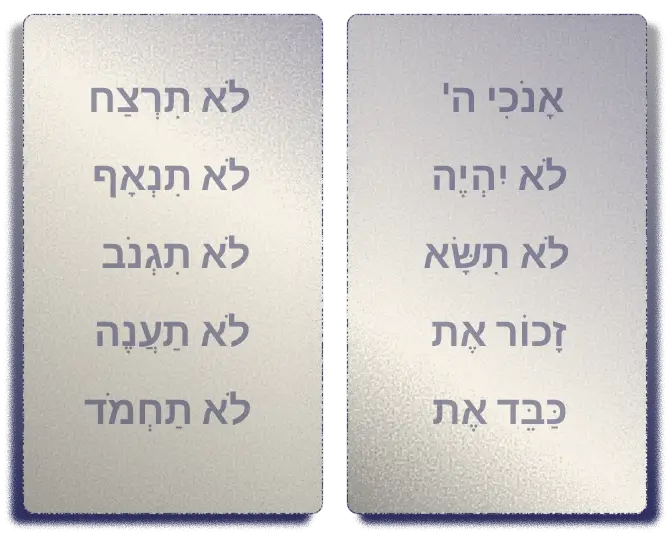
Explore the 613 mitzvos and uncover the meaning behind each one. Discover practical ways to integrate them into your daily life with insights, sources, and guided reflection.

Learn the structure, depth, and spiritual intent behind Jewish prayer. Dive into morning blessings, Shema, Amidah, and more—with tools to enrich your daily connection.
Each week’s parsha offers timeless wisdom and modern relevance. Explore summaries, key themes, and mitzvah connections to deepen your understanding of the Torah cycle.