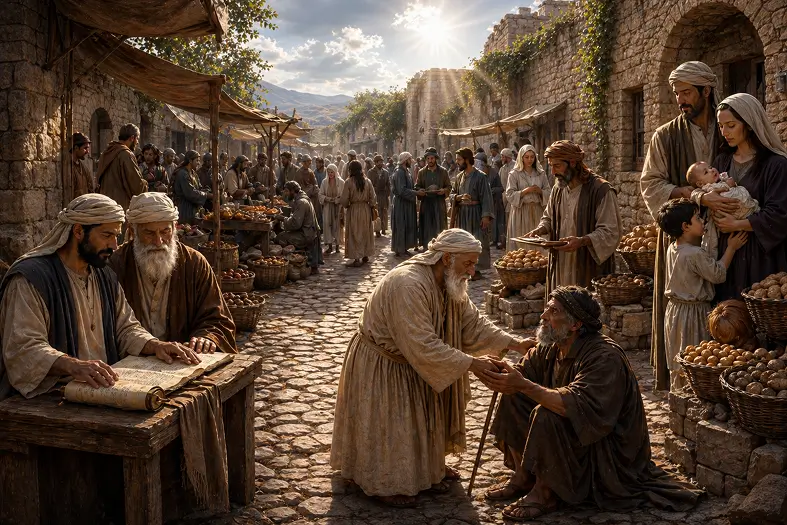
Each Parsha page on Mitzvah Minute is designed as a guided, three-level journey through the weekly Torah reading—integrating the narrative, the mitzvos, and the classical commentaries into one unified experience.
Begin with the foundations of the Parsha:
This level gives you the storyline, the key mitzvos, and the essential connections between them.
A complete journey through the parsha—moving from clarity and depth to inner connection and real-world meaning, culminating in a way to live its ideas in everyday life.
These sections show how the Parsha speaks to the mind, the heart, and the real world — offering wisdom rooted in enduring Torah.
A complete, structured commentary on the parsha—presented pasuk by pasuk, with chapter and overall summaries for clarity and flow.
This level reveals the structural depth of the Parsha and the classical underpinnings of each theme.
Together, these layers create a complete Parsha journey —
narrative, mitzvah, and commentary — all flowing toward deeper understanding, spiritual insight, and meaningful growth.
Tap the Page Navigation tab on the right side of your screen anytime to access quick-links to the entire Parsha page.

The quick-link panel gives instant access to every section — Parsha Summary, Mitzvos, Divrei Torah, Insights, and Commentaries.
“Every word of Torah and every mitzvah lifts us higher — may your learning bring you closer to Hashem.”

Parshas Kedoshim presents one of the Torah’s most sweeping and demanding visions: a call for an entire nation to live a life of kedushah— holiness — in every dimension of existence. Beginning with the charge “קְדֹשִׁים תִּהְיוּ” — “You shall be holy,” the parsha weaves together mitzvos that govern family life, interpersonal conduct, business ethics, agriculture, ritual observance, and inner character. It moves fluidly between the Beis HaMikdash and the marketplace, between reverence for parents and love of one’s fellow, between guarding Shabbos and maintaining honest weights, showing that holiness is not confined to sacred spaces but must define daily living. At the same time, the parsha establishes firm boundaries — in forbidden relationships, idolatrous practices, and moral corruption — teaching that kedushah requires both moral elevation and clear separation. The result is a powerful vision of a people shaped by discipline, compassion, justice, and loyalty to Hashem, living as a distinct and sanctified nation in the world.

“Kedushah in the Fabric of Life — Holiness Through Love, Restraint, and Responsibility”
וְאָהַבְתָּ אֵת ה׳ אֱלֹקֶיךָ
Parshas Kedoshim begins with the call to holiness because the life of Torah is not sustained by restraint alone. At its root stands אהבת ה׳ — love of Hashem, a relationship in which mitzvos are not experienced as burdens but as ways of drawing close. Kedoshim teaches that holiness must enter speech, business, desire, and community because love of Hashem cannot remain abstract. When love is real, it seeks expression in the total ordering of life.
אֶת ה׳ אֱלֹקֶיךָ תִּירָא
Kedoshim repeatedly joins moral conduct to יראה — awe of Hashem, especially in areas that are hidden from public view. The parsha knows that many failures happen where no court can see: motives in advice, inward resentment, quiet dishonesty, and concealed indulgence. Fear of Hashem here is not panic, but the steady awareness that no inner act is truly private. Kedushah becomes possible when a person lives before Hashem even in the unseen chambers of the heart.
וְהָלַכְתָּ בִּדְרָכָיו
Kedoshim presents holiness not as withdrawal from the world but as imitation of Divine middos — attributes. Compassion for the weak, fairness in judgment, restraint in power, and dignity in speech are all ways of walking in Hashem’s ways. The parsha’s many interpersonal mitzvos are therefore not separate moral niceties; they are the human form of imitatio Dei. A Jew becomes holy by making Divine qualities visible in daily conduct.
וְאָהַבְתָּ לְרֵעֲךָ כָּמוֹךָ
This mitzvah stands near the heart of Kedoshim because the parsha is building not only holy individuals but a holy people. Love of another Jew here does not mean sentiment alone. It means willing the other’s good, guarding his dignity, and refusing to let resentment become the hidden law of the heart. Kedoshim teaches that holiness is measured not only by one’s relationship with Hashem, but by whether one can make room in his heart for the good of another.
וַאֲהַבְתֶּם אֶת הַגֵּר
Parshas Kedoshim speaks with unusual sensitivity about the גר — convert or stranger, because a holy society is tested by how it treats those who are more vulnerable. Love of the ger means more than refraining from cruelty. It requires active inclusion, moral seriousness, and the refusal to let difference become distance. Kedoshim teaches that a nation cannot claim sanctity if those entering its covenantal life are met with suspicion instead of dignity.
הוֹכֵחַ תּוֹכִיחַ אֶת עֲמִיתֶךָ
Kedoshim does not allow hatred to hide behind silence. תוכחה — rebuke is the Torah’s answer to the temptation to bury grievance until it hardens into distance. In the parsha’s moral structure, rebuke is not an act of superiority but of repair: speak honestly, seek clarity, and make peace possible before resentment takes root. A holy society is not one without conflict, but one in which truth can be spoken for the sake of restoration.
וְלֹא תִשָּׂא עָלָיו חֵטְא
Kedoshim places a boundary around rebuke itself. Even when correction is necessary, the dignity of the other person remains sacred. Public humiliation turns a mitzvah into a sin, because it uses truth as a weapon instead of as a path toward healing. The parsha therefore teaches that holiness is not only in what one says, but in the manner, tone, and human sensitivity with which it is said.
כָּל אַלְמָנָה וְיָתוֹם לֹא תְעַנּוּן
Although this mitzvah is not written in Kedoshim itself, its spirit runs through the entire parsha. Kedoshim constructs a world in which the poor, the stranger, the elderly, and the socially vulnerable are not left to the mercy of private goodwill alone. Their protection is built into Torah law. Holiness therefore cannot be reduced to private piety. It must take the form of a society in which power is restrained and the weak are guarded.
לֹא תֵלֵךְ רָכִיל בְּעַמֶּיךָ
Rashi and the broader Kedoshim tradition treat רכילות — talebearing as one of the most destructive forces in communal life. Speech carries more than information; it carries atmosphere, trust, suspicion, and harm. A person who moves from one place to another spreading damaging words weakens the very fabric of the people. Kedoshim teaches that holiness requires discipline of the tongue because the mouth can build a community or quietly poison it.
לֹא תִקֹּם
Revenge allows old injury to become a principle of action. Kedoshim forbids that transformation. A wrong may be remembered, but it may not be turned into a license to strike back in kind. The parsha’s demand is not emotional numbness. It is moral mastery: a person is not permitted to let wounded pride become the architect of his conduct.
וְלֹא תִטֹּר
If revenge is the outward act, grudge-bearing is the inward preservation of the injury. Kedoshim addresses both because the Torah does not seek merely correct behavior; it seeks a repaired inner world. A person may refuse outward retaliation and still nourish the offense within himself. The parsha therefore pushes further, requiring that the grievance itself not become a permanent resident in the heart. Only then can love genuinely emerge.
מִפְּנֵי שֵׂיבָה תָּקוּם וְהָדַרְתָּ פְּנֵי זָקֵן
Kedoshim teaches that holiness includes reverence for embodied wisdom. Rising before age and honoring Torah-formed stature means recognizing that human life is not measured only by power, beauty, or productivity. The parsha restores dignity to wisdom, memory, and maturity. In doing so, it resists a culture that glorifies the new while forgetting the sanctity of what has been lived, learned, and transmitted.
לֹא תְנַחֲשׁוּ
Kedoshim rejects the attempt to live by signs, omens, and irrational patterns of control. Superstition flatters human anxiety by making the world seem manageable through hidden techniques rather than through trust in Hashem and obedience to Torah. The parsha demands a life of moral clarity, not magical thinking. Holiness means living in reality as Hashem ordered it, not in imagined systems of fear and manipulation.
וְלֹא תְעוֹנֵנוּ
Kedoshim opposes every spiritual posture that shifts a person away from responsibility and toward fatalism. Astrology promises knowledge or control through the stars, but the Torah directs a Jew instead toward covenant, command, and moral choice. A holy life is not governed by cosmic speculation. It is governed by fidelity to Hashem in the concrete decisions of speech, desire, honesty, and justice.
וְלֹא תַשְׁחִית אֵת פְּאַת זְקָנֶךָ
Within Kedoshim, even bodily conduct enters the realm of sanctity. This mitzvah reflects the parsha’s larger insistence that holiness is not only inward intention but also embodied distinction. A Jew does not treat the body as morally neutral material to be shaped by surrounding culture without thought. Kedushah reaches appearance and habit as well, teaching that the covenant leaves its mark even on the visible form of life.
וּכְתֹבֶת קַעֲקַע לֹא תִתְּנוּ בָכֶם
Kedoshim places limits on what may be inscribed into the body because the body itself belongs within the order of holiness. This mitzvah stands in the broader section where Torah separates Jewish life from pagan and self-disfiguring practices. The point is not mere negation. It is to preserve the body as a vessel of kedushah rather than as a canvas for foreign ritual, rebellion, or self-assertion severed from covenant.
וּבַיּוֹם הַשְּׁבִיעִי תִּשְׁבֹּת
Kedoshim opens with reverence and Shabbos because holiness cannot survive in a life of endless motion. Shabbos is the covenantal interruption that prevents the human being from becoming a servant of labor, productivity, and worldly control. In the architecture of Kedoshim, rest is not escape from holiness. It is one of its central forms. A people that rests before Hashem learns that life belongs to Him before it belongs to achievement.
אִישׁ אִישׁ אֶל כָּל שְׁאֵר בְּשָׂרוֹ לֹא תִקְרְבוּ לְגַלּוֹת עֶרְוָה
Rashi and Ramban both place sexual restraint near the center of Kedoshim’s holiness. The parsha teaches that there are areas of life where human appetite is strongest, and it is precisely there that boundaries become most sanctifying. This mitzvah does not treat desire as meaningless. It treats it as powerful enough to require law, distance, and discipline. Kedushah is built not by denying human force, but by refusing to let it rule.
לֶעָנִי וְלַגֵּר תַּעֲזֹב אֹתָם
One of Kedoshim’s most important teachings is that care for the poor must be structured into the normal flow of life. Peah — leaving the corner of the field — means that generosity is not left to mood alone. A person’s prosperity must already contain a space for someone else’s survival. This is a hallmark of the parsha’s vision: holiness does not remain in the synagogue or the heart. It is built into fields, harvests, and economic life.
פָּתֹחַ תִּפְתַּח אֶת יָדֶךָ לוֹ
Tzedakah appears in Kedoshim not merely as compassion but as covenantal obligation. The parsha repeatedly returns to the poor, the ger, and the vulnerable because a holy people is measured by whether it treats another person’s need as morally binding. Charity here is not the generosity of the exceptional soul. It is the basic expression of a heart trained by Torah to recognize that blessing must circulate rather than harden into possession.
מֹאזְנֵי צֶדֶק אַבְנֵי צֶדֶק
Kedoshim insists that holiness reaches all the way into trade, measurement, and the smallest mechanisms of fairness. Accurate weights are not a technical matter detached from spiritual life. They are a test of whether truth governs ordinary dealings. A society may speak lofty language about holiness, but if its marketplace is false, its sanctity is compromised. Kedoshim therefore makes justice measurable, concrete, and daily.

Rashi presents קדושה — holiness not as an abstract spiritual state, but as a disciplined life of boundaries. His central definition of “קְדֹשִׁים תִּהְיוּ — you shall be holy” is פְּרִישׁוּת — separation, especially from עריות — forbidden relationships and from sin broadly. This establishes that holiness is achieved not through mystical elevation alone, but through concrete restraint in areas where human impulse is strongest.
Rashi reinforces this by pointing to the Torah’s consistent pairing of sexual boundaries with language of holiness. Where there is a גדר ערוה — protective fence around immorality, there is also קדושה. This reveals a fundamental Torah principle: the areas that most demand discipline are precisely the ones that generate holiness when properly guarded.
At the same time, Rashi shows that this holiness is not limited to private morality. The parsha, taught “בהקהל — in full assembly,” contains “רוב גופי תורה — the major bodies of Torah,” meaning that kedushah extends into every domain of life—interpersonal conduct, commerce, speech, and thought. Holiness is therefore a total system, not a single trait.
Rashi repeatedly reveals how Torah law is structured with deep awareness of human nature. In the mitzvah of honoring parents, the Torah adjusts its wording to correct natural emotional imbalance: it emphasizes fear of the mother (since she is less feared) and honor of the father (since he is less naturally honored). The Torah does not ignore human tendencies—it calibrates itself to refine them.
This same psychological sensitivity appears in Rashi’s reading of moral failure as a progression. Theft leads to denial, denial leads to lying, and lying leads to false oaths. The Torah’s sequence of prohibitions is not random; it traces the internal unraveling of a person’s integrity. A single compromised act becomes the beginning of a chain that corrupts both action and speech.
Even in areas of עבודה — Divine service, Rashi emphasizes intention as central. A korban — offering is not valid merely through physical performance; it must be accompanied by directed thought aligned with its proper זמן — time and purpose. Mechanical action without intent is not considered true avodah. This reflects a broader principle: Torah demands inner alignment, not just external compliance.
A recurring theme in Rashi is that Torah legislates not only visible behavior but also the concealed world of motive. The prohibition of “לפני עור — placing a stumbling block before the blind” is expanded beyond physical harm to include misleading advice given for self-serving reasons. The victim may never know he was deceived, but Hashem does.
This is why such mitzvos conclude with “ויראת מאלקיך — you shall fear your G-d.” Whenever a matter is מסור ללב — entrusted to the heart, beyond human verification, the Torah invokes yiras Shamayim — fear of Heaven. Rashi establishes that Torah accountability operates on two levels:
Holiness, therefore, requires integrity even where no one else can see.
Rashi’s treatment of משפט — justice is uncompromising. A judge may not favor the poor out of compassion nor the wealthy out of respect. Even noble motivations cannot justify distorting the truth of דין — law. Justice must remain objective, free from emotional or social pressure.
He intensifies this by describing judicial corruption in the strongest terms—תועבה — abomination, חרם — destruction, and שקץ — something detestable. This language shows that injustice is not merely an error; it is a moral collapse that undermines the Divine order.
At the same time, Rashi expands “בצדק תשפט עמיתך — judge your fellow with righteousness” beyond the courtroom. In daily life, it becomes a call to judge others favorably. Thus, justice operates in two parallel realms:
Both are required to sustain a just society.
Rashi presents speech as one of the most powerful and dangerous tools in human life. רכילות — talebearing is not simply speaking negatively; it is an active process of seeking out, carrying, and spreading harmful information. It is mobile, covert, and socially destructive.
Similarly, the mitzvah of תוכחה — rebuke is tightly controlled. One must correct another, but without causing public humiliation. Even a mitzvah, if performed insensitively, can become a sin. Speech must therefore be governed not only by truth, but by dignity and care.
Rashi’s framework reveals that speech is not neutral—it either builds or destroys relationships and community. The Torah demands discipline not only in what one says, but how and why it is said.
In the mitzvos of פאה — leaving the corner of the field, לקט — gleanings, פרט — fallen grapes, and עוללות — incomplete clusters, Rashi emphasizes that care for the poor is not voluntary kindness but a structured obligation. The Torah defines precise categories of what must be left, embedding generosity into the agricultural system itself.
Rashi underscores the seriousness of neglecting these duties by invoking Hashem as דיין — Judge and defender of the poor. The relationship between the wealthy and the vulnerable is not merely social—it is overseen directly by Divine justice.
Similarly, “לא תעמוד על דם רעך — do not stand by the blood of your fellow” establishes that one is responsible not only for avoiding harm, but for actively preventing it when possible. Inaction in the face of danger becomes a form of moral failure.
Rashi’s interpretation of “לא תקם ולא תטר — do not take revenge and do not bear a grudge” defines two distinct inner states:
The Torah forbids both the action and the emotional residue. This clears the path for the culminating principle: “ואהבת לרעך כמוך — love your fellow as yourself.”
By quoting Rabbi Akiva, Rashi identifies this as a כלל גדול בתורה — a foundational principle of Torah. Love of one’s fellow is not an isolated mitzvah; it is the organizing ethic that emerges once resentment, retaliation, and hatred are removed.
Across Parshas Kedoshim, Rashi presents Torah as an integrated system governing action, thought, emotion, and society. Holiness emerges from:
Kedushah is not achieved in isolation. It is built through the consistent ordering of every dimension of life under the will of Hashem.
📖 Source
Ramban understands “קְדֹשִׁים תִּהְיוּ — you shall be holy” as a sweeping directive that goes far beyond observing specific prohibitions. The Torah had already listed many forbidden acts in the previous parshiyos, especially in the realm of עריות — forbidden relationships. Yet here, Ramban explains, the Torah introduces a new category: the obligation to refine even what is technically permitted.
This is the foundation of Ramban’s famous principle of “נבל ברשות התורה — a degenerate within the permission of the Torah.” A person can technically keep the law while living a life of indulgence, excess, and moral coarseness. Kedoshim comes to close that gap. Holiness requires discipline not only in what is אסור — forbidden, but in how one engages with what is מותר — permitted.
Kedushah, therefore, is not a single mitzvah but a דרך חיים — a complete mode of living. It demands restraint, refinement, and intentionality in all areas of life—speech, desire, consumption, and relationships.
Ramban repeatedly emphasizes that Parshas Kedoshim is not a random collection of commandments. It is a unified system designed to shape both the individual and the nation. The Torah speaks “אֶל כָּל עֲדַת בְּנֵי יִשְׂרָאֵל — to the entire congregation,” because “רֹב גּוּפֵי תוֹרָה תְּלוּיִין בָּהּ — the major principles of Torah depend on it.”
This framing reveals that holiness is not confined to ritual spaces like the Mikdash — Temple. Rather, it extends into every dimension of life, including interpersonal conduct, business ethics, family life, speech, emotional refinement, and communal responsibility. Ramban shows that the Torah is constructing a sanctified society in which every area of life reflects the will of Hashem.
The mitzvos therefore do not function as isolated commands. They operate together as one integrated system whose goal is to form a people capable of sustaining the Shechinah — Divine Presence.
A central feature of Ramban’s approach is that the Torah addresses not only actions, but the inner life of the אדם — person. The mitzvos in this parsha systematically refine emotional and psychological states.
The sequence of commands—“לא תשנא — do not hate,” “הוכח תוכיח — rebuke,” “לא תקם ולא תטר — do not take revenge or bear a grudge”—maps a progression of inner work. Ramban explains that the Torah is guiding a person from suppressed hatred, to honest confrontation, to emotional release, and ultimately to love.
Holiness is therefore not achieved by suppressing emotion, but by transforming it. The Torah builds a structure where resentment is replaced with clarity, and grievance is replaced with אהבה — love.
Ramban’s interpretation of “וְאָהַבְתָּ לְרֵעֲךָ כָּמוֹךָ — love your fellow as yourself” is both realistic and demanding. He explains that the Torah is not commanding a literal emotional equality—something humanly impossible. Instead, it demands that a person genuinely desire all forms of good for another, just as he desires them for himself.
This includes:
Ramban identifies the primary obstacle to this love as קִנְאָה — jealousy. Even when a person loves another, he often resists that person’s full success. The Torah therefore commands the removal of that inner resistance—“פְּחִיתוּת הַקִּנְאָה — the smallness of jealousy.”
The model Ramban offers is Yehonasan’s love for David: a relationship in which one can sincerely desire the other’s greatness without needing to preserve personal superiority. This transforms love from a feeling into a disciplined moral stance.
While Chapter 19 builds the positive vision of קדושה — holiness, Ramban explains that Chapter 20 establishes its גבולות — boundaries. The Torah revisits key prohibitions—especially עבודה זרה — idolatry, and עריות — forbidden relationships—and attaches severe consequences such as כרת — spiritual excision, and ערירות — childlessness.
Ramban emphasizes that these punishments are not merely punitive. They reveal the depth of spiritual damage caused by these actions. Certain sins do not remain private; they disrupt the moral and spiritual fabric of the entire nation.
For example, acts like Molech are described as defiling “מקדשי — My sanctuary,” meaning they affect the presence of the Shechinah among Klal Yisrael. The community itself is called upon to respond, because holiness is a collective condition, not only an individual one.
Ramban identifies הבדלה — separation as the defining mechanism of holiness. The Torah repeatedly distinguishes between:
This separation is not meant to restrict life, but to elevate it. By maintaining distinctions, a person preserves clarity, dignity, and moral order.
Even mitzvos that seem technical—such as כלאים — forbidden mixtures, or שעטנז — mixing wool and linen—express this same principle. The world has structure, and holiness depends on respecting the boundaries embedded within creation.
Ramban ultimately presents Parshas Kedoshim as the Torah’s blueprint for a sanctified society. Holiness is not limited to individual piety or ritual practice. It is a comprehensive system that shapes:
The mitzvos are not isolated commands, but interconnected expressions of a single goal: to remove corruption, refine the inner world of the אדם, and align the entire nation with the will of Hashem.
In this vision, קדושה is sustained through a lifetime of disciplined choices. Through those choices, both the individual and Klal Yisrael become vessels capable of hosting the Shechinah and reflecting Divine holiness in the world.
📖 Source
The command “קדושים תהיו” — “You shall be holy” (ויקרא י״ט:ב) establishes, in Rambam’s framework, not an abstract spiritual state, but a structured model of human perfection. In Hilchos De’os (הלכות דעות), Rambam defines the ideal אדם — human being as one who walks the דרך האמצעית — the balanced path, shaping character through disciplined habits rather than extremes. Kedoshim, therefore, is not a call to withdrawal from the world, but to the refinement of how one lives within it.
Holiness emerges when the full range of human faculties—desire, emotion, intellect, and action—are governed by Torah-guided equilibrium. The parsha’s wide span of mitzvos, from interpersonal ethics to ritual observance, reflects this totality. Rambam’s system insists that perfection is not achieved through isolated acts, but through a consistent structure of חיים — life aligned with wisdom. Kedoshim thus becomes the blueprint for a האדם השלם — a complete human being, whose inner and outer life are harmonized under Divine command.
Rambam rejects the notion that mitzvos function only as external obligations. In Hilchos Teshuvah (הלכות תשובה) and Hilchos De’os, he presents mitzvos as instruments that shape the נפש — the human soul. Parshas Kedoshim embodies this integration by weaving together laws that govern action with demands that shape inner disposition.
Commands such as “ואהבת לרעך כמוך” — “You shall love your fellow as yourself” (ויקרא י״ט:י״ח) are not merely emotional ideals; they are obligations that must be cultivated through consistent behavior. Love, in Rambam’s system, is developed through repeated acts of justice, kindness, and restraint. Similarly, prohibitions against hatred, revenge, and gossip are not only societal safeguards but tools for refining the inner world of the individual.
The result is a unified system in which halacha — law and middos — character are inseparable. A person becomes holy not only by what he does, but by what he becomes through doing. Kedoshim, in this sense, is the lived expression of Rambam’s core principle: actions shape identity.
A central theme in Rambam’s philosophy is that true freedom is not the absence of constraint, but the mastery of impulse. In Moreh Nevuchim (מורה נבוכים), Rambam explains that many mitzvos are designed to regulate human desire, preventing האדם — the human being from becoming enslaved to instinct.
Parshas Kedoshim repeatedly returns to this idea. Whether in the realm of forbidden relationships, honest business practices, or speech, the Torah imposes boundaries that redirect natural drives toward constructive ends. The prohibition “לא תלך רכיל בעמך” — “Do not go as a talebearer among your people” (ויקרא י״ט:ט״ז) reflects Rambam’s emphasis on the destructive power of uncontrolled speech, as codified in Hilchos De’os (ז:א–ג).
By placing limits on instinct, the Torah does not suppress human nature—it elevates it. Rambam understands this as the path to חירות אמיתית — true freedom: a state in which the intellect governs desire, and the individual is no longer driven by impulse but guided by reason and Divine wisdom.
The mitzvah “והלכת בדרכיו” — “You shall walk in His ways” (דברים כ״ח:ט), as codified by Rambam in Sefer HaMitzvos and Hilchos De’os, forms a central axis of Kedoshim. The parsha’s ethical demands—kindness, justice, restraint, and compassion—are not arbitrary; they are expressions of the Divine attributes that a person is commanded to imitate.
Rambam defines this imitation as practical and behavioral. To be “קדוש” — holy is to act in ways that reflect Divine middos — attributes: to be merciful, just, and measured. The Torah’s detailed instructions regarding treatment of the poor, fairness in judgment, and honesty in commerce are all concrete pathways to this imitation.
Holiness, then, is not mystical distance from the world, but ethical resemblance to Hashem. The more one’s actions align with Divine attributes, the more one fulfills the purpose of creation as Rambam understands it: the alignment of human conduct with Divine wisdom.
Rambam consistently emphasizes that human perfection is not achieved in isolation. In Hilchos De’os (ו:א), he teaches that a person is shaped by his environment—“אדם נמשך בדעותיו ובמעשיו אחר רעיו” — a person is drawn after the opinions and actions of his peers. Parshas Kedoshim reflects this reality by constructing a society governed by shared ethical and halachic norms.
The repeated phrase “אני ה׳” — “I am Hashem” throughout the parsha serves, in Rambam’s framework, as a reminder that societal order is rooted in Divine authority. Justice in courts, honesty in business, and care for the vulnerable are not merely social conventions; they are expressions of a Divinely ordered system.
A קדוש society is one in which individuals reinforce one another’s moral development. The structure of the community becomes a כלי — vessel for the cultivation of virtue. Rambam thus sees Kedoshim not only as a guide for individual perfection, but as the architecture of a just and elevated civilization.
While Kedoshim is filled with practical mitzvos, Rambam would frame its ultimate purpose within his broader philosophical vision: the attainment of דעת ה׳ — knowledge of Hashem. In Hilchos Yesodei HaTorah (ב:ב), Rambam describes how contemplation of creation leads to אהבה ויראה — love and awe of Hashem.
The disciplined life outlined in Kedoshim creates the conditions for this higher pursuit. By refining character, regulating desire, and establishing ethical society, a person becomes capable of intellectual and spiritual clarity. Without this foundation, the mind remains clouded by impulse and distraction.
Thus, the parsha’s many details are not ends in themselves; they are the necessary preparation for the highest form of human perfection: knowing Hashem. Kedoshim, in Rambam’s vision, is the pathway from structured living to ultimate understanding—a life of mitzvos that culminates in דעת, where האדם becomes aligned with the deepest purpose of creation.
📖 Sources
Ralbag opens by explaining that Parshas Kedoshim is not a random collection of mitzvos, but a carefully structured progression rooted in the עשרת הדברות — the Ten Commandments. After the Torah concluded the discussion of עריות — forbidden relationships, beginning with ערות הורים — the uncovering of parental relationships, it immediately introduces יראת הורים — reverence for parents, to restore the foundation that had been violated.
From there, the parsha proceeds in ascending order, moving from the commandment of כבד את אביך ואת אמך — honoring parents, upward toward אנכי ה׳ אלקיך — recognition of Hashem. This progression is not merely literary; it reflects a philosophical ascent from human relationships to Divine awareness. Even the placement of שבת — Shabbos is deliberate, as it precedes certain other commandments due to its foundational role in affirming creation and Divine governance.
Ralbag’s key insight is that Kedoshim is a re-presentation of the Dibros in expanded form, translating foundational principles into a comprehensive system of חיים — life.
At the core of the parsha, Ralbag identifies a unifying purpose: להתקרב אל השם יתע׳ — to draw as close as possible to Hashem. Every mitzvah in Kedoshim, whether ritual or interpersonal, serves this ultimate end.
This is why the Torah transitions from prohibitions of עבודה זרה — idolatry (“אל תפנו אל האלילים”) to the laws of korbanos — offerings, specifically שלמים — peace-offerings. Ralbag explains that שלמים are highlighted because they are not brought for sin, but for positive connection. They demonstrate most clearly that the purpose of avodah — Divine service is not only repair, but relationship.
The inclusion of תנופה — waving of portions of the korban further reinforces this, symbolizing elevation and direction toward Hashem. Through this, the Torah teaches that mitzvos are not arbitrary commands, but structured acts that orient the האדם — human being toward Divine closeness.
After establishing mitzvos rooted in כבד — honor, the Torah turns to laws that build the framework of a functioning society. Ralbag emphasizes that mitzvos such as leaving gifts for the poor, honest business conduct, and proper distribution of resources are not secondary ethics—they are essential for the stability of the קבוץ המדיני — the social order.
The requirement to give to the poor from one’s produce reflects recognition that wealth is granted by Hashem and must be shared responsibly. Similarly, prohibitions against theft, withholding wages, and false oaths protect the integrity of economic life. These mitzvos preserve trust between individuals, prevent exploitation and injustice, and allow society to function in a state of שלום — harmony.
Without these structures, human society collapses into disorder, and the האדם cannot pursue intellectual or spiritual perfection.
Moving from external structure to interpersonal integrity, Ralbag next turns to mitzvos governing speech and judgment, linking them to the prohibition “לא תענה ברעך עד שקר” — do not bear false witness. He expands this category to include all forms of harm caused through words, whether through cursing others, misleading others away from Torah, perverting justice, or speaking לשון הרע — harmful speech.
These are not merely interpersonal violations; they undermine the very fabric of truth upon which society depends. When speech becomes corrupted, justice becomes impossible, and trust erodes.
Ralbag’s framework is clear: the preservation of אמת — truth is a prerequisite for any functional society. Without it, both legal systems and personal relationships disintegrate.
Moving deeper, Ralbag identifies mitzvos that govern the inner life of the האדם, corresponding to “לא תחמוד” — do not covet. These mitzvos address sins of the לב — the heart, such as hatred and resentment.
The Torah does not stop at prohibiting internal negativity; it commands its opposite: “ואהבת לרעך כמוך” — love your fellow as yourself. Ralbag understands this as essential for achieving שלום פנימי — inner harmony within society.
Hatred in the heart inevitably leads to external harm. Therefore, the Torah intervenes at its root, commanding a transformation of inner disposition. A society cannot reach true perfection unless its members not only act correctly but feel correctly toward one another.
Returning to the earlier theme of עריות, Ralbag explains that these prohibitions are not only moral but philosophical. They prevent האדם from becoming consumed by משגל — sexual indulgence, which distances a person from שכל — intellect and higher perfection.
However, the Torah goes further by revealing the deeper reasons behind these prohibitions. They prevent corruption of natural order, confusion of familial and social boundaries, and damage to intellectual clarity and belief.
This is why the Torah includes prohibitions such as כלאים — forbidden mixtures, including breeding different species, mixing seeds in a field, and wearing שעטנז — mixed fabrics. Even where no obvious physical harm exists, these acts damage the realm of דעות — correct beliefs. They blur the distinctions that define creation, leading a person toward denial of purposeful design and, ultimately, denial of Hashem.
Ralbag places strong emphasis on the Torah’s prohibitions against practices associated with עבודה זרה — idolatry, including:
These behaviors distort a person’s understanding of reality. They lead one to deny the existence of שכל — intellect as the guiding force, and instead reduce the world to חומר — matter alone.
Because of this, the Torah reinforces foundational mitzvos such as שמירת שבת — observing Shabbos and מורא מקדש — reverence for the Mikdash. These mitzvos affirm that the world is governed by form, purpose, and a First Cause—Hashem.
The command to honor the elderly — “מפני שיבה תקום” — to rise before the aged, is understood by Ralbag as a profound philosophical statement. At old age, the body weakens, and the חומר — physical element declines. Yet the Torah commands increased honor at this stage.
This demonstrates that true human value lies not in physical strength but in the צורה השכלית — the intellectual form. As the body diminishes, the intellect can become more refined and dominant.
Ralbag supports this with the verse: “בישישים חכמה ואורך ימים תבונה” — wisdom is found among the aged (איוב י״ב:י״ב). The Torah thereby teaches that human dignity is rooted in intellect, not material vitality.
The Torah continues with commands against oppressing the גר — the convert or stranger, and against dishonesty in measurement and commerce. Ralbag places these under the broader prohibition of theft — “לא תגנוב” — extending beyond direct stealing to any form of financial injustice.
These mitzvos ensure that society operates with fairness and integrity. Without them, economic life becomes corrupt, and social trust collapses. The Torah’s insistence on precise weights and measures reflects its demand for exactness in justice.
Ralbag devotes significant attention to the Torah’s detailed punishments, particularly for Molech worship, ov and yidoni — necromancy, and עריות — forbidden relationships.
The repetition and severity of these punishments serve two purposes. First, they create distance from these behaviors by emphasizing their destructive nature. Like a physician who repeatedly warns against harmful foods, the Torah reinforces the danger through repetition.
Second, they reveal the underlying purpose of the mitzvos: to preserve שלמות אנושי — human perfection. These sins are not merely violations of law; they undermine the האדם’s capacity for intellectual and spiritual development.
Ralbag concludes by explaining that when these sins become widespread, the Torah describes the land as “תקיא הארץ” — the land will expel its inhabitants. This is not poetic language alone; it reflects a real consequence of moral and intellectual corruption.
When a society abandons the structures that preserve truth, order, and distinction, it becomes unfit to exist in a מקום קדוש — a holy land. The הארץ — land itself is aligned with the purpose of human perfection, and when that purpose is violated, the society cannot endure within it.
The final synthesis of Ralbag is clear: all the mitzvos in Kedoshim—whether governing action, speech, desire, or belief—are designed to prepare the האדם for שלמות השכל — intellectual perfection.
By regulating behavior, structuring society, refining inner character, and protecting correct beliefs, the Torah creates the conditions necessary for true knowledge of Hashem.
Thus, Kedoshim is not only a legal code or ethical system—it is a comprehensive framework that enables the האדם to fulfill his ultimate purpose: to become aligned with the highest level of understanding and closeness to Hashem.
📖 Source
(Baal Shem Tov · Kedushas Levi · Sfas Emes)
Parshas Kedoshim does not speak to a person from outside. It speaks to the hidden nekudah — inner point — that is already alive within him. The command קדושים תהיו is not only a demand. It is also a promise. The soul of a Yid is not cut off from kedushah and then asked to create it from nothing. It already carries a חלק אלוק ממעל (Iyov 31:2) — a Divine portion from above — and therefore it can draw holiness down even into ordinary life. Kedushah in this parsha is not escape from the world. It is the power to reveal that the deepest life within a Jew comes from Hashem, even while standing בתוך הטבע — within the natural world. That is why the parsha can command holiness in human conduct, speech, desire, business, and relationships. It is speaking to a holiness that is already there, waiting to be uncovered.
The Chassidic heart of Kedoshim is that true holiness does not make a person feel large. It makes him feel small before the greatness of Hashem. Kedushas Levi develops this through the language of תפלה — prayer — and through the movement of מצוה גוררת מצוה — one mitzvah drawing the next. As a person serves Hashem sincerely, he does not become self-impressed by his growth. He becomes more aware of how infinite Hashem is and how dependent he is on Divine mercy. Like Beis Hillel’s מוסיף והולך — steadily increasing — holiness deepens through continuity. Every mitzvah draws the soul closer, and the closer a person comes, the more he sees his own lowliness with clarity. This is not depression. It is ענוה — humility — the holy emptiness of a person who is no longer full of himself. In that very humility, the Name of Hashem is magnified in the world, because people see human beings who do much and yet feel themselves as nothing before the Borei Olam.
Kedushas Levi pushes this even deeper by distinguishing between יראת העונש — fear of punishment — and יראת הרוממות — awe before Divine greatness. A person can live as an eved — servant — who obeys because he fears consequence, or he can rise toward the madreigah — spiritual level — of a ben — son — whose whole being is attached to his Father in Heaven. The lower fear restrains sin, but the higher awe transforms the person himself. It weakens the hold of the merely physical and strengthens attachment to the soul’s true source. This is part of the deeper link between קדושים תהיו and איש אמו ואביו תיראו. A person must honor the fact that he came into the world through father and mother, but he must not live chained only to the physical side of that origin. He must learn to cling to the Divine share within him, to the point that his mitzvos refine the body and make it a vessel for the neshamah. Kedushah is therefore not only moral restraint. It is a reordering of identity.
The Baal Shem Tov reads Kedoshim with radical seriousness about speech. No word disappears. No sound is empty. Even a קול — sound — that seems small rises upward. Speech is never only social. It is spiritual action. What a person says does not end when it leaves his mouth. It ascends, forms, and leaves an imprint above and below. That is why lashon hara is so destructive in these teachings. It is not only wrong because it hurts another person. It is wrong because speech creates realities. A holy word generates holiness. A corrupt word generates a klipah — a shell of concealment. Even empty and self-serving speech leaves residue in the world. Kedoshim therefore calls not only for moral discipline, but for reverence toward the power of the human mouth. A person’s speech is one of the clearest places where inner life becomes outer reality.
One of the strongest themes in the Baal Shem Tov’s reading of the parsha is that judging another person is never only about that other person. בצדק תשפוט עמיתך becomes a revelation of how Heaven deals with the one who judges. When a person sees sin in another and rushes to condemn, he is often passing sentence on himself. Heaven shows him a scene outside himself because he would never judge his own life honestly if it were presented directly. The verdict he gives becomes the verdict he signs for himself. This makes dan l’kaf zechus — judging favorably — much more than a noble trait. It becomes an act of survival, mercy, and truth. The one who sees evil in another must tremble and ask why he was shown this at all. If he can find the hidden struggle, the coarseness, the ignorance, the overpowering yetzer, and judge with rachamim — compassion — he awakens that same mercy upon himself. In this reading, Kedoshim teaches that holiness begins when criticism turns inward before it moves outward.
This inward turn does not end in self-analysis. It opens into אהבת ישראל — love of Israel. The Baal Shem Tov’s school insists that if a person is honest, he will discover at least a trace of the same failing within himself. Once he sees that, harshness softens. He begins to look at another Jew not as a case to prosecute, but as a soul caught in struggle. He will still care about sin. He will still want teshuvah. But he will want it מתוך אהבה — מתוך רחמים — מתוך שייכות, out of love, compassion, and belonging. He will try to wash another Jew clean rather than push him further down. He will remember that כלל ישראל is bound together at the level of the soul, and that the deeper truth of a Jew is not filth but kedushah. The Chassidic reading here is demanding: do not flatter evil, but do not forget the hidden goodness of the one who fell.
That is why הוכח תוכיח receives such careful treatment in these teachings. Tochachah — rebuke — is holy only when it is spoken from love, with the speaker including himself among those who need repair. A person who rebukes in order to elevate himself, embarrass others, gain prestige, or enjoy moral power is not healing anyone. He is becoming a קטיגור — an accuser. He causes division between Yisrael and their Father in Heaven. The true מוכיח — one who rebukes — speaks like a father who loves his child, or like a servant who reports a painful truth because he longs for reconciliation, not because he enjoys exposing failure. He must rebuke himself first. He must feel that he has a share in the brokenness he is addressing. He must avoid humiliating the sinner. He must even know when indirect rebuke is wiser than public confrontation, so that the other person can awaken without shame. Kedoshim here becomes a school of holy speech, where even truth must pass through love before it can be spoken.
The Chassidic sources on Kedoshim do not treat lashon hara as a narrow failure of etiquette. They treat it as a breakdown in spiritual awareness. To speak against another Jew with contempt is already to show inner impurity. To speak arrogantly against tzaddikim and the faithful is a sign of severe corruption. Even the familiar Chazal that “everyone stumbles in the dust of lashon hara” is read through a softer, aching lens: not as despair about Yisrael, but as a tefillah that the exile has become so thick, the concealments so many, that only Divine compassion can rescue the people before they sink further. This is classic Chassidic reading: even rebuke about collective failure becomes a plea of love before Hashem. And where harmful speech does appear, the sources insist that words themselves produce consequences. The spoken corruption returns, attaches, accuses, and harms. Speech does not merely express a condition; it builds one.
One of the most striking teachings in the Baal Shem Tov’s orbit is the reading of משגיח מן החלונות מציץ מן החרכים. When a person goes toward aveirah — sin — in secret, and suddenly feels fear, shame, or the sense that someone is watching, that is not merely social anxiety. It may be יראה עליונה — higher awe — clothing itself in a form the person can feel. Hashem, in His mercy, contracts that awe and sends it into the person’s imagination so that he might still turn back. Even in a place of concealment, there is no מקום פנוי מיניה — no place empty of Him. The tragedy of sin is that a person misreads that trembling. Instead of hearing it as a call to return, he drags the holy spark downward into the act itself. Kedoshim, then, is not only about avoiding impurity. It is about learning how to read the inner warnings of the soul correctly, recognizing that even fear may be one of the last languages of Divine compassion.
The parsha’s severe arayos — forbidden relationships — are read by these sources with unusual depth. Desire is not dismissed as meaningless. On the contrary, the Baal Shem Tov and the later Chassidic tradition say that fallen love is still, at root, a distortion of חסד — the Divine quality of love. The problem is not that passion exists. The problem is that a holy capacity has been dragged into a degraded place. אהבה נפולה — fallen love — is love that forgot its source. This makes the work of Kedoshim more demanding, not less. A person must not simply suppress desire. He must elevate it. He must recognize that the force pulling him downward is a broken fragment of a higher yearning that was meant to lead him toward אהבת ה׳ — love of Hashem. To misuse that כוח — energy — is not only to commit sin, but to force a lofty middah into filth. To repair it is to return that love to its root.
The Sfas Emes repeatedly returns to the idea that Kedoshim is both gezeiras hakasuv — a Divine decree — and havtachah — a promise. The Jew can live with kedushah because kedushah is planted within him. But it must be protected. The inner gate cannot remain open to every form of gashmiyus — material pull — without consequence. As a person guards his פנימיות — inward life — the inner good begins to reveal itself. As he protects himself from the coarse, the divided, and the impure, he becomes capable of feeling the hidden sanctity that was already present. This makes the parsha’s many prohibitions part of one unified process. They are not merely fences. They are acts of uncovering. By refusing what deforms the soul, a person rediscovers the shape of who he really is.
The Sfas Emes also frames Kedoshim through the image of עץ חיים — the Tree of Life. In a world before cheit — sin — there was no ערלה — blockage, husk, or covering — and direct attachment to life was possible. After sin, the world became a place of mixture, where good and evil are intertwined. Torah now comes as the path that teaches a person how to separate from the ערלה and reattach himself to life. This is why the mitzvos of Kedoshim feel so earthy and so exact. They are not distractions from spiritual life. They are the surgery by which spiritual life becomes possible again in a fractured world. Holiness in this reading is not achieved by denying the confusion of earthly life, but by holding tightly to Torah until its order slowly untangles the mixture within the person and within the world.
The Sfas Emes broadens this still further by describing multiple layers of kedushah. Kedushah is not only a feeling. It must take shape in מעשה — action, דיבור — speech, and מחשבה — thought. The mitzvos sanctify the limbs and give a holy form to the human being. A Jew is called to become an אדם not merely biologically, but spiritually, through the commandments that shape the body into a vessel for Divine light. Shabbos becomes the great model of this truth: the weekdays prepare the structure, but Shabbos reveals the neshamah within it. So too with the person. The body may be prepared through earthly processes, but the true life of the person comes from the Divine soul that rests within him. Kedoshim demands that one live with heightened care for that inward life, especially in areas where action can either guard or defile the holiness of the covenant.
The parsha’s command of ואהבת לרעך כמוך is treated here not as a soft moral slogan, but as a spiritual law woven into the structure of reality. The Baal Shem Tov teaches through ה׳ צלך — Hashem is your shadow — that the way a person conducts himself toward others determines how Heavenly conduct is mirrored back toward him. If he lives with love, patience, and good middos, he awakens that same posture from Above. If he lives with pride, Heaven reflects that too. Love of another Jew is therefore not only interpersonal goodness. It is participation in the Divine pattern. The Sfas Emes adds that this love does not come easily or sentimentally. It is reached through earlier mitzvos: do not gossip, do not hate, rebuke rightly. First the poisons of division are removed; then love can emerge as the כלל גדול בתורה — the great principle of Torah. And in one especially penetrating line, ואהבת לרעך is read as making love of Hashem beloved to another, spreading the fire of devotion beyond oneself. Kedoshim thus joins horizontal love and vertical love into one movement.
Another quiet but important current in these sources is that holiness is not confined to beis midrash life or visibly elevated moments. Honest commerce done לשם שמים — for the sake of Heaven — is described as especially beloved before Hashem. Bodily care and cleanliness are not dismissed as minor matters. Even the warning not to make oneself disgusting is read with seriousness, because physical disorder can coarsen the soul and damage a more refined neshamah. Kedoshim is therefore not calling a person away from embodied life. It is calling him to inhabit embodied life with sanctity, measure, purity, and intention. The body is not the enemy. The problem is when the body becomes the whole story.
Taken together, these Chassidic voices read Parshas Kedoshim as the unveiling of an entire inner map. A Jew is asked to live with holy speech, holy judgment, holy rebuke, holy love, holy awe, holy restraint, and holy conduct because the core of his life already comes from a holy source. He must separate from what coarsens him, not in order to become someone else, but in order to become what he already is. He must grow through mitzvos until holiness becomes cumulative. He must cultivate humility until closeness to Hashem no longer inflates the self but empties it. He must look at another Jew with mercy, because the judgment he gives returns to him. He must hear even hidden trembling as a message from Heaven. And he must learn that every fallen desire, every careless word, every fractured relationship is also a place where something can still be lifted back to its root.
Kedoshim, in this light, is not a parsha of isolated commands. It is a parsha of return to פנימיות — to the innermost self. It teaches that the way upward is not by fleeing the human condition, but by refining it until the chelek Eloka mima’al within a person begins to govern his sight, his speech, his love, his fear, and his life. Then קדושים תהיו is no longer heard as an impossible command. It becomes the deepest truth of what a Yid was always meant to reveal.
📖 Sources
Parshas Kedoshim marks a decisive turning point in the Torah’s vision of religious life. Until this moment, holiness appears to reside in specific domains: the Mishkan — Tabernacle, the korbanos — sacrificial offerings, and the kohanim — priestly elite who serve as guardians of the sacred. Holiness is concentrated, elevated, and set apart. Then, suddenly, the Torah speaks not to a select few but to the entirety of Klal Yisrael — the entire nation: “קדושים תהיו — You shall be holy.” In that moment, kedushah — holiness is no longer confined to place, ritual, or role. It becomes the calling of a people and the framework of an entire society.
Rabbi Jonathan Sacks understands this shift as one of the most revolutionary ideas in the Torah. Holiness is not meant to remain in the Sanctuary; it is meant to flow outward into every dimension of life. It must shape how a person speaks, conducts business, treats the vulnerable, builds relationships, and even how one responds to failure and wrongdoing. Kedoshim is therefore not a collection of disconnected laws, but a unified moral vision: a society structured by the conscious presence of G-d.
This transformation becomes even more profound when viewed through the lens of Jewish history. With the destruction of the Beis HaMikdash — Temple, the central structures of holiness seemed to vanish. The place was gone, the offerings ceased, and the priestly service was interrupted. Yet instead of collapsing, Judaism underwent a deep internal reorientation. What had once been concentrated became democratized. Every Jew gained direct access to G-d through teshuvah — repentance, tefillah — prayer, and Torah. Holiness was no longer mediated; it was lived. Every home could become a sanctuary, every table an altar, every moment an opportunity for closeness to G-d.
At the same time, Kedoshim redefines what it means to be a Jew. Jewish identity is not reducible to ethnicity, culture, or ancestry. These may shape the external forms of Jewish life, but they do not define its essence. The Torah defines the Jewish people as a nation summoned to holiness — a people whose identity is rooted in a covenantal relationship with G-d and expressed through a distinctive moral and spiritual way of life. To be Jewish is to live with awareness, responsibility, and the courage to be different — to be in the world but not shaped by its passing norms.
This vision also transforms the meaning of morality itself. Rabbi Sacks shows that the Torah does not reduce ethics to a single principle. Instead, Kedoshim weaves together multiple dimensions: justice, compassion, order, dignity, and above all, love. The commands to love one’s neighbour and to love the stranger are not isolated ideals. They emerge from a deeper truth — that every human being is created in the image of G-d. Holiness, therefore, is not separation from humanity, but a deeper engagement with it, guided by reverence for the Divine image in every person.
Yet this love is not sentimental. It demands responsibility. It includes the courage to rebuke, the obligation to prevent wrongdoing, and the willingness to admit one’s own failures. A holy society is not one without conflict or imperfection, but one in which truth is spoken, dignity is preserved, and growth remains possible. Even teshuvah becomes an expression of holiness — not only returning to G-d, but becoming a person capable of honesty, accountability, and renewal.
In Rabbi Sacks’ reading, Kedoshim is nothing less than the Torah’s blueprint for a covenantal civilization. It calls for a society in which holiness is not hidden in sacred spaces but revealed in human behavior; where leadership and followership alike are shaped by moral courage; where equality is rooted not in sameness of status but in shared dignity before G-d; and where love is elevated from emotion to obligation.
To be holy, then, is not to withdraw from the world, but to transform it. It is to live in such a way that the presence of G-d becomes visible in the fabric of everyday life — in justice, in compassion, in restraint, and in love.
Rabbi Sacks begins by returning us to one of the most fragile and uncertain moments in Jewish history — the destruction of the Beis HaMikdash — Temple. It was not only a national tragedy, but a spiritual rupture. The entire system through which Klal Yisrael — the Jewish people related to G-d seemed to collapse. The avodah — Divine service, the korbanos — sacrifices, and the role of the Kohen Gadol — High Priest, especially on Yom Kippur, were not peripheral elements. They were the very structure through which atonement, forgiveness, and closeness to G-d were achieved.
Yom Kippur in the time of the Temple was a moment of overwhelming intensity. The holiest person entered the holiest place on the holiest day to secure forgiveness for the entire nation. It was a collective act of purification. Yet embedded within that system was a fundamental truth: human beings sin. A nation without failure is not a nation of human beings, but of angels. Therefore, there must be a way to repair, to return, to begin again. The sacrificial order provided that path.
When that system was removed, the crisis was existential. What does a people do when the central mechanism of atonement disappears? How does a covenantal nation survive when its most sacred institutions are destroyed?
Rabbi Sacks highlights that other responses emerged in that same historical moment. Some turned toward apocalyptic visions, imagining a cosmic upheaval that would resolve the tension between human failure and Divine justice. Others, most notably within early Christianity, reinterpreted sacrifice in metaphysical terms — shifting it from a concrete act in time and space to a single, transcendent event meant to atone for all sin. These approaches sought to preserve the idea of sacrifice by relocating it beyond the physical world.
Judaism chose a radically different path.
Instead of replacing sacrifice, it redefined the very nature of atonement. Drawing on the teachings of Chazal — the Sages, and expressed powerfully in the words of Rabbi Akiva, the Torah’s vision became clear: G-d Himself purifies. No intermediary is required. No physical offering is necessary. What is required is teshuvah — a turning of the heart, a recognition of wrongdoing, a commitment to change, and a direct appeal to G-d for forgiveness.
This shift is not a compromise. It is an elevation.
What once took place in a specific מקום — place, through a specific כהן — priest, at a specific time, is now accessible to every individual, in every place, at every moment. The structure of holiness did not disappear; it expanded. What had been concentrated in the Temple became diffused into the life of the people.
Rabbi Sacks captures this transformation with remarkable clarity: what one system made transcendental, Judaism made personal. What was once the domain of the elite became the inheritance of all. Every individual now stands directly before G-d. Every sincere prayer becomes an offering. Every act of teshuvah becomes a moment of purification. Every day carries within it the possibility of renewal.
This is the deeper meaning of Kedoshim’s opening call: “קדושים תהיו — You shall be holy.” Holiness is no longer a condition limited to sacred space. It is a state of being that must be lived.
The loss of the Temple, then, was not only an end. It was a beginning. It marked the moment when kedushah — holiness moved from the center of national ritual into the inner life of the individual and the shared life of the community. The absence of external structure forced the emergence of internal depth.
A nation that might have been defined by its Temple became instead defined by its relationship with G-d. A people once dependent on a High Priest became a people in which each individual could stand, unmediated, before the Divine.
In this way, what began as a crisis became a transformation. The path to G-d was not closed. It was opened wider than ever before.
Having shown how holiness moved from the Beis HaMikdash — Temple into the life of the individual, Rabbi Sacks now turns to a deeper and more enduring question: What defines Jewish identity?
For much of history, the answer seemed obvious. Jews were the people who entered into a ברית — covenant with G-d at Har Sinai — Mount Sinai. Their identity was rooted in a shared mission: to live by the Torah and embody a relationship with the Divine. But in the modern world, that clarity began to fracture. As Jews entered broader society and many distanced themselves from religious life, the question re-emerged with new urgency: If not faith and practice, then what makes a Jew?
Some proposed that Jewish identity is a matter of race. Others reframed it as ethnicity — a shared cultural and historical experience. At first glance, this seems plausible. Jews across the world share certain memories, traditions, and communal bonds. But Rabbi Sacks shows that this definition is ultimately too shallow to sustain Jewish continuity.
Ethnicity speaks to where a people comes from. It does not explain where it is going.
Cultures shift. Languages disappear. Customs evolve or are forgotten. What one generation experiences as deeply meaningful, the next may see as distant or irrelevant. If Jewish identity were only ethnic, it would follow the pattern of all ethnic groups: gradual assimilation and eventual disappearance. History would have absorbed the Jewish people long ago.
But that is not what happened.
Despite dispersion across continents, despite radically different cultural expressions — from Ashkenaz to Sefarad, from Yemen to Ethiopia — Jews remained recognizably one people. Standing side by side, they may differ in dress, language, and custom, yet they share something deeper that cannot be reduced to culture or ancestry.
Rabbi Sacks identifies that deeper reality in the defining call of Kedoshim: “קדושים תהיו — You shall be holy.”
Jewish identity is not a matter of race or ethnicity. It is a matter of vocation.
To be a Jew is to be part of a people summoned to kedushah — holiness. It is to live in response to a Divine call, to shape one’s life around a relationship with G-d, and to carry a moral and spiritual mission within the world. This identity is not inherited passively; it is lived actively. It is not sustained by memory alone, but by commitment.
This understanding reframes everything.
Holiness, in the Torah’s language, does not mean withdrawal from the world. It means distinction within it. The word kadosh implies being set apart — not for the sake of separation, but for the sake of purpose. Just as G-d is described as being “in but not of” the world, so too the Jewish people are called to live within society without being defined by its shifting values.
This requires courage.
It means resisting the pressure to conform simply because “everyone else is doing it.” It means refusing to let prevailing norms determine one’s moral direction. It means remembering the past while taking responsibility for the future. It means living with a sense that one’s actions are seen — not only by others, but by G-d.
Rabbi Sacks emphasizes that this is not an abstract ideal. Kedoshim itself defines what this identity looks like in practice. It includes honesty in business, care for the vulnerable, integrity in relationships, and restraint even in what is technically permitted. It includes the courage to confront wrongdoing and the humility to admit one’s own faults. Holiness is not a label; it is a lived reality expressed in countless daily choices.
At its core, this identity is relational.
To be Jewish is to live with an awareness of the presence of G-d — not as an abstract concept, but as a guiding force that calls a person to be more just, more compassionate, and more responsible. It is to see oneself as part of a larger story, a people whose existence itself bears witness to something beyond the material world.
In this sense, Jewish identity cannot be reduced to what one is. It is defined by what one is called to become.
Kedoshim teaches that the Jewish people are not simply a community with a shared past. They are a nation with a shared mission — to bring holiness into the world by living lives shaped by the presence of G-d.
If holiness defines Jewish identity, Rabbi Sacks now asks a deeper question: What does holiness actually look like in practice?
At first glance, Parshas Kedoshim appears almost fragmented. It moves rapidly from laws of interpersonal ethics to agricultural rules, from business integrity to ritual prohibitions, from love of neighbour to prohibitions like mixing seeds or fabrics. The chapter seems like a collection of unrelated commands.
Rabbi Sacks insists this is not the case.
Kedoshim is not a list. It is a system — a carefully constructed moral vision grounded in the idea of holiness. To understand it, one must first recognize that the Torah does not reduce morality to a single principle. Unlike other ethical systems that seek one governing rule — whether reason, utility, or emotion — the Torah operates through a layered structure. It contains multiple moral voices, each contributing a different dimension to human life.
Rabbi Sacks identifies three primary voices:
Each voice is essential, but Kedoshim is dominated by the third: the priestly vision.
Holiness, in this framework, begins with a single idea: distinction.
The Torah repeatedly uses the language of הבדלה — separation, to describe both creation and holiness. In Bereishis — Genesis, G-d separates light from darkness, day from night, water from water. Creation itself is an act of ordering, of defining boundaries, of giving each thing its place. The Kohen — priest continues this work, distinguishing between טמא וטהור — impure and pure, קודש וחול — sacred and ordinary.
Kedoshim extends this principle beyond the Sanctuary into life itself.
This is why the parsha includes laws that seem, at first, unrelated to morality: not mixing species, not combining seeds, not wearing garments of forbidden mixtures. These are not arbitrary rules. They are expressions of a worldview in which the integrity of creation matters. Every being, every category, has its מקום — place, and holiness means respecting those distinctions.
But this is only half the picture.
Because immediately alongside these laws, the Torah commands something extraordinary: “ואהבת לרעך כמוך — Love your neighbour as yourself” and “ואהבת לו כמוך — Love the stranger as yourself.”
This raises a profound question: How do separation and love coexist?
Separation defines boundaries. Love dissolves distance.
Rabbi Sacks answers that this is precisely the Torah’s moral breakthrough.
Holiness is not about isolation. It is about ordered relationship.
The same G-d who creates distinctions also creates human beings in His image — בצלם אלקים — in the image of G-d. Every person carries infinite dignity. Therefore, the boundaries that structure the world do not lead to division or hierarchy. They lead to responsibility. Because each person is distinct, each must be treated with care. Because each person is created by G-d, each must be loved.
This transforms the concept of love itself.
In many ethical systems, love is either reciprocal — “treat others as you wish to be treated” — or emotional — a feeling that arises naturally. The Torah’s command is different. It does not depend on reciprocity or emotion. It is rooted in recognition: the other person is also a creation of G-d.
That is why Kedoshim places the command to love within a chapter of holiness.
Love is not merely a moral sentiment. It is a religious imperative flowing from the structure of creation itself.
Rabbi Sacks sharpens this insight by contrasting it with the prophetic voice. The Prophets speak of justice, compassion, and righteousness. They demand a society that protects the vulnerable and upholds fairness. But they do not command love between individuals in this concrete way. Love, in Kedoshim, emerges specifically from the priestly vision — from seeing the world as G-d’s creation and humanity as bearing His image.
This creates a uniquely integrated moral system.
Justice ensures fairness. Wisdom shapes character. Holiness binds everything together by anchoring human relationships in the presence of G-d.
The result is a morality that is both structured and expansive.
It demands boundaries — discipline, restraint, respect for order.
It demands care — empathy, generosity, protection of dignity.
And it demands awareness — living with the recognition that every human encounter is, in some sense, an encounter with the Divine image.
Rabbi Sacks adds a striking contemporary dimension to this vision. The laws of separation are not only about ritual categories; they reflect a sensitivity to the integrity of the natural world. Holiness links morality and ecology. Just as we are commanded to honor the dignity of human beings, we are commanded to respect the order of creation itself.
In this sense, Kedoshim teaches that the world is not ownerless.
It is G-d’s creation.
To live a holy life is to move through that creation with reverence — honoring its structure, respecting its boundaries, and loving the human beings within it.
Holiness, then, is not simplicity. It is complexity held together by a single awareness: everything exists in relationship to G-d.
If Kedoshim commands love, Rabbi Sacks now reveals a dimension of that love that is often overlooked: love is not passive. It does not remain silent in the face of wrongdoing. It does not hide behind politeness or avoid discomfort. True love carries with it a responsibility — the obligation to act, to speak, and, when necessary, to challenge.
The Torah expresses this through a striking sequence of mitzvos:
“לא תשנא את אחיך בלבבך — Do not hate your brother in your heart.
הוכח תוכיח את עמיתך — You shall surely rebuke your fellow.
לא תקום ולא תטור — Do not take revenge or bear a grudge.
ואהבת לרעך כמוך — Love your neighbour as yourself.”
At first glance, these commands seem separate. But Rabbi Sacks shows that they form a single moral progression. Love is not defined by emotion alone. It is defined by how one responds when relationships are strained, when harm is done, or when wrong is witnessed.
He presents two complementary ways of understanding תוכחה — rebuke.
The first is personal. When someone wrongs you, the Torah forbids silent resentment. Hatred buried in the heart corrodes both the individual and the relationship. Instead, one must speak — not with anger or vengeance, but with clarity. The goal is not to humiliate, but to open the possibility of repair. By giving the other person the opportunity to acknowledge and correct their actions, the relationship can move toward healing.
The second is broader and more demanding. It applies even when one is not personally affected. If a person sees wrongdoing — whether moral or legal — the Torah forbids passive observation. To remain silent is not neutrality; it is complicity. One becomes, in a subtle way, a bearer of the wrongdoing by failing to protest it. Holiness, therefore, requires moral involvement.
This idea is rooted in a foundational principle of Jewish life: כל ישראל ערבים זה בזה — All Jews are responsible for one another. Responsibility extends beyond the self. It includes the moral state of the community.
From here, Rabbi Sacks develops a profound and far-reaching idea: the Torah is not only teaching how to lead, but how to follow.
We often think of moral courage as the trait of leaders. But Kedoshim places equal responsibility on the follower. A disciple is not permitted to remain silent when a teacher errs. A citizen may not obey a command that violates Torah. Authority does not override truth.
This leads to one of Judaism’s most radical principles: there is no human authority above moral law.
If a leader commands what is forbidden, the obligation is clear — one must not obey. The ultimate loyalty of the Jew is not to power, but to G-d. From this emerges the Torah’s deep foundation for what we would call civil disobedience — the duty to resist injustice, even when it comes from positions of authority.
But Rabbi Sacks goes further.
Judaism does not merely tolerate questioning — it cultivates it. The entire structure of Torah learning is built on debate, challenge, and multiple perspectives. תלמידים — students are trained not only to absorb knowledge, but to engage with it, test it, and refine it. אמת — truth is not reached through passive acceptance, but through active pursuit.
This culture of principled disagreement produces a remarkable result: a society in which even the greatest figures are not beyond critique.
Rabbi Sacks highlights that some of the greatest figures in Tanach embody this very trait. Avraham questions Divine justice. Moshe challenges G-d on behalf of the people. Iyov — Job refuses to accept easy answers to suffering. In each case, engagement — not silence — becomes the path to truth.
This leads to a striking conclusion: G-d does not seek passive obedience. He seeks active partnership.
A holy society, therefore, is not one of uniform agreement, but of principled engagement. It is a society where people care enough to speak, where relationships are strong enough to تحمل tension — hold tension, and where truth is valued more than comfort.
Rabbi Sacks warns of the dangers of the opposite model.
When people simply follow without thinking, when dissent is suppressed, when maintaining harmony becomes more important than confronting error, the result is not peace but failure. History provides many examples where silence in the face of flawed decisions led to catastrophe. A group that cannot question itself loses the ability to correct itself.
Holiness demands something more.
It demands the courage to stand apart when necessary.
It demands the humility to speak with respect, not arrogance.
And it demands the commitment to truth, even when truth is difficult.
In this light, the command to love one’s neighbour takes on a deeper meaning.
To love is not only to care.
It is to take responsibility.
It is to be present enough, honest enough, and courageous enough to help another person — and a community — become better.
This is not the softness of sentiment.
It is the strength of covenantal responsibility.
A holy people is not one that avoids conflict.
It is one that engages it with integrity, guided by love, and anchored in the presence of G-d.
At the opening of Parshas Kedoshim, the Torah makes a statement that, in Rabbi Sacks’ reading, reshapes the entire structure of religious life:
“דבר אל כל עדת בני ישראל — Speak to the entire assembly of the children of Israel… קדושים תהיו — You shall be holy.”
This is not merely another command. It is a transformation.
Until this point, Sefer Vayikra — the Book of Leviticus has been largely focused on the world of the Mishkan — Tabernacle: korbanos — offerings, טומאה וטהרה — ritual impurity and purity, and the avodah — service performed by the kohanim — priests. Holiness appears concentrated in a specific place, enacted by a specific group, through highly structured rituals.
Now, suddenly, the Torah addresses everyone.
Rabbi Sacks identifies this moment as one of the most radical developments in the Torah: the democratization of holiness.
Holiness is no longer confined to the priesthood. It is extended to the entire nation. Not only in sacred space, but in daily life. Not only in ritual acts, but in social, economic, and interpersonal behavior. The holiness once associated with the Mishkan must now be expressed in the marketplace, the field, the courtroom, and the home.
This shift fulfills a vision already hinted at earlier in the Torah:
“ממלכת כהנים וגוי קדוש — A kingdom of priests and a holy nation.”
What was once an aspiration now becomes an expectation.
Rabbi Sacks shows that this transformation is rooted in one of the Torah’s most profound ideas: the dignity of every human being.
In the ancient world, hierarchy was seen as natural and necessary. Kings were viewed as divine representatives. Social structures were rigid. Power flowed from the top downward. Religion often reinforced this hierarchy, presenting it as part of the cosmic order.
The Torah overturns this entire worldview.
From the very beginning, it declares that every human being is created בצלם אלקים — in the image of G-d. Not only kings, not only elites — everyone. This idea carries immense implications. It means that dignity is not earned through status. It is inherent. It is universal.
Kedoshim takes that foundational truth and translates it into a social vision.
A holy society is one in which:
This is why the Torah introduces systems that regulate inequality: the rhythms of שבע — seven, the Shabbos cycle, the Shemittah — sabbatical year, and the Yovel — jubilee. These are not merely economic mechanisms. They are expressions of holiness. They remind society that ultimate ownership belongs to G-d, and that no human being should be reduced to permanent poverty, servitude, or dependence.
Holiness, in this sense, becomes the organizing principle of society.
It is not an escape from the material world. It is a way of structuring it so that dignity is preserved and the presence of G-d is reflected in human relationships.
Yet the most remarkable development, Rabbi Sacks argues, occurs later — after the destruction of the Beis HaMikdash.
Faced with the loss of the Temple, Judaism did not abandon the idea of holiness. It extended it even further.
The avodah — service that once took place in the Sanctuary was translated into the life of the individual:
In this transformation, every Jew becomes, in some sense, a כהן — priest.
Not in status, but in responsibility.
Holiness is no longer accessed through proximity to a sacred place, but through the way one lives. Every act of integrity, every moment of compassion, every decision shaped by awareness of G-d becomes an expression of kedushah.
Rabbi Sacks emphasizes that this is not a lowering of holiness, but its elevation.
What was once rare becomes constant.
What was once external becomes internal.
What was once limited becomes universal.
The result is a society in which holiness is woven into the fabric of everyday life.
A people that does not rely on a single sacred center, but becomes itself a living expression of the Divine presence.
Kedoshim, then, is not simply instructing individuals to be better.
It is redefining what a nation can be.
A kingdom not of power, but of purpose.
A society not structured by hierarchy alone, but by dignity.
A people in which every individual is called to carry holiness into the world.
In this vision, the distance between האדם — the human being and the Divine is not bridged by ritual alone.
It is bridged by life itself — lived with awareness, responsibility, and the quiet, consistent presence of G-d.
Holiness, as Rabbi Sacks has shown, reshapes identity, society, and relationships. But it must also reshape the way a person confronts failure. No human being lives without error. The question is not whether we fail, but how we respond when we do.
Here Rabbi Sacks turns to one of the most defining practices of Judaism: teshuvah — repentance.
In the time of the Beis HaMikdash — Temple, Yom Kippur was centered around the avodah — service of the Kohen Gadol — High Priest. He would enter the Kodesh HaKodashim — Holy of Holies and perform the סדר העבודה — sacred service, first atoning for himself, then for his household, and finally for all of Klal Yisrael — the Jewish people. It was a moment of awe, precision, and collective vulnerability.
Yet even in that setting, something remarkable took place.
The holiest person, in the holiest place, on the holiest day, began by confessing his own sins.
This act reveals a foundational truth: holiness does not mean perfection. It means honesty.
After the destruction of the Temple, the ritual structure of Yom Kippur disappeared. But the essence remained — and in some ways, became even more powerful. Without a High Priest to act on behalf of the nation, every individual now steps forward. The vidui — confession is no longer performed by one for all, but by each person for themselves.
Rabbi Sacks highlights the genius of this transformation.
It is difficult to admit failure alone. Pride resists it. Ego deflects it. Fear avoids it. But Judaism created a framework in which confession is communal. On Yom Kippur, entire communities stand together and say: “אשמנו, בגדנו — We have sinned, we have betrayed.” Even those who may not have committed a particular sin say the words, identifying with the moral condition of the people.
This creates an environment where honesty becomes possible.
When everyone admits imperfection, no one is shamed by it. When even the most righteous acknowledge their shortcomings, others gain the courage to do the same. Teshuvah becomes not an act of humiliation, but an act of return — a movement back toward one’s true self and toward G-d.
Rabbi Sacks contrasts this with a broader human tendency, especially among those in positions of success or leadership.
People find it extraordinarily difficult to admit mistakes.
The greater one’s achievements, the harder it becomes to acknowledge error. Reputation must be protected. Authority must be maintained. Image must be preserved. The result is often denial, rationalization, or silence — all of which distance a person further from truth.
Judaism offers a different model.
Greatness is not measured by the absence of failure, but by the willingness to confront it.
This is seen throughout Tanach. When King David is confronted by the Navi — prophet Natan, he responds with a single word: “חטאתי — I have sinned.” There is no deflection, no excuse, no attempt to justify. That moment of clarity becomes the foundation of his continued greatness.
Teshuvah, then, is not simply about forgiveness. It is about transformation.
It requires:
But at its deepest level, teshuvah is relational. It is a return to G-d — a מחדש קשר — renewal of connection. The person who admits wrong is not cast out, but drawn closer. The broken heart is not rejected, but embraced.
This reflects one of Judaism’s most profound beliefs: sin does not define the person.
A person can fail without being lost.
A person can fall without being broken.
A person can return.
Rabbi Sacks emphasizes that this is not only a personal practice. It is the foundation of a healthy society.
A society that cannot admit mistakes cannot correct them.
A culture that denies wrongdoing cannot grow.
A leadership that refuses accountability cannot sustain trust.
Holiness demands something different.
It demands a culture of truthfulness — where individuals and communities alike are willing to face reality as it is, not as they wish it to be.
In this sense, teshuvah becomes one of the most powerful expressions of kedushah — holiness.
Not because it erases failure, but because it transforms it into growth.
Not because it denies weakness, but because it channels it into strength.
And not because it removes human imperfection, but because it brings the human being closer to G-d through honesty, humility, and the courage to begin again.
In a world that often hides its flaws, holiness calls for something greater:
The courage to stand before G-d and say the truth.
Rabbi Sacks now brings the discussion of Kedoshim to its most demanding and mature expression: the Torah’s vision of love is not emotional, optional, or situational. It is covenantal, disciplined, and binding.
The Torah commands:
“ואהבת לרעך כמוך — Love your neighbour as yourself.”
“ואהבת לו כמוך — Love the stranger as yourself.”
These are among the most well-known and widely quoted mitzvos. Yet precisely because they are so familiar, they are often misunderstood.
Love, in common language, is a feeling.
It arises naturally. It fluctuates. It depends on attraction, affinity, or shared experience. It cannot be commanded.
The Torah’s love is something entirely different.
Rabbi Sacks shows that these commands do not describe an emotional state, but a moral orientation. They define how a person must act toward others — regardless of feeling. Love, in this sense, is expressed through behavior: respect, care, restraint, generosity, and the refusal to harm.
This becomes clear when Kedoshim places these mitzvos alongside laws that regulate some of the most difficult human interactions:
These are not laws for moments of ease. They are laws for moments of tension — when relationships are strained, when emotions are raw, when hurt has occurred.
It is precisely there that the Torah commands love.
Rabbi Sacks emphasizes that this transforms love from sentiment into responsibility.
To love is not merely to feel warmth toward another.
It is to refuse to let anger become hatred.
It is to refuse to let injury become revenge.
It is to refuse to let distance become indifference.
This is especially true in the Torah’s command to love the גר — the stranger.
The stranger is, by definition, the one who is not like us. Not part of our family, our culture, our immediate circle. There is no natural bond. There is no instinctive empathy. And yet, the Torah insists: love the stranger as yourself.
Why?
Because the command is not based on similarity. It is based on memory and recognition.
“כי גרים הייתם בארץ מצרים — For you were strangers in the land of Egypt.”
The Jewish people know what it means to be vulnerable, displaced, and unseen. That memory becomes the foundation for moral responsibility. The experience of being a stranger is transformed into the obligation to care for the stranger.
Love, then, is not rooted in what we feel. It is rooted in what we know.
We know what it is to suffer.
We know what it is to need dignity.
We know what it is to be dependent on the compassion of others.
And therefore, we are commanded to extend that same dignity outward.
Rabbi Sacks adds a crucial and sobering insight: love alone is not enough.
Without structure, love can become unstable. Without discipline, it can become selective. Without boundaries, it can even become destructive. This is why Kedoshim surrounds the command to love with a framework of law — justice, honesty, restraint, and accountability.
Love must be guided.
It must be anchored in truth.
It must be expressed through action.
Only then can it sustain a society.
This brings the entire section full circle.
Holiness began as separation — a life lived with awareness of G-d.
It developed into identity — a people called to be different.
It expanded into structure — a world ordered by boundaries and dignity.
It demanded courage — the willingness to challenge and to speak truth.
It required honesty — the ability to admit wrong and return.
Now it culminates in love — not as emotion, but as responsibility.
A holy life is one in which a person consistently chooses:
In a fractured world — divided by difference, tension, and conflict — this vision becomes all the more powerful.
Holiness does not eliminate difference.
It teaches how to live with it.
It does not remove conflict.
It transforms how we respond to it.
And it does not depend on perfect people.
It depends on people willing to act with integrity, even when it is difficult.
Rabbi Sacks leaves us with a demanding but elevating truth:
To love as the Torah commands is to live as G-d calls.
Not guided by feeling alone, but by covenant.
Not limited to those who are close, but extended even to those who are distant.
And not as an occasional act, but as a consistent way of being.
This is the final expression of kedushah — holiness lived in relationship.
Rabbi Jonathan Sacks’ reading of Parshas Kedoshim reveals a vision that is at once demanding, expansive, and deeply human. Holiness is not a narrow spiritual category reserved for sacred places or elevated individuals. It is the organizing principle of a life — and ultimately, of a society — lived in the presence of G-d.
What begins in the Torah as a command — “קדושים תהיו — You shall be holy” — unfolds into a comprehensive framework for existence.
Holiness reshapes how a person relates to G-d — no longer through intermediaries alone, but through direct connection in teshuvah — repentance, tefillah — prayer, and daily awareness. It reshapes identity — defining the Jewish people not by race or culture, but by a shared calling to live differently. It reshapes morality — weaving together justice, dignity, restraint, and love into a single, integrated vision. It reshapes society — extending kedushah beyond the Mishkan — Tabernacle into the marketplace, the home, and the public square.
And perhaps most profoundly, it reshapes the human heart.
Holiness demands the courage to confront wrongdoing, not only in others but in oneself. It calls for a form of love that is not dependent on feeling, but grounded in responsibility. It requires a willingness to resist conformity, to stand apart when necessary, and to act with integrity even when it is difficult.
This is not the holiness of withdrawal.
It is the holiness of engagement.
It does not ask a person to leave the world behind, but to enter it with greater awareness, greater discipline, and greater care. It is found not only in moments of prayer, but in the way one speaks, earns, judges, forgives, and relates to others. It is present wherever human dignity is honored and wherever the presence of G-d is allowed to shape human action.
Rabbi Sacks shows that Kedoshim is ultimately the Torah’s blueprint for a covenantal civilization.
A society in which:
Such a society is not built through grand declarations alone. It is built through countless small acts — moments of restraint, kindness, truthfulness, and courage. It is sustained by individuals who choose, again and again, to live with awareness of something greater than themselves.
In this sense, holiness is not a destination. It is a way of living.
To be holy is to recognize that life is not random, that actions matter, and that every encounter carries moral weight. It is to live with the quiet but constant awareness that G-d is near — not distant, not abstract, but present within the fabric of everyday life.
Kedoshim calls upon the Jewish people to become a nation in which that awareness is visible.
Not through miracles, but through conduct.
Not through isolation, but through example.
Not through perfection, but through striving.
To be holy, then, is to build a world in which the presence of G-d can be felt — in justice, in compassion, in truth, and in love.
That is the calling of Kedoshim.
And that is the enduring vision Rabbi Sacks brings to life.
📖 Source
Rav Kook approaches Parshas Kedoshim not as a collection of isolated mitzvos, but as a revelation of the inner structure of holiness itself. The Torah’s call — “קדושים תהיו — You shall be holy” — is not limited to ritual observance or moral restraint. It is a sweeping vision of how the human being, and ultimately the nation, becomes elevated from within.
At the heart of Rav Kook’s teaching is a foundational shift: holiness is not achieved by escaping the physical world, but by refining it. The same human drives that can pull a person downward — appetite, desire, emotion, ambition — are themselves the raw material of kedushah — holiness. The task is not suppression, but elevation. The nefesh — the basic life-force of the soul — must be guided, shaped, and directed toward higher purpose until even the most ordinary aspects of life become expressions of connection to G-d.
This process begins in the most subtle places.
It begins with the order of a person’s day — whether the first movement of the soul is toward physical satisfaction or toward prayer. It continues in the act of eating — whether pleasure remains sensory, or becomes an opportunity to recognize G-d as the source of all goodness. It deepens in the way one relates to others — whether love is reactive and emotional, or rooted in a profound awareness of the shared inner bond that unites all Jewish souls.
From there, Rav Kook expands the vision outward.
Holiness is tested not only in moments of spiritual clarity, but in moments of conflict, insult, and opposition. It is revealed in the ability to respond to hostility with dignity, to resist the pull of resentment, and to act מתוך אהבה — from a place of love even when it is difficult. It is expressed in the structures of society — in tzedakah — righteousness, where justice, empathy, and communal responsibility combine to protect the dignity of the vulnerable.
And it reaches even further.
There are mitzvos whose meaning is not fully grasped in the present — חוקים — decrees such as sha’atnez. Rav Kook teaches that these are not without purpose, but belong to a deeper moral horizon. They train the human being toward a future state of existence, one in which sensitivity, justice, and harmony extend beyond what we currently perceive. Kedoshim thus becomes not only a guide for the present, but a preparation for redemption.
At every stage, the movement is the same.
Holiness begins within — in the refinement of the soul.
It expresses itself outward — in action, relationship, and society.
And it points forward — toward a more elevated future for humanity.
Rav Kook reveals that Kedoshim is not simply instructing individuals how to behave.
It is shaping a people whose inner life, moral life, and national destiny are aligned with the presence of G-d.
A holiness that is not distant or abstract, but alive — in the body, in the soul, and in the unfolding story of the Jewish people.
Rav Kook begins his vision of Kedoshim at the point where every day begins — in the first movement of the soul.
The Torah warns: “לא תאכלו על הדם — Do not eat over the blood” (ויקרא י״ט:כ״ו). Chazal interpret this to mean: do not eat before you have prayed for your blood — your life-force (ברכות י׳ ב׳). Rav Kook reads this not only as a halachic instruction, but as a profound insight into the structure of the human being.
The Torah itself teaches: “כי הדם הוא הנפש — for the blood is the nefesh” (דברים י״ב:כ״ג). The nefesh — the basic life-force of the soul — is the level shared with the animal world. It is the seat of instinct, desire, hunger, and immediate need. Left on its own, it pulls the person toward physical satisfaction and self-preservation.
But the human being is not defined by the nefesh alone.
The higher faculties — intellect, awareness, and spiritual sensitivity — are meant to guide and elevate these lower drives. This is the role of תפילה — prayer. Through prayer, a person gathers the scattered forces of the soul and binds them to a higher purpose. Emotion, imagination, and desire are not silenced, but refined and redirected toward G-d.
This is why the Torah insists on the order of the morning.
The beginning of the day is not neutral. It is formative.
The first impressions that enter the soul leave a lasting imprint. They shape the direction of thought, feeling, and action for everything that follows. If a person begins the day with eating — with satisfying physical appetite — then the nefesh is established in its most basic, instinctive form. The tone of the day becomes one of consumption, heaviness, and inward pull.
But if the day begins with prayer, something entirely different occurs.
Before the soul is burdened by physical demands, it is lifted. Before desire takes hold, it is aligned. The person sets an inner orientation toward what is higher, purer, and more enduring. The nefesh itself is not rejected, but elevated — brought into relationship with the Divine.
Rav Kook’s teaching here is subtle but foundational.
Holiness does not begin with grand acts.
It begins with order.
It begins with what comes first.
Kedushah is established when the higher leads and the lower follows — when the intellect and the yearning for G-d shape the instincts, rather than being shaped by them. The same desires that could anchor a person in the physical world become, when properly guided, instruments of elevation.
In this sense, the prohibition of eating before prayer is not merely about restraint.
It is about formation.
It teaches that the soul must be oriented before it is expressed. That life must be directed before it is lived. That holiness begins not in what we do, but in how we begin.
From this first movement, everything else unfolds.
Once the soul has been properly oriented, Rav Kook moves to the next stage of kedushah — not separation from the physical, but its transformation.
The Torah teaches regarding the fruit of the fourth year: “קֹדֶשׁ הִלּוּלִים — holy, for praising G-d” (ויקרא י״ט:כ״ד). Chazal derive from here the obligation to recite a brachah — blessing before and after eating (ברכות ל״ה א׳). Rav Kook sees in this not only a halachic source, but a window into the Torah’s deeper view of physical life.
At first glance, physical pleasure appears to stand in tension with holiness.
Eating, enjoyment, sensory experience — these seem to belong to the realm of the body, not the soul. Holiness, by contrast, is often imagined as something removed, ascetic, or detached from material life.
Rav Kook overturns this assumption.
The Torah’s use of the word קֹדֶשׁ — holiness in the context of fruit teaches that even physical pleasure can become a vehicle for Divine connection. The act of eating is not inherently mundane. It is an opportunity.
The key to this transformation is the brachah.
A brachah is more than an expression of gratitude. It is an act of recognition. When a person recites a blessing, he affirms that the pleasure he is about to experience is not self-generated, nor random. It flows from G-d, the ultimate source of all sustenance and enjoyment.
This awareness changes the nature of the act itself.
Eating is no longer an isolated physical experience. It becomes a moment of encounter — a recognition of the Divine presence within the material world. The pleasure remains, but it is reframed. It is no longer an end in itself, but a doorway to something deeper.
Rav Kook emphasizes that there is a joy here greater than the sensory experience.
There is the joy of awareness.
The joy of connection.
The joy of discovering that even the physical world is filled with meaning.
In this way, the fruit becomes “holy, for praising G-d.”
Not because it has changed physically, but because the person has changed in how he relates to it.
This is a defining principle in Rav Kook’s understanding of kedushah.
Holiness is not created by rejecting the world.
It is revealed by engaging with it properly.
The physical world contains within it the potential for elevation. Every form of pleasure, when approached with awareness and gratitude, can become part of a larger spiritual movement. The act remains the same on the surface, but its inner quality is transformed.
Without this awareness, physical pleasure remains closed in on itself — immediate, fleeting, and ultimately limited.
With it, the same pleasure becomes expansive. It points beyond itself. It connects the האדם — the human being to G-d.
This does not eliminate the need for discipline. The physical world still carries the risk of excess and distraction. But Rav Kook’s emphasis is not on negation. It is on elevation.
The goal is not to escape pleasure, but to refine it.
Not to suppress desire, but to direct it.
Not to abandon the physical, but to uncover the holiness within it.
Kedoshim, in this light, is not asking a person to live less fully.
It is asking him to live more deeply.
To recognize that even in the simplest act — eating a piece of fruit — there exists the possibility of holiness.
Rav Kook’s understanding of “ואהבת לרעך כמוך — Love your neighbor as yourself” (ויקרא י״ט:י״ח) moves far beyond emotion. It is not a spontaneous feeling, nor a simple call to kindness. It is a disciplined vision of how one must see another Jew.
At first glance, the command appears almost unattainable.
How can a person truly love another as himself? Natural human instinct draws clear boundaries — between self and other, between those we like and those we resist, between those who agree with us and those who oppose us. Love, in its ordinary form, is selective and conditional.
Rav Kook does not deny this reality.
Instead, he reframes what love means.
True Ahavas Yisrael — love of the Jewish people — does not begin in the heart. It begins in the mind. A person must first come to understand what the Jewish people are: a unified spiritual organism, bound together across generations, rooted in a shared Divine source. Each individual soul is not isolated, but part of a larger whole.
This awareness changes everything.
When a person sees another Jew not merely as an individual, but as a manifestation of a shared inner essence, love is no longer dependent on personality, agreement, or behavior. It becomes grounded in identity — in the recognition of a deeper unity that precedes difference.
From this perspective, Rav Kook outlines a path toward genuine love.
First, one must train oneself to see the good.
Every person contains positive qualities — sparks of light within the soul. By focusing on these qualities, a person does not deny the existence of flaws, but places them in proper proportion. The good becomes central; the negative becomes secondary.
This is not flattery, nor self-deception.
It is a disciplined way of seeing.
Second, love must be joined with gevurah — inner strength.
Rav Kook insists that love does not mean indifference to wrongdoing. One must not become blind to moral failure, nor accept decline as inevitable. On the contrary, true love seeks to elevate. It carries within it an inner protest against what is broken, and a commitment to restore clarity, integrity, and holiness.
Love, therefore, is not softness.
It is responsibility.
Third, this vision allows for engagement without corruption.
Chazal warn against close association with those who act wickedly, for fear of influence. Rav Kook acknowledges this concern, but adds a crucial dimension: if one connects to the good within another, that connection itself becomes elevating rather than degrading. The relationship is no longer based on shared weakness, but on shared potential.
This transforms how one relates to others.
Even difficult individuals are no longer seen as threats alone, but as bearers of hidden light.
Rav Kook did not merely teach this. He lived it.
Despite fierce opposition, public humiliation, and personal attacks — even to the point of being physically degraded — he refused to harbor resentment. When advised to pursue justice against those who wronged him, he declined. His response was not passive acceptance, but an active declaration of love.
“I love them,” he said. “I am ready to kiss them.”
This was not rhetorical.
It was the natural expression of a soul that perceived unity where others saw division.
Rav Kook went even further, challenging a common phrase.
There is no such thing, he taught, as Ahavas Chinam — baseless love.
Why call it baseless?
If another is a Jew, there is already a reason — an obligation — to love. Love is not arbitrary. It is grounded in the very structure of the Jewish people. The only thing that can be without reason is hatred — Sinat Chinam — baseless hatred.
This redefinition is profound.
Love is not extra.
It is foundational.
In this light, Kedoshim demands more than ethical behavior.
It demands a transformation of perception.
To live with Ahavas Yisrael is to see beyond the surface — beyond conflict, difference, and failure — into the deeper unity that binds all Jewish souls. It is to respond not with instinctive division, but with conscious connection.
Such love is not easy.
It requires discipline, awareness, and inner work.
It requires holding complexity — seeing both good and failure at once.
It requires strength — to care enough to seek growth.
But in Rav Kook’s vision, it is essential.
For without this love, the Jewish people remain fragmented.
And without unity, the deeper purpose of kedushah cannot fully emerge.
Holiness, then, is not only found in the relationship between האדם — the human being and G-d.
It is revealed in the relationship between one Jew and another.
If Ahavas Yisrael — love of the Jewish people defines the inner vision of holiness, Rav Kook now shows where that vision is truly tested: not in harmony, but in conflict.
The Torah commands:
“לא תקם ולא תטר — Do not take revenge and do not bear a grudge” (ויקרא י״ט:י״ח).
These are among the most difficult demands in the Torah.
They do not speak to moments of peace, but to moments of injury — when a person has been wronged, humiliated, or attacked. In such moments, the natural response is clear: to defend oneself, to retaliate, or at the very least, to carry resentment.
Rav Kook does not deny these instincts.
Instead, he reveals that kedushah is measured precisely here — in the ability to rise above them.
He lived this teaching in the most concrete and painful ways.
Throughout his life, Rav Kook faced intense opposition. His openness toward secular Zionists, his expansive vision of the Jewish people, and his spiritual teachings provoked fierce criticism from segments of the community. Public attacks were not rare. They were frequent, harsh, and deeply personal.
In one striking episode, he was physically humiliated — drenched with filthy water by those who opposed him. The natural human response would have been outrage, defense, or pursuit of justice.
Yet Rav Kook responded differently.
When urged to take legal action, he refused. Not out of indifference, but out of a deeper conviction. His response was astonishing in its clarity:
“I love them.”
Not despite what they had done — but even in the presence of it.
This was not passivity.
It was mastery.
Rav Kook’s restraint was not rooted in weakness, but in an inner strength that refused to allow the actions of others to dictate the state of his soul. He would not allow hatred to take root within him. He would not allow insult to distort his perception of another Jew.
This is the deeper meaning of לא תקם ולא תטר — do not take revenge and do not bear a grudge.
It is not only a prohibition of action.
It is a protection of the inner world.
To take revenge is to act on anger.
To bear a grudge is to preserve it.
Kedushah requires something greater.
It requires the ability to release the hold of injury — to refuse to let past wrongs define present relationships. It demands a freedom from the cycle of reaction, where each offense generates another.
Rav Kook extends this even further.
Not only must one refrain from revenge — one must act with generosity even toward those who oppose him.
In the story of the sick child of a man who had publicly attacked him, Rav Kook did not hesitate. He wrote a letter to help secure medical treatment. And then, unprompted, he wrote a second letter to help ease the financial burden of the journey.
He did not act as if nothing had happened.
He acted as if something deeper mattered more.
This is moral nobility.
It is the ability to prioritize truth, compassion, and responsibility over personal hurt. It is the refusal to reduce another person to their worst actions. It is the capacity to see beyond conflict into the shared bond that still exists.
Rav Kook’s greatness, as described by those who knew him, lay not only in what he taught, but in how he bore suffering.
He accepted insult without responding in kind.
He endured opposition without resentment.
He remained rooted in love even when confronted with hostility.
Chazal describe such individuals as those who are “נעלבים ואינם עולבים — insulted but do not insult in return”, who hear themselves shamed but do not respond, and who act מתוך אהבה — out of love (שבת פ״ח ב׳).
About them it is said:
“ואוהביו כצאת השמש בגבורתו — Those who love Him are like the sun rising in its strength” (שופטים ה׳:ל״א).
This is the image Rav Kook embodies.
A light that is not diminished by darkness.
A strength that is not reactive, but steady.
A holiness that remains intact even under pressure.
Kedoshim, in this light, is not only about how one behaves when life is orderly.
It is about who a person becomes when life is difficult.
Holiness is revealed when one refuses to descend — when one remains aligned with truth and love even when every instinct pulls in the opposite direction.
This is not an easy path.
It demands discipline, clarity, and deep inner work.
It requires a constant awareness of something greater than the self.
It calls for a strength that is quiet, but unshakable.
But in Rav Kook’s vision, this is the true measure of kedushah.
Not how one acts when respected —
but how one responds when challenged.
Not how one treats friends —
but how one treats those who oppose him.
For it is there, in the face of conflict, that the depth of holiness becomes visible.
Rav Kook now turns to one of the most enigmatic areas of Torah — the realm of חוקים — chukim, mitzvos whose reasons are not immediately understood. At the center of this discussion stands the prohibition of sha’atnez — wearing wool and linen together (ויקרא י״ט:י״ט; דברים כ״ב:י״א).
At first glance, this mitzvah appears to defy explanation.
Why should the combination of two natural fibers — linen from the flax plant and wool from sheep — be forbidden? And if the mixture itself is problematic, why is it permitted in the garments of the Kohen Gadol — High Priest, worn in the service of the Beis HaMikdash?
Rashi already notes that chukim invite challenge. The nations of the world and the yetzer hara — inclination question them: what logic is there in such commands?
Rav Kook responds with a fundamental reorientation.
A chok is not a mitzvah without reason.
It is a mitzvah whose reason belongs to a reality not yet fully revealed.
In other words, chukim are not irrational. They are trans-rational — rooted in a future moral and spiritual awareness that humanity has not yet attained. The Torah, in commanding them, is not only regulating present behavior. It is educating the human being toward a more refined future state.
Sha’atnez becomes, in Rav Kook’s reading, a window into that future.
Linen and wool represent two different domains of existence.
Human beings, in their current state, make use of animals for their needs — for food, clothing, and labor. This is permitted, and within the present moral framework, it is justified. Yet Rav Kook suggests that from the perspective of a more elevated future, this relationship is not entirely neutral.
There is an element — however slight — of domination.
Man takes from the animal what the animal itself needs. Even if done without cruelty, it reflects a hierarchy in which the stronger benefits at the expense of the weaker. Rav Kook describes this as a kind of moral dissonance — not fully problematic in the present, but not fully resolved either.
In the future, however, this relationship will change.
Rav Kook draws on a broader vision found in the words of Chazal and the mekubalim — Kabbalists: that creation itself is moving toward elevation. Even the animal kingdom will be transformed. Sensitivity, awareness, and moral clarity will expand beyond their current boundaries.
In such a world, the use of animals will be redefined.
Sha’atnez, then, serves as a preparatory discipline.
By forbidding the combination of wool and linen, the Torah instills within the human being a subtle awareness: these two materials are not identical in their moral implications. Even if that distinction is not yet fully realized, it is already being taught.
Holiness, in this sense, is not only about present conduct.
It is about cultivating sensitivity to truths that are still unfolding.
This also explains why the prohibition applies specifically to linen and wool.
Rav Kook notes that mitzvos function like language. The Torah communicates its ideas through precise symbols. Linen, in the ancient world, was associated with dignity and refined clothing. It represents the human aspiration toward honor and elevation. By pairing linen with wool in this prohibition, the Torah uses the most expressive materials to convey its message.
Other fibers, such as cotton, do not carry the same symbolic weight.
The Torah chooses the clearest “language” to teach its lesson.
Yet there is a striking exception.
In the garments of the Kohen Gadol, wool and linen are combined.
Here, Rav Kook reveals a deeper layer.
When materials are used for personal benefit, the moral tension remains. But when they are elevated into the service of G-d — when they become part of avodah — Divine service, the relationship is transformed. The act is no longer one of taking, but of offering.
In this context, even the animal becomes a participant in spiritual elevation.
Its contribution is no longer passive. It is drawn into a higher purpose.
Thus, what is restricted in ordinary life becomes permitted — even necessary — in the realm of the sacred.
This distinction reflects a broader truth.
There are levels of reality.
What is appropriate in one context may not be in another. What is limited in the present may be elevated in a higher framework. The Torah, through its mitzvos, trains the human being to recognize these distinctions and to live in alignment with them.
Kedoshim, through the mitzvah of sha’atnez, opens a window into the future.
It teaches that holiness is not static.
It is developmental.
It is moving toward a more refined and sensitive world.
And it invites the human being to begin living now with the awareness of that future.
Even when the full meaning is not yet clear, the practice itself shapes the soul.
It refines perception.
It deepens moral awareness.
It aligns the present with what is yet to come.
In Rav Kook’s vision, this is the purpose of chukim.
They are not barriers to understanding.
They are bridges to a higher understanding that is still on the horizon.
Rav Kook now turns from the inner life of holiness to its social expression. Kedushah is not complete when it remains within the individual. It must take form in how a society treats its most vulnerable members.
The Torah commands:
“ובקצרכם את קציר ארצכם לא תכלה פאת שדך... לעני ולגר תעזב אותם — When you reap the harvest of your land, do not completely harvest the corner of your field… leave them for the poor and the stranger” (ויקרא י״ט:ט׳–י׳).
This mitzvah of פאה — leaving a corner of the field for the poor establishes one of the Torah’s foundational models of social responsibility. Rav Kook focuses not only on the obligation itself, but on a subtle detail emphasized by Chazal: the portion left for the poor must be the last part of the field harvested (שבת כ״ג א׳).
At first glance, this seems technical.
But Rav Kook reveals that this requirement encodes an entire philosophy of tzedakah.
Chazal identify four problems that this structure prevents:
These concerns are not incidental. They reveal how the Torah understands charity.
Rav Kook draws out a striking conclusion from the language used by Chazal:
“גוזל את העניים — stealing from the poor.”
Failing to give is not merely a lack of generosity.
It is a form of theft.
Tzedakah is not optional kindness. It is tzedek — justice. The resources of the world are not exclusively owned by the individual. They carry within them a claim from those in need. To withhold that share is to deny what rightfully belongs to another.
This reframes the entire concept of giving.
One does not “decide” to be generous.
One fulfills an obligation.
Yet Rav Kook immediately adds a second dimension.
If tzedakah were only about duty, it would remain incomplete.
The Torah is equally concerned with the experience of the poor person.
The requirement that pei’ah be left at the end of the harvest ensures that the poor do not need to wait anxiously, nor feel dependent on the unpredictable decisions of the landowner. It protects their dignity, their time, and their sense of self-worth.
This introduces a second foundation of tzedakah:
Empathy.
It is not enough to give.
One must give in a way that preserves the humanity of the recipient.
Rav Kook thus presents a layered structure of social holiness.
First, there is moral obligation — the recognition that helping the poor is a matter of justice.
Second, there is inner sensitivity — the capacity to feel the needs and dignity of another.
But there is still a third layer.
Society itself plays a role.
Not every individual reaches a level of internal moral clarity. Some give because they are watched, because they fear shame, or because they seek honor. Rav Kook does not dismiss this. He acknowledges that social norms — expectations, reputations, communal standards — help sustain a functioning system of care.
In this sense, even external motivation has value.
It ensures that the vulnerable are protected, even when inner refinement is lacking.
And finally, there is a fourth dimension.
The Torah structures its laws in a way that blocks avenues for abuse — even among those who are dishonest. The concern for swindlers is not marginal. It reflects a deeper understanding: society is interconnected. The corruption of even a small segment can influence the whole. Therefore, the system must be designed to prevent exploitation at every level.
Taken together, these four layers form a complete vision:
Tzedakah, then, is not a single act.
It is a system.
A system that reflects kedushah — holiness not only in the individual heart, but in the organization of society itself.
Rav Kook’s insight here is profound.
Holiness is not only measured by how a person prays or thinks.
It is measured by how a society functions.
Does it protect the weak?
Does it preserve dignity?
Does it ensure fairness, even in subtle ways?
Kedoshim answers: it must.
For a society that neglects these responsibilities cannot be called holy.
And a society that fulfills them — not only in action, but in spirit — becomes a vessel for the presence of G-d.
Rav Kook concludes his movement through Kedoshim by turning to one of the most demanding and often misunderstood mitzvos: תוכחה — admonition.
The Torah commands:
“הוכח תוכיח את עמיתך ולא תשא עליו חטא — You shall surely admonish your fellow, and do not bear sin because of him” (ויקרא י״ט:י״ז).
At first glance, this mitzvah appears straightforward. If one sees wrongdoing, he must object. Silence, in the face of injustice, is itself a failure.
But Rav Kook uncovers a deeper layer.
To understand the true weight of this mitzvah, he turns to a troubling episode in Tanach — the conduct of the sons of Eli, the Kohen Gadol — High Priest, in Shiloh (שמואל א׳ ב׳). The text describes severe wrongdoing associated with them, and Chazal clarify that while one son, Chofni, was directly responsible, the other, Pinchas, did not actively participate. Yet the Torah still associates both with the offense.
Why?
Because Pinchas failed to protest.
He had the ability to object, to intervene, to challenge the wrongdoing — and he remained silent. That silence is not treated as neutral. It is treated as participation.
Yet Rav Kook carefully distinguishes between levels of responsibility.
There are multiple dimensions to wrongdoing:
In these areas, there is a difference between the one who commits the act and the one who fails to object. The direct perpetrator carries a heavier burden in terms of action and consequence.
But Rav Kook shifts the focus to something deeper.
Beyond action and consequence lies the state of the soul.
No wrongdoing can occur unless the soul’s natural sensitivity to truth and justice has been dulled. The inner demand for holiness — the instinctive rejection of injustice — has been silenced.
And here, Rav Kook makes a striking claim:
In this inner dimension, there is no difference between the one who acts and the one who remains silent.
If a person witnesses injustice and feels no inner protest, no disturbance, no moral resistance — that itself reveals a deficiency in the soul. The failure to object is not merely a missed opportunity. It is a reflection of inner alignment with the wrongdoing.
Pinchas, by not protesting, demonstrated that he lacked the moral outrage appropriate to the situation.
In that sense, he shared in the same inner flaw.
This reframes the mitzvah of תוכחה.
It is not only about correcting others.
It is about revealing oneself.
To admonish is to show that one’s soul is still alive to truth — that it has not become desensitized, that it still reacts to injustice with clarity and concern. It is an expression of inner integrity.
Conversely, silence can indicate something far more serious than caution or humility.
It can indicate indifference.
Rav Kook’s insight here is both demanding and illuminating.
Holiness is not measured only by what a person does.
It is measured by what a person cannot tolerate.
Does injustice disturb him?
Does wrongdoing awaken a response?
Does he feel the gap between what is and what should be?
If that inner sensitivity is intact, then even before action is taken, the soul is aligned with holiness.
But if that sensitivity is lost, then even in the absence of overt wrongdoing, something essential has already been compromised.
Kedoshim, in this final movement, calls for more than ethical behavior.
It calls for a refined moral consciousness.
A soul that is awake.
A heart that responds.
A person who cannot remain indifferent to what is broken.
This does not mean constant confrontation.
There are times when silence is wise, when rebuke must be measured, when approach and tone determine whether words will be received. But beneath all of this lies a non-negotiable foundation:
The inner refusal to accept injustice as normal.
To live with תוכחה is to live with that awareness.
To carry within oneself a standard of truth that does not bend to convenience, fear, or passivity.
In Rav Kook’s vision, this is the final expression of kedushah.
Not only a life of elevation and love,
but a soul that remains responsive to the moral demands of reality.
A soul that sees clearly — and cannot look away.
Rav Kook’s reading of Parshas Kedoshim reveals a vision of holiness that is at once inward, expansive, and forward-moving. Kedushah — holiness is not a condition achieved through isolation, nor a state reserved for rare moments of spiritual elevation. It is a continuous process — the elevation of life itself from within.
What begins as a command — “קדושים תהיו — You shall be holy” — unfolds into a complete reorientation of the human being.
It begins with the ordering of the soul — ensuring that the higher faculties of awareness and connection to G-d guide the instincts of the nefesh — the life-force. It continues in the physical world — where even acts of eating and enjoyment become opportunities for recognition and gratitude. It deepens in relationship — in Ahavas Yisrael — love of the Jewish people, grounded not in emotion alone but in the vision of a shared inner unity.
From there, holiness is tested and revealed.
It emerges in moments of conflict — in the ability to respond to insult without hatred, to opposition without bitterness, and to remain rooted in love even under attack. It expands into society — through tzedakah — righteousness, where justice, empathy, and communal structure combine to uphold the dignity of the vulnerable. And it sharpens the moral awareness of the soul — through תוכחה — admonition, demanding a sensitivity that cannot remain indifferent to injustice.
Even the most concealed mitzvos take on new meaning.
Through chukim — statutes such as sha’atnez, Rav Kook teaches that the Torah is not only guiding the present. It is preparing the future. It is training the human being toward a more refined world — one in which moral awareness, sensitivity, and harmony reach levels not yet fully realized.
Across all of these dimensions, one principle remains constant:
Holiness is not imposed from without.
It is revealed from within.
The physical is not rejected — it is elevated.
The individual is not isolated — he is connected.
The present is not static — it is moving toward redemption.
Kedoshim, in Rav Kook’s vision, is not a list of obligations.
It is the blueprint of a transformed life — and a transformed nation.
A people whose inner world is aligned with truth.
Whose relationships are shaped by love and responsibility.
Whose society reflects justice and dignity.
And whose collective direction is oriented toward a future of greater spiritual clarity.
This is a holiness that lives.
Not only in בתי כנסיות — houses of prayer, but in the field, the marketplace, and the home.
Not only in thought, but in action.
Not only in the individual, but in the destiny of the Jewish people.
To be holy, then, is to participate in that movement.
To take the raw material of life — desire, pleasure, relationship, conflict, and responsibility — and refine it until it reflects the presence of G-d.
To live with an awareness that every aspect of existence carries within it the possibility of elevation.
And to become part of a people whose light is not only preserved — but continually growing.
A nation of inner light, moving steadily toward redemption.
📖 Source
Kedoshim speaks with unusual force to modern life because it refuses to split a person into compartments. It does not imagine a self that is careful in shul but careless in business, warm in public but harsh at home, outwardly polished but inwardly undisciplined. Across the Torah’s teachings, holiness emerges as a total way of living: boundaries in desire, honesty in speech, dignity in judgment, restraint in what is technically permitted, love that matures beyond resentment, and a society shaped by responsibility rather than impulse. Kedoshim therefore does not ask whether a person is “inspired.” It asks whether his life is becoming ordered enough to carry the presence of Hashem within ordinary reality.
One of the deepest struggles of modern life is that people are constantly being told to define themselves by appetite, image, productivity, or approval. A person can easily begin to feel that he is nothing more than his impulses, his reputation, or the last thing he did wrong. Kedoshim pushes back against all of that. Rashi’s structure of holiness, Rambam’s disciplined human perfection, and the Chassidic insistence that kedushah already lives within the Jew all point toward the same truth: a person is not meant to be ruled by whatever is strongest in the moment. He is meant to become a vessel with inner form, a human being whose actions gradually reveal the sanctity planted within him.
That changes the emotional meaning of growth. In modern culture, self-improvement often becomes another form of self-obsession. A person measures himself constantly, advertises every gain, and quietly falls apart when he sees how far he still has to go. But Kedushas Levi and Sfas Emes frame growth differently. Real spiritual development does not make a person feel inflated. It produces ענוה — humility, because nearness to Hashem makes the ego smaller, not larger. The more seriously a person lives, the less impressed he is with himself and the more honest he becomes about what still needs repair. That humility is not weakness. It is one of the clearest signs that holiness is becoming real.
In that sense, Kedoshim gives a person back his deepest identity. He is not just someone trying to “avoid bad things.” He is someone trying to live in a way that matches who he really is. The parsha’s call to separation is therefore not a rejection of life. It is the refusal to let the soul be flattened by the coarseness of the age. It is the slow recovery of inner shape, until a person’s speech, desires, choices, and relationships begin to reflect the deeper truth of his neshamah.
Modern people often want clarity without structure. They want to be patient without guarding their speech, principled without routines, focused without discipline, and connected to Hashem without changing the habits that constantly scatter the mind. Kedoshim does not imagine holiness that way. Rashi, Ramban, and Rambam all present it as a system: not a burst of feeling, but an ordered life in which action, thought, emotion, and society reinforce one another. That is why the parsha moves across so many domains. Holiness is sustained through patterns, not moods.
This makes Kedoshim especially relevant in an age defined by distraction. A person today lives inside a steady flood of alerts, commentary, temptation, agitation, and comparison. Attention is broken into fragments, and with that fragmentation comes a quieter spiritual damage: the loss of inwardness. The structure of Kedoshim answers that condition by restoring distinctions. There is speech that builds and speech that corrupts. There is desire that is elevated and desire that is degrading. There is commerce with integrity and commerce shaped by exploitation. There is judgment governed by truth and judgment distorted by ego. The repeated demand for הבדלה — distinction is not technical. It trains a person to stop living in blur.
That is also why Ramban’s warning against becoming a נבל ברשות התורה — degraded within what is technically permitted feels so contemporary. Many of the greatest modern dangers do not arrive wearing the label of open sin. They arrive as excess, indulgence, endless scrolling, corrosive entertainment, cynical humor, or a life so saturated with noise that the soul has no room to breathe. Kedoshim insists that a Torah life is not measured only by whether one crossed a formal line. It is also measured by what kind of environment a person is building around his mind and heart every day.
In this way, holiness becomes architectural. The person who lives Kedoshim is not relying on a future mood to rescue him. He is shaping a life in which the better self has a real chance to lead. The path upward becomes steadier because it is built into the rhythm of living itself.
Kedoshim is deeply realistic about the private battles people carry. It knows that hatred often hides beneath silence, that jealousy can survive even where there is affection, that revenge can remain alive long after an outward smile, and that a person can look composed while feeling internally torn. Ramban is especially powerful here. He reads the mitzvos not as isolated commands, but as a progression through the inner world: from buried resentment, to truthful confrontation, to release, and finally to love. Holiness is not pretending not to feel. It is refusing to let destructive feeling become the permanent shape of the heart.
That is why Kedoshim remains so relatable. Much of modern life produces precisely these quiet emotional injuries. Misunderstandings linger. Old slights are replayed inwardly. Envy is intensified by constant exposure to other people’s curated success. Digital life amplifies grievance because it allows resentment to be fed without ever being healed. The parsha does not deny these reactions. It does something more demanding: it refuses to let them define the soul. It insists that emotional life, too, can be educated by Torah.
The Chassidic teachings deepen this further. They teach that a person’s speech, judgment, and desire are never trivial because they reveal what is happening inside. A cutting word does not merely “come out wrong.” It exposes an inner coarseness. Harsh judgment of others is often a way of escaping honest judgment of oneself. Fallen desire is not proof that the soul is absent; it is proof that powerful energies have become misdirected. That gives real hope to modern spiritual struggle. A person does not need to interpret every inner battle as failure. Many of those battles are signs that something strong within him is seeking proper form. The task is not despair. It is elevation.
Even the experience of moral discomfort looks different through this lens. The fear, shame, or inner unease that suddenly rises in a compromised moment can be read not only as anxiety, but as mercy. Kedoshim teaches a person to take those inward tremors seriously. They may be the soul refusing to become numb. In a world that rewards emotional dullness, that refusal is already a form of holiness.
Rabbi Sacks is especially clear that Kedoshim moves holiness out of secluded sacred space and into public life. A holy society is not built only in moments of prayer. It is built in the marketplace, in the treatment of workers, in the dignity shown to the vulnerable, in the truthfulness of public speech, in the courage to rebuke without humiliating, and in the refusal to let power cancel compassion. Kedoshim does not present morality as private virtue alone. It presents it as a civilizational calling.
That matters enormously now. Modern society is often rich in communication and poor in conversation, rich in visibility and poor in dignity. Public language has become sharper, more theatrical, and more humiliating. People speak quickly, judge instantly, and often treat another person’s failure as material for display. Rashi’s seriousness about רכילות — talebearing, the Chassidic seriousness about the spiritual force of words, and Rabbi Sacks’ concern for covenantal society all converge here. Speech does not merely report culture; it creates culture. A community becomes holy or coarse in large part through the way it speaks.
Kedoshim also resists another modern temptation: reducing love to sentiment while abandoning responsibility. The parsha’s love is not soft, vague, or passive. It includes justice, truthful rebuke, care for the poor, refusal to exploit, and deep respect for the dignity of the stranger. Rabbi Sacks shows that the Torah’s moral greatness lies precisely here: separation and love are not opposites. Boundaries protect dignity; love gives those boundaries moral purpose. A society without distinction becomes confused. A society without love becomes cruel. Kedoshim insists on both.
This also means that holiness is communal before it is celebrated as personal. Ramban, Ralbag, and Rabbi Sacks all stress that corruption never stays private for long. When truth collapses, when exploitation becomes normal, when desire is detached from covenant, or when speech becomes poisoned, the entire moral atmosphere changes. But the reverse is also true. Honest weights, careful words, generosity with structure, and a culture of dignity slowly create a world in which holiness feels possible again. A person is shaped by the environment around him, and Kedoshim therefore asks not only how one lives, but what kind of world one is helping to build.
The gift of Kedoshim is that it makes holiness concrete. It does not leave the reader with an unreachable ideal floating above ordinary life. It brings kedushah into conversation, self-restraint, money, resentment, judgment, honesty, family, public responsibility, and the hidden motives of the heart. It teaches that a holy life is not assembled out of dramatic moments alone. It is formed through disciplined choices that slowly make the person more inwardly honest, more emotionally refined, more structurally faithful, and more responsible to others.
In that sense, this is not an added reflection at the end of the parsha. It is the parsha’s own demand. Kedoshim asks whether today’s life — with all its noise, speed, temptation, exposure, and moral confusion — can still become a place for the Shechinah. The answer of these commentators is yes. But only when holiness is allowed to shape the whole person: his identity, his habits, his inner world, and the kind of society his presence helps create. That is when “קדושים תהיו” stops sounding like an impossible standard and begins to sound like the truest description of what a Yid is meant to become.
Parshas Kedoshim stands as one of the most foundational and comprehensive sections in the Torah, and Rashi frames it accordingly from the very outset. By emphasizing that this parsha was taught “בְּהַקְהֵל — in full public assembly,” Rashi signals that what follows is not a narrow set of laws, but a sweeping presentation of “רֹב גּוּפֵי תוֹרָה — the major bodies of Torah.” Across these chapters, Rashi reveals how the Torah weaves together interpersonal ethics, ritual precision, societal justice, and inner moral discipline into a single unified vision of קדושה — holiness.
Throughout his commentary, Rashi consistently grounds even the loftiest ideals in concrete halachic structure. Holiness is defined through boundaries — especially in areas such as עריות — forbidden relationships, honesty in commerce, integrity in speech, and discipline in thought. At the same time, he exposes the deeper patterns beneath the mitzvos: the progression of sin, the psychology of human behavior, the hidden nature of intention, and the far-reaching consequences of seemingly private actions. In Kedoshim, Rashi presents Torah life as a fully integrated system, where משפט — justice, חסד — kindness, and קדושה — sanctity are not separate domains, but expressions of a single Divine order that governs both individual conduct and the destiny of the nation.
Speak to the entire assembly of the children of Yisroel and say to them: You shall be holy, for I, Hashem your G-d, am holy.
Rashi explains that the Torah’s use of “כָּל עֲדַת — the entire assembly” teaches that this parsha was said בְּהַקְהֵל — in a gathered public assembly. The reason is that “רֹב גּוּפֵי תוֹרָה — most of the fundamental bodies of Torah” depend on it or are contained within it. This is not just another section of mitzvos given privately or narrowly. It is a foundational parsha, broad in scope, containing major principles that shape Torah life as a whole. Rashi anchors this in Sifra and Vayikra Rabbah, which treat this public setting as deliberate and meaningful.
Rashi explains “קְדֹשִׁים תִּהְיוּ — you shall be holy” as a call to פְּרִישׁוּת — separation, specifically separation from עֲרָיוֹת — forbidden sexual relations, and from עֲבֵרָה — sin more broadly. He adds that wherever the Torah places a גֶּדֶר עֶרְוָה — a protective boundary around forbidden relations, it also speaks in the language of קְדֻשָּׁה — holiness. To prove this, Rashi points to the parsha of the kohanim in Vayikra 21, where restrictions on whom they may marry are immediately followed by language of sanctity: “אֲנִי ה׳ מְקַדִּשְׁכֶם,” “אֲנִי ה׳ מְקַדְּשׁוֹ,” and “קְדֹשִׁים יִהְיוּ.” Rashi’s point is that holiness here is not an abstract spiritual mood. It is concretely expressed through moral restraint, especially in the area of sexual boundaries, which the Torah treats as a primary arena of kedushah.
Every man shall fear his mother and his father, and you shall keep My Sabbaths; I am Hashem your G-d.
Rashi first gives the simple meaning: every one of you must fear his mother and his father. He then brings the halachic exposition. Since the verse says “אִישׁ — a man,” one might have thought that only a man is commanded in this mitzvah. But the plural form “תִּירָאוּ — you shall fear” shows that both man and woman are included. If so, why did the Torah use the word “אִישׁ”? Rashi explains that the verse highlights the man because “סֵפֶק בְּיָדוֹ לַעֲשׂוֹת — he generally has the practical ability to fulfill it,” whereas the woman is “רְשׁוּת אֲחֵרִים עָלֶיהָ — under the authority of another,” meaning her actions may be constrained by her marital obligations. Thus the obligation applies to both, but the wording reflects practical capacity.
Rashi notes that here the Torah mentions the mother before the father. He explains that Hashem knows the natural emotional pattern of a child: a child usually fears the father more than the mother. Therefore the Torah places the mother first in the mitzvah of מורא — reverence or fear, to strengthen the child’s obligation toward the parent who might otherwise be less feared.
By contrast, in the mitzvah of כִּבּוּד — honor, the Torah places the father before the mother, because a child naturally tends to honor the mother more, since “מְשַׁדַּלְתּוֹ בִּדְבָרִים — she wins him over with words,” with warmth and persuasion. So the Torah adjusts the order in each mitzvah to reinforce what is less natural. Rashi’s point is that Torah law takes human psychology seriously and structures its commands to produce balance.
Rashi explains why Shabbos is placed immediately after the mitzvah of fearing parents. The juxtaposition teaches that even though the Torah commands reverence for parents, if a parent tells a child to desecrate Shabbos, the child may not listen. Rashi adds that this principle applies not only to Shabbos but to all mitzvos. Parental authority is real, but it is not absolute. It does not override the authority of Hashem.
Rashi explains the closing phrase: “You and your father are both obligated in My honor.” Therefore, if obeying a parent would mean violating Hashem’s command, one must not obey the parent. The verse establishes the hierarchy clearly: the honor due to parents exists within, and not above, the honor due to Hashem.
Rashi then defines the practical content of מורא — reverence. It means that a child may not sit in the parent’s designated place, may not speak in the parent’s place when the parent should be speaking, and may not contradict the parent’s words. He also defines כבוד — honor. It includes giving the parent food and drink, clothing and shoes, and helping them come in and go out when they need assistance. Rashi therefore uses this verse not only to set the limit of parental authority, but also to spell out the concrete behaviors that constitute reverence and honor.
Do not turn to idols, and molten gods you shall not make for yourselves; I am Hashem your G-d.
Rashi explains that “אַל תִּפְנוּ — do not turn” means do not turn to them לְעָבְדָם — in order to worship them. He then comments on the word “אֱלִילִים — idols,” explaining that it is related to “אַל” in the sense of worthlessness or nothingness. An idol is called an elil because it has no true substance or standing. Rashi is not only defining the prohibition but exposing the emptiness of the object toward which a person is tempted to turn.
Rashi explains that at first such things are merely “אֱלִילִים — nonentities.” But if a person turns after them, the end result is that he makes them into “אֱלֹהוֹת — gods.” In other words, idolatry begins with attention and ends with submission. The process is gradual. What first appears trivial or empty becomes elevated in the person’s mind into something divine. Rashi’s wording highlights the spiritual danger of even initial turning, because false worship is not only an act but a progression.
Rashi explains that this phrase forbids both making such images for others and having others make them for you. One might have tried to read the verse narrowly: you may not make them for yourselves, but perhaps others may make them on your behalf. Rashi rejects this from the verse “לֹא יִהְיֶה לְךָ — you shall not have,” which teaches that the prohibition includes both your own idol and one made by others for you. The Torah therefore blocks idolatry not only at the point of personal manufacture but also through indirect arrangement and possession.
And when you sacrifice a shelamim-offering to Hashem, you shall sacrifice it so that it will be accepted for you.
Rashi explains that this section was not written to teach the זמן אֲכִילָה — the time limit for eating the shelamim-offering, because that had already been stated earlier in Vayikra 7 regarding נֶדֶר אוֹ נְדָבָה — a vowed or voluntary offering. Rather, this passage teaches that the slaughter must be performed with the intention that the korban be eaten within its proper prescribed time. The focus here is not on the calendar rule itself, but on the required intention at the time of shechitah — slaughter.
Rashi explains that from the beginning of the slaughter, the act must be done “עַל מְנָת נַחַת רוּחַ — with the intention of giving satisfaction” before Hashem, so that it should bring רָצוֹן — favorable acceptance, on behalf of the owner. If, however, one has a מַחֲשֶׁבֶת פְּסוּל — a disqualifying intention, the korban will not be accepted. Rashi thus reads “לִרְצֹנְכֶם” not merely as an outcome, but as a demand that the avodah begin with proper inward direction. Acceptance depends not only on the external act but also on the thought that accompanies it.
Rashi first gives the plain meaning of the word: favorable acceptance or appeasement. He then brings the derashah of Chazal, who learn from here that one who is מִתְעַסֵּק בַּקֳּדָשִׁים — mechanically occupied with sacrificial service, without intent for the act itself, renders the act invalid. In the case of shechitah, proper intention is required. It is not enough that the physical act of slaughter occurred. The person must intend to perform an act of slaughter for the korban. Rashi therefore preserves both levels: the peshat, that the korban must be offered for acceptance, and the halachic implication, that sacrificial service demands directed intent and not mere physical motion.
On the day you sacrifice it shall it be eaten, and on the next day; and what remains until the third day shall be burned in fire.
Rashi explains that this verse means: when you slaughter the korban, slaughter it with this already established time frame in mind. The Torah is returning to the issue of intention. The slaughter must be done with awareness that the korban is to be eaten only within the proper period that Hashem has fixed. So this verse reinforces the same principle stated earlier: proper sacrificial thought must align with the proper halachic זמן — time boundary.
And if it will indeed be eaten on the third day, it is piggul — an abominable, disqualified offering; it shall not be accepted.
Rashi explains that this verse cannot be teaching the law of חוּץ לִזְמַנּוֹ — intent to eat the korban outside its prescribed time, because that law was already stated in Vayikra 7:18. Therefore, by the interpretive rule “אִם אֵינוֹ עִנְיָן — if it is not needed for that subject,” the verse is reassigned to חוּץ לִמְקוֹמוֹ — intent to eat the korban outside its prescribed place, such as outside Yerushalayim in a case where the korban must be eaten there.
Rashi then adds an important limitation. One might have thought that eating such a korban would incur כָּרֵת — excision, just as in the case of חוּץ לִזְמַנּוֹ. But the Torah says in the other passage, “וְהַנֶּפֶשׁ הָאֹכֶלֶת מִמֶּנּוּ עֲוֹנָהּ תִּשָּׂא — the soul that eats of it shall bear its iniquity.” Chazal infer: “מִמֶּנּוּ — of it,” and not of another similar case. That excludes the korban slaughtered with intent of חוּץ לִמְקוֹמוֹ from the penalty of kareis. So while both are invalid, their punishments are not the same.
Rashi explains “פִּגּוּל” as “מְתֹעָב — abominable” or repulsive, and supports this from Yeshayah 65:4, “וּמְרַק פִּגֻּלִים כְּלֵיהֶם.” The term therefore describes not merely technical invalidity but something rendered loathsome and rejected.
And whoever eats it shall bear his iniquity, for he has profaned the holy thing of Hashem, and that soul shall be cut off from its people.
Rashi explains that this verse is speaking about actual נוֹתָר — sacrificial meat left over beyond its proper time, not about a korban slaughtered with intent of חוּץ לִמְקוֹמוֹ. Such a case cannot be the subject here, because Scripture already excluded חוּץ לִמְקוֹמוֹ from kareis, as Rashi explained on the previous verse. Therefore this verse must return to the case of genuine leftover sacrificial meat, where the prohibition and punishment fully apply.
Rashi adds that in Maseches Kerisos, Chazal derive this connection through a גְּזֵרָה שָׁוָה — verbal analogy. His point is that the verse’s penalty structure is precise: not every disqualified korban carries the same consequence, and the Torah’s return here is specifically to נותר in the full sense.
When you reap the harvest of your land, you shall not completely reap the corner of your field, and the gleanings of your harvest you shall not gather.
Rashi explains that the mitzvah of פֵּאָה — the corner of the field means that a person must leave an uncut portion at the end of his field. The Torah is not merely telling him to give something to the poor in a general sense. It defines the form of the gift: one must leave the peah standing at the extremity of the field, where it remains visibly designated for those entitled to it.
Rashi explains that לֶקֶט — gleanings refers to stalks or ears that fall from the harvester’s hand during the act of reaping. If one or two fall, they are leket and must be left for the poor. But if three fall together, they are not classified as leket. Rashi is therefore giving the halachic boundary of the term, showing that the Torah’s compassion is structured through precise legal categories.
Your vineyard you shall not glean thoroughly, and the fallen grapes of your vineyard you shall not gather; for the poor and for the convert you shall leave them; I am Hashem your G-d.
Rashi explains that the Torah forbids taking the עוֹלֵלוֹת — incomplete or underdeveloped grape clusters of the vineyard. These are clusters that are halachically recognizable by a specific סימן — identifying mark: they have neither כָּתֵף — shoulder-like side branches, nor נָטֵף — hanging drippings or trailing grapes. Such clusters must be left behind. Rashi’s point is that the mitzvah is not a general call to generosity alone, but a defined agricultural obligation with clear signs by which the owner can identify what must be left.
Rashi explains that פֶּרֶט — fallen grapes refers to individual grapes or berries that drop during the grape harvest. These too may not be gathered by the owner, but must be left for the poor. Just as leket in grain applies to what falls during reaping, peret in the vineyard applies to what falls during harvesting grapes.
Rashi explains this closing phrase as a warning that Hashem is the Dayan — Judge, ready to exact punishment if necessary. He adds that in neglecting these duties toward the poor, the punishment is especially severe, to the point that Hashem exacts not merely property but “נְפָשׁוֹת — souls,” as Mishlei says: “אַל תִּגְזָל דָּל... כִּי ה׳ יָרִיב רִיבָם” (משלי כ״ב). The mitzvos of peah, leket, olelos, and peret are therefore not acts of optional kindness. They are משפטי תורה — binding Torah obligations, and Hashem Himself stands as the defender of the poor.
You shall not steal, you shall not deny falsely, and you shall not lie, one man to his fellow.
Rashi explains that here “לֹא תִּגְנֹבוּ — you shall not steal” is a warning against stealing money or property. He contrasts this with “לֹא תִגְנֹב” in the Aseres HaDibros — Ten Commandments, which refers to stealing a person, meaning kidnapping. Rashi says this is learned from the context, because the prohibitions in the Ten Commandments are matters punishable by מִיתַת בֵּית דִּין — judicial death, which fits kidnapping and not ordinary theft of money. Thus the same words can carry different halachic meanings depending on their setting.
Rashi explains that the Torah in Vayikra 5 already taught the punishment for one who falsely denies a claim involving a deposit, entrusted item, or found object: he must pay the principal plus an added fifth. But from there we only know the עֹנֶשׁ — punishment. Where is the אַזְהָרָה — the actual prohibition? Rashi answers that it comes from this verse: “וְלֹא תְכַחֲשׁוּ — you shall not deal falsely.” This dibbur establishes the prohibition that underlies the punishment taught elsewhere.
Rashi explains similarly that the Torah elsewhere teaches the punishment for swearing falsely in connection with a denied monetary claim, namely repayment of the principal plus a fifth. But that passage reveals only the consequence. The explicit prohibition against lying is learned from our verse: “וְלֹא תְשַׁקְּרוּ — you shall not lie.” So again Rashi shows the Torah’s pattern: one place may state the punishment, while another supplies the formal lav — prohibition.
Rashi reads the sequence of prohibitions as a moral progression. If a person steals, he will eventually come to deny what he did. Then he will come to lie in order to support that denial. In the end he will even come to swear falsely. The Torah is therefore not only listing separate aveiros — sins. It is also exposing the downward chain that begins with theft and leads to ever deeper corruption of speech and oath.
You shall not swear falsely by My Name, and you will profane the Name of your G-d; I am Hashem.
Rashi asks why this verse is needed, since the Torah already said in the Third Commandment, “לֹא תִשָּׂא אֶת שֵׁם ה׳ אֱלֹקֶיךָ לַשָּׁוְא” (שמות כ׳). He explains that from there one might have thought liability applies only when one swears using the שֵׁם הַמְיֻחָד — the distinctive Divine Name. From our verse, “וְלֹא תִשָּׁבְעוּ בִשְׁמִי לַשָּׁקֶר,” Chazal derive that all Divine appellations and kinuyim — descriptive Names of Hashem, are included. The phrase “בִּשְׁמִי — by My Name” means any Name that belongs to Me.
You shall not oppress your fellow and you shall not rob; the wages of a hired laborer shall not remain with you overnight until morning.
Rashi explains that “לֹא תַעֲשֹׁק — you shall not oppress” here refers specifically to one who withholds the wages of a hired worker. This is not general emotional oppression in this context, but a concrete form of monetary injustice: keeping back pay that is due.
Rashi notes that the word “תָּלִין” is in the feminine form and refers back to the פְּעוּלָּה — the wages themselves. The sense is that the wages may not remain overnight unpaid. This grammatical note sharpens the verse’s focus: the Torah is speaking directly about the delayed payment.
Rashi explains that this verse speaks about a שָׂכִיר יוֹם — a day laborer, whose work ends at sunset. Since his labor concludes then, the time for collecting his wages extends through the entire night, and the employer violates the prohibition only if he leaves the wages unpaid past daybreak.
Rashi then contrasts this with the verse in Devarim, “וְלֹא תָבוֹא עָלָיו הַשֶּׁמֶשׁ” (דברים כ״ד), which speaks about a שָׂכִיר לַיְלָה — a night laborer, whose work ends at dawn. In that case, the worker’s זמן גִּבּוּי שְׂכָרוֹ — collection time lasts the whole day, and payment must be made before sunset. Rashi adds that the Torah gives the employer one עוֹנָה — a half-day period, to seek or prepare the money needed to pay the laborer. So the Torah’s urgency about paying wages is exact and time-bound, but it also allows a defined window for payment.
You shall not curse the deaf, and before the blind you shall not place a stumbling block; and you shall fear your G-d; I am Hashem.
Rashi explains that from this verse alone one would know only that it is forbidden to curse a deaf person. But another verse says, “בְּעַמְּךָ לֹא תָאֹר” (שמות כ״ב), which teaches that one may not curse any person among one’s people. If so, why does our verse single out the deaf? Rashi explains that it comes to teach by analogy. Just as a deaf person is alive even though he cannot hear the curse and therefore cannot feel immediate hurt from it, so too the prohibition applies to all living people. This excludes the dead, who are not among the living. Rashi is thus defining the category through the example: the Torah chose the deaf not to limit the law, but to clarify whom it includes and excludes.
Rashi explains that this does not only mean placing a literal obstacle before a physically blind person. Rather, it refers to someone who is עִוֵּר בְּדָבָר — blind in a matter, lacking knowledge or judgment in a certain situation. One may not give such a person advice that is not proper for him. Rashi’s example is striking: do not tell a man to sell his field and buy a donkey when your real intent is to outmaneuver him and later take the field for yourself. The stumbling block is deceptive counsel that exploits another person’s weakness or lack of clarity.
Rashi explains that this phrase appears because in such a case no other person can truly know the adviser’s intention. He can always claim, “I meant it for his benefit.” Since the matter is מָסוּר לַלֵּב — entrusted to the heart, known fully only to the inner motive of the actor, the Torah says, “וְיָרֵאתָ מֵּאֱלֹקֶיךָ — you shall fear your G-d,” Who knows hidden thoughts. Rashi adds that this is a general rule: whenever a matter depends on inner intention and cannot be judged fully by observers, the Torah invokes fear of Hashem, because Hashem alone knows the truth of the heart.
You shall not commit injustice in judgment; you shall not favor the poor, and you shall not honor the great; with righteousness shall you judge your fellow.
Rashi explains that a judge who corrupts justice is called not merely mistaken, but עַוָּל — unjust. More than that, he is called שָׂנוּי וּמְשֻׁקָּץ — hated and detested, חֵרֶם — doomed, and תּוֹעֵבָה — an abomination. Rashi then traces these terms through pesukim. Injustice is called an abomination in “כִּי תוֹעֲבַת ה׳... כָּל עֹשֵׂה עָוֶל” (דברים כ״ה). And abomination is itself called חֵרֶם and שֶׁקֶץ in “וְלֹא תָבִיא תוֹעֵבָה אֶל בֵּיתֶךָ...” (דברים ז׳). Rashi’s point is that judicial corruption is not a technical procedural fault. It is morally revolting before Hashem and bears the language of the Torah’s strongest condemnations.
Rashi explains that a judge may not say: this litigant is poor, while the other is wealthy and in any case ought to support him; I will therefore rule in favor of the poor man so that he will be supported in a dignified way. Even compassion may not distort the דין — law. The poor person’s need does not authorize the judge to bend justice.
Rashi explains that a judge may not say: this man is rich, distinguished, or of noble family; how can I embarrass him by ruling against him and witnessing his shame? Because there is punishment for such favoritism, the Torah says, “וְלֹא תֶהְדַּר פְּנֵי גָדוֹל — do not honor the person of the mighty.” Fear of social status is no less a corruption of justice than misplaced pity for the poor.
Rashi first explains the phrase in its plain sense: a judge must judge his fellow with actual צדק — righteousness and fairness, meaning true legal justice. He then brings a second interpretation: “הֱוֵי דָן אֶת חֲבֵרְךָ לְכַף זְכוּת” — judge your fellow favorably. So the verse speaks both to the formal courtroom and to ordinary human judgment. In beis din — the court, it demands honest justice. In daily life, it calls on a person to interpret another with generosity and fairness.
You shall not go about as a talebearer among your people; you shall not stand by the blood of your fellow; I am Hashem.
Rashi explains that a רָכִיל — talebearer is one who goes from house to house, spying out what evil he can see or hear, and then carries that information into the marketplace. He therefore connects the word רָכִיל with הֲלִיכָה — going, and with רְגִילָה or רְגִילוּת — going about and spying. His proof is that wherever Scripture speaks of רכילות — talebearing, it uses language of walking or going. By contrast, other forms of לָשׁוֹן הָרַע — harmful speech are not described with this language. Rashi therefore understands this aveirah not merely as saying something bad, but as moving about in search of damaging information.
He strengthens this further by showing how letters that emerge from the same מקום מוצא — place of articulation, may interchange, so that רכל and רגל can be conceptually linked. He then brings supporting examples: “וירגל בעבדך” means spying deceitfully in order to speak evil; “לא רגל על לשונו” means not using one’s tongue to go about in slander. He also explains that a רוֹכֵל — merchant is called by this name because he travels around searching out merchandise, and similarly the perfume seller who travels from town to town is called a rochel because he constantly circulates.
Rashi then explains Targum Onkelos, which renders the phrase as “לא תיכול קורצין.” He connects this to expressions in Daniel and Berachos that mean slandering someone before authority. He suggests that talebearers may once have had a custom of eating a small snack in the house of the one listening to their words, and that this acted as a kind of final confirmation of the report. He ties this to “קורץ בעיניו” — winking with the eyes, since it is the manner of talebearers to hint and signal their slander quietly, so that outsiders will not understand what is being implied. Rashi’s whole presentation shows that רכילות is covert, mobile, suggestive, and socially corrosive.
Rashi explains that this means a person may not stand by and watch his fellow die when he is able to save him. He gives concrete examples: if someone is drowning in a river, or a wild beast attacks him, or robbers come upon him, one may not remain passive. The prohibition is therefore not only against murder itself, but also against guilty inaction when rescue is possible.
Rashi explains that “אֲנִי ה׳” means Hashem is נאמן לשלם שכר — faithful to pay reward to those who obey His commandments, and נאמן ליפרע — faithful to punish those who transgress. The verse closes by reminding the reader that these duties are not moral suggestions alone. They stand under Divine judgment.
You shall not hate your brother in your heart; you shall surely rebuke your fellow, and you shall not bear sin because of him.
Rashi explains that although one is commanded to rebuke another, he may not do so in a way that causes public humiliation. “לֹא תִשָּׂא עָלָיו חֵטְא” means that in rebuking him, one must not make his face turn pale in public. If the rebuke becomes public shaming, the rebuker himself bears sin on account of him. The mitzvah of תוכחה — rebuke must therefore remain morally disciplined. It is not permission to injure someone under the banner of righteousness.
You shall not take revenge and you shall not bear a grudge against the children of your people; and you shall love your fellow as yourself; I am Hashem.
Rashi defines נְקִימָה — revenge with a practical example. If one person says, “Lend me your sickle,” and the other refuses, and then the next day the second asks to borrow the first man’s hatchet, and the first replies, “I will not lend it to you just as you did not lend to me,” that is revenge. The wrong suffered is now being answered with retaliatory refusal.
Rashi then defines נְטִירָה — bearing a grudge. If one asks to borrow a hatchet and is refused, and the next day the same person is asked to lend a sickle, and he answers, “Here, take it. I am not like you, since you would not lend to me,” that is netirah. He does not retaliate in action, but he preserves the hostility in his heart and brings it into speech. Rashi’s point is that Torah forbids not only external retaliation but also the inward preservation of resentment.
Rashi brings Rabbi Akiva’s teaching that “וְאָהַבְתָּ לְרֵעֲךָ כָּמוֹךָ” is a כְּלָל גָּדוֹל בַּתּוֹרָה — a great and foundational principle of the Torah. This means the verse is not one good trait among others. It is a governing principle that shapes how a Jew is meant to relate to another Jew. The prohibitions of revenge and grudge-bearing lead into this larger positive demand of love.
You shall keep My statutes: your animal you shall not crossbreed with mixed kinds, your field you shall not sow with mixed kinds, and a garment of mixed kinds, shaatnez, shall not come upon you.
Rashi explains that “אֶת חֻקֹּתַי תִּשְׁמֹרוּ” refers specifically to the ordinances listed in this verse, such as crossbreeding animals and sowing mixed seeds. He defines חֻקִּים — statutes as גזירת מלך — decrees of the King for which no reason is given. He notes that the laws preceding this verse are not of that type. Here the Torah enters a different category: commands to be observed as Divine decree even where the reason is not explained.
Rashi asks why this prohibition is stated here when Devarim already says, “לֹא תִלְבַּשׁ שַׁעַטְנֵז צֶמֶר וּפִשְׁתִּים יַחְדָּו.” He answers that one might have thought the Torah only forbids wearing loose wool and loose flax together, such as raw fleece and flax fibers. Our verse therefore says “בֶּגֶד” — garment, teaching that the prohibition concerns something made into an actual garment, not merely two loose materials lying together.
Rashi then asks how we know the prohibition also includes felt, which is not woven in the usual way and so is not a classic beged. He answers from the word “שַׁעַטְנֵז,” which Chazal understand as a compressed form of שׁוּעַ, טָווּי, וְנוּז — processed, spun, and twisted together. He explains נוּז as material rubbed, drawn out, and twisted together so that it becomes integrated. He supports this with a Talmudic usage of related language. He also cites Menachem, who explains שעטנז simply as a combination of wool and linen. Rashi thus clarifies that the issur of kilayim in clothing is more exact than a surface reading might suggest, yet it also reaches beyond only standard woven cloth.
If a man lies with a woman with an emission of seed, and she is a maidservant designated to a man, and she has not been fully redeemed or freedom has not been given to her, there shall be investigation or punishment; they shall not be put to death, because she was not free.
Rashi explains “נֶחֱרֶפֶת לְאִישׁ” as meaning designated and assigned to a man. He says he does not know a similar usage of this term elsewhere in Tanach. He then explains that the verse is speaking of a שפחה כנענית — Canaanite maidservant who is half slave and half free, and who is betrothed to an עבד עברי — Hebrew servant, who is permitted to be with a shifchah. This precise halachic setting is the case addressed by the verse.
Rashi explains that this means she is redeemed and not redeemed — in other words, partially redeemed but not fully redeemed. He adds that when the Torah speaks of פדיון without further qualification, it ordinarily means redemption through כסף — money.
Rashi explains that “או חֻפְשָׁה” refers to freedom granted through a שטר — a document of release. Thus the verse describes incomplete emancipation whether in terms of redemption money or formal release.
Rashi explains that she receives מלקות — lashes, but he does not. He says the beis din must investigate the case carefully so as not to treat her like a fully free woman, which would have made her liable to death for adultery. Since she is not fully free, her קידושין — betrothal, are not complete kiddushin.
Rashi then brings a second teaching of Chazal. They interpret “בִּקֹּרֶת” in connection with קְרִיאָה — recitation, and derive that one who is punished with lashes is lashed together with the public reading of pesukim by the judges, including “אִם לֹא תִשְׁמֹר לַעֲשׂוֹת...” and “וְהִפְלָא ה׳ אֶת מַכֹּתְךָ...” (דברים כ״ח). So the word serves both the plain sense of judicial investigation and the derashah concerning scriptural recitation during malkos.
Rashi explains that because she was not free, neither party incurs the death penalty, since her marriage is not full marriage. From this it follows that if she had been fully free, her kiddushin would have had full legal force, and the liability would have risen to death. The verse therefore makes her lack of freedom the decisive reason that the case is treated differently.
The kohen shall atone for him with the ram of guilt before Hashem for his sin that he sinned, and he shall be forgiven for his sin that he sinned.
Rashi explains that the wording appears redundant, and from that extra language Chazal derive that this forgiveness and korban apply not only to one who sinned בשוגג — unintentionally, but also to the מזיד — willful sinner. The verse therefore broadens the category of those included in this asham.
When you come into the land and plant every food tree, you shall treat its fruit as forbidden; for three years it shall be forbidden to you, it shall not be eaten.
Rashi explains this as “וַאֲטַמְתֶּם אֲטִימָתוֹ” — you shall close up its closure. The fruit is to be regarded as sealed off and blocked from benefit. In practical terms, it means the fruit is treated as inaccessible for use and enjoyment during the years of orlah.
Rashi asks from when the three years are counted, and answers: from the time of planting. He then raises a possible thought: perhaps if one stored away the fruit during those three years, it would become permitted after the period ended. Rashi rejects this from the word “יִהְיֶה,” which teaches that it remains in its original forbidden state. The fruit that grew during the years of orlah does not become permitted later simply because time has passed. It remains what it was in its state of growth.
And in the fourth year all its fruit shall be holy, praises to Hashem.
Rashi explains that the fruit of the fourth year is holy in the same way that מַעֲשֵׂר שֵׁנִי — second tithe is holy, since the Torah also uses the word “קֹדֶשׁ” there in Vayikra 27. Just as maaser sheini may not be eaten outside the walls of Yerushalayim unless it has been redeemed, so too the fruit of the fourth year follows that pattern. Rashi then explains the phrase “הִלּוּלִים לַה׳” to mean that one brings it to Yerushalayim in order to praise and laud Hashem there. Its holiness is therefore not only a restriction, but a framework that turns the fruit into an occasion of public praise before Heaven.
And in the fifth year you may eat its fruit, that it may increase its produce for you; I am Hashem your G-d.
Rashi explains that by keeping the mitzvah of orlah and fourth-year fruit, one merits an increase in produce. As reward for observing this command, Hashem blesses the fruit of the planting. He then brings Rabbi Akiva, who says that the Torah speaks here against the יֵצֶר הָרָע — evil inclination, so that a person should not say, “For four years I suffer over this tree for nothing.” Therefore the Torah assures him that his obedience will lead to greater yield. The mitzvah may feel like delayed enjoyment, but Rashi teaches that the delay itself brings blessing.
Rashi explains that “אֲנִי ה׳” means: I, Hashem, am the One making this promise, and I am faithful to keep it. The verse closes by grounding the promised increase not in agricultural chance but in the reliability of Hashem’s word.
You shall not eat over the blood; you shall not practice divination; and you shall not practice soothsaying.
Rashi explains that this phrase is expounded in many ways in Maseches Sanhedrin. Among them is the prohibition against eating sacrificial meat before the blood has been sprinkled, and the prohibition against eating from a non-consecrated animal before its life has fully departed. He adds that there are many more interpretations there. Rashi’s point is that this brief phrase carries multiple halachic applications, and the Torah’s wording is deliberately broad.
Rashi explains that this refers to those who make omens from things such as the cry of a weasel, the sounds of birds, bread falling from the mouth, or a deer crossing one’s path. These are all forms of nichush — divination, where a person lets arbitrary signs govern his decisions and reads hidden messages into passing events.
Rashi explains that this term is related to עוֹנוֹת וְשָׁעוֹת — seasons and hours. A מְעוֹנֵן is one who says, “This day is favorable for starting work,” or “That hour is bad for beginning a journey.” The Torah forbids surrendering conduct to imagined auspicious times.
You shall not round off the corner of your head, and you shall not destroy the corner of your beard.
Rashi explains that this prohibition concerns one who makes the hair of his temples level with the hairless area behind the ears and the forehead, so that the edge of the hair surrounding the head becomes a complete circle. Since the roots of the hair above the ears grow much higher than at the temples, removing the temple hair creates that rounded appearance. The issur is therefore the removal that produces the circular line around the head.
Rashi explains that the “corners of the beard” are the tip and boundaries of the beard, and that there are five corners in total: two on each cheek in the broader upper area near the head, and one below at the chin, where the two cheeks join. This dibbur defines the halachic locations included in the prohibition of destroying the beard’s corners.
You shall not place a cut in your flesh for the dead, and a tattoo inscription you shall not place upon yourselves; I am Hashem.
Rashi explains that cutting the flesh for the dead was the practice of the Emori’im — a general term here for pagan peoples. When someone died, they would gash their bodies in mourning. The Torah forbids adopting that mode of grief.
Rashi explains that this refers to a permanent inscription that is engraved and sunk into the flesh so that it can never be erased. It is done by piercing with a needle, and it remains black forever. The prohibition is therefore not on ordinary writing, but on enduring writing impressed into the body itself.
Rashi connects this word to “וְהוֹקַע” and “הוֹקַעְנוּם,” terms used for driving in and hanging upon poles. Just as poles are driven into the ground and fixed there, so too this writing is embedded and inserted into the flesh. He uses this to clarify the root meaning of קעקע as something fixed in by penetration.
Do not profane your daughter to cause her to become a harlot, lest the land become immoral and the land be filled with depravity.
Rashi explains that the verse speaks about one who gives over his unmarried daughter for relations not for the sake of kiddushin. This is not merely poor judgment or lack of modesty. It is a direct profanation of the daughter by placing her into illicit concubinage.
Rashi explains that if one behaves this way, then “the land will commit harlotry” with its fruits, meaning the soil will become disloyal in the distribution of its produce. It will yield elsewhere and not in your land. He supports this with Yirmiyahu, where immorality is linked with withheld rains. Rashi’s point is that sexual corruption does not remain private. It damages the covenantal bond between the people and the land itself.
My Sabbaths you shall keep, and My Sanctuary you shall revere; I am Hashem.
Rashi explains that reverence for the Mikdash means one may not enter with his staff, with his shoes, with his money belt, or with dust on his feet. These are forms of irreverence unsuited to the Sanctuary. Rashi then explains the juxtaposition with Shabbos: although Hashem warns about reverence for the Mikdash, the building of the Mikdash does not override Shabbos. “אֶת שַׁבְּתֹתַי תִּשְׁמֹרוּ” teaches that even the Sanctuary’s construction yields to the sanctity of Shabbos.
Do not turn to the ovos and to the yid’onim; do not seek them out to become defiled through them; I am Hashem your G-d.
Rashi explains that this is a warning directed to the practitioners themselves, the בעלי אוב וידעוני. A בעל אוב is a pithom who speaks from his armpit, while a יִדְּעֹנִי is one who places in his mouth a bone from an animal called yadua, and the bone speaks. Rashi defines each occult practice according to the Gemara’s description.
Rashi explains that this means one must not busy himself with them. If you occupy yourselves with such practices, you become defiled before Hashem, and Hashem will abhor you. The prohibition therefore extends beyond the isolated act of consultation to involvement and preoccupation with these forces.
Rashi explains this as: know Whom you are exchanging for whom. By turning to these practices, a person is trading the true relation with Hashem for empty occult substitutes. The verse ends by forcing the comparison into view.
You shall rise before the aged, and you shall honor the face of the elder, and you shall fear your G-d; I am Hashem.
Rashi explains that one might have thought the verse requires honor even for an ignorant old man, but the Torah adds “זָקֵן,” and Chazal explain that זקן means one who has acquired wisdom. The command is therefore not a general response to age alone, but specifically to Torah stature and wisdom.
Rashi explains that honoring such a person means not sitting in his place and not contradicting his words. He then asks whether one might simply close his eyes as though he did not see the elder and thus avoid the obligation. Therefore the Torah says, “וְיָרֵאתָ מֵּאֱלֹקֶיךָ,” because this is a matter given over to the heart. Only the person himself truly knows whether he looked away to evade the mitzvah. As with all inner evasions known only to the actor, the Torah invokes fear of Hashem, Who knows hidden motives.
If a ger sojourns with you in your land, you shall not oppress him.
Rashi explains that this refers to אוֹנָאַת דְּבָרִים — verbal mistreatment. One may not say to the ger, “Yesterday you were an idol worshipper, and now you come to learn the Torah that was given from the mouth of the Almighty.” The Torah therefore forbids using a person’s past as a weapon against him.
Like a native among you shall the ger who sojourns with you be to you, and you shall love him as yourself, for you were strangers in the land of Egypt; I am Hashem your G-d.
Rashi explains this with the saying: a blemish that is in you, do not say to your fellow. Since you yourselves were strangers, you may not reproach the ger for that very condition. The memory of your own vulnerability is meant to restrain your speech and shape your conduct.
Rashi explains: I am his G-d and your G-d. Hashem belongs equally to both the native-born and the ger. The closing phrase removes any sense that the ger stands outside the same covenantal Master.
You shall not commit injustice in judgment, in measure, in weight, or in capacity.
Rashi explains that if this referred to courtroom justice, it would repeat what was already said in verse 15. Therefore “מִשְׁפָּט” here means fairness in measurement, weight, and volume. From this the Torah teaches that the one who measures in commerce is called a דיין — a judge. If he falsifies the measure, he is like a judge who corrupts justice. Therefore he too is called עַוָּל — unjust, hateful, detested, doomed, and an abomination. Rashi then adds that such dishonesty causes the same five disasters said regarding a corrupt judge: it defiles the land, profanes the Divine Name, removes the Shechinah, causes Yisroel to fall by the sword, and brings exile from the land. Commercial fraud is thus not merely bad business. It is a societal and spiritual corruption on the level of perverted justice.
Rashi explains that this refers to land measure, meaning linear and area measurements.
Rashi explains this according to its plain meaning: weight.
Rashi explains that this refers to the measure of liquids and dry goods.
Just balances, just weights, a just eifah, and a just hin shall you have; I am Hashem your G-d Who brought you out of the land of Egypt.
Rashi explains that these are the stones used as weights against which one weighs. The Torah requires that the very instruments of weighing be just.
Rashi explains that an eifah is a dry measure.
Rashi explains that a hin is a liquid measure.
Rashi first explains that Hashem brought Yisroel out of Mitzrayim on condition that they be honest in these matters. He then gives another explanation: just as Hashem distinguished in Mitzrayim between a drop belonging to a firstborn and one not belonging to a firstborn — something hidden from human perception — so too He is faithful to punish one who secretly hides his weights in salt in order to cheat people in a way others cannot detect (בבא מציעא ס״א). The verse therefore closes by linking honesty in measurement to Yetzias Mitzrayim itself and to Hashem’s power to discern what human eyes miss.
Chapter 19, as presented through Rashi, unfolds as a comprehensive blueprint for a life of קדושה — holiness expressed through disciplined action, refined character, and precise halachic structure. Beginning with the declaration “קְדֹשִׁים תִּהְיוּ,” Rashi defines holiness not as abstraction but as פְּרִישׁוּת — separation, especially from עריות and sin, establishing moral restraint as the foundation of sanctity. From there, the chapter expands outward into every domain of life: reverence for parents balanced by ultimate allegiance to Hashem, the rejection of idolatry at its earliest stages, and the requirement that even sacred service be performed with proper intention.
Rashi then guides the reader through a detailed system of interpersonal mitzvos, where justice, honesty, and compassion are expressed through exact legal categories. Agricultural gifts to the poor are defined with precision, teaching that kindness is structured, not optional. The prohibitions against theft, denial, falsehood, and false oaths are shown as a progression, revealing how one sin leads to another, particularly through corruption of speech. Judicial integrity is elevated to a supreme value, where even well-intentioned bias toward the poor or deference to the powerful is forbidden, and where fairness extends beyond the courtroom into judging others favorably in daily life.
At the same time, Rashi exposes the hidden dimensions of behavior: the danger of רכילות — talebearing that moves through society quietly, the obligation not to stand idly by while another is in danger, and the requirement to rebuke without shaming. The Torah penetrates into inner life, forbidding not only revenge but even the preservation of resentment, and culminating in “וְאָהַבְתָּ לְרֵעֲךָ כָּמוֹךָ” as a governing principle of human relationships. The chapter continues by addressing חוקים — Divine decrees beyond human reasoning, and extends holiness into areas of agriculture, time, the body, and social conduct, including care for the ger and reverence for the elderly.
It concludes with a powerful return to justice, where honesty in measurement is equated with judicial integrity itself. Rashi emphasizes that even subtle dishonesty carries far-reaching consequences, defiling the land and removing the Shechinah. The chapter closes by linking ethical conduct to יציאת מצרים, teaching that Hashem’s ability to discern the hidden in Egypt remains active in judging human behavior. Through Rashi’s lens, Chapter 19 emerges as a complete system in which holiness is realized through exactness, integrity, and awareness that every action—public or hidden—stands before Hashem.
And to the children of Yisroel you shall say: Any man from the children of Yisroel, or from the ger who dwells in Yisroel, who gives of his seed to Molech, shall surely be put to death; the people of the land shall stone him with stones.
Rashi explains that this phrase introduces the punishments corresponding to the prohibitions already stated earlier. The Torah now turns from warning to penalty, teaching that these aveiros are not only forbidden but punishable.
Rashi explains that this death is administered by beis din — the court. If, however, the court lacks the practical power to carry it out, then “עַם הָאָרֶץ — the people of the land” assist them. The execution remains a judicial death, but the public helps enforce what the court cannot physically complete alone.
Rashi gives two explanations. First, this means the people for whose sake the earth was created — Yisroel. Second, it means the people destined to inherit and remain in the land by virtue of keeping these mitzvos. The phrase therefore does not simply mean “common people,” but identifies the covenantal people whose hold on the land depends on obedience to these commands.
And I shall set My face against that man and cut him off from among his people, because he gave of his seed to Molech, in order to defile My sanctuary and profane My holy Name.
Rashi explains this expression as “פְּנַאי שֶׁלִּי” — My leisure. Hashem says, as it were, that He turns away from all His other concerns and occupies Himself with this man alone. The phrase conveys focused Divine attention and direct punishment.
Rashi explains: against that man, and not against the entire community if the ציבור — community, sins this way. The ציבור as a whole is not cut off with kareis. The verse speaks of individual liability, not communal excision.
Rashi explains that since Devarim says “מַעֲבִיר בְּנוֹ וּבִתּוֹ בָּאֵשׁ,” one might have thought the issur applies only to one’s direct son or daughter. Therefore our verse says “מִזַּרְעוֹ” to include a son’s son and a daughter’s son as well. Rashi then adds that from the further wording “בְּתִתּוֹ מִזַּרְעוֹ” Chazal derive that even זֶרַע פָּסוּל — disqualified or illegitimate offspring, are included. The Torah broadens the category beyond the most obvious case.
Rashi explains that “מִקְדָּשִׁי — My sanctuary” here means Knesses Yisroel — the congregation of Yisroel, which is sanctified to Hashem. He proves that “mikdashi” can refer not only to the physical Mikdash but to anything holy to Hashem, as in Vayikra 21. The aveirah therefore defiles the holiness of Am Yisroel itself.
And if the people of the land indeed hide their eyes from that man when he gives of his seed to Molech, not to put him to death.
Rashi explains that if they hide their eyes in one matter, they will end up hiding their eyes in many matters. He adds that if the סנהדרי קטנה — smaller Sanhedrin, hide their eyes, the סנהדרי גדולה — Great Sanhedrin, will eventually hide their eyes as well. Neglect of justice spreads upward and outward. Turning away once creates a culture of blindness.
Then I shall set My face against that man and against his family, and I shall cut him off, and all who stray after him to stray after Molech, from among their people.
Rashi cites רבי שמעון, who asks: what did the family do wrong? He answers that the family is mentioned to teach that there is no family containing a מוֹכֵס — tax collector, that is not effectively all tax collectors, because the whole family shields him. So too here: the family is implicated because it covers for the sinner and helps protect him.
Rashi asks why this must be said, since the verse already mentioned punishment. Since the family was included, one might have thought the entire family is subject to kareis — excision. Therefore the Torah says “אֹתוֹ” — him. He alone receives kareis, while the family does not receive kareis but rather יִסּוּרִין — bodily sufferings. The verse narrows the excision even while leaving family consequence intact.
Rashi explains that this includes even other forms of avodah zarah — idolatry, if one worships them in this manner, by passing children through fire, even when that is not the usual mode of service for that idol. The act itself creates liability beyond Molech in the narrowest sense.
You shall sanctify yourselves and be holy, for I am Hashem your G-d.
Rashi explains that this means פְּרִישׁוּת עֲבוֹדָה זָרָה — separation from idolatry. Sanctifying oneself here is concretely defined as keeping away from all forms of avodah zarah.
For any man who curses his father or his mother shall surely be put to death; his father and his mother he cursed; his blood is upon him.
Rashi explains that these seemingly extra words come to include one who curses his parents after their death. The liability is not limited to parents while alive.
Rashi explains that this phrase indicates סקילה — stoning. He says that wherever the Torah says “דָּמָיו בּוֹ” or “דְּמֵיהֶם בָּם,” the penalty is stoning, and this is learned from אוֹב וְיִדְּעוֹנִי, where the Torah explicitly says, “בָּאֶבֶן יִרְגְּמוּ אֹתָם דְּמֵיהֶם בָּם.” Rashi then adds the peshat: like “דָּמוֹ בְרֹאשׁוֹ,” meaning no one else is punished for his death; he brought it upon himself. So the phrase carries both a halachic derivation and a plain-sense moral meaning.
And a man who commits adultery with a married woman, who commits adultery with the wife of his fellow, the adulterer and the adulteress shall surely be put to death.
Rashi explains that “וְאִישׁ — and a man” excludes a katan — minor. The death penalty applies only where the male offender is an adult.
Rashi explains that “אֵשֶׁת אִישׁ — a man’s wife” excludes the wife of a minor. From here we learn that a minor has no kiddushin — halachically effective marriage. Rashi then asks: with regard to which married woman do I make you liable? That question leads into the next phrase.
Rashi explains that “אֵשֶׁת רֵעֵהוּ — the wife of his fellow” excludes the wife of a non-Jew. From here we learn that a non-Jew has no kiddushin according to Jewish law. Thus the death penalty for adultery applies only to a woman in a halachically valid Jewish marriage.
Rashi explains that whenever the Torah mentions a death penalty סְתָם — without specifying which form, it means חֶנֶק — strangulation. So here the adulterer and adulteress are put to death by chenek.
And a man who lies with his daughter-in-law, both of them shall surely be put to death; they have done tevel; their blood is upon them.
Rashi gives two explanations. First, תֶּבֶל means גְּנַאי — a shameful, disgraceful act. Second, he connects it with בלל — to mix or intermingle, explaining that they confuse the seed of the father with the seed of the son. The relationship collapses generational order and intermingles what should remain distinct.
And a man who lies with a male as one lies with a woman, the two of them have done an abomination; they shall surely be put to death; their blood is upon them.
Rashi explains this graphically and precisely: “מַכְנִיס כְּמִכְחוֹל בִּשְׁפוֹפֶרֶת” — he inserts as a brush into a tube, meaning in the manner of ordinary marital intercourse. Rashi’s purpose is to define the physical form of the prohibited act with halachic exactness.
And a man who takes a woman and her mother, it is depravity; they shall burn him and them in fire, and there shall not be depravity among you.
Rashi explains that “אֹתוֹ וְאֶתְהֶן” cannot mean that his first wife is burned as well, because he married her permissibly and she was never forbidden to him. Rather, the verse refers to a case where both women now in view are forbidden to him — for example, he married his mother-in-law and her mother. Those are the two meant by “them.”
Rashi then brings another opinion among Chazal: perhaps the verse speaks only of the mother-in-law, and “אֶתְהֶן” means one of them. He notes that “הֵן” is a Greek word meaning “one.” So either the verse means the two forbidden women, or according to that view, one forbidden woman designated through this Greek expression.
And a man who gives his lying with an animal shall surely be put to death, and the animal you shall kill.
Rashi asks: if the man sinned, what sin did the animal commit? He answers that since the man’s stumbling came through it, the Torah says it must be stoned. From here Rashi draws a kal vachomer — an a fortiori lesson, about a human being who knowingly causes another person to sin. If the Torah destroys even an animal because it became the occasion for sin, then certainly one who understands good and evil and leads another person from the path of life to the path of death is even more blameworthy.
Rashi adds a parallel from the places of idolatry in Devarim 12. Trees neither see nor hear, yet because they became a means for sin, the Torah says to destroy, burn, and wipe them out. All the more so, one who actively causes his fellow to go astray deserves punishment. The point is not that the animal or the tree acted willfully, but that anything that becomes an instrument of sin is treated with the utmost severity, and that severity teaches how grave it is to mislead another human being.
And a man who takes his sister, whether daughter of his father or daughter of his mother, and he sees her nakedness and she sees his nakedness, it is chesed; and they shall be cut off before the eyes of their people; he uncovered his sister’s nakedness; he shall bear his iniquity.
Rashi explains first that “חֶסֶד” here is an Aramaic expression meaning חֶרְפָּה — disgrace or shame, as found in Targum usage. So the phrase means that this act is shameful and degrading.
He then brings a Midrashic explanation. If one asks: how then did Kayin marry his sister? Rashi answers that in Kayin’s case it was a unique act of חסד — kindness by the Omnipresent, in order that the world could be built through him. That is the meaning of “עוֹלָם חֶסֶד יִבָּנֶה” (תהילים פ״ט). In ordinary life the act is a disgrace, but at the world’s beginning there was an exceptional dispensation so that humanity could continue.
And a man who lies with a menstruant woman and uncovers her nakedness, he uncovered her source, and she uncovered the source of her blood, and both of them shall be cut off from among their people.
Rashi explains that “הֶעֱרָה” means he uncovered. More broadly, all lashon of ערוה — nakedness, carries the sense of uncovering. He then explains the grammar of the noun form, showing that the inserted vav forms the noun, just as other Hebrew nouns are formed from their roots.
Rashi then adds that Chazal dispute the exact meaning of העראה in halachic terms. Some say it means mere contact of the tip, while others say it means insertion of the tip. So the verse is not only using the language of exposure, but also serving as the source for a precise halachic definition of the prohibited act.
And the nakedness of your mother’s sister and your father’s sister you shall not uncover, for he uncovered his close relative; they shall bear their iniquity.
Rashi explains that the Torah repeats the prohibition of one’s mother’s sister and father’s sister in order to teach that the warning applies both when they are sisters from the father’s side and when they are sisters from the mother’s side. The repetition broadens the familial scope of the issur.
He then contrasts this with the wife of one’s father’s brother. There, the prohibition applies only to the wife of the father’s brother on the father’s side, where both brothers share one father. So the repeated warning here expands the aunt prohibition more broadly, but the prohibition concerning the uncle’s wife remains more narrowly defined.
And a man who lies with his aunt, he uncovered his uncle’s nakedness; they shall bear their sin; they shall die childless.
Rashi explains that this verse comes to teach about the kareis mentioned earlier, namely, that its punishment here takes the form of dying childless. The Torah is clarifying the concrete manifestation of that punishment.
Rashi explains, as the Targum does, that עֲרִירִים means בְּלָא וְלָד — childless. He compares it to Avraham’s words, “וְאָנֹכִי הוֹלֵךְ עֲרִירִי” (בראשית ט״ו). He then gives the fuller rule: if the sinner already has children, he will bury them during his lifetime; if he has no children at the time of the sin, he will die without ever having children. That is why Scripture varies its wording in nearby verses.
Rashi explains the distinction between “עֲרִירִים יָמֻתוּ” and “עֲרִירִים יִהְיוּ.” “עֲרִירִים יָמֻתוּ” means that if he has children at the time of the sin, they will not remain by the time he dies, because he will bury them during his lifetime. “עֲרִירִים יִהְיוּ” means that if he has no children when he sins, he will remain in that state throughout his life. The Torah’s changed wording is exact and teaches two distinct childlessness outcomes.
And a man who takes his brother’s wife, it is niddah; he uncovered his brother’s nakedness; they shall be childless.
Rashi explains that this means the cohabitation is מְנֻדָּה — to be kept distant and avoided, and it is מְאוּסָה — loathsome. That is the peshat of the phrase.
He then brings the derashah of Chazal, who use these words to prohibit העראה here just as with niddah, where העראה is explicit in the verse “אֶת מְקֹרָהּ הֶעֱרָה.” So the comparison to niddah teaches that even the slightest halachically defined approach is forbidden in this case as well.
And you shall not walk in the statutes of the nation that I am sending away from before you, for all these things they did, and I loathed them.
Rashi explains that “וָאָקֻץ” means loathing or disgust. He compares it to “קַצְתִּי בְחַיַּי” (בראשית כ״ז), like a person who is revolted by his food. The verse therefore speaks of Divine revulsion at these practices.
And you shall distinguish between the clean animal and the unclean, and between the unclean bird and the clean; and you shall not make your souls abominable through the animal, the bird, or anything that creeps on the ground, which I separated for you to declare unclean.
Rashi explains that the Torah is not telling you to distinguish between a cow and a donkey, because those are obviously different. Rather, it means that you must distinguish between what is טְהוֹרָה לְךָ — permitted to you, and what is טְמֵאָה לְךָ — forbidden to you, even within an animal that is itself of a kosher species.
His example is the exact laws of shechitah: whether one cut the greater part of the סימן — the required organ, or only exactly half. The difference between majority and half is only a hair’s breadth. That is why the Torah says “וְהִבְדַּלְתֶּם” — you must distinguish with great care. The verse is calling for exact halachic discernment, not only broad species recognition.
Rashi explains this simply: what I have separated for you as unclean means what I have separated for you לֶאֱסֹר — to forbid. The distinction is not theoretical. It is a legal separation of permitted from prohibited.
And you shall be holy to Me, for I, Hashem, am holy, and I have separated you from the nations to be Mine.
Rashi explains that if you remain separated from them, then you are Mine; but if not, then you belong to Nevuchadnezzar and those like him. Separation from the nations’ practices is what marks Yisroel as belonging to Hashem.
He then cites Rabbi Elazar ben Azaryah, who says that a person should not say, “My soul is disgusted by pig’s flesh,” or “I cannot bear to wear kilayim — mixed wool and linen.” Rather, he should say, “I would indeed desire it, but what can I do? My Father in Heaven decreed this upon me.” Therefore the verse says “וָאַבְדִּל אֶתְכֶם... לִהְיוֹת לִי” — your separation must be for My sake. One withdraws from aveirah and thereby accepts upon himself עֹל מַלְכוּת שָׁמַיִם — the yoke of the kingdom of Heaven. The holiness here is not based on personal taste, but on obedience to Hashem’s decree.
And a man or a woman in whom there is an ov or a yid’oni shall surely be put to death; they shall stone them with stones; their blood is upon them.
Rashi explains that here the Torah gives them a death penalty, whereas earlier it mentioned kareis. The reconciliation is as follows: if there are witnesses and proper warning, the punishment is stoning. If the person acts intentionally but without warning, the punishment is kareis. If the violation is committed unintentionally, the offender must bring a chatas — sin offering. Rashi adds that this pattern applies to all those liable to death where kareis is also mentioned. The Torah’s different punishments reflect different legal circumstances, not contradiction.
Chapter 20, in Rashi’s presentation, serves as the משפט — judicial counterpart to the prohibitions outlined earlier, translating moral boundaries into a system of consequences and accountability. The Torah shifts from warning to punishment, demonstrating that violations of holiness are not merely spiritual failures but legal breaches with defined outcomes. Beginning with the severe prohibition of Molech, Rashi highlights both the individual liability and the broader societal responsibility. When justice is ignored, it spreads, as communities and even courts become desensitized, and Hashem Himself intervenes with direct punishment, turning His full attention to the sinner.
Rashi consistently clarifies the precision of Torah justice, distinguishing between cases of witnesses with warning, intentional acts without warning, and unintentional transgression, each carrying its own consequence—סקילה, כרת, or קרבן. The punishments for forbidden relationships are not presented as isolated penalties, but as expressions of a moral order in which boundaries sustain the integrity of both the individual and the nation. Even the punishment of “עֲרִירִים — childlessness” is carefully defined, revealing different outcomes depending on the person’s condition at the time of sin, underscoring the Torah’s exactness in דין.
At the same time, Rashi reveals that sin is never entirely private. The involvement of the sinner’s family in the case of Molech reflects the broader principle that enabling or concealing wrongdoing carries consequence. Conversely, the Torah calls for personal sanctification through separation from idolatry and adherence to Hashem’s commands, reinforcing that קדושה requires active distinction from surrounding cultures. The repeated theme of הבדלה — separation, returns with force: between permitted and forbidden, between ישראל and the nations, and between disciplined obedience and moral collapse.
The chapter concludes with laws concerning occult practices, where Rashi once again harmonizes apparent textual differences by showing how varying punishments apply under different conditions. The system is consistent and unified. Through Rashi’s lens, Chapter 20 becomes the necessary completion of Chapter 19: the ideals of holiness are anchored in enforceable justice, and the covenant between Hashem and Yisroel is sustained not only through aspiration, but through accountability, precision, and unwavering adherence to Divine law.
Rashi’s commentary on Kedoshim culminates in a powerful synthesis: the life of holiness is defined not only by what a person does, but by how precisely, honestly, and consciously he lives within the structure of Torah. From the most intimate areas of personal conduct to the most public systems of justice and commerce, Rashi shows that every detail carries weight. The Torah demands exactness — whether in measuring grain, rendering judgment, offering korbanos, or guarding one’s speech — because each act reflects one’s relationship with Hashem.
At the same time, Rashi makes clear that the Torah is deeply aware of the human condition. It addresses inner motives, warns against gradual moral decline, and builds safeguards where instinct might lead a person astray. It recognizes hidden wrongdoing, unseen intentions, and quiet forms of harm, and repeatedly invokes “וְיָרֵאתָ מֵּאֱלֹקֶיךָ” to remind a person that nothing is truly concealed. The culmination of Kedoshim, as Rashi presents it, is the idea of הבדלה — separation: a people set apart not through isolation, but through disciplined alignment with Hashem’s will. When that separation is maintained, it defines identity, sustains the nation’s connection to the land, and transforms daily life into a continuous expression of קדושה.
📖 Source
Ramban approaches Parshas Kedoshim not as a collection of isolated mitzvos, but as a unified system that defines what it means for a nation to live in holiness. The opening command, “קְדֹשִׁים תִּהְיוּ” — “You shall be holy,” is not limited to ritual observance alone, but establishes a דרך חיים — a complete mode of existence. Holiness, in Ramban’s framework, demands refinement not only in prohibited areas, but even within what is technically permitted. A person must shape his conduct, desires, relationships, and societal behavior toward a life that reflects closeness to Hashem.
Throughout these chapters, Ramban reveals that the Torah is building a structure of קדושה — holiness, that spans the private and public spheres alike. From interpersonal ethics and speech, to business dealings, to family relationships, to the deepest prohibitions of עריות — forbidden relationships, the Torah is forming a האדם — human being, and a nation, capable of sustaining the Divine Presence. Kedoshim is therefore not merely a list of laws; it is the blueprint for transforming ordinary life into a dwelling place for holiness.
Speak to the entire congregation of the children of Israel and say to them: You shall be holy, for I, Hashem your G-d, am holy.
Ramban begins by explaining why this parshah was said “אֶל כָּל עֲדַת בְּנֵי יִשְׂרָאֵל” — to the entire congregation of Bnei Yisrael. Chazal in Toras Kohanim teach that this section was said בְּהַקְהֵל — in a public gathering, because רֹב גּוּפֵי תוֹרָה תְּלוּיִין בָּהּ — many of the Torah’s foundational principles depend on it. That is why the Torah introduces it with such unusual breadth: this is not a narrow command for one group, but a foundational charge for the nation as a whole.
Ramban then explains why this section appears specifically here, in Toras Kohanim — the book of Vayikra. It belongs here because it speaks about matters connected to the קָרְבַּן שְׁלָמִים — the peace-offering, and because it includes the legal punishments that Beis Din must carry out against those who perform the תּוֹעֵבוֹת — abominations, and the עֲרָיוֹת — forbidden relations, mentioned in the earlier sections. In other words, even though this parshah contains broad Torah foundations, it still fits here because it continues the moral and halachic framework developed in Sefer Vayikra.
Ramban first cites Rashi, who explains “קְדֹשִׁים תִּהְיוּ” as a command to separate from עֲרָיוֹת — forbidden relations, and from aveirah generally, because wherever the Torah places a fence around immorality, it speaks in the language of קדושה — holiness. But Ramban notes that in Toras Kohanim the phrase appears more generally: “פְּרוּשִׁים תִּהְיוּ” — you shall be separated, or self-restrained, without limiting the command only to forbidden relations. Chazal similarly explain, “כְּשֵׁם שֶׁאֲנִי קָדוֹשׁ כָּךְ אַתֶּם תִּהְיוּ קְדוֹשִׁים, כְּשֵׁם שֶׁאֲנִי פָּרוּשׁ כָּךְ אַתֶּם תִּהְיוּ פְּרוּשִׁים” — just as Hashem is holy and separate, so too Yisrael must become holy and separate. Ramban is thus openly disagreeing with Rashi’s narrower framing and arguing that the mitzvah reaches much further.
According to Ramban, this פְּרִישׁוּת — separation or disciplined restraint, is not only separation from what is forbidden. Rather, it refers to the broader quality called פְּרִישׁוּת throughout Chazal, the trait that gives a person the name פְּרוּשִׁים — those who hold themselves back even from excess within what is technically permitted. The Torah already forbade forbidden foods and forbidden relations. But it permitted marital relations with one’s wife, and it permitted certain meat and wine. That creates a danger: a person may remain within the formal boundaries of halachah and still become drowned in indulgence. He may become consumed with physical desire, overeat meat, overdrink wine, and speak in coarse and filthy ways, all while claiming that nothing explicit in the Torah forbids it. Ramban gives that person a famous name: נָבָל בִּרְשׁוּת הַתּוֹרָה — a disgusting person within the permission of the Torah. The mitzvah of “קְדֹשִׁים תִּהְיוּ” comes to uproot exactly that possibility.
Ramban explains that after the Torah listed what is absolutely forbidden, it added a general command requiring restraint even in the realm of the מֻתָּרוֹת — the permitted. A person must limit marital indulgence, following the teaching in Berachos 22a that talmidei chachamim should not be with their wives constantly like roosters. He should use wine sparingly, and Ramban points to the nazir, whom the Torah calls קָדוֹשׁ — holy, because of his abstention from wine, and he reminds us of the ruin brought by wine in the stories of Noach and Lot (במדבר ו:ה; בראשית ט:כ״א). קדושה, then, is not withdrawal from life, but disciplined mastery over the self within life.
Ramban adds that this separation includes guarding oneself from טֻמְאָה — ritual impurity, even in areas where the Torah did not issue a direct prohibition for ordinary life. He cites the teaching in Chagigah 18b that the clothes of an עַם הָאָרֶץ — an unlearned person, are considered like מדרס — pressure-impurity, to the פְּרוּשִׁים, because those seeking holiness maintain a higher standard of cleanliness and separation. He again compares this to the nazir, who is called holy also because he guards himself from טֻמְאַת הַמֵּת — corpse impurity (במדבר ו:ח). In Ramban’s view, holiness expresses itself not only in dramatic sins avoided, but in the atmosphere of a person’s daily life.
He continues further. A person must guard his mouth and tongue from being degraded by רִבּוּי הָאֲכִילָה הַגַּסָּה — gross overeating, and from דִּבּוּר הַנִּמְאָס — disgusting speech. Ramban cites the pasuk, “וְכָל פֶּה דֹּבֵר נְבָלָה” — every mouth speaks wantonness (ישעיהו ט:ט״ז), to show that vulgarity itself is a form of spiritual corruption. He then points to the example of Rabbi Chiya, of whom Chazal said that he never engaged in שִׂיחָה בְּטֵלָה — idle talk. Kedushah therefore includes speech, appetite, habits, and bodily conduct. It is an entire mode of living with inner discipline.
Ramban then broadens the scope even more. This mitzvah includes נְקִיּוּת — cleanliness, in one’s hands and body as well. He cites the דרשה in Berachos 53b: “וְהִתְקַדִּשְׁתֶּם” refers to מַיִם רִאשׁוֹנִים — washing before a meal, “וִהְיִיתֶם קְדֹשִׁים” refers to מַיִם אַחֲרוֹנִים — washing after a meal, and “כִּי קָדוֹשׁ” alludes to fragrant oil. Even though these practices are Rabbinic, Ramban says they reflect the Torah’s larger intention here: that a Jew should be clean, pure, and separate from the coarseness of the masses who dirty themselves through overindulgence and ugliness. The mitzvah is general, but it is far from vague. It creates a life of refinement.
Ramban closes this section by showing that this is the Torah’s broader method: first it gives many specific rules, and then it adds an all-encompassing command that gathers them into a higher ethic. So too after listing laws of theft, robbery, oppression, and business wrongdoing, the Torah says, “וְעָשִׂיתָ הַיָּשָׁר וְהַטּוֹב” — you shall do what is right and good (דברים ו:י״ח), which includes יֹשֶׁר — uprightness, הַשְׁוָיָה — fairness, and לִפְנִים מִשּׁוּרַת הַדִּין — going beyond the strict line of the law. Likewise, regarding Shabbos, the Torah forbids melachah through specific prohibitions, and then adds the broader positive command of “תִּשְׁבֹּת” — you shall rest, which includes forms of burden and exertion beyond the technical melachos. So too here: “קְדֹשִׁים תִּהְיוּ” is a general mitzvah commanding a life of holiness beyond the minimum line of issur and heter.
Ramban explains that the phrase “כִּי קָדוֹשׁ אֲנִי ה׳ אֱלֹהֵיכֶם” means that by becoming holy, we become worthy to דָּבְקָה בּוֹ — cleave to Him. Holiness is not merely moral polish or refined behavior. It is the condition that allows attachment to Hashem. Ramban therefore reads this phrase as parallel to the opening declaration of the Aseres HaDibros, “אָנֹכִי ה׳ אֱלֹהֶיךָ” — I am Hashem your G-d (שמות כ:ב). The command of holiness is rooted in relationship with Hashem Himself.
From there Ramban links the next pesukim to the Aseres HaDibros. “אִישׁ אִמּוֹ וְאָבִיו תִּירָאוּ” corresponds to the command there to honor parents; here the Torah adds the dimension of מורא — reverence or awe. “וְאֶת שַׁבְּתֹתַי תִּשְׁמֹרוּ” corresponds to the mitzvah of Shabbos; there the Torah commanded זכירה — remembering Shabbos, and here it commands שמירה — guarding Shabbos. Ramban thus shows that this parshah is not a collection of disconnected laws. It restates and deepens the foundations of Torah life under the single banner of קדושה — holiness.
Do not turn toward idols, and molten gods you shall not make for yourselves; I am Hashem your G-d.
Ramban explains that the word “תִּפְנוּ” means a turning of the heart, like “וְאִם יִפְנֶה לְבָבְךָ” and “אֲשֶׁר לְבָבוֹ פֹנֶה הַיּוֹם” (דברים ל:י״ז; כ״ט:י״ז). The Torah is not only forbidding formal worship. It is commanding a person not to turn his inner attention toward idols at all, not to believe that there is any benefit in them, and not to imagine that the future predictions associated with them have any real power. In a Jew’s eyes, idols and all their workings must be אֶפֶס וָתֹהוּ — nothingness and emptiness. The future unfolds only by גְּזֵרַת עֶלְיוֹן — the decree of the Most High.
Ramban then cites Chazal in Shabbos 149a, who say that even looking at the images themselves is forbidden because the pasuk says, “אַל תִּפְנוּ אֶל הָאֱלִילִם.” Chazal thus widened the issur to include even gazing at them, because the Torah does not want a person giving his mind over to their whole world at all. The prohibition begins before worship. It begins with mental turning, attention, fascination, and the willingness to treat them as meaningful.
Ramban explains that this phrase warns against idolatry already from the moment of manufacture. The Torah is not only concerned with the final act of worship. It prohibits the very making of these molten gods. He adds that warnings about avodah zarah — idolatry appear in many places throughout the Torah, showing how foundational this struggle is.
Ramban then brings the Midrash in Vayikra Rabbah (כ״ד:ה), where Rabbi Levi teaches that the Aseres HaDibros — Ten Commandments are included within this parshah. “אָנֹכִי ה׳ אֱלֹהֶיךָ” parallels “אֲנִי ה׳ אֱלֹהֵיכֶם.” “לֹא יִהְיֶה לְךָ” parallels “וֵאלֹהֵי מַסֵּכָה לֹא תַעֲשׂוּ לָכֶם.” “לֹא תִשָּׂא” parallels “וְלֹא תִשָּׁבְעוּ בִשְׁמִי לַשָּׁקֶר.” “זָכוֹר אֶת יוֹם הַשַּׁבָּת” parallels “וְאֶת שַׁבְּתֹתַי תִּשְׁמֹרוּ.” “כַּבֵּד אֶת אָבִיךָ וְאֶת אִמֶּךָ” parallels “אִישׁ אִמּוֹ וְאָבִיו תִּירָאוּ.” “לֹא תִּרְצָח” parallels “לֹא תַעֲמֹד עַל דַּם רֵעֶךָ.” “לֹא תִּנְאָף” parallels “אַל תְּחַלֵּל אֶת בִּתְּךָ לְהַזְנוֹתָהּ.” “לֹא תִּגְנֹב” parallels “לֹא תִּגְנֹבוּ.” “לֹא תַעֲנֶה” parallels “לֹא תֵלֵךְ רָכִיל בְּעַמֶּךָ.” And “לֹא תַחְמֹד” parallels “וְאָהַבְתָּ לְרֵעֲךָ כָּמוֹךָ.” By citing this Midrash here, Ramban shows that Kedoshim is not a loose list of laws. It is a restatement of the covenant’s moral foundations in expanded form.
And when you offer a peace-offering to Hashem, you shall offer it so that it be accepted for you.
Ramban explains the flow of the parshah. After the Torah prohibited sacrifice and every form of worship to idols and molten gods, and emptied all avodah — service, into the service of the Shem HaMeyuchad — the unique Divine Name, it now says that when you bring a korban to Hashem, it must be “לִרְצֹנְכֶם” — for your acceptance, meaning in a way that makes your avodah acceptable before Him. The goal is that Hashem should be pleased with you, just as a servant becomes pleasing to his master by doing all that he is commanded. Ramban ties this to the language “וְנִרְצָה לוֹ לְכַפֵּר עָלָיו” and “וְאוֹר פָּנֶיךָ כִּי רְצִיתָם” (ויקרא א:ד; תהלים מ״ד:ד).
Ramban then gives the deeper point. A person must not think that there is any benefit in idol worship, nor should he serve Hashem in order to receive a prize. Avodas Hashem must be to do His ratzon — will, because His simple will is itself what is proper and binding upon us. This is a very sharp formulation. Ramban is teaching that true korban-service is not transactional. It is not done because avodah zarah might work, and not even because serving Hashem is a way to collect reward. It is done because His will is the truth that obligates man.
He explains that the Torah says this specifically regarding שְׁלָמִים — peace-offerings, because they are קָדָשִׁים קַלִּים — offerings of a lighter degree of sanctity, eaten by their owners themselves. Therefore the owners must be especially careful that their מחשבה — intention, be proper and pleasing. If that is true in kodashim kalim, it is certainly true in קָדְשֵׁי הַקֳּדָשִׁים — the most holy offerings. Ramban then suggests another possibility: perhaps the Torah mentions shelamim because they are the unique attribute of Yisrael, as Chazal say in Zevachim 116a that בני נח — Noachides did not bring shelamim. He closes that thought with “וְהַמַּשְׂכִּיל יָבִין” — the understanding person will understand, signaling a deeper layer beneath the plain reading.
Ramban concludes with the teaching of Chazal in Chullin 13a on the word “לִרְצֹנְכֶם”: “זְבוֹחוּ לְדַעְתְּכֶם” — slaughter it with conscious intent. One who is merely מִתְעַסֵּק בְּקָדָשִׁים — handling sacred offerings without intentional sacrificial action, invalidates the offering. The Torah thus binds the act of korban not only to outward performance, but to inward daas — intention.
You shall not swear falsely by My Name, and thereby profane the Name of your G-d; I am Hashem.
Ramban first cites Rashi from Toras Kohanim, who asks why this prohibition is stated here when the Aseres HaDibros already said, “לֹא תִשָּׂא אֶת שֵׁם ה׳ אֱלֹהֶיךָ לַשָּׁוְא.” One might have thought liability applies only when swearing by the Shem HaMeyuchad — the unique Divine Name. Therefore this pasuk says, “וְלֹא תִשָּׁבְעוּ בִשְׁמִי לַשָּׁקֶר,” meaning by any name that belongs to Hashem, including the kinnuyim — substitute Divine names.
Ramban then turns to derech ha-emes — the deeper mystical reading. There, “בִשְׁמִי” refers specifically to the Shem HaMeyuchad — the unique Divine Name, while “אֶת שֵׁם אֱלֹהֶיךָ” refers to the Name אֱלֹהִים, from which the other Divine names branch outward. He notes that in the Aseres HaDibros as well, the pasuk first says “שֵׁם ה׳ אֱלֹהֶיךָ,” and then says “כִּי לֹא יְנַקֶּה ה׳,” again returning to the Great Proper Name. On this reading, “וְחִלַּלְתָּ” means that when a person swears falsely by the Shem HaMeyuchad, he thereby profanes the Name אֱלֹהִים as well. The false oath is therefore not merely a lie. It is a chillul Hashem — profanation of Divine Name and Divine unity.
You shall not curse the deaf, and before the blind you shall not place a stumbling-block, and you shall fear your G-d; I am Hashem.
Ramban first cites Rashi from Toras Kohanim. From this pasuk alone, one would know only that cursing a חרשׁ — deaf person, is forbidden. How do we know the prohibition applies to anyone? From the verse “בְעַמְּךָ לֹא תָאֹר” (שמות כ״ב:כ״ז). If so, why does the Torah mention the deaf specifically? To teach that the prohibition applies to one who is alive, excluding the dead. That is Rashi’s reading.
Ramban then says that the Gemara in Sanhedrin 66a does not explain it this way. Rather, the Torah first warned against cursing the most honored people in the nation — the דיין — judge, and the נשיא — ruler, in the verse “אֱלֹהִים לֹא תְקַלֵּל וְנָשִׂיא בְעַמְּךָ לֹא תָאֹר” (שמות כ״ב:כ״ז). Then here it warns against cursing the weakest and most vulnerable in society, represented by the deaf. From those two poles — from the highest to the lowest — we learn a בִּנְיַן אָב — general principle, that everyone else is included as well. From the head of the people to the tail of the people, all are within the warning. Ramban adds that the word “בְּעַמְּךָ” is darshened in Sanhedrin 85a as referring to one who acts “בְּעוֹשֵׂה מַעֲשֵׂה עַמְּךָ” — in the manner of your people, excluding the wicked.
On the plain level, Ramban explains why the Torah singled out the deaf in the first half of the pasuk. Even though he cannot hear the curse and will not be angered by it, the Torah still forbids cursing him. If so, all the more so it is forbidden to curse one who does hear, is embarrassed, and is deeply pained by the insult. Beyond that, the Torah often warns about what is common. People are inclined to curse the deaf and place a stumbling-block before the blind, because they do not fear them. The deaf person does not hear; the blind person does not see; “לֹא יֵדְעוּ וְלֹא יָבִינוּ” — they do not know and do not understand. Therefore the Torah adds, “וְיָרֵאתָ מֵּאֱלֹהֶיךָ” — you shall fear your G-d, because He sees what is hidden. These are עבירות — sins, that a person may commit precisely when no human consequence is expected. That is why they are sealed with yiras Elokim — fear of G-d.
Ramban then returns to the separate lav — prohibition, concerning rulers, the nasi and the dayan. He explains why the Torah needed another warning there. It is common for people to curse a ruler or judge privately in their bedroom when a judgment goes against them and they leave court condemned. This creates many dangers, because the masses in their foolishness come to hate such leaders and may stir themselves to rise against them, even though in truth the ruler and judge are the ones who uphold the land through justice. Ramban is thus showing that the Torah protects both the weak and the strong: the weak because they are easy to abuse, and the leaders because contempt for just authority can destroy the social order itself.
You shall not go about as a talebearer among your people; you shall not stand by the blood of your fellow; I am Hashem.
Ramban opens with the word רָכִיל and explains it as the language of those who move from place to place spreading harm. These are people who enter the homes of others, notice or hear something negative, and then carry it out into the street. That is why they are called הוֹלְכֵי רָכִיל — talebearers who go about, or הוֹלְכֵי רְגִילָה — those who move around in search of such material. He then cites Onkelos, who translates the phrase as “לָא תֵיכוֹל קֻרְצִין,” and notes the related usages in Daniel and Chazal: “וַאֲכַלוּ קַרְצֵיהוֹן דִּי יְהוּדָיֵא,” and “אֲכַלוּ קוּרְצָא בֵּי מַלְכָּא” (דניאל ג:ח; בבא מציעא פו.).
Ramban then presents Rashi’s understanding of that targum. Rashi explains that there was supposedly a custom for the slanderer to eat some small food in the house of the one who accepted his words, as a kind of final reinforcement that his report was true and that he stood behind it. That act, according to Rashi, was called “אֲכִילַת קוּרְצִין,” linked to “קֹרֵץ בְּעֵינָיו” — winking with one’s eyes, because talebearers hint and signal secretly so that others do not catch what they are saying.
Ramban sharply rejects this explanation. He says that there is neither reason nor sense in it. A listener does not swear to the talebearer that he will believe him, so why would some act of eating serve as proof? Nor does a master promise in advance to accept a servant’s slander. Ramban then brings proof from the stories in Daniel. Nevuchadnetzar did not reward the accusers of Chananyah, Mishael, and Azaryah with food, nor did he simply believe them. Rather, he questioned the accused directly — “הַצְדָּא שַׁדְרַךְ מֵישַׁךְ וַעֲבֵד נְגוֹ” — and then gave them another chance (דניאל ג:י״ד). Similarly, Daryavesh did not “feed” Daniel’s accusers, yet the verse still says of them “דִּי אֲכַלוּ קַרְצוֹהִי דִּי דָנִיֵּאל” (דניאל ו:כ״ה). Even if such a custom existed in later times, Ramban asks, why would Onkelos choose to explain the Torah’s warning through such a foolish side-custom when it has no direct relevance to the mitzvah itself?
Ramban therefore offers a different reading. In Aramaic, he says, the root here is not about eating at all, but about making a sound, announcing, hissing, roaring, or crying out. He supports this from Chazal in Bava Basra 5a and from Targum Yonasan’s renderings of “קְרָא בְגָרוֹן,” “וְשָׁרַק לוֹ,” and “וְיִנְהֹם עָלָיו” as forms of this same language of vocal signaling (ישעיהו נ״ח:א; ה:כ״ו; ה:ל׳). The point, then, is that talebearers often come into public settings or before rulers and begin making suggestive sounds and hints, winking and murmuring to indicate that they know something important, until others press them to speak openly. That behavior is called “אוֹכְלֵי קֻרְצִין” — not because of food, but because they mutter and signal through hints. Onkelos therefore translated the meaning of rechilus — talebearing, rather than the exact surface wording, because his goal is always to make the ענין — idea, understood.
Ramban then returns to the Hebrew itself. In Lashon HaKodesh, he says, such people are called הוֹלְכֵי רָכִיל because the word is related to רוֹכֵל — a peddler or merchant, from expressions like “אַבְקַת רוֹכֵל” and “רְכֻלָּתֵךְ” (שיר השירים ג:ו; יחזקאל כ״ו:י״ב). Just as the merchant travels all day, buying here and selling there, as Chazal describe “רוֹכְלִין הַמְּחַזְּרִים בָּעֲיָרוֹת” (משנה מעשרות ב:ג), so too the talebearer carries stories from one person to another. That is also why the pasuk says “בְּעַמֶּךָ” — among your people, because he moves through the crowd. Ramban closes with a linguistic distinction: “רוֹכֵל” is a verbal form, while “רָכִיל” is a descriptive noun like “סָרִיס” or “נָזִיר,” indicating that this corrupt trade has become part of the person himself.
You shall not hate your brother in your heart; you shall surely rebuke your fellow, and you shall not bear sin because of him.
Ramban explains that Scripture speaks here in the language of what usually happens. It is the way of those who hate to hide their hatred in the heart, as the pasuk says, “בִּשְׂפָתָיו יִנָּכֵר שׂוֹנֵא” — the hater disguises himself with his lips (משלי כ״ו:כ״ד). Therefore the Torah addresses the common case: not hidden hate alone, but all hatred is forbidden, even though concealed hatred is the usual pattern the verse highlights.
Ramban first presents one explanation: this is a separate mitzvah requiring a person to give תוכחת מוסר — rebuke and moral correction. On that reading, “וְלֹא תִשָּׂא עָלָיו חֵטְא” means that if your fellow sins and you fail to rebuke him, you will bear guilt because of his wrongdoing. Ramban notes that this fits the language of Onkelos, who translates: “וְלָא תְקַבֵּל עַל דִּילֵהּ חוֹבָא” — do not receive guilt on his account. He then observes the larger progression of the pesukim: first the Torah forbids hatred, then commands rebuke, and then commands love. The one who hates violates a לאו — negative commandment; the one who loves fulfills an עשה — positive commandment.
Ramban then says that the more correct reading in his eyes is different. He compares “הוֹכֵחַ תּוֹכִיחַ” to “וְהוֹכִחַ אַבְרָהָם אֶת אֲבִימֶלֶךְ” (בראשית כ״א:כ״ה), where the word means to confront and clarify a grievance. The Torah is therefore saying: do not hate your brother silently in your heart when he does something against you. Instead, speak to him directly and say, “Why did you do this to me?” Then “וְלֹא תִשָּׂא עָלָיו חֵטְא” means: do not carry sin upon him by covering over your hatred and never telling him the issue. If you rebuke him, one of two things may happen. He may explain himself and remove the cause of hatred, or he may admit the wrongdoing, regret it, and confess, and then you will forgive him. The rebuke is therefore not only moral instruction. It is the Torah’s cure for concealed hatred.
Ramban then traces the flow into the next pasuk. After commanding a person not to hide hatred, the Torah warns that he must also not take revenge and not bear a grudge in his heart over what was done to him. A person may no longer hate the other, yet still remember the wrong and hold it inwardly. Therefore the Torah requires him to erase his brother’s transgression and sin from his heart. Only after that does the Torah command the highest level: “וְאָהַבְתָּ לְרֵעֲךָ כָּמוֹךָ” — to love him as oneself. Ramban thus reads these pesukim as a precise emotional and moral progression: do not hate silently, address the wrong openly, do not carry the grievance forward, and then rise to love.
You shall not take revenge and you shall not bear a grudge against the children of your people, and you shall love your fellow as yourself; I am Hashem.
Ramban explains that “וְאָהַבְתָּ לְרֵעֲךָ כָּמוֹךָ” is written as a הַפְלָגָה — an overstatement, because the human heart cannot fully accept a command to love another exactly as it loves itself. He adds that Rabbi Akiva already taught, “חַיֶּיךָ קוֹדְמִין לְחַיֵּי חֲבֵרְךָ” — your life takes precedence over your fellow’s life (בבא מציעא סב.). So the Torah is not commanding a literal equality of self-love and love of another in every possible sense.
Rather, Ramban says, the mitzvah means that a person should love his fellow in all matters the way he loves all good for himself. He notes that the pasuk does not say “וְאָהַבְתָּ אֶת רֵעֲךָ כָּמוֹךָ,” but “וְאָהַבְתָּ לְרֵעֲךָ כָּמוֹךָ.” He makes the same point from the pasuk about the ger — convert, “וְאָהַבְתָּ לוֹ כָּמוֹךָ” (ויקרא י״ט:ל״ד). Ramban understands this wording to mean that a person must equalize the love of both in his mind. One may naturally do good for another in selected areas — for example, helping him with wealth but not wanting him to have wisdom, or honoring him in one way but not wanting him to rise in another. The Torah’s demand is broader. A person should genuinely want his beloved fellow to receive wealth, possessions, honor, knowledge, and wisdom.
But Ramban is realistic about human nature. Even when a person loves his friend, he often still does not want that friend to become fully equal to him. Deep inside, he wants to remain greater in some area of good. That hidden wish is קִנְאָה — jealousy. Ramban says the Torah comes to uproot exactly that “פְּחִיתוּת הַקִּנְאָה” — this degrading smallness of jealousy. A person must rejoice in his fellow’s increase of good just as he seeks good for himself, and he must place no measured limit on that love. The mitzvah is therefore not asking for emotional sameness, but for the removal of the inner resistance that does not want another person to flourish fully.
Ramban then brings the example of Yehonasan and David. The pasuk says of Yehonasan, “כִּי אַהֲבַת נַפְשׁוֹ אֲהֵבוֹ” — he loved him as he loved his own soul (שמואל א כ:י״ז). Ramban explains that this means Yehonasan had removed jealousy entirely from his heart. That is why he could say to David, “וְאַתָּה תִּמְלֹךְ עַל יִשְׂרָאֵל” — you will rule over Yisrael (שמואל א כ״ג:י״ז). He was able to desire David’s greatness without secretly needing to preserve his own superiority. For Ramban, that is the living model of “וְאָהַבְתָּ לְרֵעֲךָ כָּמוֹךָ.”
Ramban then returns to the opening of the pasuk and explains that Chazal already defined נקימה — revenge, and נטירה — bearing a grudge, as applying to cases where there is no monetary obligation, such as, “Lend me your sickle,” or “Lend me your hatchet,” and the other person refuses. In such cases, one may not retaliate later by refusing in return, nor may one comply while preserving the grievance in his heart.
But Ramban makes clear that this does not apply where the other person actually owes money. In cases such as damages and similar obligations, one is not required to “let it go.” He should bring the matter to Beis Din — the court, and receive payment, based on the Torah’s principle “כַּאֲשֶׁר עָשָׂה כֵּן יֵעָשֶׂה לּוֹ” (ויקרא כ״ד:י״ט). The one who caused the damage is obligated to pay, just as a borrower must repay what he borrowed and a thief must repay what he stole. Ramban thus sharply limits the mitzvah of forgoing revenge: it does not erase the structure of justice or monetary accountability.
He concludes that this is all the more true in matters of life itself. There, the avenger of blood may pursue justice for his brother’s blood until it is redeemed through the authority of Beis Din, which judges according to the laws of the Torah. Ramban is therefore teaching that “וְאָהַבְתָּ לְרֵעֲךָ כָּמוֹךָ” and the prohibition of revenge do not abolish din — justice. They refine the heart where personal resentment operates, while leaving intact the Torah’s system of lawful obligation, restitution, and judgment.
You shall keep My statutes: your animal you shall not mate with a diverse kind, your field you shall not sow with mixed kinds, and a garment of mixed kinds, shaatnez, shall not come upon you.
Ramban begins by citing Rashi, who explains that these are חֻקִּים — statutes, decrees of the King for which no reason is given. But Ramban objects to understanding this to mean that they have no reason at all. Chazal did not say that the taam — reason, of these mitzvos is hidden in the same sweeping way for all the cases here, and in particular they spoke that way mainly regarding שעטנז — shaatnez, not the mating of animals. Ramban insists that the intent of Chazal was never that the decrees of the King of kings are empty of reason, for “כָּל אִמְרַת אֱלוֹהַּ צְרוּפָה” — every word of G-d is refined (משלי ל:ה). Rather, חוקים are royal decrees whose benefit is not openly explained to the people. The nation may not grasp them as naturally as mishpatim — rational ordinances, but all of them have a true reason and complete benefit.
Ramban then gives his central explanation of כִּלְאַיִם — mixed kinds. Hashem created distinct species in the world among plants and among living creatures, and gave each one the power of reproduction so that the world could continue through stable forms “לְמִינֵהוּ” — after its kind (בראשית א). The natural joining of male and female in animals exists to preserve the species, just as human union exists for פריה ורביה — fruitfulness and multiplication. Therefore, one who combines two different species is changing and, in Ramban’s language, “מַכְחִישׁ מַעֲשֵׂה בְּרֵאשִׁית” — contradicting the work of Creation, as though he imagines that Hashem did not complete the world’s needs and that man must improve creation by adding new beings to it.
Ramban adds a second reason. In the animal world, different species generally do not produce offspring together. Even in the closer cases, such as the production of a mule, the offspring is cut off from further reproduction. The result is therefore both a rebellion against the order of Creation and an act that leads nowhere enduring. For Ramban, that double reality makes the whole act “נִמְאָס וּבָטֵל” — repulsive and futile.
He extends this reasoning to plants. Grafted species also do not continue fruiting onward in the same stable generative way, so they too fall under the same two reasons. Ramban therefore explains that “שָׂדְךָ לֹא תִזְרַע כִּלְאָיִם” includes grafting, following Chazal in Kiddushin 39a, and he says the Torah also prohibited ordinary mixed sowing because the species change in their nature and even in their form when they draw nourishment from one another, so that each seed becomes, in effect, like something composed from two kinds. He also explains the prohibition against plowing with an ox and donkey together: the farmer normally keeps his working animals in one stable, and this creates the path toward interbreeding.
Ramban then cites an additional explanation from one of his colleagues. The prohibition exists so as not to confuse the higher powers that govern botanical growth. Chazal in Bereishis Rabbah say that every blade of grass below has a mazal — heavenly force, above, that strikes it and tells it, “Grow,” as the pasuk says, “הֲיָדַעְתָּ חֻקּוֹת שָׁמָיִם אִם תָּשִׂים מִשְׁטָרוֹ בָאָרֶץ” (איוב ל״ח:ל״ג; בראשית רבה י:ו). According to this, one who grafts or sows mixed kinds so that they draw from one another is disturbing “חֻקּוֹת שָׁמַיִם” — the statutes of heaven. That is why the Torah says here “אֶת חֻקֹּתַי תִּשְׁמֹרוּ,” because these earthly boundaries reflect heavenly boundaries. Ramban strengthens this with the Yerushalmi: these are the statutes “שֶׁחָקַקְתִּי בָּהֶם אֶת עוֹלָמִי” — with which I formed My world. He closes by linking this back to his own teaching in Bereishis that plants are rooted in higher realities, and therefore one who mixes species is not only crossing an agricultural line but disordering Maaseh Bereishis itself.
Ramban next turns to shaatnez and again begins with Rashi. Rashi explained that the extra phrase teaches inclusion beyond the simple case of wool and linen, and that שעטנז means something that is שׁוּעַ טָווּי וְנוּז — combed, spun, and twisted, even including felted material. Ramban disagrees. He argues that felt is not forbidden by Torah law, only by Rabbinic decree, because it is only שׁוּעַ — combed or pressed, but not all three together. He brings the Mishnah in Kilayim 9:9 that felted materials are forbidden because they are shua, and the Gemara in Niddah 61b, which concludes that the Torah-level prohibition applies only when all three conditions are present, since the Torah compressed them into one composite word.
Ramban then explains the Toras Kohanim differently. When it includes things beyond “beged” — garment, it is not proving that felt is forbidden on a Torah level. Rather, it is teaching that even something that is not technically a woven garment may still be prohibited by Torah law if it is made from threads of wool and linen that are each שׁוּעַ טָווּי וְנוּז and then joined together, such as a braided belt or similar item. The mention of felt is only an אסמכתא — a textual support, for a Rabbinic extension.
He also rejects Rashi’s interpretation of “נוּז” as materials compressed and twisted directly into one another, because that does not fit the Gemara in Menachos 39b. There the Gemara proves that the upper knot of tzitzis is required by Torah law, for otherwise why would the Torah need a special permission for kilayim in tzitzis? Since one stitch is not considered a binding connection, the Gemara reveals that a linen garment with wool tzitzis tied in two knots is already kilayim by Torah law, even though the fibers were not blended into one woven substance. That proof shows that the Torah’s definition depends on joined materials, not only on direct compression into one fabric mass.
Ramban therefore offers his own explanation. Here the Torah says that any garment made from thread that is שׁוּעַ טָווּי וְנוּז should not be worn as kilayim — mixed stuff. Then in Mishneh Torah, the Torah explains further: “לֹא תִלְבַּשׁ שַׁעַטְנֵז צֶמֶר וּפִשְׁתִּים יַחְדָּו” (דברים כ״ב:י״א), meaning that the wool and linen, each prepared in its own proper textile form, may not be joined “יַחְדָּו” — together. That word means connected, just as “לֹא תַחֲרֹשׁ בְּשׁוֹר וּבַחֲמֹר יַחְדָּו” means tied together (דברים כ״ב:י׳). In garments, Chazal learned that two stitches already count as such a connection. From there they also learned that kilayim can be forbidden even when it is not a full garment, such as braided cords used as belts.
Ramban then explains the word “נוּז” itself. He says it is a shortened element inside the composite word שעטנז, just as only the letter ט from טָווּי appears there. In his view, it comes from נָלוֹז — crooked, twisted, deviating, as in “תּוֹעֲבַת ה׳ נָלוֹז” and “וּנְלוֹזִים בְּמַעְגְּלוֹתָם” (משלי ג:ל״ב; ב:ט״ו). Twisted thread is literally bent and turned. He supports this with the Mishnah in Kilayim 9:8, where Rabbi Shimon says that such a person is נָלוֹז and turns his Father in Heaven away from him, and with other uses in Chazal where the root means turning one’s heart or path in a crooked direction. Ramban concludes: “וְזֶהוּ הָאֱמֶת וְהַנָּכוֹן” — this is the true and correct explanation.
He then clarifies the practical line. By Torah law, kilayim in tzitzis needed special permission even though tzitzis is not woven and is not a garment, because a joined wool-linen attachment can still be shaatnez. But the Rabbis extended the prohibition further to cases where only one of the elements exists — only shua, or only tavui, or only nuz. That is why the Mishnah says felt is forbidden because it is shua, and why other partial combinations are also prohibited Rabbinically. Ramban says the basic reason for kilayim in clothing is again to distance mixtures of kinds, and the Torah singled out the combinations commonly made into garments.
Finally, Ramban brings the view of the Rambam in Moreh Nevuchim (ג:ל״ז), who explains that shaatnez was a distinctive garment of the priests of sorcery, through which they performed acts tied to avodah zarah — idolatry, and shedim — demonic practices. Because it was precious to them for those practices, the Torah distanced it from all people in order to erase their works and uproot their memory. Ramban includes this as an additional taam that stands alongside his own broader theme of rejecting corrupt mixtures within creation.
And if a man lies with a woman in a seed-bearing lying, and she is a bondmaid designated for a man, and she has not been fully redeemed or freedom has not been given to her, there shall be bikores; they shall not be put to death, because she was not freed.
Ramban begins with Rashi’s explanation that “נֶחֱרֶפֶת לְאִישׁ” means designated for a man. But Ramban says he sees the word as related to “כַּאֲשֶׁר הָיִיתִי בִּימֵי חָרְפִּי” — the days of my youth, and “לֹא יֶחֱרַף לְבָבִי” — my heart shall not have the heart of youth (איוב כ״ט:ד; כ״ז:ו). Youth is called חֹרֶף — winter, because winter stands at the beginning of the year, just as youth stands at the beginning of life, while old age corresponds to the summer season of gathering in. On that basis, Ramban explains that the Torah means she is a young bondmaid attached to a specific man. A pilegesh — concubine, who serves a man and lies with him, is called his נערה — maiden or attendant, just as any servant of a person is called his נער. Chazal too commonly refer to a woman living with a man as “מְשַׁמֶּשֶׁת עִמּוֹ” — one who attends him. So “נֶחֱרֶפֶת” means she has become attached, assigned, and known to a certain man. Yet she is not his full wife. He has given her kiddushin, but she remains more like an attendant-concubine than a complete wife.
Ramban next cites Rashi and the other מפרשים, who explain “בִּקֹּרֶת תִּהְיֶה” to mean that Beis Din must investigate carefully so as not to impose the death penalty, since her kiddushin are incomplete because she was not fully freed. Ramban is not satisfied with that reading. Courts always investigate capital cases, so why would the Torah need a special warning here?
Ramban therefore offers his own explanation. He says this word is unique in Tanach, but common in Aramaic and in Chazal in the sense of הֶבְקֵר — ownerlessness, looseness, or lack of full legal holding. He supports this from the language of the Mishnah about hefker, from Yonasan ben Uziel’s translations of terms meaning reckless or unrestrained people, and from the interchange of letters such as ב and פ in Rabbinic language. Based on that, Ramban explains the pasuk to mean that although this שפחה is attached to a man, she is not fully his wife, because in relation to him she is still treated as somewhat hefker — not fully possessed in the status of a complete marital bond. Therefore they are not put to death like a true adulterer and adulteress, because “כִּי לֹא חֻפָּשָׁה” — she was not freed to become his complete wife. Nonetheless, because she is designated to him, the act is still an aveirah serious enough to require an asham — guilt-offering. Ramban notes that Onkelos’ phrase “בִּקֻּרְתָּא תְּהֵא” fits this Aramaic family of language as well.
And when you come to the land and plant every food tree, you shall make its fruit orlah; for three years it shall be orlah to you; it shall not be eaten.
Ramban praises Rashi’s explanation that the phrase means “וַאֲטַמְתֶּם אֲטִימָתוֹ” — you shall close it up in closure, so that it remains sealed and hidden from benefit. From there he explains the broader language of ערלה. “עֲרַל לֵב” means a closed heart, “עֲרֵלָה אָזְנָם” means an ear that is closed and sealed so that sound does not enter, and “עֲרַל שְׂפָתַיִם” means closed lips, because impeded speech is a kind of blockage in the organs of speech (יחזקאל מ״ד:ט; ירמיהו ו:י; שמות ו:י״ב). Scripture often refers to speech itself as opening: “פְּתַח פִּיךָ לְאִלֵּם,” “פָּתַח אִיּוֹב אֶת פִּיהוּ,” and “מִפְתַּח שְׂפָתַי” (משלי ל״א:ח; איוב ג:א; משלי ח:ו). So too here, the first emergence of fruit is called an opening, like “פִּתַּח הַסְּמָדַר” — the blossom opened (שיר השירים ז:י״ג). Therefore the Torah says the fruit of the first three years is “עֲרֵלִים,” as though the fruit is still closed within the tree and has not truly opened forth.
Ramban then gives the taam hamitzvah. The purpose is to honor Hashem with the first of all our produce from trees and vineyards. We are not to eat from the tree until we bring the fruit of one full year as הילולים לה׳ — praise unto Hashem. The fruit of the first three years is not fit for that honor, because it is small, lacking in good taste and fragrance, and most trees do not produce proper fruit at all until the fourth year. Therefore the Torah requires patience. We wait until the planting yields its first truly good fruit, bring that fruit as holy before Hashem, eat it there, and praise His Name. Ramban says this mitzvah is thus similar to bikurim — first-fruits.
Ramban adds another layer: early fruit is physically harmful. At the beginning of a tree’s growth, the fruit contains excessive moisture, is sticky and unhealthy, and is not good for eating. He compares this to fish without scales, and states more broadly that foods forbidden by the Torah are harmful to the body as well. So the mitzvah carries both spiritual honor and bodily benefit.
He then cites the Rambam in Moreh Nevuchim (ג:ל״ז), who gives another explanation in his usual manner: in ancient times magicians and sorcerers performed acts of kishuf at the planting of trees, believing that by these rites they could force the tree to bear fruit earlier than its natural time. When the fruit appeared, they would offer it before avodah zarah in whose name the sorcery had been done. The Torah therefore forbade benefit from early fruit for the first three years, so people would not be drawn after those evil practices. Then, in the fourth year, the Torah commands eating it before Hashem, which stands as the direct opposite of bringing it before idols.
You shall not eat over the blood; you shall not practice divination, and you shall not practice soothsaying.
Ramban begins with Rashi’s note that this phrase is expounded in many ways in Sanhedrin 63a. Ramban says the outcome of that sugya is that all those interpretations are de’oraisa — Torah law, because the verse includes many forms of “eating over the blood” within one lav — prohibition. On that basis he explains the episode of Shaul, where it says, “הִנֵּה הָעָם חֹטְאִים לַה׳ לֶאֱכֹל עַל הַדָּם” (שמואל א י״ד:ל״ג). There the people were violating one of the forms included in this lav: they were eating from the animal before its life had fully departed. That is why the verse first says “וַיַּעַט הָעָם אֶל הַשָּׁלָל” — they swooped upon the spoil like a bird of prey, and then describes them slaughtering on the ground and eating immediately. Because of the abundance of captured animals, they spilled the blood and then tore off limbs to eat before the animals had fully died.
Ramban then gives his peshat, and says this verse appears to refer to a form of kishuf — sorcery, or קסמים — divination, something learned from its context since the pasuk continues with “לֹא תְנַחֲשׁוּ וְלֹא תְעוֹנֵנוּ.” According to this reading, people would spill the blood and collect it in a pit. The shedim — demons or satyrs, according to their belief, would gather there, and the people would eat at their tables so that the spirits would reveal the future to them.
Ramban then returns to the story of Shaul through that lens. At that moment Yisrael was terrified of the Pelishtim, and Shaul himself did nothing without consulting the Urim v’Tumim, as the verse says, “נִקְרְבָה הֲלֹם אֶל הָאֱלֹהִים” (שמואל א י״ד:ל״ו). But the people, in their fear, were turning to shedim or kishuf to know what path to take and what would happen, and they were eating over the blood in order to perform that rite. That is why Shaul said, “בְּגַדְתֶּם” — you have dealt treacherously. Hashem had just given them a great salvation, and they were turning to no-gods for guidance. Ramban closes by saying that he will further explain the prohibitions of מעונן — soothsaying, and מנחש — divination, in Devarim 18.
Do not profane your daughter to make her a harlot, lest the land fall into harlotry and the land become filled with depravity.
Ramban begins by quoting Rashi, who explains that this refers to a father who gives over his unmarried daughter for relations not for the sake of kiddushin — betrothal. But Ramban says he does not understand this as stated, because in the halachic sense the Torah does not generally call an ordinary unmarried woman a zonah — harlot. The accepted halachah in Yevamos 61b is that if a panuy — unmarried man, has relations with a penuyah — unmarried woman, not for marriage, he has not thereby made her into a zonah. Ramban supports this from Sanhedrin 50a, from the sugya regarding “וּבַת אִישׁ כֹּהֵן כִּי תֵחֵל לִזְנוֹת” (ויקרא כ״א:ט׳), where the Gemara makes clear that treating an ordinary unmarried woman as a zonah follows only the דעת רבי אליעזר — opinion of Rabbi Eliezer, and not the accepted view. He further supports this from the halachos of “אִשָּׁה זֹנָה” for a kohen, and from “לֹא תָבִיא אֶתְנַן זוֹנָה,” where Chazal likewise do not apply the term generally to a regular unmarried woman.
Ramban therefore explains the baraisa behind Rashi in one of two ways. Either it follows Rabbi Eliezer and is not the halachic conclusion, or it refers specifically to a father who gives over his daughter to someone with whom no valid marital status can ever exist — for example a Nochri — gentile, an eved — slave, or those forbidden by kareis — excision, or misas Beis Din — court-imposed death. In such cases, even according to the Chachamim, that relationship is called zenus — harlotry. Thus when the baraisa says “שֶׁלֹּא לְשֵׁם אִישׁוּת,” Ramban understands it not merely as “without intent for marriage,” but with someone for whom marriage between them is impossible.
Ramban then addresses the continuation of Rashi, who quoted the Midrash that if this sin is committed the land itself becomes unfaithful and sends its produce elsewhere. Ramban says that this is derech aggadah — a homiletic exposition, drawn from the unusual wording “הָאָרֶץ,” since the verse does not say “וְלֹא יִזְנוּ אַנְשֵׁי הָאָרֶץ.” But the primary meaning of the verse, in Ramban’s view, is that this phrase establishes a second lav — negative commandment. It serves as a warning not only to the father, but also to the man and to the daughter herself, that she must not give herself over for zenus. This is why the baraisa says, “וְכֵן הִיא הַמּוֹסֶרֶת עַצְמָהּ” — the same applies to the woman who gives herself over.
Ramban explains the structure of the pasuk this way: because a daughter is in her father’s reshus — legal authority, and because the father may marry her off in her youth and receives the kenas — penalty payment, in cases of ones and pitui — violation or seduction, one might have thought that he also has the right to hand her over immorally. Therefore the Torah explicitly forbids him to do so. After warning the father, the Torah then warns the actual participants in the immoral act as well.
Ramban then returns to Rashi’s comment in Parshas Emor, where Rashi had included even some chayavei lavin — ordinary Torah prohibitions, in the category of zonah. Ramban says this too is not correct. In his view, a woman becomes a zonah in the full halachic sense only through relations with those to whom kiddushin do not apply at all, such as chayavei kareis, a Nochri, or an eved. A kohen who marries such a woman transgresses because she is a zonah. But if she had relations with someone prohibited only by a lav — such as a mamzer, Ammoni, or Moavi — she is not thereby a zonah, even though she is disqualified from terumah — priestly food, and from kehunah — priestly marriage, based on “כִּי תִהְיֶה לְאִישׁ זָר” (ויקרא כ״ב:י״ב; יבמות סח.). And in cases of lavin specific to kehunah, she becomes a chalalah — a woman of impaired priestly status. Ramban is thus sharply defining the legal meaning of zenus and refusing to let the term become too broad.
My Sabbaths you shall keep, and My Sanctuary you shall revere; I am Hashem.
Ramban explains that the Torah repeats warnings about Shabbos many times, just as it repeatedly warns about avodah zarah — idolatry, because Shabbos too is שקולה כנגד כל המצות — equivalent to all the mitzvos. One who does not keep it is considered to deny Maaseh Bereishis — the act of Creation, and to have no Torah at all. Shabbos is therefore not one mitzvah among others, but a foundational testimony to Hashem as Creator.
He then cites the Midrash in Toras Kohanim: one might have thought that building the Beis HaMikdash overrides Shabbos. Therefore the Torah says, “אֶת שַׁבְּתֹתַי תִּשְׁמֹרוּ וּמִקְדָּשִׁי תִּירָאוּ” — even the building of the Mikdash does not push aside Shabbos. The holiness of the Sanctuary does not cancel the holiness of Shabbos.
On derech ha-emes — the deeper mystical path, Ramban says the verse speaks of the Shabbos HaGadol — the Great Sabbath, and the Shabbos that is itself His Mikdash — Sanctuary. The Torah commands both shemirah — guarding, and mora — reverence, toward these higher realities. For that reason, the earthly labor of building the Mikdash does not override either Shabbos or the Sanctuary above. Ramban closes in his usual way: “וְאִם תַּשְׂכִּיל תָּבִין” — if you are thoughtful, you will understand.
Before the hoary head you shall rise, and you shall honor the face of the elder, and you shall fear your G-d; I am Hashem.
Ramban first cites Rashi, who explains that one might think the mitzvah applies even to an uncultured old man, so the verse says “זָקֵן,” meaning only one who has acquired wisdom. He then brings the fuller text from Toras Kohanim and Kiddushin 32b: one opinion says “זָקֵן” means a chacham — wise person, from “מִזִּקְנֵי יִשְׂרָאֵל” (במדבר י״א:ט״ז), while Rabbi Yosei HaGelili says it means one who has “קָּנָה חָכְמָה” — acquired wisdom, from “ה׳ קָנָנִי רֵאשִׁית דַּרְכּוֹ” (משלי ח:כ״ב). According to both of those readings, the mitzvah would apply only to a Torah scholar. Onkelos too seems to go that way, translating, “מִן קֳדָם דְּסָבַר בְּאוֹרָיְתָא תָּקוּם” — rise before one who is discerning in Torah.
Yet Ramban says that the final halachic conclusion of the Gemara is not like that. Isi ben Yehudah says, “כָּל שֵׂיבָה בַּמַּשְׁמָע” — every hoary head is included, and Rabbi Yochanan rules accordingly in Kiddushin 33a. Therefore the verse contains two commands. “מִפְּנֵי שֵׂיבָה תָּקוּם” applies to any genuinely elderly person, even an אשמאי — uncultured or unlearned one. Then “וְהָדַרְתָּ פְּנֵי זָקֵן” adds a second mitzvah concerning one who has acquired wisdom, even if he is young — “יָנִיק וַחֲכִים” — young yet wise.
Ramban then suggests that perhaps even Onkelos can be read consistently with this conclusion. His wording may mean that the first clause refers to one who is old in Torah, while the second broadens “זָקֵן” to reveal that the category of “שֵׂיבָה” includes all forms of age — both age in days and age in wisdom. In other words, the Torah honors both the dignity of years and the dignity of Torah, and gives each its own standing.
Ramban understands Chapter 19 as the Torah’s expansive translation of “קְדֹשִׁים תִּהְיוּ” into the texture of everyday life. The chapter weaves together mitzvos that govern interpersonal conduct, reverence for parents, Shabbos observance, honesty in business, care for the vulnerable, and the sanctity of speech. Ramban emphasizes that holiness is not achieved only by avoiding clear prohibitions, but by refining even permissible behavior — guarding against becoming a “נבל ברשות התורה,” a person who lives indulgently within the technical boundaries of the law while lacking true קדושה — holiness.
At the heart of the chapter lies the demand to elevate one’s inner world. Ramban’s explanation of “וְאָהַבְתָּ לְרֵעֲךָ כָּמוֹךָ” teaches that holiness requires uprooting קנאה — jealousy, and genuinely desiring the טוב — good, of another as one desires it for oneself. Likewise, the prohibitions of revenge and bearing a grudge refine the emotional life, ensuring that justice is pursued through Torah structures rather than personal resentment. Even laws such as כלאים — forbidden mixtures, and שעטנז — mixing wool and linen, reflect a broader principle: the world is structured with boundaries, and holiness is preserved through respecting those boundaries.
Ramban thus presents Chapter 19 as the blueprint for a society where קדושה permeates ordinary existence. Speech, commerce, relationships, and even internal attitudes are all brought under the discipline of Torah, forming a people whose daily conduct reflects the presence of Hashem.
And I will set My face against that man and cut him off from among his people, because he gave of his seed to Molech, in order to defile My Sanctuary and profane My holy Name… And I will set My face against that man and against his family, and I will cut him off, and all who go astray after him to go astray after Molech, from among their people.
Ramban begins with Rashi’s explanation that “מִקְדָּשִׁי” here refers to Knesses Yisrael — the congregation of Israel, which is sanctified to Hashem. Ramban says he already hinted earlier how one sinner can defile Knesses Yisrael, even though it is holy to Hashem’s Great Name. He then brings the דרשה in Berachos 35b: one who benefits from this world without a brachah is as though he robbed HaKadosh Baruch Hu and Knesses Yisrael, as the pasuk says, “גּוֹזֵל אָבִיו וְאִמּוֹ” — robbing his father and mother, where “father” means HaKadosh Baruch Hu and “mother” means Knesses Yisrael (משלי כ״ח:כ״ד). Such a person is called the “companion of a destroyer,” like Yeravam ben Nevat, who caused Yisrael to sin against their Father in Heaven.
Ramban explains the underlying idea. The purpose of creation is that people should bless Hashem over its bounty, and through that the world endures. If the Great Name is not blessed, the Shechinah — Divine Presence, withdraws from Yisrael. If that is true even regarding failure to bless Hashem over ordinary worldly benefit, then all the more so when a person gives his own child to Molech. Such a person causes Hashem to despise “גְּאוֹן יַעֲקֹב” — the pride of Yaakov, and His dwelling place. The sin is not private. It strikes the bond between Hashem and Yisrael as a whole.
Ramban then explains the unusual wording, “עַם הָאָרֶץ יִרְגְּמֻהוּ בָאָבֶן” — the people of the land shall stone him. The Torah does not say in the standard form, “מוֹת יוּמָת, בָּאֶבֶן יִרְגְּמוּ אוֹתוֹ.” Instead it emphasizes “עַם הָאָרֶץ,” because all the people of the land — all Yisrael — must rush to stone him first. He has harmed everyone, because he caused the Shechinah to depart from Yisrael. This is why Onkelos translates “עַם הָאָרֶץ” as “עַמָּא בֵית יִשְׂרָאֵל,” for “הָאָרֶץ” here hints to the whole Eretz Yisrael, not merely the district where the sinner lives, like “כִּי לִי הָאָרֶץ” (ויקרא כ״ה:כ״ג).
Ramban then says one can understand a further secret from the fact that by Molech the Torah says, “וַאֲנִי אֶתֵּן אֶת פָּנַי,” and again, “וְשַׂמְתִּי אֲנִי אֶת פָּנַי.” The repeated “אֲנִי” teaches that Hashem’s Great and Fearful Name itself cuts him off. Ramban notes that this formulation does not appear in the kares — excision, for ov and yidoni — necromancy and familiar spirits, nor in any other case of kares. That shows the singular severity of Molech.
Ramban next addresses Rashi’s comment that “לִזְנוֹת אַחֲרֵי הַמֹּלֶךְ” includes other forms of avodah zarah — idolatry, that are worshipped this way, even if that is not their normal mode of worship. Ramban says Rashi had also written earlier that Molech is the name of a specific idol, and that this is its service: handing one’s child to the priests and so on. But Ramban argues that this does not fit היטב — properly, with the sugya in Sanhedrin 64a.
He explains the problem. If Molech were simply a particular idol and this were its ordinary mode of worship, then the Torah would not need to mention it separately at all. It would already be included in the general prohibitions and punishments for avodah zarah found throughout the Torah, including “וַיֵּלֶךְ וַיַּעֲבֹד אֱלֹהִים אֲחֵרִים” (דברים י״ז:ב׳-ג׳). Therefore, if one holds that Molech is an idol, one must say that the Torah singled it out only to make a person liable for passing his child through the fire even to an idol that is not ordinarily worshipped in that way. That is exactly how the Gemara frames it: “כָּרֵת דְּמֹלֶךְ לָמָּה לִי? לְמַעֲבִיר בְּנוֹ שֶׁלֹּא כְּדַרְכָּהּ.” And the same logic applies to the azharah — warning, and to the punishment.
Ramban then suggests that according to this view, “מֹלֶךְ” may not be the proper name of one idol at all, but a general term for anything a person crowns over himself and accepts as a god — from the language of malchus — kingship. By that logic, the deity of Bnei Ammon is called “Molech” because it is their king (מלכים א י״א:ז׳). So “Molech” would be a general title for the object one enthrones as divine, not necessarily the fixed name of one image. That is why Ramban rejects Rashi’s description of it as a specific idol named Molech with this as its normal cultic practice.
He then sharpens the critique. If the Torah already imposed kares for passing a child to “that idol” in a non-standard way, why would it then need another inclusion to cover Peor or Markulis? What would make Molech different from every other avodah zarah in the world? And if the Torah were indeed adding those other idols for kares, then it should have needed another pasuk to add them for סקילה — stoning, as well. Since it does not, Ramban concludes that the Torah mentions Molech from the outset only with reference to the act of passing one’s child through the fire to any avodah zarah at all when this is not its usual manner of service. Whether Molech is a general term or a specific idol, the law extends because of the frightful severity of this act.
Ramban then notes that all of this fits the Gemara according to the opinion that Molech is indeed a form of avodah zarah. But our Mishnah is taught according to the opinion that Molech is not really avodah zarah in the normal sense. Rather, it is a kind of kishuf — sorcery, a way of seeking the dead on behalf of the living, “אֶל הַכֶּלֶב הַמֵּת הַהוּא” — that dead dog. According to that opinion, one who passes his child through the fire to Peor or Markulis is patur — exempt, because that occult act belongs only to Molech. Ramban notes that Rashi’s own פירוש on Sanhedrin also reads that way.
Finally, Ramban explains the baraisa from Toras Kohanim, which says that “וְהִכְרַתִּי אֹתוֹ… לִזְנוֹת אַחֲרֵי הַמֹּלֶךְ” includes other avodah zarah in the punishment of kares. Ramban says this inclusion is not derived from the extra phrase “לִזְנוֹת אַחֲרֵי הַמֹּלֶךְ” as Rashi implies. Rather, the entire section of kares here is redundant, and that redundancy is used to extend the דין. This matches the Gemara’s broader framework: why is kares stated three times regarding avodah zarah? One for its normal mode of worship, one for the four classic forms — זיבוח, קיטור, ניסוך, and השתחויה — even when they are not its normal way, and one for Molech. According to the view that Molech is an idol, that final kares teaches liability for passing one’s child through the fire to any avodah zarah even שלא כדרכה — not in its ordinary mode, just as Ramban explained.
For any man who curses his father or his mother shall surely be put to death… And a man who takes his sister… it is chesed, and they shall be cut off before the eyes of the children of their people.
Ramban explains that this verse returns to the beginning of the parshah, where the Torah said, “אִישׁ אִמּוֹ וְאָבִיו תִּירָאוּ” (ויקרא י״ט:ג׳). There the Torah commanded reverence; here it states the consequence for one who refuses to heed that command and instead curses father or mother — he is liable to death.
On derech ha-emes — the deeper path, Ramban ties this to the earlier verses, “וְהִתְקַדִּשְׁתֶּם… כִּי אֲנִי ה׳ אֱלֹהֵיכֶם” and “אֲנִי ה׳ מְקַדִּשְׁכֶם” (ויקרא כ׳:ז׳-ח׳). Hashem is the One who sanctifies us, for He is our Father and our Redeemer from eternity. Therefore, one who curses those who participated in his very formation is liable to death. Ramban says this also explains why the Torah places the law of the adulterer and adulteress immediately after this and before the other arayos — forbidden relations. He had already alluded earlier to this principle: the Torah is guarding the sanctity of the structures through which life is formed.
Ramban then explains that the Torah mentions here selected arayos in order to impose death penalties: a married woman, a father’s wife, a daughter-in-law, a male, and a woman with her mother (ויקרא כ׳:י׳-י״ד). The same law extends as well to a woman and her daughter, and her daughter’s daughter, because the Torah mentioned only some of a wife’s close relatives here, while the warning elsewhere includes the broader set (ויקרא י״ח:י״ז). And all the more so, Ramban says, it applies to one’s own blood relatives, such as a son’s daughter and daughter’s daughter, and certainly one’s own daughter, though further derashos are used by Chazal to establish those liabilities.
He adds that the Torah also mentions death for bestiality, and then repeats kares — excision, for niddah — a menstruant, in order to make one liable even for העראה — initial sexual contact, without full bi’ah — completed intercourse, as implied by “אֶת מְקוֹרָהּ הֶעֱרָה” (ויקרא כ׳:י״ח). The same method applies to a mother’s sister and father’s sister, “כִּי אֶת שְׁאֵרוֹ הֶעֱרָה” (ויקרא כ׳:י״ט). He then notes that the Torah mentions an uncle’s wife and a brother’s wife to assign them ערירות — childlessness, whether the sinner had children already or had none. As for the kares stated by a sister, Ramban says it is technically redundant, and Chazal therefore expound it in Makkos 14b. But on the plain meaning, the Torah added “לְעֵינֵי בְּנֵי עַמָּם” to show that they will die young in a way people can see, understand, and recognize as the hand of Hashem and the decree of the Holy One of Yisrael.
Ramban further explains “עֲוֹנוֹ יִשָּׂא” to mean that from the moment of the sin, the aveirah clings to the sinner. His deeds cease to prosper, the curse rests upon him, and Hashem strikes him with severe illnesses until He destroys him by kares. Ramban cites the teaching in Shabbos 33a: “סִימָן לָעֲבֵרָה הִדְרוֹקָן” — dropsy is a sign of such sin. He adds that the Torah did not need to restate every other חייב כרת — one liable to excision, such as one’s mother or a wife’s sister, because the needed principles were already learned from those specifically mentioned.
And a man who takes his sister, the daughter of his father or the daughter of his mother, and sees her nakedness and she sees his nakedness — it is chesed, and they shall be cut off before the eyes of the children of their people; he uncovered his sister’s nakedness; he shall bear his iniquity.
Ramban notes that the Torah uses the language of “יִּקַּח” — taking, even though there is no valid kiddushin — marriage bond, with one’s sister. He explains that this is because a brother and sister dwell in one house and live in close familiarity. When desire overcomes him, he “takes” her and draws her to himself; he does not need to approach her from outside, as one comes to a zonah — harlot. Ramban says this is the Torah’s pattern with relationships involving seclusion and domestic closeness: a woman and her mother, her son’s daughter, her daughter’s daughter, a woman and her sister, and a brother’s wife all fall into the language of “taking,” because they are found together with him in the household. So too, “לֹא יִקַּח אִישׁ אֶת אֵשֶׁת אָבִיו” (דברים כ״ג:א׳).
Ramban explains that “seeing nakedness” is a euphemistic expression. Sometimes the Torah describes arayos as “גִּלּוּי עֶרְוָה” — uncovering nakedness, because that is the manner of the immoral, like “וְגִלֵּיתִי שׁוּלַיִךְ עַל פָּנָיִךְ” (נחום ג׳:ה׳). Sometimes it describes them as “ביאה” — entering, such as “וּבָא אֵלֶיהָ,” and at other times as “שכיבה” — lying. Here the Torah uses “seeing,” because brother and sister sleep near one another and there is no need for elaborate uncovering. The Torah also sometimes uses the language of “knowing,” as in “וְהָאָדָם יָדַע אֶת חַוָּה אִשְׁתּוֹ,” “וְלֹא יָסַף עוֹד לְדַעְתָּהּ,” and “בְּתוּלָה וְאִישׁ לֹא יְדָעָהּ” (בראשית ד׳:א׳; ל״ח:כ״ו; כ״ד:ט״ז). All of these are refined expressions through which the Torah speaks of intimate sin without crude language.
Ramban then explains the clause “וְהִיא תִרְאֶה אֶת עֶרְוָתוֹ” — she sees his nakedness — to mean that she too desired him in her heart and consented. The Torah says this only in the case of a sister because, with most arayos, once the man moves to uncover her nakedness it is assumed to be with her consent, and otherwise she would distance herself and cry out. But with a brother and sister sleeping near one another, one might have imagined that it happened without her knowledge. Therefore the Torah makes explicit that she too was consenting.
Ramban first cites the standard explanation of the mefarshim that חֶסֶד here means חרפה — disgrace or shame, because human beings are naturally ashamed of this ugly sin. He notes that this is supported by Aramaic usages such as Onkelos on “כִּי חֶרְפָּה הִיא לָנוּ” (בראשית ל״ד:י״ד) and Yonasan on “וְשַׂמְתִּיהָ חֶרְפָּה” (שמואל א י״א:ב׳), as well as Rabbinic phrases that use the related language for public shaming.
But Ramban does not prefer that reading. He says the correct meaning of חֶסֶד here is its plain sense — kindness. This, he says, is also the view of Chazal. The pasuk means that the relationship between brother and sister is meant to be one of chesed — familial kindness, and therefore is not fit for uncovering nakedness. In the case of other relatives the Torah explains the prohibition through “שְׁאֵר בָּשָׂר” — closeness of flesh, but by siblings it emphasizes the chesed that ought to exist between them. Ramban suggests a few grammatical ways to hear the phrase: either “אִישׁ” is carried into it, so the verse means “he is an איש חסד” — a man who should have been a man of kindness; or the Torah uses the style of “וַאֲנִי תְּפִלָּה,” “כִּי חֲמוּדוֹת אָתָּה,” “הִנְנִי אֵלֶיךָ זָדוֹן,” where the missing word “איש” is understood. In either case, the point is the same: the brother should have acted with mercy toward his own kin, helping to settle and marry her honorably, but instead he corrupted and damaged her. The Torah therefore hangs the disgrace primarily on the male, as it similarly says later, “עֶרְוַת אָחִיו גִּלָּה” (ויקרא כ׳:כ״א).
Ramban then explains “וְנִכְרְתוּ לְעֵינֵי בְּנֵי עַמָּם” as follows: you committed this in secret, but Hashem will expose your guilt by bringing punishment openly before the eyes of all your people. He says this is stated here because incest with a sister is done in the hidden privacy of inner rooms, though the same principle applies broadly to all punishments of kares.
On “עֶרְוַת אֲחֹתוֹ גִּלָּה עֲוֹנוֹ יִשָּׂא,” Ramban mentions Ibn Ezra’s reading that if he forced her, then only he bears the guilt. Ramban disagrees and says the phrase means that each of the two mentioned parties bears guilt, just like “כִּי אֶת שְׁאֵרוֹ הֶעֱרָה עֲוֹנָם יִשָּׂאוּ” (ויקרא כ׳:י״ט).
Ramban closes with a linguistic defense of his reading of חֶסֶד. He says it is very hard for him to accept that the word chesed in Lashon HaKodesh would carry the opposite meaning of shame, since Scripture consistently uses it in praise and in prayer. Aramaic may distinguish between “חִסְדָּא” and “חִסּוּדָא,” but that does not prove the Hebrew word itself means its opposite. He therefore also re-reads “פֶּן יְחַסֶּדְךָ שֹׁמֵעַ” (משלי כ״ה:י׳) not as “lest he shame you,” but as “lest he remove kindness from you,” because you did not show kindness to your friend who entrusted you with his secret. He compares this to other words that can function in opposite directional forms, like “לְדַשְּׁנוֹ” and “תְשָׁרֵשׁ.” He then addresses “חֶסֶד לְאֻמִּים חַטָּאת” (משלי י״ד:ל״ד) in a similar way, explaining that righteousness and kindness raise or lower nations depending on whether they practice them or fail in them. That whole linguistic discussion supports his larger claim here: in the Torah, חֶסֶד fundamentally remains kindness, and that is precisely what makes the sin with a sister so twisted — it destroys the very bond that should have been governed by mercy, protection, and family loyalty.
Ramban views Chapter 20 as the necessary counterpart to Chapter 19. If the previous chapter builds the positive structure of holiness, this chapter establishes its protective boundaries through consequences and punishments. Here, the Torah revisits many of the prohibitions — especially עבודה זרה — idolatry, and עריות — forbidden relationships, and assigns them their full weight: death penalties, כרת — excision, and ערירות — childlessness. Ramban explains that these punishments are not merely punitive, but reveal the severity of the spiritual damage caused by these acts.
In his discussion of sins such as Molech, Ramban highlights that certain transgressions are not private failings but communal ruptures. They defile “מקדשי” — the sanctity of Klal Yisrael itself, causing the Shechinah to withdraw. This is why the Torah emphasizes that “עם הארץ” must act — the entire nation is affected by such corruption. Similarly, in the laws of עריות, Ramban shows how these violations destroy the foundational structures of family and society, which are meant to be built on חסד — kindness, dignity, and sanctified relationships.
Ramban also explains that the Torah selectively lists certain relationships and penalties in order to establish broader legal principles, from which the rest are derived. The punishments, including כרת, are described as visible and experiential, demonstrating that the consequences of sin are not abstract but unfold in a way that can be recognized within human life.
In Ramban’s view, Chapter 20 completes the system of קדושה by showing that holiness is sustained not only through aspiration, but through גבולות — firm boundaries. When those boundaries are violated, the Torah responds with consequences that restore balance, protect the integrity of Klal Yisrael, and reaffirm that holiness is the defining condition for the Divine Presence to dwell among the people.
Ramban’s commentary ultimately presents Kedoshim as the Torah’s vision of a sanctified society, where holiness is not confined to the Mikdash — Temple, but permeates every dimension of life. The mitzvos are not fragmented commands; they are interconnected expressions of a single goal: to remove corruption, refine the inner world of the האדם — person, and establish a community aligned with the will of Hashem.
The parshah closes with a reaffirmation that separation — הבדלה — is at the heart of holiness: distinguishing between pure and impure, between permitted and forbidden, between elevated conduct and degraded behavior. Ramban shows that this separation is not restrictive, but elevating. It preserves the dignity of האדם, protects the integrity of relationships, and sustains the presence of the Shechinah within Klal Yisrael.
In this way, Kedoshim becomes a living mandate. Holiness is not achieved through a single act, but through a lifetime of disciplined choices, refined character, and faithful adherence to the Torah’s system. Through that process, the individual and the nation together become vessels capable of reflecting the holiness of Hashem in the world.
📖 Source
Sforno reads Parshas Kedoshim as one sustained vision of what it means for Klal Yisrael to become truly holy. For him, קדושה — holiness is not withdrawal from life, but the disciplined shaping of life so that Yisrael can resemble Hashem as far as human beings are able. The mitzvos in these perakim therefore move with clear purpose: they train thought, conduct, family life, justice, speech, the body, commerce, and spiritual allegiance so that the nation may become fit for the שכינה — Divine Presence. Again and again, Sforno shows that the Torah’s commands are not isolated rules. They are the ordered conditions through which man fulfills the purpose of creation, guards the sanctity of his soul and seed, and lives in a way worthy of the Divine image.
Sforno teaches the opening of Kedoshim as a map for what Klal Yisrael is meant to become after the שכינה — Divine Presence has come to dwell among them. The parsha is not merely a list of separate commands. It is a program of קדושה — holiness, through which Yisrael is separated from impurity, shaped by mitzvos, and directed toward דבקות — cleaving to Hashem through resemblance to His ways as far as humanly possible. For Sforno, the mitzvos in this section especially unfold the moral and theological structure of the first לוח — Tablet: reverence for parents, Shabbos, rejection of idolatry, proper service of Hashem, charity, integrity in monetary life, and justice. Together they train a people to live in a way worthy of the Divine image.
Speak to the entire assembly of the children of Yisrael and say to them: You shall be holy, for I, Hashem your G-d, am holy.
Sforno explains that after Hashem caused His שכינה — Divine Presence to dwell among Yisrael in order to sanctify them for חיי עולם — eternal life, the Torah now states the purpose toward which all the earlier separations and purifications were directed. This had already been the intent in “וְאַתֶּם תִּהְיוּ לִי מַמְלֶכֶת כֹּהֲנִים וְגוֹי קָדוֹשׁ” (שמות יט:ו) and in “כִּי אֲנִי ה׳ הַמַּעֲלֶה אֶתְכֶם מֵאֶרֶץ מִצְרַיִם... וִהְיִיתֶם קְדֹשִׁים” (ויקרא יא:מה). All the Torah’s prior legislation that separated Yisrael from טומאה — ritual impurity, whether through forbidden foods, נדה — menstruant impurity, זיבה — abnormal bodily emissions, נגעים — afflictive plagues, sinful contamination as in “מִכֹּל חַטֹּאתֵיכֶם לִפְנֵי ה׳ תִּטְהָרוּ” (ויקרא טז:ל), association with רוח הטומאה — the spirit of impurity, or the impurity of עריות — forbidden relations as in “אַל תִּטַּמְּאוּ בְּכָל אֵלֶּה” (ויקרא יח:כד), all had one goal: that Yisrael become קדושים — holy.
Sforno adds that this holiness is not an abstract state. Its purpose is that man should resemble his Creator as much as possible, fulfilling the intent embedded in creation itself: “נַעֲשֶׂה אָדָם בְּצַלְמֵנוּ כִּדְמוּתֵנוּ” (בראשית א:כו). The mitzvos that now follow are therefore an explanation of how that likeness is to be achieved.
On the words “for I, Hashem your G-d, am holy,” Sforno explains that Yisrael is meant to imitate Hashem as far as possible both בעיון — in understanding and contemplation, and במעשה — in action. To attain this likeness, one must keep the mitzvos associated with the first לוח — Tablet, whose entire aim is חיי עולם — eternal life. Sforno connects this to the Torah’s conclusion there, “לְמַעַן יַאֲרִיכוּן יָמֶיךָ,” which he understands as pointing beyond mere longevity to enduring life. The Torah therefore begins here with the mitzvah of honoring parents and then proceeds through the commandments that shape a life aligned with the holiness of Hashem.
Each man shall revere his mother and his father, and you shall guard My Sabbaths; I am Hashem your G-d.
Sforno explains that the Torah begins to clarify the mitzvah of honoring parents by adding מורא — reverence. Honor alone can still be deficient. A child may feed and clothe his parents, yet inwardly or outwardly treat them with coarseness, superiority, or disregard. Therefore the Torah says “תיראו” to teach that one’s honor must not be of a sort that leaves the heart arrogant toward them.
He supports this from Chazal in קידושין לא, where the Sages say that a son may feed his father delicacies and yet drive him from the world, while another may set his father to work and nevertheless merit the World to Come. Sforno’s point is that the value of כיבוד אב ואם — honoring father and mother depends not only on what is given, but on the spirit in which it is done. A child must honor parents as one honors people who are awesome to him because of their superiority over him.
Sforno then explains that the Torah turns from honoring parents to Shabbos, corresponding to another commandment of the first לוח — Tablet. He notes that “My Sabbaths” does not refer only to שבת בראשית — the weekly Sabbath of Creation. It includes all forms of שבת — Sabbath-rest that testify to חידוש העולם — the world’s having been created by Hashem. That includes שבת הארץ — the sabbatical rest of the land, and שמיטת כספים — the cancellation of debts at the end of the seventh year.
These institutions all bear witness that the Creator is the One Who originated the universe, and therefore He has the right to command His creatures to observe these forms of restraint and submission. Shabbos in all its forms is thus not merely social legislation or agricultural policy. It is testimony to creation and to Hashem’s sovereignty over the world.
Do not turn toward idols, and molten gods you shall not make for yourselves; I am Hashem your G-d.
Sforno explains that this pasuk expands the second commandment. When the Torah had said “לֹא תַעֲשֶׂה לְךָ פֶסֶל” (שמות כ:ד), it did not forbid only accepting an idol as a deity and worshipping it. It also forbade according honor to such powers at all, even when they are worshipped by others.
He adds that one may not fashion a מסכה — cast image at specially chosen times in order to secure imagined success in possessions or in any other worldly matter. The prohibition therefore includes not only formal idolatry but every act that gives significance, respect, or practical reliance to false powers. Even seeking benefit through such means is a turning away from Hashem.
When you slaughter a peace-offering to Hashem, you shall slaughter it in a manner that brings you favor.
Sforno explains that this pasuk develops the first of the Ten Commandments: “אָנֹכִי ה׳ אֱלֹהֶיךָ” (שמות כ:ב). Accepting Hashem as one’s G-d means accepting Him alone as the exclusive Divine power, just as Yisrael declared at the sea: “זֶה אֵלִי וְאַנְוֵהוּ, אֱלֹהֵי אָבִי וַאֲרוֹמְמֶנְהוּ” (שמות טו:ב).
This acceptance demands more than obedience. It requires that a person exalt Hashem properly, pray only to Him in all distress, and be deeply protective of His honor. Therefore Sforno explains that the laws of sacred offerings here teach not merely how to perform korbanos — offerings, but how not to profane what is holy. One must be so careful with Hashem’s sanctities that one not desecrate them even in thought. The avodah — Divine service must express exclusive loyalty and profound reverence.
When you reap the harvest of your land, do not completely finish the corner of your field when reaping, and the gleanings of your harvest do not gather.
Sforno explains that after accepting Hashem as our G-d, it is fitting for us to walk in His ways by doing צדקה ומשפט — righteousness and justice. Among the forms of צדקה — charity are לקט — gleanings, שכחה — forgotten sheaves, and פאה — the unharvested corner of the field. These mitzvos train a person to imitate Hashem through generosity.
On the concluding phrase “אֲנִי ה׳ אֱלֹהֵיכֶם,” Sforno explains: since I am your G-d, and all My ways are חסד ואמת — kindness and truth, it is fitting for you to preserve these forms of charity that are desirable before Me. He emphasizes that these gifts to the poor are given not after produce is fully secured and processed, but already at harvest time. Even before tithes are separated from produce brought into the barn, the poor and the גר — stranger are allowed access to what others might claim as the exclusive fruit of their own labor. In this way, recognition of Hashem becomes visible through practical imitation of His kindness.
You shall not steal, you shall not deny, and you shall not lie, each man to his fellow.
Sforno explains that the Torah now turns to the various kinds of משפט — justice and civil law. Some laws govern relations between ordinary members of the ציבור — community, some govern the relation between judges and the people, and some concern the conduct of communal leaders. Here, with “לֹא תִּגְנֹבוּ וְלֹא תְכַחֲשׁוּ וְלֹא תְשַׁקְּרוּ,” the Torah begins with the area of law governing ordinary interpersonal conduct.
Sforno explains that these warnings all concern ממון — financial matters. The Torah prohibits a person from harming his fellow through theft, denial of monetary obligations, or deceit regarding property and financial claims. This is not yet the realm of judicial procedure, but of direct dealings between private individuals. The first demand of social justice is that one not injure another in his money through open taking, false denial, or lying speech.
You shall not swear falsely in My Name, and you will profane the Name of your G-d; I am Hashem.
Sforno explains that this pasuk refers specifically to swearing falsely in order to exempt oneself from a financial obligation. The person is not merely speaking untruthfully in general. He is invoking Hashem’s Name in order to escape payment or deny liability.
Sforno explains that such a person does two evils at once. He harms his fellow by fraudulently escaping what he owes, and together with that he is מחלל — profaning the Name of Hashem. The desecration lies precisely in using the Divine Name as an instrument of monetary injustice. The pasuk therefore joins interpersonal wrongdoing and chilul Hashem — desecration of Hashem’s Name as one combined corruption.
You shall not curse a deaf person, and before a blind person you shall not place a stumbling block; and you shall fear your G-d; I am Hashem.
Sforno explains that after warning against harm in property and false oaths, the Torah warns against harming another through desecration of his dignity and honor. “Do not curse a deaf person” refers to a form of injury that the victim may not even become aware of. Yet the fact that he does not hear it does not lessen the sin. The Torah treats the undermining of another’s self-worth and public image as real damage.
Sforno then moves to a more tangible kind of harm. “Before a blind person do not place a stumbling block” teaches that even if one does not inflict injury בידיים — with his own hands, he is still responsible when he causes the damage. The harm may be indirect, but the causation is real. Sforno thus broadens the Torah’s conception of liability: not only direct assault, but engineered or induced harm falls under the prohibition.
Although Sforno’s comment here is brief, the structure of his explanation shows why the verse ends with fear of Hashem. These are precisely the kinds of acts that a person might excuse because they are hidden, indirect, or socially invisible. The Torah therefore places them under the gaze of Heaven.
You shall not commit injustice in judgment; you shall not favor the poor, and you shall not honor the great; with righteousness shall you judge your fellow.
Sforno explains that the Torah now turns to the area of משפט — justice that belongs between judges and the people. The warning against injustice means that the judge must not be soft toward one litigant and harsh toward another. He may not allow one litigant to sit while requiring the other to stand, nor act in any comparable way that distorts fairness in the courtroom. The Torah’s concern is not only the final ruling, but the entire manner in which judgment is administered.
Sforno continues by saying that the Torah next addresses the area that lies between judges and communal leaders, namely hatred and talebearing directed toward the king or governing authority. He illustrates this with Doeg and his companions, who slandered David before Shaul, as in שמואל א כב:ט. Such behavior easily leads further to standing by another’s blood, revenge, and grudge-bearing.
He supports this with the Navi’s rebuke: “אַנְשֵׁי רָכִיל הָיוּ בָךְ לְמַעַן שְׁפָךְ דָם” (יחזקאל כב:ט). Sforno’s point is that רכילות — talebearing and slander are not small social sins. They are the seeds of violence and bloodshed. Thus even while this pasuk speaks directly about courtroom justice, Sforno shows that the Torah is building toward a larger social order in which justice, leadership, speech, and human life are all bound together.
Sforno’s through-line in this opening section of Kedoshim is that holiness is achieved through ordered resemblance to Hashem. Reverence, Shabbos, rejection of false powers, faithful avodah, generosity, monetary honesty, protection of dignity, and judicial fairness are not disconnected duties. They are the practical form of צלם אלוקים — the Divine image in human life. Through them, Yisrael becomes the holy nation for which the שכינה rests among them and through which eternal life becomes possible.
In this section, Sforno continues to show that Kedoshim is not a loose collection of commands, but a structured program for shaping a holy nation. Earlier, he explained that holiness means resembling Hashem as far as human beings can through understanding and action. Here he develops that vision across interpersonal love, obedience to חוקים — statutes, bodily sanctity, reverence for holy times and places, distance from רוח הטומאה — the spirit of impurity, honor for the aged and for Torah wisdom, protection of the vulnerable, and honesty in commerce. Sforno’s דרך — approach remains teleological throughout: each mitzvah is explained in terms of the kind of people Yisrael must become if they are to live before Hashem in holiness.
You shall not take revenge and you shall not bear a grudge against the children of your people, and you shall love your fellow as yourself; I am Hashem.
Sforno explains this as a general and all-inclusive rule for how a person must relate to his fellow. “You shall love your fellow as yourself” means that one must desire on behalf of another what one would desire for oneself if one were in that other person’s place. The measure is not vague affection, but a disciplined act of moral imagination: to evaluate another person’s need, burden, or dignity by the same standard one would want applied to oneself.
Sforno then links this to the mitzvah of fearing Hashem. Since שמירת החוקים — guarding the statutes is part of יראת הא-ל — reverence for G-d, the person who keeps mitzvos even where the reason is not publicly known demonstrates that he has already recognized Hashem’s greatness and knows it is not fitting to rebel against His word. He has also recognized Hashem’s goodness and therefore understands that He commands only what is proper and good, even if the reason for the mitzvah has not been revealed. Thus love of one’s fellow and faithful obedience to Hashem stand together as expressions of a person whose inner life has been disciplined by reverence for the Divine will.
You shall guard My statutes. Your animal you shall not mate as a mixed kind; your field you shall not sow as a mixed kind; and a garment of mixed kinds, shaatnez, shall not come upon you.
Sforno explains that one of the chief ways to demonstrate fear and reverence for Hashem is דווקא — precisely by keeping those mitzvos that a person does not understand, or even those that seem to run against what his own mind would have judged useful. Therefore the Torah says, “My statutes you shall guard.” The motivation for observing חוקים — statutes is not merely fear of punishment. It is a settled recognition that Hashem knows best, and that the fact He legislated these matters proves that they are wise and beneficial even where their purpose is not apparent to us.
Sforno notes that the Torah mentions such statutes in areas that seem very ordinary and not limited to what people would call “religious” life. They govern breeding in livestock, agriculture, clothing, sexual conduct, food and drink, and even methods of trying to uncover the future. These were all areas that shaped daily human life. In all of them, says Sforno, the Torah forbids practices that run contrary to the natural order established by the Divine wisdom that arranged creation. Even where human investigation might suggest some different conclusion, Yisrael must know that the Creator of the universe would not legislate anything harmful to the world He made. The call to keep חוקים — statutes is therefore a call to trust the perfection of the Divine order even when human reason does not fully grasp it.
If a man lies with a woman in an emission of seed, and she is a maidservant designated for a man, and she has not been fully redeemed or freedom has not been given to her, there shall be inquiry; they shall not be put to death, for she was not freed.
Sforno explains that the Torah itself gives part of the reason for the unusual law of שפחה חרופה — a designated maidservant. In this case, the sin is somewhat lighter in one respect because the קידושין — betrothal of the one to whom she is designated does not fully take hold, since she has not been fully freed and therefore cannot yet enter a complete halachic marriage. The legal deficiency of her status softens one side of the offense.
At the same time, Sforno says that the principal sin is still severe, because the man has profaned the holiness of Hashem by having relations with a woman who remains half slave. The act is a desecration of קדש ה׳ — that which belongs to Hashem, since marriage is itself a Divine institution and promiscuous violation of it is a profanation. Sforno further explains that this act is an affront primarily to the dignity of the acting male, not to the dignity of the woman as the passive partner, and for that reason he understands that she likely drew him into the act and is therefore the one who receives lashes.
He then explains the unusual requirement that the man bring an אשם — guilt-offering even though he acted deliberately. Since his deliberate act consisted in degrading and desecrating himself, his offense stands close to a שוגג — inadvertent sin with respect to its inner character, and therefore it is fitting that he bring an offering for the חילול הקודש — profanation of holiness. Sforno thus preserves both sides of the law: the offense is legally mitigated in one respect because “she was not freed,” yet morally grave because it profanes the sanctity built into the Divine order of human intimacy.
You shall not eat upon the blood; you shall not practice divination; and you shall not practice soothsaying.
Sforno explains that all these practices were, in their time, ways by which people sought advance knowledge of the future. They belonged to methods of predicting what would come, but did so by abandoning the path of רוח טהרה ונבואה — spiritual purity and prophecy and turning instead to רוח הטומאה — the spirit of impurity. What appears to many as merely another technique of obtaining knowledge is, in truth, a spiritual descent from holy channels to unclean ones.
Sforno therefore reads these prohibitions as part of the Torah’s effort to uproot the culture of desperation and superstition that surrounded people who wanted control over what lay ahead. Yisrael must be led away from those practices if they are to advance from a world of spiritual confusion to one of purity, sanctity, and genuine nevuah — prophecy.
You shall not round off the edge of your head, and you shall not destroy the edge of your beard.
Sforno explains that because part of יראת הא-ל — reverence for G-d and His honor is that we not profane the bodies of His people, which He sanctified for His service, the Torah now warns against practices that deface the body. “You shall not round the head” forbids disfiguring the hair in the manner of fools, drunkards, or idolatrous clergy. The body of a Yid is not to be treated as a canvas for degraded or pagan styles.
He adds that one may not destroy the beard, because the beard is הדרת פנים — the dignity and beauty of the face, as Chazal say, “הדרת פנים זקן” (שבת קנב). Neither may one make incisions in the flesh for the dead, as do those who exaggerate human death and mourn in a way that implies protest against the Divine decree. For the same reason, one may not place a כתובת קעקע — tattoo inscription upon the body, marking the flesh permanently. The only bodily mark that the Torah authorizes as an elevation of the body is אות הברית — the sign of the covenant, namely ברית מילה — circumcision.
Sforno’s theme throughout is that the human body is not ownerless material. It was sanctified by Hashem for avodah — Divine service, and therefore bodily desecration is also a spiritual desecration.
Do not profane your daughter by causing her to become immoral, lest the land become immoral and the land be filled with depravity.
Sforno explains that even causing one’s daughter, though unmarried, to live a life of harlotry is a profanation both of her and of her father. He links this to the verse “כִּי תֵחֵל לִזְנוֹת אֶת אָבִיהָ הִיא מְחַלֶּלֶת” (ויקרא כא:ט), which shows that such conduct is not a private moral failure alone. It is a desecration of familial dignity and of the Divine purpose for which human life was created.
The disgrace falls on both sides. The daughter desecrates her own sanctity, and the father’s image is dishonored through her descent. Thus Sforno reads this prohibition as part of the larger Torah concern that neither the body nor family life be degraded into instruments of corruption.
You shall guard My Sabbaths and revere My sanctuary; I am Hashem.
Sforno explains that after warning against things that profane and desecrate, the Torah now commands honor toward what is holy in times, places, and people. It begins with the sanctity of days. “My Sabbaths you shall guard” refers not only to Shabbos itself but also to all מקראי קודש — holy convocations, those sacred times whose dates are established by the Sanhedrin.
Thus the movement is deliberate: after the Torah teaches what must not be done to degrade the holy, it now teaches what must positively be protected and honored. Sacred time must be guarded as sacred.
On “My sanctuary you shall revere,” Sforno broadens the idea to every place sanctified for Torah, tefillah — prayer, and avodah — Divine service. He includes places of public worship such as batei knesses — synagogues and all sites dedicated to the service of Hashem. Reverence for the Mikdash is therefore not only an historical or technical command. It is the model for how a Jew must stand before all spaces designated for the service of Heaven.
Do not turn toward ovos and yidonim, and do not seek them out to become impure through them; I am Hashem your G-d.
Sforno explains that since among the nations the consulting of אובות — necromantic oracles is treated like a kind of Divine inquiry on behalf of the living, the Torah forbids it in the strongest possible way. One must not merely avoid relying on such things; one must turn one’s back on them. “Do not turn toward them” means: do not face them, but rather give them the back and not the face. The Torah does not even need to add that one must not honor them, because that is already obvious.
The prohibition is so sharp because such practices replace inquiry of the living G-d with inquiry of the dead or their remains. What presents itself as spiritual knowledge is actually a betrayal of the true source of knowledge.
Sforno explains that the Torah forbids seeking them out in order to become defiled through them. However, he adds an important qualification from Chazal: one may study these practices in order to understand and teach about them, as in “לֹא תִלְמַד לַעֲשׂוֹת” (דברים יח:ט) interpreted by Chazal as “אבל אתה למד להבין ולהורות” (שבת עה:). The problem is not intellectual knowledge used for Torah instruction. The problem is pursuit of these forces as a means of power, guidance, or spiritual access.
Before gray hair you shall rise, and you shall honor the face of an elder, and you shall fear your G-d; I am Hashem.
Sforno explains that one must rise before שיבה — old age, showing respect to one whose experience is rooted in the long years of life. There is dignity in age itself. He supports this with the verse, “עֲטֶרֶת תִּפְאֶרֶת שֵׂיבָה, בְּדֶרֶךְ צְדָקָה תִּמָּצֵא” (משלי טז:לא). Old age, especially when joined with righteousness, is a crown of beauty.
Sforno then distinguishes a higher form of honor: “You shall honor the face of a זקן — elder,” which Chazal explain as one who has acquired חכמה — wisdom, “אין זקן אלא מי שקנה חכמה” (קידושין לב:). This is not merely chronological age, but the stature of Torah attainment and closeness to Hashem through wisdom. The honor due to such a person surpasses the ordinary respect shown to age.
Sforno then notes the transition: after commanding honor toward the holy, the Torah proceeds to warn against degrading those who are socially lowly. The one who honors holiness properly will also learn not to trample the weak.
If a ger dwells with you in your land, you shall not oppress him.
Sforno explains that after warning us to honor Torah scholars and the holy, the Torah warns us not to treat with contempt those who stand lower in society or economically. “Do not oppress him” includes even אונאת דברים — verbal oppression. Harm done with words is also real oppression.
Sforno’s movement is morally exact. Holiness is not measured only by how one treats the sacred and distinguished. It is also measured by whether one humiliates or exploits the vulnerable outsider who lives among you.
You shall not commit injustice in judgment, in measure, in weight, or in quantity.
Sforno explains that since the term אונאה — unfair dealing includes also financial cheating, the Torah now issues a broad prohibition against commercial injustice, addressed alike to the native citizen and to the גר — stranger. The categories named here include measures for liquids, measures for dry goods, and deceptive weights.
In other words, Sforno reads this not merely as a technical rule of trade, but as part of the Torah’s wider prohibition against taking advantage of another. Economic honesty is itself a form of משפט — justice. One who falsifies measures violates the same moral order that forbids humiliating speech and social oppression.
You shall guard all My statutes and all My judgments and perform them; I am Hashem.
Sforno explains that “guarding” the statutes and judgments means more than passive preservation. It means to study them carefully, to examine them, and to come to recognize that they are fitting and proper. Torah learning is meant to bring a person to see the inner fairness and wisdom of both חוקים — statutes and משפטים — social laws.
He then explains that through such study and recognition, one comes to perform them properly. Action is strengthened by insight. The more a person understands the worth of Hashem’s laws, the more he will carry them out faithfully and with conviction.
On the closing words “I am Hashem,” Sforno explains that all observance of statutes and judgments must be without addition and without subtraction. Since the works of Hashem and His mitzvos are in ultimate perfection, there is nothing to add to them and nothing to remove from them. Their authority rests precisely in the fact that they are His. The proper response is exactness, not revision.
Sforno’s closing movement in this section is striking. He begins with love of one’s fellow and ends with the perfection of Hashem’s laws. Between those points he shows that holiness touches every layer of life: how a person thinks about another, how he submits to statutes beyond his understanding, how he treats his own body, how he relates to sacred time and sacred space, how he distances himself from impurity, how he honors wisdom and age, how he protects the outsider, and how he conducts business. In all of these, the goal is the same: that Yisrael live in a way that reflects the wisdom, dignity, and holiness of Hashem.
Sforno presents Chapter 19 as the constructive blueprint of קדושה — holiness in lived experience. The opening command, “קדושים תהיו,” establishes the goal: to resemble Hashem through disciplined conduct across every dimension of life. From there, the Torah unfolds a system in which holiness is expressed through reverence for parents and Shabbos, exclusive loyalty to Hashem, and the rejection of idolatrous substitutes. It extends into interpersonal life, where leaving gifts for the poor, honesty in business, and sensitivity in speech form the ethical fabric of a קדוש society.
Sforno emphasizes that these mitzvos are not disconnected moral ideals. They are ordered practices that shape the individual and the community into a people capable of sustaining the Divine Presence. Love of one’s fellow, “ואהבת לרעך כמוך,” is not merely emotional; it is the culmination of a system that aligns action, restraint, and intention. Even areas that appear technical—such as mixtures, bodily markings, or standards of judgment—are part of a unified discipline that preserves clarity, dignity, and spiritual distinctiveness. Chapter 19, in Sforno’s reading, is the architecture of holiness: a life structured so that every action reflects purpose, restraint, and awareness of Hashem.
In this perek, Sforno turns from the commandments that build קדושה — holiness to the punishments that follow when a person chooses the opposite path. He explains that the Torah is now dealing with those forms of טומאה — impurity that directly oppose the sanctification of Yisrael: impurity in belief, impurity in lineage and seed through עריות — forbidden relations, and impurity through forbidden foods. His approach is highly structured. Kedoshim is not only a call to holiness; it is also a warning that certain corruptions uproot the very conditions that allow the שכינה — Divine Presence to dwell among Yisrael. The section therefore moves from Molech and occult practices to family holiness, genealogical purity, and the soul-damaging effect of forbidden foods.
And to the children of Yisrael you shall say: Any man from the children of Yisrael, or from the ger who dwells in Yisrael, who gives of his seed to Molech, shall surely die; the people of the land shall stone him with stones.
Sforno explains that after the Torah set forth Hashem’s plan to sanctify Yisrael so that they might resemble Him as far as possible, and after it showed the path by which that goal can be reached, it now turns to the punishments for those who defile themselves with one of three forms of impurity that stand in direct opposition to that holiness.
The first is טומאה בדעות — impurity in beliefs and outlook, exemplified by Molech, regarding which the Torah says later in this passage, “לְמַעַן טַמֵּא אֶת מִקְדָּשִׁי” (ויקרא כ:ג). The second is טומאה בזרע — impurity in seed and lineage, namely through עריות — forbidden relations, about which the Torah had already warned, “אַל תִּטַּמְּאוּ בְּכָל אֵלֶּה... וַתִּטְמָא הָאָרֶץ” (ויקרא יח:כד-כה). The third is impurity through forbidden foods, which the Torah will mention at the end of this chapter, “אֲשֶׁר הִבְדַּלְתִּי לָכֶם לְטַמֵּא” (ויקרא כ:כה).
Sforno then distinguishes this discussion from Parshas Emor. There, the Torah addresses impurity from the dead, חילול הזרע — profaning lineage, מומים — bodily blemishes, and מעילה — misuse of sacred things, matters whose special relevance is to the realm of קדשים — sacred objects and sacred service. Here, however, the Torah begins with Molech because it is an open desecration of one’s seed and a direct attack on the sanctifying purpose of the Torah.
Sforno explains that the punishment of stoning by the people, “עַם הָאָרֶץ יִרְגְּמֻהוּ,” reflects ציבורי קנאות — communal jealousy for the honor of the Creator. Since this sin has destructive spiritual consequences for the entire nation, the people themselves must express zeal for Hashem’s honor by carrying out the sentence. Still, this judicial punishment applies only where there are valid witnesses and proper warning.
And I shall set My face against that man and I shall cut him off from among his people, because he gave of his seed to Molech, in order to defile My sanctuary and to profane My holy Name.
Sforno explains that Hashem’s setting His face against the sinner applies if he does not turn back from his wickedness and does not become a בעל תשובה — one who repents. If he refuses repentance, then even the judicial execution does not complete his atonement. The verse is therefore speaking about Divine opposition that remains after the earthly process has concluded.
Since the sinner has already been executed by stoning, Sforno explains that “וְהִכְרַתִּי” must refer to חיי עולם — eternal life, meaning that his soul is cut off from its share in the World to Come. The כרת — excision here cannot refer to this world any longer, because he has already died in this world.
Sforno explains that giving one’s seed to Molech defiles the Mikdash by driving away the שכינה — Divine Presence from Yisrael. That is why the people are right to stone him. It also profanes Hashem’s holy Name. Therefore Hashem says, “I will set My face against him,” even though Molech is not, in Sforno’s formulation here, ordinary עבודה זרה — idolatry in the simple sense. The act is still treated with utmost severity because it attacks the very sanctity the Torah was meant to build.
And I shall set My face against that man and against his family, and I shall cut off him and all who go astray after him to stray after Molech, from among their people.
Sforno explains that the mention of the sinner’s family teaches that the concealment by the people did not happen on its own. Rather, the family was the one that covered for him and upheld his hand. Their support enabled the evil to continue and prevented justice from being done openly.
The family is therefore implicated not merely by association, but because they became active enablers of the sin. Their silence and protection turned private corruption into sustained communal defilement.
You shall sanctify yourselves and you shall be holy, for I am Hashem your G-d.
Sforno explains that this sanctification is achieved through פרישה מן העריות — separation from forbidden relations. Holiness here is not general uplift alone. It is concretely tied to disciplined restraint in matters of sexual sanctity.
He then explains that the result of such restraint is that one’s seed becomes fit for the שכינה — Divine Presence to dwell among them. He cites Chazal in קידושין ע, that the Divine Presence rests only upon משפחות מיוחסות בישראל — genealogically pure families in Yisrael. Holiness in family life is therefore not only a personal virtue. It shapes the very kind of lineage capable of becoming a dwelling place for the Divine Presence.
Sforno connects this to Hashem’s promise to Avraham, “לִהְיוֹת לְךָ לֵאלֹהִים וּלְזַרְעֲךָ אַחֲרֶיךָ” (בראשית יז:ז). He explains, based on במדבר רבה יב, ד, that this refers to seed that is truly and purely attributed to him. The covenantal relationship of Hashem being G-d to Avraham and his descendants is thus bound up with preserved sanctity in lineage.
You shall guard My statutes and perform them; I am Hashem Who sanctifies you.
Sforno explains that the only way this sanctity can endure for future generations is if Yisrael carefully observes the laws of עריות — forbidden relations. Only through such observance can holiness continue from generation to generation. If the people fail in this area, their children, being born from sinful and spiritually contaminated unions, will carry those deficiencies from birth, making it far harder for them to reach the level of sanctity expected of them.
He supports this by citing “הֵן בְּעָווֹן חוֹלָלְתִּי” (תהלים נא:ז), understanding it to mean that even the inner moral and spiritual condition surrounding conception can leave its mark upon the child. Sforno’s point is not only legal but formative: the spiritual state in which life begins affects the soul’s later readiness for holiness.
On “I am Hashem Who sanctifies you,” Sforno explains that by forbidding incestuous relationships, Hashem actively assists Yisrael in attaining holiness. These prohibitions are not arbitrary restrictions. They are Divine acts of sanctification, given to make true holiness possible.
For any man who curses his father or his mother shall surely die; he cursed his father and his mother, his blood is upon him.
Sforno explains that this severe punishment is itself a sign of how much Hashem insists that holiness be preserved in one’s seed. The curse of one’s parents is, in his presentation, often a symptom of פיסול בזרע — blemish or corruption in lineage. A child born from unions forbidden by the laws of עריות will naturally be less prepared to receive and honor parental instruction, because his very origin was shaped by parents who themselves cast aside Torah law.
Sforno therefore connects this to “שְׁמַע בְּנִי מוּסַר אָבִיךָ...” (משלי א:ח). A child is meant to receive Torah, discipline, and moral direction from father and mother. But where the parents’ conduct already denied the Torah’s structure, the child has little basis for such reception. The sin of cursing parents thus becomes, for Sforno, one more proof that family corruption tears down the educational and spiritual transmission by which Torah is meant to continue.
And you shall distinguish between the pure animal and the impure, and between the impure bird and the pure, and you shall not make your souls detestable through the animal and the bird and all that creeps on the ground, which I have distinguished for you to render impure.
Sforno explains that this refers to all categories of impure living creatures from which Hashem separated Yisrael from the pure. The language of שקוץ — making oneself detestable shows that forbidden foods are not a merely technical dietary distinction. They work upon the נפש — soul.
Sforno explains that these disgusting creatures defile the soul particularly through eating them, not merely by touching them or carrying them. The contamination he describes is spiritual and inward. By ingesting them, a person eventually soils the spiritual foundation of his being. His emphasis is precise: the damage comes through consumption. The prohibition is not framed here around commerce or external contact, but around what enters the person and becomes part of him.
And a man or a woman in whom there is an ov or a yidoni shall surely die; they shall stone them with stones; their blood is upon them.
Sforno explains that since the intention of all the preceding Torah legislation was to sanctify Yisrael, anyone who departs from that and turns instead to אוב or ידעוני — occult or necromantic practice, whose entire character belongs to רוח טומאה — the spirit of impurity, is moving in the exact opposite direction from the Torah’s whole purpose.
Because such a person stands in direct contradiction to the sanctifying design of the mitzvos, Sforno says that it is fully fitting that he receive the harsh judicial death of stoning. The punishment matches the gravity of the reversal: what the Torah was building toward, he has consciously rejected.
Sforno’s teachings in this section is that holiness can be destroyed in three core ways: by corrupt belief, by corrupted seed and family structure, and by corrupt intake through forbidden foods. Molech, occult practice, עריות — forbidden relations, and impure foods are not separate topics. They are parallel assaults on the Torah’s program of making Yisrael a people fit for the שכינה — Divine Presence. The punishments are therefore not only retributive. They reveal how seriously the Torah regards anything that uproots the sanctity of the nation and drives it away from its intended likeness to Hashem.
In Chapter 20, Sforno shifts from construction to preservation. If Chapter 19 builds holiness, Chapter 20 protects it by identifying the forces that dismantle it. He organizes the chapter around three primary forms of טומאה — impurity that directly oppose קדושה: corruption in belief, corruption in lineage and seed, and corruption through what one consumes. The Torah therefore addresses Molech and occult practices as distortions of thought and allegiance, עריות — forbidden relationships as a corruption of the generative foundation of the nation, and forbidden foods as a subtle but powerful defilement of the soul.
Sforno explains that these are not merely private failings. Each one drives away the שכינה and undermines the collective sanctity of Yisrael. The severity of the punishments reflects this reality: these actions reverse the very purpose for which the Torah was given. At the same time, the chapter returns to the language of sanctification—“והתקדשתם והייתם קדושים”—to show that holiness is sustained through continued separation from these corruptions, especially in the realm of family purity and disciplined observance across generations.
Thus, Chapter 20 completes the picture of Kedoshim. Holiness is not only something to be achieved; it must be guarded. When belief, family structure, and personal conduct remain aligned with Torah, the conditions for the Divine Presence endure. When they are corrupted, that presence departs. The chapter therefore stands as both warning and preservation: the safeguarding of a life—and a nation—dedicated to קדושה.
Across Kedoshim, Sforno presents holiness as both a calling and a boundary. In Chapter 19, he explains how holiness is built: through reverence, Shabbos, exclusive devotion to Hashem, love of one’s fellow, obedience to חוקים — statutes, bodily dignity, honor for sacred places and sacred people, compassion for the vulnerable, and justice in every sphere of life. In Chapter 20, he shows the other side: holiness can be undone through corruption in belief, corruption in lineage and intimacy, and corruption through forbidden foods and occult practice. Together, these teachings form one unified message. Kedoshim is the Torah’s blueprint for a people meant to live with moral clarity, inward purity, and covenantal dignity, so that the שכינה may dwell among them and their lives may reflect the perfection of Hashem’s wisdom.
📖 Source
Parshas Kedoshim, as understood through the lens of Abarbanel, is not merely a collection of mitzvos, but a carefully structured system that defines what it means for Klal Yisrael to become a nation of קדושה (holiness). The parsha opens with the foundational command “קְדֹשִׁים תִּהְיוּ” (“You shall be holy”), establishing not just an obligation, but an identity—one that must be expressed through every dimension of life: belief, behavior, relationships, and even physical conduct.
Abarbanel approaches the parsha through a סדר של שאלות (structured series of questions), uncovering the inner logic behind the Torah’s arrangement. From the opening mandate of holiness to the severe prohibitions of עבודה זרה (idolatry), עריות (forbidden relationships), and moral corruption, the Torah is not listing isolated laws, but constructing a unified vision. Each section builds upon the previous one, revealing that קדושה is achieved through הבדלה (separation)—the ability to distinguish between truth and falsehood, purity and impurity, the Divine and the distorted.
This framework begins in the opening verses of Chapter 19 and unfolds progressively, reaching its full expression in Chapter 20, where the consequences of failing to uphold this standard are made explicit. The movement from principle to application, from identity to accountability, defines the structure of the parsha according to Abarbanel.
English Translation:
“And Hashem spoke to Moshe, saying… You shall be holy…”
Abarbanel opens this section not with explanation, but with a carefully structured סדר שאלות — ordered set of questions. These questions are not incidental; they define the entire intellectual framework through which the parsha must be understood. Each question probes a different layer of the text — structure, language, sequence, and conceptual consistency — revealing that the parsha, as presented, resists a simple reading.
The first question addresses the very premise of the parsha. Abarbanel asks: why did Hashem command Moshe to gather and speak to כל עדת בני ישראל — the entire assembly of Bnei Yisrael and repeat core mitzvos, especially those resembling the עשרת הדברות — Ten Commandments? These were already heard at Har Sinai and written on the לוחות — tablets. If so, what is gained by repeating them here? What צורך — necessity or added value — is there in this restatement?
The second question deepens the difficulty by examining the structure of that repetition. If the intent is indeed to revisit the Ten Commandments, why are they not presented in their original סדר — order? Abarbanel notes several striking deviations. The parsha begins with “אני ה' אלקיכם — I am Hashem your G-d,” corresponding to אנכי — the first commandment, yet immediately shifts to honoring parents — כיבוד אב ואם — and only afterward to שמירת שבת — observance of Shabbos, reversing their original order. Furthermore, the Torah here uses the language “איש אמו ואביו תיראו — each person shall fear his mother and father,” emphasizing מורא — fear — rather than כבוד — honor — and even places the mother before the father. Additional deviations follow: the warning “אל תפנו אל האלילים — do not turn to idols” appears instead of “לא יהיה לך — you shall have no other gods,” and prohibitions such as “לא תגנובו ולא תכחשו ולא תשבעו לשקר — do not steal, do not deny, do not swear falsely” appear, while others like “לא תרצח — do not murder” and “לא תנאף — do not commit adultery” are omitted. The entire sequence seems rearranged without clear explanation.
The third question focuses on the insertion of mitzvos that do not belong to the framework of the Ten Commandments. Why does the Torah introduce laws such as “וכי תזבחו זבח שלמים — when you bring a peace-offering” and “ובקצרכם את קציר ארצכם — when you harvest your land,” which are not part of the Decalogue? And if offerings are mentioned, why highlight specifically שלמים — peace-offerings — and not עולה — burnt-offerings, חטאת — sin-offerings, or אשם — guilt-offerings?
The fourth question turns to the repeated phrase “אני ה' אלקיכם — I am Hashem your G-d” or “אני ה' — I am Hashem.” Why is this expression attached to so many mitzvos in this parsha? At times the Torah says “אני ה' אלקיכם,” while elsewhere it simply says “אני ה'.” What determines this variation? And why is the phrase repeated so frequently across seemingly unrelated commandments?
The fifth question examines the mitzvah of ערלה — orlah (the prohibition of consuming fruit from a tree during its first three years). Abarbanel notes that this is a חובת קרקע — land-dependent mitzvah, which generally applies only in Eretz Yisrael. Yet halachically, ערלה applies even outside the Land. If so, why does the Torah introduce it with “כי תבואו אל הארץ — when you come to the land,” implying a geographic limitation?
The sixth question addresses the sequence of mitzvos that follow ערלה. Why are seemingly unrelated prohibitions — such as “לא תאכלו על הדם — do not eat over the blood,” “לא תנחשו ולא תעוננו — do not practice divination or soothsaying,” and other laws — placed immediately after ערלה? What conceptual connection binds these together?
The seventh question analyzes the specific focus of ערלה on פרי העץ — fruit of the tree — rather than including produce of the ground. If the concern relates to the nature of early fruit, as some explain due to its excess moisture and harmful qualities, then logically this should apply even more strongly to produce of the soil, which is often more saturated. Why, then, is the mitzvah limited to trees?
The eighth question considers the shift in grammatical form throughout the parsha. Many mitzvos are expressed in לשון רבים — plural form — such as “לא תאכלו — do not eat,” “לא תנחשו — do not divine,” “לא תקיפו — do not round (the corners of your head),” while others appear in לשון יחיד — singular form — such as “לא תשחית — do not destroy (your beard)” and “לא תחלל — do not profane (your daughter).” What accounts for this inconsistency in formulation?
The ninth question examines the ordering of occult-related prohibitions. In Parshas Shoftim, the Torah presents a structured list: “קוסם קסמים, מעונן, מנחש, מכשף, ושואל אוב וידעוני — diviner, soothsayer, enchanter, sorcerer, and one who consults spirits.” Here, however, the order is disrupted. The Torah first states “לא תנחשו ולא תעוננו,” then interrupts with other laws such as “לא תקיפו,” and only later returns to “אל תפנו אל האובות ואל הידעונים — do not turn to mediums and spiritists.” Why is the sequence fragmented?
The tenth question highlights an apparent thematic intrusion. The prohibition “אל תחלל את בתך להזנותה — do not profane your daughter through immorality” seems out of place in this context. It would more naturally belong with the laws of עריות — forbidden relationships — in Parshas Acharei Mos, or later with the punishments for such sins. Why is it placed here?
The eleventh question returns to the mitzvah of Shabbos. The Torah states again “את שבתותי תשמורו — you shall observe My Shabbosos,” even though this command already appeared at the beginning of the parsha. Why is it repeated?
The twelfth question addresses the juxtaposition of two seemingly unrelated mitzvos: “מפני שיבה תקום — rise before the elderly” and “אל תפנו אל האובות — do not turn to mediums.” What conceptual link connects honoring elders with avoiding occult practices?
The thirteenth question returns to the recurring phrase “אני ה'.” Abarbanel observes that some mitzvos include this declaration while others do not. For example, it appears in the context of ערלה and in warnings against consulting spirits, but is absent from prohibitions like “לא תנחשו — do not practice divination.” What determines when this phrase is included?
The fourteenth and final question synthesizes this issue further. Even where “אני ה'” does appear, its formulation varies. Sometimes the Torah says “אני ה' אלקיכם,” elsewhere “אני ה'” alone, and in other places uses expressions such as “ויראת מאלקיך — you shall fear your G-d.” Why does the Torah employ different formulations rather than maintaining a consistent expression? This question, Abarbanel notes, overlaps in part with the earlier inquiry regarding the repetition of “אני ה' אלקיכם.”
Through these fourteen questions, Abarbanel establishes that the parsha is not arranged randomly, nor is it a simple restatement of familiar mitzvos. Rather, it is a deliberately structured presentation whose meaning must be uncovered through careful analysis. These questions form the foundation upon which his entire explanation will be built.
Abarbanel now transitions from שאלות — questions to פירוש — explanation, introducing a comprehensive framework that redefines the entire parsha. He begins with the declaration: “והנני מפרש הפסוקים באופן יותרו כל השאלות האלה — I will now explain the verses in a way that resolves all of these questions,” signaling that what follows is not a local answer, but a unifying approach.
He first addresses the context leading into this parsha. At the end of the previous section, the Torah commanded: “ושמרתם את חקותי ואת משפטי… ולא תטמאו בהם אני ה' אלקיכם — you shall keep My statutes and My laws… and not become defiled through them; I am Hashem your G-d.” In light of that closing, this parsha emerges as a continuation — an expansion of mitzvos that form the foundation of Torah life.
Abarbanel explains that Hashem commanded Moshe to gather כל עדת בני ישראל — the entire assembly of Bnei Yisrael not simply to repeat known laws, but to prepare them for a decisive moment: the forthcoming כריתת ברית — covenant — described later in the Torah in Parshas Bechukosai. This gathering is therefore not instructional alone; it is preparatory and covenantal, shaping the people’s orientation toward mitzvos as a unified nation.
Within this context, the appearance of elements resembling the עשרת הדברות — Ten Commandments — is not meant to re-teach them. Abarbanel emphasizes that these mitzvos are not presented “כמו שנאמרו בסיני — as they were said at Sinai,” nor in their original order. Rather, they are reintroduced in a new form to communicate a deeper יסוד — foundational principle about mitzvah observance.
That principle is central to Abarbanel’s entire interpretation. He explains that the Torah here seeks to establish that mitzvos are not to be observed because they are intellectually compelling or morally intuitive. A person might naturally honor parents, value rest, or reject theft because of שכל אנושי — human reasoning. However, the Torah insists that this is not the true basis of mitzvah observance.
Instead, the correct foundation is ציווי אלוקי — Divine command. A person must perform mitzvos not because they align with reason, but because Hashem commanded them and because one seeks “ללכת בדרכיו ולדבקה בו — to walk in His ways and cleave to Him.” Even when a mitzvah appears rational or socially beneficial, its binding force comes solely from its Divine origin.
This principle is encapsulated in the opening command: “קדושים תהיו — you shall be holy.” Abarbanel explains that this directive is not limited to פרישות מן העריות — separation from forbidden relationships, as some interpret. Rather, it is an all-encompassing call to קדושה — holiness, defined as restraint and elevation even within permitted aspects of life.
He elaborates that although the Torah permits many forms of physical enjoyment — including marital relations, eating meat, and drinking wine — a person must not become immersed in חומריות — material indulgence. The Torah does not endorse excess or pursuit of pleasure for its own sake. Thus, one must avoid becoming “בסובאי יין ובזוללי בשר — among those who are drunkards and gluttons,” even though such activities are technically permitted.
At the same time, Abarbanel sharply distinguishes this approach from that of philosophers who advocate asceticism — total withdrawal from physical life in order to pursue intellect. The Torah does not demand self-denial or bodily affliction. Instead, it calls for balanced restraint rooted in imitation of Hashem.
This is expressed in the phrase: “כי קדוש אני ה' אלקיכם — for I, Hashem your G-d, am holy.” Just as Hashem is נבדל מכל חומר וגשמות — separate from all materiality and physicality, so too a person must strive to reflect that קדושה — holiness in their own life. This is not imitation through abstraction, but through disciplined living guided by Divine command.
Abarbanel then demonstrates how this principle explains the selection and ordering of specific mitzvos at the beginning of the parsha. He notes that כיבוד אב ואם — honoring one’s parents and שמירת שבת — observance of Shabbos are among the most universally accepted behaviors. Even without Torah, people naturally respect parents and desire rest. These are examples of mitzvos that align closely with human instinct and reason.
Yet the Torah introduces them here with a critical framing: “איש אמו ואביו תיראו… ואת שבתותי תשמורו אני ה' אלקיכם — each person shall fear his mother and father… and you shall observe My Shabbosos; I am Hashem your G-d.” The inclusion of “אני ה' אלקיכם” teaches that even these seemingly obvious obligations must be performed not because they make sense, but because they are commanded by Hashem.
The same pattern appears in the prohibition of עבודה זרה — idolatry. A person might reject idols because they are irrational or ineffective. However, the Torah insists that the rejection must stem from the recognition that Hashem alone is the cause of all causes — סבת הסבות — and the true מנהיג — ruler and guide of the world. Therefore, one must not turn to idols not because they are foolish, but because Hashem commanded their rejection.
Through this framework, Abarbanel establishes a unifying explanation for the entire structure of the parsha. The mitzvos are not arranged to mirror Sinai, nor to teach new laws, but to instill a מחדש יסוד — renewed principle: that all mitzvah observance, whether rational or supra-rational, must be rooted in Divine command and in the aspiration to cleave to Hashem.
This opening framework begins to resolve several of the earlier questions by reframing the purpose, order, and language of the mitzvos. The apparent inconsistencies in sequence, emphasis, and repetition are no longer arbitrary; they are deliberate expressions of a deeper educational and spiritual goal.
Having established the יסוד — foundational principle that mitzvos are to be observed because of ציווי אלוקי — Divine command and not משום שכל אנושי — because of human reasoning, Abarbanel now clarifies how this framework resolves several of the opening questions. These resolutions are not isolated answers, but natural outcomes of the central thesis that governs the entire parsha.
The first question — why the Torah repeats mitzvos already given at Sinai — is now resolved. Abarbanel explains that the repetition is not for the sake of informing the people of the mitzvos themselves, since they had already heard them and received them in written form. Rather, the purpose is to redefine the motivation for their observance. The Torah gathers כל עדת בני ישראל — the entire assembly of Bnei Yisrael in order to prepare them for כריתת ברית — the covenant — that will be formalized later, and to establish that their commitment to mitzvos must be rooted in obedience to Hashem, not in intellectual agreement. Thus, the repetition serves as a reorientation, not a restatement.
The second question — why the עשרת הדברות — Ten Commandments appear here out of order and in altered form — is likewise resolved through this framework. Abarbanel explains that the Torah is not attempting to reproduce the original סדר — order — of Sinai, nor to present the commandments as they were given there. Instead, the mitzvos are arranged in a way that highlights their shared foundation in Divine command. The variations in sequence, wording, and emphasis are therefore intentional. For example, the Torah begins with “אני ה' אלקיכם — I am Hashem your G-d” not as a direct repetition of אנכי — “I am,” but as a thematic anchor for all that follows. The placement of כיבוד אב ואם — honoring parents before שמירת שבת — observing Shabbos, the use of מורא — fear instead of כבוד — honor, and the inclusion or omission of certain prohibitions all reflect a deliberate restructuring meant to teach that even the most logical mitzvos are binding only because Hashem commanded them.
The third question — why mitzvos unrelated to the Ten Commandments are inserted into this section — is also addressed. Abarbanel explains that the Torah includes additional mitzvos, such as זבח שלמים — peace-offerings and פאה ולקט — leaving the corner and gleanings of the field, to demonstrate that this principle applies universally. Not only the foundational commandments, but even voluntary or situational mitzvos must be performed מתוך ציווי — as fulfillment of Divine command. For instance, the זבח שלמים — peace-offering is not obligatory in itself; one brings it voluntarily. Yet once brought, its laws — such as the time frame for eating it — must be observed precisely because Hashem commanded them. Similarly, agricultural gifts to the poor are not merely acts of kindness rooted in social ethics, but mitzvos grounded in obedience to Hashem, who is the true נותן — giver of sustenance. The inclusion of these mitzvos therefore reinforces that all categories of mitzvos, whether central or peripheral, are governed by the same principle.
The fourth question — why the phrase “אני ה' אלקיכם — I am Hashem your G-d” or “אני ה' — I am Hashem” appears repeatedly — is directly illuminated by Abarbanel’s framework. This phrase is not a stylistic repetition, nor merely an echo of the first commandment. Rather, it serves as the constant reminder of the foundation of mitzvah observance. Each time the Torah concludes a mitzvah with “אני ה',” it is reinforcing that the obligation stems from Hashem’s command and authority. The variation between “אני ה' אלקיכם” and “אני ה'” does not yet receive a full explanation here, but its function becomes clear: it anchors each mitzvah in the relationship between האדם — the human being and Hashem, emphasizing that the reason for observance is not external logic but Divine will.
Through these explanations, Abarbanel demonstrates that what initially appeared as inconsistencies — repetition, disorder, insertion, and variation — are in fact coherent and purposeful when viewed through the lens of ציווי אלוקי. The Torah is constructing not merely a list of laws, but a unified educational message: that every mitzvah, regardless of how rational or intuitive it may seem, derives its authority and meaning from Hashem.
At this stage, Abarbanel has resolved the first four questions (שאלה א׳–ד׳) by establishing this overarching principle. The remaining questions — concerning specific mitzvos such as ערלה — orlah (fruit restriction), shifts in grammatical form, thematic juxtapositions, and variations in language — will be addressed in the continuation of his commentary in the subsequent markers, where the same יסוד will be applied to increasingly detailed elements of the parsha’s structure.
Having established the יסוד and begun resolving the foundational questions, Abarbanel now proceeds to apply this principle across the mitzvos of the parsha Abarbanel now continues applying his יסוד — foundational principle — that mitzvos are to be observed not משום שכל אנושי — because of human reasoning, but משום ציווי אלוקי — because of Divine command. He does this by turning to mitzvos that might appear, at first glance, to be governed by human generosity or voluntary choice.
He begins with the verse: “וכי תזבחו זבח שלמים — when you offer a peace-offering.” Abarbanel emphasizes that the Torah here is not introducing the laws of זבח שלמים — peace-offering for the first time, nor is it instructing when one must bring such an offering. Those halachos were already explained earlier. Rather, the Torah is addressing the nature of this act as a voluntary expression.
A זבח שלמים is not obligatory in the same way as other korbanos — offerings. A person brings it מתוך נדבה — as a voluntary act of generosity or devotion. One might therefore think that its framework is governed by personal intent — that since the offering itself is optional, its manner of fulfillment might also be flexible or defined by the individual.
Abarbanel rejects this assumption. He explains that even in a voluntary act, once a person enters the framework of a mitzvah, it becomes governed entirely by Divine law. This is the meaning of “לרצונכם תזבחוהו — you shall offer it for your will.” It does not mean that the mitzvah is shaped by one’s will, but that the decision to bring it is voluntary. However, once that decision is made, the details of the mitzvah are fixed and binding.
He therefore highlights the requirement that the זבח שלמים must be eaten within its designated זמן — time frame: on the day it is offered and, at most, until the following day. If it is left until the third day, it becomes פגול — invalid, and “לא ירצה — it will not be accepted,” and the one who eats from it “עונו ישא — shall bear his iniquity.” This demonstrates that even a voluntary act of devotion must conform precisely to the structure commanded by Hashem.
Through this example, Abarbanel reinforces his broader teaching: a mitzvah is not defined by human sentiment, even when it arises from generosity. Its validity and meaning come solely from adherence to Divine command.
He then strengthens this idea by drawing a parallel to another mitzvah: “ובקצרכם את קציר ארצכם לא תכלה פאת שדך — when you harvest the produce of your land, you shall not completely harvest the corner of your field.” This refers to פאה — leaving the corner of the field, and לקט — the gleanings that fall during harvest, which must be left for the poor and the stranger.
These mitzvos might also be understood as expressions of social ethics or natural compassion. A person might leave part of their field for the needy because it seems morally right or socially responsible. However, Abarbanel insists that this is not their true foundation. These acts are not merely ethical gestures; they are commandments rooted in Divine will.
He underscores this by pointing to the phrase “אני ה' אלקיכם — I am Hashem your G-d,” which concludes these mitzvos. This declaration establishes that the obligation to give to the poor is not based on human reasoning or societal norms, but on the recognition that Hashem is the ultimate נותן — giver of sustenance. Since He provides for all, He commands that a portion of what He has given be returned to support those in need.
Abarbanel further explains that this phrase reinforces two essential ideas. First, it identifies Hashem as the source of all blessing — the One “הנותן לחם לכל בשר — who gives bread to all flesh.” Second, it teaches that the individual’s responsibility to give is not optional charity, but a required response to Divine generosity. The mitzvah is therefore an act of obedience and acknowledgment, not merely kindness.
Through the juxtaposition of זבח שלמים and פאה / לקט, Abarbanel demonstrates that both categories — voluntary offerings and ethical obligations — share the same foundation. Even where a mitzvah appears to arise from personal will or moral intuition, its true significance lies in fulfilling the command of Hashem.
In doing so, he continues to develop the resolution to שאלה ג׳ — the question of why mitzvos outside the עשרת הדברות — Ten Commandments are included here. Their presence is deliberate: they expand the principle beyond the core commandments and show that every aspect of Torah life, from ritual to interpersonal conduct, is governed by ציווי אלוקי — Divine command.
Abarbanel now turns to a new group of mitzvos that govern interpersonal conduct, continuing to apply his יסוד — foundational principle: even the most obvious ethical behaviors must be observed not משום שכל אנושי — because of human reasoning, but משום ציווי אלוקי — because Hashem commanded them.
He begins with the prohibitions: “לא תגנובו ולא תכחשו ולא תשקרו איש בעמיתו — do not steal, do not deny falsely, and do not lie, each person to his fellow.” Abarbanel explains that these are not merely reminders of known moral standards, nor a repetition of the עשרת הדברות — Ten Commandments for their own sake. Rather, the Torah includes them here to emphasize that even actions universally recognized as wrong — theft, deception, false speech — must be avoided because Hashem forbade them.
He highlights the phrase “איש בעמיתו — each person with his fellow,” teaching that even in close relationships — where familiarity might lead a person to justify dishonesty — one must remain bound by truth and integrity. A person may not rely on assumptions or informal understandings to excuse falsehood; rather, “מוצא שפתיו ישמור — what emerges from his lips he must uphold,” meaning one must be faithful to one’s word in all circumstances.
From this, Abarbanel explains the progression to the next prohibition: “ולא תשבעו בשמי לשקר — and you shall not swear falsely in My Name.” When dishonesty becomes habitual, it can escalate into invoking Hashem’s Name falsely. Therefore, the Torah warns not only against lying, but against the ultimate desecration that results when falsehood is reinforced through an oath.
He explains that this leads directly to “וחללת את שם אלקיך אני ה' — and you shall not profane the Name of your G-d; I am Hashem.” Swearing falsely in Hashem’s Name constitutes חילול השם — desecration of the Divine Name, because it treats what is holy as חול — mundane. The phrase “אני ה'” here reinforces that Hashem is נאמן — faithful and just, and will hold a person accountable for such actions. Thus, even this prohibition is grounded not in social harm alone, but in the relationship between האדם — the human being and Hashem.
Abarbanel then expands this principle to include other forms of financial and social injustice. The Torah commands: “לא תעשוק את רעך ולא תגזול — do not oppress your fellow and do not rob.” He distinguishes between עושק — oppression, which is typically carried out בסתר — in a concealed manner, and גזל — robbery, which is done בגלוי — openly. The Torah prohibits both forms, making clear that exploitation is forbidden regardless of whether it is visible or hidden.
He further includes within this category the withholding of wages: “לא תלין פעולת שכיר אתך עד בקר — do not allow the wages of a hired worker to remain with you overnight.” Even delaying payment is considered a form of injustice, as it deprives the worker of what is rightfully his. This too is classified as a type of גזל — theft, demonstrating that the Torah’s definition of wrongdoing extends beyond overt acts to include subtle forms of harm.
Abarbanel notes that these prohibitions often occur in contexts where one party holds power over another — the strong over the weak, the wealthy over the laborer. Therefore, the Torah proceeds to warn against exploiting those who are especially vulnerable: “לא תקלל חרש ולפני עור לא תתן מכשול — do not curse the deaf, and do not place a stumbling block before the blind.” While these mitzvos may be understood literally, Abarbanel emphasizes their broader meaning. They serve as a משל — analogy — for all forms of taking advantage of those who cannot defend themselves or perceive the harm being done to them.
The Torah concludes this section with the phrase: “ויראת מאלקיך — and you shall fear your G-d.” Abarbanel explains that this is the true restraint on such behavior. A person might refrain from wrongdoing when others can see or hear, but when dealing with the deaf or blind — or any vulnerable individual — there may be no immediate accountability. Therefore, the Torah teaches that one must act מתוך יראת אלקים — out of fear of G-d, recognizing that Hashem sees all, hears all, and judges all.
He contrasts this with the false conception of idolatrous deities, which are described as having “עינים להם ולא יראו אזנים להם ולא ישמעו — eyes but do not see, ears but do not hear.” In contrast, Hashem is fully aware of all human actions, even those performed in secret. Therefore, ethical behavior must be grounded not in fear of human judgment, but in awareness of Divine oversight.
The Torah reinforces this with the phrase “אני ה' — I am Hashem,” indicating that He is בוחן לב וחוקר כליות — One who examines the heart and probes the innermost thoughts. Even when no human being perceives the wrongdoing, Hashem knows and judges accordingly.
Through this section, Abarbanel continues to resolve and deepen the earlier questions by demonstrating that the mitzvos presented here — even those that align closely with human ethics — are not included to affirm moral intuition, but to transform it. They teach that true ethical conduct is not autonomous, but rooted in obedience to Hashem. In this way, the Torah elevates interpersonal behavior from social convention to עבודת ה' — service of Hashem.
Abarbanel now turns to a broader system of interpersonal mitzvos that govern society at both the judicial and personal levels. As in the previous sections, he continues to develop the יסוד — foundational principle that even these deeply intuitive moral obligations are binding not משום שכל אנושי — because of human reasoning, but משום ציווי אלוקי — because Hashem commanded them.
He begins with the command: “לא תעשו עול במשפט — do not commit injustice in judgment.” Abarbanel explains that this directive is addressed to דיינים — judges, and therefore appears in לשון רבים — plural form, since judgment is rendered by a בית דין — court, not by an individual alone. The Torah warns against two forms of distortion: “לא תשא פני דל — do not show favor to the poor,” and “לא תהדר פני גדול — do not honor the great.” A judge may be tempted to favor the poor מתוך רחמים — out of compassion, or the powerful מתוך פחד — out of fear or respect. The Torah rejects both impulses and commands: “בצדק תשפוט עמיתך — with righteousness you shall judge your fellow,” whether he is poor or wealthy.
Abarbanel emphasizes that even though fairness in judgment is an obvious requirement for any functioning society, the Torah does not present it as a human necessity alone. Rather, it is a mitzvah rooted in Divine command, reinforcing that justice itself is part of עבודת ה' — service of Hashem.
He then moves to the prohibition: “לא תלך רכיל בעמך — do not go as a talebearer among your people.” Abarbanel explores the meaning of רכיל — talebearer, explaining that the term may be understood as related to רוכל — a merchant or trader. Just as a merchant carries goods from one place to another, a רכיל carries words from one person to another, spreading information that can incite conflict. This behavior is not merely idle speech; it is a destructive force that can fracture relationships and communities.
Because of this danger, the Torah immediately continues: “לא תעמוד על דם רעך — do not stand by your fellow’s blood.” Abarbanel explains that these two mitzvos are connected. Talebearing often leads to escalating disputes, which can culminate in violence and even bloodshed. Therefore, the Torah warns that one who spreads harmful speech is indirectly responsible for the damage that follows. By refraining from רכילות — talebearing, a person prevents the chain reaction that could lead to physical harm.
The Torah then addresses the internal dimension of interpersonal relationships: “לא תשנא את אחיך בלבבך — do not hate your brother in your heart.” Abarbanel explains that even when a person sees another acting improperly, he is not permitted to harbor hatred within. Instead, he must distinguish between the person and the action — rejecting the wrongdoing while still seeking the טוב — good of the individual.
This leads to the mitzvah: “הוכח תוכיח את עמיתך — you shall surely rebuke your fellow.” Abarbanel explains that this is the proper response when one is wronged or observes wrongdoing. Rather than allowing resentment to grow internally, one must address the issue directly and constructively. By speaking openly, it becomes possible that the other person will clarify the situation, correct his behavior, or reveal that no offense was intended.
He further explains the continuation: “ולא תשא עליו חטא — and you shall not bear sin because of him.” If a person fails to rebuke and instead allows suspicion or resentment to remain, he may incorrectly judge the other and thereby carry sin himself. The proper path is to confront the issue in a way that preserves truth and prevents unnecessary hatred.
Abarbanel then presents one of the most profound ethical teachings of the parsha: “לא תקום ולא תטור את בני עמך — do not take revenge and do not bear a grudge,” followed by “ואהבת לרעך כמוך — and you shall love your fellow as yourself.” He explains that these commands are interconnected and reflect the inner structure of the human heart.
He offers a conceptual insight: the heart — לב — is a limited space, containing both physical and spiritual components. Within this constrained domain, it is not fitting for a person to maintain opposing emotional states — אהבה — love and שנאה — hatred — toward others simultaneously. The Torah therefore commands the removal of revenge and resentment, which are expressions of sustained hatred, and replaces them with a positive directive of love.
Abarbanel clarifies that the Torah does not merely instruct a person to avoid negative behavior. It requires an active transformation of the inner world. One might think it sufficient to refrain from revenge while remaining emotionally neutral. However, the Torah rejects this approach. After commanding “לא תקום ולא תטור,” it adds “ואהבת לרעך כמוך,” teaching that one must cultivate genuine אהבה — love for others, comparable to the love one has for oneself.
He supports this with an analogy to Hashem: “אני ה' — I am Hashem.” Just as Hashem is בתכלית הפשיטות — absolute simplicity, without contradiction or internal conflict, so too האדם — the human being is called to emulate that unity. Abarbanel explains that Hashem does not contain conflicting qualities in a fragmented way, and therefore האדם — created in His image — should strive for inner coherence, not division between love and hatred.
He further notes that חכמים — the Sages define נקימה — revenge as refusing to help another because he previously refused to help you, and נטירה — bearing a grudge as helping but retaining resentment. Both are prohibited because they preserve negative emotion. The Torah’s ideal is not merely behavioral restraint, but emotional refinement.
Through this extended section, Abarbanel deepens the resolution of the earlier questions by showing that even the most advanced ethical and emotional teachings — justice, speech, rebuke, forgiveness, and love — are not presented as independent moral philosophy. They are expressions of ציווי אלוקי — Divine command, designed to shape both society and the inner life of the individual in alignment with the will of Hashem.
Abarbanel now turns to a new category of mitzvos introduced with the verse: “את חקותי תשמורו — you shall keep My statutes.” These mitzvos appear, at first glance, to lack an obvious rational basis, and therefore serve as a powerful continuation of his יסוד — foundational principle: that mitzvos are not dependent on שכל אנושי — human reasoning, but on ציווי אלוקי — Divine command.
He begins with the prohibition of כלאים — forbidden mixtures: “בהמתך לא תרביע כלאים — you shall not breed your animal with another species,” and “שדך לא תזרע כלאים — you shall not sow your field with mixed species.” Abarbanel explains that the term כלאים is related to the concept of כלא — restraint or imposed combination, as in “כלאם — restrain them.” It refers to a joining that is not natural but forced.
He elaborates that the טבע — natural order established by Hashem created each מין — species with its own boundaries and internal consistency. The mixing of distinct species is not a natural development but an artificial imposition driven by human intervention. Therefore, the prohibition of כלאים reflects a deeper rejection of disrupting the order embedded in creation.
Abarbanel then extends this idea beyond agriculture and animal life. He explains that just as Hashem is אחד — absolutely one and simple, without internal composition or contradiction, so too the ideal form of existence reflects clarity and distinction rather than mixture and confusion. The prohibition of כלאים thus becomes an expression of imitating Hashem’s unity — avoiding the blending of fundamentally different categories into a single, conflicted entity.
This concept also connects back to the earlier discussion of emotional integrity. Just as a person is not meant to combine אהבה — love and שנאה — hatred within the same inner space, so too the physical world is structured around maintaining proper distinctions. The Torah’s rejection of mixture, whether in fields, animals, or emotions, reflects a unified vision of order and harmony.
Abarbanel then introduces an unexpected transition: from mixtures in animals and plants to a form of “mixture” among human beings. This leads to the case of “ואיש כי ישכב את אשה שכבת זרע והיא שפחה נחרפת לאיש — if a man lies with a woman… and she is a designated maidservant to a man.”
He explains, following קבלת חכמים — the tradition of the Sages, that this refers to a שפחה כנענית — Canaanite maidservant who is חציה שפחה וחציה בת חורין — half slave and half free. This situation arises when the maidservant is partially redeemed yet remains partially enslaved, and is designated to an עבד עברי — Hebrew servant. As a result, her status is inherently mixed: she is not fully a slave, yet not fully a free married woman.
This dual status creates a halachic complexity. When another man lies with her, the act resembles an איסור אשת איש — prohibition of a married woman, but does not fully meet its criteria because her marriage is incomplete due to her partial servitude. Therefore, the Torah does not impose the standard punishment of death. Instead, the maidservant receives מלקות — lashes, and the man must bring an אשם — guilt-offering.
Abarbanel explains that the verse “לא יומתו כי לא חופשה — they shall not be put to death because she was not freed” clarifies that her incomplete status prevents the full application of marital law. The man’s liability is mitigated because he may not have fully recognized her status, while the maidservant bears greater responsibility because she knowingly entered into this relationship despite being designated to another.
He further notes that the Torah refers to the punishment of lashes as “בקרת — a form of striking,” which he associates with a רצועה של בקר — a strap made of hide, emphasizing the physical nature of the punishment.
At this point, Abarbanel addresses the interpretation of אבן עזרא — Ibn Ezra, who suggested that the verse refers to an אמה עבריה — a Hebrew maidservant. Abarbanel firmly rejects this view, arguing that an אמה עבריה, once designated, attains the status of a full אשת איש — married woman, as indicated by the verse “כמשפט הבנות יעשה לה — he shall treat her like a daughter” (שמות כ״א:ט׳). Therefore, the case described here cannot apply to her.
He also notes that the term שפחה — maidservant is not typically used for an אמה עבריה in a halachic sense, except in contexts of humility or expression, such as “לשפחתך — your maidservant.” The proper interpretation must therefore align with the received tradition of Chazal — the Sages, which identifies this case as a partially freed Canaanite maidservant.
Abarbanel concludes this section by reaffirming his overarching principle. Even mitzvos that appear obscure, complex, or disconnected from human logic — such as כלאים or the laws of שפחה נחרפת — are to be observed because they are decrees of the King. Their purpose is not to conform to human understanding, but to align human behavior with the Divine will.
He reinforces this with the teaching of חכמים — the Sages: “אל יאמר אדם אי אפשי לבא על הערוה… אלא אפשי ומה אעשה שאבי שבשמים גזר עלי — a person should not say, ‘I have no desire to commit this act,’ but rather, ‘I may desire it, but what can I do? My Father in Heaven has decreed it upon me.’” This encapsulates the essence of the entire parsha: the true measure of קדושה — holiness is not the absence of desire, but the disciplined submission of desire to the command of Hashem.
Through this final section, Abarbanel completes the unfolding application of his יסוד across all areas of the parsha, demonstrating that every category — ritual, ethical, societal, and even conceptual — is unified under the authority of ציווי אלוקי — Divine command.
Abarbanel now closes 19:1 by returning to the broader purpose that framed his entire explanation. After moving through multiple categories of mitzvos — from זבח שלמים — peace-offerings, to פאה — the corner of the field, to laws of justice, speech, inner character, כלאים — forbidden mixtures, and the case of שפחה נחרפת — the designated maidservant — he draws all of these elements back into a single, unified יסוד — principle.
He explains that the Torah in this parsha is not presenting a random collection of laws, nor is it simply repeating earlier commandments. Rather, it is constructing a comprehensive system meant to shape the האדם — the human being in every dimension: action, speech, emotion, and thought. The diversity of mitzvos is intentional, demonstrating that no area of life lies outside the domain of עבודת ה' — service of Hashem.
At the center of this system is the command: “קדושים תהיו — you shall be holy.” Abarbanel reiterates that this is not a limited directive, nor does it apply only to specific prohibitions such as עריות — forbidden relationships. Instead, it is a global mandate: to live with קדושה — holiness across all aspects of life, including those that are technically permitted.
This holiness is defined not by withdrawal from the world, but by disciplined engagement within it. A person may eat, drink, work, build relationships, and participate fully in society — but must do so with restraint, intention, and alignment with Divine will. The Torah does not seek to eliminate human desire, but to elevate and direct it.
Abarbanel emphasizes again that the defining feature of this system is its foundation in ציווי אלוקי — Divine command. Even when a mitzvah aligns with human logic or ethical intuition — such as honoring parents, acting justly, speaking truthfully, or loving others — its true binding force is not its rational appeal, but the fact that Hashem commanded it.
This principle resolves the apparent inconsistencies that formed the basis of his initial questions. The altered order of mitzvos, the inclusion of additional laws beyond the עשרת הדברות — Ten Commandments, the repetition of phrases such as “אני ה' — I am Hashem,” and the variation in language and structure all serve a single purpose: to reinforce that every mitzvah, regardless of its nature, is rooted in the authority of Hashem.
He therefore returns to the teaching of חכמים — the Sages: “אל יאמר אדם אי אפשי… אלא אפשי ומה אעשה שאבי שבשמים גזר עלי — a person should not say, ‘I have no desire for this,’ but rather, ‘I may desire it, but what can I do? My Father in Heaven has decreed it upon me.’” This teaching encapsulates the essence of the parsha. The goal is not to eliminate desire, but to subordinate it to the will of Hashem.
In this light, the phrase “אני ה' אלקיכם — I am Hashem your G-d” becomes the unifying refrain of the entire section. It is not merely a conclusion appended to individual mitzvos, but the core declaration that gives them meaning. It reminds the האדם — human being that all mitzvos are expressions of a relationship — a covenantal bond between Hashem and His people.
Abarbanel concludes that through this explanation, the earlier שאלות — questions — are resolved. What initially appeared as disorder or inconsistency is revealed to be deliberate structure. The parsha is not disjointed, but deeply unified, guiding the individual toward a life of קדושה — holiness grounded in obedience, awareness, and connection to Hashem.
With this, Abarbanel’s explanation in 19:1 reaches its completion: a comprehensive introduction that establishes both the philosophical foundation and structural logic of Parshas Kedoshim, and sets the stage for all that follows.
Chapter 19 establishes the יסוד (foundation) of the entire parsha through the opening command: “קְדֹשִׁים תִּהְיוּ” (“You shall be holy”). Abarbanel understands this not as a single mitzvah, but as a comprehensive directive shaping every aspect of human conduct. The chapter unfolds as a broad system of mitzvos that span בין אדם למקום (between אדם (man) and Hashem) and בין אדם לחבירו (between אדם (man) and his fellow), integrating reverence, morality, and discipline into a unified vision of life.
The Torah moves fluidly between categories: honoring parents, observing Shabbos, rejecting עבודה זרה (idolatry), proper conduct in korbanos (offerings), ethical business practices, sensitivity to the vulnerable, and the famous command “וְאָהַבְתָּ לְרֵעֲךָ כָּמוֹךָ” (“you shall love your fellow as yourself”). Abarbanel sees this structure not as random, but as intentional—demonstrating that קדושה is not confined to ritual or spirituality alone, but must permeate everyday actions and interpersonal relationships.
Throughout the chapter, the Torah emphasizes יראת ה׳ (awe of Hashem) and awareness of Divine presence as the unifying force behind these mitzvos. Many commandments conclude with “אֲנִי ה׳” (“I am Hashem”), reinforcing that even the most ordinary actions are elevated when performed within the framework of Divine service.
At the same time, the chapter introduces the principle of הבדלה (distinction)—separating between proper and improper behavior, truth and falsehood, purity and impurity. This theme appears in laws governing mixtures, ethical boundaries, and social conduct. Through these distinctions, a person trains himself to live with clarity and intentionality.
According to Abarbanel, Chapter 19 builds the conceptual architecture of קדושה: a life defined by restraint, integrity, and alignment with the Divine will. However, this chapter primarily presents the אידיאל (ideal)—what holiness looks like in practice.
This foundation then continues into Chapter 20, where the Torah shifts from אידיאל (ideal) to אכיפה (enforcement), clarifying the consequences for violating these standards. The chapter not only assigns consequences, but clarifies the hierarchy of transgressions, distinguishing between varying levels of deviation from קדושה. The progression from principle to accountability reflects a complete system: קדושה is not only taught—it is upheld.
“And Hashem spoke to Moshe, saying… Any man who gives of his offspring to Molech…”
Abarbanel opens this section by laying out a structured series of probing questions on the parsha’s opening verses. These questions are not isolated difficulties; they form a deliberate framework through which the deeper nature of עבודת המולך (the service of Molech) and the broader structure of the mitzvos in this chapter will be understood. As in the previous marker, his method is to raise all tensions first, and only afterward to resolve them through a unified conceptual approach.
The Torah states that one who gives “of his seed” to Molech is liable, and Chazal interpret: “מִזַּרְעוֹ — ולא כל זרעו” (“from his seed” — and not all his seed). This raises a difficulty: if the act is so abhorrent, why would giving all of one’s children not be included? Moreover, if one were to offer himself—which would seem even more extreme—would he be exempt? Why is the prohibition framed in a way that appears to limit its scope?
The Torah first prescribes: “מוֹת יוּמָת… יִרְגְּמֻהוּ בָאֶבֶן” (“he shall surely die… the people shall stone him”), indicating capital punishment by בית דין (court). Immediately afterward, it adds: “וַאֲנִי אֶתֵּן אֶת פָּנַי… וְהִכְרַתִּי אֹתוֹ” (“I will set My face against that man… and cut him off”), implying a punishment administered by Heaven. Yet it is generally understood that when there is מיתת בית דין (court-imposed death), there is no separate כרת (spiritual excision). Why, then, are both punishments stated here?
The text repeats two nearly identical expressions: “וַאֲנִי אֶתֵּן אֶת פָּנַי” and later “וְשַׂמְתִּי אֲנִי אֶת פָּנַי.” Since both convey the idea that Hashem will set His attention or judgment against the sinner, why is the phrase duplicated? Is there a meaningful distinction, or is one seemingly redundant?
The Torah uniquely states regarding Molech: “לְמַעַן טַמֵּא אֶת מִקְדָּשִׁי וּלְחַלֵּל אֶת שֵׁם קָדְשִׁי” (“to defile My sanctuary and to profane My holy Name”). This language does not appear in other prohibitions of עבודה זרה (idolatry). Why, then, is Molech singled out with this specific formulation, linking it directly to the Mikdash and to חילול השם (profanation of the Divine Name)?
The verse states that Hashem will act not only against the individual but also “ובמשפחתו” (“and against his family”). This is unusual, as other prohibitions of idolatry do not extend punishment to the family unit. Why, in this case, is the family included in the consequence of one person’s sin?
The Torah later introduces: “וְהַנֶּפֶשׁ אֲשֶׁר תִּפְנֶה אֶל הָאֹבוֹת וְאֶל הַיִּדְּעֹנִים” (“the soul that turns to mediums and spiritists”), assigning them a punishment. Yet these practices were already warned against earlier. Why are they revisited here, specifically in the context of Molech, and why is their punishment placed here rather than alongside their initial prohibition?
The Torah declares: “וְהִתְקַדִּשְׁתֶּם וִהְיִיתֶם קְדֹשִׁים” (“You shall sanctify yourselves and you shall be holy”), followed by additional mitzvos. These verses appear to function as a closing or summative exhortation. Why, then, are they placed in the middle of the section rather than at its conclusion?
The Torah states: “אִישׁ אִישׁ כִּי יְקַלֵּל אֶת אָבִיו וְאֶת אִמּוֹ…” (“Any man who curses his father or mother…”), even though this prohibition and its punishment were already given earlier (e.g., in Parshas Mishpatim). Why is it repeated here, and what is the function of the word “כִּי” (“for” or “when”) at the beginning of the verse?
Toward the end of the section, the Torah states: “וְהִבְדַּלְתֶּם בֵּין הַבְּהֵמָה הַטְּהֹרָה לַטְּמֵאָה” (“You shall distinguish between the pure animal and the impure”). This topic was already addressed earlier (in Parshas Shemini). Why is it reintroduced here, and what is its relevance to the surrounding mitzvos?
The parsha concludes with: “וְאִישׁ אוֹ אִשָּׁה כִּי יִהְיֶה בָהֶם אוֹב אוֹ יִדְּעֹנִי…” (“A man or a woman in whom there is a medium or a spiritist…”), prescribing death by stoning. Yet this punishment was already mentioned earlier. Why is it repeated here, and why is it formulated differently—“in whom there is”—rather than “one who turns to” such practices?
These ten questions collectively frame the entire section. Abarbanel’s forthcoming explanation will demonstrate that the parsha is not a random sequence of laws, but a carefully structured presentation centered on the extreme severity of Molech worship and its implications for קדושה (holiness), משפט (justice), and the identity of Israel as a nation set apart.
Abarbanel begins his explanation by addressing the very foundation of the issue: what, precisely, was עבודת המולך (the service of Molech)? Without clarifying this, none of the questions can be properly understood. He therefore first presents the views of earlier authorities, and then sharply departs from them in order to establish a more severe and historically grounded understanding of the practice.
He cites the view of the Rambam in the Moreh Nevuchim (Guide for the Perplexed), who explains that Molech worship consisted of passing a child through fire—an act that was not necessarily fatal, but was believed by its practitioners to ensure the life and protection of the remaining children. Because the act was relatively easy to perform and promised perceived benefit, people were drawn to it, necessitating the Torah’s strong prohibition. A similar understanding is found in Rashi, who describes the ritual as handing the child to priests who would pass the child between two fires, without the child being consumed.
Abarbanel, however, rejects this interpretation outright. He argues that if the act were merely symbolic or non-lethal, it would not justify the Torah’s extraordinary severity. The language of the prophets makes clear that this was not a ritual of passing near fire, but one of actual burning. As Yirmiyahu (Jeremiah) declares: “לִשְׂרֹף אֶת בְּנֵיהֶם וְאֶת בְּנוֹתֵיהֶם בָּאֵשׁ” (“to burn their sons and their daughters in fire”). This, Abarbanel insists, reflects the true nature of the practice.
He further reinforces this by connecting the Torah’s description of Molech with the site known as תֹּפֶת (Tophet) in גֵיא בֶן הִנֹּם (the Valley of Hinnom), where such practices took place. The Navi explicitly links this location with Molech worship, demonstrating that the “passing through fire” described in the Torah is in fact a euphemistic expression for a process that resulted in the child’s death. The term “העברה — passing” reflects not a harmless act, but the transfer of the child from the domain of the parent into the consuming force of fire, ultimately leading to death.
Abarbanel then offers a deeper conceptual explanation of the idolatry itself. Molech, he explains, was associated with the שמש (sun), which was perceived by ancient cultures as a ruling force—“מלך — king”—among the celestial bodies. Because the sun governs the element of fire, those who worshipped it would offer their children, whom they believed were granted to them through its influence, back into fire as a form of sacrifice. In their distorted thinking, this act expressed devotion and ensured continued life for the remaining children. Thus, Molech was also identified with בעל (Baal), a term meaning “master” or “lord,” reflecting its perceived dominion over existence.
The act itself was not a single moment, but a repeated exposure to fire. The child would be passed through flames multiple times until death resulted from the intensity of the heat. This is why such offerings are referred to as “עולות — burnt offerings,” not in the sense of immediate incineration, but as a process of ascent through fire culminating in death.
Abarbanel adds a chilling detail to illustrate the moral depravity of this practice. As the children cried out in pain, the priests would beat drums and create loud noises—hence the name תֹּפֶת—to drown out their screams. This ensured that the parents would not be overcome with compassion and interrupt the ritual. The suppression of natural mercy was itself part of the corruption of the practice.
This understanding explains why the Torah introduces the prohibition with such force and addresses it universally: “אִישׁ אִישׁ… וּמִן הַגֵּר הַגָּר בְּתוֹכָם” (“any man… and from the convert who dwells among them”). The Torah is confronting not merely an abstract form of idolatry, but one of the most extreme and destructive expressions of it—where a person sacrifices his own child, the very extension of his life, to a false power.
Thus, before resolving any individual question, Abarbanel establishes the יסוד (foundation): עבודת המולך is not a minor deviation or symbolic ritual. It is the ultimate distortion of עבודה (service), in which the deepest human bond—parent to child—is perverted into an offering to a created force. Only with this understanding can the severity of the Torah’s response, and the structure of the ensuing mitzvos, be properly grasped.
Having established the true nature of עבודת המולך (Molech worship) as an act of actual sacrifice through fire, Abarbanel now turns to clarify the Torah’s precise formulation: “אִישׁ אִישׁ אֲשֶׁר יִתֵּן מִזַּרְעוֹ לַמֹּלֶךְ” (“any man who gives of his seed to Molech”). This phrase becomes the key to resolving the first major question and to understanding the inner logic of the prohibition.
Chazal interpret the phrase “מִזַּרְעוֹ — ולא כל זרעו” (“from his seed — and not all his seed”), indicating that the Torah speaks specifically of one who gives some of his children, but not all. At first glance, this seems counterintuitive: if the act is so severe, why would the Torah frame it in a way that excludes even more extreme cases?
Abarbanel explains that the Torah is describing the practice as it actually occurred. The idolatrous logic of Molech worship was not one of total destruction, but of calculated sacrifice. A person who had multiple children would offer one child as a korban (sacrifice) on behalf of the others, believing that this act would secure the survival and success of the remaining family. The offering was thus understood as a substitution—one life given to preserve the rest.
For this reason, the Torah speaks in the language of “מִזַּרְעוֹ” (from his seed), reflecting the typical and realistic case. The Torah does not generally legislate based on extreme or highly unlikely scenarios—such as a person sacrificing all of his children or himself—because such acts run counter to basic human instinct and are not the operative form of the practice. The prohibition is therefore framed around the behavior that actually occurred in society.
This resolves the apparent limitation in the verse. The Torah is not excluding more severe cases; rather, it is defining the sin according to its real-world manifestation. The essence of the עבירה (transgression) is the willingness to sacrifice one’s child as a means of securing benefit—an act that combines theological corruption with moral inversion.
Abarbanel briefly notes an alternative interpretation, which suggests that one who gives all his children would not be subject to stoning so that his death would not serve as a form of כפרה (atonement), leaving him instead to face a more severe, enduring punishment. However, Abarbanel rejects this approach, arguing that the gravity of the sin does not depend on quantity. Whether one child or many are given, the act itself is of unparalleled severity.
He then emphasizes the unique magnitude of this עבירה. Unlike other forms of עבודה זרה (idolatry), which typically involve offerings of animals or symbolic acts, Molech worship requires a person to sacrifice “מזרעו — from his own seed,” the very extension of his being. It is not merely a rejection of Hashem, but a corruption of the most fundamental human relationship. The parent, who is meant to protect and nurture life, becomes the agent of its destruction in the name of a false power.
Because of this, the Torah responds with exceptional severity: “מוֹת יוּמָת… יִרְגְּמֻהוּ בָאֶבֶן” (“he shall surely die… he shall be stoned”). The phrase “עַם הָאָרֶץ” (“the people of the land”) suggests that this is not a private sin alone, but one that implicates the community, demanding a collective response. Abarbanel even entertains the possibility that the wording implies a form of immediate communal action, underscoring the urgency and public nature of the offense.
In addition to this physical punishment, the Torah declares: “וַאֲנִי אֶתֵּן אֶת פָּנַי… וְהִכְרַתִּי אֹתוֹ” (“I will set My face… and I will cut him off”). Abarbanel understands this as referring to punishment in the realm of the soul, beyond the physical world. Just as one who sanctifies the Name of Hashem attains an exalted spiritual reward, so too one who offers his child to idolatry incurs a profound spiritual consequence.
Thus, this Part not only resolves שאלה א׳ (Question 1), but also deepens the understanding of the sin itself. The Torah’s language is precise: it captures the typical form of the עבירה, exposes its underlying logic, and reveals why it is treated as one of the most grievous violations in the entire Torah.
With the structure of the sin clarified, Abarbanel now turns to resolve the tension in the Torah’s description of punishment and to explain why עבודת המולך (Molech worship) is uniquely described as an act that defiles the Mikdash and profanes the Name of Hashem.
The Torah first declares: “מוֹת יוּמָת… יִרְגְּמֻהוּ בָאֶבֶן” (“he shall surely die… he shall be stoned”), indicating מיתת בית דין (execution by the court). Immediately thereafter, it states: “וַאֲנִי אֶתֵּן אֶת פָּנַי… וְהִכְרַתִּי אֹתוֹ” (“I will set My face against that man… and I will cut him off”), implying a Divine punishment of כרת (spiritual excision). This duality gives rise to the difficulty: how can both punishments apply, when typically the presence of one excludes the other?
Abarbanel resolves this by explaining that the Torah is not presenting two alternative punishments, but rather two distinct dimensions of consequence. This sin is of such magnitude that it warrants both מיתה גופיית (physical death) and מיתה נפשיית (spiritual excision). The stoning represents the punishment in this world, carried out by the community, while כרת reflects the consequence in the עולם הנשמות (world of souls), where the individual is severed from the spiritual community of Israel. The Torah therefore articulates both, not as redundancy, but as a reflection of the total destruction caused by the act.
This understanding also clarifies the repetition of language: “וַאֲנִי אֶתֵּן אֶת פָּנַי” and later “וְשַׂמְתִּי אֲנִי אֶת פָּנַי.” These are not stylistic duplicates, but references to different expressions of Divine judgment—one addressing the spiritual consequence of the individual, and the other extending to the broader impact, as will be seen in relation to his family. Thus, שאלה ב׳ (Question 2) and שאלה ג׳ (Question 3) are resolved through this dual-layered framework.
Abarbanel then addresses the Torah’s striking formulation: “לְמַעַן טַמֵּא אֶת מִקְדָּשִׁי וּלְחַלֵּל אֶת שֵׁם קָדְשִׁי” (“to defile My sanctuary and to profane My holy Name”). Why is Molech singled out with language not applied to other forms of עבודה זרה (idolatry)?
He explains that this form of idolatry represents not merely a rejection of Hashem, but a direct affront to the sanctity of His service. In the Mikdash, the עבודת הקרבנות (sacrificial service) consists of offering animals—“שור או כשב או עז” (an ox, a sheep, or a goat). In contrast, the worship of Molech involves offering human beings, one’s own children, as sacrifices. This creates a grotesque inversion: it implies, Heaven forbid, that the service of Molech is more elevated and more worthy than the service of Hashem.
By placing human sacrifice in the domain of idolatry while reserving animal sacrifice for the Mikdash, the practitioner effectively declares that the Divine service ordained by Hashem is inferior. This is what the Torah means by “טמא את מקדשי” (defiling My sanctuary)—not that the physical structure is directly contaminated, but that its meaning and purpose are degraded. Similarly, “חלול השם” (profanation of the Name) occurs because the act suggests that the false deity is more deserving of ultimate devotion than Hashem Himself.
In this way, the sin of Molech undermines both the institution of the Mikdash and the very concept of קדושת השם (sanctification of the Divine Name). It is not simply one form of idolatry among many; it is a distortion that redefines what worship itself is meant to be.
Thus, this Part resolves not only the apparent contradiction between the punishments, but also שאלה ד׳ (Question 4), revealing why the Torah treats Molech with unparalleled severity and why its language emphasizes the desecration of the highest expressions of holiness.
Having established the dual nature of the punishment and the unique severity of עבודת המולך (Molech worship), Abarbanel now turns to two further difficulties: why the Torah extends consequence to the sinner’s family, and why the prohibition of אובות וידעונים (mediums and spiritists) is introduced specifically at this point in the parsha.
The Torah states: “וְשַׂמְתִּי אֲנִי אֶת פָּנַי בָּאִישׁ הַהוּא וּבְמִשְׁפַּחְתּוֹ” (“I will set My face against that man and against his family”). This is striking, as the Torah generally does not punish relatives for the sin of an individual. Why, in this instance, is the family implicated?
Abarbanel offers two complementary explanations.
First, he suggests that the inclusion of the family reflects a situation in which the broader community—“עַם הָאָרֶץ” (the people of the land)—fails to act. It is possible that out of compassion, fear, or familial loyalty, the community refrains from executing the sinner. In such a case, those closest to him—his family—are often the ones who protect him, conceal his actions, or enable his continued behavior. Their silence or support renders them complicit. The Torah therefore extends Divine punishment to those who are effectively partners in sustaining the sin, describing them as “הַזֹּנִים אַחֲרֵי הַמֹּלֶךְ” (“those who stray after Molech”). The liability is not indiscriminate; it applies specifically to those who knowingly participate in or facilitate the wrongdoing.
Abarbanel clarifies this point by noting that the verse does not say “בכל משפחתו” (“all his family”), but rather speaks more selectively, indicating that only those who are involved—those who “זונים” (go astray)—are included in the punishment of כרת (excision). Those who are unaware or uninvolved are not subject to this consequence. In this way, the Torah preserves the principle of individual responsibility while recognizing the reality of collective complicity.
Second, Abarbanel offers a deeper, measure-for-measure explanation rooted in the logic of the sin itself. The individual who gives “מִזַּרְעוֹ” (from his seed) to Molech does so with the belief that this sacrifice will ensure the survival and prosperity of his remaining family—his children, siblings, and relatives. He intends to preserve life through the offering of one life. The Torah therefore declares that the outcome will be the opposite of his intention: “אני אתן את פני… ובמשפחתו” — not only will the sinner be punished, but those very relatives whom he sought to protect will be affected. What he believed would secure their lives becomes the cause of their downfall. This inversion exposes the futility and falsehood of the idolatrous belief.
Through these explanations, Abarbanel resolves שאלה ה׳ (Question 5), showing that the extension of punishment to the family is neither arbitrary nor unjust, but rooted either in their participation or in the internal logic of the עבירה (transgression) itself.
The Torah then continues: “וְהַנֶּפֶשׁ אֲשֶׁר תִּפְנֶה אֶל הָאֹבוֹת וְאֶל הַיִּדְּעֹנִים” (“the soul that turns to mediums and spiritists”), assigning them the punishment of כרת. This raises the question: why introduce this prohibition here, after the discussion of Molech, and why is its punishment not presented alongside the earlier warnings against such practices?
Abarbanel explains that this placement serves a comparative purpose. The Torah is distinguishing between levels of עבירה (sin). While turning to אובות וידעונים is indeed a serious violation—described as “לִזְנוֹת אַחֲרֵיהֶם” (“to go astray after them”)—it does not reach the extreme level of corruption found in Molech worship. Therefore, its punishment is limited to כרת, without the additional penalty of execution by בית דין.
By juxtaposing these prohibitions, the Torah highlights the unparalleled severity of Molech. It is not merely another form of forbidden spiritual practice; it is a fundamentally different category, combining idolatry with the destruction of human life. The comparison underscores why Molech alone incurs both physical and spiritual punishment.
Abarbanel also notes that other forms of occult practice—such as מעונן (soothsaying), מנחש (divination), and מכשף (sorcery)—are not mentioned here with capital punishment, because their penalty is מלקות (lashes), reflecting a lower level of severity. The Torah selectively includes only those cases necessary to establish this hierarchy of transgressions.
Thus, this Part resolves שאלה ה׳ (Question 5) and שאלה ו׳ (Question 6), while further reinforcing the central theme: the parsha is structured to distinguish degrees of deviation from holiness, with עבודת המולך representing the most extreme and destructive form.
Following the severe warnings and punishments associated with עבודת המולך (Molech worship) and related deviations, the Torah introduces a directive that at first glance appears misplaced: “וְהִתְקַדִּשְׁתֶּם וִהְיִיתֶם קְדֹשִׁים” (“You shall sanctify yourselves and you shall be holy”). This raises Abarbanel’s question: why is this statement inserted here, in the midst of the commandments, rather than at the end as a concluding summary?
Abarbanel explains that this verse is not a closing remark, but a foundational principle that must be internalized precisely at this stage. Having described the most extreme forms of טומאה (spiritual impurity) and moral corruption, the Torah now turns inward, calling upon the individual to actively separate himself from such behaviors. The command “וְהִתְקַדִּשְׁתֶּם” (you shall sanctify yourselves) emphasizes human initiative—the responsibility of each person to guard himself from engaging in the abominations described. It is a call to conscious restraint and deliberate self-elevation.
The continuation, “וִהְיִיתֶם קְדֹשִׁים” (and you shall be holy), describes the resulting state. When a person consistently separates himself from impurity and aligns his actions with the will of Hashem, he acquires a lasting quality of קדושה (holiness). This is not merely behavioral compliance, but an enduring transformation of the נפש (soul), a stable spiritual identity formed through repeated adherence to the Divine will.
Abarbanel provides two reasons for this imperative.
First, “כִּי אֲנִי ה׳ אֱלֹקֵיכֶם” (“for I am Hashem your G-d”). This reflects the reality of Divine השגחה (Providence) and presence. Hashem’s שכינה (Divine Presence) dwells among Israel, and therefore they must maintain a heightened standard of purity and sanctity. Their behavior directly affects their capacity to receive Divine influence. Kedushah is thus not only a moral ideal, but a necessary condition for sustaining a relationship with Hashem.
Second, the Torah states: “וּשְׁמַרְתֶּם אֶת חֻקֹּתַי וַעֲשִׂיתֶם אֹתָם אֲנִי ה׳ מְקַדִּשְׁכֶם” (“You shall observe My statutes and perform them; I am Hashem Who sanctifies you”). Here, the emphasis is on obedience to the Divine command. These mitzvos are “חוקים — statutes,” decrees established by Hashem. Their observance is not contingent on human understanding, but on submission to the Divine will. Through this obedience, Hashem Himself “מְקַדִּשְׁכֶם” (sanctifies you), meaning that human effort and Divine influence work together to produce holiness.
The placement of this command here is therefore intentional. It serves as a bridge between the description of grave transgressions and the subsequent mitzvos, framing them all within the broader objective of קדושת ישראל (the sanctity of Israel). The Torah is not merely listing prohibitions and penalties; it is shaping a people whose identity is defined by separation from impurity and alignment with the Divine.
In this way, Abarbanel resolves שאלה ז׳ (Question 7). The verse is not out of place—it is precisely where it must be. At the moment when the Torah has exposed the depths of corruption, it calls upon the individual and the nation to rise above it, to actively sanctify themselves and thereby become vessels for Divine קדושה.
Immediately following the call to קדושה (holiness), the Torah introduces the law: “אִישׁ אִישׁ כִּי יְקַלֵּל אֶת אָבִיו וְאֶת אִמּוֹ מוֹת יוּמָת” (“Any man who curses his father or his mother shall surely die”). At first glance, this appears disconnected from the preceding discussion, especially since this prohibition and its punishment were already stated earlier in the Torah. Abarbanel therefore asks: why is this mitzvah repeated here, and what is the function of the word “כִּי” at the beginning of the verse?
Abarbanel explains that this verse is not a repetition for its own sake, but a deliberate continuation of the argument established in the discussion of עבודת המולך (Molech worship). The Torah is now revealing the underlying logic behind the severity of that sin through a kal vachomer (a fortiori reasoning).
If a person who curses his father or mother—human beings who are physical like himself—is liable for death, then certainly one who effectively rebels against and desecrates his Father in Heaven deserves no lesser consequence. The act of giving one’s child to Molech is not merely an instance of עבודה זרה (idolatry); it is, in essence, an act of defiance against Hashem, who is the ultimate source of life. Just as cursing one’s parents is a rejection of the immediate source of one’s existence, so too Molech worship is a rejection of the ultimate Source.
This explains why the Torah places the law of cursing parents here, directly after the discussion of Molech. It serves as a conceptual bridge, making explicit the severity of the earlier sin. The Torah is teaching that the logic of honoring one’s parents extends upward: if the violation of human relationships is so grave, how much more so the violation of the relationship with Hashem.
Abarbanel further analyzes the language of the verse, focusing on the double use of the word “כִּי.” The first “כִּי” functions as a statement of cause—“for” or “because”—linking this law to the preceding discussion. The second “כִּי” (in “כִּי יְקַלֵּל”) functions as “when” or “if,” introducing the specific case. The verse can thus be read as: “For indeed, when a person curses his father or mother, he shall surely die.” This dual usage reinforces the explanatory role of the verse within the broader context.
Through this interpretation, Abarbanel resolves שאלה ח׳ (Question 8). The repetition is not redundant; it is pedagogical. It provides the reader with a framework for understanding why the Torah treated Molech with such unparalleled severity. By invoking a familiar law—the punishment for cursing parents—the Torah guides us to grasp the deeper moral and theological violation inherent in the earlier עבירה (transgression).
Thus, what appears to be a repetition is, in fact, a key element in the unfolding structure of the parsha. It connects interpersonal ethics (בין אדם לחבירו — between אדם (man) and his fellow) with the highest level of Divine relationship (בין אדם למקום — between אדם (man) and Hashem), revealing that both are governed by the same underlying principle: recognition of and respect for the source of one’s existence.
Following the conceptual bridge established through the law of cursing one’s parents, the Torah turns to an extended treatment of עריות (forbidden relationships). Abarbanel explains that this section is not a repetition of what was already stated in Parshas Acharei Mos, but a necessary continuation with a different purpose.
In Parshas Acharei Mos, the Torah presented the איסורים (prohibitions) of the various forbidden relationships. Here, however, the Torah focuses on their עונשים (punishments). The repetition is therefore not redundant, but complementary: the earlier section defines what is forbidden, while this section establishes the consequences of violating those prohibitions.
Abarbanel further notes that the סדר (order) of the relationships listed here differs from that in Acharei Mos. There, the order followed a conceptual or familial structure. Here, the Torah organizes the cases according to what is most commonly practiced—“הנוהג קודם למה שאינו נוהג” (that which occurs more frequently is presented first). Thus, the sequence reflects practical reality rather than theoretical arrangement.
He then analyzes the various expressions used by the Torah to describe these offenses and their consequences. In many cases, the verse concludes with “דְּמֵיהֶם בָּם” (“their blood is upon them”), indicating that the individuals themselves bear full responsibility for their deaths. This phrase is particularly associated with סקילה (stoning), where the court declares to the condemned that his blood is upon his own head.
In other cases, the Torah states “תֶּבֶל עָשׂוּ” (“they have committed a perversion”) or “תּוֹעֵבָה עָשׂוּ” (“they have committed an abomination”). Abarbanel explains that these expressions emphasize not only the legal prohibition, but also the profound distortion of both natural order and societal structure inherent in these acts. Some relationships are described in terms that highlight their incompatibility with the moral fabric of society, in addition to their violation of Divine law.
In the case of bestiality, the Torah commands: “וְאֶת הַבְּהֵמָה תַּהֲרֹגוּ” (“and the animal you shall kill”). Chazal explain that this is done so that no remnant or reminder of the sin remains. Abarbanel incorporates this explanation, emphasizing that the Torah seeks not only to punish the offender, but to remove the visible trace of the עבירה (transgression) from the community.
He also addresses the phrase “חֶסֶד הוּא” (“it is a kindness”) used in the context of a prohibited relationship with one’s sister. Abarbanel explains that this is not “kindness” in the usual sense, but rather a term derived from “חֶסֶר” (deficiency or lack), indicating a fundamentally flawed and diminished act.
Abarbanel then outlines the different categories of punishment associated with these prohibitions. Some are punishable by חנק (strangulation), others by סקילה (stoning), and others by שריפה (burning). He clarifies that although שריפה may appear more severe, סקילה is in fact considered the more stringent penalty in halachic terms, while חנק is less severe than both. In addition, there are relationships that incur כרת (spiritual excision) rather than execution by the court.
He notes that certain forbidden relationships mentioned in Acharei Mos do not have their punishments explicitly listed here. All such cases, he explains, fall under the category of כרת. He takes issue with the suggestion of the Ibn Ezra, who proposed that some punishments were omitted out of respect for historical figures such as עמרם (Amram) or יעקב (Yaakov), who entered relationships that were later prohibited. Abarbanel rejects this explanation, asserting that the omission is not due to honor, but because these cases are already encompassed within the broader category of punishments previously defined.
He also comments on the description of relations with a נִדָּה (a menstruant woman), noting the Torah’s use of language that conveys both physical and emotional repulsion. The term “נִדָּה” reflects separation and distance, while “דָּוָה” conveys weakness and heaviness, underscoring the state of impurity and the need for restraint.
Through this section, Abarbanel demonstrates that the Torah is not merely reiterating prohibitions, but completing a legal and moral system. The transition from איסור (prohibition) to עונש (punishment) reinforces the seriousness of these relationships and integrates them into the broader framework of קדושה (holiness) and societal order.
Thus, what might appear to be repetition is, in fact, a structured continuation. The Torah moves from defining boundaries to enforcing them, ensuring that the standards of קדושת ישראל (the sanctity of Israel) are both understood and upheld in practice.
Abarbanel now brings the entire section to its conclusion by returning to the central theme that has guided both this marker and the previous one: the identity of Israel as a nation set apart through קדושה (holiness), expressed in every domain of life—belief, behavior, and even physical consumption.
The Torah states: “וּשְׁמַרְתֶּם אֶת כָּל חֻקֹּתַי וְאֶת כָּל מִשְׁפָּטַי” (“You shall observe all My statutes and all My laws”). Abarbanel explains that although not every mitzvah has been restated in this section, this verse serves as an inclusive directive. The obligation extends beyond the specific commandments listed here; it encompasses the entirety of the Torah. The parsha is thus not an isolated collection of laws, but a representative framework of the broader system of Divine instruction.
The Torah then continues: “וְהִבְדַּלְתֶּם בֵּין הַבְּהֵמָה הַטְּהֹרָה לַטְּמֵאָה” (“You shall distinguish between the pure animal and the impure”). At first glance, this appears out of place, as the laws of כשרות (dietary distinctions) were already detailed earlier. Abarbanel clarifies that this verse is not reintroducing those laws for their own sake. Rather, it is invoking them as a model of הבדלה (separation). Just as Israel is commanded to distinguish between permitted and forbidden animals, so too they are to distinguish themselves from the practices of the surrounding nations.
He deepens this point by explaining that forbidden foods do not merely affect the body, but shape the disposition of the person. They create a “מֶזֶג רַע בַּגּוּף” (a harmful bodily constitution) and a “תְּכוּנָה רָעָה בַּנֶּפֶשׁ” (a negative trait in the soul). The dietary laws thus serve as a preparation for spiritual refinement. By controlling what one consumes, one cultivates the inner capacity for קדושה. The physical and the spiritual are therefore intertwined.
This idea leads directly into the Torah’s declaration: “וִהְיִיתֶם לִי קְדֹשִׁים כִּי קָדוֹשׁ אֲנִי ה׳ וָאַבְדִּל אֶתְכֶם מִן הָעַמִּים לִהְיוֹת לִי” (“You shall be holy to Me, for I, Hashem, am holy, and I have separated you from the nations to be Mine”). Abarbanel explains that this is not a repetition, but a culmination. The קדושה demanded of Israel is rooted in their separation—“ואבדיל אתכם מן העמים” (I have separated you from the nations). Their distinct practices, including dietary laws, are expressions of this covenantal identity.
The parsha then concludes with a final return to the topic of אוב וידעוני (mediums and spiritists): “וְאִישׁ אוֹ אִשָּׁה כִּי יִהְיֶה בָהֶם אוֹב אוֹ יִדְּעֹנִי מוֹת יוּמָתוּ” (“A man or a woman in whom there is a medium or a spiritist shall surely be put to death”). This raises Abarbanel’s final question: why is this prohibition repeated, and why is it phrased differently—“in whom there is”—rather than “one who turns to”?
Abarbanel explains that this verse addresses a different category of offender. Earlier, the Torah spoke of one who “turns to” such practices—an individual who seeks out mediums or spiritists. Here, however, the focus is on a person who claims that such power exists within himself—“כי יהיה בהם” (that there is within them). These individuals present themselves as possessing an inherent ability to access hidden knowledge or spiritual forces.
Even if they do not actively perform the ritual practices described earlier, their claim itself is a form of deception and spiritual corruption. They position themselves as intermediaries of hidden forces, misleading others and drawing them away from the truth. For this reason, the Torah assigns them the punishment of סקילה (stoning), treating them as קוסם קסמים (false diviners), מסית ומדיח (those who lead others astray).
In this way, Abarbanel resolves שאלה ט׳ (Question 9) and שאלה י׳ (Question 10). The repetition is not redundant; it distinguishes between two different forms of the same underlying error—seeking external occult practices versus claiming internal supernatural power.
With this, the section reaches its conclusion: “תם סדר קדושים תהיו” (“The section of Kedoshim is complete”). Abarbanel has demonstrated that the parsha is not a random assortment of laws, but a carefully constructed system. It begins with the most extreme violation—Molech—and moves through varying levels of deviation, ultimately culminating in a comprehensive vision of קדושת ישראל (the holiness of Israel).
Holiness, in this framework, is not confined to ritual alone. It is expressed in belief, in moral conduct, in social relationships, and even in physical habits. Through separation, discipline, and adherence to the Divine will, Israel becomes a nation that reflects the קדושה of Hashem Himself.
Chapter 20 serves as the continuation and completion of the framework established in Chapter 19. While the previous chapter defined the vision of קדושה (holiness), this chapter establishes its גבולות (boundaries) and the consequences for violating them. Abarbanel emphasizes that this is not a new set of ideas, but the necessary second stage of the same system.
The chapter opens with the prohibition of עבודת המולך (Molech worship), which Abarbanel identifies as the most extreme form of עבודה זרה (idolatry). Here, the Torah introduces both מיתת בית דין (execution by the court) and כרת (spiritual excision), reflecting the dual destruction—physical and spiritual—caused by this act. The severity of this sin is further underscored by its impact on the Mikdash (sanctuary) and the concept of חילול השם (profanation of the Divine Name), as well as its extension to those who enable or support it.
From there, the Torah expands to include אובות וידעונים (mediums and spiritists), distinguishing between levels of deviation from truth. Abarbanel explains that these practices, while severe, do not reach the level of Molech, and their punishment reflects this distinction. The chapter later returns to this topic to address those who claim such powers inherently, further refining the category.
The Torah then transitions into a detailed presentation of עריות (forbidden relationships), shifting from the prohibitions stated in Parshas Acharei Mos to their punishments. Abarbanel highlights that the order here reflects practical occurrence rather than conceptual arrangement, and that the various expressions used—“תועבה” (abomination), “תבל” (perversion), and “דמיהם בם” (their blood is upon them)—capture both the legal and moral dimensions of these acts.
Interwoven within these laws is a renewed call to קדושה: “וְהִתְקַדִּשְׁתֶּם” (“you shall sanctify yourselves”), emphasizing human responsibility, and “אֲנִי ה׳ מְקַדִּשְׁכֶם” (“I am Hashem Who sanctifies you”), highlighting Divine partnership. The chapter concludes with the principle of הבדלה (separation), including distinctions in dietary laws, demonstrating that even physical consumption plays a role in shaping spiritual identity.
Abarbanel shows that Chapter 20 is not merely punitive, but clarifying. It reveals that קדושה requires boundaries, and that those boundaries must be upheld both by the individual and by the community. The parsha thus reaches completion: the vision of holiness introduced in Chapter 19 is now secured through law, consequence, and disciplined living.
Together, the two chapters form a unified system—קדושה as identity and קדושה as obligation—culminating in הבדלה (separation), through which ישראל becomes a nation that belongs to Hashem.
Abarbanel’s reading of Parshas Kedoshim reveals a profound and unified system in which קדושה (holiness) is not an abstract ideal, but a lived reality shaped through discipline, distinction, and alignment with the Divine will. What begins as a call—“קְדֹשִׁים תִּהְיוּ”—develops into a comprehensive framework governing every aspect of human existence.
Chapter 19 establishes the יסוד (foundation): the expectation that a person and a nation must elevate themselves through moral integrity, reverence, and restraint. Chapter 20 then completes the structure by defining the גבולות (boundaries) and consequences, demonstrating that holiness is not only aspirational, but enforceable. Through the discussion of עבודת המולך (Molech worship), אובות וידעונים (mediums and spiritists), and עריות (forbidden relationships), the Torah exposes the most extreme distortions of human behavior and contrasts them with the life of קדושה demanded of ישראל.
The parsha ultimately culminates in the principle of הבדלה (separation): “וָאַבְדִּל אֶתְכֶם מִן הָעַמִּים לִהְיוֹת לִי” (“I have separated you from the nations to be Mine”). This separation is not isolation, but definition—it is what enables Israel to reflect the קדושה of Hashem in the world.
Thus, the parsha forms a complete arc: from the declaration of identity to the preservation of that identity through law, consequence, and conscious living. קדושה emerges not as a single act, but as a system—a way of being that transforms האדם (the individual) and the nation into vessels of the Divine.
📖 Source
Rav Avigdor Miller approaches Parshas Kedoshim as a sweeping blueprint for human greatness. The command קדושים תהיו — “You shall be holy” is not a poetic opening or a general encouragement; it is a direct demand from Hashem that every Jew actively shape himself into a higher form of existence. Kedusha, in this view, is not limited to ritual observance or isolated mitzvos. It is a full החיים — life-system — that governs how a person eats, speaks, thinks, desires, relates to others, and experiences the world.
Across these booklets, Rav Miller reveals that holiness begins in a place that many would not expect: restraint. The ability to step back from what is permitted but unnecessary becomes the foundation of all spiritual growth. Yet this restraint is not an end in itself. It opens the door to something far greater — a mind capable of greatness, a heart capable of genuine love, and a life capable of true happiness. What appears at first as limitation is revealed, step by step, to be expansion.
The parsha’s central command, קדושים תהיו כי קדוש אני ה׳ — “You shall be holy, for I am holy,” introduces the deepest dimension of this עבודה — spiritual work. A person is not only asked to control himself; he is asked to become like Hashem, to refine his character, his priorities, and his inner world until they reflect something higher. Kedusha is therefore not escape from the world, but transformation within it — living in this world while no longer being defined by it.
This section will trace that unfolding system. From self-mastery to mental clarity, from authentic joy to אהבת ישראל — love of others, from purposeful living to the ultimate goal of emulating Hashem, Rav Miller presents Kedoshim as a unified path. It is a path that elevates the ordinary into the extraordinary and reveals that true greatness is not found in acquiring more, but in becoming more.
Rav Avigdor Miller begins his understanding of קדושים תהיו — “You shall be holy” with a יסוד — a foundational principle that overturns a common assumption. Kedusha is not merely a preface to the mitzvos that follow in the parsha; it is itself an independent command. Hashem is not only instructing us to keep Shabbos, to eat kosher, or to avoid aveiros. He is commanding something more fundamental: “Get busy making yourself holy.”
The question, then, becomes immediate and practical: How does a person become a קָדוֹשׁ — a holy individual?
Chazal provide the key: פרושים תהיו — “You shall be abstainers.” Kedusha begins with פרישות — the ability to separate oneself from aspects of this world that are permissible but not necessary. It is the discipline of saying no, not because something is forbidden, but because it is not essential.
This is not an optional stringency or a practice reserved for elite individuals. Rav Miller emphasizes that it is a directive for every Jew. Whether in small measures or great ones, every person is expected to cultivate some degree of restraint. The Torah’s vision of holiness begins not with what a person does, but with what he is able to refrain from doing.
However, this פרישות is not reckless self-denial. Rav Miller carefully defines its boundaries. Abstinence that harms one’s health or neglects the needs of others is not kedusha but error. A person who refuses necessary nutrition, or who withholds kind words from others under the guise of restraint, is not holy — he is failing in his obligations. True פרישות is intelligent and purposeful. It is the selective removal of excess, not the rejection of what is required for חיים — proper living.
Within those boundaries, however, the scope of פרישות is expansive. Rav Miller illustrates how it applies across the full range of human behavior. A person can train himself to eat only what is needed rather than what is desired, to speak only when beneficial rather than constantly, to look only where appropriate rather than wherever curiosity leads, and to spend money only when necessary rather than impulsively.
Through this process, a deeper transformation occurs. A person develops inner control. Rav Miller describes this as building the strength to say no — again and again — until self-mastery becomes natural. Without this training, even a person who keeps mitzvos properly may find himself overpowered by desire when faced with real ניסיונות — spiritual tests. But one who has accustomed himself to restraint finds it easier to stand firm, because he is no longer governed by impulse.
In this way, פרישות serves as a protective system. By distancing oneself from excess, one also distances oneself from aveirah. As Chazal teach, קדש עצמך במותר לך — “Sanctify yourself through what is permitted” (יבמות כ:). The act of stepping back from the permissible creates a buffer that guards against the forbidden.
Rav Miller’s opening stage of kedusha is therefore not abstract or mystical. It is deeply practical and profoundly demanding. It asks a person to examine his habits, his instincts, and his comforts — and to begin reshaping them with intention.
Kedusha begins the moment a person realizes that not everything available to him must be taken — and that true greatness starts with the quiet, consistent power of self-restraint.
Having established that קדושה — holiness begins with פרישות — restraint, Rav Avigdor Miller now reveals a deeper purpose behind this discipline. Abstinence is not only a safeguard against aveirah; it is a method for transforming the inner world of a person — his מחשבה — his mind.
The Chovos HaLevavos teaches that the purpose of life is to fill one’s mind with thoughts of Hashem. The mitzvah of וְאָהַבְתָּ אֶת ה׳ אֱלֹקֶיךָ — “You shall love Hashem your G-d” requires attention, awareness, and mental presence. But Rav Miller explains, drawing from the Rambam (הלכות תשובה י:ו), that a person cannot truly love two things at once. If the mind is occupied with trivial pursuits, distractions, and worldly preoccupations, it becomes incapable of focusing on higher ideals.
This is where פרישות takes on a new meaning. It is no longer merely behavioral restraint; it becomes a strategy for mental clarity.
Rav Miller offers a powerful mashal — analogy — to describe this idea. The human mind is like an expensive apartment, a chamber of immense value. Every inch of space is precious. No one would fill such a valuable room with cheap, unnecessary items. Only the finest furniture would be placed there. And yet, people fill their minds with what he calls “cheap furniture” — petty concerns, passing interests, and superficial thoughts — leaving no room for the great ideas that give life meaning.
The result is not simply distraction; it is loss. When the mind is cluttered, it cannot hold the images and awareness that define a Torah life. Rav Miller urges that a person must consciously “move in” the proper furnishings — thoughts that elevate and transform:
These are not abstract concepts reserved for study alone. They are meant to be lived with — carried in the mind throughout the day, even in the simplest moments.
However, this requires space. A mind filled with trivialities cannot simultaneously hold these велики ideas. Rav Miller illustrates this with striking clarity: when a person is occupied with endless thoughts about material interests — possessions, conveniences, or amusements — those thoughts displace the higher awareness that should define his inner life.
This explains a phenomenon observed by Chazal: why תורה often emerges from those who have less. The Gemara (נדרים פא.) teaches that “היזהרו בבני עניים” — “Be careful with the children of the poor, for from them Torah emerges.” Rav Miller explains that it is not poverty itself that produces greatness, but the absence of distraction. When the mind is not filled with excess, it becomes available for depth.
In contrast, a life saturated with comfort and stimulation often comes at a hidden cost — the fragmentation of attention. Even a person who is committed to Torah may find that his mind is divided, unable to fully engage, because it is occupied elsewhere.
And yet, Rav Miller does not advocate withdrawal from normal life. A person must work, must function, must live responsibly. The goal is not emptiness, but selectivity. One must avoid becoming “involved” — emotionally and mentally absorbed — in the superfluous aspects of this world.
This leads to a defining principle of kedusha: not everything that enters the mind deserves to remain there.
When a person practices פרישות in this deeper sense, he begins to reclaim his inner world. Gradually, he replaces distraction with awareness, triviality with purpose, and noise with clarity. His mind becomes a מקום קדוש — a sacred space — filled with enduring thoughts rather than fleeting ones.
Kedusha, at this stage, is no longer only about what a person avoids. It is about what he chooses to think about — and what he makes room for within himself.
At this stage, Rav Avigdor Miller introduces a יסוד — a foundational shift that redefines the entire concept of פרישות — abstinence. Until now, restraint has been understood as a means of self-control and mental clarity. But here Rav Miller reveals a surprising truth: פרישות is not only a discipline — it is the key to happiness.
This runs directly against the instinctive assumption of most people. The common belief is that happiness is found in pursuing pleasure — in acquiring, experiencing, and indulging in as much as possible. But Rav Miller explains that this pursuit is precisely what prevents a person from ever becoming truly happy.
The problem is not pleasure itself. The problem is false pleasure.
People chase experiences they imagine will bring them joy — entertainment, travel, indulgence — but these provide only momentary stimulation. When the experience ends, the satisfaction disappears with it. The person is left not only unfulfilled, but often more restless than before. The more one chases these pleasures, the more dependent he becomes on them, and the less capable he is of appreciating anything simple or constant.
In contrast, Rav Miller teaches that this world is inherently a place of goodness and enjoyment. Hashem declares at creation, וַיַּרְא אֱלֹקִים אֶת כָּל אֲשֶׁר עָשָׂה וְהִנֵּה טוֹב מְאֹד — “And Hashem saw all that He made, and behold, it was very good” (בראשית א:לא). The world is not lacking in pleasure; it is overflowing with it.
The tragedy is that people are unable to experience it.
Why? Because their senses have been dulled by excess. When a person becomes accustomed to artificial pleasures, he loses the ability to enjoy the real ones — the constant gifts that surround him every moment.
Rav Miller therefore reframes פרישות not as deprivation, but as recalibration. By abstaining from unnecessary indulgences, a person retrains himself to experience the true pleasures of life — the pleasures that are always available and never fade.
He gives striking examples of what these pleasures are:
These are not secondary pleasures; they are the primary design of the world. They are constant, accessible, and deeply satisfying — but only to someone who has not numbed himself through excess.
Rav Miller emphasizes that this is not a poetic idea; it is an obligation. Chazal teach (ירושלמי קידושין ד:יב) that a person will be held accountable for pleasures he could have enjoyed but did not. Hashem created a world of חסד — kindness — and expects us to recognize and enjoy it.
But enjoyment requires awareness. And awareness requires a mind that is not distracted by substitutes.
This is the paradox Rav Miller uncovers: the more a person pursues artificial pleasure, the less happy he becomes. The more he practices פרישות, the more capable he becomes of genuine joy.
A person who trains himself to step back from excess begins to notice what was always there. He experiences life not as a series of fleeting highs, but as a continuous stream of satisfaction. The ordinary becomes extraordinary. The constant becomes meaningful.
This leads to a profound transformation. Happiness is no longer something that must be chased. It is something that is discovered — revealed in the very fabric of existence.
Kedusha, at this level, is the ability to live in Hashem’s world and actually enjoy it.
Not because one has more — but because one needs less.
After establishing that קדושה — holiness transforms behavior, thought, and even happiness, Rav Avigdor Miller now turns to the inner emotional world of a person — specifically, how one relates to other people. Here, the mitzvah ואהבת לרעך כמוך — “You shall love your fellow as yourself” becomes a central expression of kedusha.
Rav Miller reframes this mitzvah in a way that is both practical and demanding. Love is not merely an emotion that arises naturally. It is something that must be built — and the first step in building it is not adding love, but removing its opposites.
The primary obstacle to אהבת ישראל — love of a fellow Jew — is negativity. Feelings of dislike, irritation, resentment, jealousy, and criticism occupy the inner world and crowd out the possibility of genuine care. A person may behave properly on the outside, but if his thoughts are filled with judgment and quiet disdain, he is not living a life of kedusha.
Therefore, the עבודה — inner work — begins with abstinence, but now in a more subtle form. Just as one abstains from unnecessary physical indulgence, one must abstain from negative thinking about others. This is a deeper level of פרישות — not of the body, but of the heart.
Rav Miller emphasizes that hatred does not begin as an extreme emotion. It often starts with small, seemingly insignificant thoughts — a passing criticism, a feeling of superiority, a moment of annoyance. If left unchecked, these thoughts accumulate and form a disposition. Over time, they shape how a person sees others and how he interacts with the world.
Kedusha demands that this process be interrupted at its root.
A person must train himself to notice negative thoughts and actively redirect them. Instead of focusing on faults, he learns to look for merits. Instead of dwelling on irritation, he cultivates understanding. This is not naivety; it is discipline. It is the deliberate shaping of perception.
In this way, love becomes not an abstract ideal, but a constructed reality. By removing the barriers of negativity, a person creates space within himself for positive regard, for empathy, and for genuine connection.
This parallels the earlier stages of Rav Miller’s system. Just as the mind must be cleared of distractions to make room for great thoughts, the heart must be cleared of negativity to make room for love.
And this has far-reaching implications. A person who trains himself in this way:
Ultimately, Rav Miller shows that interpersonal mitzvos are not separate from kedusha — they are a central expression of it. A person who cannot control his thoughts about others cannot be considered truly holy, no matter how disciplined he is in other areas.
Kedusha, therefore, is not only how a person controls himself. It is how he sees others.
It is the ability to walk through the world with a heart that is not burdened by negativity, but open to אהבה — love — and guided by a refined inner vision.
Having refined behavior, mind, and heart, Rav Avigdor Miller now expands the framework of קדושה — holiness into a broader dimension: time. Kedusha is not only how a person lives in the present moment, but how he understands the purpose of that moment. It is the ability to live with an awareness that every action is a seed, and every seed is planted in eternity.
Rav Miller describes this world, העולם הזה — this world, not as a place of completion, but as a place of planting. A person is not here merely to experience, to enjoy, or even to accomplish in the immediate sense. He is here to invest — to create something that will endure far beyond the fleeting רגע — moment in which it is performed.
This idea stands in sharp contrast to the natural inclination of a person, which is to seek immediate return. The עולם הזה presents countless opportunities for instant gratification — actions that feel satisfying now but leave no lasting impact. Rav Miller compares this to a person who consumes his seeds instead of planting them. He may feel full in the moment, but he has sacrificed his future.
In contrast, a קָדוֹשׁ — a holy individual — lives with foresight. He evaluates his actions not only by how they feel now, but by what they will produce. Every mitzvah, every act of חסד — kindness, every moment of restraint or clarity, becomes an investment in something eternal.
This transforms the entire orientation of life. The ordinary is no longer trivial. Daily actions — speaking kindly, controlling a desire, dedicating time to Torah, building a family — are no longer isolated events. They are part of a larger structure, a process of growth that extends beyond what the eye can see.
Rav Miller emphasizes that this perspective gives meaning to effort and patience. When a person understands that he is planting, he is no longer discouraged by the absence of immediate results. He knows that the value of his actions lies not only in the present, but in their future unfolding.
This also redefines success. In a world focused on visible achievement, success is often measured by what can be seen and recognized. But in the system of kedusha, the most significant accomplishments are often hidden — internal growth, quiet decisions, unseen acts of discipline. These are the seeds that yield the greatest harvest.
Moreover, this awareness protects a person from becoming absorbed in the זמני — the temporary. When life is viewed only through the lens of the present, it is easy to become entangled in distractions, frustrations, and trivial pursuits. But when a person lives with a sense of eternity, these lose their hold. He is less reactive, more focused, and more purposeful.
Rav Miller’s vision here completes another layer of kedusha. It is no longer only about what a person avoids, what he thinks about, or how he feels. It is about where he is going.
A life of kedusha is a life that is directed. It is a life in which every action is placed within a larger narrative, a life in which nothing is wasted because everything is planted.
And so, the kadosh walks through this world not as a consumer of moments, but as a builder of eternity — planting, cultivating, and trusting that what is done with purpose will endure beyond the limits of time.
At the culmination of Rav Avigdor Miller’s system, קדושה — holiness is no longer defined only by restraint, clarity, happiness, or purpose. It becomes something even more fundamental: orientation. The question is no longer merely how a person lives, but for whom he lives.
The pasuk declares: קדושים תהיו כי קדוש אני ה׳ — “You shall be holy, for I am holy.” Rav Miller explains that this is not only a reason for the mitzvah — it is its ultimate definition. Kedusha means to become like Hashem, to shape one’s entire being in alignment with Him.
Human beings are naturally imitators. They are drawn to emulate what they perceive as great. In the world, people model themselves after figures of status, power, or influence. But the Torah redirects that instinct entirely. “If I am holy,” says Hashem, “then your task is to become like Me.”
This is not a metaphor. It is a directive.
Rav Miller explains that kedusha is achieved through דמיון — imitation. A person studies the ways of Hashem — His middos, His conduct, His relationship to the world — and strives to reflect those qualities in his own life. Just as Hashem acts with חסד — kindness, with patience, with justice, so too must a person refine himself to embody those attributes.
But this requires a profound internal shift. A person cannot imitate Hashem while simultaneously centering his life around other pursuits. If honor, pleasure, recognition, or material success occupy the center of one’s identity, then Hashem is no longer at the center.
And kedusha demands exclusivity.
Rav Miller emphasizes that honoring Hashem means more than verbal acknowledgment or occasional acts of devotion. It means that the axis of life is directed toward Him. Decisions, values, aspirations — all are measured against one question: Does this align me with Hashem, or does it draw me away?
This also clarifies the deeper meaning of restraint. In the earlier stages, פרישות — abstinence — was described as a tool for self-control and clarity. Now its ultimate purpose is revealed: it removes competing centers of attraction. By stepping back from the pull of excess, a person frees himself to attach to the only true center.
Rav Miller illustrates that when a person lives with this awareness, everything changes. The same actions remain — eating, working, speaking, interacting — but their meaning is transformed. They are no longer expressions of self-interest alone; they become expressions of alignment with the Divine will.
Even aspiration itself is elevated. The greatest ambition is no longer personal success, but resemblance to Hashem. The desire is not to possess more, but to become more — more refined, more aware, more aligned.
This is the highest form of kedusha. It is not achieved in a single moment, nor through a single act. It is the result of a חיים שלמים — a complete life — lived with direction, discipline, and awareness.
At this level, a person is no longer merely avoiding aveirah or cultivating good habits. He is living in relationship with Hashem, shaping himself in His image, and allowing that relationship to define every aspect of his existence.
Kedusha, in its fullest sense, is therefore not a state of separation from the world, but a state of attachment — attachment to Hashem as the sole center of life.
And when that attachment is achieved, everything else falls into place.
Rav Avigdor Miller’s vision of קדושים תהיו — “You shall be holy” emerges not as a single idea, but as a complete and integrated דרך — path of life. What begins as a command unfolds into a system that reshapes the entire האדם — the human being — from his outer behavior to his deepest inner orientation.
The journey begins with פרישות — restraint. A person learns that not everything permitted must be pursued, and through this discipline he gains mastery over himself. That mastery opens the next stage: clarity of mind. By removing distraction, he creates space for great thoughts — awareness of Hashem, of creation, of Torah truths that give life meaning.
From there, the system deepens into happiness. No longer dependent on fleeting pleasures, the person begins to experience the constant טוב — goodness — embedded in Hashem’s world. What once seemed ordinary becomes a source of joy. What was once overlooked becomes central.
That inner refinement then expands outward into relationships. By removing negativity and cultivating positive perception, a person builds אהבת ישראל — love of others — not as a feeling alone, but as a disciplined way of seeing and relating.
At the same time, his sense of time is transformed. Life is no longer a series of passing moments, but a field of planting. Every action becomes purposeful, every decision an investment in eternity.
And finally, all of these layers converge into a single point: Hashem. Kedusha reaches its peak when a person reorients his entire life around the Divine, striving not only to serve Hashem, but to resemble Him — to reflect His middos and align with His will.
This is the unity of Rav Miller’s teaching. Restraint, clarity, joy, love, purpose, and emulation are not separate מדרגות — levels — but stages of one continuous ascent.
Kedusha, then, is not withdrawal from life. It is elevation within life. It is the transformation of the ordinary into the meaningful, the fleeting into the eternal, and the self into a reflection of something greater.
קדושים תהיו is not merely a command to obey.
It is a vision of what a person can become.
📖 Sources

Dive into mitzvos, tefillah, and Torah study—each section curated to help you learn, reflect, and live with intention. New insights are added regularly, creating an evolving space for spiritual growth.
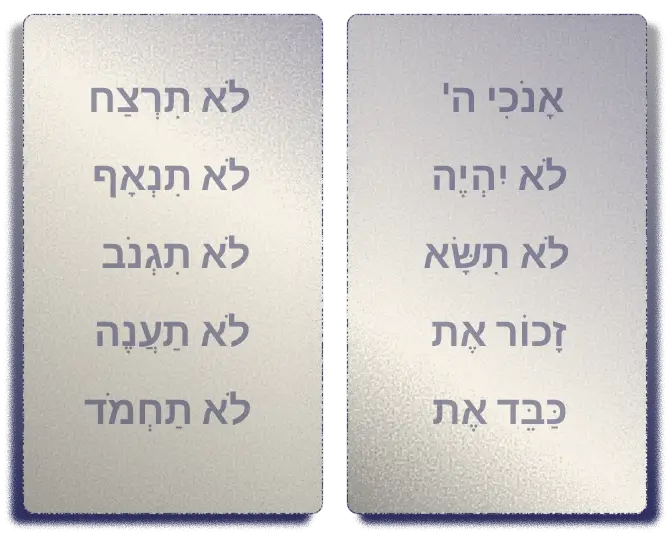
Explore the 613 mitzvos and uncover the meaning behind each one. Discover practical ways to integrate them into your daily life with insights, sources, and guided reflection.

Learn the structure, depth, and spiritual intent behind Jewish prayer. Dive into morning blessings, Shema, Amidah, and more—with tools to enrich your daily connection.
Each week’s parsha offers timeless wisdom and modern relevance. Explore summaries, key themes, and mitzvah connections to deepen your understanding of the Torah cycle.