www.Mitzvah-Minute.com
"Pekudei — Part IV — “וּכְבוֹד ה׳ מָלֵא”: The Descent of the Shechinah"
4.4 — The True End of the Exodus
Ramban — Redemption Completed
The closing verses of Sefer Shemos describe the moment when the Divine Presence fills the Mishkan:
שמות מ׳:ל״ד–ל״ה
“וַיְכַס הֶעָנָן אֶת אֹהֶל מוֹעֵד וּכְבוֹד ה׳ מָלֵא אֶת הַמִּשְׁכָּן.”
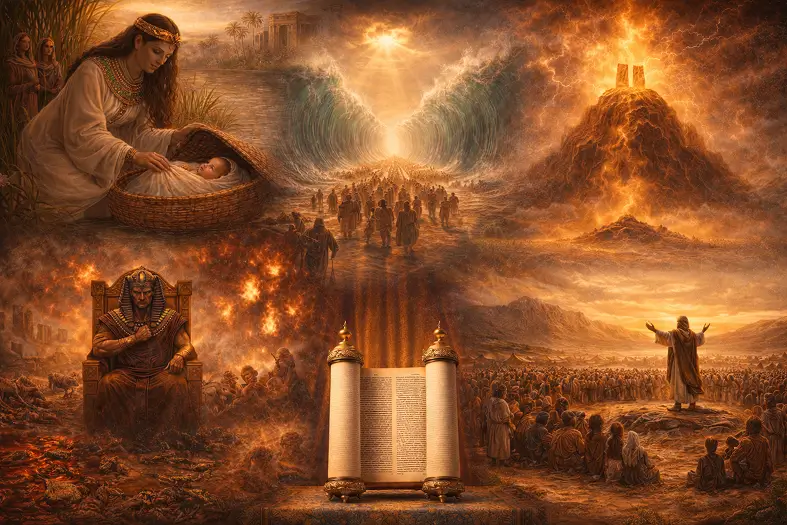
With this moment, the Torah brings the story of the Exodus to its conclusion. Yet the structure of the narrative reveals something profound: the book does not end with the splitting of the sea, the destruction of Egypt, or even the giving of the Torah at Sinai.
Instead, it concludes with the descent of the Shechinah into the Mishkan.
Ramban explains that the purpose of the Exodus was never merely the physical liberation of Israel from Egypt. Redemption was meant to restore the relationship between Hashem and His people. At Sinai, that relationship was revealed through prophecy and covenant.
The Mishkan now makes that relationship permanent.
The Divine Presence that appeared at Sinai now dwells continuously among the people of Israel.
Only at this moment does the story of redemption reach its fulfillment.
Rambam — Freedom Directed Toward Divine Service
Rambam consistently emphasizes that the Torah seeks to shape human freedom into a life of purpose and discipline. Freedom in the Torah’s vision is not simply the absence of oppression.
It is the ability to live according to divine guidance.
The Exodus removed Israel from the control of Pharaoh, but the covenant at Sinai and the establishment of the Mishkan directed that freedom toward the service of Hashem.
The Mishkan therefore represents the culmination of the transformation that began in Egypt.
A nation once enslaved now becomes a community devoted to divine service. The sanctuary stands as the center of that life, reminding the people that their freedom exists in order to cultivate holiness.
Rav Kook — Freedom That Elevates Humanity
Rav Kook saw the Exodus as part of a larger spiritual movement within human history. The liberation of Israel from Egypt revealed the possibility that human societies could transcend systems of oppression and build communities grounded in justice and holiness.
Yet liberation alone does not guarantee moral transformation.
True redemption requires the creation of a society guided by spiritual ideals. The Mishkan represents that stage of development. It embodies the effort to shape the life of a nation around the presence of Hashem.
Through the sanctuary, freedom becomes the foundation for spiritual growth.
The Exodus therefore reaches its deepest meaning when the Divine Presence dwells among the people.
Rabbi Jonathan Sacks — From Freedom to Covenant
Rabbi Jonathan Sacks often emphasized that the Torah distinguishes between freedom from oppression and freedom for a higher purpose.
The Exodus provides freedom from the tyranny of Egypt. But the Torah insists that freedom alone is not enough to sustain a meaningful society.
Freedom must be directed toward covenant.
The Mishkan represents the moment when that covenant becomes visible within the life of the nation. By building a sanctuary where the Divine Presence rests, the people transform their freedom into a commitment to shared moral and spiritual values.
The end of Sefer Shemos therefore reveals the true goal of redemption.
It is not merely the escape from slavery but the creation of a society that lives in relationship with Hashem.
Rav Avigdor Miller — A Nation Living With Hashem
Rav Avigdor Miller often taught that the central goal of the Torah is to cultivate awareness of Hashem within daily life. The Exodus brought the people out of Egypt, but its ultimate purpose was to bring them into a life shaped by that awareness.
The Mishkan made this awareness tangible.
Every sacrifice, every act of service, and every journey through the wilderness took place under the presence of the sanctuary where the cloud of Hashem rested.
The nation now lived in constant proximity to the Divine Presence.
In this way, the Exodus achieved its deepest purpose.
Redemption Fulfilled
The final verses of Sefer Shemos reveal a powerful truth about the meaning of redemption.
Freedom alone does not complete the story of liberation.
True redemption occurs when freedom leads to the creation of a society shaped by divine presence.
The Mishkan represents the fulfillment of that vision. The people who were once enslaved in Egypt now live in a community centered around the presence of Hashem.
The cloud that fills the sanctuary signals the completion of the journey that began with the Exodus.
Application for Today
The Torah’s conclusion to Sefer Shemos offers a timeless lesson about the meaning of freedom.
Modern societies often celebrate freedom primarily as independence from external control. Yet the Torah teaches that freedom reaches its highest purpose when it enables individuals and communities to pursue lives of meaning and responsibility.
Freedom becomes truly transformative when it is directed toward the creation of a moral and spiritual society.
The Mishkan reminds us that the ultimate goal of liberation is not simply autonomy but the opportunity to build communities shaped by justice, compassion, and reverence for the Divine.
The story of the Exodus therefore ends not with escape from Egypt but with the creation of a people capable of hosting the presence of Hashem.
📖 Sources
- Full sources available on the Mitzvah Minute Parshas Pekudei page under insights and commentaries