
8.1 — From Nega to Oneg
The Torah concludes the system of נגעים with a quiet but decisive phrase: “לְהוֹרֹת בְּיוֹם” — “to instruct on the day” (ויקרא י״ד:נ״ז). The purpose of the entire process is not only to purify, but to teach—to bring the אדם into a different understanding of what he has experienced.
This is the final stage.
Not change of condition—but change of perception.
The נגע was real. The exposure was real. The isolation, the dismantling, the rebuilding—all unfolded exactly as they appeared. Nothing is undone. Nothing is retroactively softened. The Torah does not erase the disruption.
It reframes it.
Chassidus identifies this as the deepest transformation. Reality itself contains both concealment and revelation. What appears as breakdown is not separate from what ultimately becomes alignment. The shift is not in the event—but in how the אדם comes to see it.
The same structure holds both meanings.
Rav Kook deepens this into a vision of inner unity. What once appeared fragmented—events that felt disconnected, disruptive, or even contradictory—are now understood as parts of a single unfolding system. The אדם, having passed through the full process, is able to see coherence where before there was only rupture.
The past itself becomes integrated.
Rav Jonathan Sacks translates this into lived experience. A person who has undergone this process does not live in a different world. He lives differently within the same world. The events remain unchanged—but their meaning is transformed.
This is the movement from נגע to עונג.
Not because the נגע disappears.
But because its place within the structure is revealed.
This yields a final structure of perception:
This introduces the deepest tension of the entire journey. A person naturally divides his experience:
The instinct is to preserve only what aligns with comfort and to reject what brought difficulty.
But the Torah brings the אדם to a different place.
Where rejection is no longer possible.
Because what was once resisted is now understood as necessary.
Nothing changes in the events themselves.
Everything changes in their meaning.
This is why the system must culminate here. Without this final shift, the אדם would carry the past as something separate—something endured, something survived, but not something integrated.
But once perception changes, the past is re-read.
What once appeared as fragmentation becomes part of a coherent structure. What once caused pain becomes part of a process that produced growth. What once felt like distance becomes understood as a stage of return.
This is not emotional reinterpretation.
It is clarity.
The Torah does not ask the אדם to feel differently about what happened.
It brings him to see it differently.
And once that shift occurs, reality itself is experienced differently.
The movement from נגע to עונג is therefore not a transformation of circumstance.
It is a transformation of understanding.
And that transformation is not optional.
It is the inevitable conclusion of a process that has been followed fully—through exposure, through separation, through rebuilding, through return.
Because once structure, meaning, and experience align, perception cannot remain the same.
The אדם does not return to life as it was.
He returns with eyes that see differently.
And in that seeing, the same world becomes something new.
A person often defines himself by his past—by what he has gone through, what has broken, what has been lost or difficult. Those experiences remain fixed, shaping how he understands himself and his life.
But the Torah suggests that identity is not determined by events alone.
It is shaped by how those events are understood.
Two people can live through the same experience—one carries it as damage, the other as formation. The difference is not in what happened, but in what it came to mean.
Identity, then, is not only built from experience.
It is built from interpretation.
The question is not only: what have I gone through?
The deeper question is: what will I become from it?
📖 Sources

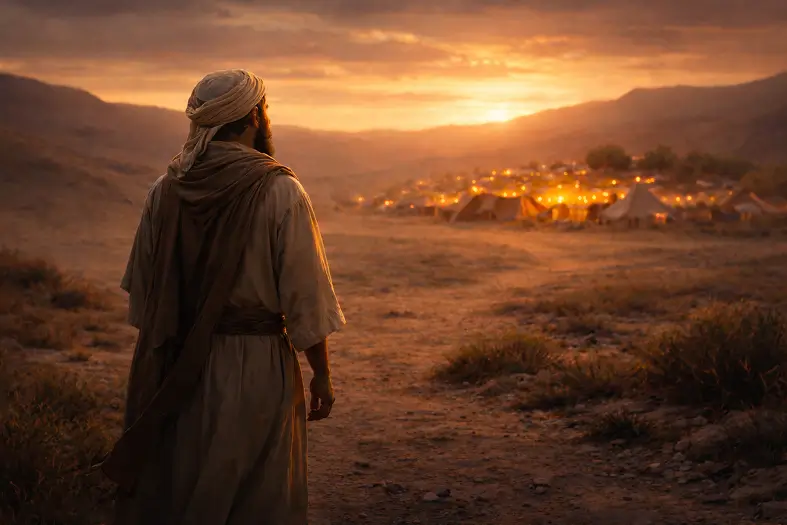
8.1 — From Nega to Oneg
The Torah concludes the system of נגעים with a quiet but decisive phrase: “לְהוֹרֹת בְּיוֹם” — “to instruct on the day” (ויקרא י״ד:נ״ז). The purpose of the entire process is not only to purify, but to teach—to bring the אדם into a different understanding of what he has experienced.
This is the final stage.
Not change of condition—but change of perception.
The נגע was real. The exposure was real. The isolation, the dismantling, the rebuilding—all unfolded exactly as they appeared. Nothing is undone. Nothing is retroactively softened. The Torah does not erase the disruption.
It reframes it.
Chassidus identifies this as the deepest transformation. Reality itself contains both concealment and revelation. What appears as breakdown is not separate from what ultimately becomes alignment. The shift is not in the event—but in how the אדם comes to see it.
The same structure holds both meanings.
Rav Kook deepens this into a vision of inner unity. What once appeared fragmented—events that felt disconnected, disruptive, or even contradictory—are now understood as parts of a single unfolding system. The אדם, having passed through the full process, is able to see coherence where before there was only rupture.
The past itself becomes integrated.
Rav Jonathan Sacks translates this into lived experience. A person who has undergone this process does not live in a different world. He lives differently within the same world. The events remain unchanged—but their meaning is transformed.
This is the movement from נגע to עונג.
Not because the נגע disappears.
But because its place within the structure is revealed.
This yields a final structure of perception:
This introduces the deepest tension of the entire journey. A person naturally divides his experience:
The instinct is to preserve only what aligns with comfort and to reject what brought difficulty.
But the Torah brings the אדם to a different place.
Where rejection is no longer possible.
Because what was once resisted is now understood as necessary.
Nothing changes in the events themselves.
Everything changes in their meaning.
This is why the system must culminate here. Without this final shift, the אדם would carry the past as something separate—something endured, something survived, but not something integrated.
But once perception changes, the past is re-read.
What once appeared as fragmentation becomes part of a coherent structure. What once caused pain becomes part of a process that produced growth. What once felt like distance becomes understood as a stage of return.
This is not emotional reinterpretation.
It is clarity.
The Torah does not ask the אדם to feel differently about what happened.
It brings him to see it differently.
And once that shift occurs, reality itself is experienced differently.
The movement from נגע to עונג is therefore not a transformation of circumstance.
It is a transformation of understanding.
And that transformation is not optional.
It is the inevitable conclusion of a process that has been followed fully—through exposure, through separation, through rebuilding, through return.
Because once structure, meaning, and experience align, perception cannot remain the same.
The אדם does not return to life as it was.
He returns with eyes that see differently.
And in that seeing, the same world becomes something new.
A person often defines himself by his past—by what he has gone through, what has broken, what has been lost or difficult. Those experiences remain fixed, shaping how he understands himself and his life.
But the Torah suggests that identity is not determined by events alone.
It is shaped by how those events are understood.
Two people can live through the same experience—one carries it as damage, the other as formation. The difference is not in what happened, but in what it came to mean.
Identity, then, is not only built from experience.
It is built from interpretation.
The question is not only: what have I gone through?
The deeper question is: what will I become from it?
📖 Sources



Teshuvah culminates not only in change of behavior but in reinterpreting the past through truth.
Love of Hashem emerges from recognizing that all experiences are part of a unified process.
Yirah deepens when a person sees reality as structured and purposeful, even in difficulty.
Alignment includes adopting a perspective that integrates all aspects of experience into growth.


The purpose of the system is instruction—bringing the אדם to a transformed understanding of his experience.
True joy emerges from alignment and clarity, when reality is understood in its proper structure.

Dive into mitzvos, tefillah, and Torah study—each section curated to help you learn, reflect, and live with intention. New insights are added regularly, creating an evolving space for spiritual growth.

Explore the 613 mitzvos and uncover the meaning behind each one. Discover practical ways to integrate them into your daily life with insights, sources, and guided reflection.

Learn the structure, depth, and spiritual intent behind Jewish prayer. Dive into morning blessings, Shema, Amidah, and more—with tools to enrich your daily connection.

Each week’s parsha offers timeless wisdom and modern relevance. Explore summaries, key themes, and mitzvah connections to deepen your understanding of the Torah cycle.



