
Each Parsha page on Mitzvah Minute is designed as a guided, three-level journey through the weekly Torah reading—integrating the narrative, the mitzvos, and the classical commentaries into one unified experience.
Begin with the foundations of the Parsha:
This level gives you the storyline, the key mitzvos, and the essential connections between them.
A complete journey through the parsha—moving from clarity and depth to inner connection and real-world meaning, culminating in a way to live its ideas in everyday life.
These sections show how the Parsha speaks to the mind, the heart, and the real world — offering wisdom rooted in enduring Torah.
A complete, structured commentary on the parsha—presented pasuk by pasuk, with chapter and overall summaries for clarity and flow.
This level reveals the structural depth of the Parsha and the classical underpinnings of each theme.
Together, these layers create a complete Parsha journey —
narrative, mitzvah, and commentary — all flowing toward deeper understanding, spiritual insight, and meaningful growth.
Tap the Page Navigation tab on the right side of your screen anytime to access quick-links to the entire Parsha page.
The quick-link panel gives instant access to every section — Parsha Summary, Mitzvos, Divrei Torah, Insights, and Commentaries.
“Every word of Torah and every mitzvah lifts us higher — may your learning bring you closer to Hashem.”

Parshas Metzora completes the arc of טֻמְאָה — ritual impurity and its resolution by guiding a person, a home, and ultimately the nation back into a state of טָהֳרָה — purity and readiness for Divine presence. It begins with the metzora’s return, detailing a precise and multi-stage process of purification that transforms isolation into reintegration. It then extends the concept of נֶגַע — affliction to the הבית — home, teaching that even one’s environment must be examined, repaired, or removed when impurity takes hold. Finally, the parsha turns inward to the human body, outlining laws of bodily emissions and their impact on personal and communal sanctity. Across all three domains—person, dwelling, and body—the Torah establishes a single through-line: holiness demands awareness, boundaries, and disciplined return, so that Hashem’s presence can dwell among Klal Yisroel without obstruction.


“The Courage to Return and Rebuild Wholeness”
אָנֹכִי ה׳ אֱלֹקֶיךָ
Metzora reveals a world in which nothing is incidental. The afflictions described are not random disruptions but reflections of a deeper moral order. A person’s speech, conduct, and inner life are all held within a system governed by Hashem’s presence. The process of isolation and return teaches that reality itself responds to human behavior. Knowing Hashem, in this context, means living with the awareness that life is structured, responsive, and meaningful—even when that meaning is uncomfortable. The metzora’s journey becomes a return not only to society, but to a life lived with clarity that nothing is outside Divine awareness.
וְאָהַבְתָּ אֵת ה׳ אֱלֹקֶיךָ
Love of Hashem in Metzora is not built only in moments of elevation, but in the willingness to return after distance. The structured process of purification reflects a relationship that is not abandoned when misaligned, but patiently restored. A person who moves through the stages of recognition, humility, and reintegration begins to experience a deeper form of connection—one that is not dependent on inspiration, but on alignment. Love here becomes the result of rebuilding trust with Hashem through a life that reflects honesty, discipline, and responsiveness.
אֶת ה׳ אֱלֹקֶיךָ תִּירָא
Metzora cultivates יראה — reverence — through consequence. The visible nature of tzaraas teaches that actions, especially speech, carry weight beyond the moment. This is not fear rooted in anxiety, but in awareness. A person comes to recognize that even subtle behaviors shape reality and relationships. The מערכת — system — of isolation and return trains a person to live with seriousness, where words are measured and conduct is intentional. יראה becomes the foundation that prevents life from drifting into carelessness.
וְנִקְדַּשְׁתִּי בְּתוֹךְ בְּנֵי יִשְׂרָאֵל
The metzora’s journey highlights how a person’s life either reveals or obscures Hashem’s presence. When speech is misused, it creates fragmentation that conceals Divine order. When a person undergoes transformation and returns with humility, restraint, and integrity, he becomes a living expression of Kiddush Hashem. Metzora teaches that sanctifying Hashem’s Name is not limited to grand acts—it is achieved through the quiet rebuilding of character, where one’s presence brings clarity, dignity, and alignment into the world.
וְהָלַכְתָּ בִּדְרָכָיו
Metzora presents a model of structured restoration that reflects Divine conduct. Just as Hashem does not abandon the אדם — person — in failure, but provides a path back through defined stages, so too a person must learn to act with patience, discipline, and compassion. Emulating Hashem means not reacting impulsively, but engaging life through process—measured, intentional, and oriented toward repair. The metzora becomes a living example of how growth unfolds not through sudden change, but through faithful progression.
וְאָהַבְתָּ לְרֵעֲךָ כָּמוֹךָ
Metzora reveals how fragile relationships are and how deeply they depend on speech. Lashon hara creates distance long before separation becomes visible. The metzora’s isolation reflects the breakdown of connection that harmful speech produces. Loving others, therefore, is not abstract—it is expressed through the discipline of how one speaks, protects, and relates. The process of return teaches that true אהבה includes the ability to rebuild trust and re-enter relationships with greater care and responsibility.
הוֹכֵחַ תּוֹכִיחַ אֶת עֲמִיתֶךָ
Metzora highlights the difference between destructive speech and corrective speech. Lashon hara speaks about others; תוכחה — rebuke — speaks to them. The failure of the metzora reflects a misuse of language that avoids responsibility while causing harm. Proper rebuke, by contrast, is direct, constructive, and rooted in care. The parsha teaches that silence in the face of wrongdoing and indirect criticism both fail to repair. אמת — truth — must be expressed in a way that preserves dignity while guiding change.
וְלֹא תִשָּׂא עָלָיו חֵטְא
The public exposure of the metzora reveals the gravity of humiliation. While the Torah mandates visibility in this case, it does so within a controlled, Divine system—not human discretion. This distinction teaches that causing embarrassment is a serious violation because it strips a person of dignity. Metzora sensitizes a person to the emotional impact of speech and behavior. A refined individual learns to preserve dignity, even when addressing fault.
לֹא תֵלֵךְ רָכִיל בְּעַמֶּיךָ
This mitzvah stands at the center of Metzora. The entire parsha unfolds as a response to the misuse of speech. Lashon hara is not merely negative talk; it is a force that fractures trust, distorts perception, and reshapes relationships. The metzora’s isolation is a direct reflection of the separation his words created. The Torah teaches that speech is generative—it builds or destroys worlds. Guarding it is therefore foundational to a functioning society.
וְלֹא תִטֹּר
Grudges often sustain the very dynamics that lead to destructive speech. Metzora addresses not only what is said, but what is carried internally. A person who holds onto resentment is more likely to express it through subtle or overt harm. The process of purification teaches release—letting go of accumulated negativity so that return is possible. True reintegration requires not only behavioral change, but emotional clearing.
וְלֹא תָתוּרוּ אַחֲרֵי לְבַבְכֶם
Metzora exposes how internal impulses, when unchecked, manifest externally. Speech often follows instinct—reaction, judgment, projection. This mitzvah calls a person to interrupt that flow. The metzora’s journey reflects the consequences of living reactively rather than intentionally. Growth begins when a person no longer allows thoughts and impressions to automatically become words.
וְהִתְוַדּוּ אֶת חַטָּאתָם
The entire structure of Metzora mirrors the process of תשובה — repentance. Recognition, separation, process, and return form a complete system of transformation. Confession is not merely verbal acknowledgment; it is the beginning of realignment. The metzora’s return teaches that repair requires honesty, not only before others, but before oneself. Teshuvah becomes the bridge between who a person was and who he is capable of becoming.
וַעֲבַדְתֶּם אֵת ה׳ אֱלֹקֵיכֶם
Speech is not only a source of failure—it is also the כלי — instrument — of connection. Prayer represents the highest form of refined speech, where words are directed toward Hashem with intention and humility. Metzora reframes speech entirely: from something that can degrade into something that can elevate. A person who rebuilds his relationship with speech naturally deepens his relationship with tefillah.
וַהֲרֵעֹתֶם בַּחֲצֹצְרוֹת
Metzora teaches that distress is not meant to be ignored or normalized. The appearance of affliction demands response. Crying out is not weakness—it is awareness. A person recognizes that something is misaligned and turns toward Hashem. This mitzvah reframes difficulty as a call to engagement rather than withdrawal.
כִּי יִקַּח אִישׁ אִשָּׁה
The metzora’s temporary separation from his home highlights the centrality of relationship in Torah life. Marriage represents structured, committed connection. Metzora reveals how easily that connection can be disrupted through speech and behavior. The process of return underscores the importance of rebuilding trust within the most intimate spaces. A הבית — home — is not sustained by proximity alone, but by the quality of interaction within it.
Rashi reveals that the entire מערכת — system of purification is governed by precise halachic structures of זמן — time, מקום — place, and מעשה — action. The Torah’s phrase “בְּיוֹם טָהֳרָתוֹ” establishes that purification is strictly a daytime דין — legal requirement, excluding night entirely. This is not incidental language, but a halachic boundary derived by Chazal (ספרא; מגילה כ״א).
Similarly, the process begins specifically “מִחוּץ לַמַּחֲנֶה” — outside the camp, in the exact מקום of the metzora’s exclusion. The kohen does not summon the metzora inward; rather, he goes outward to him. Rashi thereby frames purification as beginning from within the מקום of distance itself. The מקום of טומאה — ritual impurity becomes the starting point of טהרה — purification.
This structure continues throughout: every stage unfolds in sequence, never collapsing into immediacy. Even after initial purification, the metzora remains “מִחוּץ לְאָהֳלוֹ” — outside his tent, restricted from marital life. Restoration is therefore staged, not instantaneous.
While Rashi is deeply anchored in halachic definition, he simultaneously preserves the moral dimension embedded within the ritual.
The materials of purification are not arbitrary. Each element reflects the spiritual failure that produced the affliction:
Rashi frames the process as a movement from elevation to השפלה — self-lowering. The metzora must transform from cedar-like pride into worm-like humility. Thus, the ritual is not symbolic alone; it is a structured enactment of תיקון — repair.
Importantly, Rashi does not collapse symbolism into abstraction. Every item remains halachically defined — species, condition, and form — even as it carries meaning. The symbolic and legal dimensions operate simultaneously, not interchangeably.
Rashi consistently emphasizes that Torah law operates through exact physical and measurable conditions.
Examples of this precision include:
Even linguistic nuances generate halachic consequences. The Torah’s syntax determines whether items are bound together or treated separately, whether actions include or exclude specific components, and how processes are executed.
Rashi’s עולם — world is one where nothing is approximate. Every word creates דין.
A central principle throughout the parsha is that impurity and purity are not determined by perception, but by authoritative declaration.
This is seen most clearly in the law of house afflictions:
Even if the homeowner is a talmid chacham and knows definitively that the mark is tzaraas, he may not say so. He must state only, “כְּנֶגַע נִרְאָה לִי” — something like a plague appears to me. The final determination belongs exclusively to the kohen.
Similarly, impurity does not begin until the kohen engages with the house. Before his inspection, no דין טומאה — status of impurity applies at all.
Rashi thus establishes that halachic reality is not merely descriptive but declarative. The kohen does not only observe — he defines.
One of Rashi’s most intricate contributions is his reconstruction of the סדר — halachic sequence of בית הנגעים — house afflictions.
The process unfolds with exact stages:
Rashi clarifies that:
This system demonstrates that impurity is not defined solely by appearance, but by behavior over time — recurrence, persistence, and transformation.
A striking principle in Rashi is that מקום — designated location can determine halachic validity even independent of physical substance.
This is seen in the application of oil:
The oil may be placed “על מקום דם האשם” — on the מקום where the blood had been placed, even if the blood itself is no longer present. The halachic effect derives from the מקום, not the visible residue.
Similarly:
Place is not incidental; it is causative. The מקום generates the דין.
Rashi carefully differentiates levels of טומאה — impurity based on duration and interaction.
Entering a quarantined house causes immediate personal impurity “עד הערב” — until evening. However, garments do not become impure unless one remains for a שיעור — defined duration.
That duration is derived as:
From this, Rashi expands:
Thus, impurity is not binary. It is graduated, determined by time, contact, and involvement.
In one of the most striking interpretations, Rashi explains that house afflictions were actually בשורה — good tidings.
The Emorim had hidden treasures in the walls of their homes. Through the breaking of the walls due to tzaraas, these treasures would be revealed.
This introduces a profound dimension:
What appears as נגע — affliction may conceal מתנה — a gift.
Even within דין — judgment, there may be embedded השגחה — Divine providence guiding toward hidden טוב — good.
The parsha concludes with the phrase:
“לְהוֹרֹת בְּיוֹם הַטָּמֵא וּבְיוֹם הַטָּהֹר”
Rashi explains that the Torah’s ultimate purpose here is הוראה — instruction: to determine the exact day on which impurity begins and the exact day on which purity is restored.
This is the culmination of the entire system:
Time itself becomes a halachic category.
Rashi presents Parshas Metzora as a fully integrated halachic system in which every detail — time, place, material, language, and sequence — carries legal force. Yet beneath this precision lies a parallel moral structure: arrogance corrected through humility, speech repaired through silence, isolation transformed into reintegration.
The metzora’s journey is therefore not merely from טומאה to טהרה, but from distortion to alignment — where האדם — the human being, re-enters a world governed by exact order, measured process, and Divinely defined reality.
📖 Source
Ramban establishes as a foundational principle that the entire system of נגעים — afflictions — is not a natural medical condition, but a direct manifestation of Divine presence within Klal Yisrael’s existence. Unlike ordinary illness, which belongs to טבע — the natural order, tzaraas appears only when the nation exists in a heightened state of closeness to Hashem, where spiritual disruption expresses itself visibly in the body, clothing, or home.
This transforms the entire parsha: the metzora is not simply a אדם חולה — sick individual, but a person whose state reflects a breakdown in alignment with the Divine system. Accordingly, the response is not medical treatment but halachic process — diagnosis by a kohein, isolation, and structured return. Tumah — ritual impurity — becomes the Torah’s language for imbalance, not contamination.
Ramban sharply defines that purification is not self-declared. Even when the affliction has physically ceased, the metzora is not considered pure until the kohein establishes that status.
The phrase “בְּיוֹם טָהֳרָתוֹ” is interpreted not as the moment of ritual completion, but as the day the nega — affliction — has already healed. From that moment, the Torah requires immediate presentation before the kohein, who alone confers the status of טהרה — purity.
This yields a dual structure:
Ramban thereby deepens a central principle: reality in Torah is not merely observed — it is established through halachic authority.
Ramban’s treatment of the purification ritual reveals his broader method: symbolism must emerge מתוך ההלכה — from within halachic structure, not replace it.
The Torah’s requirement of “שְׁתֵּי צִפֳּרִים חַיּוֹת טְהֹרוֹת” becomes, for Ramban, a deeply layered halachic inquiry. He challenges simplistic readings:
Through analysis of Toras Kohanim and pesukim such as “כָּל צִפּוֹר כָּל כָּנָף” (בראשית ז:י״ד), Ramban reconstructs the definition of “ציפור” as referring specifically to small birds characterized by early-morning chirping.
He further concludes that the ideal form of these birds is ציפורי דרור — free-roaming birds that inhabit both house and field, and that birds outside this category are פסול — invalid even בדיעבד — after the fact.
Only after establishing this precise halachic framework does Ramban allow the Midrashic symbolism:
Thus, meaning is not imposed on halacha — it is revealed through it.
Ramban views the metzora’s purification not as a single act but as a multi-stage system of כפרה — atonement.
The shaving, sprinkling, and korbanos — offerings — each address different dimensions of the האדם — human being:
Ramban’s framework suggests that kapparah is not instantaneous. It unfolds in layers — before, during, and after the nega — each stage addressing a distinct aspect of the האדם’s condition.
One of Ramban’s most radical insights is his treatment of נגעי בתים — house afflictions.
He explains that these phenomena are not natural decay or mold, but manifestations of a רוח רעה — negative spiritual presence — moving within the home itself. The house becomes a מקום — space that reflects spiritual reality, not merely physical condition.
Accordingly, the halachos of:
are not technical procedures, but responses to an ongoing Divine condition within the structure. The הבית — home is treated as an extension of the האדם — person, subject to the same system of revelation and correction.
In Chapter 15, Ramban demonstrates that even seemingly simple Torah language encodes precise halachic meaning.
The term “שָׁטַף” — rinsing is not superficial washing, but refers to full טבילה — immersion. This is proven from parallel usage regarding vessels, where immersion is clearly required.
From this, Ramban derives core halachic principles:
Thus, Ramban’s method consistently shows that Torah terminology is never descriptive alone — it is legally generative.
Ramban deepens the concept of טומאה by distinguishing between טבע — natural processes and חולי — illness or deviation.
This is seen in his comparison of different bodily states:
When a woman’s flow exceeds its natural pattern, however, it becomes analogous to the zav and requires korban.
Tumah, in Ramban’s system, is not uniform. It marks:
The Torah thereby encodes a philosophy of the human body: stability is purity, disruption requires restoration.
Ramban also identifies structural ordering within the Torah’s presentation of afflictions.
The בהרת — bright white spot is consistently mentioned last because it is the most intense and severe form of nega. This ordering is not stylistic, but reflects gradation within the system itself.
Similarly, the Torah presents more common afflictions first, followed by less frequent or more complex cases. Ramban reads this as a deliberate hierarchy — frequency, severity, and conceptual centrality all shape the order of presentation.
Ramban presents Parshas Metzora as a comprehensive theology of human existence in relationship with Hashem. The body, the home, and even unseen internal processes are all subject to a system in which Divine presence becomes perceptible through disruption.
Tumah is not merely impurity — it is the Torah’s language for imbalance. Taharah is not merely cleanliness — it is restoration through structured, halachically defined return. The kohein stands at the center of this system, not as a healer, but as an interpreter of Divine reality.
In Ramban’s vision, Metzora is not a parsha about affliction alone, but about responsiveness: how a person recognizes, confronts, and ultimately transforms a state of distance into renewed closeness with Hashem.
📖 Source
In Rambam’s system, טומאה — ritual impurity is not an arbitrary metaphysical state but part of a structured halachic system that educates human awareness. In Moreh Nevuchim (III:47), Rambam explains that the laws of impurity and purity habituate a person to distinctions—between states, actions, and conditions—and thereby refine the intellect. Parshas Metzora, with its intricate laws of צרעת — tzaraas (spiritual affliction), bodily emissions, and purification processes, becomes a laboratory for disciplined moral perception.
The metzora is not merely “impure”; he is removed from the camp, examined, and only gradually restored. Rambam would frame this not as mystical punishment but as structured consequence, embedded in halachah, that forces awareness of breakdown. The האדם — human being is trained to recognize that certain behaviors produce disintegration—not only socially, but within the ordered system of Torah life.
Thus, impurity here functions as:
This reflects Rambam’s broader principle: Torah does not merely legislate action—it forms perception.
While Rambam does not explicitly frame tzaraas as punishment for לשון הרע — harmful speech in a direct philosophical sense, his writings in Hilchos De’os (7:1–2) establish speech as one of the central arenas of ethical perfection. The misuse of language is not incidental; it reflects a breakdown in שכל — intellect and מידות — character traits.
In Rambam’s framework, human perfection unfolds in two dimensions (Moreh Nevuchim III:27–28):
Speech stands at the intersection of both. It shapes society and reflects inner refinement. The metzora—isolated “בדד ישב — he shall dwell alone” (ויקרא י״ג:מ״ו)—is removed precisely from the social fabric that speech builds or destroys.
This isolation is philosophically coherent within Rambam’s system:
Thus, Parshas Metzora becomes a case study in how ethical failure disrupts both the communal and intellectual dimensions of human perfection.
Rambam’s Hilchos Teshuvah describes repentance not as emotional regret alone, but as a structured process involving recognition, cessation, confession, and transformation. The metzora’s purification mirrors this structure with striking precision.
The process unfolds in stages: diagnosis, isolation, סימנים — identifying signs, offerings, immersion, and finally reintegration into the camp. This is not a single רגע — moment, but a system of return.
From a Rambam perspective, this reflects a core truth: restoration requires order. האדם does not re-enter חיים — life arbitrarily; he must pass through defined stages that rebuild alignment with Torah.
The korbanos — offerings of the metzora further reinforce this structure. As Rambam explains in Moreh Nevuchim (III:32), korbanos function as an educational system, redirecting האדם from instinct and habit toward avodah — structured Divine service. The metzora’s offerings are not symbolic alone—they are part of a disciplined process of reorientation.
The key philosophical principle emerges:
In Rambam’s worldview, the body is not opposed to the intellect; it is part of the system through which האדם is educated. In Hilchos De’os (4:1), Rambam emphasizes that physical health and balance are prerequisites for intellectual and spiritual development.
Parshas Metzora extends this principle into the realm of halachah: bodily conditions—skin afflictions, emissions, states of impurity—become halachically significant. They are not ignored; they are categorized, examined, and responded to.
This reflects a profound Rambam principle: the physical world is not spiritually neutral—it is part of the האדם’s educational framework.
The גוף — body becomes:
Thus, the התורה does not separate body and soul—it integrates them into one coherent system of human development.
Rambam consistently emphasizes the importance of societal structure in achieving human perfection. In Hilchos De’os (6:1), he writes that a person is shaped by his environment—his city, his companions, and his culture.
The metzora’s removal from the מחנה — camp reflects this principle in halachic form. When an individual becomes a source of disruption—whether through behavior, speech, or condition—he must be temporarily separated in order to preserve the integrity of the whole.
This is not punitive isolation; it is structural necessity.
The Torah’s system reflects:
Rambam’s philosophy thus frames the metzora not as rejected, but as temporarily outside the system until he can re-enter it properly.
Ultimately, Parshas Metzora exemplifies Rambam’s deepest principle: that the Torah is a unified system designed to bring האדם to perfection. Law (הלכה — halachah) and philosophy are not separate domains; they are two expressions of the same goal.
The intricate laws of Metzora—diagnosis, isolation, purification, offerings—are not technical details. They are components of a comprehensive system that:
As Rambam teaches, the mitzvos are not ends in themselves—they are means through which האדם becomes aligned with truth.
Parshas Metzora, in all its detail, reveals that even the most technical areas of halachah are part of this grand design: the transformation of האדם into a being of order, discipline, and ultimately, דעת ה׳ — knowledge of Hashem.
📖 Sources
(Baal Shem Tov · Kedushas Levi · Sfas Emes)
The metzora is not merely a person afflicted with a physical condition; he is a soul whose inner proportions have become distorted. Chassidus reveals that the root of tzaraas is not external behavior alone, but an internal expansion of self—גסות הרוח — arrogance—that leaves no room for anything beyond the self. Like the cedar tree, tall and imposing, the person becomes incapable of bending, incapable of receiving, incapable of listening.
The Baal Shem Tov teaches through a piercing mashal: a man dying of thirst refuses water because accepting it would require lowering himself. His need is real, his suffering is real—but his ego is stronger than his desire to live. This is the tragedy of the metzora. He is not rejected because he is broken; he is rejected because he refuses to bend.
Healing begins not with action, but with a re-scaling of the self. The cedar must become hyssop. The towering self must rediscover smallness. Only then can the כהן — the tzaddik — lift him, because elevation is only possible when there is first lowering.
The Baal Shem Tov reveals a radical principle: a person is capable of reaching the spiritual heights of the תנאים ואמוראים — the Tannaim and Amoraim. Nothing essential is lacking. The barrier is not ability—it is arrogance.
גאווה — pride — is not just a bad trait; it is a blocking mechanism. It prevents a person from receiving, from learning, from being transformed. Even sadness, Chassidus explains, can stem from pride—because a person believes he deserves to feel inspired, and when he does not, he falls into frustration.
This reframes the entire struggle of growth. The issue is not effort alone, but receptivity. The one who cannot receive cannot grow. The one who cannot admit lack cannot be filled.
And therefore, the Mishnah teaches: איזהו חכם — הלומד מכל אדם — “Who is wise? One who learns from every person.” Even from someone acting wrongly, one must see a reflection of oneself, a שמץ — a trace — of that flaw within. The metzora’s healing begins when he stops projecting outward and begins reflecting inward.
The Sfas Emes and Baal Shem Tov together uncover a deeper layer: arrogance is not merely a flaw—it is a faulty foundation.
If the יסוד — foundation — of a person is unstable, then even his good deeds are built on something fragile. A person may perform mitzvos, act kindly, and live religiously, but if the inner structure is rooted in self-importance, the entire edifice is unstable.
Conversely, when the foundation is humility, everything becomes transformed. Love comes to cover over transgression — “ועל כל פשעים תכסה אהבה” (משלי י:י״ב), imperfections are no longer destabilizing but are integrated into growth, and the אדם — person — becomes a vessel rather than a barrier.
This is why the Torah prescribes דווקא — specifically — lowly materials like אזוב — hyssop — in the purification process. Not as symbolism alone, but as an ontological correction. The האדם must become structurally different.
A striking paradox emerges in Chassidus: humility does not always mean acting small externally.
The Baal Shem Tov teaches that sometimes a person must wear גאוה — a form of outward dignity — like a garment. Leadership, authority, and responsibility require presence. Even the verse “ה׳ מלך גאות לבש” — “Hashem reigns, He is clothed in majesty” (תהילים צ״ג:א׳) — reflects this.
But the key is this: the גאוה — pride — must be לבוש — a garment, while the פנימיות — inner self — must remain שפלות — humble.
True greatness is not the absence of stature; it is the absence of self-centeredness within stature. A king may rule, but internally he must know his dependence. A leader may stand tall, but inwardly must remain low.
This is the תיקון — correction — of the metzora: not to disappear, but to become properly aligned.
Kedushas Levi expands the scope: the האדם — human being — is an עולם קטן — a miniature world. Within him exist all levels of reality—דומם, צומח, חי, מדבר — inanimate, vegetative, animal, and speaking.
When a person sins, sparks of his נשמה — soul — fall into lower realms—even into physical spaces like his home. The נגע — the plague — appearing on the house is not random; it is the visible residue of internal spiritual fragmentation.
But this is also the hidden good: the affliction reveals buried treasure. The breaking of the house exposes hidden ניצוצות — divine sparks, the suffering becomes a mechanism of elevation, and the person retrieves what was lost within himself.
Thus, even the nega becomes a בשורה — good news, because it is the beginning of restoration.
The metzora is not being destroyed; he is being shown where he has fallen—and how to return.
Another profound layer emerges in Kedushas Levi: the difference between two identical actions lies entirely in intention.
Two people can perform the same mitzvah. One acts to fulfill the רצון ה׳ — the will of Hashem, while the other acts מתוך עצמו — from self-interest. Externally identical, internally opposite.
The first enthrones the King. The second performs the act without recognizing the King.
This is why even holy acts can lead to טומאה — impurity — if they are driven by self rather than by service. The issue is not the act, but the inner orientation.
שויתי ה׳ לנגדי תמיד — “I place Hashem before me always” (תהילים ט״ז:ח׳) — is not a slogan. It is a state of consciousness where nothing is done alone, nothing is done for self alone, and nothing is disconnected from the Presence.
Chassidus pushes further: the אדם must uproot not only arrogance, but comparison itself.
One must reach a state of השתוות — equanimity, where praise and insult, honor and shame, comfort and discomfort all become equal in the eyes of the person. Not because life is flat—but because everything is from Hashem.
At this level, a person is no longer reacting to the world; he is relating to the Source.
Even more radically, the Baal Shem Tov teaches that a person should view himself no greater than a תולעת — a worm. Not as self-negation, but as truth: all capacity is given, all intelligence is gifted, and all existence is dependent.
And therefore, all beings stand equally before their Creator.
This dissolves the illusion of superiority and restores the אדם to his proper place within creation.
The culmination of this path is ביטול — self-nullification.
The אדם reaches a state in which he no longer seeks honor, does not react to insult, does not measure himself against others, and sees everything as coming from Hashem. He becomes כמי שאינו — “as if he is not,” not in absence, but in transparency.
At this level, all actions become unified. Eating, speaking, and working all become עבודת ה׳ — service of Hashem, and there is no פנאי — no space — for arrogance, because the self is no longer the center.
And paradoxically, this is the highest form of existence.
The metzora’s journey is not from impurity to purity alone. It is from self-centeredness to G-d-centeredness. From rigidity to receptivity. From isolation to integration.
He is sent outside the camp not as punishment, but as revelation: to encounter himself stripped of status, stripped of noise, stripped of illusion.
And when he returns, he returns as someone new:
For the one who lowers himself like אזוב — hyssop — becomes capable of receiving infinite מים חיים — living waters.
And that is the true תורה — the true “תורת המצורע” — not merely the law of his purification, but the path of his transformation.
📖 Sources
Parshas Metzora confronts us with a phenomenon that appears, at first glance, almost incomprehensible. A person speaks, and their skin changes. Words are uttered, and the walls of a house begin to decay. Garments, furniture, and ultimately the human body itself bear visible marks of an invisible failure. The Torah presents this not as illness but as a revelation — a system in which the hidden moral life of a person is made manifest in physical form. What emerges is a radical proposition: speech is not incidental to human existence. It is foundational. The way we speak shapes not only relationships, but reality itself.
Rabbi Jonathan Sacks reveals that the underlying theme of Metzora is not pathology but language — the deepest force in human life. Judaism is, at its core, a civilization of words. G-d creates the universe through speech: “And G-d said… and there was.” Revelation itself is not a vision but a voice: “You heard the sound of words but saw no form.” The covenant that binds G-d and Israel is not a structure or a place, but a promise — a set of spoken commitments sustained through time. Language is thus the bridge between heaven and earth, between one human being and another, between the inner world of thought and the shared world of society.
This is why lashon hara — harmful or corrosive speech — is treated with such gravity. It is not merely a failure of etiquette or kindness. It is a misuse of one of the most sacred capacities a human being possesses. Words create trust, and trust creates society. When speech is used to divide, diminish, or humiliate, it does more than wound individuals. It fractures the very fabric of collective life. The metzora, cast outside the camp, embodies this truth: one who creates separation through words experiences separation in return. The punishment is not arbitrary. It is measure for measure — a lived demonstration of what their speech has already done to others.
Yet the Torah does not present speech only as a force of destruction. Embedded within the same system is its opposite: the power of words to build, to heal, to elevate. If language can create distance, it can also create connection. If it can diminish, it can also dignify. The same human capacity that allows for lashon hara makes possible encouragement, praise, forgiveness, and love. Speech is not merely descriptive; it is generative. It does not simply reflect reality — it helps bring it into being.
Metzora, then, is not only a warning but an education. It teaches us to see speech as a moral ecosystem — an environment in which every word either strengthens or weakens the bonds between people. Relationships, communities, even entire societies depend on the integrity of language. When words are used carelessly or destructively, the damage spreads far beyond the moment. But when they are used with precision, sensitivity, and truth, they become instruments of creation in the deepest sense.
The nine teachings of Rabbi Jonathan Sacks on this parsha trace this full arc — from the destructive power of speech, to its social consequences, to the transformative potential of words used well. Together, they form a unified vision: that life and death, in the most profound moral and spiritual sense, are indeed in the power of the tongue.
At the foundation of Parshas Metzora lies a principle so fundamental that it reshapes how we understand human life itself: speech is not merely a tool. It is a force of creation.
The Torah introduces a world brought into being through words — “And G-d said… and there was.” Creation unfolds not through physical exertion, but through articulation. Order, structure, and meaning emerge through speech. This is not only a description of how the universe began; it is a definition of how reality itself operates. Words do not merely describe the world. They participate in bringing it into existence.
This same capacity is then entrusted to the human being. The first creative act of man is not technological or physical, but linguistic: naming. To name is to recognize, to categorize, to relate. The Torah’s description of האדם — the human being — as a “living soul” is rendered by the Targum as a “speaking spirit,” indicating that speech is not an accessory to human identity but its defining feature. Through language, we think, we connect, we build shared understanding.
Speech is also the medium through which the Divine becomes present in human life. At Sinai, there is no image, no visible form — only a voice: “You heard the sound of words but saw no form.” Judaism rejects the idea of a G-d encountered through physical representation and instead introduces a G-d encountered through communication. Relationship replaces spectacle. And relationship is sustained through speech.
This reaches its highest expression in the idea of ברית — covenant. A covenant is not an object or a place; it is a promise. It is language that binds. When G-d and Israel enter into covenant, they do so through words that create mutual obligation, trust, and continuity. The entire structure of Jewish existence rests on spoken commitments that endure across generations.
Speech, then, is the infrastructure of both creation and relationship. It builds worlds — natural and human alike.
If speech creates, it also sustains. Human society depends not on force, but on trust — the invisible confidence that allows individuals to cooperate, to form families, communities, and nations. Trust allows people to act together without coercion. It is the fabric of collective life.
And trust is built through words.
We rely on what others say. We form judgments, make decisions, and establish relationships based on communication. Language is the medium through which we share intentions, express commitments, and signal reliability. Without it, there can be no enduring human bond.
This is what makes lashon hara so uniquely destructive. It does not merely harm an individual. It erodes the very conditions that make society possible.
When speech is used to diminish others, to cast suspicion, or to subtly undermine reputations, it introduces doubt into the system. People begin to question one another. Relationships become fragile. The shared space of trust begins to fracture. Lashon hara operates quietly, often without overt falsehood, yet its effects are profound. It poisons the relational environment from within.
Unlike other transgressions that may be contained to specific acts, lashon hara spreads. It moves from speaker to listener, from listener to others, reshaping perceptions and destabilizing connections. It creates a chain reaction in which suspicion replaces trust, and fragmentation replaces cohesion.
This is why Chazal understand lashon hara to be among the gravest of sins — not because it is dramatic, but because it is systemic. It uses the very mechanism designed to build human connection and turns it into a force of division.
It is, in essence, the undoing of creation at the social level.
The Torah makes this reality visible through the דין — law — of the metzora. One who misuses speech to create division is himself separated from the community: “בדד ישב מחוץ למחנה מושבו” — “He shall dwell alone; outside the camp shall be his dwelling” (ויקרא י״ג:מ״ו).
This is not a punishment imposed from the outside. It is a revelation of what the person has already done. Through his words, he has broken the bonds that connect people. He has created distance between individuals — between husband and wife, between neighbor and neighbor. The Torah externalizes this inner reality. The separation he caused becomes the separation he experiences.
Even more striking is the progression described by Chazal. The disruption does not appear immediately on the body. It begins with the environment — the walls of the house — then moves inward to possessions, to garments, and finally to the skin itself. The message is clear: destructive speech is not a private act. It affects the spaces we inhabit, the relationships we sustain, and ultimately the self we become.
The metzora is forced to confront, in lived form, the consequences of his speech. Isolation is not arbitrary; it is measure for measure. One who dismantles connection cannot remain within it.
Modern culture often treats speech as lightweight — something fleeting, reversible, inconsequential. Words are spoken casually, shared instantly, dismissed easily. But the Torah presents a radically different vision.
Words are not cheap. They are creative. They are binding. They are consequential.
They build trust or destroy it. They elevate or degrade. They create connection or fracture it. The entire moral ecology of human life depends on how language is used.
This is why the Torah treats lashon hara with such severity. It is not simply a matter of interpersonal sensitivity. It is a fundamental distortion of one of the most sacred human capacities. It takes the very power through which G-d created the world and through which human beings sustain their relationships, and turns it into an instrument of disintegration.
To speak is to shape reality. To misuse speech is to unravel it.
And that is why, in the world of Metzora, words are never just words.
Parshas Metzora introduces a phenomenon that is as striking as it is unsettling: the transformation of private moral failure into public, visible reality. What begins as speech — subtle, intangible, easily denied — becomes something that can no longer be hidden. Discoloration appears on walls, on garments, on the body itself. The internal is externalized. The concealed is revealed.
This is the Torah’s way of teaching that speech does not remain in the realm of the invisible. Words may be intangible, but their effects are not. They shape how people are seen, how relationships function, and how communities hold together. What lashon hara does quietly, tzara’as makes unmistakably clear: speech leaves a mark.
Yet the nature of that mark is not physical illness but טומאה — ritual impurity. This distinction is essential. The Torah is not describing a medical condition, but a moral-spiritual state. The metzora is not treated by physicians but examined by a כהן — a Kohen, a spiritual authority. The issue is not health, but the condition of one’s relationship to others and to the moral order itself.
Judaism is, at its core, a culture of responsibility and conscience. What ultimately matters is not how one appears to others, but how one stands before G-d. אדם — the human being — is called to live with an inner awareness, guided by what is right rather than what is merely approved. The Torah consistently directs attention inward: to intention, to integrity, to truth.
And yet, in the case of the metzora, something unusual occurs. The Torah introduces a system that operates through public exposure. The signs of tzara’as are visible to others. The afflicted individual must declare, “טמא טמא” — “Impure, impure.” His clothing is torn, his appearance altered, his status known. He is removed from the camp and placed outside the normal rhythms of communal life.
This is the language of shame.
Shame is not the quiet voice of conscience. It is the experience of being seen, judged, and distanced by others. It is public rather than private. It operates not through inner awareness but through social recognition.
Why would the Torah, which generally emphasizes inner moral responsibility, introduce a system that resembles public shaming?
Because lashon hara is not a purely private sin.
Speech is the medium through which trust is built. Human beings rely on communication to form bonds, to cooperate, and to create shared life. We depend on what others say — not only for information, but for assurance, stability, and connection.
Lashon hara strikes at this foundation.
It does not always lie outright. Often, it operates through tone, implication, selective truth, or subtle framing. It introduces doubt where there was confidence. It reshapes perception without overt falsehood. It allows the speaker to deny wrongdoing even as damage is done.
Because of this, lashon hara cannot easily be addressed through conventional systems of justice. Courts deal with clear actions and verifiable claims. Lashon hara, however, lives in ambiguity. It hides behind plausibility. It leaves no definitive proof, yet it alters reality.
And so the Torah responds in a different way.
Instead of relying on human systems of judgment, it introduces a form of Divine exposure. What cannot be proven is revealed. What cannot be prosecuted is made visible. The moral distortion is brought into the open, not through accusation, but through manifestation.
The metzora becomes a living sign of what his speech has already done to the social fabric.
The process unfolds with deliberate precision. The signs appear first in the external environment — the house — then move progressively inward. This mirrors the way lashon hara operates. It begins in speech but spreads outward, affecting relationships, shaping reputations, altering the emotional climate of a home or community.
Eventually, the individual himself bears the mark.
At that point, the Torah imposes three distinct conditions:
Each of these reflects an aspect of what lashon hara produces in others:
This is not retribution in the conventional sense. It is revelation. The metzora is made to experience, in concrete form, the social reality he helped create.
There is a profound tension embedded in this system. On the one hand, the exposure of lashon hara is necessary. A society cannot survive if trust is continually undermined without consequence. On the other hand, the use of shame as a mechanism is inherently dangerous.
Public shaming can easily become excessive, disproportionate, and detached from truth. When people are judged by masses who lack context, nuance is lost, and justice becomes distorted. Shame can correct, but it can also destroy.
The Torah’s approach is therefore deeply restrained. This system is not administered by society at large, nor by popular opinion. It is initiated by G-d and regulated through the כהן. It is precise, limited, and purposeful. It exists not to humiliate, but to awaken. Not to punish arbitrarily, but to restore moral clarity.
It is, in essence, a controlled revelation of truth — not a chaotic eruption of judgment.
The metzora stands as a powerful reminder that speech is never merely personal. Words shape perception, perception shapes relationships, and relationships shape the structure of society.
When speech is used irresponsibly, the damage may not be immediately visible, but it is real. It spreads quietly, weakening trust, distorting understanding, and fragmenting connection. Left unchecked, it can unravel entire communities.
The Torah’s response is to make this invisible process visible.
By turning hidden speech into public consequence, Metzora teaches that language carries weight beyond the moment. It is not only what we do that defines us, but what we say — and how what we say affects others.
Speech creates worlds. But when misused, it does something equally powerful: it exposes the fragility of the world we have built.
And in that exposure lies the beginning of repair.
If the Torah’s treatment of lashon hara teaches us the destructive power of speech, it leaves us with an equally pressing question: Is the goal simply to refrain? Is the highest ideal of speech restraint — to say less, to avoid harm, to remain silent?
Rabbi Jonathan Sacks reveals that the Torah’s vision goes far beyond silence. The opposite of lashon hara is not the absence of speech, but its transformation. Speech is not only something to be controlled. It is something to be elevated.
Just as words can diminish, they can also build. Just as they can fracture relationships, they can deepen them. If lashon hara erodes trust, then there must exist a form of speech that strengthens it — a constructive counterpart that creates the very bonds destructive speech dissolves.
This is what we might call לשון טוב — positive, life-giving speech.
To understand constructive speech, we must return to the Torah’s first moment of human language: naming. When אדם — the human being — names the world, he is not merely identifying objects. He is recognizing essence. He is perceiving distinction, value, and meaning.
Constructive speech begins with this same act of perception.
It requires the ability to see what is good in another person — not in a general or abstract way, but specifically, accurately, and attentively. It is easy to notice flaws. It requires far greater awareness to identify strengths, virtues, and acts of quiet dignity.
Speech then gives that recognition form.
When we articulate the good in another, we do more than describe it. We bring it forward. We make it visible, both to them and to ourselves. What might otherwise remain unnoticed becomes real, acknowledged, and strengthened.
This is not flattery. It is not exaggeration. It is not the inflation of ego. It is the disciplined act of אמת — truth — directed toward the positive. It is seeing what is worthy and giving it voice.
Chazal are cautious about praise, and with good reason. Speech, even when positive, carries risk. Praise that is excessive, misplaced, or delivered in the wrong context can lead to unintended consequences — resentment, contradiction, or distortion.
But this caution does not negate the value of praise. It refines it.
Constructive speech must be:
The question is not simply whether something is true, but how and where it is said. Words do not exist in isolation. They operate within relationships. Speech that builds one person must not inadvertently provoke another. What is said must be sensitive not only to content, but to environment.
This introduces a deeper understanding of language. Words do more than convey information. They shape emotional reality. They influence how people see themselves and how they are seen by others. Speech is not only descriptive — it is performative. It does something.
To praise someone is to participate in their becoming.
The Torah commands, “ואהבת לרעך כמוך” — “Love your fellow as yourself” (ויקרא י״ט:י״ח). Love, in this context, is not merely a feeling. It is expressed through action — and one of its primary forms is speech.
To love another person is to care about their dignity, their growth, and their sense of self. Constructive speech becomes one of the most powerful tools through which this love is realized.
When we consistently articulate the good in others:
This is not theoretical. It operates in the most practical realms of life — in families, in education, in communities. People become, in part, what they are seen to be. When their strengths are recognized and named, those strengths are more likely to develop.
In this sense, speech becomes formative. It helps shape identity.
Constructive speech is not a spontaneous or occasional act. It requires discipline.
The habits of speech are deeply ingrained. Just as lashon hara can become normalized within a social environment, so too can its opposite. But it does not happen automatically. It must be cultivated.
This means:
Through repetition, this form of speech reshapes not only others, but the speaker as well. It trains the eye to see differently, the mind to focus differently, and the heart to respond differently.
Speech becomes a daily act of creation.
If lashon hara represents the breakdown of the social world, constructive speech represents its rebuilding.
Where destructive speech introduces suspicion, constructive speech restores trust.
Where it diminishes, constructive speech elevates.
Where it isolates, constructive speech reconnects.
The same capacity that allows for harm becomes the instrument of healing.
This is the deeper message of Metzora. The Torah does not merely warn against misuse. It points toward right use. It shows us that speech is not neutral territory to be managed, but sacred ground to be cultivated.
Words are among the most powerful tools we possess.
Used carelessly, they fracture the world.
Used wisely, they build it.
If destructive speech fractures relationships and constructive speech builds them, there remains a deeper dimension still: the ability of words to heal.
Parshas Metzora does not end with diagnosis and isolation. It moves toward טהרה — restoration. The metzora is not meant to remain outside the camp. He is meant to return. The process of separation is ultimately in service of reintegration. This reflects a fundamental principle: the same faculty that caused the rupture can become the instrument of repair.
Speech, which has the power to wound, also has the power to mend.
But healing speech is not simply the absence of harm, nor even the presence of praise. It operates at a deeper level. It enters into the inner world of another person and helps reorganize it. It reframes experience, restores dignity, and reopens the possibility of relationship.
At the heart of healing speech lies something often overlooked: listening.
Judaism is not only a religion of speech, but of attentive hearing. The defining command is שמע ישראל — “Listen, Israel.” Before one can speak words that heal, one must first create space for another person to be heard.
True listening is not passive. It is an act of presence. It communicates: “You matter. Your experience matters. Your voice is worthy of attention.” In a world where people are often interrupted, judged, or dismissed, this alone can begin to restore what has been broken.
Healing begins when a person feels seen and heard without defensiveness or haste.
Only then can words enter in a way that is received rather than resisted.
One of the most powerful dimensions of speech is its ability to redefine how a person understands themselves.
Human beings do not live only in objective reality. We live within interpretations — the narratives we construct about who we are, what we have experienced, and what those experiences mean. These narratives can become constricting. They can trap a person in patterns of resentment, guilt, or alienation.
Healing speech gently reshapes those narratives.
It does not deny reality. It does not erase wrongdoing. But it reveals dimensions that may have been hidden. It introduces a broader frame, within which pain can be understood differently and identity can be seen more fully.
A person who sees themselves only through the lens of failure can be reminded of their strength. A fractured relationship can be reframed not only as conflict, but as part of a shared history that still contains meaning and connection. What seemed irreparable can be seen as unfinished.
This is not manipulation. It is the careful use of language to reveal truth in a more complete way.
Healing speech requires more than skill. It requires courage.
It demands patience in the face of defensiveness, gentleness in the face of anger, and steadiness in the face of pain. It resists the instinct to respond quickly or to assert control. Instead, it creates a space in which another person can rediscover themselves.
This kind of speech is not loud. It does not dominate. It is often quiet, measured, and deliberate. It carries with it a sense of calm that allows others to lower their guard.
In this way, speech becomes not only communication, but presence.
It is not just what is said, but how it is said — the tone, the pacing, the attentiveness — that gives it its healing power.
Where lashon hara breaks trust, healing speech restores it.
Relationships are damaged not only by what is done, but by what is said — and sometimes by what is left unsaid. Words can create distance, but they can also bridge it. They can reopen channels of communication that seemed closed.
Healing speech does this by:
It allows both sides of a relationship to move beyond entrenched positions and toward renewed connection.
This is the beginning of תשובה — return. Not only return to G-d, but return to one another.
The journey of the metzora reflects this process. Isolation is not the end. It is a stage. The האדם — the person — who misused speech is given the opportunity to re-enter the community, but only after undergoing a process that makes him aware of the consequences of his words.
Implicit in this process is the possibility of transformation.
The one who once used speech destructively can now use it differently. He can rebuild what was broken. He can reestablish trust. He can rejoin the network of relationships that define communal life.
The תורה — the Torah — does not merely expose failure. It creates a path for renewal.
Speech, in its highest form, mirrors the Divine act of creation. Just as G-d brings order, meaning, and possibility into existence through words, so too can human beings bring healing, clarity, and renewal into the lives of others.
This is the fullest expression of the power of language.
Not only to describe
Not only to build
But to restore
To take what has been fractured and help make it whole again.
In this sense, speech becomes more than communication. It becomes an act of חסד — kindness, of responsibility, and of creative partnership in the ongoing formation of human life.
Words have the power to wound.
Words have the power to build.
And, perhaps most profoundly,
words have the power to heal.
Parshas Metzora, read together with Tazria, begins not with disease but with birth: “אִשָּׁה כִּי תַזְרִיעַ וְיָלְדָה” — “When a woman conceives and gives birth…” (ויקרא י״ב:ב׳). At first glance, this seems disconnected from the laws of tzara’as that dominate the parshiyot. Yet Rabbi Jonathan Sacks reveals that they are deeply linked. Both are about creation — not the creation of the world, but the creation of human life and identity.
Just as G-d creates through speech, human beings participate in creation through processes that are both physical and relational. The emergence of a new life is not a single moment, but a layered unfolding. Conception initiates it. Gestation develops it. Birth reveals it. Identity is not formed in one act, but through a dynamic process that integrates multiple dimensions.
This mirrors the deeper structure of reality itself. Creation is not static. It is ongoing, complex, and relational. Human identity, like the world it inhabits, is shaped over time.
The Torah’s phrase — “conceives and gives birth” — points to a duality that is both ancient and profoundly contemporary: the relationship between nature and nurture.
On one level, identity is rooted in conception. Genetic inheritance shapes physical traits, predispositions, and aspects of potential. This is the dimension of origin — what is given at the outset.
On another level, identity is formed through development. The environment in which a life grows, the conditions that sustain it, and the relationships that surround it all contribute to who that person becomes. This is the dimension of formation — what is shaped over time.
The Torah’s language holds both together. It does not reduce identity to a single moment or factor. Instead, it recognizes that human life is the result of an interplay between beginnings and processes, between what is given and what is cultivated.
This duality extends beyond biology. It reflects a broader truth about human existence: we are not only products of our origins. We are also shaped by our relationships, our environments, and the ways in which others see and speak to us.
If identity is not fixed at conception, then it is open to influence. Relationships become central to who a person becomes.
From the earliest stages of life, human beings are formed within connection. They are sustained, protected, and nurtured by others. This continues beyond birth. Families, communities, and social environments all play a role in shaping identity.
Speech is one of the primary tools through which this shaping occurs.
The way people are spoken to, the way they are described, the expectations placed upon them, and the values communicated through language all contribute to their sense of self. Words become part of the environment in which identity develops.
In this sense, speech is not external to who we are. It enters into the process of becoming.
There is a deep parallel between the creation of the world and the formation of human identity.
Just as G-d brings order and meaning into existence through words, so too do human beings influence the development of others through the language they use.
This places speech at the center of human responsibility. Words do not merely reflect identity; they help form it. The way we speak about others, especially in formative contexts, can reinforce or reshape how they see themselves.
This is why the Torah’s concern with speech in Metzora is not limited to avoiding harm. It is connected to a broader vision of how human beings participate in creation. Through language, we contribute to the ongoing formation of the human world.
The discussion of identity also introduces a note of humility.
The question of how identity is determined — whether by origin, development, or a combination of both — resists simple answers. Human life is complex. It cannot be reduced to a single dimension or explained through one framework alone.
This complexity reflects the depth of the human being. Each person is the result of multiple influences, interacting in ways that are not always fully visible or understood.
Recognizing this should lead to a more careful and respectful approach to how we speak about others. Simplistic labels, reductive judgments, and fixed assumptions fail to capture the richness of human identity.
Speech, when used responsibly, acknowledges complexity. It allows space for growth, change, and development.
If identity is shaped through both origin and environment, then speech carries forward a profound responsibility.
We are not only shaped by words. We are also shapers through words.
Every interaction, every description, every expression of expectation contributes to the environment in which others develop. This is especially true in close relationships — within families, between teachers and students, within communities.
Speech becomes part of the process through which people discover who they are.
This connects back to the broader themes of Metzora. The misuse of speech damages not only relationships but the conditions in which identity can flourish. Conversely, the responsible use of speech supports growth, stability, and dignity.
The opening of Tazria and the laws of Metzora together reveal a unified vision: creation did not end at the beginning of time. It continues in the formation of each human life.
Human beings are not passive recipients of this process. They are participants in it.
Through their actions, their relationships, and their words, they contribute to the ongoing creation of the world — not the physical world, but the human one: the world of identity, meaning, and connection.
Speech stands at the center of this process.
It is through words that we influence how others grow, how they understand themselves, and how they relate to the world around them.
In this way, speech becomes an extension of creation itself.
And the message of Metzora comes full circle: the same power that can damage the formation of human identity can also elevate it. Words can diminish, or they can bring forth the fullness of what a person is capable of becoming.
The choice lies in how we speak.
Parshas Metzora, as illuminated through the teachings of Rabbi Jonathan Sacks, reveals a single, unifying truth expressed across many dimensions: speech is the moral force that sustains human reality.
It is through words that G-d creates the world, and through words that He enters into relationship with humanity. It is through words that covenant is formed, trust is established, and communities are built. Speech is not an accessory to human life. It is its infrastructure — the unseen framework upon which connection, identity, and society depend.
This is why lashon hara carries such weight. It is not merely harmful speech. It is a breakdown of the very system that allows human beings to live together in trust. It fractures relationships, distorts perception, and erodes the delicate bonds that hold communities together. The metzora, cast outside the camp, embodies this reality. The separation he experiences is the separation he created. What was once hidden becomes visible. What was once subtle becomes undeniable.
But the Torah does not leave us with destruction. It reveals the full spectrum of what speech can become.
If words can divide, they can also connect.
If they can diminish, they can also elevate.
If they can wound, they can also heal.
The same power that allows for harm carries within it the potential for repair.
Through thoughtful, precise, and compassionate speech, human beings can rebuild trust, restore dignity, and reshape the environments in which others grow. Speech becomes not only a means of communication, but a form of creation — the ongoing formation of the human world. It shapes identity, nurtures relationships, and opens the possibility of return.
This is the deeper message of Metzora. Speech is never neutral. Every word participates in the construction or destruction of reality. It either strengthens the bonds between people or weakens them. It either contributes to a world of trust or a world of suspicion.
“מָוֶת וְחַיִּים בְּיַד לָשׁוֹן” — “Death and life are in the power of the tongue” (משלי י״ח:כ״א).
The Torah asks us to take this seriously — to recognize that the world we inhabit is, in large part, the world we create through speech.
To guard our words is not merely to avoid wrongdoing.
It is to protect the integrity of human connection.
To elevate our words is not merely to be kind.
It is to participate in the ongoing creation of a world worthy of trust, dignity, and life.
📖 Source
At the heart of Parshas Metzora lies a striking premise: not all speech is the same.
Rav Kook reveals that there are fundamentally two levels of human expression. There is ordinary speech — language that emerges from the physical world, describing what is seen, felt, and experienced. This speech operates within reality. It reflects the world as it is.
But there is a higher form of speech — holy speech, דיבור קדוש — sacred expression. This speech does not emerge from the world. It precedes it. It is the very force through which the world was created.
“בדבר ה׳ שמים נעשו וברוח פיו כל צבאם” — “Through the word of Hashem the heavens were made, and by the breath of His mouth all their hosts” (תהילים ל״ג:ו׳).
This higher speech is not descriptive. It is creative.
And it is this speech — not merely human language — that was entrusted to Klal Yisrael when the Torah was given. The Torah is not simply a body of knowledge. It is the blueprint of creation itself — “אסתכל באורייתא וברא עלמא” (זוהר תרומה קס״א ב׳). Through it, Divine speech enters the human realm.
This distinction explains a central mystery of the parsha.
Chazal teach that tzara’as comes as a consequence of lashon hara — destructive speech. Yet if harmful speech is a universal human failing, why is tzara’as unique to the Jewish people?
Rav Kook answers: because only Yisrael possesses speech that carries metaphysical consequence.
The speech of other nations operates within the natural world. It can harm, offend, or damage relationships — but it does not reshape the fabric of reality itself. It is limited to the human sphere.
But the speech of Yisrael is rooted in something higher.
Because it is connected to Divine speech — the speech that precedes and sustains creation — it carries creative power. It can elevate or diminish not only relationships, but the world itself. It participates, in a small but real way, in the ongoing formation of existence.
When such speech is misused, the damage is not merely social. It is ontological.
Tzara’as, then, is not simply a punishment. It is a revelation. It exposes the misuse of a sacred faculty — a power that was meant to build, but has instead been used to distort.
Rav Kook deepens this idea through a remarkable linguistic insight.
The name “Pesach” — פסח — can be read as פה סח, “the mouth speaks.” The redemption from Mitzrayim was not only a physical liberation. It was a redemption of speech itself.
Before redemption, speech is in exile. It is constrained, disconnected from its higher source, unable to express truth in its fullness. With geulah — redemption — speech is restored to its true function.
This is why the central mitzvah of Pesach is verbal: “והגדת לבנך” — “You shall tell your child” (שמות י״ג:ח׳). The story of redemption must be spoken. It must be articulated. Freedom is expressed through speech.
Even Moshe Rabbeinu initially resists his role on this basis: “לא איש דברים אנכי” — “I am not a man of words” (שמות ד׳:י׳). For Moshe understands that leadership in Torah is inseparable from speech — not merely communication, but the transmission of Divine truth.
Redemption, then, is not only about leaving Egypt. It is about reclaiming the power of speech as a כלי — vessel — for holiness.
In his writings (אורות הקודש ג׳, עמ׳ רפ״ה), Rav Kook describes a transformative awareness that emerges as a person grows spiritually.
At first, speech feels ordinary — casual, habitual, almost insignificant. But as the soul becomes refined, a person begins to sense that speech is anything but neutral.
Words begin to carry weight. One becomes aware that:
Speech begins to be experienced as an כוח פועל — an active force.
A person senses that words ripple outward, affecting not only the immediate listener but the broader fabric of existence. The world itself responds to speech.
This awareness is the beginning of גאולת הדיבור — the redemption of speech.
This duality of speech is expressed powerfully in the teaching of רבי שמעון בר יוחאי:
“אילו הייתי בהר סיני, הייתי מבקש שייבראו שני פיות — אחד לדברי תורה ואחד לצרכי העולם”
“Had I been at Har Sinai, I would have requested that two mouths be created — one for words of Torah and one for worldly needs” (ירושלמי ברכות א:ב).
This is not a practical suggestion, but a conceptual ideal.
It reflects the tension between two modes of speech:
While we possess only one mouth, we are called to cultivate an awareness of these two dimensions within it. We must learn to distinguish between them — to elevate our speech, to refine it, and to align it with its higher potential.
This awareness finds practical expression in the daily preparation for תפילה — prayer.
At the beginning of davening, we recite:
“הריני מכין את פי להודות ולהלל ליוצרי” — “I hereby prepare my mouth to thank and praise my Creator.”
This is more than an introduction. It is a reorientation.
We consciously shift from ordinary speech to sacred speech. We recognize that what follows is not merely conversation, but participation in the same Divine speech through which the world was formed.
Because this speech is rooted in that higher source, it carries the ability to influence reality. תפילה is not symbolic. It is causative.
Through it, the course of the world can be altered (עולת ראיה א׳, עמ׳ קצ״ב).
With this framework, the phenomenon of tzara’as becomes fully intelligible.
If speech were merely human, its misuse would carry only human consequences. But if speech is, at its root, Divine — if it participates in creation — then its misuse becomes a distortion of that creative force.
Lashon hara is not only a social failing. It is a misalignment of speech with its purpose.
Instead of building, it tears down.
Instead of revealing truth, it distorts it.
Instead of participating in creation, it introduces fragmentation.
Tzara’as emerges as a corrective process — a means of exposing the misuse and guiding the individual back toward alignment.
The message of Rav Kook is not only one of caution, but of profound possibility.
Speech, when redeemed, becomes one of the greatest forces for good in the world.
Through holy speech:
The journey of the metzora is, at its core, a journey of returning speech to its rightful place.
Not as a tool of ego or harm
But as a channel of truth, creation, and redemption
In this light, Parshas Metzora is not only about the dangers of speech. It is about its potential — the possibility that every word, when aligned with its source, becomes part of the ongoing creation of the world.
📖 Source
Parshas Metzora speaks with unusual precision to contemporary life because it is not only about failure, but about return. Tazria exposed the breakdown; Metzora maps the path back. The parsha insists that repair is real, but it is never casual. Distance is not the end of the story. It can become the beginning of a more honest life. Rashi frames the metzora’s restoration as a staged process governed by exact time, place, and sequence, while Ramban presents the entire system as a movement from imbalance toward renewed closeness with Hashem. Read together, they teach a deeply modern truth: healing is not merely feeling better. It is becoming ordered again.
Metzora asks not only, “What did the person do?” but, “Who has the person become?” That is why the parsha is so powerful. It is concerned with the self that speech creates, the habits that isolation reveals, and the kind of human being that returns after honest confrontation. Rabbi Sacks presents speech as a force that builds or fractures entire moral worlds, while the Chassidic masters trace the metzora’s root illness to a self that has become too large, too reactive, too full of itself to receive truth. Metzora therefore becomes a parsha about re-scaling the self. A person returns not by preserving ego more carefully, but by becoming more truthful, more humble, and more capable of relationship.
That is acutely relevant in modern life. Many people are outwardly functional and inwardly misaligned. A person may still be productive, still be admired, still be “present” online or socially, and yet have become someone harsher, more defensive, more performative, and less receptive than before. Metzora forces a person to ask whether success has come at the cost of interior refinement. It does not allow someone to confuse visibility with wholeness. The question is not whether one is still impressive. The question is whether one is still inwardly habitable.
This is why the parsha’s emphasis on humility matters so much. In today’s world, ego often disguises itself as authenticity, confidence, or self-protection. Yet Metzora suggests that much of what people call strength is actually a refusal to bend. The healed person is not the one who wins every perception battle. It is the one who has become capable of receptivity again—capable of hearing, admitting, softening, and returning.
One of the deepest applications of Metzora is that Torah does not leave restoration to mood. Rashi emphasizes sequence, timing, and defined stages. Rambam’s framework in the source material presents impurity and purification as an educational system of consequence and reintegration. Rav Kook adds that speech itself must be prepared, elevated, and redirected toward holiness. Together they point toward a life lesson that is especially urgent now: sincere change requires structure.
Modern people often want resolution without process. They want to repair relationships by one meaningful conversation, repair distracted lives by one intense moment of inspiration, and repair inner disorder by one burst of honesty. Metzora refuses that fantasy. The metzora does not leap from exile to full reintegration. He moves through stages. He is seen, assessed, separated, purified, and only then restored. The message is clear: a disordered life becomes whole through sustained practices, not emotional spikes.
That systems lens matters in nearly every area of contemporary life. People often suffer not because they lack ideals, but because their daily structure keeps undermining those ideals. They want refined speech, but live in endless reaction. They want calm, but live in overstimulation. They want spiritual seriousness, but keep a schedule that leaves no room for reflection, silence, prayer, or restraint. Metzora teaches that return becomes possible when life is given form—when one stops depending on inspiration and starts depending on ordered rhythms that protect clarity.
This is not dry legalism. It is mercy. A structured life is often kinder than a mood-based one. It frees a person from waiting to feel transformed before beginning to live differently. It recognizes that routines can carry a person when emotions cannot.
Metzora is emotionally serious because it understands that exposure is painful. The person who is made visible in his failure does not experience that lightly. Shame, loneliness, and disorientation are all built into the parsha’s emotional texture. Yet the Torah does not present exposure as humiliation for its own sake. It presents it as the beginning of truth. Rabbi Sacks shows that what was hidden becomes visible because speech never remains private in its consequences. The Chassidic tradition then deepens that idea by showing that the metzora’s journey is not toward self-hatred, but toward self-effacement in the healthiest sense—a release from egoic distortion into clearer alignment.
That speaks directly to contemporary experience. Many people today oscillate between two unhealthy responses to moral failure: denial and collapse. Either they explain everything away, or they become swallowed by shame. Metzora offers a third path. A person can acknowledge that something is broken without deciding that everything is broken. He can admit that he caused damage without concluding that he is beyond repair. He can endure the pain of being confronted by what he has become without losing the possibility of becoming more than that.
This matters because modern shame is often amplified by speed and publicness. People can be exposed instantly, judged instantly, and internally shattered long before anything meaningful has been rebuilt. Metzora slows that entire experience down. It turns repair into a process rather than a verdict. The person is not erased. He is re-formed.
Emotionally, that means resistance should not be surprising. Growth often feels humiliating before it feels liberating. Re-entry often feels awkward before it feels natural. The early stages of change rarely feel triumphant. They feel small, uneven, and fragile. Metzora dignifies that fragility by showing that halachically, spiritually, and psychologically, return is supposed to be gradual.
If there is one area in which Metzora feels startlingly contemporary, it is speech. Rabbi Sacks’ framework makes this explicit: words are generative. They create trust or destroy it, dignity or suspicion, cohesion or fragmentation. Rav Kook’s language pushes even further by treating speech as something with sacred potential, not merely social utility. When that power is degraded, the damage is not only interpersonal. It is civilizational.
This is especially urgent in a digital world where language is constant, accelerated, and rewarded precisely when it is sharpest. Modern people are trained to comment quickly, react publicly, expose eagerly, and signal identity through perpetual expression. In such an environment, restraint can feel like weakness and silence can feel like absence. Metzora challenges that entire culture. It reminds a person that not every thought deserves publication, not every criticism deserves audience, and not every true observation deserves expression.
The parsha also exposes how speech damages environments. In the Torah, words affect not only people but houses and spaces. Even if one reads that symbolically, the insight is profound. Homes, offices, communities, and online environments all develop moral climates. Some spaces feel safe, measured, and dignified. Others feel tense, sarcastic, humiliating, or exhausting. Those atmospheres are often created through patterns of speech.
Metzora therefore asks what kind of atmosphere a person helps create. Does one’s presence make others tighten or breathe easier? Does one’s speech build trust, or does it subtly train people to be guarded? In a culture of constant communication, those questions have become even more important than they were before.
Metzora is also a parsha about the community’s moral structure. The metzora is separated because speech can separate people from one another long before anyone notices the damage. Rashi makes this measure-for-measure logic explicit, and Rambam’s broader framework sees communal order as part of human perfection itself. Society is not incidental to spiritual life. It is one of its testing grounds.
That is deeply relevant to modern communal life. Many communities are outwardly busy and inwardly fragile. People attend, donate, volunteer, and participate, but still do not trust one another deeply. Reputation often travels faster than truth. Public belonging can coexist with private loneliness. Metzora reveals that belonging is more delicate than people assume. It depends not only on institutions or programming, but on the moral quality of how people speak about and to one another.
The parsha also offers a necessary challenge to contemporary culture more broadly. Modern society often treats exposure as justice, outrage as seriousness, and humiliation as clarity. Metzora does not romanticize exposure. It contains it within a moral and halachic framework aimed at restoration. That difference is enormous. The goal is not permanent stigma. The goal is truthful return.
A healthy community therefore does not merely identify what is broken. It preserves a path back. It knows how to name harm without making repair impossible. It refuses both cruelty and vagueness. It carries standards, but also a redemptive imagination.
One of Metzora’s most hopeful teachings is that return is not reserved for dramatic sinners or dramatic moments. The entire process is built out of ordinary acts, repeated stages, visible gestures, and carefully governed steps. That means the modern application is not only for people in obvious crisis. It is for anyone who senses that something in life has drifted out of alignment.
A person can return in speech by becoming slower, truer, and less reactive. A person can return in home life by rebuilding an atmosphere of dignity. A person can return in tefillah by preparing the mouth for something holier than ordinary talk. A person can return in identity by relinquishing the need to dominate every interaction. A person can return in community by becoming someone whose presence lowers hostility and raises trust. These are not small things. They are the texture of a redeemed ordinary life.
Metzora therefore leaves the reader with a demanding but hopeful message. Damage is real. Speech is serious. Shame cannot be treated lightly. But none of that means a person is sealed inside his worst distortion. The Torah of Metzora is, at its core, a Torah of reintegration. The person who has become divided can be brought back into alignment. The one who caused distance can become capable of closeness. The one who misused speech can learn to speak in ways that heal.
In modern life, that may be one of the hardest truths to believe and one of the most necessary: that return is possible, but only when a person is willing to let the process change him. Metzora is not only the law of the afflicted one. It is the map by which a person becomes fit to come home again.
Rashi’s commentary on Parshas Metzora reveals a tightly ordered halachic system in which impurity, purification, and restoration are governed by precise definitions of מקום — place, זמן — time, and מעשה — action. From the metzora’s reentry into the camp to the intricate laws of bodily emissions, Rashi consistently shows that טומאה and טהרה are not abstract states but carefully structured realities, determined by exact physical conditions and formal processes. At the same time, beneath the legal framework, Rashi preserves the moral dimension embedded in these laws: the metzora’s journey reflects humility after arrogance, restraint after misuse of speech, and reintegration after separation. The parsha thus unfolds as both a halachic manual and a map of האדם — the human condition, where דין — law, and תיקון — repair, move together.
This shall be the law of the metzora on the day of his purification: he shall be brought to the kohen.
Rashi learns from the phrase “בְּיוֹם טָהֳרָתוֹ” that the metzora’s purification must take place by day and not by night. The Torah’s wording is halachically exact: the declaration and process of purification belong to the זמן — appointed time of daytime, excluding the night entirely. This is not merely descriptive language, but a legal limitation derived by Chazal in Sifra and Megillah 21a.
The kohen shall go outside the camp, and the kohen shall see, and behold, the plague of tzaraas has been healed from the afflicted person.
Rashi explains that “outside the camp” means outside the three camps, to the very place where the metzora had been sent during the days of his definite impurity. The Torah thus frames the beginning of his purification in the very location of his exclusion. His return begins not inside the camp, but from the place of distance itself. Rashi’s point is geographic and halachic: the kohen must go out to where the metzora stands, because that is where the metzora had been forced to remain throughout his state of טומאה — ritual impurity.
The kohen shall command, and for the one being purified there shall be taken two living clean birds, cedar wood, crimson thread, and hyssop.
Rashi explains that “living” excludes birds that are טרפות — suffering from a fatal organic defect. The requirement is not only that the birds be presently alive, but that they possess the status of life that is halachically whole and viable. “חַיּוֹת” therefore narrows the category and disqualifies birds whose internal condition marks them as unable to continue living.
Rashi explains that “clean” excludes a non-kosher species of bird. He then adds the symbolic layer: נגעים — afflictions come for לשון הרע — evil speech, which is an act of constant chattering, and therefore the metzora’s purification requires birds, creatures marked by continual chirping and sound. The birds are not random ritual objects. Their nature reflects the very misuse of speech that helped bring about the affliction. Rashi thus preserves both the halachic exclusion of unclean birds and the moral correspondence between sin and purification.
Rashi explains that cedar wood is used because the plagues come also on account of גסות הרוח — haughtiness. The cedar, tall and elevated, embodies loftiness and pride. Its inclusion in the purification rite is therefore morally pointed: the very symbol of height enters the ritual that addresses the spiritual failure of self-exaltation.
Rashi asks: what is the metzora’s remedy, by which he may be healed? He must lower himself from his arrogance and make himself like a worm and like hyssop. The symbolism is exact. If cedar reflects height, then תולעת — worm, and אזוב — hyssop, reflect smallness and humility. Rashi presents the ritual not only as a formal procedure, but as a moral corrective: healing comes through השפלה — self-humbling.
Rashi further clarifies that “cedar wood” here means a stick of cedar wood. He is defining the physical object required by the verse, not a full tree or some undefined cedar form. The Torah’s phrase is therefore read concretely and practically.
Rashi explains that this means a strip of wool dyed crimson. Here again he fixes the precise halachic identity of the item. The phrase does not merely denote a color, but a specific ritual material: wool that has been dyed in the crimson hue called זהורית.
The kohen shall command, and one bird shall be slaughtered into an earthen vessel over spring water.
Rashi explains that the מים חיים — spring water, is first placed into the vessel so that the bird’s blood will be recognizable in it. He further states the measure: a quarter-log. The Torah’s requirement is therefore not vague. The amount of water must be small enough that the blood remains visually apparent within it. Rashi is not only giving a technical minimum; he is preserving the visible character of the rite as defined by Chazal in Sotah 16b.
As for the living bird, he shall take it, and the cedar wood, and the crimson thread, and the hyssop, and dip them and the living bird in the blood of the slaughtered bird over the spring water.
Rashi learns from the Torah’s phrasing that the living bird is not bound together with the cedar wood, hyssop, and crimson thread. It is kept separate. By contrast, the cedar wood, hyssop, and crimson thread form one grouped taking, because the verse links them together as a single unit. Yet one might have thought that if the bird is excluded from the binding, it is also excluded from the dipping. Therefore the verse says “וְטָבַל אֹתָם וְאֵת הַצִּפֹּר הַחַיָּה,” returning the bird to the act of dipping. Rashi carefully traces the halachic implications of the syntax: separate for binding, included for immersion.
The one being purified shall wash his garments, shave all his hair, bathe in water, and become pure; afterward he may come into the camp, but he shall remain outside his tent for seven days.
Rashi explains that “outside his tent” teaches that marital relations are forbidden to him. The phrase is not merely spatial. It signals a temporary removal from the intimacy of home and married life, as in the usage of “לְאָהֳלֵיכֶם” in Devarim 5:27. Even after returning to the camp, his restoration is not yet complete. Purification unfolds in stages, and this stage still carries restriction.
And it shall be on the seventh day: he shall shave all his hair, his head, his beard, and his eyebrows, even all his hair he shall shave; he shall wash his garments, bathe his flesh in water, and become pure.
Rashi explains this verse through the rule of כלל ופרט וכלל — a general statement, followed by a particular, followed by a general statement. “All his hair” is the כלל — generalization; “his head, his beard, and his eyebrows” is the פרט — particularization; and “all his hair” again is the returning כלל. Therefore the law includes only what resembles the specified examples: every visible place on the body where hair gathers. Rashi is defining the scope of the shaving requirement through the Torah’s own interpretive structure.
On the eighth day he shall take two unblemished male lambs, one unblemished ewe-lamb in its first year, three tenth-deals of fine flour for a meal-offering mixed with oil, and one log of oil.
Rashi explains simply that the ewe-lamb is for a חטאת — sin-offering. He identifies the sacrificial role of this animal within the metzora’s eighth-day offerings.
Rashi explains that the three tenth-deals of flour correspond to the meal- and drink-offerings of these three lambs. He adds the halachic novelty: the metzora’s חטאת — sin-offering, and אשם — guilt-offering, require accompanying libations, unlike ordinary sin- and guilt-offerings. The Torah therefore provides the flour measure not as a standalone meal-offering detached from the animals, but as the required accompaniment to all three sacrificial animals in this exceptional purification rite.
Rashi explains that the log of oil serves two functions: it is used for the sevenfold sprinkling before Hashem, and it is also placed on the tip of the metzora’s ear and on his thumbs. The oil is therefore part of a distinct ritual service of restoration, touching both the sanctuary-facing act of sprinkling and the person-facing act of application to the body.
The kohen who purifies shall place the man being purified and those offerings before Hashem, at the entrance of the Tent of Meeting.
Rashi explains that “before Hashem” here means at שער ניקנור — the Gate of Nicanor, not inside the עזרה — the Temple court itself, because the metzora is still מחוסר כיפורים — lacking full atonement. Since his atonement is not yet complete, he may not enter the court proper. The Torah therefore positions him at the threshold, before Hashem but not yet fully admitted inward.
The kohen shall take the one lamb and bring it as a guilt-offering, together with the log of oil, and wave them as a wave-offering before Hashem.
Rashi explains that “he shall bring it as a guilt-offering” means that he brings the lamb into the court for the sake of waving it as a guilt-offering, for this offering requires תנופה — waving, while still alive. Rashi notes that this cannot mean slaughtering, because slaughter is mentioned only afterward, and because the verse also includes the log of oil, which is certainly not slaughtered. The phrase therefore refers specifically to presentation for living wave-service.
Rashi explains that “he shall wave them” refers to both the guilt-offering and the log of oil. The waving joins the animal and the oil into one act of presentation before Hashem, exactly as the verse states.
He shall slaughter the lamb in the place where he slaughters the sin-offering and the burnt-offering, in a holy place; for like the sin-offering, so is the guilt-offering to the kohen; it is most holy.
Rashi explains that this means on the north side of the מזבח — altar. He then asks why the Torah needs to state this at all, since the law of אשם — guilt-offering, in Parashas Tzav already teaches that it requires slaughter in the north. Rashi answers that this metzora’s guilt-offering left the general category of guilt-offerings in one respect, because it was singled out for העמדה — being placed before Hashem at the gate of Nikanor. One might therefore have thought that its slaughter should also take place in the place of its presentation. Therefore the Torah reiterates that despite its special דין — law of presentation, its slaughter remains in the regular northern place of slaughter.
Rashi explains that this phrase teaches that in all sacrificial services that depend upon the kohen, this guilt-offering is treated like a חטאת — sin-offering. Since the blood of the metzora’s guilt-offering is exceptional, being placed on the ear, thumb, and toe, one might have thought it no longer requires the standard מתן דמים — applications of blood, and אימורים — sacrificial fats, upon the altar. Therefore the Torah equates it to the sin-offering, teaching that its special blood applications do not remove it from the ordinary sacrificial requirements performed by the kohen. Yet one might then have gone too far and assumed its blood must be applied above on the altar like a sin-offering. Rashi therefore notes that Toras Kohanim preserves the limit of the comparison: it is like a sin-offering only where Scripture says so, but its blood is still governed by the law of guilt-offerings, whose blood is dashed around the altar rather than placed above.
The kohen shall take some of the blood of the guilt-offering, and the kohen shall place it upon the cartilage of the right ear of the one being purified, and upon the thumb of his right hand, and upon the big toe of his right foot.
Rashi explains that תנוך is the middle ridge or inner cartilage of the ear. He adds that the etymology of the word is unknown to him, and that the glossators translate it as tendron. In this way Rashi both defines the physical מקום — location required for the rite and records the linguistic uncertainty of the term itself.
Rashi explains simply that בהן means the thumb, meaning here the large projecting digit of the hand and, later in the verse, of the foot. He fixes the exact bodily location required for the blood application.
The kohen shall dip his right finger into some of the oil that is on his left palm, and he shall sprinkle from the oil with his finger seven times before Hashem.
Rashi explains that “before Hashem” means in the direction of the בית קדשי הקדשים — the Holy of Holies. The sprinkling is thus not merely performed somewhere in the Mikdash precincts, but oriented deliberately toward the holiest place.
The kohen shall offer up the burnt-offering and the meal-offering upon the altar, and the kohen shall provide atonement for him, and he shall become pure.
Rashi explains that this refers to the מנחת נסכים — meal-offering of libations, that accompanies an animal offering. The word מנחה here does not indicate an independent flour-offering detached from the korbanos, but the standard accompanying offering of flour and oil that comes together with the animal sacrifice.
But if he is poor and his means are insufficient, then he shall take one lamb as a guilt-offering for waving, to provide atonement for him, and one tenth-measure of fine flour mixed with oil for a meal-offering, and a log of oil.
Rashi explains that this one tenth-measure of flour corresponds to this one lamb, meaning it is the flour required for the נסכים — libation-offering accompanying that single animal. The reduced offering of the poor person therefore follows the same sacrificial structure proportionately.
Rashi explains that the log of oil mentioned here is for placing upon the thumbs, meaning the ear, hand, and foot applications described in the purification ritual. By contrast, the Torah did not need here to specify the oil that belongs to the libations of the meal-offering, because that amount is already known elsewhere. Thus the log singled out in this verse is specifically the oil of the metzora’s personal purification rite.
He shall bring them on the eighth day of his purification to the kohen, to the entrance of the Tent of Meeting, before Hashem.
Rashi explains that this means the eighth day from the earlier stage of purification involving the birds, the sprinkling with the cedar wood, hyssop, and crimson wool. In other words, the “eighth day of his purification” is counted from that initial ritual process, not from some other point.
The kohen shall put some of the oil that is on his palm upon the cartilage of the right ear of the one being purified, and upon the thumb of his right hand, and upon the big toe of his right foot, upon the place of the blood of the guilt-offering.
Rashi explains that this remains valid even if the blood has already been wiped away. From here Chazal derive that it is not the actual continued presence of the blood that causes the validity of the oil application, but the מקום — designated spot where the blood had been placed. The place causes the law, not the visible residue of blood.
When you come into the land of Canaan, which I give you for a possession, and I place a plague of tzaraas upon a house in the land of your possession.
Rashi explains that this was actually בשורה — good tidings for them, that such plagues would come upon their houses. The reason is that the Emorim had hidden treasures of gold in the walls of their houses during all the forty years that Yisrael were in the wilderness, so that the Jews would not find them when conquering the land. Through the plague, the house would be broken open, and the hidden treasure discovered. Thus even the affliction of the house concealed a providential gift within it.
The owner of the house shall come and tell the kohen, saying: something like a plague has appeared to me in the house.
Rashi explains that even if the homeowner is a talmid chacham and knows with certainty that it is a plague, he may not state decisively, “a plague has appeared to me.” Rather he must say only, “something like a plague has appeared to me.” The declaration of certainty belongs to the kohen, not to the owner, however knowledgeable he may be.
The kohen shall command, and they shall clear out the house before the kohen comes to see the plague, so that all that is in the house should not become impure; afterward the kohen shall come to see the house.
Rashi explains that as long as the kohen has not yet engaged with the house, no law of טומאה — ritual impurity, yet applies there. The house does not acquire the halachic status of impurity before the kohen’s involvement.
Rashi explains that if the contents were not removed and the kohen came and found that the plague required הסגר — quarantine, then everything inside would become impure. He then asks what loss the Torah is sparing. It cannot primarily be ordinary utensils made of wood or metal, because these can be immersed and purified. Nor is the concern chiefly for foods and liquids, because they may still be consumed during one’s own state of impurity. Rather, the Torah’s concern is for כלי חרס — earthenware vessels, which cannot be purified through immersion in a mikveh. These alone would suffer irreversible loss, and it is for them that the Torah commands the house to be emptied first.
He shall inspect the plague, and behold, the plague is in the walls of the house, with greenish or reddish depressions, and their appearance is lower than the wall.
Rashi explains that this means the marks appear sunken because of their look or color. The impression of depth is visual: by their appearance they seem to lie deeper in the stone.
The kohen shall command, and they shall remove the stones in which the plague is, and cast them outside the city to an impure place.
Rashi explains this in the sense of removal, following the Targum וישלפון. He compares it to “וְחָלְצָה נַעֲלוֹ” in Devarim 25, where the term likewise means removing something from its place. Thus the verse means that they must take the plague-stricken stones out from the wall.
Rashi explains that this means a place where טהרות — ritually pure items, are not used. Scripture thereby teaches that these stones convey impurity to the place where they are deposited while they remain there. The site must therefore be one set apart from normal use of pure things.
He shall scrape the house from within all around, and they shall pour out the dust that they scraped outside the city, to an impure place.
Rashi explains that this means “scrape off,” citing the Old French gloss and noting that the term appears often in Mishnaic Hebrew. The verb denotes the act of scraping away the inner surface of the wall.
Rashi explains simply that this means from the inside. The scraping is done on the interior surface of the house.
Rashi explains that this means around the plague-spot. Toras Kohanim expounds it to mean that one peels away the plaster around the stones affected by the plague. The scraping is therefore not a general scraping of the whole house, but a targeted removal from the surrounding area of the afflicted stones.
Rashi explains that this word is connected to קצה — edge. It refers to that which they scraped away from the edges around the plague. Thus the verse’s closing phrase means the dust that had been removed from the perimeter of the plague area.
But if the plague returns and breaks out in the house, after the stones have been removed, after the house has been scraped, and after it has been replastered.
Rashi explains that “הִקְצוֹת” is a grammatical form that describes something having been done, a passive-type expression, and so too “הִטּוֹחַ.” By contrast, “חִלֵּץ אֶת הָאֲבָנִים” is framed in reference to the person who removed the stones; it is an active form, of the heavier conjugation, like כִּפֵּר and דִּבֵּר. Rashi is thus clarifying the lashon of the verse with precision: some verbs here describe the condition of the house after an action has been completed, while another refers directly to the human actor who performed it.
Rashi explains that one might have thought that if the plague returned on that very same day, the house would immediately be deemed tamei. Therefore the Torah uses a comparison of language: here it says “וְאִם יָשׁוּב,” and earlier it says “וְשָׁב הַכֹּהֵן,” where the ברור meaning is the return at the end of a week. Just as the earlier “return” is after a full week, so too the “return” here refers to the end of a week. The recurrence that creates this דין — law is not same-day reappearance, but a return after the שבוע — week-long interval established by the Torah’s inspection process.
Then the kohen shall come and see, and behold, the plague has spread in the house; it is a malignant tzaraas in the house; it is impure.
Rashi explains that one might have thought from this wording that a recurring plague renders the house impure only if it has spread. He rejects that conclusion by drawing an analogy from the phrase צָרַעַת מַמְאֶרֶת — a malignant tzaraas, which appears both in the laws of houses and in the laws of garments. Just as in garments a recurring plague is impure even without spreading, so too in houses a recurring plague is impure even if it does not spread. That being so, Rashi asks why the verse says here, “and behold, it has spread.” He answers that this verse is not really teaching the דין of a recurring plague at all. Rather, it is out of its apparent sequence and is coming to teach the law of a plague that stood unchanged in the first week, and only at the end of the second week was found to have spread.
Rashi then carefully reconstructs the halachic סדר — sequence. Since the Torah above did not explicitly explain the case where the plague remained unchanged in the first week, this verse teaches that case here: if at the end of the second week the kohen comes and sees that it has now spread, one might have assumed the house must be demolished immediately, because the next verse speaks of demolishing the house. But Rashi says that cannot be correct, because the Torah equates “וּבָא הַכֹּהֵן” here with the earlier “וְשָׁב הַכֹּהֵן.” Just as in the earlier case of spreading after the first week the house undergoes חליצה — removal of stones, קציעה — scraping, טיחה — replastering, and then receives another week, so too in this case of spreading after the second week, the house is not demolished immediately. Rather, it too undergoes removal of stones, scraping, replastering, and then is given yet another week.
Rashi continues and derives another case: if the plague stood unchanged during both the first and second weeks, the same process applies. He proves this from the duplicated language of “coming” — “וּבָא” and “וְאִם בֹּא יָבֹא.” The later verse cannot be referring either to spreading in the first week or spreading in the second week, because those cases are already accounted for. It must therefore refer to the case where the plague remained exactly as it was through both inspections. One might have thought that in such a case the house simply goes free, because the verse says “וְטִהַר אֶת הַבַּיִת.” Rashi therefore invokes the qualifying phrase “כִּי נִרְפָּא הַנָּגַע” — only that which has healed may be declared clean. A plague that merely stood in place for two weeks is not yet “healed”; it still requires removal of stones, scraping, replastering, and a third week.
Rashi concludes the whole sugya with a rule: demolition occurs only when the plague returns after the house has already undergone removal of stones, scraping, and replastering. Such a recurring plague does not need further spreading in order to require demolition. He then restates the proper sequence of the verses: the Torah should be read conceptually as “If it returns,” then “he shall break down the house,” then the laws of one who enters or eats in the house, and only then the verse of “and the kohen shall come and see, and behold it has spread,” which speaks about the case that stood unchanged in the first week and spread in the second. In that case the house receives removal of stones, scraping, replastering, and another week. If it returns afterward, the house is demolished; if not, it is pure and requires birds for purification. Rashi adds that in the investigation of house-plagues there are never more than three weeks.
Whoever enters the house during all the days that it is shut up shall be impure until evening.
Rashi explains that this means specifically the days during which the house is in the state of הסגר — quarantine, but not the days during which the plague-spot had already been scraped away. During the scraping stage, the impurity has at least temporarily departed, and the house is only closed again for further examination. One might have thought that perhaps even a house that is definitively impure because of a recurring plague, and is destined for demolition, would likewise be excluded from this law during the interval after scraping and before demolition. Therefore the Torah says “כָּל יְמֵי” — all the days, to include even that case.
Rashi explains that merely entering the house makes the person himself tamei until evening, but does not render his garments impure. One might have thought that even if he remained inside long enough to eat a פרס — half-loaf measure, his garments still would not become impure. Therefore the next verse says that one who eats in the house must wash his garments. Rashi then expands the derivation: from “the one who eats” we know the law for eating; from “the one who lies down” we know the law for sleeping; and from the doubled wording of יכבס we learn that not only eating and sleeping, but anyone who remains in the house long enough, has garments that become impure and require washing. Why then did the Torah mention specifically eating and sleeping? Rashi answers that these examples establish the שיעור — minimum measure of time: the amount of time it takes to eat a half-loaf. Thus a brief entrance imparts only personal impurity until evening, but a sustained stay of that duration causes even the garments to become impure.
But if the kohen comes and sees, and behold, the plague has not spread in the house after the house has been replastered, then the kohen shall declare the house clean, for the plague has healed.
Rashi explains that this refers to the end of the second week. The doubled form indicates a coming again, meaning a later inspection after the first one.
Rashi explains that this verse teaches the law of a plague that remained unchanged in both the first and second weeks. One might have thought that the plain sense of the verse means the kohen now immediately declares the house pure. But the Torah says “כִּי נִרְפָּא הַנָּגַע” — only a plague that has actually healed may be declared healed. A house whose plague has merely remained stationary for two weeks has not yet healed. Therefore this case still requires חליצה — removal of stones, קיצוי — scraping, טיחה — replastering, and then a third week of waiting.
Rashi accordingly re-reads the verse: if the kohen comes at the end of the second week and sees that the plague has not spread, he replasters it — and replastering necessarily implies that the stones have first been removed and the house scraped, even though the Torah abbreviates and mentions only the plastering. Only after that process, and only if at the end of the third week the plague has not returned, may the kohen declare the house pure, for then the plague is truly healed. If, however, it does return after that week, Rashi says the Torah has already taught the דין of recurrence: such a house must be demolished.
To instruct on the day of impurity and on the day of purity; this is the law of tzaraas.
Rashi explains that this means to give instruction concerning which day renders it impure and which day renders it pure. The Torah closes by emphasizing not only the categories of purity and impurity, but the exact day on which the declaration changes, whether regarding a person, a garment, or a house. The timing of the kohen’s ruling is itself part of the Torah of tzaraas.
Chapter 14 traces the full process of the metzora’s return from exclusion to reintegration, emphasizing that purification unfolds in deliberate, staged progression. Rashi highlights that the process begins specifically “ביום טהרתו” — by day, establishing that even the timing of purification is halachically fixed. The kohen must go out to the place of exile, underscoring that restoration begins from within the מקום of distance itself.
The purification ritual is defined by exact materials and actions, yet Rashi reveals their deeper correspondence: birds reflect the misuse of speech, while cedar, hyssop, and crimson wool embody the movement from arrogance to humility. Every detail — from the measurable quantity of water to the placement of blood and oil on the body — is governed by precise halachic definition, showing that restoration is not symbolic alone, but enacted through concrete acts.
Rashi further emphasizes that purification is not immediate reintegration. Even after initial cleansing, the metzora remains outside his tent, restricted from marital life, demonstrating that return to the community occurs in stages. The sacrificial process of the eighth day completes this progression, combining korbanos, oil application, and placement at the threshold of the Mikdash — “לפני ה׳,” yet not fully within.
In the laws of house afflictions, Rashi reveals a different dimension: what appears as punishment may conceal blessing, as hidden treasures emerge through the breaking of walls. At the same time, the דין of house-plagues is governed by a highly structured סדר — sequence of inspection, quarantine, removal, scraping, and potential demolition. Rashi carefully reconstructs this order, showing that impurity is determined not only by appearance, but by timing, recurrence, and process.
The chapter concludes by emphasizing that the Torah of tzaraas is fundamentally about הוראה — instruction: determining precisely the day of impurity and the day of purity. The kohen’s role is therefore not only diagnostic, but decisional — establishing the exact moment when status changes.
Speak to the Bnei Yisrael and say to them: if any man will have an issue from his flesh, his issue is impure.
Rashi explains that one might have thought a man would become tamei — ritually impure, from an issue emerging from any part of the body. Therefore the Torah says “מִבְּשָׂרוֹ” — from his flesh, and not from every part of his flesh. Once Scripture distinguishes between one bodily location and another, Rashi derives the relevant מקום — place by analogy to a zavah — a woman with a flux. Just as a zavah becomes impure with the lighter impurity of niddah and the more severe impurity of zivah through the same bodily source, so too a zav becomes impure with the lighter impurity of keri — seminal emission, and the more severe impurity of zivah through the same bodily source. Rashi’s point is that the Torah is speaking specifically of the male reproductive organ, the place from which keri emerges, and not of bodily discharge in general.
Rashi explains that this teaches that the very drop of discharge itself conveys impurity. The pasuk is not speaking only about the status of the man, but also about the substance that emerges from him. Rashi then distinguishes the appearance of zivah from שכבת זרע — semen. The discharge of a zav is fluid and loose, like the watery runoff of barley dough, and like the white of a spoiled egg whose consistency has broken down. By contrast, semen is thicker and more cohesive, like the white of a sound egg. Rashi thus gives both the halachic principle and the physical סימן — identifying sign by which the discharge is recognized.
And this shall be his impurity in his issue: whether his flesh runs with his issue, or whether his flesh is stopped up from his issue, that is his impurity.
Rashi connects “רָר” with “רִיר” — saliva or spittle. The meaning is that the flesh drips with the discharge in a clear, flowing way, like spittle. The point is not merely that something emerged, but that it emerged in a thin and fluid manner.
Rashi first explains the simple meaning: the discharge comes out thickly and clogs the opening of the membrum, so that the flesh is stopped up by the emitted drop. He then gives the halachic derashah. The first pasuk counted two appearances and already called the man tamei. This second pasuk counts three appearances and again calls him tamei. Rashi resolves the tension by explaining that two sightings establish tumah — impurity, while the third makes him liable for a korban — offering. The verse therefore uses its added form not to redefine impurity itself, but to mark the escalation from impurity alone to impurity with sacrificial obligation.
Every bed upon which the zav lies shall become impure, and every vessel upon which he sits shall become impure.
Rashi explains that this means anything fit for lying upon. One might have thought that this includes even something primarily designated for another function, so long as he happened to lie on it. Therefore the Torah says “אֲשֶׁר יִשְׁכַּב” — not something upon which he did lie once, but something upon which one ordinarily lies. It refers to an object designated consistently for lying down, excluding objects of which one would say, “Get up so we can use this for our work.” Rashi is defining not only what physically can bear the body, but what is halachically classified as a mishkav — lying surface.
Rashi makes the same distinction regarding sitting. The Torah does not say “on which he sat,” but “on which one sits.” Therefore it refers to something set aside regularly for sitting. The status of מושב — seat, depends on its designated use, not merely on the fact that he happened to sit there once.
Any man who touches his bed shall wash his garments, bathe in water, and be impure until evening.
Rashi explains that this teaches the greater severity of a zav’s bed over an ordinary object merely touched by him. A proper mishkav becomes an אב הטומאה — primary source of impurity, able to render a person impure to the extent that the person’s garments too become impure. By contrast, an object simply touched by the zav, if it is not a mishkav, is only a ולד הטומאה — derivative impurity, and can convey impurity only to food and drink. Rashi’s point is that the Torah is marking a hierarchy: not every contact object shares the full severity of a designated bed or seat.
He who sits on the vessel upon which the zav sat shall wash his garments, bathe in water, and be impure until evening.
Rashi explains that even if the person sitting above is not in direct contact with the original surface that the zav sat on, the impurity still rises through the stacked objects. Even if there are ten vessels one atop another, and the zav had sat on the lowest one, all of them carry the law of מושב — seat impurity, and the same principle applies to mishkav — a lying surface. Rashi is teaching that this tumah is not limited to surface contact; the status extends through the layered support structure.
If the zav spits upon one who is pure, he shall wash his garments, bathe in water, and be impure until evening.
Rashi explains that this includes not only direct contact with the spittle, but even carrying it. If the saliva reaches the tahor person, or even falls onto an object he is bearing, the spittle conveys impurity through משא — carrying. The Torah is therefore not speaking narrowly of direct bodily touch alone, but of the broader halachic category of bearing a conveying substance.
Every riding-gear upon which the zav rides shall become impure.
Rashi explains that this applies even to a part of the riding apparatus upon which he did not literally sit, such as the front handhold of a saddle. That component receives the status of מרכב — riding apparatus. By contrast, the saddle itself receives the status of מושב — seat impurity, since that is where one actually sits. Rashi is distinguishing categories within the same animal gear: one part is impure because it serves riding, another because it serves sitting.
Whoever touches anything that is under him shall be impure until evening, and whoever bears them shall wash his garments, bathe in water, and be impure until evening.
Rashi explains that this refers to what was under the zav, specifically in the context of the riding-gear. The verse teaches that one who touches a מרכב — riding article upon which the zav rode becomes impure, but does not require laundering his garments. This shows a stringency of mishkav — bed-impurity, and מושב — seat-impurity over merkov, since touching a bed or seat of the zav carries a heavier consequence.
Rashi explains that “them” includes everything mentioned in the section of the zav: his discharge, his spittle, his semen, his urine, and the objects upon which he lay or rode. Carrying any of these renders a person impure in such a way that he in turn imparts impurity to his garments. Rashi thus broadens the reach of the verse from the immediate object under discussion to the entire class of zav-related conveyers listed in the passage.
Anything that the zav touches, if he has not rinsed his hands in water, then one shall wash his garments, bathe in water, and be impure until evening.
Rashi explains that this does not mean literal handwashing alone. Rather, it means that the zav has not yet immersed from his impurity. Even if the discharge has ceased and he has already counted seven clean days, as long as he still lacks tevillah — immersion, he continues to convey all the forms of impurity specific to a zav. Rashi then explains why the Torah describes full bodily immersion in the language of washing hands: to teach that hidden parts of the body, בית הסתרים — concealed recesses, do not need “the coming of water” directly upon them. Only visible limbs, like the hands, must be accessible to the water for the immersion to be valid.
An earthenware vessel that the zav touches shall be broken, and every wooden vessel shall be rinsed in water.
Rashi notes that one might have thought this law applies even if he touched the earthenware vessel only from its outside, and he refers the reader to the fuller halachic development in Toras Kohanim, concluding with the principle “מגעו שהוא ככולו, הוי אומר זה היסטו” — a touch counted as though it were all of it, meaning his hesset — displacement or shifting of the vessel. Rashi’s point is that the verse’s “touch” here cannot be read simplistically; it is a halachically developed form of contact specific to the laws of zav impurity.
When the zav becomes purified from his issue, he shall count for himself seven days for his purification, wash his garments, and bathe his flesh in living water, and he shall become pure.
Rashi explains that this means when the zav ceases from his discharge. The beginning of purification is not an automatic calendar count while the issue continues, but the actual cessation of the flow.
Rashi explains that these are seven days entirely free from zav impurity, meaning seven days in which he sees no discharge at all, and all seven must be consecutive. The Torah’s count is therefore not merely seven days after the last sighting in a loose sense, but a full uninterrupted sequence of clean days.
If a man lies with a woman in an emission of seed, they shall both bathe in water and remain impure until evening.
Rashi explains that the woman’s impurity through bi’ah — intercourse, is a גזירת מלך — royal decree of the Torah. The reason is not that she is treated merely as one who touched שכבת זרע — semen, because in her case that contact is מגע בית הסתרים — contact in a concealed inner area, and such contact on its own does not convey impurity. The Torah therefore establishes here a distinct law: the very act of intercourse itself renders her tamei.
If a woman has an issue, and her issue in her flesh is blood, for seven days she shall be in her niddah, and whoever touches her shall be impure until evening.
Rashi explains that one might have thought a woman would become impure from a discharge emerging from any limb of her body. Therefore Scripture elsewhere says, “וְהִיא גִּלְּתָה אֶת מְקוֹר דָּמֶיהָ,” teaching that only blood emerging from the מקור — source or womb, conveys this impurity. The verse is thus limited to uterine bleeding and not to blood from other bodily places.
Rashi explains that her discharge is called a zov that conveys impurity only if it is red. The Torah’s definition of this flow is not any colored discharge whatever, but blood in the proper sense.
Rashi explains that the word נדה means separation or being set apart, like “יְנִדֻּהוּ” in Iyov 18:18. She is called a niddah because she is separated from the touch of other people. The term therefore captures her halachic status of distance and exclusion from ordinary physical contact.
Rashi explains that she remains in her state of niddah even if she saw blood only once. The seven-day status does not depend on repeated sightings throughout the week; even a single initial sighting establishes the full period.
And if he is on the bed, or on the vessel upon which she sits, when he touches it he shall be impure until evening.
Rashi explains that this refers to one who lies or sits upon her bed or seat even without directly touching the original surface itself. He too comes under the law stated in the previous verse and therefore requires כיבוס בגדים — laundering of garments. The Torah is teaching not only direct contact with the niddah’s mishkav — bed, or moshav — seat, but also the more extended form of sitting or lying upon that article.
Rashi explains that this phrase comes to include מרכב — an article used for riding. The verse broadens the scope beyond bed and seat alone.
Rashi explains that “when he touches it” refers specifically to the merkov — riding article, which has just been included by the words “עַל הַכְּלִי.” The pronoun is not going back generally to every object mentioned, but particularly to this added category.
Rashi explains that one who touches the merkov becomes impure, but does not require laundering of garments, because in the case of a riding article, mere touch does not convey impurity strongly enough to render a person impure in a way that his garments also become impure. This is lighter than the law of sitting or lying on a bed or seat of a niddah.
If a man lies with her, and her niddah shall be upon him, he shall be impure for seven days, and every bed upon which he lies shall become impure.
Rashi explains that one might have thought the man simply shares whatever remains of her existing seven days, so that if he had relations with her on the fifth day, for example, he would be impure only for the remaining three days like her. Therefore the Torah explicitly says “וְטָמֵא שִׁבְעַת יָמִים,” giving him his own full seven-day count. If so, Rashi asks, what does “וּתְהִי נִדָּתָהּ עָלָיו” add? It teaches that her status of niddah is transferred onto him in quality: just as she is an אב הטומאה — primary source of impurity, and conveys impurity to both people and earthenware vessels through היסט — indirect shifting or movement, so too he becomes an אב הטומאה with that same power to convey impurity. The phrase is thus not about duration, but about the nature and force of the impurity.
If a woman has a flow of blood for many days not at the time of her niddah, or if she flows beyond her niddah, all the days of her impure flow shall be like the days of her niddah; she is impure.
Rashi explains that “many days” means at least three days. Since “ימים” already implies at least two, the added word “רבים” extends it to three.
Rashi explains that this means after the seven days of her regular niddah period have ended. The verse is speaking about bleeding that occurs outside the fixed niddah window.
Rashi explains that this refers to her flowing during those three days just mentioned. The verse is continuing the same halachic frame and specifying the occurrence of the flow within that period.
Rashi explains that this means beyond her niddah, at a point already removed from it by an intervening day. Such a woman is called a zavah — woman with a flux, and her law is not the same as the ordinary niddah. A zavah requires ספירת שבעה נקיים — counting seven clean days, and a korban — offering, whereas a niddah requires no seven clean count מן התורה and no offering, but simply remains in her niddah state for seven days whether she continues seeing blood or not. Rashi then adds the halachic framework derived by Chazal: there are eleven days between the end of one niddah period and the beginning of the next, and any three consecutive days of bleeding within those eleven days render her a zavah and not merely a niddah.
Thus shall you separate the Bnei Yisrael from their impurity, so that they not die in their impurity by defiling My Mishkan that is among them.
Rashi explains that the root נזר everywhere means separation. He cites parallels such as “נָזֹרוּ אָחוֹר” and “נְזִיר אֶחָיו.” The verse therefore commands that Bnei Yisrael be set apart from their impurity, kept at a distance from profaning the Mikdash.
Rashi explains that from here we see that the penalty of כרת — excision, for one who defiles the Mikdash, is here called מיתה — death. The Torah is speaking of the Heavenly punishment attached to entering or defiling the sanctuary in a state of impurity.
This is the law of the zav, and of one from whom semen emerges so that he becomes impure thereby.
Rashi explains that this refers to a בעל ראייה אחת — one who has had only one sighting of zivah. He then asks: what is his law? The continuation of the verse provides the answer.
Rashi explains that such a person is like a בעל קרי — one who experienced a seminal emission: he is impure only with טומאת ערב — impurity lasting until evening. Thus one sighting does not yet place him in the fuller law of zav requiring the longer process stated above.
And for she who is ill in her niddah, and for the zav with his issue, for the male and for the female, and for the man who lies with one who is impure.
Rashi explains that this refers to a בעל שתי ראיות — one who has seen twice, and a בעל שלוש ראיות — one who has seen three times, whose laws were detailed above. The Torah’s closing summary thus distinguishes between the single sighting alluded to in the previous verse and the fuller categories whose דין — law is more severe.
Chapter 15 expands the framework of טומאה into the realm of bodily emissions, defining impurity through physical source, substance, and transmission. Rashi begins by narrowing the definition of a zav, teaching that impurity arises only from a specific bodily מקום, paralleling the laws of a zavah. He distinguishes carefully between different types of emissions, even describing their physical characteristics, showing that halachic status depends on identifiable, concrete סימנים.
A central theme in Rashi’s commentary is the hierarchy of impurity. Objects designated for lying or sitting become אב הטומאה, capable of transmitting impurity to both person and garments, while ordinary contact objects carry a lesser status. This distinction depends not merely on physical contact, but on designation — what an object is meant for. Rashi thus frames impurity as structured by function as much as by form.
He further develops the concept of transmission: impurity can spread not only through direct touch, but through carrying, layering, and even indirect association. The laws of mishkav, moshav, and merkov demonstrate that impurity moves through systems of support and use, not merely through surface contact.
Rashi also clarifies that purification requires more than cessation of impurity; it demands a full process — the stopping of the emission, the counting of seven clean days, immersion, and, in some cases, korbanos. Even immersion itself is defined precisely, with the principle that hidden areas of the body do not require direct contact with water.
The chapter concludes by returning to the broader purpose of these laws: separation. “והזרתם” teaches that the function of these halachos is to create boundaries that protect the sanctity of the Mikdash and the החיים הרוחניים — spiritual life of the nation. The warning of “ולא ימתו בטומאתם” reveals that these are not merely ritual distinctions, but matters of existential consequence.
Across Parshas Metzora, Rashi presents a unified vision in which טומאה and טהרה are governed by exact halachic structure while simultaneously reflecting profound spiritual realities. Every דין is anchored in precise criteria — time, place, action, and designation — ensuring that impurity and purification are never ambiguous or subjective. At the same time, the progression from isolation to restoration, from disorder to structure, reveals an underlying movement of תיקון — repair.
The metzora’s journey, the הבית’s transformation, and the laws of the body all converge on a single principle: holiness requires boundaries, clarity, and process. Separation is not abandonment, but the necessary condition for return. In Rashi’s reading, the Torah of Metzora becomes a system that both defines and heals — establishing order in the physical world while guiding האדם back into alignment with קדושה — holiness.
📖 Source
Ramban’s commentary on Parshas Metzora reveals a unified vision of tumah and taharah as a system that bridges the physical, halachic, and metaphysical realms. Across the parsha, he consistently reframes what might appear to be technical ritual laws as expressions of deeper Divine governance: tzaraas is not a natural condition but a direct intervention of Hashem; purification is not merely hygienic but juridical and spiritual; and korbanos are not symbolic gestures but structured responses to both sin and healing. Ramban weaves together peshat, halachic midrash, linguistic precision, and sod — showing that every detail, from the chirping of birds to the washing of hands, carries layered meaning. The result is a commentary that presents Metzora not as a collection of disconnected laws, but as a coherent theology of affliction, return, and restoration.
This shall be the law of the metzora — person afflicted with tzaraas — on the day of his purification, and he shall be brought to the kohein — priest.
Ramban explains that the Torah’s phrase “וְהוּבָא אֶל הַכֹּהֵן” means that this is the procedure for the metzora on the day when he seeks to become declared pure: he must be brought to the kohein, because he can never achieve taharah — ritual purification — on his own, but only through the ruling and verbal determination of the kohein. The Torah therefore establishes from the outset that his return is not self-defined. Even after healing has occurred, the process of restoration depends upon the kohein’s authoritative declaration.
Ramban then anchors this reading in the continuation of the pesukim. After saying that the metzora is brought to the kohein, the Torah immediately clarifies that the kohein goes out to the metzora’s place of dwelling outside the camp. That is, the metzora does not come into the kohein’s presence on his own, even if the nega — plague-mark of tzaraas — has already healed. The opening phrase therefore does not mean that the metzora physically enters the camp and presents himself before the kohein; rather, it means that the matter is brought before the kohein, and that the kohein is the indispensable agent through whom the purification process is effected.
Ramban then cites the Toras Kohanim, which teaches on the words “וְהוּבָא אֶל הַכֹּהֵן” that “שלא ישהה” — he must not delay. On this reading, the phrase “בְּיוֹם טָהֳרָתוֹ” refers to the very day on which the metzora has in fact recovered from his affliction. As soon as he is healed from the nega, he is to be brought to the kohein immediately, without postponement, even against his will. Ramban thus reads the pasuk not merely as a description of eligibility for purification, but as an instruction of urgency: once the condition has ceased, the process of formal taharah must begin at once.
To support this, Ramban compares our pasuk to the language used regarding a zav — man with a bodily discharge — and a zavah — woman with a bodily discharge. The Torah says, “וְכִי יִטְהַר הַזָּב מִזּוֹבוֹ” and “וְאִם טָהֲרָה מִזּוֹבָהּ” (ויקרא ט״ו:י״ג, כ״ח). There too, Ramban explains, “purification” means that the flow has ceased and the person has become clean from it, as he explained earlier on ויקרא ט״ו:י״א. So too here: “בְּיוֹם טָהֳרָתוֹ” means the day on which the metzora’s affliction has ended and he is healed from the nega. According to Ramban, this is the correct explanation of the pasuk’s language.
In this way, Ramban presents the pasuk as teaching two intertwined principles: first, that the metzora’s return to purity depends entirely upon the kohein’s determination; and second, that once healing has occurred, the Torah requires that the matter be brought before the kohein immediately, without hesitation or delay.
And the kohein — priest — shall command, and for the person being purified they shall take two living, clean birds, cedar wood, scarlet wool, and hyssop.
Ramban begins from Rashi’s explanation: “חַיּוֹת” excludes טרפות — mortally damaged birds — and “טְהֹרוֹת” excludes impure birds. Rashi then adds the well-known symbolic explanation that since נגעים — leprous afflictions — come because of לשון הרע — evil speech — which is an act of פטיט — chatter — the metzora’s purification requires birds that are always chirping. Ramban records Rashi’s language, but then subjects it to careful analysis.
His first question is conceptual and textual. If “טְהֹרוֹת” is needed to exclude impure birds, then the word “ציפורים” by itself cannot already mean specifically kosher birds. It would have to be a broader, more generic term for birds as such. But if so, Ramban asks, what is the basis for saying that “ציפורים” are defined by chatter? Many birds do not chirp at all. He further objects that the derivation “חַיּוֹת — פרט לטרפות” is itself not simple, because it depends on a dispute whether a טרפה — mortally wounded creature — can remain alive; according to the view that a טרפה can live, that derivation is not straightforward. Ramban therefore reopens the entire question of what “ציפור” means and how the derashos should be understood.
He then cites Toras Kohanim, which reads the verse with greater precision: “חַיּוֹת” means not slaughtered; “טְהֹרוֹת” means not impure; and again “טְהוֹרוֹת” means not טרפות — mortally damaged birds. That presentation already shifts the focus. The first term establishes that the birds must be alive in the plain sense, not already shechted, and the second term excludes categories of invalidity. Ramban is thus showing that the halachic exposition is more layered than the simplified symbolic reading alone.
Ramban next presents the בעלי הפשט — plain-sense commentators — who hold that every kind of bird can be called “ציפור.” They support this from pesukim such as “צִפּוֹר שָׁמַיִם וּדְגֵי הַיָּם” (תהלים ח:ט), “כָּל צִפּוֹר כָּל כָּנָף” (בראשית ז:י״ד), “בֶּן אָדָם אֱמֹר לְצִפּוֹר כָּל כָּנָף” (יחזקאל לט:י״ז), and “וְאֶת הַצִּפֹּר לֹא בָתָר” (בראשית טו:י׳) said regarding תורים ובני יונה — turtle-doves and young pigeons. These pesukim suggest that “ציפור” can function as a broad category for birds generally.
Ramban, however, offers what he calls the correct explanation in his eyes. “ציפור,” he says, is a general name not for all birds without distinction, but for the small birds that rise early in the morning to chirp and sing. He links the word to the Aramaic “צפרא” — morning — and brings “יָשׁוּב וְיִצְפֹּר” (שופטים ז:ג), meaning that one rises early in the morning. According to this, “ציפור” is indeed associated with chirping, but not because every bird is inherently chatty. Rather, the very linguistic category refers primarily to the small, singing birds.
On that basis, Ramban re-reads the scriptural usages one by one. “צִפּוֹר שָׁמַיִם” refers mainly to these small birds, since they commonly soar in the heavens. “כָּל צִפּוֹר כָּל כָּנָף” includes two classes: all the small birds and all the large winged birds. “כִּי יִקָּרֵא קַן צִפּוֹר לְפָנֶיךָ” (דברים כב:ו׳) refers to the small birds that are common and numerous, teaching רחמים — mercy — even toward the young. “אֲשֶׁר שָׁם צִפֳּרִים יְקַנֵּנוּ” (תהלים קד:י״ז) refers to the smaller nest-dwelling birds of the cedar branches. “אֱמֹר לְצִפּוֹר כָּל כָּנָף” (יחזקאל לט:י״ז) means that even the small birds should gather, since the larger birds of prey will come on their own. And “הַתְשַׂחֶק בּוֹ כַּצִּפּוֹר” (איוב מ:כ״ט) refers to the kind of small bird with which children play. In all these examples Ramban is defending the narrower semantic field of “ציפור” while accounting for the variety of biblical contexts.
He strengthens this with usages from Chazal. The Sages say “כָּל שֶׁיֵּשׁ בְּיָדוֹ מַקֵּל אוֹ צִפּוֹר” (עבודה זרה מ׳), speak of “צִפַּרְתָּא” in Temurah, mention “צִפֹּרֶת כְּרָמִים” (שבת צ׳), and say “בְּשַׂר צִפֳּרִים מַחְזִירִין הַחוֹלֶה לְחָלְיוֹ” (ברכות נז׳). These usages, for Ramban, preserve the same linguistic instinct: “ציפור” is associated with smaller bird-types, often edible and familiar. He then cites “כָּל צִפּוֹר טְהֹרָה תֹּאכֵלוּ” (דברים יד:י״א), which includes the many edible birds under that title, and explains that the Torah needed to specify “טְהֹרוֹת” here precisely because the term “ציפור” does not by itself automatically exclude all forbidden cases. Yet despite the semantic discussion, Ramban concludes at this stage that all such birds are indeed בעלי פטפוט — creatures of chirping speech.
He then adduces further proof that “ציפור” is not a total catch-all for every bird whatsoever. “גַּם צִפּוֹר מָצְאָה בַיִת וּדְרוֹר קֵן לָהּ” (תהלים פד:ד׳) distinguishes between “ציפור” and “דרור,” and “אֲשֶׁר שָׁם צִפֳּרִים יְקַנֵּנוּ חֲסִידָה בְּרוֹשִׁים בֵּיתָהּ” (תהלים קד:י״ז) distinguishes “ציפורים” from the חסידה — stork — which suggests again that “ציפור” is not simply every bird indiscriminately.
From here Ramban turns to the halachic identity of the metzora’s birds. He says that from the words of Chazal it appears that all kosher birds may be called “ציפור,” but the specific mitzvah of the metzora is to bring ציפורי דרור — dror birds. He cites Toras Kohanim on “וְשִׁלַּח אֶת הַצִּפֹּר הַחַיָּה אֶל מִחוּץ לָעִיר אֶל פְּנֵי הַשָּׂדֶה” (ויקרא יד:נ״ג), where רבי יוסי הגלילי says that this means a bird that lives outside every city — namely, a דרור. Ramban explains that it is from this midrashic identification that the association with chirping was emphasized, because these dror-type birds are precisely the sort that chatter.
At first Ramban entertains the possibility that being a dror bird is only a למצוה — preferred initial requirement — while בדיעבד — after the fact — all kosher birds would be valid. He notes that Toras Kohanim therefore needed to exclude impure birds, and he cites the Mishnah in Negaim that the metzora brings “שתי ציפורים דרור.” He further cites the Mishnah that ideally the two birds should be equal in appearance, height, value, and taken together, though if they are not equal they are still valid. If one bird was slaughtered and found not to be a דרור, he must acquire a mate for the second bird. Ramban initially explains that perhaps even if non-dror birds are valid after the fact, two different species together are invalid, and that is why a replacement must be brought.
He adds a proof from Chullin that “עוֹף הַמְסָרֵט” — a scratching bird — is valid for the metzora, namely the white swallow over which רבי אליעזר and the Chachamim dispute. This shows that the metzora’s birds are not restricted to a single species. At the same time, purification is not performed with just any kosher bird whatsoever; rather, the mitzvah is with birds that qualify as דרור — birds that dwell in the house as in the field. Therefore, when the Sages say that the white swallow is valid according to the Chachamim if it is a kosher bird, the reason is that it falls within the category of דרור. Ramban still notes in this stage of the discussion that all kosher birds may be valid בדיעבד because they all fall under the phrase “שתי ציפורים טהורות.”
He then broadens the linguistic-halachic picture. From the Sifrei: רבי יאשיה says that wherever Scripture says “ציפור,” it speaks of a kosher bird, while רבי יצחק says that a kosher bird is called both “עוף” and “ציפור,” whereas an impure bird is called only “עוף.” Chazal in Chullin similarly explain “חַיּוֹת” to mean birds whose limbs are fully intact, excluding birds missing a limb, and therefore also excluding טרפות. They interpret “טְהֹרוֹת” to exclude birds that are technically from kosher species but are forbidden for other reasons, such as birds from an עיר הנידחת — city led astray to idolatry, a bird that killed a person, or animals exchanged for עבודה זרה — idolatry. Ramban notes that these derashos imply that “ציפור” itself already suggests kosher birds, and from here it would follow that all kosher birds are included in the term.
He then cites the Yerushalmi in Nazir, where there is an explicit dispute: some Tannaim teach that all kosher birds are called “ציפורים,” while others teach that all birds, whether kosher or non-kosher, are called “ציפורים.” Thus the linguistic issue remains unresolved. Even so, Ramban says it still may be that the term applies particularly to small birds. He supports this from Sotah, where the required amount of water for the bird’s blood in the metzora’s rite is a רביעית — quarter-log — and the Gemara asks what if the bird were too large so that its blood overwhelms the water, or too small so that the water overwhelms the blood. The answer given is that all the Sages’ measures were fixed precisely with a ציפור דרור, and among such birds there is neither one so large nor one so small as to upset the measure. Ramban observes that if literally every kosher bird were valid, some birds would have so much blood that they would displace many לוגין — logs — of water. He therefore suggests that perhaps the shiur was measured according to the ideal לכתחילה case of a ציפור דרור.
But Ramban does not leave the matter suspended. His final conclusion is stricter: any bird that is not a דרור is invalid for the metzora even בדיעבד. His proof is from the Mishnah. When the Mishnah discusses equality of the birds, it says that if they are not equal they are still valid. But it does not say: it is a mitzvah that they be דרור, and if they are not דרור they are valid. The omission is telling. Therefore Ramban concludes that non-dror birds are פסול — invalid — even after the fact. All דרורים are, by their nature, בעלי פטפוט — chattering birds. When Toras Kohanim says “טְהוֹרוֹת — לא טמאות,” that may mean because even among birds of dror-like habit there are species considered non-kosher, such as the swallow according to רבי אליעזר. Or it may mean birds forbidden to you by circumstance — prohibited birds, exchanged-for-idolatry birds, and טרפות — as established in Chullin. This, Ramban says, is the proper interpretation in his eyes.
He closes this unit by citing Vayikra Rabbah. רבי יהודה ברבי סימון says that these birds are noisy birds, corresponding to the speaker of לשון הרע; Hashem says, “Let a sound come and atone for a sound.” רבי יהושע בן לוי says they are ציפורי דרור, birds that ate from his bread and drank from his water, and from there the Midrash continues its moral reasoning. Ramban thus allows the symbolic interpretation to stand, but only after grounding it in a precise halachic and linguistic framework. The birds are not chosen merely because they chatter in some vague allegorical sense; they are a specifically defined halachic class whose nature makes the symbolism apt.
Ramban then cites Ibn Ezra, who explains that the cedar and the hyssop represent the great and the small among the species of vegetation, as reflected in Shlomo’s wisdom, citing “מִן הָאֶרֶז אֲשֶׁר בַּלְּבָנוֹן וְעַד הָאֵזוֹב אֲשֶׁר יֹצֵא בַקִּיר” (מלכים א ה:י״ג). Ibn Ezra further notes that the metzora, the law of a plague-stricken house, and the impurity of the dead are all closely related, and that these rites resemble the Pesach of Mitzrayim. He also explains “עַל פְּנֵי הַשָּׂדֶה” (ויקרא יד:ז׳) as an uninhabited place, so that the tzaraas should not cling and spread. Ramban records all of this as Ibn Ezra’s position.
Ramban then brings Toras Kohanim on “עַל פְּנֵי הַשָּׂדֶה,” which says that one may not stand in Yaffo and send the bird into the sea, nor stand in Gabbath and send it into the desert. That means the “field” here is not any place away from people, nor simply any remote direction. It is a defined kind of release into open הארץ — field-space — and not into sea or wilderness.
From this Ramban draws a deeper and more mysterious conclusion. If the bird may not be sent into the sea or into the desert, then the meaning of sending it “עַל פְּנֵי הַשָּׂדֶה” is bound up with the sod — esoteric mystery — of the שעיר המשתלח — the goat sent away on Yom Kippur. There, the goat is sent לעזאזל המדברה — to Azazel, into the wilderness. Here, the bird is sent לפורחות השדה — to the flying beings of the field. Ramban does not fully explain the secret here, but explicitly signals that the rite carries a hidden symbolic or metaphysical dimension parallel to the scapegoat ritual, and says he will explain it further later, on ויקרא ט״ז:ח׳, with Hashem’s help.
And it shall be on the seventh day that he shall shave all his hair — his head, his beard, his eyebrows, even all his hair he shall shave off.
Ramban first cites Rashi, who explains the phrase as a case of כלל ופרט וכלל — a general statement, followed by particulars, and then a further general statement. On that reading, the Torah includes every place where there is a visible concentration of hair, modeled after the head, beard, and eyebrows. But Ramban then turns to Toras Kohanim, where the derivation is more exact. “וְגִלַּח אֶת שְׂעָרוֹ” might have implied even the hidden parts of the body; therefore the Torah says “גַּבֹּת עֵינָיו,” teaching that just as the eyebrows are visible, so too the obligation applies to visible hair, excluding hidden areas. Yet that would still have suggested only visible areas with a gathered concentration of hair. Therefore the Torah repeats “אֶת כָּל שְׂעָרוֹ יְגַלֵּחַ” to include even places where the hair is hidden or scattered. Ramban is thus mapping the full halachic range of the verse rather than leaving the matter at the simpler כלל ופרט וכלל formula.
Ramban then notes that Rashi adopted the derashah of Rabbi Yishmael, which included only certain hidden hair, such as the hair between the legs, while excluding areas like the underarms and much of the rest of the body that do not fit the model of visible gathered hair. But here, Ramban says, the accepted halachah is that the metzora is shaved completely, “כִּדְלַעַת” — smooth like a gourd. This may be because this is one of the places where the halachic practice follows beyond the plain midrashic derivation, or because the halachah follows Rabbi Akiva, who includes the hair of the whole body and excludes only what is בתוך החוטם — within the nose. Ramban then anchors this in the Mishnah in Negaim, which states that the razor is passed over his whole body, and notes that this is further explained in the second perek of Sotah.
And on the eighth day he shall take two unblemished he-lambs and one unblemished ewe-lamb in her first year.
Ramban observes that the Torah here does not explicitly spell out what each of these three animals is for. It specifies only that one of the he-lambs will be offered as an asham — guilt-offering — and later mentions that the chatas — sin-offering — is performed and afterward the olah — burnt-offering — is slaughtered. Why, then, does the Torah not identify the remaining animals more directly? Ramban explains that it does not need to do so, because Sefer Vayikra has already established those categories elsewhere: a chatas in this context is female, while an olah is male. Once one he-lamb has been designated as the asham, it is already understood that the second he-lamb must be the olah, and the ewe-lamb must be the chatas. The Torah therefore relies on the previously taught sacrificial framework and does not repeat what is already known.
And the rest of the oil that is on the kohein’s palm he shall place on the head of the person being purified, and the kohein shall make atonement for him before Hashem.
Ramban explains that the kapparah — atonement — spoken of here is accomplished through the acts performed with the blood of the asham and with the oil. He notes that the same formula appears later as well with the poor metzora, “לְכַפֵּר עָלָיו לִפְנֵי ה׳.” He then brings the Toras Kohanim: Rabbi Akiva holds that if the remaining oil was placed on the metzora’s head, kapparah was achieved, but if it was not placed there, kapparah was not achieved. Rabbi Yochanan ben Nuri, however, says that this placement is only שיירי מצוה — the remainder of the mitzvah — and therefore whether it was placed or not, kapparah was still achieved. According to Rabbi Yochanan ben Nuri, the phrase “וְכִפֶּר עָלָיו” must refer primarily to the asham, which is the indispensable act.
Ramban then broadens the discussion and asks what all these repeated expressions of kapparah in the section are accomplishing. The Torah says “וְכִפֶּר” regarding the asham, then says regarding the chatas, “וְכִפֶּר עַל הַמִּטַּהֵר מִטֻּמְאָתוֹ,” and then again says regarding the olah and the minchah — meal-offering — “וְכִפֶּר עָלָיו הַכֹּהֵן וְטָהֵר.” Ramban suggests that perhaps each korban addresses a different moral-spiritual dimension. The asham may atone for some me’ilah — trespass or breach — committed before the affliction came upon him. The chatas may atone for sin committed during the days of the nega, perhaps because in his pain he spoke improperly against G-d, which would explain the phrase “מִטֻּמְאָתוֹ.” The olah and minchah may then function as a kind of kofer nefesh — ransom for the soul — so that he becomes worthy to be purified and to return to his tent and his settled life. That is why with them the Torah concludes, “וְכִפֶּר עָלָיו הַכֹּהֵן וְטָהֵר.”
Ramban then cites Toras Kohanim again on the phrase “וְעָשָׂה הַכֹּהֵן אֶת הַחַטָּאת וְכִפֶּר.” Since the Torah later says, “וְהֶעֱלָה הַכֹּהֵן אֶת הָעֹלָה וְאֶת הַמִּנְחָה הַמִּזְבֵּחָה,” one might have thought that all of these offerings are indispensable to complete the metzora’s purification. Therefore the Torah emphasizes the chatas and says “וְכִפֶּר,” teaching that the kapparah depends on the sin-offering. Ramban then offers an additional possibility: when the Torah concludes, “וְכִפֶּר עָלָיו הַכֹּהֵן וְטָהֵר,” it may be hinting not merely to the final offerings but to the totality of what has been done for him, including even the birds brought at the beginning of the process. Those birds too came for kapparah and taharah, just as the Torah says regarding the plague-stricken house, “וְכִפֶּר עַל הַבַּיִת וְטָהֵר” (ויקרא יד:נ״ג).
When you come into the land of Canaan, which I am giving you as a possession, and I place a plague of tzaraas in a house of the land of your possession.
Ramban explains that the Torah’s wording here is itself theological. By saying “וְנָתַתִּי נֶגַע צָרַעַת” — “I shall place a plague of tzaraas” — the pasuk hints that this phenomenon is the direct act of Hashem and not a natural occurrence at all, just as Ramban had already explained earlier regarding the plagues on garments. The language is deliberate: house-tzaraas is not being presented as a normal material process but as an overt act of Divine intervention.
Ramban then addresses the structure of the command. The pasuk says, “כִּי תָבוֹאוּ אֶל אֶרֶץ כְּנַעַן… בְּבֵית אֶרֶץ אֲחֻזַּתְכֶם,” because the Torah is speaking here to all Yisrael collectively. Since Moshe and Aharon themselves would not enter the Land, it would have seemed more fitting for the Torah, after saying “וַיְדַבֵּר ה׳ אֶל מֹשֶׁה וְאֶל אַהֲרֹן,” to continue explicitly with “דַּבְּרוּ אֶל בְּנֵי יִשְׂרָאֵל.” Ramban answers that Scripture often shortens when the meaning is self-understood. Alternatively, Moshe and Aharon may be addressed here as standing in the place of all Yisrael. The point at this stage is not yet to warn the entire people in practical terms, but to teach the complete laws of tzaraas so that they, in turn, may teach them to the kohanim. The actual warning to those who would enter the Land came later, in “הִשָּׁמֶר בְּנֶגַע הַצָּרַעַת לִשְׁמֹר מְאֹד” (דברים כד:ח׳), because these ordinances were commanded initially for those who would indeed come into the Land and encounter such cases.
And if the plague returns and breaks out in the house after the stones have been removed, after the house has been scraped, and after it has been plastered.
Ramban begins by stressing that the plague which appears after the original stones and mortar have been removed is not literally the very first plague returning as a natural continuation. It is therefore unlike the פְּרִיחָה — breaking out — or פִּשְׂיוֹן — spreading — of tzaraas in a human being, where one can describe the affliction as returning to its former natural place. In a person, an inner moisture may retreat beneath the skin and later re-emerge outward. But in a house, Ramban says, the matter is entirely different. As he explained earlier, this is not a natural process at all, but a נֶגַע וּמַכַּת אֱלֹהִים — a plague and Divine blow — because a רוּחַ ה׳ רָעָה — an evil spirit from Hashem — abides in that place.
He then cites Toras Kohanim, which compares the phrase “וְאִם יָשׁוּב הַנֶּגַע וּפָרַח” to saying, “That person returned to his place.” Ramban explains that this means “וּפָרַח” here does not signify expansion in the way it does regarding human tzaraas, such as “וְאִם פָּרוֹחַ תִּפְרַח הַצָּרַעַת בָּעוֹר” (ויקרא יג:י״ב). Rather, it means a fresh growth in that location, like “פָּרַח מַטֵּה אַהֲרֹן” (במדבר יז:כ״ג). The mashal of a person returning to his place points to this deeper idea: the plague is not a naturally developing lesion, but a returning presence, as though someone left and then came back to sit again in his former place, though now on a different chair prepared for him there. Ramban adds that he already explained the meaning of this kind of “flowering” earlier, and notes that similar language appears regarding garment-tzaraas as well, “צָרַעַת פּוֹרַחַת הִיא” (ויקרא יג:נ״ז).
Ramban then explains why the Torah says not “in those stones” but “בַּבַּיִת.” Even if the new outbreak appears in another place in the house, and even if it appears in a different appearance or color from the first one, it is judged as a recurring plague and not as a first-time plague. This is the force of “בַּבַּיִת”: anywhere in the house it appears, its law is the same. The reason, Ramban says, is that the evil spirit has not departed from that house. It remains in that house continually, moving from place to place to frighten its owners. Toras Kohanim derives this explicitly: “בַּבַּיִת” includes the entire house, and “וּפָרַח” includes even a recurrence in a different appearance.
Ramban next turns to the flow of the pesukim and explains them according to the Midrash. If the plague returns on the seventh day after the first treatment — after the stones were removed, the house scraped, and replastered — or if the kohein comes on the second inspection and sees that now the plague has spread in the house as in the original judgment, then it is צָרַעַת מַמְאֶרֶת — malignant leprosy — and the house must be demolished. The point is that whether it spread at the first stage or at the second, the דין — law — is one. Ramban insists that the Torah did not need to restate the whole earlier sequence again in full. Rather, the pesukim flow continuously: if the plague returns after removal of the stones, whether in the first cycle or in the second, and the kohein sees the recurrence, the verdict is demolition. Then the Torah says, “וְאִם בֹּא יָבֹא הַכֹּהֵן” — referring to that second coming — and if he sees that the plague has not spread after the plastering, the kohein purifies the house because the plague has healed from it, meaning it did not return. From here Ramban derives that if the plague remained unchanged through the first and second inspections, the procedure is to remove stones, scrape, plaster, and give another week; if it returns after that, the house is destroyed. He says this reading preserves the straight flow of the pesukim and does not force one to “cut them with a knife,” so to speak, by rearranging them against their natural sense.
Ramban then offers a further interpretive possibility: in this section, the word פָּשָׂה may carry the same sense as פָּרַח — both meaning growth or sprouting. When a plague is already present, פָּשָׂה means its expansion and spread. But where no plague is now present, the word can mean its sprouting anew and its return, because in both cases the common denominator is growth. Ramban notes that Onkelos renders all these forms as אוֹסֵיף — adding — and that addition can refer both to something that grows and to something that returns. He illustrates this with usages such as “וְנוֹסַף גַּם הוּא עַל שֹׂנְאֵינוּ” (שמות א:י׳), “וְנוֹסְפָה נַחֲלָתָן” (במדבר לו:ד׳), and also “יוֹסִיף ה׳ שֵׁנִית יָדוֹ” (ישעיהו יא:י״א), or “וַיִּתְנַבְּאוּ וְלֹא יָסָפוּ” (במדבר יא:כ״ה), meaning they did not return to prophesy again. Thus, when the Torah later speaks of פִּשְׂיוֹן after the stones have been removed, its sense may be the renewed sprouting of the plague. The verse would then mean: if the plague returned and sprouted in the house after removal of the stones, and the kohein saw that it had sprouted there, the house is demolished, because every plague that returns is definitively impure; and if the kohein sees that it did not sprout at all after replastering, he purifies it, for the plague has been healed by removal and plastering.
Ramban then carefully distinguishes the cases. The Torah explicitly clarified the case where a house had recurrence after the first week: one removes stones, scrapes, plasters, gives another week, and if it returns, it is impure and must be destroyed; if not, it is pure. But the case where the plague remained unchanged in the first week and only then spread in the second week is not explicitly laid out in the Torah. That דין is learned by גְּזֵרָה שָׁוָה — verbal analogy — from Toras Kohanim: “זוֹ הִיא בִּיאָה זוֹ הִיא שִׁיבָה,” meaning that the law of the kohein’s “coming” at the end of the second week is the same as the law of his “returning” at the end of the first week. In both cases, if the plague spread, one removes stones, scrapes, plasters, and gives another week. Similarly, if the plague remained unchanged through the first and second weeks and spread only at the third inspection, that too is not explicit in the Torah, but is learned by another גְּזֵרָה שָׁוָה from “וְאִם בֹּא יָבֹא הַכֹּהֵן,” which equates the third coming with the second. Ramban concludes that the pesukim retain their plain meaning, while the Midrashim derive the further halachic cases by גְּזֵרָה שָׁוָה taught to Moshe at Sinai. When Toras Kohanim speaks in a way that sounds as though the Rabbis are constructing the law directly from the verses, Ramban explains that this is only an אסמכתא-like support: they wished to indicate a scriptural anchor for what they had already received by tradition. Likewise, when they say, “If in the end we include a returning plague even when it does not spread, why does the verse say ‘וְהִנֵּה פָּשָׂה’ — leave it,” their meaning is that one should leave the pasuk in its plain location and follow the received interpretation, not uproot the verse and transplant it elsewhere. Ramban closes by saying that this is the most fitting and acceptable explanation of the whole section, because it preserves both the words of Chazal and the integrity of the pesukim.
And he shall send away the living bird outside the city, to the open field, and he shall make atonement for the house, and it shall be pure.
Ramban explains that the kapparah — atonement — here is accomplished through the sent-away bird. That bird bears away all the sins associated with the matter, carrying them outside the city to the פני השדה — open field — just as the שעיר המשתלח — sent-away goat — effects kapparah by bearing sins away. Ramban thus explicitly connects the bird-sending ritual of the house to the deeper pattern of removal and expiation through dispatch.
He then explains why no further korbanos — offerings — are required for the house-owner, unlike the metzora whose own body was afflicted. The punishment of a plague appearing in a person’s house is not as severe as a plague appearing on his own body. Therefore the Torah did not require an asham — guilt-offering — and chatas — sin-offering — here. The first level of kapparah, namely the birds together with the cedar wood and hyssop, suffices in the case of the house.
This is the law for every plague of tzaraas and for the nesek — scalp affliction.
Ramban explains that “לְכָל נֶגַע הַצָּרַעַת” refers first to the tzaraas of שְׁחִין — inflammation — and מִכְוָה — a burn. They are mentioned here before the others because of their frequency. After that the Torah mentions נֶתֶק — the scalp or beard affliction — which is also common. Then it mentions the tzaraas of garments and houses. Only afterward does it say, “וְלַשְׂאֵת וְלַסַּפַּחַת וְלַבֶּהָרֶת,” which are the original foundational nega’im with which the Torah first opened the subject in “אָדָם כִּי יִהְיֶה בְעוֹר בְּשָׂרוֹ” (ויקרא יג:ב׳).
Ramban adds one final ordering principle: in every place, the בהרת — bright spot — is mentioned last, because it is the strongest and harshest of all the afflictions.
Ramban’s treatment of Chapter 14 develops a comprehensive framework for understanding tzaraas as a Divine phenomenon that demands both halachic precision and spiritual interpretation. He begins by establishing that purification is never self-declared; the metzora’s return depends entirely on the kohein, emphasizing that taharah is a status conferred through Divine law rather than personal perception. He then explores the purification rituals — especially the birds — with striking depth, demonstrating that their selection is not merely symbolic but rooted in precise linguistic and halachic definitions, particularly the category of ציפורי דרור. Throughout the chapter, Ramban balances symbolic meaning (such as the connection to speech and kapparah) with rigorous halachic structure, showing that symbolism emerges מתוך ההלכה, not in place of it.
As the chapter progresses, Ramban expands the discussion to include shaving, korbanos, and the sequence of kapparah, suggesting that different offerings address different dimensions of the metzora’s spiritual state — before, during, and after the affliction. His treatment of house-tzaraas further reinforces his central thesis: these nega’im are not natural occurrences but manifestations of a Divine presence within the home, even described as a kind of רוח רעה that moves within the space. The laws governing recurrence, demolition, and purification are therefore not simply technical, but responses to an ongoing Divine condition. By the end of the chapter, Ramban presents a fully integrated system in which tzaraas, korbanos, and ritual processes together form a structured path from Divine affliction to complete restoration.
And anyone whom the zav — a man with a bodily flux — touches, if he has not rinsed in water, shall wash his garments, bathe in water, and remain tamei — impure — until evening.
Ramban explains that the Torah here uses the language of שְׁטִיפָה — rinsing — to refer to full tevillah — immersion. He proves this from the continuation of the parsha, where a wooden vessel touched by a zav is said to be “יִשָּׁטֵף בַּמָּיִם,” even though the meaning there is certainly full immersion, not merely pouring water over it. Likewise, with garments the Torah uses the term כִּבּוּס — washing — to refer to their immersion and purification, as in “וְכֻבַּס שֵׁנִית וְטָהֵר” (ויקרא י״ג:נ״ח). Ramban’s point is that the Torah can describe immersion through the language of washing or rinsing when the entire object is brought into purifying contact with water.
He then explains why this terminology is fitting. Tevilah requires that there be no חֲצִיצָה — interposition — between the water and the body. The whole body must be fully washed over by the water, as in the phrase “וּמֹרַק וְשֻׁטַּף בַּמָּיִם” (ויקרא ו׳:כ״א), and like the expression “נַחַל שׁוֹטֵף” (ירמיהו מז:ב׳), an overflowing stream. The word שְׁטִיפָה therefore captures not a partial rinsing of one limb, but the thorough passing of water over the whole גוף — body — in a way that leaves nothing separated from the water.
Ramban next clarifies the specific wording of the verse. Since touch is ordinarily performed with the hands, the Torah says that if the zav touches someone with his hands, while he has not yet “rinsed” them, the person he touched becomes impure. But this does not mean that hand-washing alone would suffice to remove his impurity. Rather, “וְיָדָיו לֹא שָׁטַף” means that he has not yet undergone the washing of his whole body in water. It is as though the Torah had said: anyone touched by the zav’s hands before the zav has fully bathed himself in water on the day of his purification becomes impure and must wash his garments. The mention of hands is only because touching is done with hands, not because the hands alone are the focus of purification.
Ramban says the Torah specifically used the term שְׁטִיפָה here in order to teach something about the later phrase, “וְרָחַץ בְּשָׂרוֹ בְּמַיִם חַיִּים” (ויקרא ט״ו:י״ג). That bathing must be done with washing and rubbing so as to remove any interposition, exactly as he has explained. In other words, this pasuk serves to define the quality of the zav’s later purification: it is not enough that water merely touch him formally; the immersion must be of a kind that truly cleans the body of barriers to contact with the water.
He then rejects an incorrect reading. One should not interpret the verse to mean that if the zav touched someone after merely washing his hands, that person would no longer become impure. That cannot be so, because the Torah already established that anyone who touches the flesh of the zav — in any place of his body — becomes impure, as do his bedding, riding equipment, and anything he sat on, and this remains true until he becomes purified from his flux and bathes his flesh in living water. The verse here therefore cannot be distinguishing between washed and unwashed hands in any literal hand-only sense. Rather, it is alluding to the zav’s complete purification through full immersion.
Ramban then cites Chazal, who say that the Torah expressed the zav’s immersion of his whole body through the language of washing the hands in order to teach that בית הסתרים — hidden inner parts of the body — do not require “בִּיאַת מַיִם” — the actual entry of water into them. Only the אֵבָר הַגָּלוּי — exposed limbs — need to be washed in the manner of the hands. Thus the verse is also a source for the halachic principle that immersion requires water contact on the visible body, but not literal penetration into every hidden cavity.
Ramban then turns from the mechanics of purification to the meaning of these tumos. The reason for the tumah of a zav, he says, is that this is a grave illness, more severe than ordinary contagious diseases. Therefore, when the man is healed, he must bring a korban — offering — as thanksgiving to Hashem Who healed and purified him, and he also requires a chatas — sin-offering — to atone for whatever sin may have caused such sickness not to be brought upon him again. The tumah here is therefore connected not only to ritual status but to the seriousness of bodily affliction and the need for both gratitude and kapparah — atonement.
Ramban then explains the tumah of שכבת זרע — semen. Although semen belongs to the natural order of procreation, its impurity resembles the impurity of death, because the source may be lost or corrupted, and the man does not know whether that seed will be destroyed or whether a child will ultimately be formed from it. Ramban says that when he later explains the reason for tumas meis — impurity of the dead — the reason for keri — seminal emission — will become clearer, and he also notes that he will later discuss further principles in connection with niddah.
He next contrasts the man’s zav with the woman’s regular niddah flow. The Torah was lenient regarding a woman in her regular time of menstruation and did not require a korban, because this is part of her טבע — natural constitution — and she is not being healed from sickness. Therefore the Torah fixed her impurity at seven days whether she sees for one day or for all seven. That is because women by nature do not ordinarily continue beyond seven days unless there is an excess flow associated with illness. But if her blood flows for many days outside her known time, or continues many days beyond the normal seven, that is already a sickness parallel to the zav of a man, and the Torah accordingly requires her to bring a korban upon recovery just like the zav.
Ramban then explains why the Torah does not explicitly restate immersion for the woman. After discussing the zav and his purification — culminating in “וְרָחַץ בְּשָׂרוֹ בְּמַיִם חַיִּים וְטָהֵר” — the Torah returns and says, “וְאִשָּׁה כִּי תִהְיֶה זָבָה,” meaning a woman whose issue parallels that of the man, except that hers is blood rather than the white discharge of the male. It then lays out the impurity of niddah and zavah, and later says of the zavah, “וְאִם טָהֲרָה מִזּוֹבָהּ,” just as the zav is purified from his issue; “וְסָפְרָה לָּהּ שִׁבְעַת יָמִים,” just as the zav counts; and “וְאַחַר תִּטְהָר,” meaning by the same pattern of purification as the zav. On the level of peshat — plain meaning — Ramban therefore says that the zavah should require immersion in מַיִם חַיִּים — living water — just like a zav.
But Ramban concludes by noting that Chazal were lenient with respect to the zavah and ruled that she becomes pure like other impure persons through immersion in a mikveh, without requiring running water. Their reasoning is that the phrase “וְאַחַר תִּטְהָר” did not need to be written at all if the woman were simply identical in all respects to the man, since she is already included in his general law. The verses were necessary only to distinguish the female case from the male — that her discharge is blood, and to distinguish between her regular time and irregular time. Therefore Chazal understood the extra phrase as broadening her purification, teaching that she may be purified like the other impure persons in the Torah, even without living water.
In Chapter 15, Ramban shifts from the visible manifestations of tzaraas to the more concealed realm of bodily tumah, particularly that of the zav, seminal emission, and female flows. Here, his focus turns to the mechanics and meaning of purification itself. He begins by redefining the Torah’s language, explaining that terms like “washing” and “rinsing” refer to full immersion, and uses this to establish critical halachic principles such as the requirement of no interposition (חציצה) and the distinction between visible and hidden parts of the body. Even in the most technical passages, Ramban reveals that the Torah’s wording encodes precise halachic definitions.
At the same time, Ramban deepens the conceptual dimension of tumah. He explains that the zav’s impurity stems from serious illness, requiring both thanksgiving and atonement, while the impurity of semen reflects existential uncertainty — akin in some sense to the impurity of death. His comparison between male and female flows further highlights a key principle: natural processes, such as niddah, carry tumah without requiring korban, whereas deviations from nature — such as prolonged or irregular flows — are treated as illness and require kapparah. Ramban thus presents Chapter 15 as a system that distinguishes between טבע — the natural order — and חולי — disruption of that order, with tumah functioning as the Torah’s language for that distinction.
Taken as a whole, Ramban’s commentary on Metzora constructs a profound theological model: tumah is not merely impurity, but the Torah’s way of describing states of imbalance — physical, moral, or spiritual — that require structured processes of return. Whether in the visible nega’im of the metzora and his home or in the hidden conditions of the body, Ramban consistently frames these phenomena as expressions of Divine involvement in human life. The kohein becomes the agent of restoration, the korbanos become stages of reconciliation, and the rituals themselves become acts of transformation.
In Ramban’s vision, Metzora is ultimately a parsha about responsiveness — how a person, a body, or even a home responds when touched by something beyond the natural order. Through halachic precision and layered interpretation, he shows that the Torah provides not only diagnosis but a path forward: from affliction to awareness, from separation to reintegration, and from impurity to renewed closeness with Hashem.
📖 Source
Sforno’s commentary on Parshas Metzora presents a unified vision of Torah as a system of precise distinctions that guide a person from disorder back to alignment with Hashem’s will. Across the laws of the metzora, the הבית afflicted with נגעים, and the various forms of bodily discharge, Sforno consistently refuses to treat these phenomena as arbitrary or purely physical. Instead, he reads them as structured signals — each governed by exact halachic criteria and each pointing to underlying spiritual imbalance, whether in action, thought, or disposition. At the same time, he emphasizes that restoration is never immediate or vague; it unfolds through carefully staged processes of inspection, separation, counting, immersion, and korbanos. In this way, Metzora becomes, in Sforno’s reading, a Torah of return — where האדם is trained not only to become טהור again, but to understand why impurity occurred, and how disciplined submission to Hashem’s categories restores both clarity and closeness.
This shall be the law of the metzora on the day of his purification, and he shall be brought to the kohen.
Sforno explains that “he shall be brought to the kohen” means that the metzora is brought to a place near the boundary outside the camp, so that the kohen can come and inspect him with dignity and without excessive effort. The Torah’s procedure is thus arranged with kavod — dignity and proper regard — for the kohen, while still preserving the metzora’s required location outside the camp. Even the logistics of purification reflect order, proportion, and respect.
He shall sprinkle upon the one being purified from the tzaraas seven times and purify him.
Sforno explains the word “וְטִהֲרוֹ” in the sense of removal and stripping away, relating it to “פְּרִיעָה וּפְרִימָה” — baring and tearing — in ויקרא יג:מה. His point is that purification here is not merely a declaration of status; it is the removal of the disfiguring condition, the stripping away of that which had marked the person in his state of affliction.
The one being purified shall wash his garments, shave all his hair, bathe in water and become pure; afterward he may come into the camp, but he shall remain outside his tent for seven days.
Sforno explains that this washing and purification correspond to the earlier condition of “מִחוּץ לַמַּחֲנֶה מוֹשָׁבוֹ” — “his dwelling shall be outside the camp” (ויקרא יג:מו). Since his affliction had removed him from the camp, his reentry into purity must proceed through a bodily act of cleansing that answers that prior state. The purification is therefore aligned with the earlier exclusion and begins to reverse it.
And it shall be on the seventh day: he shall shave all his hair, his head, his beard, his eyebrows, all his hair he shall shave; he shall wash his garments and bathe his flesh in water, and become pure.
Sforno explains this second washing in light of the instruction from the previous verse, “וְיָשַׁב מִחוּץ לְאָהֳלוֹ” — “he shall sit outside his tent.” Just as the first washing corresponded to his exclusion from the camp, this later washing corresponds to the more intimate exclusion from his own tent. The Torah’s process is layered: as the metzora is gradually restored, each stage of purification answers a corresponding stage of previous separation.
The kohen shall take the one lamb and offer it as an asham — guilt-offering, together with the log of oil, and wave them as a תנופה — wave-offering before Hashem.
Sforno explains that the אשם — guilt-offering — is associated with מעילה בקודש — trespass against sanctity, just as the חטאת — sin-offering — addresses sins whose deliberate commission would incur כרת — excision. He therefore reads the metzora’s אשם as profoundly fitting, because Chazal say that tzaraas comes for לשון הרע — evil speech — and for גסות הרוח — haughtiness, and both are forms of trespass against holiness.
He explains that לשון הרע is especially grave because it is commonly done in secret, echoing “מַעֲמִיק מֵה׳ לַסְתִּיר עֵצָה” (ישעיהו כט:טו). In this hiddenness lies an added affront: the sinner behaves as though Hashem does not see. Sforno further invokes the teaching in ברכות that one who sins in secret is as though he pushes away the feet of the Shechinah. Thus, evil speech is not merely interpersonal corruption; it carries an anti-sacred posture.
He then turns to arrogance. On the haughty person it is said, “גְּבַהּ עֵינַיִם וּרְחַב לֵבָב אֹתוֹ לֹא אוּכָל” (תהלים קא:ה). Sforno cites the teaching that the arrogant person is like one who “steals My garment,” and that Hashem says, “I and he cannot dwell in one world.” This presents ga’avah — arrogance — as a violation of the order of divine kingship itself.
Sforno finally anchors this in Tanach through Uziyahu. Scripture says of him, “וּכְחֶזְקָתוֹ גָּבַהּ לִבּוֹ עַד לְהַשְׁחִית וַיִּמְעַל בַּה׳ אֱלֹהָיו” (דברי הימים ב כו:טז), and then, “וְהַצָּרַעַת זָרְחָה בְמִצְחוֹ” (שם כו:יט). For Sforno, this is decisive proof that tzaraas is bound to spiritual trespass, and that the asham is therefore the correct korban — offering — for the metzora’s return.
The kohen shall make atonement for him, and he shall become pure.
Sforno explains that at this point the metzora reaches the level of purity that permits him to return to קדשים — sacred foods — and to ביאת מקדש — entry into the Mikdash, assuming no other disqualification remains. He cites נגעים יד:ג: once he has brought his atonement, he may again partake of sacred foods. The purification is therefore not merely symbolic. It restores concrete halachic standing within the sacred order of Klal Yisrael.
The kohen shall command that they empty the house before the kohen comes to see the plague, so that everything in the house not become impure; afterward the kohen shall come to inspect the house.
Sforno explains that the house must be emptied before the kohen arrives, and in fact the kohen should not come before this has been done. This delay is not merely practical. It creates time for תשובה — repentance — and תפלה — prayer — on the part of the owners, and also time for the kohen’s own prayer. Alongside that, the priest then declares the period of הסגר — quarantine or isolation. Thus, even before the formal ruling, the Torah builds in a merciful interval that allows spiritual response.
Sforno then cites ויקרא רבה יז:ז, which sees in this entire parsha an allusion to the destruction of the first Beis HaMikdash, its restoration in the second, the destruction of the second, and its final purification in the building of the third. The word “וְטִהֲרוֹ” is understood there as alluding to the future Beis HaMikdash which will be rebuilt and established במהרה בימינו. Sforno thus reads נגעי בתים not only as an individual or domestic דין — legal matter — but as a pattern of destruction, pause, restoration, and ultimate redemption.
This is the law for every plague of tzaraas and for netek.
Sforno explains that one who wishes to issue rulings in the laws of נגעים — afflictions — must be able to distinguish between two kinds that may belong to one broader category. This is the meaning of “בֵּין נֶגַע לָנֶגַע” (דברים יז:ח): authentic hora’ah — halachic ruling — depends on refined discrimination within what might superficially look uniform. The Torah of nega’im is therefore a discipline of exact discernment, not rough approximation.
Sforno explains that although ordinary צרעת and נתק both fall under afflictions of human skin, they are judged differently. The נתק is not evaluated by visual coloration in the way ordinary nega tzaraas is. Rather, its law turns on the state of the hair, such as shedding or the presence of black hair, whereas the usual forms of tzaraas are judged by their appearance and color changes. Sforno’s point is that category does not erase distinction; shared class still requires precise legal separation.
And for the tzaraas of the garment and of the house.
Sforno explains that although garment-plague and house-plague may resemble one another in their greenish or reddish appearance, and though both are unnatural phenomena, their laws diverge sharply. If the mark in a garment spreads by the end of the first week of isolation, the whole garment is burned. If the comparable mark in a house spreads by the end of the first week, one removes the affected stones, scrapes, replasters, and gives the house another week before final judgment. If the symptoms still do not recede, the house is demolished. Similar appearance does not produce identical law. Halachic precision must track the exact object and its distinct דין — legal treatment.
And for the se’es, the sapachas, and the baheres.
Sforno explains that these three are alike in that all are shades of white and their laws are broadly similar, so much so that they may combine cumulatively, as received in the tradition of נגעים א:ג. Yet the posek — halachic decisor — in these laws must still know the degrees of whiteness and their typical locations. He adds that the areas of שחין — an inflamed lesion — and מכוה — a burn-mark — are judged through mixed appearances, whereas צרבת — scar tissue — and areas of hair growth are not judged by appearance at all. Here too Sforno underscores that Torah classification demands exact expertise, even where the categories seem outwardly close.
To instruct on the day of impurity and on the day of purity; this is the law of tzaraas.
Sforno explains that “זֹאת” is restrictive: this and no other. One may not add further stringency and declare other skin conditions tamei under the law of tzaraas merely because they appear similar. He cites “אַל תּוֹסְףּ עַל דְּבָרָיו” (משלי ל:ו) and insists that, in the realm of נגעים, we do not build protective extensions by broadening the Torah’s categories beyond what was revealed.
He strengthens this by pointing to the Torah’s own paradox: when the affliction spreads over the entire body and turns all white, the person is declared tahor — pure. Once the condition has crossed the Torah’s own boundary of impure tzaraas into a more extreme state, it no longer carries the same דין. Sforno compares this to impurity that has been burned to the point that its original form is destroyed. The very seeming strangeness of this halachah teaches the limits of human legal expansion. These laws belong to precise Torah definition, and one must neither dilute nor intensify them beyond their divinely stated measure.
Sforno’s through-line in this perek is that purification and impurity are governed by purposeful distinctions. The metzora’s return proceeds in ordered stages that answer his earlier separation. His korbanos reveal that tzaraas is tied to sins that violate holiness itself, especially hidden evil speech and arrogance. The plague of the house becomes an opening for repentance and even a symbolic map of destruction and future rebuilding. And the Torah’s closing summary teaches that in נגעים, perhaps more than anywhere else, the posek must know how to distinguish, classify, and refrain from adding where the Torah itself has set the boundary. That disciplined fidelity to Hashem’s categories is itself part of “זֹאת תּוֹרַת הַצָּרָעַת.”
In this section, Sforno reads the laws of bodily emissions not only as technical categories of טומאה — ritual impurity, but as windows into the spiritual and moral condition of the person. His approach is sharply teleological: he asks what these laws are meant to awaken, what weakness or disorder they expose, and why the Torah frames purification through waiting, counting, immersion, and korbanos — offerings. At the same time, Sforno remains exacting in the legal distinctions themselves, carefully differentiating between male and female discharges, between ordinary seminal emission and זוב — abnormal discharge, and between impurity rooted in disease, natural bodily process, and deeper moral failure. Throughout, his commentary presents these halachos as a תורה — a complete teaching — meant to train discernment, repentance, and moral seriousness before Hashem.
Speak to the Bnei Yisrael and say to them: Any man who has a discharge from his flesh, his discharge is impure.
Sforno explains that the phrase “מִבְּשָׂרוֹ” teaches that the discharge must come directly “from his flesh,” meaning from the male organ itself, and not as the secondary result of another external cause. He notes the received tradition that this excludes a discharge caused by אונס — an external or accidental cause — and that the term “בשרו” here serves as a designation for the אמה — male organ — or כלי הזרע — reproductive organ. The discharge must arise from a dysfunction in that organ itself, not from some other factor that merely triggers a similar effect.
Sforno then cites the teaching of Chazal in נדה לה: that זוב resembles the whitish fluid of a spoiled egg. When such a discharge emerges directly from the male organ, it indicates weakness and defective internal processing in that reproductive system. He suggests that this may often result from excessive indulgence in the sex act and from repeated erotic fantasizing, through which “זִמַּת אִוֶּלֶת” — sinful folly — does not cease. In his presentation, the physical condition is not treated as morally empty. Rather, it often points to a prior disorder of conduct and imagination.
For that reason, Sforno explains, it is fitting that the zav count שבעה נקיים — seven clean days — during which his improper thoughts can depart from his heart. He then immerses from the impurity and ultimately brings both a חטאת — sin-offering — and an עולה — burnt-offering — for what he acted upon and what he thought. The waiting period is therefore not merely medical or procedural. It is a span of moral reordering, intended to calm both body and mind and lead the person toward spiritual rehabilitation.
And a woman with whom a man lies in a seminal emission, they shall bathe in water and be impure until evening.
Sforno notes that the Torah does not use its more usual formulation, “וְאִישׁ כִּי יִשְׁכַּב אֶת אִשָּׁה” — “when a man lies with a woman.” Instead, it says, “וְאִשָּׁה אֲשֶׁר יִשְׁכַּב אִישׁ אֹתָהּ,” shifting the syntax in a deliberate way. He understands this change to testify concerning the woman that she does not become tamei from any discharge other than one that is reddish, or from seminal emission in the specific context defined here, unlike the man whose categories of impurity differ.
He further explains that a woman’s impurity through seminal emission exists only where a man has lain with her, even though the emission remains in בית הסתרים — the hidden inner parts of the body — and has not emerged outwardly. In other words, the Torah here establishes that hiddenness does not prevent impurity in this case. Even when the fluid has not “seen the light of day,” the sexual act itself is sufficient to generate the halachic status described by the pasuk.
And when a woman has a discharge, and her discharge in her flesh is blood, she shall remain in her niddah for seven days, and anyone who touches her shall be impure until evening.
Sforno explains that this pasuk teaches the laws of both the נדה — menstruant — and the זבה — a woman with an abnormal uterine discharge — and that the latter must bring both a חטאת — sin-offering — and an עולה — burnt-offering. From the very fact that these korbanos are required, Sforno infers that this condition does not come about without antecedent spiritual cause. Rather, it serves as a wake-up call regarding prior rebellion in deed and in thought. The Torah, in his reading, signals through the sacrificial requirement that the condition is not spiritually neutral.
He then connects this to Chavah, explaining that the punishment of the first woman was not only for the act of eating from the tree, but also for the thoughts that preceded the act. This, he says, is included in the verse “הַרְבָּה אַרְבֶּה עִצְּבוֹנֵךְ” (בראשית ג:טז). The multiplication of suffering reflects that the sin was not a momentary impulse but something incubated in mind before it was enacted in deed. Sforno thus places the laws of female discharge within the long arc of human moral history beginning with the original sin.
Accordingly, he explains, it is fitting that the woman count שבעה נקיים — seven clean days — until a spirit of תשובה — repentance — and טהרה — purification — is poured upon her. During that time she is meant to cultivate purified thought in place of the earlier inner corruption. Then she immerses, and the cleansing reaches not only her body but also her mind. When that process has taken place, her two offerings achieve atonement in their distinct ways: the חטאת for wrongful action, and the עולה for wrongful thought. Sforno’s reading therefore makes the purification process fundamentally interior as well as bodily.
This is the law of the zav, and of one from whom seminal emission issues, to become impure through it.
Sforno says that several considerations must be kept in mind in learning this subject. The first is that the zav must bring a חטאת — sin-offering — when his healing is complete, which teaches that his affliction came through sin in both deed and thought. The korban itself reveals the Torah’s moral reading of the condition. It is not merely a physical irregularity but one bound up with human misuse of body and imagination.
Sforno then turns to ordinary seminal emission and explains that its capacity to confer impurity is rooted in “בעטיו של נחש” — the consequence of the original serpent. Since the first sin, seminal emission has become associated not only with the holy task assigned by Hashem, namely the propagation of the species, but also with physical gratification for its own sake. Were it not for the serpent’s corruption, there would be no impurity in semen, just as there is no impurity in ordinary bodily waste such as excrement or urine. The impurity of keri — seminal emission — therefore reflects the compromised spiritual condition of mankind after the first sin.
And the woman who is infirm in her niddah, and the one with a discharge, his discharge, for male and female, and the man who lies with an impure woman.
Sforno explains that the word “דָּוָה” alludes to something sinful. For that reason, he says, the woman becomes ritually impure. The very terminology of the verse points beyond a mere biological state toward a condition that bears the memory of sin and its consequence.
Sforno adds that when studying the subject of the zav, one must reflect on the original sin. The legal category itself is meant to awaken thought about man’s primordial corruption and the disorders that flowed from it into bodily life. The halachah is therefore also a form of moral contemplation.
Sforno then says that one must consider the difference between male and female discharge. A woman’s discharge confers impurity only if it is reddish, whereas a man’s parallel discharge confers impurity only when it is not reddish. Even where the two categories appear analogous, the Torah assigns them distinct signs and rules. Sforno is again underscoring that these halachos demand careful differentiation, not broad equivalence.
Finally, Sforno says that one must also reflect on the case of a man who lies with an impure woman. The Torah states regarding such a man, “וְתָהִי נִדָּתָהּ עָלָיו” (ויקרא טו:כד), but no equivalent verse is stated regarding a ritually pure woman who lies with a man who is a zav. He sees this asymmetry as significant. It teaches that a male is spiritually damaged more by intercourse with a menstruant than a woman is by intercourse with a sick man.
Sforno explains that this relates to the difference between impurity rooted in the fallen condition of mankind since the original sin, and impurity caused by the individual’s own disease and misconduct, such as zav, zavah, and even tzoraas, which he earlier described as illnesses arising from personal sin. Because menstruation is tied to the enduring condition of humanity after the first sin, voluntary intimacy with a menstruant woman is, in his presentation, more severe than voluntary intimacy with a zav or zavah. The Torah’s wording is therefore carefully calibrated to indicate differing degrees and kinds of spiritual degradation.
Sforno’s teachings in this perek is that the laws of discharges are neither arbitrary nor merely hygienic. They are a disciplined Torah of diagnosis, distinction, and repentance. The body here becomes a site where prior thought, desire, action, and even humanity’s primal corruption leave their mark. Yet the Torah does not leave the person in that state. Through שבעה נקיים — seven clean days, immersion, korbanos, and reflection, it provides a path back toward order and purity. At the same time, Sforno insists that this moral depth never cancels legal precision: the male and female cases differ, red and white matter, disease and natural condition are not the same, and the Torah’s formulations themselves must be read with exactness.
Sforno’s treatment of Metzora ultimately reveals a Torah that is at once exacting and redemptive. Every category — whether of נגעים, purification stages, or bodily emissions — is sharply defined, resisting both overgeneralization and unnecessary stringency. Yet within that precision lies a deeper purpose: to awaken awareness, provoke reflection, and guide the האדם back from distortion toward order. The metzora’s layered return, the הבית’s pause before judgment, and the counted days of the zav and zavah all testify that impurity is not the end of the process but the beginning of discernment. At the same time, Sforno insists that this entire system operates only within the boundaries established by Hashem — “זֹאת תּוֹרַת” — this and no more. One may neither blur distinctions nor extend them beyond their revealed limits. In that disciplined fidelity, Sforno presents Metzora as a complete Torah of חיים: a framework in which האדם learns to recognize imbalance, submit to divine definition, and ultimately return — both halachically and spiritually — to a state of purity and alignment before Hashem.
📖 Source
Abarbanel opens his explanation of Parshas Metzora not as a collection of isolated halachot, but as a unified מערכת — system, governed by deep principles rooted in both חכמת התורה — the wisdom of Torah and חכמת הטבע — the wisdom of nature. What appears across these chapters—tzaraas of the body, garments, and homes, followed by the intricate laws of bodily impurity—is, in his view, a carefully ordered progression through which the Torah reveals how physical conditions serve as vehicles for divine communication. Each case reflects a different interface between the אדם — person and his environment: his body, his clothing, and his dwelling. Through them, Hashem guides, warns, and ultimately restores.
Central to Abarbanel’s approach is the insistence that טומאה — impurity is not synonymous with dirt, disease, or mere physicality. Rather, it emerges when something that possesses potential for life, order, or spiritual alignment becomes distorted, misdirected, or degraded. Whether through the afflictions of tzaraas—serving as visible signals of moral or social imbalance—or through the internal processes of the body—where the most refined substances can either fulfill their purpose or become sources of impurity—the Torah maps a consistent principle: that human life is structured, purposeful, and responsive to divine oversight. The questions Abarbanel raises at the outset are therefore not technical, but philosophical, seeking to uncover why the Torah distinguishes, categorizes, and assigns consequence with such precision.
Abarbanel begins chapter 14 not with explanation, but with a sweeping analytical framework: a structured series of fifteen foundational questions that probe the logic, symbolism, halachic structure, and theological meaning of the entire parsha. These questions are not isolated; they form a unified architecture that spans the purification of the metzora, the afflictions of houses, and the laws of זב, זבה, and נדה — various forms of ritual impurity. He deliberately withholds resolution at this stage, intending to answer them progressively as the parsha unfolds. Preserving them in full, in paragraph-driven form, is essential to maintaining his method and depth.
“This shall be the law of the metzora…”
Abarbanel begins by presenting fifteen questions that challenge the coherence and structure of the תורה — law/system governing the purification of the metzora.
Abarbanel is troubled by the Torah’s instruction that the metzora bring שתי צפרים חיות טהורות — two living pure birds, noting that this terminology is highly unusual within the system of korbanos — offerings. The Torah generally limits bird offerings to תורים ובני יונה — turtledoves and young pigeons, whereas the term צפרים — birds is a broad category that includes all types of birds, as seen in expressions like “צפור שמים” and “כל צפור טהורה תאכלו.” Because of this generality, the Torah must explicitly state that they are טהורות — pure. Yet even with this clarification, Abarbanel observes that these birds do not function as a korban at all: they are not brought as an עולה — burnt-offering, חטאת — sin-offering, or אשם — guilt-offering, nor are they subjected to מליקה — the ritual pinching that defines bird offerings. This leads him to ask: what is the purpose of these birds entirely? What is the meaning of slaughtering one bird if it is not a sacrifice, and what is the significance of sending the living bird away over the open field?
Abarbanel further questions the requirement to bring עץ ארז — cedar wood, שני תולעת — crimson thread, and אזוב — hyssop together with the birds, since these materials do not belong to the standard components of korbanos. Although Ralbag suggests that the אזוב — hyssop is necessary for sprinkling the blood, Abarbanel challenges this explanation by noting that on the eighth day, which represents the primary stage of purification, blood is also applied without any mention of hyssop. Similarly, the use of שני תולעת — crimson thread merely to bind the bundle seems unnecessary, as any thread would suffice. Even if one were to justify the hyssop and thread, the inclusion of עץ ארז — cedar wood remains unexplained. This leads him to ask: what role do these materials play, and what relationship do they have to the blood and to the מים חיים — living water used in the purification process?
Abarbanel is struck by what appears to be a כפילות — duplication in the purification process, as the Torah describes two separate stages of cleansing that mirror each other almost exactly. Initially, the metzora undergoes sprinkling, washes his garments, shaves all his hair, immerses in water, and is declared pure. Yet after seven days, the Torah repeats these very same actions: shaving, washing, immersion, and declaration of purity. This repetition raises a fundamental question: why are all these acts performed twice? What necessitates two complete cycles of purification, each culminating in the statement “וטהר — and he shall be pure”?
Abarbanel then examines the unusual ritual in which the kohen places blood from the אשם — guilt-offering on specific parts of the metzora’s body: תנוך אזן הימנית — the right ear, בהן ידו הימנית — the right thumb, and בהן רגלו הימנית — the right big toe, followed by a parallel application of oil. This procedure closely resembles the consecration of the kohanim — priests described in Parshas Tetzaveh, where Abarbanel has already explained its significance. However, here, in the context of purification from tzaraas, its meaning is unclear. He therefore asks: why are these particular limbs selected, and what do these applications signify for the metzora? Furthermore, since the metzora brings multiple offerings—including a חטאת — sin-offering and an עולה — burnt-offering—why is this application performed specifically with the blood of the אשם — guilt-offering and not from the others?
Continuing this line of inquiry, Abarbanel questions the asymmetry between the treatment of blood and oil in the purification process. The Torah commands that the oil be sprinkled שבע פעמים לפני ה׳ — seven times before Hashem, yet no equivalent sprinkling is performed with the blood of the אשם. Logically, one might expect that if both substances play parallel roles, the blood—being primary—would be presented before Hashem first, followed by the oil. Instead, only the oil is sprinkled in this manner. This leads him to ask: why is the oil singled out for this act, and what is the underlying significance of this distinction?
Abarbanel next considers the laws governing a דל — poor metzora and observes a striking inconsistency in the Torah’s allowance for substitution. While the חטאת — sin-offering and עולה — burnt-offering may be replaced with תורים או בני יונה — turtledoves or young pigeons if the individual cannot afford sheep, the אשם — guilt-offering must always remain a כבש — sheep, with no possibility of substitution. This raises a fundamental question: why is the אשם uniquely fixed and non-substitutable, whereas the other offerings are adaptable to the financial capacity of the individual?
Expanding beyond the individual metzora, Abarbanel turns to the phenomenon of נגעי בתים — afflictions of houses and questions how tzaraas can manifest in inanimate materials such as stones, wood, and plaster. While one might understand tzaraas in a human body as a form of corruption within the blood or bodily fluids, and even in garments due to their close association with the person, it is difficult to conceive how such an affliction could occur in lifeless substances that do not possess biological processes. This leads him to ask: what is the nature of this phenomenon, and how can it be explained?
Abarbanel also notes a discrepancy in the laws of impurity associated with a house afflicted by tzaraas. The Torah states that one who enters such a house becomes impure until evening, and that one who lies or eats there must wash his garments. Yet similar explicit laws are not stated regarding garments afflicted with tzaraas. This raises the question: why does the Torah articulate these impurity laws in the context of houses but not in the context of garments, where one might expect parallel treatment?
Closely related to this, Abarbanel observes that the purification of a house mirrors that of a metzora, requiring two birds, cedar wood, crimson thread, and hyssop. However, these elements are not used in the purification of garments. This inconsistency leads him to ask: what is the relationship between a human metzora and an afflicted house that justifies identical purification procedures, and why are garments excluded from this parallel?
Turning to the laws of bodily impurity, Abarbanel questions why the Torah focuses specifically on certain discharges—such as those of a זב, זבה, and נדה — while excluding other natural expulsions of the body. Substances expelled through the mouth, nose, or digestive system are not treated as sources of טומאה — ritual impurity, despite also being rejected by the body. This leads him to ask: what distinguishes these particular discharges such that they are considered impure, while others are not?
Abarbanel further examines the distinction between male and female forms of impurity, noting that a זב — a male experiencing a certain discharge is required to bring a korban (two birds), whereas a woman in a state of נדה — menstruation is not required to bring any offering at all. Since both conditions generate impurity through contact, sitting, and other interactions, this discrepancy raises the question: why does the Torah impose a korban obligation in one case but not the other?
Within the laws of female impurity themselves, Abarbanel identifies another distinction: a נדה — menstruating woman does not bring a korban, while a זבה — a woman experiencing abnormal discharge outside her regular cycle is required to do so. Given that both states involve similar processes of impurity, washing, and purification, he asks: why does the Torah differentiate between them in terms of korban requirements?
Abarbanel then compares two types of male emissions: the zav discharge and a normal emission of שכבת זרע — seminal emission. The zav is required to count seven days and bring a korban, whereas a man who experiences a regular emission need only immerse in water and remains impure until evening, without any korban obligation. This leads him to ask: why are these two forms of impurity treated so differently, despite their apparent similarity?
A particularly profound question arises regarding marital relations, specifically the emission of שכבת זרע — seminal fluid within the context of a permitted relationship. Since this act fulfills a mitzvah, as expressed in “שארה כסותה ועונתה לא יגרע,” Abarbanel is troubled by its classification as a source of טומאה — impurity. He therefore asks: how can an act that is itself commanded by the Torah be included among the sources of impurity?
Finally, Abarbanel questions the structure of the Torah’s presentation of impurity laws as a whole. If the Torah intends to provide a comprehensive treatment of טומאות — impurities, having already addressed animal carcasses and human afflictions like tzaraas, it is surprising that the most severe form—טומאת מת — impurity from a human corpse, known as אבי אבות הטומאה — the ultimate source of impurity—is not included here. Instead, it appears later in a separate section, “זאת חקת התורה.” This raises the question: why is this central category of impurity displaced from what seems to be its natural context?
At this stage, Abarbanel deliberately refrains from answering these questions. They function as a comprehensive conceptual framework that spans the entire parsha. As we proceed through the commentary, each section will explicitly identify which of these שאלות — questions it resolves, ensuring full structural clarity and fidelity to Abarbanel’s method.
(Resolves: השאלה הא׳ — Purpose of the Two Birds; השאלה הב׳ — Role of Cedar, Crimson Thread, and Hyssop; begins resolving השאלה הג׳ — The Dual Purification Process)
“This shall be the law of the metzora on the day of his purification… and he shall take for the one being purified two living pure birds…”
Abarbanel begins his explanation by clarifying the fundamental meaning of the opening phrase “והובא אל הכהן — and he shall be brought to the kohen.” He explains that this cannot be understood literally, as though the metzora is brought to the kohen while still in his state of impurity, for the Torah already established that the kohen must go outside the camp—“ויצא הכהן אל מחוץ למחנה”—to examine him. Rather, the phrase must be understood conceptually: this is the law governing what is brought to the kohen in the process of his purification. The subject is not the movement of the metzora toward the kohen, but the procedure that initiates his return through the kohen’s inspection and directive.
Once the kohen determines that the נגע — affliction has healed, he commands that items be taken from the possessions of the metzora himself—“מנכסי המטהר”—emphasizing that the process of purification is not abstract, but personally borne. These items include שתי צפרים — two birds, defined broadly as any birds whatsoever, provided they meet two conditions: they must be חיות — living (not already killed), and טהורות — ritually pure (excluding any impure species). Some explain that “חיות” implies birds that are free and capable of flight, not domesticated or sluggish, but Abarbanel’s emphasis remains on their living status and purity.
In this opening explanation, Abarbanel directly resolves השאלה הא׳ (Question 1) — Purpose of the Two Birds. He demonstrates that these birds are not part of the system of קרבנות — offerings at all. They are not brought upon the מזבח — altar, are not processed through the halachic framework of offerings, and do not function as עולה — burnt-offering, חטאת — sin-offering, or אשם — guilt-offering. Rather, they belong to an entirely different category: a symbolic and demonstrative ritual tied to the האדם — person of the metzora himself, marking the transition from illness to restoration.
“Cedar wood, crimson thread, and hyssop…”
Abarbanel then turns to the accompanying materials: עץ ארז — cedar wood, שני תולעת — crimson thread, and אזוב — hyssop. These items, too, are not drawn from the standard materials of sacrificial service. Their presence cannot be explained within the framework of korbanos, and thus must be understood within the unique system of the metzora’s purification.
Here he resolves השאלה הב׳ (Question 2) — Role of Cedar, Crimson Thread, and Hyssop. These materials are not functional in a technical or procedural sense, such as merely facilitating the sprinkling of blood. Rather, they are integral components of a broader symbolic act that will be explained more fully in the next stage of the commentary. Already at this point, however, it is clear that their inclusion is deliberate and essential, not incidental, and that they participate together with the birds in forming a unified act of purification.
“And he shall slaughter the one bird… over living water… and send away the living bird…”
The Torah then describes a striking sequence: one bird is slaughtered over מים חיים — living water in a כלי חרש — earthen vessel, while the second bird, together with the cedar wood, crimson thread, and hyssop, is dipped into the blood-water mixture. This mixture is then sprinkled שבע פעמים — seven times upon the metzora, after which the living bird is sent away into the open field.
Abarbanel presents this as the straightforward פשט — plain meaning of the ritual. The slaughter is not an act of sacrifice but part of a symbolic procedure; the dipping unites all the elements into a single פעולה — act; the sprinkling marks the transition of the metzora toward purity; and the sending of the bird represents release and restoration. The תורה — law here is not describing an offering to Hashem, but a transformative process enacted upon the person himself.
“And the one being purified shall wash his garments… shave… immerse… and become pure…”
Following the ritual with the birds, the metzora himself undergoes a series of actions: he washes his garments, shaves all his hair, immerses his body in water, and is declared טהור — pure. At this stage, he is permitted to return to the מחנה — camp, no longer dwelling in isolation as before.
However, Abarbanel notes that this return is not yet complete. Although he re-enters the camp, he must remain מחוץ לאהלו — outside his personal tent for שבעת ימים — seven days. He explains that this serves both a physical and conceptual purpose. Practically, it ensures that the metzora does not immediately resume marital relations, which could be harmful following illness. Conceptually, it establishes that this stage is only a first level of purification—sufficient to rejoin the community, but not yet sufficient to fully restore his standing before Hashem.
In this way, Abarbanel begins resolving השאלה הג׳ (Question 3) — The Dual Purification Process. The repetition in the Torah is not redundant; it reflects two distinct stages:
In this opening framework, Abarbanel establishes that the entire ritual of the two birds and accompanying materials is not sacrificial but symbolic, directed toward demonstrating the metzora’s restoration rather than offering atonement on the מזבח — altar. He clarifies the procedural meaning of the pesukim and sets the foundation for deeper interpretation.
At this stage:
The next part will move from procedural explanation to symbolic interpretation, uncovering what each element of this ritual represents within the transformation of the metzora.
(Resolves: השלמת השאלה הב׳ — Role of Cedar, Crimson Thread, and Hyssop; deepens השאלה הא׳ — Purpose of the Two Birds)
“And he shall take… two birds… and cedar wood, crimson thread, and hyssop…”
Having established the procedural framework of the metzora’s purification, Abarbanel now turns to uncover the deeper meaning of the ritual itself. He begins by noting that Chazal interpret צרעת — tzaraas as a punishment for גסות הרוח — arrogance, citing the example of עוזיהו — Uzziah, of whom it is said “ובחזקתו גבה לבו… והצרעת זרחה במצחו” (דברי הימים ב כ״ו). According to this approach, the ritual elements correspond to moral correction: since the person elevated himself like an ארז — cedar, he must humble himself like אזוב — hyssop and תולעת — worm/crimson thread.
Abarbanel acknowledges this interpretation but moves beyond it, offering a broader and more integrated explanation rooted in the physical and existential condition of the metzora himself.
Abarbanel explains that the מצורע — metzora suffers not from a single deficiency but from a fourfold breakdown affecting his entire being. His illness reflects a collapse across multiple dimensions of life:
These four degradations define the מצב — condition of the metzora as one whose physical existence has deteriorated in totality.
At the same time, the metzora is distanced in two ways:
The purification process, therefore, must address both his internal condition and his external separation.
Abarbanel explains that the ארבעה דברים — four items brought in the ritual—two birds, cedar wood, crimson thread, and hyssop—correspond precisely to the ארבעה תקונים — four restorations needed to heal the metzora’s condition.
The שתי צפרים — two birds represent חיות — vitality and life. By bringing living creatures, the metzora demonstrates that he has regained life and sensation, no longer existing in a state of lifeless numbness.
The עץ ארז — cedar wood, known among natural philosophers for its resistance to decay, represents the restoration from עפוש — putrefaction. It signifies that the corruption of the bodily fluids has been healed and stability has returned to the person’s internal constitution.
The שני תולעת — crimson thread, with its vivid red color, represents the restoration of דם — blood and proper complexion. It indicates that the metzora’s appearance has returned to health, no longer marked by the unnatural whiteness of disease.
The אזוב — hyssop, associated with a subtle and clean fragrance, represents the restoration of ריח — scent. It signifies that the foul odor that accompanied the illness has been removed, and the body has returned to a state of purity.
In this way, Abarbanel completes the resolution of השאלה הב׳ (Question 2) — Role of Cedar, Crimson Thread, and Hyssop. These elements are not incidental materials but a precisely structured symbolic system, each corresponding to a specific dimension of the metzora’s healing.
Abarbanel then turns back to the שתי צפרים — two birds and deepens the resolution of השאלה הא׳ (Question 1) — Purpose of the Two Birds.
He explains that the two birds represent the condition of human life itself. Both birds begin as living creatures, yet by divine command one is slaughtered while the other is allowed to live. This reflects the reality that human life and death are not governed solely by natural processes but by גזרת השם — the decree of Hashem.
The slaughter of the bird over a כלי חרש — earthen vessel reinforces this idea. Just as the vessel is a product of the craftsman’s hands, so too is the אדם — human being formed by the Creator, entirely subject to His will. The inclusion of מים חיים — living water within the vessel alludes to the תורה — Torah that resides within a person, suggesting that life and death are bound not only to physical existence but to spiritual alignment.
Abarbanel adds a further layer: the dipping of the living bird together with the cedar, crimson thread, and hyssop into the blood of the slaughtered bird demonstrates that the affliction of tzaraas is not a contagious disease in the natural sense. Even though the living bird is immersed in the blood of the slaughtered one, it is not harmed. This indicates that the illness does not spread through physical contact, but is instead a result of רצון השם — the will of Hashem, directed toward the individual.
The sprinkling of the blood שבע פעמים — seven times reinforces this message. The number seven symbolizes continuity and recurrence, alluding to the principle that “שבע יפול צדיק וקם — a righteous person falls seven times and rises again,” meaning that even repeated encounters with adversity do not ultimately define a person. The affliction does not cling permanently; it is removed through divine decree.
Finally, Abarbanel explains the act of sending the living bird “על פני השדה — over the open field.” This represents the complete restoration of freedom and movement. Just as the bird returns to its natural state, flying wherever it wills, so too the metzora, once purified, is no longer confined or isolated. He is restored to full participation in life, able to go “לנפשו — according to his will,” without restriction.
In this section, Abarbanel reveals that the entire ritual of the two birds and accompanying materials is a unified symbolic system that reflects the total restoration of the metzora’s physical and existential state.
At this stage:
The ritual is thus not sacrificial but demonstrative, expressing through physical acts the complete transformation of the metzora from decay and isolation to vitality and reintegration.
The next part will continue by explaining the acts of washing, shaving, immersion, and the structure of the two-stage purification in full.
(Resolves: השאלה הג׳ — The Dual Purification Process)
“And the one being purified shall wash his garments… shave… immerse… and become pure… and he shall dwell outside his tent for seven days…”
Having explained the symbolic structure of the ritual with the birds and accompanying elements, Abarbanel now turns to the next stage of the metzora’s purification: the actions performed upon the אדם — person himself. These include כיבוס בגדים — laundering garments, גילוח השער — shaving all hair, and רחיצה במים — immersion in water, followed by a declaration of purity and a return to the מחנה — camp.
Abarbanel explains that the washing of the garments serves to remove the lingering association with the טומאה — impurity of tzaraas. The clothing of the metzora, having been worn during his state of affliction, carries a residual connection to that condition. Laundering them is therefore not merely hygienic but symbolic—it removes the imprint of impurity and marks a break from the past state.
The גילוח — shaving of all hair reflects a deeper transformation. During the period of illness, the metzora’s body underwent visible deterioration, including irregular loss or damage of hair. By removing all hair completely, the Torah establishes a decisive נקודת התחלה — point of renewal. The individual now emerges in a state of physical reset, as if beginning anew, with the previous state of decay entirely removed. Abarbanel extends this beyond the physical, suggesting that it also alludes to the removal of corrupted מדות — character traits and מעשים מגונים — improper actions that may have contributed to the affliction.
The רחיצה — immersion in water, Abarbanel explains, indicates that the metzora does not require complex רפואות — medical treatments or interventions. His healing is not dependent on pharmacological remedies, but on a return to a natural and divinely guided state. Water alone suffices, suggesting that the cure is fundamentally rooted in divine will rather than human medicine. He supports this by referencing the episode of Naaman, where the prophet Elisha instructs him, “ורחצת בירדן שבע פעמים” (מלכים ב ה׳), indicating that purification through water is itself a divinely ordained path to restoration. At a deeper level, Abarbanel hints that מים — water alludes to תורה — Torah, and that true purification is achieved through immersion in its guidance.
Following these actions, the metzora is declared טהור — pure and is permitted to re-enter the מחנה ישראל — camp of Israel. However, this return is not yet complete. The Torah immediately qualifies this by stating that he must remain מחוץ לאהלו — outside his personal tent for שבעת ימים — seven days. Abarbanel explains that this requirement serves a dual function.
On a practical level, it prevents the immediate resumption of marital relations, which could be physically harmful following the illness. On a conceptual level, it establishes that this stage of purification is partial and preparatory. The metzora has been restored sufficiently to rejoin society, but has not yet reached the level required to stand לפני ה׳ — before Hashem or to enter the מקדש — Sanctuary.
“And it shall be on the seventh day, he shall shave… and wash… and immerse… and become pure…”
Abarbanel now addresses the apparent repetition of the entire purification sequence on the seventh day. Once again, the metzora shaves all his hair, launders his garments, immerses in water, and is declared pure. What appears at first glance to be unnecessary repetition is, in Abarbanel’s framework, the key to understanding the structure of the entire process.
Here he fully resolves השאלה הג׳ (Question 3) — The Dual Purification Process. The Torah is not repeating itself redundantly; it is describing two fundamentally distinct stages of purification, each with its own purpose and יעד — objective.
The first stage, described earlier, serves to remove the metzora’s status as an outcast and allow him to re-enter the מחנה ישראל — camp of Israel. It restores his social standing and reintegrates him into the community. However, this stage does not yet address his standing before Hashem.
The second stage, initiated on the seventh day and culminating on the eighth day, prepares him for a higher level of restoration. It refines his state further, removing any remaining vestiges of impurity and preparing him to bring קרבנות — offerings and ultimately to enter the מקדש — Sanctuary.
The repetition of shaving, washing, and immersion is therefore not a duplication but a הדרגה — progression. The metzora is not simply purified once, but is elevated through stages:
The Torah’s language reflects this ascent, marking each stage with its own declaration of “וטהר — and he shall be pure,” each referring to a different dimension of purity.
In this section, Abarbanel clarifies that the physical acts of washing, shaving, and immersion are not merely preparatory rituals, but expressions of a profound transformation—both physical and moral. They mark the shedding of a former state and the emergence of a renewed אדם — person.
Most critically, he resolves השאלה הג׳ (Question 3) in full: the Torah’s repetition is intentional and precise, delineating two distinct phases of purification. The first restores the metzora to human society; the second prepares him to stand לפני ה׳ — before Hashem and re-enter the realm of קדושה.
The next part will transition into the second stage itself, explaining the structure and meaning of the קרבנות — offerings brought on the eighth day and how they complete the process of purification.
(Resolves: השאלה הו׳ — Why the Asham Cannot Be Substituted; deepens the framework underlying השאלה הד׳ — Blood Applications and השאלה הה׳ — Oil Sprinkling)
“And on the eighth day he shall take two male sheep… and one female sheep…”
After completing the second stage of purification through washing, shaving, and immersion, the metzora now enters the final and most elevated phase of his restoration: the bringing of קרבנות — offerings on the eighth day. Abarbanel explains that this stage is fundamentally different from all that preceded it. Until this point, the purification process addressed the metzora’s physical condition and his reintegration into human society. Now, however, the focus shifts to his standing לפני ה׳ — before Hashem.
He emphasizes that the requirement to bring multiple offerings—אשם — guilt-offering, חטאת — sin-offering, and עולה — burnt-offering—is not arbitrary, but reflects a deep יסוד הדת — foundation of faith: that all events affecting a person are governed by השגחה — divine providence, “לתת לאיש כדרכיו וכפרי מעלליו,” meaning that a person’s experiences are aligned with his actions and their consequences.
Abarbanel explains that the metzora, upon recovering from his affliction, must confront the possibility that his condition was a result of חטא — sin. However, the nature of that sin may not be entirely clear to him. This uncertainty gives rise to the need for multiple forms of atonement, each addressing a different dimension of human responsibility.
The חטאת — sin-offering corresponds to sins that are known or recognized. If the metzora is aware of wrongdoing that may have led to his condition, this offering serves to atone for those acts.
The אשם — guilt-offering corresponds to ספק — doubt or uncertainty. It reflects the possibility that the metzora may have sinned without full awareness. As Abarbanel notes, the אשם תלוי — provisional guilt-offering is brought in cases where one is uncertain whether he has sinned. Here too, the metzora must account for the unknown dimensions of his conduct.
The עולה — burnt-offering represents a further stage, beyond atonement. Once sin—both known and unknown—has been addressed, the individual seeks to draw close to Hashem in a positive and elevating manner. The עולה, entirely consumed upon the מזבח — altar, expresses this renewed attachment and devotion.
Abarbanel places great emphasis on the sequence in which these offerings are brought. The אשם — guilt-offering precedes the חטאת — sin-offering, which in turn precedes the עולה — burnt-offering. This ordering is not incidental; it reflects a progression in the process of purification and return.
He explains that the אשם is brought first because it addresses what is hidden and unknown. A person must first confront the possibility of unseen faults, those areas where he may have erred without awareness. Only after this can he address the חטאת, which corresponds to sins that are more clearly understood and recognized.
Following this, the עולה completes the process by elevating the individual toward closeness with Hashem. Thus, the סדר — order of the offerings reflects a movement from uncertainty to clarity, and from atonement to elevation.
Within this structure, Abarbanel highlights the unique role of the אשם — guilt-offering, thereby resolving השאלה הו׳ (Question 6) — Why the Asham Cannot Be Substituted.
He explains that the אשם must be a כבש — sheep and cannot be replaced with תורים או בני יונה — birds, even in the case of a poor individual, for two essential reasons.
First, the אשם must produce a sufficient quantity of דם — blood for the ritual applications that follow. Since the purification process requires multiple applications of blood, a smaller animal such as a bird would not provide an adequate amount.
Second, the אשם occupies a foundational role in the process of atonement. It addresses the most fundamental and uncertain dimension of sin—the possibility of wrongdoing that has not been fully recognized. Because of this central role, it must be brought in its complete and standard form, without substitution or diminution.
By contrast, the חטאת and עולה, while still essential, operate within a more flexible framework. As Abarbanel notes, the Torah allows for variation in these offerings based on a person’s means, reflecting the principle that “אחד המרבה ואחד הממעיט ובלבד שיכוין לבו לשמים — whether one gives more or less, what matters is the intention of the heart.”
Abarbanel concludes that the bringing of these offerings marks the completion of the metzora’s second and final purification. The earlier stages restored him to the מחנה ישראל — camp of Israel and prepared him for reintegration into society. The eighth-day offerings now complete his restoration before Hashem, enabling him to enter the מקדש — Sanctuary and fully rejoin the spiritual life of the community.
The Torah therefore concludes this process with the phrase “וכפר הכהן על המטהר לפני ה׳ — and the kohen shall atone for the one being purified before Hashem,” emphasizing that this final stage is directed not toward society, but toward divine reconciliation.
In this section, Abarbanel establishes that the eighth-day korbanos are not merely ritual obligations but the culmination of the metzora’s journey from affliction to restoration.
At this stage:
The next part will address these applications directly, explaining the placement of blood and oil on specific limbs and the significance of their differing treatments.
(Resolves: השאלה הד׳ — Blood and Oil on Ear, Hand, and Foot; השאלה הה׳ — Oil Sprinkling Before Hashem vs. Blood)
“And the kohen shall take from the blood of the guilt-offering… and place it on the right ear… the right thumb… and the right big toe…”
Abarbanel now turns to the final and most intricate dimension of the metzora’s purification: the application of blood and oil to specific איברים — limbs of the body. The kohen places blood from the אשם — guilt-offering upon the תנוך אזן הימנית — right ear, בהן ידו הימנית — right thumb, and בהן רגלו הימנית — right big toe, and then performs a parallel application with the שמן — oil.
At first glance, this procedure resembles the consecration of the כהנים — priests, where similar actions are performed. However, Abarbanel explains that in the case of the metzora, the meaning is entirely different and must be understood in light of the nature of the illness and its healing.
He begins by noting that these limbs—the ear, hand, and foot—are among the first to exhibit visible signs of deterioration in the metzora. They reflect weakness, thinning, and loss of vitality. The placement of blood upon them therefore signifies a direct restoration of life and strength to those points of decline.
Yet Abarbanel does not stop at the physical explanation. He introduces a deeper conceptual framework rooted in the relationship between human illness and divine providence.
Abarbanel explains that conventional רפואות — medical treatments for such conditions would involve הקזה — bloodletting or the draining of fluids from the body. These procedures would typically target areas connected to the primary organs:
In natural medicine, one would remove blood or fluids from these areas to restore balance.
However, the Torah commands the opposite. Instead of removing blood, the kohen places דם — blood upon these very איברים — limbs. This inversion carries a powerful message: the healing of the metzora is not achieved through natural רפואות — medicine, but through divine intervention.
By placing blood upon these limbs, the Torah declares that the cure does not come from draining or correcting the body through human technique, but from גזרת השם — the decree of Hashem, activated through תשובה — repentance and spiritual correction.
In this way, Abarbanel fully resolves השאלה הד׳ (Question 4) — Blood and Oil on Ear, Hand, and Foot. These applications are not ritual imitations of priestly consecration, but symbolic reversals of natural medicine, demonstrating that the metzora’s healing is governed by divine will rather than physical processes.
Following the application of blood, the kohen applies שמן — oil to the same limbs and performs a separate sprinkling of oil לפני ה׳ — before Hashem.
Abarbanel explains that the שמן — oil represents the ליחות — internal fluids of the body. Just as blood corresponds to vitality, oil corresponds to the balance and stability of the body’s internal systems.
In natural healing, one might attempt to regulate or drain these fluids to correct imbalance. Yet here too, the Torah inverts the natural approach: rather than removing fluids, it symbolically restores them through the application and sprinkling of oil.
The application of oil to the same limbs reinforces the message established by the blood—that healing comes not through manipulation of the body’s systems, but through divine restoration.
Abarbanel now addresses the distinction between blood and oil in their treatment before Hashem, thereby resolving השאלה הה׳ (Question 5) — Oil Sprinkling Before Hashem vs. Blood.
He explains that the sprinkling of oil שבע פעמים — seven times before Hashem serves as a תפילה — prayer that the restored balance of the metzora’s internal state should endure. Since the oil represents the ליחות — fluids, which determine the ongoing equilibrium of the body, the sprinkling is directed toward the קדש הקדשים — Holy of Holies, symbolizing a plea for continued stability and health.
The number שבע — seven signifies ריבוי והתמדה — multiplicity and continuity, expressing the hope that this restored condition will persist over time.
By contrast, the דם — blood is not sprinkled before Hashem in this manner because its role is not to express continuity, but to enact the immediate restoration of vitality. The blood functions within the body of the metzora, while the oil extends beyond the moment, representing an ongoing state that requires divine maintenance.
Abarbanel further clarifies why these applications are performed specifically with the blood of the אשם — guilt-offering. As established in the previous section, the אשם corresponds to the acknowledgment of sin and the process of תשובה — repentance. It is through this recognition and return that the metzora becomes worthy of healing.
The blood of the אשם, therefore, is the appropriate medium for these applications, as it reflects the spiritual transformation that underlies the physical restoration. The healing of the body follows from the correction of the soul, and thus the blood associated with atonement is placed upon the limbs that require renewal.
After applying the oil to the limbs and sprinkling it before Hashem, the kohen places the remaining oil upon the ראש — head of the metzora. Abarbanel explains that this act symbolizes the restoration of the שכל — intellect and חכמה — wisdom.
He alludes to the expression “שמן על ראשך אל יחסר,” indicating that the presence of oil upon the head represents a state of completeness and clarity. Just as the body has been restored through the applications on the limbs, the head—the seat of understanding—is now crowned with the symbol of wholeness.
In this final section of the marker, Abarbanel completes the explanation of the metzora’s purification by revealing the deep meaning behind the applications of blood and oil.
At this stage:
With this, Abarbanel completes the interpretation of the purification process introduced in this pasuk marker. The metzora’s journey—from affliction and isolation, through symbolic restoration, to full reintegration before Hashem—is now fully explained in both its procedural and conceptual dimensions.
“And Hashem spoke to Moshe, saying… When you come to the land of Canaan… and I will place a tzaraas affliction in a house of the land of your inheritance”
(Resolves: השאלה הז׳ (Question 7) — Tzaraas in Houses)
Abarbanel opens by rejecting outright the possibility that נגעי בתים — afflictions of houses could be understood as a natural phenomenon. He explicitly challenges the position attributed to the רלב״ג — Ralbag, who viewed such occurrences through a naturalistic lens. Abarbanel argues that this is untenable: how could a disease rooted in עיפוש הדם — corruption of blood or הפסד הליחות — imbalance of bodily fluids occur in an inanimate structure that possesses neither דם — blood nor ליחה — moisture?
This foundational question establishes his central claim: נגעי בתים are not governed by טבע — natural processes, but by השגחה — divine providence.
He then anchors this idea within the broader structure of the parsha. The Torah has just described the purification of the מצורע — metzora in a manner that is clearly not רפואי — medical in nature. The use of צפרים — birds, הזאות — sprinklings, רחיצות — washings, and קרבנות — offerings demonstrates that the תורה is not presenting a system of healing grounded in human medicine, but one rooted in divine decree. The juxtaposition of נגעי בתים immediately following תורת המצורע — the laws of the metzora is therefore intentional.
Abarbanel explains that the Torah is teaching a unified principle: just as the healing of the metzora is not טבעי — natural but השגחיי — providential, so too the appearance of tzaraas in houses is a miraculous phenomenon.
This is reinforced by the language of the pasuk itself: “וְנָתַתִּי — and I will place.” The affliction is not described as emerging or developing, but as being actively given by Hashem. Likewise, the phrase “אֲשֶׁר אֲנִי נֹתֵן לָכֶם — which I give to you” regarding the land further emphasizes that Eretz Yisrael is תחת השגחה תמידית — under constant divine supervision. Because the land is uniquely governed by Hashem’s direct oversight, it becomes the setting in which such non-natural phenomena can occur.
From this, Abarbanel derives the purpose of נגעי בתים. They function as a התראה — warning from Hashem to the homeowner. The house itself becomes a medium of communication, as if the very structure is calling out to its owner to return.
He expresses this idea in vivid language: as though “אבן מקיר תזעק וכפיס מעץ יעננה — a stone from the wall cries out and a beam of wood answers it,” signaling to the בעל הבית — homeowner: שוב ישראל עד ה׳ אלקיך — return, O Israel, to Hashem your G-d. The affliction upon the house is thus an early-stage warning. If the individual fails to heed this message, the affliction may progress further—to his body and even to his children.
Abarbanel notes that this understanding aligns with the view of חז״ל — the Sages, who also interpret נגעי בתים as a form of divine rebuke rather than a natural condition. This explains why the Torah places the section of house-afflictions immediately after the laws of the metzora: both are expressions of the same system of divine communication.
He then adds a second, deeper dimension to the phenomenon. Beyond serving as a personal warning, נגעי בתים may also function as a national sign. Upon entering Eretz Yisrael, the appearance of such afflictions hints at the spiritual dangers embedded within the land—particularly the presence of עבודה זרה — idolatry practiced by its previous inhabitants.
In this reading, the destruction of an afflicted house becomes symbolic. The command to dismantle the house due to its נגע — affliction alludes to the ultimate fate of structures corrupted by sin, including even a בית קדשם ותפארתם — a house of sanctity and glory that becomes defiled through עונות — sins. Such a structure, too, is destined for destruction.
Thus, נגעי בתים operate on two levels simultaneously:
Abarbanel concludes this section by returning to the central theological principle: all manifestations of צרעת — tzaraas, whether on the body or on a house, are governed entirely by השגחת השם — divine providence.
He reinforces this through the directive in משנה תורה (דברים כ״ד:ח׳): “הִשָּׁמֶר בְּנֶגַע הַצָּרַעַת… כְּכֹל אֲשֶׁר יוֹרוּ אֶתְכֶם הַכֹּהֲנִים… תִּשְׁמְרוּ לַעֲשׂוֹת — Guard yourself regarding the affliction of tzaraas… according to all that the kohanim instruct you… you shall carefully observe to do.”
He further cites the case of מרים — Miriam (דברים כ״ד:ט׳), who was stricken with tzaraas as a direct result of her speech regarding Moshe. Her affliction and subsequent healing through תפילה — prayer serve as a clear proof that tzaraas operates through divine judgment, not natural causation.
With this, Abarbanel establishes that נגעי בתים are a miraculous, providential phenomenon designed to awaken the האדם — individual and the nation to repentance and awareness of Hashem’s ongoing governance.
In this opening section, Abarbanel lays the theological foundation for understanding house-afflictions.
At this stage:
The next part will transition from theology to halachic structure, beginning with the role of the homeowner and the authority of the כהן — kohen in diagnosing and managing the affliction.
(Lays the foundation for resolving: השאלה הח׳ (Question 8) — Tumah of Entering a Tzaraas House)
“And the owner of the house shall come… and say: ‘Something like an affliction has appeared to me in the house’…”
Abarbanel now turns from the theological framework of נגעי בתים — house-afflictions to their halachic unfolding, beginning with the conduct of the בעל הבית — homeowner and the central authority of the כהן — kohen.
He explains that the Torah deliberately formulates the homeowner’s statement as “כְּנֶגַע נִרְאָה לִי — like an affliction appears to me,” rather than “נגע נראה לי — an affliction has appeared.” This subtle phrasing teaches that a person must not assume the authority to determine טומאה — ritual impurity or טהרה — purity on his own. Even if the סימנים — signs appear clear to him, he must approach the kohen not as one issuing a ruling, but as one presenting a ספק — uncertainty.
This establishes a foundational principle: the determination of טומאה וטהרה — impurity and purity rests exclusively in the hands of the כהן. As Abarbanel formulates it, “על פיו יהיה כל ריב וכל נגע — by his word shall every dispute and every affliction be decided,” underscoring that halachic reality itself is defined through the kohen’s pronouncement.
The Torah commands that before the kohen enters to examine the house, all of its contents must be removed. Abarbanel explains that this is not a matter of convenience, but a direct legal necessity.
If the kohen were to enter and declare the house טמא — impure while its contents remained inside, everything within would immediately become טמא along with it. Therefore, the Torah instructs that the house be cleared in advance, so that its contents are not unnecessarily subjected to impurity.
This step reflects the halachic power of the kohen’s declaration: once the ruling is issued, its effects extend automatically to everything within the domain of the house.
After the house has been emptied, the kohen enters and examines the structure. Abarbanel carefully explains the defining סימנים — signs of the affliction as described by the Torah.
The nega — affliction must appear in the קירות הבית — walls of the house, and it must display a specific visual quality: “שקערורות” — a sunken or recessed appearance, meaning that the affected area appears deeper than the surrounding surface. The Torah clarifies this further with the phrase “ומראיהן שפל מן הקיר — and their appearance is lower than the wall.”
In addition, the coloration must be either ירקרקות — intensely greenish or אדמדמות — intensely reddish. These are not mild shades, but pronounced and distinct colors that indicate a significant deviation from the normal appearance of the wall.
Only when these conditions are present does the kohen proceed with the next stage.
Upon identifying the nega, the kohen exits the house and stands at its entrance before issuing the ruling. He then commands that the house be closed for שבעת ימים — seven days.
Abarbanel explains that this period mirrors the quarantine applied to the מצורע — metzora and to נגעי בגדים — garment-afflictions. The number שבעה — seven reflects a complete evaluative cycle, allowing time to determine whether the affliction is static or spreading.
During this period, the house is inaccessible, and its status remains unresolved pending reinspection.
After the שבעת ימים — seven days, the kohen returns to inspect the house. If the nega has spread — פשה הנגע — within the walls, this indicates that the affliction is active and progressing.
At this point, the kohen commands that the affected אבנים — stones be removed from the wall and cast outside the city to a מקום טמא — ritually impure place, ensuring that they do not contaminate other areas.
The house is then subjected to further corrective measures:
Abarbanel emphasizes that, unlike נגעי בגדים — garment-afflictions, where the entire garment may be burned once the affliction spreads, נגעי בתים — house-afflictions are treated more selectively at this stage. Only the affected stones are removed, not the entire structure.
After these repairs, the house is observed again. If the nega returns and spreads once more—after the three corrective actions of removal, scraping, and replastering—this indicates that the affliction is not superficial but ממארת — malignant and deeply rooted.
In such a case, the kohen declares the house טמא — impure in a definitive sense, and the Torah commands that the entire structure be demolished.
The destruction is comprehensive:
All of these materials are taken outside the city to a מקום טמא — impure place, removing the source of contamination entirely.
Abarbanel notes that from this sequence we learn an important inference: if the nega does not spread—אם לא פשה הנגע — the house is deemed טהור — pure. The determining factor throughout is not merely the presence of the affliction, but its behavior over time.
He also comments on the phrase “יקציע — it shall be scraped,” which appears in the singular. This, he explains, refers back to the kohen as the commanding authority, even though the physical labor is carried out by others. The process remains defined by the kohen’s directive at every stage.
In this section, Abarbanel establishes the halachic structure governing נגעי בתים — house-afflictions, emphasizing both the authority of the כהן and the staged progression of inspection, quarantine, repair, and potential destruction.
At this stage:
The next part will address the consequences of entering the afflicted house and further clarify the differences between נגעי בתים and נגעי בגדים.
(Advances and completes: השאלה הח׳ (Question 8) — Tumah of Entering a Tzaraas House)
“And one who enters the house… shall become impure until evening…”
Abarbanel now turns to the halachic consequences that flow from the kohen’s declaration of the house as טמא — ritually impure, focusing on the status of one who enters the house during its period of הסגר — quarantine or after its impurity has been established.
He explains that the Torah’s formulation—“וְהַבָּא אֶל הַבַּיִת… יִטְמָא עַד הָעָרֶב — one who enters the house shall be impure until evening”—applies throughout the days that the house is under quarantine, and certainly once it has been definitively declared impure prior to demolition. The entry itself establishes a level of טומאה — impurity upon the individual.
However, Abarbanel clarifies that this impurity is not absolute in all respects. The person who merely enters the house becomes טמא עד הערב — impure until evening, but he does not automatically render his garments impure unless he remains within the house for a meaningful duration.
He explains that the Torah distinguishes between mere entry and prolonged presence. Only when one stays in the house long enough to constitute ישיבה — sitting or לינה — sleeping, or remains there for the amount of time required to eat a סעודת קבע — a substantial meal (כדי אכילת פרס), does the impurity extend further to affect his garments.
This yields a structured distinction within the halachah:
This clarification directly advances השאלה הח׳ (Question 8), defining the parameters of how טומאה — impurity operates within an afflicted house.
Abarbanel then broadens the discussion by comparing נגעי בתים — house-afflictions with נגעי בגדים — garment-afflictions, revealing both similarities and critical differences.
He notes first that there is a conceptual symmetry between the two domains. Just as the Torah specifies the effects of entering a house afflicted with tzaraas, it is understood that garments afflicted with tzaraas would similarly impart impurity to one who uses them—such as sitting or lying upon them—even though the Torah does not spell out every parallel explicitly.
At the same time, Abarbanel emphasizes that the Torah treats these two cases differently in their procedural development and level of stringency.
He identifies two primary distinctions:
This reflects a deeper difference in the nature of the objects themselves. Garments are relatively inexpensive and easily replaced. As such, once the affliction spreads, the Torah mandates their destruction without extended attempts at repair.
Houses, however, represent קרקע — landed property and significant material investment. Their destruction entails major loss. Therefore, the Torah provides a more graduated process, allowing for multiple attempts at תיקון — repair before resorting to demolition.
From this comparison, Abarbanel derives a broader principle: the Torah calibrates its treatment of afflictions in accordance with the nature and value of the object involved.
Garments, being of lesser value, are treated with greater immediacy and less procedural leniency. Houses, by contrast, are treated with caution and extended process due to their greater significance and the magnitude of loss involved.
At the same time, the Torah maintains conceptual continuity between the two domains. Laws that are explicitly stated in one context may be understood as applying in parallel to the other, unless the Torah indicates otherwise.
Thus, Abarbanel presents a balanced framework:
In this section, Abarbanel clarifies the halachic consequences of entering an afflicted house and situates those laws within a broader comparative framework.
At this stage:
The next part will complete the marker by addressing the purification of the house and the deeper meaning of “וכפר על הבית,” revealing that the entire process ultimately speaks not to the house itself, but to the בעל הבית — homeowner.
(Resolves: השאלה הח׳ (Question 8) — Tumah of Entering a Tzaraas House; השאלה הט׳ (Question 9) — Why House Purification Mirrors the Metzora)
“And he shall take to purify the house… and he shall atone for the house, and it shall be purified”
Abarbanel now turns to the final stage of נגעי בתים — house-afflictions: the process of purification once the nega — affliction has ceased to spread and the house is deemed healed.
He explains that when the כהן — kohen returns after the periods of הסגר — quarantine and observes that the nega has not reappeared or expanded, it is evident that the affliction has ceased—“נרפא הנגע — the affliction has been healed.” At this point, the Torah commands that the house be purified in a manner strikingly similar to the purification of the מצורע — metzora.
This involves the use of צפרים — birds, עץ ארז — cedar wood, שני תולעת — crimson thread, and אזוב — hyssop, mirroring the ritual described earlier in the parsha.
Abarbanel notes that this parallel is deliberate and requires explanation. Why should an inanimate structure undergo a purification process that resembles that of a human being?
Before addressing this question directly, Abarbanel contrasts house-afflictions with נגעי בגדים — garment-afflictions.
He explains that although garments may also become afflicted with tzaraas, the Torah does not prescribe a similar purification ritual for them. Instead, once the affliction spreads, the garment is either burned entirely or partially destroyed.
This difference stems from the nature of the object:
Because garments are easily replaced, the Torah does not require an elaborate purification process. By contrast, the house, which is preserved through multiple stages of repair, ultimately undergoes a ritual of purification once it is restored.
Abarbanel now addresses the critical phrase: “וכפר על הבית — and he shall atone for the house.”
At first glance, this expression is puzzling. A house has no דעת — awareness, no חטא — sin, and no capacity for כפרה — atonement. How, then, can the Torah speak of atoning for a structure?
Abarbanel explains that this language is not to be taken literally with respect to the house itself. Rather, the entire process of נגעי בתים — house-afflictions is directed toward the בעל הבית — homeowner.
The affliction of the house is a form of התראה — divine warning, as established earlier. It is meant to awaken the individual to examine his deeds and return to Hashem. The purification ritual, therefore, is likewise not for the house, but for the person.
The “כפרה — atonement” attributed to the house is, in truth, the atonement of the homeowner. Through recognizing the message of the affliction and engaging in תשובה — repentance, he becomes worthy of forgiveness and healing.
This understanding explains why the purification of the house mirrors that of the מצורע — metzora. The ritual is not about restoring a structure, but about completing a process of spiritual correction that began with the warning.
Just as the metzora undergoes purification after his affliction, so too the homeowner—who has been warned through his house—is symbolically brought through a parallel process of restoration.
The use of צפרים — birds and the other elements is therefore not incidental. It links the two domains, reinforcing that both the affliction and its resolution are part of a single system of השגחה — divine providence guiding a person toward תשובה.
Abarbanel concludes that the entire framework of נגעי בתים must be understood not as a system of physical contamination, but as a structured form of divine communication.
At this stage:
The house, its affliction, its repair, and its purification all function as stages in a single process: awakening, correction, and restoration.
With this, Abarbanel completes his commentary on נגעי בתים within this marker.
He has demonstrated that what appears to be a set of technical halachic laws is in fact a deeply integrated system of השגחה — divine providence, operating through physical reality to guide human behavior.
The house does not sin, and it does not repent. But through it, the אדם — person is called to return, to reflect, and ultimately to be restored before Hashem.
Chapter 14 presents, in Abarbanel’s reading, a complete arc of תיקון — restoration, beginning with the purification of the מצורע — metzora and extending into the laws of נגעי בתים — afflictions of the home. What unifies these seemingly distinct domains is the Torah’s portrayal of affliction not as punishment in the conventional sense, but as התראה — a divine signal meant to awaken awareness and prompt return. The metzora, once isolated due to his condition, undergoes a carefully structured process of reintegration, marked by symbolic acts involving צפרים — birds, עץ ארז — cedar wood, שני תולעת — crimson thread, and אזוב — hyssop. Abarbanel understands these elements not as arbitrary ritual, but as expressions of transformation—from degradation back to balance, from separation back to חיים — life within the community.
The chapter then broadens this framework to include the home itself, demonstrating that the same system of השגחה — divine providence extends beyond the individual to his environment. The affliction of a house serves as a continuation of the same message: a warning directed toward the בעל הבית — homeowner, urging reflection and correction. The gradual process—removal of affected stones, rebuilding, and ultimately either destruction or purification—reveals a Torah that does not rush to judgment, but instead provides multiple opportunities for recognition and repair. Even the final act of “וכפר על הבית — atoning for the house,” Abarbanel explains, refers not to the structure, but to the האדם — person whose life it reflects. Thus, Chapter 14 is not merely about curing afflictions; it is about restoring alignment between the human being, his surroundings, and the divine order.
“A man, a man, when there will be a discharge from his flesh…”
(Begins resolving: השאלה הי׳ (Question 10) — Selectivity of Bodily Discharges as Tumah)
Before approaching the pesukim themselves, Abarbanel establishes a foundational framework rooted in חכמת הטבע — the wisdom of nature, explaining that the human body processes nourishment through multiple stages of עיכול — digestion. This introduction is essential, for without it one cannot understand why the Torah classifies certain bodily emissions as sources of טומאה — impurity while entirely excluding others.
He explains that the Creator structured the body such that food undergoes a sequence of transformations, and at each stage, פסולת — waste is produced. These wastes differ in both quality and significance, and the Torah’s system of טומאה reflects these distinctions with precision.
In the first stage, digestion occurs in the stomach, where consumed food is broken down and separated into usable nourishment and coarse waste. The refined portion is sent onward through the veins to the liver, while the remainder is expelled through natural processes such as excretion and urination.
Abarbanel emphasizes that these expulsions are not only normal but necessary for human survival. They are an integral function of the body’s ongoing maintenance, occurring regularly and without moral or pathological significance.
Because of this, the Torah does not assign them any status of טומאה. They neither defile the person nor transmit impurity to others.
In the second stage, the liver refines the nutrients received from the stomach and produces דם — blood, along with additional bodily fluids. Even at this level, however, residual byproducts remain, which the body must eliminate through sweating, exertion, or other forms of discharge.
At times, these expulsions may appear more dramatic—such as bleeding from the nose, discharge through the mouth, bloodletting, or even internal discharges associated with illness. Yet Abarbanel makes clear that these, too, are categorized as natural expulsions of excess material from the body.
Accordingly, the Torah does not classify them as sources of impurity.
Abarbanel’s central principle in this section is that not all substances leaving the body carry halachic consequence. The determining factor is not the presence of fluid or even blood, but its nature and function within the body’s system.
These early-stage wastes are excluded from טומאה because:
Thus, the Torah does not treat them as spiritually or ritually contaminating.
In this opening section, Abarbanel establishes the conceptual boundary that governs the entire parsha: the Torah’s laws of טומאה are not triggered by every form of bodily discharge, but only by those that emerge from a specific level of refinement and purpose.
At this stage:
The next part will move into the third and highest level of digestion—where the most refined substances are produced—and will show why their improper release becomes the true source of טומאה in the Torah’s system.
(Advances and largely resolves: השאלה הי׳ (Question 10) — Selectivity of Bodily Discharges as Tumah; prepares: השאלה הי״ג (Question 13) — Zav vs. Seminal Emission (Keri), השאלה הי״ד (Question 14) — Marital Relations as a Source of Tumah)
Abarbanel now turns to the highest and most refined stage of bodily processing, which occurs not in the stomach or liver, but within the איברים — the limbs themselves. Here, the nourishment that has already been purified through earlier stages is transformed into the very substance that sustains and builds the human body.
At this level, the material has reached its peak perfection. It is no longer coarse or intermediary, but זך ומזוקק — refined and clarified, fully suited for the nourishment and preservation of life. Unlike the earlier stages, this process produces almost no waste, because the substance is already in its most complete and balanced form.
However, Abarbanel explains that a small portion of this refined material is retained by the body not for immediate nourishment, but for a distinct and elevated function: reproduction.
From this highest level of refinement emerges זרע האיש — the male seed and זרע האשה — the female seed. These are not accidental byproducts, but the most elevated expression of the body’s nourishment, prepared for the continuation of the human species.
Abarbanel emphasizes that both man and woman contribute to this process:
When properly united, these substances combine within the womb and, together with דם הנדות — uterine blood, form the material from which new life is created.
This establishes a critical principle: these substances are not waste, but the most refined and potent materials within the human body.
It is precisely because of their elevated nature that their improper release becomes the root of טומאה — impurity.
Abarbanel explains that when these substances are expelled outside their proper context—either through excess, misuse, or dysfunction—they lose their perfected state. Once exposed to the external environment, they become נפסד ומושחת — corrupted and degraded.
This transformation is not merely physical but conceptual: that which was prepared for life becomes, in its improper release, a substance associated with decay and harm.
Thus, unlike the earlier wastes of digestion:
It is this shift—from potential life to corrupted emission—that defines their status as מטמא — imparting impurity.
Abarbanel introduces an important distinction at this point between improper emission and permitted marital relations.
When a man and woman unite for the purpose of קיום המין — the continuation of the species, the act itself is fundamentally proper and even necessary. Accordingly, the Torah treats the resulting emission with relative leniency.
The impurity that follows is limited:
This leniency reflects the legitimacy of the act and its alignment with the natural and intended purpose of these substances.
At the same time, the Torah still imposes a temporary state of impurity and requires immersion. Abarbanel explains that this serves as a restraint, ensuring that a person does not become overly immersed—שטוף בזימה — in physical indulgence, and that there is a natural pause and separation following the act.
By contrast, when the seed is released שלא לצורך — not for its intended purpose, or as the result of excessive indulgence or physical imbalance, the act represents a misuse of the body’s most refined substance.
Abarbanel describes this as a form of internal loss:
Even when such emission occurs involuntarily, its very nature—as a degraded form of a highly refined substance—renders it a source of impurity.
In this section, Abarbanel establishes the central axis of the entire מערכת הטומאות — system of impurity in this parsha: the distinction between natural waste and refined substance.
At this stage:
The next part will expand this framework to explain why different categories—זב, נדה, זבה, יולדת, and even טומאת מת — are treated differently within the Torah’s system, completing the conceptual resolution of this entire section.
(Completes: השאלה הי׳ (Question 10); resolves: השאלה הי״א (Question 11), השאלה הי״ב (Question 12), השאלה הי״ג (Question 13), השאלה הי״ד (Question 14), השאלה הט״ו (Question 15))
Having established that טומאה — impurity emerges specifically from the corruption of the most refined human substances—זרע האיש — male seed and זרע האשה — female seed—Abarbanel now addresses the broader system: why the Torah differentiates between the various categories of impurity, assigning each its own laws, durations, and requirements.
He explains that these distinctions are not arbitrary, nor are they based merely on the presence of bodily discharge. Rather, they reflect differences in the origin, condition, and function of the material being expelled, as well as the broader human context in which the emission occurs.
Abarbanel begins by clarifying the case of נדה — niddah. Although the blood associated with niddah is considered טמא — impure, it is nevertheless part of a natural and necessary bodily cycle.
The periodic discharge serves an essential biological function, contributing to the woman’s health and equilibrium. For this reason, the Torah does not impose the requirement of a קרבן — offering upon a niddah.
Her impurity is real, but it is not framed as a deviation requiring atonement. Instead, it reflects a structured rhythm within the טבע — natural order established by the Creator.
In contrast, Abarbanel explains that the cases of זבה — zavah and יולדת — yoledes involve a different dynamic.
The zavah experiences a prolonged or irregular flow outside the normal cycle, indicating a disturbance or imbalance. This extended condition reflects a deeper disruption in the system, and therefore requires not only purification but also the bringing of a korban.
Similarly, the yoledes, though engaged in the positive act of childbirth, undergoes a process in which the mixture of seed and blood has reached a point of transformation and separation. The Torah therefore assigns her a more extended process of purification and a korban at its conclusion.
In both cases, the korban is not necessarily an expression of wrongdoing, but of transition—marking a movement from a state of imbalance or intense transformation back to equilibrium.
Abarbanel next distinguishes between זב — zav and קרי — seminal emission.
The zav represents a מצב מתמיד — a sustained condition, in which the refined substance of the body is released involuntarily and continuously. This indicates a breakdown in the body’s internal balance and a corruption of what should remain contained and purposeful.
Because of this:
By contrast, קרי — a single seminal emission, whether voluntary or involuntary, does not represent an ongoing state. It is momentary rather than systemic.
Accordingly, the Torah treats it with relative leniency:
This distinction directly resolves השאלה הי״ג (Question 13), showing that the severity of טומאה depends not only on the substance itself, but on its continuity and condition.
Abarbanel then clarifies the status of marital relations.
Even though the same refined substance—זרע — is involved, the Torah distinguishes sharply between its misuse and its proper use within the framework of קיום המין — sustaining the human species.
When emission occurs within a permitted marital context:
At the same time, the Torah imposes a קצר — brief period of impurity and separation, reinforcing discipline and preventing excess.
This resolves השאלה הי״ד (Question 14), demonstrating that the Torah’s system is sensitive not only to physical processes, but to purpose and intention.
Abarbanel concludes by addressing a final structural question: why the Torah does not include טומאת מת — impurity from a corpse—within this section, despite its severity.
He explains that this omission is deliberate. Unlike the impurities discussed here, which arise from internal bodily processes, טומאת מת is treated separately because its purification depends on a unique mechanism: אפר פרה אדומה — the ashes of the red heifer.
Since the laws of the red heifer are given in a different context, the Torah postpones the discussion of corpse-impurity to that section.
This resolves השאלה הט״ו (Question 15), completing the conceptual framework of the entire introduction.
In this section, Abarbanel completes the transition from principle to system, showing how the Torah’s laws of טומאה reflect a coherent structure grounded in biology, purpose, and divine design.
At this stage:
With this, Abarbanel concludes his conceptual introduction.
The next part will begin the direct explanation of the pesukim themselves, moving from theory into the detailed halachic expression of these principles in the case of the זב — zav.
(Begins the pesukim; applies earlier resolutions of: השאלה הי״ג (Question 13) — Zav vs. Seminal Emission (Keri))
“A man, a man, when there will be a discharge from his flesh… his discharge is impure”
After completing his conceptual framework, Abarbanel turns to the pesukim themselves and begins with the definition of the זב — zav. He explains that the phrase “מִבְּשָׂרוֹ — from his flesh” is a refined expression referring to the ערוה — reproductive organ, indicating that the discharge emerges specifically from that place.
He further clarifies that the defining characteristic of a zav is that the discharge occurs שלא ברצונו — not by his will. This is a מצב חולי — a pathological condition, resulting from a weakening of the body’s internal capacity to retain and properly regulate its most refined substances. In contrast, emission that occurs voluntarily is termed קרי — seminal emission, and is governed by a different, more lenient halachic framework.
The Torah then states “זֹבוֹ טָמֵא הוּא — his discharge is impure,” and Abarbanel explains that the emphasis is not on the חומר — material itself in its original state, but on the act of its خروج — emergence outside the body. Even though this substance originates from the highest level of bodily refinement, once it leaves the body in this improper manner, it becomes the source of טומאה.
The Torah continues: “וְזֹאת תִּהְיֶה טֻמְאָתוֹ בְּזֹבוֹ…” and Abarbanel explains that the zav condition may manifest in more than one form.
At times, the discharge is thin and fluid, resembling ריר — a mucus-like substance. At other times, it is thicker and more congealed, to the point that the passage becomes partially obstructed due to the density of the material.
These variations reflect different physical expressions of the same underlying condition: a disruption in the body’s ability to properly contain and regulate its internal substances.
In either case, the halachic status is identical—the zav is considered טמא — impure, because the defining factor is not the precise form of the discharge, but its מקור — origin and its involuntary release.
Abarbanel emphasizes that the zav is classified as an אב הטומאה — a primary source of impurity, similar in status to שרץ — creeping creatures and נבילה — carcasses.
This classification means that the zav does not merely become impure himself, but actively transmits impurity to objects and people through various forms of contact and association.
His impurity extends beyond direct touch to include the domains in which he lives, rests, and moves.
The Torah elaborates that any object designated for the zav’s use becomes a carrier of his impurity. Abarbanel explains that this is not incidental, but a natural extension of his status.
Because the zav’s condition involves ongoing discharge, it is assumed that traces of the discharge will be present on the surfaces with which he regularly interacts.
Thus:
This reflects a consistent principle: objects closely associated with the zav’s body are treated as extensions of his impurity.
Abarbanel further explains that a person who comes into contact with these objects becomes impure as well.
If one lies upon the zav’s bedding or sits upon his seat, he must:
He adds that the Torah specifically mentions the hands—“וכל הנוגע בו ידיו…”—not to limit the law to the hands, but because hands are the primary means of human contact. In truth, contact through any part of the body conveys the same impurity.
The zav himself also transmits impurity through direct touch.
Any object he touches becomes impure, including כלי חרש — earthenware vessels. Abarbanel notes that although earthenware is generally only susceptible to impurity from within, here the Torah teaches that even external contact with a zav renders it impure, demonstrating the heightened intensity of this form of טומאה.
Abarbanel clarifies that even after the zav’s discharge ceases, he does not immediately become pure. His status remains until he undergoes the full purification process, including immersion.
This reinforces the idea that the zav is not defined merely by the moment of discharge, but by an ongoing condition that requires structured resolution.
In this section, Abarbanel translates his conceptual framework into concrete halachic expression, defining the zav and detailing the mechanisms through which his impurity spreads.
At this stage:
The next part will complete the discussion of the zav by outlining his process of purification, including the requirement of שבעת ימים נקיים — seven clean days and the bringing of a קרבן, before transitioning to the laws of שכבת זרע — seminal emission.
(Completes: השאלה הי״ג (Question 13) — Zav vs. Seminal Emission; advances: השאלה הי״ד (Question 14) — Marital Relations as a Source of Tumah)
“And when the zav becomes purified… he shall count for himself seven days…”
Abarbanel now completes the discussion of the זב — zav by turning to his process of טהרה — purification. He explains that once the discharge ceases—“כִּי יִטְהַר הַזָּב”—this does not immediately restore the person to a state of purity. Rather, the zav must enter a structured process of confirmation and restoration.
He must count שבעת ימים נקיים — seven clean days during which no further discharge occurs. This period is not merely technical, but reflects a complete cycle of stabilization, ensuring that the condition has truly ceased and that the body has returned to proper balance.
At the conclusion of these days, the zav performs טבילה — immersion, washing both his body and garments to remove any residual impurity associated with the discharge.
Finally, on the eighth day, he brings a קרבן — offering consisting of שתי תורים או שני בני יונה — two turtledoves or two young pigeons, one as a חטאת — sin offering and one as an עולה — burnt offering.
Abarbanel explains that the ordering is significant: the חטאת comes first, acknowledging that the condition—even if not fully voluntary—reflects some degree of imbalance or misuse. The עולה follows, representing renewed closeness to Hashem after purification.
At the same time, the Torah limits the required offering to simple birds, indicating that the cause of the condition is not necessarily rooted in sin, but may arise from natural or physical factors. The korban therefore reflects restoration rather than condemnation.
Having completed the case of the zav, the Torah immediately turns to a related but distinct phenomenon: the release of שכבת זרע — seminal emission.
Abarbanel emphasizes that this transition is deliberate. Both cases involve the same underlying substance—זרע — seed—but their halachic treatment differs dramatically due to the nature and circumstances of the emission.
Unlike the zav, whose condition is continuous and involuntary, קרי — seminal emission is typically a singular event. It may occur voluntarily, such as through marital relations, or involuntarily, such as through nocturnal emission.
Because it does not represent an ongoing מצב — condition, but rather a momentary release, the Torah assigns it a much lighter form of טומאה.
The individual becomes impure only until evening and must immerse, but no extended counting or korban is required.
Abarbanel then clarifies that when seminal emission occurs within the context of permitted marital relations, it serves a legitimate and essential purpose: קיום המין — the continuation of the human species.
Accordingly, the Torah does not treat such an act as sinful, nor does it impose severe consequences.
However, even in this permitted context, the Torah imposes a temporary state of impurity and requires separation until evening. Abarbanel explains that this serves as a boundary, ensuring that a person does not become overly immersed—שטוף בזימה — in physical desire.
The halachah therefore strikes a balance:
Abarbanel contrasts this with the case of emission that occurs שלא לצורך — without proper purpose, whether through indulgence or physical imbalance.
In such cases, the person is misusing the most refined substance of the body, diverting it from its intended role. Even when involuntary, the emission represents a breakdown in the body’s regulation of that substance.
For this reason, the Torah still assigns a state of impurity, even if it is limited in duration.
Abarbanel reiterates a key principle from earlier: within the body, the seed is זך — pure, balanced, and refined. Once it exits the body, however, it becomes corrupted through exposure and loss of its natural environment.
He describes this transformation in striking terms: what was once fit to generate life becomes, outside the body, akin to a harmful or degraded substance.
It is this shift—from life potential to degraded emission—that underlies its capacity to convey טומאה.
In this section, Abarbanel completes the halachic portrait of the zav and introduces the parallel but distinct case of seminal emission.
At this stage:
The next and final part will turn to the laws of נדה and זבה, completing the system of tumah for the human body and concluding Abarbanel’s commentary on this marker.
(Completes: השאלה הי״ד (Question 14) — Marital Relations as a Source of Tumah; concludes the system and seals the framework of השאלה הי׳–ט״ו (Questions 10–15))
“And a woman, when she shall have a discharge…”
Abarbanel now turns to the laws governing the woman, beginning with נדה — niddah, whose condition occurs at fixed and recurring intervals. He explains that this flow of דם — blood is the result of the body’s natural cycle, through which excess material is expelled from the womb.
Unlike the zav, whose condition reflects a disruption, the niddah’s flow is part of a structured טבע — natural order. For this reason, the Torah does not require a קרבן — offering from a niddah, even though her status is one of טומאה — impurity.
Her impurity lasts for שבעת ימים — seven days, corresponding to the time required for the body to complete its cycle of cleansing and renewal.
Abarbanel explains that the Torah extends the impurity of the niddah to her immediate environment, much like the zav, though within a different framework.
Objects upon which she lies or sits—משכב ומושב — become impure, and one who comes into contact with them must undergo purification.
The structure parallels that of the zav, but reflects the distinct nature of the condition: not a pathological discharge, but a natural cycle with defined boundaries.
He further notes that even a minimal amount of blood initiates the full שבעת ימים — seven-day period, emphasizing that the status is determined by the onset of the cycle, not its quantity.
The Torah then addresses the case of marital relations occurring during the period of niddah.
Abarbanel clarifies that the discussion here is not primarily about the prohibition itself, which is addressed elsewhere, but about the resulting state of טומאה. If such relations occur, whether intentionally or if the cycle begins during the act, the impurity of the niddah extends to the man as well.
He becomes טמא שבעת ימים — impure for seven days, and anything upon which he lies becomes impure accordingly.
This reinforces the seriousness of the condition and underscores the need for separation during this period.
Abarbanel then distinguishes between נדה — the regular cycle and זבה — an irregular or extended discharge occurring outside the established timeframe.
When a woman experiences such a flow:
In the latter case, the Torah requires her to count שבעה נקיים — seven clean days after the cessation of the flow, followed by immersion and the bringing of a קרבן.
This distinction reflects the difference between natural cyclical discharge and an abnormal, extended condition, paralleling the earlier distinction between zav and keri.
Abarbanel notes that, due to the difficulty in precisely distinguishing between the periods of niddah and zavah, בנות ישראל — the daughters of Israel accepted upon themselves a heightened level of stringency.
Even when seeing a minimal amount of blood, they would treat themselves as a זבה גדולה, counting seven clean days before purification.
This practice ensured clarity and prevented error, reinforcing the integrity of the halachic system.
The parsha concludes with a warning: “וְהִזַּרְתֶּם אֶת בְּנֵי יִשְׂרָאֵל מִטֻּמְאָתָם… וְלֹא יָמֻתוּ בְּטֻמְאָתָם בְּטַמְּאָם אֶת מִשְׁכָּנִי…”
Abarbanel explains that this is not merely a warning of physical consequence, but a deeper spiritual principle. The “death” referenced here is not the death of the body, but a form of spiritual diminishment—an estrangement of the נפש — soul from its proper state.
When a person remains in a state of impurity and enters the domain of the מקדש — sanctuary, he introduces corruption into a space defined by קדושה — holiness.
Abarbanel extends this idea further, explaining that the שכינה — Divine Presence dwells not only in the Mishkan, but within the אדם — person himself. The האדם becomes, in a sense, a living sanctuary.
Thus, impurity is not merely a technical status, but a condition that affects the relationship between the person and the Divine Presence.
In this final section, Abarbanel completes his exposition of the מערכת הטומאות — system of impurity as it applies to the human body.
At this stage:
Abarbanel’s presentation reveals a unified system: טומאה is not a random or purely physical designation, but a structured reflection of purpose, balance, and the alignment—or misalignment—of the human body with its intended role in the divine order.
The parsha closes by returning the reader to its ultimate concern: not the body alone, but the sanctity of the person and the presence of Hashem within Israel.
Chapter 15 shifts the focus inward, from visible afflictions to the concealed processes of the human body, presenting what Abarbanel understands as the conceptual foundation of טומאה — impurity in its most precise form. Through his extended introduction, he explains that the body operates through stages of עיכול — digestion, producing substances of varying levels of refinement. Only those substances that emerge from the highest level—those designated for the creation and sustenance of life, such as זרע — reproductive seed and דם הנדות — uterine blood—are subject to the laws of טומאה when they are released improperly or outside their intended context.
Within this framework, the Torah distinguishes between זב — zav, נדה — niddah, זבה — zavah, and קרי — seminal emission, assigning each a different halachic status based on whether the condition is natural or irregular, momentary or continuous, purposeful or distorted. Abarbanel demonstrates that these distinctions are neither arbitrary nor purely biological; they reflect a deeper principle that טומאה arises when potential life becomes misdirected or degraded. At the same time, the Torah calibrates its response with precision—requiring more extensive purification and even a קרבן — offering where imbalance is sustained, while treating natural or permitted processes with relative leniency.
The chapter concludes with a warning regarding the sanctity of the מחנה — camp and the משכן — sanctuary, emphasizing that impurity, when left unaddressed, creates a barrier between the אדם — person and the שכינה — Divine Presence. For Abarbanel, this closing note reveals the true scope of the laws: they are not about the body alone, but about preserving a state in which human life remains aligned with holiness. Chapter 15 thus completes the system by showing that even the most hidden aspects of physical existence are governed by purpose, structure, and the possibility of return.
In concluding his commentary, Abarbanel returns to the unifying vision that underlies the entire parsha: that the laws of טומאה וטהרה — impurity and purity are ultimately about the sanctity of the אדם — person and his relationship with the Divine Presence. The progression from tzaraas of the body to that of garments and homes, and finally to the internal systems of bodily impurity, reveals a comprehensive framework in which every dimension of human existence is subject to meaning, structure, and accountability. Nothing is arbitrary; every state reflects either alignment or misalignment with the intended order of creation.
The final warning of the parsha—“וְלֹא יָמֻתוּ בְּטֻמְאָתָם בְּטַמְּאָם אֶת מִשְׁכָּנִי”—is, for Abarbanel, not merely a legal boundary concerning entry into the Mishkan, but a profound statement about the nature of the human condition. The שכינה — Divine Presence dwells not only in sacred space, but within the life of Israel itself. When a person remains in a state of impurity without awareness or correction, he distances himself from that presence. Conversely, the structured processes of purification—waiting, counting, immersing, and, when required, bringing a korban—restore not only ritual status but spiritual clarity. In this way, the parsha teaches that the האדם is, in essence, a living מקדש — sanctuary: capable of defilement, but equally capable of renewal, return, and closeness to Hashem.
📖 Source
Parshas Metzora, in the hands of Rav Avigdor Miller, is not a discussion of illness, nor even primarily of sin and punishment. It is a revelation of something far deeper: the tragedy of a man who lived without awareness — and the astonishing possibility of being brought back to life, not merely physically, but perceptually. The metzora is described by Chazal as כמת — like a dead person (נדרים ס״ד ע״ב), not because his body ceases to function, but because he has lost connection to the true experience of living. And when he is healed, when the kohen declares וְהִנֵּה נִרְפָּא נֶגַע הַצָּרַעַת — “behold, the affliction has been healed” (ויקרא י״ד:ג׳), it is nothing less than a תחיית המתים — a resurrection. But what exactly has been restored?
Rav Miller teaches that what returns is not simply the man’s place in society, nor only his health, but his ability to see. Before his affliction, he moved through the world like most people do — functioning, speaking, interacting — yet fundamentally blind to the reality surrounding him. He did not see the miracles embedded in his own body, nor the kindness in the simple fact of normal living. He did not feel the presence of Hashem in the streets he walked, in the people he encountered, or in the breath he took. And because he did not see, he did not value; and because he did not value, he misused — his speech, his relationships, his life itself.
Tzaraas, then, is not merely a punishment but an intervention — a removal from the illusions of ordinary life. The metzora is expelled: מִחוּץ לַמַּחֲנֶה מוֹשָׁבוֹ — “his dwelling shall be outside the camp” (ויקרא י״ג:מ״ו). There, stripped of society, stripped of routine, stripped of distraction, he is forced into a confrontation with reality. What he once ignored now becomes everything: the absence of human contact, the loss of dignity, the fragility of the body, the uncertainty of survival. What was once invisible — the gift of being able to live normally — now becomes overwhelmingly apparent.
And then, when healing comes, it is not enough for the Torah to simply return him to his previous state. That would be a failure. Instead, he must undergo a process — a סדר טהרה — a structured re-entry into life, designed to ensure that he does not return as the same man who left. The birds, the cedar, the hyssop, the red wool, the מים חיים — living waters — all form a language, a symbolic system, through which he is taught how to live again. He is not being cleansed only of impurity; he is being educated into awareness.
This is the central axis of Rav Miller’s understanding of Metzora: life itself is a classroom, and most people are failing the course. The metzora is the one who is taken out of the classroom and forced to relearn the most basic truths — that health is a miracle, that normalcy is a gift, that the world is filled with the presence of Hashem, and that every moment of existence demands recognition and gratitude.
And so the return of the metzora is not a return to what was. It is the beginning of something entirely new. He comes back not merely as a healed man, but as a man who has escaped a trap — נַפְשֵׁנוּ כְּצִפּוֹר נִמְלְטָה מִפַּח יוֹקְשִׁים — “our soul has escaped like a bird from the snare” (תהילים קכ״ד:ז׳). The bird that flies free is not only a symbol of survival; it is the symbol of a האדם החדש — a new person, one who now understands what it means to live.
This introduction sets the stage for the unfolding journey: a descent into loss, a confrontation with fear, a diagnosis of failure, and ultimately a reconstruction of life itself — not as it was before, but as it was always meant to be.
The first stage in the metzora’s journey is not healing, not understanding, and not even teshuvah — it is loss. Total, disorienting loss. Rav Avigdor Miller emphasizes that the התורה begins the process of transformation not by teaching, but by removing. The metzora is taken out of life as he knew it: מִחוּץ לַמַּחֲנֶה מוֹשָׁבוֹ — “his dwelling shall be outside the camp” (ויקרא י״ג:מ״ו). He is cut off from the עיר, from his home, from his family, from the rhythms of ordinary existence. The streets he once walked, the בית הכנסת he once entered, the simple presence of other people — all of it is suddenly gone.
And it is not merely physical relocation. It is existential displacement. Even if his family had lived in that home for generations, even if his identity was rooted in that מקום, he must now walk past the gates of the city and leave it behind. Rav Miller paints the scene with stark clarity: a man exiting the walls of his city into the emptiness of the fields, into solitude, into a life stripped of all the structures that once gave him stability. Weeks, perhaps months, he remains there — alone, uncertain, and removed from everything that once defined him .
This is the collapse of normalcy.
And only here does the first great truth begin to emerge: normal life is not normal at all. It is a gift — an extraordinary, constant, unearned gift — but one that had gone entirely unnoticed.
When the metzora lived among others, he never thought about what it meant to:
These were invisible to him. They required no gratitude because they required no thought.
But now, in isolation, their absence becomes overwhelming. The simplest human interaction becomes something he longs for. The ability to be near others — to exist among them without rejection — becomes a distant dream. Even shelter is no longer simple; he cannot stand under the same covering as others without driving them away. His very presence creates distance. And when someone approaches, he must declare his own separation: טָמֵא טָמֵא יִקְרָא — “Impure, impure!” (ויקרא י״ג:מ״ה). He becomes the announcer of his own exclusion.
Rav Miller teaches that this is not incidental. It is the beginning of education.
Because as long as a person lives inside normalcy, he is asleep to it. Only when it is taken away does he begin to understand what he had. The metzora, sitting outside the camp, is not only suffering — he is being forced to see. What was once trivial becomes essential. What was once ignored becomes precious. What was once automatic becomes miraculous.
And this applies not only to social life, but even more so to the body itself. Rav Miller brings the striking example of a person who experiences a sudden blockage — a basic bodily function ceases, and what was once effortless becomes urgent, painful, frightening. The rush to the hospital, the anxiety, the invasive procedure, the eventual relief — all of it reveals a truth that had been hidden for decades: that the simplest functioning of the body is a continuous נס — miracle. The ability to live normally is not guaranteed for even a moment.
And when that person is restored, when the crisis passes, Rav Miller insists: if he returns to his old way of thinking, then the entire experience was wasted .
Because the purpose of the loss was not the suffering — it was the revelation.
The metzora’s isolation serves exactly this function. He sits outside, cut off from life, and for the first time begins to understand what life actually is. Not excitement, not luxury, not novelty — but the simple ability to exist in a state of normalcy:
This is the foundation of happiness. Not what people chase, but what they overlook.
Rav Miller sharpens the contrast: the world imagines happiness in experiences — travel, entertainment, indulgence. But the metzora, having lost everything, learns that happiness is far more fundamental. Happiness is being able to live a normal life. Happiness is being able to do what one could once do without thinking.
And that is why his eventual healing is described as something so dramatic — not merely recovery, but resurrection. When the kohen comes and declares that the affliction has healed, the metzora does not simply return to his previous routine. He experiences it as an escape — a narrow escape from a trap that might have held him forever. Like a bird freed from a snare, he recognizes that what he has regained is not ordinary life, but life itself.
This is the first stage of transformation:
Before a person can learn how to live, he must first learn what it means to lose life.
Only then can he begin to see.
After the collapse of normalcy comes the second stage in the metzora’s transformation: fear. Not superficial fear, not anxiety, but a deep, penetrating awareness that life is not ownerless — that one stands always in the presence of Hashem. Rav Avigdor Miller explains that this dimension is not incidental to the parsha; it is one of its most essential foundations. Without fear, there can be no lasting awareness, and without awareness, there can be no change.
In the ancient world, tzaraas was not read as an abstract halachic topic. It was a living reality. When people heard the pesukim describing negaim, they did not merely study them — they trembled. They had seen the consequences. They knew what it meant for a person to be stricken, to be isolated, to suffer physically and socially. The פחד — fear — was real, visceral, and immediate .
And that fear served a purpose.
Chazal illustrate this through a mashal: a newly crowned queen enters the palace of the king and sees instruments of punishment hanging on the walls — whips, devices of discipline. She is overcome with fear. But the king reassures her: “These are not for you. They are for those who rebel. You are here for a different purpose — to live, to rejoice, to be part of the palace” (ויק״ר ט״ו:ד׳). The presence of punishment is not meant to harm her; it is meant to define the reality of the kingdom.
So too, when Bnei Yisroel first encountered the parshiyos of Tazria and Metzora, they were seized by fear. “What will be with us?” they wondered. “Such severe afflictions for wrongdoing?” And Moshe Rabbeinu reassured them: these punishments are not the ideal path. They are warnings, boundaries, reminders of consequence. The purpose is not to destroy, but to awaken .
Rav Miller explains that this fear is not meant to remain external. It must become internalized as a constant awareness: that a person is always living לפני ה׳ — before Hashem.
This is where the metzora’s earlier failure becomes clearer. How does a person come to misuse his speech, to engage in lashon hara, in leitzanus, in meaningless chatter? It is not merely a failure of discipline. It is a failure of presence. He does not feel that he is being observed. He does not sense that his words matter. He does not live with the awareness that every moment unfolds under the gaze of Hashem.
Shlomo Hamelech articulates this principle with precision: אַל תְּבַהֵל עַל פִּיךָ — “Do not rush with your mouth,” וְלִבְּךָ אַל יְמַהֵר לְהוֹצִיא דָבָר לִפְנֵי הָאֱלֹקִים — “and do not let your heart hasten to bring forth words before G-d” (קהלת ה׳:א׳). The phrase לִפְנֵי הָאֱלֹקִים — “before Hashem” — is the key. A person is never merely speaking to others. He is always speaking in a presence.
And Rav Miller sharpens this with a striking comparison: if a person were standing before a human authority — a president, a king — he would measure every word carefully. He would not speak freely, not mock, not ramble. And yet, when standing before Hashem, Who is truly present at all times, he feels no such restraint. This reveals a distortion in perception: the person “believes” in Hashem intellectually, but does not experience His presence as real.
Fear, then, is the corrective.
Not fear as terror, but fear as clarity. Fear that restores proportion. Fear that teaches:
It transforms החיים — life — from something casual into something significant.
And this is why tzaraas had to be something frightening. If it were mild, if it carried no weight, it would not awaken anything. The dread associated with it was itself part of the Torah’s system — a means of engraving into the האדם a sense of reality.
But Rav Miller is careful to show that fear is not the end goal. It is the doorway.
The purpose of fear is not to leave a person trembling, but to bring him into awareness. Once a person truly senses that he stands before Hashem, his behavior changes naturally. His speech becomes measured. His actions become thoughtful. His life becomes deliberate.
He begins to live differently — not because he is forced, but because he sees.
And so the metzora, having lost his normal life and now confronted with the פחד of consequence, begins to awaken. He is no longer living in a world of randomness or casualness. He begins to understand that his life is structured, observed, and meaningful.
This is the second stage of transformation:
Before a person can see the beauty of life, he must first recognize its seriousness.
Only then can awareness take root.
If the first stages of the metzora’s journey reveal what he lost and awaken him to the seriousness of life, the third stage identifies the core failure that brought him there: his speech. Rav Avigdor Miller makes it clear that tzaraas is not an arbitrary affliction. It is the visible symptom of a hidden condition — a misuse of the faculty that defines a human being more than any other: the power of דיבור — speech.
Chazal state explicitly that negaim come for lashon hara (ערכין ט״ו ע״ב), but Rav Miller broadens the scope. It is not only malicious speech that is at issue, but an entire mode of חיים — a way of living in which the mouth operates without awareness, without restraint, and without purpose. Lashon hara, leitzanus, and even devarim beteilim — idle, purposeless words — all emerge from the same root: a האדם who speaks as if he stands in an empty world.
And that is the essence of the failure.
Because speech is not merely communication. It is expression of consciousness. When a person speaks, he reveals what he perceives. If his words flow freely, carelessly, without measure, it means that he does not feel that his speech is taking place in the presence of Hashem. He speaks because he feels alone. He jokes, mocks, exaggerates, and fills the air with words because, in his inner world, there is no One listening.
This is what Rav Miller identifies as the deeper meaning of leitzanus — not just humor or mockery, but the trivialization of reality. A leitz turns everything into something small, something insignificant. He dissolves seriousness. He cannot tolerate weight, meaning, or responsibility, so he reduces everything to jest. And in doing so, he removes the possibility of awareness. A person who laughs everything away cannot see anything clearly.
And that is why tzaraas comes upon him.
Because tzaraas is the opposite of concealment. It is exposure. The very body becomes marked, visible, undeniable. What was once hidden in the האדם’s inner world — his careless speech, his disregard for meaning — is now written on his skin. The outside reflects the inside.
Rav Miller explains that the reason a person falls into such misuse of speech is because he has lost the sense of presence. If he truly felt that he was standing לפני ה׳ — before Hashem — his mouth would not move so easily. Just as one would not speak frivolously in the presence of a king, so too, awareness of Hashem would naturally restrain speech.
And this is precisely what Shlomo Hamelech warns: אַל תְּבַהֵל עַל פִּיךָ — “Do not be hasty with your mouth… כִּי הָאֱלֹקִים בַּשָּׁמַיִם וְאַתָּה עַל הָאָרֶץ — for Hashem is in the heavens and you are on the earth; עַל כֵּן יִהְיוּ דְבָרֶיךָ מְעַטִּים — therefore let your words be few” (קהלת ה׳:א׳). The instruction is not merely behavioral — it is perceptual. When a person recognizes where he stands, speech naturally contracts into something measured, deliberate, and meaningful.
But the metzora did not live that way. He walked through the streets speaking freely, reacting, commenting, filling space with words — because he did not feel that those streets were filled with the presence of Hashem. For him, the world was empty of significance, and therefore his speech reflected that emptiness.
This is the tragedy Rav Miller uncovers: the misuse of speech is not the beginning of the problem — it is already the result of a deeper blindness. The אדם who speaks improperly is already living incorrectly. His speech is merely the most visible expression of that condition.
And so the punishment addresses the root.
He is silenced.
Not only in the sense that he must withdraw from society, but in the deeper sense that the environment of speech is removed. No conversation, no interaction, no audience. The mouth that once overflowed now has no outlet. And in that silence, a new awareness begins to form.
He begins to understand:
He begins to sense that speech is not his possession alone — it is a gift entrusted to him, to be used in the presence of Hashem.
And perhaps most importantly, he begins to realize that silence is not emptiness. Silence is space — space in which awareness can grow. Only when the noise of constant speech is removed can a person begin to notice what surrounds him.
This prepares him for the next stage.
Because once speech is corrected, perception can begin.
And so this third stage marks the turning point:
The metzora no longer lives as one who speaks without seeing.
He begins to understand that speech must emerge from awareness — and that without awareness, speech itself becomes a form of blindness.
Once the metzora has passed through loss, fear, and the recognition of his failure in speech, Rav Avigdor Miller directs us to the next stage: understanding the role of the גוף — the body — not as a passive container, but as an active messenger. The very גוף that had become the site of affliction now becomes the medium through which truth is communicated.
This is a יסוד — foundational principle — in Rav Miller’s approach: the physical world is not separate from the spiritual. It is not incidental, and it is not neutral. The body is not merely where life happens; it is how Hashem speaks to a person.
Tzaraas itself is the clearest expression of this. It is not an internal disease hidden from view. It appears on the skin — the most external, visible part of the אדם. The inner failure, the corruption of speech and awareness, becomes externalized. What had once been invisible is now undeniable. The body becomes a surface upon which the truth is written.
And this is not only a punishment — it is a communication.
Rav Miller teaches that the metzora is meant to understand that his גוף is not his own autonomous system. It is governed, sustained, and directed constantly by Hashem. Every function, every process, every moment of stability is an ongoing miracle. The אדם who lived without awareness of this is now forced to confront it.
This idea extends beyond tzaraas itself into the broader experience of the body. Rav Miller emphasizes that even the most basic bodily functions — those that people ignore entirely — are intricate systems maintained with perfect precision. When they work, no one notices. But when they fail, even slightly, the illusion of independence collapses immediately.
A person who experiences even a temporary disruption — a blockage, a malfunction — suddenly understands that what he had taken for granted was never guaranteed. The מערכת הגוף — the bodily system — is revealed as a פלא — a wonder. And when it is restored, the אדם has the opportunity to see his own body differently: not as a machine he operates, but as a gift he receives continuously.
But the Torah does not leave this realization abstract. It embeds it into the taharah process itself.
The metzora must undergo a סדר — a structured process involving:
Each element engages the physical world. Each element forces the metzora to interact with tangible reality. And through that interaction, he is being taught to see.
The body participates in this process. It is sprinkled, immersed, shaved, washed. It is not bypassed. Because the lesson is not that spirituality exists beyond the body — but that spirituality is revealed through it.
Rav Miller’s broader teaching becomes clear here: mitzvos are not abstract obligations. They are embodied experiences. The גוף is the כלי — the vessel — through which a person encounters truth. If the body is ignored, misunderstood, or taken for granted, then the entire structure of mitzvos becomes superficial.
But if the body is recognized as a messenger, then every sensation, every function, every interaction becomes meaningful.
The metzora, having seen his own body betray him — or rather, reveal him — now begins to understand that the body is not silent. It is always speaking. The question is whether he is listening.
And this realization reshapes his relationship with existence itself. No longer can he live as if the physical world is merely background. His own skin has taught him otherwise. His own experience has shown him that the line between physical and spiritual is not a boundary, but a bridge.
He begins to see that:
And therefore, living correctly means living attentively — not only in thought, but in physical existence.
This is the fourth stage of transformation:
The metzora learns that his body is not merely something he inhabits — it is something that teaches him.
And through it, he begins to hear the language of Hashem in the physical world.
After the metzora has been stripped of normalcy, awakened by fear, corrected in speech, and taught to listen to the language of his own גוף — body, Rav Avigdor Miller now brings him to the central turning point: he must learn how to see the world.
Because until now, the metzora’s failure was not only moral — it was perceptual. He walked through a universe saturated with meaning and saw nothing. He passed by evidence of Hashem at every moment and remained unmoved. And therefore, the Torah now places him into a new kind of לימוד — a hidden curriculum — in which creation itself becomes the teacher.
This is expressed most powerfully in the elements of his taharah: the עץ ארז — cedar tree, and the אזוב — hyssop. These are not arbitrary materials. They represent the full spectrum of creation — from the tallest, most majestic growth to the smallest, most overlooked plant. And Rav Miller draws our attention to the possuk describing Shlomo Hamelech’s wisdom: וַיְדַבֵּר עַל הָעֵצִים מִן הָאֶרֶז אֲשֶׁר בַּלְּבָנוֹן וְעַד הָאֵזוֹב אֲשֶׁר יֹצֵא בַּקִּיר — “He spoke about the trees, from the cedar in Lebanon to the hyssop that grows from the wall” (מלכים א׳ ה׳:י״ג).
Shlomo did not choose these two examples randomly. They define a continuum. From the towering cedar to the humble moss, everything in between is filled with חכמה — wisdom — and purpose. The entire world is a seamless system of revelation.
And this is what the metzora had missed.
He had walked past trees and never asked:
He had passed by walls and never wondered:
Rav Miller insists that these are not scientific curiosities — they are revelations. Every leaf, every seed, every structure in the natural world is a demonstration of Hashem’s chochmah — wisdom — and chesed — kindness. The העולם — world — is not a neutral environment; it is an exhibition.
But the metzora did not attend the exhibition.
Instead, he filled his life with speech — with noise, with distraction — and in doing so, he closed himself off from the very purpose of creation. The Gemara (ערכין ט״ו ע״ב) links tzaraas to misuse of speech, but Rav Miller reveals the deeper mechanism: speech became the barrier that prevented him from seeing. His mouth was active, but his eyes were closed.
And so the Torah sends him away.
“No more walking the streets,” Rav Miller explains, “for the man who does not know how to walk the streets.”
Exile becomes education. Alone in the fields, removed from distraction, he begins to encounter the world directly. And when he is commanded to gather the cedar branch and the hyssop, he is not merely collecting materials — he is being forced to look. To notice. To engage.
He begins to realize:
He sees what Shlomo saw — that from the greatest to the smallest, everything is a manifestation of Hashem.
And this awareness does not remain theoretical. It transforms how he will live when he returns.
Rav Miller describes how the healed metzora will now walk differently:
A simple leaf becomes a lesson:
Millions of leaves, each arranged with exactness. Not random. Not accidental. A system.
A seed becomes a marvel:
And even more striking — the mechanisms of distribution:
Rav Miller emphasizes that this is not merely “nature.” It is נִסֵּי נִסִּים — miracles upon miracles. To observe them is no less than witnessing the splitting of the sea. The only difference is familiarity. Because they occur constantly, they are ignored.
And that is the tragedy the metzora must correct.
He must become a student of the world.
He must learn to walk the streets not as a passerby, but as an observer. Every step becomes an opportunity to see. Every encounter with creation becomes a reminder of Hashem.
And this awareness changes everything.
Because once a person sees Hashem in the world, he cannot speak the same way. He cannot live the same way. He cannot remain indifferent. Awareness generates presence, and presence transforms behavior.
This is the hidden curriculum of Metzora:
The world itself is a sefer — a book — written by Hashem.
And the metzora, who once ignored it, must now learn how to read.
At this stage, Rav Avigdor Miller brings the entire process to a point of decision. Until now, the metzora has been acted upon — removed, silenced, afflicted, educated. But now he is confronted with something deeper: a choice. Not a choice of action alone, but a choice of how to see the world.
Because the יסוד — foundation — of all that he has learned is this: a person will inevitably come to awareness of Hashem. The only question is how.
This truth is embedded in one of the most striking details of the taharah process: the dipping of the שני תולעת — scarlet wool — into the דם הציפור — the blood of the slaughtered bird (ויקרא י״ד:ו׳). Rav Miller explains that the Torah is not merely describing a ritual; it is presenting a contrast — two forms of redness, two modes of experience.
One is the red of beauty:
The other is the red of suffering:
And the metzora is being told: you will encounter one or the other.
If you choose to see the first — if you train your eyes to recognize the beauty and wisdom embedded in the world — then awareness will come gently. You will learn through delight, through appreciation, through the quiet recognition of Hashem’s chesed — kindness.
But if you ignore it, if you walk through a colorful world as if it were gray, if you remain blind to the gifts placed before you, then awareness will come another way — through disruption, through affliction, through the second kind of red.
This is not a threat. It is a reality.
Rav Miller illustrates this with remarkable vividness. The world is saturated with color — a constant display of Hashem’s creativity. A person walks past:
These are not incidental details. They are messages. The שינוי צבע — change of color — in fruit, for example, is a communication: “Now I am ready. Now you may take and enjoy.” The world is speaking constantly, signaling meaning, purpose, readiness.
And yet, most people do not listen.
They walk past fruit stands, gardens, skies, and never stop to ask:
They see, but they do not perceive.
And so Rav Miller sharpens the point: Hashem is giving you a “color world” — a vibrant, rich, endlessly varied experience — and you are choosing whether to engage with it. If you do, then your life becomes filled with awareness. Every color becomes a reminder. Every sight becomes an opportunity to recognize the Borei — Creator.
But if you do not, then the same concept will be taught differently.
The red of fruit becomes replaced with the red of blood.
The awareness you refused to gain through pleasure will be imposed through difficulty.
This is the deeper meaning of freedom, as Rav Miller frames it. The booklet titled “Freedom for Servitude” is not a contradiction — it is a definition. True freedom is not the absence of obligation. It is the ability to choose how one will serve Hashem — whether through voluntary awareness or through compelled realization.
The metzora, standing at the threshold of return, is being asked:
Which path will you take?
Will you walk the streets and see?
Will you look at the sky and recognize?
Will you notice the colors, the systems, the beauty?
Or will you return to blindness?
Because if he returns to his old way of seeing — or rather, not seeing — then nothing has changed. The entire process will have been wasted.
And therefore, the Torah encodes this moment into the taharah itself. The dipping of the red wool into the blood is not merely symbolic — it is instructional. It forces the metzora to confront the duality. It ensures that he cannot pass through the process without understanding that there are two paths before him.
Rav Miller extends this even further. The world is not only colorful — it is constantly being painted. The sky at sunrise and sunset, the shifting tones of light, the changing hues of seasons — all of it is a dynamic display. And even when the sky is gray, even when clouds cover the sun, that too is part of the system: הַמְכַסֶּה שָׁמַיִם בְּעָבִים… הַמֵּכִין לָאָרֶץ מָטָר — “He covers the heavens with clouds… He prepares rain for the earth” (תהילים קמ״ז:ח׳). The gray itself is a preparation for future color — for fruit, for growth, for חיים — life.
Everything is speaking.
The only variable is the האדם.
And so this sixth stage brings the entire journey into focus:
The metzora is no longer merely learning facts. He is being asked to choose a דרך — a path of perception.
Will he live in a world of color, meaning, and awareness?
Or will he require the העולם — world — to teach him again, through suffering?
This is the choice placed before him.
And it is the same choice placed before every person, every day.
At the culmination of the metzora’s journey, Rav Avigdor Miller reveals that the goal is not merely recovery, but reconstruction. The man who returns is not the same man who left. If he is, then everything has failed — the suffering, the isolation, the taharah, the lessons — all of it would have been for nothing. The purpose of Metzora is not to restore life as it was, but to rebuild life as it should be.
And that rebuilt life has a single defining quality: constant awareness expressed as gratitude.
The metzora emerges from his experience with a new orientation toward existence. What was once invisible is now central. What was once taken for granted is now the source of his deepest joy. Rav Miller emphasizes that the greatest transformation is not in what the metzora does, but in how he perceives.
He returns to the same streets, the same home, the same society — but everything is different.
Because now:
The simple act of living among others becomes a profound experience. To walk through the city without being avoided, to enter a בית הכנסת and stand among a מנין — quorum for prayer, to speak to another person without declaring טָמֵא — impure — all of this becomes a source of שמחה — joy.
Rav Miller describes this as a permanent שינוי — change — in consciousness. The metzora becomes what he calls an “educated man,” not in the sense of knowledge, but in the sense of perception. He has learned what life actually is.
And this education expresses itself most clearly in gratitude.
The אדם who once lived without noticing now lives with constant recognition. Every restored function, every ordinary moment becomes an opportunity to say: “Boruch Hashem — Blessed is Hashem.” Not as a routine phrase, but as an authentic response to reality.
Even the simplest ברכה — blessing — such as אשר יצר — the blessing acknowledging the proper functioning of the body — is transformed. It is no longer recited mechanically. It becomes, in Rav Miller’s language, a שירה — a song. Because the person now understands what it means that the body works. He has experienced what it means when it does not.
And this awareness extends beyond the body into every aspect of life.
The metzora now walks through the world with a completely different set of eyes:
Rav Miller invokes the image of Dovid Hamelech yearning in exile: אֶתְהַלֵּךְ לִפְנֵי ה׳ בְּאַרְצוֹת הַחַיִּים — “I will walk before Hashem in the lands of the living” (תהילים קט״ז:ט׳). Chazal explain that this refers to places of activity, of marketplaces, of החיים — life in its fullness (יומא ע״א ע״א). The ability to walk among people, to access what one needs, to participate in society — this itself is called “the land of the living.”
And the metzora, who had been cut off from that world, now returns to it with a sense of wonder.
He walks past stores and sees not commerce, but provision. He sees that everything he needs is available — food, clothing, tools for living — and he understands that this is not self-generated. It is prepared for him.
This transforms even the most mundane experiences into sources of awareness. Walking down a street becomes an encounter with Hashem’s kindness. Participating in daily life becomes a form of עבודה — service.
And this is the critical point: the metzora does not need extraordinary experiences to sustain this awareness. He does not require new miracles. He has learned that the ordinary is the miracle.
That is the reconstruction.
Rav Miller insists that this is the only valid outcome of the entire process. If a person returns to normal life and resumes thinking that normal life is “normal,” then the opportunity has been lost. The entire experience becomes a wasted lesson.
But if he retains the awareness — if he carries with him the memory of what it means to lose and regain — then every day becomes elevated. Every moment becomes meaningful.
And this awareness must be maintained actively. It is not a one-time realization. The metzora must choose, continuously, to remember:
That memory fuels gratitude. And gratitude fuels awareness.
This creates a new kind of life — not one defined by external change, but by internal clarity.
The metzora becomes a אדם חי באמת — a person who is truly alive.
Because to be alive, in Rav Miller’s teaching, is not merely to exist, but to recognize existence.
And so the final stage of transformation is complete:
The metzora no longer lives in a world he takes for granted.
He lives in a world he constantly acknowledges — and in that acknowledgment, he fulfills the very purpose of life.
The journey of the metzora, as illuminated by Rav Avigdor Miller, now comes into full view. What began as an affliction reveals itself as a complete reorientation of existence. The אדם who was once removed from life returns not merely restored, but redefined. And the Torah, in presenting this process, is not describing a rare individual — it is presenting a model for every אדם.
Because the metzora’s story is not about disease. It is about perception.
A person can live an entire life surrounded by חסדי ה׳ — the kindnesses of Hashem — and remain unaware. He can walk through a world filled with beauty, function within a body sustained by constant miracles, interact with others, speak, see, eat, and live — and yet never truly recognize what is happening. That is a form of חיים without חיות — life without vitality. It is existence without awareness.
And that, Rav Miller teaches, is the true condition that tzaraas comes to correct.
The process of Metzora reveals a יסוד גדול — a great principle: awareness is not optional. A person will come to recognize the reality of Hashem, the fragility of life, and the depth of existence. The only question is how that recognition will come.
There are two paths.
One path is דרך נעימה — the gentle way. A person opens his eyes and sees:
He trains himself to notice, to reflect, to respond. He lives with הכרה — recognition — and that recognition becomes הודאה — gratitude. His life fills with meaning not because it changes externally, but because he sees it differently.
The other path is דרך יסורים — the way of suffering. When a person refuses to see, when he walks through the world as if it were empty, then reality must impose itself. The gifts that were ignored are withdrawn. The normalcy that was taken for granted is disrupted. And through that disruption, the אדם is forced to confront what he would not otherwise recognize.
The metzora stands at the intersection of these two paths.
He has already experienced the second. He has lived through removal, isolation, fear, and correction. And now, as he returns, the Torah places before him — and before us — a choice.
What kind of life will you live?
Will you walk through a world of color and remain blind, or will you see?
Will you use your speech carelessly, or will you recognize that every word is spoken לפני ה׳ — before Hashem?
Will you treat your body as a given, or as a continuous miracle?
Will you pass by creation, or will you study it as a revelation?
This is not a one-time decision. It is a daily בחירה — choice, renewed with every step, every sight, every word.
And this brings us to the ultimate conclusion of Rav Miller’s teaching — the definition of טוב — true good. Dovid Hamelech declares: טוֹב לְהוֹדוֹת לַה׳ — “It is good to give thanks to Hashem” (תהילים צ״ב:ב׳). Not merely good among many goods, but the greatest good. Because gratitude is not an added dimension of life — it is the fulfillment of life. It is the expression of awareness, the culmination of perception, the realization that one is living in the presence of Hashem at every moment.
The metzora, who once lived without seeing, now understands this.
He walks through the same streets, but they are no longer the same.
He lives in the same world, but it is no longer the same world.
Because he is no longer the same person.
He has learned to see.
And that is the final message of Parshas Metzora:
Life itself is the gift.
Awareness is the purpose.
Gratitude is the response.
And the choice — always — is ours.
📖 Sources

Dive into mitzvos, tefillah, and Torah study—each section curated to help you learn, reflect, and live with intention. New insights are added regularly, creating an evolving space for spiritual growth.
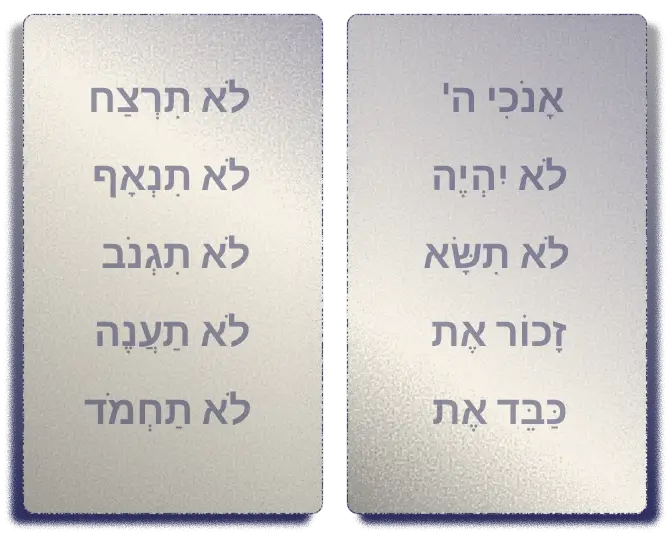
Explore the 613 mitzvos and uncover the meaning behind each one. Discover practical ways to integrate them into your daily life with insights, sources, and guided reflection.

Learn the structure, depth, and spiritual intent behind Jewish prayer. Dive into morning blessings, Shema, Amidah, and more—with tools to enrich your daily connection.
Each week’s parsha offers timeless wisdom and modern relevance. Explore summaries, key themes, and mitzvah connections to deepen your understanding of the Torah cycle.