www.Mitzvah-Minute.com
"Tetzaveh — Part I — “וְאַתָּה תְּצַוֶּה”: Hidden Leadership and the Birth of Sacred Institutions"
1.3 — Abarbanel’s Structural Shock: Why Is the Menorah Here?
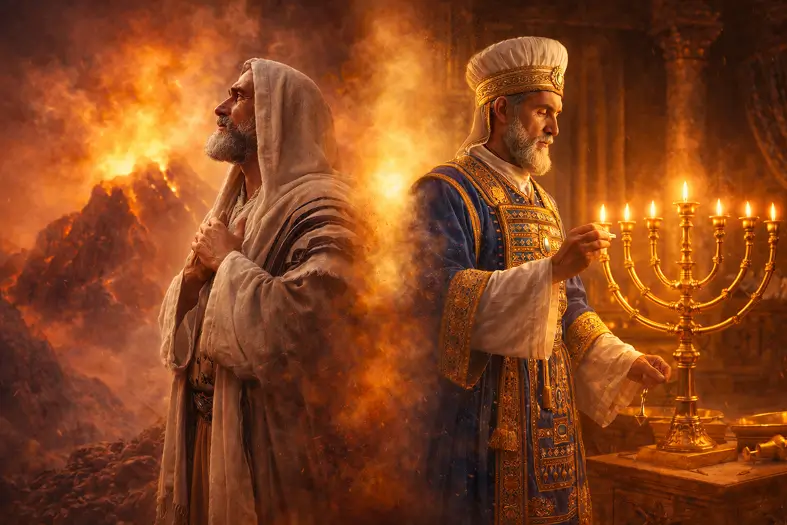
A Command That Interrupts the Architecture
Parshas Tetzaveh opens with the command of the Menorah:
שמות כ״ז:כ׳–כ״א
“וְאַתָּה תְּצַוֶּה… לְהַעֲלֹת נֵר תָּמִיד.”
Immediately afterward, the Torah pivots:
שמות כ״ח:א–ב
“וְאַתָּה הַקְרֵב אֵלֶיךָ אֶת אַהֲרֹן אָחִיךָ… וְעָשִׂיתָ בִגְדֵי קֹדֶשׁ.”
The transition feels abrupt. We have just completed the structural description of the Mishkan in Terumah — its vessels, curtains, and altar. Logically, one would expect the Torah to continue describing architecture or priestly roles in sequence.
Instead, the Torah inserts the lighting of the Menorah at the end of the architectural section and only then introduces the Kohanim.
Abarbanel is deeply unsettled by this. Why describe the service before describing the servants? Why place the flame before the one who tends it?
The answer, he argues, is not architectural. It is philosophical.
The Torah’s Structural Message
According to Abarbanel, the Torah is not arranging materials in construction order. It is arranging ideas in moral order.
The sequence teaches a deliberate principle:
- The light is defined first.
- The service is established first.
- Only afterward is the role installed.
The Torah wants us to see that holiness does not begin with office. It begins with function.
The Kohen does not generate sanctity by virtue of title. He is sanctified because he enters a pre-existing system of avodah. The service is primary; the identity is derivative.
This is the structural shock of Tetzaveh.
Why the Menorah Comes First
The Menorah represents illumination — wisdom, constancy, disciplined light. It burns nightly, measured and steady. It does not flare dramatically; it persists faithfully.
By placing the Menorah command first, the Torah establishes the purpose of the entire Mishkan: to create a steady Divine presence within the world.
Only after that purpose is clarified does the Torah introduce the human being who will serve it.
In other words, the Torah builds the mission before it builds the office.
Had the Kohanim been introduced first, we might mistakenly assume that priesthood is the source of holiness. The Torah prevents that misunderstanding by showing that the light exists independently of the title.
The priesthood exists to sustain the light — not the other way around.
Identity as a Product, Not a Starting Point
Human instinct reverses this order. We tend to define ourselves first and ask about our work later. Titles feel foundational. Recognition feels primary.
But the Torah insists that identity must emerge from responsibility.
The Kohen becomes holy through disciplined participation in avodah. His garments do not create holiness in a vacuum; they reflect a life structured around service.
Abarbanel reads the structure of Tetzaveh as a curriculum of formation. The Torah progresses in deliberate stages:
- First, refine the fuel.
- Then establish the light.
- Then define the service.
- Only then install the identity.
The order is not incidental. It is instructional.
Holiness is not conferred; it is cultivated.
The Danger of Reversing the Order
When societies reverse this order, instability follows. When identity precedes service, titles inflate and substance thins. People seek recognition before discipline, authority before responsibility.
The Torah’s structure warns against that inversion.
The Kohen without avodah is only a man in beautiful clothing. The garments have meaning only because the service already exists.
The Menorah burns regardless of who wears the ephod. The flame defines the role; the role does not define the flame.
This is why the Menorah appears first.
Abarbanel’s Educational Blueprint
Seen through Abarbanel’s lens, Tetzaveh becomes an educational manifesto.
The Torah is teaching that lasting spiritual identity is built through action. The self is shaped by consistent service, not by declaration.
This is true for individuals and institutions alike. A community does not become sacred by naming itself holy. It becomes holy through sustained avodah.
Light precedes office.
Function precedes form.
Responsibility precedes recognition.
The Torah’s architecture is itself a philosophy.
Application for Today — Let the Service Shape the Self
The world often begins with identity. Children are asked what they want to become long before they are taught what they must practice. Adults define themselves by titles, roles, and aspirations, hoping that clarity of self will generate clarity of action.
The Torah moves in the opposite direction.
In Tetzaveh, the Menorah is commanded before the garments. The service appears before the uniform. The light is established before the title of kohen is installed. Abarbanel sees this as deliberate. First avodah. Then identity.
A person does not become holy because he declares himself so. He becomes holy because he returns, again and again, to the same sacred act.
One who studies Torah daily slowly becomes a learner.
One who stands in tefillah each morning becomes a servant of Hashem.
One who practices kindness repeatedly becomes compassionate.
Identity in Torah is not announced. It is cultivated.
If you seek spiritual stability, begin not with labels but with service. Let a single act of disciplined avodah carve its place into your schedule. Let it return tomorrow, and the next day, and the day after that. Over time, that act will stop feeling like something you do. It will begin to feel like who you are.
The Kohen appears after the Menorah because holiness is not first worn—it is first tended. The flame shapes the servant long before the garments are placed upon him.
Let your avodah come first.
And let the person you are becoming rise quietly from its light.
📖 Sources
- Full sources available on the Mitzvah Minute Parshas Tetzaveh page under insights and commentaries