1.6 — Part I Application for Today: Hidden Builders of Kedushah
At the close of the Menorah command, the Torah says:
שמות כ״ז:כ״א
“יַעֲרֹךְ אֹתוֹ אַהֲרֹן… לִפְנֵי ה׳ תָּמִיד”
“Aharon shall arrange it… before Hashem continually.”
The word that defines Part I is תָּמִיד — continually.
Not dramatically.
Not occasionally.
Not when inspiration strikes.
Continually.
The Menorah does not symbolize intensity. It symbolizes constancy. It is arranged each evening, tended each night, maintained through quiet repetition.
Rav Avigdor Miller often emphasized that the greatness of Torah life lies not in rare spiritual fireworks, but in daily consistency. The steady Jew, who repeats small acts of avodah faithfully, sustains the covenant more than the one who lives only on emotional peaks.
Judaism is built on “tamid” people.
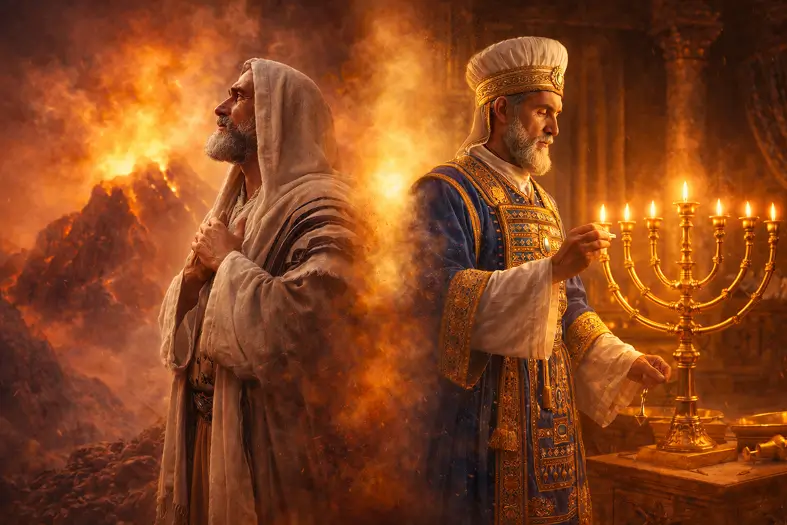
In Parshas Tetzaveh, there are no splitting seas, no thunder at Sinai, no dramatic confrontations with Pharaoh. Instead, we are given oil, garments, and daily procedures.
This is not a step down from revelation. It is the preservation of revelation.
Rabbi Jonathan Sacks teaches that once the fire of revelation fades, what remains must be structure. Without structure, inspiration evaporates. The covenant survives only when holiness is institutionalized into daily life.
The priest does not create new revelation. He protects existing light.
He arranges the lamp each night.
He does so whether anyone is watching or not.
The Torah uses the word “יַעֲרֹךְ” — to arrange. There is something humble about arranging. It is not glamorous. It is not creative in the spectacular sense. It is maintenance.
But without arrangement, there is no light.
Part I has traced a movement from prophetic ignition to priestly preservation. We have seen that:
Now we see the final piece: continuity depends on those who quietly tend the system.
The world runs not only on visionaries, but on maintainers.
In every generation, there are hidden builders of kedushah:
They are not always celebrated. But they are indispensable.
Without them, the Menorah would go dark.
Rav Miller often stressed that true spiritual greatness lies in repetition. Saying Shema every morning. Making a brachah with kavannah. Guarding speech. Showing gratitude.
The Torah does not describe Aharon lighting the Menorah with dramatic flourish. It describes him arranging it תָּמִיד — every day, every night.
This is the heroism of habit.
The covenant does not collapse from lack of inspiration. It collapses when daily practices erode.
The quiet Jew who performs mitzvos steadily is the one holding up the sky.
Rabbi Sacks wrote that prophets create movements, but priests build civilizations. A movement can begin with fire. A civilization endures through routine.
The Mishkan becomes the prototype of Jewish continuity. It transforms a moment at Sinai into a rhythm in the desert. And that rhythm is maintained by individuals committed to the ordinary holiness of repetition.
The Torah does not glorify the Menorah’s flame for its brightness. It glorifies it for its steadiness.
Fire dazzles. Flame sustains.
Modern life rewards visibility. Recognition, platforms, achievements — these define success in contemporary culture.
But covenantal success is measured differently.
The Torah praises the one who arranges the lamp even when no one notices.
There is no applause described in Shemos 27:21. No crowd gathers to watch Aharon trim the wicks. The act is intimate, almost hidden.
Yet the Torah calls it תָּמִיד — continual before Hashem.
The audience is not the public. It is the Divine.
The challenge of hidden avodah is that it lacks external validation. It must be sustained by inner commitment.
The Jew who keeps a daily learning seder when tired, who speaks gently when irritated, who guards eyes and speech when alone — these are acts of invisible priesthood.
Holiness in Judaism is not built on spectacle. It is built on discipline.
And discipline is often quiet.
In the Mishkan, the Menorah did not depend on spectacle. No crowds gathered around it. No trumpets announced its lighting. Each evening, quietly and faithfully, the Kohen returned and raised the flame again. And because of that quiet constancy, the light never left the Sanctuary.
The covenant is sustained not only by prophets and miracles, but by people who live this way—people of tamid.
Not always inspired.
Not always noticed.
But steady.
There are acts in life that shine for a moment, and there are acts that glow day after day, almost unnoticed. The Torah places its trust in the second kind. A small flame, tended faithfully, becomes the light by which an entire sanctuary stands.
Each soul is given the chance to become such a lamp. Not through dramatic gestures, but through one quiet point of constancy—a place in the day that belongs to Hashem, whether the heart feels lifted or heavy.
It may be a few lines of Torah that are never abandoned.
It may be a whispered tefillah that returns each day.
It may be a habit of gentle speech or a moment of gratitude that never disappears.
Over time, that single flame becomes part of the person. It shapes the day, then the year, then the life. And without fanfare, the soul becomes a place where the light of the covenant still burns.
The Menorah’s command does not end with brilliance.
It ends with one quiet word: תָּמִיד.
Be the person who keeps the lamp lit.
📖 Sources


1.6 — Part I Application for Today: Hidden Builders of Kedushah
At the close of the Menorah command, the Torah says:
שמות כ״ז:כ״א
“יַעֲרֹךְ אֹתוֹ אַהֲרֹן… לִפְנֵי ה׳ תָּמִיד”
“Aharon shall arrange it… before Hashem continually.”
The word that defines Part I is תָּמִיד — continually.
Not dramatically.
Not occasionally.
Not when inspiration strikes.
Continually.
The Menorah does not symbolize intensity. It symbolizes constancy. It is arranged each evening, tended each night, maintained through quiet repetition.
Rav Avigdor Miller often emphasized that the greatness of Torah life lies not in rare spiritual fireworks, but in daily consistency. The steady Jew, who repeats small acts of avodah faithfully, sustains the covenant more than the one who lives only on emotional peaks.
Judaism is built on “tamid” people.
In Parshas Tetzaveh, there are no splitting seas, no thunder at Sinai, no dramatic confrontations with Pharaoh. Instead, we are given oil, garments, and daily procedures.
This is not a step down from revelation. It is the preservation of revelation.
Rabbi Jonathan Sacks teaches that once the fire of revelation fades, what remains must be structure. Without structure, inspiration evaporates. The covenant survives only when holiness is institutionalized into daily life.
The priest does not create new revelation. He protects existing light.
He arranges the lamp each night.
He does so whether anyone is watching or not.
The Torah uses the word “יַעֲרֹךְ” — to arrange. There is something humble about arranging. It is not glamorous. It is not creative in the spectacular sense. It is maintenance.
But without arrangement, there is no light.
Part I has traced a movement from prophetic ignition to priestly preservation. We have seen that:
Now we see the final piece: continuity depends on those who quietly tend the system.
The world runs not only on visionaries, but on maintainers.
In every generation, there are hidden builders of kedushah:
They are not always celebrated. But they are indispensable.
Without them, the Menorah would go dark.
Rav Miller often stressed that true spiritual greatness lies in repetition. Saying Shema every morning. Making a brachah with kavannah. Guarding speech. Showing gratitude.
The Torah does not describe Aharon lighting the Menorah with dramatic flourish. It describes him arranging it תָּמִיד — every day, every night.
This is the heroism of habit.
The covenant does not collapse from lack of inspiration. It collapses when daily practices erode.
The quiet Jew who performs mitzvos steadily is the one holding up the sky.
Rabbi Sacks wrote that prophets create movements, but priests build civilizations. A movement can begin with fire. A civilization endures through routine.
The Mishkan becomes the prototype of Jewish continuity. It transforms a moment at Sinai into a rhythm in the desert. And that rhythm is maintained by individuals committed to the ordinary holiness of repetition.
The Torah does not glorify the Menorah’s flame for its brightness. It glorifies it for its steadiness.
Fire dazzles. Flame sustains.
Modern life rewards visibility. Recognition, platforms, achievements — these define success in contemporary culture.
But covenantal success is measured differently.
The Torah praises the one who arranges the lamp even when no one notices.
There is no applause described in Shemos 27:21. No crowd gathers to watch Aharon trim the wicks. The act is intimate, almost hidden.
Yet the Torah calls it תָּמִיד — continual before Hashem.
The audience is not the public. It is the Divine.
The challenge of hidden avodah is that it lacks external validation. It must be sustained by inner commitment.
The Jew who keeps a daily learning seder when tired, who speaks gently when irritated, who guards eyes and speech when alone — these are acts of invisible priesthood.
Holiness in Judaism is not built on spectacle. It is built on discipline.
And discipline is often quiet.
In the Mishkan, the Menorah did not depend on spectacle. No crowds gathered around it. No trumpets announced its lighting. Each evening, quietly and faithfully, the Kohen returned and raised the flame again. And because of that quiet constancy, the light never left the Sanctuary.
The covenant is sustained not only by prophets and miracles, but by people who live this way—people of tamid.
Not always inspired.
Not always noticed.
But steady.
There are acts in life that shine for a moment, and there are acts that glow day after day, almost unnoticed. The Torah places its trust in the second kind. A small flame, tended faithfully, becomes the light by which an entire sanctuary stands.
Each soul is given the chance to become such a lamp. Not through dramatic gestures, but through one quiet point of constancy—a place in the day that belongs to Hashem, whether the heart feels lifted or heavy.
It may be a few lines of Torah that are never abandoned.
It may be a whispered tefillah that returns each day.
It may be a habit of gentle speech or a moment of gratitude that never disappears.
Over time, that single flame becomes part of the person. It shapes the day, then the year, then the life. And without fanfare, the soul becomes a place where the light of the covenant still burns.
The Menorah’s command does not end with brilliance.
It ends with one quiet word: תָּמִיד.
Be the person who keeps the lamp lit.
📖 Sources


“1.6 — Hidden Builders of Kedushah”
וְאַתָּה תְּצַוֶּה… לְהַעֲלֹת נֵר תָּמִיד
The Menorah’s daily lighting symbolizes the constancy required for covenantal survival. Its holiness lies not in intensity but in repetition.
וַעֲבַדְתֶּם אֵת ה׳ אֱלֹקֵיכֶם
Daily prayer embodies the principle of tamid. It anchors spiritual life in regular rhythm rather than sporadic inspiration.
וְשִׁנַּנְתָּם לְבָנֶיךָ
Consistent Torah study ensures the transmission of covenantal light across generations. The steadiness of learning sustains revelation long after Sinai’s fire has faded.
וְהָלַכְתָּ בִּדְרָכָיו
Hashem sustains creation continuously. Emulating Him means building a life of steady, dependable goodness that reflects Divine constancy.


“1.6 — Hidden Builders of Kedushah”
The Torah concludes the Menorah command with the phrase “יַעֲרֹךְ… תָּמִיד,” emphasizing continual arrangement of the lamp before Hashem. This verse encapsulates the priestly mission of Tetzaveh: sustaining Divine light through steady, disciplined repetition rather than dramatic revelation.

Dive into mitzvos, tefillah, and Torah study—each section curated to help you learn, reflect, and live with intention. New insights are added regularly, creating an evolving space for spiritual growth.

Explore the 613 mitzvos and uncover the meaning behind each one. Discover practical ways to integrate them into your daily life with insights, sources, and guided reflection.

Learn the structure, depth, and spiritual intent behind Jewish prayer. Dive into morning blessings, Shema, Amidah, and more—with tools to enrich your daily connection.

Each week’s parsha offers timeless wisdom and modern relevance. Explore summaries, key themes, and mitzvah connections to deepen your understanding of the Torah cycle.