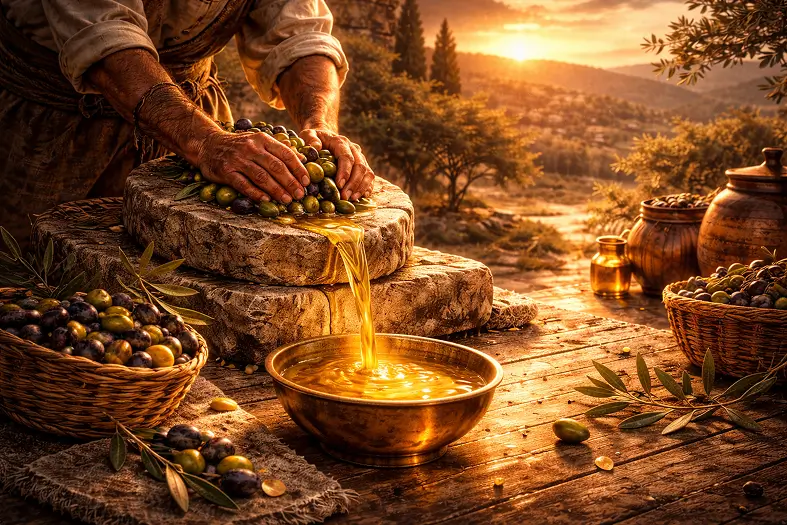
2.1 — The First Drop
At the opening of Parshas Tetzaveh, the Torah commands:
שמות כ״ז:כ׳
“וְיִקְחוּ אֵלֶיךָ שֶׁמֶן זַיִת זָךְ כָּתִית לַמָּאוֹר”
“And they shall take to you pure olive oil, crushed for illumination.”
The Torah is precise in its language. It does not simply ask for olive oil. It demands “שֶׁמֶן זַיִת זָךְ”—pure olive oil—and specifies the method: “כָּתִית”—crushed, not ground.
Rashi explains, drawing from Chazal in Menachos, that the oil used for the Menorah had to come from the first drop extracted from the olive. The olives were gently pounded, and the initial, clearest oil that flowed out was set aside exclusively for the Menorah. Only afterward were the olives pressed more forcefully, producing oil for other purposes.
The Menorah, therefore, was fueled by the finest, purest portion of the olive—the very first yield.
This is not a technical detail. It is a spiritual principle.
In most human systems, the sacred receives what remains after everything else is satisfied. The best time, energy, and resources are spent on business, comfort, or entertainment. What remains is offered to holiness.
But the Torah reverses that instinct.
The Menorah is not lit with residual oil. It is lit with the first and clearest drop. The sacred is not an afterthought. It is the priority.
The oil for the Menorah must be:
The Torah is teaching that holiness must be nourished from the best of what we possess.
Chazal, in Menachos, describe the careful process of extracting this first drop. The olive is not ground into paste, which would produce cloudy oil. Instead, it is gently crushed, allowing the clearest essence to emerge.
This process becomes a metaphor for the human soul.
Just as the olive yields its purest oil through measured pressure, so too a person’s inner clarity often emerges through refinement and discipline. The Menorah’s light is not fueled by excess or abundance, but by carefully extracted purity.
The Torah is not merely instructing the Kohanim. It is instructing the heart.
Other parts of the Mishkan used oil as well. But only the Menorah required this first, clearest drop.
The difference lies in what the Menorah represents. It is not a tool of offering or an instrument of atonement. It is a symbol of illumination—wisdom, awareness, and Divine presence.
Light demands clarity.
If the oil is cloudy, the flame will flicker. If the source is impure, the illumination will be distorted. The Menorah’s flame must be steady, clear, and unwavering. Therefore its fuel must be equally refined.
Holiness begins not with the visible flame, but with the invisible preparation of the oil.
Rashi’s words are simple but profound. The olives are “כָּתִית לַמָּאוֹר”—crushed for illumination. The crushing is not destructive; it is purposeful. It exists so that light may emerge.
Pressure, in the Torah’s vision, is not merely a hardship. It is often the process through which clarity is produced.
The olive is transformed not by being left alone, but by being refined.
This is the paradox of spiritual growth. The very pressures that seem to diminish a person often reveal his clearest light.
The requirement of the first drop reveals a hidden hierarchy within Torah life. The sacred is meant to receive the best portion, not the remainder.
This principle appears throughout the Torah:
The covenant begins at the beginning.
The Menorah’s oil follows the same pattern. It must come from the first yield, the purest expression of the olive.
Abarbanel sees this command as the opening stage of the Mishkan’s spiritual architecture. Before garments are designed, before roles are assigned, before institutions are installed, the Torah begins with the fuel.
The system begins not with titles, but with purity.
The oil must be refined before the service begins. The source must be clear before the structure can stand.
Holiness, in the Torah’s design, always begins at the origin point.
Every person has a limited supply of oil—time, energy, attention, emotional strength. The question is not whether we have oil. The question is where the first drop goes.
Does the first clarity of the day go to Torah, or to distraction?
Does the best energy go to avodah, or to anxiety?
Does holiness receive the first portion, or the leftovers?
The Menorah’s law becomes a personal mirror. What fuels your light?
In the Mishkan, the Menorah was not fueled by leftover oil. It was lit from the first drop—the purest expression of the olive, the part that emerged before the fruit was fully pressed and handled.
The Torah is quietly teaching a principle of sacred living: what comes first reveals what matters most.
Many people build their spiritual lives from whatever remains at the end of the day. After the work is done, after the messages are answered, after the mind is tired and the heart is full, then perhaps a few moments are given to Torah, to tefillah, or to kindness. The light still burns—but it is fed by leftovers.
The Menorah shows another way.
The first drop belongs to the Sanctuary. The purest, earliest oil is set aside for light. Holiness is not an afterthought. It stands at the beginning.
When a person gives the first calm moment of the day to Hashem, that moment changes the tone of everything that follows. The day is no longer only a chain of obligations. It becomes a corridor of light that began in the Sanctuary of that first act.
It may be a few quiet lines of Torah before the world wakes.
It may be a gentle tefillah said before the rush begins.
It may be the first opportunity for kindness, taken without hesitation.
These moments are like the first drop of oil—clear, undiluted, offered before the pressures of the day begin to stir the vessel.
And when the first drop belongs to the Menorah, the flame stands taller. The light grows steadier. The whole sanctuary seems brighter.
Holiness does not begin with what is left over.
It begins with what comes first.
📖 Sources


2.1 — The First Drop
At the opening of Parshas Tetzaveh, the Torah commands:
שמות כ״ז:כ׳
“וְיִקְחוּ אֵלֶיךָ שֶׁמֶן זַיִת זָךְ כָּתִית לַמָּאוֹר”
“And they shall take to you pure olive oil, crushed for illumination.”
The Torah is precise in its language. It does not simply ask for olive oil. It demands “שֶׁמֶן זַיִת זָךְ”—pure olive oil—and specifies the method: “כָּתִית”—crushed, not ground.
Rashi explains, drawing from Chazal in Menachos, that the oil used for the Menorah had to come from the first drop extracted from the olive. The olives were gently pounded, and the initial, clearest oil that flowed out was set aside exclusively for the Menorah. Only afterward were the olives pressed more forcefully, producing oil for other purposes.
The Menorah, therefore, was fueled by the finest, purest portion of the olive—the very first yield.
This is not a technical detail. It is a spiritual principle.
In most human systems, the sacred receives what remains after everything else is satisfied. The best time, energy, and resources are spent on business, comfort, or entertainment. What remains is offered to holiness.
But the Torah reverses that instinct.
The Menorah is not lit with residual oil. It is lit with the first and clearest drop. The sacred is not an afterthought. It is the priority.
The oil for the Menorah must be:
The Torah is teaching that holiness must be nourished from the best of what we possess.
Chazal, in Menachos, describe the careful process of extracting this first drop. The olive is not ground into paste, which would produce cloudy oil. Instead, it is gently crushed, allowing the clearest essence to emerge.
This process becomes a metaphor for the human soul.
Just as the olive yields its purest oil through measured pressure, so too a person’s inner clarity often emerges through refinement and discipline. The Menorah’s light is not fueled by excess or abundance, but by carefully extracted purity.
The Torah is not merely instructing the Kohanim. It is instructing the heart.
Other parts of the Mishkan used oil as well. But only the Menorah required this first, clearest drop.
The difference lies in what the Menorah represents. It is not a tool of offering or an instrument of atonement. It is a symbol of illumination—wisdom, awareness, and Divine presence.
Light demands clarity.
If the oil is cloudy, the flame will flicker. If the source is impure, the illumination will be distorted. The Menorah’s flame must be steady, clear, and unwavering. Therefore its fuel must be equally refined.
Holiness begins not with the visible flame, but with the invisible preparation of the oil.
Rashi’s words are simple but profound. The olives are “כָּתִית לַמָּאוֹר”—crushed for illumination. The crushing is not destructive; it is purposeful. It exists so that light may emerge.
Pressure, in the Torah’s vision, is not merely a hardship. It is often the process through which clarity is produced.
The olive is transformed not by being left alone, but by being refined.
This is the paradox of spiritual growth. The very pressures that seem to diminish a person often reveal his clearest light.
The requirement of the first drop reveals a hidden hierarchy within Torah life. The sacred is meant to receive the best portion, not the remainder.
This principle appears throughout the Torah:
The covenant begins at the beginning.
The Menorah’s oil follows the same pattern. It must come from the first yield, the purest expression of the olive.
Abarbanel sees this command as the opening stage of the Mishkan’s spiritual architecture. Before garments are designed, before roles are assigned, before institutions are installed, the Torah begins with the fuel.
The system begins not with titles, but with purity.
The oil must be refined before the service begins. The source must be clear before the structure can stand.
Holiness, in the Torah’s design, always begins at the origin point.
Every person has a limited supply of oil—time, energy, attention, emotional strength. The question is not whether we have oil. The question is where the first drop goes.
Does the first clarity of the day go to Torah, or to distraction?
Does the best energy go to avodah, or to anxiety?
Does holiness receive the first portion, or the leftovers?
The Menorah’s law becomes a personal mirror. What fuels your light?
In the Mishkan, the Menorah was not fueled by leftover oil. It was lit from the first drop—the purest expression of the olive, the part that emerged before the fruit was fully pressed and handled.
The Torah is quietly teaching a principle of sacred living: what comes first reveals what matters most.
Many people build their spiritual lives from whatever remains at the end of the day. After the work is done, after the messages are answered, after the mind is tired and the heart is full, then perhaps a few moments are given to Torah, to tefillah, or to kindness. The light still burns—but it is fed by leftovers.
The Menorah shows another way.
The first drop belongs to the Sanctuary. The purest, earliest oil is set aside for light. Holiness is not an afterthought. It stands at the beginning.
When a person gives the first calm moment of the day to Hashem, that moment changes the tone of everything that follows. The day is no longer only a chain of obligations. It becomes a corridor of light that began in the Sanctuary of that first act.
It may be a few quiet lines of Torah before the world wakes.
It may be a gentle tefillah said before the rush begins.
It may be the first opportunity for kindness, taken without hesitation.
These moments are like the first drop of oil—clear, undiluted, offered before the pressures of the day begin to stir the vessel.
And when the first drop belongs to the Menorah, the flame stands taller. The light grows steadier. The whole sanctuary seems brighter.
Holiness does not begin with what is left over.
It begins with what comes first.
📖 Sources


“2.1 — The First Drop”
וְאַתָּה תְּצַוֶּה… שֶׁמֶן זַיִת זָךְ כָּתִית לַמָּאוֹר
The Menorah must be lit with the first, purest drop of oil. This mitzvah teaches that sacred illumination depends on the quality of its source. Holiness is fueled not by leftovers, but by the clearest and finest portion.
וְשִׁנַּנְתָּם לְבָנֶיךָ
Torah learning should receive a person’s clearest time and attention. Like the Menorah’s oil, the mind’s first and best energy should be directed toward sacred study.
וְעָשׂוּ לָהֶם צִיצִת
Tzitzit serve as a constant reminder to orient one’s life toward mitzvos. They represent the discipline of placing holiness at the forefront of daily consciousness, not at its margins.
וְהָלַכְתָּ בִּדְרָכָיו
Hashem gives the world its sustaining goodness continuously and generously. Emulating His ways includes offering our best efforts to holiness, rather than the remnants of our strength.
וְעָשִׂיתָ אֹתוֹ שֶׁמֶן מִשְׁחַת קֹדֶשׁ
The Torah commands the preparation of the sacred anointing oil used to consecrate the Mishkan, its vessels, and the kohanim. This mitzvah reflects the theme of refinement and sanctified substance: holiness begins with carefully prepared, purified materials that become the source of sacred service. In the context of the Menorah and the oil imagery of Tetzaveh, it reinforces the principle that consecrated light depends on consecrated fuel.


“2.1 — The First Drop”
The Torah commands that the Menorah be lit with “שֶׁמֶן זַיִת זָךְ כָּתִית לַמָּאוֹר,” pure olive oil from the first pressing. This opening command establishes the foundation of the Mishkan’s service: holiness begins with refined input. The clarity of the light depends on the purity of the oil.

Dive into mitzvos, tefillah, and Torah study—each section curated to help you learn, reflect, and live with intention. New insights are added regularly, creating an evolving space for spiritual growth.

Explore the 613 mitzvos and uncover the meaning behind each one. Discover practical ways to integrate them into your daily life with insights, sources, and guided reflection.

Learn the structure, depth, and spiritual intent behind Jewish prayer. Dive into morning blessings, Shema, Amidah, and more—with tools to enrich your daily connection.

Each week’s parsha offers timeless wisdom and modern relevance. Explore summaries, key themes, and mitzvah connections to deepen your understanding of the Torah cycle.