3.3 — Half a Log: Exact Measure, Exact Covenant
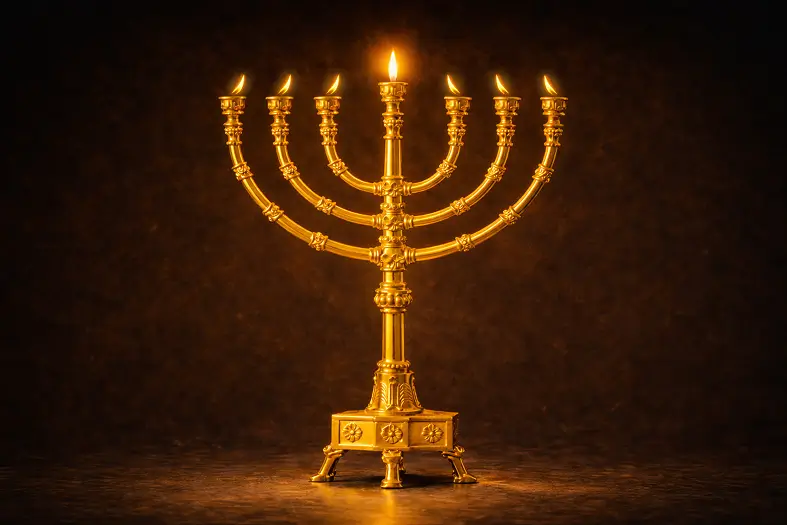
The Torah commands that the Menorah burn:
שמות כ״ז:כ״א
“מֵעֶרֶב עַד בֹּקֶר”
“From evening until morning.”
Rashi, drawing on the Gemara in Menachos, explains a remarkable detail. Each lamp of the Menorah was filled with exactly half a log of oil. This was the measured amount required for the flame to burn through the night—from evening until morning.
But the length of the night is not constant.
In summer, the night is short.
In winter, the night is long.
And yet the measure remained the same.
The Kohanim did not increase the oil in winter or decrease it in summer. The Torah’s measure was fixed.
Precision was not seasonal.
Rashi’s comment reveals something subtle about the covenant. Holiness in the Mishkan was not approximate. It was exact.
Half a log. Not a little more when convenient. Not a little less when rushed.
The oil was measured with care because reliability depends on precision.
A system built on fluctuating standards becomes unstable. But a system built on exact discipline creates trust.
The Menorah burned every night because the measure was consistent.
The phrase “מֵעֶרֶב עַד בֹּקֶר” implies variability. Night stretches and contracts. Seasons shift. Darkness deepens and lightens.
Yet the covenant’s discipline did not adjust emotionally to these changes.
The Kohen did not say, “Tonight is especially dark; let us pour more oil.” Nor did he say, “The night is short; we can relax the measure.”
The same oil. Every night.
This is a powerful model of spiritual life. Conditions fluctuate. Circumstances change. Moods vary. But covenantal standards remain steady.
Holiness is consistency under changing conditions.
Exact measures create reliability.
Imagine if the oil were poured loosely—sometimes more, sometimes less. The flame would become unpredictable. Some nights it would burn too long; other nights it would sputter early.
But when the measure is exact, the outcome is dependable.
The Torah’s discipline of measurement reflects a deeper principle: Divine service requires seriousness.
Half a log communicates that details matter. Not because Hashem needs oil, but because human beings need structure.
Precision trains the soul to value steadiness over impulse.
There is a quiet temptation in spiritual life to adjust standards according to comfort.
When life feels bright, we commit more.
When life feels dark, we scale back.
When schedules are easy, we are disciplined.
When pressures mount, discipline fades.
The Menorah challenges that instinct.
The night grows longer in winter. Darkness increases. But the measure remains unchanged.
The covenant does not shrink when conditions become heavy.
On the contrary, it becomes even more essential.
The winter night can serve as a metaphor.
There are seasons in life when clarity feels distant. When joy is muted. When spiritual warmth is harder to access.
These are “winter-dark” periods.
The Torah’s instruction is radical in its simplicity: do not change the measure.
Keep the half-log.
Continue the tefillah.
Continue the learning.
Continue the standard of speech and integrity.
Do not let external darkness dictate internal discipline.
The flame survives winter because the oil remains constant.
Rashi does not expand philosophically on the half-log measure. He simply reports the halachic detail. Yet embedded in that detail is an entire theology of consistency.
The Mishkan’s service was not fueled by emotional variation. It was fueled by fixed discipline.
Each night, from evening until morning, the oil burned predictably because it was measured precisely.
The covenant depends not only on inspiration, but on exactness.
Not only on passion, but on precision.
Identify one standard in your life that tends to fluctuate.
Perhaps:
Choose one discipline and fix its measure.
Decide in advance:
“This is my half-log. I will not reduce it when the night feels long.”
It need not be grand. Even a small, steady commitment builds reliability.
Life’s nights will vary. Seasons will change. But if the measure remains exact, the flame will endure.
Half a log.
Exact measure.
Exact covenant.
📖 Sources


3.3 — Half a Log: Exact Measure, Exact Covenant
The Torah commands that the Menorah burn:
שמות כ״ז:כ״א
“מֵעֶרֶב עַד בֹּקֶר”
“From evening until morning.”
Rashi, drawing on the Gemara in Menachos, explains a remarkable detail. Each lamp of the Menorah was filled with exactly half a log of oil. This was the measured amount required for the flame to burn through the night—from evening until morning.
But the length of the night is not constant.
In summer, the night is short.
In winter, the night is long.
And yet the measure remained the same.
The Kohanim did not increase the oil in winter or decrease it in summer. The Torah’s measure was fixed.
Precision was not seasonal.
Rashi’s comment reveals something subtle about the covenant. Holiness in the Mishkan was not approximate. It was exact.
Half a log. Not a little more when convenient. Not a little less when rushed.
The oil was measured with care because reliability depends on precision.
A system built on fluctuating standards becomes unstable. But a system built on exact discipline creates trust.
The Menorah burned every night because the measure was consistent.
The phrase “מֵעֶרֶב עַד בֹּקֶר” implies variability. Night stretches and contracts. Seasons shift. Darkness deepens and lightens.
Yet the covenant’s discipline did not adjust emotionally to these changes.
The Kohen did not say, “Tonight is especially dark; let us pour more oil.” Nor did he say, “The night is short; we can relax the measure.”
The same oil. Every night.
This is a powerful model of spiritual life. Conditions fluctuate. Circumstances change. Moods vary. But covenantal standards remain steady.
Holiness is consistency under changing conditions.
Exact measures create reliability.
Imagine if the oil were poured loosely—sometimes more, sometimes less. The flame would become unpredictable. Some nights it would burn too long; other nights it would sputter early.
But when the measure is exact, the outcome is dependable.
The Torah’s discipline of measurement reflects a deeper principle: Divine service requires seriousness.
Half a log communicates that details matter. Not because Hashem needs oil, but because human beings need structure.
Precision trains the soul to value steadiness over impulse.
There is a quiet temptation in spiritual life to adjust standards according to comfort.
When life feels bright, we commit more.
When life feels dark, we scale back.
When schedules are easy, we are disciplined.
When pressures mount, discipline fades.
The Menorah challenges that instinct.
The night grows longer in winter. Darkness increases. But the measure remains unchanged.
The covenant does not shrink when conditions become heavy.
On the contrary, it becomes even more essential.
The winter night can serve as a metaphor.
There are seasons in life when clarity feels distant. When joy is muted. When spiritual warmth is harder to access.
These are “winter-dark” periods.
The Torah’s instruction is radical in its simplicity: do not change the measure.
Keep the half-log.
Continue the tefillah.
Continue the learning.
Continue the standard of speech and integrity.
Do not let external darkness dictate internal discipline.
The flame survives winter because the oil remains constant.
Rashi does not expand philosophically on the half-log measure. He simply reports the halachic detail. Yet embedded in that detail is an entire theology of consistency.
The Mishkan’s service was not fueled by emotional variation. It was fueled by fixed discipline.
Each night, from evening until morning, the oil burned predictably because it was measured precisely.
The covenant depends not only on inspiration, but on exactness.
Not only on passion, but on precision.
Identify one standard in your life that tends to fluctuate.
Perhaps:
Choose one discipline and fix its measure.
Decide in advance:
“This is my half-log. I will not reduce it when the night feels long.”
It need not be grand. Even a small, steady commitment builds reliability.
Life’s nights will vary. Seasons will change. But if the measure remains exact, the flame will endure.
Half a log.
Exact measure.
Exact covenant.
📖 Sources


“3.3 — Half a Log: Exact Measure, Exact Covenant”
לְהַעֲלֹת נֵר תָּמִיד
The daily lighting of the Menorah with an exact measure of oil models disciplined constancy. The covenant’s light depends on precision and reliability.
וַעֲבַדְתֶּם אֵת ה׳ אֱלֹקֵיכֶם
Daily prayer reflects measured devotion. Its constancy, regardless of mood or season, parallels the fixed oil-measure of the Menorah.
וְשִׁנַּנְתָּם לְבָנֶיךָ
Regular Torah study requires fixed commitment. Precision in scheduling creates reliability across varying life conditions.
שַׁבָּת
Shabbos arrives weekly without fluctuation. Its unchanging recurrence mirrors the steady measure of the Menorah’s oil, anchoring time in consistent covenantal rhythm.


“3.3 — Half a Log: Exact Measure, Exact Covenant”
The Torah commands the Menorah to burn “מֵעֶרֶב עַד בֹּקֶר.” Rashi, drawing on Menachos, explains that each lamp received a fixed measure of oil—half a log—regardless of seasonal variation. This precision underscores the importance of disciplined consistency in Divine service.

Dive into mitzvos, tefillah, and Torah study—each section curated to help you learn, reflect, and live with intention. New insights are added regularly, creating an evolving space for spiritual growth.

Explore the 613 mitzvos and uncover the meaning behind each one. Discover practical ways to integrate them into your daily life with insights, sources, and guided reflection.

Learn the structure, depth, and spiritual intent behind Jewish prayer. Dive into morning blessings, Shema, Amidah, and more—with tools to enrich your daily connection.

Each week’s parsha offers timeless wisdom and modern relevance. Explore summaries, key themes, and mitzvah connections to deepen your understanding of the Torah cycle.