www.Mitzvah-Minute.com
"Tetzaveh — Part III — “נֵר תָּמִיד”: Constancy, Measurement, and the Daily Flame"
3.4 — “Until the Flame Rises on Its Own”
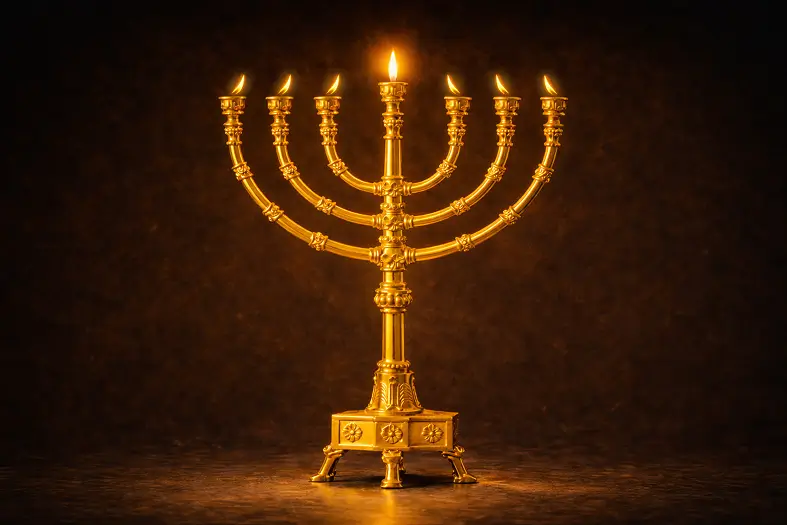
The Meaning of “לְהַעֲלֹת”
The Torah commands regarding the Menorah:
שמות כ״ז:כ׳
“לְהַעֲלֹת נֵר תָּמִיד”
“To raise a continual lamp.”
Rashi, drawing from Chazal, explains the unusual wording. The Torah does not simply say “to light” the lamp. It says “לְהַעֲלֹת”—to raise it.
Why this language?
Because the Kohen was not meant to merely ignite the wick and walk away. He had to hold the flame to the wick until the flame rose on its own. Only once the fire became self-sustaining could he withdraw his hand.
The act of lighting was not complete at ignition. It was complete only when the flame became independent.
This halachic detail becomes a profound spiritual metaphor.
The Difference Between Ignition and Illumination
There is a difference between starting a fire and sustaining a flame.
A spark is momentary.
A flame that stands on its own endures.
The Kohen’s role was not to create a brief flash of light. It was to nurture the wick until it could sustain its own flame.
Holiness, too, cannot depend forever on external ignition. It must eventually become internal.
The Torah’s language—“לְהַעֲלֹת”—suggests elevation. The flame is not simply lit. It is raised into independence.
Rashi: The Halacha of Patient Nurturing
Rashi’s teaching introduces a quiet principle of spiritual life: true lighting takes time.
If the Kohen rushed away too quickly, the flame might flicker and die. The wick needed careful attention, steady contact with the flame, until it caught fully.
Holiness requires patience.
A soul does not ignite instantly. A habit does not form overnight. A student does not absorb wisdom in a single lesson.
The Kohen stands there, holding the flame in place, until the wick becomes a source of fire in its own right.
The Sfas Emes: Awakening the Inner Fire
The Sfas Emes sees in this halacha a deeper spiritual truth. Every Jew contains an inner spark—a Divine point waiting to be kindled.
External influence can ignite that spark, but it cannot sustain it forever. True growth occurs when the inner flame awakens and begins to burn from within.
The role of a teacher, parent, or mentor is therefore not to impose fire from outside, but to awaken fire from within.
The Sfas Emes teaches that the soul is naturally drawn upward, like a flame. But it requires nurturing until it recognizes its own nature.
Once the flame stands on its own, it rises naturally.
The Goal of All Spiritual Work
Many forms of spiritual activity focus on external stimulation—moving speeches, emotional experiences, powerful moments.
These are sparks.
But the Torah’s goal is not sparks. It is steady flame.
A person who depends entirely on external inspiration will constantly search for new ignitions. When the spark fades, the light disappears.
But a person whose inner flame has been raised will continue burning even in silence.
The Kohen’s task is therefore the model for all spiritual work: nurture the flame until it no longer needs your hand.
Education as Illumination
This principle applies most clearly to education.
A teacher who merely transmits information may create temporary sparks of interest. But a true educator aims for something deeper: a student who learns on his own, thinks on his own, and grows on his own.
The same is true of parenting.
The goal is not lifelong dependence. It is independent holiness. A child who chooses mitzvos, seeks Torah, and lives with awareness of Hashem because the flame burns inside him.
The Kohen does not hold the fire forever. He holds it until the wick becomes a flame.
Self-Sustaining Holiness
This teaching also applies to personal growth.
At the beginning of a spiritual journey, a person may rely on external supports:
- A motivating class.
- A structured program.
- A mentor’s guidance.
- A community’s encouragement.
These are the initial flames.
But the goal is to internalize the fire. To reach a point where the person:
- Learns even without pressure.
- Prays even without inspiration.
- Chooses goodness even when unseen.
That is when the flame rises on its own.
The Upward Nature of the Flame
A flame naturally rises upward. It does not cling downward. Once ignited properly, it reaches upward on its own.
The Sfas Emes sees this as the nature of the Jewish soul. Its deepest desire is to rise toward Hashem.
The role of mitzvos, teachers, and structures is to awaken that nature. Once awakened, the soul will ascend naturally.
“לְהַעֲלֹת” is not only about lighting. It is about elevation.
The flame rises because that is what fire does.
Application for Today — Until the Flame Stands Alone
In the Mishkan, the Kohen did not simply touch the wick with fire and walk away. He held the flame there, patiently, until the light caught and began to rise on its own. Only then was his task complete.
So too in the life of the soul.
There are moments when we borrow fire from others—an inspiring teacher, a stirring shiur, a moving tefillah, a season of growth. These are precious sparks. But they are not the destination. They are the beginning.
The Torah’s vision is deeper: a flame that no longer depends on the hand that lit it. A heart that seeks Hashem even in silence. A mind that returns to Torah without being pushed. A life where holiness is not imposed from outside, but rises from within.
If you guide others, remember that your role is not to hold the flame forever. It is to awaken something inside them that will continue to burn long after you step back. The greatest teacher is the one whose students no longer need him to ignite their light.
And if you are working on yourself, do not be satisfied with borrowed sparks. Let inspiration become habit, and habit become identity. Let the flame settle into the wick of your daily life until it stands upright, steady and self-sustaining.
“לְהַעֲלֹת נֵר”—to raise the flame.
Not just to light it, but to lift it,
until it no longer needs your hand,
and the light rises on its own.
📖 Sources
- Full sources available on the Mitzvah Minute Parshas Tetzaveh page under insights and commentaries