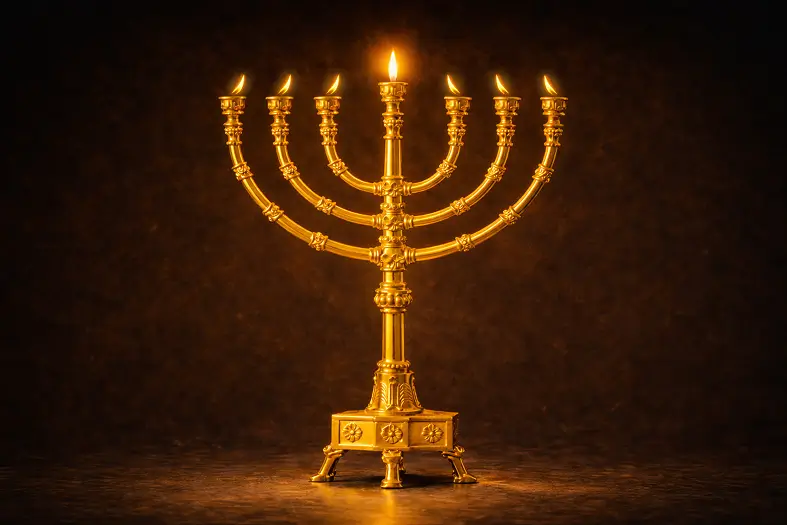
3.5 — Nightly Discipline: Spirituality as Appointment
At the close of the Menorah command, the Torah declares:
שמות כ״ז:כ״א
“חֻקַּת עוֹלָם לְדֹרֹתָם”
“An eternal statute for their generations.”
The lighting of the Menorah is not described as an occasional ritual or a moment of inspiration. It is called a chok olam—an eternal, unchanging statute. Each evening the lamps are arranged, the oil is measured, and the flame is raised. This happens not because the Kohen feels uplifted, not because the atmosphere is inspiring, and not because the nation happens to be in a spiritual mood. It happens because it is time.
The Menorah is a scheduled act of holiness.
The Rambam teaches that human character is formed through repeated actions. Habits do not merely express who we are; they slowly become who we are. A person who practices generosity regularly becomes generous. A person who speaks with care develops refinement. A person who prays daily becomes a servant of Hashem.
The Rambam’s approach to mitzvos is built on this foundation. The purpose of repeated acts of avodah is not only to perform commandments, but to shape the inner life of the person performing them.
The nightly lighting of the Menorah reflects this idea. It is not a dramatic or rare event. It is a quiet, repeated action. Every evening the Kohen returns, prepares the lamps, and raises the flame. Over time, this discipline forms him into a person of steadiness, responsibility, and devotion. The act becomes part of his identity.
The Mishkan is not a place of spontaneous spiritual expression. It is a place of carefully structured service. Every measurement, every action, every time of day is defined.
The Torah does not say, “Light the Menorah when inspiration strikes.” It says that this is a statute for all generations. Structure is not the enemy of spirituality. It is its foundation.
A life built only on inspiration is fragile. When emotions fade, the practice fades with them. But a life built on structure can withstand changing moods and shifting circumstances. The Menorah’s flame remains steady because the service that sustains it is steady.
Rav Avigdor Miller often taught that the greatest people are not those who perform rare heroic acts, but those who repeat small acts of holiness faithfully. He emphasized the quiet disciplines that shape a soul over time: a daily moment of gratitude, a consistent act of kindness, a steady pattern of prayer, or a regular learning session.
In his view, the spiritual giants of Israel were not formed by occasional bursts of inspiration. They were formed by thousands of small, repeated actions that gradually shaped their character.
The Menorah’s nightly lighting reflects this principle. It is not a dramatic moment. It is a quiet discipline. Yet it sustains the light of the Mishkan night after night.
Modern spirituality often revolves around feeling. People ask whether they feel inspired to pray, whether they are in the mood to learn, or whether a particular practice speaks to them that day.
The Torah offers a different model. The Menorah is not lit by mood. It is lit by appointment.
Each evening the Kohen arrives, whether he feels inspired or not. He measures the oil, arranges the wicks, and raises the flame. The act is anchored in time, not emotion.
This is the meaning of חֻקַּת עוֹלָם. It is a statute that stands beyond mood, beyond circumstance, and beyond personal inclination. The covenant is not sustained by emotional intensity alone. It is sustained by faithful structure.
Structure creates resilience. When life becomes busy, a scheduled practice continues. When emotions fluctuate, a fixed routine remains. When inspiration fades, discipline carries the flame.
The covenant survives because it is built on recurring structure. Shabbos returns each week. Prayer returns each day. Festivals return each year. The Menorah’s nightly lighting is one expression of this rhythm.
The flame burns because the appointment is kept.
There is a quiet strength in small, repeated acts. A few minutes of daily Torah become years of wisdom. A steady pattern of kindness forms a compassionate heart. A consistent prayer builds a deep relationship with Hashem.
The Menorah does not rely on rare, intense bursts of flame. It relies on nightly discipline. The light of the Mishkan is sustained by a simple act repeated again and again.
Consistency outlasts intensity.
The verse calls the Menorah’s service a חֻקַּת עוֹלָם לְדֹרֹתָם—an eternal statute for all generations. This suggests that the true engine of the covenant is not dramatic events, but steady routines.
The Jewish people did not survive because of a single moment at Sinai. They survived because of daily prayer, weekly Shabbos, yearly festivals, and constant Torah study. The covenant is powered by recurring appointments.
The Menorah’s flame stands as the visible symbol of that truth.
Instead of waiting for inspiration, choose one small spiritual practice and give it a fixed time. Do not aim for a dramatic transformation. Choose something modest and steady—a few minutes of Torah each day, a short prayer at a consistent hour, or a regular moment of gratitude.
Treat it as a true appointment. Do not move it easily. Do not cancel it casually. Let it exist independent of mood or circumstance.
Over time, the repetition will shape you. The structure will carry the flame even on days when inspiration is distant. Consistent micro-habits build lasting holiness.
📖 Sources


3.5 — Nightly Discipline: Spirituality as Appointment
At the close of the Menorah command, the Torah declares:
שמות כ״ז:כ״א
“חֻקַּת עוֹלָם לְדֹרֹתָם”
“An eternal statute for their generations.”
The lighting of the Menorah is not described as an occasional ritual or a moment of inspiration. It is called a chok olam—an eternal, unchanging statute. Each evening the lamps are arranged, the oil is measured, and the flame is raised. This happens not because the Kohen feels uplifted, not because the atmosphere is inspiring, and not because the nation happens to be in a spiritual mood. It happens because it is time.
The Menorah is a scheduled act of holiness.
The Rambam teaches that human character is formed through repeated actions. Habits do not merely express who we are; they slowly become who we are. A person who practices generosity regularly becomes generous. A person who speaks with care develops refinement. A person who prays daily becomes a servant of Hashem.
The Rambam’s approach to mitzvos is built on this foundation. The purpose of repeated acts of avodah is not only to perform commandments, but to shape the inner life of the person performing them.
The nightly lighting of the Menorah reflects this idea. It is not a dramatic or rare event. It is a quiet, repeated action. Every evening the Kohen returns, prepares the lamps, and raises the flame. Over time, this discipline forms him into a person of steadiness, responsibility, and devotion. The act becomes part of his identity.
The Mishkan is not a place of spontaneous spiritual expression. It is a place of carefully structured service. Every measurement, every action, every time of day is defined.
The Torah does not say, “Light the Menorah when inspiration strikes.” It says that this is a statute for all generations. Structure is not the enemy of spirituality. It is its foundation.
A life built only on inspiration is fragile. When emotions fade, the practice fades with them. But a life built on structure can withstand changing moods and shifting circumstances. The Menorah’s flame remains steady because the service that sustains it is steady.
Rav Avigdor Miller often taught that the greatest people are not those who perform rare heroic acts, but those who repeat small acts of holiness faithfully. He emphasized the quiet disciplines that shape a soul over time: a daily moment of gratitude, a consistent act of kindness, a steady pattern of prayer, or a regular learning session.
In his view, the spiritual giants of Israel were not formed by occasional bursts of inspiration. They were formed by thousands of small, repeated actions that gradually shaped their character.
The Menorah’s nightly lighting reflects this principle. It is not a dramatic moment. It is a quiet discipline. Yet it sustains the light of the Mishkan night after night.
Modern spirituality often revolves around feeling. People ask whether they feel inspired to pray, whether they are in the mood to learn, or whether a particular practice speaks to them that day.
The Torah offers a different model. The Menorah is not lit by mood. It is lit by appointment.
Each evening the Kohen arrives, whether he feels inspired or not. He measures the oil, arranges the wicks, and raises the flame. The act is anchored in time, not emotion.
This is the meaning of חֻקַּת עוֹלָם. It is a statute that stands beyond mood, beyond circumstance, and beyond personal inclination. The covenant is not sustained by emotional intensity alone. It is sustained by faithful structure.
Structure creates resilience. When life becomes busy, a scheduled practice continues. When emotions fluctuate, a fixed routine remains. When inspiration fades, discipline carries the flame.
The covenant survives because it is built on recurring structure. Shabbos returns each week. Prayer returns each day. Festivals return each year. The Menorah’s nightly lighting is one expression of this rhythm.
The flame burns because the appointment is kept.
There is a quiet strength in small, repeated acts. A few minutes of daily Torah become years of wisdom. A steady pattern of kindness forms a compassionate heart. A consistent prayer builds a deep relationship with Hashem.
The Menorah does not rely on rare, intense bursts of flame. It relies on nightly discipline. The light of the Mishkan is sustained by a simple act repeated again and again.
Consistency outlasts intensity.
The verse calls the Menorah’s service a חֻקַּת עוֹלָם לְדֹרֹתָם—an eternal statute for all generations. This suggests that the true engine of the covenant is not dramatic events, but steady routines.
The Jewish people did not survive because of a single moment at Sinai. They survived because of daily prayer, weekly Shabbos, yearly festivals, and constant Torah study. The covenant is powered by recurring appointments.
The Menorah’s flame stands as the visible symbol of that truth.
Instead of waiting for inspiration, choose one small spiritual practice and give it a fixed time. Do not aim for a dramatic transformation. Choose something modest and steady—a few minutes of Torah each day, a short prayer at a consistent hour, or a regular moment of gratitude.
Treat it as a true appointment. Do not move it easily. Do not cancel it casually. Let it exist independent of mood or circumstance.
Over time, the repetition will shape you. The structure will carry the flame even on days when inspiration is distant. Consistent micro-habits build lasting holiness.
📖 Sources


“3.5 — Nightly Discipline: Spirituality as Appointment”
חֻקַּת עוֹלָם לְדֹרֹתָם
The Menorah’s daily lighting represents scheduled devotion. Its constancy models the power of repeated, disciplined service.
וַעֲבַדְתֶּם אֵת ה׳ אֱלֹקֵיכֶם
Daily prayer embodies structured avodah. It trains the soul through repeated appointments with Hashem.
וְשִׁנַּנְתָּם לְבָנֶיךָ
Consistent Torah study forms character through repetition. It reflects the Rambam’s principle that habits shape the person.
וְהָלַכְתָּ בִּדְרָכָיו
Hashem’s ways are constant and reliable. Emulating Him includes building a life of steady, disciplined goodness.


“3.5 — Nightly Discipline: Spirituality as Appointment”
The Torah describes the Menorah’s lighting as “חֻקַּת עוֹלָם לְדֹרֹתָם,” an eternal statute. This phrase emphasizes the structured, recurring nature of the service. The nightly lighting reflects the covenant’s reliance on steady, disciplined practice.

Dive into mitzvos, tefillah, and Torah study—each section curated to help you learn, reflect, and live with intention. New insights are added regularly, creating an evolving space for spiritual growth.

Explore the 613 mitzvos and uncover the meaning behind each one. Discover practical ways to integrate them into your daily life with insights, sources, and guided reflection.

Learn the structure, depth, and spiritual intent behind Jewish prayer. Dive into morning blessings, Shema, Amidah, and more—with tools to enrich your daily connection.

Each week’s parsha offers timeless wisdom and modern relevance. Explore summaries, key themes, and mitzvah connections to deepen your understanding of the Torah cycle.