8.7 — Tetzaveh Series Application for Today: Lighting the World from a Daily Flame
Parshas Tetzaveh began with a simple command:
שמות כ״ז:כ׳
“לְהַעֲלֹת נֵר תָּמִיד.”
To raise a continual flame.
From that first light, the Torah unfolded an entire system — purified oil, sacred garments, carried responsibility, disciplined service, Divine guidance, reverent awareness, and daily offerings. What first appeared as separate instructions gradually revealed themselves as parts of a unified design.
The parsha concludes with the destination of that design:
שמות כ״ט:מ״ה
“וְשָׁכַנְתִּי בְּתוֹךְ בְּנֵי יִשְׂרָאֵל.”
“I will dwell among the Children of Israel.”
The Menorah and the Mishkan are not separate themes. The daily flame is the beginning of a process that culminates in Divine dwelling. The light becomes the blueprint for covenant life.
Seen as a whole, Tetzaveh describes a way of building a life. The parsha traces a path from inner refinement to Divine presence. Each element adds another layer to a structure capable of sustaining holiness.
The pattern unfolds with quiet consistency:
Together these elements create a life capable of sustaining Divine presence.
The Menorah becomes more than a Temple vessel. It becomes a model of how holiness grows in the world.
Modern life often associates spiritual growth with dramatic moments — powerful experiences, moving teachings, or sudden inspiration. Tetzaveh offers a quieter vision.
The Torah's central word in the Menorah command is תָּמִיד.
Holiness grows through recurrence.
Rav Avigdor Miller emphasizes that covenant life is sustained not by intensity but by consistency. Rabbi Jonathan Sacks describes Judaism as a civilization built on repeated acts that preserve memory across generations.
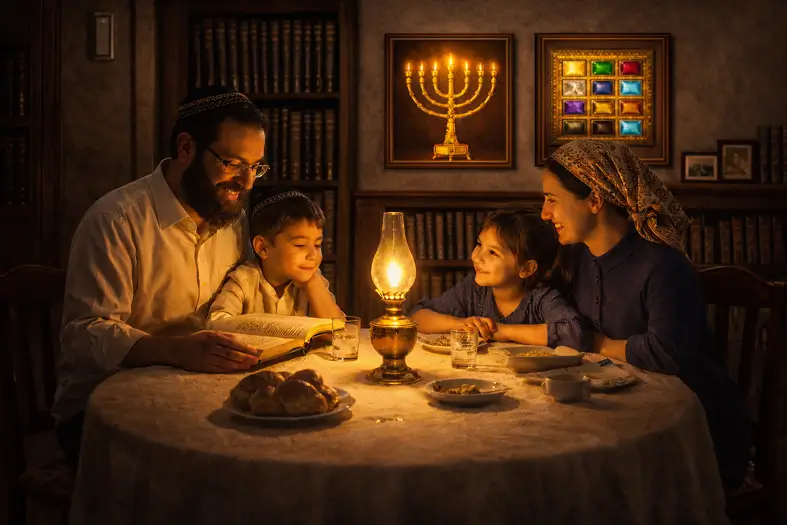
The Menorah embodies this principle. The flame is lit every evening whether the day was easy or difficult, inspiring or ordinary. Its constancy makes it reliable.
A covenant survives through repetition.
The Menorah stood within the Mishkan, but its meaning extends beyond its walls. The daily flame teaches how holiness moves from sanctuary into life.
The Mishkan gathered the nation around a visible center of Divine service. In every generation without a Temple, that center must be recreated in the rhythms of daily life.
Holiness spreads outward from steady practices. A fixed time of Torah study illuminates thought. Regular tefillah shapes awareness. Consistent acts of kindness transform relationships. Gradually the light reaches beyond the individual and into the surrounding world.
A single steady flame can illuminate a wide space.
The system described in Tetzaveh can be understood as a simple but powerful pattern:
Together they lead toward dwelling.
The Torah does not demand extraordinary lives. It teaches how ordinary days become sacred through structure and repetition.
Covenantal life emerges where these elements come together.
The Menorah teaches that light spreads outward from what is tended faithfully each day. The world is illuminated not only by dramatic achievements but by steady acts of avodah that continue quietly across years. A life shaped by consistent Torah, tefillah, and kindness becomes a source of light far beyond what its owner may ever see.
Every enduring spiritual life rests on something repeated. A person who returns daily to a small act of holiness gradually builds an inner center that does not depend on changing circumstances. Over time that steadiness begins to influence others — family members, friends, and communities who draw strength from a life that burns reliably.
The covenant becomes real through recurrence. A few minutes of learning that are never abandoned, a prayer spoken day after day, or a commitment to kindness that remains constant across time forms a personal Menorah whose light does not flicker with passing moods. What begins as discipline slowly becomes identity.
Defending such a practice is not an act of rigidity but of faithfulness. The oil must be guarded if the flame is to endure. Distractions will always press inward, and schedules will always shift, yet the steady lamp anchors a person in the presence of Hashem even when life feels unsettled.
The promise of “וְשָׁכַנְתִּי בְּתוֹכָם” is fulfilled not only in sanctuaries but in lives ordered around daily light. When purified intention, steady rhythm, reverent awareness, and grateful remembrance come together, the Shechinah finds a place to dwell.
The Menorah’s flame was kindled in the Mishkan, but its pattern continues wherever a person chooses to live by its light.
📖 Sources

8.7 — Tetzaveh Series Application for Today: Lighting the World from a Daily Flame
Parshas Tetzaveh began with a simple command:
שמות כ״ז:כ׳
“לְהַעֲלֹת נֵר תָּמִיד.”
To raise a continual flame.
From that first light, the Torah unfolded an entire system — purified oil, sacred garments, carried responsibility, disciplined service, Divine guidance, reverent awareness, and daily offerings. What first appeared as separate instructions gradually revealed themselves as parts of a unified design.
The parsha concludes with the destination of that design:
שמות כ״ט:מ״ה
“וְשָׁכַנְתִּי בְּתוֹךְ בְּנֵי יִשְׂרָאֵל.”
“I will dwell among the Children of Israel.”
The Menorah and the Mishkan are not separate themes. The daily flame is the beginning of a process that culminates in Divine dwelling. The light becomes the blueprint for covenant life.
Seen as a whole, Tetzaveh describes a way of building a life. The parsha traces a path from inner refinement to Divine presence. Each element adds another layer to a structure capable of sustaining holiness.
The pattern unfolds with quiet consistency:
Together these elements create a life capable of sustaining Divine presence.
The Menorah becomes more than a Temple vessel. It becomes a model of how holiness grows in the world.
Modern life often associates spiritual growth with dramatic moments — powerful experiences, moving teachings, or sudden inspiration. Tetzaveh offers a quieter vision.
The Torah's central word in the Menorah command is תָּמִיד.
Holiness grows through recurrence.
Rav Avigdor Miller emphasizes that covenant life is sustained not by intensity but by consistency. Rabbi Jonathan Sacks describes Judaism as a civilization built on repeated acts that preserve memory across generations.
The Menorah embodies this principle. The flame is lit every evening whether the day was easy or difficult, inspiring or ordinary. Its constancy makes it reliable.
A covenant survives through repetition.
The Menorah stood within the Mishkan, but its meaning extends beyond its walls. The daily flame teaches how holiness moves from sanctuary into life.
The Mishkan gathered the nation around a visible center of Divine service. In every generation without a Temple, that center must be recreated in the rhythms of daily life.
Holiness spreads outward from steady practices. A fixed time of Torah study illuminates thought. Regular tefillah shapes awareness. Consistent acts of kindness transform relationships. Gradually the light reaches beyond the individual and into the surrounding world.
A single steady flame can illuminate a wide space.
The system described in Tetzaveh can be understood as a simple but powerful pattern:
Together they lead toward dwelling.
The Torah does not demand extraordinary lives. It teaches how ordinary days become sacred through structure and repetition.
Covenantal life emerges where these elements come together.
The Menorah teaches that light spreads outward from what is tended faithfully each day. The world is illuminated not only by dramatic achievements but by steady acts of avodah that continue quietly across years. A life shaped by consistent Torah, tefillah, and kindness becomes a source of light far beyond what its owner may ever see.
Every enduring spiritual life rests on something repeated. A person who returns daily to a small act of holiness gradually builds an inner center that does not depend on changing circumstances. Over time that steadiness begins to influence others — family members, friends, and communities who draw strength from a life that burns reliably.
The covenant becomes real through recurrence. A few minutes of learning that are never abandoned, a prayer spoken day after day, or a commitment to kindness that remains constant across time forms a personal Menorah whose light does not flicker with passing moods. What begins as discipline slowly becomes identity.
Defending such a practice is not an act of rigidity but of faithfulness. The oil must be guarded if the flame is to endure. Distractions will always press inward, and schedules will always shift, yet the steady lamp anchors a person in the presence of Hashem even when life feels unsettled.
The promise of “וְשָׁכַנְתִּי בְּתוֹכָם” is fulfilled not only in sanctuaries but in lives ordered around daily light. When purified intention, steady rhythm, reverent awareness, and grateful remembrance come together, the Shechinah finds a place to dwell.
The Menorah’s flame was kindled in the Mishkan, but its pattern continues wherever a person chooses to live by its light.
📖 Sources


"8.7 — Series Closing Application: Lighting the World from a Daily Flame"
לְהַעֲלֹת נֵר תָּמִיד
The Menorah represents the continual inner light that begins covenant life. The daily flame becomes the Torah’s model for building a life of steady holiness.
שְׁנֵי כְבָשִׂים בְּנֵי שָׁנָה תְמִימִם שְׁנַיִם לַיּוֹם עֹלָה תָמִיד
The korban tamid expresses covenantal continuity. Daily repetition transforms holiness from moments into a life.
וַעֲבַדְתֶּם אֵת ה׳ אֱלֹקֵיכֶם
Daily prayer continues the rhythm of the Menorah and the tamid. Regular tefillah turns repetition into relationship with Hashem.
וְנִקְדַּשְׁתִּי בְּתוֹךְ בְּנֵי יִשְׂרָאֵל
The purpose of covenant life is that Hashem’s presence becomes visible through human action. Daily holiness transforms ordinary life into a place of Divine dwelling.
וְשִׁנַּנְתָּם לְבָנֶיךָ
Torah learning develops the understanding that sustains covenant life. The steady flame of knowledge illuminates every dimension of avodah.
בִּגְדֵי־קֹדֶשׁ… לְקַדְּשׁוֹ
Sacred garments represent ordered identity. Covenant life requires form and structure that stabilize holiness across time.
וְהָלַכְתָּ בִּדְרָכָיו
Emulating Hashem integrates mind, heart, and action into a unified life of covenantal responsibility.
וְלֹא־תָתוּרוּ אַחֲרֵי לְבַבְכֶם וְאַחֲרֵי עֵינֵיכֶם
The daily flame of covenant life depends on disciplined direction. Faithful repetition protects a person from being led by impulse rather than Torah.


"8.7 — Series Closing Application: Lighting the World from a Daily Flame"
Tetzaveh opens with the command of the continual Menorah flame and concludes with the promise that Hashem will dwell among Israel. The parsha presents a complete system in which purified light, disciplined service, and daily rhythm culminate in Divine presence within national life.

Dive into mitzvos, tefillah, and Torah study—each section curated to help you learn, reflect, and live with intention. New insights are added regularly, creating an evolving space for spiritual growth.

Explore the 613 mitzvos and uncover the meaning behind each one. Discover practical ways to integrate them into your daily life with insights, sources, and guided reflection.

Learn the structure, depth, and spiritual intent behind Jewish prayer. Dive into morning blessings, Shema, Amidah, and more—with tools to enrich your daily connection.

Each week’s parsha offers timeless wisdom and modern relevance. Explore summaries, key themes, and mitzvah connections to deepen your understanding of the Torah cycle.