"Va’eira — Part II — The Plagues as Divine Instruction"

Mitzvah Minute Logo Icon

2.4 - The Purpose of the Makkos: Training a Nation to See (Rav Avigdor Miller)

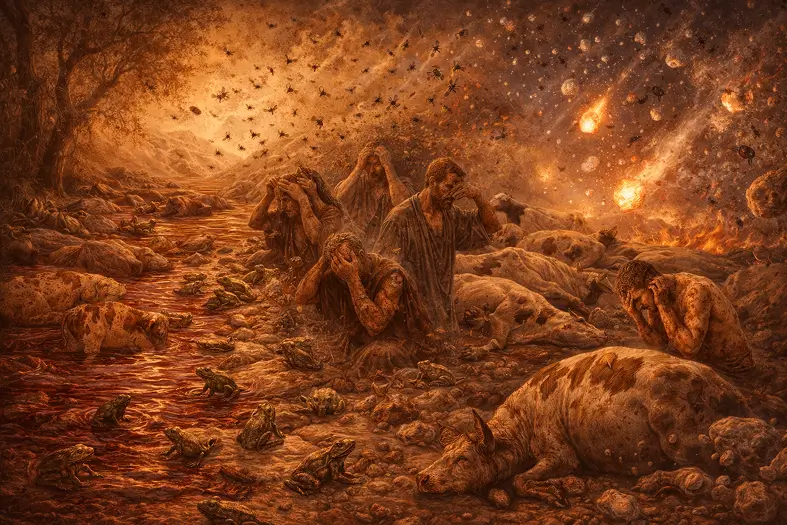
The 7 plagues in Va'eira
The plagues were not meant to terrify—they were meant to teach. Rav Avigdor Miller reveals that the makkos form a deliberate educational system designed to train humanity to read reality correctly. Through distinction, the collapse of imitation, and moral symmetry, the plagues dismantle false power and restore meaning to history. This essay shows that redemption requires more than escape from suffering—it demands clarity, discipline, and fluency in truth. Only a people trained to see can remain free.

"Va’eira — Part II — The Plagues as Divine Instruction"

2.4 - The Purpose of the Makkos: Training a Nation to See (Rav Avigdor Miller)

Rav Avigdor Miller teaches that the greatest danger facing humanity is not suffering, but misinterpretation. Pain alone does not educate. Miracles alone do not transform. Redemption, therefore, requires something far more demanding: the ability to read reality correctly.

This is the purpose of the makkos.

If Hashem’s goal were simply to free Israel, the Exodus could have occurred without plagues at all. Egypt could have collapsed in an instant. Pharaoh could have been removed quietly. The fact that redemption unfolds through a prolonged sequence of measured blows reveals that the plagues were not primarily for Egypt’s destruction—but for human education.

The Torah States the Goal Explicitly

The Torah does not leave the purpose of the plagues ambiguous:

וְיָדְעוּ מִצְרַיִם כִּי אֲנִי ה׳
“Egypt shall know that I am Hashem.”

And again:

בַּעֲבוּר תֵּדַע כִּי אֵין כָּמֹנִי בְּכָל הָאָרֶץ
“So that you shall know that there is none like Me in all the earth.”

Rav Miller emphasizes that “knowing” here does not mean awareness of power. Egypt already believes in power. What it denies is sovereignty—that the world is governed by a single moral authority who commands nature, history, and consequence.

The plagues exist to correct that error.

What the Plagues Are Teaching

Across Va’eira, the plagues operate according to a consistent instructional logic. They are not random. They are not redundant. Each one sharpens perception.

The makkos train humanity to recognize that:

  • Power without restraint is not sovereignty
  • Nature is not autonomous
  • Imitation cannot replace creation
  • Consequences reflect behavior
  • Authority is expressed through order, not excess

These lessons are cumulative. Each plague reinforces the last, until denial becomes untenable.

Distinction: Seeing Boundaries

The sparing of Goshen teaches that Divine power is discerning. Chaos destroys indiscriminately. Sovereignty differentiates.

Egypt’s suffering is not universal. Israel’s protection is not accidental. Rav Miller explains that this distinction forces observers to abandon the idea of blind fate. Reality is revealed as morally responsive.

Imitation: Seeing Limits

The magicians’ early success—and later failure—serves as another lesson. Imitation can copy effects but cannot command reality. When Aharon’s staff swallows theirs, and when the magicians concede אֶצְבַּע אֱלֹקִים הִוא, Egypt’s false power is exposed as derivative and finite.

The Torah allows imitation to function briefly so that its collapse will be instructive, not mysterious.

Moral Symmetry: Seeing Meaning

Middah k’neged middah teaches that suffering is not arbitrary. Each plague mirrors Egypt’s crimes, transforming pain into explanation. Rav Miller stresses that this moral symmetry is what allows events to be understood rather than merely endured.

Without meaning, suffering terrifies. With meaning, it educates.

Israel Is the Primary Student

Although Egypt suffers, Israel is the true audience. A nation destined to receive Torah must first learn how to interpret reality. The plagues train Israel to read history as morally structured, where actions echo and consequences accumulate.

A people that cannot interpret suffering will either despair or imitate its oppressors. The plagues prevent both.

Why Pharaoh Is Allowed to Resist

Pharaoh’s resistance is not a failure of the plan—it is its engine. Each refusal allows another layer of falsehood to be exposed. Rav Miller explains that truth must be clarified repeatedly because human beings resist clarity when it threatens identity.

Only after education fails does judgment escalate.

The End of Part II

Part II closes with a transformed understanding of power. Redemption has not yet occurred—but reality has become legible. Egypt’s worldview is dismantled. Israel’s perception is refined.

The plagues do not merely break chains.
They train eyes.
They discipline thought.
They restore meaning to the world.

Rav Avigdor Miller’s insight completes the instructional arc: redemption requires not only freedom from suffering, but fluency in truth.

Only a people who can see clearly can remain free.

📖 Sources

  • Full sources available on the Mitzvah Minute Parshas Va'eira page under insights and commentaries.

Organized by:
Boaz Solowitch
January 7, 2026
Mitzvah Minute Logo Icon

Connections

Mitzvah Minute Logo Icon

Mitzvah Links

Mitzvah 1

To know there is a G‑d
A Siddur
Learn this Mitzvah

Mitzvah 1

1
To know there is a G‑d

Mitzvah 5

To fear Him
A Siddur
Learn this Mitzvah

Mitzvah 5

5
To fear Him

Mitzvah 9

To listen to the prophet speaking in His Name
A Siddur
Learn this Mitzvah

Mitzvah 9

9
To listen to the prophet speaking in His Name

Mitzvah 11

To emulate His ways
A Siddur
Learn this Mitzvah

Mitzvah 11

11
To emulate His ways

Mitzvah 121

To afflict and cry out before G‑d in times of catastrophe
A Siddur
Learn this Mitzvah

Mitzvah 121

121
To afflict and cry out before G‑d in times of catastrophe
The Luchos - Ten Commandments
View Mitzvah Notes

Mitzvah Reference Notes

"x" close page navigation button

Mitzvah Reference Notes

“The Purpose of the Makkos: Training a Nation to See (Rav Avigdor Miller)”

Mitzvah #1 — To Know There Is a G-d

(Exodus 20:2)

אָנֹכִי ה׳ אֱלֹקֶיךָ

Rav Avigdor Miller explains that the primary goal of the makkos is the cultivation of da’at Elokim—the ability to recognize Divine sovereignty in lived reality. The plagues are structured to be intelligible, teaching that nature, history, and consequence are governed by Hashem. Knowledge here is not abstract belief, but disciplined perception trained through repeated clarification.

Mitzvah #5 — To Fear Hashem

(Deuteronomy 10:20)

אֶת־ה׳ אֱלֹקֶיךָ תִּירָא

The plagues cultivate yirah by revealing power as ordered, restrained, and morally accountable. Rav Miller emphasizes that fear of Hashem does not emerge from terror or chaos, but from sustained exposure to Divine justice that cannot be evaded or negotiated. Yirah is the internalization of sovereignty, not momentary awe.

Mitzvah #9 — To Listen to the Prophet Speaking in His Name

(Deuteronomy 18:15)

אֵלָיו תִּשְׁמָעוּן

Each plague is preceded by prophetic warning, underscoring that redemption unfolds through Divine speech before Divine action. Rav Miller highlights that the educational force of the makkos depends on receiving them as prophecy rather than spectacle. Listening to the prophet means learning to interpret events through Torah categories rather than instinct or fear.

Mitzvah #11 — To Walk in His Ways

(Deuteronomy 28:9)

וְהָלַכְתָּ בִּדְרָכָיו

Hashem’s governance during the plagues models patience, proportion, and moral clarity. By escalating judgment gradually and allowing recognition before destruction, the Torah presents Divine conduct as a template for human behavior. Israel is commanded to emulate this approach—responding to wrongdoing with discipline and understanding rather than impulsive force.

Mitzvah #121 — To Cry Out to Hashem in Times of Distress

(Numbers 10:9)

וַהֲרֵעֹתֶם בַּחֲצֹצְרוֹת

Rav Miller stresses that catastrophe is meant to awaken recognition, not despair. The makkos establish the Torah’s model for crisis: suffering demands response, reflection, and return. This mitzvah channels hardship into moral awareness, reinforcing that events are communicative and meant to be interpreted through Divine truth.

Parsha Links

וָאֵרָא – Va’eira

Haftarah: Ezekiel 28:25 - 29:21
A Siddur
Learn this Parsha

וָאֵרָא – Va’eira

וָאֵרָא – Va’eira
The Luchos - Ten Commandments
View Parsha Notes
"x" close page navigation button

Parsha Reference Notes

“The Purpose of the Makkos: Training a Nation to See (Rav Avigdor Miller)”

Parshas Va’eira (Shemos 7:8–10:29)

Parshas Va’eira frames the plagues as a sustained program of instruction rather than a series of punitive acts. Repeated declarations—וְיָדְעוּ מִצְרַיִם כִּי אֲנִי ה׳ and בַּעֲבוּר תֵּדַע כִּי אֵין כָּמֹנִי—define the goal of the makkos as knowledge: the clarification of Divine sovereignty over nature, history, and moral consequence. The sequence, escalation, and warnings embedded in each plague emphasize intelligibility over shock.

Across the parsha, three instructional patterns recur. First, distinction: Goshen is spared while Egypt suffers, demonstrating that Divine power is discerning and bounded. Second, the collapse of imitation: Egyptian magicians replicate early signs but fail as the plagues progress, conceding אֶצְבַּע אֱלֹקִים הִוא, which marks the transition from rivalry to revelation. Third, moral symmetry: the form of each plague mirrors Egypt’s actions, teaching that history responds proportionately to moral distortion.

Va’eira thus presents the plagues as a curriculum that trains both Egypt and Israel to read reality ethically. Pharaoh’s resistance enables further clarification, allowing false assumptions to be dismantled publicly and repeatedly. By the end of the parsha’s plague sequence, reality itself has become legible: power is shown to be ordered, consequences meaningful, and sovereignty inseparable from justice. This educational transformation prepares the ground for redemption by ensuring that liberation will be sustained by understanding rather than spectacle alone.

Mitzvah Minute
Mitzvah Minute Logo

Learn more.

Dive into mitzvos, tefillah, and Torah study—each section curated to help you learn, reflect, and live with intention. New insights are added regularly, creating an evolving space for spiritual growth.

Luchos
Live a commandment-driven life

Mitzvah

Explore the 613 mitzvos and uncover the meaning behind each one. Discover practical ways to integrate them into your daily life with insights, sources, and guided reflection.

Learn more

Mitzvah #

5

To fear Him
The Luchos - Ten Commandments
Learn this Mitzvah

Mitzvah Highlight

Siddur
Connection through Davening

Tefillah

Learn the structure, depth, and spiritual intent behind Jewish prayer. Dive into morning blessings, Shema, Amidah, and more—with tools to enrich your daily connection.

Learn more

Tefillah

COMING SOON.
A Siddur
Learn this Tefillah

Tefillah Focus

A Sefer Torah
Study the weekly Torah portion

Parsha

Each week’s parsha offers timeless wisdom and modern relevance. Explore summaries, key themes, and mitzvah connections to deepen your understanding of the Torah cycle.

Learn more

וָאֵרָא – Va’eira

Haftarah: Ezekiel 28:25 - 29:21
A Sefer Torah
Learn this Parsha

Weekly Parsha